6d ago
Ep 210 Decompensated Hypothyroidism Recognition and Management
In the ED, we regularly care for sick patients presenting acutely with abnormal vital signs, altered mental status, and end organ dysfunction. Oftentimes, the culprit ends up being sepsis, or overdose, or organ failure. But it is important that we consider rarer endocrine presentations like decompensated hypothyroidism. In this Part 1 of this two-part podcast with Dr George Willis and Dr Alyssa Louis, we answer questions like: Why is the term myxedema coma a misnomer and should be abandoned? How can we differentiate between sepsis or environmental hypothermia or toxidrome from decompensated hypothyroidism at the bedside? When is it appropriate to order a TSH, a T4 and T3? What are the most important life-threatening triggers that need to be addressed in patients with decompensated hypothyroidism? Why is it important to test for cortisol levels and consider stress-dose steroids in all patients with decompensated hypothyroidism? Why is endotracheal intubation particularly dangerous in decompensated hypothyroidsm? What is the best way to manage hypothermia? Why is the order of medications for treatment of decompensated hypothyroidism so important? and many more... Please consider a donation to EM Cases to ensure continuing Free Open Access Medical Education: https://emergencymedicinecases.com/donation/
Dec 2
EM Quick Hits 69 Pediatric Urinary Retention & Acute Transverse Myelitis, Post-Dural Puncture Headache, Med Mal Cases: Clenched Fist Injury, IV Thrombolysis for Minor Stroke, EM Leadership Spotlight #4
On this month's EM Quick Hits podcast: Deborah Schonfeld on the differential diagnosis and work up of pediatric urinary retention & acute transverse myelitis, Jesse McLaren on his Tryptic Approach to Occlusion MI Diagnosis, Matthew McArthur on recognition and management of post-dural puncture headache, Joseph Yasmeh on Med Mal Cases: Clenched fist injury, Brit Long on IV thrombolysis for minor strokes and Victoria Myers & Lauren Westafer on mentorship and what it means to be a physician leader... Please consider a donation to EM Cases to support high quality Free Open Access Medical Education here: https://emergencymedicinecases.com/donation/
Nov 11
Ep 209 Nondisabling Stroke Recognition and Management
In this Part 2 or our 2-part podcast update on ED stroke management with Dr. Katie Lin and Dr. Walter Himmel we explore non-disabling strokes, where symptoms are mild enough that patients can continue daily activities if deficits persist. Yet, non-disabling does not mean benign. Non-disabling strokes occupy the same ischemic continuum as TIAs and carry a substantial risk of early recurrence with disabling stroke. In this EM Cases podcast we answer questions such as: Which patients with non-disabling stroke can safely go home with prompt follow-up and which require urgent investigation or admission? Which stroke mimics do we need to be on the look out for and how do we identify them at the bedside? How dangerous is thrombolysis in a patient with presumed stroke who turns out to be a stroke mimic? What are the key distinguishing features between a stroke and functional neurologic disorder? What are the most common causes of stroke in young people that we commonly miss? How does stroke etiology dictate the management pathway? What are the indications for carotid endarterectomy in patients with non-disabling stroke and what is the ideal timing of the endarderectomy? When is dual antiplatelet therapy vs single antiplatelet thereapy vs anticoagulant therapy indicated? What is the best medication strategy for the patient on a DOAC for atrial fibrillation who presents to the ED with a non-disabling stroke? For patients not on a DOAC for atrial fibrillation who come in with a stroke, when is it safe to start anticoagulation? and many more... Make A Donation: https://emergencymedicinecases.com/donation/.com

Oct 28
Ep 208 Paradigm Shift in Ischemic Stroke Management Part 1: Disabling Strokes
We are amidst a paradigm shift in the emergency management of acute ischemic stroke. The traditional way of categorizing ischemic strokes as 'minor' vs 'major' is no longer relevant to what we do in the ED. It's now about 'disabling' vs 'non-disabling' strokes. And this is no small change. This categorization dictates urgency of ED work-up and treatments, imaging choices, treatment decisions and goals of care. In this Part 1 or our 2-part main episodes EM Cases podcast series on management of ischemic stroke with Dr. Walter Himmel and Dr. Katie Lin, we answer questions like: How can we best rapidly determine if an ischemic stroke is disabling or non-disabling at the bedside? In what ways are 'wake up strokes' managed uniquely and what's the latest thinking on their pathophysiology? How should we best prioritize imaging depending on timing, geography and resources? How do we best predict large vessel occlusion amenable to endovascular therapy (EVT) at the bedside? How can we efficiently establish goals of care at the bedside to inform our emergency decision making around strokes? Which is better for thrombolysis in ischemic stroke - Tenecteplase or Alteplase? How have contraindications to IV thrombolysis changed over the last decade? When should we consider bridge therapy with EVT after IV thrombolysis? What are 4 key items the ED physician should have ready for the stroke neurologist on the first call? and many more... If you enjoy EM Cases content please consider a donation to help support ongoing FOAMed here: https://emergencymedicinecases.com/donation/
Oct 7
EM Quick Hits 68 Osteomyelitis, Tourniquet Technique, Pediatric Distal Radius Buckle Fractures, DSI RCT, AMS in ESRD & Dialysis, EM Leadership Spotlight #3
On this month's EM Quick Hits podcast: Dr. Isaac Bogoch on recognition and management of osteomyelitis in the ED, Dr. Anand Swaminathan on tourniquet tips and tricks. Dr. Andrew Tagg on managing pediatric distal radius buckle fractures & the FORCE trial. Dr. Justin Morgenstern on Delayed Sequence Intubation (DSI): RCT Takeaways. Dr. Brit Long on ESRD & Dialysis in the ED: altered mental status. Dr. Lisa Thurgur & Victoria Myers on leadership and medical education. Please consider a donation to EM Cases to ensure ongoing high quality free open access medical education here: https://emergencymedicinecases.com/donation/
Sep 16
Ep 207 Sleep Strategies for Shift Work
Discover evidence-based sleep strategies for shift workers. Optimize performance, recovery, and health with tips from sleep expert Dr. Michael Mak... If you find this beneficial please consider a donation to support EM Cases: https://emergencymedicinecases.com/donation/
Aug 26
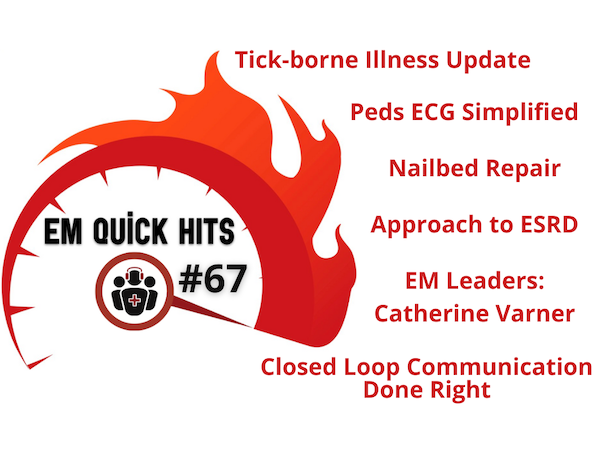
EM Quick Hits 67 Tick Borne Illness Update, Pediatric ECG Interpretation, Nailbed Repair, Closed Loop Communication, ESRD, Leaders in EM Dr. Catherine Varner
On this EM Quick Hits podcast: Tick Borne Illness Update with Dr. Issac Bogoch, Pediatric ECG Interpretation with Dr. Kathleen Stephanos, Nailbed Repair with Dr. Matthew McArther, Closed Loop Communication with Dr. Shawn Segeren, ESRD with Dr. Brit Long, Leaders in EM Dr. Catherine Varner... Please consider donating to EM Cases here: https://emergencymedicinecases.com/donation/
Aug 4
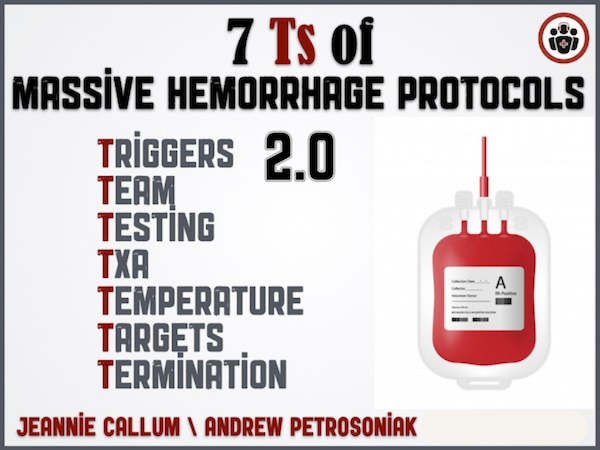
Ep 206 Massive Hemorrhage Protocols 2.0 – Update on the 7 Ts
In this update to the 7 T’s of Massive Hemorrhage Protocols with Dr. Jeannie Callum and Dr. Andrew Petrosoniak, we explore the most current, evidence-informed strategies for bleeding patients, from polytrauma to obstetrical, drawing on the latest clinical trial data and real-world experience. We answer the questions: What is the evidence based alternative to FFP in EDs where FFP is not readily available? How accurate are decision scores in helping decide the trigger for MHP activation? Why is testing fibrinogen levels and giving fibrinogen concentrates so important in massive hemorrhage? How should we tailor our MHP to the GI bleed patient? To the obstetrical patient? and many more... Please donate to EM Cases to ensure ongoing Free Open Access Medical Education at https://emergencymedicinecases.com/donation/.
Jul 15
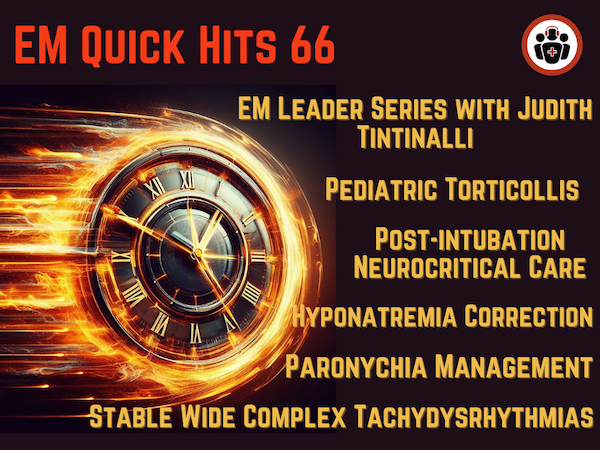
EM Quick Hits 66 Pediatric Torticollis, Stable Wide Complex Tachydysrhythmias, Post-intubation Neurocritical Care, Hyponatremia Correction Rates, Paronychia Management, Women in EM Leader Series with Judith Tintinalli
On this EM Quick Hits podcast: Pediatric Torticollis with Dr. Deb Shconfeld, Approach to Stable Wide Complex Tachydysrhythmias with Dr. Anand Swaminathan, Post-intubation Neurocritical Care 5 best practices with Dr. Andrew Petrosoniak, Hyponatremia Correction Rates with Dr. Justin Morgenstern, Paronychia Management with Dr. Andrew Tagg, and Women in EM Leader Series with Judith Tintinalli and Dr. Victoria Myers...Donate to EM Cases to help ensure continued Free Open Access Medical Education in the future here: https://emergencymedicinecases.com/donation/
Jun 24
Ep 205 Leading from the Inside Out: Building Teams, Trust and Purpose in Emergency Medicine
In this podcast, with Dr. Thom Mayer, Dr. Carolyn Snider and Dr. Howard Ovens, on leading from the inside out, we cover foundational principles, practical habits, and transformative insights that can make any member of an ED team a more effective, compassionate, and adaptive leader. Here, you’ll find tools, philosophy, and stories that just might transform how you think about your role in the ED to make your work more satisfying, make your teams work together better and improve patient outcomes... Please consider a donation to EM Cases to help ensure we continue to provide high quality Free Open Access medical education into the future https://emergencymedicinecases.com/donation/
Jun 3
EM Quick Hits 65 Occipital Nerve Block, PoCUS in Pulmonary Embolism, Myelopathy, Team Resuscitation, Incidental Neutropenia, Peer Programs
On this month's EM Quick Hits podcast: Dr. Mathew MacArther on Occipital Nerve Block, Dr. Ian Chernoff on PoCUS in Pulmonary Embolism, Dr. Hans Rosenberg on Myelopathy, Dr. Shawn Segeren on Team Resuscitation, Dr. Brit Long on Incidental Neutropenia and Dr. Kylie Booth on Peer Programs. Please help ensure continued Free Open Access of the entire EM Cases Learning System by donating here: https://emergencymedicinecases.com/donation/
May 13
Ep 204 High Risk Pulmonary Embolism Management
There are many nuances in the management of patients with pulmonary embolism in cardiac arrest, peri-arrest or simply in shock: We need to optimize oxygenation and airway management, hemodynamic support, acid/base management, thrombolysis and/or catheter-directed therapies that Anton dives into with guest experts Dr. Lauren Westafer, Dr. Bourke Tillmann and Dr. Justin Morgenstern... EM Cases is proudly FOAMEd - Please consider a donation: https://emergencymedicinecases.com/donation/
Apr 21
EM Quick Hits 64 Whole Blood Transfusions, Calcium Before Diltiazem in Afib, Thoracotomy Pearls, Uterine Casts, OMI Scale & Proportionality
In this month's EM Quick Hits podcast: Zafar Qasim & Andrew Petrosoniak on whole blood transfusion in trauma, Justin Morgenstern on calcium pre-treatment to prevent diltiazem-induced hypotension, Kiran Rikhraj on dynamic LV outflow tract obstruction, Anand Swaminathan on resuscitative thoracotomy, Andrew Tagg on uterine casts, and Jesse McLaren on scale & proportionality in occlusion MI ECG interpretation. **Please support EM Cases to continue to be free open access by making a donation: https://emergencymedicinecases.com/donation/
Apr 1
Ep 203 Intermediate Risk Pulmonary Embolism Risk Stratification, Management and Algorithm
How do you predict which intermediate-risk patients will suddenly deteriorate? What role do risk scores, biomarkers, imaging, and hemodynamics play in decision-making? Should these patients receive anticoagulation alone, or is thrombolysis warranted? When should you consider catheter-directed or surgical interventions? This podcast focuses us to think critically about risk stratification, early interventions and escalation in care in PE. We include an algorithm in the show notes. Not all patients fit neatly into classification boxes, making clinical judgment crucial. Join Dr. Lauren Westafer, Dr. Justin Morgenstern, Dr. Bourke Tillman and Anton as they explore the key decision points, pitfalls, and lifesaving strategies for managing intermediate-risk PE in the ED...

Mar 11
EM Quick Hits 63 S-TEC and HUS, IM Epinephrine in OHCA, Dengue, Geriatric Trauma Imaging, TTP
On this month's EM Quick Hits podcast: Stephen Freedman on pediatric bloody diarrhea, S-TEC and hemolytic uremic syndrome, Justin Morgenstern on the evidence for IM epinephrine in out of hospital cardiac arrest, Matthew McArther on recognition and ED management of dengue fever, Andrew Petrosoniak on imaging decision making in trauma in older patients, Brit Long & Michael Gotlieb on recognition and management of TTP...Please consider a donation to EM Cases to help ensure continued Free Open Access Medical Education here: https://emergencymedicinecases.com/donation/

Feb 18
Ep 202 Eating Disorders: Common, Commonly Missed, Mismanaged and Misunderstood
Eating disorders have the highest mortality rate of any psychiatric illness, yet they are frequently missed in the Emergency Department as they can be elusive. Only one in 246 patients who screen positive for an eating disorder at triage have a chief complaint suggesting it. These patients don’t always fit the stereotype—many appear “healthy,” have normal BMI, or present with vague GI, cardiac, or neurological symptoms. Missing the diagnosis has important consequences. The earlier an eating disorder is identified and the earlier that appropriate treatment is initiated the better the long term outcomes. In this episode, with the expertise of Dr. Samantha Martin and Dr. Jennifer Tomlin, we’ll break down the essential clinical clues, screening questions, red flags, and subtle exam findings that can help Emergency Physicians diagnose eating disorders early and initiate treatment to decrease mortality and long term morbidity in these young patients. Eating disorders need to be thought of as both a psychiatric condition and medical condition to optimize the pick up rate and appropriate management. Missing or mismanaging eating disorders in the ED means missing an opportunity to save a life and prevent long term morbidity... Please consider a donation to EM Cases to ensure continued Free Open Access Medical Education here: https://emergencymedicinecases.com/donation/

Jan 28
EM Quick Hits 62 Optimizing RSI Medication Timing, ED Boarding of Older Patients, Prolonged Tourniquet Use, Rural Peer Support Programs, ECG Reciprocal Changes, Nutrition Tips for Shift Workers
On this month's EM Quick Hits podcast: Anand Swaminathan on optimizing RSI medication timing, Brittany Ellis on ED boarding challenges in older patients and solutions to ED crowding and flow, Dave Jerome on managing prolonged tourniquet application, Nour Khatib and Phil Gillick on a rural peer support case, Jesse McLaren on ECG reciprocal changes in acute coronary occlusion, and Melody Ng on practical nutrition tips for shift workers...

Jan 7
Ep 201 How EM Experts Think Part 2: Data Gathering, Diagnostic and Treatment Decision Making, Test Ordering and Interpretation, Documentation, Emotional Resilience
In this Part 2 of our 2-part podcast series on How EM Experts Think with Dr. Reuben Strayer, Dr. Mike Betzner and Dr. Scott Weingart we dive deep into the nuances of practicing smarter, faster, and better in the ED. We answer questions like: How should we employ hypothetico-deductive reasoning in our daily practice of Emergency Medicine? How can we best streamline thorough data gathering for each case so that we don't miss key data points? How do the master EM clinicians perform an efficient and targeted history and physical exam? How can the concept of heuristic cycling help you avoid outdated or faulty thinking? How can we document our clinical encounter in a way that considers a differential diagnosis that prioritizes dangerous conditions and improve our thinking around cases? How can we use the 2-10% rule for pre-test probabilities and the concept of preferred error to guide our decision making for tests and treatments in the ED? What strategies can we use to avoid anchoring bias and keep your mind open to all possibilities? What’s the role of shared decision-making when navigating diagnostic uncertainty? How does understanding the vigilance pendulum help us assess our risk tolerance better? How can post-shift decision journaling, conducting pre-mortems and meditation improve our decision making and boost our emotional resilience on shift? and many more...The accompanying blog An EM Expert Mindset - A Female Perspective is recommended reading with this podcast https://emergencymedicinecases.com/the-em-expert-mindset-a-female-perspective/ Please consider a small donation to EM Cases to ensure ongoing high quality FOAMed: https://emergencymedicinecases.com/donation/

Dec 23, 2024
How EM Experts Think: Strategies for Pre-Shift, Arrival Ritual, Staying Focused, Managing Interruptions, Cognitive Load & Negative Emotions, Resuscitation Mindset, Post-Resuscitation Recovery
Which elements of your current pre-shift preparation contribute most to your mental clarity and performance, and what new practices might further optimize your readiness? With interruptions shown to increase task errors and decision fatigue, how can you strike a balance between being approachable to colleagues and safeguarding your focus for patient care? When confronted with a particularly challenging or emotionally charged case, what strategies have you found most effective for maintaining professionalism and clear decision-making under pressure? How often do you debrief after high-stakes scenarios, and what impact has debriefing—whether formal or informal—had on your team’s learning, emotional recovery, and future preparedness? What strategies do you use to foster open communication and ensure all team members feel empowered to provide input during high-stakes situations? How do you mentally and emotionally shift from managing a critical resuscitation to treating lower-acuity patients without compromising your focus or energy? When faced with a complex case where diagnostic clarity is elusive, how do you prioritize your next steps while maintaining confidence in your decision-making process? How can apps, personalized workflows, or EMR tools be better utilized to minimize cognitive load and enhance clinical decision-making during shifts? These are just some of the questions we pose in this 2-part podcast series on How the Experts Think with Dr. Reuben Strayer, Dr. Scott Weingart and Dr. Mike Betzner...The accompanying blog An EM Expert Mindset - A Female Perspective is recommended reading with this podcast https://emergencymedicinecases.com/the-em-expert-mindset-a-female-perspective/ Please consider a donation to ensure EM Cases continues to provide you high quality Free Open Access Medical Education here: https://emergencymedicinecases.com/donation/

Dec 3, 2024
EM Quick Hits 61 TEE in Cardiac Arrest, Nebulized Ketamine, Cellulitis Update, SQ Insulin for DKA, Medicolegal DDx Documentation Tips
On this month's EM Quick Hits podcast: Ross Prager on TEE in cardiac arrest, Justin Morgenstern on nebulized ketamine for analgesia in the ED, Hans Rosenberg & Krishin Yadav on standardizing cellulitis management, Mathew McArther on latest studies on subcutaneous insulin protocols in DKA, Jennifer C. Tang on documenting differential diagnoses medicolegal tips...

Nov 12, 2024
Ep 199 Trauma Airway and Airway Trauma
In this EM Cases main episode podcast, we tackle the complexities of trauma airway management, including direct trauma to the airway. We discuss indications and timing of intubation, penetrating neck trauma, the head injured patient, the agitated patients and the soiled airway. The critical question is: when should we deviate from, delay or modify RSI, and how do we navigate the unique challenges presented by trauma airways and airway trauma? Dr. George Kovacs and Dr. Andrew Petroniak answer this and other questions such as: how should we re-sequence the trauma resuscitation depending on immediate life-threats? When is immediate vs delayed intubation recommended? How useful are the Zones of the neck in penetrating neck trauma? What is the optimal dosing of airway medications in the sick trauma patient? How should we modify our airway strategy for the severely head injured patient and/or agitated patient? When should we consider ketamine facilitated fiberoptic intubation in the trauma patient? and many more... Please consider a donation to EM Cases to ensure ongoing Free Open Access Medical Education here: https://emergencymedicinecases.com/donation/

Oct 22, 2024
EM Quick Hits 60 Post-Tonsillectomy Hemorrhage, Post-CABG Infections, Bougie Tips, Pelvic Fracture Bleeds, Debriefing: Why, When & How
On this month's EM Quick Hits podcast: Kevin Wasko on post-tonsillectomy hemorrhage management, Brit Long on assessment and management of post-CABG surgical incision infections, Anand Swaminathan on evidence, pitfalls and tips on using Bougies, Leah Flannigan on when to suspect vascular injury in patients with low energy mechanism pelvic fractures, Andrew Petrosoniak on debriefing after cases: why, when and how... Do you learn a lot from EM Cases? Please consider a donation to ensure EM Cases continues to provide you high quality Free Open Access Medical Education here: https://emergencymedicinecases.com/donation/
Oct 1, 2024
Ep 198 Understanding and Improving Culture in Emergency Medicine: Key Insights
In this EM Cases podcast Anton chats with Dr. Peter Brindley and Dr. Leon Byker who have a deep interest in the Culture of Medicine to explore what culture in medicine is, why culture is so important, and then drive home 10 strategies to improving the culture in our departments emphasizing the importance of human connection, empathy, open communication, and a willingness to learn from mistakes in creating a positive and fulfilling work environment, so that we love our work, we love our department, we love taking care of our patients and our patients have better outcomes... Support EM Cases and Free Open Access Medical Education by making a donation now: https://emergencymedicinecases.com/donation/
Sep 10, 2024
EM Quick Hits 59 Traumatic Coronary Artery Dissection, Proper Use of Insulin, Mesenteric Ischemia, Exercise Associated Hyponatremia, AI for OMI
On this month's EM Quick Hits podcast: Ian Chernoff on the often elusive diagnosis of traumatic coronary artery dissection, Anand Swaminathan on proper use of insulin in DKA and in hyperkalemia, Brit Long and Hans Rosenberg on mesenteric ischemia pearls and pitfalls in diagnosis and management, Dave Jerome on recognition and management exercise-associated hyponatremia and heat illness and Jesse McLaren on the Queen of Hearts AI model in helping identify occlusion MI on ECG... Help Support EM Cases by Giving a Donation here: https://emergencymedicinecases.com/donation/
Aug 19, 2024
Ep 197 Acute Heart Failure Risk Stratification and Disposition
We over-admit low risk acute heart failure patients and under-admit high risk heart failure patients. In this podcast we discuss the diagnostic accuracy of various clinical features, lab tests and imaging modalities for acute heart failure, the 3 validated risk stratification tools and a simple approach to PoCUS for the diagnosis and prognostication of acute heart failure in the ED to improve our diagnostic accuracy and disposition decisions for patients with acute heart failure... Help Support EM Cases by Giving a Donation here: https://emergencymedicinecases.com/donation/

Jul 30, 2024
EM Quick Hits 58 – HIV PEP and PrEP, PREOXI Trial, Blast Crisis, Nitrous Oxide Poisoning, Vasopressors in Trauma
In this month's EM Quick Hits podcast: Andrew Petrosoniak on the role of vasopressors in the hemorrhaging trauma patient, Megan Landes on providing HIV PEP and PrEP in the ED, Justin Morgenstern & George Kovacs on the PREOXI trial and evidence for pre-oxygenation with NIPPV before intubation in RSI, Brit Long on recognition and management of blast crisis in the ED, and Leah Flanagan & Liam Loughrey on the rise of nitrous oxide toxicity... Help Support EM Cases by Giving a Donation here: https://emergencymedicinecases.com/donation/

Jul 8, 2024
Ep 196 Pediatric Meningitis Recognition, Workup and Management
In this episode: recognition, risk stratification, decision tools, indications for lumbar puncture in the febrile pediatric patient, tips and trick on performing LPs in children, and ED management of pediatric meningitis. We answer such questions as: what are the test characteristics of the various clinical features of meningitis across various ages? How does one differentiate between meningitis and retropharyngeal abscess on physical exam? How do the Canadian and American guidelines on work up of well-appearing febrile infants compare when to it comes to indications for lumbar puncture? Which patients with suspected meningitis require imaging prior to lumbar puncture? How do we best interpret the various CSF tests to help distinguish between viral and bacterial meningitis? What are the indications and timing of administering dexamethasone in the pediatric patient with suspected meningitis? and many more.... EM Cases is Free Open Access; please consider a donation to help ensure that EM Cases remains Free Open Access on our donation page https://emergencymedicinecases.com/donation/
Jun 18, 2024
EM Quick Hits 57 – HIV Diagnosis, Failed Paradigm of STEMI Criteria, Poisoned Patient Airway Management, Spontaneous Bacterial Peritonitis, DIY Investments
In this month's EM Quick Hits podcast: Megan Landes on the importance of diagnosing HIV in the ED, Jesse McLaren on the failed paradigm of STEMI criteria and ECG tips to identify acute coronary occlusion, Anand Swaminathan on evidence for non-invasive airway management in the poisoned patient, Brit Long and Hans Rosenberg on the identification, workup and management of spontaneous bacterial peritonitis, Matt Poyner on the most lucrative side-gig, DIY investing. To support EM Cases, please consider a donation here: https://emergencymedicinecases.com/donation/
May 28, 2024
Ep 195 Management of Subarachnoid Hemorrhage
Once the diagnosis of nontraumatic subarachnoid hemorrhage (SAH) has been made, our job is not done. Mortality in SAH patients can be up to 30% even without neurological deficit. Paying attention to the time-sensitive details of ED management of SAH patients can have a significant impact on their outcome. In this second part of our 2-part podcast series on subarachnoid hemorrhage with Dr. Katie Lin and Dr. Jeff Perry we answer questions such as: what are the 4 critical priorities in the initial stabilization of the patient with a suspected massive subarachnoid hemorrhage? When is a CT plus CTA of the head indicated up front in the management of patients with suspected subarachnoid hemorrhage? What is the evidence for oral nimodipine in improving outcomes in patients with subarachnoid hemorrhage and how does it work? What can we do in the ED to prevent rebleeding in patients with subarachnoid hemorrhage? What are the simplest and best prognostic tools available for spontaneous subarachnoid hemorrhage to help counsel families and patients? and more...
May 13, 2024
Ep 194 Subarachnoid Hemorrhage – Recognition, Workup and Diagnosis Deep Dive
Anton is joined by the world's leading EM researcher in subarachnoid hemorrhage diagnosis Dr. Jeff Perry and EM-Stroke team clinician Dr. Katie Lin for a deep dive into why we still miss this life-threatening diagnosis, the key clinical clues, proper use of decision tools, indications for CT, indications for CTA, indications for LP and CSF interpretation for the sometimes elusive diagnosis of subarachnoid hemorrhage... Help support EM Cases by making a donation: https://emergencymedicinecases.com/donation/
Apr 23, 2024
EM Quick Hits 56 – Nitroglycerin in SCAPE, REBOA, Diverticulitis Imaging, CRAO, Penicillin Allergy, Physician Personality
In this month's EM Quick Hits podcast: Justin Morgenstern on the first RCT of high dose nitroglycerin in SCAPE, Andrew Neill on Resuscitative Endovascular Balloon Occlusion of the Aorta (REBOA) indications and evidence, Brit Long on indications for CT in suspected diverticulitis, Tahara Bhate on Central Retinal Artery Occlusion (CRAO) and diagnostic error, Matthew McArthur on penicillin allergy labels, myths and penicillin challenges, and Susan Lu on how ED physician personality influences patient outcomes... Please support EM Cases with a donation: https://emergencymedicinecases.com/donation/
Apr 2, 2024
Ep 193 The Crashing Asthmatic – Recognition and Management of Life Threatening Asthma
In this part 2 of our 2-part podcast on asthma with Dr. Sameer Mal and Dr. Leeor Sommer, we dig into the recognition and management of life-threatening asthma. We answer such questions as: what are the key elements in recognition of threatening asthma? What are the most time-sensitive interventions required to break the vicious cycle of asthma? What are the best options for dosing and administering magnesium sulphate, epinephrine, fentanyl and ketamine in the management of the crashing asthmatic? What is the role of NIPPV in the management of life-threatening asthma? What are the factors we should consider when it comes to indications for endotracheal intubation of the crashing asthmatic? What role do blood gases play in the decision to intubate? What are the most appropriate ventilation strategies in the intubated asthma patient? and many more... Please support EM Cases with a donation: https://emergencymedicinecases.com/donation/
Mar 19, 2024
Ep 192 ED Adult Asthma Management Strategies For Improved Prognosis – A Stepwise Approach
In this part 1 of our 2-part podcast series on Asthma Management we explore a systematic approach to managing patients presenting to the ED with asthma exacerbations. Our discussion will emphasize the critical role of a thorough history and physical examination in effectively stratifying patient risk and guiding treatment/disposition decisions. Additionally, we'll examine the importance of providing comprehensive discharge medications and instructions to mitigate both mortality and morbidity associated with asthma exacerbations. We answer questions such as: which patients, if any, require peak expiratory flow measurements in the ED? Why is it so important to add steroid MDI therapy to oral steroid therapy in patients being discharged from the ED after an asthma exacerbation? What are the most predictive variables to risk stratify patients with asthma exacerbations to help guide treatment and disposition? and many more. Stay tuned for Part 2, where we'll delve deep into the management of the crashing asthmatic. Please support EM Cases FOAMed with a donation: https://emergencymedicinecases.com/donation/
Feb 27, 2024
EM Quick Hits 55 – Induction Agents, Gabapentinoids, Neuroprotective Intubation, Approach to Paresthesias, Preventing Burnout
Anand Swaminathan on an update on the appropriate selection of induction agents. Hans Rosenberg on when to use gabapentinoids for pain control in the ED. Katie Lin on pearls for neuroprotective intubation. Nour Khatib and Hamza Jalal on an approach to paresthesias in the ED. Eric Wortmann on preventing burnout in emergency medicine. Please support EM Cases with a donation https://emergencymedicinecases.com/donation/
Feb 13, 2024
Ep 191 The Future of EM – Systems Thinking
In order fix EM, each of us needs to understand systems issues and systems thinking, and advocate for a better system based on sound systems principles and specific solutions. In this main episode EM Cases podcast Anton is joined by Dr. Alecs Chochinov and Dr. Davie Petrie, two systems thinkers and leaders in EM. They discuss solutions for how to fix EM in 5 spheres: having a coordinated mission, optimizing access points, accountability, disaster preparedness and adaptation/evolution. They answer questions such as: What can we glean from how EM has evolved in the last few decades to help shape the future? How can we utilize virtual care to make it work for us and our patients well? How can we improve our EMS systems? How can we change the system to prevent emergency provider burnout? How can we integrate systems thinking into the daily operations of EDs to improve patient flow and outcomes? and many more... -Support EM Cases with a Donation https://emergencymedicinecases.com/donation/
Jan 23, 2024
EM Quick Hits 54 Button Battery Ingestion, C. difficile, ECG in Tox, Bed Bugs, Fibrinogen in Trauma, Cold Air for Croup
Olivia Ostrow on the management of button battery ingestions, Brit Long on C difficile infection, Jesse McLaren on an approach to ECG's in the tox patient, Joe Mullally on the identification and treatment of bed bug bites, Andrew Petrosoniak on fibrinogen replacement in bleeding trauma patients, Justin Morganstern on Cold Air for Croup... https://emergencymedicinecases.com/donation/
Jan 2, 2024
Ep 190 Carpal Bone Injuries – The Big 4
Triquetrum chip fractures, scapholunate injuries, hook of the hamate fractures, and of course, scaphoid fractures can be easily missed with serious consequences for our patients. In this part 2 of our 2-part podcast series on wrist injuries we highlight the "Big 4" most commonly missed and mismanaged carpal bone injuries, elucidating the key historical, physical exam and x-ray findings, as well as management strategies...
Dec 19, 2023
Ep 189 Commonly Missed and Mismanaged Wrist Injuries
In this part 1 or our 2-part podcast series on wrist injuries Dr. Arun Sayal and Dr. Matt DiStefano answer such questions as:when should we suspect a DRUJ injury, why is it important to pick up DRUJ injuries in the ED, and how does it change our management? Why is the lateral x-ray view so important in picking up commonly missed wrist injuries? When it comes to distal radius fractures, how are Colles vs Barton's vs Smith's fractures managed differently in the ED? What are the 2 key x-ray signs we should look for on the AP and the 2 key x-ray signs we should look for on the lateral for every wrist injury? and many more...
Nov 28, 2023
EM Quick Hits 53 Postpartum Hemorrhage, Serotonin Syndrome, TBI Herniation Syndromes, Ulcerative Colitis, Pediatric C-Spine Immobilization, Global EM
On this month's EM Quick Hits podcast: Anand Swaminathan on update to ED management of postpartum hemorrhage, Nour Khatib on serotonin syndrome and its mimics, Katie Lin on an approach to recognition and management of severe TBI and brain herniation syndromes, Hans Rosenberg on the ED management of ulcerative colitis, Heather Cary on pediatric c-spine immobilization controversies and techniques, Navpreet Sahsi on the difference between humanitarian and development work... Please support EM Cases with a donation: https://emergencymedicinecases.com/donation/
Nov 7, 2023
Ep 188 Hemoptysis – ED Approach and Management
Key principles and approach to management of both non-massive and massive hemoptysis with Dr. Scott Weingart and Dr. Bourke Tillmann, who answer questions such as: What are the factors to consider in the decision to intubate patients with massive hemoptysis? How can one reliably distinguish hemoptysis from pseudohemoptysis? What is the evidence for tranexamic acid in patients with hemoptysis? What are the best strategies for suctioning blood from the airway to improve visualization during endotracheal intubation in crashing hemoptysis patients? What is the role of bronchoscopy and how should it be integrated into the hemoptysis management algorithm? How does one's hemorrhage control strategy change when pulmonary embolism is the underlying diagnosis? and many more... Please support EM Cases with a donation: https://emergencymedicinecases.com/donation/
Oct 17, 2023
EM Quick Hits 52 Infant Vomiting, Orbital Cellulitis, Prehospital TXA in Trauma, Prevention and Treatment of Delirium, Procedural Skills Decay, Altitude Sickness
In this month's EM Quick Hits podcast: Sarah Reid on an approach to Infant Vomiting, Brit Long on Orbital Cellulitis essentials, Justin Morgenstern on the PATCH trial - Prehospital TXA in Trauma, Christina Shenvi on Prevention and Treatment of Delirium, Jason Hine on Procedural Skills Decay, Aaron Billin on Altitude Sickness... Please support EM Cases with a donation: https://emergencymedicinecases.com/donation/
Sep 26, 2023
Ep 187 Crashing Anaphylaxis – AMAX4 Algorithm and The Max McKenzie Case
I had the enormous honour of interviewing Dr. Ben McKenzie, EM physician and a PhD candidate at the University of Melbourne studying the topic of resuscitation algorithms in anaphylaxis and asthma. The tragic death of his son Ben McKenzie at the age 15 from hypoxic respiratory arrest as a result of anaphylaxis and asthma in 2021 has led Dr. McKenzie on a mission to prevent deaths from anaphylaxis and asthma by educating emergency providers around the world using his AMAX4 algorithm as a framework... Please support EM Cases with a donation: https://emergencymedicinecases.com/donation/

Sep 12, 2023
EM Quick Hits 51 – Methylene Blue in Septic Shock, TMJ Dislocation, Crohn’s Disease, Analgesia for Renal Colic, Inhaled Steroids for Asthma, Hypocalcemia in Bleeding Trauma Patients
On this month's EM Quick Hits podcast: Anand Swaminathan on the role of methylene blue in septic shock, Nour Khatib on jaw dislocation reduction techniques, Hans Rosenberg on a phenotypic approach to Crohn's disease emergencies, Gil Yehudaiff on evidence based analgesics in renal colic, Brit Long on the importance of inhaled steroids for asthma, and Andrew Petrosoniak on the "lethal diamond" in polytrauma patients and the current state of hypocalcemia in bleeding trauma patients... Please support EM Cases with a donation: https://emergencymedicinecases.com/donation/
Aug 22, 2023
Ep 186 Traumatic Dental Emergencies
In this part 2 of our 2-part podcast series on dental emergencies we cover traumatic dental emergencies. Dental trauma is common and often associated with facial trauma. In this episode Dr. Chris Nash and Dr. Richard Ngo answer questions like: at what age is it safe to attempt reimplantation of an avulsed tooth in the ED? What are the 3 most time-sensitive dental trauma emergencies? When is Panorex X-ray or CT indicated in dental trauma? What is the preferred solution to transport an avulsed tooth in? What are 3 dental splinting methods we should consider for dental subluxations and avulsions? How should we handle an avulsed tooth to maximize the chances of a successful reimplantation? When are antibiotics indicated after dental trauma? What role does chlorhexidine rinses play in preventing infection after dental trauma? What are the recommended first and second line treatments for persistent dental hemorrhage? and many more...
Aug 9, 2023
Ep 185 Atraumatic Dental Emergencies
In this Part 1 of our 2-part podcast series on dental emergencies, with the help of Dr. Chris Nash and Dr. Richard Ngo, we tackle these atraumatic dental emergencies: infections ranging from dental caries to pulpitis and gingivitis to dental abscess, cellulitis and deep space infection, as well as acute necrotizing gingivitis, pericoronitis and dry socket. These all have specific clinical characteristics and require specific management...
Jul 18, 2023
EM Quick Hits 50 Normal Unenhanced CT Renal Colic DDx, Perichondritis, Magnesium in Pediatric Asthma, Steroids for Pneumonia, OMI Cath Lab Activation
On this month's EM Quick Hits podcast David Carr on differential diagnosis of normal unenhanced CT renal colic, Leeor Sommer on recognition and management of perichondritis and auricular abscess, Suzanne Schuh on IV magnesium sulphate for pediatric asthma, Jess McLaren on Occlusion MI ECG interpretation requiring cath lab activation and Justin Morgenstern on update on steroids for pneumonia... Please support EM Cases with a donation: https://emergencymedicinecases.com/donation/
Jun 27, 2023
Ep 184 Must Know Drug Interactions in Emergency Medicine
We miss potentially dangerous and even lethal drug interactions in EM more often than we realize. In this main episode EM Cases podcast with Dr. David Juurlink and Dr. Walter Himmel we review the common categories of drugs, the high risk patients and the key drug interactions that we need to know about in Emergency Medicine... Please support EM Cases by giving a donation: https://emergencymedicinecases.com/donation/
Jun 6, 2023
EM Quick Hits 49 Stroke Management Update, Intussusception, 5 Penetrating Trauma Tips, Skin Foreign Body Hack, CT Radiation Risk, Emergency Fund
On this month's EM Quick HIts podcast: Anand Swaminathan on EVT for large vessel occlusion strokes, Sarah Reid on picking up intussusception, Andrew Petrosoniak on 5 Penetrating Trauma Tips, Peter Toth on using a slit lamp to manage skin foreign body hack, Nour Khatib and Jonathan Wallace on CT Radiation Risk and Matt Poyner on setting up an emergency fund...
May 23, 2023
Ep 183 STIs: Pelvic Inflammatory Disease and Genital Lesions – HSV, Syphilis and LVG
In this part 2 of our 2-part series on STIs with Dr. Catherine Varner and Dr. Robyn Shafer we answer such questions as: Why should we care about making the diagnosis of pelvic inflammatory disease (PID) in the ED? What combination of clinical features and lab tests should trigger a presumptive diagnosis and empiric treatment of PID? Which patients with PID require admission to hospital? What are the test characteristics of ultrasound for the diagnosis of PID and for Fitz-Hugh-Curtis Syndrome? When and how should we work up patients for syphilis in the ED? When should we suspect and empirically treat for lymphogranuloma venereum and granuloma inguinale? does an IUD need to be removed in patients with PID? and many more...
May 9, 2023
Ep 182 STIs: Cervicitis, Vulvovaginitis and Urethritis Emergency Recognition and Management
In this Part 1 or our two-part podcast series on STIs we discuss a general approach to cervicitis, vulvovaginitis and urethritis, elucidate some key historical features, debate who needs a pelvic exam in the ED, understand who needs what testing, debate self swabs vs physician taken swabs, dig into some specific under-recognized organisms like Mycoplasma Genitalium, figure out who needs what kind of empiric treatment, sexual partner treatment and which discharge instructions are key...
Apr 25, 2023
EM Quick Hits 48 – FAST in Pediatric Trauma, Multiple Myeloma, Drowning, AKA, Global EM
In this month's EM Quick Hits: Heather Cary on the use and misuse of abdominal FAST in pediatric trauma, Hans Rosenberg and Arleigh McCurdy on the diagnosis and management of Multiple Myeloma in the ED, David Jerome on practice tips for managing the drowning patient, Brit Long and Michael Gottlieb on the diagnosis and management of Alcohol-Induced Ketoacidosis, Navpreet Sahsi on his journey to becoming a humanitarian and global EM doctor...
Apr 11, 2023
Ep181 Cerebral Venous Thrombosis, Idiopathic Intracranial Hypertension, Giant Cell Arteritis and Peripartum Headaches
In this episode, Dr. Roy Baskind and Dr. Ahmit Shah answer such questions as: when is an opening pressure on LP required? When should we pull the trigger on ordering a CT venogram in the patient with unexplained headache? Which older patients who present with headache require an ESR/CRP? How do the presentations of cerebral venous thrombosis (CVT) and idiopathic intracranial hypertension (IIH) compare and contrast? When is it safe to start steroids in the ED for patients suspected of giant cell arteritis (GCA); will starting steroids affect the accuracy of a temporal artery biopsy? How soon should patients suspected of GCA get a temporal artery biopsy? When should we consider posterior reversible encephalopathy syndrome (PRES) and pituitary apoplexy in the peripartum patient? How should we think about the differential diagnosis of vascular headaches? and many more...
Mar 28, 2023
EM Quick Hits 47 HFNC, Dissection Drugs, ADJUST-UNLIKELY for PE, Antibiotic Course Duration, Skin Glue Hacks, ESP Block, Learner Oversight
In this month's EM Quick Hits podcast: Anand Swaminathan on 3-pronged approach to aortic dissection management, Jonathan Wallace on rural practice tips for glue removal and ESP block for renal colic, Sara Gray on everything you need to know about High Flow Nasal Cannula but were afraid to ask, Maria Ivankovic on reducing the duration of antibiotic therapy for uncomplicated common bacterial infections, Tahara Bhate on handover and learner oversight on QI corner and Kerstin De Wit on the ADJUST-UNLIKELY tool for pulmonary embolism...
Mar 14, 2023
Ep 180 Acetaminophen Poisoning – Pitfalls in Assessment and Management
In this main episode podcast we explore a dozen pitfalls in the assessment and management of acetaminophen poisoning. Dr. Emily Austin and Dr. Margaret Thompson answer questions such as: how is massive acetaminophen overdose a totally different toxidrome compared to non-massive overdose? Which patients are the ones that we are most likely to miss and have poor outcomes? What are the common ways in which we misinterpret the Rumack-Matthew nomogram? What are indications for fomepizole and dialysis after acetaminophen poisoning? Is hyperphosphatemia the best predictor of need for liver transplant in acetaminophen poisoning? and many more... Please support EM Cases by giving a donation: https://emergencymedicinecases.com/donation/
Feb 28, 2023
Ep 179 Hand Injuries – Finger Tip Injuries, Jersey Finger, PIP Dislocations, Metacarpal Fractures, Thumb Injuries, Tendon Lacerations
ED recognition and management of some commonly missed or mismanaged hand inuries including finger tip avulsions and amputations, nailbed injuries, PIP dislocations, metacarpal fractures, hand tendon lacerations, Stener lesions, Seymour fractures, mallet fingers, jersey fingers, skier's thumb, Bennet fractures and Rolando fractures with masters Dr. Arun Sayal and Dr. Matt Distefano...
Feb 14, 2023
EM Quick Hits 46 – Wilderness Medicine, Bowel Prep Hyponatremia, Non-Convulsive Status Epilepticus, Morel Lavallee Lesions, Pacemaker ECGs, Loans vs Investing
In this EM Quick Hits podcast: Justin Hensley and Aaron Billin on Wilderness Medicine, Elisha Targonsky on Bowel Prep Hyponatremia, Brit Long on Non-Convulsive Status Epilepticus, Andrew Petrosoniak on Morel Lavallee Lesions, Jesse McLaren on Pacemaker ECGs and Matt Poyner on paying off loans vs investing... https://emergencymedicinecases.com/donation/
Feb 14, 2023
JJ 23 Laceration Aftercare – Dressings, Antibiotics, Improving Cosmesis, Preventing Infection
In this Part 3 of our 3-part podcast series on management of lacerations Dr. Haley Cochrane joins Anton and Justin to explore laceration aftercare and the evidence for keeping wounds dry or wet, wound dressings, topical antibiotics, prophylactic oral antibiotics, Vitamin E oil, aloe vera cream and UV protection with regards to cosmetic outcomes and infection rates. What may be the most important aspect of aftercare is educating the patient what to expect as the laceration heals and when they should seek medical attention...
Jan 31, 2023
Ep 178 Hand Injuries – Pitfalls in Assessment and Management
The hand is anatomically complex. Having an anatomical-based approach to the assessment of patients who present to the Emergency Department is important to preserve quality of life following a hand injury. Hand injuries are the second most common injury leading to days without work. It is no surprise then that open finger injuries land in the top 10 most common diagnoses that end up in court. In this first part of our two-part series on hand injuries Dr. Matt Distefano and Dr. Arun Sayal guide us through the principles and pitfalls of assessment and management of hand injuries and answer questions such as: what is the differential diagnosis of a globally swollen hand? What is the intrinsic minus hand position? When should we suspect compartment syndrome of the hand? How should we best locate retracted lacerated tendons of the hand? What are the best ways to control bleeding of a finger tip amputation? What are the best analgesic choices? How large of a skin avulsion hand injury should we let heal by secondary intention rather than recommend a flap/skin graft? and many more...
Jan 17, 2023
JJ 22 Laceration Repair – Glue vs Strips vs Staples vs Sutures
In this Part 2 of our 3-part Journal Jam series on Laceration Management we dive into the evidence for the choice of material to close lacerations. Which is best for which kind of laceration? Surgical skin glue? Wound adhesive strips? Surgical staples? Absorbable sutures? Nonabsorbable sutures?...
Jan 2, 2023
EM Quick Hits 45 ETCO2 in Cardiac Arrest, Organ Donation, Paraphimosis, Medicolegal Myths, QI Corner
Understanding why ETCO2 is recommended in cardiac arrest with Swami, practical steps to organ donation in the ED with Dr. Andrew Healy, using your hospital food court to treat paraphimosis, rectal prolapse and food bolus obstruction with Dr. Sarah Foohey, QI Corner with Dr. Tahara Bhate, 4 Medicolegal Myths with Dr. Jennifer C. Tang on this month's EM Quick Hits podcast...
Dec 20, 2022
Ep 177 Bronchiolitis – Diagnostic Challenges and Management Pitfalls
In this main episode podcast Anton discusses with world expert and bronchiolitis researcher Dr. Suzanne Schuh, the challenges of the diagnosis and management of bronchiolitis during a time of crisis in pediatric emergency medicine and offers some evidence-based solutions to improving outcomes while minimizing valuable resources, as part of our 'Best of University of Toronto EM' series...
Dec 6, 2022
Journal Jam 21 Laceration Management – Does Timing of Closure, Irrigation, Gloves Type, Eversion Matter?
In this Journal Jam podcast Anton and Justin welcome special guest Dr. Haley Cochrane. We dive deep into the evidence for timing of closure and infection rate, fluid choice, volume and pressure of irrigation of lacerations, glove type and infection rate, how eversion of wound edges effects cosmetic outcomes and much more. You might be surprised to discover that the evidence for many things we do for lacerations that are considered "standard of care", is either weak or non-existent. But do not fret - we deliver practical bottom line practical recommendations to help improve outcomes, save time and decrease resource utilization...
Nov 22, 2022
EM Quick Hits 44 Fluids in Pancreatitis, Nasal Fractures, Delirium, DOSE VF, Intimate Partner Violence
In this EM Quick Hits podcast: Justin Morgenstern on fluids in pancreatitis, Leeor Sommer on nasal fractures, Christina Shenvi on delirium, Sheldon Cheskes and Rohit Mohindra on Dose VF, and Noor Khatib and Kari Sampsel on intimate partner violence...
Nov 8, 2022
Ep 176 Orthopedic X-rays Master Class – Pitfalls in Obtaining and Interpreting MSK X-rays
Do not let a negative X-ray rule the day! Like almost all medical tests X-rays are far from perfect and should be ordered and interpreted only in the context of a thorough history and physical exam. In this 2nd part of our 2-part series on orthopedic x-rays with Dr. Arun Sayal and Dr. Yatin Chadha we discuss the pitfalls of obtaining and interpreting orthopedic X-rays, when orthopedic X-ray decision tools lead us astray, how understanding the concept of central ray helps dictate how we should order X-rays and interpret them, how the ring structure concept of the forearm and lower leg can remind us where to look for a second injury, when we need 3 views vs 2 views, when extra views like the clenched fist view and weight bearing views are indicated, why we should always look at the lateral view first, the limitations of ultrasound and CT in long bone and joint injuries and more... Please support EM Cases by giving a donation: https://emergencymedicinecases.com/donation/
Oct 25, 2022
Ep 175 Emergency Orthopedics Differential: SCARED OF Mnemonic – When X-rays Lie
In this main episode podcast, Dr. Arun Sayal creator of the CASTED course and Dr. Yatin Chadha a radiologist with a fellowship in MSK radiology, join Anton for Part 1 of 2 podcasts on Emergency Orthopedic Injuries. This episode focuses on a differential diagnosis of MSK injuries that are occult to X-ray with the help of the SCARED OF mnemonic. It ensures we pick up all the “can’t miss” diagnoses that can be easily overlooked when we do not integrate a pointed history and physical exam with the X-ray in front of us. Essentially, we discuss ‘when X-rays lie’ and offer up a variety of clinical pearls and pitfalls in assessing patients in the ED with MSK presentations…
Oct 11, 2022
EM Quick Hits 43 Pediatric Cannabis Poisoning, Esophageal Perforation, Brugada, Career Transitions in EM
On this month's EM Quick Hits podcast: Best of University of Toronto EM with Yaron Finkelstein on pediatric cannabis poisoning pitfalls, Brit Long on recognition and management of esophageal perforation, Jesse McLaren on 3 questions to diagnose Brugada Syndrome, Tahara Bhate on QI Corner, Constance Leblanc on maintaining wellness in career transitions from CAEP 2022...
Sep 27, 2022
Ep 174 Is Less More? Saving EM and Traumatic Pneumothorax – Highlights from CAEP 2022
Emergency Medicine has undergone many changes over the last couple of decades and especially during the COVID pandemic. Most of these changes have been very positive, but increasing volumes, staff shortages, aging populations, increasing breadth of responsibilities and better access to more imaging have made some of us question how we should define the scope of our practices. In this main episode podcast, highlights from CAEP 2022 conference, Anton discusses the article 'Saving EM: Is Less More?' with Dr. Paul Atkinson and Dr. Grant Innes and offer some solutions to this current state of affairs in EM. In another CAEP highlight, trauma team leader Dr. Mathieu Toulouse delivers the latest on management of traumatic pneumothorax. He answers such questions as: Do all patients with a traumatic pneumothorax require tube thoracostomy? How do CXR and CT differ in determining which patients require a chest tube? Do all patients receiving positive pressure ventilation require a chest tube for their traumatic pneumothorax? Does the presence of hemothorax necessitate placement of a chest tube? Are 14Fr pigtail catheters adequate for all traumatic pneumothoraces? and many more...
Sep 13, 2022
EM Quick Hits 42 – Subsegmental PE, Trauma Analgesia, Drowning, Polio, Head-up CPR
In this EM Quick Hits podcast: Salim Rezaie on venous thromboembolism recurrence in subsegmental pulmonary embolism, Andrew Petrosoniak on pain management in the polytrauma, Nour Khatib on a rural EM case on management of near-drowning patient, Sara Reid delivers a polio primer, Anand Swaminathan on head-up CPR...
Aug 30, 2022
Ep 173 Febrile Infant – Risk Stratification and Workup
In this main episode podcast on ED risk stratification and workup of the febrile infant, recorded at the CAEP 2022 Conference in Quebec City with Dr. Brett Burstein and Dr. Gary Joubert, we answer such questions as: Which febrile infants require lumbar puncture? How accurate is procalcitonin in identifying low risk febrile infants? What is the difference between serious bacterial infection (SBI) and invasive bacterial infection (IBI) and why is this important in the work up of the febrile infant? How do the PECARN, Step-by-Step and Aronson decision tools for identifying febrile infants at low risk for IBI and SBI? Can EM Cases incorporate all these decision tools and the upcoming Canadian Pediatric Society position statement on febrile infants recommendations into one concise algorithm? and many more...
Aug 16, 2022
EM Quick Hits 41 – IO Limitations, Missed Ectopic Pregnancy, Bronchiolitis O2 Monitoring, DRE in Cauda Equina Syndrome, Withdrawal of Life Sustaining Care
In this EM Quick Hits podcast: Anand Swaminathan on limitations and practical tips on intraosseus access,Tahara Bhate QI corner on missed ectopic pregnancy, Sarah Reid from EM Cases Summit on oxygen saturation monitoring in bronchiolitis and management of infant gastro-esophageal reflux, Brit Long on the value of rectal exam in diagnosis of cauda equina syndrome, Hans Rosenberg & Ariel Hendin on withdrawal of life-sustaining care in the ED...
Aug 2, 2022
Ep 172 Syncope Simplified with David Carr
In this main episode podcast, Dr. David Carr joins Anton to give us his simplified approach to syncope based solely on history, physical and ECG to help guide disposition decisions. We answer questions such as: What features have the best likelihood ratios to help distinguish syncope from seizure? What key clinical features on history and physical exam can help us distinguish orthostatic and reflex syncope from the more sinister cardiac syncope? What is the best approach to ECG interpretation for the patient who has presents with syncope? Are syncope clinical decision tools any better than physician gestalt? and many more.... Please support EM Cases by giving a donation: https://emergencymedicinecases.com/donation/
Jul 19, 2022
EM Quick Hits 40 – GI Balloon Tamponade, SVT and Troponin, Falls in Older Patients, Vertical Vertigo, VAFEI Airway
In this month's EM Quick Hits podcast: Anand Swaminathan on GI balloon tamponade preparation and indications, Jesse McLaren on why troponin is rarely useful in SVT, Christina Shenvi on why we should not use the term "mechanical fall" in older patients, Nour Khatib & Jonathan Wallace on rural vertical vertigo case and Reuben Strayer on VAFEI - Video-Assisted Flexible Endoscopic Intubation for the anatomically challenging airway...
Jul 5, 2022
Ep 171 Posterior Stroke, EP Lead, HEAR Score, Ketamine for Suicidal Ideation, Peer Support Workers – Highlights from Calgary EM Hodsman Lecture Day
In this special edition main EM Cases podcast episode we feature the highlights from live podcasts recorded at Calgary EM during their annual Hodsman Lecture Day, covering a variety of current EM topics: The challenges of posterior circulation stroke (PCIS); Emergency Physician Lead to improve ED overcrowding, access block and job satisfaction; When not to order a troponin - The HEAR Score; Ketamine to relieve suicidal ideation and reduce acute risk; Peer Support Workers for ED patients with mental health issues and substance use disorder, plus a description of the Pathway to Peers program...
Jun 21, 2022
EM Quick Hits 39 Overdiagnosis, Lytics for Submassive PE, Pericardial Effusion, Hemophilia Treatment
In this month's EM Quick Hits podcast Justin Morgenstern & Eddy Lang discuss the problem of overdiagnosis in EM, Anand Swaminathan's approach to indications and dosing of thrombolytics for submassive (intermediate risk) pulmonary embolism, Tahara Bhate's QI Corner on a patient with unexplained shortness of breath, Brit Long on emergency treatment of the bleeding hemophilia patient...
Jun 7, 2022
Ep 170 Cardiac Arrest – PoCUS Integration, Communication Strategies, E-CPR, Calling the Code
In this part 2 of our 2-part podcast series on Cardiac Arrest - The When, Why & How, we discuss some of the finer art of cardiac arrest care and answer questions such as: how should we best communicate to EMS, the ED team and the family of the patient to keep the team focused, garner the most important info and keep the flow of the code going? How should we integrate PoCUS into cardiac arrest care so we do not interrupt the core components, yet we gain valuable data? What are the indications for consideration of ECPR/ECMO in cardiac arrest? What factors need to be taken into consideration to decide on when to terminate resuscitation of the cardiac arrest patient - when to call the code? and many more...
May 24, 2022
Ep 169 Cardiac Arrest Controversies – Chest Compressions, Dual Defibrillation, Medications and Airway
In this first part of our 2-part series on Cardiac Arrest Controversies Rob Simard, Bourke Tillman, Sara Gray and Scott Weingart discuss with Anton how best to ensure high quality chest compressions, the pros and cons of mechanical CPR, the literature on dual sequential defibrillation and optimizing pad placement, epinephrine vs vasopressin, amiodarone vs lidocaine, when to consider IV calcium and sodium bicarbonate, esmolol, airway considerations, sedation in cardiac arrest, the pros and cons of end-tidal CO2 and more...
May 10, 2022
EM Quick Hits 38 ACS in Older Patients, Rural Neonatal Resuscitation, Hemophilia, Hiccups, ECG Computer Interpretation
On this month's EM Quick Hits: Christina Shenvi on ACS in older people, Nour Khatib on rural NRP, Jess McLaren on how not to get fooled by ECG computer interpretation, Brit Long on hemophilia recognition and workup, Maria Ivankovic on persistent and intractable hiccups from EM Cases Summit 2021...
Apr 26, 2022
Ep 168 Financial Planning for Emergency Physicians
In this episode we discuss how to earn, spend, save and invest wisely and answer questions such as: What is time affluence and how should it guide our financial planning? Why should our goal be financial independence rather than retirement? What are the 4 evidence-based cornerstones for financial planning for happiness? What is the 4% rule for figuring out how much money one needs to be happy? How should we approach spending in a way that is sound? When should we start saving and how much should we save through our careers? What is more important: how much we save or our investment returns? How much do you need to be financially independent or retire? What are the first steps of financial planning? What are the advantages and disadvantages of having a financial advisor vs DIY financial planning? What are the biggest risks for investors? What are the first steps to becoming a DIY investor and many more...
Apr 12, 2022
EM Quick Hits 37 Introducing QI Corner, Skin Abscess, O2 Sat Monitor Pearls, Infantile Spasms, Atrial Fibrillation Rate Control
Tahara Bhate's new QI corner Quick Hits series, Hans Rosenberg & Michael Gottlieb on the evidence around ED diagnosis and management of skin abscesses using PoCUS, Anand Swaminathan on what the oxygen saturation monitor can tell you besides oxygen saturation, Sarah Reid on how to pick up infantile spasms and prevent poor neurologic outcomes, Elisha Targonsky on battle of the ED rate control medications for rapid atrial fibrillation...
Mar 29, 2022
Ep 167 Myocarditis – A Diagnostic Challenge
Why does myocarditis often present a diagnostic challenge? What are the range of ECG findings in myocarditis? Does a negative high sensitivity troponin or CRP rule out myocarditis? What is the role of PoCUS in the diagnosis and prognosis of myocarditis? When should we consider myocarditis or pericarditis in patients with recent COVID-19 infection or COVID mRNA vaccination, and which of these patients require workups? Anton joins Dr. Paul Dorian and Dr. Walter Himmel to answer these and more...
Mar 15, 2022
Ep 166 Pericarditis and Cardiac Tamponade
Why should pericarditis be considered a diagnosis of exclusion? Which clinical features are most useful in the diagnosis of pericarditis? What are the most common pitfalls in the ECG interpretation? What are the best ways to differentiate the ECG of pericarditis from that of MI and early repolarization? How is uncomplicated viral pericarditis treated differently compared to pericarditis with other etiologies? Why is it so important to include colchicine as part of the treatment of pericarditis? Which patients with pericarditis require admission? and many more...
Mar 1, 2022
EM Quick Hits 36 – Surviving Sepsis, Angle Closure Glaucoma, Bougies, Frostbite, Hot/Altered Patient, Central Cord Syndrome
In this month's EM Quick Hits podcast: Brit Long on Surving Sepsis Campaign -2021 Updates, Nour Khatib on rural medicine case - angle closure glaucoma, Reuben Strayer on bougie vs endotracheal tube and stylet on first-attempt intubation, Justin Hensley on management of frostbite, Sarah Foohey on the hot and altered patient, and Andrew Petrosoniak on central cord syndrome...
Feb 15, 2022
JJ 20 Outpatient Medications for COVID-19
In this Journal Jam podcast we dig deep into the science of FDA-approved outpatient medications for COVID with 3 critical appraisal masters: Dr. Andrew Morris, Dr. Rohit Mohindra and Dr. Justin Morgenstern. What is the evidence for the neutralizing monoclonal antibody medications like Sotrovimab? The nucleoside analogs like Remdesivir and Paxlovid? The inhaled corticosteroids like Budesonide and Ciclesonide? The SSRIs like Fluvoxamine? As you'll hear, there are many ways to interpret the data and a variety of philosophies on prescribing medications that have not had enough time to be studied adequately in a pandemic where millions of lives have been lost and we do not have much to offer patients to reduce morbidity and mortality...
Feb 1, 2022
Ep 165 Getting Sued in Emergency Medicine – Practical Tips
How many civil actions against Emergency Physicians does CMPA handle and what have been the outcomes? What are the 4 aspects of medical negligence and the anatomy of a legal action against physicians in Canada? What are the 3 stages of civil action in a medicolegal law suit in Canada? How should you respond when you are served with a medicolegal action? How can you minimize the stress associated with getting sued? What is the role of expert evidence in medical negligence actions? What strategies can we use to lower the risk of getting sued for medical negligence based on CMPA data and ED chiefs' opinions...
Jan 18, 2022
EM Quick Hits 35 – 10 Best Papers of 2021, Peripartum Cardiomyopathy, Crashing Asthmatic, Febrile Neutropenia, Anaphylaxis update
In this months EM Quick Hits podcast: Ken Milne expertly walks us through the 10 biggest EM papers of 2021, Brit Long on a careful structured approach to Febrile Neutropenia to improve outcomes, Catherine Varner on how not to miss Peripartum Cardiomyopathy, Joe Nemeth on Anaphylaxis update and Anand Swaminathan gives us his approach to the Crashing Asthmatic...

Jan 4, 2022
Ep 164 Cardiogenic Shock Simplified
What is the preferred order of vasopressors and ionotropes in the management of cardiogenic shock? In which patients would dobutamine be preferred over milrinone and vice versa? How can we best pick up occult cardiogenic shock before it floured shock kicks in? What are the best strategies to efficiently get the patient in cardiogenic shock to definitive care, whether that be the cath lab or the operating room? What is the evidence for intra-aortic balloon pumps, percutaneous ventricular assist devices and ECMO in the patient with cardiogenic shock? Which patients with acute heart are safe to send home in general? How useful is the Ottawa Heart Failure Risk Score in aiding in disposition decisions?...
Dec 15, 2021
Ep 163 Acute Heart Failure ED Management – PoCUS, Oxygenation Strategies, Medication Strategies, PPV HAVoC and SCAPE
In this Part 1 of our two-part series on acute heart failure, Anton is joined by Dr. Tarlan Hedayati and Dr. Bourke Tillman to answer such questions as: how does PoCUS compare with clinical assessment and CXR in diagnostic accuracy for acute heart failure? How do we best integrate PoCUS in the our assessment and management of the patient with acute heart failure? What is PPV HAVoC and how can we use it to optimize acute heart failure management goals? What should be our specific goals of management in the acute heart failure depending on the underlying cause? How does high flow nasal cannula (HFNC) compare to non-invasive positive pressure ventilation (NIPPV) in the management of acute heart failure? How should we interpret the C3PO trial in the context of the world's literature on NIPPV in acute heart failure? How should we dose nitroglycerin to maximize its effects without dumping the blood pressure in patients with SCAPE and those without SCAPE? How should we best time and dose furosemide in the acute heart failure patient with renal insufficiency? Is there any role for morphine or ACEi in the ED management of acute heart failure? What are best anxiolytic medication choices in acute heart failure? Is there any role for second line diuretics in the management of acute heart failure in the ED? and many more...
Nov 30, 2021
EM Quick Hits 34 Carr’s Case, Septic Arthritis vs Transient Synovitis, Managing Tracheostomies, Ethylene Glycol Poisoning, Ketamine for Agitation
In this months EM Quick Hits podcast: The mighty return of Carr's Cases! Sarah Reid on differentiating septic arthritis from transient synovitis in pediatric limp, Anand Swaminathan on managing tracheostomy complications in the ED, Nour Khatib on rural medicine and ethylene glycol poisoning, Justin Morgenstern on RCTs for ketamine in patients with severe agitation...
Nov 16, 2021
Ep 162 Managing Adversity with Walter Himmel
I asked Dr. Walter Himmel to give a talk at EM Cases Summit 2021 on what he has learned in 40 years of practice. Herein lies his profoundly thoughtful answer, that is especially relevant during the COVID pandemic - a special edition EM Cases video podcast of his live presentation at The Summit...
Nov 2, 2021
Ep 161 Red Flag Headaches: General Approach and Cervical Artery Dissections
In this Part 1 or our two part podcast series on Red Flag Headaches we discuss a general approach, tips and tricks to assessing patients who present with headache followed by a deep dive into cervical artery dissections. With the help of Dr. Roy Baskind and Dr. Amit Shah we answers questions such as: what are the big 4 headache diagnoses that are not routinely picked up on plain CT or LP? Why are the symptoms of cervical artery dissection often fluctuating? Why do the symptoms of cervical artery dissection sometimes seem to not fit an anatomical distribution? What are the key clinical features that would trigger you to suspect cervical artery dissection? How do you decide which patients require a CT angiogram? What is the evidence for a causal relationship between chiropractic manipulation and cervical artery dissections? What is evidence for antiplatelet agents, anticoagulants and thrombolysis in the management of cervical artery dissection? Which patients with cervical artery dissection can be safely discharged from the ED and many more...
Oct 19, 2021
EM Quick Hits 33 Polytrauma Tips & Tricks, Toxic Megacolon, ECG in PE, Patch Calls, CT Before LP, Nebulized Ketamine
In this month's EM Quick Hits podcast, Anand Swaminathan on tips and tricks in polytrauma, Rohit Mohindra on diagnosis and management of toxic megacolon, Jesse McLaren on ECG in pulmonary embolism, Victoria Myers on approach to the patch call for cardiac arrest, Brit Long on when to do a CT head before LP, Salim Rezaie on nebulized ketamine - the ketaBAN study...
Oct 5, 2021
Journal Jam 19 Therapeutic Hypothermia After Cardiac Arrest – Mixed Evidence
In this Journal Jam podcast, special guest Dr. Mizuho Morrison joins Anton and Justin to clear up the muddy waters of therapeutic hypothermia with a deep dive into the world’s literature...
Sep 21, 2021
EM Quick Hits 32 Checkpoint Inhibitors, Adult Epiglotitits, HSP, Heat Stroke, Bell’s Palsy and Leukemia
In this EM Quick Hits: Walter Himmel on new diseases associated with immune checkpoint inhibitors, Leeor Sommer on the evolution of epiglottitis - adult epiglottitis clinical pearls, Sarah Reid on how to pick up HSP, Anand Swaminathan on an approach to management of heat stroke, Justin Morgenstern on the association between pediatric Bell's palsy and leukemia...
Sep 7, 2021
Ep 160 Geriatric Trauma 2 Rib Fractures, Pelvic Fractures, Prognostication, Elder Abuse, Discharge Planning
In Geriatric Trauma Part 2 we answer questions such as: what are the indications for transfer to a trauma center in older patients with rib fractures and why? Can we accurately prognosticate older trauma patients in the ED? How can we best engage family members in goals of care discussions for the older trauma patient? What are the risk factors for elder abuse that we need to be aware of in the ED? How can we best minimize the risk for recurrent falls and bounce backs for the older trauma patient who is discharged from the ED? and many more...
Aug 24, 2021
Ep 159 Geriatric Trauma Part 1: The Under-Triaging Problem, Resuscitation, Airway, Head and C-spine Imaging, Clearing the C-spine
Just as pediatric patients are not small adults, geriatric patients are not just old adults. In this Part 1 of our 2-part EM Cases podcast series on Geriatric Trauma, Dr. Barbara Haas, Dr. Camilla Wong and Dr. Bourke Tillman answer questions such as: why are older patients under-triaged to trauma centers and how does that affect outcomes? What is the utility of the Shock Index in older patients? How should we adjust airway management for the older trauma patient? Which older patients do not require head or c-spine imaging after a ground level fall? Why is it challenging, yet of utmost importance, to clear the c-spine of a geriatric trauma patient as soon as possible? When can anticoagulation medications be safely resumed after an older person has sustained a minor head injury? and many more...
Aug 10, 2021
EM Quick Hits 31 NG Tubes in SBO, Hyperacute T-Waves, Malignant Otitis Externa, CCTA in NSTEMI and Low-risk Chest Pain, Canadian Syncope Score
In this month's EM Quick Hits podcast: Justin Morgenstern on the evidence for NG tubes in SBO, Jesse MacLaren on recognition of hyperacute T-waves vs other causes of tall T-waves, Brit Long on malignant otitis externa clinical pearls, Salim Rezaie on the value of CCTA in NSTEMI, Justin Morgenstern on the value of CCTA in low-risk chest pain, Hans Rosenberg on how to use the Canadian Syncope Score and it's validation in Canada...
Jul 27, 2021
Ep 158 Management of Primary Spontaneous Pneumothorax
In this main episode podcast we discuss the conservative management of large spontaneous pneumothorax, when a pigtail chest tube with Heimlich valve is indicated, detection of persistent air leak, removal of chest tube, surgical indications for spontaneous pneumothorax, management pitfalls and more...
Jul 13, 2021
EM Quick Hits 30 Scaphoid Fracture, Therapeutic Hypothermia, HEADS-ED, Pelvic Trauma, Kratom, Femoral Lines
In this month's EM Quick Hits podcast: Arun Sayal on the nuances of assessment for scaphoid fractures, Justin Morgenstern on the evidence for therapeutic hypothermia post-arrest and the TTM2 trial, Sarah Reid on HEADS-ED mental health screening tool for children, youth and young adults, Andrew Petrosoniak on pelvic trauma and pelvic binder tips and pitfalls, Michelle Klaiman on what we need to know about Kratom and Anand Swaminathan on why femoral lines are often a great central line choice...
Jun 29, 2021
Journal Jam 18 The Evidence for TXA – Should Tranexamic Acid Be Routine Therapy in the Bleeding Patient?
With the help of a special guest, EBM guru Dr. Ken Milne of the The SGEM, Anton and Justin look at all the various potential indications for TXA and review the available evidence. Should we be using TXA for epistaxis, postpartum hemorrhage, hyphema or hemoptysis? Is it a miracle drug that stops all bleeding? Or has it been drastically overhyped? Was CRASH-2 enough to be definitive, or does the classic EBM mantra of "we need more studies" remain true?...
Jun 15, 2021
EM Quick Hits 29 Vasopressor Failure, Asplenic Considerations, Bronchiolitis Update, ICD Electrical Storm, Night Shift Tips
In this month's EM Quick Hits podcast: Anand Swaminathan on vasopressor failure, Brit Long and Michael Gottlieb on aspleic considerations, Sarah Reid on a bronchiolitis update and evolving patterns in the COVID era, Hans Rosenberg and Lindsay Cheskes on ICD electrical storm, Justin Morgenstern on night shift tips...
Jun 1, 2021
Ep157 Neuromuscular Disease for Emergency Medicine
There is a long list of rare neuromuscular diseases. Nonetheless, there are a few that you are likely to see in the ED, that are relevant to Emergency Medicine because they require timely diagnosis and treatment. In this Part 2 of our 2-part series on acute motor weakness with Roy Baskind and George Porfiris, we keep it short and simple by limiting our discussion to the key clinical clues and management strategies of two of the more common acute life-threatening neuromuscular diseases, myasthenia gravis and Guillain Barré syndrome, and how to distinguish them from their mimics...
May 18, 2021
Ep156 ED Approach to Acute Motor Weakness
In this Part 1 of our 2-part podcast on Acute Motor Weakness we introduce a five step approach to acute motor weakness with Dr. Roy Baskind Dr. George Porfiris: 1. Does the complaint of weakness represent a true loss of motor power? 2. The geography of weakness - patterns of motor power loss 3. Timing, course and fatigability of acute motor weakness 4. Distinguish upper versus lower motor neuron weakness by degree and speed of movement 5. Differentiate the types of lower motor neuron lesions - peripheral neuropathy vs neuromuscular junction vs myopathy, as well as review the indication for endotracheal intubation for the patient with neuromuscular weakness...
May 4, 2021
EM Quick Hits 28 Cardiogenic Shock, Radiation Dose in Pregnancy, PoCUS in Airway Management, VIPIT, Angiotensin II, Short-Term Steroid Safety
In this month's EM Quick Hits podcast: Anand Swaminathan on the approach to cardiogenic shock, Hania Bielawska on the myths of radiation dose in pregnant patients, Hans Rosenberg & Michael Gottlieb on PoCUS in airway management, Menaka Pai on VIPIT following AstraZeneca COVID-19 vaccination, Brit Long & Michael Gottlieb on Angiotensin II for emergency clinicians, Michael Schull on tips on the safety of short-term steroid use....
Apr 20, 2021
Ep 155 Treatment of Bradycardia and Bradydysrhythmias
In Part 1 of our 2-part series on bradycardia and bradydysrhythmias we discussed a practical approach with electrophysiologist Paul Dorian and EM doc Tarlan Hedayati. In this, part 2, we discuss details of treatment. We answer questions such as: When should pacing be prioritized over medications and vice versa? What are the latest recommendations about dosing of atropine and when is atropine likely to be detrimental? How is the treatment of bradycardia different in the patient with hypothermia? Cardiac ischemia? Myxedema coma? AV nodal blocker overdose? What are the most common pitfalls in utilizing transcutaneous and transvenous pacing? and many more...
Apr 6, 2021
Ep 154: 4-Step Approach to Bradycardia and Bradydysrhythmias
How do we figure out when bradycardia is due to a medical illness and when it is a primary cardiac problem? What are the 4 immediate life threatening diagnosis that we have to entertain and address in the first few minutes of the sick bradycardic patients? What are some key ECG patterns that are sometimes missed by ED docs that can have devastating consequences? How can we better understand Torsades de Pointes by understanding AV blocks? How can we better understand Mobitz l and ll using 'The Dorian' approach? What is BRASH syndrome and how can we recognize it? In this main episode podcast 4-step Approach to Bradycardia and Bradydysrhythmias with electrophysiologist, educator and researcher Dr. Paul Dorian and Chair of Education for the ED at Cook County Hospital Dr. Tarlan Hedayati, we dig deep into bradycardia...
Mar 23, 2021
EM Quick Hits 27 Colchicine for COVID, Bicarb in Cardiac Arrest, Troponin in CKD, GHB Withdrawal, Iloprost for Frostbite, Patient Complaints
In this month's EM Quick Hits podcast: Justin Morgenstern on colchicine for COVID pneumonia, Victoria Myers on sodium bicarbonate in cardiac arrest, Brit Long on troponin in chronic kidney disease, Michelle Klaiman on GHB overdose, Ian Walker on iloprost for frostbite, Sarah Reid on tips on avoiding patient and parent complaints....
Mar 9, 2021
Ep 153 Pediatric Minor Head Injury and Concussion
Recent literature suggests that pediatric patients take longer to recover from mild traumatic brain injury compared to adults, and persistent post-concussive symptoms (PPCS) after 1 month occur in up to 30% of children after minor head injury. These children can and should be identified in the ED based on the PPCS clinical risk score. In this EM Cases main episode podcast "Pediatric Minor Head Injury and Concussion" Dr. Sarah Reid and Dr. Roger Zemek discuss how best to incorporate the PECARN and CRASH2 decision tools into your practice, the role of Fast MRI, how to identify children who are at risk for long term sequelae after a minor head injury and how to manage persistent concussion symptoms when a child returns to the ED after a minor head injury...
Feb 23, 2021
EM Quick Hits 26 LAST, Sodium Nitrite Poisoning, Post-intubation Care, Tetracaine for Corneal Abrasion, ST Segment in Occlusion MI, Coping with COVID
Anand Swaminathan on LAST prevention, recognition and management, Emily Austin on sodium nitrite suicide kit poisoning, methemoglobinemia and methylene blue, Hans & Erin Rosenberg on post-intubation analgesia and sedation, Salim Rezaie on short-term tetracaine for corneal abrasions new evidence, Jesse MacLaren on differentiating ST deviation in occlusion MI from other causes, Robert Maunder on a 3 step approach to coping and building resilience during the COVID pandemic...
Feb 9, 2021
Ep 152 The 7 Ts of Massive Hemorrhage Protocols
Dr. Jeannie Callum, Dr. Andrew Petrosoniak and Dr. Barbara Haas join Anton in answering the questions: How do you decide when to activate the MHP? How do you know when it is safe to terminate the MHP? What lab tests need to be done, how often, and how should the results be shared with the clinical team? Once the dust settles, what do we need to tell the patient and/or their family about the consequences of being massively transfused? What should be the lab resuscitation targets? Why is serum calcium important to draw in the ED for the patient who is exsanguinating? How do we mitigate the risk of hypothermia? What can hospitals do to mitigate blood wastage? If someone is on anti-platelets or anticoagulants what is the best strategy to ensure the docs in the ED know what to give and how much? Until the results of lab testing come back and hemorrhage pace is slowed, what ratio of plasma to RBCs should we target? What's better, 1:1:1 or 2:1:1? Should we ever consider using Recombinant Factor 7a? If the fibrinogen is low, what is the optimal product and threshold for replacement? When and how much TXA? Anyone you wouldn’t give it to? and many more...
Jan 26, 2021
EM Quick Hits 25 Cerebral Venous Thrombosis, Diphenhydramine Alternatives, Abdominal Compartment Syndrome, Neonatal Constipation, Intubating Metabolic Acidosis
In this month's EM Quick Hits podcast: Justin Morgenstern on which patients to consider cerebral venous thrombosis in, Maria Ivankovic on diphenhydramine alternatives, Brit Long on abdominal compartment syndrome, Sarah Reid on neonatal "constipation" - when to worry, and Anand Swaminathan on intubating the patient with metabolic acidosis...
Jan 26, 2021
Journal Jam 17 – Steroids for CAP and COVID Pneumonia
What are the indications for steroids in patients with pneumonia besides those with concurrent COPD exacerbations, ARDS or adrenal shock? What is the evidence for benefit for steroids in CAP, the flu and COVID pneumonia? And if there is benefit, do those benefits outweigh the potential harms? To help us sort this out, Justin and Anton have the mighty return of a special guest - Dr. Andrew Morris in this Journal Jam podcast...
Jan 12, 2021
Ep 151 AKI Part 2 – ED Management
In this Part 2 of our AKI series we discuss the timing, volume and IV crystalloid of choice in AKI patients as well as dialysis indications and timing in light of the recent STARRT-AKI trial. We answer the questions: are piperacillin and vancomycin in combination contraindicated in patients with severe AKI? Is vasopressin preferred over norepinephrine in patients with AKI and septic shock? Is there a role for IV sodium bicarbonate in AKI? When should ACEi/ARBs be held in AKI patients? When, if ever, should NSAIDs be given in AKI patients, and if so, how should the dose be modified? and many more....
Dec 31, 2020
Reflections on 2020 COVID Pandemic – EM Physicians Words of Wisdom
It goes without saying that 2020 presented many challenges for the worldwide EM community. We all know what those challenges were, so I’m not going to list them here. As we enter 2021 I thought it important to reflect on what we did well in 2020, what made us proud to be EM docs, so that we keep this perspective and keep on growing as a community going forward. So I asked a few colleagues, educators and leaders in EM “what made you glad to be an EM doc in 2020?” And this is what they said….
Dec 22, 2020
Ep 150 Acute Kidney Injury – A Simple Emergency Approach to AKI
In this first part of our 2 part podcast series on AKI we answer questions such as: Is there any value in the BUN:Cr ratio in distinguishing prerenal from intrarenal disease? Why is nephritic syndrome one of the most important intrarenal causes to pick up in the ED? Is there any value in urine electrolytes for the ED workup of AKI? Is there a role for bicarb in patients with severe AKI? How can we choose wisely when it comes to imaging for patients with AKI? How can we utilize POCUS best in working up the patient with AKI? What are the indications for ordering a CK to look for rhabdomyolysis? At what CK level do patients typically develop AKI? How can the McMahon score help us manage rhabdomyolysis? What is the value of urine myoglobin in the workup of rhabdomyolysis? What are indications for dialysis in patients with rhabdomyolysis? What are safe discharge criteria for patients with rhabdomyolysis? and many more...
Dec 8, 2020
EM Quick Hits 24 Lateral Canthotomy, Cannabis Poisoning, Hyperthermia, Malignant Otitis Externa, BBB in Occlusion MI, Prone CPR
In this month's EM Quick Hits podcast: Anand Swaminathan on lateral canthotomy, Emily Austin on pediatric cannabis poisoning, Reuben Strayer on an approach to hyperthermia, Brit Long on diagnosis and management of malignant otitis externa, Jesse McLaren on ECG diagnosis of occlusion MI in patients with BBB and Peter Brindley on prone CPR...
Nov 24, 2020
Ep 149 Liver Emergencies: Thrombosis and Bleeding, Portal Vein Thrombosis, SBP, Paracentesis Tips and Tricks
In this part 2 of our 2 part series on Liver Emergencies we clear up the confusing balance between thrombosis and bleeding in liver patients, the elusive diagnosis of portal vein thrombosis, spontaneous bacterial peritonitis diagnosis and treatment and some tips and tricks on paracentesis with Walter Himmel and Brian Steinhart....
Nov 10, 2020
Ep 148 Liver Emergencies: Acute Liver Failure, Hepatic Encephalopathy, Hepatorenal Syndrome, Liver Test Interpretation & Drugs to Avoid
In this 1st part of our 2 part series on Liver Emergencies Walter Himmel, Brian Steinhart and Anton discuss: What are the most important causes of acute liver failure that we need to identify in the ED so we can initiate timely treatment? What are some of the common medications we use in the ED that we should avoid in the liver patient? How should we approach the interpretation of liver enzymes and liver function tests? What are the key management steps in treating acute liver and hepatorenal syndrome? Why do liver failure patients become hypoglycemic and how should hypoglycemia in these patients be treated in the ED? How do we diagnose hepatorenal syndrome in the ED? How can the MELD score help us manage liver patients? What are the indications for IV albumin? What is the role of an ammonia level in the diagnosis of hepatic encephalopathy? Is polyethylene glycol a better alternative to lactulose for treating hepatic encephalopathy? and much more...
Oct 27, 2020
EM Quick Hits 23 – Clinical Probability Adjusted D-dimer, ARDS Part 2, Pharyngitis Mimics, Barotrauma, Vertigo, CPR Gender-Based Differences
In this month's EM Quick Hits podcast we have Salim Rezaie on clinical probability adjusted D-dimer for pulmonary embolism, Bourke Tillmann on ARDS for the ED Part 2, Brit Long & Michael Gottlieb on pharyngitis mimics, Justin Hensley on the many faces of barotrauma, Hans Rosenberg & Peter Johns on assessment of continuous vertigo and Justin Morgenstern & Jeannette Wolfe on gender-based differences in CPR...
Oct 13, 2020
Ep 147 HHS Recognition and ED Management
In this podcast, Part 2 of our diabetic emergencies series with Melanie Baimel, Bourke Tillmann and Leeor Sommer, we dive into the recognition and ED management of Hyperglycemic Hyperosmolar State (HHS). We answer questions such as: how does one differentiate DKA from HHS clinically? How do patients with HHS become hyperglycemic, dry and altered? Why is finding and treating the cause or trigger of HHS so important in the ED? How does fluid management differ in HHS from DKA? and many more...
Sep 29, 2020
Ep 146 DKA Recognition and ED Management
In this first part of our 2-part podcast on DKA and HHS, Drs Melanie Baimel, Bourke Tillman and Leeor Sommer discuss the importance of identifying the underlying cause or trigger in DKA patients, the pitfall of ruling out DKA in patients with normal pH or normal serum glucose, how to close the gap effectively, why stopping the insulin infusion is almost never indicated, how to avoid cardiac collapse when DKA patients require endotracheal intubation, the best alternatives to plastic in the trachea, why using a protocol improves patient outcomes, how to avoid the common complications of hypoglycemia and hypokalemia, and much more...
Sep 15, 2020
EM Quick Hits 22 Postpartum Hemorrhage, Phenobarbital in Status Epilepticus, Managed Alcohol Programs, Traumatic Cardiac Arrest, Cholangitis, ED Approach to ARDS
In this month's EM Quick Hits podcast, Anand Swaminathan on postpartum hemorrhage, Justin Morgenstern on phenobarbital in pediatric status epilepticus, Michelle Klaiman on managed alcohol programs, Andrew Petrosoniak on traumatic cardiac arrest, Brit Long on cholangitis pearls and pitfalls and Bourke Tillman on ED approach to ARDS...
Aug 25, 2020
Ep 145 Physician Compassion – The Barbara Tatham Memorial Podcast
Dr. Barbara Tatham, EM colleague and educator, died of metastatic sarcoma at the age of 32 in October 2019. During her last year of life, in between surgeries, ICU stays and rounds of chemotherapy and radiation, she gave lectures on compassionate care inspired by her journey as a patient. In August 2019 we met at my summer cottage to record this podcast. We explored the evidence that compassionate care improves patient outcomes and staves off physician burnout. We discussed how compassion can be learned and applied easily and efficiently in your practice. We talked about the do’s and don’ts of compassionate care and ended with a call to action. It is my hope that, through this podcast, her voice and vision will reverberate and she will continue to champion compassionate care into the future…
Aug 11, 2020
EM Quick Hits 21 TXA in GI Bleed, Pediatric DKA, POCUS for Shoulder Dislocations, Lisfranc Injuries, Dexamethasone for COVID Pneumonia, Consultation Tips
Salim Rezaie on HALT-IT trial for TXA in unstable GI bleed, Sarah Reid on pediatric DKA update in fluid management and cerebral edema, Hans Rosenberg on POCUS in shoulder dislocations via CJEM, Arun Sayal on Lisfranc injury pearls and pitfalls, Justin Morgenstern on RECOVERY Trial for Dexamethasone in COVID pneumonia, Walter Himmel on getting what you need from consultants...
Jul 28, 2020
Ep 144 Testicular Torsion: A Diagnostic Pathway
In this Part 2 of Urologic Emergencies EM Cases main episode podcasts Dr. Natalie Wolpert and Dr. Yonah Krakowsky answer questions about testicular torsion including: when, after the onset of symptoms, is the testicle salvageable? How sensitive is the presence of cremasteric reflex in ruling out testicular torsion? Are there any set of clinical symptoms and signs or decision tools (such as the TWIST Score) that can rule in or rule out testicular torsion with confidence? How accurate is doppler ultrasound in the diagnosis of testicular torsion? To what degree does Prehn's sign help distinguish epididymitis from testicular torsion? How can you distinguish testicular torsion from torsion of testicular appendage? When is manual de-torsion indicated and how effective is it? and many more...
Jul 14, 2020
Ep 143 Priapism and Urinary Retention: Nuances in Management
This month's main episode podcast on Urologic Emergencies - Priapism and Urinary Retention asks: for priapism how much time to do we have to fix it before there’s irreversible tissue damage? How is priapism managed differently depending on the cause? What is the value of a corporal blood gas for managing priapism? What are the indications for cavernosal phenylephrine injections? What are the common medications that cause urinary retention that we often miss leading to needless recurrent urinary retention? Why is a suprapubic catheter in many respects safer than a urethral catheter for managing urinary retention? Which patients are at high risk for complications of post-obstructive diuresis? and many more...
Jun 30, 2020
EM Quick Hits 20 Imaging Renal Colic, Human Trafficking, Atrial Fibrillation During COVID, Transvenous Pacemaker Placement, COVID Lung POCUS, COVID Derm, Virtual Simulation
Justin Morgenstern on imaging choices in renal colic, Hanni Stoklosa on recognition and management of human trafficking, Rohit Mohindra on management of atrial fibrillation during COVID-19, Anand Swaminathan on transvenous pacemaker placement, Rob Simard on COVID-19 lung POCUS, Brit Long on COVID-19 dermatology and Sarah Foohey & Paul Koblic on virtual simulation...
Jun 16, 2020
BCE 82 Perimortem C-section – The Resuscitative Hysterotomy
In this EM Cases Best Case Ever podcast, Dr. Kari Sampsel, Emergency Physician at Ottawa Hospital and Assistant Professor at University of Ottawa, Medical Director of Sexual Assault and Partner Abuse Care Program guides us through an example of a perimortem C-section - a resuscitative hysterotomy at Janus General. She and Rajiv discuss preparation, indications, the procedure, team dynamics and debriefing for this HALO procedure...
Jun 2, 2020
EM Quick Hits 19 Angioedema, SAH Decision Tool, Breastfeeding Myths, COVID-19 Neurology, Spider Bites, Skin Abscess Management
Anand Swaminathan on airway management in angioedema, Jeff Perry on Ottawa subarachnoid hemorrhage rule and 6hr CT rule, Hania Bielawska on ED breastfeeding myths and misconceptions, Brit Long on neurologic associations with COVID-19, Justin Hensley on management of spider bites and Hans Rosenberg & Heather Murray on management of skin abscesses...
May 19, 2020
Ep142 Neonatal Resuscitation – Airway, Temperature Control, Central Access, Hemodynamics, Glucose Control and Transport
Dr. Hilary Whyte, Dr. Jabeen Fayyaz, Dr. Emily MacNeill discuss a neonatal resuscitation algorithm, airway management, fluid resuscitation, central access tips, glucose and temperature control and transport tips...
May 5, 2020
EM Quick Hits 18 Conservative Management Pneumothorax, Microdosing Buprenorphine, Practical Use of CRITOE, Canadian TIA Score, Pediatric Surviving Sepsis Guidelines, Safety of Peripheral Vasopressors
Justin Morgenstern on watchful waiting for large spontaneous pneumothoraces, Michelle Klaiman on mirco-dosing buprenorphine for opiate use disorder, Arun Sayal on the practical application of CRITOE in pediatric elbow fractures, Jeff Perry on The Canadian TIA Score, Sarah Reid on updated pediatric surviving sepsis guidelines, Salim Rezaie (Best of REBELEM) on safety of vasopressor administration through peripheral IVs...
Apr 21, 2020
EM Quick Hits 17 Adrenal Crisis, Strep Throat, Posterior MI, DKA Just the Facts, Ovarian Torsion Imaging, HINTS Exam, Canadian CT Head Rule
Anand Swaminathan on recognition and ED management of adrenal crisis, Maria Ivankovic on indications for antibiotics in strep throat from EM Cases Course 2020, Jesse McLaren on recognition of posterior MI from ECG Cases, Justin Yan & Hans Rosenberg on just the facts of approach to DKA, Brit Long on ovarian torsion imaging myths, Walter Himmel on how to use the HINTS exam properly, and Ian Stiell on how to use Canadian CT head rules properly...
Apr 7, 2020
EM Quick Hits 16 COVID-19 Oxygenation Strategies, Trauma Care, Addictions Considerations, Cardiovascular Complications and Compassionate Care
Anand Swaminathan on oxygenation strategies for COVID-19 learned from the New York experience, Andrew Petrosoniak on trauma care modifications in the COVID-19 era, Michelle Klaiman on addiction medicine considerations, Brit Long & Michael Gottlieb on cardiac complications of COVID-19 and Leeor Sommer on physician compassion and preserving patients' humanity...
Apr 2, 2020
EM Quick Hits 15 – COVID-19 Practical Tips, Pediatric COVID and Human Factors
Drs. Sara Gray, Emily Austin, Chris Keefer, Justin Morgenstern, Sarah Reid, Chris Hicks, Peter Brindley and Andrew Cameron share their experience with the COVID-19 pandemic and offer some practical tips on human factors, pandemic airway checklist, deliberate practice airway safety course, pediatric COVID management considerations, and Sara Gray's 4 step COVID wellness program...
Mar 31, 2020
Ep 141 COVID-19 Part 5 Epidemiology and Prediction Models
Ashleigh Tuite infectious diseases mathematical modeler discusses factors predicting spread of SARS CoV-2, prediction models and flattening the curve of COVID-19. Is the COVID-19 virus likely to mutate? And if it does what are the most likely consequences? What do prediction models show in terms of how long this pandemic will last? Is there likely to be a 2nd peak?...
Mar 28, 2020
Ep 140 COVID-19 Part 4 – Protected Intubation
There are many complicated guides on airway management and protected intubation since the COVID-19 pandemic broke. This can be confusing in our rush to develop protocols and guides in our own EDs. In this podcast, part of the COVID-19 EM Cases 5-part series, we aim to simplify protected intubation so that you can adapt it to your ED rapidly. Canada's leading airway expert, George Kovacs guides us through the general principles and important details of the protected RSI...
Mar 24, 2020
EM Quick Hits 14 – COVID-19 Your Colleagues’ Experiences and Practical Tips
In this special edition EM Quick Hits podcast, Drs. Eddy Lang, Salim Rezaie, Anand Swaminathan, Jonathan Sherbino and Reuben Strayer share their experience with the COVID-19 pandemic and offer some practical tips...
Mar 23, 2020
Ep 138 COVID-19 Part 2 – ED Surge Capacity Strategies in the COVID-19 Pandemic
No matter where you practice emergency medicine there will be, or has been, capacity problems in the COVID-19 crisis. Even if we "flatten the COVID-19 curve" there will be a load on the systems that exceeds our capacity. Dr. Daniel Kollek, emergency physician, chair of the CAEP Disaster Medicine committee and Director of the Centre for Excellence in Emergency Preparedness, answers questions...
Mar 26, 2020
Ep 139 COVID-19 Part 3 – PPE: What We Know, Conservation Strategies and Protected Code Blue
The single most important thing we can do as ED providers in this COVID pandemic is to protect ourselves, our colleagues, our patients, our families and our friends against transmission of the virus; and there is no higher risk of transmission that during the resuscitation of a sick COVID patient. In this podcast we speak with a world expert on PPE, Dr. Laurie Mazurik about protecting against transmission of the virus before, during and after your shift. Not only do we discuss the details of all PPE from head protection to footwear, but we give tips on the equally important non-PPE protection as well. We touch on PPE conservation strategies as we struggle with supplies, give you the bottom line on donning/doffing sequencing, and discuss the core principles of the protected code blue...
Mar 21, 2020
Ep 137 COVID-19 Part 1 – Screening, Diagnosis and Management
In this early release first podcast in a series of main episodes on COVID-19, Infectious Diseases specialist at Mount Sinai Health Systems and University Health Network and Professor at the University of Toronto Andrew Morris joins Anton on the latest on emergency screening, diagnosis and management of COVID-19, with some tips on managing yourself and your team by Howard Ovens...
Mar 10, 2020
BCE 81 Tension Hydrothorax
Tension hydrothorax is a massive pleural effusion presenting with hemodynamic abnormalities secondary to mediastinal compression. Dr. Allan Shefrin tells his Best Case Ever of a child who presents in shock and discusses the causes of tension hydrothorax, indications for tube thoracostomy for hydrothorax and integration of POCUS into pediatric resuscitation.
Feb 25, 2020
Ep 136 Occult Shoulder Injuries and Proximal Humerus Fractures
Dr. Arun Sayal and Dr. Dale Dantzer answer questions such as: What should be included in the list of key occult shoulder injuries that we should have in our back pockets when we are faced with a patient who has injured their shoulder and the x-ray appears normal? Which proximal humerus fractures are likely to require surgical management? Which shoulder injuries require a simple sling vs Velpeau sling vs collar and cuff vs sugar tong splint? When is an ultrasound of the shoulder indicated and how should they be interpreted? What is the best x-ray view to diagnose a sternoclavicular dislocation? What are the surgical indications for clavicle fractures? and many more...
Feb 25, 2020
EM Quick Hits 13 – One Syringe Adenosine, Pertussis Pearls, Hyperemesis Gravidarum, Tramadol, Hypertension Myths, KOBI
Salim Rezaie on single syringe adenosine for SVT, Sarah Reid on pertussis pearls, Elisha Targonsky on management of hyperemesis gravidarum , Joe Nemeth on the utility of hypertension as a risk factor in EM, Justin Morgenstern on tramadol myths, Reuben Strayer on ketamine only breathing intubation (KOBI)...
Feb 11, 2020
Ep 135 Commonly Missed or Mismanaged Shoulder Injuries – Approach and Glenohumeral Dislocations
Dr. Arun Sayal and Dr. Dale Dantzer answer questions such as: How do we know we have adequate shoulder x-ray views? How can we best remember the differential diagnosis of an orthopedic extremity emergency with a normal x-ray? What is the quickest and best way to test neurologic status of patients with shoulder injuries? Why is axillary view of the shoulder so valuable? What is the biggest myth when it comes to the mechanism of injury for posterior glenohumeral shoulder dislocations? What physical exam maneuvers increase suspicion for posterior glenohumeral dislocation? What are the subtle findings on x-ray we should look for in patients with suspected posterior glenohumeral dislocation? What is the preferred first line reduction technique for posterior shoulder dislocation? What are the most common and consequential pitfalls in the management of anterior shoulder dislocations? and many more...
Feb 11, 2020
Preparation for Emergency Infectious Outbreak in your ED – Coronavirus
The current outbreak of the novel respiratory pathogen Coronavirus is an opportunity to remind ourselves of how to properly and adequately prepare for an emergency outbreak in our EDs. Although the mortality rate in patients with Coronavirus in this outbreak is less than 1% (which pales in comparison to Ebola or SARS), historically these types of outbreaks have occured every 5-6 years (SARS 2003, HINI 2009, Ebola 2014, Coronavirus 2020), so they are somewhat predictable and we should know how to prepare for them in our EDs. In this special edition EM Cases podcast Dr. Megan Landes, a Global Health expert, researcher and EM educator runs us through how to best practically prepare our EDs for an outbreak like Coronavirus...
Jan 28, 2020
JJ 16 Heparin for ACS and STEMI
Does heparin - LMWH or unfractionated heparin - benefit the patient with a pretty good story for angina with a bump in their troponin and some ST depression in the lateral leads? We’re expected to routinely give heparin for all these NSTEMI and unstable angina patients with any ischemic changes seen on the ECG, right? And for STEMI too. But should we?....
Jan 14, 2020
EM Quick Hits 12 AFib Early vs Delayed Cardioversion, Snake Bites, Ovarian Torsion Myths, Crystal Meth, Aortic Dissection, Severe Asthma Meds
In this EM Quick Hits podcast we have Paul Dorion on immediate cardioversion vs rate control/delayed cardioversion for atrial fibrillation, Justin Morgenstern & Justin Hensley on emergency management of snake bites, Brit Long on reliability of clinical features in the diagnosis of ovarian torsion, Michelle Klaiman on emergency management of crystal methamphetamine use disorder, Hans Rosenberg & Rob Ohle on workup of suspected aortic dissection, and Anand Swaminathan on epinephrine and magnesium sulphate in severe asthma...
Dec 31, 2019
Ep 134 Shift Preparation: Pre-gaming with Rob Orman
The question is: how do we best mentally and physically prepare for an ED shift? Dr. Rob Orman, master educator and fellow podcaster joins Anton to discuss a few options...
Dec 17, 2019
Ep 133 Emergency Management of Status Epilepticus
Among the presentations seen in the ED, few command the same respect as status epilepticus. It is, in itself, both a diagnostic dilemma and, at times, a therapeutic nightmare. There’s a reason it’s the very first domino to fall in the dreaded sequence “seizure, coma, death”. Status epilepticus can be nuanced to manage. Sure, most seizures self-abort or love an IV dose of lorazepam, but ask anyone who’s been down the propofol route, and they’re not likely to have forgotten the time they stared down a patient who just...would...not....stop...
Dec 3, 2019
EM Quick Hits 11 Blunt Cerebrovascular Injury, Physostigmine, TEE in Cardiac Arrest, Understanding Nystagmus, Subtle Inferior MI, Choicebo
In this EM Quick Hits podcast we have Emily Austin on physostigmine for anticholinergic toxidrome, Walter Himmel on understanding nystagmus to differentiate central vs peripheral causes of vertigo, Rob Devins on the role of transesophageal echocardiogram in cardiac arrest, Jesse MacLaren on nuances in inferior MI ECG changes and aVL, Andrew Petrosoniak on a practical approach to blunt cerebrovascular injury and Reuben Strayer on choicebo...
Nov 19, 2019
Ep 132 Emergency Approach to Resolved Seizures
What is the essential list of immediate life threats with specific antidotes that we must know for the ED patient with a seizure? What are the key elements for distinguishing a true seizure from syncope? From Psychogenic Non-Epileptic Seizure (PNES)? From TIA? From migraine? How do you distinguish Todd's Paralysis from TIA or stroke? What are indications for lactate and troponins in patients who present with a seizure? Do all patients with first time unprovoked seizures require anti-seizure medication in the ED? What is the preferred anti-seizure medication and route for ED loading for the patient with a first time seizure? Which patients who present with seizure require a CT head in the ED? What are indications and ideal timing for EEG for patient who present to the ED with seizure? and many more...
Nov 5, 2019
EM Quick Hits 10 – TXA CRASH-3, CJEM Cellulitis, Double Defib, Serratus Anterior Block, PARC score, Toxic Shock Syndrome
Sarah Reid on pediatric appendicitis risk calculator, Sheldon Cheskes & Mark Ramzy on double defibrillation for refractory ventricular fibrillation, Hans Rosenberg & Krishan Yadav on cellulitis clinical pearls, Anand Swaminathan on serratus anterior block, Brit Long on recognition of toxic shock syndrome, Justin Morgenstern on tranexamic acid in head injury and CRASH-3...
Oct 22, 2019
Ep 131 PEA Arrest, PseudoPEA and PREM – With Simard and Weingart
Rob Simard of POCUS Cases fame and Scott Weingart go beyond ACLS and guide you through the complex world of PEA. We discuss that the palpation technique is poor at determining whether or not a patient has a pulse, that the POCUS pulse is more accurate and as rapid compared to the palpation technique at determining whether or not a patient has a pulse, the difference between true PEA arrest, PseudoPEA and PREM, why epinephrine may be harmful in PEA, Weingart's chain of survival approach from PEA arrest to ROSC, four tools to help differentiate true PEA arrest from PseudoPEA, how to prevent long pauses in chest compressions using POCUS, EM Cases PEA arrest and PseudoPEA suggested dynamic algorithm, vasopressor choices in PseudoPEA, whether the "QRS wide vs narrow width" approach to PEA arrest underlying cause is useful or not and much more...
Oct 8, 2019
EM Quick Hits 9 Burn Blister Debridement, ECG Cases, Compartment Syndrome, Pediatric Asthma, Spinal Trauma, Motivational Interviewing P2
Justin Morgenstern on the lack of evidence for burn debridement, Jesse MacLaren on ECG Cases - missed ischemia and pitfalls of "normal" computer ECG interpretations, Arun Sayal on clinical diagnosis pitfalls of compartment syndrome, Sarah Reid on pediatric asthma pitfalls and myths, Andrew Petrosoniak on T-spine and L-spine fracture work-up, Michelle Klaiman & Taryn Lloyd on motivational interviewing part 2...
Sep 25, 2019
Ep 130 Community Acquired Pneumonia: Emergency Management
While community acquired pneumonia (CAP) is 'bread and butter' emergency medicine, and the diagnosis is often a 'slam dunk', it turns out that up one third of the time, we are wrong about the diagnosis; that x-rays are not perfect; that blood work is seldom helpful; that not all antibiotics are created equal and that deciding who can go home and who needs to go to the ICU isn’t always so clear cut. With this in mind we are taking a deep dive into CAP, from diagnosis to disposition so that we can better achieve our EM goals of stabilizing sick patients, getting the right diagnosis, initiating the best treatment with the information at hand, prognosticating/appropriately deciding on disposition of patients, and being healthcare and antimicrobial stewards...
Sep 10, 2019
EM Quick Hits 8 Lemierre’s Syndrome, Clonidine Toxicity, Routine Coag Panel, Anticoagulation Reversal, Mechanical CPR
Anand Swaminathan on Lemierre's syndrome, Emily Austin on clonidine toxicity, Brit Long on myths of routine coagulation panel testing, Hans Rosenberg and Michael Ho on reversal of anticoagulation, Sheldon Cheskes on mechanical CPR...
Aug 27, 2019
Ep 129 ED Overcrowding and Access Block – Causes and Solutions
Howard Ovens, Grant Innes, Sam Campbell and Anton discuss the root causes, challenges and some of the solutions of one of the defining characteristics of emergency medicine in the 21st century - overcrowding. It is absolutely in the interest of every single ED provider to understand how this problem came to be, and what we can do about it. As citizens of the medical community, becoming aware of the issues that drive ED overcrowding will be a powerful asset in the drive for change. We hope to equip you with the knowledge and actionable moves to effect change on your next shift at the individual level, at the ED level, and even at the hospital and government levels…
Aug 13, 2019
EM Quick Hits 7 Approach to Status Epilepticus, Codeine Interactions, Anticoagulation in Malignancy, Atrial Fibrillation Rate vs Rhythm Control, Peripheral Vasopressors, Motivational Interviewing
Anand Swaminathan on a simple approach to status epilepticus, David Juurlink on codeine and tramadol interactions: nasty drugs with nastier drug interactions, Brit Long on DOACS in patients with malignancy: which patient's with cancer can be safely prescribed DOACs? Ian Stiell on atrial fibrillation rate vs rhythm control controversy, Justin Morgenstern on peripheral vasopressors: safe or unsafe? Michelle Klaiman, Taryn Lloyd on motivational interviewing that makes a difference to patient's lives...
Aug 13, 2019
BCE 80 Pediatric Respiratory Failure
In this EM Cases Best Case Ever podcast Rajiv interviews Dr. Eric Russell, Assistant Professor of Pediatrics at the Baylor College of Medicine, Pediatric Emergency Medicine attending physician at the Texas Children's Hospital, and editor at the Human Diagnosis Project. They discuss a challenging case of a pediatric patient who presents with what at first appears to be bronchiolitis...
Jul 30, 2019
Ep 128 Low Risk Chest Pain and High Sensitivity Troponin – A Paradigm Shift
In the age of high sensitivity troponins and the HEART pathway, which patients are safe to discharge home from the ED? What are the most useful historical factors to increase and decrease your pretest probability for ACS? Which cardiac risk factors have predictive value for ACS? Why should the words "troponitis" and "troponemia" be banned? How should high sensitivity troponin be interpreted differently than conventional troponin? Which is better for delta troponin interpretation - an absolute change in troponin or a percentage change? Which delta troponin is best - 1hr, 2hr or 3hr? What are the limitations of the HEART pathway? and many more....
Jul 16, 2019
EM Quick Hits 6 Blunt Cardiac Trauma, Atrial Fibrillation Anticoagulation, Hydromorphone vs Morphine, Myasthenia Gravis, Venous Access
In this EM Quick Hits episode: Andrew Petrosoniak on diagnosis and risk stratification of blunt cardiac trauma, Clare Atzema on latest guidelines for anticoagulation in atrial fibrillation, Maria Ivankovic on hydromorphone vs morphine for acute pain, Brit Long on clinical pearls in the diagnosis of myasthenia gravis, Anand Swaminathan on venous access tips and tricks, and bonus material from EM Cases Course June 2018 with Walter Himmel and Barbara Tatham on Physician Compassion and tools to prevent burnout...
Jul 2, 2019
Ep 127 EM Drugs that Work and Drugs that Don’t Part 2 – Antiemetics, Angioedema, Oxygen
In this Episode 127 Drugs that Work and Drugs that Don't Part 2 - Antiemetics, Angioedema and Oxygen, with Justin Morgenstern and Joel Lexchin we discuss the evidence for various antiemetics like metoclopramide, prochlorperazine, promethazine, droperidol, ondansetron, inhaled isopropyl alcohol and haloperidol as well as why should not use an antiemetic routinely with morphine in the ED. We then discuss the evidence for various drugs options for a potpourri of true emergencies like angioedema and hyperkalemia, and wrap it up with a discussion on oxygen therapy...
Jun 18, 2019
Ep 126 EM Drugs That Work and Drugs That Don’t – Part 1: Analgesics
In this podcast we discuss the key concepts in assessing drug efficacy trials, and provide you with a bottom line recommendation for the use of gabapentinoids, NSAIDs and acetaminophen for low back pain and radicular symptoms, topical NSAIDs and cyclobenzaprine for sprains and strains, caffeine as an adjunct analgesic, why we should never prescribe tramadol, dexamethasone for pharyngitis, calcium channel blockers for hemorrhoids and anal fissures, buscopan for abdominal pain and renal colic and why morphine might be a better analgesic choice than hydromorphone...
Jun 4, 2019
Ep 125 Electrical Injuries – The Tip of the Iceberg
Electrical injuries are rare, representing less than 1% of burn center admissions. So there is a paucity of robust evidence for the management of these patients. Nonetheless, in this podcast we’ll give you the tools to help risk stratify electrical injuries, give some guidance on fluid resuscitation, describe immediate management of acute complications and make you aware of the potential delayed complications that must be anticipated...
Jun 4, 2019
EM Quick Hits 5 Ludwig’s Angina, Transient Monocular Vision Loss, D-dimer for PE Workup in Pregnancy, Pediatric Nasal Foreign Bodies, Trimethoprim Drug Interactions, Airway Management in Cardiac Arrest
In this EM Quick Hits Podcast: Ludwig's Angina Emergency Management - Approach, Airway, Imaging, Transient Monocular Vision Loss (TMVL), D-dimer in the Work-up of Pulmonary Embolism in Pregnancy, Management of Pediatric Nasal Foreign Bodies: Tips and Tricks, Sulfamethoxazole-Trimethoprim Drug Interactions and Airway Options in Cardiac Arrest - LMA for all?...
May 21, 2019
Ep 124 Burn and Inhalation Injuries: ED Wound Care, Resuscitation and Airway Management
It turns out that for all burn patients—from minor to severe—there is a lot of room for improvement in ED management, counselling and disposition. Things like inaccurate estimation of burn size, unnecessary endotracheal intubation, over- and under-estimation of fluid resuscitation volumes, inadequate analgesia and inappropriate wound dressings are just some of the issues where a small change to ED practice patterns could have a huge impact on patient care. In this EM Cases main episode podcast we have the director of the Burn Unit at Hospital for Sick Children, Dr. Joel Fish and EM educator Dr. Maria Ivankovic discuss dozens of pearls and pitfalls in the management of both pediatric and adult burn and inhalation injuries management with a special appearance by airway master George Kovacs to talk about awake intubation in the burn and inhalation injuries patient...
May 7, 2019
EM Quick Hits 4 Acetaminophen Overdose & Warfarin Interaction, Dental Infections, MTP RABT Score, Statins for STEMI, Cricothyrotomy Tips
In this Quick Hits Podcast: David Juurlink on acetaminophen and warfarin drug interaction, Hans Rosenberg on management of dental infections, Emily Austin on dialysis in massive acetaminophen overdose, Andrew Petrosoniak on MTP decisions and the RABT score in trauma , Joel Yaphe on statins for STEMI from Whistler's Update in EM Conference, and George Kovacs on how to maximize success of a cricothyrotomy from EM Cases Course 2019...
Apr 23, 2019
Ep 123 Pediatric UTI Myths and Misperceptions
On the one hand, UTI is one of the most common bacterial infections in children younger than 2 years of age and could lead to sepsis acutely and theoretically renal failure in the long run. On the other hand, it is important not to over-diagnose UTIs because we know that overuse of antibiotics increases costs, side effects and leads to antibiotic resistance. The first principles questions very much apply here: who to screen, how to screen, and what to do with the screen results. There are risks associated with not having a standardized approach to diagnosing pediatric UTIs. In this EM Cases main episode podcast with Dr. Olivia Ostrow and Dr. Michelle Science we discuss an approach to diagnosing pediatric UTIs whilst revealing some common pediatric UTI myths and misperceptions...
Apr 9, 2019
JJ 15 Cardiac Stress Testing After Negative ED Workup for MI
In this Journal Jam podcast we do a deep dive into the hugely complex literature of cardiac stress testing and see whether or not stress testing portends any benefit for patients who we assess in the ED for chest pain. The problem is - if stress testing doesn’t benefit our patients and isn’t a good screening test for preventing MIs, then what do we do with our low risk chest pain patients we see in the ED?
Apr 9, 2019
BCE 79 Pediatric UTI – Choosing Wisely
In anticipation of EM Cases Episode 123 Pediatric UTI Myths and Misconceptions, Dr. Olivia Ostrow, Pediatric Emergency Physician at Hospital for Sick Children, Assistant professor at the University of Toronto and a Medical Safety Leader with an academic focus in quality improvement, discusses a case that exemplifies how indiscriminate work up of pediatric UTI can lead to over-testing, over-treating and even worse outcomes...
Mar 26, 2019
Ep 122 Sepsis and Septic Shock – What Matters from EM Cases Course
In this podcast Dr. Sara Gray, intensivist and emergency physician, co-author of The CAEP Sepsis Guidelines, answers questions such as: How does one best recognize occult septic shock? How does SIRS, qSOFA and NEWS compare in predicting poor outcomes in septic patients? Which fluid and how much fluid is best for resuscitation of the septic shock patients? What are the indications for norepinephrine, and when in the resuscitation should it be given, in light of the CENSER trial? What are the goals of resuscitation in the patient with sepsis or septic shock? When should antibiotics administered, given that the latest Surviving Sepsis Campaign Guidelines recommend that antibiotics be administered within one hour of arrival for all patients suspected of sepsis or septic shock? What are the indications for a second vasopressor after norepinephrine? Given the conflicting evidence for steroids in sepsis, what are the indications for steroids? Should we be considering steroids with Vitamin C and thiamine for patients in septic shock? What are the pitfalls of lactate interpretation, and how do serial lactates compare to capillary refill in predicting poor outcomes in light of the ANDROMEDA trial? Is procalcitonin a valuable prognostic indicator in septic patients? and many more...
Mar 12, 2019
EM Quick Hits 3 – Kawasaki Disease, Suturing Dog Bites, BVM in RSI, Anticraving Meds for Alcohol Misuse, ED Violence
On this EM Quick Hits podcast we have Natalie May on Kawasaki disease clues to diagnosis, Justin Morgenstern on suturing dog bites: the evidence, Anand Swaminathan on BVM prior to laryngoscopy, Michelle Klaiman on anticraving medications for alcohol use disorder and special guest Howard Ovens on managing ED violence with compassionate care...
Feb 26, 2019
Ep 121 Elbow Injuries – Ten Pitfalls in Diagnosis and Management
In this main episode podcast we discuss the pitfalls in the diagnosis and management of elbow injuries and answer questions such as: What is an easy way to remember the surgical indications for radial head fractures? What is the significance of a coronoid process fracture and how does it change management when seen with a radial head fracture? What is the best way to assess for pronation and supination of the forearm? Why is it so important to assess for the extensor mechanism on physical exam for patients with olecranon fractures? What is a quick easy way to test the peripheral nerves of the upper extremities? Which often missed soft tissue injuries of the elbow require urgent operative management? and many more...
Feb 12, 2019
EM Quick Hits 2 Organophosphate Poisoning, TXA for Hemoptysis, Metacarpal Fracture Rotation, Abdominal Stab Wounds, Pediatric IV Cannulation
On this EM Quick Hits podcast we have Emily Austin on organophosphate poisoning, Arun Sayal on malrotation of metacarpal fractures, Andrew Petrosoniak on pitfalls in abdominal stab wound management, Anand Swaminathan on tranexamic acid for non-massive hemoptysis, and Natalie May on pediatric IV cannulation tips and tricks...
Jan 29, 2019
Ep 120 ED Stroke Management in the Age of Endovascular Therapy
In this EM Cases main episode podcast, a follow up to our episode on TIA released in November 2018 with Walter Himmel and David Dushenski, we’ll try to simplify the confusing time-based and brain tissue-based options for stroke management. We’ll answer the questions that have been plaguing us for a while now: Which patients are eligible for endovascular therapies? Which patients are the ones who’ll benefit from these therapies and how do we make that happen in our different practice environments? Which patients should be considered for lytic therapy? Which patients should be considered for both lytic and endovascular therapy? and many more...
Jan 15, 2019
EM Quick Hits 1 Massive PE, Gabapentin for Alcohol Withdrawal, Dental Avulsions, Pediatric Eye Exam, Best Resuscitation Fluid
EM Quick Hits is a brand new EM Cases podcast that contains 5 minute segments chosen from 10 specific topics by 10 different experts and educators. These topics are ones that either are not taught very well in training and/or that physicians tend to be not completely comfortable with. They include toxicology, trauma, ophthalmology, orthopaedics, resuscitation, human factors, addiction and pediatric emergencies. The EM Quick Hits Team is: Emily Austin, Peter Brindley, Chris Hicks, Michelle Klaiman, Anna MacDonald, Natalie May, Justin Morgenstern, Andrew Petrosoniak, Hans Rosenberg, Arun Sayal and Anand Swaminathan...
Jan 1, 2019
Ep 119 Trauma – The First and Last 15 Minutes Part 2
What should your resuscitation targets be in the first 15 minutes for trauma patients with hemorrhagic shock, neurogenic shock, severe head injury? When is a pelvic binder indicated? Is a bedsheet good enough? What are the most common pitfalls in binding the pelvis? What are the best ways to maintain team situational awareness during a trauma resuscitation? Should we rethink patient positioning for the trauma patient? What are the indications for transport to a trauma center? What is the minimal data set required before transfer? Which patients require a pelvic x-ray prior to transfer to a trauma center? What are the key elements of a transport checklist? What does the future hold for trauma care and many more...
Dec 18, 2018
Ep 118 Trauma – The First and Last 15 Minutes Part 1
In this part 1 of Trauma - The First and Last 15 Minutes, we answer questions such as: how should we best prepare our team, our gear and ourselves for the trauma patient? How does resequencing the initial trauma resuscitation save lives? How can we most readily identify occult shock, the silent killer in trauma? What are 7 actions to consider in the first 15 minutes of resuscitation? How can the concepts of "controlled resuscitation" and "resuscitation intensity" help us decide resuscitation targets and when to activate a massive transfusion protocol? and many more...
Dec 4, 2018
BCE 78 Traumatic Cardiac Arrest
In anticipation of EM Cases Episode 118 Trauma: The First and Last 15 minutes with Andrew Petrosoniak, Kylie Bosman and Chris Hicks we have Joe Nemeth, Trauma Fellowship Director at Montreal General and Associate Professor at both McGill University and University of Toronto discussing his Best Case Ever of a teenager who was "stabbed in the box". Rajiv and Joe discuss preparation for trauma, the role of POCUS in predicting survival in traumatic cardiac arrest, the HOTT mnemonic for reversible causes of trauma arrest and more...
Nov 20, 2018
Ep 117 TIA Update – Risk Stratification, Workup and Dual Antiplatelet Therapy
Much has changed in recent years when it comes to TIA risk stratification, workup and antiplatelet therapy. In this podcast we use the overarching theme of timing to elucidate how to distinguish true TIA from the common TIA mimics, the importance of timing in the workup of TIA, why the duration of therapy with dual antiplatelet therapy and timing of starting anticoagulation in patient with atrial fibrillation, contributes to the difference between preventing catastrophic strokes and causing intracranial hemorrhage...
Nov 6, 2018
JJ 14 Epinephrine in Cardiac Arrest
Does epinephrine improve the chances of return of spontaneous circulation at the expense of the brain? In other words, while we know that epinephrine doubles rates of ROSC in all comers in cardiac arrest, there’s never been robust evidence for long term improvements in neurologic functional outcomes. So, are we saving lives, or are we prolonging death? Find out the answer in this Journal Jam podcast with Justin Morgenstern and Rory Spiegel...
Nov 6, 2018
BCE 77 Pulmonary Embolism Workup in Pregnancy
This Best Case Ever elucidates the practical challenges of working up pregnant patients in the ED with a suspicion of pulmonary embolism. Since this recording, the first ever multi-center prospective outcome study looking at the pulmonary embolism workup in pregnancy was published in the Annals of Internal Medicine. A suggested algorithm and analysis of the study by Lauren Westafer are provided in these show notes....
Oct 23, 2018
Ep 116 Emergency Management of Opioid Misuse, Overdose and Withdrawal
In this episode Dr. Kathryn Dong, Dr. Michelle Klaiman and Dr. Aaron Orkin discuss the latest in naloxone in opioid overdose cardiac arrest and altered LOA, a 5-step approach to ED opioid withdrawal management and how we can improve mortality and morbidity in patients with opioid use disorder in the era of the opioid epidemic...
Oct 9, 2018
BCE 76 Opioid Withdrawal
In anticipation of EM Cases Episode 116 on Opioid Misuse, Overdose and Withdrawal, Dr. Michelle Klaiman, Addictions and Emergency Medicine specialist, tells her Best Case Ever exemplifying how we can positively impact the lives of ED patients for years to come - even when they present with simple, run-of-the-mill diagnoses - by thinking outside the box and doing brief screening and interventions for patients with opioid use disorder. She discusses alternative pain control options as well as the use of suboxone to treat opioid withdrawal and opioid addiction.Best Case Ever exemplifying how we can positively impact the lives of ED patients for years to come, even when they present with simple, run-of-the-mill diagnoses, by thinking outside the box and doing brief screening and interventions for patients with opioid use disorder.
Sep 25, 2018
Ep 115 Emergency Management of the Agitated Patient
Managing acutely agitated patients can cause anxiety in even the most seasoned emergency doctor. These are high risk patients and they are high risk to you and your ED staff. It’s important to understand that agitation or agitated delirium is a cardinal presentation – not a diagnosis. There is pathology lurking beneath - psychiatric, medical, traumatic and toxicological diagnoses driving these patients and we just won’t know which until we can safely calm them down...
Sep 11, 2018
BCE 75 Reuben Strayer’s Agitated Patient
In anticipation of Episode 115 Management of the Agitated Patient, Dr. Reuben Strayer tells the story of the case that got him interested in developing an expertise around management of the agitated patient that includes an important simple pitfall and pearl about physical restraint. It that could prevent a death in your ED...
Aug 28, 2018
JJ 13 Regional Nerve Blocks for Hip Fractures
In this EM Cases Journal Jam podcast with Anton Helman, Justin Morgenstern, Rory Spiegel, and special guest Jacques Lee we explore the evidence for femoral nerve blocks and fascia iliaca blocks as well as discuss the practical implementation of them in your ED. We answer questions such as: Do regional nerve blocks for hip fractures effectively reduce pain? Do they decrease opioid use? Are they safe compared to standard pain management? Should the block be done prior to x-ray confirmation? and many more...
Aug 28, 2018
Ep 114 Pulmonary Embolism Challenges in Diagnosis 2 – Imaging, Pregnancy, Subsegmental PE
In Part 1 of Pulmonary Embolism Challenges in Diagnosis Drs. Helman, Lang and DeWit discussed a workup algorithm using PERC and Wells score, the bleeding risk of treated pulmonary embolism, pearls in decision making on whether or not to work up a patient for pulmonary embolism, how risk factors contribute to pretest probability, the YEARS criteria and age-adjusted D-dimer. In this Part 2 we answer questions such as: what are the important test characteristics of CTPA we need to understand? Which patients with subsegmental pulmonary embolism should we treat? When should we consider VQ SPECT? What is the best algorithm for the work up of pulmonary embolism in pregnant patients? How best should we implement pulmonary embolism diagnostic decision tools in your ED? and many more…
Aug 14, 2018
Ep 113 Pulmonary Embolism Challenges in Diagnosis Part 1
Dr. Kerstin DeWit and Dr. Eddy Lang answer the questions that plague us on almost every shift: Which patients require any work-up at all for PE? What’s the utility of PERC and Well’s scores? Should the newer YEARS decision tool supplant Well’s? When should we order a D-dimer? What’s the diagnostic role of CXR, ECG, POCUS, CTA and VQ? How should we work up pregnant patients for PE? How can we use shared decision making strategies for PE to help us do what’s best for our patients, and many more...
Aug 1, 2018
BCE 74 Coding in the Scanner
In anticipation of EM Cases Episode 113 Diagnosis an Workup of Pulmonary Embolism with Dr. Kerstin DeWit and Dr. Eddy Lang, we have Dr. Peter Reardon telling us his Best Case Ever (Coding in the Scanner) of a young woman who presents with a seizure followed by hemodynamic instability, who codes while in the CT scanner...
Jul 17, 2018
Ep 112 Tachydysrhythmias with Amal Mattu and Paul Dorian
In this EM Cases main Episode 112 Tachydysrhythmias with Amal Mattu and Paul Dorion we discuss a potpurri of clinical goodies for the recognition and management of both wide and narrow complex tachydysrhythmias and answer questions such as: Which patients with stable Ventricular Tachycardia (VT) require immediate electrical cardioversion, chemical cardioversion or no cardioversion at all? Are there any algorithms that can reliably distinguish VT from SVT with aberrancy? What is the "verapamil death test"? While procainamide may be the first line medication for stable VT based on the PROCAMIO study, what are the indications for IV amiodarone for VT? How should we best manage patients with VT who have an ICD? How can the Bix Rule help distinguish Atrial Flutter from SVT? What is the preferred medication for conversion of SVT to sinus rhythm, Adenosine or Calcium Channel Blockers (CCBs)? Why is amiodarone contraindicated in patients with WPW associated with atrial fibrillation? What are the important differences in the approach and treatment of atrial fibrillation vs. atrial flutter? How can we safely curb the high bounce-back rate of patients with atrial fibrillation who present to the ED? and many more...
Jul 3, 2018
BCE 73 Esmolol in Refractory Ventricular Fibrillation
In anticipation of EM Cases Episode 112 on Tachydysrhthmias with Amal Mattu and Paul Dorion, Melanie Baimel tells her Best Case Ever of a previously healthy young man who presents in refractory ventricular fibrillation after receiving multiple single shocks, ongoing chest compressions, several rounds of epinephrine, amiodarone and dual sequence defibrillation without ROSC...
Jun 19, 2018
Ep 111 Effective Learning Strategies in Emergency Medicine
In this episode we explore the most effective learning strategies while debunking 5 myths in learning, and answer questions such as: How do we maximize our learning in the face of an ever-growing body of knowledge and procedure skill set so that we can become better doctors? What can we learn from the Dunning-Kruger effect? How do we best minimize distractions while we learn? How do we improve retrieval strength for easy recall? How can deliberate practice inform learning procedures? How can social learning improve our knowledge base? and many more...
Jun 5, 2018
BCE 72 Overinvestigation in Emergency Medicine
With increased access to timely advanced diagnostic testing in ED rational resource utilization is becoming ever more important. In his Best Case Ever Dr. Shabhaz Syed argues that a patient at Janus General who presented to the ED with chest pain, died as a result of overinvestigation, and explains how understanding the factors that contribute to overinvestigation, Baysian theory, diagnostic decision analysis, radiation risk, and teaching "dogma" may help prevent overinvestigation in Emergency Medicine...
May 22, 2018
Ep 110 Airway Pitfalls – Live from EMU 2018
The last decade has seen a torrent of literature and expert opinion on emergency airway management. It is challenging to integrate all this new information into a seamless flow when faced with a challenging airway situation. In this live podcast recorded at North York General's Emergency Medicine Update Conference 2018, Scott Weingart and Anton Helman put together the latest in emergency airway management by outlining 6 common airway pitfalls: Failure to prepare for failure, failure to position the patient properly, failure to optimize oxygenation, failure to optimize hemodynamics, failure to consider an awake intubation and failure to prepare for a cricothyrotomy...
May 15, 2018
BCE 71 Cricothyrotomy and the Value of Simulation Training
In anticipation of EM Cases Episode 110 Airway Pitfalls Live from EMU 2018 with Scott Weingart, we have Dr. Shira Brown tell her Best Case Ever of a pediatric trauma patient who required a cricothyrotomy. She explains how, despite working in a non-trauma center with limited resources, her team was well prepared because of the robust simulation program specifically designed for practicing emergency physicians that she had developed in her region. We also discuss the advantages and disadvantages of the scalpel-Bougie vs scalpel-finger-Bougie cricothyrotomy techniques and to maintain an optimistic attitude in seemingly futile cases...
May 8, 2018
BCE 70 Female Urinary Retention – The Return of Carr’s Cases!
Urinary retention is 13 times less common in woman than it is in men, and the differential diagnosis is wide. In this EM Cases Best Case Ever we have the return of Dr. David Carr describing a woman with an unusual diagnosis who presents with urinary retention. We discuss issues around the appropriate use of chaperones and what to do in the situation when you are in over your head...
Apr 24, 2018
Ep 109 Skin and Soft Tissue Infections – Cellulitis, Skin Abscesses and Necrotizing Fasciitis
How do you distinguish cellulitis from the myriad of cellulitis mimics? At what point do we consider treatment failure for cellulitis? What is the best antibiotic choice for patients who are allergic to cephalosporins? Which patients with cellulitis or skin abscess require IV antibiotics? Coverage for MRSA? What is the best and most resource wise method for analgesia before I&D of a skin abscess? What is the best method for drainage of a skin abscess? Which patients with skin abscess require a swab? Irrigation? Packing? Antibiotics? With the goal of sharpening your diagnostic skills when it comes to skin and soft tissue infections – there are lots of cellulitis mimics - and choosing wisely when it comes to treatment, we’ll be discussing best practices for management of cellulitis and skin abscesses, when to cover for MRSA, how to pick up nec fasc before it’s too late and a lot more…
Apr 17, 2018
BCE 69 Necrotizing Fasciitis
In anticipation of EM Cases Episode 109 Recognition and Management of Skin and Soft Tissue Infections with Melanie Baimel and Andrew Morris we have Dr. Morris telling us his Best Case Ever of a nurse that he worked with diagnosed with Necrotizing Fasciitis. We discuss some of the diagnostic pearls for this difficult diagnosis as well as issues around privacy when health care workers become patients at their hospital.
Apr 11, 2018
BCE 68 Ectopic Pregnancy Pitfalls in Diagnosis
This month's EM Cases Best Case Ever podcast features Dr. Catherine Varner, Emergency Physician at Sinai Health System and researcher at Schwartz-Reisman Emergency Medicine Institute (SREMI) discussing the key pitfalls in the diagnosis of ectopic pregnancy and ruptured ectopic pregnancy. It turns out that we're missing the diagnosis more than we'd like to admit. Dr. Varner debunks much of the traditional teaching around ectopic pregnancy so that we can improve our diagnostic skills for this potentially life threatening diagnosis...
Mar 26, 2018
Ep 108 Pediatric Physical Abuse Recognition and Management
Just one case of missed pediatric physical abuse I consider a travesty. The sad state of affairs is that thousands of cases of paediatric physical abuse are missed on initial presentation to EDs across North America. And a small but significant minority of these children die. In fact, 20-30% of children who died from abuse and neglect had previously been evaluated by medical providers for abusive injuries that were not recognized as abuse. Every child that presents to the ED with a suspicious injury gives the treating physician an opportunity to intervene. We have to get better at identifying these kids when there’s still something we can do to protect them, before it’s too late. In this EM Cases main episode podcast on Pediatric Physical Abuse Recognition and Management Dr. Carmen Coombs and Dr. Alyson Holland discuss the 6 B's of child abuse, the TEN-4 FACE decision rule, the Pittsburgh Infant Brain Injury Score, disclosure tips, screening tests, reporting responsibilities and more...
Mar 13, 2018
JJ 12 BNP for Diagnosis of Acute CHF
BNP is currently in use in many EDs across North America and Europe. In this Journal Jam podcast we discuss the clinical utility of BNP and pro-NT-BNP in the work-up of the dyspneic ED patient. We ask the questions: does BNP add much beyond physician gestalt? Which patients might BNP be useful for? Should we abandon BNP as a dichotomous rule-in/rule-out variable and instead use it as a continuous variable? Does using BNP effect patient oriented outcomes? Is lung POCUS a better test? Are prediction models that include BNP useful? and many more....
Mar 13, 2018
BCE 67 Child Abuse – Sentinel Injuries
In anticipation of EM Cases Episode 107 on Pediatric Physical Abuse with Dr. Carmen Coombs and Dr. Alyson Holland, Dr. Coombs tells her Best Case Ever (actually worst case ever) that inspired her to pursue expertise in pediatric physical abuse...
Feb 27, 2018
Ep 107 Blunt Ocular Trauma Live from The EM Cases Course
In this live podcast on Blunt Ocular Trauma from The EM Cases Course 2018 with Anna MacDonald we discuss the most important diagnoses to consider, describe how physical exam in queen while CT can misguide you, explain a simple approach to orbital compartment syndrome with retrobulbar hematoma, give you tips on lateral canthotomy, how to pick up subtle hyphemas, why sickle cell patients are high risk, describe the key clinical clues to subtle globe rupture, the role of tranexamic acid in eye bleeds and much more...
Feb 13, 2018
BCE 66 CHD with Bronchiolitis: A Delicate Balance
When patients with known congenital heart disease present to the ED with common illnesses we need to consider how their physiology might alter our approach to those common illnesses. Max Ben-Yakov guides us through his Best Case Ever of a CHD patient who presents with bronchiolitis and gives us some tips on how best to approach these fragile patients in a crisis situation...
Jan 30, 2018
Ep 106 Toxic Alcohols – Minding the Gaps
We see patients with toxic alcohol poisoning most commonly in three clinical scenarios. One, after an intentional suicide attempt where they tell you exactly what they took; two, when they come in agitated and won’t give you a history and the three, the inebriated patient found down. Alcohol is everywhere, and inevitably inebriated people show up at your ED with a myriad of medical and psychiatric problems. It’s our job as ED professionals, not only to identify traumatic, medical and psychiatric catastrophes in these patients but also to identify and manage the relatively rare but potentially life and sight threatening toxicologic diagnoses in the inebriated or agitated patient. And that isn’t so easy - especially when it comes to toxic alcohols. In this episode we help give you the knowledge of toxic alcohol poisoning recognition, clinical and lab clues, limitations of the osmolar gap, goals of management, time sensitive treatments and more...
Jan 23, 2018
BCE 65 Intimate Partner Violence – A Silent Epidemic
I was taken aback when I came across the statistic that approximately every 6 days a woman in Canada is killed by her intimate partner. Victims of intimate partner violence and domestic violence that we see in the ED typically involve an abuse story of repeated escalating violence over time that ends up in a crisis situation. The woman is often financially dependent on her abuser and has no one to turn to for help. In one of her worst cases ever from Janus General, Dr. Meeta Patel and I discuss the notions that Emergency providers have a unique opportunity to identify patients who are victims of intimate partner violence; that we should begin by thinking of how we can screen every woman of childbearing age about intimate partner violence in a private, safe and respectful way. We describe the quick Partner Violence Screen and finally how to offer supportive, empowering statements and connect your patients with resources like assaulted women’s helpline and shelters in your community...
Jan 9, 2018
Ep 105 Commonly Missed Ankle Injuries
You probably can't remember the last time you worked a shift in the ED and didn’t see at least one patient with an ankle injury. While almost all of these patients are relatively straightforward to diagnose and manage a small but significant minority of these patients will have a more elusive diagnosis, that if not identified early, could lead to significant morbidity...
Dec 19, 2017
Ep 104 Emergency Management of Intracerebral Hemorrhage – The Golden Hour
There exists a kind of self-fulfilling prognostic pessimism when it comes to ICH. And this pessimism sometimes leads to less than optimal care in patients who otherwise might have had a reasonably good outcome if they were managed aggressively. Despite the poor prognosis of these patients overall, there is some evidence to suggest that early aggressive medical management may improve outcomes. As such, the skill with which you manage your patient with ICH in those first few hours could be the most important determinant of their outcome. In this Golden Hour you have a chance to prevent hematoma expansion, stabilize intracerebral perfusion and give your patient the best chance of survival with neurologic recovery.
Dec 5, 2017
BCE 64 Salicylate Poisoning
In this EM Cases Best Case Ever Hans Rosenberg and Rajiv Thavanathan discuss recognition and management pearls and pitfalls in salicylate poisoning. They answer question such as: What are the most important diagnostic clues of salicylate poisoning in the patient who presents with undifferentiated fever and altered level of awareness? What is the best timing and ventilation strategy for intubation? Which electrolyte abnormalities do you need to be on the lookout for? and many more...
Nov 21, 2017
Journal Jam 11 Post Contrast Acute Kidney Injury – PCAKI
Lauren Westafer joins Justin Morgenstern, Rory Spiegel and Anton Helman in a deep dive discussion on the world's literature on Post Contrast Acute Kidney Injury (PCAKI) in this Journal Jam podcast. Hospitals continue to insist on time consuming, and potentially dangerous protocols for administration of fluids to patients with renal dysfunction prior to CT IV contrast despite the lack of evidence that Contrast Induced Nephropathy (CIN) even exists. Would you choose a different imaging modality if your radiologist suggested that a patient with renal dysfunction who required a CT with IV contrast should forgo the contrast risking a missed diagnosis?
Nov 7, 2017
Ep 103 Preventing Burnout and Promoting Wellness in Emergency Medicine
Burnout – it’s the elephant in the room that we all know about but prefer not to discuss. Yet according to a 2013 Medscape survey, 40% of physicians reported burnout in U.S. In this episode, Sara Gray and Chris Trevelyan present an honest approach to preventing burnout and promoting wellness, outlining strategies both at the individual and systems levels. They explain why wellness matters, how you can strive to achieve it and how to recognize when you or a colleague are unwell so that you can get the help you need...
Oct 31, 2017
BCE 63 Failing Up after Medical Error
Dr. Sarah Gray tells us the story of her worst case ever and what she learned from it. About 50% of North American physicians involved in a serious medical error report increased anxiety for future errors, decreased confidence in their job, decreased job satisfaction, insomnia, PTSD, panic disorder – the list goes on. Dr. Gray shares how and why many of us react to medical error - the embarrassment, the shame, the guilt and sense of failure. She then explains the notion of acceptance that we all fail, that perfection is a myth, and how she learned that "failing up" after of the most difficult case of her career is the best choice after making a medical error...
Oct 17, 2017
Episode 102 GI Bleed Emergencies Part 2
In Part 2 of our two part podcast on GI Bleed Emergencies Anand Swaminathan and Salim Rezaie kick off with a discussion on the evidence for benefit of various medications in ED patients with upper GI bleed. PPIs, somatostatin analogues such as Octreotide, antibiotic prophylaxis and prokinetics have varying degrees of benefit, and we should know which ones to prioritize. We then discuss the usefulness of the Glasgow-Blatchford and Rockall scores for risk stratification and disposition of patient with upper GI bleeds and hit it home with putting it all together in a practical algorithm. Enjoy!
Oct 10, 2017
Episode 101 GI Bleed Emergencies Part 1
In this Part 1 of our two part podcast on GI bleed emergencies we answer questions such as: How do you distinguish between an upper vs lower GI bleed when it's not so obvious clinically? What alterations to airway management are necessary for the GI bleed patient? What do we need to know about the value of fecal occult blood in determining whether or not a patient has a GI bleed? Which patients require red cell transfusions? Massive transfusion? Why is it important to get a fibrinogen level in the sick GI bleed patient? What are the goals of resuscitation in a massive GI bleed? What's the evidence for using an NG tube for diagnosis and management of upper GI bleeds? In which patients should we give tranexamic acid and which patients should we avoid it in? How are the indications for massive transfusion in GI bleed different to the trauma patient? What are your options if the bleeding can't be stopped on endoscopy? and many more...
Sep 26, 2017
Best Case Ever 62 Penetrating Upper Airway Injury Awake Intubation Do’s & Don’ts
If you were faced with stab wound to the neck and had to act fast, would you have a well-thought out plan that you are comfortable with? In this EM Cases Best Case Ever podcast we discuss the do's and don'ts of penetrating upper airway injury awake intubation with airway expert George Kovacs....
Sep 12, 2017
Episode 100 Disaster Medicine
As ED docs we’re particularly well suited to take a lead in disaster medicine. We own this. In this EM Cases podcast, with the help of Laurie Mazurik, Daniel Kollek and Joshua Bezanson we will help you become familiar with a general approach to mass casualties, how to handle critical infrastructure disruption in your ED, management of biohazards including airway management, chemical hazards including decontamination and finally evacuation principles in the case of a natural disaster...
Aug 28, 2017
Best Case Ever 61 Biohazard Preparedness: The Protected Code Blue
In anticipation of EM Cases Main Episode 100 on Disaster Medicine with Laurie Mazurik, David Kollek and Joshua Bezanson, Dr. Mazurik tells of her experience as a disaster medicine leader with keeping health care workers safe during the SARS era. If you were faced with a patient with suspected Ebola or drug resistant TB or any other biohazard patient who required intubation, would you know how to handle the situation so that you and your colleagues were safe...
Aug 15, 2017
Episode 99 Highlights from EMU 2017
North York General Hospital's 30th Annual Emergency Medicine Update (EMU) Conference 2017 featured some of the best talks I've ever heard from the likes of Sara Gray, Amal Mattu, David Carr and many more. I had a hard time choosing which talks to feature on this EM Cases podcast. I settled on a potpourri of clinical topics and practice tips: Leeor Sommer on Lyme disease, Chris Hicks on signover, Matt Poyner on patient complaints and Walter Himmel on acute vestibular syndrome...
Aug 1, 2017
Best Case Ever 60 What we can learn from Prehospital Trauma Management
In this EM Cases podcast Dr. Joel Lockwood tells his Best Case Ever of a prehospital trauma resuscitation, bringing to light the challenges faced by EMS with the complicated trauma patient. He discusses the importance of checklists, practice and simulation to help streamline the process, offloading some cognitive burden, prepare the team, reduce the change of errors, improve efficiency and etch actions into each team member's muscle memory.
Jul 18, 2017
Episode 98 Teaching on Shift
We discuss some quick, easy tips on how you can take your educating skills to the next level, from orienting the learner and establishing expectations at the start of the shift, to key questioning techniques to use in case presentations, to the lost art of active observation, to the One Minute Preceptor model, to giving effective end-of-shift feedback, medicine’s white whale. We end with a surprise appearance by another master educator who gives his top pearls on teaching on shift. This podcast is about how, on your next ED shift, you can make the most of every teachable moment...
Jul 4, 2017
Journal Jam 10 Part 2 Endovascular Therapy for Stroke
In this part 2 of EM Cases Journal Jam podcast on Thrombolysis and Endovascular Therapy for Stroke Justin Morgenstern, Rory Spiegel and Anton Helman do a deep dive into the world's literature on endovascular therapy for stroke. While the evidence for endovascular therapy is stronger than that for IV systemic thrombolysis for stroke outcomes at 90 days, a closer look at the literature reveals that a very small minority of patients are eligible for endovascular therapy and we still don't know which patients benefit most from endovascular therapy...
Jul 4, 2017
Journal Jam 10 Thrombolysis & Endovascular Therapy for Stroke Part 1
In this two part EM Cases Journal Jam podcast Justin Morgenstern, Rory Spiegel and Anton Helman do a deep dive into the world's literature on systemic thrombolysis for ischemic stroke followed by an analysis of endovascular therapy for stroke. We elucidate the important issues related to p-values, ordinal analysis, fragility index, heterogeneity of studies, stopping trials early and conflicts of interest related to this body of evidence. While "calling a code stroke" is now considered standard for most stroke patients and tPA for stroke is considered a class 1A drug, a close look at the literature tells us that the evidence is not as strong as our stroke protocols suggest...
Jun 28, 2017
Best Case Ever 59 Management of Acute Renal Failure with Volume Overload
Sometimes our renal failure patients present short of breath with volume overload and we don't have immediate access to dialysis. What then? Dr. Mike Betzner, EM doc and medical director of STARS air ambulance service and collaborator on EM Cases CritCases blog tells his Best Case Ever and his approach to this challenging clinical situation. He offers two commonly used solutions: nitroglycerin and BiPAP as well as two not so common solutions: phlebotomy and rotating BP cuffs blown to above SBP...
Jun 13, 2017
Episode 97 EM Literature Review 2016 from EMU & Whistler Conferences
Quick and insightful reviews of 17 important adult and pediatric emergency medicine studies from 2016: The PROCAMIO study for stable VT, platelets for head bleeds (PATCH), BP lowering in ICH (ATACH II), antibiotics for abscesses, work up of subarachnoid hemorrhage, dosing IV ketorolac, the PESIT trial, ketamine dosage for sedation in pediatrics, instructions after minor head injury, Salter-Harris I fractures of the lateral malleolus, interpreting oxygen saturation for disposition making in children with bronchiolitis, clinical pathways in pediatric asthma and sepsis and more...
Jun 6, 2017
Best Case Ever 58 Euglycemic DKA
It's not only run of the mill DKA, starvation and alcoholic ketoacidosis that can cause a metabolic acidosis with elevated ketones. Euglycemic DKA can be caused by the newer diabetes medications sodium-glucose co-transporter 2 inhibitors like Canagliflozin; and it's important to recognize this tricky diagnosis early and initiate treatment for DKA despite a normal serum glucose level...
May 23, 2017
Episode 96 Beyond ACLS Cardiac Arrest – Live from EMU Conference 2017
This is the first ever video podcast on EM Cases with Jordan Chenkin from EMU Conference 2017 discussing how to optimize three aspects of cardiac arrest care: persistent ventricular fibrillation, optimizing pulse checks and PEA arrest, with code team videos contrasting the ACLS approach to an optimized approach...
May 9, 2017
Episode 95 Pediatric Trauma
Management of the pediatric trauma patient is challenging regardless of where you work. In this EM Cases episode, with the help of two leading pediatric trauma experts, Dr. Sue Beno from Hospital for Sick Children in Toronto and Dr. Faud Alnaji from Children's Hospital of Eastern Ontario in Ottawa we answer such questions as: what are the most important physiologic and anatomic differences between children and adults that are key to managing the trauma patient? How much fluid should be given prior to blood products? What is the role of POCUS in abdominal trauma? Which patients require abdominal CT? How do you clear the pediatric c-spine? Are atropine and fentanyl recommended as pre-induction agents in the pediatric trauma patient? How can the BIG score help us prognosticate? Is tranexamic acid recommended in early pediatric trauma like it is in adults? Is the Pediatric Trauma Score helpful in deciding which patients should be transferred to a trauma center? and many more...
Apr 25, 2017
Best Case Ever 57 PREPARE mnemonic for Airway Management
Airway management requires a lot things; it requires not only technical skills and specific considerations of anatomy and physiology but a co-ordinated team who can communicate clearly and react to a whole slew of potentially challenging situations. On this month's Best Case Ever podcast we use the framework of a new mnemonic PREPARE to discuss human factors, situational awareness and some airway tips and tricks with intensivist Peter Brindley, human factors expert Chris Hicks and EM-intensivist Sara Gray...
Apr 12, 2017
Episode 94 UTI Myths and Misconceptions
In 2014, the CDC reported that UTI antibiotic treatment was avoidable at least 39% of the time. Why? Over-diagnosis and treatment results from the fact that asymptomatic bacteriuria is very common in all age groups, urine cultures are frequently ordered without an appropriate indication, and urinalysis results are often misinterpreted. Think of the last time you prescribed antibiotics to a patient for suspected UTI – what convinced you that they had a UTI? Was it their story? Their exam? Or was it the urine dip results the nurse handed to you before you saw them? Does a patient’s indwelling catheter distort the urinalysis? How many WBCs/hpf is enough WBCs to call it a UTI? Can culture results be trusted if there are epithelial cells in the specimen? Can a “dirty” urine in an obtunded elderly patient help guide management?...
Mar 28, 2017
Best Case Ever 56 Anion Gap Metabolic Acidosis
In this month's Best Case Ever on EM Cases Dr. Ross Claybo and Dr. Keerat Grewal tell the story of a patient with a complicated anion gap metabolic acidosis. We discuss how to sort through the differential diagnosis with a better mnemonic than MUDPILES, the controversy around administering sodium bicarbonate for metabolic acidosis, the indications for fomepizole and the value of taking time to to build a therapeutic relationship with your ED patients...
Mar 14, 2017
Episode 93 – PALS Guidelines
I remember when I started practicing emergency medicine a decade and a half ago it seemed that any kid who came to our ED in cardiac arrest died. I know, depressing thought. But, over the past 15 years, survival to discharge from pediatric cardiac arrest has markedly improved, at least for in-hospital arrests. This is probably mostly due to an emphasis on high-quality CPR and advances in post-resuscitation care; nonetheless the more comfortable, knowledgeable and prepared we are for the always scary critically ill pediatric patient, the more likely we will be able to resuscitate them successfully - which is always a huge save.
Mar 7, 2017
Best Case Ever 55 Pediatric Cerebral Herniation
In anticipation of the upcoming EM Cases main episode on Pediatric Polytrauma Dr. Suzanne Beno, Co-director of the Trauma Program at the Hospital for Sick Children in Toronto, tells her Best Case Ever of a child who suffers a severe traumatic head injury with signs of raised intracranial pressure and cerebral herniation. She discusses the importance of being vigilant when presented with classic patterns of injury, the use of hypertonic saline, crisis resource management and shared decision making with consultants...
Feb 21, 2017
Episode 92 – Aortic Dissection Live from The EM Cases Course
While missing aortic dissection was considered "the standard" in the late 20th century, our understanding of the clinical diagnoses has improved considerably since the landmark International Registry of Aortic Dissection (IRAD) study in 2000. Nonetheless, aortic dissection remains difficult to diagnosis with 1 in 6 being missed at the initial ED visit. With the help of Dr. David Carr we’ll discuss how to pick up atypical presentations of aortic dissection without over-imaging as well as manage them like pros by reviewing: 1. The 5 Pain Pearls, 2. The concepts of CP +1 and 1+ CP, 3. Physical exam pearls, 4. CXR pearls and blood test pitfalls, and 5. The importance of the correct order and aggressive use of IV medications. So with these objectives in mind…
Feb 7, 2017
Journal Jam 9 – D-dimer to Rule Out Aortic Dissection
The EM Cases Team is very excited to bring you not only a new format for the Journal Jam podcast but a new member of the team, Dr. Rory Spiegel, aka @EM_Nerd an Emergency Medicine physician from The University Maryland Medical Center in Baltimore, the founder of the EM Nerd blog and the co-host of the Annals of EM podcast. The new format sees Justin Morgenstern, Teresa Chan, Rory Spiegel and Anton Helman doing deep dives into the world's literature on specific practical questions while highlighting some important evidence-based medicine concepts. The question we ask in this Journal Jam podcast: Is there a role for D-dimer testing in the workup of aortic dissection in the ED?
Jan 24, 2017
Episode 91 Occult Knee Injuries Pearls and Pitfalls
There are a whole slew of very important occult knee injuries - those that have a normal or near normal x-ray – that can cause serious morbidity if you miss them, and for the catchall soft tissue injuries there are some subtleties in diagnosis and management that will make a real difference to our patients. Arun Sayal and Hossein Mehdian answer questions such as: When should we suspect a spontaneously reduced knee dislocation? Do all patients suspected of a spontaneous knee dislocation require a CT angiogram to rule out vascular injury? Which patients with a low energy mechanism are at risk for knee dislocation and vascular complications? How can you increase the accuracy of the active straight leg raise in assessing for quadriceps and patella tendon rupture? What is an easy way to identify patella baja and patella alta on a knee x-ray? What are the indications for ultrasound of the knee? What are the true indications for a knee immobilizer and how can knee immobilizers kill our patients? and many more...
Jan 3, 2017
Episode 90 – Low and Slow Poisoning
One of the things we need to think about whenever we see a patient who’s going low and slow with hypotension and bradycardia is an overdose. B-blockers, calcium channel blockers (CCB) and digoxin are some of the most frequently prescribed cardiovascular drugs. And inevitably we’re gonna be faced with both intentional and unintentional overdoses from these drugs in the ED. If we can recognize these overdoses early and manage them appropriately, well - we’ll save some lives...
Dec 20, 2016
Best Case Ever 53 – TTP
As EM Cases has grown and expanded over the past 7 years I've had the pleasure of working with a team of talented people. This Best Case Ever was produced by two all-star EM residents from Ottawa, podcaster Dr. Rajiv Vairavanathan and editor Dr. Richard Hoang. In this all-resident Best Case Ever we interview Dr. Chris Belcher from University of Kentucky about TTP - Thrombotic Thrombocytopenic Purpura, that rare but often elusive clotting disorder that picks off multiple organs and has a near 100% mortality rate without treatment...
Dec 6, 2016
Best Case Ever 52 – Pediatric Hypothermia Cardiac Arrest
In anticipation of EM Cases Episode 90 on the Pediatric Advanced Life Support (PALS) guidelines with the lead author Dr. Allan DeCaen and Dr. Anthony Crocco, Dr. DeCaen tells his Best Case Ever showing us the value of orchestrated team work and a great example of the saying, "they're not dead until they're warm and dead"...
Dec 6, 2016
Episode 89 – DOACs Part 2: Bleeding and Reversal Agents
In this Part 2, DOACs Bleeding and Reversal we discuss the management of bleeding in patients taking DOACs with minor risk bleeds, like epistaxis where local control is easy to access, moderate risk bleeds, like stable GI bleeds and high risk bleeds, like intracranial hemorrhage. We answer questions such as: How do we weigh the risks and benefits of stopping the DOAC? When is reversal of the DOAC is advised? How best do we accomplish the reversal of DOACs? Is there any good evidence for the newest reversal agent? When should we stop DOACs for different procedures, and when should we delay the procedure?
Nov 22, 2016
Episode 88 – DOACs Part 1: Use and Misuse
As we get better at picking up thromboembolic disease, and the indications for Direct Oral Anticoagulants (DOACs) widen, we're faced with increasingly complex decisions about when to start these medications, how to start them, when to stop them and how to manage bleeding associated with them. There’s a lot that we need to know about these drugs to minimize the risk of thromboembolism in our patients while at the same time minimizing their risk of bleeding...
Nov 8, 2016
Journal Jam 8 – Dilute Apple Juice for Pediatric Gastroenteritis
This is EM Cases Journal Jam podcast on a randomized control trial of dilute apple juice vs PediaLyte for mild pediatric gastroenteritis. While IV rehydration is required in cases of severe gastroenteritis (which we rarely see in North America) and oral rehydration with electrolyte maintenance solutions is still the mainstay in treating moderate gastroenteritis, could better-tasting, more cost-effective fluids such as diluted apple juice be just as effective as traditional electrolyte solutions in milder cases? Listen to Dr. Justin Morgenstern (@First10EM) interviewing Dr. Stephen Freedman, the world-renowned pediatric EM researcher who put ondansetron for pediatric gastroenteritis on the map and who was one of our guest experts on our main episode on Pediatric Gastroenteritis, Constipation and Bowel Obstruction, about this practice-changing paper. This is followed by a hilarious rant on the topic from Dr. Anthony Crocco ("Ranthony"), the Division head and medical director of pediatric EM at Hamilton Health Sciences.
Nov 8, 2016
Best Case Ever 51 – Anticoagulants and GI Bleed with Walter Himmel
In anticipation of Episode 88 and 89: DOACs Use, Misuse and Reversal with the president of Thrombosis Canada and world renowned thrombosis researcher Dr. Jim Douketis, internist and thrombosis expert Dr. Benjamin Bell and 'The Walking Encyclopedia of EM' Dr. Walter Himmel, we have Dr. Himmel telling us the story of his Best Case Ever on anticoagulants and GI bleed. He discusses the most important contraindication to DOACs, the importance of not only attempting to reverse the effects of anticoagulants in a bleeding patient but managing the bleed itself as well as more great pearls. In the upcoming episodes we'll run through 6 cases and cover the clinical use of DOACs, how they work, safety, indications, contraindications, management of minor, moderate and severe bleeding, the new DOAC reversal agents, management of DVT with DOAC anticoagulants, stroke prevention in atrial fibrillation with DOACs and much more...
Oct 25, 2016
Episode 87 – Alcohol Withdrawal and Delirium Tremens: Diagnosis and Management
Alcohol withdrawal is everywhere. We see over half a million patients in U.S. EDs for alcohol withdrawal every year. Despite these huge volumes of patients and the diagnosis of alcohol withdrawal seeming relatively straightforward, it’s actually missed more often than we’d like to admit, being confused with things like drug intoxication or sepsis. Or it’s not even on our radar when an older patient presents with delirium. What’s even more surprising is that even if we do nail the diagnosis, observational studies show that in general, alcohol withdrawal is poorly treated. So, to help you become masters of alcohol withdrawal management, our guest experts on this podcast are Dr. Bjug Borgundvaag, an ED doc and researcher with a special interest in emergency alcohol related illness and the director of Schwartz-Reismann Emergency Medicine Institute, Dr. Mel Kahan, an addictions specialist for more than 20 years who’s written hundreds of papers and books on alcohol related illness, and the medical director of the substance use service at Women’s College Hospital in Toronto, and Dr. Sara Gray, ED-intensivist at St. Michael's Hospital...
Oct 11, 2016
Best Case Ever 50 – Delirium Tremens
In anticipation of EM Cases Episode 87 on Alcohol Withdrawal Dr. Sara Gray describes her Best Case Ever of severe alcohol withdrawal and Delirium Tremens from Janus General. Also on this podcast Dr. Anand Swaminathan reacts to Episode 86 Emergency Management of Hyperkalemia and discusses the use of calcium in the setting of digoxin toxicity. Early recognition and treatment of Delirium Tremens - a rapid onset of severe alcohol withdrawal accompanied by delirium and autonomic instability about 3-10 days after the appearance of withdrawal symptoms - is key to preventing long term morbidity and mortality...
Sep 27, 2016
Episode 86 – Emergency Management of Hyperkalemia
This is 'A Nuanced Approach to Emergency Management of Hyperkalemia' on EM Cases. Of all the electrolyte emergencies, hyperkalemia is the one that has the greatest potential to lead to cardiac arrest. And so, early in my EM training I learned to get the patient on a monitor, ensure IV access, order up an ECG, bombard the patient with a cocktail of kayexalate, calcium, insulin, B-agonists, bicarb, fluids and furosemide, and get the patient admitted, maybe with some dialysis to boot. Little did I know that some of these therapies were based on theory alone while others were based on a few small poorly done studies. It turns out that some of these therapies may cause more harm than good, and that precisely when and how to give these therapies to optimize patient outcomes is still not really known...
Sep 13, 2016
Best Case Ever 49 – Post-Arrest Hyperkalemia
Melanie Baimel's Best Case Ever on Post-Arrest Hyperkalemia on EM Cases. Post arrest patients can sometimes be challenging. We need to think of a variety of underlying causes of the arrest, antiarrhythmics, possible cath lab activation, targeted temperature management, sedation and more. To add to this, many post arrest patients do not have ideal vital signs that require attention. In this Best Case Ever, in anticipation of our upcoming episode on A Rational Approach to Hyperkalemia Dr. Melanie Baimel describes a post arrest patient who remains bradycardic and hypotensive despite multiple pressors....
Aug 30, 2016
Episode 85 – Medical Clearance of the Psychiatric Patient
Psychiatric chief complaints comprise about 6 or 7% of all ED visits, with the numbers of psychiatric patients we see increasing every year. The ED serves as both the lifeline and the gateway to psychiatric care for millions of patients suffering from acute behavioural or psychiatric emergencies. As ED docs, besides assessing the risk of suicide and homicide, one of the most important jobs we have is to determine whether the patient’s psychiatric or behavioral emergency is the result of an organic disease process, as opposed to a psychological one. There is no standard process for this. With the main objective in mind of picking up and appropriately managing organic disease while improving flow, decreasing cost and maintaining good relationships with our psychiatry colleagues, we have Dr. Howard Ovens, Dr. Brian Steinhart and Dr. Ian Dawe discuss this controversial topic...
Aug 11, 2016
Episode 84 – Congenital Heart Disease Emergencies
Congenital Heart Disease Emergencies on EM cases with Gary Joubert and Ashley Strobel. You might be surprised to learn that the prevalence of critical cardiac disease in infants is almost as high as the prevalence of infant sepsis. And if you’re like me, you don’t feel quite as confident managing sick infants with critical heart disease as you do managing sepsis. Critical congenital heart defects are often missed in the ED. For a variety of reasons, there are currently more children with congenital heart disease presenting to the ED than ever before and these numbers will continue to grow in the future. When I was in medical school I vaguely remember learning the complex physiology and long lists of congenital heart diseases, which I’ve now all but forgotten. What we really need to know about congenital heart disease emergencies is what actions to take in the ED when we have a cyanotic or shocky baby in front of us in the resuscitation room. So with the goal of learning a practical approach to congenital heart disease emergencies using the child’s age, colour and few simple tests, Dr. Strobel and Dr. Joubert will discuss some key actions, pearls and pitfalls so that the next time you’re faced with that crashing baby in the resuscitation room, you’ll know exactly what to do.
Jul 26, 2016
Journal Jam 7 – Amiodarone vs Lidocaine vs Placebo in Cardiac Arrest: The ALPS Trial
Journal Jam 7 - Amiodarone vs Lidocaine vs Placebo in Cardiac Arrest: The ALPS Trial. In our most popular EM Cases episode to date - ACLS Guidelines Cardiac Arrest Controversies, we boldly stated, that there has never been an antiarrhythmic medication that has shown any long term survival benefit in cardiac arrest. The use of medications in cardiac arrest has been one of those things that we all do, but that we know the evidence isn’t great for. Yet Amiodarone is still in the newest AHA adult cardiac arrest algorithm for ventricular fibrillation or pulseless ventricular tachycarida – 300mg IV after the 3rd shock with the option to give it again at 150mg after that. Anti-arrhythmics have been shown in previous RCTs to increase the rate of return of spontaneous circulation and even increased survival to hospital admission, however none of them have been able to show a decrease in mortality or a favourable neurological outcome at hospital discharge. In other words, there has never been shown a long term survival or functional benefit - which is a bit disconcerting. But now, we have a recent large randomized, controlled trial that shines some new light on the role of anti-arrythmics in cardiac arrest - The ALPS trial: Amiodarone vs Lidocaine vs placebo in out of hospital cardiac arrest. In this Journal Jam podcast, Justin Morgenstern and Anton Helman interview two authors of the ALPS trial, Dr. Laurie Morrison a world-renowned researcher in cardiac arrest and Dr. Paul Dorian, a cardiac electrophysiologist and one of Canada's leading authorities on arrhythmias about what we should take away from the ALPS trial. It turns out, it's not so simple. We also discuss the value of dual shock therapy for shock resistant ventricular fibrillation and the future of cardiac arrest care.
Jul 26, 2016
Best Case Ever 47 – Cyanotic Infant
In anticipation of EM Cases' upcoming episode, Congenital Heart Disease Emergencies we have Dr. Gary Joubert a double certified Pediatric EM and Pediatric Cardiology expert telling his Best Case Ever of a four month old infant who presents with intermittent cyanosis. The Cyanotic Infant can present a significant challenge to the EM provider as the differential is wide, ranging from benign causes such as GERD to life threatening heart disease that may present atypically in a well-appearing child. Dr. Joubert gives us some simple sweet clinical pearls to help us along the way...
Jul 5, 2016
Episode 83 – 5 Critical Care Controversies from SMACC Dublin
EM Cases Episode 83 - 5 Critical Care Controversies from SMACC Dublin: I had the great opportunity to gather some of the brightest minds in Emergency Medicine and Critical Care from around the world (Mark Forrest from U.K., Chris Nickson from Australia, Chris Hicks from Canada and Scott Weingart from U.S.) at the SMACC Dublin Conference and ask them about 5 Critical Care Controversies and concepts: How to best prepare your team for a resuscitation Optimum fluid management in sepsis Direct vs. video laryngoscopy as first line tool for endotracheal intubation Early vs. late trauma intubation Whether or not to attempt a thoracotomy in non-trauma centres The discussion that ensued was enlightening...
Jun 21, 2016
Best Case Ever 46 – Chris Nickson on Hickam’s Dictum
EM Cases Best Case Ever - Chris Nickson on Hickam's Dictum. Usually we use the heuristic of Occam's razor to help us arrive at one diagnosis that makes sense of all the data points that a particular patient presents to us. However sometimes it's not so straight forward and we need to think about multiple diagnoses that explain a patient's condition - Hickam's Dictum. Dr. Chris Nickson, the brains behind the Life in the Fast Lane blog tells his Best Case Ever from the SMACC Conference in Dublin, in which a patient thrombolysed for massive pulmonary embolism suffers a cardiac arrest, and the thought process he went through to discover the surprising complicating diagnoses that ensue...
Jun 7, 2016
Episode 82 – Emergency Radiology Controversies
EM Cases Episode 82 Emergency Radiology Controversies, pearls and pitfalls: Which patients with chest pain suspected of ACS require a CXR? What CXR findings do ED docs tend to miss? How should we workup solitary pulmonary nodules found on CXR or CT? Is the abdominal x-ray dead or are there still indications for it's use? Which x-ray views are preferred for detecting pneumoperitoneum? When should we consider ultrasound as a screening test instead of, or before, CT? What are the indications for contrast in abdominal and head CT? How should we manage the patient who has had a previous CT contrast reaction who really needs a CT with contrast? What is the truth about CT radiation for shared decision making? And much more...
May 24, 2016
Episode 81 – A Balanced View on Recent EM Literature with Joel Yaphe
EM Cases - A Balanced View on recent EM Literature with Joel Yaphe Being an optimist, I'm constantly searching for EM literature that will change my practice in a positive way and ultimately improve the care that I deliver. The past year was filled with promising papers, some of which received a lot of attention. I'm not the only one who is biased towards craving a positive paper - so are the researchers, the journal editors and the public. We all want our field to mightily move forward! Enter Dr. Joel Yaphe. An EM Residency Program Director at University of Toronto and an ED doc who I admire for his balanced, sensible and practical approach to appraising the literature. In this episode Dr. Yaphe, at University of Toronto's Update in EM Conference - Whistler, leads us through a few key articles from the past year including the REVERT trial to convert SVT, medical expulsive therapy for urolithiasis, steroids in anaphylaxis, and analgesics for low back pain, and discusses whether they should (or rather, should not) change our practice. He challenges authors' conclusions and questions whether the findings are relevant to our patients....
May 10, 2016
Best Case Ever 45 – Mike Winters on Cardiac Arrest
I had the great pleasure of meeting Dr. Mike Winters on his first ever visit to Canada at North York General's Emergency Medicine Update Conference, where he gave two fantastic presentations. His credentials are impressive: He is the Medical Director of the Emergency Department, Associate Professor in both EM and IM, EM-IM-Critical Care Program co-director and Residency Program Director of EM-IM at the University of Maryland in Baltimore. Sometimes we are so caught up with the job we need to get done during cardiac arrest that we forget about the important and profound effect that this event has on patients' families. On this Best Case Ever Dr. Winters tells the story of witnessing his grandfather's cardiac arrest, being present in the ED during the resuscitation attempts, and how that experience has coloured his practice. We discuss some pearls on communication with patients' families after death, colour-coded cardiac arrest teams and how to integrate POCUS into cardiac arrest care while minimizing chest compressions.
Apr 26, 2016
Episode 80 – Presentation Skills
Whether you’re a first year resident or a veteran of EM, you’ve probably given, or will be giving at least one presentation at some point in your career. On the one hand, presentations can be intimidating, time consuming to prepare for and frightening to perform, but on the other hand, if you’re well-prepared and know the tricks of the trade, they can be fun, educational and hugely rewarding. Giving a memorable and educational talk requires skill. It requires serious thoughtful planning, dedicated practice and creativity. The good news is that these skills can be easily taught. What we know about giving great talks comes from non-medical fields. We can learn about how to use our voices, eyes and body language effectively during a presentation from stage actors. We can learn how to build great slides from experts in design. We can learn how to use stories to help engage an audience and improve their retention of the material from writers, broadcasters and storytellers. We can learn how to inspire people from professional speech writers, and we can employ strategies to help improve retention of the material from cognitive neuroscientists and educators. As EM providers, we’re much too busy to read dozens of books on effective presenting, so with the help of two EM physicians and master educators, Dr. Eric Letovsky who has studied the art of public speaking and has been giving presentations for more than 30 years, and Dr. Rick Penciner who has been scouring the world’s literature on this topic for 20 years, we’ll distill down for you the key secrets, tips and tricks, theories and approaches, pearls and pitfalls of presentation skills so that the next time you get up in front of your colleagues to give a talk, you’ll blow their minds...
Apr 12, 2016
Episode 79 – Management of Acute Pediatric Asthma Exacerbations
In this EM Cases episode on Pediatric Asthma we discuss risk stratification (including the PASS and PRAM scores), indications for CXR, the value of blood gases, MDIs with spacer vs nebulizers for salbutamol and ipatropium bromide, the best way to give corticosteroids, the value of inhaled steroids, the importance of early administration of magnesium sulphate in the sickest kids, and the controversies around the use of ketamine, heliox, high flow nasal cannuala oxygen, NIPPV, epinephrine and IV salbutamol in severe asthma exacerbations. So, with the multinational and extensive experience of Dr. Dennis Scolnik, the clinical fellowship Program Director at The Hospital for Sick Children in Toronto and Dr. Sanjay Mehta, multiple award winning educator who you might remember from his fantastic work on our Pediatric Orthopedics episode, we'll help you become more comfortable the next time you are faced with a child with asthma who is crashing in your ED...
Mar 29, 2016
Journal Jam 6 – Outpatient Topical Anesthetics for Corneal Abrasions
This is EM Cases Journal Jam Podcast 6 - Outpatient Topical Anesthetics for Corneal Abrasions. I’ve been told countless times by ophthalmologists and other colleagues NEVER to prescribe topical anesthetics for corneal abrasion patients, with the reason being largely theoretical - that tetracaine and the like will inhibit re-epithelialization and therefore delay epithelial healing as well as decrease corneal sensation, resulting in corneal ulcers. With prolonged use of outpatient topical anesthetics for corneal abrasions, corneal opacification could develop leading to decreased vision. Now this might be true for the tetracaine abuser who pours the stuff in their eye for weeks on end, but when we look at the literature for toxic effects of using topical anesthetics in the short term, there is no evidence for any clinically important detrimental outcomes. Should we ignore the dogma and use tetracaine anyway? Is there evidence that the use of topical anesthetics after corneal abrasions is safe and effective for pain control without adverse effects or delayed epithelial healing? To discuss the paper "The Safety of Topical Anesthetics in the Treatment of Corneal Abrasions: A Review" by Drs. Swaminathan, Otterness, Milne and Rezaie published in the Journal of Emergency Medicine in 2015, we have EM Cases’ Justin Morgenstern, a Toronto-based EM Doc, EBM enthusiast as well as the brains behind the First10EM blog and Salim Rezaie, Clinical Assistant Professor of EM and Internal Medicine at University of Texas Health Science Center at San Antonio as well as the Creator & Founder of the R.E.B.E.L. EM blog and REBELCast podcast. In this Journal Jam podcast, Dr. Morgenstern and Dr. Rezaie also discuss a simple approach to critically appraising a systematic review article, how to handle consultants who might not be aware of the literature and/or give you a hard time about your decisions and much more...
Mar 15, 2016
Episode 78 Anaphylaxis and Anaphylactic Shock – Live from The EM Cases Course
Anaphylaxis is the quintessential medical emergency. We own this one. While the vast majority of anaphylaxis is relatively benign, about 1% of these patients die from anaphylactic shock. And usually they die quickly. Observational data show that people who die from anaphylaxis and anaphylactic shock do so within about 5-30mins of onset, and in up to 40% there’s no identifiable trigger. The sad thing is that many of these deaths are because of two simple reasons: 1. The anaphylaxis was misdiagnosed and 2. Treatment of anaphylaxis and anaphylactic shock was inappropriate. So there’s still lots of room for improvement when it comes to anaphylaxis and anaphylactic shock management. With the help of Dr. David Carr of Carr's Cases fame, we’ll discuss how to pick up atypical presentations of anaphylaxis, how to manage the challenging situation of epinephrine-resistant anaphylactic shock, whether or not we should abandon steroids, a rare but ‘must know’ diagnosis related to anaphylaxis, and much more. Plus, we have a special guest apperance by George Kovacs, airway guru, to walk us through an approach to the impending airway obstruction we might face in anaphylaxis.
Mar 1, 2016
Episode 77 Fever in the Returning Traveler
In this EM Cases episode with Dr. Nazanin Meshkat, multinational ED doc and Dr. Matthew Muller, infectious disease specialist, we discuss the most common tropical disease killers that we see in patients who present with Fever in the Returning Traveler. Every year an increasing number of people travel abroad, and travelers to tropical destinations are often immunologically naïve to the regions they’re going to. It’s very common for travelers to get sick. In fact, about 2/3 of travelers get sick while they’re traveling or soon after their return, and somewhere between 3 and 19% of travelers to developing countries will develop a fever. Imported diseases, like Malaria, Dengue, Ebola, and Zyka can be acquired abroad and brought back to your ED in unsuspecting individuals. This is serious stuff - you might be surprised to learn that Malaria is responsible for more morbidity and mortality worldwide than any other illness. According to a study in CJEM most emergency physicians have minimal or no specific training in tropical diseases and emergency physicians indicated an unacceptably low level of comfort when faced with patients with tropical disease symptoms. In fact, 40% of the cases were incorrectly diagnosed or managed. And Canadian ED docs aren’t the only ones who’s skill isn’t stellar in this department - a similar 2006 study of UK physicians showed a 78% misdiagnosis rate. This misdiagnosis rate isn’t wholly because of lack of knowledge – it almost certainly also has to do with the vague presentations and huge amount of overlap between so many tropical disease. You might be thinking that it’s impossible to learn all the thousands of details of the dozens of different tropical diseases - true. However, in the ED, while we don’t need to know every detail of every tropical disease, and don’t necessarily need to make the exact diagnosis right away, we do need to have a rational, organized approach to diagnosing and managing fever in the returning traveler, so that we can identify some of the more common serious illnesses like Malaria, Dengue and Typhoid fever, and start timely treatment in the ED.
Feb 23, 2016
Best Case Ever 44 Low Risk Pulmonary Embolism
Dr. Salim Rezaie of R.E.B.E.L. EM tells his Best Case Ever of a Low Risk Pulmonary Embolism that begs us to consider a work-up and management plan that we might not otherwise consider. With new guidelines suggesting that subsegmental pulmonary embolism need not be treated with anticoagulants, exceptions to Well's Score and PERC rule to help guide work-ups, the adaptation of outpatient management of pulmonary embolism, and the option of NOACs for treatment, the management of pulmonary embolism in 2016 has evolved considerably. In which situations would you treat subsegmental pulmonary embolism? How comfortable are you sending patients home with pulmonary embolism? How does the patient's values play into these decisions? Listen to Dr. Rezaie provide an insightlful perspective on these important issues and much more...
Feb 9, 2016
Episode 76 Pediatric Procedural Sedation
In this EM Cases episode on Pediatric Procedural Sedation with Dr. Amy Drendel, a world leader in pediatric pain management and procedural sedation research, we discuss how best to manage pain and anxiety in three situations in the ED: the child with a painful fracture, the child who requires imaging in the radiology department and the child who requires a lumbar puncture. Without a solid understanding and knowledge of the various options available to you for high quality procedural sedation, you inevitably get left with a screaming suffering child, upset and angry parents and endless frustration doe you. It can make or break an ED shift. With finesse and expertise, Dr. Drendel answers such questions as: What are the risk factors for a failed Pediatric Procedural Sedation? Why is IV Ketamine preferred over IM Ketamine? In what situations is Nitrous Oxide an ideal sedative? How long does a child need to be observed in the ED after Procedural Sedation? Do children need to have fasted before procedural sedation? What is the anxiolytic of choice for children requiring a CT scan? and many more...
Jan 26, 2016
Best Case Ever 43 Ruptured AAA
I caught up with Dr. Anand Swaminathan, otherwise known as EM Swami, at The Teaching Course in NYC where he told his Best Case Ever from Janus General of his heroic and collaborative attempts at saving the life of a gentleman who presented to the ED with a classic story for a ruptured AAA. As William Olser famously said, "There is no disease more conducive to clinical humility than aneurysm of the aorta."
Jan 12, 2016
Episode 75 Decision Making in EM – Cognitive Debiasing, Situational Awareness & Preferred Error
While knowledge acquisition is vital to developing your clinical skills as an EM provider, using that knowledge effectively for decision making in EM requires a whole other set of skills. In this EM Cases episode on Decision Making in EM Part 2 - Cognitive Debiasing, Situational Awareness & Preferred Error, we explore some of the concepts introduced in Episode 11 on Cognitive Decision Making like cognitive debiasing strategies, and some of the concepts introduced in Episode 62 Diagnostic Decision Making Part 1 like risk tolerance, with the goal of helping you gain insight into how we think and when to take action so you can ultimately take better care of your patients. Walter Himmel, Chris Hicks and David Dushenski answer questions such as: How do expert clinicians blend Type 1 and Type 2 thinking to make decisions? How do expert clinicians use their mistakes and reflect on their experience to improve their decision making skills? How can we mitigate the detrimental effects of affective bias, high decision density and decision fatigue that are so abundant in the ED? How can we use mental rehearsal to not only improve our procedural skills but also our team-based resuscitation skills? How can we improve our situational awareness to make our clinical assessments more robust? How can anticipatory guidance improve the care of your non-critical patients as well as the flow of a resuscitation? How can understanding the concept of preferred error help us make critical time-sensitive decisions? and many more important decision making in EM nuggets...
Dec 22, 2015
Journal Jam 5 One Hour Troponin to Rule Out and In MI
Traditionally we've run at least 2 troponins 6 or 8 hours apart to help rule out MI and recently in algorithms like the HEART score we've combined clinical data with a 2 or 3 hour delta troponin to help rule out MI. The paper we'll be discussing here is a multicentre/multinantional study from the Canadian Medical Association Journal from this year out of Switzerland entitled "Prospective validation of a 1 hour algorithm to rule out and rule in acute myocardial infarction using a high sensitivity cardian troponin T assay" with lead author Tobias Reichlin. It not only looks at whether or not we can rule out MI using a delta troponin at only 1 hour but whether or not we can expedite the ruling in of MI using this protocol.
Dec 15, 2015
Episode 74 Opioid Misuse in Emergency Medicine
Pain leads to suffering. Opioid misuse leads to suffering. We strive to avoid both for our patients. On the one hand, treating pain is one of the most important things we do in emergency medicine to help our patients and we need to be aggressive in getting our patients' pain under control in a timely, effective, sustained and safe fashion. This was the emphasis 10-20 years ago after studies showed that we were poor at managing pain and our patients were suffering. On the other hand, opioid dependence, addiction, abuse and misuse are an enormous public health issue. Opioid misuse in Emergency Medicine has become a major problem in North America over the past 10 years at least partly as a reaction to the years that we were being told that we were failing at pain management. As Dr. Reuben Strayer said in his SMACC talk on the topic: “Opioid misuse explodes in our face on nearly every shift, splattering the entire department with pain and suffering, and addiction and malingering and cursing and threats and hospital security, and miosis and apnea and naloxone and cardiac arrest.” So how do we strike a balance between managing pain effectively and providing the seed for perpetuating a drug addiction or feeding a pre-existing drug addiction? How do we best take care of our patients who you suspect might have an opiod misuse problem? To help us sort through this difficult conundrum we have Dr. David Juurlink, a toxicologist and Dr. Reuben Strayer an EM physician, who both a special interest in opioid misuse. Written Summary & blog post prepared by Keerat Grewal, edited by Anton Helman, December 2015 Cite this podcast as: Juurlink, D, Strayer, R, Helman, A. Opioid Misuse in Emergency Medicine. Emergency Medicine Cases. December, 2015. https://emergencymedicinecases.com/opioid-misuse-emergency-medicine/. Accessed [date]. Here are some numbers that may surprise you: In a recent ED study on opioid prescribing patterns in Annals of EM, 17% of patients in the US were prescribed opioids on discharge from EDs. In Ontario, about 10 people die accidentally from prescription opioids every week. Between 1990 and 2010, drug overdose deaths in the US increased by almost four fold, eclipsing the rate of death from motor vehicle collisions in 2009. This was driven by deaths related to prescription opioids, which now kill more people than heroin and cocaine combined. Opioids are the most prescribed class of medication in the US. In 2010, one out of every eight deaths among persons aged 25 to 34 years was opioid-related. Four out of 5 new heroin users report that their initial drug was a prescription opioid. In Ontario, three times the people died from opiate overdose than from HIV in 2011. Fig 1: Opioid sales, admissions, and deaths in the U.S. Who is at risk for Opioid Misuse in Emergency Medicine? All ED patients are at risk for opiod misuse, regardless of their risk factors. Even opioid-naive patients with no risk factors for opioid misuse are at risk for developing opioid misuse problems. Nonetheless, their are particular risk factors, red and yellow flags that should raise your suspicion for pre-existing opioid misuse and help guide management. (see Figure 2 and 3) Patients at particularly high risk for opioid misuse include: Young age (< 40 years old) Psychiatric history Substance abuse history Benzodiazepine use Fig 2: Red & Yellow Flags for Opioid Misuse (courtesy of Dr. R. Strayer) Fig 3: Risk Stratification for Opioid Misuse (courtesy of Dr. R. Strayer) Trajectories of Opioid Use in Emergency Medicine There are various trajectories that patients who are prescribed opioids may follow (see Figure 4). We must consider the risks of prescribing opioids to opioid naive patients, and their risk of opioid misuse. As previously described, even among patients thought to be ‘low risk’ for opioid misuse, some of these patients will develop risky drug behaviours with opioids. Fig 4: Opioid Use Trajectories (courtesy of Dr. R. Strayer) Opioid-Induced Hyperalgesia Opioid-induced hyperalgesia is a phenomenon that develops in patients who are started on opioids for a condition such as back pain, arthritis, or fibromyalgia, and as the dose is increased, rather than their perceived pain decreasing as might be expected, patients develop marked hyperalgesia. The pathophysiology of this phenomenon is not well understood. Opioid Misuse Harm Reduction Strategies in the ED Categories of harm reduction: Prevent opioid misuse and dependency in opioid naïve patients Reduce the number of opioid pills in the community that are available for misuse and abuse Reduce harm and move towards recovery in patients who have evidence of opioid misuse Key harm reduction techniques: Avoid prescribing extended release, long acting preparations of opioids. These types of opioids have been shown to have double the potential for overdose (1). Avoid prescribing opioids to patients who are already taking sedatives, particularly benzodiazepines (2). Avoid prescribing opioids to patients with alcohol dependency, or patients who are regular benzodiazepine or sedative users, especially if they have a known substance abuse history or history of mental illness. Avoid oxycodone (i.e. percocet or percodan). Oxycodone tends to have a side effect of euphoria, therefore, it is more habit forming than oral morphine (3). If prescribing opioids, prescribe a small number of pills to last the patient 2-3 days. Opioid dependence can develop within 5 days, and will usually develop within 14 days (4). If you know the patient is an IV drug user, do not give them oral opioids. There is a risk that these patients will crush the tablets and use them intravenously, which can result in infectious and thrombotic complications (5). Tell patients to discard unused pills immediately, especially if they have adolescents living with them. Many people start their drug addiction in adolescence by experimenting with parent’s opioid prescription pills. Non-medical use of opioids in Ontario is ranked as the 3rd drug of choice for students, and 67% of adolescents report getting these pills from home. Communication Strategies to Use in Patients with Opioid Misuse in Emergency Medicine First, Gather Data: Before seeing the patient, gather as much information as possible regarding the patient, including: previous ED visits, pharmacy refills, ‘double-doctoring’, etc. Set Expectations: Talk to patients about statistics, risks and benefits of opioids. “My job is to manage your pain, at the same time, I manage the potential for some pain medications to harm you” Transfer the Blame: Do not blame the patient for opioid misuse. “Prescription pain medications, even when used as directed, can cause patients to become dependent, and I’m concerned that the pills we prescribed for you in the past, even though you were using them appropriately, you many now be dependent on them.” “We can help you break free of that dependence” Ensure patients know that their medical concerns are taken seriously: “I want to make sure that there is nothing dangerous causing your pain, because that is our main responsibility in the emergency room. I want to relieve your symptoms and make you as comfortable as I can.” “I will not use opioids to control your pain, because I think opioids will make your condition worse, even if it makes you feel better in the short term.” “I think using opioids will be harmful to you, so if you want treatment for your pain I am going to try to treat your pain with other types of medicines” Alternatives to Opioids in Patients who Present to the ED with Acute on Chronic Pain Nerve blocks NSAIDs Ketamine: 0.3mg/kg, 20-30mg for most adults, as an IV drip over 10-20 minutes. Droperidol: available in the U.S. In Canada, other antipsychotics, such as haloperidol, may be helpful. Intravenous lidocaine: 1-3 mg/kg bolus followed by 1-3 mg/kg/h. Gabapentin: for neuropathic pain. For a discussion on the literature on the opioid-sparing effects of Ketamine go to Journal Jam 4 Pain Management Strategies for Specific Conditions Consider alternatives to opioids for common presenting complaints. Some treatment strategies our experts suggest for common complaints are listed below. Mechanical Back Pain: Local anesthetics (i.e. bupivacaine 0.5%, 10cc IM injected directly into the point of maximal pain). Migraines: Opioids are known not to be useful for improving the pain associated with migraine headaches, and are not routinely recommended. Medications options include: metoclopramide, prochlorperazine, NSAIDs, ergot, tryptans and high flow oxygen (8). Low dose propofol for refractory headaches has been reported to be effective in reducing the pain associated migraine headaches in case series (9). Dental Pain: Dental block. Fracture Pain: Combination of acetaminophen and ibuprofen. Sickle Cell Patients: Pain management in Sickle Cell patients is often challenging. Consider low dose IV ketamine for those patients in whom you suspect opiod misuse. For an in-depth discussion on managment of Sicle Cell Anemia in the ED go to Episode 68: Management of Sickle Cell Disease in Emergency Medicine Chronic Abdominal Pain: Haldol, ketamine. NOTE: These strategies do not apply to palliative and end of life care. See Episode 70 for a discussion of opioid use in palliative care and end of life care. Precautions for Prescribing Opioids in Chronic Non-Cancer Pain in the Acute Setting Adapted from Canadian guideline for safe and effective use of opioids for chronic noncancer pain, 2011 (10) In general prescribing opioids for chronic pain in the ED should be avoided when possible. If you do prescribe opioids to these patients, consider the following actions: Contact the patient’s pharmacy: if you are unable to obtain pharmacy records, or if the patient’s history is inconsistent with information from the pharmacy, do not prescribe opioids. Inform the patient that this is a one-time only prescription,
Dec 1, 2015
Episode 73 Emergency Management of Pediatric Seizures
Pediatric seizures are common. So common that about 5% of all children will have a seizure by the time they’re 16 years old. If any of you have been parents of a child who suddenly starts seizing, you’ll know intimately how terrifying it can be. While most of the kids who present to the ED with a seizure will end up being diagnosed with a benign simple febrile seizure, some kids will suffer from complex febrile seizures, requiring some more thought, work-up and management, while others will have afebrile seizures which are a whole other kettle of fish. We need to know how to differentiate these entities, how to work-them up and how to manage them in the ED. At the other end of the spectrum of disease there is status epilepticus – a true emergency with a scary mortality rate - where you need to act fast and know your algorithms like the back of your hand. This topic was chosen based on a nation-wide needs assessment study conducted by TREKK (Translating Emergency Knowledge for Kids), a collaborator with EM Cases. With the help of two of Canada’s Pediatric Emergency Medicine seizure experts hand picked by TREKK, Dr. Lawrence Richer and Dr. Angelo Mikrogianakis, we’ll give you the all the tools you need to approach the child who presents to the ED with seizure with the utmost confidence.
Nov 18, 2015
Best Case Ever 42 Pediatric Cardiac Arrest
When was the last time you saw ventricular fibrillation in a 4 month old? Dr. Simard tells his Best Case Ever of a Pediatric Cardiac Arrest in which meticulous preparation, sticking to his guns, early activation of the transportation service, and clever use of point of care ultrasound helped save the life of a child. He explains the importance of debriefing your team after an emotionally charged case.
Nov 3, 2015
Episode 72 ACLS Guidelines 2015 Post Arrest Care
Once we've achieved ROSC our job is not over. Good post-arrest care involves maintaining blood pressure and cerebral perfusion, adequate sedation, cooling and preventing hyperthermia, considering antiarrhythmic medications, optimization of tissue oxygen delivery while avoiding hyperoxia, getting patients to PCI who need it, and looking for and treating the underlying cause. Dr. Lin and Dr. Morrison offer us their opinion on the new simplified approach to diagnosing the underlying cause of PEA arrests. We'll also discuss when it's time to terminate resuscitation or 'call the code' as well as some fascinating research on gender differences in cardiac arrest care. These co-authors of the guidelines will give us their vision of the future of cardiac arrest care and we'll wrap up the episode with a third opinion, so to speak: Dr. Weingart's take on the whole thing....
Oct 21, 2015
Episode 71 ACLS Guidelines 2015 – Cardiac Arrest Controversies Part 1
A lot has changed over the years when it comes to managing the adult in cardiac arrest. As a result, survival rates after cardiac arrest have risen steadily over the last decade. With the release of the 2015 American Heart Association ACLS Guidelines 2015 online on Oct 16th, while there aren’t a lot a big changes, there are many small but important changes we need to be aware of, and there still remains a lot of controversy. In light of knowing how to provide optimal cardio-cerebral resuscitation and improving patient outcomes, in this episode we’ll ask two Canadian co-authors of The Guidelines, Dr. Laurie Morrison and Dr. Steve Lin some of the most practice-changing and controversial questions.
Oct 13, 2015
Best Case Ever 41 Opiate Misuse and Physician Compassion
Opiate misuse is everywhere. Approximately 15-20% of ED patients in the US are prescribed outpatient opiates upon discharge. In Ontario, about 10 people die accidentally from prescription opiates every week. Between 1990 and 2010, drug overdose deaths in the US increased by almost four fold, eclipsing the rate of death from motor vehicle collisions in 2009. This was driven by deaths related to prescription opiates, which now kill more people than heroin and cocaine combined. Opiates are the most prescribed class of medication in the US. In 2010, one out of every eight deaths among persons aged 25 to 34 years was opiate-related. Four out of 5 new heroin users report that their initial drug was a prescription opiate. In Ontario, three times the people died from opiate overdose than from HIV in 2011. Yet, we are expected to treat pain aggressively in the ED. Dr. Reuben Strayer, the brains behind the fantastic blog EM Updates tells his Best Case Ever, in which he realizes the importance of physician compassion in approaching the challenging drug seekers and malingerers that we manage in the ED on a regular basis. This Best Case Ever is in anticipation of an upcoming main episode in which Dr. Strayer and toxicologist Dr. David Juurlink discuss how to strike a balance between managing pain effectively and providing the seed for perpetuating a drug addiction or feeding a pre-existing drug addiction, and how we best take care of our patients who we suspect might have a drug misuse problem.
Sep 29, 2015
Episode 70 End of Life Care in Emergency Medicine
Most of us in North America live in cultures that almost never talk about death and dying. And medical progress has led the way to a shift in the culture of dying, in which death has been medicalized. While most people wish to die at home, every decade has seen an increase in the proportion of deaths that occur in hospital. Death is often seen as a failure to keep people alive rather than a natural dignified end to life. This is at odds with what a lot of people actually want at the end of their lives: 70% of hospitalized Canadian elderly say they prefer comfort measures as apposed to life-prolonging treatment, yet as many as ⅔ of these patients are admitted to ICUs. Quality End of Life Care in Emergency Medicine is not widely taught. Most of us are not well prepared for death in our EDs – and we should be. There’s no second chance when it comes to a bad death like there is if you screw up a central line placement, so you need the skills to do it right the first time. To recognize when comfort measures and compassion are what will be best for our patients, is just as important as knowing when to intervene and treat aggressively in a resuscitation. Emergency physicians should be able to recognize not only the symptoms and patterns that are common in the last hours to days of life, but also understand the various trajectories over months or years toward death, if they’re going to provide the high quality end of life care that patients deserve. So, with the help of Dr. Howard Ovens, a veteran emergency physician with over 25 years of experience who speaks at national conferences on End of Life Care in Emergency Medicine, Dr. Paul Miller, an emergency physician who also runs a palliative care unit at McMaster University and Dr. Shona MacLachlan who led the palliative care stream at the CAEP conference in Edmonton this past June, we'll help you learn the skills you need to assess dying patients appropriately, communicate with their families effectively, manage end of life symptoms with confidence and much more...
Sep 8, 2015
Episode 69 Obesity Emergency Management
Current estimates of the prevalence of obesity are that a quarter of adult Canadians and one third of Americans are considered obese with approximately 3% being morbidly obese. With the proportion of patients with a BMI>30 growing every year, you’re likely to manage at least one obese patient on every ED shift. Obese patients are at high risk of developing a host of medical complications including diabetes, hypertension, coronary artery disease, peripheral vascular disease, biliary disease, sleep apnea, cardiomyopathy, pulmonary embolism and depression, and are less likely compared to non-obese adults to receive timely care in the ED. Not only are these patients at higher risk for morbidity and mortality, but obesity emergency management is complicated by the patient’s altered cardiopulmonary physiology and drug metabolism. This can make their acute management much more challenging and dangerous. To help us gain a deeper understanding of the challenges of managing obese patients and elucidate a number of important differences as well as practical approaches to obesity emergency management, we welcome Dr. Andrew Sloas, the founder and creator of the fantastic pediatric EM podcast PEM ED, Dr. Richard Levitan, a world-famous airway management educator and innovator and Dr. David Barbic a prominent Canadian researcher in obesity in emergency medicine from University of British Columbia....
Sep 1, 2015
Best Case Ever 39 – Airway Strategy & Mental Preparedness in EM Procedures with Richard Levitan
I caught up with airway educator, innovator and self-described enthusiast Dr. Richard Levitan at SMACC in Chicago this past June. In this Best Case Ever on Airway Strategy and Mental Preparedness in EM Procedures, Dr. Levitan uses a great save of his in a penetrating trauma case as a basis for discussion on mental preparedness and how we've been thinking about our general approach to emergency procedures the wrong way. Rather than fixating on the final goal of a procedure, which can often be daunting and lead us astray, he suggests a methodical incrementalized and compartmentalized approach to EM procedures that reduces stress and fear, improves confidence and enhances success. He runs through several examples including intubation, cricothyrotomy and initial approach to hypoxia to explain his Simple Incremental Approach to EM Procedures. Could this be a paradigm shift in the way we think about procedures in EM?....
Aug 18, 2015
Episode 68 Emergency Management of Sickle Cell Disease
A recent needs assessment completed in Toronto found that Emergency providers are undereducated when it comes to the Emergency Management of Sickle Cell Disease. This became brutally apparent to me personally, while I was researching this topic. It turns out that we’re not so great at managing these patients. Why does this matter? These are high risk patients. In fact, Sickle Cell patients are at increased risk for a whole slew of life threatening problems. One of the many reasons they are vulnerable is because people with Sickle Cell disease are functionally asplenic, so they’re more likely to suffer from serious bacterial infections like meningitis, osteomyelitis and septic arthritis. For a variety of reasons they’re also more likely than the general population to suffer from cholycystitis, priapism, leg ulcers, avascular necrosis of the hip, stroke, acute coronary syndromes, pulmonary embolism, acute renal failure, retinopathy, and even sudden exertional death. And often the presentations of some of these conditions are less typical than usual. Those of you who have been practicing long enough, know that patients with Sickle Cell Disease can sometimes present a challenge when it comes to pain management, as it’s often difficult to discern whether they’re malingering or not. It turns out that we’ve probably been under-treating Sickle Cell pain crisis pain and over-diagnosing patients as malingerers. Then there are the sometimes elusive Sickle Cell specific catastrophes that we need to be able to pick up in the ED to prevent morbidity, like Aplastic Crisis for example, where prompt recognition and swift treatment are paramount. A benign looking trivial traumatic eye injury can lead to vision threatening hyphema in Sickle Cell patients and can be easy to miss. In this episode, with the help of Dr. Richard Ward, Toronto hematologist and Sickle Cell expert, and Dr. John Foote, the Residency Program Director for the CCFP(EM) program at the University of Toronto, we’ll deliver the key concepts, pearls and pitfalls in recognizing some important sickle cell emergencies, managing pain crises, the best fluid management, appropriate use of supplemental oxygen therapy, rational use of transfusions and more...
Aug 11, 2015
Best Case Ever 38 Sickle Cell Acute Chest Syndrome
Sickle Cell Acute Chest Syndrome remains the leading cause of death in patients suffering from Sickle Cell Disease. In his Best Case Ever, Dr. Richard Ward, a hematologist with a special interest in Sickle Cell Disease, describes a case of a Sickle Cell Disease patient who presents with what appears to be a simple pain crisis, but turns out to be a devastating Acute Chest Syndrome. He gives us the key clinical pearls and pitfalls to make this often elusive diagnosis early so that life-saving treatment can be initiated in a timely manner. This is in anticipation of the upcoming episode on The Emergency Management of Sickle Cell Pain Crisis with Dr. Ward and Dr. John Foote.
Jul 31, 2015
Journal Jam 4 – Low Dose Ketamine Analgesia
You’d think ketamine was in the ED drinking water! Not only has this NMDA receptor antagonist been used effectively for procedural sedation and rapid sequence intubation, but also, for delayed sequence intubation to buy time for pre-oxygenation, for life-threatening asthma as it has bronchodilatory and anxiolytic effects, for severely agitated psychiatric patients and excited delirium syndrome to dissociate them and get them under control; ketamine has even been used for refractory status epilepticus and for head injured patients as it is thought to have neuroprotective effects. The big question is: How effective is low dose ketamine analgesia for patients with moderate to severe pain in the ED as an adjunct to opiods? Low dose ketamine seems not only to help control pain, but it also has this almost magical effect of making patients indifferent to the pain. Pain is everywhere. And oligoanalgesia occurs in up to 43% of patients in EDs. Can we relieve suffering with low dose ketamine analgesia in the ED?....
Jul 7, 2015
Episode 67 Pediatric Pain Management
Pain is the most common reason for seeking health care. It accounts for 80% of ED visits. The WHO has declared that “optimal pain treatment is a human right”. As has been shown in multiple ED-based Pediatric pain management studies, Pediatric pain is all too often under-estimated and under-treated. Why does this matter? Under-estimating and under-treating pediatric pain may have not only short term detrimental effects but life-long detrimental effects as well; not to mention, screaming miserable children disturbing other patients in your ED and complaints to the hospital from parents. Whether it’s venipuncture, laceration repair, belly pain or reduction of a fracture we need to have the skills and knowledge to optimize efficient and effective pain management in all the kids we see in the ED. What are the indications for intranasal fentanyl? intranasal ketamine? Why should codeine be contra-indicated in children? How do triage-initaited pain protocols improve pediatric pain management? Which are most effective skin analgesics for venipuncture? To help you make these important pediatric pain management decisions, in this podcast we have one of the most prominent North American researchers and experts in Emergency Pediatric pain management, Dr. Samina Ali and not only the chief of McMaster Children’s ED but also the head of the division of Pediatric EM at McMaster University, Dr. Anthony Crocco.
Jun 16, 2015
Best Case Ever 37 Neonatal Lazy Feeder
On this EM Cases Best Case Ever Dr. Anthony Crocco, the Head and the Division Head of Pediatric EM at McMaster University and Medical Director of Pediatric Emergency Medicine at Hamilton Health Sciences Hosptial, discusses an approach to the neonatal lazy feeder and why we should abandon the use of codeine in pediatrics as well as in breastfeeding mothers. The approach to the neonatal lazy feeder should be considered as an approach to altered level of awareness with a wide differential diagnosis, and there is one question that should always be asked of the neontal lazy feeder....
Jun 9, 2015
Episode 66 Backboard and Collar Nightmares from Emergency Medicine Update Conference
In the first of our series on Highlights from North York General's Emergency Medicine Update Conference, Dr. Kylie Boothdiscusses Backboard and Collar Nightmares. The idea that backboards and c-spine collars prevent spinal cord injuries came from level 3 evidence in the 1960's and there has never been an RCT to prove this theory. In fact a Cochrane review on the topic in 2007 concluded that "the effect of pre-hospital spinal immobilisation on mortality, neurological injury, spinal stability and adverse effects in trauma patients remains uncertain" and that "the possibility that immobilisation may increase mortality and morbidity cannot be excluded". There have subsequently been several observational studies that describe increased morbidity and mortality associated with backboard and collars in a subset of patients. Dr. Booth argues that the time has long past that a major paradigm shift needs to occur toward a safer more rational use of backboards and collars in our trauma patients.
Jun 2, 2015
Best Case Ever 36 Tracheo-innominate Fistula
In this Best Case Ever with Dr. Scott Weingart, the brains behind EMcrit.org, we hear the devastating story of a tracheostomy gone bad. Dr. Weingart shares with us what he has learned about how to manage massive hemoptysis in tracheostomy patients, and in particlar, a step-wise approach to managing a tracheo-innominate fistula. We discuss the balance between providing maximal aggrressive critical care while maintaining a deep respect for the risks associated with the procedures we perform. Recorded at North York General's EM Update Conference 2015.
May 27, 2015
Episode 65 – IV Iron for Anemia in Emergency Medicine
For years we’ve been transfusing red cells in the ED to patients who don’t actually need them. A study looking at trends in transfusion practice in the ED found that about 1/3 of transfusions given were deemed totally inappropriate. As we explained in previous EM Cases episodes, there have been a whole slew of articles in the literature over the years that have shown that morbidity and mortality outcomes with lower hemoglobin thresholds, like 70g/L for transfusing ICU patients (TRICC trial), patients in septic shock (TRISS trial), and patients with GI bleeds are similar to outcomes with traditional higher hemoglobin thresholds of 90 or 100g/L. We’re simply transfusing blood way too much! The American Association of Blood Banks in conjunction with the American Board of Internal Medicine’s Choosing Wisely campaign, as one of its 5 statements on overuse of procedures, stated, “don’t transfuse iron deficiency without hemodynamic instability”. So, in this episode with the help of Transfusion specialist, researcher and co-author of the American Association of Blood Banks transfusion guidelines Dr. Jeannie Callum, Transfusion specialist and researcher Dr. Yulia Lin, and 'the walking encyclopedia of EM' Dr. Walter Himmel, we give you an understanding of why it’s important to avoid red cell transfusions in certain situations, why IV iron is sometimes a better option in a significant subset of anemic patients in the ED, and the practicalities of exactly how to administer IV iron.
May 21, 2015
Journal Jam 3 – Ultrasound vs CT for Renal Colic
In this Journal Jam we have Dr. Michelle Lin from Academic Life in EM interviewing two authors, Dr. Rebecca Smith‑Bindman, a radiologist, and Dr. Ralph Wang an EM physician both from USCF on their article “Ultrasonography versus Computed Tomography for suspected Nephrolithiasis” published in the New England Journal of Medicine in 2014. There is currently a wide practice variation in the imaging work-up of the patient who presents to the ED with a high suspicion for renal colic. On the one extreme, some EM physicians use CT to screen all patients who present with renal colic, while on the other extreme, other EM physicians do not use any imaging on any patient who has had previous imaging. The role of POCUS and radiology department ultrasound as an alternative to CT in the work up of renal colic has not been clearly defined in the ED setting. This study was a pragmatic multi-centre randomized control trial of patients in whom the primary diagnostic concern was renal colic, that tried to answer the question: is there a significant difference in the serious missed diagnosis rate, serious adverse events rate, pain, return visits, admissions to hospital, radiation dose and diagnostic accuracy if the EM provider chose POCUS, radiology department ultrasound or CT for their initial imaging modality of choice. This Journal Jam is peer review by EMNerd's Rory Spiegel. [wpfilebase tag=file id=618 tpl=emc-play /] [wpfilebase tag=file id=619 tpl=emc-mp3 /]
May 14, 2015
Episode 64 Highlights from Whistler’s Update in EM Conference 2015 Part 2
In this Part 2 of EM Cases' Highlights from Whistler's Update in EM Conference 2015 Dr. David Carr gives you his top 5 pearls and pitfalls on ED antibiotic use including when patients with sinusitis really require antibiotics, when oral antibiotics can replace IV antibiotics, how we should be dosing Vancomycin in the ED, the newest antibiotic regimens for gonorrhea and the mortality benefit associated with antibiotic use in patients with upper GI bleeds. Dr. Chris Hicks gives you his take on immediate PCI in post-cardiac arrest patients with a presumed cardiac cause and The Modified HEART Score to safely discharge patients with low risk chest pain.
Apr 28, 2015
Episode 63 – Pediatric DKA
Pediatric DKA was identified as one of key diagnoses that we need to get better at managing in a massive national needs assessment conducted by the fine folks at TREKK – Translating Emergency Knowledge for Kids – one of EM Cases’ partners who’s mission is to improve the care of children in non-pediatric emergency departments across the country. You might be wondering - why was DKA singled out in this needs assessment? It turns out that kids who present to the ED in DKA without a known history of diabetes, can sometimes be tricky to diagnose, as they often present with vague symptoms. When a child does have a known history of diabetes, and the diagnosis of DKA is obvious, the challenge turns to managing severe, life-threatening DKA, so that we avoid the many potential complications of the DKA itself as well as the complications of treatment - cerebral edema being the big bad one. The approach to these patients has evolved over the years, even since I started practicing, from bolusing insulin and super aggressive fluid resuscitation to more gentle fluid management and delayed insulin drips, as examples. There are subtleties and controversies in the management of DKA when it comes to fluid management, correcting serum potassium and acidosis, preventing cerebral edema, as well as airway management for the really sick kids. In this episode we‘ll be asking our guest pediatric emergency medicine experts Dr. Sarah Reid, who you may remember from her powerhouse performance on our recent episodes on pediatric fever and sepsis, and Dr. Sarah Curtis, not only a pediatric emergency physician, but a prominent pediatric emergency researcher in Canada, about the key historical and examination pearls to help pick up this sometimes elusive diagnosis, what the value of serum ketones are in the diagnosis of DKA, how to assess the severity of DKA to guide management, how to avoid the dreaded cerebral edema that all too often complicates DKA, how to best adjust fluids and insulin during treatment, which kids can go home, which kids can go to the floor and which kids need to be transferred to a Pediatric ICU.
Apr 15, 2015
Episode 62 Diagnostic Decision Making in Emergency Medicine
This is Part 1 of EM Cases' series on Diagnostic Decision Making with Walter Himmel, Chris Hicks and David Dushenski discussing the intersection of evidence-based medicine, cognitive bias and systems issues to effect our diagnostic decision making in Emergency Medicine. In this episode we first discuss 5 strategies to help you master evidence-based diagnostic decision making to minimize diagnostic error, avoid over-testing and improve patient care including: 1. The incorporation of patients' values and clinical expertise into evidence-based decisions 2. Critically appraising diagnostic studies 3. Understanding that diagnostic tests are not perfect 4. Using the concept of test threshold to guide work-ups 5. Understanding that the predictive value of a test depends on the prevalence of disease We then go on to review some of the factors that play into the clinician’s and patient’s risk tolerance in a given clinical encounter, how this plays into shared decision making and the need to adjust our risk tolerance in critical situations. Finally, we present some strategies to prevent over-testing while improving patient care, patient flow and ethical practice.
Apr 7, 2015
Best Case Ever 35: Taking Action in Emergency Medicine
In anticipation of our series of podcasts on Diagnostic Decision Making with Dr. Walter Himmel, Dr. Chris Hicks and Dr. David Dushenski we have Dr. Hicks presenting his Best Case Ever. Taking action in Emergency Medicine requires not only careful consideration of the best evidence, the experience of the clinician, the patient's values and the system that you work in, but also the will to act. Dr. Hicks describes a case of a patient who suffers a cardiac arrest, where the diagnosis is quite obvious to everyone in the room (and the required action is as well), yet a delay in treatment occurs nonetheless.
Mar 26, 2015
Episode 61 Whistler’s Update in EM Conference 2015 Highlights Part 1
This EM Cases episode is Part 1 of The Highlights of The University of Toronto, Divisions of Emergency Medicine, Update in EM Conference from Whistler 2015 with Paul Hannam on Pearls and Pitfalls of Intraosseus Line Placement, Anil Chopra on who is at risk and how to prevent Contrast Induced Nephropathy, and Joel Yaphe on the Best of EM Literature from 2014, including reduction of TMJ dislocations, the TRISS trial (on transfusion threshold in sepsis), PEITHO study for thrombolysis in submassive PE, Co-trimoxazole and Sudden Death in Patients Receiving ACE inhibitors or ARBs, the effectiveness and safety of outpatient Tetracaine for corneal abraisons, chronic effects of shift work on cognition and much more...
Mar 19, 2015
Best Case Ever 34: Inferior MI Presenting with Abdominal Pain
In a previous Best Case Ever, 'Thinking Outside the Abdominal Box', Dr. Brian Steinhart reviewed some important can't-miss-diagnoses that can present elusively with abdominal pain. In this Carr's Cases Series on Inferior MI Presenting with Abdominal Pain, we continue in the theme of 'Thinking Outside the Abdominal Box' with David Carr explaining how he figured out that a man presenting with classic biliary colic was diagnosed with an inferior MI with right ventricular extension.
Mar 3, 2015
Episode 60: Emergency Management of Hyponatremia
In this EM Cases episode Dr. Melanie Baimel and Dr. Ed Etchells discuss a simple and practical step-wise approach to the emergency management of hyponatremia: 1. Assess and treat neurologic emergencies related to hyponatremia with hypertonic saline 2. Defend the intravascular volume 3. Prevent further exacerbation of hyponatremia 4. Prevent rapid overcorrection 5. Ascertain a cause Dr. Etchells and Dr. Baimel answer questions such as: What are the indications for giving DDAVP in the emergency management of hyponatremia? What is a simple and practical approach to determining the cause of hyponatremia in the ED? How fast should we aim to correct hyponatremia? What is the best fluid for resuscitating the patient in shock who has a low serum sodium? Why is the management of the marathon runner with hyponatremia counter-intuitive? What strategies can we employ to minimize the risk of Osmotic Demyelination Syndrome (OSD) and cerebral edema in the emergency management of hyponatremia? and many more...
Feb 27, 2015
Best Case Ever 33: Over-correction of Hyponatremia
Rapid over-correction of Hyponatremia can have devastating consequences: for one, osmotic demyelination syndrome (ODS) can result in destruction of the pons and a locked-in state. We don't see ODS very much as it's onset is delayed and usually sets in after the patient is admitted to hospital (or worse, sent home). Nonetheless, we need to know how to manage Hyponatremia in the ED so that we prevent ODS from ever happening. In this Best Case Ever, Dr. Melanie Baimel describes the case of a young woman who came in to the ED after drinking alcohol and taking Ecstasy, wanted to leave AMA after her Hyponatremia had inadvertently been corrected too rapidly, and the conundrum that ensues. In the upcoming episode, Dr. Baimel and the first ever Internal Medicine specialist on EM Cases, Dr. Ed Etchels, discuss a rational step-wise approach to managing Hyponatremia, tailored for the EM practitioner; when you might consider giving DDAVP in the ED, the best way to correct Hyponatremia, how to manage the patient who's Hyponatremia has been corrected too quickly, and an easy approach to the differential diagnosis. Get a sneak peak at the algorithm that will be explained and reviewed in the upcoming episode...... [wpfilebase tag=file id=577 tpl=emc-play /] [wpfilebase tag=file id=578 tpl=emc-mp3 /]
Feb 19, 2015
Episode 59b: Amy Plint on the Management of Bronchiolitis
In response to Episode 59 with Dr. Sanjay Mehta and Dr. Dennis Scolnik on the emergency department diagnosis and management of Bronchiolitis, Dr. Amy Plint, one of Canada's most prominent researchers in Bronchiolitis and the Chair of Pediatric Emergency Research Canada, tells her practical approach to choosing medications in the emergency department, the take home message from her landmark 2009 NEJM study on the use of nebulized epinephrine and dexamethasone for treating Bronchiolitis, and the future of Bronchiolitis research.
Feb 10, 2015
Episode 59: Bronchiolitis
This EM Cases episode is on the diagnosis and management of Bronchiolitis. Bronchiolitis is one of the most common diagnoses we make in both general and pediatric EDs, and like many pediatric illnesses, there’s a wide spectrum of severity of illness as well as a huge variation in practice in treating these children. Bronchiolitis rarely requires any work up yet a lot of resources are used unnecessarily. We need to know when to worry about these kids, as most of them will improve with simple interventions and can be discharged home, while a few will require complex care. Sometimes it’s difficult to predict which kids will do well and which kids won’t. Not only is it difficult to predict the course of illness in some of these children but the evidence for different treatment modalities for Bronchiolitis is all over the place, and I for one, find it very confusing. Then there’s the sphincter tightening really sick kid in severe respiratory distress who’s tiring with altered LOC. We need to be confident in managing these kids with severe disease. So, with the help of Dr. Dennis Scolnik, the clinical fellowship program director at Toronto’s only pediatric emergency department and Dr. Sanjay Mehta, an amazing educator who you might remember from his fantastic work on our Pediatric Ortho episode, we’ll sort through how to assess the child with respiratory illness, how to predict which kids might run into trouble, and what the best evidence-based management of these kids is.
Feb 5, 2015
Best Case Ever 32 Carr’s Cases – Endocarditis and Blood Culture Interpretation
David Carr discusses his top 10 pearls on endocarditis and blood culture interpretation in this Carr's Cases Best Case Ever on EM Cases - Endocarditis and Blood Culture Interpretation. [wpfilebase tag=file id=560 tpl=emc-play /] [wpfilebase tag=file id=561 tpl=emc-mp3 /]
Jan 20, 2015
Episode 58: Tendons and Ligaments – Commonly Missed Uncommon Orthopedic Injuries Part 2
In part 2 of our round-table discussion on EM Cases with sports medicine guru Dr. Ivy Cheng and orthopedic surgeon Dr. Hossein Mehdian we elucidate some key commonly missed uncommon orthopedic injuries that if mismanaged, carry significant long term morbidity. Injuries of the tendons and ligaments are often overlooked by emergency providers as relatively benign injuries and generally are not well understood. Syndesmosis Injuries typically occur in impact sports. They are missed in about 20% of cases, as x-rays findings are often subtle or absent. The mechanism, physical exam findings, such as the Hopkin's Test, and associated injuries are important to understand to help make the diagnosis and provide appropriate ED care. Distal Biceps Tendon Rupture is almost exclusively a male injury and occurs in a younger age group compared to the Proximal Biceps Rupture. It is important to distinguish these injuries as their management and outcomes are different. The mechanism and physical exam findings of Distal Biceps Tendon Rupture, such as the Hook Test, are key in this respect. Quadriceps Tendon Rupture is often misdiagnosed as a simple ‘knee sprain’, but should be consideration for surgical intervention. Quadriceps tendon ruptures are more commonly seen in patients older than 40 years and are more common than patella tendon ruptures which are more commonly seen in patients under 40 years of age. Interestingly, up to 1/3 of patients present with bilateral quadriceps tendon ruptures, so comparing to the contralateral knee may be misleading. There is a spectrum of knee extensor injuries that should be understood in order to provide proper care, with the Straight-Leg-Raise Test being abnormal in all of them. This is of the most important physical exam maneuvers to perform on every ED patient with a knee injury. The x-ray findings of these injuries may be subtle or absent, and proper immobilization of these injuries is important to prevent recoil of the tendon. Patients with calf pain and Gastrocnemius Tears are often misdiagnosed as having a DVT. In fact, one small study showed that gastrocnemius tears were misattributed to DVT in 29% of patients. This confusion occurs because sometimes patients who suffer a gastrocnemius tear report a prodrome of calf tightness several days before the injury, suggesting a potential chronic predisposition. With a good history and physical, and POCUS if you’re skilled at it, needless work-ups for DVT can be avoided. For well thought out approaches, pearls and pitfalls, to these 4 Commonly Missed Uncommon Orthopedic Injuries, listen to the podcast and read the rest of this blog post....
Jan 14, 2015
Best Case Ever 31: Emergency Pericardiocentesis
On this EM Cases Best Case Ever, Andrew Sloas, the brains behinds the fabulous PEM-ED podcast tells the tale of a pericardiocentesis gone bad and what he learned from it. Emergency pericardicentesis can be life saving, but it also carries risks. Dr. Sloas reviews the steps to take to ensure that the pericardiocentesis needle is the the correct place to minimize the risk of intubating the right ventricle of the heart. A discussion of errors of omission and ones of commission follows.... [wpfilebase tag=file id=540 tpl=emc-play /] [wpfilebase tag=file id=541 tpl=emc-mp3 /]
Jan 1, 2015
Episode 57: The Stiell Sessions 2 – Update in Atrial Fibrillation 2014
In this bonus EM Cases podcast, The Stiell Sessions 2, we have Dr. Ian Stiell discussing an update in Atrial Fibrillation 2014 management including the age-old question of rate control vs rhythm control, the new CHADS-65 algorithm for oral anticogulant therapy, the need to initiate anticoagulant therapy in the ED, the more aggressive use of the Ottawa Aggressive Protocol, the dangers of attempting to cardiovert unstable patients who are in permanent Atrial Fibrillation, the new 150 rule to help determine the likelihood of successful cardioversion and much more. Thanks to all the listeners who did the survey on clinical decision rules and the post-listen survey.
Dec 30, 2014
Episode 56 The Stiell Sessions: Clinical Decision Rules and Risk Scales
There are hundreds of clinical decision rules and risk scales published in the medical literature, some more widely adopted than others. Ian Stiell, the father of clinical decision rules, shares with us his views and experiences gained from co-creating some of the most influential CDRs and risk scales to date. He explains the criteria for developing a CDR, the steps to developing a valid CDR, how best to apply CDRs and risk scales to clinical practice, and the hot-off the-press new Ottawa COPD Risk Score and Ottawa Heart Failure Risk Score for helping you with disposition decisions. It turns out that in Canada, we discharge about two thirds of the acute decompensated heart failure patients that we see in the ED, while the US almost all patients with decompensated heart failure are admitted to hospital. Dr. Stiell's new risk scores may help physicians in Canada make safer disposition decisions while help physicians in the US avoid unnecessary admissions.
Dec 17, 2014
Episode 55: Fluids in Sepsis, Post-intubation Analgesia and Sedation
In this second part of the Weingart-Himmel Sessions on critical care pearls for the community ED on the EM Cases podcast, we discuss the many controversies and recent changes in fluid management in severe sepsis and septic shock. With the recently published ARISE trial, and some deviations from Early Goal Directed Therapy, we are changing the way we think about fluids in sepsis: the type of fluid, the volume of fluid, the rate of fluid administration, the timing of introducing vasopressors and the goals of fluid resuscitation. In the next section of the podcast we discuss the PAD mnemonic for post-intubation analgesia and sedation, the prevention of delirium, and medication choices to minimize time on the ventilator, and improve prognosis.
Dec 9, 2014
Journal Jam 2: Small Bore Chest Tube and Outpatient Management of Pneumothorax
It makes sense that the treatment of primary spnontaneous pneumothorax would lend itself well to outpatient management, since patients are usually young and otherwise healthy, and the mortality and morbidity from these air leaks are really very low. Most patients would rather be managed as an outpatient rather than admitted to hospital and sending these patients home would probably end up saving the system resources and money. In this month's Journal Jam Podcast on small bore chest tube and outpatient management of pneumothorax, the highlighted article that Anton Helman and Teresa Chan discuss is Voison et al. on the “Ambulatory Management of Large Spontaneous Pneumothorax With Pigtail Catheters.” We hear from Michelle Lin, Seth Trueger, Heather Murray and the lead author himself, Stephan Jouneau. Questions posed include: In what ways is the use of small bore catheters with Heimlich valves for spontaneous pneumothorax better than needle aspiration? Is it necessary to repeat a CXR after placement of the catheter? Who should follow up these patients after they are discharged from the hospital? How can we minimize kinking and dislodgement of the catheter? and many more..... [wpfilebase tag=file id=523 tpl=emc-play /] [wpfilebase tag=file id=524 tpl=emc-mp3 /]
Nov 25, 2014
Episode 54: Preoxygenation and Delayed Sequence Intubation
Hot on the heels of Dr. Weingart's latest publication in the Annal of EM on Preoxygenation & Delayed Sequence Intubation, we have Dr. Weingart, perhaps the world's most influential critical care educator, and Dr. Walter Himmel, 'The Walking Encyclopedia of EM' discussing how the community ED doc can use preoxygenation, apneic oxygenation and delayed sequence intubation to help improve airway management knowledge and skills. Whether you work in a rural setting or a big urban community hospital, Dr. Himmel and Dr. Weingart explain how these concepts and skills are easily adaptable to your work environment. We introduce the Triple 15 Rule for preoxygenation as a memory aid that will help you the next time you're faced with a critically ill patient who's oxygen saturation isn't good enough on a non-rebreather.
Nov 5, 2014
Episode 53 Pediatric POCUS
In this Episode, a follow up to Episode 18 Point of Care Ultrasound Pearls and Pitfalls, which covered pericardial effusion, pneumothorax, undifferentiated shock, cardiac arrest & DVT, we bring you 4 of North America’s Pediatric Point of Care Ultrasound gurus recorded live from Toronto during the first ever P2 Conference (PEM POCUS) - Pediatric Emergency Medicine Point of Care Ultrasound. The format will be a bit different for this episode. I’ve asked each our P2 gurus to describe a case that illustrates their favorite point of care ultrasound application, why they think it is useful, how it improves patient care, a step by step description of how to perform the application, the pearls and pitfalls of the application, and bit about what the literature says about the application. Dr. Jason Fischer on ultrasound-guided nerve blocks, Dr. Alyssa Abo on pediatric lung POCUS, Dr. Adam Sivitz on pediatric appendicitis POCUS and Dr. Alex Arroyo on intussesception.
Oct 21, 2014
A Rational Approach to Emergency Ebola Preparedness
In this special 15 minute EM Cases podcast on Ebola preparedness we bring you an interview with Professor Howard Ovens, the director of emergency medicine at Mount Sinai Hospital in Toronto. As an EM physician who took care of many SARS patients and the chief of the ED during the SARS outbreak, Dr. Ovens has a very rational approach to how to prepare our emergency departments for patients who present with fever who have been traveling in an Ebola outbreak region, including triaging and personal protective equipment (PPE).
Oct 13, 2014
Episode 52: Commonly Missed Uncommon Orthopedic Injuries
We rarely discuss medico-legal issues on EM Cases because it misguides us a bit from good patient centered care – which is what emergency medicine is really all about. Nonetheless, missed orthopedic injuries are the most common reason for an emergency doc to be sued in Canada. This is partly because missed orthopedic injuries are far more common than missed MIs for example, but it’s also because it’s easy to miss certain orthopedic injuries – especially the ones that aren’t super common. And orthopedics is difficult to learn and remember for the EM practitioner as there are so many injuries to remember. And so, you guessed it – on this episode we’re going to run through some key not-so-common, easy to miss orthopedic injuries, some of which I, personally had to learn about the hard way, if you know what I mean. After listening to this episode, try some cognitive forcing strategies – for every patient with a FOOSH that you see, look for and document a DRUJ injury. Wait, hold on….I don’t wanna give it all away at the top of the post. Let’s hear what EM doc and sports medicine guru Ivy Cheng, and the orthopedic surgeon who everyone at North York General turns to when they need help with a difficult ortho case, Hossein Medhian, have to say about Commonly Missed Uncommon Orthopedic Injuries.
Sep 30, 2014
Episode 51 Effective Patient Communication – Managing Difficult Patients
If you believe that coping with some of the people we deal with in emergency medicine is difficult or impossible, you’re not alone. We all feel this way from time to time. Managing difficult patients can be a challenge to the health care provider and to the entire ED. The hostile aggressive patient, the demanding patient, the know-it-all, the excessively anxious patient, and the incessant complainer, are some of the folks that we need to know how to manage effectively. If we fail to handle these patients appropriately, they may receive suboptimal care, grind patient flow to a halt, and delay care of other patients. If the staff has to deal with a multitude of these patients on a given shift, there’s a sort of swarm-based escalation in frustration and sometimes, unfortunately, a total breakdown of effective patient communication and care. But don't fret. In this one-of-a-kind podcast on effective patient communication and managing difficult patients, Dr. Walter Himmel, Dr. Jean-Pierre Champagne and RN Ann Shook take us through specific strategies, based on both the medical and non-medical literature, on how we can effectively manage these challenging patients. As a bonus, we address the difficult situation of breaking bad news with a simple mnemonic and discuss tips on how to deliver effective discharge instructions to help improve outcomes once your patient leave the ED.
Sep 23, 2014
Best Case Ever 29: Drug Induced Aseptic Meningitis
Dr. David Carr presents his third of EM Cases' Carr's Cases. This series features potentially debilitating diagnoses that may be thought of as 'zebras', but actually have a higher incidence then we might think - and if diagnosed early, can significantly effect patient outcomes. Dr. Carr tells the story of young woman with an MRSA supra pateller abscess who was put on trimethoprim sulfamethoxazole and presents looking very ill with a severe headache. Not only has trimethoprim sulfamethoxazole been implicated in aseptic meningitis, but NSAIDS, immunomodulators and antibiotics have also been implicated. The reason this is so important for ED practitioners to know, is that case reports of drug-induced aseptic meningitis have shown that symptoms will resolve completely within 24 hours, once the offending drug has been stopped. Not only that, but if the patient receives the drug again in the future, they are at risk for a more severe case of drug induced aseptic meningitis.
Sep 15, 2014
Journal Jam 1: Age Adjusted D-dimer with Jeff Kline and Jonathan Kirschner
In this first ever episode of the Journal Jam podcast, a collaboration between EM Cases, Academic Life in EM and The Annals of Emergency Medicine's Global Emergency Medicine Journal Club, Teresa Chan and I, along with Jeff Kline, Jonathan Kirschner, Anand Swaminathan, Salim Rezaie and Sam Shaikh from ALiEM, discuss the potential for Age Adjusted D-dimer to rule out pulmonary embolism in low risk patients over the age of 50. We discuss 4 key questions about the ADJUST-PE Study from JAMA in March 2014 including: Would you order a CTPA on a 60 year old woman with an age adjusted D-dimer of 590 ng/L? The problem until now has been that the older the patient, the more likely the D-dimer is to be positive whether they have a PE or not, so many of us have thrown the D-dimer out the window in older patients and go straight to CTPA, even in low risk patients. If you are a risk averse doc, this strategy will lead to over-utilization of resources, huge costs, length of stay, radiation effects etc; and if you’re not so risk averse, then you might decide not to work up the low risk older patient at all and miss clinically important PEs. expert peer reviewFor all the questions discussed on this podcast, the original Google Hangout interview from which this podcast was based, and the crowd sourced opinions from around world, visit the ALiEM website. Many thanks to all the talented people who made this podcast possible. Together, we're smarter!
Aug 26, 2014
Episode 50 Recognition and Management of Pediatric Sepsis and Septic Shock
Kids aren't little adults. Pediatric sepsis and septic shock usually presents as 'cold shock' where as adult septic shock usually presents as 'warm shock', for example. In this episode, a continuation of our discussion on Fever from with Ottawa PEM experts, Sarah Reid and Gina Neto, we discuss the pearls and pitfalls in the recognition and management of pediatric sepsis and septic shock. We review the subtle clinical findings that will help you pick up septic shock before it's too late as well as key maneuvers and algorithms to stabilize these patients. We cover tips for using IO in children, induction agents of choice, timing of intubation, ionotropes of choice, the indications for steroids in septic shock, and much more.....
Aug 11, 2014
Episode 49 Effective Patient Communication, Patient Centered Care and Patient Satisfaction
If you believe that coping with some of the people we deal with in emergency medicine is difficult or impossible, you’re not alone. We all feel this way from time to time. We all work in stressful environments where it may feel as though we have too little time for effective patient communication, patient centered care and patient satisfaction. You and your patients may often have mismatched views of what’s important. You may have a specific medical agenda and they might have a very different agenda. Then there’s the difficult patient – we all know who these people are – the hostile aggressive patient, the demanding patient, the know-it-all, the excessively anxious patient, and the incessant complainer, among others. If we don’t know how to handle these patients appropriately, they may receive suboptimal care, grind patient flow to a halt, and delay care of other patients. And of course, if the staff has to deal with a multitude of these patients on a given shift, there’s a sort of swarm-based escalation in frustration and sometimes, unfortunately, a total breakdown of effective care. These frustrations don’t only come out when we’re presented with multiple sequential difficult patients, but for some of us, the more we practice, the more we become desensitized to the needs of all of our patients and their families and, we run the risk of destroying the doctor-patient relationship, as well as making most of our patient interactions frustrating, unsatisfying, – even detrimental to our health and the outcomes of our patients. How you communicate in the ED can improve patient outcomes and enhance job satisfaction, yet there is little education on patient centered care for EM practitioners. After listening to this episode, it is my hope that what you learn from the literature and from expert opinion,and then apply to the way you communicate with your patients, will effectively make you a happier health care professional. Dr.Walter Himmel, Dr. Jean Pierre Champagne and RN Ann Shook guide us in this round table discussion on effective patient communication, patient centered care and patient satisfaction – this has evolved my practice into what I perceive as a higher level of personal satisfaction as well as patient care….I hope it will do the same for you.
Aug 6, 2014
Best Case Ever 28: Anti-NMDA Receptor Encephalitis
Dr. David Carr presents his second of Carr's Cases. This series features some potentially life-threatening diagnoses that may be perceived as zebras, but actually have a higher incidence then we might think - and if diagnosed early, can significantly effect patient outcomes. This Best Case Ever is about Anti-NMDA Receptor Encephalitis, a diagnosis that was only discovered in 2005, and has only recently been recognized by the Emergency Medicine community. Anti-NMDA Receptor Encephalitis may mimic a first presentation of schizophrenia or Neuraleptic Malignant Syndrome. It may present with seizure, altered mental status, autonomic instability or movement disorder in the absence of drug exposure. When you are faced with any of these presentations and no other diagnosis seems to fit, do an LP and send the CSF for anti-NMDA receptor antibodies. The time-sensitive treatment is IVIG and steroids. Anti-NMDA receptor Encephalitis is a must know diagnosis for all emergency medicine practitioners. Learn how to pick up this important diagnosis by listening to Dr. Carr's Best Case Ever and following the links to further resources.
Jul 23, 2014
Episode 48 – Pediatric Fever Without A Source
Have you ever seen a child in your emergency department with a fever - he asks sarcastically? At the ginormous community hospital where I work, we see about 25,000 kids each year in our ED and about half of them present with fever. Yes, there still exists fever phobia in our society, which brings hoards of worried parents into the ED with their febrile kids. For most of these kids it's relatively straight forward: Most kids with fever have clinical evidence of an identifiable source of infection – a viral respiratory infection, acute otitis media, gastro, or a viral exanthem. However, about 20% have Fever Without a Source despite your thorough history and physical exam. A small but significant number of this 20% without an identifiable source of fever will have an occult bacterial infection - UTI, bacteremia, pneumonia, or even the dreaded early bacterial meningitis. These are all defined as Serious Bacterial Infections (SBI), with occult UTI being the most common SBI especially in children under the age of 2 years. In the old days we used to do a full septic work-up including LP for all infants under the age of 3 months, but thankfully, times have changed in the post-Hib and pneumoccocal vaccine age, and we aren’t quite so aggressive any more with our work-ups. Nonetheless, it's still controversial as to which kids need a full septic workup, which kids need a partial septic workup, which kids need just a urine dip and which kids need little except to reassure the parents. In this episode, with the help of Dr. Sarah Reid and Dr. Gina Neto from the Children's Hospital of Eastern Ontario, we will elucidate how to deal with fever phobia, when a rectal temp is necessary, how to pick out the kids with fever that we need to worry about, how to work up kids with fever depending on their age, risk factors and clinical picture, who needs a urinalysis, who needs a CXR, who needs blood cultures and who needs an LP, and much more....
Jul 16, 2014
Best Case Ever 27: Pediatric Shock
Ottawa this year, I had the pleasure of discussing pediatric shock and sepsis with Dr. Sarah Reid, a good medical school friend of mine from the Gretzky Year ('99) graduating class. I knew back then that she was heading for PEM educator stardom. Lo and behold, she is the now the director of CME at the Children's Hospital of Eastern Ontario and a national PEM speaker extraordinaire. After recording an eye-opening session on Pediatric Fever Without a Source and Pediatric Sepsis, she told me the story of her Best Case Ever where the initial presumptive diagnosis was sepsis. Maximize your learning and submit your questions on 'Pediatric Fever Without a Source' on the Next Time on EM Cases page.
Jul 8, 2014
Episode 47: Evidence Based Medicine from NYGH EMU Conference 2014
Dr. Walter Himmel (the 'walking encyclopedia of EM') gave a fantastic talk from North York General's Emergency Medicine Update Conference in Toronto, which have edited into a podcast with key commentary and summaries. Dr. Himmel eloquently shows us, through absolutely stunning personal cases, how evidence based medicine can be appropriately or inappropriately applied in real practice, resulting in major outcome differences for your patients. He elucidates the importance of clinical experience, patient values and ED resources in helping apply the medical literature to your practice. He reviews the essence of critical appraisal, the hierarchy of evidence and how to keep up with the emergency medicine literature. The famous NINDS thrombolysis for stroke trial is distilled down to a few key considerations and the NEJM transfusion for upper GI bleed trial from last year is dissected, analyzed and then applied to Dr. Himmel's personal cases, to help us understand exactly how to apply the literature to our daily practice. Blog post and written summary prepared by Keerat Grewal, edited by Anton Helman July 2014
Jul 3, 2014
Best Case Ever 26: Chloral Hydrate Poisoning and Cardiac Arrest
I met up with Mike Betzner at North York General's Update in EM Conference in Toronto. He is the medical director of Air Transport STARS air ambulance out of Calgary and an amazing speaker on the national lecturing circuit. His Best Case Ever on Chloral Hydrate poisoning & cardiac arrest describes a young man in cardiac arrest with resistant Ventricular Fibrillation and Torsades de Pointes. There is only one class of drugs that can get him back into normal sinus rhythm. Dr. Betzner describes how he recognized that this patient was suffering from Chloral Hydrate poisoning and how he saved his life with one simple intervention.
Jun 24, 2014
Episode 46 – Social Media and Emergency Medicine Learning
In early June of this year I caught up with Dr. Rob Rogers of iTeach EM and The Teaching Course, Dr. Ken Milne of The Skeptics Guide to EM and Dr. Brent Thoma of Academic Life in EM and Boring EM at the Canadian Association of Emergency Medicine Conference in Ottawa to chat about the evolution of Social Media & Emergency Medicine Learning. In this podcast, we discuss how Social Media can enhance your career, tips on how to get the most out of FOAMed without getting overwhelmed by the volume of material, swarm-based medicine, tacit knowledge sharing, the flipped classroom, the use of FOAMed in emergency medicine training curricula, how Twitter, Google+, Google Hangout and Google Glass have changed the face of medical education, and much more.
Jun 6, 2014
Episode 45: NYGH EM Update Conference 2014
This past May in Toronto, the largest and, in my opinion, best Canadian EM conference, North York General Hospital's Emergency Medicine Update Conference, attracted 'Captain Cortex' himself, Stuart Swadron, a Toronto native to talk about his approach to vertigo, which highlights how not to miss a posterior circulation stroke. For the seventh year running the EMU conference was proud to have one of the worlds most well known EM educators, Amal Mattu who presented the most important Cardiology Literature from the past year. This podcast includes edited versions of their talks with commentary and summaries.
May 27, 2014
Best Case Ever 24: COPD, Baggging and Vent Settings
In anticipation of the Highlights from North York General's Emergency Medicine Update Conference 2014 we have the master educator himself, Dr. Amal Mattu's Best Case ever of a patient who presented with a COPD exacerbation, that we recorded at the conference in Toronto just a couple of weeks ago. Dr. Mattu gives you a string of pearls and pitfalls when it comes to management of COPD, bagging & vent settings that you will never forget. In the upcoming episode Dr. Mattu will review his favorite papers from the cardiology literature of the past year and Dr. Stuart Swadron will give you his approach to the challenges of the patient with vertigo. This will the first of two parts of the highlights from the conference - the largest and best EM conference in Canada.
May 13, 2014
Episode 44 – Whistler Update in Emergency Medicine Conference 2014
In this episode on Whistler's Update in Emergency Medicine Conference 2014 Highlights we have... Chapter 1 with David Carr on his approach to Shock, including the RUSH protocol, followed by a discussion on Thrombolysis for Submassive Pulmonary Embolism.... Then in Chapter 2 Lisa Thurgur presents a series of Toxicology Cases packed with pearls, pitfalls and surprises and reviews the use of Lipid Emulsion Therapy in toxicology....Finally in Chapter 3 Joel Yaphe reviews the most important articles from 2013 including the Targeted Temperature Managment post-arrest paper, the use of Tranexamic Acid for epistaxis, return to play concussion guidelines and clinical decision rules for subarachnoid hemorrhage. Another Whistler's Update in Emergency Medicine Conference to remember.......
May 5, 2014
Best Case Ever 22: Nonconvulsive Status Epilepticus (NCSE)
In the first of our series on Best Case Ever of 'Carr's Cases' we have, the legend himself, Dr. David Carr. This series will run on the theme of interesting diagnoses that we don't think of too often, but that are not as rare as we might think and can make a significant difference to your patient's outcome if you pick up on them early - and maybe even make you look as smart as David! Dr. Carr will be highlighted in our upcoming episode on Whistler's Update in EM Conference highlights 2014 when he will be speaking about his approach to the shocky patient as well as the controversial management of submassive pulmonary embolism. He will be featured along with Dr. Lisa Thurgur speaking about lipid emulsion therapy and other toxicologic goodies and Joel Yaphe will give us his take on the best of the EM literature from 2013 including the TTM trial, tranexamic acid for epistaxis, return to sport after concussion guidelines and more. Please go to the 'Next Time on EM Cases' page to submit your question about these topics.
Apr 22, 2014
Episode 43 – Appendicitis Controversies
In this episode on Appendicitis Controversies, we have the continuation of our discussion on abdominal pain emergencies with Dr. Brian Steinhart & Dr. David Dushenski. We kick off the discussion with key clinical pearls and pitfalls in the history and physical exam with their respective liklihood ratios when assessing patients with abdominal pain for appendicitis - a diagnosis that is still sometimes missed despite its prevalence. Dr. Dushenski hacks apart the Alvarado and Appendicitis Inflammatory Response Scores and we discuss the value of WBC, CRP and urinalysis in the work-up of appendicitis. Next up are the controversies of imaging algorithms using ultrasound and CT abdomen, as well as the factors affecting which imaging algorithm you might pursue. We wrap up the discussion on Appendicitis Controversies with a critical look at the value of antibiotics in the ED for appendicitis and which patients might be appropriate for non-surgical management.
Mar 29, 2014
Episode 42: Mesenteric Ischemia and Pancreatitis
In this episode Dr. Steinhart, (one of my biggest mentors – the doc that everyone turns to when no one can figure out what’s going on with a patient in the ED), & Dr. Dave Dushenski, (a master of quality assurance and data analysis, who would give David Newman a run for his money), discuss the 4 diagnoses that make up the deadly & difficult diagnosis of Mesenteric Ischemia, it’s key historical and physical exam features, the value of serum lactate, D-dimer & blood gas, when CT can be misleading, ED management of Mesenteric Ischemia, the difficult post-ERCP abdominal pain patient, the pitfalls in management of Pancreatitis, the BISAP score for Pancreatitis compared to the APACHE ll & Ranson Score, the comparative value of amylase and lipase, ultrasound vs CT for pancreatitis and much more…
Mar 26, 2014
Best Case Ever 21 Abdominal Pain – Thinking Outside the Box
As a bonus to Episode 42 on Mesenteric Ischemia & Pancreatitis, Dr. Brian Steinhart presents his Best Case Ever of Abodominal Pain – Thinking Outside the Box. While about 10% of abdominal pain presentations to the ED are surgical, there are a variety of abdominal pain presentations that have diagnoses outside the abdomen – so one needs to be thinking outside the box. In the related episode, Dr. Steinhart, (one of my biggest mentors – the doc that everyone turns to when no one can figure out what’s going on with a patient in the ED), & Dr. Dave Dushenski, (a master of quality assurance and data analysis, who would give David Newman a run for his money), discuss the 4 diagnoses that make up the deadly & difficult diagnosis of Mesenteric Ischemia, it’s key historical and physical exam features, the value of serum lactate, D-dimer & blood gas, when CT can be misleading, ED management of Mesenteric Ischemia, the difficult post-ERCP abdominal pain patient, the pitfalls in management of Pancreatitis, the BISAP score for Pancreatitis compared to the APACHE ll & Ranson Score, the comparative value of amylase and lipase, ultrasound vs CT for pancreatitis and much more…
Mar 24, 2014
Episode 41: Hypertensive Emergencies
In this episode on Hypertensive Emergencies, Dr. Joel Yaphe, EM residency program director at the University of Toronto & Dr. Clare Atzema, one of Canada's leading cardiovascular EM researchers will discuss the controversies of how to manage patients who present to the ED with high blood pressure and evidence of end organ damage related to the high blood pressure. Hypertensive emergencies are a grab bag of diagnoses that all need to be treated differently. Hypertensive Encephalopathy, Aortic Dissection, Acute Pulmonary Edema, Pre-eclampsia & Eclampsia, Acute Renal Failure, Subarachnoid Hemorrhage and Intracranial Hemorrhage all need individualized blood pressure management.
Feb 20, 2014
Episode 40: Asymptomatic Hypertension
University of Toronto EM Residency program director, Joel Yaphe and cardiovascular EM researcher, Clare Atzema discuss the guidelines, controversies, pearls & pitfalls of Asymptomatic Hypertension in the ED. The literature is thin in this area, and there are many controversies: Does an elevated BP measured in the ED represent true essential hypertension? Do these patients need to be worked up? Are they at risk of serious morbidity and mortality? Should we treat these patients in the ED with antihypertensives? Should we send them home on antihypertensives? and many more......
Feb 4, 2014
Episode 39: Update in Trauma Literature
Dr. Dave MacKinnon & Dr. Mike Brzozowski return for an Update in Trauma Literature since the epic Episode 10: Trauma Pearls & Pitfalls. In this episode we discuss predicting the sick trauma patient, videolaryngoscopy vs traditional laryngoscopy, Damage Control Resuscitation, Occult Hemothorax, Blunt Thoracic Aorta and Cardiac Injury, Sternal Fractures, Tranexamic Acid, Communication in the trauma bay and much more......
Dec 3, 2013
Best Case Ever 20: CPR in Trauma
BEST CASE EVER 20: CPR in Trauma?!?! Closed Chest Compressions in Traumatic Arrest?!?! Is CPR ever successful in the trauma patient? Dr. Dave MacKinnon, Trauma Team Leader at St. Michael's Hospital in Toronto, gives you his Best Case Ever in the cardiac arrest trauma patient. The literature is full of case series of zero survival in trauma patients requiring CPR. For example, this report in CJEM. Normally, we should not be thinking of CPR in traumatic arrests, but instead, ED thoracotomy as Scott Weingart of emcrit describes in his podast 36 - Traumatic Arrest. But just wait until you here Dave's Best Case Ever..........
Nov 19, 2013
Episode 38: ENT Emergencies Pearls, Pitfalls, Tips and Tricks
Dr. Leeor Sommer who runs ENT hands-on workshops and Dr. Maria Ivankovic, lecturer extraordinaire on ENT emergencies discuss ENT Emergencies Pearls, Pitfalls, Tips & Tricks: Dr. Ivankovic's stepwise approach to managing epistaxis including the best local anesthetics, the use of ice to decrease nasal flow, who requires antibiotics, the management of hypertension in epistaxis, tranexamic acid for nose bleeds and managing posterior bleeds, tips for nasal and ear foreign body removal including the use of tissue adhesive, how to pick up and work up the dreaded Malignant Otitis Externa including key diagnostic pearls the best tests, sudden sensorineural hearing loss ('The Bells' Palsy of the Ear') including how to save a patient from losing their hearing, Epiglottitis including diagnostic clues and imaging findings, Pharyngitis work-up and treatment: Do we need to work-up and treat with antibiotics at all? & The Toronto Throat Score, Tips and Tricks for peritonsillar abscess drainage, Hereditary and ACE-inhibitor associated Angioedema presentations and management including the use of C1 Esterase inhibitors.
Oct 8, 2013
Episode 37: Anticoagulants, PCCs and Platelets
In the second part of this epic 2-part authoritative episode, Anticoagulants, PCCs & Platelets, we have Dr. Walter Himmel (also known as 'The walking encyclopedia of EM') along with Dr. Katerina Pavenski (Head of Transfusion Medicine at St. Michael's Hospital) & Dr. Jeannie Callum (Head of Transfusion Medicine at Sunnybrook Hospital) who will discuss the latest on comparative efficacy and reversal of Warfarin vs Dabigatran vs Rivaroxiban vs Abixaban, the use of prothrombin complex concentrates (PCCs), the ins and outs of thrombocytopenia & platelet transfusions, ITP, TTP, anti-platelet associated intracranial bleeds, indications for Tranexamic Acid & more...
Sep 20, 2013
Episode 36: Transfusions, Anticoagulants and Bleeding
In the first part of this epic 2 part must-hear episode, Transfusions, Anticoagulants & Bleeding, we have the triumphant return of Dr. Walter Himmel (also known as 'The walking encyclopedia of EM') along with Dr. Katerina Pavenski (Head of Transfusion Medicine at St. Michael's Hospital) & Dr. Jeannie Callum (Head of Transfusion Medicine at Sunnybrook Hospital) who will update you on the latest in transfusion indications & risks, managing INRs and how Wararin compares to Dabigatran, Rivaroxiban & Apixaban. They give you the authoritative low down on: Indications for red cell transfusions in different clinical scenarios (GI bleed, cardiac disease, vaginal bleeding etc) and how to give them, Risks of red cell transfusions including Host vs Graft Disease, TRALI & TACO and how to manage them, IV Iron as an alternative to red cell transfusions, Managing INRs: indications for Vit K, Prothrombin Complex Concentrates (Octaplex & Beriplex), adjusting Warfarin Dose, liver patients, and much much more.........
Sep 4, 2013
Best Case Ever 18: Anticoagulant Reversal in Trauma
Dr. Katerina Pavenski, on Anticoagulant Reversal in Trauma. A leader in Transfusion Medicine from St. Michael's Hospital, Dr. Pavenski tells us about her Best Case Ever in which a straight forward trauma case turns into a 'bloody disaster', after Prothrombin Complex Concentrates (PCCs) were given in an anticoagulant reversal attempt. In the related two-part epic episode on Antiocagulants, Transfusions & Bleeding, Drs. Pavenski, Dr. Jeannie Callum (Head of Transfusion Medicine at Sunnybrook Hospital & Dr. Walter Himmel (also known as 'The walking encyclopedia of EM') cover: Indications for red cell transfusion in different clinical scenarios (GI bleed, cardiac disease, vaginal bleeding etc), Risks of transfusion including Host vs Graft Disease, TRALI & TACO, Indications for Platelet transfusion in different scenarios (hyporoliferative patients vs ITP, invasive procedures with thrombocytopenia), Managing INRs - indications for Vit K, PCC, adjusting Warfarin Dose, liver patients, Apixaban vs Rivaroxiban vs Dabigatran vs Warfarin and reversal of them, Anti-platelet medication-associated intracranial hemorrhage management, Indications for Tranexamic Acid, and much more........
Aug 9, 2013
Episode 35: Pediatric Orthopedics Pearls and Pitfalls
Dr. Sanjay Mehta & Dr. Jonathan Pirie, two experienced Pediatric EM docs from The Hospital for Sick Children in Toronto discuss their approach to a variety of common, occult, challenging and easy to miss pediatric orthopedics diagnoses including: differentiating Septic Arthritis from Transient Synovitis of the hip, Toddler's Fracture, Tillaux Fracture, Suprachondylar Fracture, ACL tear, tibial spine & Segond fractures. They also debate the value of the Ottawa Knee Rules in kids, non-accidental trauma, pediatric orthopedic pain management, the evidence for the best management of Buckle, Greenstick, Salter 1 and 2 distal radius fractures and lateral malleolus fractures.
Jul 8, 2013
Episode 34: Geriatric Emergency Medicine
In this episode Dr. Don Melady, Canada's leading educator in Geriatric Emergency Medicine (Geri-EM) & Dr. Jaques Lee, one of Canada's leading researchers in Geri-EM, discuss the common yet challenging Geriatric Emergencies: a practical approach to geriatric Delirium, best practice for managing agitation and pain in the older patient, management of recurrent falls, pearls in the assessment of the 'Weak & Dizzy' geriatric patient, atypical presentations of common life threatening emergencies including ACS and surgical abdomen, key drug interactions in the geriatric patient and more..
Jul 2, 2013
Best Case Ever 17: Geriatric Emergency Medicine
As a bonus to Episode 34 on Geriatric Emergency Medicine, Dr. Don Melady, one of Canada's leading educators in Geriatric EM, tells us about his Best Case Ever in which a simple fall turns out to be a multi-facited complicated case with a simple solution. In the related Episode 34 on Geriatric Emergency Medicine Dr. Melady and Dr. Jacques Lee cover an approach to geriatric Delirium, managing agitation, indications for CT head in the delirious older person, management of recurrent falls, pearls in the assessment of the 'Weak & Dizzy' geriatric patient, key drug interactions, pain management, atypical ACS and pearls in Geriatric abdominal pain presentations.
May 22, 2013
Episode 33: Oncologic Emergencies
In this episode on Oncologic Emergencies Dr. John Foote (University of Toronto's CCFP(EM) residency program director) and Dr. Joel Yaphe (the director of the University of Toronto’s Annual Update in Emergency Medicine conference in Whistler), review 5 important presentations in the patient with cancer: fever, shortness of breath, altered mental status, back pain and acute renal failure; with specific attention to key cancer-related emergencies such as febrile neutropenia, hypercalcemia, superior vena cava syndrome, hyperviscosity syndrome and tumor lysis syndrome.
May 7, 2013
Best Case Ever 16: Oncologic Emergencies
As bonus to Episode 33 on oncologic emergencies, Dr. John Foote, the CCFP(EM) residency program director at the University of Toronto tells us about his Best Case Ever in which he missed an important cancer-related diagnosis. In the related episode with Dr. Foote and Dr. Joel Yaphe, we will review 5 common presentations in the patient with cancer: fever, shortness of breath, altered mental status, back pain and acute renal failure; with specific attention to key cancer-related emergencies such as febrile neutropenia, hypercalcemia, superior vena cava syndrome, hyperviscosity syndrome and tumor lysis syndrome.
Apr 10, 2013
Episode 32: Whistler Update in Emergency Medicine Conference 2013
Whistler's Update in Emergency Medicine Conference 2013 in Whistler, British Columbia is U of Toronto's case-based interactive small group EM conference. There were so may great talks with amazing clinical pearls that I decided to wade through the 18 hours of audio recordings and packaged some of the key highlights for you here......EM Literature Review 2012 by Dr. Joel Yaphe, Neonatal Resuscitation Pearls by Dr. Nicole Kester-Greene, Fever of Unknown Origin by Dr. Shirley Lee, Improving Cosmesis in Wound Management by Dr. Maria Ivankovic, Hepato-biliary Disease by Dr. Sara Gray, & Pediatric Cardiac & Respiratory Cases by Dr. Donna Goldenberg.
Mar 11, 2013
Episode 31: LP, Spontaneous Pneumothorax and Ultrasound Guided Fracture Reduction
In this episode, Dr. Jordan Chenkin & Dr. Jamie Blicker discuss positioning, landmarking, and best technique for lumbar puncture, how to minimize post-LP headache and traumatic taps, as well as when CT head is not required prior to LP. They discuss the indications, contraindications, trouble-shooting and pros and cons of needle aspiration, small bore pleural catheter with Heimlich valve and large bore chest tube for the treatment of spontaneous pneumothorax. Dr. Chenkin presents an intriguing argument for why he uses ultrasound-guided fracture reduction routinely in the ED, and we end with a few tips and tricks using skin adhesive for some unorthodox indications.
Feb 11, 2013
Episode 30: Central Lines, Surgical Airways and Pericardiocentesis
In this episode dedicated to emergency procedures pearls and pitfalls, tips and tricks, Dr. Jordan Chenkin & Dr. Jamie Blicker take us step by step through how best to perform surgical airways and pericardiocentesis, as well as place central lines and intraosseous lines. They explain the various methods for surgical airways including the bougie-assisted surgical airway. They review the indications, contraindications, and complications for all of these life saving procedures, and give us some amazing tips and tricks on what to do when things aren't going as expected.
Jan 15, 2013
Episode 29: Hand Emergencies
Dr. Andrew Arcand & Dr. Laura Tate discuss the key clinical pearls and pitfalls in the recognition and management of many apparently benign hand emergencies that have serious morbidity, including high pressure injection injuries, flexor tenosynovitis, gamekeeper's thumb, fight bites, hook of the hammate fractures and many more important hand emergencies. Dr. Tate & Arcand answer such questions as: which lacerations require prophylactic antibiotics? Which hand lacerations do not require sutures? How is rotational deformity best tested for metacarpal fractures? What are the pearls of tendon repair? How do you test for instability when you suspect a Gamekeeper's thumb? How is compartment syndrome of the hand different to compartment syndrome in the leg? What are Kanavel's signs of tenosynovitis? How should felons be managed in the ED? What are the most common errors that plastic surgeons see ED docs make?
Dec 26, 2012
Best Case Ever 14: High Pressure Injection Injury
Dr. Laura Tate, plastic surgeon extraordinaire, presents her best hand emergency case. In the upcoming episode, she and Dr. Andrew Arcand will discuss key pearls and pitfalls in the recognition and management of flexor tenosynovitis, high pressure injection injuries, fight bites, hook of the hammate fractures, gamekeeper's thumb and many more potentially devastating hand emergencies.
Nov 12, 2012
Best Case Ever 13: Aortic Dissection
Dr. David Carr, the past author of Tintinalli's chapter on occlusive arterial disease, tells us his Best Case Ever related to Aortic Dissection. In the related Episode 28: Aortic Dissection, Acute Limb Ischemia & Compartment Syndrome, we discuss the breadth of presentations and key diagnostic clues of Aortic Dissection. We review the value of ECG, CXR, biomarkers and the use of Transesophageal Echo and CTA in this sometime elusive diagnosis. We debate lots of clinical pearls and pitfalls when it comes to acute limb ischemia, and end with a discussion on the trials and tribulations of Compartment Syndrome. [wpfilebase tag=file id=398 tpl=emc-play /] [wpfilebase tag=file id=399 tpl=emc-mp3 /]
Oct 15, 2012
Episode 27: Drugs of Abuse – Stimulants and Opiates
Dr. Margaret Thompson & Dr. Lisa Thurgur Canada's toxicologist gurus discuss several cases of stimulant drugs of abuse such as cocaine, MDMA & bath salts, as well as the pearls and pitfalls of managing opiates toxicity. We discuss: The management of the intoxicated patient including seizures, dysrhythmias, cardiac ischemia and hypertensive emergencies related to cocaine toxicity, the recognition and management of necrotizing vasculitis caused by cocaine cut with Levamisole, the differential diagnosis and management of the "hot and crazy" patient, including the role of dantrolene and cyproheptidine, pearls and pitfalls of naloxone, the utility of urine drug screens and much more....
Oct 8, 2012
Best Case Ever 12: Drugs of Abuse
As a bonus to Episode 27 on Drugs of Abuse -Stimulants & Opiates, Dr. Margaret Thompson, one of Canada's leading Toxicologists and the medical director of the Ontario Poison Control Centre tells us 2 of her Best Cases Ever about stimulant overdose surprises. In the related Episode, Dr. Margaret Thompson & Dr. Lisa Thurgur Canada's toxicologist gurus discuss several cases of stimulant drugs of abuse such as cocaine, MDMA & bath salts, as well as the pearls and pitfalls of managing opiates toxicity. We discuss: The management of the intoxicated patient including seizures, dysrhythmias, cardiac ischemia and hypertensive emergencies related to cocaine toxicity, the recognition and management of necrotizing vasculitis caused by cocaine cut with Levamisole, the differential diagnosis and management of the "hot and crazy" patient, including the role of dantrolene and cyproheptidine, pearls and pitfalls of naloxone, the utility of urine drug screens and much more.... [wpfilebase tag=file id=396 tpl=emc-play /] [wpfilebase tag=file id=397 tpl=emc-mp3 /]
Sep 12, 2012
Episode 26: Low Back Pain Emergencies
In this episode we go through seven cases that display the breadth of presentations of limb or life threatening causes of low back pain emergencies with my huge mentors, Dr. Walter Himmel and Dr. Brian Steinhart. We cover everything from spinal epidural abscess to cauda equina syndrome to retroperitoneal bleeds, elucidating the key historical, physical exam, lab, imaging and treatment pearls for all of these diagnoses. We then go on to review the best management for the most common cause of back pain presentation, lumbosacral strain and debate the various medication options.
Sep 6, 2012
Best Case Ever 11: Cauda Equina Syndrome
As a bonus to Episode 26 on Low Back Pain Emergencies with Dr. Brian Steinhart & Dr. Walter Himmel, we have Dr. Walter Himmel's own personal incredible case of Cauda Equina Syndrome. In the related Episode we will cover the most serious spinal and vascular causes that present with low back pain including Cauda Equina Syndrome, Spinal Epidural Abscess, Spinal Epidural Hematoma, Metastases to the spine, Abdominal Aortic Aneurysm and Retroperitoneal Hematoma. [wpfilebase tag=file id=394 tpl=emc-play /] [wpfilebase tag=file id=395 tpl=emc-mp3 /]
Jul 17, 2012
Episode 25: Pediatric Syncope and Adult Syncope
In this episode on Pediatric Syncope & Adult Syncope, Dr. Eric Letovksy & Dr. Anna Jarvis run through the key clinical pearls of the history, the physical, interpretation of the ECG and the value of clinical decision rules such as the ROSE rule and the San Francisco Syncope Rule in working up these patients. We discuss how to differentiate syncope from seizure, cardiac causes of syncope such as Arrhthmogenic Right Ventricular Cardiomyopthy & Prolonged QT Syndrome, and the indications for Holter monitoring, Echocardiograms and stress testing in patients with Syncope. Dr. Letvosky & Dr. Jarvis answer such questions as: How can we diagnose Hypertrophic Cardiomyopathy in the ED? What is the value of Troponin and BNP in the work-up of syncope? In what ways are patients with Down Syndrome at high risk for serious causes of syncope? In what ways are patients with alcohol dependence at risk for serious causes of syncope? Why is 'Benign' early repolarization not a benign condition in patients with syncope? Which children with syncope should be admitted? and many more....
Jul 9, 2012
Best Case Ever 10: Pediatric Syncope
Pediatric Syncope usually has a benign cause, but may be a warning for sudden death. As a bonus to Episode 25 on ‘Pediatric & Adult Syncope’ with Dr. Eric Letovsky and Dr. Anna Jarvis, 'Canada's mother of Pediatric Emergency Medicine', we have Dr. Jarvis’s Best Case Ever. In the related episode we will cover how to differentiate syncope from seizure, key historical and physical exam clues to determine a cause of syncope, ECG pearls of syncope causing cardiac conditions, from Congenital Prolonged QT Syndrome to Arrhythmogenic Right Ventricular Cardiomyopathy, the value of syncope decision rules such as the ROSE rule and the San Francisco Syncope Rule, the value of ancillary testing, including Holter monitoring, Echocardiograms and Stress Testing and much more...... [wpfilebase tag=file id=386 tpl=emc-play /] [wpfilebase tag=file id=387 tpl=emc-mp3 /]
Jun 14, 2012
Episode 24: COPD and Pneumonia
In this episode we have the continuation of our discussion on Respiratory Emergencies with Dr. Anil Chopra and Dr. John Foote. We discuss key clinical decisions in COPD assessment and management - how to assess for impending respiratory failure, how best to oxygenate the COPD patient, medication pearls and how best to approach intubating the COPD patient. We then review an approach to hemoptysis as well as tricks of the trade for managing massive hemoptysis. Many pearls of pneumonia work-up and management are detailed as well as how to make important disposition decisions.
May 17, 2012
Episode 23: Vaginal Bleeding in Early Pregnancy
In this episode on Vaginal Bleeding in Early Pregnancy Dr. David Dushenski & Dr. Ross Claybo run through the key clinical pearls of the history, the physical, interpretation of the BhCG and the value of serum progesterone in working up these patients. The newest on bedside emergency department ultrasound is discussed in the patient with vaginal bleeding in early pregnancy. The various types of spontaneous abortion including septic abortion are reviewed as well as the management of the unstable patient with massive vaginal hemorrhage. Ectopic pregnancy, in all it's various presentations is reviewed with particular attention to the most common pitfalls and how to avoid them.
May 9, 2012
Best Case Ever 9 Vaginal Bleeding in Early Pregnancy
As a bonus to Episode 23 on 'Vaginal Bleeding in Early Pregnancy' with Dr. Ross Claybo and Dr. David Dushenski, we have here, Dr. Claybo's Best Case Ever. While vaginal bleeding in early pregnancy is rarely life threatening, there are a significant percentage of woman who will require emergency resuscitation and surgical intervention. We don't have mountains of RCTs on this topic; still Dr. David Dushenski & Dr. Ross Claybo run through the key clinical pearls of the history, the physical, interpretation of the BhCG and the value of serum progesterone in working up these patients. The newest on point of care ultrasound is discussed in the patient with vaginal bleeding in early pregnancy. The various types of spontaneous abortion including septic abortion are reviewed as well as the management of the unstable patient with massive vaginal hemorrhage. Ectopic pregnancy, in all it’s various presentations is reviewed with particular attention to the most common pitfalls and how to avoid them. [wpfilebase tag=file id=388 tpl=emc-play /] [wpfilebase tag=file id=389 tpl=emc-mp3 /]
Apr 4, 2012
Episode 22a: Whistler Update in Emergency Medicine Conference 2012
In this bonus episode, our second installment of the highlights from Whistler Update in Emergency Medicine Conference 2012, we have Dr. Eric Letovsky talking about complications of MI and the importance of listening for cardiac murmurs. Next, I moderate an expert panel on the current trends on imaging patients who present with renal colic and query appendicitis with Dr. Connie Leblanc, Dr. Joel Yaphe, Dr. David MacKinnon & Dr. Eric Letovsky. We then hear from Dr. Adam Cheng, Dr. Dennis Scolnick & Dr. Anna Jarvis in a pediatric expert panel about the newest on minor head injury, otitis media, mastoiditis and bronchiolitis. Dr. David Carr reviews one of the most important articles in 2011 regarding subarachnoid hemorrhage, and Dr. David MacKinnon gives us tonnes of clinical pearls when it comes to everyone's favourite subject, anorectal disorders.
Mar 14, 2012
Episode 21: Pulmonary Embolism
In this episode on Pulmonary Embolsim we have the triumphant return of Dr. Anil Chopra, the Head of the Divisions of Emergency Medicine at University of Toronto, and Dr. John Foote the CCFP(EM) residency program director at the University of Toronto. We kick it off with Dr. Foote's approach to undifferentiated dyspnea and explanation of Medically Unexplained Dyspea ('MUD') and go on to discuss how best to develop a clinical pre-test probability for the diagnosis of pulmonary embolism using risk factors, the value of the PERC rule, Well's criteria and how clinical gestalt plays into pre-test probability. Dr. Chopra tells about the appropriate use of D-dimer to improve our diagnostic accuracy without leading to over-investigation and unwarranted anticoagulation. We then discuss the value of V/Q scan in the workup of PE, and the pitfalls of CT angiography. A discussion of anticoagulation choices follows and the controversies around thrombolysis for submassive PE are reviewed.
Mar 2, 2012
Best Case Ever 8: Acute Dyspnea
Acute Dyspnea has a wide differential diagnosis from Metabolic Acidosis to Medically Unexplained Dyspnea. As a bonus to Episode 21 on Pulmonary Embolism and Acute Dyspnea, Dr. John Foote the CCFP(EM) residency program director at the University of Toronto presents his Best Case Ever related to an Acute Dyspnea presentation. In the related episode on Pulmonary Embolism we havet, with Dr. Foote, the triumphant return of Dr. Anil Chopra, the Head of the Divisions of Emergency Medicine at University of Toronto . We kick it off with Dr. Foote’s approach to undifferentiated acute dyspnea and explanation of Medically Unexplained Dyspea (‘MUD’) and go on to discuss how best to develop a clinical pretest probability for the diagnosis of pulmonary embolism using risk factors, the value of the PERC rule, Well’s criteria and how clinical gestalt plays into pretest probability. Dr. Chopra tells about the appropriate use of D-dimer to improve our diagnostic accuracy without leading to over-investigation and unwarranted anticoagulation. We then discuss the value of V/Q scan in the workup of PE, and the pitfalls of CT angiography. A discussion of anticoagulation choices follows and the controversies around thrombolysis for submassive PE closes the podcast. [wpfilebase tag=file id=384 tpl=emc-play /] [wpfilebase tag=file id=385 tpl=emc-mp3 /]
Feb 10, 2012
Episode 20: Atrial Fibrillation
In this episode Dr. Clare Atzema, Dr. Nazanin Meshkat and Dr. Bryan Au discuss the presentation, etiology, precipitants, management and disposition of Atrial Fibrillation in the Emergency Department. The pros and cons of rate and rhythm control are debated, what you need to know about rate and rhythm control medications reviewed, and the strength of the Ottawa Aggressive Protocol discussed. The importance of appropriate anticoagulation is detailed, with a review of the CHADS-VASc score and whether to use Warfarin, Dabigatran or ASA for stroke prevention for patient with Atrial Fibrillation. We end off with a discussion on how to recognize and treat Wolff-Parkinson-White syndrome in the setting of Atrial Fibrillation.
Feb 2, 2012
Best Case Ever 7: Atrial Fibrillation
As a bonus to Episode 20 on Atrial Fibrillation, we present here, Dr. Clare Atzema, a leading EM researcher in Atrial Fibrillation, telling her Best Case Ever related to Afib. What would you do if you needed to cardiovert a patient who was too obese to fit on an ED stretcher? Dr. Atzema, along with Dr. Nazanin Meshkat and Dr. Bryan Au, discuss the presentation, etiology, precipitants, management and disposition of Atrial Fibrillation in the Emergency Department. The pros and cons of rate vs rhythm control are debated, what you need to know about Afib medications, and the value of the Ottawa Aggressive Protocol discussed. The importance of appropriate anticoagulation is detailed, with a review of the CHADS-VASc score and whether to use anticogulants or ASA for stroke prevention for patients with Afib. We end off with a discussion on how to recognize and treat Wolff-Parkinson-White syndrome in the setting of Atrial Fibrillation. [wpfilebase tag=file id=382 tpl=emc-play /] [wpfilebase tag=file id=383 tpl=emc-mp3 /]
Jan 7, 2012
Episode 19 Part 2: Pediatric Gastroenteritis, Constipation and Bowel Obstruction
In Part 2 of this pediatric abdominal pain Episode - Pediatric Gastroenteritis, Constipation & Bowel Obstruction, Dr. Anna Jarvis, Canada's "mother of pediatric emergency medicine" and Dr. Stephen Freedman, one of Canada's pre-eminent researchers in pediatric GI emergencies, discuss the assessment, work-up and treatment of pediatric gastroenteritis, with particular attention to gastroenteritis & acute abdomen mimics, how best to assess hydration status, the nuances of the use of ondansetron and the prose and cons of various rehydration methods. A detailed discussion of the most common and lethal causes of acute abdomen bowel obstruction in pediatrics follows, including intussesception and midgut volvulus. Finally, the differential diagnosis and best management of the most common cause of pediatric abdominal pain, constipation, is reviewed.
Dec 8, 2011
Episode 19 Part 1: Pediatric Abdominal Pain and Appendicitis
In Part 1 of this Episode on Pediatric Abdominal Pain, Dr. Anna Jarvis, "the mother of pediatric emergency medicine" & Dr. Stephen Freedman, one of the world's pre-eminent pediatric EM researchers, discuss the nuances of the history, physical and work up of Pediatric Abdominal Pain & Appendicitis and key pearls on how to distinguish serious surgical causes from the very common diagnosis of gastroenteritis. An in-depth discussion on the pearls of the history, physical exam, lab tests, imaging including serial ultrasounds vs CT abdomen, clinical decision rules such as the Alvarado Score, best analgesics and antibiotics in pediatric appendicitis follows.
Nov 8, 2011
Episode 18 Part 2: More Point of Care Ultrasound
In Part 2 of this Episode on Emergency Ultrasound or Point of Care Ultrasound (POCUS) Dr. Fischer, Dr. Hannam, Dr. Chenkin & Dr. Hall, Canada's EM ultrasound gurus discuss how POCUS can help our decision-making in the pediatric patient with a limp, in the patient with necrotizing fasciitis, in the pregnant patient with vaginal bleeding and in the common and challenging elderly patient with undifferentiated abdominal pain. They cover POCUS indications from urinary retention to appendicitis and debate the utility of these indications. This is followed by a debate on how best to educate ourselves and the EM community in POCUS and how best to designs quality assurance programs so that point of care ultrasound (POCUS) becomes an accepted tool across the entire medical community.
Oct 13, 2011
Episode 18 Part 1: Point of Care Ultrasound Pearls, Pitfalls and Controversies
In this first installment of this Episode, Point of Care Ultrasound Pearls, Pitfalls & Controversies we have a panel of POCUS gurus, Dr. Greg Hall, Dr. Jordan Chenkin, Dr. Paul Hannam & Dr. Jason Fischer. They review the basic criteria for commonly used, practical Point of Care Ultrasound indications at the bedside and then dive into heated debate about specific pearls and pitfalls in Point of Care Ultrasound assessment of the patient with undifferentiated shortness of breath, undifferentiated shock, cardiac arrest and swollen leg. They discuss how best to interpret the massive body of literature for POCUS and when we can hang our hats on our Point of Care Ultrasound findings.
Sep 7, 2011
Episode 17 Part 2: Stroke, Dabigatran and Intracranial Hemorrhage
In the 2nd part of this episode on Stroke, Dabigitran & Intracranial Hemorrhage Dr. Walter Himmel & Dr. Dan Selchen tell us everything the ED doc needs to know about the oral direct thrombin inhibitor Dabigatran and how to reverse a Dabigatran ICH. The ED treatment of stroke is reviewed including best medications and a simple way to remember BP goals. They review the management of ICH including BP goals, indications for neurosurgery, the role of recombinant Factor Vlla, and how best to reverse Warfarin-associated and platelet-associated ICH.
Sep 7, 2011
Episode 17 Part 1: Emergency Stroke Controversies
Ep17 P1 StrokeDr. Walter Himmel, "the walking encyclopedia of Emergency Medicine" & Dr. Dan Selchen, the head of the stroke program at St. Micheal's Hospital in Toronto with 30+ years of experience as a stroke neurologist, update us on the literature regarding Emergency Stroke Controversies including the ABCD2 Score to predict Stroke after TIA, as well as the current thinking around the best carotid imaging for patients who have had a TIA. They then review the important findings of the key thrombolysis stroke trials & how we could incorporate these findings into our daily practice. Dr. Selchen reviews the key CT findings we should look for in stroke, & Dr. Himmel takes us through how to manage the dreaded complication of ICH post thrombolysis. This episode is super controversial - so please 'speak your mind' at the bottom of the page.
Jul 25, 2011
Episode 16: Acute Monoarthritis
Ep16 MonoarthritisDr. Joel Yaphe, University of Toronto's Emergency Medicine Residency Program Director and Dr. Indy Ghosh discuss the difficult diagnostic dilemmas when faced with a patient with acute monoarthritis. They review how to distinguish clinically between septic arthritis and gout and which aspects of the presentation and work-up are the most reliable in risk stratifying patients. The key differential diagnosis of Acute Polyarthritis can be even more of a challenge, but fear not: by then end of this podcast and post you will be able to recognize the key diagnoses, how to work them up, and who needs consultation.
Jul 19, 2011
Best Case Ever 5 Septic Arthritis
Septic Arthritis is often at the top of our differential for acute monoarthritis. Dr. Joel Yaphe tells his Best Case Ever of a patient with septic arthritis as a bonus to Episode 16: Acute Monoarthritis. In the related episode Dr. Yaphe and Dr. Indy Ghosh discuss such questions as: What are the most important risk factors for septic arthritis? What are the most predictive signs and symptoms of septic arthritis? How does serum WBC, ESR and CRP contribute to the probability of septic arthritis? Should we still be performing arthrocenteses on patient's with overlying cellulitis? with an INR of 6? How can you tell the difference between septic bursitis and septic arthritis and how are they managed differently? What does the literature tell us about how useful the synovial fluid tests are in ruling in or ruling out septic arthritis? What is the role of bedside ultrasound in septic arthritis? Is there a role for steroid therapy in septic arthritis? When would you consider oral NSAIDs vs oral prednisone vs intra-articular methylprednisolone for the treatment of Gout? Is there a role for colchicine in the ED treatment of Gout? What is acute calcific arthritis of hydroxyapatite disease and why is it important for ED docs to know about? What is the most common cause of dermatitis-arthritis? How can one distinguish Reactive Arthritis from Septic Arthritis clinically, and how do their work-ups differ? Is there a role for antibiotics in Reactive Arthritis? How does gonococcal arthritis present compared with nongonococcal septic arthritis? and many more..... [wpfilebase tag=file id=378 tpl=emc-play /] [wpfilebase tag=file id=379 tpl=emc-mp3 /]
Jun 21, 2011
Episode 15 Part 2: Acute Coronary Syndromes Management
In Part 2 of this Episode on Acute Coronary Syndromes Risk Stratification & Management, the evidence for various medications for ACS, from supplemental oxygen to thrombolytics are debated, and decision making around reperfusion therapy for STEMI as well as NSTEMI are discussed. Finally, there is a discussion on risk stratification of low risk chest pain patients and all it's attendant challenges as well as disposition and follow-up decisions. Dr. Eric Letovsky, the Head of the CCFP(EM) Program at the University of Toronto, Dr. Mark Mensour & Dr. Neil Fam, an interventional cardiologist answer questions like: What is the danger of high flow oxygen in the setting of ACS? When, if ever, should we be using IV B-blockers in AMI patients? How can you predict, in the ED, who might go on to have an urgent CABG, in which case Clopidogrel is contra-indicated? Which anticoagulant is best for unstable angina, NSTEMI and STEMI - unfractionated heparin (UFH), low molecular weight heparin (LMWH), or fonduparinux? Is there currenly any role for Glycoprotein 2b3a Inhibitors in ACS in the ED? When is thrombolysis better than PCI for STEMI? When should we consider facilitated angioplasty and rescue angioplasty? Which low risk chest pain patients require an early stress test? CT coronary angiography? Stress Echo? Admission to a Coronary Decision Unit (CDU)? and many more.......
Jun 21, 2011
Episode 15 Part 1: Acute Coronary Syndromes Risk Stratification
In Part 1 of this Episode on Acute Coronary Syndromes Risk Stratification Dr. Eric Letovksy, Dr. Mark Mensour and Dr. Neil Fam discuss common pearls and pitfalls in assessing the patient who presents to the ED with chest pain. They review atypical presentations to look out for, what the literature says about the value of traditional and non-traditional cardiac risk factors, the diagnostic utility of recent cardiac testing, and which patients in the ED should have a cardiac work-up. Finally, in the ED work up of Acute Coronary Syndromes Risk Stratification, they highlight some valuable key points in ECG interpretation and how best to use and interpret cardiac biomarkers like troponin. Drs. Letovksy, Mensour & Fam address questions like: How useful are the traditional cardiac risk factors in predicting ACS in the ED? How does a negative recent treadmill stress test, nuclear stress test or angiogram effect the pre-test probability of ACS in the ED? What does recent evidence tell us about the assumption that patients presenting with chest pain and a presumed new LBBB will rule in for MI and require re-perfusion therapy? How can we diagnose MI in the patient with a ventricular pacemaker? What is the difference between Troponin I and Troponin T from a practical clinical perspective? Is one Troponin ever good enough to rule out MI in the patient with a normal ECG? Should we be using a 2hr delta troponin protocol? How will the new ultra-sensitive Troponins change our practice? and many more.....
Jun 6, 2011
Best Case Ever 4 Acute Coronary Syndrome From Venous Source
In anticipation of Episode 15, 'Acute Coronary Syndromes' with Dr. Eric Letovsky, Dr. Mark Mensour and Dr. Neil Fam, we present here, Dr. Helman's 'Best Case Ever' of an ACS patient. In Episode 15: 'Acute Coronary Syndromes', Drs. Fam, Mensour , Letovsky and Helman discuss questions like: How does a recent negative stress test or angiogram effect the pre-test probability of ACS in the ED? What does recent evidence tell us about the assumption that patients presenting with chest pain and a presumed new LBBB will rule in for MI and require reperfusion therapy? [wpfilebase tag=file id=376 tpl=emc-play /] [wpfilebase tag=file id=377 tpl=emc-mp3 /]
May 10, 2011
Best Case Ever 3: Emergency Headache – Importance of Opening Pressure
In association with Episode 14, 'Headache Pearls & Pitfalls' with Dr. Anil Chopra and Dr. Stella Yiu, we present here, the third of our new 5 minute 'Best Case Ever' series. In Episode 14: Headache Pearls & Pitfalls, which has just been released, Dr. Chopra and Dr. Yiu answer questions like: With the ever improving resolution of CT, should we still be doing LP after negative plain CT head for all our thunderclap headache patients? How can we best minimize the chance of post-LP headache? What evidenced-based treatments can we initiate in the ED for our SAH patients that will improve outcomes? [wpfilebase tag=file id=375 tpl=emc-play /] [wpfilebase tag=file id=374 tpl=emc-mp3 /]
May 9, 2011
Episode 14 Part 2: Thunderclap Headache – Cerebral Venous Thrombosis and Cervical Artery Dissection
emergency headacheIn Part 2 of this episode on Thunderclap Headache - Cerebral Venous Thrombosis & Cervical Artery Dissction, Dr. Stella Yiu and Dr. Anil Chopra review the presentation, work-up and management of some of the less common but very serious causes of headache including Cervical Artery Dissection (CAD), Cerebral Venous Thrombosis (CVT) and Idopathic Intracranial Hypertension (IIH). They tell us the most effective ways in which we can minimize the chance of the common Post-LP Headache. They answer questions such as: How does a carotid artery dissection present compared to a vertebral artery dissection? What is the evidence for chiropractic neck manipulation as a cause for Cervical Artery Dissection? How do antiplatelets compare to heparin for the treatment of Cervical Artery Dissection? What is Spontaneous Intracranial Hypotension? What is the differential diagnosis for headache in the peri-partum patient? Does D-dimer have a role in ruling out Cerebral Venous Thrombosis in the low risk patient? What is the imaging modality of choice for suspected Cerebral Venous Thrombosis? What is the value of opening pressure when performing an LP? What are the key headache diagnoses that can be missed on plain CT of the head and would warrant further investigation? and many more.....
May 9, 2011
Episode 14 Part 1: Migraine Headache and Subarachnoid Hemorrhage
In Part 1 of this episode on Headache Pearls & Pitfalls - Migraine Headache & Subarachnoid Hemorrhage, Dr. Anil Chopra and Dr. Stella Yiu discuss the best evidenced-based management of migraine headache in the ED including the use of dexamethasone, dopamine antagonists, the problems with narcotics and the efficacy of 'triptans'. An easy way to remember the worrisome symptoms of headache indicating a serious cause is reviewed followed by a detailed discussion of the pearls, pitfalls and controversies around the work-up of Subarachnoid Hemorrhage (SAH) in light of some exciting recent literature, including the basis for a new Canadian decision rule for SAH.
Apr 12, 2011
Episode 13 Part 2: Killer Coma Cases – The Intoxicated Patient
In part 2 of this episode Dr. Helman presents two more cases to Dr. Carr and Dr. Steinhart, who give us their insights into the common conundrums when it comes to the intoxicated ED patient, and some key clues to the not-so-common life threatening toxicological emergencies that we need to be on the look out for.
Apr 12, 2011
Episode 13 Part 1: Killer Coma Cases – The Found Down Patient
In Part 1 of Killer Coma Cases - The Found Down Pateint, Dr. Helman presents two challenging cases to Dr. Brian Steinhart and Dr. David Carr, who tell us loads of key clinical pearls in their approaches to the 'found down' patient. They discuss the important components of the neurological exam in the comatose patient, the differential diagnosis of altered mental status and hyperthermia, the controversies around when to get a CT head before performing a lumbar puncture, and much more in this Killer Coma Cases episode. In Part 1 of this episode, we discuss the limitations of plain CT, the interpretation of CSF and the many faces of seizures. Any more information would be giving away the cases.....
Apr 1, 2011
Best Case Ever 2 The Found Down Patient
In relation to Episode 13 on The Found Down Patient with Dr. Brian Steinhart and Dr. David Carr, we present here, the second of our new 5 minute 'Best Case Ever' series. Dr. Steinhart's found down patient In Episode 13 The Found Down Patient, Dr. Helman presents 4 challenging cases of patients who present with altered mental status to Dr. Carr and Dr. Steinhart, who give us loads of key pearls and intriguing controversy in the evaluation and treatment of these difficult patients. [wpfilebase tag=file id=370 tpl=emc-play /] [wpfilebase tag=file id=371 tpl=emc-mp3 /]
Mar 10, 2011
Episode 12 Part 2: ACLS Guidelines – Atropine, Adenosine & Therapeutic Hypothermia
In Part 2 of this episode on ACLS Guidelines - Atropine, Adenosine & Therapeutic Hypothermia, Dr. Steven Brooks and Dr. Michael Feldman discuss the removal of Atropine from the PEA/Asystole algorithm, the indications and dangers of Adenosine in wide-complex tachycardias, pressors as a bridge to transvenous pacing in unstable bradycardias, and the key elements of post cardiac arrest care including therapeutic hypothermia and PCI. They answer questions such as: In which arrhythmias can Amiodarone cause more harm than good? Is there any role for transcutaneous pacing for asystole? When should Bicarb be given in the arrest situation? In what situations is Atropine contra-indicated or the dosage need to be adjusted? How has the widespread use of therapeutic hypothermia currently effected our ability to prognosticate post-arrest patients? What are the indications for PCI and thrombolysis in the cardiac arrest patient? Should we be using therapeutic hypothermia in the non-Vfib arrest patient? What is the best method for achieving the target temperature for the patient undergoing therapeutic hypothermia? and many more......
Mar 10, 2011
Episode 12 Part 1: ACLS Guidelines – What’s New & Controversial
In Part 1 of this episode on the latest ACLS Guidelines, Dr. Steven Brooks and Dr. Michael Feldman review and debate what's new and what's controversial in the the 2010 American Heart Association Guidelines for Cardiopulmonary Resuscitation and Emergency Cardiovascular Care. Within the frameworks of Cardiocerebral Rescusitation and the 3 phase model of rescucitation (electrical, circulatory and metabolic), they discuss the importance of high quality CPR, the de-emphasis on early ventilation and the utility of continuous quantitative waveform capnography. Dr. Brooks and Dr. Feldman answer questions such as: of all the therapeutic manoeuvres we do for the cardiac arrest patient, which ones have been shown to improve survival to hospital discharge? What is the evidence for chest compression machines? What is the utility of bedside ultrasound in the cardiac arrest patient? Why is cardiac arrest survival to discharge in Seattle the best in the world? Should we be performing 'hands-on defibrillation'? and many more.....
Feb 4, 2011
Episode 11: Cognitive Decision Making and Medical Error
In this episode on Cognitive Decision Making & Medical Error, Dr. Doug Sinclair, CMO of St. Michael's Hospital and Dr. Chris Hicks show us that, while the ED physician's knowledge base may play a small part in predicting medical error, more important might be how we understand and reflect upon our decision-making processes, how we communicate with our staff and patients, and how we cope with the ED environment and shift work. Medical error is the 6th leading cause of death in North America, and despite huge advances in imaging technology and lab testing as well as an explosion of EM literature in recent years, the misdiagnosis rate detected through autopsy studies has not changed significantly over the past century. Studies on diagnostic error in emergency medicine have shown error rates between 1 and 12%, and it's been suggested that cognitive error, or some flaw in the decision making process (as apposed to a lack of knowledge), is present in about 95% of these cases. Dr. Sinclair and Dr. Hicks elucidate for us how to identify and understand cognitive decision making and medical error, and how we can improve our decision making, reduce medical error and optimize the care of our patients.
Jan 11, 2011
Episode 10 Part 2: Trauma Pearls and Pitfalls
In Part 2 of this episode on Trauma Pearls & Pitfalls Dr. Dave MacKinnon and Dr. Mike Brzozowski go through key management strategies and controversies surrounding head, neck, chest, abdominal, pelvic and extremity trauma, followed by a discussion on how best to prepare the trauma patient for transfer to a trauma centre.
Jan 11, 2011
Episode 10 Part 1: Trauma Pearls and Pitfalls
In this episode on Trauma Pearls and Pitfalls, Dr. Dave MacKinnon and Dr. Mike Brzozowski discuss the latest in trauma controversies. In Part 1 they give us some key pearls and pitfalls on traumaairway management, the value of the C-spine collar, how to clear the C-spine, vascular access options in trauma, 'Damage Control Rescuscitation', the best resuscitation fluids to use including hypertonic saline, hemostatic drugs such as Tranexamic Acid in trauma, the vulue, or lack thereof, of Recombinant Factor 7a in trauma, and the use of Prothrombin Complex Concentrates in trauma.
Nov 22, 2010
Episode 9: Nontraumatic Eye Emergencies
Nontraumatic Eye Emergencies are seldom very satisfying for the emergency physician to manage. However, with systematic approach and timely management they can save a patient's vision. Dr. George Porfiris and Dr. Simon Kingsley discuss four non-traumatic eye emergency presentations. The painful red eye, the painless red eye, acute painful loss of vision and acute painless loss of vision. Several cases are discussed in which an accurate diagnosis and timely ED management are of critical importance in order to prevent permanent vision loss and significant morbidity. A systematic approach to the eye examination is described with particular attention to important maneuvers such as the swinging flashlight test. The utility of ED ultrasound of the eye is debated, and a discussion around systemic diseases that cause eye problems provides fodder for many clinical pearls.
Oct 7, 2010
Episode 8: Emergency Airway Controversies
There are so many emergency airway controversies in emergency medicine! Dr. Jonathan Sherbino, Dr. Andrew Healy and Dr. Mark Mensour debate dozens of these controversies surrounding emergency airway management. A case of a patient presenting with decreased level of awareness provides the basis for a review of the importance, indications for, and best technique of bag-valve-mask (BVM) ventilation, as well as a discussion of how best to oxygenate patients. This is followed by a discussion of what factors to consider in deciding when to intubate and some of the myths of when to intubate. The next case, of a patient with severe head injury who presents with a seizure, is the fodder for a detailed discussion of Rapid Sequence Intubation (RSI). Tips on preparation, pre-oxygenation and positioning are discussed, and some great debates over pre-treatment medications, induction agents and paralytic agents ensues. The new concept of Delayed Sequence Intubation is explained and critiqued. They review how to identify a difficult airway, how best to confirm tube placement and how to avoid post-intubation hypotension. In the last case of a morbidly obese asthmatic they debate the merits of awake intubation vs RSI vs sedation alone in a difficult airway situation and explain the best strategies of ventilation to avoid the dreaded bradysystlolic arrest in the pre-code asthmatic. Finally, some key strategies to help manage the morbidly obese patient's airway effectively are reviewed.
Aug 1, 2010
Episode 7: Medical and Surgical Emergencies in Pregnancy
The whole playing field changes with pregnant patients in the emergency department. When you're faced with one of the Medical and Surgical Emergencies in Pregnancy that we'll cover in this episode, there are added challenges and considerations. Dr. Shirley Lee and Dr. Dominick Shelton discuss a challenging case of a pregnant patient presenting to the emergency department with shortness of breath and chest pain. They review those diagnoses that the pregnant patient is at risk for and discuss the challenges of lab test interpretation and imaging algorithms in the pregnant patient. Next, they walk us through the management of cardiac arrest in the pregnant patient. In another case of a pregnant patient who presents with abdominal pain and fever, they discuss strategies to minimize delays in diagnosis to prevent serious morbidity and mortality. The pros and cons of abdominal ultrasound, CT and MRI are reviewed as well as the management of appendicitis, pyelonephritis and septic abortion in pregnant patients.
Jul 2, 2010
Episode 6: Transient Ischemic Attack
Transient Ischemic Attack (TIA) can be difficult to diagnose. It's unclear who to work up. It's challenging if the patient is already taking blood thinners. Dr. Walter Himmel and Dr. Daniel Selchen discuss the key historical and physical examination maneuvers to determine whether patients with neurologic complaints have had a TIA or whether they have had a TIA mimic. They review the 3 best risk stratification rules including the ABCD2 Score to help us determine who needs to be admitted and who needs timely investigations to reduce vascular morbidity and mortality. The reasoning behind which patients require urgent carotid imaging, echocardiograms and advanced imaging such as CT Angiogram is explained, and the best medication choices are reviewed, as well as the indications for Clopidogrel, Aggrenox, Warfarin, Heparin and carotid endarterectomy in the managment of Transient Ischemic Attack. In the second part of the episode, a simple and practical approach to the patient with dizziness is presented, and a discussion on which patients with dizziness need urgent work-up and treatment for vertebrobasilar TIA.
Jun 1, 2010
Episode 5: Renal Colic, Toxicology Update & Body Packers
This Episode is a potpourri of topics - Renal Colic, Toxicology Update & Body Packers. Dr. Lisa Thurgur and Dr. Paul Rosenberg discuss the common presentation of Renal Colic, with perspectives on the mixed evidence for medical expulsive therapy, the overuse of imaging studies and when we need to worry about the patient who presents with excruciating flank pain. Next, Dr. Thurgur gives us an update on the three most important recent advances in Toxicology for emergency physicians - Lipid Emulsion Therapy, Hydroxocobalamin and Insulin therapy for Calcium Channel Blocker toxicity. Finally, Dr. Rosenberg and Dr. Thurgur discuss the 'ins and outs' of body packers. They review the management of both asymptomatic and symptomatic body backers, highlighting common errors and key therapeutic moves to prevent death.
May 1, 2010
Episode 4: Acute Congestive Heart Failure
Dr. Eric Letovsky and Dr. Brian Steinhart describe a practical way to approach patients with undifferentiated SOB and acute congestive heart failure, the utility of various symptoms and signs in the diagnosis of CHF, as well as the controversies surrounding the best use of BNP and Troponin in the ED. A discussion of the use of ultrasound for patients with SOB as well as the indications for formal Echo are reviewed. In the second part of the episode they discuss the management of acute congestive heart failure based on a practical EM model, as well as the difficulties surrounding disposition of patients with CHF.
Mar 15, 2010
Episode 3: Pediatric Head Injury
Dr. Rahim Valani and Dr. Jennifer Riley discuss their approach to the workup and management of both minor and major Pediatric Head Injury. They review two recent landmark studies (Kupperman - PECARN & CATCH studies) describing clinical decision rules for performing CT head in minor pediatric head injury, as well as practical tips on instructing parents regarding back to sport activities after discharge. In major pediatric head injury, they discuss key clinical pearls on managing blood pressure, the use of hypertonic saline and managing raised intracranial pressure in the treatment of major head injury.
Mar 9, 2010
Episode 2: Excited Delirium
Dr. Margaret Thompson, Canada's toxicology guru and Dr. Dan Cass review the clinical presentation, precipitating factors and important do's and don'ts in managing patients with Excited Delirium Syndrome to prevent sudden death. They update us on the most current guidelines for Excited Delirium Syndrome and discuss the prevalent theories to explain why many of these patients have cardiac arrests. Excited Delirium Syndrome has recently been recognized by the American College of Emergency Physicians as a true medical emergency in which, typically, a young obese male, often under the influence of sympathomimetic drugs, becomes acutely delirious and displays super-human strength, tachypnea, profuse sweating and severe agitation. Usually, there is a prolonged and continued struggle with law enforcement despite physical restraints . Severe acidosis, rhabdomyolysis and hyperkalemia ensue, often leading to a sudden bradyasystolic cardiac arrest. Listen to this fascinating episode to find out how you can recognize and treat this important syndrome.
Mar 9, 2010
Episode 1: Occult Fractures and Dislocations
Dr. Arun Sayal and Dr. Natalie Mamen discuss the key diagnostic considerations in commonly missed occult fractures and dislocations. They review the indications and controversies for the use of Bone Scan, CT and MRI in occult fractures and dislocations and give you some great clinical pearls to use on your next shift. Missed occult fractures and dislocations, in general, may result in significant morbidity for the patient and law suites for you. Six cases are presented in this episode, ranging from common scaphoid fractures to rarer dislocations. Dr. Sayal & Dr. Mamen answer questions such as: Which fractures can mimic ankle sprains and how do you avoid missing them? What are the most reliable signs of scaphoid fracture? In which occult orthopaedic injuries should we anticipate limb threatening ischemia? Which is better to diagnose occult fractures - MRI or CT? Which calcaneus fractures require surgery and which ones can be managed conservatively? and many more......