3d ago
Into Dark Solstice
Into Dark Solstice - A Poem We have walked down this way before. Along trails hooved by deer’s morphing ancestors, where light-loving leaves give way to moist stone. We crossed these lands an orbit ago, the constellations just a little different, herding us into this shadow valley where day’s inbreath grows short, and nights outbreath long, where old calendars exhale completely, dissolving into dream around us. A valley of deepest shadow and reverence for light, when the bright one with whom we brew time is furthest from us, our fingertips barely brushing across the expanse. But now, let us pause in this descent, though we may already yearn to be passing through the valley and climbing the far slope and our fingertips to be clasping the bright one’s, then our palms and on into union. Now, let us make a hearth here on this slope, circle round and share glimpses into the nests of our travel pouches into dust-cloaked treasures given, gleamed, borrowed, birthed. From across oceans, home grown, from across constellations, sprouted in soil. As dust riding these treasures gives way to their tastes, may the biome of our heart-minds find creatures there to wriggle and enrich us, tickle our consciousness. A pause, a breath, then a passing round of the embers who heard all this. For each a gentle red pulse. For each a lantern. May we then tread down into the valley to join other circles, feel other embers and dusty treasures, and then to be in silence and let the embers go out. This is a public episode. If you'd like to discuss this with other subscribers or get access to bonus episodes, visit storypaths.substack.com/subscribe
Sep 30
Ways we are Vast
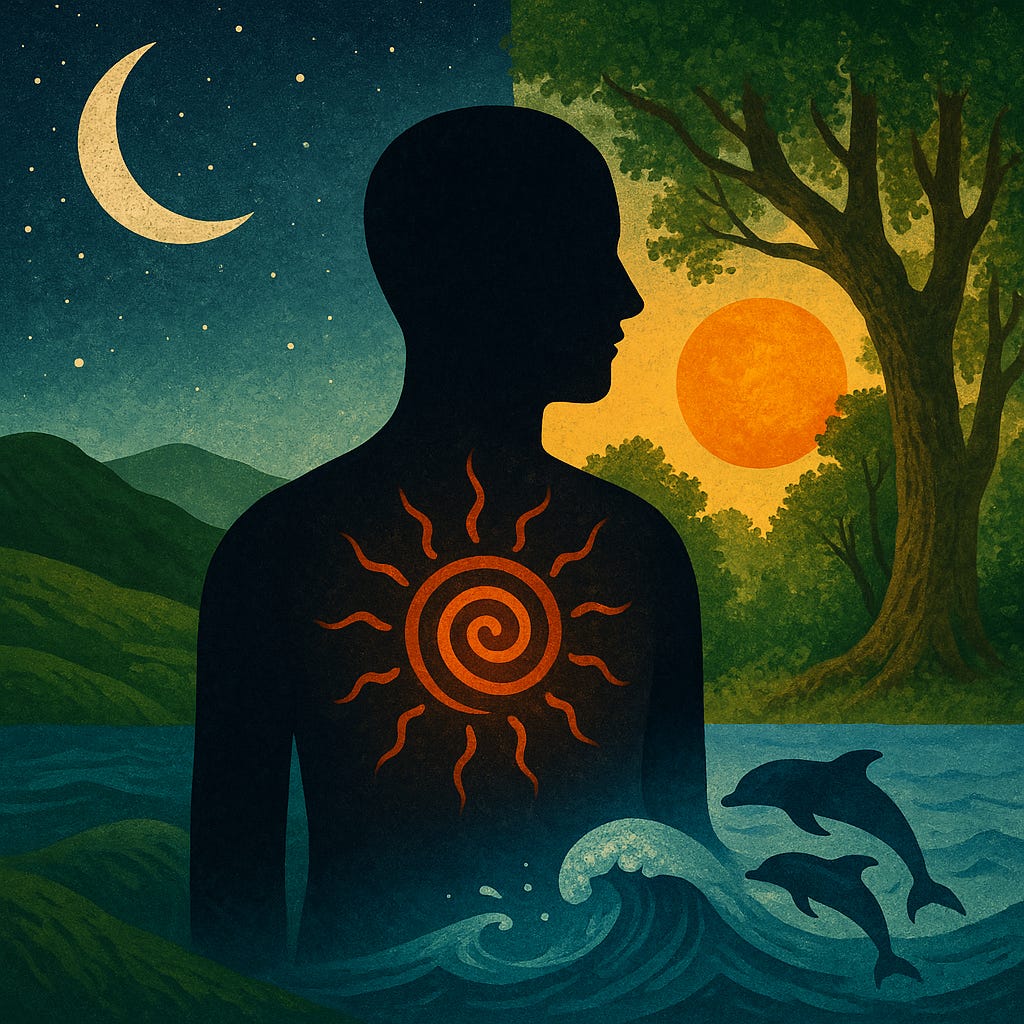
Here we are. You. Me. I in my body, you in yours, they in theirs. I with my personality, upbringing, influences, opinions. You with yours, they with theirs. Yet here are ways we are more than ourselves. We overlap not only with each other, but with other species, and those in other times, and more. Wandering time and place, ancestry and other lives, from love’s dissolving of boundaries to the intelligence of species, here are explorations of of ways we are vast. Free Story & Media Consultation Comment and Subscribe here This is a public episode. If you'd like to discuss this with other subscribers or get access to bonus episodes, visit storypaths.substack.com/subscribe
Sep 23
Flooded Badlands - A Song
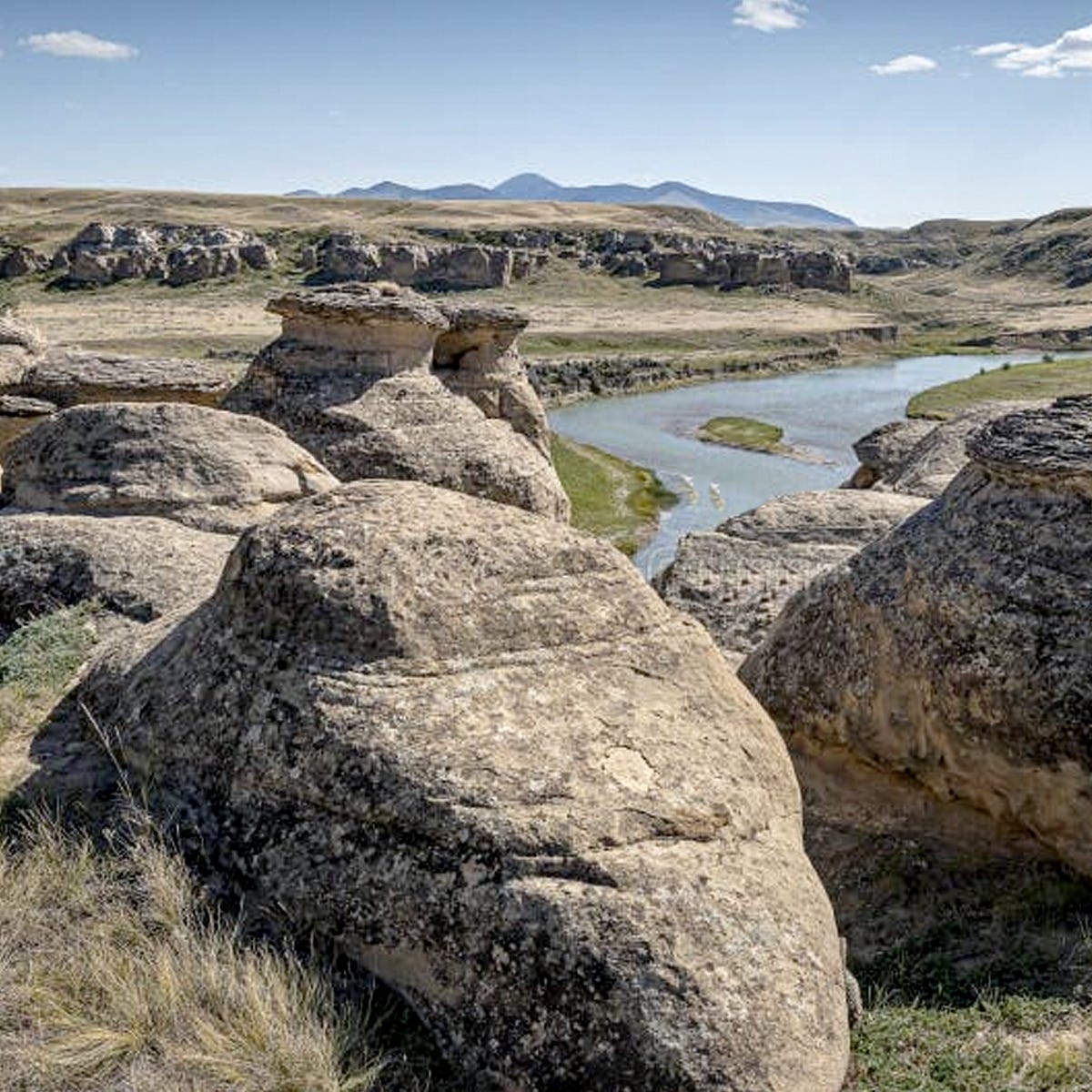
I was cast out from my home. Or maybe I ran away. To dry lands. I’m hungry. I need to become something more, to shed a part of me that seemed intrinsic. And the waters are rising. A slow, meditative and moody song.Lyrics: I ran from all l've known to a dry land where now seeking, seeking, seeking home Fortnights passed aplenty, & was living hungry learning from the serpents who hunted with the moon. One vast & star-pierced midnight, a man emerged from darkness Said ‘These lands you love shall leave us soon.’ He told me, ‘Floods they will course all across these creatures These creatures know it rightly, see them climbing from the sands He said ‘I dwell in stony ridges, high above the waters. Come dwell with me as we wait for land.’ One dawn we were together, above the flooded badlands He said, ‘Watch the sun trail crossing the waters down below.’ Long I sat there seeking, slowly growing patient ’Til I had nowhere else to go. Stone to gold & gold to sky Bones broke & scattered, once more & again Stars who circle still long after they die Guides guide still once they are slain Floods seeped downward & flowed on to the ocean Stone arounds on the ground was all I could see The old man passed… & plenty joined me with his passing All he lived now lives in me. Now walk across these badlands, still learning from the serpents finding forlorn singers, cast out from their homes by instigating elders, wise as troubled waters I come to them in their time alone. I sing to them from heaven, deep within the waters I sing to them as air deep within the stone with a voice of slither serpents, wise as desert daughters, where I wander is where I'm home. Subscribe & Support Free Story & Media Consultation Comment and Subscribe here This is a public episode. If you'd like to discuss this with other subscribers or get access to bonus episodes, visit storypaths.substack.com/subscribe
Sep 16
Death Doula-ing Patriarchy - A Song
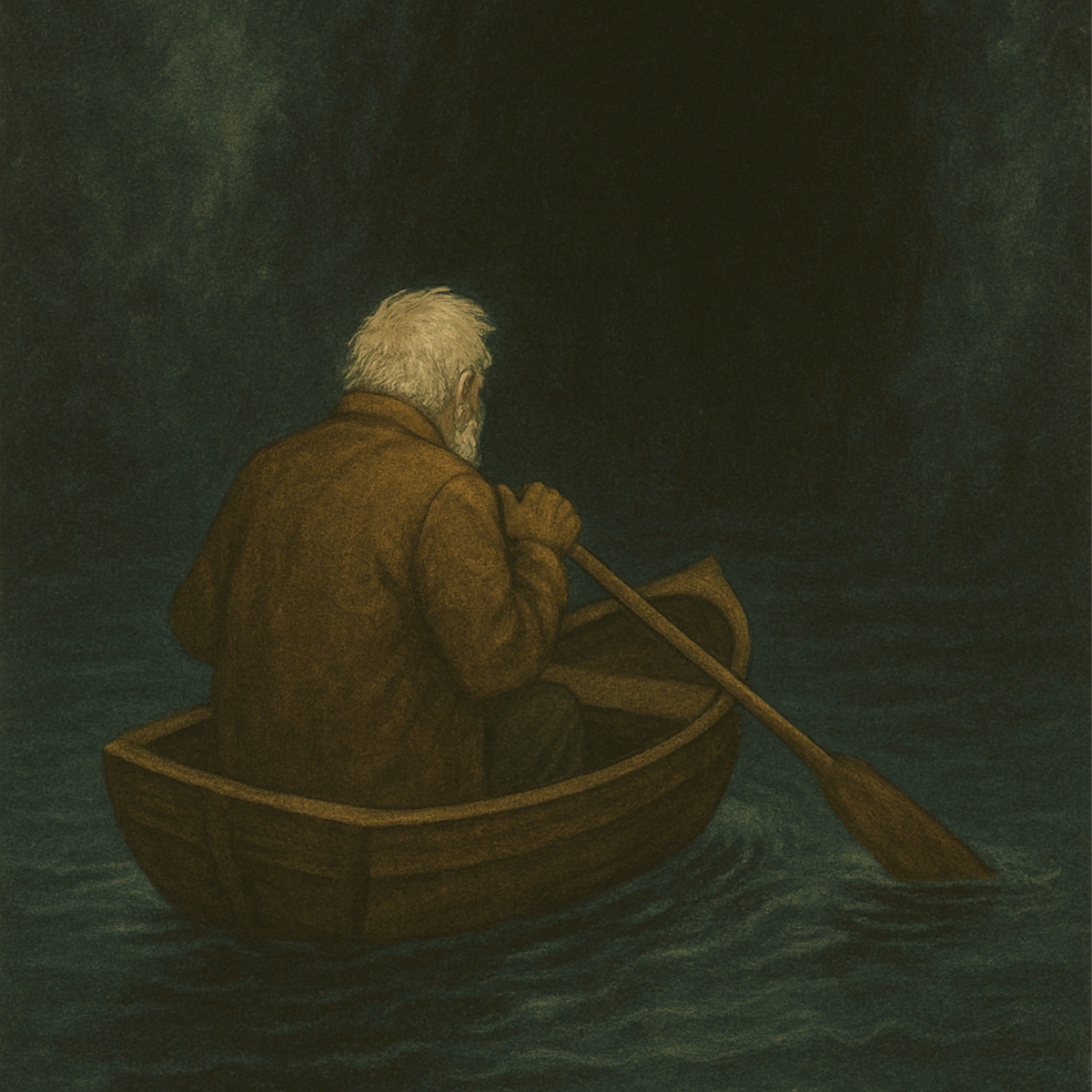
It’s time to die, old man. Past time. You’ve fucked things up. I don’t even want to see you. Damn, and you’re afraid. What dignity will you be able to die with? Alright, old man, here’s a song to help. Subscribe & Support Free Story & Media Consultation Comment and Subscribe here This is a public episode. If you'd like to discuss this with other subscribers or get access to bonus episodes, visit storypaths.substack.com/subscribe
Sep 9
We are Gifted & Full of Holes
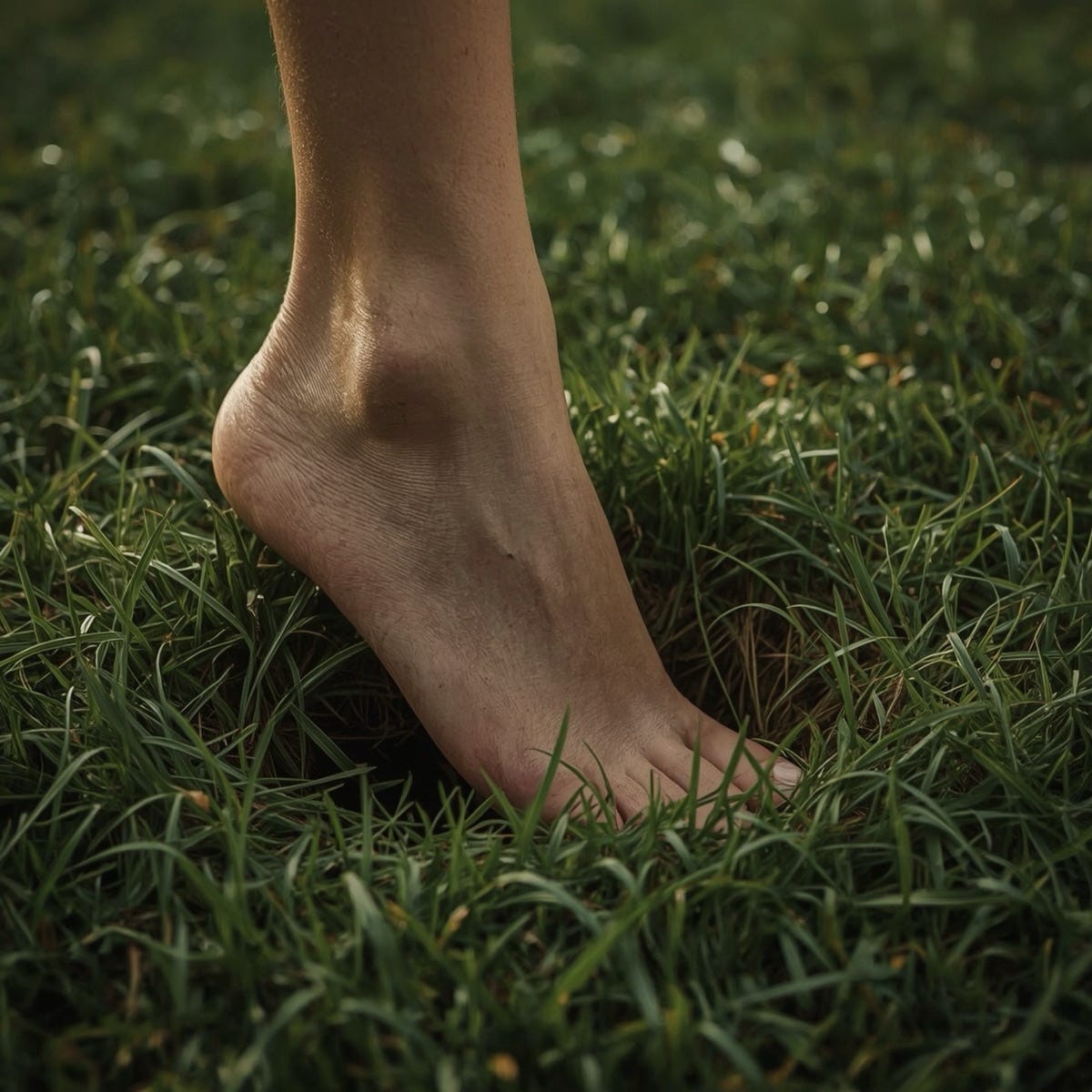
Do gifts leave gaps? If I’m good at one thing, does it leave me floundering in another area? And here’s a big thoughts, on the level of our whole human species, perhaps our gifts leave holes. Here’s a meditation on self-awareness and our relationship with our living home. Subscribe & Support Free Story & Media Consultation Comment and Subscribe here This is a public episode. If you'd like to discuss this with other subscribers or get access to bonus episodes, visit storypaths.substack.com/subscribe
Sep 2
What the Vultures Said
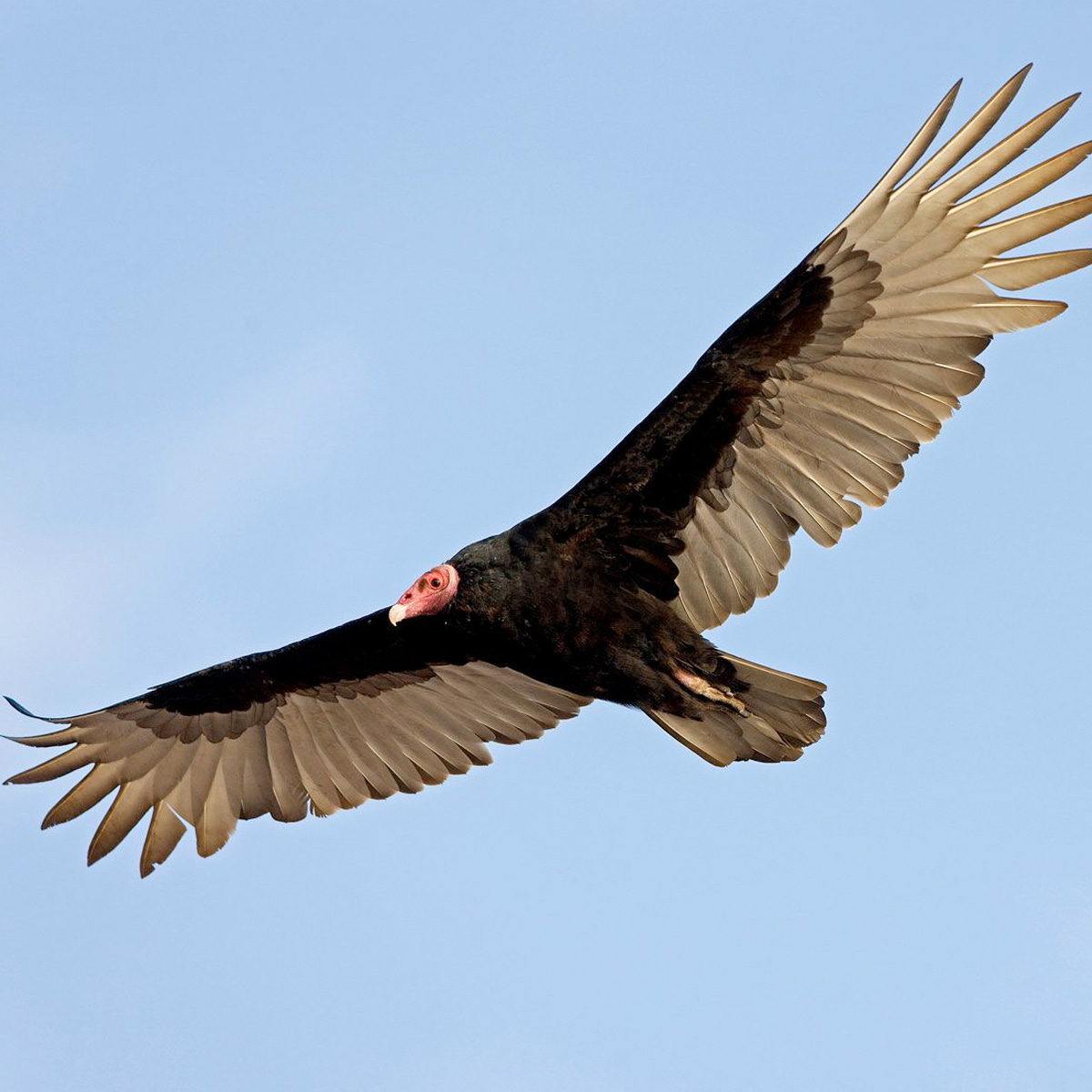
If you’re working with stories and you’re not crazy, don’t worry, it won’t take long. Turkey vultures circle overhead. They’re not waiting until I die, though they wouldn’t turn down the meat. No, they have a message for me. Who’s speaking to you? Subscribe & Support Free Story & Media Consultation Comment and Subscribe here This is a public episode. If you'd like to discuss this with other subscribers or get access to bonus episodes, visit storypaths.substack.com/subscribe
Aug 26
Mythic maps
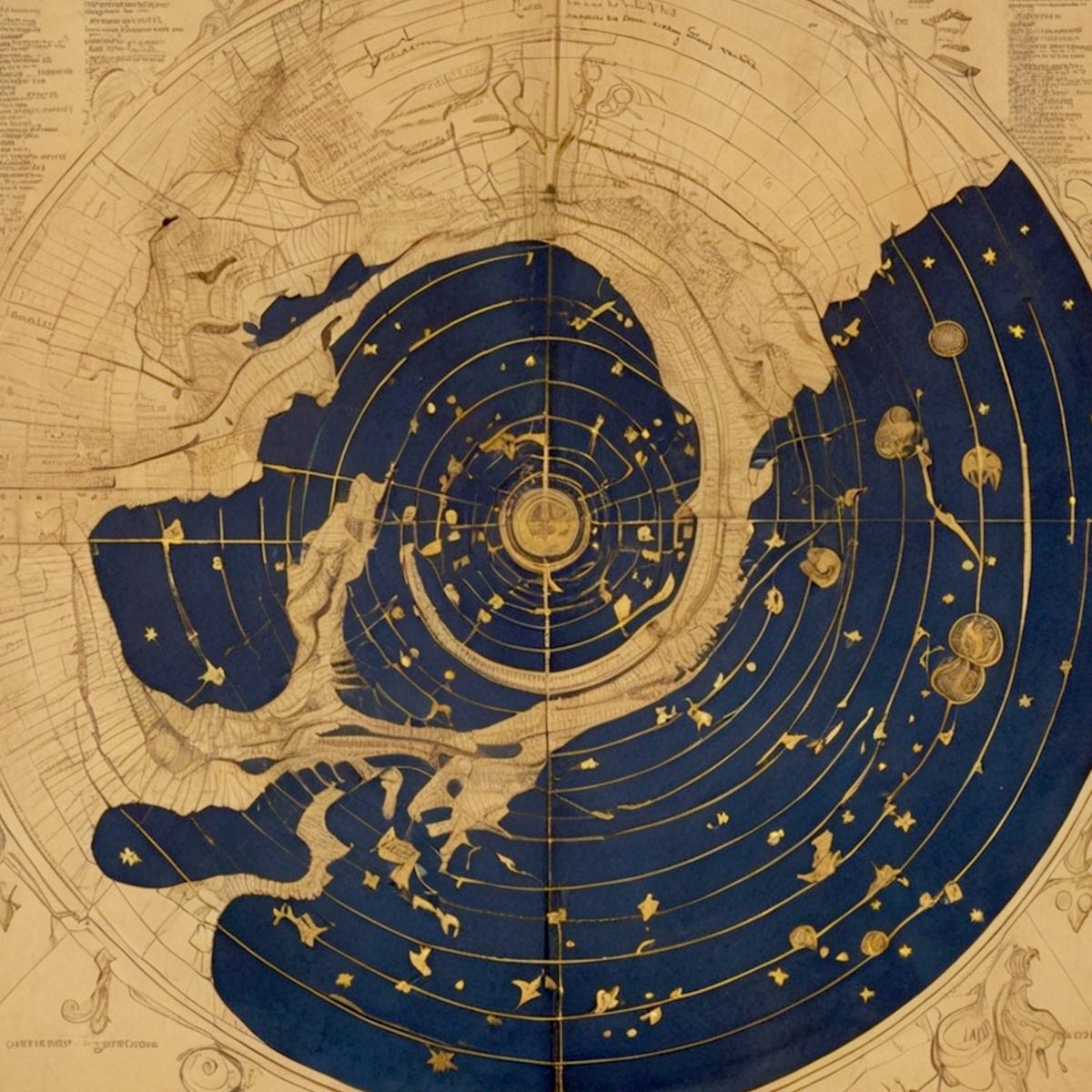
Imagine a map with no cities, no provincial or national borders, no names of colonisers claiming land. Instead, this map is dotted with mythic sites. It is a record of story-sites rooted in land, and webbed together. Hear more, in this melodic meditation, quoting Sean Kane’s excellent book, Wisdom of the Mythtellers, with a passage from a Haida origin myth. Subscribe & Support Free Story & Media Consultation Comment and Subscribe here This is a public episode. If you'd like to discuss this with other subscribers or get access to bonus episodes, visit storypaths.substack.com/subscribe
Aug 19
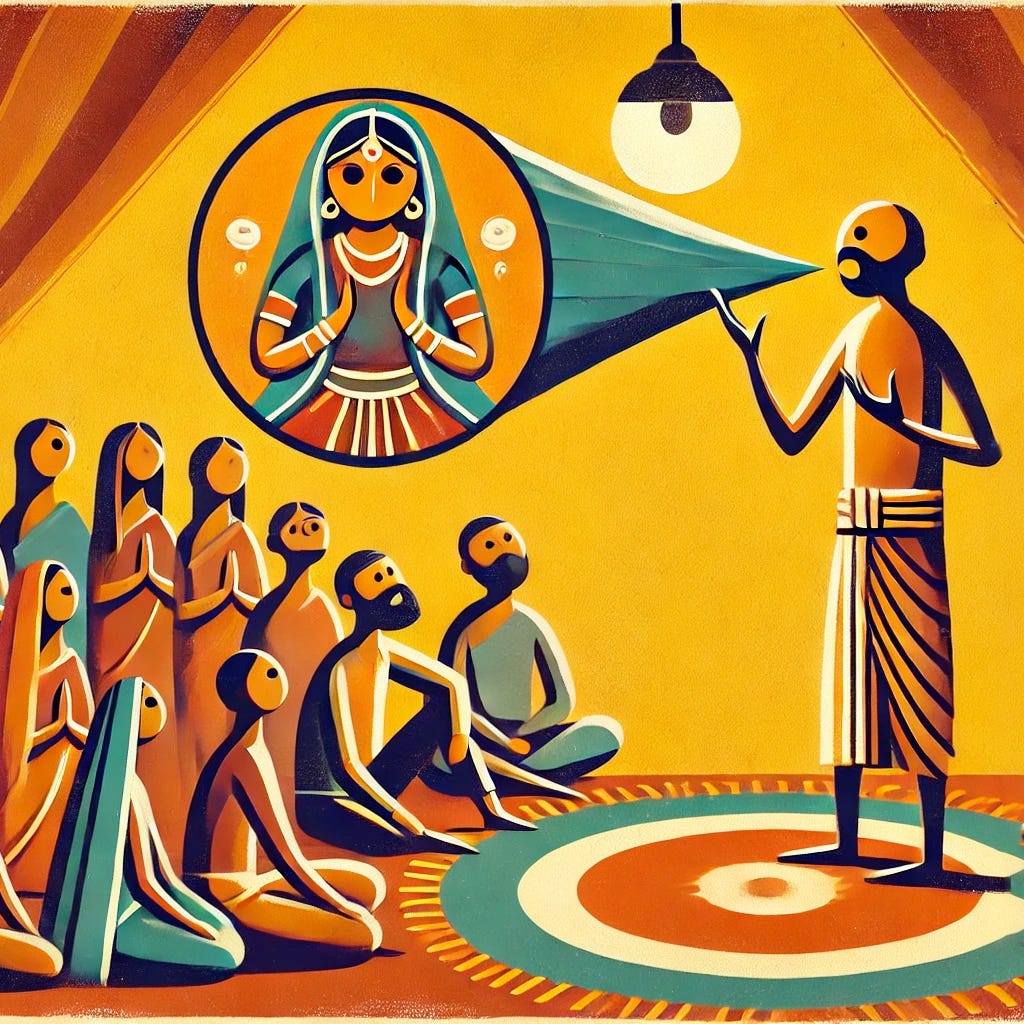
The Story is the Hero - The Ramayana
As a young man, with my fabric of my life dealt a sudden and grave wound, when I most needed culture, India took me in. But my relationship with Indian culture and myth is complicated. I traversed story paths walked by sages for thousands of years, heard the tales sprouting from those places, found culture and community and meaning. And there is hierarchy, racism, sexism, caste, and other violences woven in. And it’s complicated. And it’s beautiful. After years of turning away from the myths and practices that once shaped my life, I was recently invited to tell a story from the Ramayan at a Bhakti festival here on Turtle Island. This live telling moves through love, exile, and betrayal; forest hermitages and monkey kingdoms; floating bridges and secret reasons behind the prince’s banishment. Along the way, we wonder at the villains in this story, and how they may be the story’s greatest servants. Subscribe & Support Free Story & Media Consultation Comment and Subscribe here This is a public episode. If you'd like to discuss this with other subscribers or get access to bonus episodes, visit storypaths.substack.com/subscribe
Aug 12
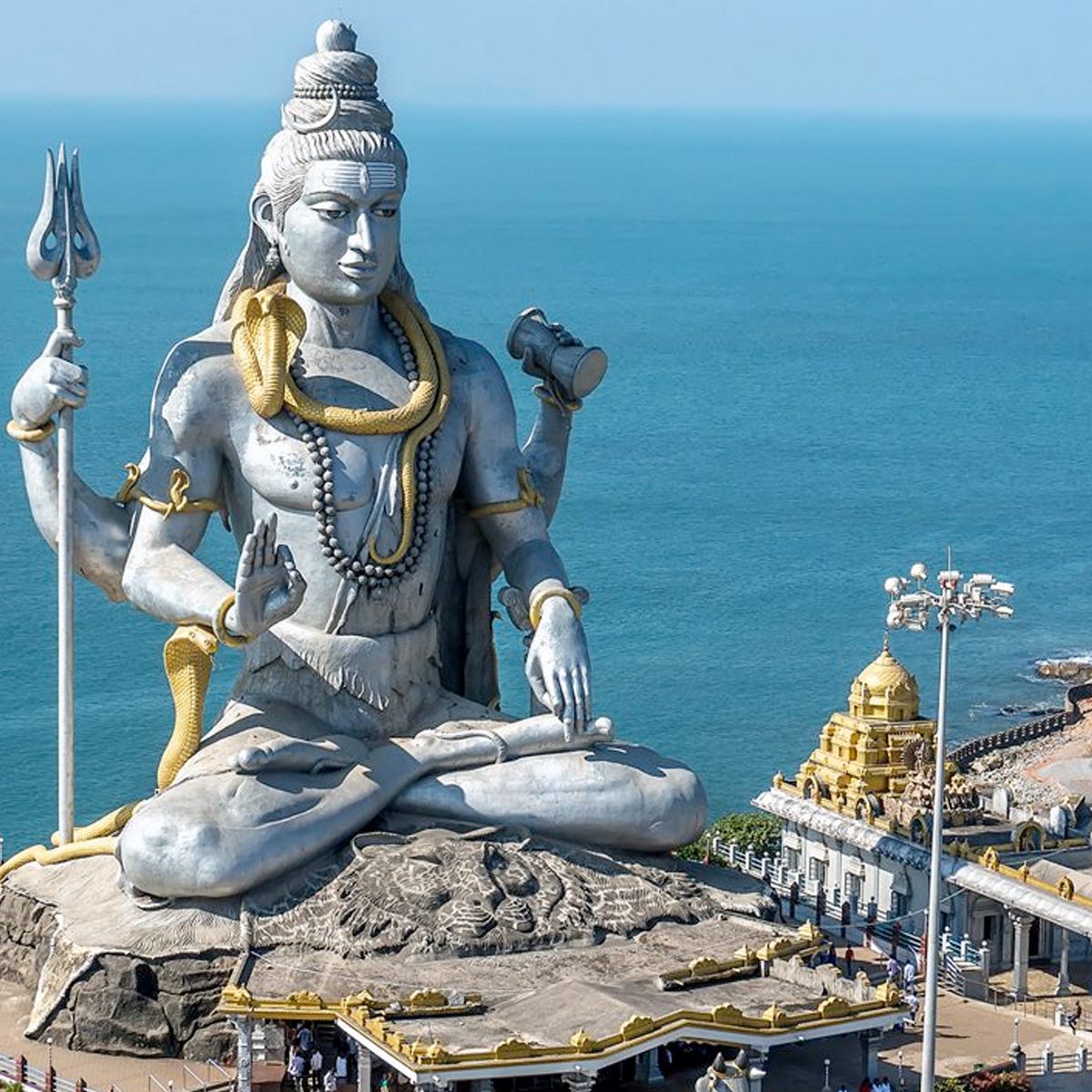
Lord Rama, Potatoes, and a Big Slug
Overwhelmed by rapid change in my life, inside and outside, I walked a beach in South India, my head spinning between continents. A fellow pilgrim’s rambling advice saved me. As did potatoes. As did a slug, years later, in a very different scenario. Intrigued? Confused? Have a listen to increase both of those. Free Story & Media Consultation Comment and Subscribe here This is a public episode. If you'd like to discuss this with other subscribers or get access to bonus episodes, visit storypaths.substack.com/subscribe
Aug 5
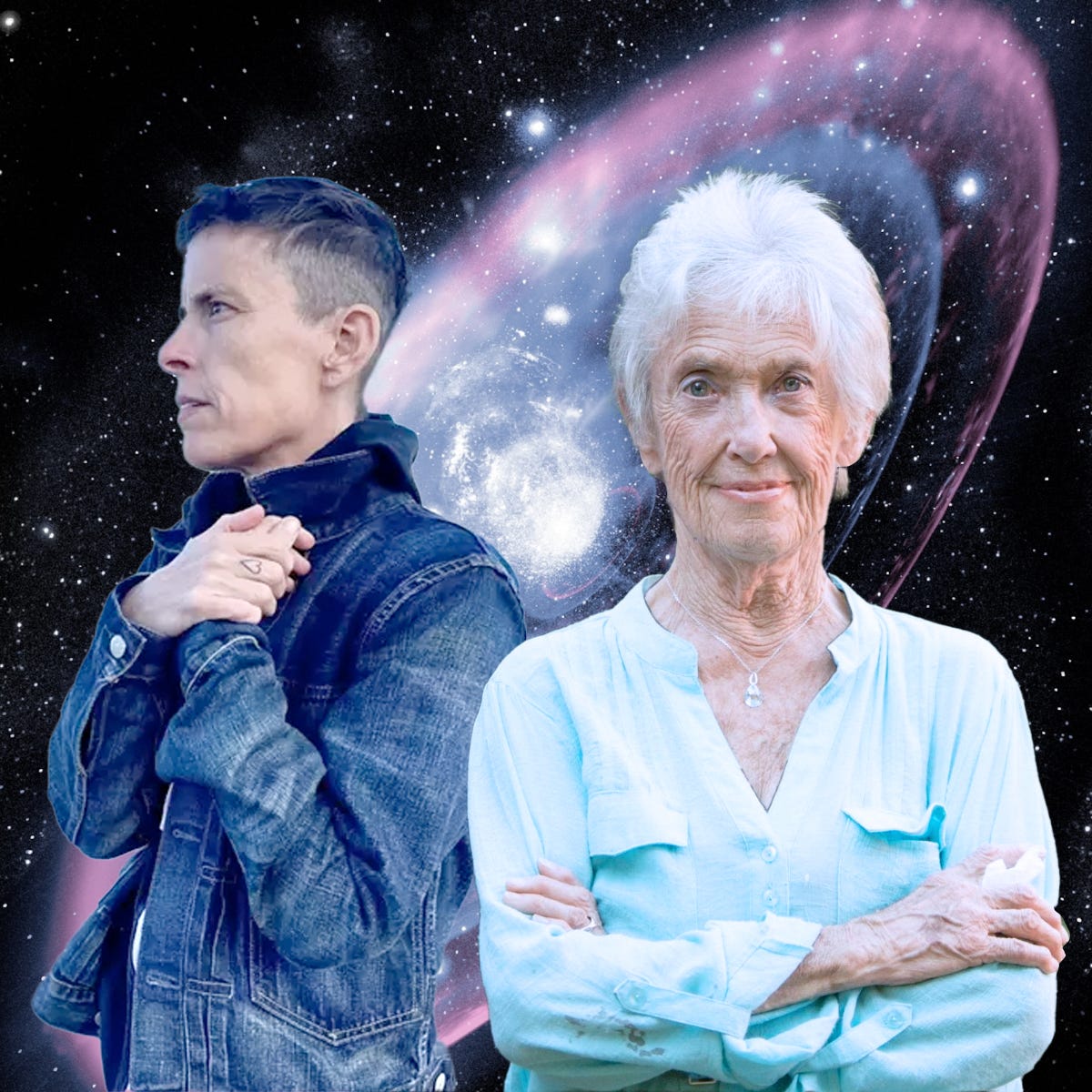
Tribute to Joanna Macy & Andrea Gibson
A tribute-song to two supernovas—Joanna Macy and Andrea Gibson—who in their passing away are spreading life-building gifts. A story-song. A metaphor. Free Story & Media Consultation Comment and Subscribe here This is a public episode. If you'd like to discuss this with other subscribers or get access to bonus episodes, visit storypaths.substack.com/subscribe
Jul 29
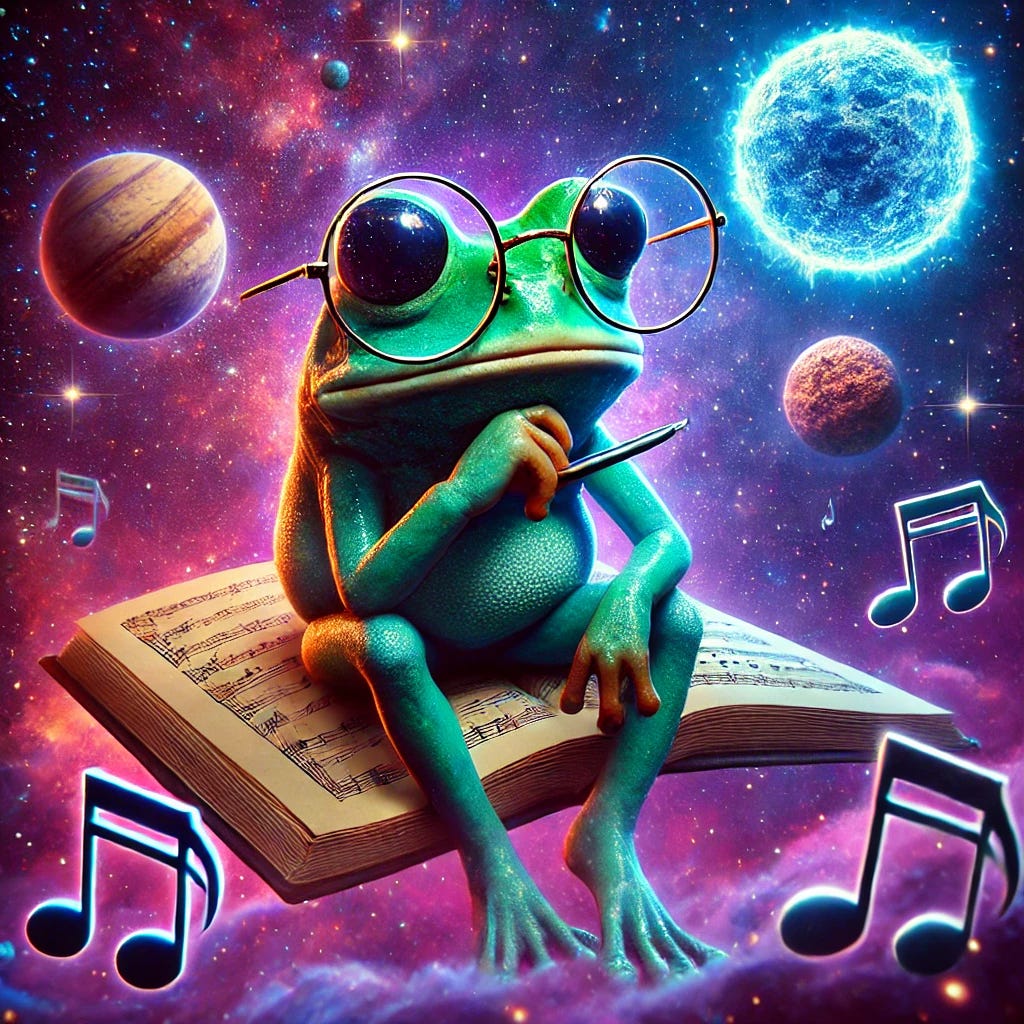
Music of the Spheres and Frogs That Know Too Much
The rhythm of Jupiter doesn’t quite fit with the birdsong at home. Peeling potatoes and rambling might be the path to enlightenment. Frogs are always singing to someone—maybe to you. My friend Sean Shea and I sat down for a ‘business meeting.’ A mother, a deathbed, and the music of the spheres. Somewhere between devotion and dance floors, between discipline and dissolution, we stumble forward, hands full of stories, wondering whether the bell is tolling for us yet. Sean guides and encourages song writers. Maybe you? https://www.songsforpositivechange.com/ Keep an ear our for our upcoming song-story workshop. Free Story & Media Consultation Comment and Subscribe here This is a public episode. If you'd like to discuss this with other subscribers or get access to bonus episodes, visit storypaths.substack.com/subscribe
Jul 22
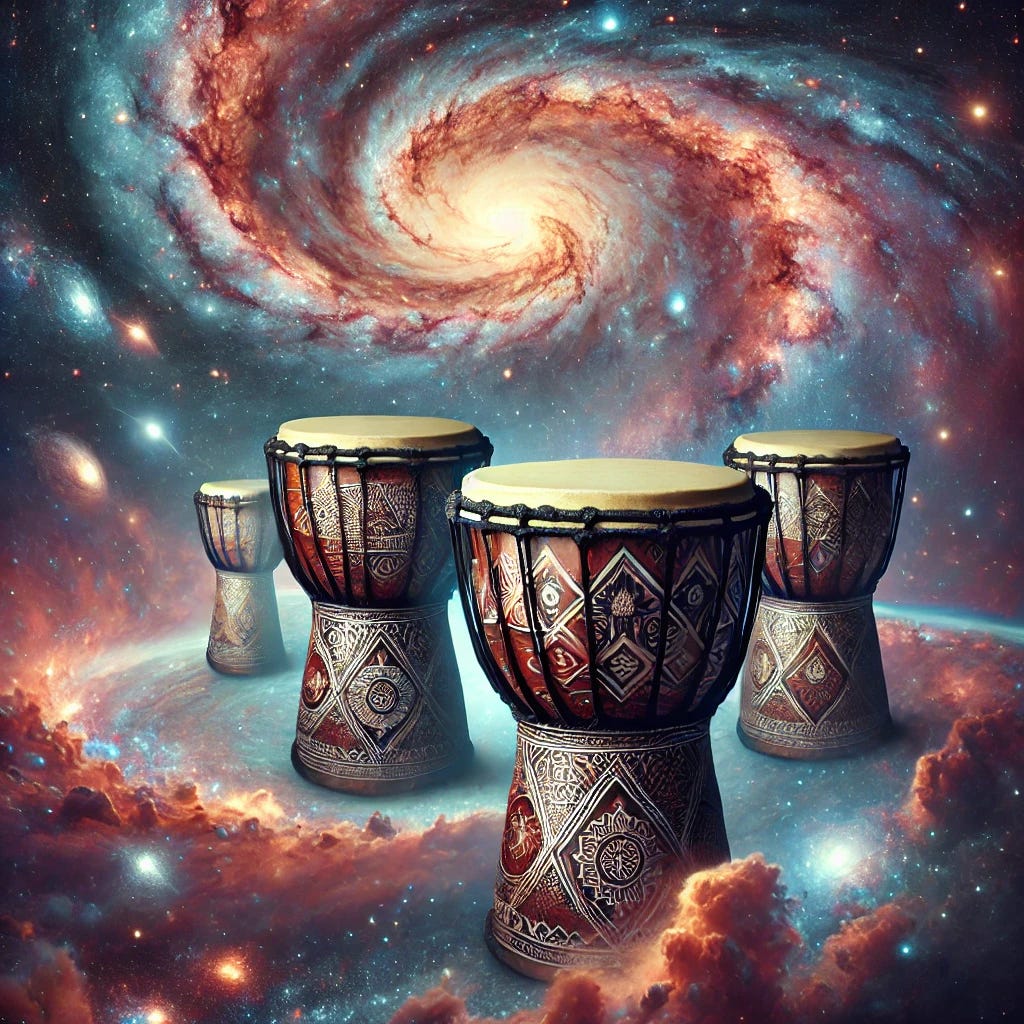
Rhythms for the Stars
Human skin against goat skin. Who leads, who follows? Rhythm is a language, but who speaks it best—the swirling hand or the desert wind? My friend Rasha taught me Egyptian rhythms beneath the stars. We sync, I lose the thread, we laugh. But the stars keep time, and the drums keep calling us back. Free Story & Media Consultation Comment & Subscribe Here This is a public episode. If you'd like to discuss this with other subscribers or get access to bonus episodes, visit storypaths.substack.com/subscribe
Jul 15
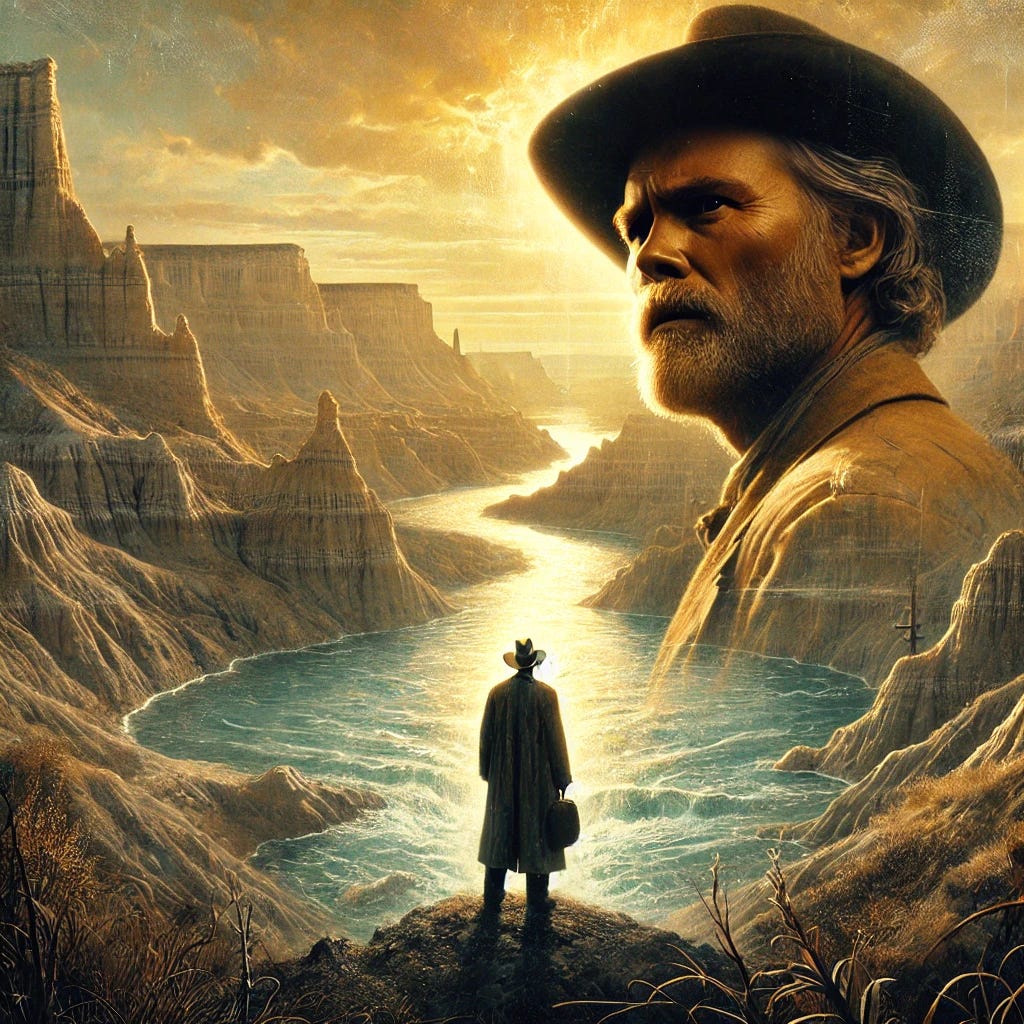
Badlands & Baptisms: A Southern Man Softens
Bats cut the badlands sky. A traditional man softens. Who gets to cry? Who gets to weave? Another man steps into the ocean and forgets himself. He comes back with nothing. But what’s that he’s offering to the being who sent him in? The waters are rising. Step in. Free Story & Media Consultation Comment here This is a public episode. If you'd like to discuss this with other subscribers or get access to bonus episodes, visit storypaths.substack.com/subscribe
Jul 8
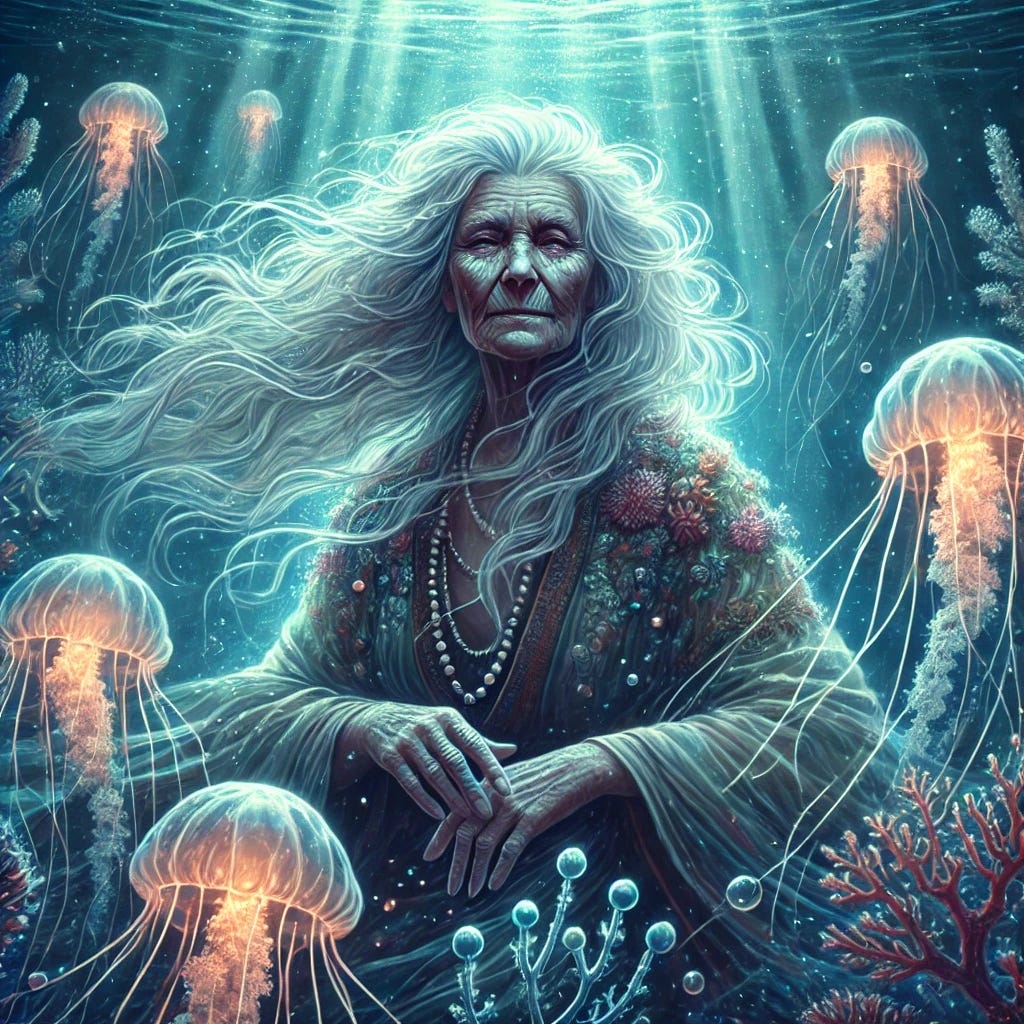
Witch and the waters: A Story Meditation
A king devoured by his own hunger. Skin dissolving into fur, into feathers, into scales. The tunnel calls, but will you step through? The sign above the entrance reads: Weird. Is that just another way of seeing? Breathe deep. Submerge. Listen. The water is speaking. Free Story & Media Consultation Comment and Subscribe here This is a public episode. If you'd like to discuss this with other subscribers or get access to bonus episodes, visit storypaths.substack.com/subscribe
Jul 1
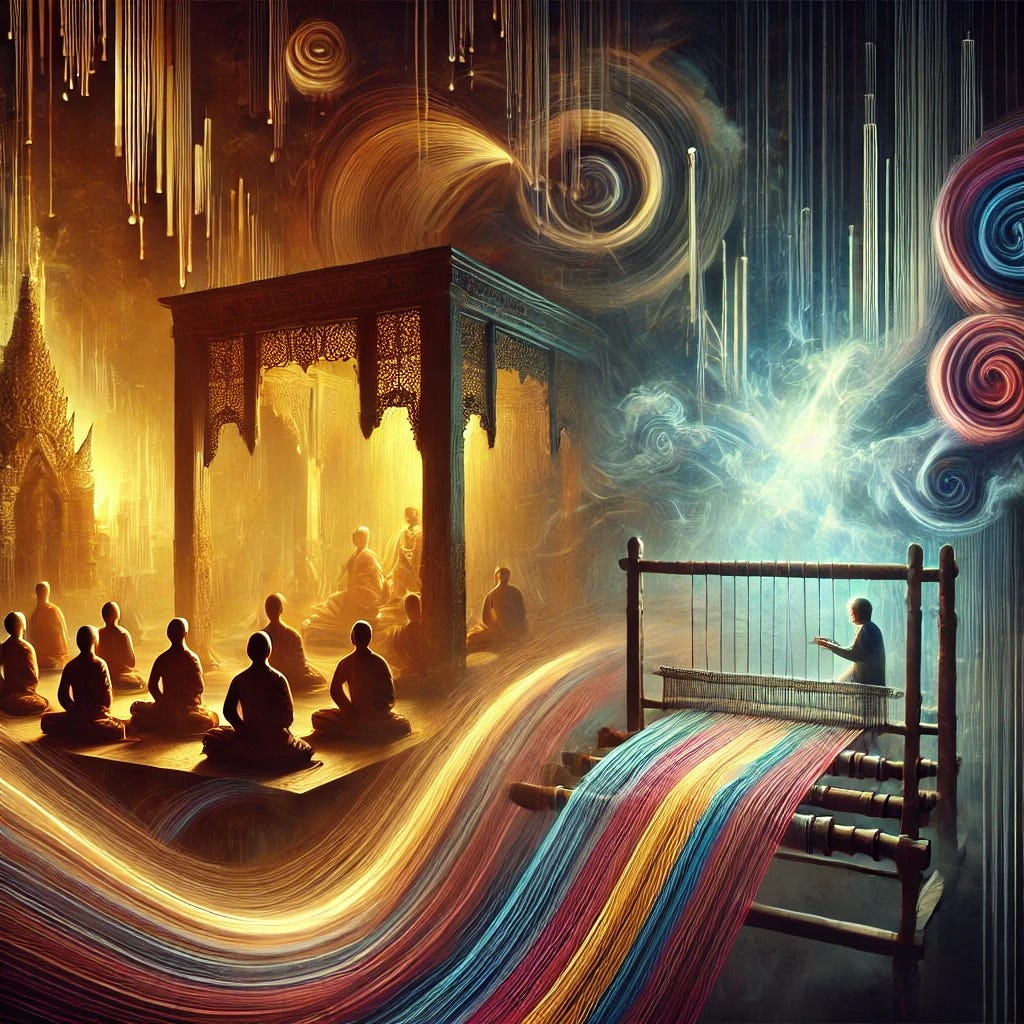
Meandering Soundscapes: Looms, Temples, and the Other Side
Looms clatter, voices hum, a temple echoes with recitations.Gods wander through the Himalayan foothills. Are we moving? Sliding, flying, riding: through sound, space, a weave of voices. Let your headphones slide other worlds into your noggin. Listen close. The loom is weaving. The temple is calling. Free Story & Media Consultation Comment and Subscribe here This is a public episode. If you'd like to discuss this with other subscribers or get access to bonus episodes, visit storypaths.substack.com/subscribe
Jun 24
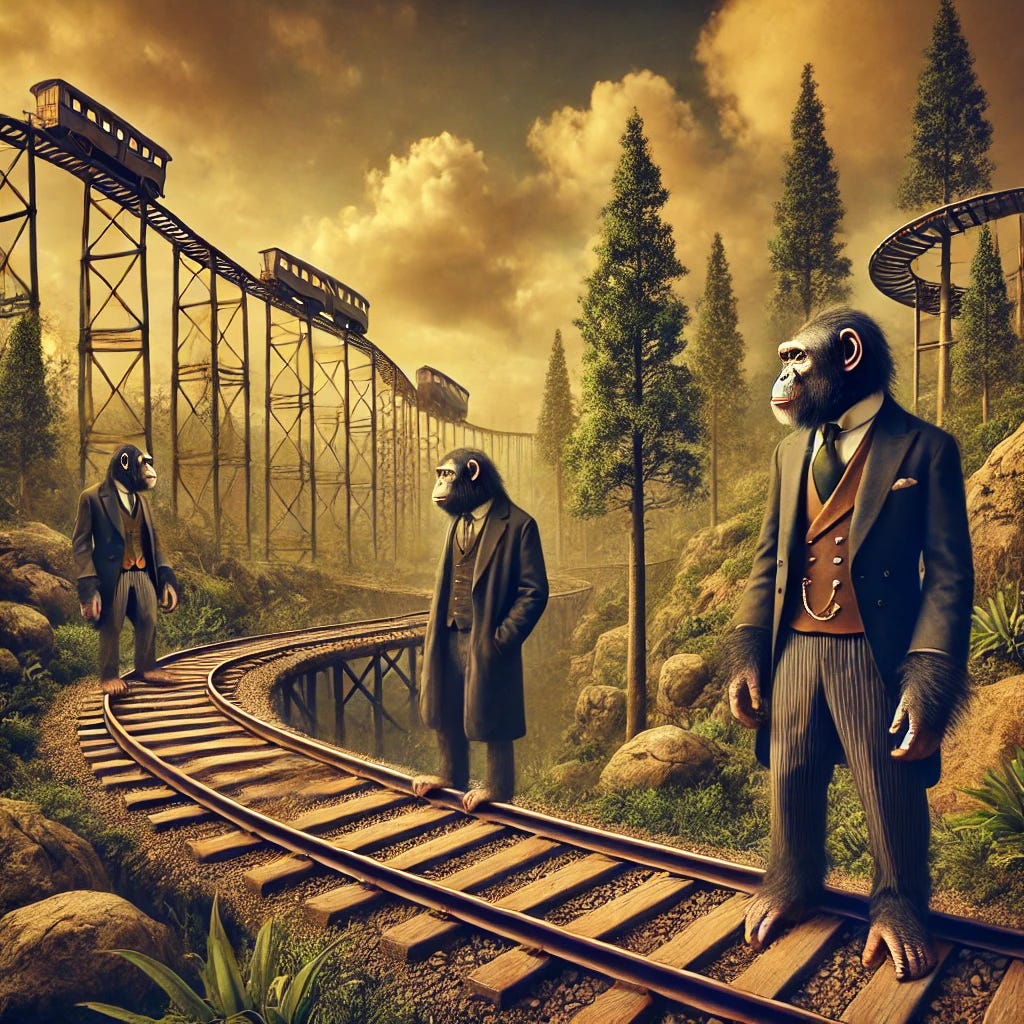
Ape Chiefs Demand Rent, the Railway Demands Blood
Every tool is a spell, every technology a superpower. Clamshell knives slash AI cloaks. Free Story & Media Consultation Comment and Subscribe here This is a public episode. If you'd like to discuss this with other subscribers or get access to bonus episodes, visit storypaths.substack.com/subscribe
Jun 10
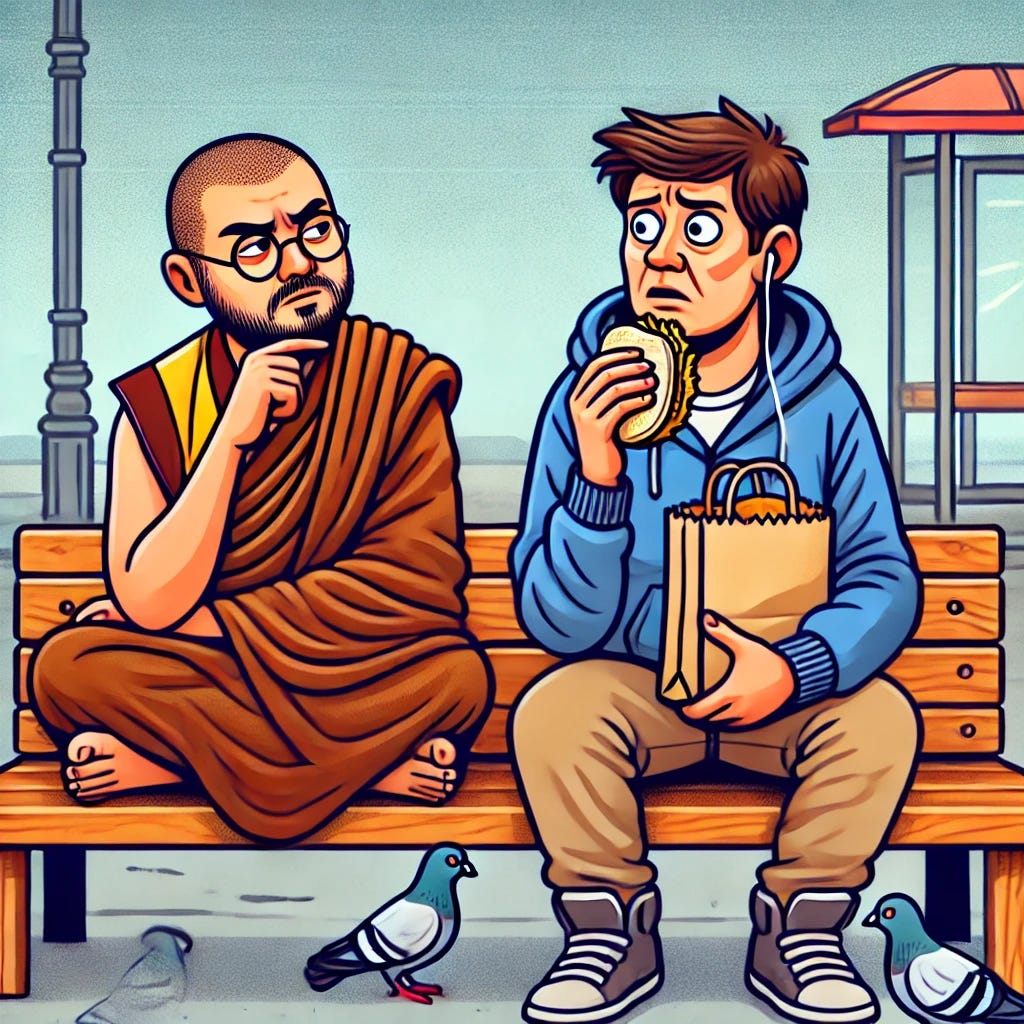
Raging Against the Dying of the Light (and Other Poor Life Choices)
Leaving monkhood was easy. I just got in a cab and changed out of my robes. But what about the aftershocks? The lost rhythms, the misfit loves, the phantom schedules? My friend Sean Shea and I sat down for a ‘business meeting.’ I do love our business meetings. Or rather, our deep and personal conversations. Sean also reflected on helping his father pass through the portal of death. Somewhere between the ashram and the grocery store, between devotion and despair, we roamed. Bring some potatoes, onions, and your feelings about death. Let’s share a meal together. Sean guides and encourages song writers. Maybe you? https://www.songsforpositivechange.com/ Keep an ear our for our upcoming song-story workshop. Free Story & Media Consultation Comment and Subscribe here This is a public episode. If you'd like to discuss this with other subscribers or get access to bonus episodes, visit storypaths.substack.com/subscribe
Jun 3
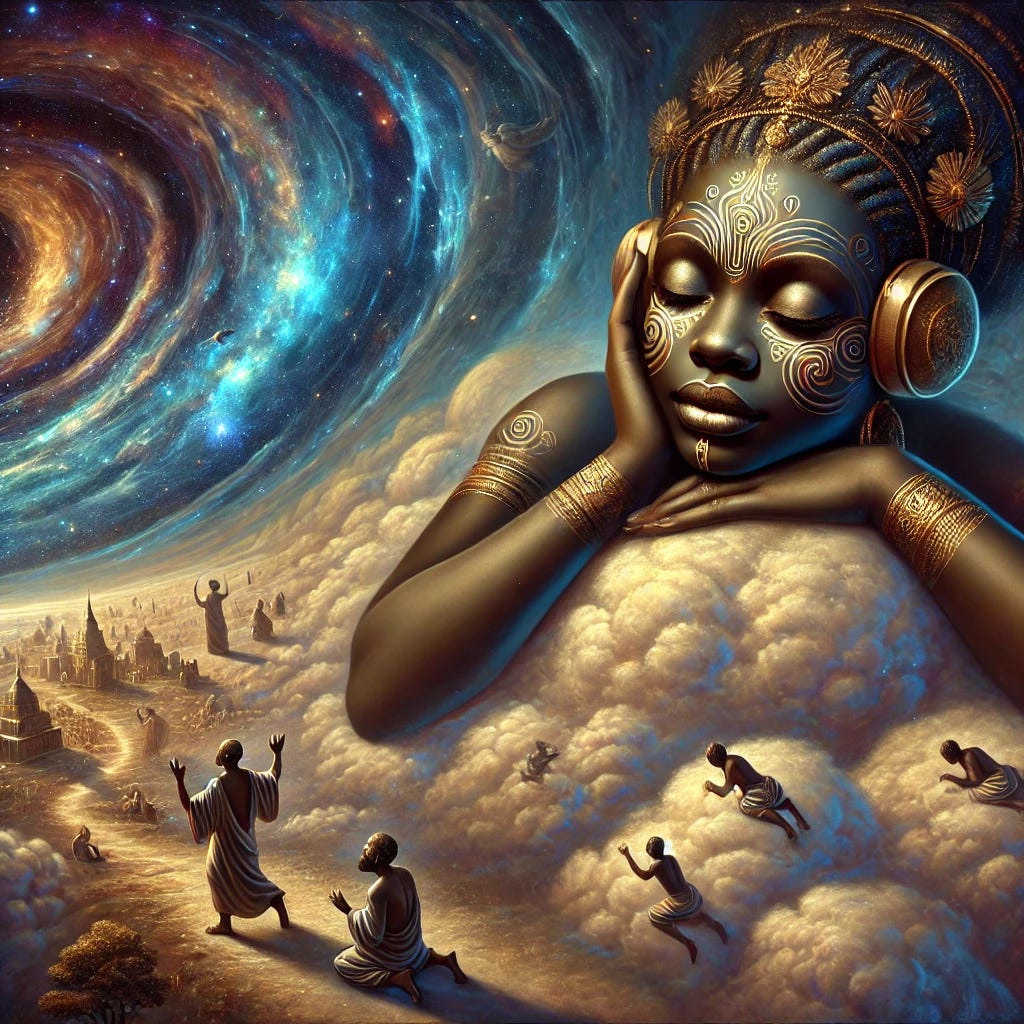
God’s Wife Just Wanted Some Peace and Quiet
What happens when God’s wife just wants some peace and quiet? Creation. If worldviews are bubbles, what happens when they pop? Listen in. Float through the bubbles. Find the third spiral. Free Story & Media Consultation Comment and Subscribe here This is a public episode. If you'd like to discuss this with other subscribers or get access to bonus episodes, visit storypaths.substack.com/subscribe
May 27
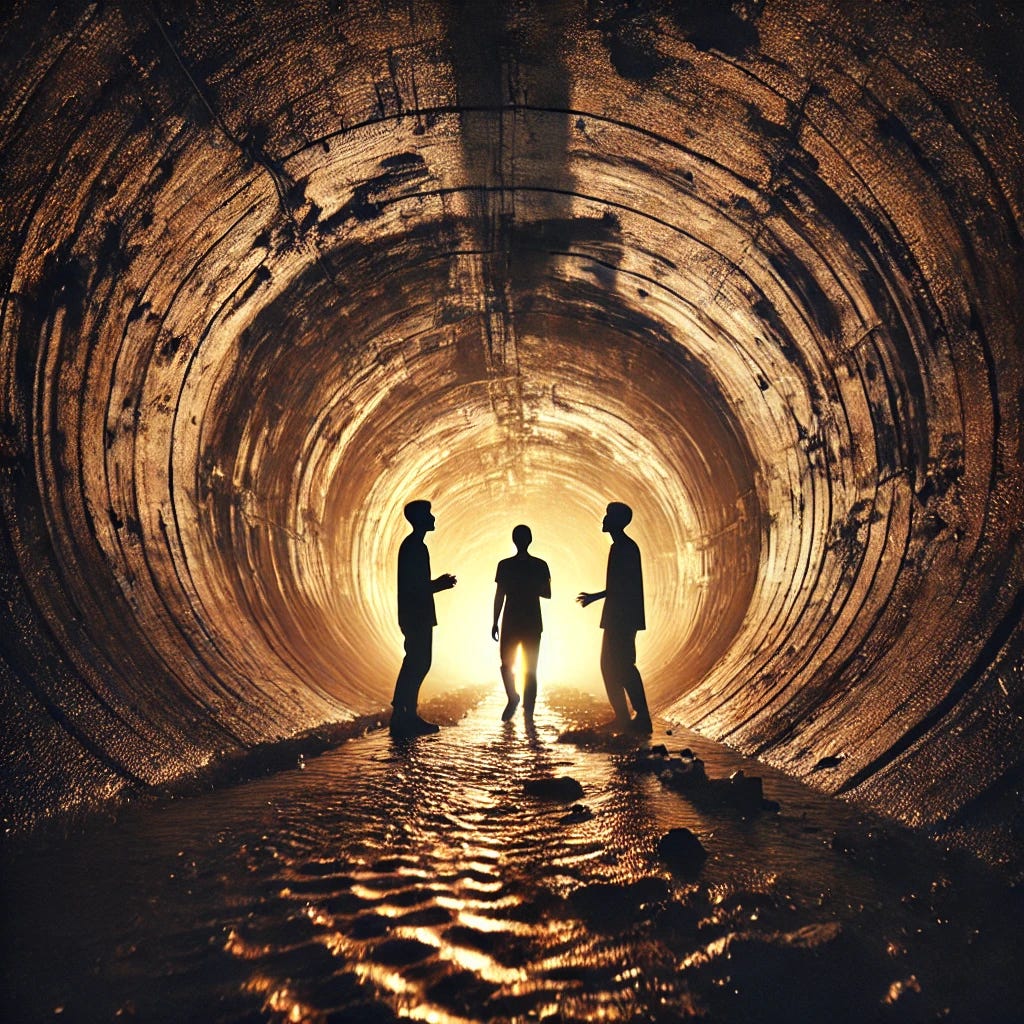
3 Friends Singing in a Tunnel
Voices resound on stone, and trumpet through abandoned pipes. A hum, a howl, a half-remembered hymn— Sticks whack PVC pipes, the sound swallowed and reshaped. Somewhere, a songbird forgets its own tune. Somewhere, a coyote grins in the dark. A card is flipped, a role is claimed. Sing low enough, and the walls might sing back. Step inside. You might just hear your own voice waiting. Free Story & Media Consultation Comment and Subscribe here This is a public episode. If you'd like to discuss this with other subscribers or get access to bonus episodes, visit storypaths.substack.com/subscribe
May 24
Language is a Form of Domestication- Three Readings
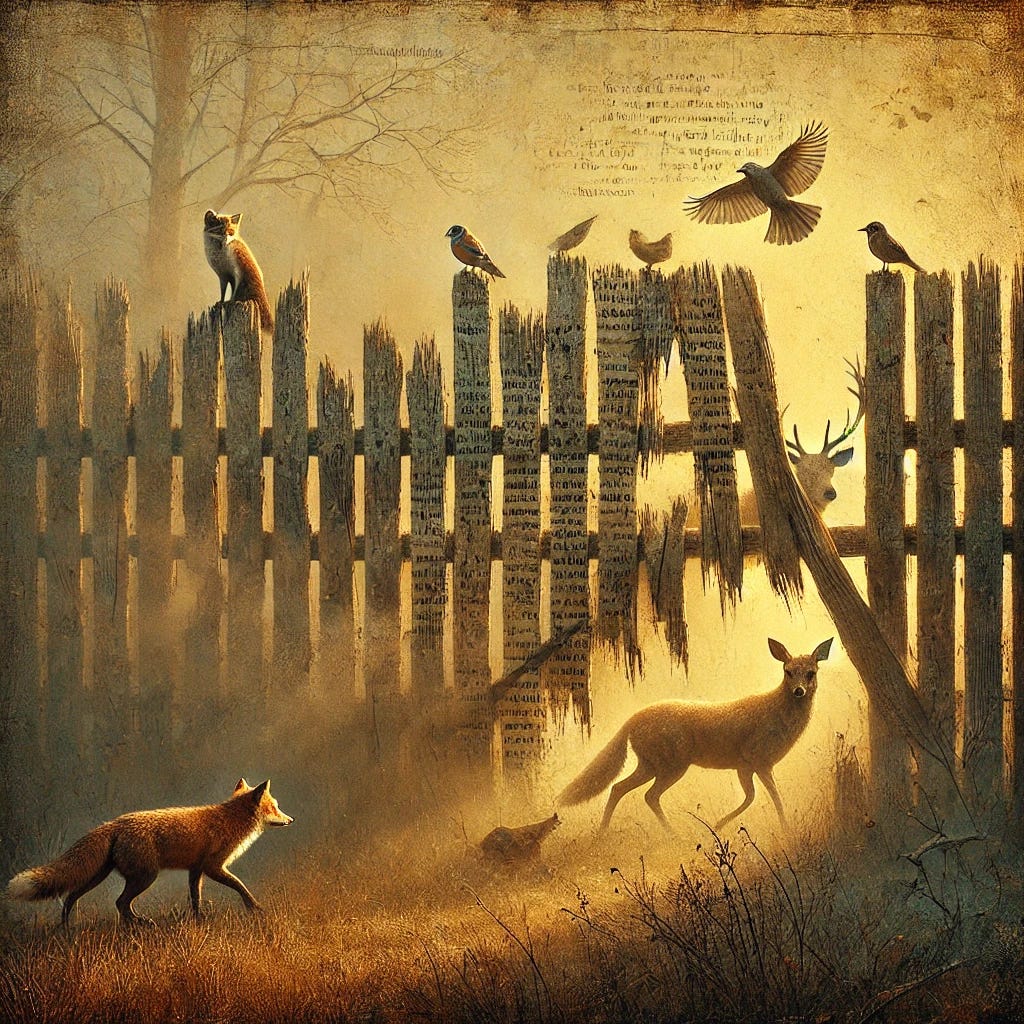
A fence stands, half-built, half-rotten, full of holes. Birds nest in its holes, vines curl through its cracks. This fence is language, with old myths slipping past the pickets. Step through. Again, step through. Let your ears grow fur. Three readings from three random pages of wonderful books. Free Story & Media Consultation Comment and Subscribe here This is a public episode. If you'd like to discuss this with other subscribers or get access to bonus episodes, visit storypaths.substack.com/subscribe
May 20
Rilke and Rasa - Arts of Heroism
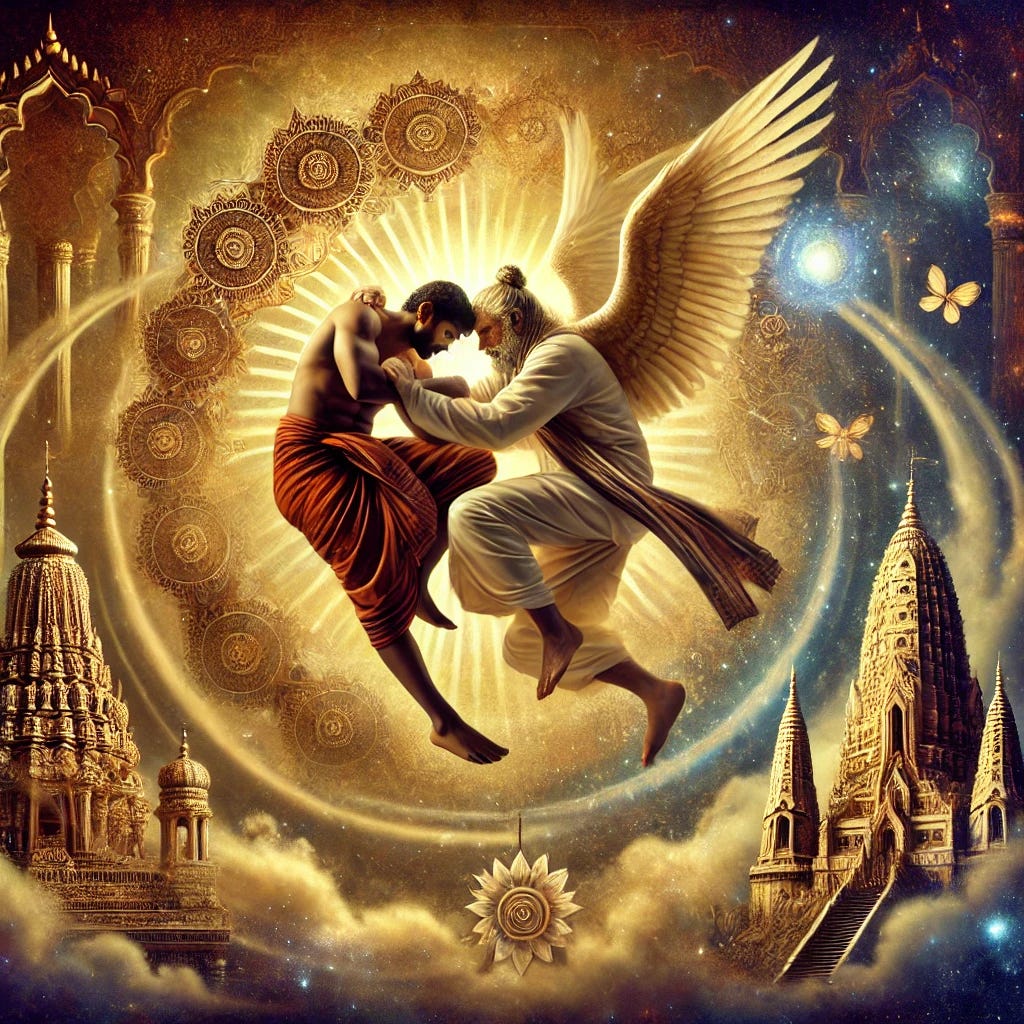
A poem from Rilke converses with the Hindu aesthetic system of rasa. A good book about rasa. Rilke’s full poem: The Man Watching By Rainer Maria Rilke I can tell by the way the trees beat, after so many dull days, on my worried windowpanes that a storm is coming, and I hear the far-off fields say things I can’t bear without a friend, I can’t love without a sister. The storm, the shifter of shapes, drives on across the woods and across time, and the world looks as if it had no age: the landscape, like a line in the psalm book, is seriousness and weight and eternity. What we choose to fight is so tiny! What fights with us is so great. If only we would let ourselves be dominated as things do by some immense storm, we would become strong too, and not need names. When we win it’s with small things, and the triumph itself makes us small. What is extraordinary and eternal does not want to be bent by us. I mean the Angel who appeared to the wrestlers of the Old Testament: when the wrestlers’ sinews grew long like metal strings, he felt them under his fingers like chords of deep music. Whoever was beaten by this Angel (who often simply declined the fight) went away proud and strengthened and great from that harsh hand, that kneaded him as if to change his shape. Winning does not tempt that man. This is how he grows: by being defeated, decisively, by constantly greater beings. –Translated by Robert Bly Free Story & Media Consultation Comment and Subscribe here This is a public episode. If you'd like to discuss this with other subscribers or get access to bonus episodes, visit storypaths.substack.com/subscribe
May 15
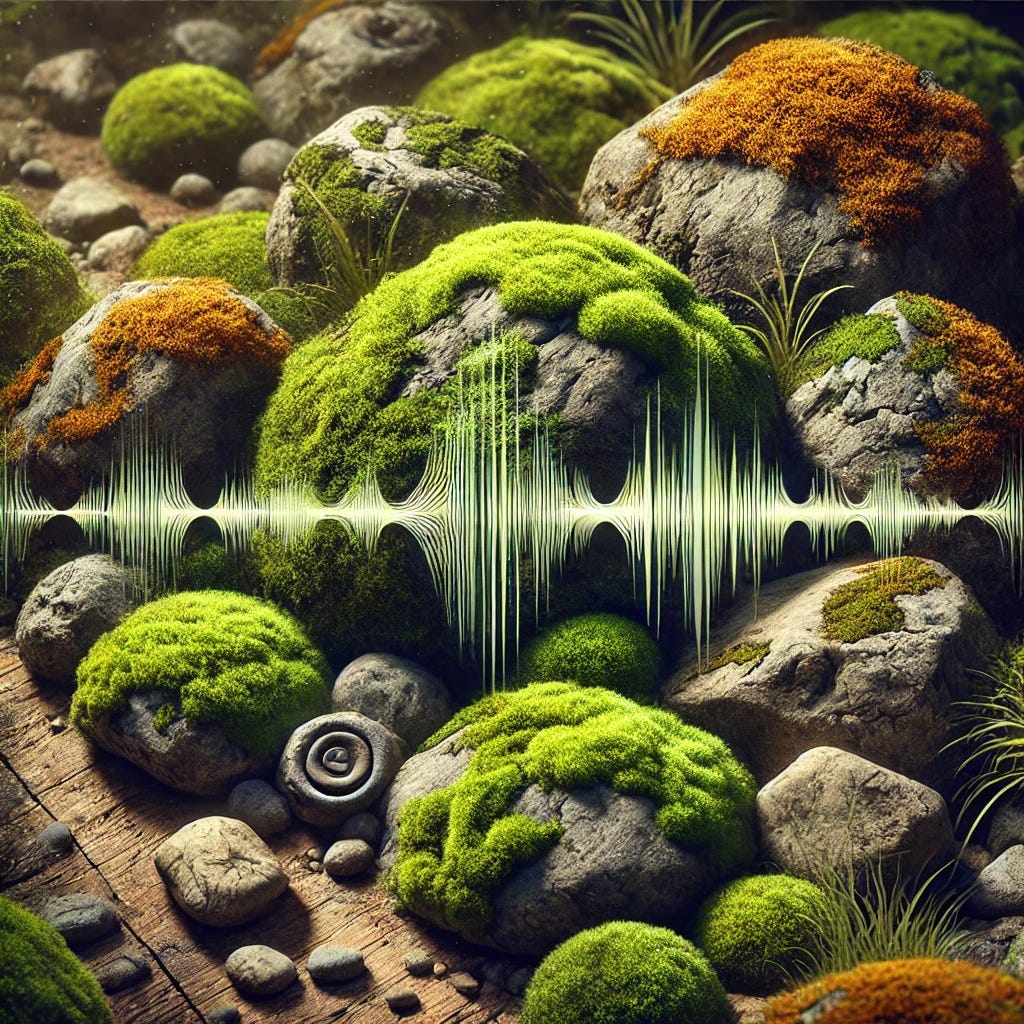
This Podcast is a Puppy
Snuffle, sniffle… A podcast isn’t interviews, or music, or rants, or radio plays. Not necessarily. A podcast is sound. Except when it’s a puppy. This podcast wanders and wags, following trails through mossy soundscapes and whispered words. Curious, it circles someone’s feet, nuzzling the edges of what is knows. It trots off again: tail high, ears perked, seeking stories in the wind. Sniffle, snuffle… Free Story & Media Consultation Comment and Subscribe here This is a public episode. If you'd like to discuss this with other subscribers or get access to bonus episodes, visit storypaths.substack.com/subscribe

May 13
Sleeping Around, Sinking Below, and Stitching It All Together
A man is pulled into a wild current, and emerges more curvaceous than he went in. Needles pierce fabric, thread pulling tight, creating and mending. Between drowning and dreaming, between bed and abyss, something is being stitched. Something is unraveling. Free Story & Media Consultation Comment & Subscribe Here This is a public episode. If you'd like to discuss this with other subscribers or get access to bonus episodes, visit storypaths.substack.com/subscribe

May 6
Coal Devils, Broken Tales, and Stories Past the Edge
An agreement broken. Hillsides torn open, stone bones exposed. Trains roll on—steel to wood, wood to stone, stone to soil, mile after mile. Some circle familiar fires. Others wander to where tangled stories grow, where a truth too large splits its own shell. When the story cracks, something new sings through. Come listen, sit beneath this tree, even if it drips sap. Free Story & Media Consultation Comment and Subscribe here This is a public episode. If you'd like to discuss this with other subscribers or get access to bonus episodes, visit storypaths.substack.com/subscribe

Apr 29
The River We Are
Can a Wall Street refugee find peace in a hut by the sea? How do you grieve being born into an army? Praise for the beings in my life. There’s a river running through us, every time we drink and pee. It carries shame, blood, joy, songs.Bats cut the badlands sky. A traditional man softens. Who gets to cry? Who gets to weave? Another man steps into the ocean and forgets himself. He comes back with nothing. But what’s that he’s offering to the being who sent him in? The waters are rising. Step in. Free Story & Media Consultation Comment & Subscribe Here This is a public episode. If you'd like to discuss this with other subscribers or get access to bonus episodes, visit storypaths.substack.com/subscribe
Apr 15
Healing Hospitals- Holistic Health for Patients and Doctors
Prescription pads crumble into compost. The wind hums a second opinion. Healing isn’t in the pill, but in the soil, in the hands, in the rhythm of breath. The council of healers is vast—grandmothers, rivers, fungi, grief. What does medicine look like when it stops rushing? When it listens? My friend Amy Walsh M.D., an emergency room doctor, joins me for blue-sky dreaming of what health care could be. A conversation on restoration, reciprocity, and the art of being well. Read Amy’s wonderful writing here. Free Story & Media Consultation Comment and Subscribe here This is a public episode. If you'd like to discuss this with other subscribers or get access to bonus episodes, visit storypaths.substack.com/subscribe

Apr 11
Are you neurodiverse?
A friend asked me, 'Are you neurodiverse?' Here's my reply. What might yours be? Free consultation for your creative projects: https://tidycal.com/theodorestorypaths/15-minute-meeting Comment here: https://storypaths.substack.com/p/e197d8e0-7b98-4c0f-9e46-a80b8232b1e3 This is a public episode. If you'd like to discuss this with other subscribers or get access to bonus episodes, visit storypaths.substack.com/subscribe

Apr 1
A Grief ceremony
In a recent grief ceremony, a simple practice made sharing together possible. https://storypaths.substack.com/p/8b6dc400-9b83-4174-bec3-8e047707543f Free consultation for your creative projects: https://tidycal.com/theodorestorypaths/15-minute-meeting Comment here: https://storypaths.substack.com/p/e197d8e0-7b98-4c0f-9e46-a80b8232b1e3 This is a public episode. If you'd like to discuss this with other subscribers or get access to bonus episodes, visit storypaths.substack.com/subscribe
Mar 25
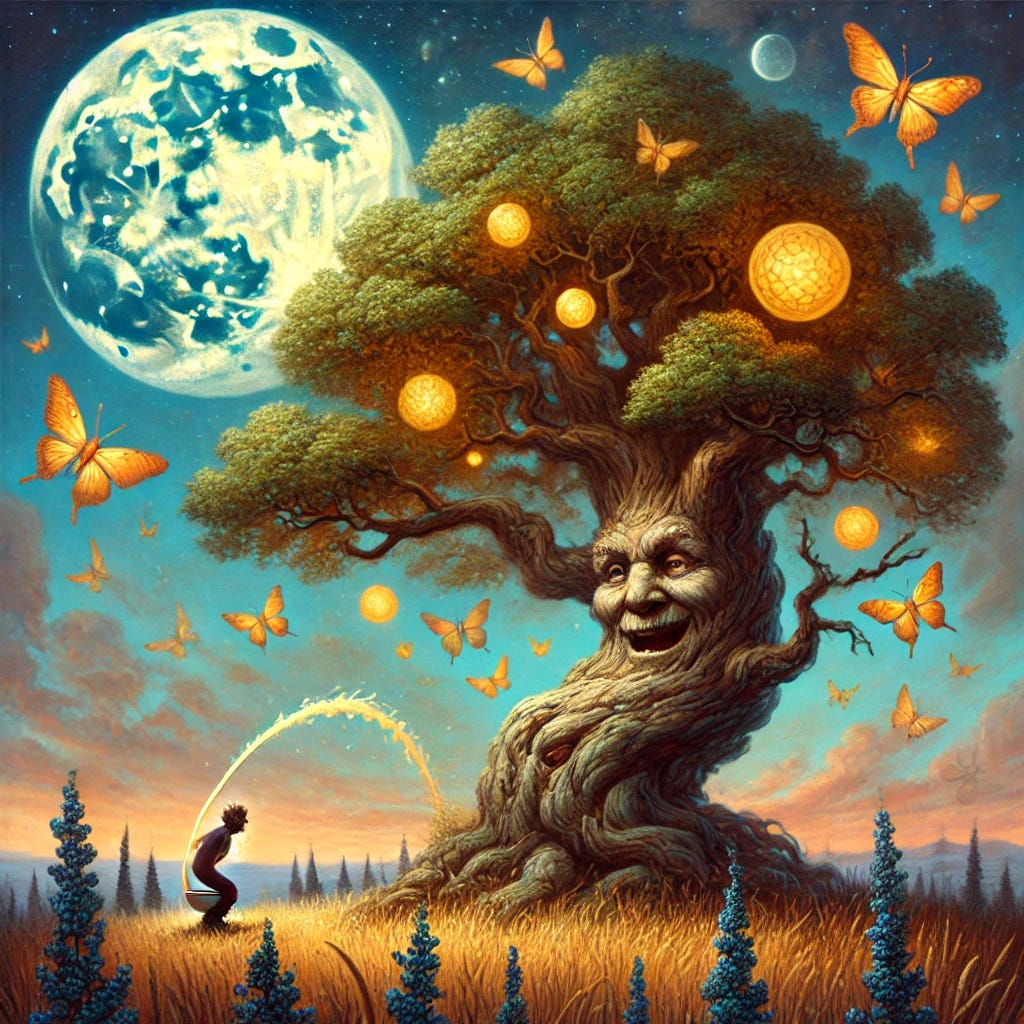
Pee On Us, You Cowards
A message from the land itself. Juniper grass, mullein hills, rabbits taking notes on human absurdity. Dark moonshine, saffron sunsets, an old stump humming. Somewhere, an oak tree nods in approval. Comment here This is a public episode. If you'd like to discuss this with other subscribers or get access to bonus episodes, visit storypaths.substack.com/subscribe
Mar 14
Transition from a sensible podcast
I must do what I must do. But as a friend, I ask you honestly if you want something more coherent and less experimental Free consultation for your creative projects: https://tidycal.com/theodorestorypaths/15-minute-meeting Comment here: https://storypaths.substack.com/p/1c1e2383-21c4-4cf3-a9a1-23af8a074de3 This is a public episode. If you'd like to discuss this with other subscribers or get access to bonus episodes, visit storypaths.substack.com/subscribe

Feb 25
Overlapping Soundscapes Two
Listen to ambient sounds from other lands as you travel through your own. Free consultation for your creative projects: https://tidycal.com/theodorestorypaths/15-minute-meeting Comment here: https://storypaths.substack.com/p/e197d8e0-7b98-4c0f-9e46-a80b8232b1e3 This is a public episode. If you'd like to discuss this with other subscribers or get access to bonus episodes, visit storypaths.substack.com/subscribe
Feb 11
An interspecies romance
A ridiculous song written in the foothills of the Himalayas more than 20 years ago. Free consultation for your creative projects: https://tidycal.com/theodorestorypaths/15-minute-meeting Comment here: https://storypaths.substack.com/p/1c1e2383-21c4-4cf3-a9a1-23af8a074de3 This is a public episode. If you'd like to discuss this with other subscribers or get access to bonus episodes, visit storypaths.substack.com/subscribe
Jan 28
Eros and Spirit
For many years I learned of sensuality and spirit as being different, or opposites. Here I discover ways that they are the same. Special thanks to Ji for beatboxing with me at the end. Recorded at the Freezer Burn Festival (Alberta Regional Burning Man) in Summer ’24. Free consultation for your creative projects: https://tidycal.com/theodorestorypaths/15-minute-meeting Comment here: https://storypaths.substack.com/p/e197d8e0-7b98-4c0f-9e46-a80b8232b1e3 This is a public episode. If you'd like to discuss this with other subscribers or get access to bonus episodes, visit storypaths.substack.com/subscribe

Jan 14
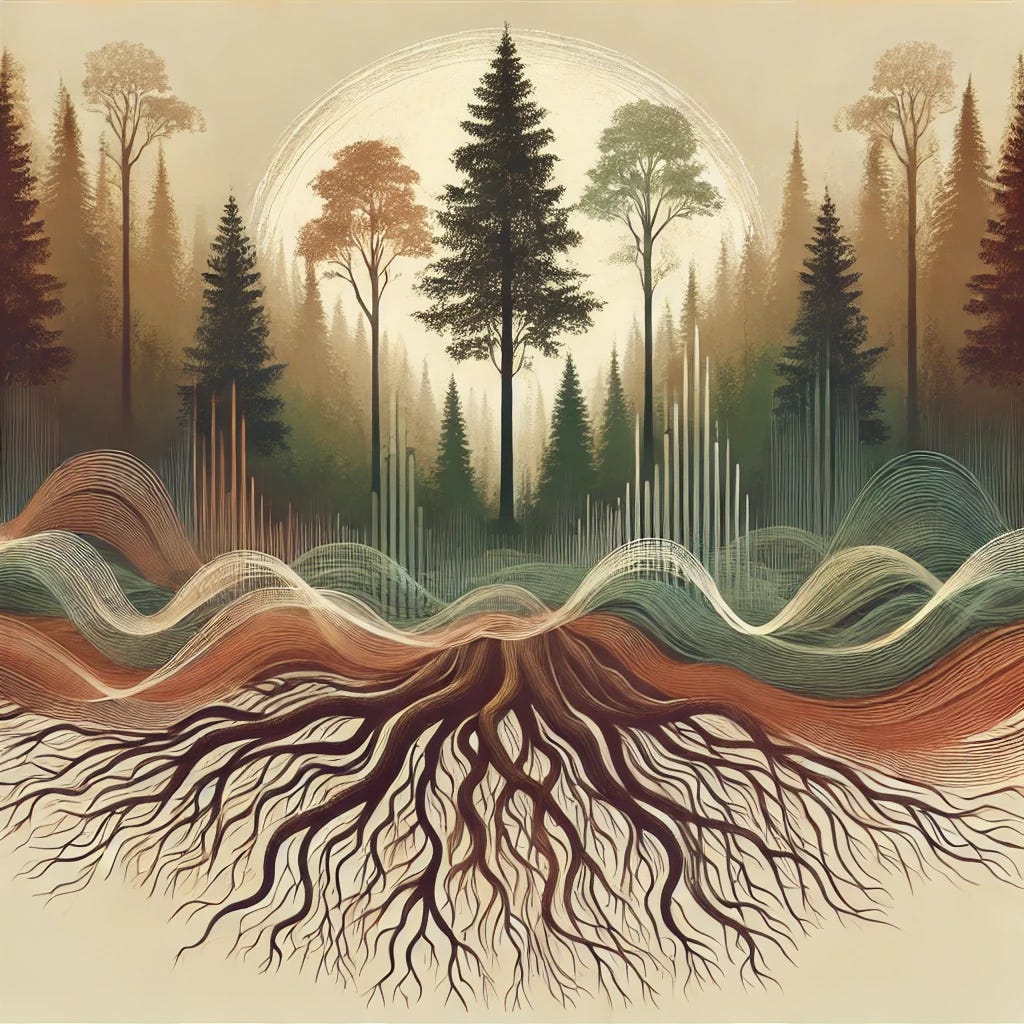
Overlapping Soundscapes
Listen to ambient sounds from other lands as you travel through your own. Free consultation for your creative projects: https://tidycal.com/theodorestorypaths/15-minute-meeting Comment here: https://storypaths.substack.com/p/1c1e2383-21c4-4cf3-a9a1-23af8a074de3 This is a public episode. If you'd like to discuss this with other subscribers or get access to bonus episodes, visit storypaths.substack.com/subscribe
Dec 31, 2024
This season, Story Paths Goes Sketchbook
Welcome to Season 5. What is a podcast? Simply put: sound. Any kind of sound. Let’s take this medium for a spin. Comment here: https://storypaths.substack.com/p/6c6ec518-3a64-483c-910a-ca278c5eb0b5 This is a public episode. If you'd like to discuss this with other subscribers or get access to bonus episodes, visit storypaths.substack.com/subscribe
Aug 6, 2024
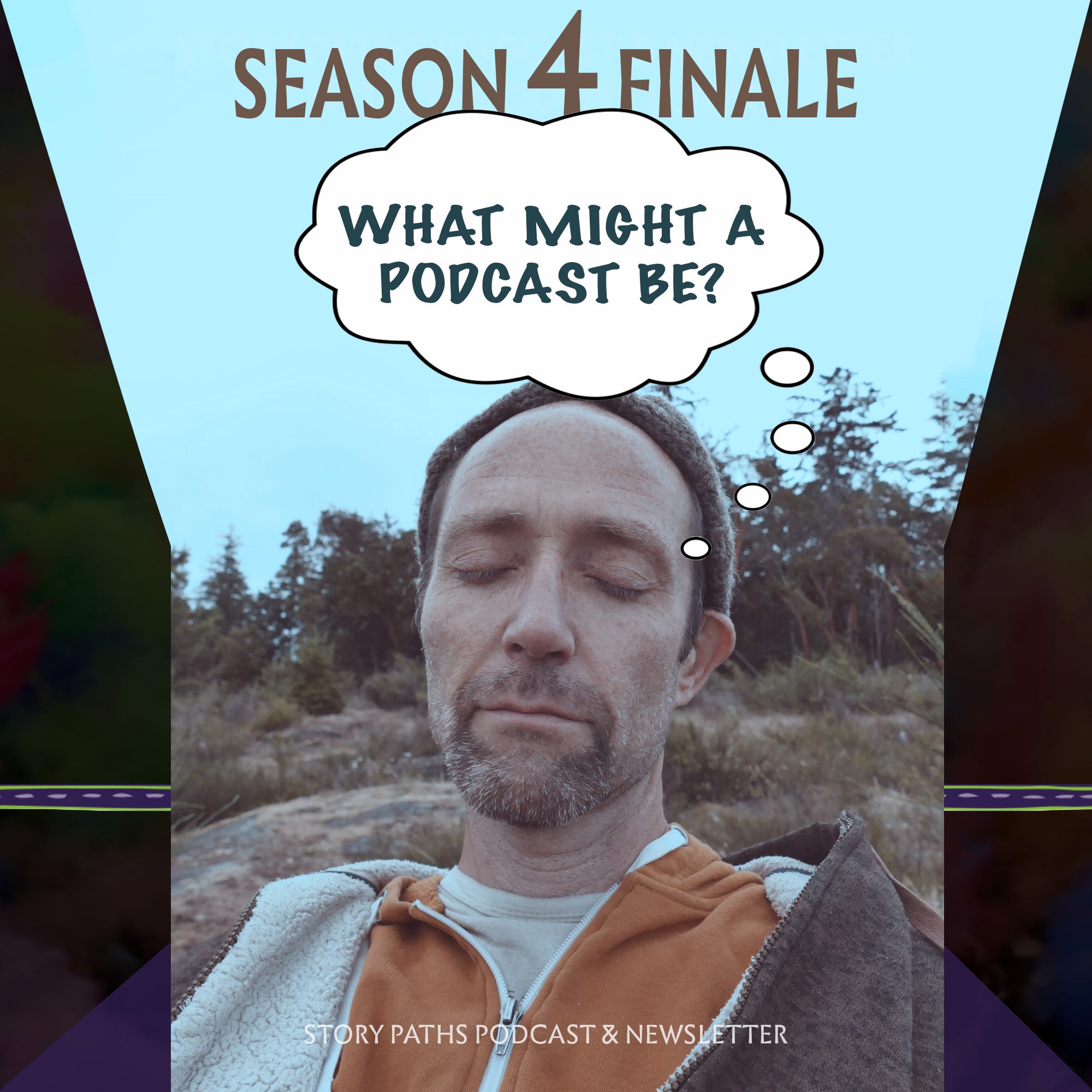
Season 4 Finale: What Might a Podcast be?
I recently called a small group of well-wishing friends together around a fire for a story share. This is a culture-weaving practice, where one person shares their life story with others. My friend John Wolfstone did this when he was leaving our island in the Salish Sea, speaking themes of ancestral healing that were present for him in his time here. After being here for about two years, I felt the moment had come. I’ve noticed a tendency I have, when arriving somewhere new, to become silent. To observe, to share little about myself. Then, if I feel safe and ready, I come out. This is my coming out. It was vulnerable, because I don’t have long-term relations here. Yet there are those I felt I could call on to be present, and I feel blessed by how they showed up and witnessed me. Friends backed me up with singing and guitar to accompany my own drumming, story and song. My life remembered is a prism of portals: each one opens to detailed sensory and emotional experiences; what to choose? I thought of organizing my life story according to a theme, like my relationship with spirituality or eros. It felt too abstract. I settled on arranging my story according to land: places that have homed me. The lakelands to the east of this continent, the grassland-mountain regions where I grew up, the arid regions of recovery and introspection, the far eastern lands with dense mythical patterns forming a story skin over hill and plateau, and the bombastic temperate rainforest I now call home. With land, people. With land, memories. I feel blessed to have lived this and shared it. To hear more about it, do listen to the audio above. Are you called to share your story? Perhaps you’ve passed through a difficult trial, and feel called to be witnessed. Perhaps you’re leaving a place, or coming somewhere new. People also share stories with pictures when returning from travels, as another friend of mine did upon returning from Australia, expressing detailed insights into the ecology there. Life rarely ties up neatly in a bow, and many of us don’t have the full and constant community we might want, yet perhaps for you, as for me, the time to share your story has come. I hope so. This also marks the end of this season. What’s coming next? A podcast is, in its essense, sound. That could be interviews and musings. It could also be audio documents of travel, music, riffing on stories real-time, and much more besides. This podcast and newsletter has an exploratory, curious, community-weaving nature. Kind of like a friendly dog, sniffing around, charming people and getting them talking. This coming season, this podcast-dog is going off-leash. Hear you then. Happy storying and being storied, Theo This is a public episode. If you'd like to discuss this with other subscribers or get access to bonus episodes, visit storypaths.substack.com/subscribe
Jul 30, 2024
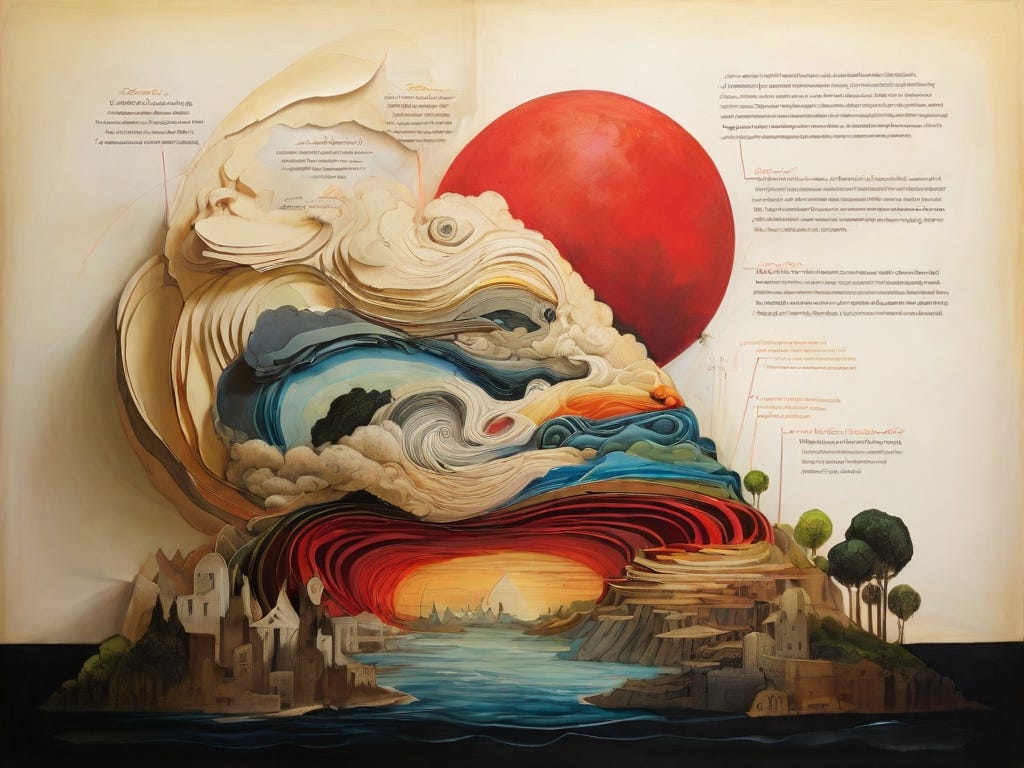
How Stories Shape Our Lives: Myth, Science, and Media
Read this as an article, and share your thoughts here Book one-on-one story sessions here Here's an interesting vista of reflection. Consider the meta-layers of narrative in your life, and how they cause you to interface with the world. What's a meta-layer of narrative? It could be mythical explanations of constellations; it could be their scientific explanation, or a hybrid of the two. It's an understanding that doesn't come from your own life alone, but which affects your experience of yourself and the world. They are filters between us and our world. Not necessarily blocking the world, but perhaps letting a certain quality of light in. In a culture with a strong oral tradition, the stories that are told and retold about orca, raven, buffalo, magpie, spider, selkie—all these inform people in their relationships with those being. Modern media has its meta-narratives too. This is true in the case of nonfiction news, giving a specific account of the world, emphasizing certain parts, and de-emphasizing or omitting others. When we receive information from that news source, we are receiving a particular perspective on the world. That news source is like a collective sense organ and brain that gives information about the world to whoever is connected to it. We’re also informed by fiction, which in the way it lands in us, is not as different from non-fiction as we might imagine. Reading the Lord of the rings, we see great heroes, simple hobbits, crafty wizards, agile elves, and ancient trees. We may find ourselves inhabiting those characters in our day to day lives. In contemporary stories, we may find queer characters, neurodivergent characters, characters happily outside media beauty norms. We may inhabit those characters in their story, which will change how we we inhabit our lives, and our collective lives. Which meta narratives are you influenced by, and how do they affect your experience of the world? This is a public episode. If you'd like to discuss this with other subscribers or get access to bonus episodes, visit storypaths.substack.com/subscribe
Jul 23, 2024
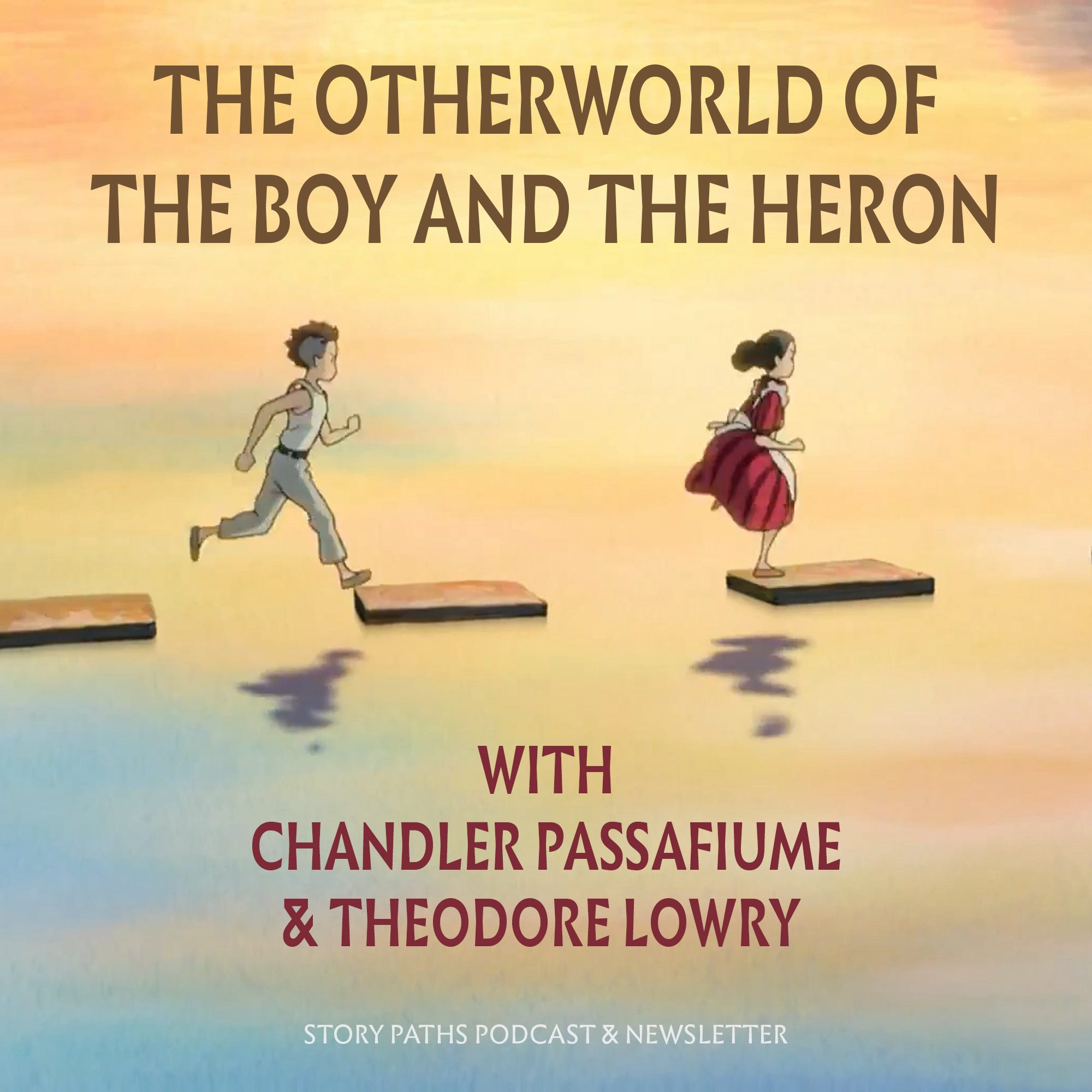
The Otherworld of The Boy and the Heron - With Chandler Passafiume and Theo Lowry
I recently watched Studio Ghibli’s new film, The Boy and the Heron. Perplexed and fascinated, I watched it again. The film has many layers, and not neatly stacks. Metaphors, history, personal experiences, imagination, mythology: there are many aspects to focus on. I’m especially drawn by the films’ two worlds, and how they intertwine. One is a countryside estate in Japan during World War 2. The other is an underworld accessed through a mysterious tower. While it will be helpful for you if you’ve seen the film, and there will be spoilers, I reckon this will be interesting either way. To help with this exploration, I brought on my friend Chandler Passafiume: storyteller, game designer, writer and poet. When we met, both of us staying in an island farming community, our story minds connected. He’s so good that he may even become one of a few regular, rotating co-hosts on the show. You can find him at Substack at Wandering Cloud. Overlapping worlds is a huge theme in mythology, as in modern stories, and aren’t we each moving in different worlds that affect each other? The world of work and home life, of one group of friends and another, of diverse lands we moved between. We discuss the boy hero’s approach to the otherworld, how the same characters appear differently on each side, how some characters move between the worlds, the role of the trickster heron, and even mutual causality between worlds. As this one was a lively conversation, I’ve chosen not to make it into a written article as well. It’s available on any podcast player; just search under Story Paths. Until the next, Theo This is a public episode. If you'd like to discuss this with other subscribers or get access to bonus episodes, visit storypaths.substack.com/subscribe
Jul 16, 2024
Floating or Falling: The Tale of a Great Life Crossing
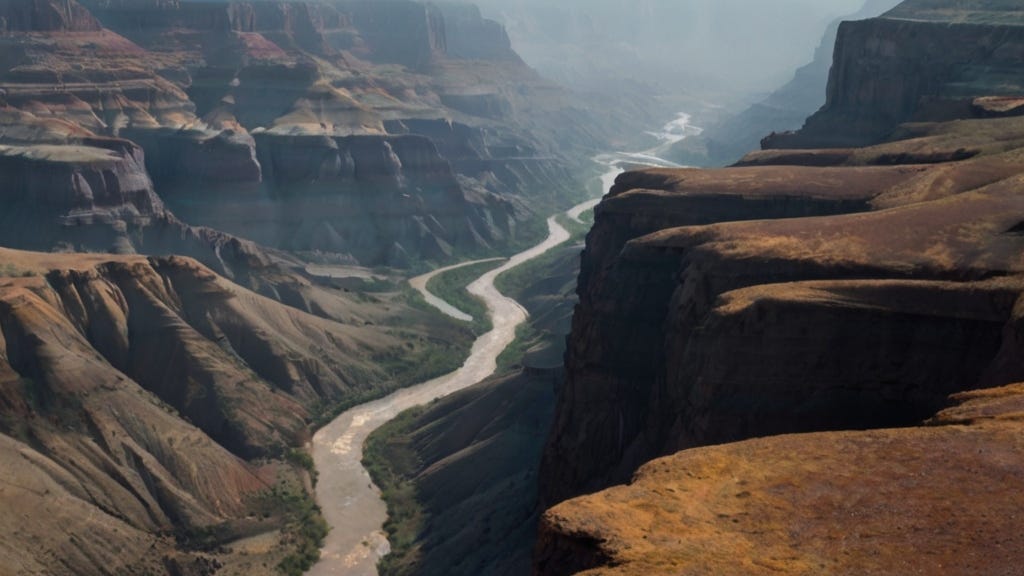
Book one-on-one story sessions here Read this as an article, and share your thoughts here Here’s something a little different, a fictionalized story of my own life. You may find resonance with your own canyon crossings. For a version with music and sound, listen to the recording. In we go. A man is crossing a sandy, stony plane. As he passes, long-tailed mice with huge ears hop behind wiry bushes who are as thrifty with water as a posse of poor widows abandoned by their children are with their coppers. The boy is thrifty too. His energies run beneath his skin, burrowed in his bones. It's been such a long journey. And just when he's getting swing in his stride, and learning to avoid the little cactus balls hidden all about, he stops short, kicking pebbles down into a canyon so deep that the bottom is lost to dark mist. He steps back, looks across. Of course, his trail continues on the far side. As usual, he could turn back, though he's not convinced that the land wouldn't shift to confound him on back here again. Or some parallel place. Also as usual, there are people between him and the canyon's far side, skating on the air above the great drop as thought playing on invisible ice. He is no longer fooled by their grace. Now he sees the hitches in their movements, the quavers, the dropping down a foot before rising triumphantly again. The dust embedded in their clothes, the rouge covering wrinkles and red scars. F**k it, he says. Then bless me, my lord, and something about universal abundance. A couple words for Odin, for Zeus. Krishna, Mohammed, Jesus, Coyote, Raven, Cailleach and the Creator and Creatrix while he's at it. Then he steps out. It's even further down than it looked. The fall is slow, like a leaf. The wind is silky and succulent on his skin, full of moisture. A river runs beneath him, roaring up the walls, though he can’t see it yet. The fall is so slow that on his way down, he has time to consider his entire journey, from start until now. The creatures who helped and thwarted him. The half dozen other canyons he's crossed. He even manages to release envy for those b******s skating up above. Or loosen it, anyway. And of course, when he lands, it is on the near side of the river. Fording it is wet, precarious work.The far canyon wall looks like it will be a hell of a climb. The last ones sure were. He takes a few breaths and starts up. He's getting stronger. This is a public episode. If you'd like to discuss this with other subscribers or get access to bonus episodes, visit storypaths.substack.com/subscribe
Jul 9, 2024
Living Lore: An Animistic View of Stories as Beings
Book one-on-one story sessions here Read this as an article, and share your thoughts here Let’s open with a story. Tiger Farming Termites Neat rows of wood are crisscrossed to draw in delectable foragers, though truth be told, Tiger tastes termites in a pinch. Waiting. Crouched. Poised. Bored as the boards he's laid out, until an unconscious ungulate wanders warily, to nibble green blades. Tiger pounces, rolls, breaks the creature’s soft neck. Crushes termites. The dying words of the aardvark are ‘Oh brethren bugs! Warn my kin.’ When the feast has passed, Tiger grumbles for weeks, hungry. Are Stories Good or Bad? If we ask the question of whether a given story is good or bad, this binary approach quickly falls apart. For this exploration, let’s use the word ‘story’ in the broadest sense. This story could be an old myth that nourishes a people's relation with the land, or an old myth that pits people against others. It could be propaganda, put out by a political group or corporation to corral people into certain behaviors. A story could provoke racism, casting certain people in victor roles and others as villains. A story may cast us humans as masters of the Earth, with dominion over all others, or rather as newcomers to this wondrous place, and the most dependent of all the other beings who preceded us. Is there anything as powerful as a story? The stories that we take in determine our behavior, over our lifetimes and over generations. A story can be about everyday people from our own time and place, and the happenings in their lives may divert us from the difficulties in our own. The tale in a television series might capture the minds of millions, season after season, so much so that viewers know more about these fictional folks than they do about the historical figures upon whom they're based. For the minds and motivations of the historical figures are opaque, but those of the characters are transparent, allowing us, the viewers, to enter in, get a sense of who they are, and why they act as they do. Living Stories Is a given story good or bad? Instead of a binary rubric—rooted in computing and notions of piety and sin, good and bad karma, or a scale of justice—I instead propose an animistic understanding. I'm sitting now by a pond where I often write these articles. I see old man's beard moss hanging on willow trees, and sword ferns with spores dotting their undersides. I feel the sun shining on my forehead, hands and chest. A mosquito lands on the moss, a raven steals eggs from another bird's nest. As the season goes on, this sun’s cool light will increase in heat until I must retreat indoors in the full of the day. Are these things good or bad? The mosquitoes bad for me, but good for the birds who eat ki. The willow is beautiful to me, but is out-competing reeds and ferns around ki. The sun nourishes our entire planet, and yet can bring death-dealing heat. So let us drop this consideration of good or bad, and even a spectrum between them. Let’s instead consider the willow, the raven, the sun, the mosquito, as beings with their own natures and wills, and their own intricate relationships with each other. Now, let’s bring this allegory of an ecosystem to stories: their identities, their natures, and their relationships with other stories. As there are predatory creatures, there are predatory stories: propaganda that divides and conquers, setting kin against kin, fomenting nations into war. As a bear upturns a stone and digs up the larvae underneath, some stories cause people to enter the homes of others and take whatever they want. Those stories say, ‘They are lesser than you. You deserve this.’ The bear doesn’t need stories to do this, but somehow we humans do. Migrating Stories A stream of water will gradually wear a trough into the land. That trough, given enough water and time, will become a canyon. So too with some stories who begin in an unassuming way, then grow and grow until they’re wearing a canyon into minds and hearts of listeners. Consider the story of Christianity: a rabbi and his followers preached revolutionary love at a time of colonization and war. After his death, that story gradually spread from land to land, and as it did, it adapted to people's hearts and minds, or you could say they tamed it for their own purposes. The story appeared one way in eastern lands, another in the West, North, South, and indeed in every individual who came into contact with that story, be they believers or not. So too with the spread of Buddhism: from a man's teaching in northern India, it spread north into what's now called China, Tibet and Bhutan, south into India and Sri Lanka, east into Japan, and now in pockets throughout the world. In each place this story adapted to the landscape of minds, hearts and culture, just as moss will grow differently on an aldar or on an oak. Story Spores There are stories that support empires. Empires arose in Europe, China, Japan, South America, United States, Germany, Italy, Rome, and Vijay Nagar, and elsewhere. Each had standing armies, central power, and stories to live by, which told them that they had a right to rule others, a right to expand, to take, to tax. Yet the stories within them had many different flavors in different times and places. Perhaps the stories justifying empire are like spores on the wind, finding purchase in different cultures and changing according to their host. Are spores good or bad? The old animistic view considers stories as beings. As people. Just as we're negotiating situations throughout our lives—setting terms, considering what kind of connection we want with this person or that person—so too let us consider our relationship with stories. Just as our relationship with human people is not fixed but shifting, so too is our relationship with stories. Prompts Reflect on a story that migrated into your life from a different culture or background. How did it adapt to your inner landscape? Think about a story that supported or challenged an empire-like structure in your life (e.g. a restrictive relationship or community). How did this story challenge the old guard? Where did that story find strength? Explore a narrative that your business or industry promotes. How does this story interact with the broader cultural landscape? Reflect on how the marketing of a similar product varies between audiences. For example, how do you see different kinds of vehicles being marketed, or brands of ice cream? Which stories take root in which soil? Until the next, happy creating, Theo This is a public episode. If you'd like to discuss this with other subscribers or get access to bonus episodes, visit storypaths.substack.com/subscribe
Jul 2, 2024
Between Campfires Part II: Finding Belonging in Exile
Book one-on-one story sessions here Read this as an article, and share your thoughts here In part 1 of this two-parter on belonging, we were getting into moving between circles of belonging. I attended a class recently with the wonderful artist-teacher-ceremonialist-textile practitioner: Laura Burns. I interviewed her some time ago; dig back and have a listen if you'd like. She spoke about moving between circles of belonging, and gave the example of queer folks who were born in a family who are not welcoming to queerness, especially in their own children. These children experienced a crisis of belonging in their families. Those who stood their grown often found the strength to do so because of finding new belonging with other queer folks. In this other circle of belonging, that part of themselves—that integral part of themselves—was not just tolerated but very welcome. We can’t live without belonging somewhere. How can we find the strength to disagree and stand for principles in one circle of belonging, unless we find belonging in another circle? For myself, when I came into seeking spiritually, I didn't find much belonging in my own culture, in secular society or in a church. I found belonging in a spiritual path from another land. When I fell out of that, I found belonging in marriage, and in connection with the lands where I grew up. Now I'm seeking a diversity of belonging, because I'm suspicious of putting too many eggs in one basket, especially baskets of human belonging. We see this moving between circles in the animal world too. If the mother of a group of ducklings is killed, they may follow another mother. We see it on an international level. When Einstein couldn't stay in Europe at the onset of World War Two, he found some belonging in the United States. When young men from the United States were drafted into the Vietnam War, and they refused to risk their lives for a cause they abhorred, they found belonging across the border in Canada. I have a great uncle named Walter, back in England, more than a hundred years ago. His father had died and his mother lacked the means take care of him and his sister. She left them in Sherwood Forest (famous for Robin Hood). They were found beneath the trees by passer-by’s, and the call went out, ‘Who will care for these children?’ Someone took Walter, another took his sister. The people who took them in were not biological relations, but relations nonetheless. They raised the children up, and Walter married into my family. Those kids found a kind of belonging, and Walter and I are part of the same extended family, although I'm too young to have met him in the flesh. In this way, people and animals are sometimes forced to find belonging, unsure of whether they'll find it or not, of whether they'll even survive. But for many of us, we may at least step into another circle of belonging to find some strength so we can turn and make a stand in the circle giving us trouble. Like finding belonging in a queer community to make a stand when coming out with one's family. Or taking a step into a spiritual community to come out as weirdly spiritual with one's colleagues. Or taking a step into an earth-connection group to make a stand with one's ascendant-minded congregation. Laura Burns also spoke of a mentor of hers, who as a child got bounced around from one foster home to another, and couldn't find anything close to the kind of belonging that she needed. She found it in spirit. A spiritual belonging where she dwelled, in the absence of human belonging. Now, as she grew up, she was able to find and forge connections within fellow humans, but for some time that spiritual belonging was enough to keep her alive. Human and Spiritual Belonging: A Figure-Eight Laura Burns suggested that human belonging and spiritual belonging could be conceived of together as a figure eight. Energy moves around this form, with each one feeding into the next. Human belonging can help spiritual belonging can help human belonging can help spiritual belonging can help human belonging. When things go sideways in human belonging—because we can be strange and fickle—then there is spiritual belonging. It is more steady, though perhaps more difficult to conceive and understand for our mammalian natures seeking warm skin and food. Spiritual belonging can feel vast and cosmic, or near and intimate. Both are important, and both can feed each other. Moving Between Vocational Circles In business, moving between circles could mean stepping into a new field to gradually build up connections, clients, and funds; while keeping one foot in the old arena. For myself, my old arena is working with media— films, podcasts, paintings and such. I'm stepping into helping people think in stories, as I'm doing with this article. I thought I might leave the media work quicker than I have, but I'm realizing that this is a slow step, and that actually there's more connection between these two fields than I had realised. It may not be such a bad thing to keep a foot in both. Story Prompts Consider a circle to which you belong, which feels prescient and relevant to you now. This could be family, friends, an interest group, an area of the earth or business that you're involved in. What do have to offer to this circle? Of that, what is understood and welcome in the circle and what is not? Then consider another circle of belonging. What do have to offer to this circle? Of that, what is understood and welcome in the circle and what is not? Consider how you might adjust yourself in relation to this first group, and in relation to this second group, so that you can express all that you want to express, and receive nourishment in kind. Feel free to share your thoughts in the comments. Thanks for reading! Until the next. This is a public episode. If you'd like to discuss this with other subscribers or get access to bonus episodes, visit storypaths.substack.com/subscribe

Jun 25, 2024
Between Campfires Part I: Finding Belonging in Exile
Book one-on-one story sessions here Read this as an article, and share your thoughts here Let’s open with a poem. Belonging. She gives you all you need. Friendship. Safety. Meaning. Being rid of that pesky loneliness. With her you overlap others. Share deep parts of yourself. Yet if you want this always, you must compromise. Give up the parts of you that rub them the wrong way. Sacrifice uniqueness to relax into unity. Fearing loneliness, you'll take conditional belonging instead. Those conditions will rob you of your itch, of your restless yearning. Safety, enoughness, togetherness. A balm on your deep wound. Not healing, but sealing. And yet, belonging is not all tricks to test your soul. As you find your deeper layers. May you find deeper layers of belonging as well. May you find strata that you have always shared with others, a bedrock of being. A layer so deep that you share it with kind and opponents alike, with human as much as cedar and squirrel. May this bedrock belonging claim you whole, with all your jutting edges and inconvenient truths, your strangely shaped gifts and your occasional bouts of lonely longing for that surface belonging which would compromise you. The Belonging of an Alder I'm sitting in a forest near where I live, and thinking about belonging. The alder trees around me, the bulrushes in the pond before me, the water striders skimming across the pond surface; all of them belong to the forest. The leaves on these alders have now fallen to the ground, and are gradually becoming part of the it. Part of the soil. When in springtime the alders will again sprout leaves, they will draw their nutrients from the soil. Dying leaves become living leaves, in new arrangements. This is a kind of belonging: to be of a community of life. For us humans, this word community connotes a place where our hearts, minds and soul gifts are welcome. Asked for, received, incorporated in the old sense of the word: becoming the body and thought forms/heart forms of that community. In business, it is one thing to belong to a particular vocation, and another to be an integral to that vocation. To have colleagues and even competitors with whom to exchange insights and practices. Each of us were cared for in our upbringing, whether by biological parents, step parents, adopted parents, by people running an orphanage, or by a mixture of these and others. If we hadn't been cared for at that time in our lives when we were babies and young children, when we were so dependent, we simply wouldn't be here. Yet we want more care than is needed for our survival. Stories as Miniature Worlds I find it easier to see the community's that I'm in if I consider myself to be in a story. A story can be the world in miniature, like a model railway, with hills and trees and trains. The trees might be about as tall as our thumbs, the people as tall as our pinky fingernail. It’s all easier to conceive than a vast railway stretching across the country, running through cities full of thousands or millions of full sized human beings, and surrounded by hills weighing ton upon ton. Likewise, a story can be a model. It’s easy to see where a character belongs. Gimli the dwarf? Well, he belongs to the dwarfs. Legolas the elf belongs to the elves. Even loner characters, like cowboys, belong among horses and arid lands and saloons. We know their habitat. It can be trickier to identify the circles of belonging in our own lives. Fictionalise your Life Here’s me in the third person. Once there was a man, somewhere in the middle of his life, and out on a walk in a forest. He was looking at birds pecking bugs within moss-covered logs. He was hearing the calls of ravens, and watching giant human-made steel birds cross the sky in strangely straight lines. He was staying in a farming community, where he felt some community, but was called to move on. He wanted to be with people who would call forth his gifts. He was learning again to be alone without being in loneliness. To be in solitude. There's a little snapshot of my life right now, in the form of a story. That’s a tool I keep returning to, to speak about myself in the third person. There was a child, a man, a woman or two spirit person. Or you might even conceive of yourself as an owl, a raven, a buffalo, an elephant, depending on what feels true to your experience in the moment. Why not try it now? You can use this same third person tool to speak about yourself in your vocation. For myself I’ll say, Once there was a man who had been a monk for many years, studying and practicing the mythology of a distant eastern land. When he returned to his own land, he struggled to apply what he had learned to very different situations. He had learned much about stories, and so he worked to bring this understanding into the fields in which he found himself, to make relevant to the people he met the things he had learned. He strove to join the ecosystem in this place. You could get into more detail, giving more specifics about your business, but it's easy to get bogged down. Instead, I suggest staying zoomed out to get a bigger picture on your situation. You can use this same third person tool to speak of others. Moving Between Circles of Belonging Each of us are in multiple circles of belonging. They may not all be comfortable or even healthy, but we’re in there. There's family, vacation, friends, the natural world as a whole, and also particular places where we may walk or camp, places that may be close to us now, or far away. I'm part of this farming community here. I'm also connected with people who are in different circles of friends on this island in the Pacific Northwest. These circles overlap. I know people in different countries. There are people I'm connected to for work, and there's often an overlap with friendship. There's this forest that I'm inside now, where I've been taking walks for some months, and gradually coming to know the trees, and the calls of the birds (in the audio recording of this article). It's helpful to remember that we are in multiple circles of belonging, because in any given circle there may be some trouble. For many people, the circle of family is troubled. Some have healthy, loving parents and siblings, with whom they can share their hearts. Many of us don’t, and for most of us there's an odd mix. For many, family brings more grief than the sustenance of belonging. Yet we are interdependent beings. The good news is that if there is trouble in one circle of belonging, we may find strength in another. To be continued in part 2 This is a public episode. If you'd like to discuss this with other subscribers or get access to bonus episodes, visit storypaths.substack.com/subscribe
Jun 25, 2024
From Mythos to Modernity: How Creation Stories Shape Our Lives
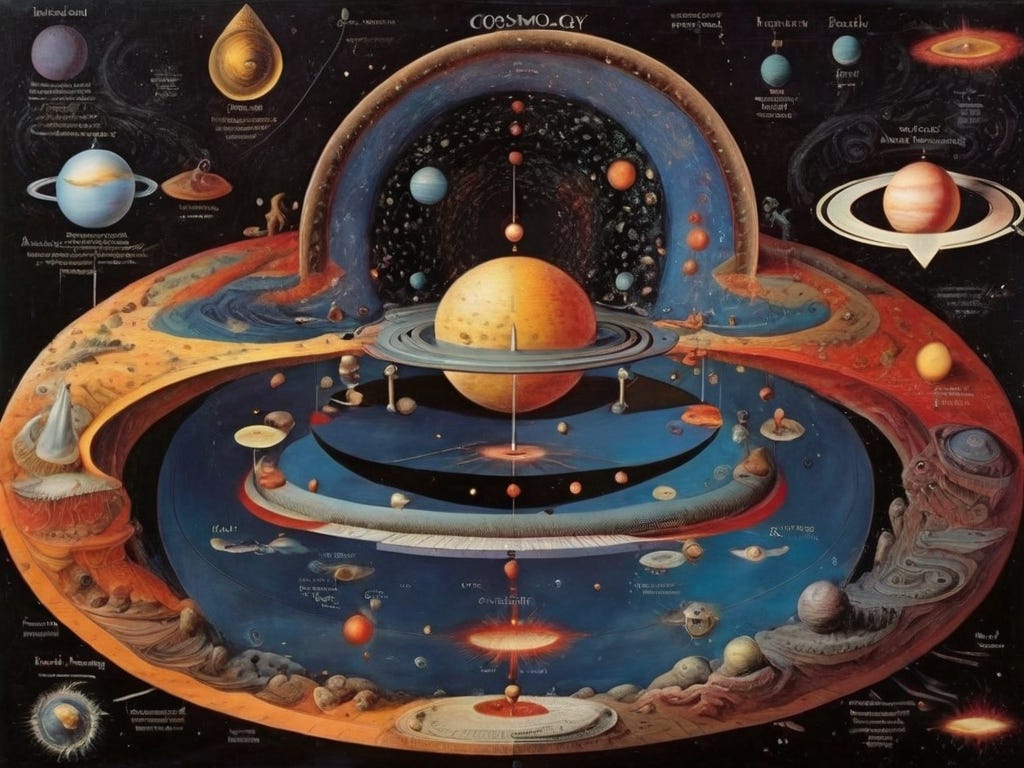
Book one-on-one story sessions here Read this as an article, and share your thoughts here Let’s open with a poem. Now is the Time Now is the time to remember that our green globe is the best-dressed in the ball lit through with organic filaments bombastic living miracles. Now is the time to turn off the engine and set down exhaustion into lakes that remain and bask for an infinite instant. Now is the time to be a miracle too. Cosmology: It’s a Heck of a Word It is! It’s up there with ontology and epistemology, the kind of word that opens us up to broad ways of thinking. It’s an account or theory of the origin of the universe. Along with that view of its origin, cosmology implies principles and beings who govern our universe. In story terms, we can say that the cosmology of a story is the largest conceptual framework, in which are nested the smaller frameworks. It's the largest explanation, the largest context, like the shell of the story egg. Or perhaps a better analogy is that cosmology is the bedrock which influences the chemistry of all the layers of soil, up to and including the topsoil. You see, cosmology speaks of the background of the story, but it also infuses each part of the story. It gives the big why’s and who’s and how’s of the story world, in which all smaller stories must take place. We live in stories. In popular scientific cosmology, we have the Big Bang and the theory of evolution. For those who live in that view, their daily lives are nested within that bigger picture. Most other cosmologies are more personal, in the sense that there are beings who were and are involved in creation. That could be gods, the spirits of planets, animals, creators who create with clay, and more. There is a great variety. For those who are within those cosmologies, their daily lives are nested within this larger context. Cosmology in Hinduism Hindusim is varied to say the least, but there are trends. The branch of Hinduism that I studied and practiced was Bhakti-yoga, or Gaudiya Vaisnavism. It holds a personal cosmology, with all creation originating from a divine being, or rather, two divine beings, masculine and feminine. After the initial creation, those divine beings had a hand in subsequent sub-creations. The big creation is where Divinity arranged the soup of matter into planets and stars. In the sub-creations, planets are populated with beings, and in further sub-creations, there are more beings, all within a universal governance with strata of gods, all the way to the top. There are variations of this cosmology, within India and the larger area around her. It is as though the conceptual egg is multidimensional, existing in various ways for different people, yet with a common essential form. I’m afraid that’s the best metaphor I can think of now. I’m open to suggestions! What are the variants? Some speak of Vishnu as the supreme originating deity. Others speak of Shiva, or Shakti. Some forego personal origins and say that the universe came from a void, or from an all-pervasive energy. Early Buddhism entered the scene with a teaching of interdependent causality, which you might roughly say means, everything causes everything (though there are greater concentrations of causality). Jostling Cosmologies If each of these cosmologies were a person, they’d often be bickering, and in fact the world is full of jostling cosmologies. If you hear two people making different claims about whether life came from matter or spirit, whether there was a big bang, whether creatures evolved from the ocean or were created in some other way, or perhaps both—you’re witnessing jostling cosmologies. However, within a given story, we tend to find a single cosmology, a single world-view about the origin of things. From there comes the ontology of that world: what the story allows to be true. (Thanks to Sarah Kerr for that framing). In a given story, the cosmology may be spelled out or implied. It may be assumed to be the same as dominant modern world-views. In any case, there’s always a cosmology. Let's use Lord of the Rings for an example, because the cosmology is spelled out clearly, at least if you get into the Silmarillion. Here it is: in the beginning there was one singer; from that singer came many singers. With their combined voices they created celestial harmonies. Then, one of those singers began to sing in disharmony; kicking off the troubles of creation, much as Lucifer did when he rebelled against the Judeo-Christian god. From there come Elves, Men, Dwarves, Hobbits. And in a particular place called the Shire, in Bag End, there’s Bilbo! Cosmology is the biggest layer. Within that we have nested layers, and within all of that we have the actions of our characters, or, in our lives, ourselves. Worlds Within Worlds Within the cosmology of a story, nested inside, lie other layers of explanation. We've been talking about big picture cosmology—the origin of the universe and such—but thought of any scale has its own cosmology. It’s in pop culture. Every Spiderman comic doesn’t go into the bigger picture in the Marvel universe, but it’s there. Spiderman might be fighting a street thug, but Galactus is out there, him and other godlike beings who are part of the story’s backdrop. Let's look at the Christian cosmology. In the beginning, there was God, who created the worlds, waters, and the rest of the support for life. He then created humankind and put them in the Garden of Eden. Aye, there’s the rub. They disobeyed him, got kicked out of the garden, and we’ve had trouble ever since. Here’s one version of scientific cosmology. There was nothing, then there was a big bang, which created a universe with lots of empty space, and some plasma: superheated matter. This plasma coalesced into stars, which brought light to the universe, which had been dark until then. When these stars grow old they implode then explode, spreading complex matter throughout the universe. This becomes planets, asteroids, you, me; within at least one of these planets, ours, this matter gave rise to the first stage of life; it’s become more complex over time. Cosmology and Colonisation Cosmologies are often used to justify conquest. For example, the theory of evolution was used to place Europeans at the top of an evolutionary hierarchy, a ladder from simple celled organisms to animals, then to ‘primitive people,’ and finally to ‘civilized people.’ The cosmology of modern capitalism borrows from the theory of evolution, emphasizing survival of the fittest over cooperation for the good of all. Religious world-views have also been used to justify conquest, usually with a justification that goes something like, ‘We are God’s chosen people.’ It should be said that categories like ‘religious’ and ‘scientific’ are so broad that they are useful only to an extent. Within scientific or religious groups, there are a many variations. These groups are patterns that make many people into large units, but there are overlaps between those units, and within each are individual people with diverse world-views. This is a public episode. If you'd like to discuss this with other subscribers or get access to bonus episodes, visit storypaths.substack.com/subscribe
Jun 11, 2024
Finding Stories Within Your Life, and my tale of a Homecoming Monk Seeking Forgiveness
Book one-on-one story sessions here Read this as an article, and share your thoughts here Let’s open with a parable. A king, powerful and wise, goes into his city, moves among his people, dressed as a commoner. He wishes to see how they regard him, truly, when they do not know who walks amongst them. As for me, I mingle with such kings and queens each day, and I am one of them. We regard each other in our moments of weakness, awkwardness and poor decisions. We see how we treat each other, when we do not know each other’s true natures. We, who are bright as sons. In Stories Something Goes Wrong It's Monday morning here in the Pacific Northwest, and I’m back from a great story workshop. It was run by one Deb Williams from a group called The Flame. In it, she invited and guided, cajoled and encouraged people to tell stories from their own lives. Deb's been a stand-up comic for years, and that made for a direct and funny teaching style. We twenty or so participants each looked into our own lives, seeking moments wanting to be told. Here’s how it went. Going around the group, everybody gave two or three life stories they might tell, as though pitching the group. Then, the group voted for the ones they wanted to hear. ‘Ah, that sounds juicy.’ ‘Oh… that's controversial. That's the one we’re not meant to hear. That's the one.’ ‘That's the one where things went wrong. Yes, that's the story I want to hear.’ It turns out that the most pleasant experiences in our lives are not necessarily the best stories. In a story, something goes wrong. There’s a twist. Something's learned, but the story is not necessarily about teaching. Stepping Stones on the River of Life Let's say you want to cross the river of your life. You can choose only five moments, five stepping stones. Which ones will you choose? Each combination of moments will give a different story, revealing your life in a unique way. You could choose five moments that led you to your current vocation, or five that lead you to your outlook on love. The moments I chose were from my time in India. It’s a huge part of my story, but I haven't been quite sure how to integrate it into this next part of my life, here in the Pacific Northwest. I haven't figured out how to bring in those years of spiritual study and practice in another land into this time, with my explorations of genetic ancestry, and building relations with the people of these lands. My story begins when I was twenty, and finishes at around forty. There are many different moments—stepping stones—that I could have chosen from my life, all of them truthful. It turns out that our lives aren’t just sequences of events; they’re more like fractals, with multifarious unfurling scenes hidden within them. Tattva and Lila Not everyone thinks about stories as patterns. A good story can be bawdy, gossipy, guttural, hilarious. My story thinking tends towards patterns. All that study in India got me thinking very philosophically. I’m drawn to sutras, codes, the essential parts from which all else can be understood. But other participants chose great stories about their pets and their grandchildren, about giving birth: mammalian moments. In the path of Bhakti that I practiced for many years, there are twinned concepts called tattva and lila. The first could be called philosophy, or fundamental truth, whereas lila means pastimes—story. These terms are usually applied to the movements of divine beings, but I find them helpful for just about everything. Tattva is the truth of things concisely spoken, and lila is the stories playing out with those truths inside them. You might also say that tattva is ontology, the givens that a story assumes are true, and that lila is the tales that play out within that worldview. These days, I find myself exploring the spaces between ontologies, like being a trader moving between cities. What are the stories of the in-between, that cross into a worldview, then cross into another? Is there an ontology of the in-between? Hold that thought. I'd like to share with you the story that I told in this workshop, but it’s really best listened to, for this was an oral storytelling workshop. You’ll find the audio link above. Just skip forward to about 9:45. Until the next,happy creatingTheo This is a public episode. If you'd like to discuss this with other subscribers or get access to bonus episodes, visit storypaths.substack.com/subscribe

May 28, 2024
Perspectives: How Diverse Characters Illuminate their Worlds
Book one-on-one story sessions here Read this as an article, and share your thoughts here How do characters illuminate their world? We experience stories through the eyes of their people. What they seek in their world, we seek. What they find, we find. As such, to choose a character is to choose the manner of entering the story world. Truth-Seekers I recently watched the Studio Ghibli film The Boy and the Heron. It’s fascinating. The titular boy is a truth seeker, earnest wants to get to the bottom of mysteries. Because he has this nature, we enter into those mysteries with him. He illuminates the story world’s mysteries and brings us along. If he were passive, he wouldn’t delve into that same mysterious world, and we, the viewer, wouldn’t either. A character keen to discover the truth of things carries a spotlight into their world. In another Studio Ghibli film, Princess Mononoke, a young prince is desperate to bridge conflicted groups. This active role is beset with challenges, and gives him unique insight into the different sides in a mythical battle. Through his actions, he activates other characters, bringing out their true intentions. It's a great choice for a central character. The Princess, on the other hand, is dead set on defeating her enemy, but the prince illuminates her compassion. What are other ways characters illuminate their world? A detective is someone who digs into their world in a narrow, focused way. They are excavating clues to get the truth on a particular crime, and in so doing they unearth truths that are savoury, unsavoury, tactical and deeply personal. Explorers An explorer wants to know what is across the ocean, above the sky, beneath the earth. They seek the ruins of lost civilizations, and find forgotten wonders. Their objective is not to unearth one truth, but many. A scientist is also an explorer. They might be exploring through the medium of a microscope, and in so doing discover vistas that open up the story. Let’s say our story explores the nature of time, raising questions like: is time linear, circular, spiralling, or all of the above? Is reality a web, with time and space as its warp and weft? A scientist would bring one lens to bear. A mystic would bring another, a hybrid another still. A time traveler character is moving throughout time differently from the rest of us, and experiencing it in according to the rules of their fictional world. That’s quite a vantage. This may be very personal for them as well. Someone they love may be caught in a part of time that’s hard to reach, as though across a vast mountain range. In trying to save them, our timescape-rescuer is illuminating the temporal expanse of the story. If our story is about traveling through the chakras of a human body, and vertically through layers of self and cosmos, then we might choose a mystic character. Or, to make them more relatable, someone apprenticing with a mystic. Why Are They Doing All This? This brings us to what pushes characters to act: their motivations. This might be a simple wondering about what is out there, but it often helps to give them a focused desire. They may be sailing through time to find their lost child, or trying to connect to their previous life so that they can join with that old self and become whole. They're crossing the ocean in order to consult a wise elder, then bring back council for their ailing people. These motivations focus the tale. Whew! Could You Summarise All That? Sure, that would help me too. So there's the story world, with its particular landscapes, beings, rules, and truths waiting to be discovered. The question is, what is the journey of a character through and into those possibilities? Imagine them as a light investigating into darkness. What do they discover? How will different characters within the same story illuminate the world and each other? Prompts Consider the land where you live, and the disposition of the people there. Where I am, they are externally friendly and inwardly reserved. Like peaches, they are soft on the outside and hard to make deep friends with. What are they like where you live? Now, consider a character who would stir everyone up, who would bring out what’s inside them. For example, it would be interesting to have a character around these parts who always says the wrong thing. They take a smile for an offer of friendship. When someone says, ‘We should get together sometime,’ this character takes them at their word. They hear that it’s good to express yourself, to not repress anything, so they go into a yoga class and let out massive sighs, burps and farts. This character is a contrarian. If she's in a right wing group, she says extreme left wing things. If he's in a left wing group, he says extreme right wing things. Consider your particular situation where you live. What kind of character would reveal what's beneath the surface? They might stir things up socially, like the guy above, or in any other field. What kind of character would reveal what's interesting to you, in the place that you live? Business Prompt A character is a role in a story. To emulate this in a business meet-up, it can be helpful to have different physical hats to don, each one for a particular perspective. If you're a one person show, then you could have some hats that you put on for different ways of thinking. This could be the strategic planner, the innovator, the historian looking back at how things have gone in the business so far, and guessing the future. The comparer, who looks at other similar businesses and makes patterns. These are all roles through which you can illuminate your work. What are some others, perhaps specific to your work? Until the next, happy creating, Theo This is a public episode. If you'd like to discuss this with other subscribers or get access to bonus episodes, visit storypaths.substack.com/subscribe
May 10, 2024
A Meeting by the River, and an Upcoming Story Biz. Workshop
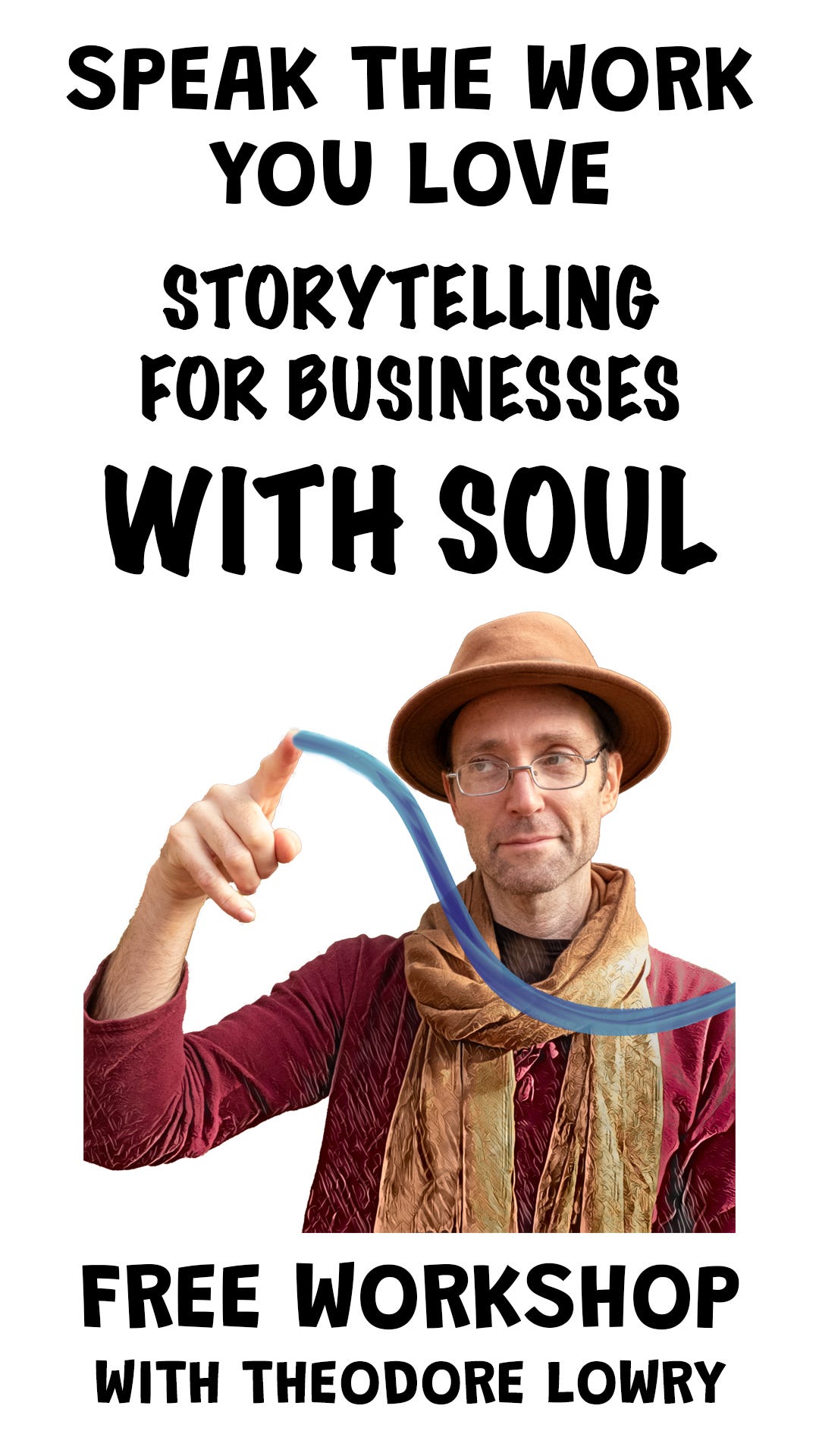
Well met, fellow wanderer, I welcome your company, here at this riverside resting spot, with willows budding, moisture and pollen swirling in the air, and the sun arcing overhead. I must say, those are some fine tools you’re carrying in your pack. I’m curious how you learned to use them, and to hear of work that you’ve done. I’d like to know which paths brought you here, so I can get a sense of who you are. I wish to hear of your journey. Ahem. I was just speaking in story, but I’ll say an equivilent in non-fiction speech. You see, I’m curious about the work you do in your business. Please tell me, what brought you to this work, and why is it valuable to you? That way, I can get a sense of who your services are for. Back to speaking in story: What’s that? You want to bring others across this river to join you? Ah, but it is flowing fast and wide, ‘tis true. A traveler seeking your services might attempt a crossing at any number of places, but there’s no bridge, and they would struggle to ford those waters without help. Which we might say, in a non-fiction way, thusly: I hear that you want to convey to others the value of your work, and why you do it. Yet ultimately, so many events led you to this work. When you’re trying to explain why you do what you do, you struggle with what to include and what to leave out. You end up tongue-tied, or talking all around what you’re trying to say without solidly landing on it. Let’s go on with in story-form… Aye, it’s true! This river you’ve crossed is formidable, wide, and full of contrary currents. Small wonder that you were able to cross, let alone others after you! Yet just see, there beneath the surface… stepping stones! Those could let folks to come across and meet you. You say there are too many stones, no single clear way across. Perhaps, but what say we try a few ways? If you agree, we’ll walk them together, then decide which ones you’ll share with others. I say let’s try out variety of routes. What’s more, I’ll wager we can have some fun while we’re at it. Which is to say, in a non-fiction way: Let’s look at some key events in your life that led you to your work. We’re looking for events that were transformative, noteworthy. By telling this sequence of events—this story—you’ll convey the why of what you do. And that why might just be the why of your listeners too. Choosing and telling key events that led you to your vocation can not only help your people find you, it can help you yourself depeen into the why of what you do. Let’s have some fun discovering events in your life that were transformative, rich, and challenging, and which made you who you are. Now let’s merge fiction and non-fiction. Ah, you’re asking about how I knew to notice those stones? How did I come to be here by this river, helping folks like you? How kind of you to ask. Hi, I’m Theo. I’m a story worker by trade, which is to say I tell stories and help people tell theirs. Or you might say, I cross rivers and help others to cross theirs. How did moi come to this work? I fell in love with stories as a child, and gradually learned from the spells that stories cast upon me. Now I cast some upon others, and even share the spells themselves. I may be able to help you tell the tale of what brought you to this side of the river, carrying those fine tools and skills. My wish in this is for you to find kindred folks who love your work. And it so happens that I’m holding a free workshop for purpose-driven business runners (like your good self?). Inside, I’ll give you teachings about storytelling, and there will be lots of practice time to tell the tale of how and why you came to the work you do. If all that didn’t convince you, here’s the signup-style blurb: If your business has roots in a unique, personal journey… If you want to discover and communicate that story… If you want to expand, contract and adapt that story to fit websites, promotions, bios and more… Then join me for this 60-minute Speak the Work You Love workshop. In this Workshop, You Will: -Hear my own story of how I came to this work, and why I tell it as I do. -Learn to spot key moments in the origin story of your business, then string them together into a compelling and relevant tale. -Practice telling your story in real-time, then try it in different ways, for different purposes.-Receive feedback to help you hone your telling.You’ll walk away from this workshop with a deeper understanding of your business’ origin story and how to adapt it to different purposes. Testimonials from the second time I ran this: “I found a new voice.”— Peter Gillies, Writer “This space of story feels both magical and real.” —Katie Colormaiden, Website Designer I hope to see you there, Theo This is a public episode. If you'd like to discuss this with other subscribers or get access to bonus episodes, visit storypaths.substack.com/subscribe
May 7, 2024
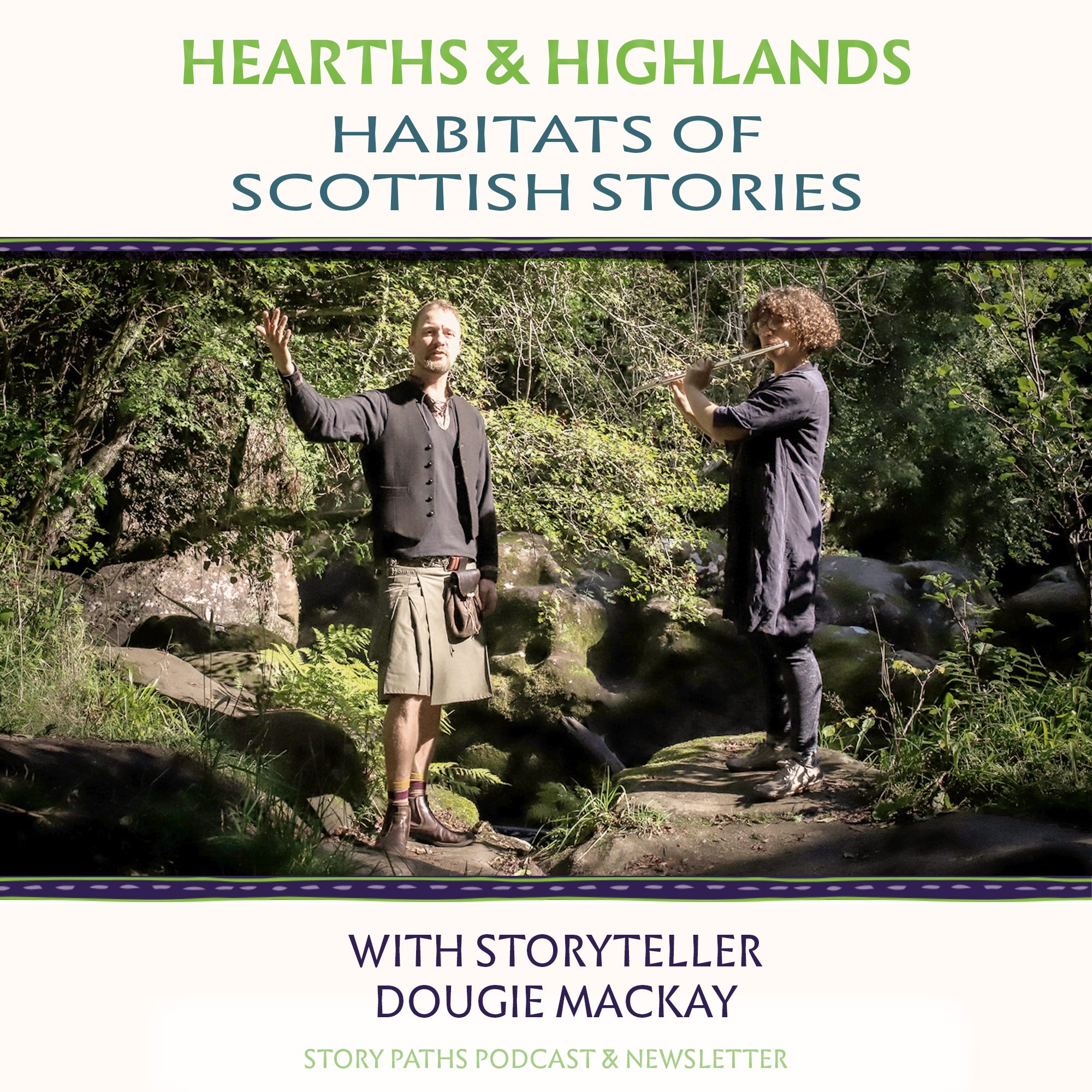
Hearths & Highlands: Habitats of Scottish Stories, with Dougie Mackay
Watch this episode Dougie’s Pacific Northwest Coast Tour Dougie’s website: https://storyconnection.org Myth as Medicine course. Dougie’s podcast Instagram Comment on this episode You’re in for a treat. Today I get into all the good things with traditional Scottish storyteller Dougie Mackay. He’s a skilled storyteller deeply rooted in the rich heritage of Scottish folklore, who works with nature connection and inter-cultural exchange. Here’s some of what we get into: The Scottish Cèilidh, pronounced KAY-lee, serves as a vibrant ecosystem where storytellers both get their start and sometimes find their life’s calling. Dougie shares the distinction between hearthside storytelling, a cozy exchange among friends, and performance storytelling, where professionals take the stage to enrapture audiences. He also talks about where these two overlap. Did you think we wouldn’t have a story? Dougie tells an old tale of a man's quest to retrieve his cow from the land of faeries. Through this seemingly simple story, we enter a narrative ecosystem, an invitation to ponder connections between nature, culture, ethics, and the mystical. Dougie describes his recent visit to Jordan, and how exchanging stories, food and song with the people there countered the cliched propaganda that media often uses to describe the Middle East. Stories shape our perspective. Where stories with good guys and bad guys foster binary thinking, many traditional tales offer a nuanced exploration of life. All this and more… This is a public episode. If you'd like to discuss this with other subscribers or get access to bonus episodes, visit storypaths.substack.com/subscribe
Apr 30, 2024
From Concept to Detail: Zooming Between Strata in a Project
Book one-on-one story sessions here Read this as an article, and share your thoughts here Here’s a greate way to conceive stages of creative work. I learned this from a friend who used them in the hospitality industry, but they’re applicable in any project. Consider three layers: 1) Big picture thinking. 2) Big muscle moving. 3) Detailing. Let’s Say You’re Opening a Restaurant The big picture involves choices of menu, location, audience. The big muscle stage is finding a location, sourcing ingredients, getting equipment, and setting it all up. In the detail stage we’d be arranging napkins into cups, evening out tablecloths, making sure the place smells good, and choosing appropriate music. You might take a moment to let this alchemist inside you, considering a project that’s alive in your mind. Ready? Let’s put on our swim trunks and dive in to get a better look. But as you’re getting those on, here’s a prompt. As we’re going through, I invite you to ask yourself which role do you tend toward. Of course, in any of these personality assessments, none of us are purely one type or another. We may shift between these types at different stages of a project, or in different parts of our lives. The map is not the territory, and yet maps are helpful, and this one is cool. So in we go. Big Picture Personally, I tend towards the big picture role, thinking about stories that we live by, spending time between stories, realizing that I'm in a story when I do that… this kind of thing. I was a monk for many years, delving into philosophy. My challenge is to bring these big thoughts into podcast, books, workshops, and into community. I need quite a bit of space and time to do this kind of thinking. That's a big part of my nature. I get work done too, I promise! How far out do we want to go? If it has been decided already that we're going to open a restaurant, we can consider the big questions that come up. But what if we haven't chosen to open a restaurant? In fact, we’re not sure what we’re going to do. So first let’s fly higher. Maybe instead of a restaurant, we might open a cinema, or start an app that helps people make these decisions. Or an app that makes an app that helps people make these decisions! In this big picture thinking we're considering which portal to open. After that, there will be many more choices. In Praise of Procrastination I want to take a moment to honour this stage of deciding. In an overculture where many seem more concerned with getting things done than deciding what work is worth doing, I pledge support for consideration, for time given to thought. It's not lazy. It's not avoiding work. It is the best investment. While we’re at it, we can take it further. Instead of wondering which project to start, as though it’s a given that we’ll start one, we might ask ourselves, should I start a project? Or shall I become a meditator and become detached from these ambitions of starting projects and making money? Should I learn to be satisfied being an observer, watching this world. My contribution may be in sharing what wisdom glean during this slow time of being present with what is. I might fly further out still, conceiving of myself very simply as a conscious being who can act. Further still, and depending on my cosmology, I might consider myself to be one with the world, friends with one who is in the center of our galaxy and in all things, in kinship with the creator and all other beings in their essential state. An essential state that remains within us while we express ourselves in temporal manifestations in myriad ways, from wondrous to horrendous and everywhere in between. Why stop there? I may let go of duality and even spectrums with dual ends. I may let go of it all and simply be whatever being is. Geez we’re high up! We’re out as far as I can think to go. Coming in from here, I see a variety of possible worldviews, so= I'll pick a worldview and enter it. I'll meet other beings, discover opportunities, and decide which portals to enter within my incarnated life. Alright, I’ll take this one on, this particular commitment with these particular people. That feels right. I'll begin that work. I’ll enter into the next layer. To be continued in part two of two…. This is a public episode. If you'd like to discuss this with other subscribers or get access to bonus episodes, visit storypaths.substack.com/subscribe

Apr 23, 2024
A song for these times, and a course for you and your relations
Links: Laura Burns' family constellation course. Isaac Fosl-Van Wyke's music. Welcome to Story Paths. Why stories? Because they help us imagine together, for one reason. They help us see possible pasts, possible futures. Welcome welcome, welcome. Today is a special issue. The audio version has music, so do have a listen. I’ll also share an amazing course that a friend and mentor of mine is putting on. Let's start with the music. I recently traveled southward to Kentucky to visit a dear friend. There, amongst other wonderful experiences, I met a man called Isaac Fosl-Van Wyke. He was playing his songs at a little club, along with an artist who goes by the name Mother Marrow. One of Isaac's songs, Coming of Age, fits so well with the theme of these last episodes, about a Third Ethics, about becoming aware of the wider world, of the times in which we live, and the gifts and responsibilities this time bestows upon us. This song is called Coming of Age. Have a listen in the audio version. Isaac’s whole album is excellent. You can it at these links. Bandcamp, the best way I know to support artists directly. Apple Music (pays artists a bit more than Spotify) Spotify, who don’t pay artists nearly enough! Also… There’s about an upcoming course offering by Laura Burns, a friend and mentor of mine. Now, there's different ways that I could describe Laura, as I know her, and many other ways besides. And of course, describing a person in words is not the only way to behold them. Which is to say that Laura is an enigmatic, witchy, rooted, seeking, queerly questing, midnight-walking, daylight-jousting-sing-song-songbird-exchanger kind of lady. I'm glad to have encountered her work. I participated in the last course on this topic that she offered, and now she’s offering it again. It’s called: Lessons from the Field: Tending the Ancestral Soul A systemic approach to land, transformative justice and ancestral healing. Learn more here. In this course, Laura is bringing a very interesting, interwoven cluster of insights. This offers a radical way of looking at the dynamics between victims and perpetrators. This might be really interesting for people who are in the field of nonviolent communication or restorative justice, where the first goal is to stop further harm, and then to help heal the hurter, to help them become a positive agent in the world, nourishing the fundaments of life that they once harmed. The course starts soon! It’s on May 1st, then every Wednesday after that until June 5th. What’s Included? 6 Weekly Sessions - 2.5hrs - plus recordings. Sessions are every Wednesday 6.30 - 9.00pm BST, Online via zoom. 50min One-to-one session. Material to explore each week, including Guided Audio Meditations, and shared reading resources. In conclusion, Laura is a lovely, like, welcoming person deeply mystical, witchy and cool, and I recommend this and all of her offerings. She’s also doing really wonderful stuff with earth-soul connection ceremony and natural dye fabrics. She's just a really neat lady, so definitely sending love her way. Until the next Theo This is a public episode. If you'd like to discuss this with other subscribers or get access to bonus episodes, visit storypaths.substack.com/subscribe
Apr 16, 2024
Beyond the Horizon: A Pilgrimage into Deep-Time Stories
Read this as an article, and share your thoughts here Book one-on-one story sessions here Let’s open with a poem A power outage, is not an aberration. It is the old normal world poking through into the aberration of tech depending on tech depending on tech depending on the world. Wind, water, weather, creature. This wild wild world. What is it to be cut off from ancestral stories? When gaps to appear between generations, between children and adolescents, adolescents and adults, adults and elders? When these age ranges become stratified. When the movement between these ranges becomes sparse. We still have our genetics, from our parents and our grandparents and on back. Going back. Each generation with two parents and each of them with two, branching back and back. Still, we have those genetics within us. We also inherit language and customs and talents and traumas. But what do we lose when the stories get interrupted? When we don't sit with our parents and hear about our grandparents. When we don't receive cultural stories from our kin, but instead are immersed in stories crafted to capture and entertain us. Crafted by those we will never meet. It used to be that age ranges mixed in everyday life, from can’t-see to can’t-see. Of hearing about those who've departed: grandparents, grand uncles and aunts, great grandparents and on. From being nested amongst the bodies of kindred relations, with stories being passed amongst us, from mouth to ear to heart to hands to mouth to ear to heart to feet to song to ear to belly to breath to song to ear. Stories adapting, stories weaving past into present and passing the present on through ears and hearts and hands and feet into the future. Such a delicate, fragile form of knowledge , and yet it is the most enduring form we have. Still we have stories that are tens of thousands of years old. They’re still with us today, after plagues and floods and invasions. Thank you for staying with us. What stories will we tell when the screens go dim, when the vast cooled data banks grow silent? When the pages in books tot or burn, or people forget how to decipher the codes. What will we speak to each other about these times? What words of warning might we pass on to warn our kindred descendants of toxic zones that we created for a few decades of power. Lands which will need warning of for thousands of years to come. What stories might we tell so those people who come after may know to tend those sites, so the consequences are not as grave as they might be. Tend them when the fifty or a hundred year mechanisms containing them break down. Tend the leaks, contain the radiation. Tend and perhaps begin to remedy the great rifts and damages that they will inherit. What stories might we pass on to help those who come after? What lore might we pass on to them that will be useful for what they will surely face. What will we pass on? What lore? Until the nextHappy creatingTheo This is a public episode. If you'd like to discuss this with other subscribers or get access to bonus episodes, visit storypaths.substack.com/subscribe
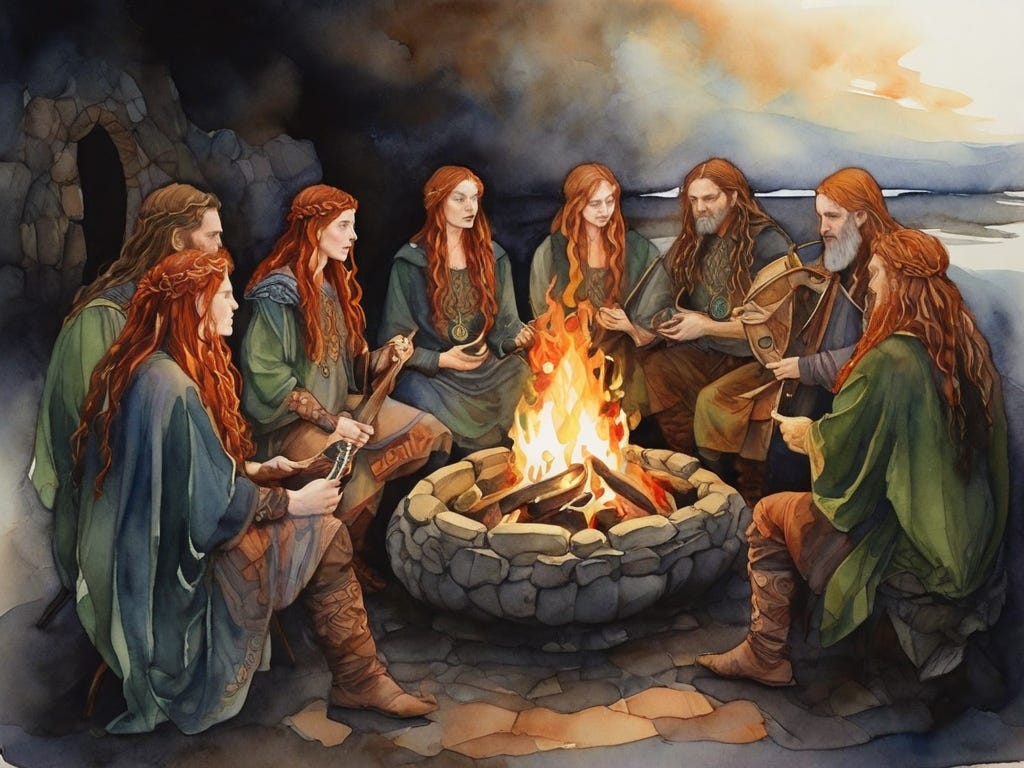
Apr 9, 2024
A Third Ethics Part 2: Evolving a Worldview to Encompass the World We Impact
Read this as an article and reply here Book one-on-one story sessions here Bringing Distant Ones Close A Spiritual Approach How might I connect with the water in Nigeria, Alberta, Costa Rica, Australia? How can I come to understand that this water may well come into my own body? We learn from many spiritual teachings that all beings are in interrelation with each other. We are, as Martin Luther King said (in 1963 from the Birmingham jail) in an inescapable network of mutuality, tied in a single garment of destiny. Looking at religion, we find ideas that cause people to consider the wider implication of their actions. There's the concept of karma: simply put, of cause and effect. If I commit harm to another being, I will eventually have to taste that bitter fruit, whether coming from them or someone else, in this life or another. The concept of sin is similar. I may get away with something now, but in the long term, God will punish me for it. Connected with karma, dharma teaches me to do good for the sake of spiritual upliftment. For myself and others. It’s not just in dharma: this sense of acting a good way for its own sake can be found in spiritual paths throughout the world. I might approach this in a ceremonial way, bringing cups of water into my sensory space and saying, ‘This is the water of the south. This is the water of the east, of the north, of the west. I am of them, and they are of me.’ I might travel by mind to lands affected by resource extraction, travel there and witness their struggles, then consider this when I decide whether or not to get in a car or an airplane. Technology What are other ways we might bring distant places nearby? There are apps that tell me how much pollution I'm responsible for, and there could be apps that tell me the consequences of my buying this kind of lemon, which comes from 20 miles away, compared to this kind of lemon which comes from 200 miles away, or a thousand. They could tell me who my phone battery is harming. Tt could be mandatory that on every new car there’s a label, like descriptions on cigarette packages, listing that product’s consequences to people, place and creatures. Stories Story is another way that we might bring distant beings close. By hearing the stories of refugees in other lands, of those living on islands subsumed by rising sea levels, or of those in the north who cannot hunt as they used to. To hear those stories and imagine myself in their lives, including them in my sense of self and place. Stories bring empathy. So much so that author Lynne Hunt figures that the the modern novel is the basis of the human rights movement. That’s quite something. By sitting and deciphering symbols on a page, wide swaths of people learned to enter into the minds of others. Often these ‘readers’ came to know characters even better than their families, for fictional minds are transparent. This art form, and the empathy it allows, may have kindled the kinship required to declare that all people have worth. This Green Globe is the Best Dressed in the Ball It wasn't that long ago we first saw photographs of the earth taken from space. That moment was part of a big shift for us, shifting towards a larger awareness: from first and second ethics to the third. And perhaps from here there could be fourth, considering not just our own planet, but other planets, other beings out there ,with whom we are in relation, and to whom we are of consequence. In karate, students are taught to punch through their target; by widening our perspective to other planets, we may take good care of our own. By widening into deep time, we may act well in the times we’re in. May we include within my sense of self and place this whole beautiful green, blue, brown, cloudy, watery globe, upon whom we are spinning through space. Story Prompts Consider something you've bought recently. See if you can trace down where the parts of that thing came from: where it was sourced, who helped create it. See if you can find some of the story behind it. Consider work that you do regularly, and a tool that you often use, like a computer. If you can't find specifically where each of the components came from, can you take a guess? Can you learn about some of them, and in so doing learn about the place they came from? You might learn some stories from that place, and come to consider it part of your backyard, part of your responsibility. I'll do the same. In Closing, I’ll share a poem. Questionnaire, by Wendell Berry -How much poison are you willing to eat for the success of the free market and global trade? Please name your preferred poisons. For the sake of goodness. -How much evil are you willing to do? Fill in the following blanks with the names of your favorite evils and acts of hatred. -What sacrifices are you prepared to make for culture and civilization? Please list the monuments, shrines, and works of art that you would most willingly destroy. -In the name of patriotism and the flag. How much of our beloved land are you willing to desecrate? -List in the following spaces the mountains, rivers, towns, and farms you could most readily do without. -State briefly the ideas, ideals or hopes, the energy sources, the kinds of security, for which you would kill a child. Name, please, the children whom you would be most willing to kill. This is a public episode. If you'd like to discuss this with other subscribers or get access to bonus episodes, visit storypaths.substack.com/subscribe
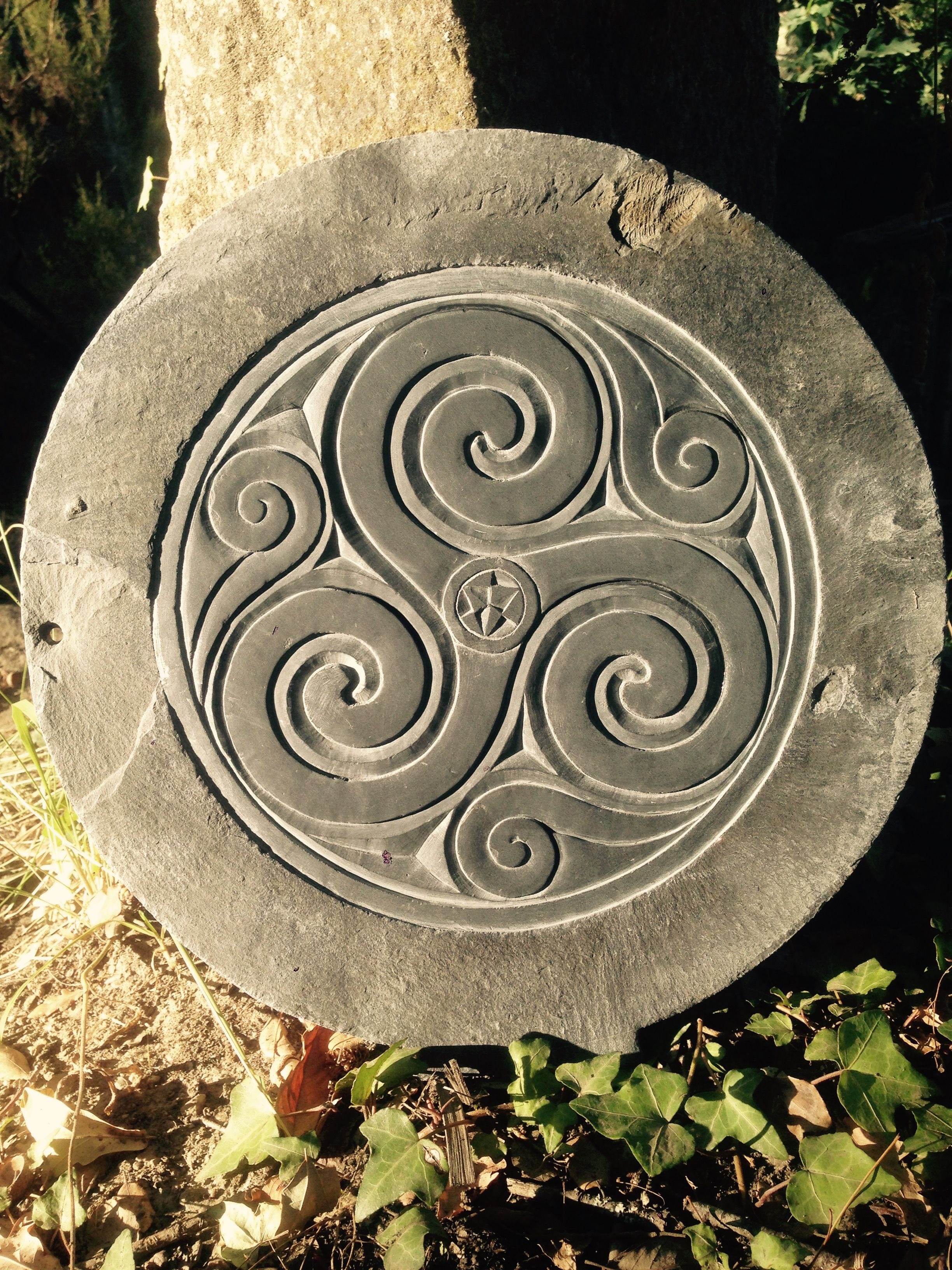
Apr 5, 2024
New Course: Story Shapes Part II - Structuring Intricate Plots
Watch the promo here The sales stuff: I'm offering this at an opening discount of 15 dollars. Buy it on Gum Road (free account). I'm also lowering the price on my three course bundle, which includes Story Shapes 1, and Brainstorming Story Ideas, for 30. Buy the bundle of all three courses. I'll hold that until the first week of April, then they'll go up. With these purchases, you’ll be able to either watch the videos online, or download them to your own computer. Buying these is a great way to learn an intuitive approach to stories, and to support me as a creator. I greatly appreciate it. Another Way to Watch Them If you're on Skillshare, those first two courses are available there, and the third one will come soon. If you'd like to try out Skillshare, here's a link for a free month. So either by buying one or more courses directly, or by watching them on Skillshare, I invite you to dive into birds’ eye view story-thinking. Happy creating! Until the next, Theo This is a public episode. If you'd like to discuss this with other subscribers or get access to bonus episodes, visit storypaths.substack.com/subscribe
Apr 2, 2024
A Third Ethics Part 1: Evolving a Worldview to Encompass the World We Impact
Read this as an article and share your thoughts here Book one-on-one story sessions here I’ll open with a passage penned by none other than the Dalai Lama, which appears in the preface of Coming Back to Life, the Updated Guide to the Work that Reconnects, by Joanna Macy and Molly Brown. The Dalai Lama writes: Although it is increasingly evident how interdependent we are in virtually every aspect of our lives, this seems to make little difference to the way we think about ourselves in relation to our fellow beings and our environment. We live in a time when human actions have developed a creative and destructive power that has become global in scope. And yet we fail to cultivate a corresponding sense of responsibility. Most of us are concerned only about people and property that are directly related to us. We naturally try to protect our family and friends from danger. Similarly, most people will struggle to defend their homes and land against destruction, whether the threat comes from enemies or natural disasters such as fire or flooding. We take the existence of clean air and water, the continued growth of crops and availability of raw materials, for granted. We know that these resources are finite, but because we only think of our own demands, we behave as if they are not. Our limited and self-centered attitudes fulfill neither the needs of the time nor the potential of which we are capable. Today, while many individuals grapple with misery and alienation, we are faced with global problems such as poverty, overpopulation, and the destruction of the environment. These are problems that we have to address together. No single community or nation can expect to solve them on its own. This indicates how small and interdependent our world has become. In ancient times, each village was more or less self-sufficient and independent. There was neither the need nor the expectation of cooperation with others outside the village. You survived by doing everything yourself. The situation now has completely changed. It is no longer appropriate to think only in terms of even my nation or my country, let alone my village. If we are to overcome the problems we face, we need what I have called a sense of universal responsibility, rooted in love and kindness for our human brothers and sisters, and the world. In our present state of affairs, the very survival of humankind depends on people developing concern for the whole of humanity, not just their own community or nation. The reality of our situation impels us to act and think more clearly. Narrow mindedness and self-centered thinking may have served us well in the past, but today will only lead to disaster. We can overcome such attitudes through the combination of education and training His Holiness Tenzin Gyatso The 14th Dalai Lama of Tibet Written on September 7th, 1998. Beyond our Senses As I write this, I am sitting beside a pond filled with cat tails and reeds, and I'm listening to the calls of frogs and ravens. I touch this water. Run my hand over these ferns. Caress this moss, and run my fingernails over this alder bark. If something were to happen to this pond, these trees, these ferns, these creatures… if a great industrial force with chainsaws and log lifters were to careen through here, I would know it, for I am here. The smells and tastes and sounds, sights and textures of this place surround me. My body and these bodies share the same space. My senses and the senses of these others overlap. And yet, if I were to leave here, I might find this land for sale on a property board somewhere on the internet, and if I had enough currency tokens, I might purchase it, and decide to log it. All this I could do from a distance, without bringing my senses into this space, without being culpable before the creatures who call this place home. This scenario, in miniature, is perhaps our species’ greatest challenge when writ large. It is a strange thing to purchase land and direct its destruction ,without ever seeing it; I must apologize for this land here for even imagining such things. Yet we are involved in directing such remote violence with every purchase at the grocery store, or the gas pump, or the airport, or a shop selling digital devices. Our everyday actions affect sensory environments that we may never sense with our bodies. This is something we haven't before faced as a species, at least not to this magnitude. We are attempting to come to terms with our consequence on the planet, and this attempt is showing our shortcomings. We in First World countries have the greatest impact, not because we have different natures, but because we have more capacity. Three Spheres of Ethics I propose three spheres of ethics to consider. In the first two, we are quite accomplished. The first is ethics to oneself eating well, exercising well, being careful not to take in disturbing sights and sounds. Being careful who we let into our lives. Being careful, in short, to be good to ourselves. Now, whether you or we always get this right is another question, but most of us are quite aware of it and working on it. The second sphere of ethics is in relation with our friends ,children, parents, colleagues, people in our demographic, people in our city, people in our country. In short, people whom we consider to be our people. Whether we get it right or not, most of us are aware that it's important to be in good relations with these people: to not steal, to not be violent, to respect their ways of living a dignified life. Then there is the third ethics. This ethics relates with ecosystems and people who are outside our sensory range, but who are impacted by what we do in our sensory range: by filling the gas tank, buying imported food from the grocery store, or buying a new phone. Although these distant beings are impacted by our actions, we do not directly witness that impact. I think it's fair to say that our planet, and our time, are asking us to encompass these beings with our awareness. To include them in our considerations, though we may never encounter them with our senses, as one creature is used to encountering another. We are Connected We are connected to them: through scientific reports from lands where sea levels are rising and topsoil is eroding, and perhaps from symptoms in our own land, like smoke in the sky as forest fire season worsens, or coral bleaching when we go out to swim. We know that our actions have consequences not only in distant places, but everywhere in this world we call home. We know, and yet many of us, and most of us some of the time, act as if we don't know. Why is this? Perhaps it is due to some shortcoming in our makeup as a species, that we did not evolve to consider the worldwide implications of our actions. Perhaps it is because we are more socially, culturally and ecologically woven into the places where we live than to distant places, so we don't feel those other places through the web of being we do those near us. Because our cultural/spiritual/social web gets thinner as it extends from us. Or seems to. Whatever the reason, I find myself looking for ways of bringing those distant places close: ways that we as individuals and groups can feel our remote impact, so that when I consider whether to get a car, for example, I consider not just the price of the car, not just whether those I know personally would be okay with me getting a car, but also the costs to the mycelium crushed by tarmac, the First Nations folks in Alberta poisoned by tar sands, or those in Nigeria and South America pushed off their land by corporations I'm helping to fund. My choices may make sense within the first and second spheres. A journey to a distant land for self-discovery is good for me. Getting a big four-wheel-drive vehicle is good for the safety of my family. But what is the impact on the locals in the place that I'm traveling? How does my vehicle affect the air we all breathe? The fuel it uses is destructive in both its extraction and its burning, as is the mining and melting of the virgin metal used to make the chassis. These three spheres of ethics are deeply inter-related. I may act only for personal and inter-personal wellbeing, but there will come a time—and perhaps it comes subtly and immediately—when the health of the wider world will impinge upon my own well-being, and the well-being of those I know. How might I bring those larger implications into my decision making: with maturity, with grief, and with a willingness to face up for that which I am part of? How can I bring distant sensory environments into my own? Here's another way of asking this: given that my entire species evolved, as did all species, to interact with those in our sensory environments; given that I'm used to understanding what's in front of me, who's in front of me; given that I'm not very good yet at relating with ecosystems, creatures and people on other sides of the world, or even across the city I'm living in; how might I bring those beings closer to myself? How might I bring those beings, to whom I'm so consequential, into my sphere of awareness? Furthermore, how might we do this? In classes, companies, communities, workshops, churches, temples? You name it, in all the spaces that we gather. Dune’s Prophetic Witches Here is a fictional example that indicates third ethics,. It’s a bit weirder and more scheming than what I really have in mind, but it helps to look from a fictional angle. So consider the Bene Gesserit, the Galactic Order of Witches in the Dune stories by Frank Herbert. In this story, there are various powerful houses that have been existing for hundreds or thousands of years. Sometimes they cooperate, and often they compete. There's a lot of vying for power going on in this galaxy, and all the while, there’s this order of witches. Some are married, some are not, some are young, some are eldresses, and these interwoven ladies are keeping an eye on the big picture. They may not always know whether this royal house will win, or whether that one will, and so they place bets on either side. They're not for or against any particular house, or any particular emperor. They move with the possibilities, and keep an eye out for the grand picture. They ensure stability. The Third Ethics is something like this. While other groups are vying for their benefit, there are those who are not invested in the victory of this side or that side, but who are instead considering the whole. It’s not perfect, but this illustrative, fictional example shows how we can look out for our own, while considering the wider picture that includes everyone, and not just humans. In the next issue, we’ll explore other approaches to come close to distant beings, namely spiritual, technological, and of course, stories. In particular, we’ll look into how the advent of the novel led to the human rights movement. Let’s continue this exploration in the next episode. There, well look into the power of stories. In particular, how the advent of the novel led to the human rights movement. Until the nexthappy creating,Theo This is a public episode. If you'd like to discuss this with other subscribers or get access to bonus episodes, visit storypaths.substack.com/subscribe
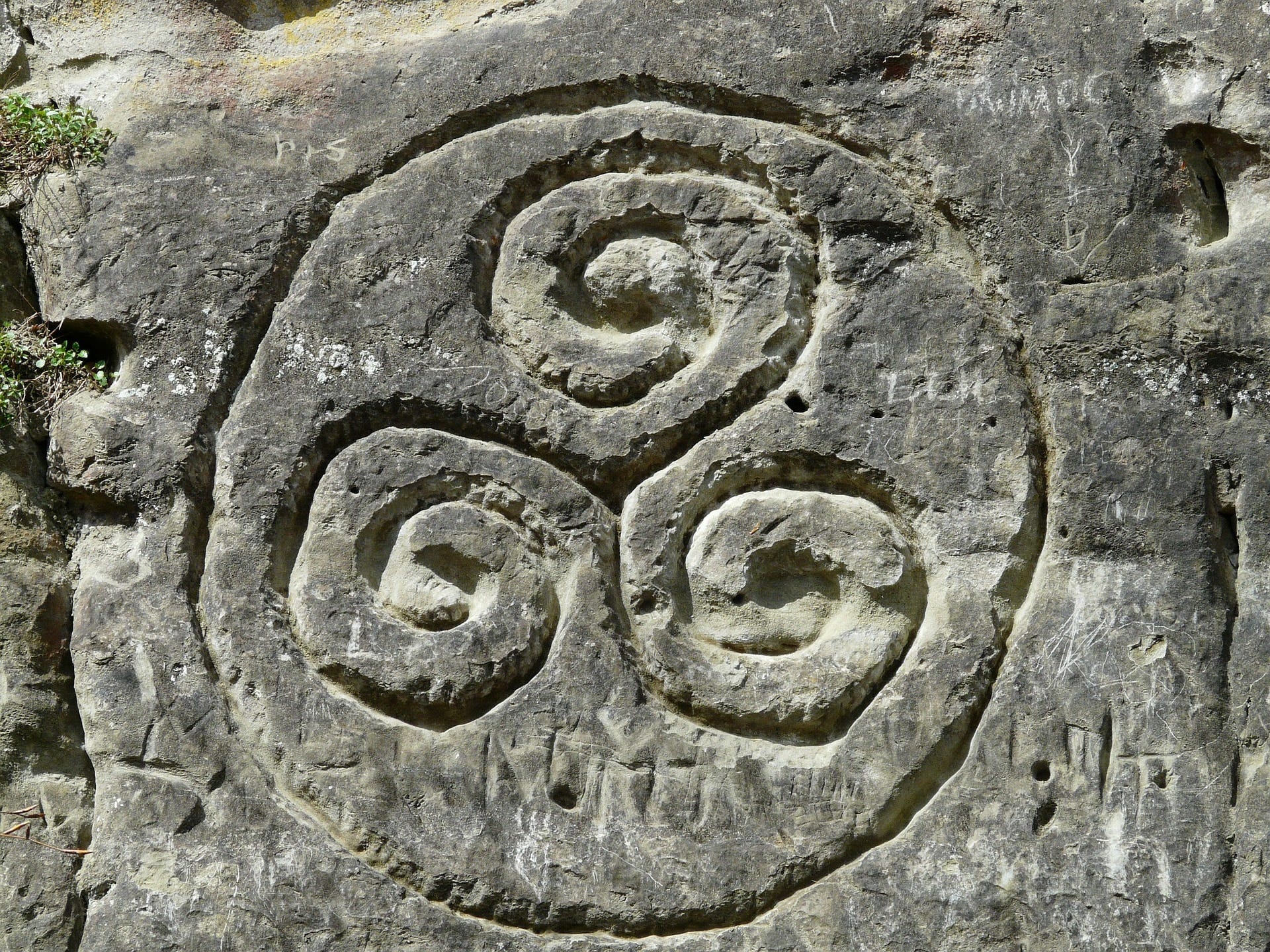
Mar 26, 2024
How Mindscapes change Landscapes: Borders in story and in life
For story workshops: https://storypaths.substack.com/p/06d77f86-cbe9-4c65-8486-2e723e2b33b4 It is a freestyle rhythmic meditation on borders. Because just as the stories in our minds become the stories we live, the borders in our minds become the borders we enforce. This one’s better listened to (see the audio link). In we go. This is a public episode. If you'd like to discuss this with other subscribers or get access to bonus episodes, visit storypaths.substack.com/subscribe

Mar 19, 2024
7 Generations, a Deep-time Meditation
Workshop: Speak the Work you Love: Storytelling for Businesses with Soul Sign up for weekly story workshops here: https://storypaths.substack.com/p/f3dbaab7-c9bf-463b-ad5d-bfc51651ccfe How might it feel to expand your psychic footprint back in time, to go back seven generations, with all the changes? How might it feel to go forward into the future? How would thinking in deep time change your vocational work? How would you consider succession, and who are you inheriting understandings from? In this guided meditation, you’re invited to spread yourself through time, to more fully inhabit the present. This is a public episode. If you'd like to discuss this with other subscribers or get access to bonus episodes, visit storypaths.substack.com/subscribe
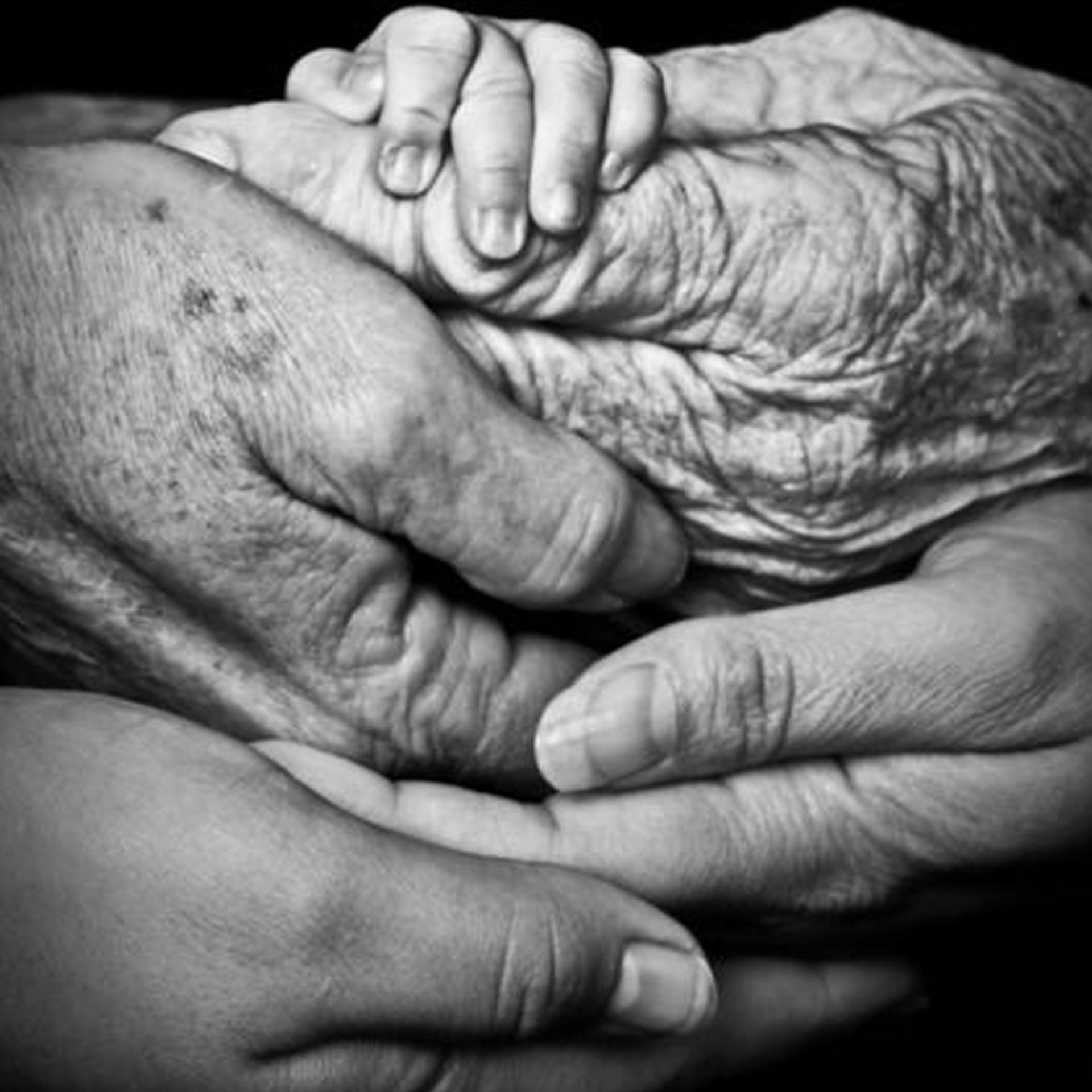
Mar 14, 2024
The Monk & the Labyrinth: A New Graphic Novellla
Here's a quick little episode to share a new story. That has been swirling into creation, a pattern in the center of a sandstorm, with flows of wind coming in from different directions. This story is in the form of a virtual comic. Read a preview here. Read the full comic here. And what is this story about? Hear me, for I whisper strange wonders. In a circular stone temple, a muskrat monk awaits the coming of pilgrims. Various creatures make this journey to bring him their death-poems: condensed lifetimes of wisdom, glimpses of the beyond, in the form of scrolls. These they entrust to the monk. His duty is to burn these prayers so that they may be heard in the Otherworld, to herald the arrival of those who wrote them. However, instead of burning these verses, this monk keeps them, reads them, and places them in a miniature labyrinth hidden below the temple. He arranges and rearranges these scrolls meticulously, trying to find a pattern to satisfy him. But the core of his maze is empty. You see, he has no poem to herald his own death. This story, this comic, is both funny and philosophical, quirky and evocative. And you, O thoughtful listener, are invited inside. Here are some previews of the pages; you can purchase the virtual comic on the vendor gum road for a very reasonable rate. It’s also a good way to support this publication. Thanks! Until next time, Theo This is a public episode. If you'd like to discuss this with other subscribers or get access to bonus episodes, visit storypaths.substack.com/subscribe
Mar 12, 2024
Mapping Stories, From Start to Heart
Sign up for weekly story playshops here: https://storypaths.substack.com/p/f15d43a9-4e89-47d1-93e0-a40c0d03d546 There's a spectrum, with boring on one side and weird on the other. Let’s consider story beginnings, and tinker with the ratio between familiar and strange. Here's a way to consider beginnings. Here's a meditation. You are standing within grasslands stretching in every direction. By your feet, the land is familiar: the plants, the smell of it. But your eye follows a particular path, where you see that the land grows stranger. Out in the distance there are strange caverns that you wonder about, with curiosity and worry. All between where you stand and those distant, strange lands, there are holes in the ground. Some are burrows, and each burrow has been dug out by a different creature. Each burrow is an entrance into a story. Some burrows are close, some further away, some familiar, and some strange. Which burrow will you enter? Where will you begin your story? Perhaps you’ll start with one nearby: a tale of a character who is much like most of us, in the times in which we live. Whose life and way of thinking resembles our own, a starting point for a story that is just like slipping on a familiar sweater and stepping out the door. Or will the starting point of your story be deeper into that strange terrain, into a hole burrowed by an unfamiliar creature? That starting point might be a time in the past, not terribly far from our own time, but perhaps a hundred years back. Or a hundred and fifty, or two hundred, into a time that is connected to our own through many visible threads. Perhaps that is the starting point of the story. Or you go further back into times that are difficult for you to imagine, and will be difficult to imagine for those hearing your tale. Difficult, but possible, if you find ways to imagine them deeply, and inhabit those times. Your story may start a thousand years back. Two thousand! In another world, where people think very differently from ourselves. Or perhaps the characters of your story are not human people. Where does your tale begin? How strange is the burrow’s entrance? And here is the other question. As you go into that burrow, how quickly and to what degree does the journey become strange? A story may start with a character who is much like most of your audience, but who quickly steps into an otherworldly world. Or a story may start with someone unfamiliar to us, and then continue more deeply into strange and unfamiliar territory, while hopefully giving us enough details that we can relate with—smells and tastes and feels—that are relatable to us, in our time, with our bodies. Not so different from the bodies in that tale. With enough detail, hopefully, that we can follow this strange character deeper into this strange world. Not that we all have the same experience now. How strange is the beginning of your tale to the sensibilities of your listeners? And as the tale deepens, can you bring them with you? If you can, they may be in for the most unusual, deepening, expanding, weirding journey that they've been on since God made platypuses. Let’s hope so. For your beginning, you might choose a frame story: a story in which another story takes place. For example, I’m to a friend, and I begin to tell him about something that happened to me a week ago. The main narration moves to this story from a week ago, but we know we are still within this conversation of me talking with a friend. There are lots of examples of this. In The Neverending Story, a boy hears his grandfather read a story from a very special book. Within that book is the main story. Then there's the question of how deeply we go into the frame story. The frame story could be brief, a flitting thought around the main story, where we spend most of our time. In the example of me talking to my friend, we could have a brief conversation between me and my friend, but then most of the narrative is about this story that I'm telling about what happened to me a week ago. Or, let’s say there's plenty of story going on between me and my friend. We are journeying across the ocean, experiencing various trials and revelations as we go. In the course of all this, time to time I continue telling them about what happened to me a week ago: the story within the frame. In that case, the main emphasis is placed on the frame story and the story within it is not as deeply described. You can also ask about the relationship between the story that's being framed, and the story that's framing. For example, as we cross the ocean and experience various trials, and I tell my friend about this thing that happened to me a week ago, it could turn out that this thing that happened to me a week ago has a great deal of relevance to what's happening now. It might be just the key to overcoming a particular trial, or convincing him to go a certain direction on the ocean, when we have that chance. There are different kinds of frame stories. Can you think of some? Reading a book could be a frame, or a dream, a meditation, a vision, a memory, a letter, or back-and-forth correspondence , a storyteller. A song could be a frame, and I'm thinking especially of a song with much story in it, like a ballad, those long songs that are histories. I'm curious if you can think of any more frames for stories. If so, please share them in the comments. I’ll say one more thing before we close for this session, and it's something you may have been thinking about as I go along, is that stories are not necessarily just one layer deep. You may have a frame story within a frame story, within a frame story… You might be thinking of the film Inception, in which the frame story is of people trying to get inside the head of someone, to get particular memories. To do this, they share dreams together, and within those dreams they go layers and layers deeper. For each of the examples I've given, there could be multiple layers of depth. In a conversation, I could be telling my friend about a conversation I had, and how within that conversation another friend was telling me about a conversation they had with a shop-keeper, who was telling about where they got a particular medallion. You can go as deep as you want. There's a scripture in India called the Srimad Bhagavatam. The story goes some twelve layers deep: conversations within conversations within conversations within conversations. And each conversation has some context. We were considering before about how fleshed out the frame story is. So in this case, the first layer is someone who's heard a conversation between the sage and a king, where the sage delivered many teachings. The second layer is the main story in which the king is cursed to die; he goes to the banks of a holy river and prays for guidance. Many sages gather to him, and one sage in particular comes to speak wisdom to him. Within that story, the sage speaks of other conversations between sages and students. And within those conversations, the sages often quote other sages, because they're not just making it all up. So from sage to sage to sage, it goes twelve layers deep, and some of these layers have more context than others. Some are briefly mentioned, like, ‘Once there was a sage who spoke this to a king, and here is what he spoke.’ Others have more context: ‘There was a battle, and many people had died, and the king was heartbroken, and then the sage appeared to him and spoke the following words…’ So in all these examples of frame stories, these layers can all have relationship with each other, like different floors of the same building, or strata of soil, or layers of a tree with different kinds of branches, or layers of clouds, or perhaps some other metaphor. If you have started a small business, you might consider the story of how you created that business, the story of why you created that business. You might consider that story to be within the story of your life. So your life is the frame story and the business is the story within it. If you're helping clients, you might consider which stories are nested within the stories of their lives. And so… I couldn't speak about frame stories without coming back to where we started. Let’s come back out of that hole in the ground. Usually at the end of frame stories, we come out and out of however many frames in we are in, coming back to the first one, which follows the principle of a cycle, of returning to the beginning of a story. Not that it's necessary to return to the beginning of a story, but there is a certain neatness in at least harkening back to the beginning of a story, from the end, of touching back on what brought us into that hole in the ground in the first place. So as we come out, you may want to reflect on your life as a frame story: around this article, and around all the stories you hear. That’s one way to think about it. Story Prompts: Here are some story prompts regarding the beginning of stories, how normal they are, how quickly they get weird, and how weird they get. Take a look at a story you're writing and consider that ratio: how weird it starts, how weird it gets, and how weird it finishes. You could try adjusting the recipe to see what happens. Have it start really weird. Tell it to people. How does it land? Is it intriguing? Do people lean in, or away? If it starts really normal, is it just boring? How about if it starts normal, then gets really weird… does it throw people off? You can actually get pretty weird if you start normal. So that's the prompt: to fiddle around with that recipe. In regards to business, if you have some unusual offering, think about the pathway into it. And here's some props about frame stories. The first one is simple: have a conversation with somebody about another conversation. The first one is a frame story. For the second one, if you want to go further it, talk to somebody about what somebody else told you within a conversation that they heard from somebody else, then you're already a couple layers deep into stories. It's surprising how often we do that in day to day life. For a frame story within business, you might consider your initial touch with the person to be a kind of frame story. If you're putting on an introductory workshop, this workshop could give a good sense of what your work is like, if you go further and further into it. This workshop could be considered as a frame story, with your customer’s further explorations within that framework being the main story. Kind of like the table of contents and the main book. You might adjust that first contact so that there's more of the DNA of what's to come in it. And so here we are, resting in a warm cabin after our journey together. You can take this time to consider what's alive in you after hearing this talk and to reflect on the story prompts. Now these prompts art homework. But possibilities. You might respond by journaling, by speaking about them with a friend or colleague, or speaking about them with yourself, while you're walking or driving. You might push back against these prompts or come up with better ones. You can share your thoughts in the comments on Substack. Or even better, if you'd like to explore these prompts together, I'm hosting weekly gatherings where we play with stories for an hour that's included for premium subscribers at just $5 a month. Or you might just want to let this all go and roll along with whatever's coming next in your life. Happy creating. This is a public episode. If you'd like to discuss this with other subscribers or get access to bonus episodes, visit storypaths.substack.com/subscribe
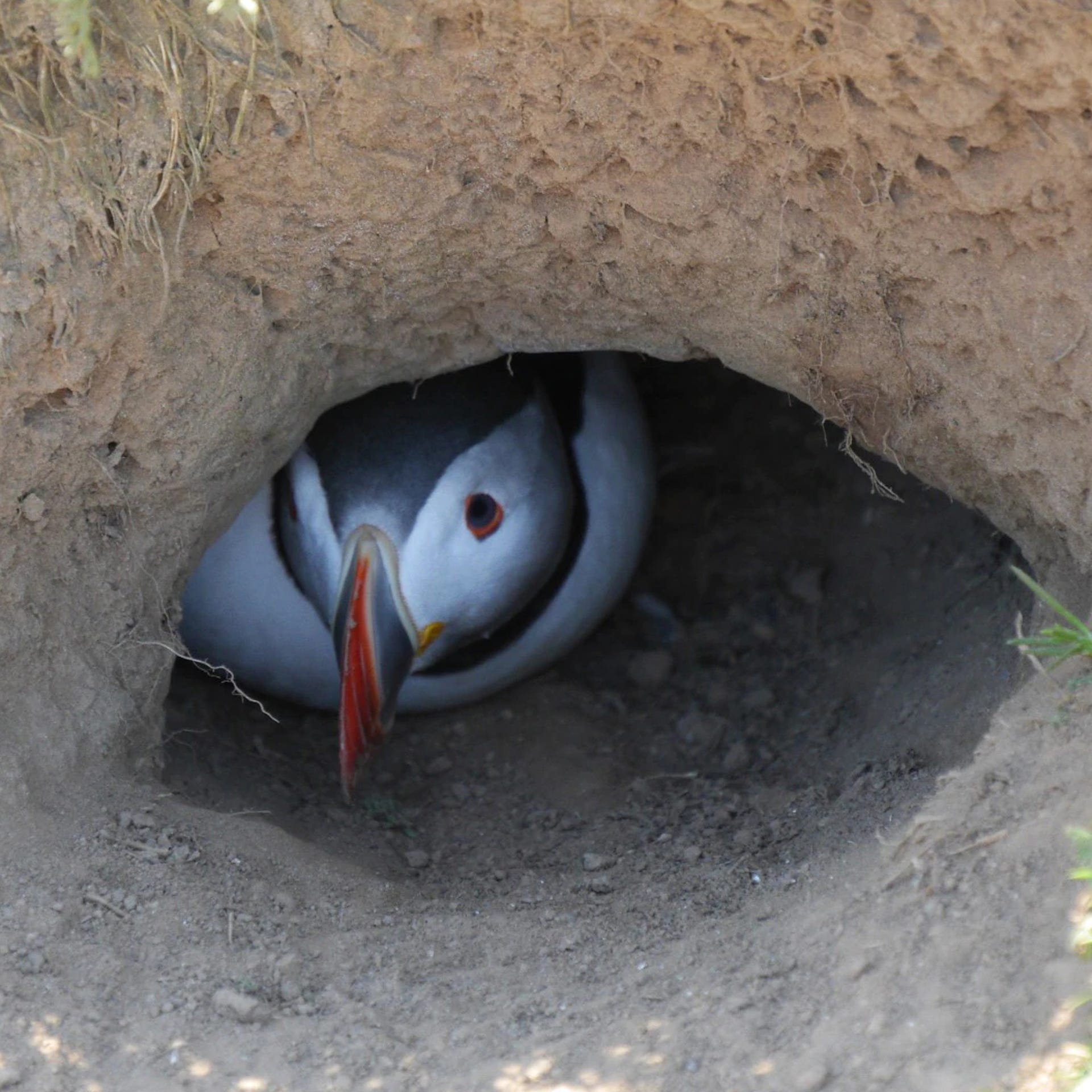
Mar 5, 2024
The Grim Reaper Born Again: Death in Story and Life
Weekly story playshops here: https://storypaths.substack.com/p/86acb049-61b0-4311-8dce-d0d833d6b76e If I had my life over again, I should form the habit of nightly composing myself to thoughts of death. I would practice the remembrance of death. There is no other practice which so intensifies life. Death, when it approaches, ought not to take one by surprise. It should be part of the full expectancy of life. Without an ever-present sense of death, life is insipid, limp. You might as well live on just the whites of eggs. - Muriel Spark In going to speak about death and story, there's no preparing for it. No way to get together an authoritative and comprehensive presentation on views of death. On what actually happens on the afterlife. And the reason there can't be a comprehensive presentation on this is that it is infused with mystery. The transition into death is mysterious. The fact that we must die is mysterious, as is our relationship with those who have died. I'm considering death these days because I realized that the altar within me that I have for death has become dusty. I used to think that having an altar to death in one's self would be strange and morbid. I feel now that death is accompanying life at all times. Death is a great teacher, perhaps the greatest, is the basis of life. We see predation, one animal consuming the life of another. And this is true for those who don't eat the flesh of other beings, for eggs and seeds and milk are also potential life. The seeds on the Himalayan Blackberry bush are intended to create more Himalayan Blackberry bushes. If I pick some of those berries and eat them myself, I'm taking that potential for life, and I'm using it for my own life, as when a snake steals a bird egg, or a wolf kills a baby caribou. Life continues, but is directed into other life. How can we live our lives to honour the lives who made it possible? Life comes from death, and death comes from life. Perhaps if we set aside these two different words, we might find that death and life are one. As we enter into this exploration of death and story, I invite you to consider your own altar for death. Who is there on the altar? Are there figures of deceased loved ones? Are there animals and plants? As you go through your life, what is your relationship with the potential death surrounding you? In many stories, the potential for death is the main driver of the story. This potential for death might be an invading army that the protagonists oppose. It might be the death of a loved one that they're striving to save. A dragon might be that potential death, raining down terror on a village. Or from the dragon's point of view, those little humans with their pointy swords coming out of the village could be the potential death. Avoiding death is a huge factor in stories and in our lives. Death accentuates life. Or rather, awareness of of death accentuates life. If a person knows they are going to die, then what life they have becomes that much more precious. Of course, we all know we are going to die, but it's possible to have this awareness all the time, and for this awareness to accentuate our lives. Even though our lives are relatively short, it can feel like a long time. Quite a lot happens in the span of eighty or a hundred years. Heck, a lot happens in a month, or a day, or an hour. It's easy to lose sight of death, of the end being present, of our lives being held in a particular container, because most of us don't know when we are going to die. However, some of us do. Or did. I've been listening recently to the David Bowie’s final album, called Blackstar. Now, David Bowie has gone through many different eras in his career, and I'm not familiar with most of them. Some of the early pop songs are cool and everything, but I never got so into them. This last album is remarkable, and I would say that this is because he wrote and recorded it while he knew he was dying. He had cancer, and his death was coming closer and closer. When a creative, expressive, deep-thinking person is served notice that they will soon die, they may well create something extraordinary. (Listen to the audio for a clip) I'm thinking also of Gord Downie. In this part of the world, he’s famous. He was the lead singer for the Tragically Hip, perhaps the most famous Canadian rock band. He got news that he had brain cancer, and an estimate of how many months he had to live. Not down to the day, but pretty close. In his last years, he redirected whatever attention came to him to indigenous rights in the far north, where situations are often dire. (Listen to the episode for an excerpt) In myth, I'm thinking of a famous example in India. A king, Maharaja Pariksit, was cursed by a young brahmin boy, to die in seven days by the bite of a winged serpent. This king was served notice: ‘Seven days from now, this curse will land on you, and you will be killed.’ He knew exactly how long he had, so he went down to the banks of the Yamuna, a holy river. He sat and he fasted, waited for his death, and prayed for guidance. Lo and behold, sages showed up, and more sages showed up, and more sages showed up, until there were hundreds and hundreds of them. A particular young sage, called Sukadeva Goswami, came last. All the sages there understood that Sukadeva was the one who would speak that day, and they too were keen to hear him. In those seven days, Sukadeva Goswami spoke day and night. Pariksit Maharaja listened and asked questions, and all this led up to the point of the king's death. He wanted to pass into that death as best as possible. Awareness of his death amplified his life. The presence of potential death, of oncoming death, amplifies a story. This death could be physical death, but it could also be other kinds of death: being parted from a person forever, the death of a relationship, the aging of a child into adolescence, the aging of that adolescent into adulthood, or the aging of an adult into elderhood. And as with all deaths, mythically speaking, and scientifically speaking, the fading life enters into what comes next. Death becomes new life, and death is therefore seen as a transformation. And what of old death? Death surrounds us: the death of previous civilizations that gave way to what we have now, the death of trees that form our buildings, our chairs, the paper, and the books we read. Old death. Mummies, graves. Many great stories have old death within them. The kings and queens of old built monuments that we still see around us, as ruins. It's always fascinating to see the layers of old cultures that still poke through into what's here in the present. If we look around the world, and dig into the history of the inventions that we use, into etymology, our own genetics, and the development of philosophy, we find that all of what we have today is nourished by beings who have lived, and entered into death, and in so doing have passed their generativity onto the next generations. There are small deaths throughout our lives. In French, sleep is sometimes called, ‘Le petit mort,’ or the little death: a forgetting of life and slipping into some other world, only to return changed. Even boredom is a kind of little death, a fertile absence of engagement from which deeper, fuller activities can be born. Sickness can be a small death. I'm feeling under the weather today, and so reminded of my mortality. I feel frail, older. It’s easier to imagine breathing my last. This remembrance can be a great companion. When I think of death in myth, with my upbringing in my part of the world, I think of the Grim Reaper: a skeletal being, hooded, dark, and cloaked. When he taps you on the shoulder, your time is up. You must go now to wherever you may go. And yet there are other ideas of death. In Buddhism and Hinduism, we have Yama Raj, the Lord of Death. He is not a skeletal cloaked man, but a king, and his responsibility is to make sure people coming through the door of death go where they’re meant to. He is conscientious, empathetic, aware, strong, and needed. Here’s a story about the goddess Kali. Early on in the creation, there was no death. This may sound good, but people were piling up. They kept being born, and without any death, there was less and less space for the living, so the demigods brought Kali in. She then brought death into the world, and things started flowing again. Life depends on death. You might also say that death depends on life. One passes into the other, and passes back. Physically, we know that decomposition is the basis for a new life. Internally, the death of one part of oneself is necessary for new life to come. Relationally, an idea of what a relationship should be—between brother and sister, child and parent, husband, wife—must die again and again, for that relationship to be alive. Can gods die? Perhaps they must, to compost and come again. If a god, or an idea, is held in stasis, this can be worse than death, an artificial holding, beyond the natural lifespan of that belief system, of that form of worship. To allow something to die is to allow it to be born again. And here's a meta point about death in stories: how about the death of a story itself? That is to say, a story’s ending. I think we all know novel series, television series, and comic series that were great in the beginning, and also really successful. But because they were successful, the people making them just kept making them. Milking that cow, getting that money. But gradually, the magic of the story drained away, and it kept going like an animated corpse. Other stories go out with dignity. Just recently, the television series, Reservation Dogs, wound up. It’s such an excellent show, tragic and hilarious. A big, wide story, and very personal as well. It was popular and could have kept going for a longer. Sterlin Harjo, the showrunner, said they wanted to tell the story of a group of young people at the cusp of adulthood, a time of great change. To explore the decisions they made, the changes that happened within them, and between them and their community. They told that story in three seasons, and wrapped it up. They could have kept going. You can always spin out some new story from a scenario and a group of characters, but it was the right time for the show to finish, so they did. Anyway, I’m sure I could string this out and say more about this meta death of stories themselves, of how they go out. But perhaps I’ve said all that needs to be said. In the old, old ways that are still on earth with us today, when a hunter takes the life of an animal, they do so with gratitude and ceremony. It might be a small ceremony, but an acknowledgment. A sense of wishing that being well on their journey, and acknowledging the pain they underwent in order to sustain the human hunter. Death supports life. What happens if a person does not give gratitude for the death that sustains them? What happens when we stop looking at death? When we stop giving back? Well, we still survive because of creatures dying. Whatever our diet is, land has been cleared for us; creatures have been killed. And yet, if we don't face the death, is it not ironic that the death multiplies? It’s strange that this violence spreads all over the world, outsourced so that we don't have to see it. It’s been the fate of cities, of civilisation, of first worlds. Outsourced death, outsourced violence greater than ever before. A massive shadow of paradise. Here are some prompts. Heavy topic. Heavy prompts. Consider the different deaths you've experienced, of those you've known in your life, and how that's felt different at different times. Perhaps as a child there was a grandparent, or even another child, that died. How did that land with you then? And then consider the later deaths, until you come to the most recent. How has your own relationship with death changed over the years? And here's another prompt. Which deaths are we living on? The oil that we pull from the ground is the deaths of old plants and creatures. And which recent deaths are we dependent on? This keyboard, this computer, the internet infrastructure: all has a cost to other beings. Robin Wall Kimmerer speaks about the honorable harvest. Most harvests these days are not honorable, but I feel it is important to face these harvests as well, and give gratitude even though they were wrongly taken,. In facing them and being in gratitude, we might return to good relation with those whose deaths depend on. That, in turn, might reduce the amount of needless death we are inflicting, externalizing, onto the living world. Here’s another prompt: In yourself, is there some era of your life that is tending towards death? If so, how might you hospice that part? It could be the part of you that was in a marriage, the part of you that was in a spiritual organization, the part of you that felt a different way about the world. How might you honor that part and be a death-doula for them? Here’s the same question for your business. Is there some part of your business, or your business as a whole, that is tending towards death? How might you hospice that, so that the energies contained within can go back into the system of your work, to create something new and vibrant? Feel free to share your thoughts on these in the comments. Special credits for the audio version of this episode go to David Bowie and his musicians, The Tragically Hip with Gord Downie as the lead singer, and Hannah Elise, who sang this beautiful rendition of I Just Want a Grieve. And thanks to Sterlin Harjo and the team at Reservation Dogs for making such a wonderful show. And so here we are, resting in a warm cabin after our journey together. You can take this time to consider what's alive in you after hearing this talk and to reflect on the story prompts. Now these prompts aren’t homework, but possibilities. You might respond by journaling, by speaking about them with a friend or colleague, or speaking about them with yourself, while you're walking or driving You might push back against these prompts or come up with better ones. You can share your thoughts in the comments on Substack. Or even better, if you'd like to explore these prompts together, I'm hosting weekly gatherings where we play with stories for an hour. That's included for premium subscribers at just $5 a month. Or you might just want to let this all go, and roll along with whatever's coming next in your life. Happy creating. This is a public episode. If you'd like to discuss this with other subscribers or get access to bonus episodes, visit storypaths.substack.com/subscribe
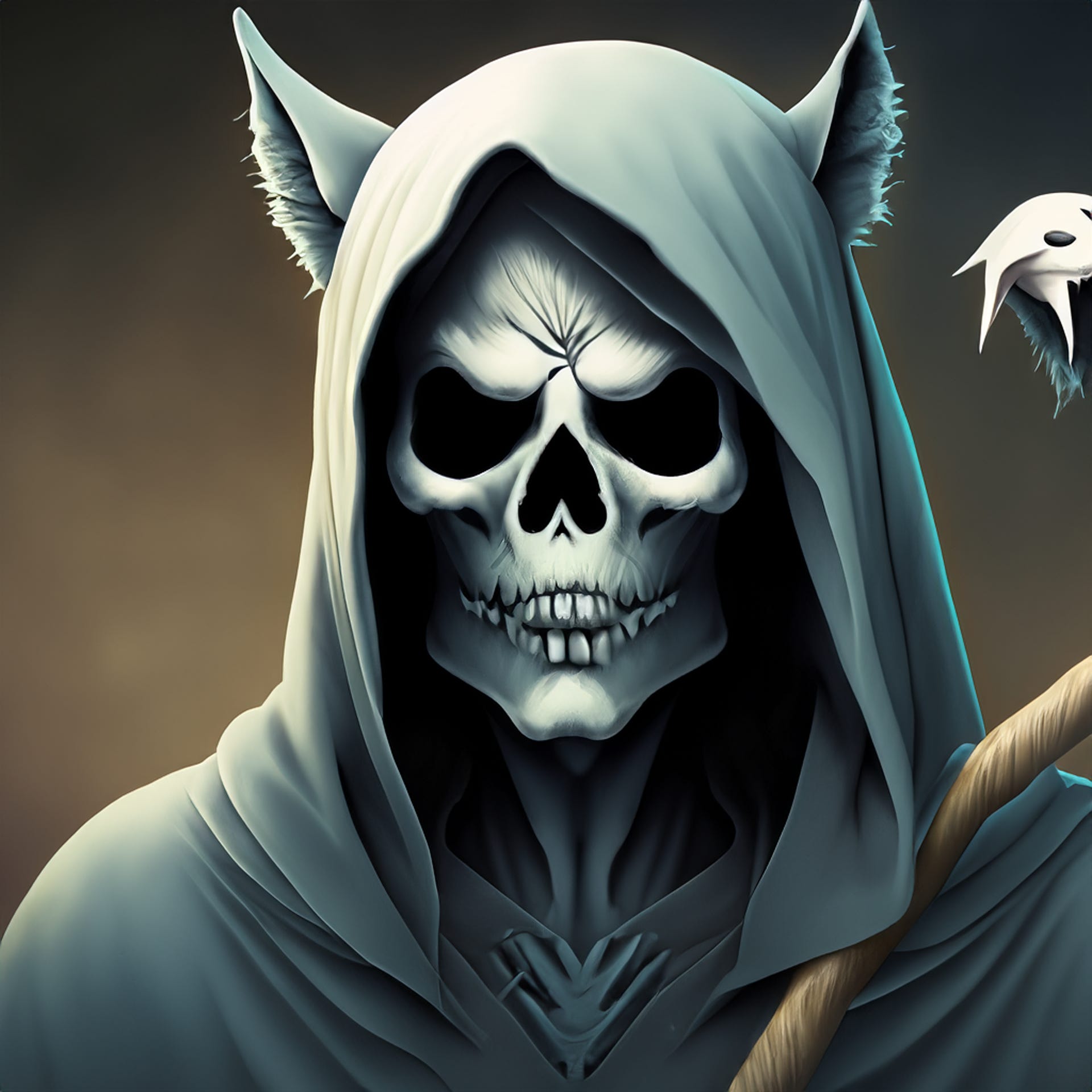
Feb 27, 2024
Believe It or Not, Part 2: Navigating Wild Perspectives
Sign up for weekly story workshops here: https://storypaths.substack.com/p/a599bdd3-d828-4b67-a036-f5f816bd56e1 In part one of our exploration of belief, we began by considering a system of beliefs as a system of scaffolding, crisscrossing above the waters of life. Across watery mystery. We finished by figuring that belief might be more like a liquid stain glass orb surrounding each person, that colors the way they see the world and the shapes they see through it, and even which parts they see at all. I like this model, but it’s visually centred. What about the other senses? Are there no metaphors for them? Well, using a little nimble creature empathy, I can sidle over and see belief in a different way. Yes, I'm a visually focused human, unlike many of my interspecies neighbors. Moving over to sound, I think of the many little birds in the forest around me as I'm writing this. Mostly the birds cannot see each other, and so they depend on sound. By sound, they know whether a predator bird is approaching. And this sound is called out throughout the treetops. Birds even recognize the language of other species. So this language travels throughout the treetops, and it is the bark and leaves filtering and reflecting this sound that are the ‘stained glass filters’ of their aural perception. Also, keeping with sound, we might dive underneath the water into the ocean that's in front of me as I'm writing this. In this case, sounds are filtered through water. The sounds of orcas moving, of gray whales migrating, of ships, of rockslides and sifting silt. It’s be easy to mistake one sound for another, muted and changed as they are by the heavy expanse of water. Going below ground, into the way moles and voles understand the world, we move mainly through scent. Scent of food and predator and everyone in between. And what is filtering these scents? Soil and seed, scat and secretions. This is their stained glass. These sensory conceptions are analogies, of course. Perhaps only humans have beliefs in science or religion, morality and such. Perhaps animals just go by signals, sensory signals and response, not a web of beliefs. Maybe. To me, this seems like a limiting belief, one that doesn't give animals much room to move, before they drop out of human sight. So how does all this connect with story? Well, belief determines which stories we see through. Now, it's often easier to see such things a step removed: in fictional beings, in characters. If a character is steeped in the belief that there is good and evil in the world, they see stories of good versus evil played out all around them. If they believe God is there and God is good, they will see miracles everywhere. And where they see bad, they'll try to somehow see it in the light of goodness. Or if they see bad everywhere, they'll see everything in the light of badness, as it were. Or they might not see good and bad at all, but see paradoxes everywhere. Here's a story prompt: Put two characters together with very different beliefs about the same situation. You might start by describing the situation and their differing beliefs about it, then set them in motion and see what they do. Here’s a business story prompt. Consider an individual or a business with whom you’re connected. This could be a partnership, or you may be their client, or they may be yours. This is a little easier if it's an individual, but if it's a business, you can consider that whole business as an individual. You'll see what I mean. How would you describe their beliefs? What are their guiding principles? These may be stated or implicit. They may be stating some guiding principles, and following others. Can their true guiding principles be seen through how they conduct their business? When you consider your own guiding principles, you can see how compatible you are with them, and what might be a fruitful arrangement between you. Until next time, Happy creating Theo This is a public episode. If you'd like to discuss this with other subscribers or get access to bonus episodes, visit storypaths.substack.com/subscribe

Feb 20, 2024
Believe It or Not: The Power of Fictional Faiths. Part 1
Sign up for weekly story playshops here: https://storypaths.substack.com/p/42ce63d7-a0b4-4231-88ac-0fe8861e55e3 I had a dream last night, in which my sister and I were guests in the house of a Shanghai family: card-carrying supporters of the Communist Party. I felt a gulf between us, that we could not speak across, because our brief conversations always stayed within a particular scaffolding of thought. Our hosts moved only within these thought structures, these bridges crossing troubled waters that they wished never to swim in. In the dream, my sister and I had been rescued from a downed craft somewhere in the north of China. Our rescuers had brought to this clean and pleasant home, to wait for our two governments to work out our journey back to Canada. We were ragged strangers in this house, and though our thoughts could easily question the Communist Party and just about anything else, we lacked what our hosts had: belonging. At first, I wondered why our hosts wouldn't dive off their bridges into the turbulent, wondrous waters of life. Then I came to understand that these bridges gave them what they needed. Not on the deepest level, perhaps, but could I say I had met those deep needs? We had freedom of thought, my sister and I, but we would remain outsiders even when we returned home, for ours was a nation of outsiders, of individuals unwilling to fit into a universal social system. Instead of families, we had spread-out units. Instead of dependable helpers and dependable roles, we had individuals struggling to work out their roles. At least our hosts, in some sense, belonged. At least, if they stayed on those bridges, they would receive the basic support they needed. I feel the interesting question here is not, ‘Is this or that belief true?’ but rather, ‘Why do people believe what they do?’ Belonging, perhaps. A sense of safety, a kinship with the world. The assurance of a good afterlife. What will they lose if they lose that belief? And what might they stand to gain if they let go of that belief? Now, personally, I reckon that reality doesn't depend on our beliefs. If trees are sentient beings, they don't depend on my belief to become so. If gods are real, they don't need me to believe them into reality. But here's another way to look at belief. If a fir tree is a sentient being, in fact, then my belief that it is so may open the channel between us, so that I can perceive the fir tree in a deeper way. If I believe this fir tree is just wood, that channel may shut. The same goes for myself and other humans. If I hold the belief that this man across from me came to his decisions for good reasons, I'm open to hearing him. Those reasons may be mentally rational, or they could be more deeply rational: from within his emotions and psyche. Either way, my belief in the worth of his reasons keeps the channel between us open. And so this brings us to another way to look at beliefs: as a web of openings and closings surrounding us. The openings allow parts of reality in, and the closings keep parts out. By adjusting these beliefs, our experience of reality changes. By adjusting our beliefs, our experience of reality changes. Many character arcs track changes in this web of belief. A character may be hold racist views, with no channel open for the humanity of certain other humans. But by rubbing shoulders with such humans, a part of our character's web that was closed now opens, letting in sunlight bounced off this other human. Or, as the story progresses, an opening may close. This might be a tragedy, as events transpire to turn friends against each other as old prejudices cinch in to obscure their vision. Yet a closing need not be a tragedy; a closing could be a character's protector. Picture a mother and her child. The child was born a girl, but isn't so sure that's who she is inside. The mother is intent on fitting her child into the same gender role that she was put into, so much so that she becomes abusive to her child. The child was born open to her mother, believing her to be a source of love and support, but gradually, this opening closes. When the child is old enough, they pull away, believing their mother to be small-minded and cruel to the core. Well, the mother may not be cruel to the core, but this closing protects the child from further harm, and allows them to get some distance, to find some people who understand and support them. This closing, this belief that the mother is inherently bad, allows the child to step away and heal. Later, that belief may change and open, allowing the child to see their mother's own trauma, which formed her own belief web, her own shifting pattern of openings and closings. But in the meantime, the child has some space to heal. Now, in this exploration of belief, I feel us reaching the limits of this web analogy. There are either holes or webbing. Open or closed. There is no part-way, no translucent parts, and no varied colors. But belief is not just openness or closeness to reality. A fuller way to look at it might be this: beliefs are the stories that we tell about reality. Beliefs are the stories we tell ourselves. They are filters through which we see the world. They are prisms through which sunlight passes into our eyes. We see the world through stories. What is a tree? A person? Wood? An ancestor? Is the earth feminine, masculine, neither, both? Kind, cruel, or indifferent? What stories are your characters looking through? What stories are you looking through? And so, instead of a web surrounding a character, instead of an orb with simple openings and closings, imagine, if you will, a constantly shifting dance of stained-glass panels. Each panel is a belief, each angle of that glass an angle through which the character can see the world, each color within that prism the emotional tone of that belief. Picture a woman sitting in her living room. She sees a neighbor outside throwing a ball to his son. A red prism in her mind says this man is a bad father. A blue prism, another angle of her mind, reflects this man's fatherhood as another way of expressing his love for his son. A green angle of this prism reflects how a man can love his child in the same way that she herself loves her own child. A yellow angle of the prism tells her that this man is one of the good people in the world, a violet angle reflects on how she can come to love the man and his son, can appreciate their laughter, can open herself to feeling the joy between them, and all these colors twirl and twist as she leans back to peer at the neighbor and his son through a new angle, a new prism. As the character’s beliefs dance and twirl within her, the colors change. Openness becomes closeness. Green becomes red. Yellow softens to blue. Beliefs are fluid. There is a dance of belief that happens within each of us, and within each of our characters. Picture, if you will, a story in which a character opens themselves to a new belief. See them close off to an old belief. See them close off to the belief that they can never be loved, and open to the belief that they can. See them dance, twirl, and spin through all the colors and shades of the rainbow. Now, you might think this is a recipe for moral relativism, but it’s a call to see the world through the eyes of others, in all its infinite shades and hues. To see that even when someone acts in a way we find reprehensible, that person is likely dancing through their own prism of beliefs. Understanding their dance of belief can help us navigate the complex terrains of human behavior. And this, my friends, brings us to the power of stories, the power to shape beliefs, the power to challenge and transform beliefs. Stories are vehicles for empathy. They are journeys into the hearts and minds of characters who may be vastly different from ourselves. They invite us to step into someone else's gumboots, to see the world through their bifocals, to move our bones with their dance of belief. In doing so, stories have the power to expand our own prisms, to deepen our understanding of the human experience, and other experiences. So, let us tell stories that illuminate the dance of belief, that explore the complexity of consciousness, that challenge and transform the filters through which we see the world. Let us tell stories that open hearts and minds, that weave connections across diverse perspectives, and that celebrate the beautiful, intricate dance of belief that shapes the tapestry of our shared reality. Thank you for joining me on this exploration of the power of fictional and real faiths, the dance of belief. If you enjoyed this episode, please share it with others who might find it valuable. And if you're interested in joining the weekly story gatherings where we play with the prompts from these episodes, do sign up for the premium membership for just 5$/month. It’s quite a deal. Until next time, keep weaving your stories, keep exploring the dance of belief, and keep shaping the tapestry of our shared reality. Happy storytelling. This is a public episode. If you'd like to discuss this with other subscribers or get access to bonus episodes, visit storypaths.substack.com/subscribe
Feb 13, 2024
Dying into a Living World: Animism and Deathcare, with Sarah Kerr, PHD
Sign up for weekly story playshops here: https://storypaths.substack.com/p/45d29452-ac79-4c0d-8d77-6991f90fbb8a Cosmology is a story of how all this came to be, which leads into what is real, or, in the words of our guest today, ‘what is allowed to be real.’ The world-view of a person and culture determines how they live in this world, and also the manner in which they die. Sarah Kerr sees the world as full of living beings, human and other than human, in physical bodies and in other states. She helps those who are dying, and those who care for them, through this great transition, with the help of carefully crafted ceremonies. Today we speak about the world-view that informs her work, a view which describes death as not a blank ending, but a crossing over. Those who stay behind can help this crossing through their love and grief, which can be channeled through ceremony. Sarah says, “As a sacred deathcare practitioner and a teacher, I’m passionate about helping my clients and students find the healing gifts that can accompany death and loss. I’ve been in practice since 2012, and I love helping people meet death and loss in soul-based way. I have a PhD in Transformative Learning, with a focus on contemporary ritual healing. I’ve been a student of cross-cultural energy healing for almost three decades and have studied with many Indigenous and western teachers. I’ve made my own journeys through death and loss, into healing and resolution. I offer myself in service to both the seen and the unseen world, and I work for healing on both sides of the veil.” Here’s a talk Sarah Kerr gave about animistic and western world-views, in two parts: A related conversation with artist Laura Burns https://open.substack.com/pub/storypaths/p/river-songs?r=1ium1j&utm_campaign=post&utm_medium=web Episode credits: I just want to grieve song, sung by Hanna Elise I hear the voices of the grandmothers, author unknown, found at http://www.prcupcc.org A video about the great turning, part of the work reconnects with Joanna Macy https://workthatreconnects.org/resources/the-three-aspects-of-the-great-turning-wtr-training-video-series/ This is a public episode. If you'd like to discuss this with other subscribers or get access to bonus episodes, visit storypaths.substack.com/subscribe
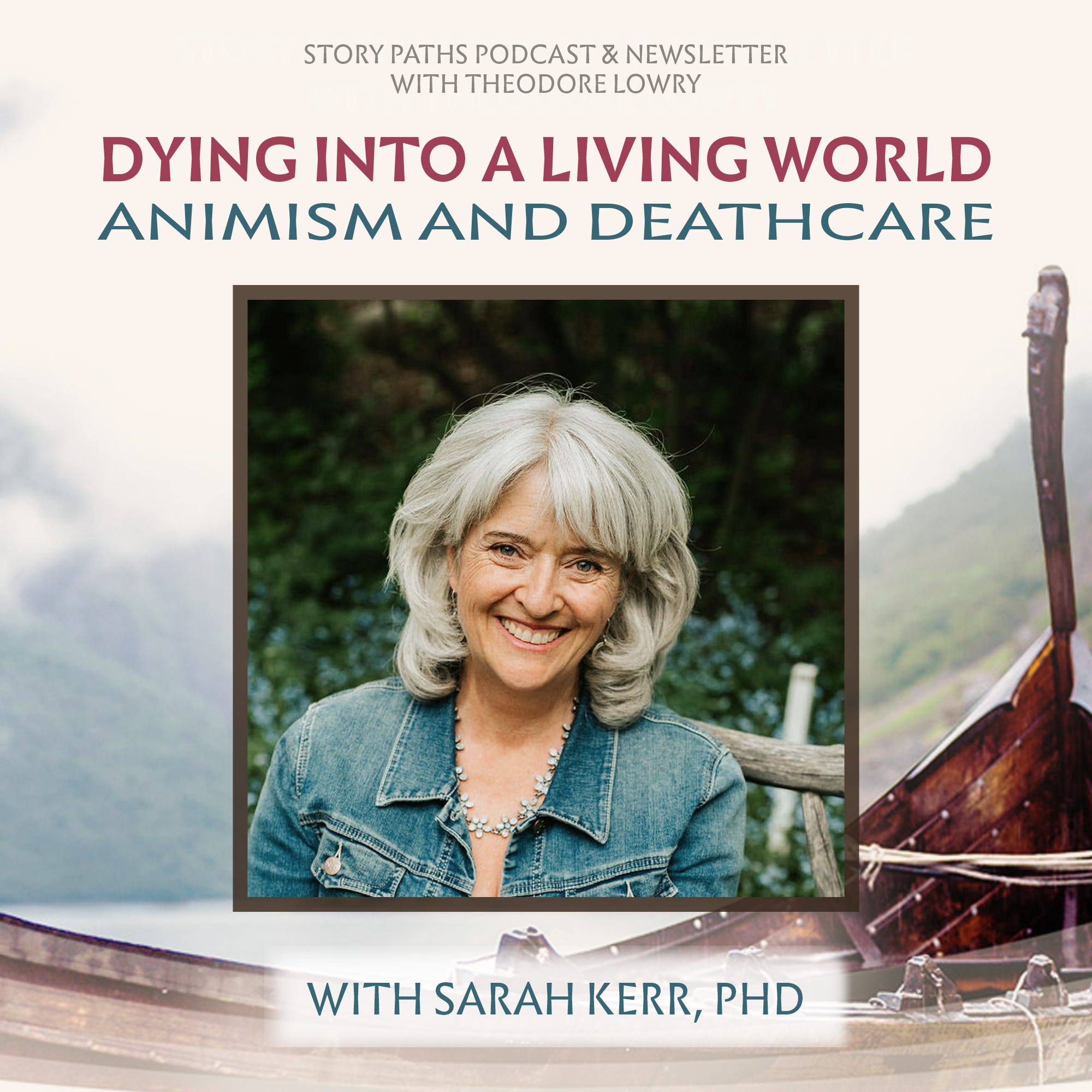
Feb 6, 2024
A Narrative Kaleidoscope: How Perspective Changes History
For weekly story playshops go on here: https://storypaths.substack.com/p/9bdd1000-4d0d-4c15-ba88-a5ae692cea40 I'm writing this and reading this while I'm sitting by the ocean, and it feels a funny thing to talk about history here because it is, of course, such a human idea. Personal history is the story of my past, of my life. It could be the history of my ancestors, their journeys that led to me being here today. It could be the history of women obtaining the right to vote. So already we see that the kind of story we get from the past depends on which part of the past we are inquiring into, and also who is doing the inquiring. I've heard it said, and it's true, that this word history can also be read as his-story. And I've heard it said, and it's true, that the past-telling that we hear these in schools and popular media is a male-dominated view of the past, focused in particular on generals and politicians, the focal points of certain kinds of power. This is one view of history. Not one I mean to discount, but let’s inquire into other views, for the stories we tell define us, and we define the stories we tell, so it's important to choose those stories carefully, and to have a wide sampling of stories, a rich microbiome of the past to inform our understandings of the present. Let's look at the etymology of this word, history. The Greek word historia originally meant inquiry: the act of seeking knowledge, as well as the knowledge that results from inquiry. So you can see that this word originally wasn't about linking events together into a story of what happened, a story of the past, but was simply about seeking knowledge. History is inquiry. We might also use this word history as a verb: to history. The story that emerges depends on the seeker, their manner of approach, as well as that which they are approaching. The past is a vast place, and many stories can be found within its landscapes. We know this from our own lives. Have you ever had a huge shift of perspective? Perhaps there was a moment when you came to see your mother or your father in a new light, a light that re-explained so many things that they had done and said. Have you ever re-looked at a pile of mistakes you made, not as indications of you being a bad person, but as indications that you were crying out for something you needed, or in the midst of learning something that you've now learned? Our view of the past can be a very flexible thing. So when you're thinking about writing some history—for your character, for yourself, or for a culture—a good starting point is to ask yourself… what your starting point is. From whose perspective are you inquiring? I'm sitting here by the ocean and thinking, what might history look like from the perspective of the ocean? A history of new creatures coming in and swimming around her waters. A history of changing temperatures, changing chemistry, of cooling and warming, of cooling and warming again. Of large parts of her becoming ice, then thawing, then freezing again. Going back further, a history of that water shooting through outer space from a star. And somewhere near the end of this history, coming toward the present moment, we humans emerge as characters stepping from her waters onto the land, with our women carrying a little of that salt water sanctuary within their wombs. From the ocean's perspective, we humans are not central, and I find it refreshing to consider a history in which we humans are not central. It might also be interesting to look through the eyes of a creature who has lived through these great changes, like species of sharks who have continued for millions of years. And rather than look through the eyes of a single individual, to look through the eyes of the species as a whole, taken as a single being, moving through time. How might this being experience these coolings and warmings, as their habitat shifts, and they encounter other species for the first time? How might a cold weather bird who lived through the Ice Age experienced the dwindling of those cold regions, as the earth warmed? And so there are many histories, and even among human histories, it's refreshing to step outside of those commonly told. I was visiting a site on Southern Vancouver Island, where petroglyphs have been carved into the rocks by the inhabitants of that land many ages ago. There was a sign there for the public, describing some of the markings. There on the sign, it said, ‘These were carved in pre-history.’ And somebody, bless their soul, had gone ahead and scratched out the prefix ‘pre.’ In other words, who’s saying it's pre-history? That marker is often between textually illiterate and textually literate, but why set the marker there? It shows the biases of a textually literate culture, which may not be as literate in other ways as cultures who are not textually literate. These older cultures may be literate in mythical language, in reading seasons, in animistic relationship with stars. Their history is not a collection of events one after another, like connecting the dots. Theirs is a history of relationship with the beings and great powers of the world, and it need not be linear. The connected-dots version of history speaks of a linear view of time.They say history is written by the victors, but really, that's just a certain history. And some histories are not written at all. We often find ourselves in an uncomfortable relationship with history. It may be that the history we're handed is not the way we would tell the story, that it does not include the people we think are important. There may be events that are presented as wonderful, lit by the best studio lighting, which, when that lighting is taken away, are revealed to be horrendous. Take the setting sail of Columbus for the New World. As it's framed, a young, adventurous boy, curious to see the world, set out and found a new land. That's some studio lighting and makeup for you. A more barefaced account reveals Columbus as a sociopath, obsessed with gold, and willing to destroy entire people in order to get it. From the perspective of the Taino people, he came to their shores not as a youthful adventure, but as a vicious plague. We find ourselves in a time of competing histories, and perhaps all times are such. It's up to each of us, and us together, to consider our relationship with the past. Whose eyes are we looking through? Oppressor, oppressed, creature, land, ocean, sky, a star shining on our planet. Which histories are you called to tell? Here are some prompts. Explore viewing your life from different angles, moving your perspective from the usual one to look at the same events in different ways. Try considering the view of another person involved in a contentious part of your life, or the perspective of the house you lived in at the time, or a nearby tree, or a stone. Recently, I returned to the school that I attended up until about the age of eleven. I sat on a bench near the trees that had watched me play as a kid. I felt them wondering what I'd been up to in the meantime. They hadn't seen me for many years, after all, and I’d been on some adventures. They were curious about other trees in other parts of the world, about streams in those places, about rainfall. They had never seen the ocean, so they wanted to know about that. Consider your life from the perspective of a tree that was born before you were, and that you’ve seen throughout your life journey. You might consider your whole family from the perspective of the lands that they moved from, or the lands where they arrived, from the people they left behind, or the people they met. A business story prompt Trace the history of your business to back before modern times. Now, you might be involved in something that seems very modern, very recent. Here I am typing on this fancy computer, a modern device that didn't exist fifty years ago, but its roots were there. What are its roots? Look at your business and consider the roots. For example, now we might look at the experience that a person has on our website, moving around this digital space. This has its roots in architecture and space design, in creating spaces that are ergonomic, and designed for particular uses. We send emails. Previously, that were telegrams, or letters. When the U.S. Postal Service first came into operation, people delivered letters between towns on horseback. A coliseum is a predecessor to social media, where many people gather in a huge crowd, and everyone can see everyone else. And here I am, creating a podcast. This has its roots in oral storytelling, and in people standing up and sharing their point of view in town squares. What are the roots of what you do? You may find that this inquiry helps you to redefine your relationship with your work, and the tools of your work, in a holistic way. And so here we are, resting in a warm cabin after our journey together. You can take this time to consider what's alive in you after hearing this talk and to reflect on the story prompts. Now these prompts are not homework but possibilities. You might respond by journaling, by speaking about them with a friend or colleague, or speaking about them with yourself while you're walking or driving. You might push back against these prompts or come up with better ones. You can share your thoughts in the comments on Substack. Or even better, let’s explore these prompts together. I'm hosting weekly gatherings where we play with stories for an hour. That's included for premium subscribers at just $5 a month. Or you might just want to let this all go, and roll along with whatever pleases you. This is a public episode. If you'd like to discuss this with other subscribers or get access to bonus episodes, visit storypaths.substack.com/subscribe
Jan 30, 2024
Playful Blueprints: Designing Personal and Professional Sandboxes
Learn more about Tamara Strijack’s offerings here. SIgn up for weekly playshops here: https://storypaths.substack.com/p/acc68ea7-3583-4165-b74a-096dff09b74b This is the latest conversation in our Play Matters series. I've spoken with a board game designer about the theory of game design, and by extension, play-space design. I've spoken with a man who goes into prisons, who brings creative exercises into those difficult, stifled places, helping people unlock their hearts. I've spoken with a woman who brings play into ceremony and alternative education. I've spoken with an indigenous woman who brings play into her work of decolonization, cultural renewal, and intercultural bridge building. And now, I'm happy to bring you a conversation with my good friend Tamara Strijack, who works in education and child and adolescent support. She is a counselor and educator working on Vancouver Island, near where I'm living now, and she specializes in childhood and adolescent development. In the last 25 years, she's worked as a mentor, counselor, youth leader, program director, and group facilitator. And she's now mainly a parent consultant. She also offers workshops and teaches university courses for teachers and counselors in training. She's a mother of two and the daughter of Gordon Neufeld, and she works in the Neufeld Institute. In this conversation, we get into why play is so vital for human well-being. How it is such a mistake to consider it something that children do just to pass their time. It's an integral part of what we need to be healthy and grow at every stage in our lives, not just childhood. And it can be a space to practice what we might then do within the greater field of our life. Play is vital for these reasons and more. We also speak about how to craft zones of play for children and adults, although for adults, we might not call them play zones, we might call them something more official sounding. These can be physical spaces, but perhaps more importantly, they are emotional spaces. As you listen to this, I invite you to consider where in your life you have place spaces and where you might want to create or enhance play spaces. This is a public episode. If you'd like to discuss this with other subscribers or get access to bonus episodes, visit storypaths.substack.com/subscribe
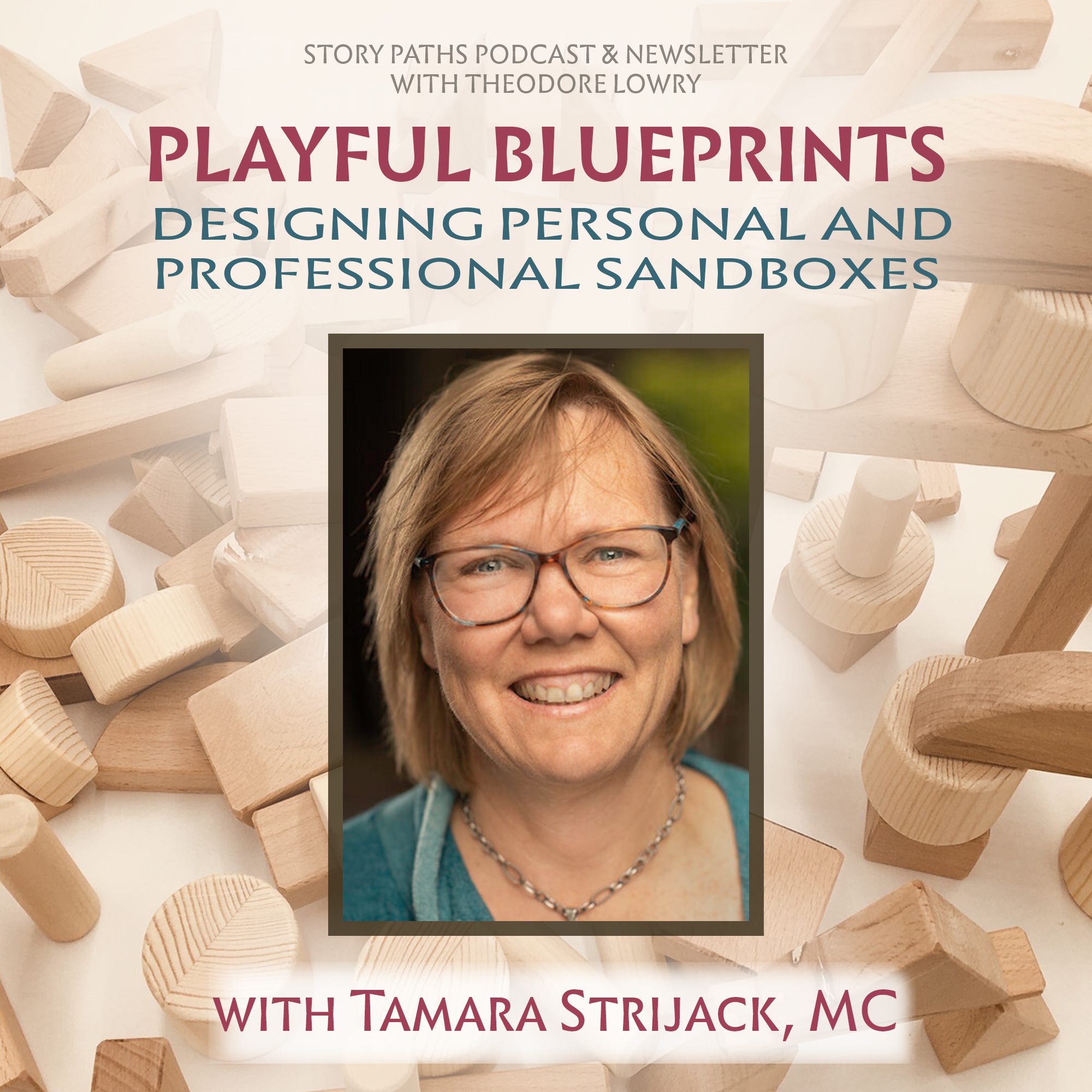
Jan 23, 2024
Rivers of Ancestors
(Art by Jessie White, Seeds of Spells ) Sign up for story workshops here: https://storypaths.substack.com/p/b3e7ccb6-d735-4187-a4b6-221f1a6a0882 I've recently returned from an ancestry workshop, which was deeply moving. Combined with other ancestry work, and discussions about ancestry that have gone on in my life lately, this is opening up a channel for a deeper history of myself, a deeper sense of self. Perhaps you’re on your own journey into ancestry. I am of the many beings who have walked before me. They are part of me, with myself as an individual self being the tip of the finger of a body, a great body of ancestors. For me, raised in an individualistic culture, this is quite a paradigm shift. For most people, for most of our time here as humans, it’s more usual. By the way, the lady putting on this ancestry workshop is named Pulxaneeks. She's a First Nations lady from the Xanuksiala First Nation, here in the Salish Sea. You can find out about her work here. I recommend her workshops, in-person and online. Now, I'm going to dive into ancestry as a way of understanding a character. This character might be yourself, or someone you know. It could be someone in a story you're writing. It could be a fictionalized version of yourself, or someone you know. When I think of Ancestry, I think of many rivers flowing into one, many creeks coming together into one. And what is that one river into whom they flow? That is the one who is living now, who is acting on the stage of this world. And these many streams collecting in the watershed, of course, are the different lines of genealogy that have coalesced over decades, centuries, and millennia, into that one who is walking the earth today. Into us. And each one of us is such a river, flowing into the future. In this workshop, Pulxaneeks’ partner Scott led us in a practice that I'd like to share with you. Here’s the practice. Touch your fingers to your neck so you can feel your pulse. Feel that drumming, feel that rhythm. You might even tap that rhythm on another part of your body, on your chest or leg or somewhere else, feeling that rhythm, and knowing that this pulse has been pulsing since you were born, all the way back to the start of your life. Pulsing, pulsing, pulsing, since you were born, and yes, before you were born. That pulse was shared with you from your mother's pulse; it was activated by your father's pulse. That pulsing went on in the body of your mother, of your father, throughout their whole lives, and back to when they were in the wombs of their mothers… and their mothers… and fathers…. pulsing back, back, back, back. This pulse goes back thousands and thousands and thousands of generations, into the time before there were humans, such as we know ourselves now. Now, when you're considering the ancestry of a character—that is to say, the stories that flow into the story of that character's life—you may want to pick one or two streams, because it branches out pretty quick. Each of us has two parents, and together they have four parents. Altogether they have 8, then 16, 32, and it gets complex pretty quick. Many of us have ancestry from different parts of the world, so depending on which part of that branch we follow, we end up in very different parts of the world. Just choose one stream for now, and you can always go with a different choice next time. And as you’re thinking of this strand going back in time, I invite you to consider the land in which they roamed, in which they worked and loved and sang. Was there deep winter? If so, did it draw people inward, perhaps to make intricate art that took much time to create, and to tell intricate stories? Was there a harvest time, a drying time, a preserving time? Or was the land of these ancestors a warmer land, that made for easier travel, and different harvests coming at different times throughout the year? All this you might feel from this drumming pulse and feel this in your own blood and bones as you imagine your own ancestors, or the ancestors of your character. Did the ancestors of your ancestors watch the moon and stars, for navigation and to mark the passing of the seasons? Was there deep forest, perhaps not so different from forests you’ve walked in. Imagine them stepping out of their shelter, feeling the air on their skin. Into a light breeze, a heavy wind? What scents were on that breeze? And how did they move through their day? What did they eat and drink, and how did they prepare this? Perhaps there were communal cooking times, and these were times to share stories: of spirits and ancestors, of animals and other communities. As you sit with these ancestors, I invite you to ask them if there's a story they would like you to know. A story they've been waiting for you to listen to, that will give you strength, that will give you a clear view, a story that will give you courage to make a move, make a change, a story that will give you solace and rest. Whatever is needed for you in this very moment. Then sit quietly and listen for a spell. See if there's a story that comes. A story that's waiting for you to hear. And as you hear the story, you might ask them for guidance for a certain situation in your life, or the life of your character, or someone she you know. And as you sit and wait, you might feel the connection of that heartbeat that goes back, back, back. Thousands and thousands of generations into the past. And as we're sitting here and as you're thinking of the ancestors, you might consider that their lives, their stories, their challenges, their joys, their sorrows, all these things are woven into your body, your being, your spirit. What are the qualities that you've inherited from them? And what are the stories that you might want to let go of? And if you'd like, you can thank your ancestors for the gifts that they've given you, for the strength, for the resilience, for the wisdom, for the love. Whatever it is, you might want to thank them. And as we bring this practice to a close, I want to express my gratitude to you for joining me on this journey of exploring ancestry, of connecting with our roots, and of weaving stories that connect us to the past, the present, and the future. Pulse, pulse, pulse… If you found value in this practice, I invite you to share it with others who might benefit from it. And if you'd like to explore more storytelling practices, you can join me in the weekly story playshops, where we dive deeper into the art of storytelling and creativity, included for premium subscribers, at just $5/month. Thank you again for being here, and until next time, happy story weaving. This is a public episode. If you'd like to discuss this with other subscribers or get access to bonus episodes, visit storypaths.substack.com/subscribe
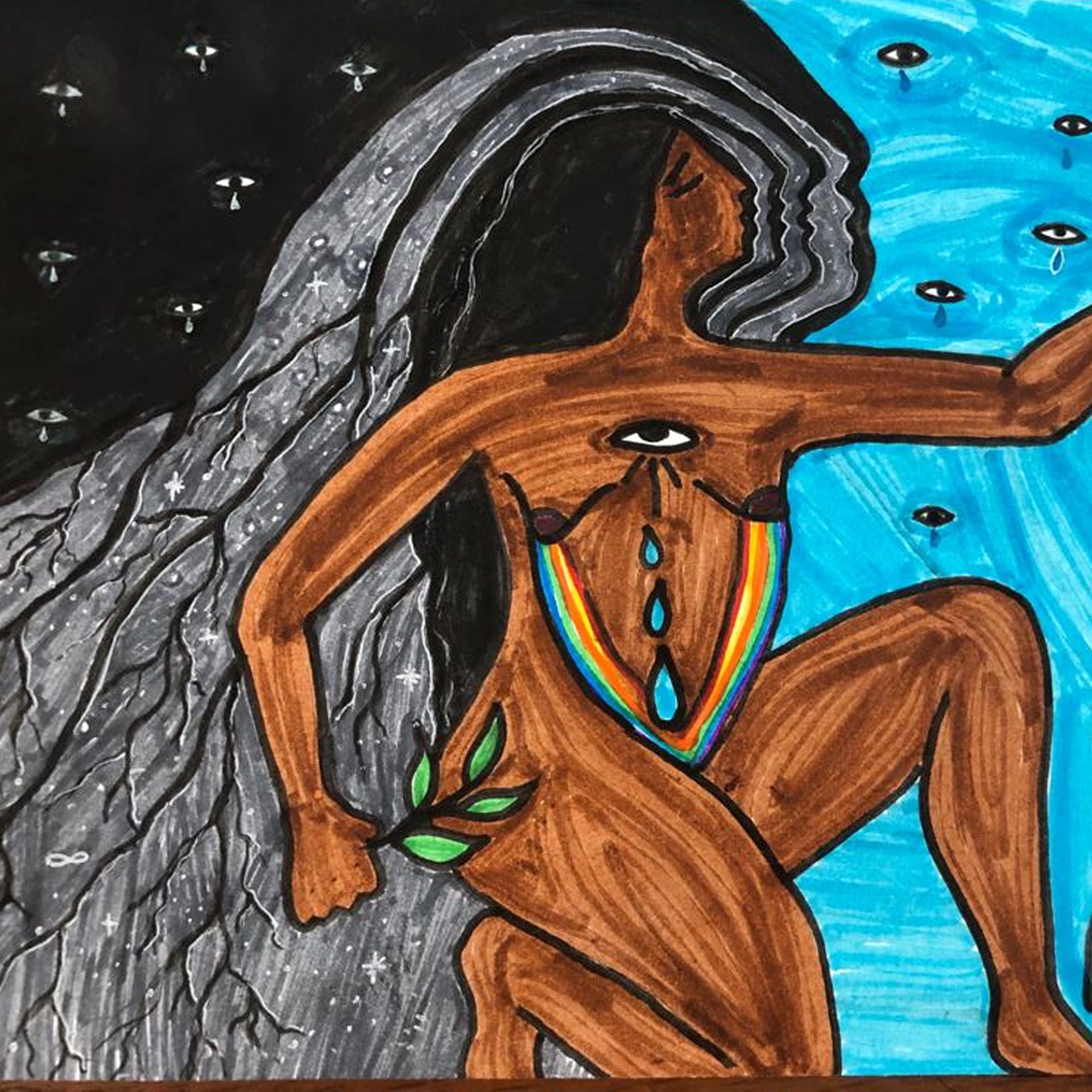
Jan 22, 2024
When Termites Take Over the Garden
Which real-life story does this remind you of? Comments here (paid subscribers): https://storypaths.substack.com/p/67d05587-82ae-4533-bb51-fd1c1041e9c6 Termites of the garden. The first dawn in the garden was simple but intense. Intensely hot. And next came the torrential rain. Massive plants sprouted up, followed by great beasts lurching about the land. Gradually, many kinds and sizes of creatures came to make their home there, and they endured through hot and cold spells, and then for a time, all was more or less peaceful. In the second dawn, moments before sunrise, an odd sort of termite appeared. They burrowed beneath the soil, taking nutrients right from the grasp of hungry roots. They dug deep into clay, with which they constructed mound after mound after mound, tunnel after tunnel. A fraction of an instant before sunrise of that second dawn, if you looked out over that garden, you could be forgiven for saying it wasn't a garden at all, but a city of termites. Which real-life story does this remind you of? Share in the comments, and if you’d like, I might share you story in a future newsletter. This is a public episode. If you'd like to discuss this with other subscribers or get access to bonus episodes, visit storypaths.substack.com/subscribe
Jan 19, 2024
Play is a Sign of Life, with Pulxaneeks
Pulxaneeks website, including upcoming events. I’m glad and grateful to be presenting the following guest. Her vocation is as an Indigenous relations consultant, which is to say she helps settler folks like myself learn to be in good relations with the original peoples of this land. This involves far more than introducing people and smoothing communications. For folks like myself to be in good relations with indigenous people, there’s groundwork to be laid: a reckoning with history, both recent - in the colonisation of these lands - and ancient: the colonisation of the colonisers’ ancestors and land. There’s ancestral work to be done, and a reckoning with the fact that hurt people hurt people, and a seeking of the origins of that hurt. Serious work, this healing work. So serious that you can’t do it without some play. Who is this guest? Allow me to introduce Pulxaneeks, from the Eagle clan of the Xanuxlia Haisla First Nation. I’ll give a wee introduction, then say a little about different kinds of introductions. To say she’s an ‘indigenous relations consultant’, is true, yet far too brief an introduction. It’s convenient to say on an elevator full of busy people, but too short to say to people who are not busy, and want to know more deeply about those they’re introduced to. Listen on for her introduction, full of the rivers of ancestors flowing into her, both ancient and recent. Full of land and heart. You might learn something about your own deep rivers of ancestry. Other interviews with Pulxaneeks To subscribe to this podcast and newsletter, go here. This subscription includes weekly story play workshops. This is a public episode. If you'd like to discuss this with other subscribers or get access to bonus episodes, visit storypaths.substack.com/subscribe

Jan 16, 2024
Caterpillar Chronicle: Lessons from Butterfly Migrations
Sign up for story workshops like this on Substack for just $5/month. Workshops are one hour weekly on Thursdays at 10-11 PST. https://storypaths.substack.com/p/7233d334-6564-4d50-bf60-2a022a34140c This episode captures the essence of our first story workshop, a weekly gathering exclusively available to our premium subscribers for just $5 per month. Joined by my friend Loke Keihanaikukauakahihuliheekahaunaele-Keanaaina, we explore the lessons from migrating monarch butterflies. Together, we discuss the impacts of trauma across generations, how individuals navigate healing collectively, and the importance of embracing one's identity within a community. Loke’s late husband is a native Hawaiian man, and she is creating a book of stories he wrote and spoke. You can find more about this project here. Also here’s a great interview with Loke. It’s Episode 6: Do join us for these weekly workshops, where we delve into the profound wisdom hidden within stories. If you’re not already on Substack, you can sign up at the link below and become a premium subscriber for $5/month. Happy creating. This is a public episode. If you'd like to discuss this with other subscribers or get access to bonus episodes, visit storypaths.substack.com/subscribe
Jan 15, 2024
Monster at the Headwaters
Write your guess on Substack here: https://storypaths.substack.com/p/36b06c3f-ca37-4095-aa09-810f2e61f58d Can you guess which real-life story this is? A river once flowed freely, a source of abundant fish for the people, until a monstrous presence established its lair at the headwaters. This creature voraciously consumed the fish and discharged bolts of lightning that struck distant places. The people, deeply connected to the river and its inhabitants, waged a prolonged battle against this monstrous force. They even formed alliances with former adversaries. After a protracted struggle, they succeeded in breaking the monster's dominion. As it perished, its body disintegrated. The waters, once constrained, flowed freely again, and over time, the fish gradually returned. Which real-life story this might this be? Leave your thoughts in the comments. This is a public episode. If you'd like to discuss this with other subscribers or get access to bonus episodes, visit storypaths.substack.com/subscribe

Jan 10, 2024
Storyteller's Diary: An Old Friend. Part 3, Integration
Here's the associated article, with pictures. You can add your comments here: https://storypaths.substack.com/p/9e7267ab-518f-4599-beff-0530e80208f6 Welcome to the Story Paths newsletter and podcast. This is a Storyteller’s diary edition. As I tell the tale of this one life, may it help you to tell your tales. If you missed the first parts, I spoke about why I abandoned my town and family twenty years ago, falling into a descent after my father's death. My journey paused as I took a spiritual path, lacking resources and support for the dive into adulthood. I found myself alone in a new place, a leaky trailer in a Pacific Northwest winter. As I tread water in the sea of grief, writings and new friends were able to offer just enough support. Prompts (Take one, none, many or all. I suggest you write a response, or speak it aloud, or discuss them with a friend, or just think about them) -Imagine a scenario where you reconnect with someone from your past after many years. Write a reflective piece exploring the conversations, feelings, and lessons that unfold during this reunion. Dive into the emotions, the changes in both of you, and the wisdom shared or gained from this unexpected encounter. -Craft a story about a character who is thrown into a difficult personal journey but unexpectedly halts their descent due to unforeseen circumstances. How does this pause affect their life, relationships, and understanding of themselves? Explore their internal conflicts and eventual return to their journey with newfound wisdom. -Craft a story about an entrepreneur who begins a project that will not be complete for many years. Illustrate the journey of revival, highlighting how this gap may have been necessary. I'd love it if you share your thoughts in the comments. Until next time, Theo This is a public episode. If you'd like to discuss this with other subscribers or get access to bonus episodes, visit storypaths.substack.com/subscribe
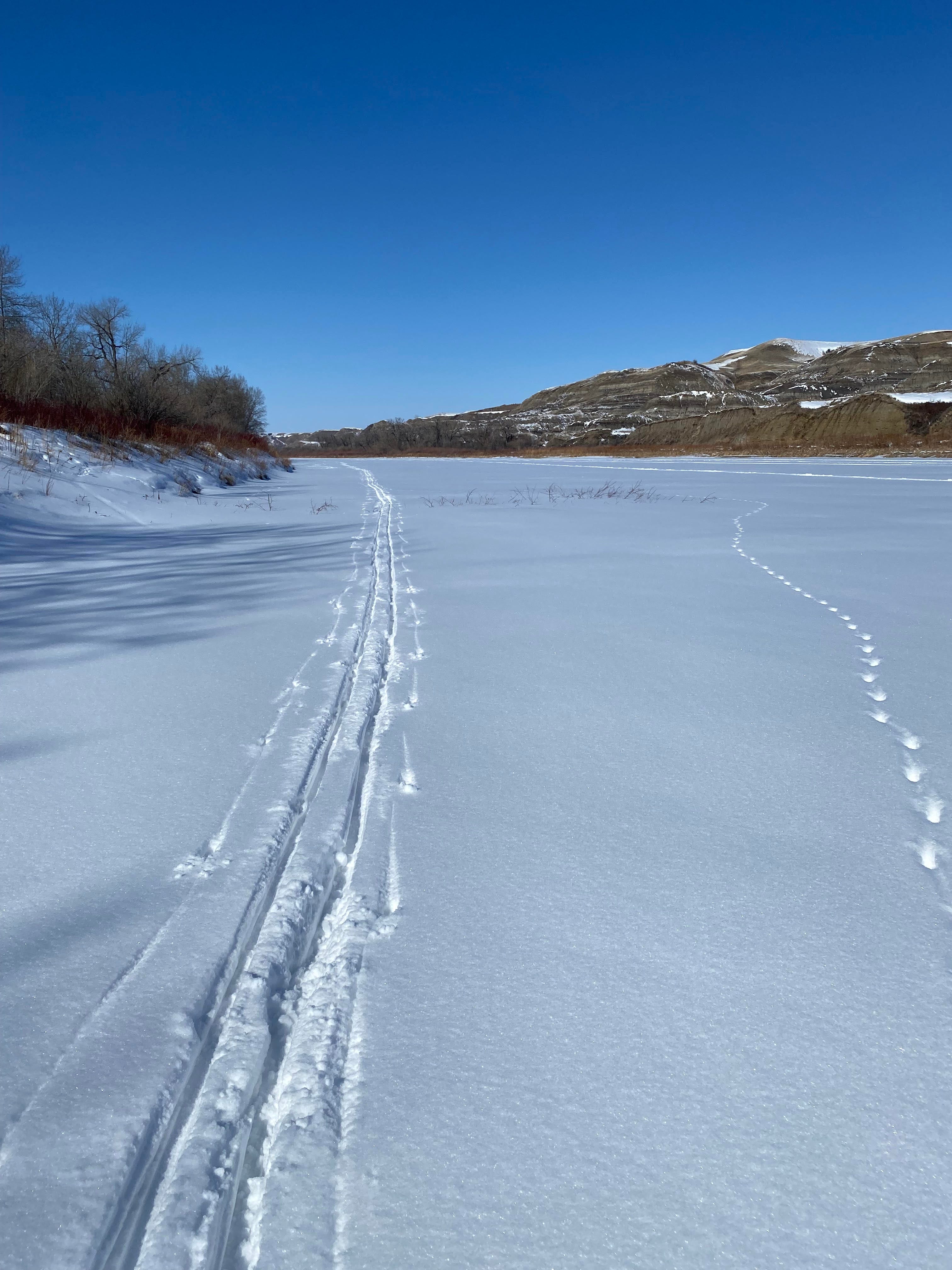
Jan 9, 2024
In the Meantime
Become a paid subscriber for $5 and get access to 4 workshops per month! https://storypaths.substack.com/ Welcome. This writing comes to you from the shore of the ocean in the Salish Sea. There's a woodpecker who's going at it on a Gary Oak just nearby, seeking some bugs. There are seagulls landing and strutting about on a rock outcropping, and I see a human walking back from that rock outcropping jutting into the ocean. I reckon that human’s in a contemplative mood. I am. The sun will soon set on this short day, as we slowly arc up from solstice. I'm reflecting on the journey of this newsletter and podcast. We’ve explored the journeys of different creatures and outer space phenomena, and considered parallels in our own journeys. I hope that's been as helpful and fun for you as it has been for me. Putting the music together was especially interesting, a timeless zone of kairos in which many chronos minutes ticked past. I'm pausing for a breath in this dark time of year, when the world is asking me to rest. It’s a radical thought, that it may not be helpful for me to overextend myself. Let me instead act, when I do act, from a deep place within myself, connected to the earth and community. I wish the same for you, while you also fulfill your true duties. Here’s some news: I'm going to go ahead and give the full episodes to everybody for free. I like the idea of giving a gift. I'll also open up comments to everybody on the Substack. It felt weird cutting the episodes, and I like the idea of bringing people in and hearing what they think, whether or not they're paid subscribers And… it’s playshop season! I’ll be hosting live playshops once per week (Thursdays, 10:30-11:30 am PST). That will be for paid subscribers on Substack. If you’re not subscribed, it’s only five bucks a month. Won’t even get a better deal from the devil, I’d say. And what are we going to do in there? We'll go over the prompts from the podcast, and explore the stories that are alive for those of you who come. I love to hear from people about the journeys in their lives. We can practice fictionalizing our journeys, finding animals to be characters in our journeys, and finding settings that feel like they resonate with the feeling of the setting in our life. Reckon we’ll have a lot of frivolous fun as well, but depth is welcome. Also, keep an eye out for workshops connecting storytelling and entrepreneurship. And more conversations about play, including decolonizing play, from an indigenous perspective. And more examples of storyfication. And collaborations. Game, story, ceremony. I'm glad you joined me for this introspective retrospective and prospective. Full three episodes and a lot more workshops until soon. Regarding the playshops: For those of you who are already paid subscribers, you’ll get a zoom link. For those of you who aren't, please consider subscribing. It's only $5 a month through Substack. And if you don't want to be a subscriber but would like to attend some of the workshops, I'll see about setting up some one-off system for getting into the workshops. Until next time, happy creating. Theo This is a public episode. If you'd like to discuss this with other subscribers or get access to bonus episodes, visit storypaths.substack.com/subscribe

Jan 8, 2024
Everyday Epics: The Boring Plywood Door
Which real-life story does this remind you of? Comments here (paid subscribers): https://storypaths.substack.com/p/18522076-40a8-4569-80b0-71ec20b9699c There is a boring plywood door, in a boring plywood room. Many people make their lives in this room, but if they were to open that door, then on the other side, they would find dozens more doors. Only these are not of plywood. They are of oak, rowan, birch, and other luscious woods. These doors are decorated with heather, and garlands of lilies and gorse. There is old music seeping from beneath them: strings and flutes and drums and feet stomping, and singing which as is lively and new as a laughing babe. Which real-life story does this remind you of? Share in the comments, and if you’d like, I might share you story in a future newsletter. This is a public episode. If you'd like to discuss this with other subscribers or get access to bonus episodes, visit storypaths.substack.com/subscribe
Jan 3, 2024
Play in Ceremony with Jennifer Engracio
Reply to the story prompts in this episode here: https://storypaths.substack.com/p/59ab0f86-2c8f-4168-bf08-7ec3eb672e75 (Available for paid Substack subscribers) You can learn more about Jennifer’s work here. Is ceremony a grave affair for adults, or can it be something playful which includes children? Or perhaps all of the above? Playful with adults, serious with children, and a mix of all these and more. Have you ever wished that education could be a ship that can be sailed in any direction you choose? That learning practical subjects can be blended with a spirituality that is life-nourishing and open to questioning and play? What if someone wants to play, but finds it oddly challenging to let go? Jennifer Engracio is an educator and shamanic practitioner. She walks many paths and blends many influences, including homeschooling and an earthy spirituality. She began in the public school system in Canada, but found the values incompatible with hers. Gradually she made her way into more unconventional fields, as we’ll discover. She explores the intersection of play, education and ceremony. It’s a rich vein, and don’t be surprised if you find yourself singing, praying, crying and teaching as you listen along. I’ll see you on the inside. This is a public episode. If you'd like to discuss this with other subscribers or get access to bonus episodes, visit storypaths.substack.com/subscribe
Jan 2, 2024
Story Elements - Journeys: The Return
Share your stories on the newsletter here: https://storypaths.substack.com/ Welcome to the Story Path newsletter and podcast, a Story Elements Edition. Journeys: Part six: The Return. In the previous parts of this exploration of journeys, in story and in life, we looked at different possible destinations, the amazing journeys of different creatures, and considered how these journeys might help us reflect upon as humans. Then we moved beyond our planet. It's been a wonderful journey exploring journeys, and yet all journeys must end. Journeys do not all end in the same way. Today we will explore different possible endings and how we might craft good returns for those we care for who are journeying. Whether personal relationships, clients or otherwise. (Listen above) Prompts (Take one, none, many or all. I suggest you write a response, or speak it aloud, or discuss them with a friend, or just think about them) -Imagine a character who embarks on a transformative journey, encountering profound experiences, only to return to a place that remains unchanged. Write about their struggles to reintegrate into a familiar yet unrecognizable world. How do they struggle when their internal changes being unseen by their people? -Create a fictional society or culture where returning from a journey, whether physical or metaphorical, is celebrated with deep reception ceremonies. Describe these customs in detail and the impact they have on the returning individual. How do these ceremonies shape the community's perception of journeys and change? I look forward to hearing your thoughts, if you’d like to share. This is a public episode. If you'd like to discuss this with other subscribers or get access to bonus episodes, visit storypaths.substack.com/subscribe
Jan 1, 2024
One day in the Playground
Write your guess on Substack here: https://storypaths.substack.com/p/90569a1b-7787-4636-a3b4-27a969f6b513 Can you guess which real-life story this is? In the playground, two boys began to fight. It got intense, so the second boy ran off to perch at the top of a slide. It was there that a third boy found him and asked, "Do you know that you don't have to be close to fight?" "What?" asked the second boy. "Take this," said the third, and passed that second boy a straw, and a palm full of pebbles. “In return, I want half your lunch.” “Alright.” And so the first boy found himself being pelted by pebbles. The third boy approached the first, and had soon wheedled out of him another half-lunch. And all that without having to fight. Would you venture a guess as to which real-life scenario this fable might be? Speaking of? It could be more than one. Which real-life story this might this be? Leave your thoughts in the comments. This is a public episode. If you'd like to discuss this with other subscribers or get access to bonus episodes, visit storypaths.substack.com/subscribe
Dec 27, 2023
Storyteller's Diary: An Old Friend, Part 2, Reckoning with the Past
Here's the article for this episode, with pictures and prompts: https://storypaths.substack.com/p/555eb054-2321-4811-b15c-a6746d84cdd2 Welcome to the Story Paths newsletter and podcast. This is a Storyteller’s diary edition. As I tell the tale of this one life, may it help you to tell your tales. In part one, I spoke about how I met an old friend of my father's after twenty years, and how we began to throw ropes across the river of time that separated us. We gradually made our way toward a meeting in the middle of that river, in part to continue this recollection, in which I confessed to him the reasons why I cut my ties with him, and the other men who supported me, all those years ago. In we go. Prompts (Take one, none, many or all. I suggest you write a response, or speak it aloud, or discuss them with a friend, or just think about them) -Imagine a character who, after years of estrangement, receives an unexpected letter from someone they distanced themselves from long ago. This letter reveals truths about the past that had been buried for decades. Write about the emotional journey of reconnecting with this person, uncovering the life lessons hidden in their shared history, and the impact this reconnection has on the character's present life. -Your protagonist discovers an old journal or a collection of letters from a deceased family member, shedding light on a pivotal moment in their past that was misunderstood or misinterpreted. Explore how this revelation prompts the protagonist to seek out someone from their past they haven't spoken to in years. Write about the conversation, the wisdom gained from these interactions, and the resolution or closure it brings to long-standing questions. -Your protagonist, an entrepreneur, experienced a failed venture years ago that led to a disconnect from former colleagues, mentors, or partners. Unexpectedly, circumstances arise that force them to collaborate or reconnect with these individuals. Write about the emotional and professional journey of reengaging with the past, extracting valuable lessons from those failed endeavors, and how these connections contribute to the protagonist's newfound success or altered business direction. Explore the transformation and growth stemming from this reconnection and its impact on the protagonist's entrepreneurial spirit. I'd love it if you share your thoughts in the comments. Until next time. This is a public episode. If you'd like to discuss this with other subscribers or get access to bonus episodes, visit storypaths.substack.com/subscribe

Dec 27, 2023
Storyteller's Diary: A new kind of pilgrimage
Welcome to the Story Paths Newsletter, a Storyteller’s Diary edition. Reply to the story prompts in this episode here: https://storypaths.substack.com/p/b44f0ad4-f7b9-4d14-b975-1b34ebc4dee2 (Available for paid Substack subscribers)You'll also find images connected to this episode.--- I'm on pilgrimage again, but it's different this time. Before, it was overseas, inside the myths of those palms, hills paths, trees, and temples. Singing poems in the tongues of those mothers and wizened sages, walking away from our worldly lives and identities, and toward a common divinity. Barefoot in those holy lands. I'm on pilgrimage again. These lands are holy too, I reckon, but far less exotic. I'm journeying now into my own past, into places and moments where I changed. ... As I write this, I’m near the river that I grew up by. I’ve been visiting the trees my sister and I climbed when we were children. Going to the hills that we sledded down, and the schools where I learned and played. Story prompts: In your life, has there been a journey that felt like a pilgrimage? Perhaps more than one! For this moment, I’d like to hear about one journey of yours where stories, memories, land and movement intertwined. Share your thoughts on the Story Paths Substack (paid subscribers): https://storypaths.substack.com/p/b44f0ad4-f7b9-4d14-b975-1b34ebc4dee2 This is a public episode. If you'd like to discuss this with other subscribers or get access to bonus episodes, visit storypaths.substack.com/subscribe
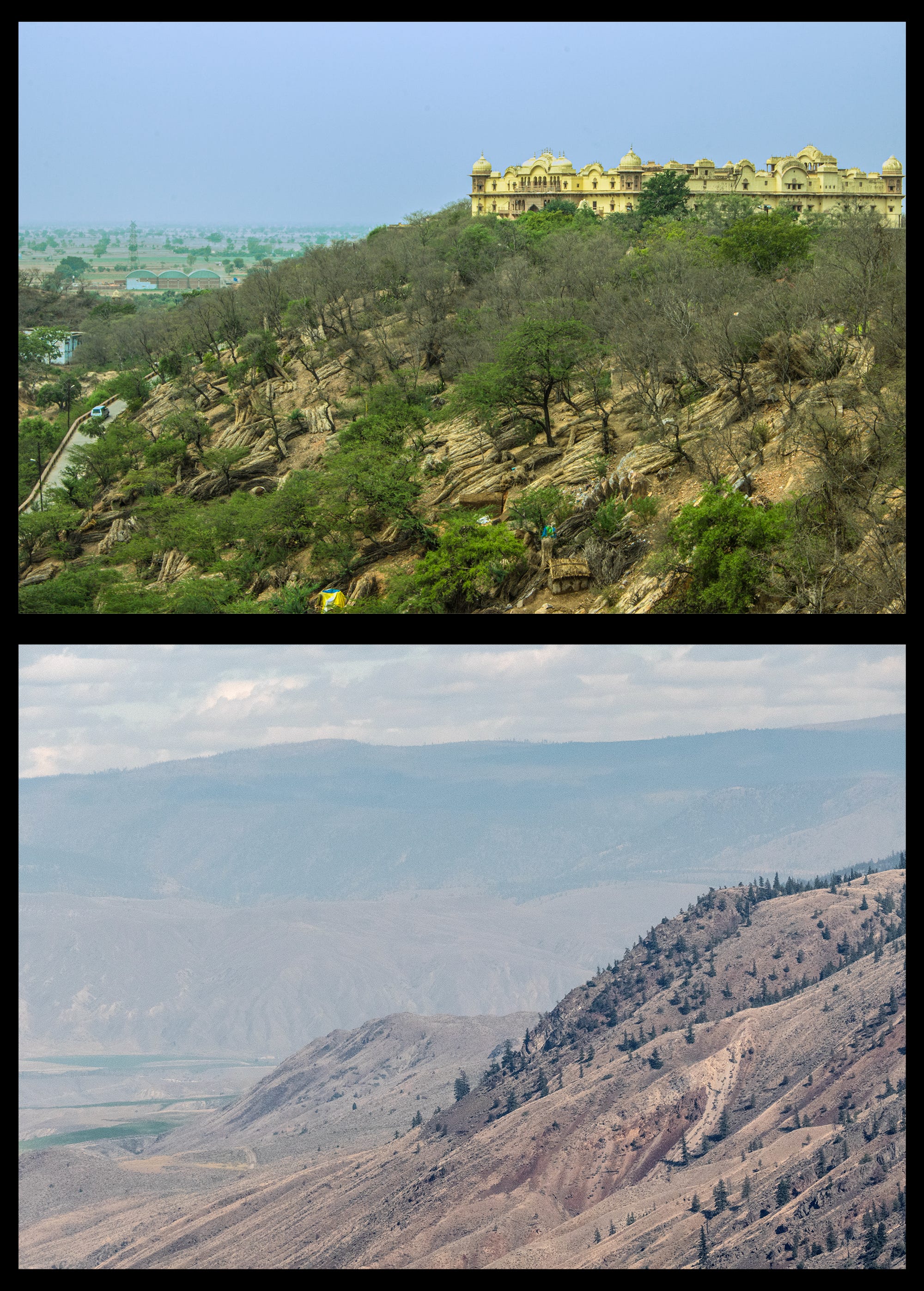
Dec 26, 2023
Story Elements - Journeys in Outer Space II: Galactic Cores
This is a free preview of a paid episode. To hear more, visit storypaths.substack.com Share your stories on the newsletter here: https://storypaths.substack.com/ Welcome to the Story Paths Newsletter and Podcast. A Story Elements Edition. Journeys: Part five. Oute…
Dec 25, 2023
Everyday Epics: A Tale of Two Bullies
Which real-life story does this remind you of? Comments here (paid subscribers): https://storypaths.substack.com/p/e817b97e-6206-4107-aa85-e6cbcfce7631 In the playground, a boy pushed down another child, and kept them pressed down while he rifled through their pockets, taking one thing after another. Then he let them go and said, ‘Every day you have to come bring me more.’ The child was frightened, more so when they saw another child being pushed down by another bully. But when there was a chance, this first child spoke to the other, saying, ‘We could get free from them, together.’ ‘Yes,’ said the second. ‘But what will we do if we win? I don’t want to become another bully. What will we do when we win?’ Which real-life story does this remind you of? Share in the comments, and if you’d like, I might share you story in a future newsletter. This is a public episode. If you'd like to discuss this with other subscribers or get access to bonus episodes, visit storypaths.substack.com/subscribe
Dec 20, 2023
Play in Prison, with Luis J. Rodriguez
Reply to the story prompts in this episode here: https://storypaths.substack.com/p/fdce5cda-f28e-49fa-ad02-d8bbf05a27cc (Available for paid Substack subscribers) Find out more about Mr. Rodriguez’ work here: https://www.luisjrodriguez.com/ Welcome to the Story Paths newsletter and podcast. I'm Theodore Lowry. Today, I'm glad to be presenting you with a conversation with Luis Rodriguez. This was an in-person conversation that I recorded at the Peacemaker Gathering, which the Cowichan People hosted, on southern Vancouver Island. At this indigenous-led gathering, people came from all around. We practiced making peace between us, in the form of ceremonies, discussions, circles, healing, honoring elders, and keeping a sacred fire. This conversation took place during that four day gathering. I met Luis there, and we snuck away to do a recording on the spot, which means that because this took place on a farm, you get some bonus goat noises in the background, the singing of our cousin species: the goats. A little bit about Luis. He has worked for over 40 years in the prison system, bringing creative processes into some of the roughest environments imaginable. He has a bit of a rough background himself, as he'll describe in the conversation. After hard times, and with the support of others, he came to healing, and being able to help others heal themselves. In the places he goes, there's a good deal of violence, of being caged, of inmates not getting what they need as human beings. He brings play into those situations in a way that is and valued so much by those hardened folks that they request for him to come back again and again. Now, I know I've had stereotypes about how art and play is something that we can enjoy when we’re living high up the pyramid of needs. But here I learned that play is also needed in the most difficult situations. In his work, Luis invites his participants to imagine simple, powerful metaphors—a train, a musical instrument, crossroads—to enter into their traumas in an approachable way. To adjust their life path, their intentions, and to walk in a way that is more in accord with their true desires, even in the midst of these most difficult situations. I bring you: Play in Prisons, with Luis J. Rodriguez. This is a public episode. If you'd like to discuss this with other subscribers or get access to bonus episodes, visit storypaths.substack.com/subscribe

Dec 19, 2023
Story Elements - Journeys in Outer Space: Comets and Planets
This is a free preview of a paid episode. To hear more, visit storypaths.substack.com Share your stories on the newsletter here: https://storypaths.substack.com/ Welcome to the Story Paths Newsletter and Podcast. A Story Elements Edition. Journeys: Part Four Outer …
Dec 18, 2023
Everyday Epics - Stone Slates
Write your guess on Substack here: https://storypaths.substack.com/p/fb3a8ee4-f3d8-4df3-92ae-2070f2136363 Can you guess which real-life story this is? A confidence man, a modern-day coyote trickster, arrives in town. He brings a cart filled with stone slabs, each one soaked in luminescent oil. Distributing these slabs, he leads the unsuspecting townsfolk into a deep trance. Then, the confidence man deftly picks their pockets. Pleased with himself, he revels in his newfound wealth. However, the next morning, as some people slowly emerge from their trance, they find the trickster sitting on the back of his cart, slate in hand, ensnared by the very spell he cast. Which real-life story this might this be? Leave your thoughts in the comments. This is a public episode. If you'd like to discuss this with other subscribers or get access to bonus episodes, visit storypaths.substack.com/subscribe
Dec 13, 2023
Storyteller's Diary: An Old Friend, Part 1
Here's the link to the article with pictures and prompts: https://storypaths.substack.com/p/9d6551a9-bd4d-48dc-b50c-1b33337d19c9 An Old Friend Part I: Crossing a River Welcome to the Story Paths newsletter and podcast. This is a Storyteller’s diary edition. I met an old friend of my father last night. As a teenager, he was also my friend, and a mentor. We met and spoke in the lounge of a hotel where he was staying, helping with a charity event for a couple of days. His name is Wayne, and he lives in the badlands of Drumheller. He's in his seventies now, still spry, sharp and well-spoken. His hearing is going, so he passed me a thin microphone connected to his hearing aid, which I hung around my neck so it was close to my mouth, and my voice. A clever device. He and my father had been in a men's group for many years, and when I was a teenager, I had been in that men's group too. It was good to be among older men talking as real as they could, and supporting one another as best as as we could. To gather around a fire in a city park and challenge each other to be real and accountable, to go into the wilderness and try our fumbling best to connect with the land in a ceremonial way. Perhaps that’s how culture reweaves. By trying. Sitting there in the lounge of the hotel, twenty unspoken years flowed between us. We saw each other from opposite banks of this river. We began crossing toward an island in the center by speaking first not of what had happened after we last met, but of what was happening now. He was there helping with a charity event at the hotel, as a runner of bingo chips. It was in support of helping addiction, and he acknowledged the irony of a gambling fundraiser raising money for addiction. I was staying in the city with my sister, who dropped me off and briefly met Wayne as well. I'm staying in her tent trailer, as the house is crowded,. It’s getting cold to be out there, but we just got the propane heat going. This was a level of detail we couldn't hope to get into for two decades worth of moments. But the words were ropes that we tossed across to each other. We staked these ropes in the ground so we could begin to cross toward the island in the center. He asked me what was important to me now, what I'm creating. I replied with a story from my life. When I was at the Ada’itsx (Fairy Creek) land defence camp on the West Coast, I spent some time on the front lines, with the national police on one side and the defenders of the forest on the other. A soon to be indigenous elder named Chiyokten was drumming and leading songs, keeping us enlivened and inspirited, as he often did. He paused sometimes to call across to the police, challenging them to step into integrity with the Earth, for their children and grandchildren. Knowing as I did that he had been at many such actions throughout the continent—trying to stop the logging, mining, pipelines and other invasions of indigenous territory; and knowing that most of his efforts had been overpowered by military force—I asked him a question. I asked him, how do you stay strong enough to do this? He spoke of a fire that he saw: a warm, smouldering fire nourishing all with its heat. As he spoke, I saw the fire glowing there between our feet, beneath the pebbles and pine needles of the forest. “That world is already there,” he said. “I’m feeding it wood to bring us closer. Some call this manifestation. It's true. It's all going to s**t around us. But I feed that fire. And that's what gives me strength.” And so, there in a hotel lobby, I passed this recollection on my father's old friend. “For me,” I said, “most things are in confusion. So I'm giving wood to what feels real and substantial. I want to help the people who are living into a better world, one on the far side of colonialism and extraction from this planet. Much of my contribution is in stories. As I see it, we humans make sense of the world in patterns of stories: events and people woven together into cohesive shapes. And perhaps this story-weaving tendency is not some isolated human thing, but is rather intrinsic to the cosmos who created us. Stories of who I am, who my people are. Of our relationship to other people, to animals, to hills filled with trees. These stories cast us in the roles of competitors, or kin, or both. When we learn to speak our own stories in simple and clear ways, we will see how they are framing our experience like stained-glass windows, filtering the incoming sunlight into particular colours and shapes. That sunlight of reality comes through the windows of our stories. And in this way, we come to understand the world, and we can learn to melt and remold these stained-glass windows to better perceive what is beyond them.” I’m called to this work so we can perceive reality in different and helpful ways. We might sidle over and look through another stained-glass window, and another and another. And in this way, looking through different stories from different people, we might get a fuller sense of what this world is, and who we are. I'm called to this work, and this is why I'm stepping out of my door and offering this to you, my readers, my neighbors in this place and time. May it be helpful for you in your story-seeing and story-forming. In a couple weeks I'll share more of this conversation with Wayne, my friend and mentor. I shared with him how the death of my father led me into an underworld descent,. This descent was aborted by a seeking for spirit, and continued some twenty years later. I’ll tell you this as I told him, who did his best to support me in the grief-fueled commencement of that descent, along with the other men surrounding me at that time. I'll tell you of why they failed, and how life is now completing this arc. And how about you? Which fire are you feeling? What is the look and feel of the life you're living into—both for yourself and for the world? How do you perceive that better world from where you are now? And which fuel-food do you feed that fire? You might choose a personal future fire, a vocational one, or both. Another prompt: consider a time when you encountered a viewpoint very different from your own. Another shade and texture of stained glass that you hadn't experienced before. How did your perspective shift? What was your experience of this shift? Was there discomfort, a sense of revelation? Both.. more? I'd love it if you share your thoughts in the comments. Until next time.Theo This is a public episode. If you'd like to discuss this with other subscribers or get access to bonus episodes, visit storypaths.substack.com/subscribe
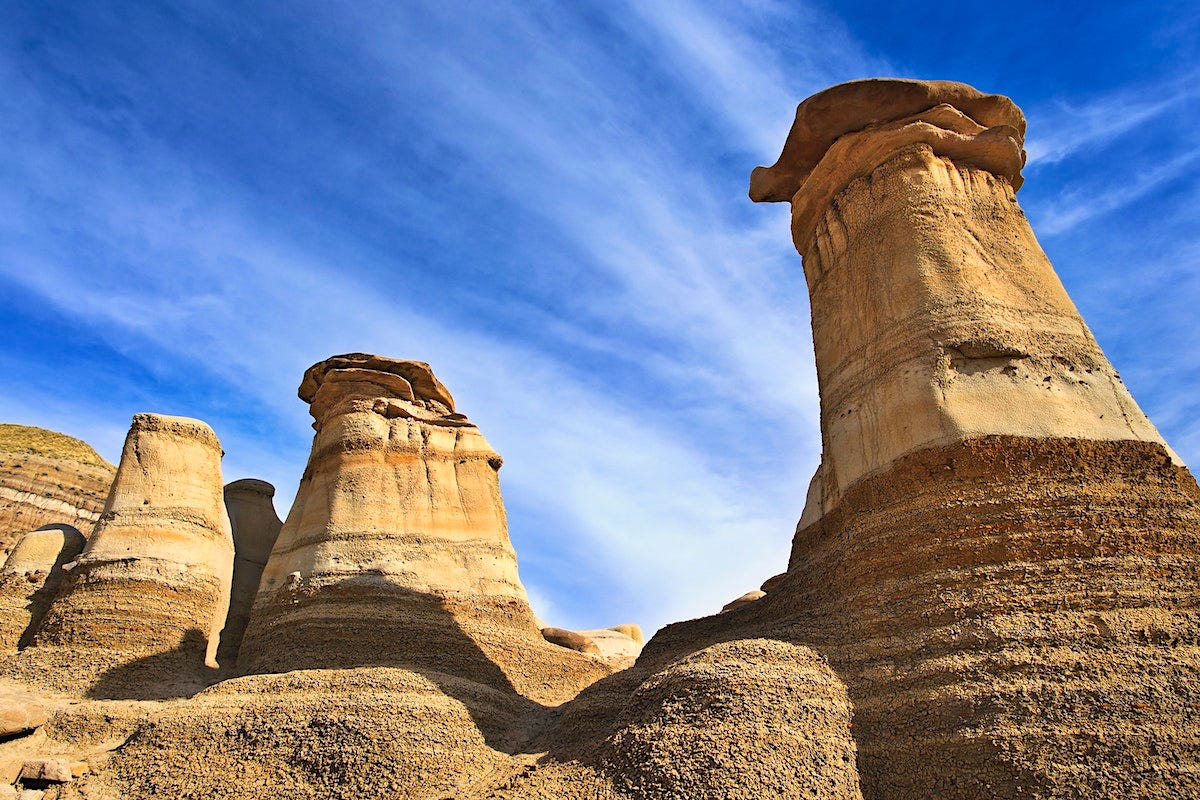
Dec 12, 2023
Story Elements: Journey III: Larger Animals
This is a free preview of a paid episode. To hear more, visit storypaths.substack.com Reply to the story prompts in this episode here: https://storypaths.substack.com/p/2486375c-6dd6-4b22-9398-b4b75c8d3f9f (Available for paid Substack subscribers) Welcome to the Story Paths newsletter and podcast, a story elements edition, where we explore the ingredients of stories so that you may better see them and tell them. We’re exploring journeys now. In the last issue we looked at four journeys made by our creaturely kin, namely: the Queen’s Knight (ant), the Half-wild Wanderer (cat), the Intergenerational sky pilgrimage (monarch butterfly), and the Desert Matriarch (elephant). Now let us continue, going from small to large. This issue is available in rich audio form. Below you can find just the story prompts mentioned within it. Prompts The Hungry Mother (gray whale) Consider a human journey inspired by this journey of the whale. There are really two journeys. One, to a sparse sanctuary. The other, back into abundance. In the second, she is responsible for another, far more vulnerable, being. What human journeys come to you, that parallel hers? The Underwater Surfer (sea turtle) ... more in the paid version
Dec 11, 2023
Everyday Epics: Hoops of Nations
Which real-life story does this remind you of? Comments here (paid subscribers): https://storypaths.substack.com/p/57633e41-bf9e-42b6-bc1f-48410d5d1a6f There was a boy, out walking with his tribe, who came to the encampment of a different group. His tribe jeered and threw bits of wood over, but the boy was curious about those other people. He wished to be in a circle with them, exchanging ceremonies and stories, but they kept their distance, and he wasn’t sure enough of himself to go in there, away from his people. Years later he had this chance, and found himself in a circle with people from that culture, and many of his own. They were protecting land from weapons that paired with those old monkey-jeers and bits of thrown wood. Which real-life story does this remind you of? Share in the comments, and if you’d like, I might share you story in a future newsletter. https://storypaths.substack.com/p/57633e41-bf9e-42b6-bc1f-48410d5d1a6f This is a public episode. If you'd like to discuss this with other subscribers or get access to bonus episodes, visit storypaths.substack.com/subscribe
Dec 6, 2023
Play Matters Series: Game Design with Matteo Menapace
Reply to the story prompts in this episode here: https://storypaths.substack.com/p/de0c4826-9ab0-43f2-9f63-291a9f883ea3 . (Available for paid Substack subscribers)There, you'll also find pictures of Matteo test-playing his games. To watch the video of this conversation, go here: https://youtu.be/Rr0PG7HBusY Find out more about Matteo's work here: https://ma.tteo.me For his climate change game, Daybreak, go here: https://daybreakgame.org I’m pleased to present the first conversation in a series about play. In this season, I’m approaching people in the field of game design, child education, dance, art, decolonisation, and creative writing in prisons… I’m asking them a simple question: where does play show up in your work? Today I’m please to welcome Matteo Menapace, a board game designer based in England. If you’re into board games, of course you’ll love this conversation. But if you’re not, let me make a case here. We might think of games as being a fun thing we can do on the side in life, but they’re actually intrinsic to nearly every part of our lives. By the time you’ve listened to this conversation, you’ll be seeing traffic as a game, relationships, politics, economics. In all of these fields we are making game rules, then playing within them. The thing is that sometimes we forget we can change the rules. In this conversation, we get into: -The 3 main elements of game design. -How games can be a practice for life, or for life-games, if you will. A spectrum of game types, from abstract to lifelike games. -Competitive vs cooperative games -And some trivia, including… Did you know chess used to have 4 players? Monopoly originally had a sister-game that’s its opposite, about abundance for all? Paid subscribers can comment on this post with replies to the story prompts within the episode. Matteo’s bio: Matteo designs cooperative games and facilitates playful workshops for people to explore real-world challenges. In recent years he lectured in UX, web and game design, and was game designer in residence at the V&A in London. Matteo is co-designing Daybreak, a cooperative game about stopping climate breakdown. This is a public episode. If you'd like to discuss this with other subscribers or get access to bonus episodes, visit storypaths.substack.com/subscribe
Dec 5, 2023
Story Elements: Journey II: Animals
This is a free preview of a paid episode. To hear more, visit storypaths.substack.com Reply to the story prompts in this episode here: https://storypaths.substack.com/p/f7093e4f-4c77-4846-a1b5-7614fbe08e37 (Available for paid Substack subscribers) What inspires the journeys that we humans write into Stories? Surely the journeys of other humans inspire us. But what of other journeys? What of the journeys that we find ourselves surrounded by, if we are open to looking? In part one of our exploration of the story element Journey, we explored journeying to and from home, in and out of danger toward particular destinations and how those destinations affect the journey. And we meandered through thoughts about pilgrimage. When we think of journeys and stories, we may have some human biases. But what about other journeys? What about the journeys of other species and beings? Journeys surround us all the time, and seeing as we are so woven in with the rest of the living world, our own human journeys are often patterned after these wider older journeys. So let's have a look at some of these, and we will go from small to large. Prompts The Queen’s Knight (ant) Is there a human journey that parallels a worker ant's journey out into the wild? This ant goes out to gather precious things, and bring them back to hearth, home, and queen. In human terms, perhaps this is a knight going out into the world to get a sacred item to bring life to she whom he reveres. Perhaps this is a man or woman out working in the world, then returning with money and food for their family. What else? Half-wild Wanderer (cat) Consider a human journey that mirrors this cat's wild nights out. Perhaps it is a man or woman who is stuck in their day job, stuck at their desk, typing away. They are domesticated, having all their needs met with a coffee machine, mini-fridge, shower and flush toilet with a warm seat. But suddenly it becomes too much, and the heartbeat of their wild ancestors pounds within their own heart. They flee that place and take to the night. That might be the nightlife of town they are in, or it might be still-wild places in the world. That's one idea, riffing off the journey of the so-called domestic cat. What comes to your mind? Intergenerational sky pilgrimage (monarch butterfly) What human journeys parallel this great trek? Are there any intergenerational journeys that you are part of, something that your parents or your grandparents began, which you are continuing? Perhaps this is a journey of immigration into a new land. Perhaps this is a journey of transmuting trauma. Or of reconciliation with those whom your ancestors wronged. (more in paid version: https://storypaths.substack.com/p/f7093e4f-4c77-4846-a1b5-7614fbe08e37

Dec 4, 2023
Hungry Monster
Write your guess on Substack here: https://storypaths.substack.com/p/f691ae68-1e8b-4e85-aae6-724cab2c946b Can you guess which real-life story this is? In a land adorned with mountains, deserts, rivers, and lush valleys, a people peacefully roamed. Until a monster, fierce and insatiable, descended upon this land. This creature devoured entire rivers, carved into mountains, and threatened the land’s very heart. A courageous man, deeply connected to the beauty of these lands, embarked on a valiant quest. After many days of relentless effort, he succeeded in creating a powerful barrier that encircled and protected the once-beautiful land. The barrier kept the monster at bay, but also kept out those who had lovingly roamed the land. The soil longed for their gentle touches, tweaks, and sprinkles of nourishing dust. This fable prompts us to ponder real-life scenarios it might parallel. It could be a reflection of more than one situation. If you have insights to share, feel free to leave a comment on the Substack article associated with this story. Which real-life story this might this be? Leave your thoughts in the comments. This is a public episode. If you'd like to discuss this with other subscribers or get access to bonus episodes, visit storypaths.substack.com/subscribe
Nov 29, 2023
Storyteller's Diary, Part I: Into the Cold
Reply to the story prompts in this episode here: https://storypaths.substack.com/p/a363f193-f941-4ae9-aefa-01e09f72c32d .(Available for paid Substack subscribers) Story prompts: Are you on a journey now? How is it both different and akin to another journey you’ve made in the past? One might be a personal journey, another professional. One in youth, another later in life. One internal, another external. I’ll be interested to hear about your journeys. in the comments. This is a public episode. If you'd like to discuss this with other subscribers or get access to bonus episodes, visit storypaths.substack.com/subscribe
Nov 28, 2023
Story Elements: Journeys Part 1
To reply to the story prompts, go to the Story Paths Substack here. Welcome to the first ‘Story Elements’, where we explore the ingredients of stories so that you may better see them and tell them. This is not a plot-setting character three-act structure, hero's journey kind of exploration, although some of that will be in here. We’re going for an exploration of story that is more organic and poetic. Story can be seen as a response to life. We'll explore in this series how elements of story show up in life. Life also responds to story, and we’ll explore that too. I’ll open this exploration of story elements with a dive into journeys. In the coming weeks, we will be exploring the journeys of our animal kin, and even journeys beyond our fertile home world, then relating these back to our regular old human experience, which turns out to be a tad more mythical than you might reckon. Expect some explanations, and plenty of good questions. Prompts from the audio: How do different destinations affect the journey toward them? And are there journeys without destinations? Is there a journey that you've been on for so long that you have changed since you began? Is there a destination that you no longer want in the same way as you did? Or perhaps that destination has changed? Have you ever abandoned a long-term goal in favor of something else? Is there an instance where you regretted this? Is there another instance where you found a new destination that was better than the first? Are you on a pilgrimage of sorts that may be called by another name? Is there something you've been seeking for a long time, seeking not like an arrow but more like a meandering trail, weaving around a rich and diverse landscape, collecting and sharing inspirations? Are you on a journey that does not end in any particular place but grows and grows? What makes a pilgrimage? A pilgrimage? What is sacred? What or who is sacred? What? Who? Where is sacred? Sacred for whom? When does pilgrimage begin? When the thought is conceived or when the pilgrim is conceived? I invite you to reflect on this in as broad and deep away as you would like a way that works for you. And I'll be happy to hear your thoughts. This is a public episode. If you'd like to discuss this with other subscribers or get access to bonus episodes, visit storypaths.substack.com/subscribe
Nov 23, 2023
25 Free Memberships for Story Paths Newsletter Launch
Watch the video here. Comment on the substack post here: https://storypaths.substack.com/p/2ef7e4c2-4f0e-42c9-a6b2-b9840c11a364 In less than a week, we’re launching a newsletter about stories. It’s about seeing beneath the skin of life to find the stories within. It’s very interactive: full of story prompts, and there's a free and a paid version. As part of the launch, we're giving away 25 annual memberships. It's hosted on Substack, so if you're interested, go there and comment on any post, saying why you want the membership. But write your post like it's about somebody else, as a story. For example: “Imi the frog wants to learn about the stories of other creatures,” or “Jiminy the Magpie Healer wants to tell the story of how he got into this work, so you should give him a membership.” It’s not a test: all the stories will be accepted. Hope to be reading your story soon. For a free membership, comment on this very post with your story (or a madeup person’s story)! This is a public episode. If you'd like to discuss this with other subscribers or get access to bonus episodes, visit storypaths.substack.com/subscribe
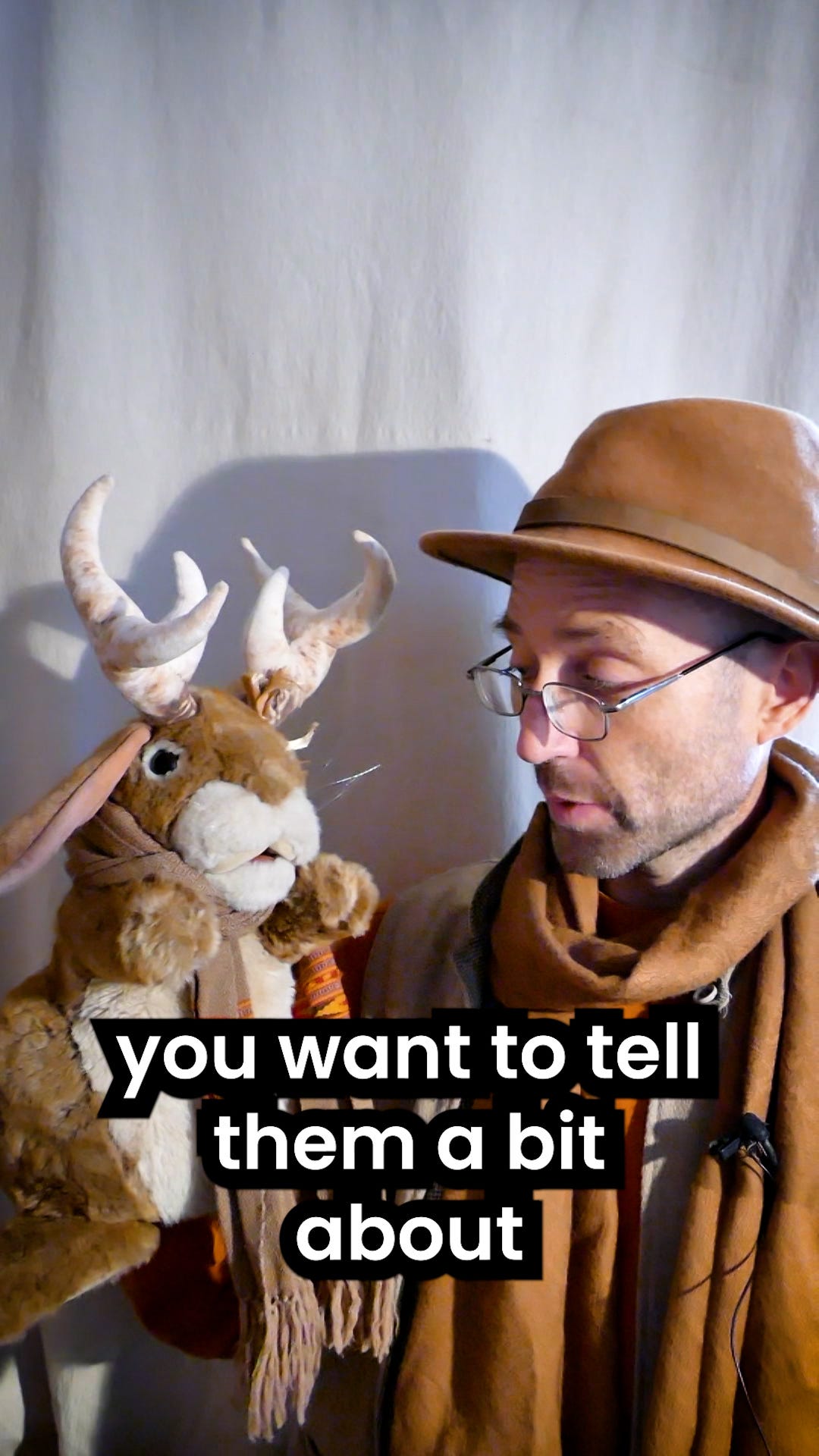
Nov 20, 2023
Samplings of Stories
(To hear this newsletter with nifty music and sound effects, have a listen to the audio. You can listen here, or look up Story Paths in any podcasting place) Welcome to the Story Paths Newsletter and Podcast. We Are One Week Out… Wait, gotta turn off those capital letter before each word. Not Everything is a Title! Ahem. Next week I’ll be launching the first gale in a storm of story-learning goodnesses, the first course in a feast of nourishing and tasty offerings for thee and thine. Today, for the pleasure of your narrative organ (right beside your third kidney), I offer you a wee sample of the dishes to come. 1. Story Elements Part One: Journeys Matriarch of the Desert Imagine a vast desert. It's not dry all year. No, there are shrubs and tough, scrappy trees. Sometimes it floods, and latent seeds burst through clay soil to spread their seeds upon the wind. It's not always dry, but it sure is now. And you, as an elephant, need a lot of water. You can conserve and survive for quite a while, sure. But as the sun crosses the cloudless sky, your thick skin is drying out. You lift your trunk to toss dust on your back, deflecting a little of the harsh light. You lead the others, one plodding step at a time. There is a watering hole. Far, far away. You've been there before, for you are the matriarch, the memory keeper. You lead the others across the cracked ground, trusting your memory, bound in with the land lines and dried river lines. The stony landmarks and the scent of particular trees. Death follows you and your herd, a shadow moving just behind you. As the shadows of the hills lengthen with the setting of the sun, you move toward water, toward life, and perhaps you will make it before this shadow overtakes you, leaving only bones and tusks to greet the coming rains. You walk. You lead them. You remember. Well hey there, fellow human. How are you like this elephant? What do you remember, even if you’ve never lived it, that you’re leading others toward? 2. Storyteller's Diary: Tales for the Trees Upon My Trail. When learning to see stories, it's helpful to take notes. Here in this diary, I scribe the tale of my life. May it serve to kindle your tales and tellings. There is where I set out on the ice, when the conditions of the lake's surface were perfect to skate. And there's where I helped my beloved skate for the first time. Her start was wobbly, but she made it all the way across the lake and back. Then I skated in circles, and even though it was the middle of a cold winter, I had to take my shirt off. I had to sing, whoop and howl. There now is a pickup truck by the lake, with cattle ranchers getting out, checking on their herd. In this valley of cow-worshipping vegetarians, this truck feels like a fiery skull on wheels, a chariot sent by Hades. The men hold smoldering scimitars, waiting for the right moment to murder the herd. In the long winter, these grazers kept me company in this sparse, arid, wide, broad, stony lands. Tell me of a land that is dear to you, a land with whom you share memories. Is there a place that, when you go there, even if it has been years since you’ve come, old times become present with you now? I’d like to hear about it. 3. Everyday Epics Beneath sea storms, and underneath the deepest divers, ocean bedrock hums. Are there stories like this, that seep structure up to the storm of the everyday? Let us peer into the depths together. Here's a tale. There was once a monster who devoured entire rivers, and bit deeply into mountains. A man who loved these lands strove valiantly for many days, and finally managed to complete a powerful fence to surround and protect this beautiful land. This fence kept the monster out, but it also kept out those who had so lovingly roamed the land. The land sorely missed their touches, songs, and sprinkles of nourishing dust. Can you guess what this story refers to in real life? Storyteller’s diary, Story Elements, and Everyday Epics. These are three kinds of foods I’ll be sharing with you, progressively, with a different taste each time. Here, one week out from the , I would like to offer an invocation. This is to the universe and the spark of life within us, to the Holy. I cast out a challenge, and a listening. For 90 days, I will put many creations out into the fire-powered web of magical stone slates. This text is one such signal. If this is pleasing to you, I ask you to feed this endeavour in whichever way you see best. For my part, I’m welcoming enriching collaborations. I have set up a subscription service, asking five of our common tokens per month, a month being about a 12th of our world's regular pilgrimage around our sun. If 50 of my species choose to subscribe to this service, I will offer them a monthly workshop. If more… well, let's just start with that. But I see more workshops, ones that help people collaborate in different ways. I see people bringing their people along, and using these workshops as incubators. I see that these workshops will help them collaborate with one another, and bring out their gifts in a fun and playful way. I digress, and you have many more worthwhile entreaties to hear. I have many plans and ideas. But here is me now, listening. This is a public episode. If you'd like to discuss this with other subscribers or get access to bonus episodes, visit storypaths.substack.com/subscribe
Nov 13, 2023
Story Paths Season 4 Premiere
(there’s a rich audio version of this post above, if you’d care to listen) Welcome to season four of the Story Paths podcast, and newsletter. I'm writing this (originally on paper) from within a wooden cabin off-grid in a valley known as Saranagati Valley, a place with whom I share deep experiences at key points of my life. I’m looking out over arid hills and the misty valley in the early morning, watching the sun creep down the hill on the far side as shadows recede and the day begins. I'm curious where you're reading this. Perhaps at home, or in a free moment at work, on the bus… If you're a returning listener for the podcast, you can trust that this season will bring more of what you love. There will be explorations of story-making and storytelling, narrative experiments, and discussions with interesting guests. Also, in this season, Story Paths will be reinvented. This podcast is now joined by the Story Paths Newsletter, goes deeper and wider into what’s spoken of in the podcast. In this season, I’ll be getting into the nitty-gritty of how stories work, the beauty of how they work. And to top it off, we’ll explore how this nitty-gritty and beauty play with each other. This will be practical, and evocative. There is much in store for you, from the journeys of planets to the journeys of turtles, and how all this helps us in the stories of our own lives and vocations. Yes, vocation. I’ll focus this season on how stories relate to our chosen work, and how we can find the meaningful stories within that work. There will be a free and paid version of this podcast and newsletter, with the paid version being a fuller exploration, with more possibility for interaction and practice telling yours tories. Until the next... This is a public episode. If you'd like to discuss this with other subscribers or get access to bonus episodes, visit storypaths.substack.com/subscribe
Jul 6, 2023
Peaceful as Embers
I recently attended a Peacemakers’ Gathering, hosted by the Cowichan People, here in the Salish Sea Ecosystem. In this gathering, people came from all over to make bridges and heal ancestral hurts. In this episode I share a song inspire by the opening ceremony of this gathering, and my friend Eric Fair-Layman shares a beautiful and poignant poem about grief and grieving, inspired by the work of Martin Prechtel. This is a public episode. If you'd like to discuss this with other subscribers or get access to bonus episodes, visit storypaths.substack.com/subscribe

Jun 21, 2023
Re-Storying with Tad Hargrave
Have you ever walked into a supermarket and wondered about the stories behind the food there on the shelf? Those corn chips… on which land did they grow, who tended them, and what is the inter-generational relationship between the corn seeds and the people who tended them over generations? How might we begin to bring story back into our food, our clothes, our fuel, and all the anonymous beings we depend on? Today my guest is Tad Hargrave. He's known for his business marketing for hippies, but today he's coming as a student of myth, particularly Scottish songs and stories, as well as Scottish Gaelic. Tamara Strijack and Rebecca Wall also chime in with some questions and thoughts. This is a public episode. If you'd like to discuss this with other subscribers or get access to bonus episodes, visit storypaths.substack.com/subscribe
Jun 7, 2023
Father's Day Special
What is a man? Who can father? When does it go right, and how can it go wrong? Poems by John O’donohue and Grace Paley Reflections by Amora Sun and Chay Beriault, and my weird self. Mentioned in the episode: The Outside Circle graphic novel , written by Patti LaBoucane-Benson and illustrated by Kelly Mellings. The Ojibwe author Richard Wagamese This is a public episode. If you'd like to discuss this with other subscribers or get access to bonus episodes, visit storypaths.substack.com/subscribe

May 24, 2023
When Womxn were Rivers
Hello dear listener, Beneath the stories of everyday life - news, politics and the like - lie deeper stories. And deeper still. Back into deep time, and into the timeless. Into bedrock stories. As bedrock determines the alkalinity of the soil layered above it, these deep stories affect the many stories layered above. Through her relationship with a humble river in the north of England, Laura Burns found insight into these deeper layers. Give yourself time and space to listen to this one - a walk in the woods might be best, or along a river. It's a deep dive. If you'd like to hear the full music for this, From me, Theodore, it's available as a bonus episode. Listen through the link in the bio, or wherever you find your podcasts. Here’s a clip from the interview. Discover Laura’s work here. This is a public episode. If you'd like to discuss this with other subscribers or get access to bonus episodes, visit storypaths.substack.com/subscribe
May 10, 2023
Mother's Day Special
Welcome to a special Mother's Day episode, where six guest poets and storytellers break down suffocating ideas of what a mother must be, to make space for the primal torrent of the earthy, crazy, profoundly deepening realites. And this isn't just about biological mothers, though god bless 'em, we need 'em. Our guests share traditional stories, heartfelt poems, and personal experiences that delve into the twists and burns of motherhood. Through their stories, we'll discover that motherhood is not just about the Hallmark card version of it. It's a messy, complicated journey that often defies our expectations and challenges us in ways we never imagined. We'll hear from mothers who have experienced loss, sacrifice, and moments of pure exhaustion. We'll also hear from those who have found unexpected beauty and fulfillment in the chaos of motherhood. Our guests will challenge limited conceptions about motherhood and reveal something more primal and deeply resonant within all of us. So join us as we celebrate motherhood in all its complexity, and honor the women who have loved and nurtured us throughout our lives. Happy Mother's Day! Transcript: Mother's Day May 2023 assembled [00:00:00] Theo Welcome to the story paths podcast. I'm theatre Lowery, and this is our mother's day special. My birthday was recently. And on that day I reached out. Uh, some online and in person. Communities and asked if anyone would like to share some stories, some reflections, some poems. About mother's day. And I'm glad to say they sent me an intriguing variety of offerings. From a story, reframing a childhood. To a poem about motherhood from the trenches. To reflections on breaking societal molds of motherhood. To a deepening [00:01:00] into the fierce beauty. Of mother earth. We begin with a story from storyteller, Carrie taught. And this one is broadly about childhood. The realm of mothers. About relationship. With elders about carrying guilt and the stories that we tell ourselves. And as you listen, whether you're old or young or male or female, you might imagine that you were the boy. And this story. And that this is part of your childhood. Once upon a time there was a boy and he lived on a [00:02:00] small farm in the distant remote countryside at least 10 miles away from the closest village, and his family ran the farm small vegetable farm that also had 12 apricot trees and chickens, and two cows and six sheep. And the boy named Jimmy. Worked very hard on the farm along with his family, and together they produced enough food to survive on as well as to sell at market for a moderate modest income. Well, one day Jimmy was not doing his chores. But instead was playing by the old well, and he had been told many, many, many times by his mother to stay away from the old. Well, but there he was nonetheless, because there was something magnetic about that deep, dark void in the earth. And, and he just couldn't stay away. And he loved the way, when he reached his arm down, the air felt different because it was cold and still. [00:03:00] And when he leaned over and smelled, it smelled damp and earthy. There used to be wood on top of the well for obvious safety precautions, but at a particularly bad time of storms, the family used the wood to board up the windows and nobody had got around to replacing it. Well, I know that you can see where this story is going. Jimmy did fall down the well, and he lodged his foot between rocks at the bottom and he couldn't move. He tried to free his foot. He thought, well, maybe he could scramble up, but the walls were far too tall and too steep for that. Anyway, Jimmy was terrified. And he knew that nobody was gonna find him until at least dinner. Everybody was off doing their chores, either working in the house or working in the fields or working when in the orchard or attending to the animals. Everybody was doing what they were supposed to be doing and nobody would notice that he [00:04:00] was gone. The dinner bell was hours away. And in that time, Jimmy, Thought. Terrible, terrible thoughts. He wondered what would happen if nobody ever found him and he starved to death. What, what if they had to cut off his leg to get him out? What if, what if his family was so angry with him for the trouble they caused that they sent him away to live somewhere else? Oh, why? Why wasn't Jimmy? Doing what he was supposed to be doing. Why did he not listen to his mother? Why was he playing near the, well? Why wasn't he doing his chores like he was supposed to? Why couldn't he have just been a good boy? Why? Well, sure enough, when the dinner bell rang and Jimmy didn't appear for dinner, the family sprung into action. You see, there are a lot of accidents that can happen on a small farm at the edge of the wilderness, and they didn't wait to see if Jimmy was just [00:05:00] dillydallying. They jumped up and they spread out and they searched and it didn't take long for them to discover Jimmy at the bottom of the well. But the problem was really about how to get him out. You see, Jimmy's foot was still stuck. He couldn't free himself. And the entrance to the well, the opening of the well was too narrow for anybody else to fit down, to come down and help. And they were afraid that if they tried to dig a wider opening, that the rocks and debris in the mud would fall on top of Jimmy. And they finally decided the only thing they could do. Was to dig a parallel shaft beside the well and then dig across to free. Jimmy. Well, they sent the kids out to the neighboring farms to rally for help, and soon they had gathered a work crew. And they worked around the clock in shifts digging and digging and digging. And it took five days and five [00:06:00] nights before they were able to free Jimmy from the well. And in that time, not one moment was Jimmy left alone. There was always somebody sitting at the mouth of the well with him talking down to him in. Calming, soothing, reassuring voices. They sang to him. They told him stories. They read aloud. They even brought Jimmy's little baby sister to come and coup and babble and giggle down the well. They sent down as much love and comfort as they could. They sent him his favorite food. They sent down blankets. They hauled up his toilet waste. They tried to fill Jimmy up with as much love and comfort and reassurance as they could, and after five days when they freed Jimmy, there was a huge celebration and everybody came. It was a giant potluck and, and there was so much celebrating. Jimmy was the hero. [00:07:00] He was celebrated and Jimmy went to bed and cried himself to sleep. Not one person said a thing to Jimmy about the terrible inconvenience of missing five days of work on the farm. Not one person said anything about the apricots dropping off the trees and rotting on the ground or, or about the. Cut worms that were devastating, the cabbage patch. Nobody said anything about why Jimmy was playing at the well in the first place. Nobody scolded him. Nobody said, why weren't you checking the fences like you were supposed to? Nobody said any of that. Nobody teased him. Nobody made fun of having to haul up his toilet waste, none of that. But Jimmy was ashamed and embarrassed, and he made a promise to himself that night. Jimmy promised himself that he would never again cause so [00:08:00] much anguish to somebody else. Never again would he require so much labor. Never again would he be a burden. Never again would he be so helpless. I, and although Jimmy was forever grateful, He carried a small cold stone in his heart for the rest of his life where he kept his fear and his sadness, and his shame, and his loneliness. Jimmy grew up to be a kind and generous and serious. And successful man. He was philanthropic, but he always kept himself a little apart from the world. He was always a little bit alone and a little bit sad if only he had spoken those feelings aloud. If only he [00:09:00] had heard how others told this story. You see, for some people this was a story of purpose about how setting a worthy goal and working hard to achieve it against the odds is an incredible feeling. For some, it was a story of the value of community, about the importance of working together for the common good. For some people, this helped them set their priorities straight. It reminded them that the love and the support and the wellbeing of another. Is so much more important than anything else on their to-do list. Others were reminded to go home and do a safety check on their own property. I mean, who knows how many accidents this prevented for? One young couple who were just starting out, this was a story of love and commitment of family, and it became the cornerstone of the life that they built together. Even, [00:10:00] even. Jimmy's little sister who had no memory of the event, internalized the importance and the significance of her voice, how important it was for her presence and her voice to be heard. Not one person carry the story of bitterness or resentment or the disappointment that Jimmy imagined. So I ask you, are you carrying an old story? That keeps you apart from life, that keeps you somehow small. Have you made a vow or a promise that no longer serves you? You see how we tell our story impacts how we experience the world. We get to choose how we tell our story. Choose well, my friend, choose well. [00:11:00] We get to choose how we tell our story. What a powerful lesson. There's a saying, I like. It's never too late to have a good childhood. To look back and reframe. Stories in which we cast ourselves as a fill-in or others as a felon. And to look at them from different perspectives. That's one of the beauties of storytelling. Is it allows you to move around 360 degrees. More. Our degrees around particular events in the past or particular understandings. And see them from different points of view. Like a council. Uh, people coming together and sharing their few point. I know when I heard this story from Carrie, I thought of some events from the childhood or younger years of other people that I know who are dear to [00:12:00] me. And considered, oh, it could be seen in a different perspective. Or maybe there's someone, you know, who seeing events in their own life or they're casting themselves as the fill-in or the victim. But the, you don't see them that way. The UCM is bigger than that. Stronger than that. Theo Next, we have a poem from storyteller and poet, Amy Walsh. And here she digs down. Into what motherhood should be. Could be. Is. And deep reflections. But what it means to be. Uh, human poised within older and newer generations of humans. Tending new generations. Children. What to pass on. What to stop. When to forgive oneself. [00:13:00] What is it to be a mother? Amy Walsh Hi, Theo. I wanted to share my poem with you. It was inspired by a group that I'm part of called Mother Circle that's facilitated by Kimberly Anne Johnson. I am Amy, daughter of Marsha, granddaughter of Rita, and Arlene, great-granddaughter of Anne, Minnie, Marie and Marie, mother of Rita and Irene. I carry the blood of the victim, the perpetrator, and the rescuer in my veins. And I know that I pass these to my daughters via both nurturance and bone. I know that I want to do things differently and sometimes I can't, and sometimes I can.[00:14:00] I know there are gifts I want to hand down, and sometimes I can't, and sometimes I can. My oldest daughter is a wise little mystic, a sensitive soul. She told me when she was four. All we needed to do to deserve God's love was be born. She reads body language like I read every flyer at the dorm elevator bulletin board, effortlessly, unintentionally, perhaps uncontrollably absorbing every emotional nuance I never saw or long ago tuned out. Until Covid made my rage unavoidable I would've told you with a straight face that I didn't often feel angry. Or afraid or ashamed or even sad because what did that get you except sent to your room? So I prided myself on being the easy kid and got it together [00:15:00] and expected my sense to five year old to get it together too. Now she attaches so much to being the best kid in her class to being all business in first grade. It makes me want to cry. Because maybe she was wired like that, but maybe this is her version of easy. Maybe I have already taught her that her emotions are too much, that it is more important to be good, that's safe, that there are conditions on her worth. How do I unwind that and repair that? Can I open my heart to feel the joy and grief, passion and rage, hope and fear? Belonging and shame. Can my daughters and I teach each other, can we take that freight ancestral tapestry and weave it a new, my mother was the [00:16:00] daughter of a man who lost his mother in a car accident at the age of six. I am not sure there are words for how disorienting that was. He never moved beyond that emotionally in the 83 years that followed his outbursts. Never more regulated than a six year old boys, but much more terrifying to a small child in the container of a grown man. My mother was two when she and her brother threw eggs at the hem house wall. She remembers the fun and the delight of bright yellow streaking down the wall. She doesn't remember what happens next, except that it was the last time she did something fun without fully examining the consequences. A good girl through and through to this day, my mother recoils that conflict when my daughter's fight [00:17:00] over a plastic hat. She pounces with immediate distraction to escape their anger and provide them an escape route too. I say that as if I am better, as if it doesn't take two days of inner pep talks and a well-rehearsed script to confront someone about a small frustration at work as if I weren't afraid to be unreasonable, as if it didn't feel mean to say no. As I sift through the debris of easy and excavate my too muchness, I can see that I never felt afraid of my mother. I can see the additional room she created for me to maneuver in the world, room she never had. I can see the stories of abusive fathers and women who did what they had to to survive. I can see the stories of grieving fathers. And women who died in childbirth. [00:18:00] I can see the son of an alcoholic whose heart broke too early. I can see the hunger and the fear that led to that alcoholism or led to insatiable taking, that was the direct cause of the hunger and desperation of others. I can see the church and the wild woman of the woods. I can see the stone workers and the story keepers. I can see the conquest and the concord. I can see the ancient grandmothers place their flower crown on my head. There is pride and shame and magic in your life. Victims. Perpetrators, rescuers, all of them, shaking your windows and rattling your bones, demanding you look at the sacrifices and the atrocities [00:19:00] carried out in your name, demanding you reckon with a question? Why are you still here? Yolanda I'm Yolanda I'm an Ubuntu poet and I love the idea that stories, stories, I'm Yolanda I'm an Ubuntu poet and I love the idea that stories, stories, That's the voice of Yolanda. Who will share with us some bombastic reflections on motherhood. On primal forces, breaking societal molds. And finding one's fault. All the more visible with the attempt to parent. Uh, young being into this world. And with the mother's connection with ancestral lines of mothers flowing into her. And all their [00:20:00] connection. With mother earth. what really struck me was, firstly I was. Grateful to have this invitation from a man. It really landed just that simple awareness that, um, a man was wanting on his own birthday to celebrate motherhood. I come from an African culture that's a dual heritage. So it's the north and east of Africa. It's a two season landscape, it's multiple languages before you enter into school. And you come into a culture that is in Europe. So I'm very much a sort of diaspora lens. Using the English language, my, my second language to communicate on a topic that. I believe motherhood just strips you off language and gets you back into that animal primal state, you know, where between, you know, [00:21:00] milking with, you know, with holding your child's head in one hand and kind of sensing the, on a pheromone level, you can smell the presence of your man wanting to creep back towards you. And, you know, how does that mind deal with all that at once? It's, it's just, it's an adventure, you know. And you learn to relax into it I couldn't even speak the word adventure without acknowledging that I wanted to pause Advent. So I don't know how folks reflect on motherhood. It's got such an urban myth around it. It's got so many different silent codes within it. But motherhood for me has just been. Tooth pulling messy adventure, and that we need to somehow be nourished by it and also shed some of those stories that we have somehow nurtured. There's the stories that we see from our families. There's those things that [00:22:00] exist in society that say the dos and don't. A mother. I'll have, you know, Theodore, if I've understood the silent codes has put aside her. Her sexy has put aside, her woman has put aside her. You know, lover has put aside all of that and has raised to the pedestal a dream. A dream filled with urban myth rather than the sacred, simple, scared story. You are on an adventure and you aren't being asked to go beyond some of those limitations that you might have. And through a conditioned mindset and, and religion, all those kind of things. You call it culture. On a good day, you call it maddening on a bad day. And then motherhood just kind of keeps pushing, but both further down that river so that you recognize that uh, you just don't have the language. And that's when I became quite. [00:23:00] Familiar with my animist heritage and I, I brought that to myself in the most compassionate way cuz I recognized that in all ways I had given up and that I was not being asked to give up on myself, but I was being asked to explore this on a completely sacred level. So motherhood for me became a path where I recognized that I had walked with shame, and that I was gradually being invited through the motherhood experience of seeing the holy in the shame, seeing the beautiful in the shame, seeing the, I'm part of a wider story in the shame, and so shame like all entities that have a spaciousness to them. My first glance on this relationship was I'll never be good enough. I failed him from the get-go. [00:24:00] Um, and then the storyline became what makes you think there is any extra that needs to be done? Maybe he needs my kind of crazy, maybe he needs my kind of flaws. And I have found that the mother tongue is the one that is so foundational in the discourse between Great Mother and remembering our matriarchs from the original story, those who have now been transformed and present to us as two-legged people, but they are present to us through the other members of our family, through the tree family, the stone people, the elements. The oral tradition gives you that tonality. The oral tradition says you are to lean to your child. Like the grandmother always reminds the mother. When I lost my firstborn child, I still use language like lost. [00:25:00] It's my grandmother who said you had already called and named her Maisha. Maisha in my mother tongue means life. And I go back to the simplicity of the term storyline. It brought me my grandmother in a form I hadn't known. She said, we go at a particular time to go and meet our coffee plants. We have coffee plantations by the but of the kja. It's, it's a sea, a wave of. Of coffee plants, it's coffee medicine. And then we have those who walk, who go into the climb. So they listen and they do that story and they hear the story and they bring it back down to us. And we know how to do our coffee medicine to care. There is nothing within the storyline. Says, strip the coffee plants away so that we can see the [00:26:00] magnificence of our grandmother better exposed. That's a colonized mind. You don't throw the baby with the bathwater. That's motherhood. Your son's a jerk is the sentence that comes to the surface. You know, he's come back at two o'clock in the morning, you're gonna hear him making love all night. Why? Why? Why? Then you remember, you don't strip the coffee medicine. That's his story. That's when you're like, I remember when I used to do that. What is this biggest hunger and yearning that mothers are called to remember? All religions in their sacred and in their pure, how the discourse, it says enter into direct relationship. It's not just us crazy mystic or part Catholic, shamanic and, you know, possessed. It's there. It's in the fabric [00:27:00] of the cloth. If you become overly confused, Motherhood is the most devouring, insane thing. Can you imagine it's made that way? You know, we, we bring them through a portal and they do their part. So it's an adventure. And when I think of motherhood, I wanted to recognize the matriarchs that have sat with their patriarchs, and they've done it in a combined and relaxed and loving way in the deep confusion that exists at the moment. And in the original old stories. As I love to say, the grandmother's spirit had already seen fit to, to have in that in between space medicine, deep deep medicine, and as it happens, science now knows that if you are sipping on coffee, you are more likely to get [00:28:00] to deal with those high altitudes with a better experience. But you know, did my original, original, original grandmother know this? But she's quite cheeky, so she's saying yes, but you know, we come from a cheeky line, so I'll just ignore that. Shall we say that bit? I don't think she did. Really. I think what happens is a, a deep obedience, you know, you, you learn to communicate and into real relationship and you, you hear your bodies. Yes. And you, you can, you can recognize your bodies. For me, motherhood is a messy adventure. And the more you can vent the better. We are not invited to do this alone. Recognizing that we can look at the signs and lean on others and take a leap of faith and remember that as much as we believe it's our own [00:29:00] adventure, our children are our deepest teacher and it's with loving embrace of other mothers, other grandmothers, other sisters, those who have birthed that experience, or those who are there to support you even if they haven't lived the so-called birth experience. And then with that, we can simply say, we are a family and our men are so much a part of this. Our other family members are so much a part of this. And I'm grateful. Uh, next we have a poem. Of belonging. And earthiness. By the poet and artist, Jesse White. How could we have forgotten the blessing to be born of a love as ancient as eternity, perpetually shape shifting, [00:30:00] spirit breathing you into me and back again until I no longer know where my skin ends and yours begins. Tate our bones back to the land. Remembering her embrace of gravity. May we begin the mourning, bowing to the beauty that births us. Mother of mystery and magic, father of fire and feather. How could we have forgotten we belong along? Lastly, we close with a story. By storyteller, Diana spirit hark. A story about the interrelationships between life and death which we've. The creatures. In this world together, including ourselves. The story of the wisdom. [00:31:00] Of our great mother. Wisdom, which is sometimes hard. For us. To accept. I am an artisan of a ceremonial art I've been a storyteller and a dream weaver. For my whole life. I've always known about dreams since I was a little girl, and when I found the medicine teachings of the four directions, I became totally immersed in that and found, felt like I finally found a philosophy and a way of life that matched who I was, who I am. And so I am a grandmother and a great-grandmother, still raising children, still [00:32:00] interpreting dreams, still making art, and still loving mother nature. My friend Theo asked me to share a story about mothers or grandmothers, cuz I'm a grandmother and I have. A favorite story about a mother that we often don't think of as our, our mother. When I was a little girl, I was put outside and the door locked. So I, I made friends with, with nature, with the trees and the grass and the birds and, and the bugs and everything. That was on my, you know, in my yard when I was little. And at one point I actually said to myself that I think that [00:33:00] I was given to the wrong family and that my real mother is Mother Nature. Cuz in those days, long time ago, they didn't talk about Earth Mother much. Mostly talked about. Be good to Mother Nature. And so that's, so I decided that Mother Nature was my true mother, and this song is called Earth Mother, and it is a story about. There, there's a lot of talk right now about how we're spoiling the earth and how this shouldn't happen and that shouldn't happen. But nature has a very pretty powerful awareness [00:34:00] of what her children need. Earth. Mother woke with the dawn and Fanny sacred smoke to all the four directions. She began to walk thelan singing her morning song. Beautiful home, beautiful homeland. Welcome the fire, the east and sun. Welcome the south. The swimmers and the waters welcome the west, the earth and the plants. Welcome the north. The wind and the animals. Welcome to the stars. Welcome to the moon. Good morning, my beautiful life. Good morning. My [00:35:00] beautiful life. And as she walked, she came to. A beautiful place where she bent down and she saw the The Beatles, and she gave them beautiful little iridescent green jackets and she hung green acorns in the trees and bending low. She the seed of summer in a little flower. So that when it opened in summer, it would remember. Then she turned her gaze to the sage covered desert. She loved the desert. She blew a warm [00:36:00] wind across the Bless the desert and a hawk caught it on his wings as he blew, and then she walked on. As she walked, she came to the river and there was men. Man had his neck and he was catching frogs for his breakfast for his mother. You are kind. You sent frog to me. To hunt and catch for my breakfast. I am very grateful they filled my belly. Oh, but why, why do you send mosquitoes to torment me in my bed at night? They bite me and make me leave my bed.[00:37:00] Mosquitoes Earth. Mother, very, very bad, bad, bad frogs, on the other hand, sweet, good, and so delicious, Earth's mother. If there were no more mosquitoes, the world would be perfect. Earth's mother's side and walked. She walked across the Savannah in Africa wearing a robe, fringed with falling rain. She filled the water holes, sharpened the thorn bushes, guided sunbird to a blooming flower with nectar, she climbed a peak. And flung her spear of lightning across the sky. It felt the sting of storm and the fury of the [00:38:00] lightning in the North Earth. Mother powdered the trees with snow and like diamond dust. It was in the air later on in the afternoon, earth Mother. Heard frogs calling. She saw a frog sitting on the rock and catching an insect in with this tongue and eating at whole. Thank you Earth Mother Mosquitoes and her sisters fill my belly. But why have you said man to eat me? Man is very, very bad, bad, bad, sweet, delicious mosquitoes On the other hand, they make me happy. If there were no more men in [00:39:00] this world, it would be perfect Birth mother smiled and walked on in the evening. She died deep into the water and swam with the whales. Iridescent blue light coming out of her fingertips. Crescent Moon rose, she cradled an otter in a bed of seaweed. It was nighttime. Now, she walked across the meadow. She heard a tiny little voice, earth mother. I am so grateful to you for sending man. He's so tasty and delicious when I bite him in his pet. But why Earth Mother do you send those useless [00:40:00] rocks? They have eaten my sisters. And tomorrow, Shirley, they will eat me. This one would be perfect. If there were no more props, earth mother smiled inside and she climbed the hill to her cloud tv. She spread fireflies amongst the trees and they sparkled like diamonds. She spread a spider, we lace on the grass, and she said goodnight. Goodnight to the Beatles and the hawks and the sunbirds. Goodnight to the whales and the frogs, and the otters and the mosquitoes, and fireflies. [00:41:00] Her children everywhere. Then she went to sleep and the world in its own way was perfect. Goodnight. Goodnight, my beautiful hope. Goodnight to the south, the swimmers and the whales. Goodnight to the west, the earth and the plants. Goodnight to the north, the wind and the animals. Goodnight to the starts. Goodnight to the moon. Goodnight, beautiful light. Goodnight, beautiful world. Goodnight. Beautiful land. The end. So it's a great story about all of life and it really does answer the why [00:42:00] life is the way it is yet gently, mm-hmm. With grace and beauty. Thank you for listening. If you'd like to support this podcast, you can become a paid subscriber on sub stack. And this month paid subscribers are receiving the full. Reflections from Yolanda. Edited down quite a bit for this episode. And I also invite you to share it with others who you think would like it. Until next time. This is a public episode. If you'd like to discuss this with other subscribers or get access to bonus episodes, visit storypaths.substack.com/subscribe

Apr 26, 2023
Imagining Futures, with Rob Hopkins
Rob Hopkins is a champion of imagination, and he does something radical in these times: he helps people imagine a good future. Not a utopia, nor a dystopia, but the kind of rooted, realistic, multi-faceted, creative and juicy future that can draw us toward it. He’s found that frightening people with charts about climate change isn’t as potent as inviting them into what they’d like to see… and hear, and taste, especially in the near future. What would it be like to inhabit the future you really want? What is the role of story in moving toward that succulent future? Rob is the co-founder of the international Transition Town Movement, the host of the podcast From what is to what next? and the author of numerous excellent books. Our conversation was lively, uplifting, challenging and funny. Theo’s links: Watch this episode Story Paths Subscription Skillshare class with free month Rob’s links: Rob Hopkins’ website People Rob mentioned whom he’s inspired by, with some links to get started learning about them: Adrienne Maree Brown Walidah Imarisha Mariame Kaba Rasheedah Phillips: Black Quantum Futurism The Ministry for the Future by Kim Stanley Robinson This is a public episode. If you'd like to discuss this with other subscribers or get access to bonus episodes, visit storypaths.substack.com/subscribe
Apr 12, 2023
Divining Futures
I must say I'm excited about this one. In this time, imagining an apocolypse is lazy. Imagining a mansion and money is likely self-indulgent. But how about a vibrant collective imagining of the future that is rooted deep in the past? Let's try that. This is a vision story, calling in possible futures, crafted and recorded with care. Subscribe on Substackk, free or $5 Skillshare class with free month This is a public episode. If you'd like to discuss this with other subscribers or get access to bonus episodes, visit storypaths.substack.com/subscribe
Mar 29, 2023
Native Media
Join me for a rousing and illuminating conversation with Elias Gold, whom I discovered through his channel, Native Media Theory. Elias takes us through a journey through time, from the written descritions of Viking explorers, to the earliest Spanish colonizers, through romance books, early cinema, and up to the present day, when native people are more and more stepping into roles as writers and directors to tell their stories widely. You can watch this episode on the Story Paths youtube channel (linked below) Here is Elias’ excellent channel. And his Instagram account. To keep this carefully crafted podcast afloat, please become a paid subscriber on Substack. As examples, this episode includes clips from the following films and TV shows: The Lone Ranger Thunderheart Black Panther Pocahontas Avatar 2 Evan Almighty Smoke Signals Reservation Dogs Russell Means Rutherford Falls Prey Bury My Heart at Wounded Knee and thanks also to Eisa Davis for her funny and poignant song, The Ballad of the Magical Negro, performed at Joe’s Pub This is a public episode. If you'd like to discuss this with other subscribers or get access to bonus episodes, visit storypaths.substack.com/subscribe
Mar 28, 2023
This April: A live Story-making Course: Wisdom Stories!
Register here A special (time-sensitive) announcement I’m teaching Wisdom Stories April 5 - April 26 Wednesdays, 11am-1pm PST (Watch the video of this podcast instead) Hi, I'm Theodore Lowry, here to invite you to join me in my first ever live online course: Wisdom Stories. This is a course that was written by Leah Lamb, the founder of the School for Sacred Storytelling, in which I've been a student for more than a year. In this course, you'll be invited to go into your own past and map the events that you find. Then, to choose an event that was difficult, wondrous and transformative. Drawing from this event, you'll learn to craft a wisdom story using the soul language of myth. You'll then present this story in a supportive, caring group, and hear the stories of others. This is a pay what you want course, with a generous minimum. The timing will work well anywhere in North America, and Europe as well. I hope you'll join me. Wisdom Stories This Course Is Designed For People Who Want To: * Bring a Spark of Joy and Pleasure into their life through a Creative Process * Engage story as a tool for healing * Learn how to work with story as a form of initiation * Commit to transforming and bringing alchemy to life’s challenging moments * Step onto the path of living as an elder, and give the power of your stories to the generations ahead The Tuition: This is a rare opportunity to choose your own tuition rate. At checkout, you will be able to enter the amount you feel called to contribute. Please note that we ask for a minimum of $50 to support the school and make these courses possible.We sincerely appreciate all contributions. This is a public episode. If you'd like to discuss this with other subscribers or get access to bonus episodes, visit storypaths.substack.com/subscribe
Mar 15, 2023
Storytelling Festival!
(click the image above for a video preview) Hello friends. I invite you to join me for a storytelling festival! Here is a new episode of Story Paths! Featuring the fantabulous storytellers and poets Kathleen Prophet, EvaMarie Padmanabhan, Jessie White and my humble self. Available from this email, or on your favorite podcast player. You can also find the video version on our youtube channel . ps. I’ve moved to Substack, so you can find all the episodes there. This is a public episode. If you'd like to discuss this with other subscribers or get access to bonus episodes, visit storypaths.substack.com/subscribe
Mar 1, 2023
Tracking Divinity
The old myths don't often show Divnity blazing through the sky bellowing instructions. More often the Divine is in hoofprints, bird songs, grains of snow whispering through the pines. The story of Lippo and Tapio is an old myth from Lapland. Today, Stephanie MacKay, co-founder Fianna Wilderness School and long-time student of Martín Prechtel, takes us through this unassumingly profound story about the adventurous spirit of youth, passages of initiation, the deepening power of grief, and the necessity of failure. Here's a link to the PDF of this story. Story soruce: Scandinavian Folk and Fairy Tales, Edited by Claire Booss, Avenel Books: New York Here's a link to the forest school Stephanie co-founded, Fianna Wilderness School. Here's the link to share this podcast with a friend: https://storypaths.buzzsprout.com/ For comics, prints, media services and more, you can go to the Story Paths website. There you'll find comics, prints, media services and more. To support the podcast and get goodies, go on over to Patreon . To be notified about upcoming creative writing and art workshops, sign up for the Story Paths mailing list here . To comment or ask questions about the episode, go to the Instagram. Trailer for Creative Writing: Brainstorming Story Ideas Link to the course and a free month on Skillshare. This is a public episode. If you'd like to discuss this with other subscribers or get access to bonus episodes, visit storypaths.substack.com/subscribe
Feb 15, 2023
Gods, humans and robots (Part 2)
Science fiction is modern myth, though some say it doesn't have the same old roots as myth. In this episode I compare modern sci-fi visions of artificial intelligence in relation to humans, with myths about humans' relationship to gods. Both are created with creator, only with AI we humans are the creator, and with the gods we're the ones who are created. In the stories, there's a lot in common in both cases. Thanks to K. Lee Marks for suggesting this topic. See a mindmap of what we're talking about here. Here's the link to share this podcast with a friend: https://storypaths.buzzsprout.com/ For comics, prints, media services and more, you can go to the Story Paths website. There you'll find comics, prints, media services and more. To support the podcast and get goodies, go on over to Patreon . To be notified about upcoming creative writing and art workshops, sign up for the Story Paths mailing list here . To comment or ask questions about the episode, go to the Instagram. Trailer for Creative Writing: Brainstorming Story Ideas Link to the course and a free month on Skillshare. This is a public episode. If you'd like to discuss this with other subscribers or get access to bonus episodes, visit storypaths.substack.com/subscribe

Feb 1, 2023
Gods, humans and robots (Part 1)
Watch the video of this podcast here. There's been a lot of talk about the dangers of AI lately, but rather than gossip behind the robots' backs, wouldn't it be better to go to the source? With the help of my good friends Jaya and K.lee, we ask Chat gpt questions about the dangers of AI. And this episode wouldn't be complete without a survey of the ways in which AI (robots) have shown up in our imaginings, territory largely explored by our sci-fi writer brethren and sistren. How do these imaginings affect our world views? And lastly, leaving apocalyptic stories aside, we explore a rarer vision of AI. See a mindmap of what we're talking about here. Music in this episode is by my guest K. Lee Marks. You can find more of his work here and here. He also helped me start this podcast, and if you'd like his help starting yours you can go here. Here's the link to share this podcast with a friend: https://storypaths.buzzsprout.com/ For comics, prints, media services and more, you can go to the Story Paths website. There you'll find comics, prints, media services and more. To support the podcast and get goodies, go on over to Patreon . To be notified about upcoming creative writing and art workshops, sign up for the Story Paths mailing list here . To comment or ask questions about the episode, go to the Instagram. Intro song by JeffSpeed. Trailer for Creative Writing: Brainstorming Story Ideas Link to the course and a free month on Skillshare. This is a public episode. If you'd like to discuss this with other subscribers or get access to bonus episodes, visit storypaths.substack.com/subscribe

Jan 16, 2023
Avatar 2: The Way of Whiteness
An unusual 'review' of this popular film, looking at why Hollywood film makers and many others are turning to indigenous culture for a sense of... well, culture? This is less a review, and more a look into what the film says about settler culture in North America. If you haven't seen the film you may still like this, but parts may make more sense if you've seen it. If you'd like to see a film with similar themes that's far more creative, with a far lower budget, do check out Neptune Frost. You can see it on Kanopy, and you can get a membership to that through many libraries. Also, Indigenous creator Elias Gold from the Native Media Theory Youtube channel made an excellent video about this film which you can find here. Share this podcast with a friend by copying this link: https://storypaths.buzzsprout.com/ The Story Paths website is here. There you'll find comics, prints, media services and more. To support the podcast and get goodies, go on over to Patreon . To be notified about upcoming creative writing and art workshops, sign up for the Story Paths mailing list here . To comment or ask questions about the episode, go to the Instagram. Poem by Jessie White, songs by Theodore Lowry and JeffSpeed. Trailer for Creative Writing: Brainstorming Story Ideas Link to the course and a free month on Skillshare. This is a public episode. If you'd like to discuss this with other subscribers or get access to bonus episodes, visit storypaths.substack.com/subscribe
Dec 19, 2022
Anthropomorphizing done right: Season 2 Finale
Is it projection to ascribe human characteristics to animals? Maybe, sometimes... but it may also be foundational to storytelling and myth, and a key to deep empathy with beings outside our own species. In this, the finale of Season 2, we dive right into all this geeky storytelling stuff. Share this podcast with a friend by copying this link: https://storypaths.buzzsprout.com/ Also a special announcement: The Story Paths website is here. There you'll find comics, prints, media services and more. To support the podcast and get goodies, go on over to Patreon . To be notified about upcoming creative writing and art workshops, sign up for the Story Paths mailing list here . For music and sfx credits, see the transcript. Trailer for Creative Writing: Brainstorming Story Ideas Link to the course and a free month on Skillshare. This is a public episode. If you'd like to discuss this with other subscribers or get access to bonus episodes, visit storypaths.substack.com/subscribe

Dec 5, 2022
Myth Personified
A quick solo episode where I get into what personfication is, and why it's a great way to get a handle on beyond-the-brain-complex trends and patterns in this mystical reality of ours. Share this podcast with a friend by copying this link: https://storypaths.buzzsprout.com/ To support the podcast and get goodies, go on over to Patreon . The podcast Instragram is here. To be notified about upcoming creative writing and art workshops, sign up for the Story Paths mailing list here . Trailer for Creative Writing: Brainstorming Story Ideas Link to the course and a free month on Skillshare. This is a public episode. If you'd like to discuss this with other subscribers or get access to bonus episodes, visit storypaths.substack.com/subscribe

Nov 1, 2022
Thinking in Stories, with Leah Lamb
Leah Lamb teaches how to think in the language of stories. I’ve been taking classes with her for the better part of a year, and I can say it works. In this interview she steps back and looks over two huge stories of our time, the story of climate change, and the story of initiation. A bit about Leah: Leah learned about how stories could be allies and friends when she was a child wandering the fields, creeks, and ponds of a rural farm in Vermont. Her first loves were writing and theater. Leah experienced first-hand how stories can unite when her play about suicide, “Berries,” was produced by VA Young Writers for The Theater. She went on to study the Eric Morris technique and the Meisner Technique at the Neighborhood Playhouse in New York City and interned at Williamstown Theatre Festival. Her love of the environment led her to study at Prescott College, where she earned a double major in outdoor experiential education and environmental education through performance. After she worked with youth at risk for many years as a wilderness guide with Outward Bound and other programs, her commitment to social justice led her to earn a master’s degree in social work from Virginia Commonwealth University. To explore Leah’s upcoming classes, go here: https://leahlamb.com/upcoming-classes/ Share this podcast with a friend by copying this link: https://storypaths.buzzsprout.com/ To support the podcast and get goodies, go on over to Patreon . The podcast Instragram is here. To be notified about upcoming creative writing and art workshops, sign up for the Story Paths mailing list here . Credits Music and SFX by JeffSpeed68 Theodore Lowry Mwic cube3 Luckylittleraven postproddog L. Subramaniam Trailer for Creative Writing: Brainstorming Story Ideas Link to the course and a free month on Skillshare. This is a public episode. If you'd like to discuss this with other subscribers or get access to bonus episodes, visit storypaths.substack.com/subscribe
Oct 4, 2022
Creative Mentorship with Angelo Rosso
My guest today is Angelo Rosso, a creative mentor, published poet and writer, and a creative writing coach, living on the same island as myself, Salt Spring Island off the coast of Canada, Quw’utsun territory. In this deep and deepening conversation, we wonder whether artists must be solitary creatures, about where creativity may dwell within each of us, and what kind of patient and caring attention might bring that out. I first asked Angelo about his own journey into creative mentorship. To find out about Angelo's creative and mentoring work, visit his site here . Share this podcast with a friend by copying this link: https://storypaths.buzzsprout.com/ To support the podcast and get goodies, go on over to Patreon . The podcast Instragram is here. To be notified about upcoming creative writing and art workshops, sign up for the Story Paths mailing list here . Trailer for Creative Writing: Brainstorming Story Ideas Link to the course and a free month on Skillshare. This is a public episode. If you'd like to discuss this with other subscribers or get access to bonus episodes, visit storypaths.substack.com/subscribe
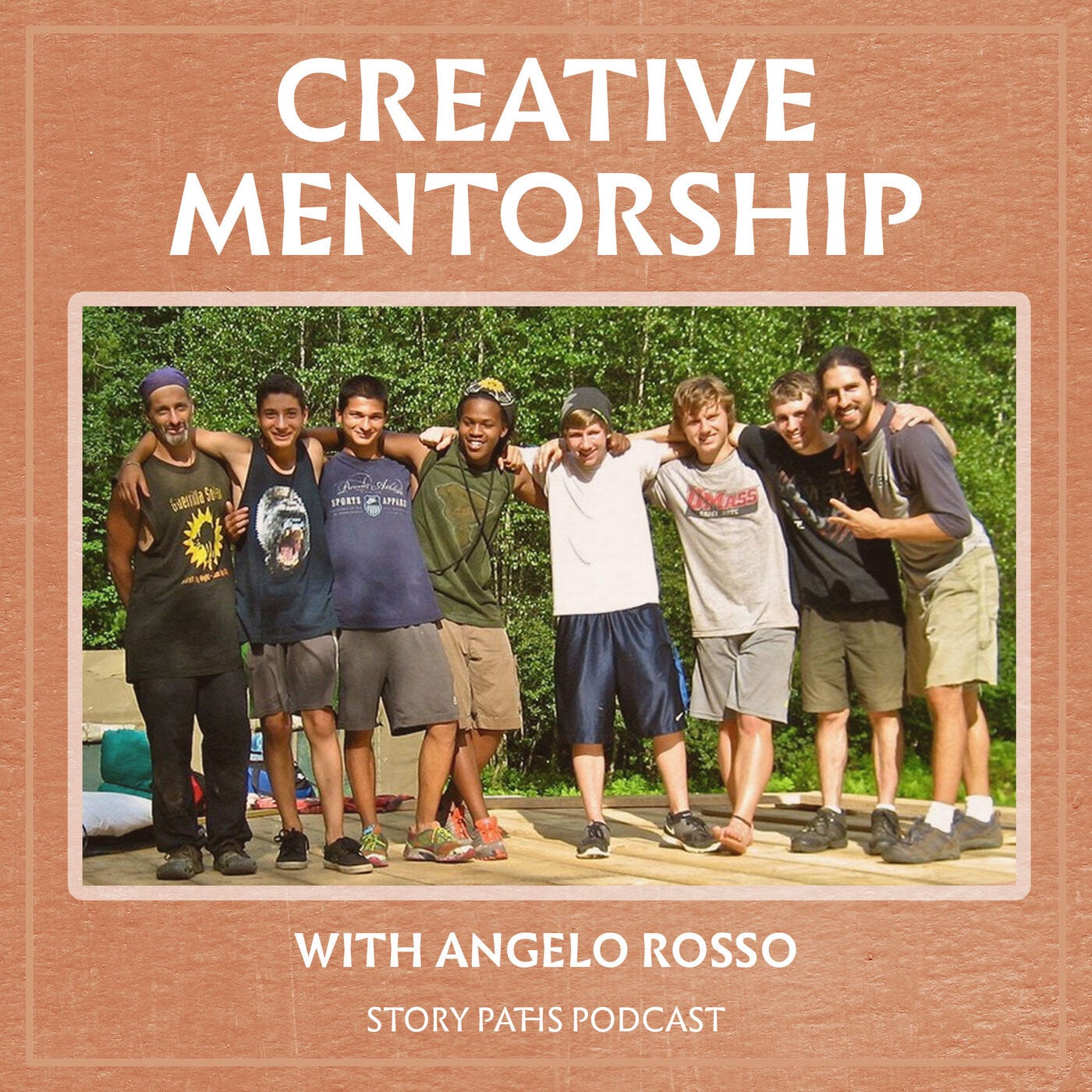
Sep 3, 2022
The Earth Community
Why three episodes about community on a storytelling podcast? Well, community is where storytelling takes place, after all, and it's who stories are about. Stories weave webs between communities, and not just between human communities. Stories also reveal existing connective strands that we might have otherwise missed. And really, all our human stories are within the larger stories of water movement, evolution, geological and climate shifts, and the life cycles of stars. Be that as it may, we’re here on Earth, and some of us are really trying to learn to be better members of the wider Earth community. One such person is Kester Reid, co-founder of the awesome Fianna Wilderness School ( fianna.ca ). In this episode he talks about the games, songs, ceremonies and yes, stories, employed within the school. All of them help make a cultural container to reconnect with the other wondrous beings we share this world with. Before this, Chay Beriault makes a cameo to touch on some interesting and useful psychology and communication methods. They may help you deepen your sense of self, as well as your relationships. See you on the other side. Share this podcast with a friend by copying this link: https://storypaths.buzzsprout.com/ To support the podcast and get goodies, go on over to Patreon . The podcast Instragram is here. To be notified about upcoming creative writing and art workshops, sign up for the Story Paths mailing list here . There were many songs and sound effects in this episode. Thanks especialy to all who offered these up freely on Freesound.org and dig.ccmixter.org . I couldn't put them all in the show notes here, but you'll find them in the transcript. Trailer for Creative Writing: Brainstorming Story Ideas Link to the course and a free month on Skillshare. This is a public episode. If you'd like to discuss this with other subscribers or get access to bonus episodes, visit storypaths.substack.com/subscribe
Aug 3, 2022
Tending Toward Community (or, Community is a Pain in the Ass)
With Tyson Yunkaporta, Daniel Robert, Chay Beriault, Jessie White, and John Wolfstone. In part two of Community, we get into the path toward community, a zigzag and emergent pathway that can be confusing and extremely challenging. Which is why the alternate name for this episode is Community is a Pain in the Ass. It's not easy to be building community while dealing with ancestral grief and despair over living in a fragmented, partial society. And yet people make this effort, with goodwill and humor, and I doff my patchy hat to them. We get into communication, communion working through conflict, and we also get into nomadic community, which may well be the oldest form of community for humans, and is less about just roaming through the landscape and more about cyclically tending the land. We'll be hearing from Tyson Yunkaporta about this from the Apalach band in Australia, who is working in the indigenous knowledge lab in deacon university working on bringing in functional nomadic communities in the modern world. And we'll also touch on the wonders and terrors of online community. Share this podcast with a friend by copying this link: https://storypaths.buzzsprout.com/ To learn more about Tyson Yunkaporta excellent book, Sand Talk, you can go here. In this episode Daniel Robert tells the story of the founding of the School of Mythopoetics . To hear more about this you can listen to this episode of the Mythic Masculine Podcast . Jessie's beautiful art is here. John Wolfstone's site, about rites of passage, is here . Hear you in there! To support the podcast, and receive additional artwork and stories related to its theme, go on over to Patreon . The podcast Instragram is here. To be notified about upcoming creative writing and art workshops, sign up for the Story Paths mailing list here . There were many songs and sound effects in this episode. Thanks especialy to all who offered these up freely on Freesound.org and dig.ccmixter.org . I couldn't put them all in the show notes here, but you'll find them in the transcript. Music credit from ccmixter: romancito_-_San_Geronimo_Feast_Day From freesound.org 165864__ananth-pattabi__traditional-folk-drums-hyderabad-india.mp3 Trailer for Creative Writing: Brainstorming Story Ideas Link to the course and a free month on Skillshare. This is a public episode. If you'd like to discuss this with other subscribers or get access to bonus episodes, visit storypaths.substack.com/subscribe

Jul 3, 2022
Calling Community
What does community mean to you? Is it wonderful? Complicated? Community is the container for storytelling, and for so much of what we do. It exists in healthy and broken forms, in motion, in transition. It’s critical to our survival, and our flowering. Did I mention it's complicated and frustrating too? Community is infuriatingly, thankfully, necessary. It is a vast landscape, and today we venture out to explore a wee bit. Featuring interviews with John Wolfstone, Jessie White, and Chaitanya Beriault. The supplementing voices of Jessie, Blair, Boots, Sophie and Maggie. Share this podcast with a friend by copying this link: https://storypaths.buzzsprout.com/ To support the podcast, and receive additional artwork and stories related to its theme, go on over to Patreon . The podcast Instragram is here. Jessie's beautiful art is here. John Wolfstone's site, about rites of passage, is here . To be notified about upcoming creative writing and art workshops, sign up for the Story Paths mailing list here . There were many songs and sound effects in this episode. Thanks especialy to all who offered these up freely on Freesound.org and dig.ccmixter.org . I couldn't put them all in the show notes here, but you'll find them in the transcript. Trailer for Creative Writing: Brainstorming Story Ideas Link to the course and a free month on Skillshare. This is a public episode. If you'd like to discuss this with other subscribers or get access to bonus episodes, visit storypaths.substack.com/subscribe
Jun 1, 2022
What are humans for? With Tyson Yunkaporta
Welcome to Season 2, and a deeper dive into the many facets of story. Tyson Yunkaporta is a member of the Apalech Clan in far north Queensland, Australia. He’s a systems thinker, a traditional carver, an arts critic and a senior lecturer in Indigenous Knowledges at Deakin University in Melbourne. He’s also the author, along with his land and community, of Sand Talk: How indigenous thinking can save the world. And today, he’s going to bring us into this question: What are people for? Ecologically speaking, in relation with the other species whom we’re here with, what are we for? In this context, why do we tell stories, think in metaphors and symbols, and enact ceremonies? This episode includes guided meditations, original music and much more. It was quite a journey making it; may it be a gift for you and your kin. Share this podcast with a friend by copying this link: https://storypaths.buzzsprout.com/ To receive additional artwork and stories related to its theme, go on over to Patreon . To be notified about upcoming creative writing and art workshops, sign up for the Story Paths mailing list here . Credits There were many songs and sound effects in this episode, which I’ll list here. Thanks to all who offered these up freely on Freesound.org and dig.ccmixter.org . I couldn't put them all in the show notes here, but you'll find them in the linked transcript. Trailer for Creative Writing: Brainstorming Story Ideas Link to the course and a free month on Skillshare. This is a public episode. If you'd like to discuss this with other subscribers or get access to bonus episodes, visit storypaths.substack.com/subscribe
Dec 27, 2021
Season 1 Finale!
I started this podcast to explore the word story, and found that this word is as big as words like culture, god, and Earth. Today I review some of what I've learned thus far in my journey, distilling some essence from what my guests taught me. Thanks muchly for all of you who've joined me in this. The plan is to recommence in February. My wife is becoming a contributor, which is great, and we have some amazing guests lined up, as well as plans to weave interactive practices into the podcast. Until soon. Best wishes in the new year on this popular calendar system. Sincerely, Theodore Lowry Share this podcast with a friend by copying this link: https://storypaths.buzzsprout.com/ To be notified about upcoming creative writing and art workshops, sign up for the Story Paths mailing list here . Music by Theodore Lowry and Doxent. Trailer for Creative Writing: Brainstorming Story Ideas Link to the course and a free month on Skillshare. This is a public episode. If you'd like to discuss this with other subscribers or get access to bonus episodes, visit storypaths.substack.com/subscribe
Dec 21, 2021
Sophie Strand on The Medicine of Mycelium, Monsters and Mystery
Sophie Strand is a writer based in the Hudson Valley who focuses on the intersection of spirituality, storytelling, and ecology. But it would probably be more authentic to call her a neo-troubadour animist with a propensity to spin yarns that inevitably turn into love stories. Give her a salamander and a stone and she’ll write you a love story. Sophie was raised by house cats, puff balls, possums, raccoons, and an opinionated, crippled goose. In every neighborhood she’s ever lived in she has been known as “the walker”. She believes strongly that all thinking happens interstitially – between beings, ideas, differences, mythical gradients. Her first book of essays, The Flowering Wand: Lunar Kings, Lichenized Lovers, Transpecies Magicians, and Rhizomatic Harpists Heal the Masculine, is forthcoming in 2022 from Inner Traditions. Her books of poetry include Love Song to a Blue God , Those Other Flowers to Come and The Approach (The Swan). She has recently finished a work of historical fiction, The Madonna Secret , that offers an eco-feminist revision of the gospels. You can read Sophie's work on her website , facebook and instagram . Share this podcast with a friend by copying this link: https://storypaths.buzzsprout.com/ To be notified about upcoming creative writing and art workshops, sign up for the Story Paths mailing list here . Music by Keli Marks Artwork from Noun Project by Icon Producer, Trailer for Creative Writing: Brainstorming Story Ideas Link to the course and a free month on Skillshare. This is a public episode. If you'd like to discuss this with other subscribers or get access to bonus episodes, visit storypaths.substack.com/subscribe
Dec 13, 2021
The Story Sea
What does Lord of the Rings have to do with China? Can maps grow and change? Metaphors expand within the story sea. A story-eel is guided by tiny fish, gradually changing course until he is in an entirely new part of the sea, as was I, in this solo episode. To be notified about upcoming creative writing and art workshops, sign up for the Story Paths mailing list here . Trailer for Creative Writing: Brainstorming Story Ideas Link to the course and a free month on Skillshare. This is a public episode. If you'd like to discuss this with other subscribers or get access to bonus episodes, visit storypaths.substack.com/subscribe
Dec 6, 2021
Story Woven through Land
In the old ways, story was woven through landscape. Each peak and valley, river and bay was threaded with stories which interlinked with others, covering the land with a tapestry of narrative. In this age of uprooted peoples and rational thinking, much of this has been lost. Can landscape be storied and restoried? In this solo episode, I weave a wee tale for the island I'm on, on the west coast of Turtle Island, and for those yet unborn. To be notified about upcoming creative writing and art workshops, sign up for the Story Paths mailing list here . Trailer for Creative Writing: Brainstorming Story Ideas Link to the course and a free month on Skillshare. This is a public episode. If you'd like to discuss this with other subscribers or get access to bonus episodes, visit storypaths.substack.com/subscribe
Nov 30, 2021
The Jewish Story of Exile & Redemption, with Eliad Y. Shankar-Levy
Nations and religions have collective stories which include many individuals. My friend Eliad speaks about the story of Judaism as he's come to know it, and how his own life has interwoven with this larger history and mythology. We touch on union and separation from God, the contrasting stories of ascending and falling, the difference between spirit and soul, and more. Share this podcast with a friend by copying this link: https://storypaths.buzzsprout.com/ To be notified about upcoming creative writing and art workshops, sign up for the Story Paths mailing list here . Trailer for Creative Writing: Brainstorming Story Ideas Link to the course and a free month on Skillshare. This is a public episode. If you'd like to discuss this with other subscribers or get access to bonus episodes, visit storypaths.substack.com/subscribe
Nov 22, 2021
The Passage, a song
A song of candles and caves, lost ancestors and rough initiation. Keep your eye out, as this song is coming out as a graphic novella soon. To be notified about upcoming creative writing and art workshops, sign up for the Story Paths mailing list here . Trailer for Creative Writing: Brainstorming Story Ideas Link to the course and a free month on Skillshare. This is a public episode. If you'd like to discuss this with other subscribers or get access to bonus episodes, visit storypaths.substack.com/subscribe
Nov 15, 2021
Stories for a Forest School, with Kester Reid
Imagine a school held entirely outdoors, where children learn about wildcrafting as well as homesteading, and days are begun with story and song. Kester Reid is the co-founder of the Fianna Forest School on Vancouver Island, which is just such a school. We speak about story as essential to human development, for children and adults, individuals and socities. And at the end--don't skip forward!--he tells a powerful story about a man at the shore of the ocean. Share this podcast with a friend by copying this link: https://storypaths.buzzsprout.com/ To be notified about our own upcoming creative writing and art workshops, sign up for the Story Paths mailing list here . Trailer for Creative Writing: Brainstorming Story Ideas Link to the course and a free month on Skillshare. This is a public episode. If you'd like to discuss this with other subscribers or get access to bonus episodes, visit storypaths.substack.com/subscribe
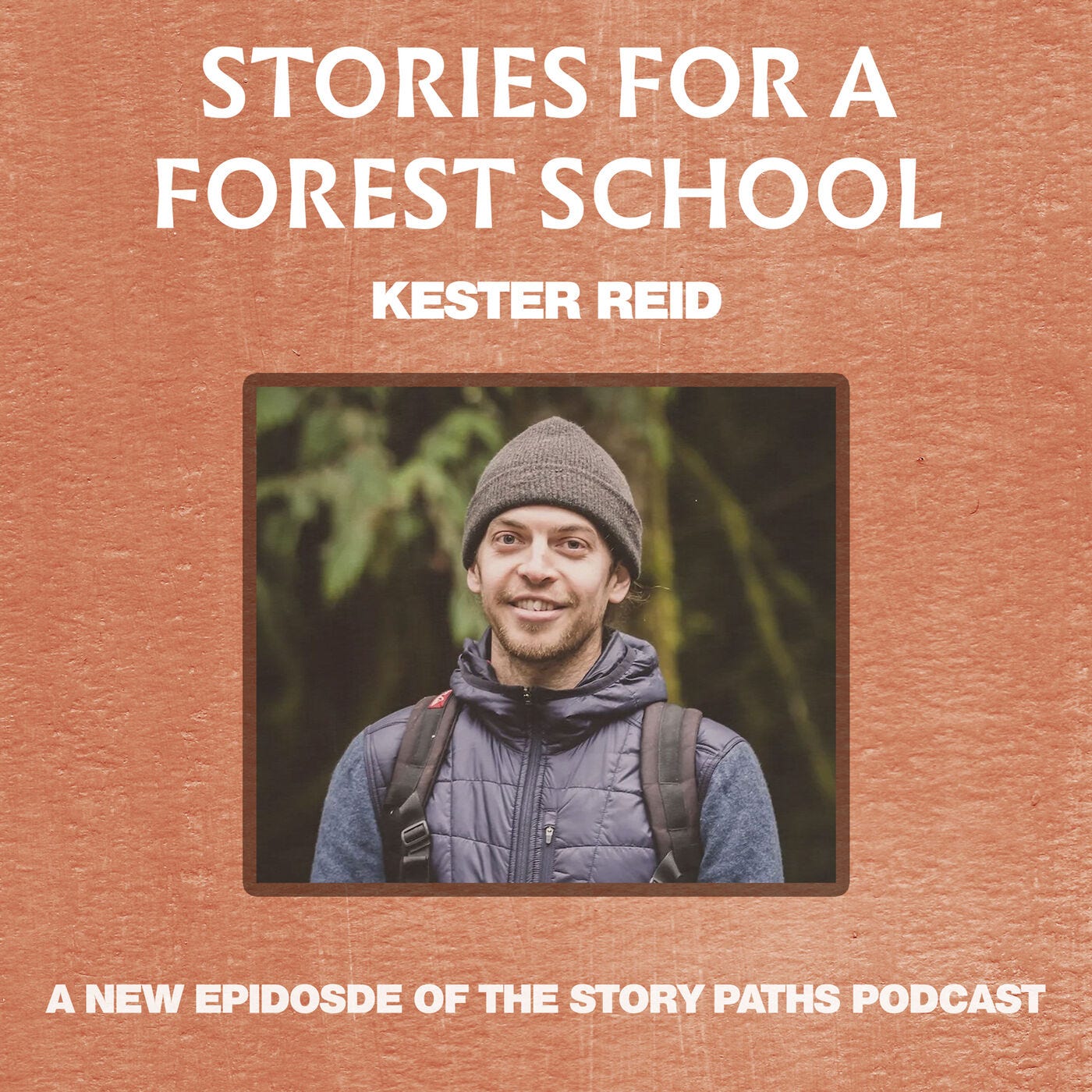
Nov 8, 2021
Metaphor, Allegory & Ecology with Blair Francis
Metaphors as spotlights on the layered, patterned nature of reality. Allegories as ecosystems of metaphors. The relationship between time, clocks and music. All this and more in this riverstone-hopping conversation with sensory-metaphor-joiner Blair Francis. You can find the music of Blair and his partner Elisa on bandcamp and youtube, on these links: https://elisaandblair.bandcamp.com/ https://www.youtube.com/c/%C3%89lisaandBlair If you'd like to learn music with Blair, you can write him at: blairfrancismusic@gmail.com To be notified about our own upcoming creative writing and art workshops, sign up for the Story Paths mailing list here . Trailer for Creative Writing: Brainstorming Story Ideas Link to the course and a free month on Skillshare. This is a public episode. If you'd like to discuss this with other subscribers or get access to bonus episodes, visit storypaths.substack.com/subscribe
Nov 1, 2021
Technology and Ecology
Can devices that are ecologically harmful in their creation and disposal truly be called high technology? In this episode I explore fruitful relationships between human technology and the ecology within which it exists. To be notified about upcoming creative writing and art workshops, sign up for the Story Paths mailing list here . Trailer for Creative Writing: Brainstorming Story Ideas Link to the course and a free month on Skillshare. This is a public episode. If you'd like to discuss this with other subscribers or get access to bonus episodes, visit storypaths.substack.com/subscribe
Oct 25, 2021
The Etymology of Insults
Have you ever been called stupid? How about a loser? Weird? That might have been an unwitting compliment. Let's get to the bottom of these words and see what mysteries we find. To be notified about upcoming creative writing and art workshops, sign up for the Story Paths mailing list here . Trailer for Creative Writing: Brainstorming Story Ideas Link to the course and a free month on Skillshare. This is a public episode. If you'd like to discuss this with other subscribers or get access to bonus episodes, visit storypaths.substack.com/subscribe
Oct 18, 2021
Jack and his Golden Snuffbox, performed by Jessie Wild
Oral storytelling is book, film, theater and more, all rolled into one. Join us today as storyteller Jessie Wild tells the story of Jack and his Golden Snuffbox. For the full visual effect, you can watch this one on here on youtube. Jessie Wild is a mum, drama teacher, apprentice storyteller and lifelong enthusiast of learning (everything and anything). She became obsessed with both Shakespeare and Greek myth and tragedy at around 12 years old. The logical path seemed to be acting but having trained, first at uni then at drama school, she realised what she was most passionate about was the exploration period of rehearsals- the learning and growing. She toured extensively doing Shakespeare in UK schools and realised how powerful education in the arts truly is - hence her step into teaching. She is now a secondary school drama teacher of ages 11-18. You can find her here on instagram . Share this podcast with a friend by copying this link: https://storypaths.buzzsprout.com/ To be notified about upcoming creative writing and art workshops, sign up for the Story Paths mailing list here . Trailer for Creative Writing: Brainstorming Story Ideas Link to the course and a free month on Skillshare. This is a public episode. If you'd like to discuss this with other subscribers or get access to bonus episodes, visit storypaths.substack.com/subscribe

Oct 11, 2021
Overlapping Worlds
We live in a time of colliding worldviews. So what is a worldview anyway, in storytelling terms? Perhaps a filter to experience reality, a naming of things, an interpretation, a personal story. These days we inhabit multiple stories simultaneously, and perhaps we're being invited/initiated into hot-composting some of those stories so we can find news ways build bridges between each other and the other-than-human world. To be notified about upcoming creative writing and art workshops, sign up for the Story Paths mailing list here . Trailer for Creative Writing: Brainstorming Story Ideas Link to the course and a free month on Skillshare. This is a public episode. If you'd like to discuss this with other subscribers or get access to bonus episodes, visit storypaths.substack.com/subscribe
Oct 4, 2021
My choices around internet use
Like many of us, my relationship with computers and the internet has been rewarding and challenging. I'm setting some healthy boundaries, and perhaps my thought process will aid your own. To be notified about upcoming creative writing and art workshops, sign up for the Story Paths mailing list here . Trailer for Creative Writing: Brainstorming Story Ideas Link to the course and a free month on Skillshare. This is a public episode. If you'd like to discuss this with other subscribers or get access to bonus episodes, visit storypaths.substack.com/subscribe
Sep 27, 2021
Song: The Falcon is my Bird
This song is inspired by ancient Polynesian sailors who traversed the sea, guided by refractions of currents against their hulls, which told them the position of islands beyond the watery horizon. They were also helped in their journeys by the stars overhead, by their excellent memories and inherited knowledge, and by the presence of birds, who like to return to land, just as we humans do. I'm not sure if those Polynesian islands hosted falcons, but above the farm that's now hosting me I see twin falcons flying overhead. By their agile movements they reveal the currents in the air, which would otherwise be invisible to me. Although I'm landbound, I feel connected with those ancient sailor poets, “whose eyes were gifted with unbounded vision” by the birds who showed them islands in the vast ocean. To be notified about upcoming creative writing and art workshops, sign up for the Story Paths mailing list here . Trailer for Creative Writing: Brainstorming Story Ideas Link to the course and a free month on Skillshare. This is a public episode. If you'd like to discuss this with other subscribers or get access to bonus episodes, visit storypaths.substack.com/subscribe
Sep 20, 2021
Why do we choose to live this way?
I had a powerful dream recently which I'd like to tell you about. To be notified about upcoming creative writing and art workshops, sign up for the Story Paths mailing list here . Trailer for Creative Writing: Brainstorming Story Ideas Link to the course and a free month on Skillshare. This is a public episode. If you'd like to discuss this with other subscribers or get access to bonus episodes, visit storypaths.substack.com/subscribe
Sep 13, 2021
Avatar: Becoming an Earthling
A little late to the party, I watched the movie Avatar, and was both pleased and horrified. Pleased with the theme of connecting to a living planet. Horrified that the planet's native people became secondary to the saviour outsider. Today I get together with my friends Elisa and Blair to discuss the victories and downfalls of this film, and to make some suggestions for improving the sequels. Share this podcast with a friend by copying this link: https://storypaths.buzzsprout.com/ To be notified about upcoming creative writing and art workshops, sign up for the Story Paths mailing list here . Trailer for Creative Writing: Brainstorming Story Ideas Link to the course and a free month on Skillshare. This is a public episode. If you'd like to discuss this with other subscribers or get access to bonus episodes, visit storypaths.substack.com/subscribe
Sep 6, 2021
Songs for old growth forests, with songwriter Blair Francis
Blair Francis is a songwriter friend who I've only recently met. In this conversation we speak about the place of songs in growing culture. You can find the music of Blair and his partner Elisa on bandcamp and youtube, on these links: https://elisaandblair.bandcamp.com/ https://www.youtube.com/c/%C3%89lisaandBlair Share this podcast with a friend by copying this link: https://storypaths.buzzsprout.com/ To be notified about upcoming creative writing and art workshops, sign up for the Story Paths mailing list here . Trailer for Creative Writing: Brainstorming Story Ideas Link to the course and a free month on Skillshare. This is a public episode. If you'd like to discuss this with other subscribers or get access to bonus episodes, visit storypaths.substack.com/subscribe
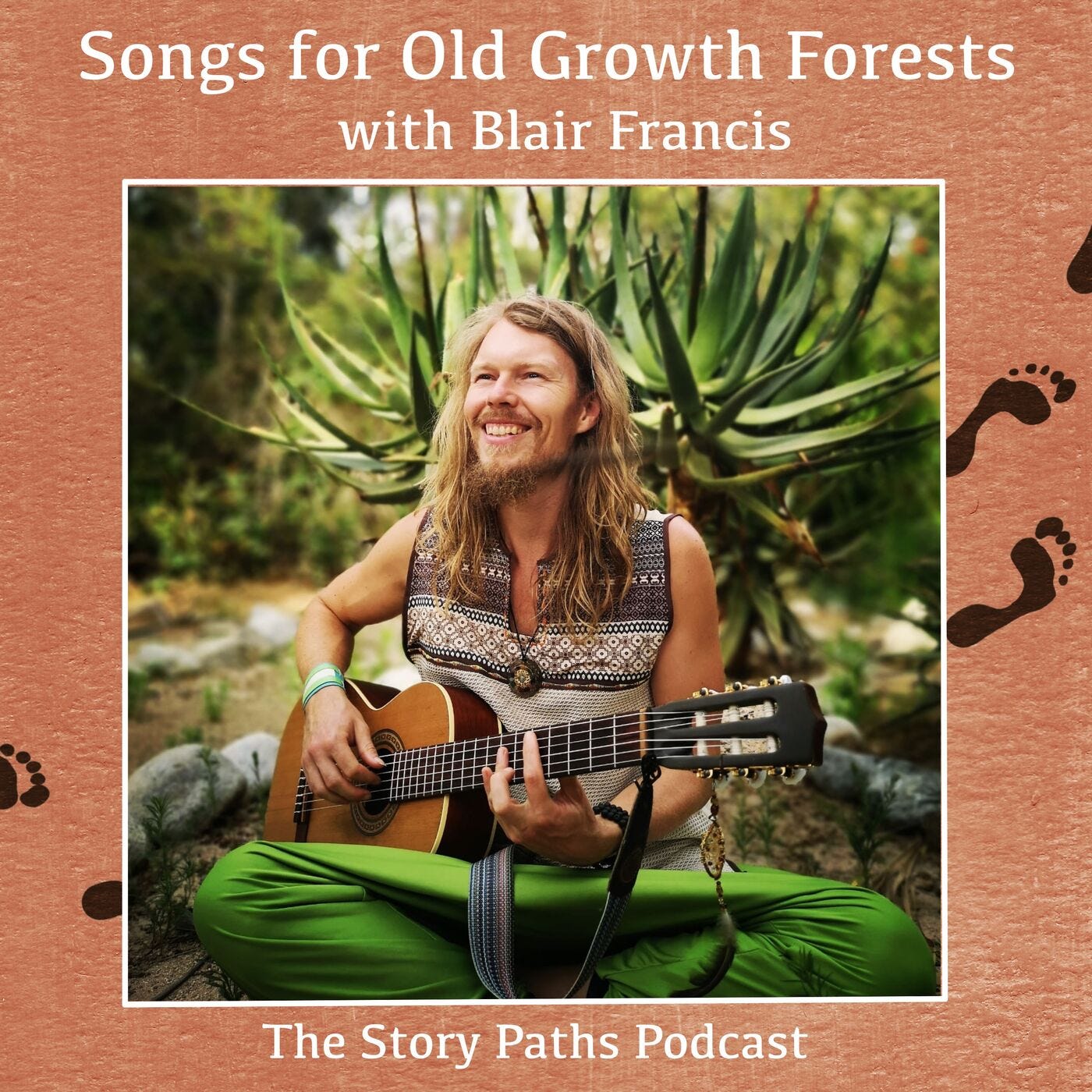
Aug 30, 2021
Things I learned after the apocalypse
A spoken word piece. To be notified about upcoming creative writing and art workshops, sign up for the Story Paths mailing list here . Trailer for Creative Writing: Brainstorming Story Ideas Link to the course and a free month on Skillshare. This is a public episode. If you'd like to discuss this with other subscribers or get access to bonus episodes, visit storypaths.substack.com/subscribe
Aug 23, 2021
Mythmaker dragon song
Here's simple a song I've been working for a while. To be notified about upcoming creative writing and art workshops, sign up for the Story Paths mailing list here . Trailer for Creative Writing: Brainstorming Story Ideas Link to the course and a free month on Skillshare. This is a public episode. If you'd like to discuss this with other subscribers or get access to bonus episodes, visit storypaths.substack.com/subscribe
Aug 16, 2021
As her spirit may be spoken, a song.
For this episode I'm sharing a song that my lovely wife wrote as a poem, and which I adapted to music. I hope you like it. You can find more of her poetry, as well as her earthy artwork, on @seedsofspells on instagram. Words: How did we lose our way of walking hand-in-hand with this world? I can remember the ocean sang me to sleep, as I cried salty sorrow on her sands. I can remember her heartbeat upon my cheek, and a rockabye lullaby sinking into my weary bones. I can remember the hold of her humus womb, tethering my spirit to her soil. I can remember the peace before we waged war within ourselves. What more have I to say than this? Pay no mind to the critic hushing your spirit. Do not lend his harsh hand your underbelly. Save your softness for the song that longs for your voice still. As her spirit may be spoken, ever through you, never by you. Silence your sermons of fear. Sweep your broken bits from the floor. Weave her words within your tattered skin, as tender tendrils trellising up every vertebrae of your spine. Beckon her to rest and stay a while. As her spirit may be spoken, ever through you, never by you. Sing her song To be notified about upcoming creative writing and art workshops, sign up for the Story Paths mailing list here . Trailer for Creative Writing: Brainstorming Story Ideas Link to the course and a free month on Skillshare. This is a public episode. If you'd like to discuss this with other subscribers or get access to bonus episodes, visit storypaths.substack.com/subscribe
Aug 8, 2021
Tom Hirons on Layers of Story
Tom Hirons is an oral storyteller, poet, acupuncturist, wilderness vigil guide and storytelling teacher, to name a few roles. I've taken three of his classes, and found him to be a wise and warm guide into stories and storytelling. Something he said piqued my interest, the idea that stories exist in layers, from primeaval myths to everyday gossip. He unpacks this concept, and we consider different metaphors that might hold this. We also touch on grief, initiation into becoming an adult, and ecological collapse. You can find out more about Tom's work and see some beauitful publications that he's made along with his partner in art and life, Rima Staines. https://hedgespoken.org/ https://tomhirons.com/ Share this podcast with a friend by copying this link: https://storypaths.buzzsprout.com/ To be notified about our own upcoming creative writing and art workshops, sign up for the Story Paths mailing list here . Trailer for Creative Writing: Brainstorming Story Ideas Link to the course and a free month on Skillshare. This is a public episode. If you'd like to discuss this with other subscribers or get access to bonus episodes, visit storypaths.substack.com/subscribe
Aug 2, 2021
From Holes to Wholeness
Have you ever had an argument where you feel like your opponent has a glaring gaps in their world-view, but they refuse to look at it? How about whole groups of people who defend their gaps? How about a particular species that both you and I may be part of? In this episode I explore how this phenomenon shows up in fiction and fact. To be notified about our own upcoming creative writing and art workshops, sign up for the Story Paths mailing list here . Trailer for Creative Writing: Brainstorming Story Ideas Link to the course and a free month on Skillshare. This is a public episode. If you'd like to discuss this with other subscribers or get access to bonus episodes, visit storypaths.substack.com/subscribe
Jul 26, 2021
Building empathy through theater with Jessie Wild
This is a fascinating conversation. Jessie Wild guides her young drama students into building empathy through enacting powerful real-life stories. Have a listen, you won't regret it. Jessie Wild is a mum, drama teacher, apprentice storyteller and lifelong enthusiast of learning (everything and anything). She became obsessed with both Shakespeare and Greek myth and tragedy at around 12 years old. The logical path seemed to be acting but having trained, first at uni then at drama school, she realised what she was most passionate about was the exploration period of rehearsals- the learning and growing. She toured extensively doing Shakespeare in UK schools and realised how powerful education in the arts truly is - hence her step into teaching. She is now a secondary school drama teacher of ages 11-18. You can find her here on instagram . To be notified about our own upcoming creative writing and art workshops, sign up for the Story Paths mailing list here . Trailer for Creative Writing: Brainstorming Story Ideas Link to the course and a free month on Skillshare. This is a public episode. If you'd like to discuss this with other subscribers or get access to bonus episodes, visit storypaths.substack.com/subscribe
Jul 19, 2021
We’re going in a UFO to see a time wizard!
Here's a story that me and my good buddy Jaya made up on the fly. He was having some troubles with time hiccups, you see, abberations in his experience of time, so I took him to see an alien time specialist to help with the problem. The solution wasn't what he hoped for... To be notified about our own upcoming creative writing and art workshops, sign up for the Story Paths mailing list here . Trailer for Creative Writing: Brainstorming Story Ideas Link to the course and a free month on Skillshare. This is a public episode. If you'd like to discuss this with other subscribers or get access to bonus episodes, visit storypaths.substack.com/subscribe
Jul 12, 2021
Alternative Adam and Eve, an interview with my sister, Phoebe Lowry
I interview my sister Phoebe, who is a practicing Nasarean Essene. Some might call the Essenes alternative Christians, but they would say that Christianity wed to empire is the alternative religion. Alternative, that is, to the radically peaceful and loving teachings of Jesus. My sister actually prefers to call him Yeshua. The Essenes have their own bible, the Holy Megillah, and within this lies a telling of the story of Adam and Eve that may surprise, relieve and enlighten you. This is the first of a two episode series, though only God and Goddess know when the second one will air. Share this podcast with a friend by copying this link: https://storypaths.buzzsprout.com/ To be notified about our own upcoming creative writing and art workshops, sign up for the Story Paths mailing list here . Trailer for Creative Writing: Brainstorming Story Ideas Link to the course and a free month on Skillshare. This is a public episode. If you'd like to discuss this with other subscribers or get access to bonus episodes, visit storypaths.substack.com/subscribe
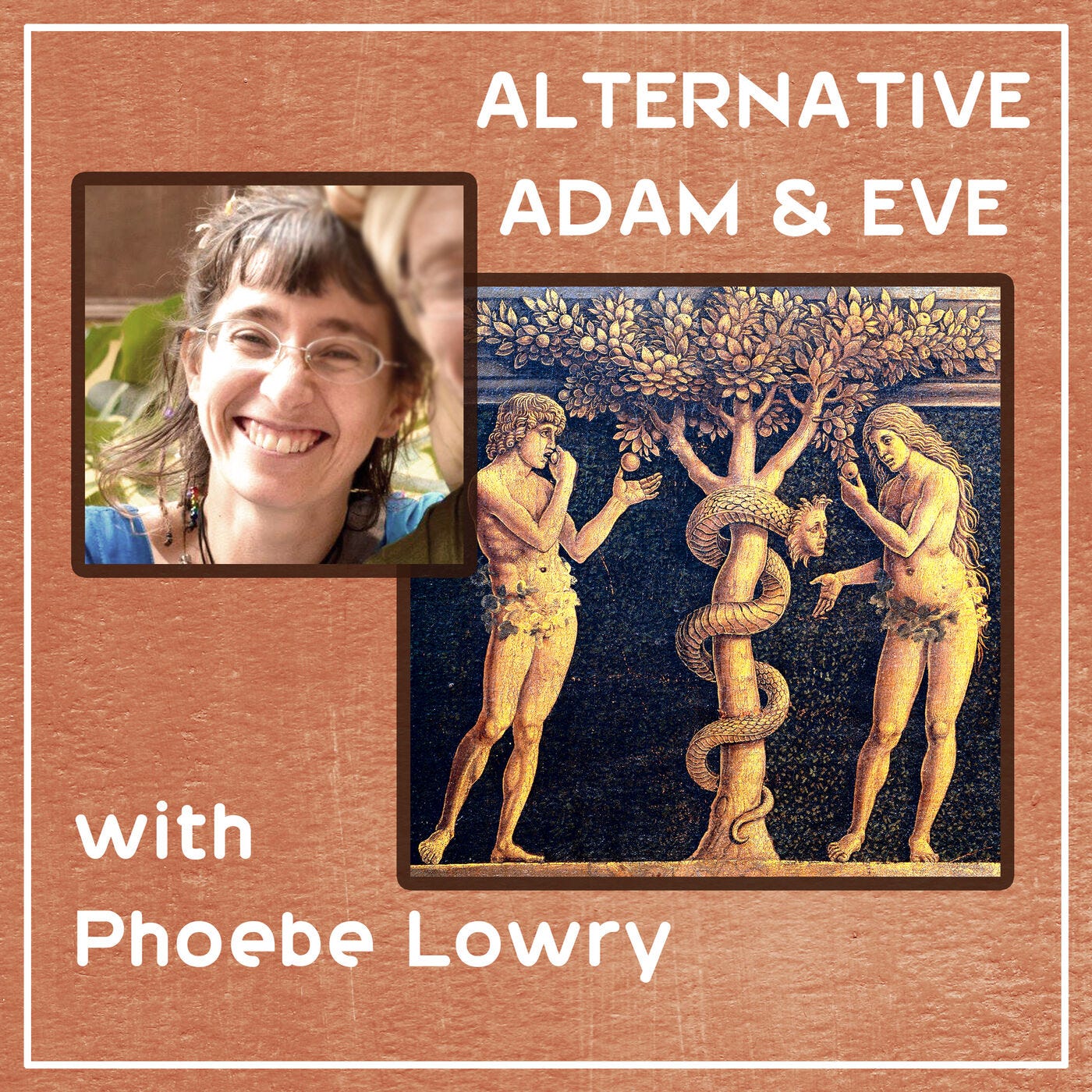
Jul 5, 2021
Story: The Messenger and the Misty Isle
Recently I visited the place where my family spread my father's ashes. I met my friend from another world again there, and he told me a story about fathers and death. Here is what he said... To be notified about our own upcoming creative writing and art workshops, sign up for the Story Paths mailing list here . Trailer for Creative Writing: Brainstorming Story Ideas Link to the course and a free month on Skillshare. This is a public episode. If you'd like to discuss this with other subscribers or get access to bonus episodes, visit storypaths.substack.com/subscribe
Jun 28, 2021
The Hero's Journey and The Great Turning
We live in a time where our cultural myths are breaking down, myths like the lone hero saving the day. The problems we face as a species now are far too great for any one person to tackle, and our stories need to speak to collective effort and deep change. In this solo episode, I attempt to find overlaps between the world-stories of two very different thinkers, Joseph Campbell and Joanna Macy. Campbell is famous for speaking of the hero's journey, while Macy speaks about the Great Turning, a collective cultural journey. What would the hero's journey look like not with a lone hero on a quest, but with our entire species deepening into maturity? Trailer for Creative Writing: Brainstorming Story Ideas Link to the course and a free month on Skillshare. This is a public episode. If you'd like to discuss this with other subscribers or get access to bonus episodes, visit storypaths.substack.com/subscribe
Jun 21, 2021
Astrology & Life Coaching with Michael Geary (aka Bhudhara das)
Today I'm very glad to be speaking with my friend and mentor Michael Geary, who is an expert Vedic astrologer and life coach. He speaks about astrology as a symbol system to understand one's physche. He employs it, along with life-coaching, to help his clients make empowered choices. On a personal level, Michael helped me through a difficult transition, from the life of a monk to the life of an artist. In doing so, he's helped me on my journey to understanding and accepting these very different sides of myself. I hope you'll enjoy the conversation as much as I do. To learn more about Michael's work and inquire about his astrology and life-coaching services, go to www.michaelgeary.co.uk And keep an eye out for the book Michael is working on about the princples of dharma. Music credit: Who by Doxent Zsigmond (c) copyright 2017 Licensed under a Creative Commons Attribution Noncommercial (3.0) license. http://dig.ccmixter.org/files/doxent/56403 Ft: Javolenus, Siobhan Dakay, Maike, Martijn de Boer Trailer for Creative Writing: Brainstorming Story Ideas Link to the course and a free month on Skillshare. This is a public episode. If you'd like to discuss this with other subscribers or get access to bonus episodes, visit storypaths.substack.com/subscribe

Jun 14, 2021
The stories we live together
What do we mean when we say, 'The story of our time?' Why do we use the same word, story, when talking about the story of a culture, and the story of a fantasy film? In this solo episode, I draw connections between the stories we live in and the stories we tell. Trailer for Creative Writing: Brainstorming Story Ideas Link to the course and a free month on Skillshare. This is a public episode. If you'd like to discuss this with other subscribers or get access to bonus episodes, visit storypaths.substack.com/subscribe
Jun 7, 2021
Whisper of the Well, a group-created story
When even the alfalfa tells the Plant Whisperer that the water is getting strange, the Plant Whisperer knows she'll need help. She and her good friend the Water Whisperer set off on a quest through the wasteland, trying to find a well whose water has not been discombobulated by industrial civilization. This story was a collective effort, a choose your own adventure style collaboration up until the last moment. Thanks to all the contributors on StoryPaths on instagram, and in person. You know who you are. Trailer for Creative Writing: Brainstorming Story Ideas Link to the course and a free month on Skillshare. This is a public episode. If you'd like to discuss this with other subscribers or get access to bonus episodes, visit storypaths.substack.com/subscribe
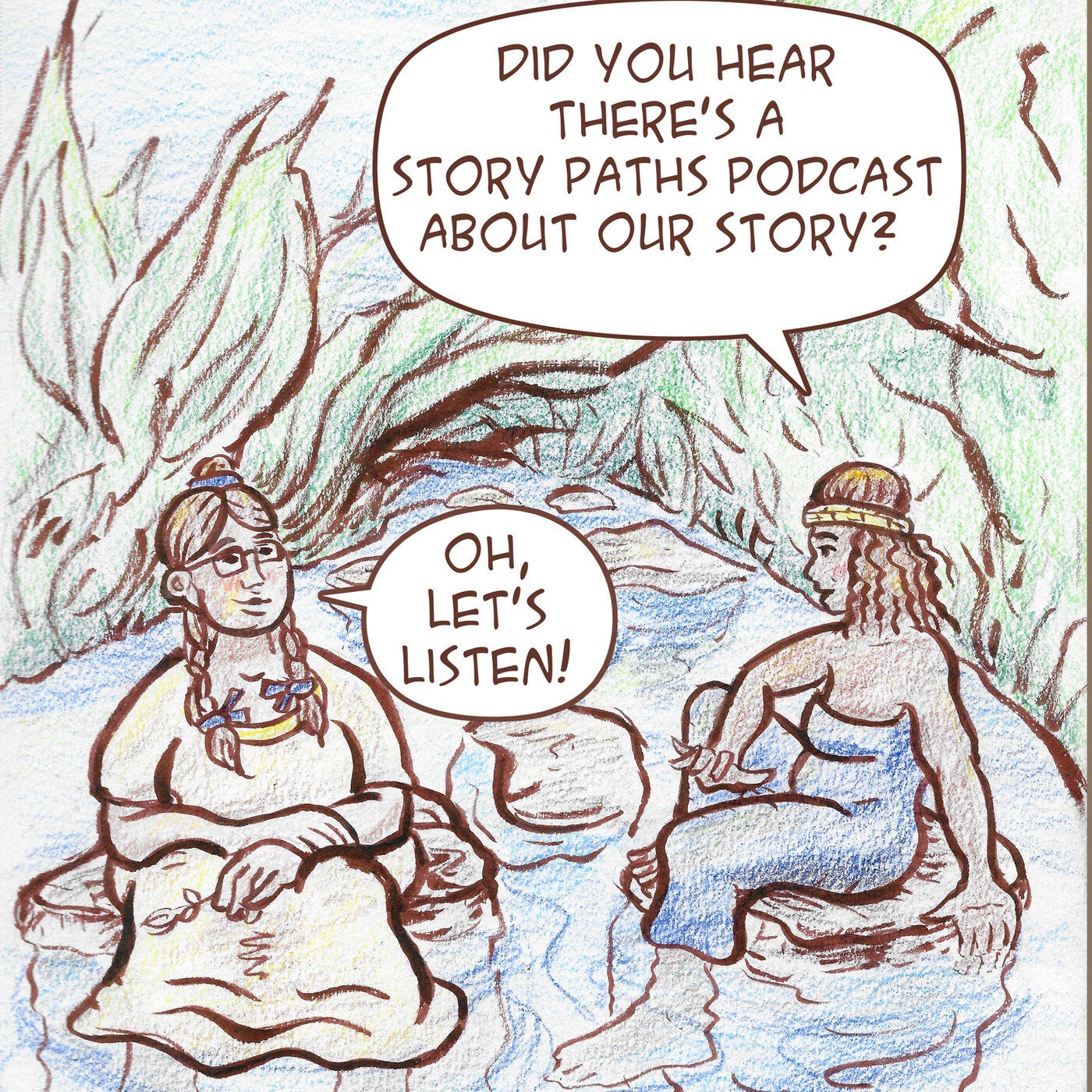
May 31, 2021
Water, a guided meditation
Enter into a guided meditation about wonderful water, how she flows and where she comes from. Trailer for Creative Writing: Brainstorming Story Ideas Link to the course and a free month on Skillshare. This is a public episode. If you'd like to discuss this with other subscribers or get access to bonus episodes, visit storypaths.substack.com/subscribe

May 24, 2021
An interview with my Mum
My mother has lived a long and storied life, and has written about much of it. Born after WWII, she entered a healing world full of new possibilities, some of which distanced her from her parents. She's seen tremendous gains and also losses, and to hear her reflect on her life so far is illuminating and heart warming. Share this podcast with a friend by copying this link: https://storypaths.buzzsprout.com/ Music credit 172662 trebblofang drone0005 airtone_-_snowdaze Who by Doxent Zsigmond (c) copyright 2017 Licensed under a Creative Commons Attribution Noncommercial (3.0) license. http://dig.ccmixter.org/files/doxent/56403 Ft: Javolenus, Siobhan Dakay, Maike, Martijn de Boer <p> Trailer for Creative Writing: Brainstorming Story Ideas Link to the course and a free month on Skillshare. This is a public episode. If you'd like to discuss this with other subscribers or get access to bonus episodes, visit storypaths.substack.com/subscribe
May 24, 2021
Story: The Messenger and the Eldress
The other day while I was waiting for the bus, I met a most unusual young man from another world. He lives in a land with no cars, trucks, computers, or even horses, and he's a messenger who runs great distances to give messages. He told me about his very first journey, and the conundrum he faced. Trailer for Creative Writing: Brainstorming Story Ideas Link to the course and a free month on Skillshare. This is a public episode. If you'd like to discuss this with other subscribers or get access to bonus episodes, visit storypaths.substack.com/subscribe
May 24, 2021
Symbols
Everything is symbolic, even cardboard boxes and chairs, what to speak of rings, masks and flags. In this episode I get into how this is, and how you can make and remake symbols yourself. Trailer for Creative Writing: Brainstorming Story Ideas Link to the course and a free month on Skillshare. This is a public episode. If you'd like to discuss this with other subscribers or get access to bonus episodes, visit storypaths.substack.com/subscribe
May 13, 2021
Storypaths Trailer
Welcome to Storypaths, a podcast about the stories we tell, and the stories we live in. I’ll share tools to spot myths playing out in the day-to-day, and to mythologize your life to gain fresh perspective. Leaving the logical aside, we’ll play with archetypes, pathways and symbols to recraft the stories that contain us, starting from the realm of the imagination on out to the hands on. I’ll be telling tales I’ve created to make sense of my life, and inviting you to do the same. The regions between us where stories overlap are often the most fertile ground. I’m Theodore Lowry, and I hope you’ll join me on this journey. Music credit: jlbrock44_-_Shoot_Me_(Featuring_Apoxode) Trailer for Creative Writing: Brainstorming Story Ideas Link to the course and a free month on Skillshare. This is a public episode. If you'd like to discuss this with other subscribers or get access to bonus episodes, visit storypaths.substack.com/subscribe