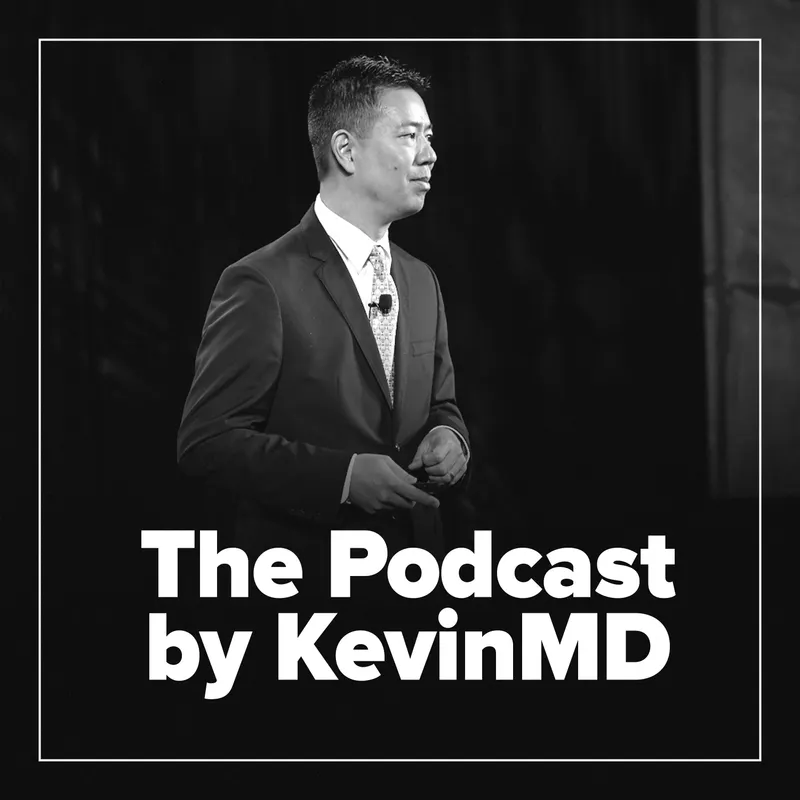
The Podcast by KevinMD
Kevin Pho, MD·1000 episodes
Social media's leading physician voice, Kevin Pho, MD, shares the stories of the many who intersect with our health care system but are rarely heard from. 15 minutes a day. 7 days a week. Welcome to The Podcast by KevinMD.
Episodes
The same instinct that makes you a careful clinician may be the one sabotaging your financial future. Cardiologist and fiduciary financial planner Stanley Liu joins this episode to explain why physicians' deeply trained aversion to risk becomes maladaptive once it leaves the hospital. This episode is based on his article "Physician financial risk: Balancing capacity and tolerance," published on KevinMD. You will learn why risk capacity and risk tolerance are two different variables, and why mistaking one for the other quietly drives bad financial decisions. You will hear why the physicians most at financial risk are those with low capacity and high tolerance, and why high-earning doctors with no debt sometimes stay stuck in toxic jobs they have the financial freedom to leave. You will also learn what questions a planner asks to surface the money scripts shaping your choices. Listen if you have ever wondered whether your discomfort with financial risk is protecting you or holding you back. Partner with me on the KevinMD platform. With over three million monthly readers and half a million social media followers, I give you direct access to the doctors and patients who matter most. Whether you need a sponsored article, email campaign, video interview, or a spot right here on the podcast, I offer the trusted space your brand deserves to be heard. Let's work together to tell your story. PARTNER WITH KEVINMD → https://kevinmd.com/influencer SUBSCRIBE TO THE PODCAST → https://www.kevinmd.com/podcast RECOMMENDED BY KEVINMD → https://www.kevinmd.com/recommended
What if the cure for physician burnout has been making it worse the whole time? Lisa Rubiano, an internal medicine physician and physician coach, spent over a decade as a hospitalist before burning out in 2021 and stepping back to figure out what really went wrong. This episode is based on her article "Why resilience is not the cure for physician burnout," published on KevinMD. You will hear why the resilience narrative quietly shifts blame onto individual physicians while letting toxic systems off the hook, how the Quadruple Aim turned clinician well-being into a vague self-care mandate, and what it actually takes to unlearn the belief that you should be able to push through anything. Lisa breaks down why setting boundaries feels so hard, why systems have no real incentive to change, and where physicians are quietly building their own way out. Listen for the moment that makes the self-blame stop. Partner with me on the KevinMD platform. With over three million monthly readers and half a million social media followers, I give you direct access to the doctors and patients who matter most. Whether you need a sponsored article, email campaign, video interview, or a spot right here on the podcast, I offer the trusted space your brand deserves to be heard. Let's work together to tell your story. PARTNER WITH KEVINMD → https://kevinmd.com/influencer SUBSCRIBE TO THE PODCAST → https://www.kevinmd.com/podcast RECOMMENDED BY KEVINMD → https://www.kevinmd.com/recommended
Patients know when you are not really present with them, and trust is built or broken in the first few minutes. Jess Bunin, an intensivist, and George Mount, a rheumatologist, co-founders of All Levels Leadership, argue that trust in clinical teams is a practiced skill built from three concrete components: empathy, logic, and authenticity. This episode is based on their article "The secret sauce of leadership trust in health care teams," published on KevinMD. You will hear why a critical care fellow was required to say "I don't know" once on rounds even when he knew, what a three-time cancer survivor noticed about the physicians she actually trusted, and how to communicate through genuine uncertainty without losing your team. You will also learn why George Mount spends the first few minutes of a patient encounter on trust before he asks about the chief complaint. Listen for a grounded framework for repairing trust when it wobbles. Partner with me on the KevinMD platform. With over three million monthly readers and half a million social media followers, I give you direct access to the doctors and patients who matter most. Whether you need a sponsored article, email campaign, video interview, or a spot right here on the podcast, I offer the trusted space your brand deserves to be heard. Let's work together to tell your story. PARTNER WITH KEVINMD → https://kevinmd.com/influencer SUBSCRIBE TO THE PODCAST → https://www.kevinmd.com/podcast RECOMMENDED BY KEVINMD → https://www.kevinmd.com/recommended
Most physicians using AI on patient data have no idea what the real security risks are. Francisco M. Torres, an interventional physiatrist, and Purab Patel, a medical student with a programming background, argue that cybersecurity has become a patient safety issue in medicine, and that the AI pipelines physicians now rely on are more complex than most clinicians realize. This episode is based on their article "Navigating the cybersecurity challenges of artificial intelligence in medicine," published on KevinMD. You will hear how changing a few pixels in a medical image can flip an AI diagnosis, why AI note-taking can miss clinically significant findings, and what questions to ask any vendor before trusting a black box with patient data. You will also learn why Francisco tells his kids that AI certification may matter more than an MBA. Listen for a grounded take on treating AI as a tool, not a truth machine. Partner with me on the KevinMD platform. With over three million monthly readers and half a million social media followers, I give you direct access to the doctors and patients who matter most. Whether you need a sponsored article, email campaign, video interview, or a spot right here on the podcast, I offer the trusted space your brand deserves to be heard. Let's work together to tell your story. PARTNER WITH KEVINMD → https://kevinmd.com/influencer SUBSCRIBE TO THE PODCAST → https://www.kevinmd.com/podcast RECOMMENDED BY KEVINMD → https://www.kevinmd.com/recommended
Medicare Advantage covers more than half of seniors, and the debate over what it really costs is stuck in two camps. Timothy Bulat, a senior consulting actuary who spent nearly two decades leading Medicare Advantage analytics inside a major insurer, raises a question the loudest voices keep avoiding: who actually pays for the program, and is the value being shared fairly? This episode is based on his article "The truth about Medicare Advantage funding and costs," published on KevinMD. You will hear how plans simultaneously manage costs well and extract excess taxpayer dollars through coding intensity and favorable selection, why headlines about Medicare Advantage being "in retreat" are overblown, and which specific policy levers (risk adjustment reform, benchmarking, slowing annual payment growth) the Biden and Trump administrations have already started using. Listen for the distinction Timothy draws between a funding cut and a smaller increase, and why that distinction matters for every clinician dealing with prior auth. Partner with me on the KevinMD platform. With over three million monthly readers and half a million social media followers, I give you direct access to the doctors and patients who matter most. Whether you need a sponsored article, email campaign, video interview, or a spot right here on the podcast, I offer the trusted space your brand deserves to be heard. Let's work together to tell your story. PARTNER WITH KEVINMD → https://kevinmd.com/influencer SUBSCRIBE TO THE PODCAST → https://www.kevinmd.com/podcast RECOMMENDED BY KEVINMD → https://www.kevinmd.com/recommended
Is medicine a calling or just a job? Christie Mulholland thinks that question is the wrong one, and answering it keeps physicians stuck in burnout. Christie, a palliative care physician and certified physician development coach, returns to the show to introduce a four-quadrant matrix that maps how called you feel to medicine against how satisfied you actually are practicing it. This episode is based on her article "Moving beyond the false binary of medicine as a calling," published on KevinMD. She walks through each quadrant (the calling, the craft, the wound, and the wall) and the specific coaching question that unlocks a next step for physicians living in each one. Christie also talks about how profit-driven systems benefit when "calling" stays the only acceptable answer, why work-life balance keeps getting squeezed out of clinical careers, and when a career pause becomes the move that smaller adjustments cannot replace. Listen for the question that names where you actually are. Partner with me on the KevinMD platform. With over three million monthly readers and half a million social media followers, I give you direct access to the doctors and patients who matter most. Whether you need a sponsored article, email campaign, video interview, or a spot right here on the podcast, I offer the trusted space your brand deserves to be heard. Let's work together to tell your story. PARTNER WITH KEVINMD → https://kevinmd.com/influencer SUBSCRIBE TO THE PODCAST → https://www.kevinmd.com/podcast RECOMMENDED BY KEVINMD → https://www.kevinmd.com/recommended
Medical AI is evolving faster than the legal system can regulate it. Richard E. Anderson, CEO of The Doctors Company, the nation's largest physician-owned medical malpractice insurer, argues that the gap between what AI can do clinically and what courts are ready to judge has created a difficult position for physicians, and that it will take a long time for the system to catch up. This episode is based on his article "The future of U.S. medicine: 10 health care trends in 2026," published on KevinMD. You will hear why following an AI recommendation that diverges from the current standard of care can put a physician in legal jeopardy, why Anderson has seen almost no AI-related lawsuits so far despite widespread clinical use, what physicians should document every time they choose not to follow an AI recommendation, and what the 17-year lag between scientific discovery and standard-of-care adoption means for anyone practicing with AI today. Listen for a grounded read on medical AI heading into 2026. Partner with me on the KevinMD platform. With over three million monthly readers and half a million social media followers, I give you direct access to the doctors and patients who matter most. Whether you need a sponsored article, email campaign, video interview, or a spot right here on the podcast, I offer the trusted space your brand deserves to be heard. Let's work together to tell your story. PARTNER WITH KEVINMD → https://kevinmd.com/influencer SUBSCRIBE TO THE PODCAST → https://www.kevinmd.com/podcast RECOMMENDED BY KEVINMD → https://www.kevinmd.com/recommended
Rural doctors hit a ceiling around 35 patients a day, and hiring more clinicians will not move it. Tod Stillson, a family physician, medical device inventor, and health care entrepreneur, argues that the physician shortage is not a headcount problem but a knowledge-scaling problem, and that AI with a doctor in the loop is the only realistic way to extend a physician's judgment to more patients without replacing the human relationship. This episode is based on his article "How artificial intelligence scales physician extension," published on KevinMD. You will hear why he spent two years codifying his own clinical judgment into software, why his text-based triage system outperformed general-purpose AI in a recent study, and what physicians risk if direct-to-consumer companies keep capturing demand while doctors stay on the sidelines. You will also learn why governance of the medical knowledge base has to come from physicians, not from startups in San Francisco or Boston. Listen for a grounded case for AI as capacity multiplier, not replacement. Partner with me on the KevinMD platform. With over three million monthly readers and half a million social media followers, I give you direct access to the doctors and patients who matter most. Whether you need a sponsored article, email campaign, video interview, or a spot right here on the podcast, I offer the trusted space your brand deserves to be heard. Let's work together to tell your story. PARTNER WITH KEVINMD → https://kevinmd.com/influencer SUBSCRIBE TO THE PODCAST → https://www.kevinmd.com/podcast RECOMMENDED BY KEVINMD → https://www.kevinmd.com/recommended
Most physicians spend more time fighting their software than seeing patients, and piling on new tools has not fixed it. Grace E. Terrell, a physician executive, argues that decades of layering electronic health records, population health tools, remote patient monitoring, and now AI onto sixty-year-old billing infrastructure has produced a Frankenstein stack that burns out clinicians and harms patients. This episode is based on her article "Connected health care workflows: From chore to core patient care," published on KevinMD. You will hear why layering new tools on old infrastructure keeps failing, how prior authorization became an arms race, and what a genuinely connected workflow would feel like for a clinician evaluating a patient with suspected spinal abscess. You will also learn the one question to ask any vendor pitching a new tool, and why her company's CIO believes EHRs themselves may not survive the next five years. Listen for a concrete path from chore to core patient care. Partner with me on the KevinMD platform. With over three million monthly readers and half a million social media followers, I give you direct access to the doctors and patients who matter most. Whether you need a sponsored article, email campaign, video interview, or a spot right here on the podcast, I offer the trusted space your brand deserves to be heard. Let's work together to tell your story. PARTNER WITH KEVINMD → https://kevinmd.com/influencer SUBSCRIBE TO THE PODCAST → https://www.kevinmd.com/podcast RECOMMENDED BY KEVINMD → https://www.kevinmd.com/recommended
The same Robert Kennedy Jr. who sued Monsanto over glyphosate in 2017 is now defending an order to expand its production. What does a functional medicine physician do with that? Shiv K. Goel, an internal medicine and functional medicine physician, argues that the Make America Healthy Again movement correctly names the chronic disease crisis, ultra-processed food, and a broken food system, then prescribes the wrong treatment. This episode is based on his article "Make America Healthy Again fails true functional medicine," published on KevinMD. You will hear why MAHA's root-cause language overlaps with functional medicine, why undermining vaccines during a measles outbreak is the contradiction the guest cannot ignore, how silence on Medicaid and SNAP cuts hurts the patients most harmed by chronic disease, and why clinicians must reclaim root-cause language from populist politics. If you have felt torn between agreeing with parts of MAHA and rejecting the rest, this conversation draws the line the guest thinks physicians have to hold. Partner with me on the KevinMD platform. With over three million monthly readers and half a million social media followers, I give you direct access to the doctors and patients who matter most. Whether you need a sponsored article, email campaign, video interview, or a spot right here on the podcast, I offer the trusted space your brand deserves to be heard. Let's work together to tell your story. PARTNER WITH KEVINMD → https://kevinmd.com/influencer SUBSCRIBE TO THE PODCAST → https://www.kevinmd.com/podcast RECOMMENDED BY KEVINMD → https://www.kevinmd.com/recommended
One AI-hallucinated citation on cross-examination, and the expert witness career you built is over. It is already happening. Tracy Liberatore, a former physician assistant turned attorney and founder of the National Expert Academy, walks through the real court cases where clinical experts leaned on generative AI and watched their reports, and their reputations, get thrown out. This episode is based on her article "Expert witness credibility is destroyed by AI opinions," published on KevinMD. You will hear why AI hallucinated citations are ending careers in medical-legal work, why one expert was allowed to keep AI in his workflow because he could account for every prompt, what responsible AI use actually looks like for clinicians writing expert reports, and the brain flip clinicians have to make to defend a process rather than a conclusion. If you do expert witness work, or are thinking about it, this conversation names the line you cannot cross. Partner with me on the KevinMD platform. With over three million monthly readers and half a million social media followers, I give you direct access to the doctors and patients who matter most. Whether you need a sponsored article, email campaign, video interview, or a spot right here on the podcast, I offer the trusted space your brand deserves to be heard. Let's work together to tell your story. PARTNER WITH KEVINMD → https://kevinmd.com/influencer SUBSCRIBE TO THE PODCAST → https://www.kevinmd.com/podcast RECOMMENDED BY KEVINMD → https://www.kevinmd.com/recommended
You hit every number: top grades, top test scores, top patients-per-hour. So why does practicing medicine feel hollow? Ben Reinking, a board-certified pediatric cardiologist, medical educator, and certified physician development coach, argues that the same metric-driven mindset that carries pre-meds into medical school is the one leaving attendings disconnected from why they practice. This episode is based on his article "How competency-based education is driving medical education reform," published on KevinMD. You will hear why a 15-minute billing slot frustrates both patient and physician, how competency-based education and entrustable professional activities shift the question from "did you meet the number" to "do we trust you in the system," and why admitting "I don't know, but let me figure it out" gets discouraged when learners are judged only by scores. If you have ever sensed the gap between your scorecard and your purpose, this conversation names what you have been feeling. Partner with me on the KevinMD platform. With over three million monthly readers and half a million social media followers, I give you direct access to the doctors and patients who matter most. Whether you need a sponsored article, email campaign, video interview, or a spot right here on the podcast, I offer the trusted space your brand deserves to be heard. Let's work together to tell your story. PARTNER WITH KEVINMD → https://kevinmd.com/influencer SUBSCRIBE TO THE PODCAST → https://www.kevinmd.com/podcast RECOMMENDED BY KEVINMD → https://www.kevinmd.com/recommended
When you open your Match Day envelope, you step into an orthopedic surgery field that looks nothing like it used to. John E. Klibanoff, an orthopedic surgeon, discusses his article "Navigating your orthopedic surgery residency after Match Day," published on KevinMD. He explains why nobody will care about your physiology grade or your rotation honors once you start residency, and why the old archetype of the tall, athletic, Northeast-raised orthopedic surgeon no longer describes the field. You will hear how AI and short online snippets have collapsed a week of attending-to-attending research into thirty minutes over coffee, how impaction devices and minimally invasive tools have opened recon and spine surgery to surgeons of any stature, and why younger faculty and peer networks are replacing top-down lectures. Klibanoff also explains why mentorship and adaptability matter more than competitiveness, and why patients now arrive with hours of their own research to bring into the room. Listen to hear what actually earns you the craft of orthopedic surgery after Match Day. Partner with me on the KevinMD platform. With over three million monthly readers and half a million social media followers, I give you direct access to the doctors and patients who matter most. Whether you need a sponsored article, email campaign, video interview, or a spot right here on the podcast, I offer the trusted space your brand deserves to be heard. Let's work together to tell your story. PARTNER WITH KEVINMD → https://kevinmd.com/influencer SUBSCRIBE TO THE PODCAST → https://www.kevinmd.com/podcast RECOMMENDED BY KEVINMD → https://www.kevinmd.com/recommended
You hear code blues overhead in a hospital all the time, but one on a psychiatry unit is different. A young patient died after a cardiac event, and what followed looked nothing like a code blue on a medical floor. Devina Maya Wadhwa, a psychiatrist, discusses her article "When a code blue happens on a psychiatry unit," published on KevinMD. She describes the locked oxygen tanks and missing electrical outlets that slowed the response, the coroner's investigation that opened automatically, and the police interview that felt like an interrogation. You will hear why standard debriefs fall short when staff are trained for emotional safety rather than cardiac arrest, how self-doubt follows a physician long after the incident report closes, and what genuine check-ins could look like weeks later. Wadhwa also names the hypervigilance that settles over the unit afterward and why she believes sharing these stories is empowering and deeply healing. Listen to hear what psychiatric teams carry when a patient dies on their floor. Partner with me on the KevinMD platform. With over three million monthly readers and half a million social media followers, I give you direct access to the doctors and patients who matter most. Whether you need a sponsored article, email campaign, video interview, or a spot right here on the podcast, I offer the trusted space your brand deserves to be heard. Let's work together to tell your story. PARTNER WITH KEVINMD → https://kevinmd.com/influencer SUBSCRIBE TO THE PODCAST → https://www.kevinmd.com/podcast RECOMMENDED BY KEVINMD → https://www.kevinmd.com/recommended
A cardiologist who helped set national cholesterol and weight targets for 40 years now says those numbers can mislead. Richard M. Fleming, a physician specializing in cardiovascular and inflammatory disease, argues that weight loss on a GLP-1 does not automatically mean a patient is getting healthier, and that some patients who never lose a pound are already metabolically well. This episode is based on his article "GLP-1 agonists and weight loss: Treating the disease, not the number," published on KevinMD. You will hear why body mass index was never built to diagnose individuals, why inflammatory and thrombotic markers track disease more honestly than the scale, and how clinical trials from CAST to ACCORD have shown what happens when medicine treats the surrogate instead of the patient. He walks through which inflammation tests a primary care physician can run before, during, and after GLP-1 therapy, including high-sensitivity CRP, homocysteine, and fibrinogen. Hear why a 40-year insider says precision medicine requires precision measurement, not precision weighing. Partner with me on the KevinMD platform. With over three million monthly readers and half a million social media followers, I give you direct access to the doctors and patients who matter most. Whether you need a sponsored article, email campaign, video interview, or a spot right here on the podcast, I offer the trusted space your brand deserves to be heard. Let's work together to tell your story. PARTNER WITH KEVINMD → https://kevinmd.com/influencer SUBSCRIBE TO THE PODCAST → https://www.kevinmd.com/podcast RECOMMENDED BY KEVINMD → https://www.kevinmd.com/recommended
Robert C. Smith is best known for arguing medicine lost its mind. This episode he explains why he is still proud to be a doctor. Primary care physicians deliver 75 percent of the nation's mental health care without training for it, and Smith has spent his career trying to fix that. But before the fix, he makes a case that may surprise his own readers: modern medicine has been astonishingly effective at what it was built to do. This episode is based on his article "How the mind-body split in medicine shaped modern clinical care," published on KevinMD. You will hear how 2,500 years of four humors and bloodletting gave way to a physical-disease framework that doubled life expectancy from 40 to 80. You will also learn why that same framework now leaves psychiatry stalled. Hear why the reformer who wants to overhaul mental health care still says medicine has never been better at the thing it was built to do. Tune into our episode "2026 Cholesterol Guidelines: LDL goals, lipoprotein(a), and coronary calcium scoring," brought to you by Novartis Pharmaceuticals Corporation. For the first time in eight years, LDL cholesterol goals have changed, and preventive cardiologist Seth Baum says the new guidelines are a long-overdue course correction. He breaks down the new LDL targets for your highest-risk patients, why the LDL hypothesis should be retired in favor of the LDL fact, why lipoprotein(a) screening finally belongs in every patient's workup, what a coronary calcium score over 300 really means for how aggressively you treat, and how to talk to statin-skeptical patients without losing their trust. Listen now at KevinMD.com/cholesterol. VISIT SPONSOR → https://kevinmd.com/cholesterol Partner with me on the KevinMD platform. With over three million monthly readers and half a million social media followers, I give you direct access to the doctors and patients who matter most. Whether you need a sponsored article, email campaign, video interview, or a spot right here on the podcast, I offer the trusted space your brand deserves to be h
A federal agency recognized food allergy as a disability, then limited boarding protection to one allergen category. Lianne Mandelbaum, a leading advocate for airline safety measures to protect food-allergic passengers, returns to explain how the March 2026 DOT ruling created a hierarchy within a single medical condition, leaving passengers with egg, sesame, milk, shellfish, and wheat allergies without the same pre-boarding rights granted to those with peanut and tree nut allergies. This episode is based on her article "How the new DOT ruling on food allergies threatens air travel safety," published on KevinMD. You will hear about a Southwest captain who removed a passenger for asking to pre-board with a pistachio allergy, an allergen that is covered under the new ruling. You will also hear why a Northwestern survey of 4,704 food-allergic travelers found that 98 percent experience flight anxiety and 70 percent were promised accommodations that never arrived. Hear why the guest says this ruling cements airline inconsistency as federal policy, and what physicians can do to push back. Tune into our episode "2026 Cholesterol Guidelines: LDL goals, lipoprotein(a), and coronary calcium scoring," brought to you by Novartis Pharmaceuticals Corporation. For the first time in eight years, LDL cholesterol goals have changed, and preventive cardiologist Seth Baum says the new guidelines are a long-overdue course correction. He breaks down the new LDL targets for your highest-risk patients, why the LDL hypothesis should be retired in favor of the LDL fact, why lipoprotein(a) screening finally belongs in every patient's workup, what a coronary calcium score over 300 really means for how aggressively you treat, and how to talk to statin-skeptical patients without losing their trust. Listen now at KevinMD.com/cholesterol. VISIT SPONSOR → https://kevinmd.com/cholesterol Partner with me on the KevinMD platform. With over three million monthly readers and half a million social media followers, I give you direct access to the doctors and
What happens to your body and clinical judgment when you're managing a code blue at the exact hour your biology demands deep sleep? Chinyelu E. Oraedu is an academic hospitalist and nocturnist with 17 years of post-residency experience who has dedicated her career to understanding the science and human reality of night shift medicine. In this episode, based on her KevinMD article "How night shift medicine exposes the reality of physician stress," she breaks down why the 2 to 3 a.m. window is the most dangerous period for both patients and providers, when melatonin peaks, alertness bottoms out, and emergencies keep coming. You will learn practical strategies for surviving and thriving on night shift, from the right timing for caffeine intake to using light therapy at your workstation to suppress melatonin secretion. Oraedu explains why sleep is the single most important factor for night shift workers and why she tells every resident to protect it above exercise, meals, and everything else. She also shares surprising early data from her own research showing that night shift workers who build intentional structure around their schedule report high satisfaction. Whether you are an incoming intern about to start your first night float rotation or a seasoned nocturnist still battling fragmented sleep, this conversation offers a practical framework for reducing the hidden health risks of working against your circadian rhythm. Tune into our episode "2026 Cholesterol Guidelines: LDL goals, lipoprotein(a), and coronary calcium scoring," brought to you by Novartis Pharmaceuticals Corporation. For the first time in eight years, LDL cholesterol goals have changed, and preventive cardiologist Seth Baum says the new guidelines are a long-overdue course correction. He breaks down the new LDL targets for your highest-risk patients, why the LDL hypothesis should be retired in favor of the LDL fact, why lipoprotein(a) screening finally belongs in every patient's workup, what a coronary calcium score over 300 really means for how aggressively you treat, and how to talk to statin-skeptical patients without losing their trust. Listen now at KevinMD.com/cholesterol. VISIT SPONSOR → https://kevinmd.com/cholesterol <a href= "https://kevinmd.c
What happens when you match into a residency but it still feels like a loss? Kathleen Muldoon is a coach and medical educator with 20 years of experience partnering with medical students through some of training's most high-stakes moments. In this episode, based on her KevinMD article "What Match Day teaches us about unexpected life paths," she unpacks the hidden emotional weight of Match Day, the moment when a plain white envelope determines what kind of doctor you get to be. You will hear about the student who quietly told her "you won't understand" because they did match but not into the future they had pictured, and why that subtle disappointment deserves just as much space as celebration. Muldoon explains how medical training conditions future physicians to perform success while hiding vulnerability, widening a gap between personhood and performance that fuels physician burnout later in careers. She shares coaching techniques that help students stop treating feedback as an indictment of identity and start treating it as useful data, a skill that translates directly to sitting with patients whose lab results bring unwelcome news. If you work with trainees or remember your own moment of tearing open that envelope, this conversation reframes disappointment as an invitation rather than a verdict. Tune into our episode "2026 Cholesterol Guidelines: LDL goals, lipoprotein(a), and coronary calcium scoring," brought to you by Novartis Pharmaceuticals Corporation. For the first time in eight years, LDL cholesterol goals have changed, and preventive cardiologist Seth Baum says the new guidelines are a long-overdue course correction. He breaks down the new LDL targets for your highest-risk patients, why the LDL hypothesis should be retired in favor of the LDL fact, why lipoprotein(a) screening finally belongs in every patient's workup, what a coronary calcium score over 300 really means for how aggressively you treat, and how to talk to statin-skeptical patients without losing their trust. Listen now at KevinMD.com/cholesterol. VISIT SPONSOR → https://kevinmd.com/cholesterol <img class= "alignnone size-medium wp-image-491771" src= "https://kevinmd.com/wp-content/uploads/G
Why do patients refuse statins backed by decades of data in millions of people yet eagerly inject peptides tested in fewer than 20? Emergency medicine physician and longevity practitioner Vikas Patel confronts this paradox head-on. In this episode, based on his KevinMD article "Why the FDA regulations on peptide therapy matter," he breaks down what compounds like BPC-157 actually promise, what the evidence really shows, and why the gap between anecdotal hype and clinical proof should concern both physicians and patients. You will learn how the erosion of trust in medicine through the COVID years fueled demand for unregulated therapies promoted on podcasts and social media, why physicians who take an absolutist stance risk pushing patients further from reliable guidance, and how reframing long-term statin data dramatically changes the risk conversation. Patel also shares his practical approach to meeting patients where they are without compromising scientific integrity, and why he believes at least a handful of popular peptides will eventually prove their worth if anyone bothers to study them. If you want to have smarter conversations with patients about peptide therapy and rebuilding trust, press play. Tune into our episode "2026 Cholesterol Guidelines: LDL goals, lipoprotein(a), and coronary calcium scoring," brought to you by Novartis Pharmaceuticals Corporation. For the first time in eight years, LDL cholesterol goals have changed, and preventive cardiologist Seth Baum says the new guidelines are a long-overdue course correction. He breaks down the new LDL targets for your highest-risk patients, why the LDL hypothesis should be retired in favor of the LDL fact, why lipoprotein(a) screening finally belongs in every patient's workup, what a coronary calcium score over 300 really means for how aggressively you treat, and how to talk to statin-skeptical patients without losing their trust. Listen now at KevinMD.com/cholesterol. VISIT SPONSOR → https://kevinmd.com/cholesterol <em
What keeps millions of people from sitting in a dentist's chair, even when modern technology has made procedures more comfortable than ever? Kaushal Shah is a general dentist and dental director managing multiple practices in the Dallas area with 15 years of clinical experience. In this episode, based on his KevinMD article "Overcoming dental anxiety for better oral health care," he explains why dental anxiety remains the single greatest obstacle to routine oral health care and what clinicians can do about it. You will hear how anxiety starts as early as infancy, why the entire office team from receptionist to assistant plays a critical role in calming nervous patients, and how simple techniques like using epinephrine-free anesthetic or computer-guided injection systems such as STA can dramatically reduce needle fear. Shah also shares his approach to sedation options ranging from nitrous oxide to general anesthesia, including how his practice screens patients and ensures safety with a physician anesthesiologist always present. He offers a direct message to physicians whose patients avoid dental visits until infections force them into a primary care office. If you or your patients have been putting off dental care out of fear, this episode lays out a practical path forward. Tune into our episode "2026 Cholesterol Guidelines: LDL goals, lipoprotein(a), and coronary calcium scoring," brought to you by Novartis Pharmaceuticals Corporation. For the first time in eight years, LDL cholesterol goals have changed, and preventive cardiologist Seth Baum says the new guidelines are a long-overdue course correction. He breaks down the new LDL targets for your highest-risk patients, why the LDL hypothesis should be retired in favor of the LDL fact, why lipoprotein(a) screening finally belongs in every patient's workup, what a coronary calcium score over 300 really means for how aggressively you treat, and how to talk to statin-skeptical patients without losing their trust. Listen now at KevinMD.com/cholesterol. VISIT SPONSOR → https://kevinmd.com/cholesterol <img class= "alignnone size-medium wp-image-491771" src= "https://kevinmd.com/wp-content/uploads/Gemini_Generated_Image_iar
What if the cure for physician burnout isn't a wellness workshop but a 10-minute exercise you can do alone in a quiet room? Brian Sayers is a rheumatologist in Austin, Texas, with nearly 40 years in private practice who founded an anonymous counseling program that has funded almost 4,000 visits for fellow physicians. In this episode, based on his KevinMD article "Finding meaning in medicine: Reconnecting with your childhood calling," he makes a case that reconnecting with your origin story in medicine can realign you with the purpose you may have lost under paperwork, frustration, and systemic pressure. You will hear how he traces his own calling back to a homemade doctor's smock his mother sewed him as a child, how watching physicians care for his dying father shaped his vision of what a doctor should be, and why he asks physicians in small groups to write and share the moment they first wanted to practice medicine. He also tackles the controversy around calling medicine a "calling" and whether that language enables exploitation. If your daily practice no longer resembles the dream that launched it, this conversation will remind you where to look. Tune into our episode "2026 Cholesterol Guidelines: LDL goals, lipoprotein(a), and coronary calcium scoring," brought to you by Novartis Pharmaceuticals Corporation. For the first time in eight years, LDL cholesterol goals have changed, and preventive cardiologist Seth Baum says the new guidelines are a long-overdue course correction. He breaks down the new LDL targets for your highest-risk patients, why the LDL hypothesis should be retired in favor of the LDL fact, why lipoprotein(a) screening finally belongs in every patient's workup, what a coronary calcium score over 300 really means for how aggressively you treat, and how to talk to statin-skeptical patients without losing their trust. Listen now at KevinMD.com/cholesterol. VISIT SPONSOR → https://kevinmd.com/cholesterol <a href= "https://kevinmd.com/k
What if the biggest threat to your success in medical training has nothing to do with how much you study? Vance Lehman, professor of neuroradiology and chief of neuroradiology education at the Mayo Clinic, spent over two years researching why capable trainees stumble despite strong clinical knowledge. In this episode, based on his KevinMD article "The hidden curriculum: What medical school does not teach you," he explains how unspoken expectations, invisible social dynamics, and stealth influences shape evaluations and career trajectories far more than most trainees realize. You will learn why making a strong first impression on a new rotation triggers a powerful psychological feedback loop, how generational biases from attendings quietly distort trainee evaluations, and why years of excelling at test scores can actually leave you blind to the skills that matter most in clinical settings. Lehman also shares practical steps any medical student or resident can take tomorrow to stop leaving their reputation to chance. If you are in medical training or teach those who are, this episode reveals the forces you feel every day but have never had a name for. Tune into our episode "2026 Cholesterol Guidelines: LDL goals, lipoprotein(a), and coronary calcium scoring," brought to you by Novartis Pharmaceuticals Corporation. For the first time in eight years, LDL cholesterol goals have changed, and preventive cardiologist Seth Baum says the new guidelines are a long-overdue course correction. He breaks down the new LDL targets for your highest-risk patients, why the LDL hypothesis should be retired in favor of the LDL fact, why lipoprotein(a) screening finally belongs in every patient's workup, what a coronary calcium score over 300 really means for how aggressively you treat, and how to talk to statin-skeptical patients without losing their trust. Listen now at KevinMD.com/cholesterol. VISIT SPONSOR → https://kevinmd.com/cholesterol <a href= "https://kevinmd.com/kevinmd-infl
What if the real driver of aging isn't your mitochondria or your telomeres but the tiny capillaries you never think about? Double board-certified emergency and internal medicine physician Kenneth Ro returns to the show to make a compelling case that microvascular decline is the overlooked upstream force behind nearly every disease of aging. In this episode, based on his KevinMD article "How the microvasculature drives the human aging process," he explains why your body shuts down capillaries you stop using through a process called capillary rarefaction, and how that quietly starves tissues of oxygen long before symptoms appear. You will hear how microvascular disease connects diabetic complications, heart failure with preserved ejection fraction, and even sepsis under one unifying framework. He also shares why exercise works at a level deeper than most clinicians discuss, what GLP-1 agonists may be doing to your pericytes, and why VO2 max and heart rate variability are your best windows into microvascular health. This episode will change how you think about what it truly means to age well. Tune into our episode "2026 Cholesterol Guidelines: LDL goals, lipoprotein(a), and coronary calcium scoring," brought to you by Novartis Pharmaceuticals Corporation. For the first time in eight years, LDL cholesterol goals have changed, and preventive cardiologist Seth Baum says the new guidelines are a long-overdue course correction. He breaks down the new LDL targets for your highest-risk patients, why the LDL hypothesis should be retired in favor of the LDL fact, why lipoprotein(a) screening finally belongs in every patient's workup, what a coronary calcium score over 300 really means for how aggressively you treat, and how to talk to statin-skeptical patients without losing their trust. Listen now at KevinMD.com/cholesterol. VISIT SPONSOR → https://kevinmd.com/cholesterol Partner with me on the KevinMD platform.
What if one of the most common escalation strategies for acute heart failure doesn't actually improve outcomes? Internal medicine physicians Benjamin P. Geisler, Jeffrey L. Greenwald, and Kathy May Tran, editors of 50 Studies Every Hospitalist Should Know, join the show to break down what the DOSE trial really tells us about managing diuretics on the wards. Based on their KevinMD article "Managing acute heart failure: evidence from the DOSE trial," they explain why continuous furosemide infusions showed no clinical advantage over intermittent boluses for decongestion, and what that means for your daily practice. You will hear how headline-driven medicine can mislead clinicians, why knowing who was excluded from a trial matters as much as the results, and how evidence-based medicine teaching is evolving in the age of AI. Whether you are a hospitalist, a trainee on the wards, or a primary care physician managing heart failure transitions, this episode will sharpen how you read and apply the studies that shape patient care. Tune into our episode "2026 Cholesterol Guidelines: LDL goals, lipoprotein(a), and coronary calcium scoring," brought to you by Novartis Pharmaceuticals Corporation. For the first time in eight years, LDL cholesterol goals have changed, and preventive cardiologist Seth Baum says the new guidelines are a long-overdue course correction. He breaks down the new LDL targets for your highest-risk patients, why the LDL hypothesis should be retired in favor of the LDL fact, why lipoprotein(a) screening finally belongs in every patient's workup, what a coronary calcium score over 300 really means for how aggressively you treat, and how to talk to statin-skeptical patients without losing their trust. Listen now at KevinMD.com/cholesterol. VISIT SPONSOR → https://kevinmd.com/cholesterol Partner with me on the KevinMD platform. With over three million monthly readers and half a million soci
What happens when the nurses sent to care for your medically fragile child have never even touched the equipment keeping him alive? Patient advocate Ashley Youngdale knows firsthand. As the mother of a son with Mobius syndrome who required a trach and ventilator, she became his primary nurse, trainer, and care coordinator when the pediatric home health care system fell short. In this episode, based on her KevinMD article "Pediatric home health care oversight: Why accountability is failing," Ashley reveals how the nursing shortage does more than leave shifts unfilled. It erodes the very accountability structures meant to protect vulnerable patients. You will hear why credentials do not guarantee competence, how blurred boundaries with home care nurses can put families at risk, and why parents must learn to enforce their own standards when oversight systems fail. If you care for a medically complex child or work in home health nursing, this conversation will change how you think about who is truly responsible for patient safety. Tune into our episode "2026 Cholesterol Guidelines: LDL goals, lipoprotein(a), and coronary calcium scoring," brought to you by Novartis Pharmaceuticals Corporation. For the first time in eight years, LDL cholesterol goals have changed, and preventive cardiologist Seth Baum says the new guidelines are a long-overdue course correction. He breaks down the new LDL targets for your highest-risk patients, why the LDL hypothesis should be retired in favor of the LDL fact, why lipoprotein(a) screening finally belongs in every patient's workup, what a coronary calcium score over 300 really means for how aggressively you treat, and how to talk to statin-skeptical patients without losing their trust. Listen now at KevinMD.com/cholesterol. VISIT SPONSOR → https://kevinmd.com/cholesterol Partner with me on the KevinMD platform. With over three million monthly readers and half
What happens when a physician who spent decades treating patients suddenly finds himself on the other side of the exam table, unable to get a simple answer about his own aneurysm? Jeffrey Junig, a psychiatrist and addiction medicine specialist, shares how a life-saving surgery and a casually dropped diagnosis exposed the growing disconnect between clinical excellence and patient experience. Based on his KevinMD article, "Why quality of life in health care is often overlooked," this conversation digs into what gets lost in 15-minute visits, why patients turn to the internet when doctors won't engage, and how even a physician with full access to medical literature struggled to advocate for his own care. You'll hear practical advice for patients who feel rushed or dismissed, honest reflection on polypharmacy and the limits of app-based communication, and a powerful case for why the doctor-patient relationship remains the most undervalued tool in medicine. If you've ever left a clinic feeling unheard, this episode will remind you that your questions deserve real answers. Tune into our episode "2026 Cholesterol Guidelines: LDL goals, lipoprotein(a), and coronary calcium scoring," brought to you by Novartis Pharmaceuticals Corporation. For the first time in eight years, LDL cholesterol goals have changed, and preventive cardiologist Seth Baum says the new guidelines are a long-overdue course correction. He breaks down the new LDL targets for your highest-risk patients, why the LDL hypothesis should be retired in favor of the LDL fact, why lipoprotein(a) screening finally belongs in every patient's workup, what a coronary calcium score over 300 really means for how aggressively you treat, and how to talk to statin-skeptical patients without losing their trust. Listen now at KevinMD.com/cholesterol. VISIT SPONSOR → https://kevinmd.com/cholesterol Partner with me on the KevinMD platform. With over three mil
What if the biggest driver of unnecessary ER visits, malpractice claims, and patient anxiety isn't a missed diagnosis but a missed sentence? Alan P. Feren, a retired surgeon, independent physician, health care consultant, and patient advocate, returns to the show to break down why clinical reasoning that stays inside a doctor's head fails everyone involved. Based on his KevinMD article, "Clinical communication skills: the power of structured language," this conversation introduces his five disciplines of language, a practical framework that helps physicians translate their thinking into words patients can actually use. You'll learn why vague instructions like "return if symptoms worsen" leave patients guessing, how 30 to 40 percent of malpractice suits trace back to communication failures, and why naming what has been ruled out can matter just as much as naming the diagnosis. Feren also addresses treatment burden, the overlooked question of whether a patient can realistically follow the plan you just prescribed. None of this requires extra time or systemic overhaul, just a shift in how you structure what you already say. If you want one framework that improves patient satisfaction, reduces downstream costs, and restores meaning to the clinical encounter, press play. Tune into our episode "2026 Cholesterol Guidelines: LDL goals, lipoprotein(a), and coronary calcium scoring," brought to you by Novartis Pharmaceuticals Corporation. For the first time in eight years, LDL cholesterol goals have changed, and preventive cardiologist Seth Baum says the new guidelines are a long-overdue course correction. He breaks down the new LDL targets for your highest-risk patients, why the LDL hypothesis should be retired in favor of the LDL fact, why lipoprotein(a) screening finally belongs in every patient's workup, what a coronary calcium score over 300 really means for how aggressively you treat, and how to talk to statin-skeptical patients without losing their trust. Listen now at KevinMD.com/cholesterol. VISIT SPONSOR → https://kevinmd.com/cholesterol <img class= "alignnone size-medium wp-image-491771" src= "https://kevinmd.com/wp-content/uploads/Gemini_Generated_Ima
What happens when patients from opposite ends of the political spectrum sit together in your waiting room and start talking like neighbors? Psychiatrist Farid Sabet-Sharghi explores why the medical office remains one of the last spaces where shared humanity overrides division. Based on his KevinMD article, "Physician neutrality: a beacon of ethics in a divided world", this conversation moves from the exam rooms of a polarized America to the prisons of Iran, where physicians and nurses risked torture and death to treat wounded protesters. Sabet-Sharghi shares the story of his father, a pediatrician arrested for his Bahai faith, who opened a clinic inside the very prison that held him. He draws a line from that radical moral courage to the quieter tests physicians face every day: speaking up when colleagues are mistreated, pushing back when systems reduce healers to "providers" and "prescribers," and refusing to let financial stratification erode the dignity of primary care. You'll hear why he now prefers "unbending moral integrity" over neutrality, how physician burnout connects to a lost sense of calling, and what younger doctors need to hear about why their work still matters. This is a conversation that will remind you why you entered medicine in the first place. Tune into our episode "2026 Cholesterol Guidelines: LDL goals, lipoprotein(a), and coronary calcium scoring," brought to you by Novartis Pharmaceuticals Corporation. For the first time in eight years, LDL cholesterol goals have changed, and preventive cardiologist Seth Baum says the new guidelines are a long-overdue course correction. He breaks down the new LDL targets for your highest-risk patients, why the LDL hypothesis should be retired in favor of the LDL fact, why lipoprotein(a) screening finally belongs in every patient's workup, what a coronary calcium score over 300 really means for how aggressively you treat, and how to talk to statin-skeptical patients without losing their trust. Listen now at KevinMD.com/cholesterol. VISIT SPONSOR → https://kevinmd.com/cholesterol <img class= "alignnone size-medium wp-ima
What happens when a Division I athlete loses 40 pounds, can barely form sentences during practice, and keeps hearing from doctors that it might just be anxiety? Kamiah Gibson, a D1 women's volleyball player at Ohio State and psychology graduate student, shares how she had to diagnose herself after finding celiac disease information on TikTok, only to be told over the phone to "just eat gluten-free" days before a three-week road trip. Based on her KevinMD article, "Managing celiac disease: Overcoming the hidden social burden," this conversation reveals the gap between a celiac diagnosis and actually knowing how to live with one. Gibson describes training eight hours a day on a body that could not absorb nutrients, the isolation of being afraid to eat anywhere, and how a consumer gluten detection sensor gave her the confidence to travel and share meals with friends again. You'll hear why cross-contamination is the hidden danger that most newly diagnosed patients are never warned about, how the emotional toll of chronic illness redirected her career from pre-med to mental health therapy, and what advice she offers young adults navigating a diagnosis that reshapes every social interaction around food. If you or someone you know lives with celiac disease, this is the episode to share. Tune into our episode "2026 Cholesterol Guidelines: LDL goals, lipoprotein(a), and coronary calcium scoring," brought to you by Novartis Pharmaceuticals Corporation. For the first time in eight years, LDL cholesterol goals have changed, and preventive cardiologist Seth Baum says the new guidelines are a long-overdue course correction. He breaks down the new LDL targets for your highest-risk patients, why the LDL hypothesis should be retired in favor of the LDL fact, why lipoprotein(a) screening finally belongs in every patient's workup, what a coronary calcium score over 300 really means for how aggressively you treat, and how to talk to statin-skeptical patients without losing their trust. Listen now at KevinMD.com/cholesterol. VISIT SPONSOR → https://kevinmd.com/cholesterol <img class= "alignnone size-medium wp-image-491771" src= "https://kevinmd.com/wp-content/uploads/Gemini_Ge
What happens when a physician searches her own name online and gets redirected to a billionaire-backed corporate clinic she has no connection to? Stephanie Waggel, a physician and founder of Improve Medical Culture, explains how vertical integration in health care is quietly suffocating independent practices while most doctors and patients have no idea it is happening. Based on her KevinMD article, "The dangers of vertical integration in health care," this conversation unpacks how a single corporate entity can own the insurance company, the pharmacy benefit manager, the drug distributor, the retail pharmacy, and the provider group all at once. Waggel breaks down why this consolidation drives up costs rather than lowering them, how private equity and venture capital firms pressure physician-owned practices into selling, and why the consumer ultimately loses when one entity controls pricing at every step. You'll hear her compare health care models across the U.S., U.K., Canada, and Australia, learn why she believes pharmacists should own pharmacies and doctors should own clinics, and discover the community-based survival strategies independent practitioners are using to stay visible. If you care about the future of the doctor-patient relationship and the survival of independent medicine, this one deserves your attention. Tune into our episode "2026 Cholesterol Guidelines: LDL goals, lipoprotein(a), and coronary calcium scoring," brought to you by Novartis Pharmaceuticals Corporation. For the first time in eight years, LDL cholesterol goals have changed, and preventive cardiologist Seth Baum says the new guidelines are a long-overdue course correction. He breaks down the new LDL targets for your highest-risk patients, why the LDL hypothesis should be retired in favor of the LDL fact, why lipoprotein(a) screening finally belongs in every patient's workup, what a coronary calcium score over 300 really means for how aggressively you treat, and how to talk to statin-skeptical patients without losing their trust. Listen now at KevinMD.com/cholesterol. VISIT SPONSOR → https://kevinmd.com/cholesterol <img class= "alignnone size-medium wp-image-491771" src= "https://kevinmd.c
When was the last time your dentist mentioned that artificial intelligence was scanning your X-rays before you even sat down in the chair? General dentist Sowjanya Gunukula explains how AI is quietly transforming routine dental checkups in ways most patients never hear about. Based on her KevinMD article, "How AI in dentistry is changing your next checkup," this conversation breaks down the two major applications reshaping dental care today: radiographic analysis that color-codes cavities and bone loss in real time, and predictive analytics that sort patients into risk categories for more personalized treatment plans. Gunukula describes how AI acts as a second set of eyes that never gets tired, catching early problems on busy days that the human eye might miss. You'll learn why dentistry is shifting from reactive to preventive, how AI-driven risk profiling can mean less time in the chair and lower costs, and why patients should feel empowered to ask their dentist how these tools are being used. She also addresses concerns about over-reliance and explains why responsible adoption keeps the patient relationship at the center. If you want to understand what is already happening behind the scenes at your next dental visit, this episode is worth your time. Tune into our episode "2026 Cholesterol Guidelines: LDL goals, lipoprotein(a), and coronary calcium scoring," brought to you by Novartis Pharmaceuticals Corporation. For the first time in eight years, LDL cholesterol goals have changed, and preventive cardiologist Seth Baum says the new guidelines are a long-overdue course correction. He breaks down the new LDL targets for your highest-risk patients, why the LDL hypothesis should be retired in favor of the LDL fact, why lipoprotein(a) screening finally belongs in every patient's workup, what a coronary calcium score over 300 really means for how aggressively you treat, and how to talk to statin-skeptical patients without losing their trust. Listen now at KevinMD.com/cholesterol. VISIT SPONSOR → https://kevinmd.com/cholesterol <img class= "alignnone size-medium wp-image-491771" src= "https://kevinmd.com/wp-content/uploads/Gemini_Generated_Image_iarnhqiarnhqiarn-300x167.
In this sponsored episode from Novartis Pharmaceuticals Corporation, a leading preventive cardiologist walks through the 2026 cholesterol guideline update and what it means in practice. Seth J. Baum, a Columbia-trained preventive cardiologist, founder of Flourish Research, chairman of the Family Heart Foundation, and past president of the American Society of Preventive Cardiology, breaks down the major changes in the March 2026 ACC and AHA guideline release. You will hear why LDL targets are explicit again after nearly a decade, why universal lipoprotein A screening is now recommended, why a coronary calcium score above 300 places a patient in the highest-risk treatment tier, and why apolipoprotein B measurement can refine risk assessment when LDL is at goal. Baum also covers the alternatives available when a patient cannot tolerate a statin, including ezetimibe, PCSK9 inhibitors, inclisiran, and bempedoic acid, along with practical framing for the statin-hesitant patient. You will also hear his approach to discussing cholesterol with patients, from the science of lipoprotein physiology to the case for earlier and more aggressive lipid-lowering treatment. Dr. Baum was not compensated for his participation in today's episode. The opinions expressed are his alone and do not represent the opinions of Novartis Pharmaceuticals Corporation. At Novartis, our mission is to ensure no heart is lost too soon. We envision a world where preventable CV deaths are no longer part of our lives. We're proud of the positive impact we've made over the past 40 years and remain dedicated to tackling the most challenging problems in CVD. Through cutting-edge science and technology, we are focusing on areas of high unmet need, including scaling our xRNA platform across multiple risk factors and pioneering breakthroughs for genetically driven CVD risk factors and common heart conditions, including atrial fibrillation. We also work with patients, healthcare professionals, and organizations around the world to improve CV care beyond medicine alone. Together, we can help people with CVD enjoy longer, healthier lives and more time with their loved ones. Learn more here: https://Novartis.us/cardiovascular-disease VISIT SPONSOR → https://Novartis.us/cardiovascular-disease SUBSCRIBE TO THE PODCAST → https://www.kevinmd.com/podcast RECOMMENDED BY KEVINMD → https://www.kevinmd.com/recommended
What happens when a woman is diagnosed with a rare, estrogen-sensitive lung disease at 28, in her first week of residency, with no roadmap for whether she can safely have children? Anesthesiologist Lyndsay Hoy shares her experience navigating family planning after being diagnosed with lymphangioleiomyomatosis (LAM), a rare disease that predominantly affects women of childbearing age. Her episode is based on her KevinMD article, "Reproductive care for rare diseases: the missing playbook," Even with a medical degree, institutional access, and a physician partner, Hoy found the answers incomplete, and she knows most women facing similar diagnoses have far less support. You will hear why rare disease patients so often become their own case managers, bridging pulmonology, reproductive endocrinology, and genetics with no coordinated system guiding them. Hoy draws on the oncofertility model built around hormone-sensitive breast cancer as proof that structured reproductive counseling can be developed even under uncertainty. She outlines what a minimum viable playbook for rare disease reproductive care should include and the work already underway at the LAM Foundation. If you care about closing the gaps in women's health care, this conversation will change how you see the problem. Partner with me on the KevinMD platform. With over three million monthly readers and half a million social media followers, I give you direct access to the doctors and patients who matter most. Whether you need a sponsored article, email campaign, video interview, or a spot right here on the podcast, I offer the trusted space your brand deserves to be heard. Let's work together to tell your story. PARTNER WITH KEVINMD → https://kevinmd.com/influencer SUBSCRIBE TO THE PODCAST → https://www.kevinmd.com/podcast RECOMMENDED BY KEVINMD → https://www.kevinmd.com/recommended
What happens when a patient makes a reasonable, informed decision to skip a non-mandatory test and the system simply stops? Patient advocate Aaron S. Rosenberg shares how a routine dental visit became a case study in conditional care after he declined bite-wing X-rays and was told his cleaning could not proceed. His episode is based on his KevinMD article, "Informed refusal vs. denied care: a dental case study," You will hear how a recommendation quietly became a requirement, how licensure risk was invoked despite no such mandate existing in ADA guidelines, and how the visit ended with no care delivered at all. Rosenberg draws on his career spanning clinical practice, health systems, and insurance to examine how standardization, liability concerns, and billing structures can squeeze out shared decision making. He makes the case that informed refusal is a patient right that only has meaning if care remains available after a reasonable decline. He also explores where to draw the line, distinguishing non-mandatory diagnostics tied to preventive care from urgent clinical scenarios where compliance may be essential. If you have ever wondered whether health care systems are quietly replacing clinical judgment with rigid protocols, this episode will sharpen how you think about patient autonomy. Partner with me on the KevinMD platform. With over three million monthly readers and half a million social media followers, I give you direct access to the doctors and patients who matter most. Whether you need a sponsored article, email campaign, video interview, or a spot right here on the podcast, I offer the trusted space your brand deserves to be heard. Let's work together to tell your story. PARTNER WITH KEVINMD → https://kevinmd.com/influencer SUBSCRIBE TO THE PODCAST → https://www.kevinmd.com/podcast RECOMMENDED BY KEVINMD → https://www.kevinmd.com/recommended
When did volunteering stop being a choice and start being a condition of professionalism? Pediatrician, certified coach, and mindfulness and yoga teacher Jessie Mahoney realized she had donated over 2,000 hours of uncompensated work as a volunteer clinical professor, all while holding leadership roles and raising three kids, and she had never once questioned it. Her episode is based on her KevinMD article, "The hidden cost of uncompensated work on physician burnout," Mahoney traces how residency culture normalized unpaid labor and how systems now depend on it, framing obligation as generosity and penalizing anyone who pushes back. You will hear why she believes uncompensated work is low-hanging fruit in the fight against physician burnout and how the expectation of free labor disproportionately affects women, who now make up roughly 60 percent of the physician workforce. She offers practical language for setting boundaries, including the phrase "I wish I could, but I don't have capacity right now," and explains why compensation does not have to mean money alone. Mahoney also explores how generational tension among physicians reinforces the cycle and why collective action, from retreats to unionization, may be what finally shifts the culture. If you have ever felt guilty for questioning what medicine asks of you for free, this conversation will reframe that instinct entirely. Partner with me on the KevinMD platform. With over three million monthly readers and half a million social media followers, I give you direct access to the doctors and patients who matter most. Whether you need a sponsored article, email campaign, video interview, or a spot right here on the podcast, I offer the trusted space your brand deserves to be heard. Let's work together to tell your story. PARTNER WITH KEVINMD → https://kevinmd.com/influencer SUBSCRIBE TO THE PODCAST → https://www.kevinmd.com/podcast RECOMMENDED BY KEVINMD → https://www.kevinmd.com/recommended
What happens when a doctor closes the chart but the patient leaves without understanding what was actually said? Retired surgeon, independent physician, health care consultant, and patient advocate Alan P. Feren describes what he calls "unfinishedness," the gap between administrative closure and true clinical closure that leaves patients disoriented and adrift. His episode is based on his KevinMD article, "Unfinishedness in medicine: When a good visit feels incomplete," Feren shares the story of his mother-in-law, who was diagnosed with very early chronic lymphocytic leukemia but only heard the word "cancer," never grasping that her condition called for watch and wait rather than alarm. She was dead within a year. He argues that physicians routinely achieve structural closure through documentation and prescriptions while failing to make their clinical reasoning visible and understandable to patients. You will hear why cognitive overload and system pressures cause well-meaning doctors to treat a finished chart as a psychological safety mechanism, what treatment burden means and why ignoring it undermines adherence, and how patients can ask orientation-based questions to close the gap themselves. Feren also explains how AI can serve as an add-on to clinical reasoning rather than a replacement. If you have ever left a doctor's visit unsure what just happened, this episode gives you the language to change that. Partner with me on the KevinMD platform. With over three million monthly readers and half a million social media followers, I give you direct access to the doctors and patients who matter most. Whether you need a sponsored article, email campaign, video interview, or a spot right here on the podcast, I offer the trusted space your brand deserves to be heard. Let's work together to tell your story. PARTNER WITH KEVINMD → https://kevinmd.com/influencer SUBSCRIBE TO THE PODCAST → https://www.kevinmd.com/podcast RECOMMENDED BY KEVINMD → https://www.kevinmd.com/recommended
When is the most powerful thing a medical student can do in a patient's room simply to stop talking? Medical students Jay Pendyala and Jonathan Berg draw on years of competitive chess to explain how the game quietly trains skills that medical school rarely teaches directly. Their episode is based on their KevinMD article, "What chess taught me about clinical reasoning and humanism," Pendyala and Berg break down how chess mirrors clinical encounters across three phases, from the structured opening of patient intake through the ambiguity of the middle game hospital course to the high-stakes endgame of discharge or difficult family meetings. You will hear why prophylaxis, the chess concept of anticipating your opponent's threats, maps directly onto anticipating disease progression and surgical complications. They explore how playing thousands of games under time pressure prepared them for real-world urgency like door-to-balloon times and trauma bays, and why resilience built at the chessboard transfers to moments when a clinical plan falls apart. Perhaps most striking is their reflection on silence, the comfort with saying nothing that chess cultivates and that proves essential in psychiatry rotations and conversations with seriously ill patients. If you are looking for a fresh lens on clinical reasoning, pattern recognition, and preventing medical student burnout, this conversation delivers all three. Partner with me on the KevinMD platform. With over three million monthly readers and half a million social media followers, I give you direct access to the doctors and patients who matter most. Whether you need a sponsored article, email campaign, video interview, or a spot right here on the podcast, I offer the trusted space your brand deserves to be heard. Let's work together to tell your story. PARTNER WITH KEVINMD → https://kevinmd.com/influencer SUBSCRIBE TO THE PODCAST → https://www.kevinmd.com/podcast RECOMMENDED BY KEVINMD → https://www.kevinmd.com/recommended
What if the biggest problem with electronic health records was not the technology itself, but that we expected it to transform medicine when it could only lay the foundation? Robert Wachter, professor and chair of the Department of Medicine at the University of California, San Francisco, joins the show to discuss his book, A Giant Leap: How AI Is Transforming Healthcare and What That Means for Our Future. He explains why AI is the first technology that replicates what doctors thought only they could do, from diagnosing complex cases to demonstrating empathy. You will hear how Open Evidence dethroned UpToDate as the go-to clinical knowledge tool, why AI scribes went from experiment to expectation in just two years, and what the Waymo model of incremental trust teaches us about avoiding a catastrophic setback in medical AI. Wachter also explores the deskilling debate in medical education, why the doctor-patient relationship may not be as irreplaceable as physicians believe, and how primary care could look radically different within a decade. If you are trying to understand where AI in health care is headed and what it means for your career and your patients, this is the conversation to hear. Partner with me on the KevinMD platform. With over three million monthly readers and half a million social media followers, I give you direct access to the doctors and patients who matter most. Whether you need a sponsored article, email campaign, video interview, or a spot right here on the podcast, I offer the trusted space your brand deserves to be heard. Let's work together to tell your story. PARTNER WITH KEVINMD → https://kevinmd.com/influencer SUBSCRIBE TO THE PODCAST → https://www.kevinmd.com/podcast RECOMMENDED BY KEVINMD → https://www.kevinmd.com/recommended
What if the moment women stop seeing their gynecologist is exactly when their cervical cancer risk matters most? Nenrot S. Gopep, a physician and public health researcher, joins the show to discuss her KevinMD article, "Menopause and the drop in cervical cancer screening." Her research found that postmenopausal women are 24 percent less likely to receive a Pap smear compared to premenopausal women, even after controlling for insurance, age, and socioeconomic status. You will hear why the persistent myth that cervical cancer is only a concern for sexually active women is keeping older patients from getting screened, and why HPV can lie dormant for years before developing into cancer. Gopep explains how the shift away from gynecologists after menopause places greater responsibility on primary care physicians to continue screening through age 65. She also discusses the expanded availability of the HPV vaccine, what Australia's elimination of cervical cancer teaches us about what is possible, and the specific questions patients should be asking their doctors about screening and vaccination. If you or someone you care about has put off cervical cancer screening after menopause, this episode could change that decision. Partner with me on the KevinMD platform. With over three million monthly readers and half a million social media followers, I give you direct access to the doctors and patients who matter most. Whether you need a sponsored article, email campaign, video interview, or a spot right here on the podcast, I offer the trusted space your brand deserves to be heard. Let's work together to tell your story. PARTNER WITH KEVINMD → https://kevinmd.com/influencer SUBSCRIBE TO THE PODCAST → https://www.kevinmd.com/podcast RECOMMENDED BY KEVINMD → https://www.kevinmd.com/recommended
What happens to patients with disabilities when the government signals their lives don't matter, and what does that mean for the doctors fighting alongside them? Ashna Shome, a pediatrics resident with cerebral palsy, joins the show to discuss her KevinMD article, "The impact of policy cuts on ableism in health care." She explains how proposed Medicaid cuts, the rollback of physical access requirements for federal buildings, and harmful rhetoric around autism and vaccines are compounding to create a more hostile environment for the one in four U.S. adults living with disabilities. You will hear how anti-vax discourse tacitly suggests that developmental disabilities are worse than death, why she now relies almost exclusively on the American Academy of Pediatrics as a trusted source of health information, and how her own experience navigating medicine with cerebral palsy has shaped her advocacy. Shome also makes a compelling case for physician unionization as a tool for disability justice, arguing that the artificial barrier between doctor and patient must be dismantled. If you care about disability rights, health equity, or the future of physician advocacy, this conversation demands your attention. Partner with me on the KevinMD platform. With over three million monthly readers and half a million social media followers, I give you direct access to the doctors and patients who matter most. Whether you need a sponsored article, email campaign, video interview, or a spot right here on the podcast, I offer the trusted space your brand deserves to be heard. Let's work together to tell your story. PARTNER WITH KEVINMD → https://kevinmd.com/influencer SUBSCRIBE TO THE PODCAST → https://www.kevinmd.com/podcast RECOMMENDED BY KEVINMD → https://www.kevinmd.com/recommended
What happens when you ask clinicians to hit dozens of quality metrics but never explain why those metrics matter or how to manage them? Kenneth Botelho, founding program director of the Doctor of Medical Science program at the College of St. Scholastica, joins to discuss his KevinMD article, "Value-based care workforce: Bridging the gap in clinical education," and why medical education still trains you to treat one patient at a time in a world that demands population health thinking. He breaks down the disconnect between fee-for-service training and value-based care realities, from dashboard management and HCC coding to compensation tied to screening rates you were never taught to influence. You will hear why this knowledge gap fuels burnout and early career attrition, what PA and NP programs are starting to do about it, and how postgraduate training could give clinicians the framework they need to regain control over their day-to-day work. If you have ever felt graded on a system no one explained to you, this episode will change how you see your role in it. Partner with me on the KevinMD platform. With over three million monthly readers and half a million social media followers, I give you direct access to the doctors and patients who matter most. Whether you need a sponsored article, email campaign, video interview, or a spot right here on the podcast, I offer the trusted space your brand deserves to be heard. Let's work together to tell your story. PARTNER WITH KEVINMD → https://kevinmd.com/influencer SUBSCRIBE TO THE PODCAST → https://www.kevinmd.com/podcast RECOMMENDED BY KEVINMD → https://www.kevinmd.com/recommended
What happens when your deepest religious convictions collide with a patient suffering from metastatic cancer and no miracle in sight? Medical student Jonah Rocheeld shares the raw tension between his Orthodox Jewish upbringing and the medical ethics he is learning in clinical training, based on his KevinMD article, "End-of-life care and religion: Reconciling Jewish law and medicine." He unpacks the distinction Jewish law draws between withholding and withdrawing care, why that boundary feels certain in a classroom but fractures at the bedside, and how a heated debate with a fellow Jewish medical student forced him to confront where faith ends and patient suffering begins. You will hear why he believes any mature faith must evolve from rules-based absolutism toward nuanced moral reasoning, and what advice he offers religious medical students struggling to separate personal identity from clinical duty in end-of-life care. If you have ever wrestled with where your own ethics stop and your obligations as a health care professional start, this conversation will stay with you. Partner with me on the KevinMD platform. With over three million monthly readers and half a million social media followers, I give you direct access to the doctors and patients who matter most. Whether you need a sponsored article, email campaign, video interview, or a spot right here on the podcast, I offer the trusted space your brand deserves to be heard. Let's work together to tell your story. PARTNER WITH KEVINMD → https://kevinmd.com/influencer SUBSCRIBE TO THE PODCAST → https://www.kevinmd.com/podcast RECOMMENDED BY KEVINMD → https://www.kevinmd.com/recommended
What happens when a patient can't afford the treatment you prescribe but is too embarrassed to say so? Health care executive Adam Cunningham joins the show to unpack the devastating ripple effects of medical debt, drawing on his KevinMD article, "The hidden toll of medical debt on patient health and survival," and sharing how one friend lost her job, her insurance, and nearly her ability to function before finding affordable biologic treatment for rheumatoid arthritis overseas. You'll hear why 16 percent of U.S. suicides have a contributing factor of medical debt, how patients weigh financial ruin against ending their lives, and what makes China's tier one hospitals a surprisingly viable option for Americans priced out of care at home. Cunningham explains the accreditation systems that ensure quality abroad, the role patient advocates play in navigating costs, and the one question every physician should ask before assuming a patient will follow through on a treatment plan. If you've ever wondered whether medical tourism is legitimate or just risky, this episode offers a grounded, practical perspective you need to hear. Partner with me on the KevinMD platform. With over three million monthly readers and half a million social media followers, I give you direct access to the doctors and patients who matter most. Whether you need a sponsored article, email campaign, video interview, or a spot right here on the podcast, I offer the trusted space your brand deserves to be heard. Let's work together to tell your story. PARTNER WITH KEVINMD → https://kevinmd.com/influencer SUBSCRIBE TO THE PODCAST → https://www.kevinmd.com/podcast RECOMMENDED BY KEVINMD → https://www.kevinmd.com/recommended
What happens when medical students witness dehumanization during clinical rotations but feel too powerless to speak up? Kathleen Muldoon, a certified coach and professor in medical education, joins the show to unpack why moral courage is a skill you can practice right now, not something to defer until you hold a title. Based on her KevinMD article "Moral courage in medical training: the power of the powerless," this conversation reveals how the hidden curriculum in medical training quietly normalizes harm through small, unreported moments. You will hear practical strategies for reclaiming power in clinical hierarchies, from stating your own name to recentering a patient in grand rounds with a single clarifying question. Muldoon explains why kicking moral concerns down the line fuels burnout and erodes professional identity formation, and how attendings can foster psychological safety by modeling vulnerability. If you are a medical student, resident, or physician who has ever felt the gap between what health care should be and what it is, this episode will remind you that middle power is still power. Partner with me on the KevinMD platform. With over three million monthly readers and half a million social media followers, I give you direct access to the doctors and patients who matter most. Whether you need a sponsored article, email campaign, video interview, or a spot right here on the podcast, I offer the trusted space your brand deserves to be heard. Let's work together to tell your story. PARTNER WITH KEVINMD → https://kevinmd.com/influencer SUBSCRIBE TO THE PODCAST → https://www.kevinmd.com/podcast RECOMMENDED BY KEVINMD → https://www.kevinmd.com/recommended
Is the new oral Wegovy pill a breakthrough or a risk most patients never hear about? Shiv K. Goel, an internal medicine and functional medicine physician, joins the show to unpack his KevinMD article, "Oral Wegovy: the miracle and the mess of the new GLP-1 pill," and why treating this drug casually could hurt you. He breaks down emerging data linking high-dose semaglutide to ischemic optic neuropathy, with reporting odds nearly five times higher for Wegovy than Ozempic, and explains why the obesity population faces unique hemodynamic risks. You will learn why he never prescribes a GLP-1 without prescribing a plan, including slow titration, protein and resistance training to protect lean mass, hormone optimization, and red flag education. Goel also addresses the rebound weight gain most patients face after stopping, the dangers of buying compounded GLP-1 medications from medical spas, and why losing just 10 pounds may not warrant these drugs at all. If you are considering oral Wegovy or already on a GLP-1, this episode could change how you approach weight loss medication. Partner with me on the KevinMD platform. With over three million monthly readers and half a million social media followers, I give you direct access to the doctors and patients who matter most. Whether you need a sponsored article, email campaign, video interview, or a spot right here on the podcast, I offer the trusted space your brand deserves to be heard. Let's work together to tell your story. PARTNER WITH KEVINMD → https://kevinmd.com/influencer SUBSCRIBE TO THE PODCAST → https://www.kevinmd.com/podcast RECOMMENDED BY KEVINMD → https://www.kevinmd.com/recommended
Clinical director at Franklin Park Family Dental in Dorchester and Tremont Family Dentistry in Boston, Charan Teja Bobba, discusses his article "Treating methamphetamine-associated dental disease in safety-net clinics." Charan reflects on the profound human reality behind treating patients with severe addiction, noting that a ruined smile often represents a lifetime of being let down by the health care system. He explains the physical devastation of meth mouth, where acidity, dry mouth, and teeth grinding create a perfect storm of enamel erosion and decay. The conversation emphasizes why safety-net practices are vital for restoring not just oral health, but a person's identity and self-esteem. By prioritizing patience and trust over rushed clinical work, dentists can help vulnerable populations feel human again. Discover how providing full dental care to those in recovery is a fundamental step toward restoring true medical equity and wholeness. Partner with me on the KevinMD platform. With over three million monthly readers and half a million social media followers, I give you direct access to the doctors and patients who matter most. Whether you need a sponsored article, email campaign, video interview, or a spot right here on the podcast, I offer the trusted space your brand deserves to be heard. Let's work together to tell your story. PARTNER WITH KEVINMD → https://kevinmd.com/influencer SUBSCRIBE TO THE PODCAST → https://www.kevinmd.com/podcast RECOMMENDED BY KEVINMD → https://www.kevinmd.com/recommended
Physician wellness coach Jessica Singh discusses the article "Physician burnout: Finding peace in a broken health care system." Jessica shares a powerful narrative of a grueling swing shift in a rural emergency department, managing critical patients and a mounting waiting room with minimal resources. She describes the intense pressure of a life-saving intubation and the spiritual strength she drew upon during the crisis. The conversation shifts to the toxic interpersonal dynamics often found in medical culture, as Jessica recounts a difficult "changing of the guard" with a hostile administrator. This experience led to a profound reckoning with her professional identity and the realization that her value as a human being extends far beyond hospital walls. Discover how perspective, faith, and the simple act of a deep breath can help clinicians navigate the "trance of servitude" and find peace amidst systemic failure. Partner with me on the KevinMD platform. With over three million monthly readers and half a million social media followers, I give you direct access to the doctors and patients who matter most. Whether you need a sponsored article, email campaign, video interview, or a spot right here on the podcast, I offer the trusted space your brand deserves to be heard. Let's work together to tell your story. PARTNER WITH KEVINMD → https://kevinmd.com/influencer SUBSCRIBE TO THE PODCAST → https://www.kevinmd.com/podcast RECOMMENDED BY KEVINMD → https://www.kevinmd.com/recommended
Physician and tax specialist Logan Foltz discusses the article "Physician tax strategies: Why your tax bill is so high and how to fix it." Logan explains why the Internal Revenue Code patterns are often unfavorable to physicians, who typically rely on clinical labor and face high marginal tax rates with limited control over income timing. He breaks down the structural reasons for sticker shock after residency, including heavy payroll taxes and the inability to deduct unreimbursed work related expenses as an employed physician. The conversation explores how understanding the tax code as a problem to be solved can empower clinicians to leverage self employment, business entity structures, and geographic considerations to improve their annual tax liability. Logan also discusses the importance of diversifying income beyond labor alone and navigating a complex U.S. health care system that leaves doctors with little bandwidth for financial planning. Learn how to stop feeling trapped by your tax bill and start engaging with the system more deliberately to secure your financial future. Partner with me on the KevinMD platform. With over three million monthly readers and half a million social media followers, I give you direct access to the doctors and patients who matter most. Whether you need a sponsored article, email campaign, video interview, or a spot right here on the podcast, I offer the trusted space your brand deserves to be heard. Let's work together to tell your story. PARTNER WITH KEVINMD → https://kevinmd.com/influencer SUBSCRIBE TO THE PODCAST → https://www.kevinmd.com/podcast RECOMMENDED BY KEVINMD → https://www.kevinmd.com/recommended
Physician coach Apurv Gupta discusses the article "What is a loving organization?" Apurv describes his model of a loving organization as a system that designs the clinical environment to make safety and purpose natural rather than forced. He explores the bridge between individual cognitive shifts and organizational renewal using the INTEGRATE methodology to reduce burnout and improve patient outcomes. By replacing fear-based operating systems with emotional literacy and compassionate accountability, medical teams can achieve high performance through unconditional acceptance. Discover how creating a workplace rooted in love can transform the health care environment into a space where both healers and patients thrive. Partner with me on the KevinMD platform. With over three million monthly readers and half a million social media followers, I give you direct access to the doctors and patients who matter most. Whether you need a sponsored article, email campaign, video interview, or a spot right here on the podcast, I offer the trusted space your brand deserves to be heard. Let's work together to tell your story. PARTNER WITH KEVINMD → https://kevinmd.com/influencer SUBSCRIBE TO THE PODCAST → https://www.kevinmd.com/podcast RECOMMENDED BY KEVINMD → https://www.kevinmd.com/recommended
Reviews
No reviews yet.
If you like this...


Discussion (0)
No comments yet. Be the first to start the discussion!