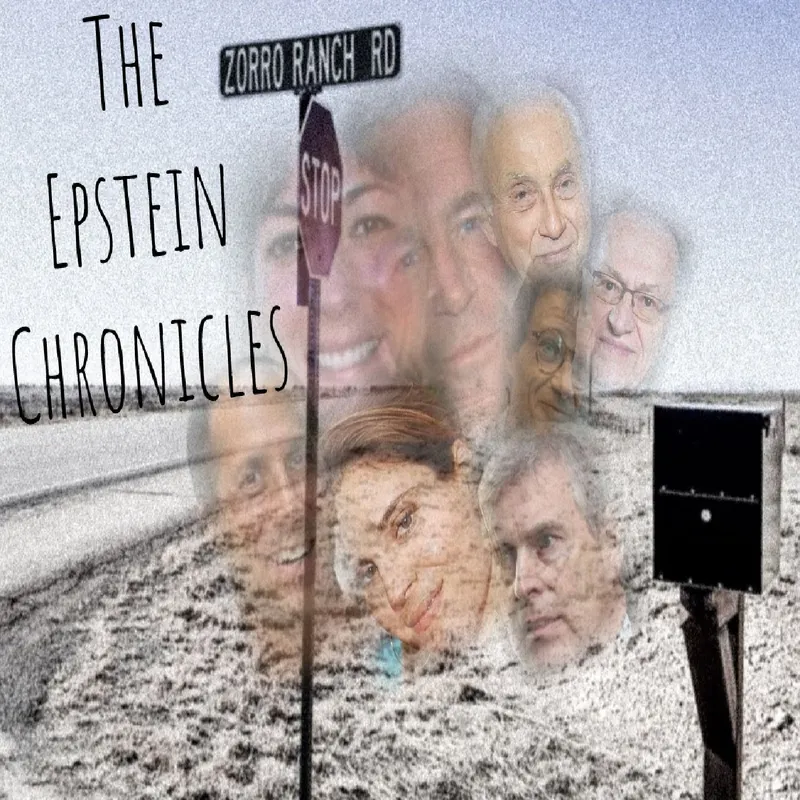
The Epstein Chronicles
Bobby Capucci·1000 episodes
Jeffrey Epstein was a multi millionaire who had political and business ties to some of the most rich and powerful people in the world. From businessmen to politicians at the highest levels, Epstein broke bread with them all. Yet for years the Legacy media and the rest of high society looked the other way and ignored his behavior as multiple women came forward with allegations of abuse. Even after he was convicted and subsequently received a sweetheart deal those same so called elites welcomed him back with open arms. Now after his death and the arrest of Maxwell, the real...
Episodes
The Department of Justice Office of the Inspector General (OIG) report into Jeffrey Epstein’s 2007 Non-Prosecution Agreement (NPA) presents a disturbing portrait of federal cowardice, systemic failures, and deliberate abdication of prosecutorial duty. Instead of zealously pursuing justice against a serial predator with dozens of underage victims, the U.S. Attorney’s Office in the Southern District of Florida, under Alexander Acosta, caved to Epstein’s high-powered legal team and crafted a sweetheart deal that immunized not just Epstein, but unnamed potential co-conspirators—many of whom are still shielded to this day. The report shows that career prosecutors initially prepared a 53-page indictment, but this was ultimately buried, replaced by state charges that led to minimal jail time, lenient conditions, and near-total impunity. The OIG paints the decision as a series of poor judgments rather than criminal misconduct, but this framing betrays the magnitude of what actually occurred: a calculated retreat in the face of wealth and influence.Critically, the report fails to hold any individuals truly accountable, nor does it demand structural reform that could prevent similar derelictions of justice. It accepts, without sufficient pushback, the justifications offered by federal prosecutors who claimed their hands were tied or that the case was too risky—despite overwhelming evidence and a mountain of victim statements. The OIG sidesteps the glaring reality that this was not just bureaucratic failure, but a protection racket masquerading as legal discretion. It treats corruption as incompetence and power as inevitability. The conclusion, ultimately, feels like a shrug—a bureaucratic absolution of one of the most disgraceful collapses of federal prosecutorial integrity in modern history. It is less a reckoning than a rubber stamp on institutional failure.to contact me:[email protected]:dl (justice.gov)Become a supporter of this podcast: https://www.spreaker.com/podcast/the-epstein-chronicles--5003294/support.
After her arrest at a secluded estate in Bradford, New Hampshire, on July 2, 2020, Ghislaine Maxwell was initially held in federal custody while authorities prepared to bring her to the jurisdiction where she had been charged. Federal prosecutors in Manhattan accused Maxwell of helping Jeffrey Epstein recruit, groom and sexually abuse underage girls, including one victim who was only 14 years old. Within days of her arrest, she was transferred from New Hampshire to New York so she could appear before the federal court handling the case. The move placed Maxwell under the authority of the Southern District of New York, the same federal office that had prosecuted Epstein before his death in 2019.Once in New York, Maxwell was detained at the Metropolitan Detention Center in Brooklyn while awaiting arraignment and a decision on bail. Prosecutors argued that her international citizenship, substantial financial resources, hidden finances and ability to remain out of public view made her an extreme flight risk. Maxwell pleaded not guilty and sought release under a multimillion-dollar bail package, but the court ordered her to remain in custody. Her transfer from the relative isolation of New Hampshire to a heavily secured federal detention facility in New York marked the beginning of the prolonged pretrial proceedings that eventually led to her conviction on sex-trafficking-related charges.to contact me:[email protected] a supporter of this podcast: https://www.spreaker.com/podcast/the-epstein-chronicles--5003294/support.
A federal lawsuit has been filed against Acting Attorney General Todd Blanche, accusing him and the Department of Justice of failing to fully comply with the Epstein Files Transparency Act. The suit alleges that despite the law requiring the release of all Epstein-related documents within a set timeframe, the DOJ withheld large portions of material, improperly redacted key information, and in some cases failed to produce documents altogether. The legal challenge argues that these actions amount to an ongoing violation of federal law and have obstructed efforts to fully understand the scope of Epstein’s network.The lawsuit also highlights the real-world impact of those alleged failures, particularly on journalists and investigators attempting to analyze the files. It claims that incomplete disclosures and unexplained redactions have made it significantly harder to report on the case and pursue accountability. Blanche has maintained that the department has already released all relevant material and signaled a desire to move on from the Epstein files entirely, a stance that has only intensified criticism and fueled broader concerns that key information may still be withheld.to contact me:[email protected]:Trump’s acting DOJ chief is sued over his alleged failure to release the complete Epstein files | The IndependentBecome a supporter of this podcast: https://www.spreaker.com/podcast/the-epstein-chronicles--5003294/support.
On Hannity, Ron DeSantis spotlighted his newly signed Florida law authorizing the release of grand jury transcripts from the 2006 Jeffrey Epstein investigation. He argued that the public has a right to see who was implicated and to understand how a wealthy, politically connected sex trafficker managed to secure such a lenient deal. DeSantis stressed that the punishment Epstein received in Florida was “wholly inadequate” for the crimes, framing the move as a correction to past failures of accountability.He also emphasized that Epstein and Ghislaine Maxwell were not the only ones involved, saying that others who played roles in the trafficking network should be exposed and held responsible. DeSantis framed the bill as a way to pierce secrecy and prevent elite protection from shielding wrongdoers, underscoring that no amount of wealth or influence should insulate people from justice.to contact me:[email protected]:DeSantis Details Legislation Behind Releasing Epstein Docs, Says Ghislaine Maxwell Can’t Be The Only One Responsible | The Daily CallerBecome a supporter of this podcast: https://www.spreaker.com/podcast/the-epstein-chronicles--5003294/support.
Restaurant employees in Panguitch, Utah, reported that a quiet man who ate alone at a local steakhouse on the night Charlie Kirk was killed resembled Tyler Robinson. The customer reportedly ordered a medium-rare sirloin with vegetables and a baked potato, and employees later contacted the FBI after seeing photographs of Robinson. Federal agents reportedly interviewed the owner and two servers, but the restaurant did not have surveillance footage clearly identifying the customer or a complete name connected to the payment card. Because Panguitch is more than three hours from Utah Valley University, the possible sighting raised questions about Robinson’s movements and the prosecution’s timeline.The claim remains unresolved because neither the FBI nor prosecutors have publicly confirmed whether the customer was Robinson. The restaurant owner has also said he was never told whether investigators were able to verify the sighting through payment records or other evidence. While the available information makes it appear unlikely that the steakhouse customer has been conclusively identified as Robinson, the lack of an official answer means the possibility has not been definitively ruled out. For now, the Panguitch sighting remains an unconfirmed lead rather than either a proven alibi or a fully disproven claim.to contact me:[email protected] a supporter of this podcast: https://www.spreaker.com/podcast/the-epstein-chronicles--5003294/support.
Doug Band told the House Oversight Committee that his personal contact with Jeffrey Epstein was limited, infrequent and largely incidental to his work as Bill Clinton’s longtime aide. He said he barely knew Epstein, did not recall receiving gifts from him and had no knowledge of Epstein’s abuse or other criminal conduct while they were acquainted. Band nevertheless described Epstein and Clinton as appearing to be friends, pointing to the time they spent together, Epstein’s aircraft and his potential value as a supporter of Clinton’s post-presidential work. He acknowledged accompanying Clinton on trips aboard Epstein’s plane and visiting Epstein’s Manhattan townhouse, but said he did not remember witnessing private conversations between the two men or seeing anything improper.Band described a more substantial relationship with Ghislaine Maxwell, admitting that they developed a friendship through Clinton’s orbit while firmly denying that it was ever romantic or physical. He said he began hearing troubling reports about Maxwell around 2011 and responded by removing her from Clinton’s contact lists and attempting to cut her out of the former president’s world. Much of the questioning focused on emails suggesting social familiarity, dinners, travel arrangements, birthday plans and flirtatious language, but Band repeatedly said he could not remember the communications or the events being discussed. His testimony therefore presented Epstein as a peripheral acquaintance and Maxwell as a former friend, while leaving lawmakers with numerous instances in which documentary records appeared more detailed than Band’s recollection.to contact me:[email protected]:Band-Final-Transcript-7.16.26.pdfBecome a supporter of this podcast: https://www.spreaker.com/podcast/the-epstein-chronicles--5003294/support.
Doug Band told the House Oversight Committee that his personal contact with Jeffrey Epstein was limited, infrequent and largely incidental to his work as Bill Clinton’s longtime aide. He said he barely knew Epstein, did not recall receiving gifts from him and had no knowledge of Epstein’s abuse or other criminal conduct while they were acquainted. Band nevertheless described Epstein and Clinton as appearing to be friends, pointing to the time they spent together, Epstein’s aircraft and his potential value as a supporter of Clinton’s post-presidential work. He acknowledged accompanying Clinton on trips aboard Epstein’s plane and visiting Epstein’s Manhattan townhouse, but said he did not remember witnessing private conversations between the two men or seeing anything improper.Band described a more substantial relationship with Ghislaine Maxwell, admitting that they developed a friendship through Clinton’s orbit while firmly denying that it was ever romantic or physical. He said he began hearing troubling reports about Maxwell around 2011 and responded by removing her from Clinton’s contact lists and attempting to cut her out of the former president’s world. Much of the questioning focused on emails suggesting social familiarity, dinners, travel arrangements, birthday plans and flirtatious language, but Band repeatedly said he could not remember the communications or the events being discussed. His testimony therefore presented Epstein as a peripheral acquaintance and Maxwell as a former friend, while leaving lawmakers with numerous instances in which documentary records appeared more detailed than Band’s recollection.to contact me:[email protected]:Band-Final-Transcript-7.16.26.pdfBecome a supporter of this podcast: https://www.spreaker.com/podcast/the-epstein-chronicles--5003294/support.
Roza Gilles was an 18-year-old aspiring model from Uzbekistan when she came to the United States in 2009 and became financially indebted to MC2 Model Management for her visa and housing. She was offered weekend administrative work at Jeffrey Epstein’s Florida Science Foundation office in West Palm Beach while Epstein was supposedly serving his jail sentence under an extraordinarily permissive work-release arrangement. Gilles said that during one of her first encounters with Epstein, he ordered her to undress, and when she froze, another woman removed her blouse and bra. She later realized that the device on Epstein’s ankle was a monitoring bracelet and that the man abusing her was technically still an inmate.Gilles’s account offers a disturbing illustration of how Epstein’s 2008 plea agreement and work-release privileges allowed him to continue operating in an environment filled with employees, vulnerable young women and even uniformed law-enforcement officers. She recalled seeing a sheriff at Epstein’s Palm Beach residence and concluding that Epstein was so protected that nothing she did could stop him. After eventually leaving his orbit, moving to New York and becoming financially independent, Gilles married, settled in the Midwest and became a fitness trainer. She is now speaking publicly in the hope that greater transparency will expose the people and institutions that enabled Epstein and finally deliver meaningful accountability for survivors.to contact me:[email protected]:Exclusive: Roza Gilles was an 18-year-old model when Jeffrey Epstein first abused her — while he was serving jail time | CNN PoliticsBecome a supporter of this podcast: https://www.spreaker.com/podcast/the-epstein-chronicles--5003294/support.
Roza Gilles was an 18-year-old aspiring model from Uzbekistan when she came to the United States in 2009 and became financially indebted to MC2 Model Management for her visa and housing. She was offered weekend administrative work at Jeffrey Epstein’s Florida Science Foundation office in West Palm Beach while Epstein was supposedly serving his jail sentence under an extraordinarily permissive work-release arrangement. Gilles said that during one of her first encounters with Epstein, he ordered her to undress, and when she froze, another woman removed her blouse and bra. She later realized that the device on Epstein’s ankle was a monitoring bracelet and that the man abusing her was technically still an inmate.Gilles’s account offers a disturbing illustration of how Epstein’s 2008 plea agreement and work-release privileges allowed him to continue operating in an environment filled with employees, vulnerable young women and even uniformed law-enforcement officers. She recalled seeing a sheriff at Epstein’s Palm Beach residence and concluding that Epstein was so protected that nothing she did could stop him. After eventually leaving his orbit, moving to New York and becoming financially independent, Gilles married, settled in the Midwest and became a fitness trainer. She is now speaking publicly in the hope that greater transparency will expose the people and institutions that enabled Epstein and finally deliver meaningful accountability for survivors.to contact me:[email protected]:Exclusive: Roza Gilles was an 18-year-old model when Jeffrey Epstein first abused her — while he was serving jail time | CNN PoliticsBecome a supporter of this podcast: https://www.spreaker.com/podcast/the-epstein-chronicles--5003294/support.
Leon Black’s congressional testimony encapsulated the broader Epstein scandal because it combined immense wealth, legal maneuvering, institutional deference, and carefully controlled cooperation. Despite paying Epstein at least $158 million for tax and estate-planning services and continuing their relationship after Epstein’s 2008 conviction, Black was initially allowed to appear voluntarily rather than under subpoena. When questioning moved toward women, nondisclosure agreements, and other sensitive matters, he refused to answer and left the interview, forcing the committee to issue a subpoena afterward. That sequence reflected the same pattern that has defined the Epstein case for decades: authorities begin by treating powerful people cautiously, those people exploit that caution, and meaningful pressure is applied only after delay and public embarrassment.The fiasco also demonstrated why every significant witness in the Epstein investigation should be compelled to testify, produce relevant documents, and face serious consequences for lying or obstructing the inquiry. Congress should not permit wealthy associates to decide which subjects are private, irrelevant, or off-limits, particularly when financial arrangements, confidential agreements, and post-conviction relationships may help explain how Epstein maintained his influence. Black’s return under subpoena gives the committee another opportunity to demand direct answers and test his claims against records, payments, communications, and other testimony. Unless lawmakers use their full authority and treat deception as a potential crime rather than a public-relations problem, the investigation will remain another performance in which powerful men delay accountability while survivors are once again expected to wait.to contact me:[email protected] a supporter of this podcast: https://www.spreaker.com/podcast/the-epstein-chronicles--5003294/support.
Ghislaine Maxwell repeatedly attempted to portray herself as another casualty of Jeffrey Epstein, emphasizing his alleged manipulation, control and betrayal while highlighting the humiliation, isolation and punishment she had endured since her arrest. At sentencing, she shifted attention toward Epstein’s character and suggested that association with him had become the greatest mistake of her life, but she stopped short of accepting full responsibility for recruiting, grooming and facilitating the abuse of underage girls. Her presentation cast her as someone who had been misled by a powerful man rather than as an active participant who helped create the conditions in which Epstein could repeatedly exploit vulnerable victims. Prosecutors, however, described Maxwell as instrumental to the abuse and emphasized that she had played a central role in identifying, grooming and abusing victims while enjoying the wealth and privilege that came with her relationship with Epstein.At the same time, Maxwell minimized the suffering of the actual survivors by offering an expression of sympathy that many viewed as evasive rather than a genuine apology. She did not directly acknowledge the specific acts for which she had been convicted, confront the lifelong damage described in the victims’ statements or admit that she had used trust, attention and promises of opportunity to help deliver young girls into Epstein’s orbit. Instead, her remarks redirected blame toward Epstein and centered her own losses, allowing her to appear remorseful without fully recognizing the agency she exercised or the devastation she caused. For survivors who described years of trauma, shame, fear and damaged relationships, Maxwell’s effort to claim victimhood was especially offensive because it placed her discomfort beside suffering that she had actively helped inflict.to contact me:[email protected] a supporter of this podcast: https://www.spreaker.com/podcast/the-epstein-chronicles--5003294/support.
Jeffrey Epstein maintained close and mutually useful relationships with author Michael Wolff and political strategist Steve Bannon during the years after his 2008 conviction. Wolff conducted extensive interviews with Epstein and remained in contact with him while gathering material about Donald Trump, becoming both a chronicler of Epstein’s world and, at times, an adviser on how Epstein might navigate mounting media scrutiny. Bannon’s relationship appears to have gone even further, with the two men regularly exchanging political advice, arranging travel and discussing international contacts. Bannon also recorded hours of interviews with Epstein for a proposed documentary and privately described the project as media training aimed at pushing back against the trafficking allegations and rebuilding Epstein’s reputation. The communications portray Epstein, Wolff and Bannon as men who recognized the value of one another’s information, access and influence, even as Epstein’s history as a convicted sex offender was already publicly known.Steven Mnuchin’s connection to Jean-Luc Brunel was more indirect and should not be overstated as a proven personal partnership. Corporate records listed Mnuchin as the official New York state contact for Next Management Corporation, a company formed by Jean-Luc and Arnaud Brunel, meaning his name was attached to receiving legal documents and handling official filings for the business. Mnuchin’s representatives later said he did not remember meeting the Brunel brothers, had never done business with them and did not know why he had been listed in that role, although they acknowledged his longtime friendship with Faith Kates, who later co-founded Next Model Management with the Brunels. The records nevertheless placed a future Treasury secretary in an official corporate role connected to Brunel, the modeling agent who became one of Epstein’s closest associates and was accused of using the modeling industry to procure vulnerable young women and girls.to contact me:[email protected] a supporter of this podcast: https://www.spreaker.com/podcast/the-epstein-chronicles--5003294/support.
The Department of Justice Office of the Inspector General (OIG) report into Jeffrey Epstein’s 2007 Non-Prosecution Agreement (NPA) presents a disturbing portrait of federal cowardice, systemic failures, and deliberate abdication of prosecutorial duty. Instead of zealously pursuing justice against a serial predator with dozens of underage victims, the U.S. Attorney’s Office in the Southern District of Florida, under Alexander Acosta, caved to Epstein’s high-powered legal team and crafted a sweetheart deal that immunized not just Epstein, but unnamed potential co-conspirators—many of whom are still shielded to this day. The report shows that career prosecutors initially prepared a 53-page indictment, but this was ultimately buried, replaced by state charges that led to minimal jail time, lenient conditions, and near-total impunity. The OIG paints the decision as a series of poor judgments rather than criminal misconduct, but this framing betrays the magnitude of what actually occurred: a calculated retreat in the face of wealth and influence.Critically, the report fails to hold any individuals truly accountable, nor does it demand structural reform that could prevent similar derelictions of justice. It accepts, without sufficient pushback, the justifications offered by federal prosecutors who claimed their hands were tied or that the case was too risky—despite overwhelming evidence and a mountain of victim statements. The OIG sidesteps the glaring reality that this was not just bureaucratic failure, but a protection racket masquerading as legal discretion. It treats corruption as incompetence and power as inevitability. The conclusion, ultimately, feels like a shrug—a bureaucratic absolution of one of the most disgraceful collapses of federal prosecutorial integrity in modern history. It is less a reckoning than a rubber stamp on institutional failure.to contact me:[email protected]:dl (justice.gov)Become a supporter of this podcast: https://www.spreaker.com/podcast/the-epstein-chronicles--5003294/support.
Former UK Prime Minister Gordon Brown has called for police to expand their investigation into Prince Andrew—also referred to as Andrew Mountbatten-Windsor—by examining how public funds were used during his time as the UK’s trade envoy. Brown argues that newly surfaced material tied to the Epstein files raises serious questions about whether taxpayer money funded not just official duties, but potentially private activities or relationships connected to Jeffrey Epstein. He is urging authorities to obtain records and question officials across multiple government departments involved in organizing Andrew’s travel and engagements.Brown also highlighted longstanding concerns about Andrew’s spending while in the role, including frequent use of RAF flights and resistance to traveling commercially, which he previously described as generating “unacceptable costs.” He is now pushing for a broader inquiry into whether there was misuse of public funds or even a failure to properly scrutinize those expenses at the time. The renewed calls come amid a wider investigation into Andrew’s links to Epstein, with Brown suggesting that financial records, travel data, and witness testimony could provide a clearer picture of how public resources may have intersected with alleged private conduct.to contact me:[email protected]:Gordon Brown urges police to examine public funds during Andrew Mountbatten-Windsor’s time as UK trade envoy | Sky News AustraliaBecome a supporter of this podcast: https://www.spreaker.com/podcast/the-epstein-chronicles--5003294/support.
Ghislaine Maxwell’s lawyers argued that she could be safely released before trial under an unusually strict bail package designed to eliminate any realistic possibility of escape. Their proposals included multimillion-dollar secured bonds backed by assets belonging to Maxwell, her husband and other supporters, home confinement in New York, electronic monitoring, round-the-clock armed security and restrictions on her communications and travel. They offered to have Maxwell surrender her passports and citizenship-related documents, waive certain extradition rights and remain under constant surveillance at her own expense. Her attorneys maintained that she was not hiding from law enforcement before her arrest, but had withdrawn from public life because of intense media attention, threats and fears for her personal safety. They also emphasized the presumption of innocence and argued that the conditions at the Metropolitan Detention Center made it extremely difficult for her to review evidence and prepare for a complicated federal trial.The defense further claimed that Maxwell’s family ties, marriage, financial guarantees and willingness to submit to severe restrictions proved that she had every incentive to appear in court. Her lawyers portrayed the government’s depiction of her as an international fugitive as exaggerated and argued that wealth and foreign citizenship did not automatically make her a flight risk. Prosecutors countered that Maxwell had access to substantial and opaque financial resources, held multiple citizenships and had demonstrated an ability to conceal both her location and identity. Judge Alison Nathan repeatedly rejected the proposed packages, concluding that even extraordinary private security arrangements could not adequately guarantee Maxwell’s appearance. The courts ultimately found that her resources, international connections, potential sentence and conduct before her arrest created a serious risk that she would flee if released.to contact me:[email protected] a supporter of this podcast: https://www.spreaker.com/podcast/the-epstein-chronicles--5003294/support.
The dispute between Prince Andrew and King Charles over Royal Lodge centered on the king’s effort to reduce his brother’s royal privileges after the Epstein scandal and Andrew’s determination to remain in the 30-room Windsor mansion. Charles reportedly wanted Andrew to move into the smaller Frogmore Cottage, arguing that Royal Lodge was too large and expensive for a nonworking royal whose public duties had ended. The king also withdrew the private allowance that had helped support Andrew and stopped financing his personal security, increasing the financial pressure on him to leave. Andrew resisted by pointing to the long-term lease he signed in 2003, the substantial amount he claimed to have invested in renovations and his responsibility for maintaining the property. Because the house was controlled through the Crown Estate rather than personally owned by the king, Charles could pressure Andrew financially but could not simply remove him without addressing the terms of the lease.The standoff became a broader symbol of Charles’s struggle to distance the monarchy from Andrew while avoiding an ugly public confrontation with his own brother. Andrew reportedly maintained that he could continue paying for the property, while questions persisted about the source of his income, the condition of Royal Lodge and whether he was fulfilling the maintenance requirements of the agreement. Pressure intensified as Andrew’s continuing connections to Jeffrey Epstein generated further damaging publicity, making his occupation of a major royal residence increasingly difficult for the palace to defend. By late 2025, negotiations over his departure had advanced, and he subsequently moved out of Royal Lodge in early 2026. What began as a private argument about housing and money ultimately became a test of whether the king could meaningfully strip Andrew of the status and protections that had insulated him for decades.to contact me:[email protected] a supporter of this podcast: https://www.spreaker.com/podcast/the-epstein-chronicles--5003294/support.
The alleged confession to Lance Twiggs is among the strongest publicly available pieces of evidence because it is not presented as a vague secondhand rumor or an isolated statement stripped of context. Twiggs told investigators that Robinson sent messages accepting responsibility for Charlie Kirk’s killing, then confirmed the admission face-to-face the following day when Twiggs asked whether what he had written was true. According to the recorded interview played during the preliminary hearing, Robinson became emotional, said he wished he had not done it and discussed surrendering to authorities. Prosecutors also presented an alleged handwritten note left for Twiggs and text messages discussing Robinson’s motive, the engraved ammunition and his concern about recovering the abandoned rifle. Taken together, those statements allegedly describe conduct before, during and after the shooting in language attributable directly to Robinson rather than merely placing him near the scene.The confession is especially significant because several details reportedly correspond with independently discovered evidence. Robinson’s alleged messages referred to the rifle, the engraved rounds and the possibility that his DNA remained on the weapon, while investigators later recovered a rifle and ammunition matching important parts of that account and presented forensic evidence connecting him to those items. Twiggs also reportedly told investigators that Robinson had begun engraving bullets weeks before the killing, providing potential evidence of preparation rather than a spontaneous admission invented after the fact. A confession can always be challenged on authenticity, interpretation or witness credibility, and Twiggs received immunity before cooperating, but the prosecution does not appear to be relying on his word alone. The alleged admission is powerful because it functions as a narrative thread connecting motive, planning, the weapon, the physical evidence, Robinson’s movements after the shooting and his eventual surrender.to contact me:bobbycapucci@@protonmail.comsource:Lance Twiggs recalled moment Tyler Robinson allegedly confessed to shooting Charlie KirkBecome a supporter of this podcast: https://www.spreaker.com/podcast/the-epstein-chronicles--5003294/support.
Leon Black used his appearance before the House Oversight Committee to defend his long-running relationship with Jeffrey Epstein and explain the extraordinary $158 million he paid him between 2013 and 2017. Black maintained that the money purchased legitimate tax, estate-planning and family-office services that allegedly saved him between $1 billion and $2 billion. He said Epstein deceived him about the deductibility of his fees, exaggerated his influence and repeatedly demanded more money, eventually causing Black to end their relationship in 2018. Black denied knowing about Epstein’s trafficking operation, abusing any woman, having sex with anyone underage, paying Epstein for access to women or being blackmailed by him. At the same time, he acknowledged spending considerable time around Epstein, meeting prominent figures through him and contributing a birthday poem describing Epstein’s interest in attractive women around the world. Although Black later insisted Epstein was not a “dear friend,” the birthday message itself called him exactly that and was signed “love and kisses.”The questioning became confrontational when committee investigators turned to Black’s relationships with women and nondisclosure agreements. Black acknowledged a six-year extramarital affair and confirmed a settlement that included monthly payments, loan forgiveness and money connected to a British visa, while saying he regarded the woman’s demands as blackmail and had discussed the situation with Epstein. He and his attorneys then refused to disclose how many NDAs he had signed, their terms or who else in his social circle had such agreements, arguing that confidentiality provisions prevented him from answering during a voluntary interview. Committee officials rejected that position and served Black with subpoenas for relevant documents and a later deposition. His lawyers denounced the move as a political stunt and abruptly ended the interview before lawmakers could fully question him about the $158 million in payments or the broader allegations surrounding his association with Epstein.To contact me:[email protected] a supporter of this podcast: https://www.spreaker.com/podcast/the-epstein-chronicles--5003294/support.
Leon Black used his appearance before the House Oversight Committee to defend his long-running relationship with Jeffrey Epstein and explain the extraordinary $158 million he paid him between 2013 and 2017. Black maintained that the money purchased legitimate tax, estate-planning and family-office services that allegedly saved him between $1 billion and $2 billion. He said Epstein deceived him about the deductibility of his fees, exaggerated his influence and repeatedly demanded more money, eventually causing Black to end their relationship in 2018. Black denied knowing about Epstein’s trafficking operation, abusing any woman, having sex with anyone underage, paying Epstein for access to women or being blackmailed by him. At the same time, he acknowledged spending considerable time around Epstein, meeting prominent figures through him and contributing a birthday poem describing Epstein’s interest in attractive women around the world. Although Black later insisted Epstein was not a “dear friend,” the birthday message itself called him exactly that and was signed “love and kisses.”The questioning became confrontational when committee investigators turned to Black’s relationships with women and nondisclosure agreements. Black acknowledged a six-year extramarital affair and confirmed a settlement that included monthly payments, loan forgiveness and money connected to a British visa, while saying he regarded the woman’s demands as blackmail and had discussed the situation with Epstein. He and his attorneys then refused to disclose how many NDAs he had signed, their terms or who else in his social circle had such agreements, arguing that confidentiality provisions prevented him from answering during a voluntary interview. Committee officials rejected that position and served Black with subpoenas for relevant documents and a later deposition. His lawyers denounced the move as a political stunt and abruptly ended the interview before lawmakers could fully question him about the $158 million in payments or the broader allegations surrounding his association with Epstein.To contact me:[email protected] a supporter of this podcast: https://www.spreaker.com/podcast/the-epstein-chronicles--5003294/support.
Epstein survivors accused Todd Blanche of effectively shutting the door on additional investigations during a tense meeting at the Justice Department. Although Blanche invited the women to provide the FBI with any new evidence they possessed, he reportedly suggested that the existing record might not provide sufficient grounds for further prosecutions and offered no concrete plan for examining unresolved leads, Epstein’s associates, or properties such as Zorro Ranch. Survivors said Blanche asked few, if any, meaningful questions and appeared more interested in completing a politically necessary meeting than in understanding what investigative avenues remained open.The women described the encounter as dismissive, demoralizing and deeply frustrating, with Annie Farmer characterizing Blanche’s manner as abrasive and condescending. Several survivors said they felt gaslit because they were once again being encouraged to produce more information while the Justice Department simultaneously implied that there was little left to investigate, despite the enormous volume of records and longstanding questions surrounding Epstein’s network. To them, the meeting reinforced the familiar message that institutions would listen politely, praise their courage and then decline to take meaningful action. The Justice Department called the gathering productive, but survivors came away feeling unheard, minimized and used as part of Blanche’s confirmation process rather than treated as essential witnesses in a continuing pursuit of accountability.to contact me:[email protected]:Epstein Survivor Accuses Trump's AG Todd Blanche of Dismissing Calls for Further Epstein Investigation | IBTimes UKBecome a supporter of this podcast: https://www.spreaker.com/podcast/the-epstein-chronicles--5003294/support.
A former Epstein assistant identified as “Anya” describes how she was drawn into his orbit through a modeling contact in Paris and promises that he could advance her career. Instead, she says Epstein gradually built what she calls an “ecosystem of abuse,” housing roughly a dozen female assistants, controlling their money, healthcare and employment, demanding constant availability and repeatedly sexually abusing them. He allegedly studied each woman’s vulnerabilities, isolated them from outside support, created rivalries within the group and used threats, financial dependency and powerful social connections to make resistance feel impossible. Anya says Epstein openly compared the operation to a cult with himself as its leader, maintaining control without physically imprisoning the women.Anya alleges that Epstein collected compromising photographs and videos, required women to write gratitude letters and pursued assistants who tried to leave, including one woman he claimed owed him $700,000. She also says he ordered her to undergo surgery to cut a small tattoo from her body rather than wait for laser removal, leaving permanent scars and forcing her to repeat the procedure when he disliked the result. The women were allegedly pressured to recruit others, trapping them in a cycle where victimization and coerced participation became intertwined. Anya says Epstein’s relationships with wealthy and prominent figures further legitimized him in the eyes of those he controlled, making them question their own instincts and fear that nobody would believe them.to contact me:[email protected]:Control, threats, disfiguring surgery: My life inside Jeffrey Epstein's 'cult'Become a supporter of this podcast: https://www.spreaker.com/podcast/the-epstein-chronicles--5003294/support.
A former Epstein assistant identified as “Anya” describes how she was drawn into his orbit through a modeling contact in Paris and promises that he could advance her career. Instead, she says Epstein gradually built what she calls an “ecosystem of abuse,” housing roughly a dozen female assistants, controlling their money, healthcare and employment, demanding constant availability and repeatedly sexually abusing them. He allegedly studied each woman’s vulnerabilities, isolated them from outside support, created rivalries within the group and used threats, financial dependency and powerful social connections to make resistance feel impossible. Anya says Epstein openly compared the operation to a cult with himself as its leader, maintaining control without physically imprisoning the women.Anya alleges that Epstein collected compromising photographs and videos, required women to write gratitude letters and pursued assistants who tried to leave, including one woman he claimed owed him $700,000. She also says he ordered her to undergo surgery to cut a small tattoo from her body rather than wait for laser removal, leaving permanent scars and forcing her to repeat the procedure when he disliked the result. The women were allegedly pressured to recruit others, trapping them in a cycle where victimization and coerced participation became intertwined. Anya says Epstein’s relationships with wealthy and prominent figures further legitimized him in the eyes of those he controlled, making them question their own instincts and fear that nobody would believe them.to contact me:[email protected]:Control, threats, disfiguring surgery: My life inside Jeffrey Epstein's 'cult'Become a supporter of this podcast: https://www.spreaker.com/podcast/the-epstein-chronicles--5003294/support.
The FBI’s Epstein-related accountability problem stretches back to at least 1996, when Maria Farmer reported allegations involving Jeffrey Epstein, Ghislaine Maxwell and the exploitation of underage girls. The complaint was documented, yet no prosecution followed, and Epstein was allowed to continue operating for years before Palm Beach police opened a new investigation in 2005. Even after the FBI developed a federal case involving numerous alleged victims, the matter was resolved through a secret non-prosecution agreement that spared Epstein from federal charges, protected potential co-conspirators and kept survivors uninformed. Epstein instead pleaded guilty to lesser state offenses and served only 13 months under unusually permissive conditions. A later Justice Department review criticized the handling of the case but largely avoided findings of professional misconduct, reinforcing the impression that institutional failure was acknowledged without anyone being meaningfully held responsible.The same pattern continued after Epstein’s 2019 arrest, when the FBI and Justice Department possessed enormous quantities of evidence but produced remarkably little additional accountability beyond the prosecution of Ghislaine Maxwell. Epstein died before trial amid catastrophic failures at the federal jail holding him, while questions remained about his associates, recruiters, financial network and the evidence accumulated during decades of investigations. Subsequent document releases revealed how much information had been collected, yet survivors and the public were still left asking why earlier warnings were ignored, why obvious investigative avenues appeared to stall and why so few people faced charges. The FBI has repeatedly positioned itself as ready to receive new information, but critics argue that the central problem is not a lack of tips; it is the bureau’s failure to explain what it did with the evidence it already had. After three decades, there has still been no comprehensive public accounting of who made the crucial decisions, why the investigations repeatedly stopped short and whether anyone inside the institution suffered consequences for allowing Epstein’s operation to continue.to contact me:[email protected] a supporter of this podcast: https://www.spreaker.com/podcast/the-epstein-chronicles--5003294/support.
Leon Black has tried to portray his relationship with Jeffrey Epstein as primarily professional, limited to sophisticated tax and estate-planning work, while insisting that he knew nothing about Epstein’s criminal activities and eventually realized Epstein had deceived and overcharged him. The record, however, points to a relationship that was far more extensive and personal than that description suggests. Black paid Epstein approximately $158 million between 2012 and 2017, years after Epstein had pleaded guilty to soliciting a minor, and also directed a $10 million donation to an Epstein-linked charity. Black continued consulting Epstein on personal matters, including disputes involving women, while documents show Epstein acting as an intermediary in sensitive situations. Black’s claim that Epstein was not truly a close friend is also difficult to reconcile with his contribution to Epstein’s 2003 birthday album, where he referred to him as a “dear friend,” joked about Epstein’s interest in women and signed the message “love and kisses.”The inconsistencies became even more pronounced during Black’s congressional questioning. While presenting himself as fully cooperative and eager to clear the record, he and his attorneys refused to answer questions about nondisclosure agreements, settlements and the number of women with whom he had entered confidential arrangements. That resistance prompted lawmakers to issue subpoenas for documents and additional sworn testimony. Black has denied all allegations of sexual misconduct and no criminal charges have been brought against him in connection with Epstein, but his carefully narrowed account does not comfortably match the scale of the payments, the duration of the association, the personal communications or his continued reliance on Epstein after the financier’s conviction. The central problem with Black’s narrative is not simply that he associated with Epstein; it is that he repeatedly minimizes a relationship that the documentary record portrays as financially enormous, socially familiar and deeply intertwined with his private affairs.to contact me:[email protected] a supporter of this podcast: https://www.spreaker.com/podcast/the-epstein-chronicles--5003294/support.
The Department of Justice Office of the Inspector General (OIG) report into Jeffrey Epstein’s 2007 Non-Prosecution Agreement (NPA) presents a disturbing portrait of federal cowardice, systemic failures, and deliberate abdication of prosecutorial duty. Instead of zealously pursuing justice against a serial predator with dozens of underage victims, the U.S. Attorney’s Office in the Southern District of Florida, under Alexander Acosta, caved to Epstein’s high-powered legal team and crafted a sweetheart deal that immunized not just Epstein, but unnamed potential co-conspirators—many of whom are still shielded to this day. The report shows that career prosecutors initially prepared a 53-page indictment, but this was ultimately buried, replaced by state charges that led to minimal jail time, lenient conditions, and near-total impunity. The OIG paints the decision as a series of poor judgments rather than criminal misconduct, but this framing betrays the magnitude of what actually occurred: a calculated retreat in the face of wealth and influence.Critically, the report fails to hold any individuals truly accountable, nor does it demand structural reform that could prevent similar derelictions of justice. It accepts, without sufficient pushback, the justifications offered by federal prosecutors who claimed their hands were tied or that the case was too risky—despite overwhelming evidence and a mountain of victim statements. The OIG sidesteps the glaring reality that this was not just bureaucratic failure, but a protection racket masquerading as legal discretion. It treats corruption as incompetence and power as inevitability. The conclusion, ultimately, feels like a shrug—a bureaucratic absolution of one of the most disgraceful collapses of federal prosecutorial integrity in modern history. It is less a reckoning than a rubber stamp on institutional failure.to contact me:[email protected]:dl (justice.gov)Become a supporter of this podcast: https://www.spreaker.com/podcast/the-epstein-chronicles--5003294/support.
The class-action lawsuit against JPMorgan Chase was brought on behalf of Jeffrey Epstein survivors who alleged that the bank knowingly benefited from and helped sustain Epstein’s sex-trafficking operation by continuing to provide him with essential financial services despite years of obvious warning signs. The survivors argued that JPMorgan was not merely a passive bank that happened to hold Epstein’s accounts, but an institution that processed large cash withdrawals, maintained his banking relationships and allowed him to move money in ways that supported the recruitment and abuse of girls and young women. The complaint accused the bank of placing profit and its relationship with a wealthy client above its legal obligations to identify suspicious activity and protect trafficking victims. JPMorgan denied knowingly participating in Epstein’s crimes, but internal records and testimony raised serious questions about how much employees understood about his conduct and why the bank continued serving him until 2013, five years after his Florida conviction.The case ended with JPMorgan agreeing to pay $290 million to resolve the survivors’ claims without admitting liability. A federal judge granted final approval to the settlement in November 2023, creating a compensation process for eligible women who were abused or trafficked by Epstein while he was a JPMorgan client. The agreement was separate from the bank’s later $75 million settlement with the U.S. Virgin Islands, which had accused JPMorgan of enabling and profiting from Epstein’s trafficking enterprise. For the survivors, the class action was significant because it shifted scrutiny beyond Epstein and his immediate associates toward the major financial institution that kept his operation connected to the banking system for years.to contact me:[email protected] a supporter of this podcast: https://www.spreaker.com/podcast/the-epstein-chronicles--5003294/support.
A former senior Foreign Office official told lawmakers that he was instructed to move ahead with appointing Peter Mandelson despite raising concerns during the vetting process, including issues connected to Mandelson’s associations and the potential political fallout. According to his testimony, he was effectively told to “get on with it,” signaling that the decision had already been made at higher levels and that standard caution around security clearance and reputational risk was being overridden.The disclosure has fueled criticism that the appointment process was rushed and that proper scrutiny was sidelined in favor of political priorities. Officials acknowledged that red flags existed but indicated there was little willingness to delay or reconsider the decision, even with Epstein-related concerns lingering in the background. The episode has since raised broader questions about how seriously vetting procedures are taken when they conflict with political objectives, and whether accountability mechanisms within the government were bypassed.to contact me:[email protected]:Former foreign office chief was told to ‘get on’ with appointing Mandelson despite his worries over links with Epstein | LBCBecome a supporter of this podcast: https://www.spreaker.com/podcast/the-epstein-chronicles--5003294/support.
Prince Andrew was effectively pushed out of Pitch@Palace, the entrepreneurship initiative he founded to connect startup founders with investors, after his disastrous 2019 BBC Newsnight interview about Jeffrey Epstein. The interview intensified scrutiny of Andrew’s relationship with Epstein and triggered an exodus of corporate sponsors, including KPMG, Standard Chartered and Barclays. With the initiative’s reputation becoming inseparable from Andrew’s scandal, he stepped away from the project as part of his broader withdrawal from public royal duties.Pitch@Palace’s offices were subsequently removed from Buckingham Palace, and plans were made for the organization to continue independently under the shortened name “Pitch,” without Andrew as its public face. The episode demonstrated how quickly his Epstein connections destroyed what had once been presented as one of his flagship achievements. Sponsors, partners and the palace itself concluded that keeping Andrew attached to the initiative posed a reputational risk, leaving him sidelined from the very project he had created and promoted as evidence of his value as a working royal.to contact me:[email protected] a supporter of this podcast: https://www.spreaker.com/podcast/the-epstein-chronicles--5003294/support.
Tyler Robinson’s father, Matthew Robinson, has continued operating the family’s successful stone and marble business in St. George, Utah, while his son awaits trial for the alleged murder of Charlie Kirk. The company reportedly relies on word-of-mouth advertising and longstanding relationships with local contractors, many of whom have continued doing business with the family despite the criminal case. Court records show that Matthew previously faced a lawsuit from his brother and former business partner, Clint Robinson, who accused him of misappropriating roughly $100,000, concealing financial records and exchanging company work for personal favors. The brothers eventually resolved the dispute through a confidential settlement, and Matthew has declined to publicly discuss either the old allegations or his son’s case.Although Robinson comes from a family that appears financially comfortable, a judge declared the 23-year-old indigent, meaning Utah taxpayers are funding his capital-murder defense. His attorneys have reportedly requested an additional $2 million for experts and trial preparation, while legal analysts estimate the total cost could eventually exceed $10 million once a lengthy trial and possible appeals are included. Prosecutors presented testimony at the preliminary hearing alleging that Robinson confessed several times to his partner, Lance Twiggs, before surrendering with the assistance of his father and a family friend who had worked in law enforcement. The case has also placed intense scrutiny on Robinson’s hometown, where former teachers and residents have expressed shock over the allegations and frustration with the continuing national attention.to contact me:[email protected] a supporter of this podcast: https://www.spreaker.com/podcast/the-epstein-chronicles--5003294/support.
Alan Dershowitz has spent years presenting himself as a fearless defender of due process, loudly attacking Epstein survivors, journalists, and critics while insisting that he was eager to tell Congress his side of the story. Yet when the opportunity reportedly arrived for a transcribed interview about his role on Jeffrey Epstein’s legal team, the Florida non-prosecution agreement, and his public claims, he backed out. The contrast is especially striking given the energy he devoted to the Martha’s Vineyard pierogi incident, where he confronted a vendor, recorded the dispute, threatened legal action, and returned again to make his point. He seemed ready to wage constitutional war over a denied dumpling, but when congressional investigators wanted answers about Epstein, his appetite for confrontation suddenly disappeared.Dershowitz has never been convicted of participating in Epstein’s sexual crimes, and he denies the allegations against him, but his role in helping Epstein secure the extraordinary Florida deal remains a legitimate subject of scrutiny. That agreement protected Epstein from federal prosecution, extended protection to potential co-conspirators, and was negotiated without properly informing the victims. Dershowitz may call his involvement zealous advocacy, but that does not erase the moral consequences of a process that favored wealth, power, and elite access over survivors. His last-minute withdrawal exposes the hypocrisy of a man who demands scrutiny for everyone else while avoiding it himself, proving once again that he is most courageous when he controls the microphone and far less impressive when someone else controls the questions.to contact me:[email protected] a supporter of this podcast: https://www.spreaker.com/podcast/the-epstein-chronicles--5003294/support.
Leon Black used his appearance before the House Oversight Committee to defend his long-running relationship with Jeffrey Epstein and explain the extraordinary $158 million he paid him between 2013 and 2017. Black maintained that the money purchased legitimate tax, estate-planning and family-office services that allegedly saved him between $1 billion and $2 billion. He said Epstein deceived him about the deductibility of his fees, exaggerated his influence and repeatedly demanded more money, eventually causing Black to end their relationship in 2018. Black denied knowing about Epstein’s trafficking operation, abusing any woman, having sex with anyone underage, paying Epstein for access to women or being blackmailed by him. At the same time, he acknowledged spending considerable time around Epstein, meeting prominent figures through him and contributing a birthday poem describing Epstein’s interest in attractive women around the world. Although Black later insisted Epstein was not a “dear friend,” the birthday message itself called him exactly that and was signed “love and kisses.”The questioning became confrontational when committee investigators turned to Black’s relationships with women and nondisclosure agreements. Black acknowledged a six-year extramarital affair and confirmed a settlement that included monthly payments, loan forgiveness and money connected to a British visa, while saying he regarded the woman’s demands as blackmail and had discussed the situation with Epstein. He and his attorneys then refused to disclose how many NDAs he had signed, their terms or who else in his social circle had such agreements, arguing that confidentiality provisions prevented him from answering during a voluntary interview. Committee officials rejected that position and served Black with subpoenas for relevant documents and a later deposition. His lawyers denounced the move as a political stunt and abruptly ended the interview before lawmakers could fully question him about the $158 million in payments or the broader allegations surrounding his association with Epstein.To contact me:[email protected] a supporter of this podcast: https://www.spreaker.com/podcast/the-epstein-chronicles--5003294/support.
Leon Black used his appearance before the House Oversight Committee to defend his long-running relationship with Jeffrey Epstein and explain the extraordinary $158 million he paid him between 2013 and 2017. Black maintained that the money purchased legitimate tax, estate-planning and family-office services that allegedly saved him between $1 billion and $2 billion. He said Epstein deceived him about the deductibility of his fees, exaggerated his influence and repeatedly demanded more money, eventually causing Black to end their relationship in 2018. Black denied knowing about Epstein’s trafficking operation, abusing any woman, having sex with anyone underage, paying Epstein for access to women or being blackmailed by him. At the same time, he acknowledged spending considerable time around Epstein, meeting prominent figures through him and contributing a birthday poem describing Epstein’s interest in attractive women around the world. Although Black later insisted Epstein was not a “dear friend,” the birthday message itself called him exactly that and was signed “love and kisses.”The questioning became confrontational when committee investigators turned to Black’s relationships with women and nondisclosure agreements. Black acknowledged a six-year extramarital affair and confirmed a settlement that included monthly payments, loan forgiveness and money connected to a British visa, while saying he regarded the woman’s demands as blackmail and had discussed the situation with Epstein. He and his attorneys then refused to disclose how many NDAs he had signed, their terms or who else in his social circle had such agreements, arguing that confidentiality provisions prevented him from answering during a voluntary interview. Committee officials rejected that position and served Black with subpoenas for relevant documents and a later deposition. His lawyers denounced the move as a political stunt and abruptly ended the interview before lawmakers could fully question him about the $158 million in payments or the broader allegations surrounding his association with Epstein.To contact me:[email protected] a supporter of this podcast: https://www.spreaker.com/podcast/the-epstein-chronicles--5003294/support.
Virginia Roberts Giuffre named the men she said had abused her or participated in Jeffrey Epstein and Ghislaine Maxwell’s trafficking operation long before the Epstein scandal became a worldwide obsession. Years before Epstein’s 2019 arrest, she had already provided names in sworn testimony, legal filings, interviews and communications with investigators, including Prince Andrew and other wealthy, politically connected figures. She described how Epstein and Maxwell allegedly used her as a teenager, moved her between properties and directed her into sexual encounters with powerful men. These allegations were not suddenly invented when the scandal exploded; many had been documented, litigated and publicly reported for years.For a long time, however, Giuffre’s claims were treated as peripheral, inconvenient or too dangerous to pursue aggressively because the people she named possessed money, influence and access to elite institutions. She endured attacks on her credibility while repeatedly telling substantially the same story and demanding that authorities and the public examine the wider network surrounding Epstein. When sealed records were later released and public interest surged, many people reacted as though the names and allegations were new, even though Giuffre had been pointing toward them for years. The real failure was not that survivors had remained silent, but that powerful institutions, journalists and authorities had failed to listen when Virginia Roberts Giuffre was already naming names.to contact me:[email protected] a supporter of this podcast: https://www.spreaker.com/podcast/the-epstein-chronicles--5003294/support.
Jeffrey Epstein used the modeling industry as both a recruiting pipeline and a layer of legitimacy, surrounding himself with agents, scouts and young aspiring models who could be brought into his orbit under the promise of castings, introductions, travel or career opportunities. Many of these girls were teenagers, foreign nationals or newcomers with little money, limited support and an intense desire to break into a notoriously competitive business. Epstein exploited that imbalance by presenting himself as a wealthy benefactor with powerful connections, making private meetings, massages and trips appear connected to professional advancement. His relationship with modeling agent Jean-Luc Brunel was especially significant, with accusers alleging that Brunel used the promise of modeling work to introduce young women and girls to Epstein. Epstein also helped finance Brunel’s MC2 modeling agency, further entangling himself with an industry capable of providing a steady supply of vulnerable recruits.The modeling world was particularly useful to Epstein because it normalized young women traveling alone, staying in agency-controlled apartments, attending private appointments and relying heavily on older men who claimed they could make or destroy careers. That environment allowed exploitation to be disguised as networking, mentoring or opportunity, while victims could be pressured into silence by fear of losing work, visas, housing or access to the industry. Epstein did not merely prey upon girls who happened to be models; he appears to have deliberately cultivated modeling contacts because the business placed ambitious and often isolated young women within easy reach of powerful gatekeepers. The result was an ecosystem in which glamour concealed vulnerability, professional promises blurred into sexual coercion and adults who should have protected young recruits instead helped deliver some of them into Epstein’s world.to contact me:[email protected] a supporter of this podcast: https://www.spreaker.com/podcast/the-epstein-chronicles--5003294/support.
Jes Staley asked a federal court to dismiss JPMorgan Chase’s third-party lawsuit against him, which arose from the class-action case brought by survivors who accused the bank of enabling Jeffrey Epstein’s sex-trafficking operation. JPMorgan sought to make Staley personally responsible for any damages it might owe, arguing that he concealed what he knew about Epstein, protected Epstein’s relationship with the bank and committed misconduct that exposed JPMorgan to liability. Staley countered that the bank was attempting to turn him into a scapegoat for institutional decisions made over many years. He argued that JPMorgan’s claims for indemnification and the return of compensation were legally defective, insufficiently supported and dependent upon allegations that had not been proven.Staley’s motion maintained that JPMorgan could not simply transfer its potential liability to a former employee when the survivors’ claims concerned the bank’s own conduct, compliance failures and continued servicing of Epstein. His lawyers argued that the complaint failed to establish that Staley had a contractual or legal duty to reimburse JPMorgan for settlements, judgments or legal expenses connected to the Epstein litigation. JPMorgan responded that Staley had been central to the relationship, had withheld material information and should repay compensation if his alleged conduct caused the bank’s losses. Judge Jed Rakoff rejected Staley’s effort to dismiss the case, allowing JPMorgan’s claims against him to continue before the dispute was eventually resolved as part of the broader Epstein-related litigation.to contact me:[email protected] a supporter of this podcast: https://www.spreaker.com/podcast/the-epstein-chronicles--5003294/support.
On August 22, 2025, the U.S. Department of Justice released redacted transcripts and audio recordings of a two-day interview it conducted in July with Ghislaine Maxwell, who is serving a 20-year federal prison sentence for her role in Jeffrey Epstein’s sex-trafficking ring. During the interview, Maxwell denied ever seeing any inappropriate behavior by former President Donald Trump, describing him as a “gentleman in all respects,” and insisted she “never witnessed the president in any inappropriate setting in any way.” She also rejected the existence of a so-called “client list,” countering years of speculation, and claimed to have no knowledge of blackmail or illicit recordings tied to Epstein.In addition to defending high-profile figures, Maxwell expressed doubt that Epstein’s death was a suicide, while also rejecting the notion of an elaborate conspiracy or murder plot. The release of the transcripts—handled under the Trump-era Justice Department—has stirred sharp political debate. Trump allies have framed her remarks as vindication, while critics and Epstein’s survivors question her credibility, pointing to her conviction and suggesting her words may be aimed at influencing potential clemency or political favor.to contact me:[email protected]:Interview Transcript - Maxwell 2025.07.24 (Redacted).pdfBecome a supporter of this podcast: https://www.spreaker.com/podcast/the-epstein-chronicles--5003294/support.
On August 22, 2025, the U.S. Department of Justice released redacted transcripts and audio recordings of a two-day interview it conducted in July with Ghislaine Maxwell, who is serving a 20-year federal prison sentence for her role in Jeffrey Epstein’s sex-trafficking ring. During the interview, Maxwell denied ever seeing any inappropriate behavior by former President Donald Trump, describing him as a “gentleman in all respects,” and insisted she “never witnessed the president in any inappropriate setting in any way.” She also rejected the existence of a so-called “client list,” countering years of speculation, and claimed to have no knowledge of blackmail or illicit recordings tied to Epstein.In addition to defending high-profile figures, Maxwell expressed doubt that Epstein’s death was a suicide, while also rejecting the notion of an elaborate conspiracy or murder plot. The release of the transcripts—handled under the Trump-era Justice Department—has stirred sharp political debate. Trump allies have framed her remarks as vindication, while critics and Epstein’s survivors question her credibility, pointing to her conviction and suggesting her words may be aimed at influencing potential clemency or political favor.to contact me:[email protected]:Interview Transcript - Maxwell 2025.07.24 (Redacted).pdfBecome a supporter of this podcast: https://www.spreaker.com/podcast/the-epstein-chronicles--5003294/support.
Prince Andrew reportedly used private access to Buckingham Palace as a way to impress women connected to Jeffrey Epstein, with one of the most striking attractions being the opportunity to sit on the monarch’s throne. Accounts have described Andrew leading unauthorized or highly unusual private tours through restricted areas of the palace, treating spaces associated with the Crown as though they were available for his personal entertainment. One woman who worked for Epstein recalled being allowed to sit on the Queen’s throne during a palace visit, while Andrew was also reported to have shown Epstein, Ghislaine Maxwell and other guests around the royal residence outside normal public arrangements. The throne-room experience came to symbolize Andrew’s alleged habit of using royal status, privilege and proximity to the monarchy to impress visitors, particularly women within Epstein’s orbit.Describing it as Andrew’s established “go-to move” goes somewhat beyond what has been publicly proven, but the available accounts suggest that allowing selected guests unusual access to royal spaces was part of the way he projected power and exclusivity. Sitting on the throne was not merely a tourist novelty; it offered women an experience almost nobody else could receive and reinforced Andrew’s position as the prince capable of opening otherwise locked doors. These episodes also raised serious questions about palace security, Andrew’s judgment and the degree to which he blurred the boundary between his public royal role and his private social life. In retrospect, the throne-room stories became another example of how Andrew allegedly used the prestige of the monarchy to entertain and impress people associated with Epstein while palace institutions failed to prevent or meaningfully scrutinize that access.to contact me:[email protected] a supporter of this podcast: https://www.spreaker.com/podcast/the-epstein-chronicles--5003294/support.
Vice President JD Vance said he wants further investigation into certain materials within the newly released Epstein files after encountering emails that he believed raised concerns. While speaking at a public event, Vance referenced a message mentioning “pizza and grape soda,” saying it reminded him of language associated with the “Pizzagate” misdirection. He stated that his reaction was that the individual involved “should absolutely” be looked into and that he would follow up to ensure the matter had been investigated by authorities.At the same time, Vance did not endorse "Pizzagate" itself but used the example to argue that anything potentially suspicious in the Epstein material should be examined thoroughly. The remarks come amid renewed online speculation tying Epstein documents to old conspiracy narratives, despite those theories having been widely discredited by law enforcement and investigators. His comments reflect a broader push among some officials to call for deeper scrutiny of Epstein-related communications, even as critics warn that invoking debunked theories risks fueling misinformation around the case.to contact me:[email protected]:JD Vance reveals plans to investigate major Epstein conspiracy theory after reading 'Pizzagate' emailsBecome a supporter of this podcast: https://www.spreaker.com/podcast/the-epstein-chronicles--5003294/support.
Ghislaine Maxwell’s federal trial was originally scheduled to begin on July 12, 2021, but it was postponed after prosecutors filed a superseding indictment adding new sex-trafficking charges. Maxwell’s lawyers argued that the additional allegations significantly expanded the case and left them without enough time to examine the new evidence, conduct further investigations and prepare an adequate defense. U.S. District Judge Alison Nathan agreed that a limited delay was justified, particularly because pandemic restrictions had already complicated meetings between Maxwell and her attorneys and slowed the review of an enormous amount of discovery. The judge rejected the idea of forcing the defense to proceed under a compressed timetable and moved the case into the fall.The postponement pushed jury selection into November, with opening statements eventually beginning on November 29, 2021. Although the defense had sought more preparation time, the delay also prolonged Maxwell’s detention at the Metropolitan Detention Center in Brooklyn, where she and her lawyers repeatedly complained about restrictive and deteriorating conditions. Prosecutors maintained that they were prepared to proceed and opposed any unnecessarily lengthy postponement, while the court attempted to balance Maxwell’s right to prepare her defense against the public and the survivors’ interest in seeing the case resolved. The trial ultimately went forward more than four months after its original start date, ending with Maxwell’s conviction on five federal charges in December 2021.to contact me:[email protected] a supporter of this podcast: https://www.spreaker.com/podcast/the-epstein-chronicles--5003294/support.
People like Prince Andrew can use wealth, status and institutional access to create distance between themselves and the consequences that would quickly overwhelm an ordinary person. Money pays for elite lawyers, public-relations teams, private settlements and years of procedural resistance, while social position provides access to influential figures who can manage scandals rather than confront them directly. Royal privilege also surrounded Andrew with layers of protection, including palace officials, security arrangements and a culture deeply invested in preserving the monarchy’s reputation. Instead of facing immediate public questioning or a courtroom trial over Virginia Giuffre’s allegations, which he denied, Andrew reached a civil settlement without admitting liability. That outcome did not erase the damage to his reputation, but it demonstrated how enormous resources can help powerful people contain legal exposure, control the terms of their response and postpone a full accounting.Power also changes how institutions react. Authorities, employers and political organizations often approach prominent figures cautiously because investigating them can create diplomatic, financial or reputational consequences of its own. Andrew eventually lost his public royal duties, military affiliations and much of his standing, but those consequences came only after years of reporting, survivor advocacy and sustained public pressure. Even then, he retained forms of protection and privilege unavailable to most defendants, while the central allegations were never tested in a civil trial. His story illustrates that wealth and power do not always eliminate consequences, but they can delay them, soften them and shift them away from criminal or legal accountability toward managed reputational punishment. The result is a two-tier system in which ordinary people are exposed directly to institutions, while the powerful are buffered by money, connections and organizations with a stake in protecting them.Become a supporter of this podcast: https://www.spreaker.com/podcast/the-epstein-chronicles--5003294/support.
Kathryn Ruemmler faced sharp bipartisan criticism after spending six hours answering questions before the House Oversight Committee about her relationship with Jeffrey Epstein. Lawmakers said they did not believe she had been fully candid, particularly when she attempted to characterize their association as limited or professional. Democratic ranking member Robert Garcia said her answers did not appear completely truthful, while Republican chairman James Comer focused on allegations that Ruemmler helped Epstein rehabilitate his reputation after his 2008 conviction. Ruemmler acknowledged that associating with Epstein was a mistake but claimed she never witnessed criminal conduct and argued that Epstein had used respected people like her to restore his legitimacy.The documents examined by lawmakers suggest a relationship that extended far beyond ordinary legal work. Emails showed personal plans, gifts and affectionate messages in which Ruemmler referred to Epstein as “Uncle Jeffrey,” said she adored him and maintained contact despite knowing about his sex-offense conviction. She testified that Epstein had expressed remorse and claimed he did not know the girls were underage, an explanation she apparently accepted because prosecutors and a judge had approved his earlier resolution. Her spokesperson insisted that she answered every question openly and truthfully, but lawmakers remained skeptical that her testimony matched the closeness reflected in the written record or adequately explained her role in helping Epstein regain access to powerful and respectable circles.to contact me:[email protected]:Lawmakers question Kathryn Ruemmler’s testimony on Jeffrey Epstein ties | The IndependentBecome a supporter of this podcast: https://www.spreaker.com/podcast/the-epstein-chronicles--5003294/support.
Lesley Groff told the House Oversight Committee that she worked for Jeffrey Epstein from February 2001 until July 2019 as his secretary/administrative assistant, handling scheduling, calls, travel coordination, calendars, and staff logistics. Her central position was that Epstein kept her separated from his criminal life, that she never witnessed abuse, never had a victim disclose abuse to her, and did not knowingly help Epstein or Maxwell commit crimes. She described Epstein as a “master manipulator” who lied to her and kept his “legitimate” world apart from his abuse, while acknowledging that she scheduled massage appointments when Epstein provided names and numbers, sometimes circulated calendars that included those appointments early on, and understood the massages as routine at the time. She said she did not personally meet the massage providers, did not know they were minors or young women, and assumed they were masseuses, even though members pressed her on why an extremely wealthy man would use rotating names and phone numbers instead of a professional massage service.The questioning also focused heavily on Epstein’s network and whether Groff had knowledge of powerful men being provided access to girls or young women through Epstein or Maxwell. Groff repeatedly answered no when asked whether she had arranged massages for prominent figures, knew of sexual activity involving minors or young women, or knew of anyone who knowingly facilitated Epstein’s crimes. She acknowledged scheduling or connecting Epstein with high-profile contacts, including Prince Andrew, Ehud Barak, Larry Summers, George Mitchell, John Kerry, Wesley Clark, Bill Clinton-related circles, and Donald Trump phone calls, but denied arranging Trump travel during her employment and denied knowledge of Trump-related law enforcement communications. She also said she never suspected Epstein or Maxwell of working with any intelligence service. Overall, Groff’s testimony was defensive and narrow: she admitted to being part of the machinery that kept Epstein’s calendar and contacts moving, but insisted she never saw the criminal operation underneath it and never knowingly enabled it.to contact me:[email protected]: Lesley-Groff-Transcript.pdfBecome a supporter of this podcast: https://www.spreaker.com/podcast/the-epstein-chronicles--5003294/support.
Lesley Groff told the House Oversight Committee that she worked for Jeffrey Epstein from February 2001 until July 2019 as his secretary/administrative assistant, handling scheduling, calls, travel coordination, calendars, and staff logistics. Her central position was that Epstein kept her separated from his criminal life, that she never witnessed abuse, never had a victim disclose abuse to her, and did not knowingly help Epstein or Maxwell commit crimes. She described Epstein as a “master manipulator” who lied to her and kept his “legitimate” world apart from his abuse, while acknowledging that she scheduled massage appointments when Epstein provided names and numbers, sometimes circulated calendars that included those appointments early on, and understood the massages as routine at the time. She said she did not personally meet the massage providers, did not know they were minors or young women, and assumed they were masseuses, even though members pressed her on why an extremely wealthy man would use rotating names and phone numbers instead of a professional massage service.The questioning also focused heavily on Epstein’s network and whether Groff had knowledge of powerful men being provided access to girls or young women through Epstein or Maxwell. Groff repeatedly answered no when asked whether she had arranged massages for prominent figures, knew of sexual activity involving minors or young women, or knew of anyone who knowingly facilitated Epstein’s crimes. She acknowledged scheduling or connecting Epstein with high-profile contacts, including Prince Andrew, Ehud Barak, Larry Summers, George Mitchell, John Kerry, Wesley Clark, Bill Clinton-related circles, and Donald Trump phone calls, but denied arranging Trump travel during her employment and denied knowledge of Trump-related law enforcement communications. She also said she never suspected Epstein or Maxwell of working with any intelligence service. Overall, Groff’s testimony was defensive and narrow: she admitted to being part of the machinery that kept Epstein’s calendar and contacts moving, but insisted she never saw the criminal operation underneath it and never knowingly enabled it.to contact me:[email protected]: Lesley-Groff-Transcript.pdfBecome a supporter of this podcast: https://www.spreaker.com/podcast/the-epstein-chronicles--5003294/support.
On August 22, 2025, the U.S. Department of Justice released redacted transcripts and audio recordings of a two-day interview it conducted in July with Ghislaine Maxwell, who is serving a 20-year federal prison sentence for her role in Jeffrey Epstein’s sex-trafficking ring. During the interview, Maxwell denied ever seeing any inappropriate behavior by former President Donald Trump, describing him as a “gentleman in all respects,” and insisted she “never witnessed the president in any inappropriate setting in any way.” She also rejected the existence of a so-called “client list,” countering years of speculation, and claimed to have no knowledge of blackmail or illicit recordings tied to Epstein.In addition to defending high-profile figures, Maxwell expressed doubt that Epstein’s death was a suicide, while also rejecting the notion of an elaborate conspiracy or murder plot. The release of the transcripts—handled under the Trump-era Justice Department—has stirred sharp political debate. Trump allies have framed her remarks as vindication, while critics and Epstein’s survivors question her credibility, pointing to her conviction and suggesting her words may be aimed at influencing potential clemency or political favor.to contact me:[email protected]:Interview Transcript - Maxwell 2025.07.24 (Redacted).pdfBecome a supporter of this podcast: https://www.spreaker.com/podcast/the-epstein-chronicles--5003294/support.
On August 22, 2025, the U.S. Department of Justice released redacted transcripts and audio recordings of a two-day interview it conducted in July with Ghislaine Maxwell, who is serving a 20-year federal prison sentence for her role in Jeffrey Epstein’s sex-trafficking ring. During the interview, Maxwell denied ever seeing any inappropriate behavior by former President Donald Trump, describing him as a “gentleman in all respects,” and insisted she “never witnessed the president in any inappropriate setting in any way.” She also rejected the existence of a so-called “client list,” countering years of speculation, and claimed to have no knowledge of blackmail or illicit recordings tied to Epstein.In addition to defending high-profile figures, Maxwell expressed doubt that Epstein’s death was a suicide, while also rejecting the notion of an elaborate conspiracy or murder plot. The release of the transcripts—handled under the Trump-era Justice Department—has stirred sharp political debate. Trump allies have framed her remarks as vindication, while critics and Epstein’s survivors question her credibility, pointing to her conviction and suggesting her words may be aimed at influencing potential clemency or political favor.to contact me:[email protected]:Interview Transcript - Maxwell 2025.07.24 (Redacted).pdfBecome a supporter of this podcast: https://www.spreaker.com/podcast/the-epstein-chronicles--5003294/support.
On August 22, 2025, the U.S. Department of Justice released redacted transcripts and audio recordings of a two-day interview it conducted in July with Ghislaine Maxwell, who is serving a 20-year federal prison sentence for her role in Jeffrey Epstein’s sex-trafficking ring. During the interview, Maxwell denied ever seeing any inappropriate behavior by former President Donald Trump, describing him as a “gentleman in all respects,” and insisted she “never witnessed the president in any inappropriate setting in any way.” She also rejected the existence of a so-called “client list,” countering years of speculation, and claimed to have no knowledge of blackmail or illicit recordings tied to Epstein.In addition to defending high-profile figures, Maxwell expressed doubt that Epstein’s death was a suicide, while also rejecting the notion of an elaborate conspiracy or murder plot. The release of the transcripts—handled under the Trump-era Justice Department—has stirred sharp political debate. Trump allies have framed her remarks as vindication, while critics and Epstein’s survivors question her credibility, pointing to her conviction and suggesting her words may be aimed at influencing potential clemency or political favor.to contact me:[email protected]:Interview Transcript - Maxwell 2025.07.24 (Redacted).pdfBecome a supporter of this podcast: https://www.spreaker.com/podcast/the-epstein-chronicles--5003294/support.
On August 22, 2025, the U.S. Department of Justice released redacted transcripts and audio recordings of a two-day interview it conducted in July with Ghislaine Maxwell, who is serving a 20-year federal prison sentence for her role in Jeffrey Epstein’s sex-trafficking ring. During the interview, Maxwell denied ever seeing any inappropriate behavior by former President Donald Trump, describing him as a “gentleman in all respects,” and insisted she “never witnessed the president in any inappropriate setting in any way.” She also rejected the existence of a so-called “client list,” countering years of speculation, and claimed to have no knowledge of blackmail or illicit recordings tied to Epstein.In addition to defending high-profile figures, Maxwell expressed doubt that Epstein’s death was a suicide, while also rejecting the notion of an elaborate conspiracy or murder plot. The release of the transcripts—handled under the Trump-era Justice Department—has stirred sharp political debate. Trump allies have framed her remarks as vindication, while critics and Epstein’s survivors question her credibility, pointing to her conviction and suggesting her words may be aimed at influencing potential clemency or political favor.to contact me:[email protected]:Interview Transcript - Maxwell 2025.07.24 (Redacted).pdfBecome a supporter of this podcast: https://www.spreaker.com/podcast/the-epstein-chronicles--5003294/support.
On August 22, 2025, the U.S. Department of Justice released redacted transcripts and audio recordings of a two-day interview it conducted in July with Ghislaine Maxwell, who is serving a 20-year federal prison sentence for her role in Jeffrey Epstein’s sex-trafficking ring. During the interview, Maxwell denied ever seeing any inappropriate behavior by former President Donald Trump, describing him as a “gentleman in all respects,” and insisted she “never witnessed the president in any inappropriate setting in any way.” She also rejected the existence of a so-called “client list,” countering years of speculation, and claimed to have no knowledge of blackmail or illicit recordings tied to Epstein.In addition to defending high-profile figures, Maxwell expressed doubt that Epstein’s death was a suicide, while also rejecting the notion of an elaborate conspiracy or murder plot. The release of the transcripts—handled under the Trump-era Justice Department—has stirred sharp political debate. Trump allies have framed her remarks as vindication, while critics and Epstein’s survivors question her credibility, pointing to her conviction and suggesting her words may be aimed at influencing potential clemency or political favor.to contact me:[email protected]:Interview Transcript - Maxwell 2025.07.24 (Redacted).pdfBecome a supporter of this podcast: https://www.spreaker.com/podcast/the-epstein-chronicles--5003294/support.
During a 2016 deposition connected to Virginia Giuffre’s defamation lawsuit against Ghislaine Maxwell, Jeffrey Epstein repeatedly invoked his Fifth Amendment right against self-incrimination when attorneys questioned him about his sexual conduct and relationships with powerful associates. When the questioning turned to Prince Andrew, Epstein refused to provide substantive answers, relying on the Fifth rather than confirming or denying details about Andrew’s visits, his interactions with Giuffre, or Epstein’s alleged role in arranging sexual encounters. His refusal came amid Giuffre’s allegations that Epstein and Maxwell trafficked her to the prince on multiple occasions, claims Andrew consistently denied before settling Giuffre’s civil lawsuit in 2022 without admitting liability.Invoking the Fifth was not legally an admission that Epstein’s allegations involving Andrew were true, but it allowed him to avoid testimony that might expose him to additional criminal liability or contradict the accounts he and his associates had presented. Epstein used the privilege broadly throughout the deposition, declining to answer numerous questions about abuse, trafficking and the people within his circle. In practical terms, his silence ensured that one of the central figures in the scandal never gave a sworn explanation of what Prince Andrew knew, why he spent time at Epstein’s properties or whether Epstein facilitated the encounters described by Giuffre. The deposition therefore became another example of Epstein using legal protections to prevent direct scrutiny of the relationships at the heart of his trafficking network.to contact me:[email protected] a supporter of this podcast: https://www.spreaker.com/podcast/the-epstein-chronicles--5003294/support.
Reviews
No reviews yet.
If you like this...

Discussion (0)
No comments yet. Be the first to start the discussion!