
Tech.eu
Tech.eu·Hosted by Dan Taylor, Robin Wauters, Fiona Alston and Cate Lawrence·442 episodes
The Tech.eu Podcast is a show discussing the most interesting stories from the European technology scene.
Why listen
Tech.eu gives you a close-up view of the European startup and technology scene through conversations with founders, investors, and operators who are actually building the companies in the headlines. The show is especially useful if you follow AI, fintech, healthtech, venture capital, or Europe’s race to create globally competitive tech companies. Listeners who like practical founder interviews and market context, rather than gadget chatter, will get the most from it.
Episodes
Mark Boggett, co-founder and CEO of Seraphim Space, discusses the recent SpaceX IPO, its impact on the European spacetech sector, as well as the investment landscape, and European sovereignty.
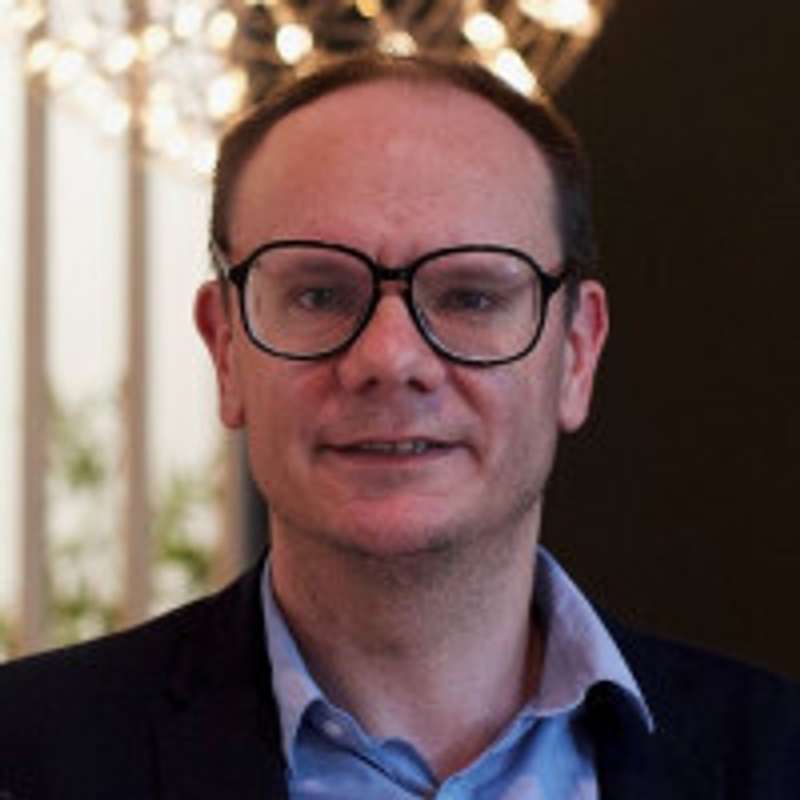
Hosted at Latitude59, the podcast dives into Project Europe, an initiative built to support the next generation of European founders through funding, advice, and access to a wide network of backers and operators. Together, the conversation promises a perspective on what it takes to build ambitious companies in Europe today – and why backing the next wave of talent matters now.

In the Tech.eu podcast, Coreweave executive Ben Richardson discusses Coreweave's strategy in the UK and Europe.
Tandem Health CEO Lukas Sarri discusses Tandem's proposition and its plans across Europe
In the Tech.eu podcast, Matthias Niessner talks about his startup, Spaitial, and the future of 3D AI models.
In the Tech.eu podcast, Francesco Simoneschi talks open banking, Amazon deal, retail adoption of the tech, and the future.
In the Tech.eu podcast, Francseco Simoneschi talks open banking, Amazon deal, retail adoption of the tech, and the future
In this special year-end episode, we look back at the stories that defined European tech in 2025 — and ahead to what 2026 may hold. Instead of Tech.eu journalists alone unpacking the biggest developments of the year, we turned to what you read most in 2025, and invited the founders and investors behind those headlines to share their perspectives on the moments, decisions, and shifts shaping Europe’s innovation economy. From defence and deeptech to venture capital, regulation, and Europe’s race for global scale, our guests reflect on the forces that mattered most in 2025 — and what they believe will define the year ahead.
in the Tech.eu podcast, Roman Chernin talks through Nebius's deals with Microsoft and Meta and its data centre strategy.
in the Tech.eu podcast, Ali Parsa, the founder of healthtech Quadrivia, and Vlad Lupenko, the co-founder of orthodontic healthtec Impress, discuss AI in the healthtech sector.
In this Tech.eu podcast, three founders of AI roll-ups discuss the upsides and challenges of AI roll-ups.
In this Tech.eu podcast, Faculty AI founder Marc Warner talks AI and the work undertaken by Faculty AI.
In the Tech.eu podcast, Ziv Riechert, partner at LocalGlobe, and Bobby Jackle, partner, Visionaries Club, talk AI.
In this Tech.eu podcast, Guillaume Princen talks about Anthropic's European ambitions.
In the Tech.eu podcast, Laura Modiano talks about how OpenAI is working with startups across Europe.
In the Tech.eu podcast, Legora CEO Max Junestrand talks about which LLMs the startup is leveraging and how widespread AI has become within the startup.
In this Tech.eu podcast, Alpine Eagle co-founder Jan-Hendrik Boelens talks defence tech and the opportunity it presents for Europe.
In the Tech.eu podcast, Fractile founder Walter Goodwin discusses Fractile's AI inference chips which he claims can run LLMs faster and more energy efficient than Nvidia's GPUs.
In this episode, the co-founder and interim CEO of Volt, talks about Volt and open banking.
The co-founder of Pockit talks about the fintech's future plans, the acquisition of Monese, and why he thinks the fintech sector is ripe for consolidation.
Two Slovakia-based startup executives discuss the pros and cons of being located in the country.
Nikola Mrkšić talks PolyAI, the future of AI-powered voices, and the impact of AI on the workforce.
Hristo Borisov, CEO and co-founder of Payhawk, was speaking on the Tech.eu podcast, talking about the history of Payhawk and the challenges and opportunities it faces today.
Speaking on the Tech.eu podcast, Payal Dalal, MasterCard, discusses the MasterCard Strive EU Innovation Fund.
Joakim Bruchmann, CEO & co-founder, Pluto.markets, and Ken Villum Klausen, the founder and CEO of Danish challenger bank Lunar, discuss Denmark as a tech hub.
Speaking on the Tech.eu podcast, George Toumbev, chief commercial officer, NatWest Boxed, talks about NatWest’s BaaS offering and some of the challenges and opportunities in the market.
A podcast interview with David Cohen, the co-founder and CEO of Techstars, the startup accelerator, which has backed thousands of startups. In the episode, Cohen addresses recent criticism about its corporate culture and discusses startup trends in Europe and beyond in 2024.
Zoe Peden, partner, Ananda Impact Ventures, an impact VC fund and Eleanor Kaye, managing director, Newton Venture Progam, an education scheme for overlooked and under-represented VCs, discussed the VC diversity issue in this week's Tech.eu podcast.
Doctor Peter Garraghan, co-founder and CEO, Mindgard and Kevin Berghoff, co-founder of Quantum Diamonds, discuss the virtues and challenges of university spinouts.
An interview with Agate Freimane, general partner, Norrsken VC and Pablo Pederjon, partner at Madrid-based impact VC fund Seaya about impact investing.
An interview with two experts on the CrowdStrike fallout and how businesses can limit impact of outage or cyber attack.
A podcast interview with the president of Robinhood UK. In the podcast, we discuss how the UK app is performing, the growth of the UK team, and future plans.
Interview with Maria Rotilu, founder and general partner, Openseed, a fund which is raising $10m to invest in startups at the earliest stages in Europe and Africa.Rotilu discusses-The the birth of Openseed, The benefits of being a solo general partner, What type of investments Openseed is interested in, Why startups should partner up with Openseed, and The investment landscape in Europe and Africa.
Enline is the winner of the EIT Venture Award for their vegetation and landslide predictive forecast programme. The company develops tech such as dynamic line rating and digital twins to help utilities get more out of their existing infrastructure.
Altris AB is the winner of the EIT Innovation Team Award for their sodium-ion batteries. The batteries enable high performance batteries to accelerate the energy transition, without increasing the cost to the environment or to customers. https://www.altris.se/
We talked with Mohamed Elamir and Dr. Andreas Bittner.Mohammad is the winner of the EIT Changemaker Award and co-founder of Woamy, which develops biodegradable plastic-free biofoam for protective packaging to replace harmful plastic foams. https://www.woamy.com/Dr. Andreas Bittner is the winner of the Public Award winner from HiQ-CARB, a team that produces sustainable and resource-efficient nanomaterials for high-performance batteries. These materials enable faster-charging electric vehicles, extended battery life spans for mobile phones, and enhanced safety and longevity for battery-powered devices. https://www.greener-carbons.eu/
Around 25 per cent of fintechs pitching a top VC for funding are AI-first startups, according to a top VC.Asked what per cent of fintechs pitching Breega, a European VC which backs UK savings and investment app Moneybox and UK card-consolidator Curve, are AI-first startups, Breega partner Benjamin Deplus said:“I guess in fintech, it. Is still pretty low.“I mean you have AI involved but it’s mostly for workflow automation. It's not the heart of the product.“I think that is the opportunity for the next years. In fintech, AI-first companies, they are, from what I see, maybe 25 per cent of the companies have AI-first.”Deplus was speaking on the Tech.eu fintech podcast with Florian Reichert, partner and managing director at Picus Capital, the early-stage tech investment firm, which backs Dutch payment processing tech firm Silverflow and French BNPL firm Alma.The pair discussed an array of subjects focused on fintech and VC trends in 2024.On hot investment fintech sectors in 2024, two of those cited by the pair were CFO stack fintechs and payment infrastructure fintechs.Reichert said:“We have seen a lot of promising early-stage funding for infrastructure plays when it comes to fintech and especially payments.“All of these have a bit longer time to market because you have much more product to build.“A lot of them will now this year and next year move into very interesting stages of scale to make them very attractive for growth capital.”Deplus said: “There is still a lot to do in the CFO stack, from enterprise to SMB. Actually, with this AI wave, there is a lot to be done in the financial planning space.”
“It’s never too late and it’s never too early” to launch a startup, according to the co-founder and co-CEO of Enfuce, the payment startup and one of Finland’s biggest fintech.Monika Liikamaa, co-CEO PensionBee founder and CEO Romi Savova; and Lisa Jacobs, CEO of Funding Circle, are examples of high-profile female leaders.Liikamaa added:“What we need to teach the younger generation is that it’s ok to want to achieve, it’s ok to work your ass off. And it’s never too late and it’s never too early to found something and be passionate about it.”Talking about Feminvest’s VC fund, Berglund said:“The response has been incredible. The interest has been super high.“I have been approached by women and men across Europe saying ‘wow finally, thank you for taking the bet'."
The CEO of a European neobroker startup recently acquired by Dutch financial services giant ABN AMRO says it’s his job to keep BUX protected from “too much influence from the larger organisation”.In the Tech.eu podcast, Yorick Naeff, BUX CEO, gives us the background to ABN AMRO’s purchase of BUX, announced in December last year.The Dutch giant was an early stage investor in BUX- most famous for offering commission-free trading to European investors- and the pair are also tech partners.“We started discussing opportunities around the summer last year and at some point these things become more concrete,” says Naeff.“I am very much aware of the pitfalls of becoming part of a larger corporate beast. I think it is up to me to make sure obviously that we keep our innovative power and agility.”He added it was his job as CEO to “protect” BUX from “too much influence from the larger organisation”.For example, he wants to ensure that BUX doesn't become too subsumed within ABN AMRO, losing its ability to launch products quickly and also that BUX maintains its tech stack.On the flip side, he points to the benefits of the tie-up, pointing to ABN AMRO’s global reputation, knowledge and experience across financial services.Elsewhere in the podcast, Naeff talks about other recent changes to BUX, including 40 per cent job cuts, amid a tough economic environment and why it is shifting out of crypto.Finally, he talks about the importance for him of work-life balance and says meditation works for him.
“There is no entrepreneurial gene, I don’t think,” says James Wise, partner at VC firm Balderton Capital and author of Start-Up-Century.He adds:“I don’t think it is in your DNA. But certainly, your upbringing and the role models you have around you do make a big difference.”Wise gives us the full skinny on his new book, Start-Up Nation, which offers a fresh look at the rise in entrepreneurship and startups and how they are changing the world of work as well as what the changing economy means for the future.He talks about fintech luminaries, such as GoCardless founder Hiroki Takeuchi who was “integral” to some of the thinking behind the book.On Monzo co-founder Tom Blomfield and Revolut co-founder Nikolay Storonsky, Wise said:“If you look at the backgrounds of Tom and Nikolay, they are both incredibly competitive, entrepreneurial people.”Wise also offers his view on some of the latest fintech trends.
The Palestinian-Israeli conflict is “horrible” and will “continue to create concerns” across the world, including the investment community, according to Jaidev Janardana, CEO of UK fintech lender Zopa.The CEO pointed out that the Middle East was where the world gets a lot of its oil from.Janardana said:“What happens in the Middle East? It’s hard to predict. I am assuming there will be concerns about the conflict spreading and thus putting pressure on oil prices again, driving a new potential inflation scare.“There is, of course, the tremendous humanitarian cost of what is happening there and what does that do to the West’s ability to support the war in Ukraine? And it’s still a very rapidly developing situation.“There are many potential scenarios where this can go, where this can get worse. And when that happens, then investors tend to be careful with their money and they like to put that in cash, rather than in stocks.”Elsewhere in the interview, Janardana talks about some of the high points for Zopa this year, including topping one million customers and crossing £3 billion in deposits.In 2023, Zopa underwent two fundraising rounds, amid a challenging funding landscape.But Janardana said the two £75m funding rounds “were not that hard”, owing he said to Zopa’s growth and customer demand for its products.The fintech boss also touched on whether market conditions had improved to the extent that Zopa would likely soon IPO; the potential launch of new products; and its relationship with investor SoftBank.
Last month, Singapore-based Nium announced that it had chosen London as its European HQ while US fintech Plaid has dual European headquarters in London and Amsterdam.The two executives discuss the virtues of their international fintechs having European headquarters and why they chose the cities they are located in.Sandhofer says: “London is proving to be one of the best ecosystems for fintechs overall.”Lambert says: “The two top priorities for us are, one, being very, very close to our customers and the people we think should be our customers and then, two, being very, very close to hiring pools of super talented people that want to work directly with those customers in both markets.“And London and Amsterdam were pretty obvious choices for us.”Lambert adds that London and Amsterdam stand out for their “fintech presence”, adding that London is “a kind of a behemoth”.Sandhofer says that in European cities outside of London and Amsterdam, where Nium also has a hub in, it is “harder to find talent which is willing to work only in English”.On having dual headquarters, Lambert says:“The challenge of a dual headquartered set up is obviously when teams are physically disparate it might be difficult to foster conversation.“I think that has been very untrue for us, particularly because we are aware of the risk.”The pair also discuss their current working practices, the benefits of hybrid working and whether they plan to open further European offices.
Lucas Timberlake, general partner at Fintech Ventures Fund, the US VC that has a focus on fintech and insurtech, and Ricardo Schäfer,early-stage investor and partner at Revolut backer Target Global, discuss the differences between European VC and US VC funds while also offering insights into the European fintech market.Timberlake, though, says the most prominent difference is between US West Coast VCs and US East Coast VCs, which are more aligned to European VCs.Timberlake says, generally speaking, US West Coast VCs are looking for binary outcomes, while US East Coast and European VCs are more focused on revenue and loss aversion.Schäfer said it was difficult to generalise about the differences between US and European VC funds, given fund-to-fund differences.That said, he said European VC funds tend to be a little smaller in size.The pair also discuss the trend of US VCs, such as Sequoia and General Catalyst, opening London offices, Schäfer said: “When I first went to the US ten years ago, I remember talking to funds on Silicon Valley's Sand Hill Road and they wouldn’t even fly to Los Angeles. Europe was really kind of far away.“Of course, if you are on the ground and you can play at seed, and if you hit the winners you will obviously be a lot better at deploying capital because you have to build relationships.”He said this strategy of US VCs ploughing more resources into Europe was seeming to work.Timberlake says: “I think it makes sense specifically for the multi-stage funds to have a presence in Europe from seed onwards.”On whether the trend of US VCs investing heavily in Europe would continue, Schäfer said: “Obviously what you have seen over the last couple of years is big fintechs emerge out of Europe. If you look at Wise, if you know look at Revolut, obviously Klarna and a bunch of others. That has definitely created a lot of attention.”

Scandinavia is home to some of the most celebrated tech companies in recent years: Skype, Spotify, and Klarna. Cities like Stockholm and Copenhagen are also home to a new generation of startups creating waves across Europe.In this podcast, we talk to Henrik Rosvall, chief operating officer of Stockholm-based climate fintech Doconomy and Emil Stigsgaard Fuglsang, co-founder and chief operating officer at Matter, the Copenhagen-based sustainability insights fintech.We discuss the fintech scene in Scandinavia and why it is the envy of other nations across Europe; the factors that make cities like Stockholm and Copenhagen attractive fintech ecosystems; how receptive Scandinavians are to startups and fintechs; and whether the desire to tackle the climate crisis is particularly acute in the Nordics.Commenting on Scandinavian success stories like Klarna and Spotify, Rosvall said: “The big giants have fostered a new generation of entrepreneurs.”Fuglsang says that those fintechs that are successful in the region are usually successful globally too.Those that make it in the region “typically make it because we go global quite quick and that is because [Scandinavia] has fairly small markets,” he saysThe pair also discuss that the relatively high standards of living in the Nordics mean there is generally a higher motivation to care about climate change and try and tackle it.
This week the seldom talked about world of Politically Exposed Persons (PEPs) came into the spotlight after Nigel Farage claimed the banks did not want him as a customer due to him being a PEP.The row between Farage and NatWest bank has already accounted for the heads of the CEOs of NatWest and Coutts, the prestigious private bank for the wealthy it owns, and looks set to rumble on.In this podcast, we chat with a PEP expert Alia Mahmud, who is the Regulatory Affairs Practice Lead at compliance data provider ComplyAdvantage.Mahmud tells us what exactly a PEP is; how fintechs manage PEP clients and the extra due diligence involved; and why fintechs and other financial institutions might want to reduce their number of PEP clients.She says that being a PEP involves a “whole lot of complications” and Mahmud also tells us why it is “prudent” for fintechs not get publicly involved in commenting on clients’ political and social beliefs.
Founded in London back in 2012, Onfido has become one of the global leaders in the digital identity verification and authentication services.We caught up with Mike Tuchen, who joined the company almost three years ago after stints as CEO of companies like Rapid7 and Talend, and was brought on board to lead the scale-up and supercharge global growth.Started with merely $30,000 in seed funding a decade ago, Onfido has raised more than $200 million in funding to date, and currently employs more than 600 staff around the globe.According to Tuchen, revenue has reached well over $100 million a year, but getting the multi-national company to cashflow-positivity while maintaining healthy growth figures is one of his priorities.We didn't only talk numbers though; Tuchen also went deep into Onfido's software, its positioning, how and why it uses artificial intelligence in its products, combatting bad actors and deepfakes, the war for talent, the company's recent acquisition of Airside, his take on the UK and European technology ecosystems, and much more.You can also watch the interview directly on YouTube.
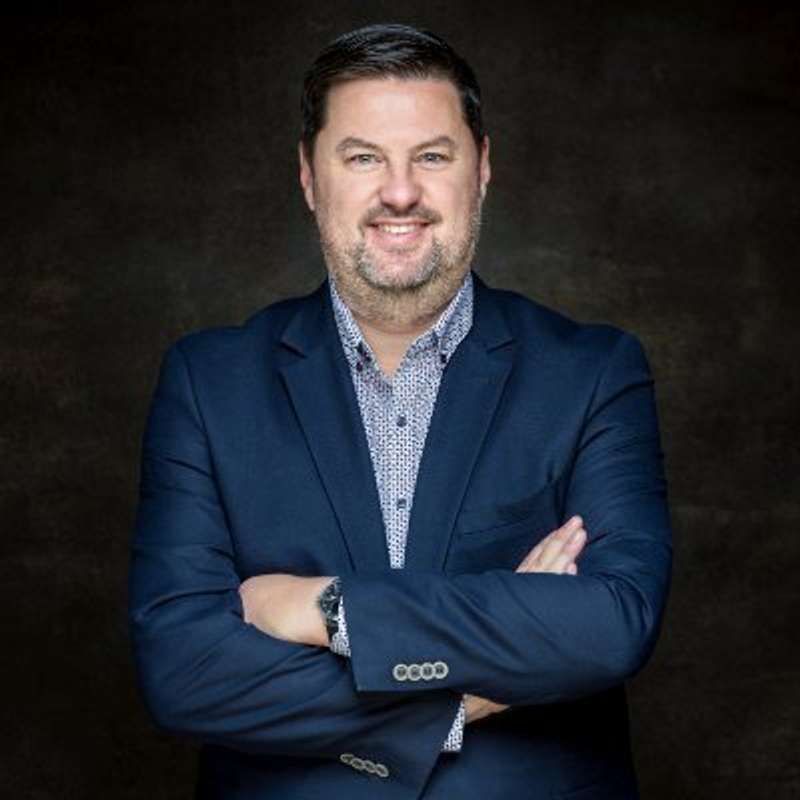
Bulgarian cargo drone manufacturer Dronamics today extended its pre-Series A funding round to raise €2 million euro from private investors exclusively via SeedBlink, the Romania-based crowdfunding platform.A few months back, the company raised $40 million right before completing the first successful flight of its flagship aircraft, the Black Swan.As the deep tech firm gears up to close a Series A round, Dronamics wants to build on the momentum by commercialising its drone.We caught up with one of the two brothers who co-founded the company, CEO Svilen Rangelov, to learn more about the startup's fascinating journey.You can also watch the interview on YouTube
Up this week:The AI wars are heating up: During London Tech Week Prime Minister Rishi Sunak set the goal of establishing the UK as the global home of artificial intelligence. This week OpenAI, the firm behind ChatGPT, announced that it would open its first international office in London, and Google DeepMind CEO Demis Hassabis went on record stating that his engineers are building an AI system dubbed Gemini that will be more capable than that of OpenAI. All the while Stability AI, the company behind Stable Diffusion is looking, well, a bit unstable.A new report from Frontline Growth took a look at how US companies succeed and fail when it comes to European expansion. Representing up to 40% of global revenue for public software businesses, The authors note that "the strength of today's European tech ecosystem makes ignoring the region a costly mistake." Frontline goes on to cite the problem of success amnesia, where companies focus on sales at the expense of local marketing, community development, and brand-building efforts. Their data shows that 50% of companies don't have a single marketing resource in Europe a year after landing.Following a retreat from France, Turkish speedy grocery service Getir is now pulling out of Spain. Spain's biggest trade union CCOO didn't mince words stating, "We condemn the disastrous business management of Getir, which has not known how to grow or have a market strategy in Spain. Now its staff will suffer the biggest harm." In light of these developments, it would appear as though Getir's rumoured offer to acquire Flink might well be off the table.VTT Spinout Steady Energy is working on a 50MW nuclear reactor to be used to heat homes in Europe. Operating at significantly lower temperatures and pressure than a traditional reactor, the company's CEO Tommi Nyman says, "The pressure required by the LDR-50 reactor is comparable to the pressure that of a household espresso machine. It operates at a lower pressure than a district heating network. This ensures that in case of a malfunction which leads to a leak, the leak is contained within the heating plant, without endangering people or the environment."Working on the algorithms that drive quantum computing, specifically, applyi
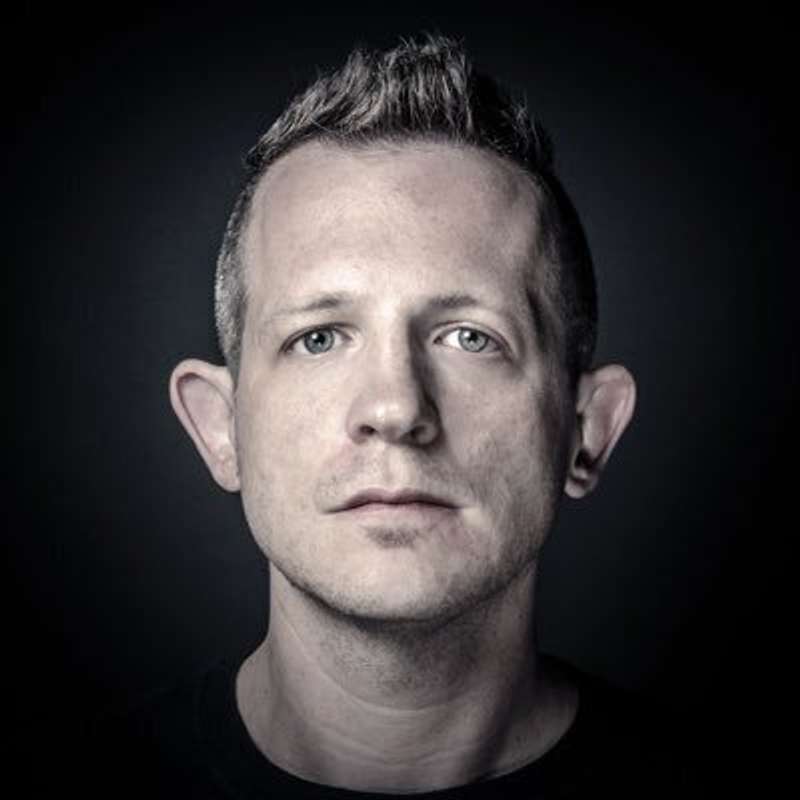
Shhhh. Can you hear it? Listen in. Very carefully. Yes, yes, that's the unmistakable sound of an ecosystem that's staring down a summer full of iced tea and days by the lake. Or, is that just me?Either way, due to popular demand stemming from her appearance at our Summit just last month, we're welcoming Earlybird Venture Capital's Marieke Gehres to the show today where she brings a unique opinion to this week's news.We're talkin':- Finally, Bolt + Starship have ‘shipped’! - Bolt's new scooters are on the lookout for bad riders- Are new immigrant policies a threat to the Finnish start-up ecosystem?- Crappy photos no more thanks to generative AI- How do you get the US Marine Corps as a client? The power of partnerships - €100 million tech campus planned for Vilnius – Tech Zity to create ‘largest tech campus in Europe’- EU antitrust chief Margrethe Vestager is in the running for the top job at the European Investment Bank- Open AI - stolen EMEA account details for sale- EasyTranslate is using generative AI to drill down to client-specific language models- Wimbledon and IBM for AI tennis- The BBC documentary about London-based events startup Pollen and its collapse: Crashed: $800 million festival fail- Sequoia's new tool to help find talent: Atlas.All this, and a whole lot more on this week's episode of the Drive at Five!
Reviews
No reviews yet.
If you like this...

Startup Europe — The Sifted Podcast
Same topic · Same audience · Same vibe

The Twenty Minute VC (20VC): Venture Capital | Startup Funding | The Pitch
Same topic · Same format · Same audience

Less Noise, More Signal
Same topic · Same tone · Same audience

Data Science Tech Brief By HackerNoon
Same topic · Same audience

Web3 Tech Brief By HackerNoon
Same topic · Same audience

Cybersecurity Tech Brief By HackerNoon
Same topic · Same audience
Explore more like this
Listening context
Discussion (0)
No comments yet. Be the first to start the discussion!