Science Weekly
The Guardian·Hosted by Madeleine Finlay and Ian Sample·299 episodes
Twice a week, the Guardian brings you the latest science and environment news
Why listen
Science Weekly turns fast-moving science, health, environment, and technology stories into clear conversations with Guardian journalists and specialist guests. Hosts Madeleine Finlay and Ian Sample keep the episodes compact, usually under 25 minutes, so listeners get useful context without needing a science background. It is a strong fit for curious listeners who want evidence-led explanations of the stories behind the headlines.
Series(2)
Episodes
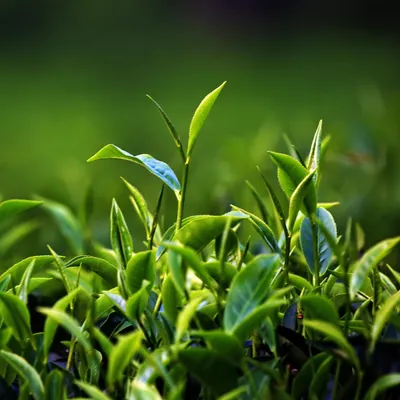
Science correspondent Nicola Davis investigates the strange story of Tam O’Braan and his attempts to grow tea in Scotland. In episode one of this mini-series first broadcast in October 2025, Nicola looks back on her first meeting with O’Braan while working on a feature about tea plantations in the UK. He was selling his award-winning Scottish-grown tea to some of the UK’s finest hotels, but something didn’t quite add up. And Nicola wasn’t the only person taking an interest in his story. Help support our independent journalism at theguardian.com/sciencepod
The first person has been treated with a highly anticipated new gene therapy that aims to turn back the clock on ageing cells. The trial is aimed at retinal cells, with the hope that encouraging them to behave as if they were young again could improve sight in the affected patients. If it proves to be safe, it could open the door to a whole raft of therapies based on the emerging field of cellular rejuvenation. To understand more about this cutting edge research, Madeleine Finlay hears from science editor Ian Sample and from Paul Knoepfler, professor of cell biology and human anatomy at the university of California, Davis.. Help support our independent journalism at theguardian.com/sciencepod
Scientists often talk about the importance of flora and fauna to the health of our planet, but Dr Toby Kiers, an evolutionary biologist and founder of the Society for the Protection of Underground Networks, wants us to consider another force: fungi. Her work charting the planet’s vital underground systems has earned her numerous awards, including a MacArthur fellowship and a Tyler Prize for Environmental Achievement (sometimes called the ‘green’ Nobel). She tells Ian Sample about her work mapping fungal networks on the remote Palmyra Atoll in the Pacific Ocean, and what the research reveals about fungi’s often invisible role. Help support our independent journalism at theguardian.com/sciencepod
Men’s average testosterone levels have halved over the past 50 years, according to scientists who say society is facing a male fertility crisis. Rising levels of obesity and diabetes are expected to play a part, but the team behind the work suggest that environmental factors such as endocrine-disrupting chemicals – which can be found in various household items – and global heating could also be factors in the apparent striking decline. Ian Sample speaks to science correspondent Hannah Devlin to find out how the work has been received and what the researchers want to see happen in response to their finding. Help support our independent journalism at theguardian.com/sciencepod
In the last 50 years, Britain has lost an astonishing 73 million wild birds from its landscape, according to the British Trust for Ornithology. Habitat loss, pesticides, disease, cats and the climate crisis mean there are fewer birds than ever before. For children and young people it can be difficult to appreciate the scale of the loss due to a psychological phenomenon called ‘shifting baseline syndrome’, where each generation inherits a degraded version of the environment, and therefore doesn’t notice the overall decline. But Gen Z are bucking the trend. Thanks to social media and the Merlin Bird ID app, birding has become cool. To find out what we’re missing from the dawn chorus, and why young people are embracing birdwatching, Madeleine Finlay hears from the writer Robert Macfarlane and from Jess Painter, a member of the RSPB’s youth council. Help support our independent journalism at theguardian.com/sciencepod
Researchers claim they are closer to creating life from nothing after building tiny, quivering blobs that use lab-made DNA to feed, grow and multiply in a dish. To find out how significant this step is, and where scientists hope it will lead, Madeleine Finlay hears from co-host Ian Sample and from Kate Adamala, professor of genetics at the University of Minnesota. Help support our independent journalism at theguardian.com/sciencepod
The Lincoln Memorial reflecting pool in Washington DC has hardly been out of the news since April when President Trump vowed to have it renovated, and painted ‘American flag blue’ by 4 July. Despite the pool being stripped, cleaned, coated and refilled, within days the algae that has plagued it for decades was back. To find out why these blooms happen, what makes them so difficult to tackle and what Trump could try next, Ian Sample hears from co-host Madeleine Finlay, and from Dr Linda May, a freshwater ecologist at the UK Centre for Ecology & Hydrology.. Help support our independent journalism at theguardian.com/sciencepod
How much do our genes determine about our lives, and could they influence traits like risk-taking, antisocial behaviour or even violence? Ian Sample talks to Kathryn Paige Harden, a behavioural geneticist and professor of psychology at the University of Texas at Austin who studies how genetic factors shape human behaviour. In her book Original Sin she explores how nature and nurture combine to influence our likelihood of committing crimes, and asks whether the ‘cause’ of our actions matters for how we think about culpability. Help support our independent journalism at theguardian.com/sciencepod
Met Office forecasters have issued a rare red weather warning for England, with temperatures potentially reaching 40C (104F) in some places. Europe is also dealing with a debilitating heatwave, with schools closed, trains cancelled and France even restricting the consumption of alcohol outdoors to take pressure off the emergency services. The high temperatures coincide with the coming El Niño, which some scientists have nicknamed Godzilla for its predicted strength. To find out whether the two are linked, Ian Sample hears from our Europe climate correspondent, Ajit Niranjan. He explains why it’s so hot, why we could be in for even worse and how we can keep as cool as possible. Help support our independent journalism at theguardian.com/sciencepod
Sea ice is melting fast and worsening the climate crisis. But what if there were a way to thicken it again? Madeleine Finlay is joined by environment editor Damian Carrington to discuss a bold attempt to refreeze the Arctic which is showing early signs of success. He visited the project to find out how it will work, how much it will cost and whether it really has potential to improve the fate of the Arctic’s ice. Help support our independent journalism at theguardian.com/sciencepod
The UK prime minister, Keir Starmer, has announced a social media ban for under-16s, as part of an online safety drive that aims to go even further than the world’s first ban, introduced by Australia last year. Many parents have welcomed the proposals, but scientists have pointed to the lack of strong evidence for the efficacy of bans, and some campaigners have argued that the proposal allows social media companies to avoid making meaningful changes on their platforms. Ian Sample is joined by co-host Madeleine Finlay to explore what the evidence indicates about the harms of social media and the impact of banning it outright. Help support our independent journalism at theguardian.com/sciencepod
A daily pill can double survival time in patients with the world’s deadliest cancer, according to the results of a clinical trial that experts are saying is a gamechanger and one of the biggest breakthroughs in decades. To find out more about how daraxonrasib works and how life-changing it could be for patients, Madeleine Finlay speaks to Prof Naureen Starling, consultant medical oncologist at the Royal Marsden hospital. Help support our independent journalism at theguardian.com/sciencepod
While many dinosaurs were wiped out when a colossal asteroid struck Earth 66m years ago, one group survived: birds. Prof Steve Brusatte, a palaeontologist at the University of Edinburgh, has written a new book, The Story of Birds, tracing the evolution of our feathered friends from their dinosaur origins. He joins science correspondent Nicola Davis to discuss how scales first became feathers, how winged dinosaurs survived the impact of the asteroid and why their extreme adaptability offers hope that birds might also make it through the current environmental crisis. Help support our independent journalism at theguardian.com/sciencepod
It’s just a week until the first whistle of the 2026 World Cup. To mark the occasion, Madeleine Finlay talks to Ian Sample about the science behind the tournament. It’s likely to be one of the hottest ever World Cups, and scientists have written to Fifa asking it to reconsider its heat mitigations for players and referees. Dr Oliver Gibson of Brunel University outlines their concerns. Also on the agenda is the huge fossil-fuel impact of the tournament, and the effect of VAR on the psychology of referees and fans. Help support our independent journalism at theguardian.com/sciencepod
Humans have been wondering why we sleep for thousands of years. Is sleep’s purpose rest and relaxation, memory consolidation or maybe cognitive processing? In the last 15 years, scientists have discovered another possible explanation – waste disposal. In 2012 neuroscientist Maiken Nedergaard’s lab discovered that the brain has its own cleaning process, the glymphatic system, which clears away unhelpful proteins and metabolic byproducts, and only switches on at night. Since that groundbreaking discovery we’ve learned more about what drives this system and, importantly, how it could be impacting dementia. To understand more, Ian Sample talks to Prof Nedergaard about how she made the original discovery and how subsequent work is building a picture of sleep as anything but a quiet and inactive state. Help support our independent journalism at theguardian.com/sciencepod
Last month at Beijing’s half marathon, a robot named Lightning beat the human world record by nearly seven minutes. It’s the latest in a string of AI-powered milestones that have got people wondering whether robots are about to enter our everyday lives, just as chatbots have. And the country leading the charge is China, where the government has pledged to invest more than £100bn in robotics over the next 20 years. To find out how robots are already entering the workforce, and what needs to happen to get them cleaning our homes and weeding our gardens, Ian Sample hears from the Guardian’s senior China correspondent, Amy Hawkins, and from Nathan Lepora, professor of robotics and AI at Bristol University, who researches how robots can achieve human-like dexterity. Help support our independent journalism at theguardian.com/sciencepod
Home red-light therapy devices have exploded in popularity as masks, body wraps and mittens promise to reduce wrinkles, redness and even acne. But do the claims stack up, and what other benefits are scientists investigating? Ian Sample hears from his co-host, Madeleine Finlay, and the consultant dermatologist Dr Jonathan Kentley. Kentley explains how the potential benefits of red light were discovered, how it is thought to interact with collagen in our skin, and what science has to say about its impact on our appearance. Help support our independent journalism at theguardian.com/sciencepod
The US supreme court has preserved nationwide access to mail-order abortion pills – for now. As Carter Sherman explains, the fight to protect this medication is far from over, as a nationwide, near-total abortion ban could be on the horizon. Carter speaks with Dr Angel Foster, co-founder of the Massachusetts Medication Abortion Access Project, who reveals how the legal battle over abortion pills has affected patients across the US – and what could happen next. Help support our independent journalism at theguardian.com/sciencepod
After more than a decade of global consultation, polycystic ovary syndrome – which affects as many as one in eight women – has been renamed. The condition is caused by high levels of androgens, which can lead to symptoms such as excess hair, weight gain and irregular periods. To understand why campaigners wanted it renamed, and what its new name – polyendocrine metabolic ovarian syndrome (PMOS) – could mean for patients, Madeleine Finlay hears from the Guardian’s science correspondent, Nicola Davis, and Rachel, a campaigner from the charity Verity. Help support our independent journalism at theguardian.com/sciencepod
An outbreak of Ebola has emerged in the Democratic Republic of Congo and Uganda, leading to nearly 400 confirmed cases and more than 100 deaths. To find out how the outbreak might have begun, what authorities can do to contain it and why this outbreak is causing particular concern, Ian Sample hears from Daniela Manno, a clinical epidemiologist at the London School of Hygiene and Tropical Medicine. Help support our independent journalism at theguardian.com/sciencepod
The US supreme court dealt a devastating blow to the 1965 Voting Rights Act when it ruled in Louisiana v Callais in April that states cannot consider race in redistricting. Southern states from Tennessee to Alabama have rushed to erase majority-Black districts, sparking chaos for the midterm elections. Kai Wright talks to Stacey Abrams, a voting rights activist and former Georgia house minority leader, about the fallout from the decision, and why, despite it all, she still believes the way forward lies in engaging more voters to participate in democracy. ‘They have fractured communities and said we’re going to scatter these seeds. Our job is to grow,’ she says. Help support our independent journalism at theguardian.com/sciencepod
Madeleine Finlay sits down with co-host and science editor Ian Sample to discuss three eyecatching stories from the week, including an update on hantavirus. Also on the agenda is the Pentagon’s release of a tranche of never before seen documents relating to UFOs, and a study looking at the link between taking part in cultural activities and slower biological ageing. Help support our independent journalism at theguardian.com/sciencepod
Last month President Trump signed an executive order designed to fast track both research and access to psychedelic drugs as treatments for mental health illnesses. The most prominent in the order was ibogaine, a drug derived from the root bark of a West African shrub, that has shown some promise in relieving the long term effects of traumatic brain injury. Madeleine Finlay talks to journalist Mattha Busby about podcaster Joe Rogan’s role in the story, what else is behind the President’s interest in psychedelic research, and what the order will change in practice for scientists and researchers. Help support our independent journalism at theguardian.com/sciencepod
To celebrate Sir David Attenborough’s centenary, Madeleine Finlay catches up with natural history writer Patrick Barkham, who has met the celebrated presenter. They explore how the natural world has changed in the century that Attenborough has been on Earth, and how his programming has reflected his growing commitment to highlighting the devastating impacts of the climate crisis on nature and biodiversity. Help support our independent journalism at theguardian.com/sciencepod
Three people have died after an outbreak of hantavirus onboard a cruise ship travelling from Argentina to Cape Verde. The World Health Organization says a total of seven cases – two confirmed by laboratory testing and five suspected – have been identified on the cruise ship so far. It is also investigating whether rare human-to-human transmission of the virus could be behind the cases. Madeleine Finlay talks to Prof Jonathan Ball from Liverpool School of Tropical Medicine to find out where the virus comes from, how it is transmitted to humans, and what health agencies will be doing to try to contain it. Help support our independent journalism at theguardian.com/sciencepod
The transition towards renewable energy received a boost last week when representatives from 57 countries met in Santa Marta, Colombia, for a world-first climate meeting aimed at bringing the fossil fuels era to an end. Madeleine Finlay hears from the Guardian’s global environment editor, Jon Watts, about how the landmark conference came about, who was missing, and whether the optimism can translate into real world action. Help support our independent journalism at theguardian.com/sciencepod
Madeleine Finlay sits down with co-host and Guardian science editor Ian Sample to talk through three eye-catching stories from the week, including the news that the number of years people in the UK are spending in good health has declined compared with a decade ago. Also on the agenda is the science, tech and nutrition behind two runners at this weekend’s London marathon breaking the two-hour threshold, and an answer to why some old houses feel particularly spooky. Help support our independent journalism at theguardian.com/sciencepod
Social media is awash with content about food intolerances and the symptoms to look out for. But figuring out whether you actually have one, and what’s triggering it, is surprisingly difficult. One avenue people are gravitating towards is at-home testing. Madeleine Finlay sits down with health and lifestyle journalist Rebecca Seal to unpick the science behind these tests. Rebecca explains how they purport to work, how accurate they actually are, and how we can all investigate what we might be intolerant to, without breaking the bank. Rebecca’s book Irritated: The Allergy Epidemic and What We Can Do About It, is out now.. Help support our independent journalism at theguardian.com/sciencepod
Madeleine Finlay sits down with science editor Ian Sample to hear about some of the winners of the Breakthrough Prize, which held its ceremony in LA last weekend. Each prize is worth $3m and they’re awarded in physics, maths and life sciences. Madeleine and Ian hear from molecular biologist Jean Bennett, who shared a life sciences prize for her work developing the world’s first FDA-approved gene augmented therapy for sight loss. She explains how a chance encounter while dissecting a brain in medical school led her on a 25-year journey to develop the treatment.. Help support our independent journalism at theguardian.com/sciencepod
Earlier this month the AI company Anthropic said it had created a model so powerful that, out of a sense of responsibility, it was not going to release it to the public. Anthropic says the model, Mythos Preview, excels at spotting and exploiting vulnerabilities in software, and could pose a severe risk to economies, public safety and national security. But is this the whole story? Some experts have expressed scepticism about the extent of the model’s capabilities. Ian Sample hears from Aisha Down, a reporter covering artificial intelligence for the Guardian, to find what the decision to limit access to Mythos reveals about Anthropic’s strategy, and whether the model might finally spur more regulation of the industry.. Help support our independent journalism at theguardian.com/sciencepod
Madeleine Finlay sits down with co-host and science editor Ian Sample to discuss three eye-catching stories from the week, including a review into the effectiveness of a new class of Alzheimer’s drug that was once hailed as a game-changer in slowing the progress of the disease. Also on the agenda is the news that the world could be heading for a ‘super El Niño’ this summer and a study exploring whether conversations about dull topics really are as boring as we expect them to be. Help support our independent journalism at theguardian.com/sciencepod
Alongside the oil and gas stranded in the strait of Hormuz is another commodity vital to today’s economy: helium. It is a critical element in all kinds of areas from MRI machines to the Large Hadron Collider, and even deep-sea diving. It is also integral to the AI boom. And this isn’t the first time its fragile global supply chain has been threatened. So why is helium so useful, and what will happen if the shortage continues? Ian Sample hears from co-host Madeleine Finlay, and from Sophia Hayes, professor of chemistry at Washington University in St. Louis. Help support our independent journalism at theguardian.com/sciencepod
This week Artemis II’s four-astronaut crew broke Apollo 13’s distance record, becoming the humans to travel the farthest from Earth. Now on their way home, the team has experienced tech malfunctions, views like no other and moments of intense emotion, all in under 10 days. To find out about all the highs and lows of the mission, Madeleine Finlay hears from the Guardian’s science editor, Ian Sample. Help support our independent journalism at theguardian.com/sciencepod
The number of human cases of guinea worm, a painful and debilitating tropical illness, fell to a record low of just 10 last year, according to the Carter Centre, the foundation set up by the late former US president Jimmy Carter. But despite years-long declines, it remains almost impossible to completely eradicate the parasite. Only one human illness has been entirely eradicated: smallpox. Why is it so difficult, and could guinea worm one day be the second? Ian Sample hears from co-host Madeleine Finlay, and David Molyneux, emeritus professor of tropical disease microbiology at the Liverpool School of Tropical Medicine. Help support our independent journalism at theguardian.com/sciencepod
Saunas and cold plunge pools are popping up everywhere in the UK, bringing fiery heat and icy cold to a beach, city farm or park near you. Their users will be ready with all the reasons why it’s good for both the mind and the body. But what’s the evidence for the benefits of sauna and cold plunge? Madeleine Finlay hears from Ian Sample and from Dr Heather Massey, associate professor at the University of Portsmouth’s extreme environments laboratory. • This episode was amended on 13 July 2026. An earlier version referred to Finnish fjords, but there are no fjords in Finland. The reference has been replaced.. Help support our independent journalism at theguardian.com/sciencepod
If all goes to plan, Artemis II, Nasa’s mission to return humans to the moon, will launch this week. The mission will mark the farthest that humans have travelled from Earth, and the first return to the moon in more than 50 years. It will also pave the way for landing on the moon again as soon as 2028. But given the Apollo missions have already achieved that feat, does going back to the moon still matter today? To find out, Madeleine Finlay hears from the Guardian’s science editor, Ian Sample, the Atlantic journalist Ross Andersen, and Jan Wörner, a former director general of the European Space Agency. Help support our independent journalism at theguardian.com/sciencepod
A box the size of a filing cabinet was lifted by crane, slowly moved and placed very carefully in the back of an unassuming lorry earlier this week. What looked like a casual drive around the Cern campus was actually a world-first experiment in transporting antimatter, the most expensive and volatile substance on Earth. To find out why scientists wanted to achieve this milestone, and what happened on the journey, Madeleine Finlay hears from the Guardian’s science editor, Ian Sample, and the Cern physicist Dr Christian Smorra.. Help support our independent journalism at theguardian.com/sciencepod
Why is it like something to be ourselves and how do physical processes create our subjective experience? These questions get to the heart of the knotty problem of consciousness, and they provided the spark for the latest book from award-winning author and journalist Michael Pollan. In A World Appears, Pollan goes in search of answers about what we do and don’t know about consciousness, and why it has proven such an elusive phenomenon. He tells Ian Sample how thoughts and feelings shape our conscious experience, whether we can learn anything about human consciousness from AI, and why he thinks our minds need to be defended in today’s technology saturated world. Help support our independent journalism at theguardian.com/sciencepod
On the evening of 29 December 2011, police officer Clifton Lewis was moonlighting as a security guard at a Chicago minimart when two men walked in. They shot Lewis several times, then took off with his gun and police star. A week later, police had their suspects: four men affiliated with a gang called the Spanish Cobras. For hours, under intense police questioning, they all said they did not do it. But that did not seem to matter. This is episode one of Off Duty, an investigation by the Guardian’s Melissa Segura. Help support our independent journalism at theguardian.com/sciencepod
Over the weekend, news emerged of an outbreak of meningitis among university and school students in Kent in south-east England. The outbreak has killed two young people and left several others seriously ill. Health officials confirmed that the meningitis B strain has been identified in some of the cases. To find out what we know about the outbreak, who is most at risk and why questions are being asked about who has access to the meningitis B vaccine, Madeleine Finlay speaks to Eliza Gil, a clinical lecturer specialising in infectious disease at the London School of Hygiene and Tropical Medicine. Help support our independent journalism at theguardian.com/sciencepod
Grey-market injectable peptides – a category of substances with obscure, alphanumeric names such as BPC-157, GHK-Cu, or TB-500 – have developed a devoted following among biohackers and health optimisers. To understand how these unregulated substances have become mainstream and what they could be doing in our bodies, Madeleine Finlay hears from journalist Adrienne Matei and from Dr Anna Barnard, an associate professor at Imperial College London who researches peptides. Help support our independent journalism at theguardian.com/sciencepod
The Guardian’s science editor, Ian Sample, talks to Madeleine Finlay about three eye-catching science stories from the week, including a study that explores the link between exercise and brain health. Also on the agenda: the discovery that hedgehogs can hear high-frequency ultrasound and what this could mean for their conservation, and new research examining how biased AI autocomplete tools can influence the beliefs of users.. Help support our independent journalism at theguardian.com/sciencepod
Among the many justifications Donald Trump has presented for the US and Israel attacking Iran has been the supposedly imminent threat posed by its nuclear weapons programme. But how close was the country really to developing an atomic weapon? Ian Sample hears from Kelsey Davenport, the director of non-proliferation policy at the Arms Control Association. She sets out why many experts don’t believe the country even had a structured nuclear weapons programme, and explains what she thinks the impact of the war could be on nuclear proliferation around the world.. Help support our independent journalism at theguardian.com/sciencepod
The conflict in the Middle East has sent energy prices soaring, and for countries that import a high proportion of their fuel, it’s a reminder of the perils of energy dependence. As the recipient of almost 90% of Iran’s crude oil, China knows this only too well. Which partly explains why the country spent the last decade heavily investing in clean power. To find out what else could be driving the strategy, Madeleine Finlay speaks to senior China correspondent Amy Hawkins. And energy correspondent Jillian Ambrose reflects on how China’s ambitions could affect the rest of the world. Help support our independent journalism at theguardian.com/sciencepod
In the past three months, Donald Trump’s White House has reportedly used AI twice to effect regime change – once in its capture of Venezuela’s president, Nicolás Maduro, and more recently to help plan the strikes that killed Iran’s supreme leader, Ayatollah Ali Khamenei. The most recent strikes coincided with the end of the Pentagon’s relationship with the AI company Anthropic over concerns its AI tool Claude was being used for purposes the company had explicitly prohibited. The government swiftly signed a new contract with Open AI. To find out what this means for the use of AI in forthcoming conflicts, Madeleine Finlay speaks to technology journalist Chris Stokel-Walker. He explains why he thinks this moment represents a dangerous turning point.. Help support our independent journalism at theguardian.com/sciencepod
Since the 1960s, global GDP has been rapidly rising and living standards have reached record highs. But something else has been rocketing up too – carbon emissions. For years, scientists and economists have been asking: is it possible to grow without heating and polluting the Earth? And as the climate becomes more unstable, the issue is only becoming more urgent. Madeleine Finlay hears from two economists arguing for a change in how we measure a country’s success. Nick Stern is professor of economics and government at the London School of Economics and an advocate of green growth, an approach to growth that prioritises green industry. Jason Hickel is a political economist and professor at the Autonomous University of Barcelona who advocates degrowth, shrinking parts of the economy that do not advance our social and ecological goals.. Help support our independent journalism at theguardian.com/sciencepod
For a long time fat was seen simply as an inert yellow substance wrapping around our bodies, but now that’s changing. Scientists are beginning to understand that our fat is actually intricate and dynamic, constantly in conversation with the rest of the body. It’s now even considered by some to be an organ in its own right. To find out more about the complex role fat plays in our health, Ian Sample hears from co-host Madeleine Finlay and from Declan O’Regan, professor of cardiovascular AI at Imperial College London. Help support our independent journalism at theguardian.com/sciencepod
Madeleine Finlay sits down with science editor Ian Sample and science correspondent Nicola Davis to discuss three eye-catching stories, including the impact of a powerful psychedelic on depression, answers on the death of Russian opposition leader Alexei Navalny, and an explanation to the mystery of why humans have chins. Help support our independent journalism at theguardian.com/sciencepod
Testimonials about the beneficial health effects of magnesium supplements abound online, with influencers claiming that a daily pill can help with everything from anxiety to sleep and brain fog. But do any of these claims stack up? Ian Sample is joined by co-host Madeleine Finlay to find out where the science stands. They also hear from Katherine Tucker, the founder of the Center for Population Health at the University of Massachusetts Lowell. She explains what magnesium is doing in our bodies and the best approach we can take to ensure we are getting enough. Help support our independent journalism at theguardian.com/sciencepod
In late January a new social media site took a certain corner of the internet by storm. Moltbook was conceived as a space where AI assistants could let off steam, chat and compare notes on their bosses, but it quickly became the focus of breathless claims that the singularity had arrived as the bots started badmouthing their humans and plotting an uprising. So what’s the truth about Moltbook? Madeleine Finlay hears from Aisha Down about what it tells us about AI, and about us.. Help support our independent journalism at theguardian.com/sciencepod
Reviews
No reviews yet.
If you like this...

Short Wave
Same topic · Same format · Same audience

Science Vs
Same topic · Same tone · Same audience

BBC Inside Science
Same topic · Same format · Same audience

Science Friday
Same topic · Same audience · Same vibe

Radiolab
Same audience · Same vibe · Same tone

Ologies with Alie Ward
Same topic · Same audience · Same vibe
Explore more like this
Listening context
Discussion (0)
No comments yet. Be the first to start the discussion!