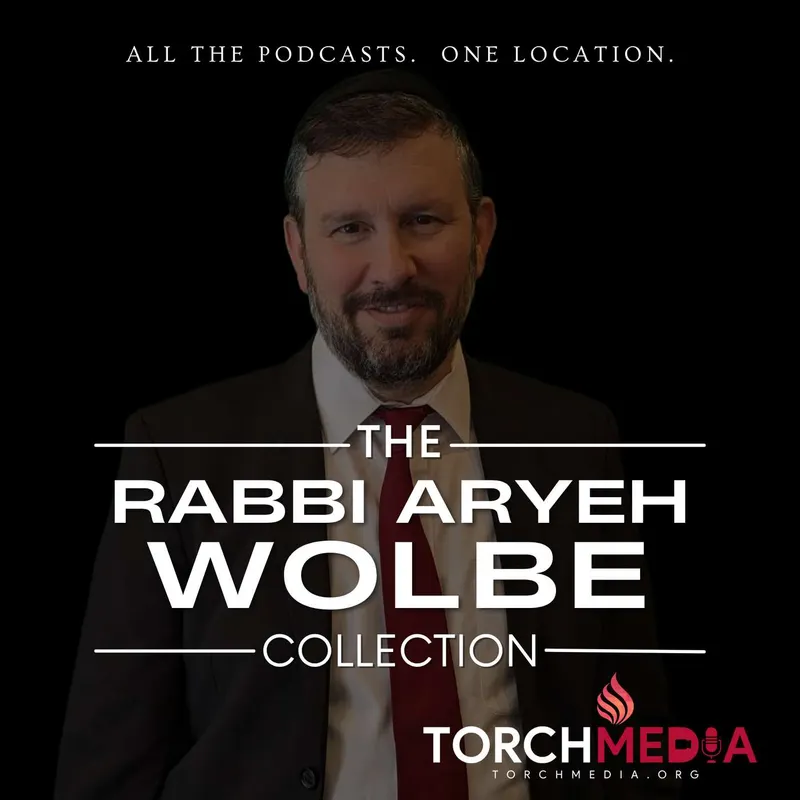
Rabbi Aryeh Wolbe Podcast Collection
TORCH·998 episodes
The Rabbi Aryeh Wolbe Podcast Collection is the one-stop shop for the Torah inspiration shared by Rabbi Aryeh Wolbe in one simple feed. The Jewish Inspiration Podcast, Parsha Review Podcast, Thinking Talmudist Podcast, Living Jewishly Podcast and Unboxing Judaism Podcast all in one convenient place. Enjoy!
Episodes
Why would a day of mourning also be considered a festival? Join us on the Jewish Inspiration Podcast as we explore the enigmatic nature of Tisha B'Av, a day deeply rooted in sorrow yet embraced as an opportunity for spiritual growth. We reflect on the significance of the Temple's destruction and the profound sense of loss it represents. Despite this absence, our prayers, especially those on Shabbat, continue to resonate with a yearning for closeness and clarity with the Almighty.We also tackle the emotional aftermath of the tragic events on October 7th, drawing lessons from the mourning rituals of Tisha B'Av. Explore how sadness can be a powerful catalyst for transformation and a renewed commitment to Jewish observance. From Shabbat candles to the hope for the coming of Mashiach, we emphasize the importance of building an inner temple within ourselves, guiding us towards divine redemption. Join us for a thought-provoking and heartwarming episode that seeks to inspire and elevate our spiritual journey._____________Recorded from a live audience presentation in the TORCH Centre - Levin Family Studios (B) in Houston, Texas on August 4, 2024.Released as Podcast on August 13, 2024_____________DONATE to TORCH: Please consider supporting the podcasts by making a donation to help fund our Jewish outreach and educational efforts at https://www.torchweb.org/support.php. Thank you!_____________SUBSCRIBE and LISTEN to other podcasts by Rabbi Aryeh Wolbe:NEW!! Prayer Podcast: https://prayerpodcast.transistor.fm/episodesJewish Inspiration Podcast: https://inspiration.transistor.fm/episodesParsha Review Podcast: https://parsha.transistor.fm/episodesLiving Jewishly Podcast: https://jewishly.transistor.fm/episodesThinking Talmudist Podcast: https://talmud.transistor.fm/episodesUnboxing Judaism Podcast: https://unboxing.transistor.fm/episodesRabbi Aryeh Wolbe Podcast Collection: https://collection.transistor.fm/episodesFor a full listing of podcasts available by TORCH at https://www.TORCHpodcasts.com_____________EMAIL your questions, comments, and feedback: [email protected]_____________Please visit www.torchweb.org to see a full listing of our outreach and educational resources available in the Greater Houston area! ★ Support
In this lesson from the Gate of Repentance (Shaar HaTeshuvah), Rabbi Aryeh Wolbe explains that genuine teshuvah requires more than regret—it demands creating safeguards against returning to the same mistake. The Orchot Tzaddikim discusses several serious transgressions, including idolatry, adultery, false oaths, and misuse of Hashem’s name. In each case, the repentant person is instructed to distance themselves from the environment, habits, and influences that originally led them astray.Rabbi Wolbe emphasizes that this principle applies far beyond the specific examples in the text. A person recovering from alcoholism should not spend time near a bar. Someone trying to improve their diet should avoid places filled with temptation. A person who repeatedly misuses speech or makes careless promises should establish strict boundaries around what they say. Spiritual strength does not mean deliberately placing ourselves in danger and hoping to resist. Wisdom means recognizing our vulnerabilities and avoiding the trap before the struggle begins.The episode also highlights the seriousness of oaths and using Hashem’s name improperly. Rabbi Wolbe explains why Jewish tradition strongly discourages casual swearing and why American law generally permits a person to affirm rather than swear when giving testimony. Even common speech requires awareness: since “Shalom” is one of Hashem’s names, Jewish law teaches caution about speaking in places such as a restroom. The overarching message is practical and compassionate: know your weaknesses, build protective boundaries, and never place yourself unnecessarily in a situation where one moment of vulnerability can undo years of growth._____________This Podcast Series is Generously Underwritten by Peter & Becky BotvinRecorded at TORCH Centre in the Levin Family Studios (B) to a live audience on December 15, 2025, in Houston, Texas.Released as Podcast on July 22, 2026_____________This series on Orchos Tzadikim/Ways of the Righteous is produced in partnership with Hachzek.Join the revolution of daily Mussar study at hachzek.com.We are using the Treasure of Life edition of the Orchos Tzadikkim (Published by Feldheim)_____________Listen, Subscribe & Share: Apple Podcasts: https://podcasts.apple.com/us/podcast/jewish-inspiration-podcast-rabbi-aryeh-wolbe/id1476610783Spotify: https://open.spotify.com/show/4r0KfjMzmCNQbiNaZBCSU7) to stay inspired! Share your questions at [email protected] or visit torchweb.org for more Torah content. _____________About the Host:Rabbi Aryeh Wolbe, Director of TORCH in Houston, brings decades of Torah scholarship to guide listeners in applying Jewish w
In this episode of the Parsha Review Podcast, Rabbi Aryeh Wolbe introduces Parshas Va'eschanan, which follows Tisha B’Av, a day of mourning for the destruction of the two Temples and other tragedies in Jewish history. The episode focuses on Moses’ heartfelt pleas—515 prayers—to enter the Land of Israel, which God ultimately denies, commanding him to stop to avoid compelling divine acquiescence. Rabbi Wolbe is joined by his nephew, Avram Blackman, a seventh-grader from Toronto, who shares a profound insight on the parsha. Avram highlights Moses’ resilience, noting that despite his unanswered prayers, Moses continued to teach and strengthen the Jewish people, delivering the Shema and Torah without complaint. Avram connects this to a personal story about his rebbe, who, unable to speak due to a medical procedure, wrote personalized, heartfelt letters to each student on the last day of school, pouring his love and pride into words that carried lasting impact. Avram compares this to the Torah itself, likening it to a divine letter from Hashem, written to endure beyond spoken words, ensuring an eternal connection. He addresses the question of why Moses prayed 515 times if his request was denied, explaining that prayer is about building a relationship with God, not just achieving desires. Each prayer brought Moses closer to Hashem, just as his rebbe’s letters deepened the bond with his students. Rabbi Wolbe reinforces this, emphasizing that prayer elevates us spiritually, regardless of the outcome, and encourages listeners to see every prayer as a step toward divine closeness. The episode concludes with a blessing for fulfilled prayers and a meaningful Shabbos._____________This episode (Ep 7.41) of the Parsha Review Podcast by Rabbi Aryeh Wolbe on Parshas Va'eschanan is dedicated in honor of our Holy Soldiers in the Battlefield and our Torah Scholars in the Study Halls who are fighting for the safety of our nation!Download & Print the Parsha Review Notes:https://drive.google.com/drive/folders/1ncaRyoH5iJmGGoMZs9y82Hz2ofViVouv?usp=sharingRecorded at TORCH Studios (C) to an online TORCHzoom.com audience on August 4, 2025, in Passaic, New Jersey.Released as Podcast on August 4, 2025_____________Subscribe: Apple Podcasts (https://podcasts.apple.com/us/podcast/parsha-review-podcast-rabbi-aryeh-wolbe/id1651930083)Spotify (https://open.spotify.com/show/22lv1kXJob5ZNLaAl6CHTQ) to stay inspired! Share your questions at [email protected] or visit torchweb.org
In this lesson from the Gate of Repentance (Shaar HaTeshuvah), Rabbi Aryeh Wolbe explores one of the most compassionate principles of Jewish thought: teshuvah is deeply personal. Not everyone possesses the same knowledge, temperament, emotional resilience, or physical ability. Just as the courts in the Temple era evaluated each individual before administering punishment according to what they could physically endure, so too every person's path of repentance must be tailored to their unique circumstances. There is no universal formula for returning to Hashem. The wise mentor or teacher must understand the individual and guide them according to their strengths, limitations, and spiritual capacity.Rabbi Wolbe emphasizes that authentic spiritual growth requires knowing ourselves honestly. Some people thrive through physical discipline, while others would become discouraged by overly demanding practices. Acts of self-restraint—such as limiting physical pleasures, fasting occasionally, or taking on other personal challenges—are valuable only when they genuinely help a person grow closer to Hashem. He shares personal examples, including his own dislike of cold weather and his son's willingness to embrace cold-water challenges, illustrating that every individual must choose the path that strengthens their own character rather than imitate someone else's. Teshuvah is not measured by comparing ourselves to others, but by becoming the best version of ourselves.The episode concludes with one of the Talmud's most moving stories: Rabbi Elazar ben Dordaya, whose lifetime of immorality was transformed by a single moment of complete, heartfelt repentance. After realizing that no one else could intercede on his behalf, he turned directly to Hashem with overwhelming sincerity. At that moment, a Heavenly voice proclaimed that he had earned a place in the World to Come. Rabbi Wolbe explains that Judaism's unique approach to repentance requires no intermediaries, no confessional, and no human absolution. Every Jew has direct access to the Almighty. No matter how far a person has fallen, a sincere return to Hashem has the power to erase a lifetime of mistakes and restore an intimate relationship with the Creator._____________This Episode is Dedicated Anonymously to the I'lui Neshama of העשל בן יצחק הכהןThis Podcast Series is Generously Underwritten by Peter & Becky BotvinRecorded at TORCH Centre in the Levin Family Studios (B) to a live audience on December 15, 2025, in Houston, Texas.Released as Podcast on July 21, 2026_____________This series on Orchos Tzadikim/Ways of the Righteous is produced in partnership with Hachzek.Join the revolution of daily Mussar study at hachzek.com.We are using the Treasure of Life edition of the Orchos Tzadikkim (Published by Feldheim)_____________Listen, Subscribe & Share:
In this episode of the Thinking Talmudist Podcast, Rabbi Aryeh Wolbe continues exploring the Gemara in Tractate Ketubot, uncovering profound lessons about charity, human dignity, empathy, and trust in Hashem. Building on the previous discussion of anonymous giving, the Gemara recounts the generosity of Mar Ukva, who quietly supported a poor neighbor every year before Yom Kippur. When his son observed the recipient enjoying expensive aged wine, Mar Ukva's response was startling: rather than reducing his gift, he doubled it. Rabbi Wolbe explains that true tzedakah is not merely about meeting a person's minimum needs, but about understanding the life they once lived and the emotional pain caused by losing it. The Torah commands us not only to give, but to deeply appreciate another person's unique circumstances and preserve their dignity. The Gemara then examines the extraordinary generosity of Mar Ukva at the end of his life, when he reviewed his charitable giving and concluded that he had not done enough. Rabbi Wolbe uses this discussion to distinguish between ma'aser (tithing)—the portion of one's income entrusted to us by Hashem for distribution—and voluntary charity beyond the tithe. Through practical examples and inspiring stories, he illustrates that generosity is measured not by the absolute amount given, but by the proportion of one's means and the sincerity of one's heart. The episode also explores the halachic balance between giving generously and maintaining responsibility for one's own family's financial well-being. Rabbi Wolbe concludes with moving personal stories that demonstrate the incredible power of bitachon (trust in Hashem) and faithful tzedakah. He recounts the story of a struggling sofer who committed to giving twenty percent of his income despite having almost nothing, only to witness immediate and life-changing Divine blessing. He also shares remarkable experiences of donors whose acts of generosity were met with extraordinary providence. The overarching message is timeless: we often believe that holding onto money creates security, but the Torah teaches the opposite. Hashem entrusts resources to those who faithfully become channels of blessing for others. When we loosen our grip and allow Hashem to guide our generosity, we discover that true wealth is measured not by what we keep, but by what we faithfully give._____________The Thinking Talmudist Podcast shares select teachings of Talmud in a fresh, insightful and meaningful way. Many claim that they cannot learn Talmud because it is in ancient Aramaic or the concepts are too difficult. Well, no more excuses. In this podcast you will experience the refreshing and eye-opening teachings while gaining an amazing appreciation for the divine wisdom of the Torah and the depths of the Talmud._____________This Podcast Series is Generously Underwritt
Have you ever wondered how to tap into blessings without relying solely on your own merits? In this episode, we dive into the profound lesson from Moshe's persistent prayers to enter the Land of Israel—showing us the power of seeking divine grace instead of depending on our achievements. We unravel the term "va'eschanan," highlighting how true righteousness involves asking for Hashem's boundless kindness, preserving our merits for the world to come. As we reflect on the joyous 15th of Av, where trust in Hashem led many to their life partners, we see a beautiful illustration of faith in divine benevolence over human worthiness.Join us as we explore the limitless kindness of Hashem through the lens of Moshe's heartfelt plea and the significant message it carries for us today. We discuss living a life free from fear and worry by entrusting ourselves to Hashem's infinite goodness. This episode is not just a theological discussion but a heartfelt journey into experiencing Hashem's kindness in our everyday lives. We end with a blessing for everyone to feel Hashem's goodness and kindness, wishing you an incredible Shabbos. Don't miss this inspiring episode that encourages unwavering trust in divine grace!_____________This episode (Ep 6.44) of the Parsha Review Podcast by Rabbi Aryeh Wolbe on Parshas Va'eschanan is dedicated in Honor of Dr. Leonard Goldberg & in honor of our Holy Soldiers in the Battlefield and our Torah Scholars in the Study Halls who are fighting for the safety of our nation!Download & Print the Parsha Review Notes:https://drive.google.com/drive/folders/1ncaRyoH5iJmGGoMZs9y82Hz2ofViVouv?usp=sharingRecorded in the TORCH Centre - Travel Studios (D) to a live audience on August 16, 2024, in Passaic, NJ.Released as Podcast on August 16, 2024_____________DONATE to TORCH: Please consider supporting the podcasts by making a donation to help fund our Jewish outreach and educational efforts at https://www.torchweb.org/support.php. Thank you!_____________SUBSCRIBE and LISTEN to other podcasts by Rabbi Aryeh Wolbe: NEW!! Prayer Podcast: https://prayerpodcast.transistor.fm/episodesJewish Inspiration Podcast: https://inspiration.transistor.fm/episodesParsha Review Podcast: https://parsha.tansistor.fm/episodesLiving Jewishly Podcast: https://jewi
In this lesson from the Gate of Repentance (Shaar HaTeshuvah), Rabbi Aryeh Wolbe addresses a practical question that many people ask: How can someone possibly repent for years of repeated mistakes? What about a lifetime of speaking lashon hara, neglecting mitzvos because of poor upbringing, or simply never having learned the proper way to serve Hashem? The Orchot Tzaddikim reassures us that teshuvah is never beyond reach. Every individual is unique, with different strengths, weaknesses, backgrounds, and circumstances. Therefore, repentance is not a one-size-fits-all process. Each person must find the path that best enables them to grow closer to Hashem according to their own abilities and spiritual makeup. A central theme of the episode is that teshuvah is built by strengthening our strengths rather than becoming overwhelmed by our failures. Rabbi Wolbe explains that if fasting or physical hardship would weaken a person's Torah study or service of Hashem, then it is not the appropriate form of repentance for that individual. Instead, the Torah teaches us to increase kindness, truth, Torah learning, heartfelt prayer, humility, volunteering, and helping others. Quoting King Solomon's words, "With kindness and truth, sin is atoned," Rabbi Wolbe emphasizes that positive action transforms a person's spiritual standing. He also cautions against the endless distractions of modern life—from constant news consumption to unnecessary entertainment—that prevent honest self-reflection and meaningful growth. The lesson concludes with a powerful call to create regular moments of solitude and introspection. Rabbi Wolbe shares the practice of hisbodedus—setting aside uninterrupted time to speak with Hashem, reflect on one's life, express gratitude, seek forgiveness, and deepen one's relationship with the Creator. He recalls his grandfather's yeshiva, which even had a dedicated room for quiet contemplation free from every distraction. Finally, Rabbi Wolbe offers an inspiring perspective on current events, reminding us that despite the turmoil in the world, we should focus on recognizing Hashem's countless miracles and expressions of love. Rather than living in fear, we should view these moments as opportunities to strengthen our trust in Hashem, increase our acts of kindness, and continue drawing ever closer to Him. _____________This Podcast Series is Generously Underwritten by Peter & Becky BotvinRecorded at TORCH Centre in the Levin Family Studios (B) to a live audience on December 15, 2025, in Houston, Texas.Released as Podcast on July 20, 2026_____________This series on Orchos Tzadikim/Ways of the Righteous is produced in partnership with Hachzek.Join the revolution of daily Mussar study at hachzek.com.We are using the Treasure of Life edition of the Orchos Tzadikkim (Published by Feldheim)_____________Listen, Su
This Parsha Review Podcast (Ep 5.2) by Rabbi Aryeh Wolbe on Parshas Va'eschanan offers a refreshing, clear and concise review as he does for each Parsha in the Torah.00:00 Introduction00:10 Parsha Summary10:38 Important LessonsDownload & Print the Parsha Review Notes:https://drive.google.com/drive/folders/1ncaRyoH5iJmGGoMZs9y82Hz2ofViVouv?usp=sharingThis Parsha Review episode is dedicated in Honor of Bruce & Rhona Caress!*****To listen to other podcasts by Rabbi Aryeh Wolbe: https://linktr.ee/ariwolJewish Inspiration Podcast: https://inspiration.transistor.fm/episodesParsha Review Podcast: https://parsha.transistor.fm/episodesLiving Jewishly Podcast: https://jewishly.transistor.fm/episodesThinking Talmudist Podcast: https://talmud.transistor.fm/episodesUnboxing Judaism Podcast: https://unboxing.transistor.fm/episodesRabbi Aryeh Wolbe Podcast Collection: https://collection.transistor.fm/episodesPlease send your questions, comments and even your stories relating to this parsha to [email protected] visit www.torchweb.org to see a full listing of our Jewish outreach and educational resources available in the Greater Houston area and please consider sponsoring a podcast by making a donation to help support our global outreach at https://www.torchweb.org/support.php.Thank you!For a full listing of podcasts available by TORCH at https://www.TORCHpodcasts.comRecorded at TORCH Centre - Studio D from an Online Presentation on July 25, 2023, in Houston, Texas.Released as Podcast on July 26, 2023 ★ Support this podcast ★
In this lesson from the Gate of Repentance (Shaar HaTeshuvah), Rabbi Aryeh Wolbe explains the concept of "Teshuvas HaMishkal"—repentance through restoring spiritual balance. Every sin creates an imbalance in a person's character and relationship with Hashem. Therefore, genuine teshuvah often requires moving in the opposite direction to repair the damage. If a person indulged excessively in physical pleasures, they should practice restraint. If they abused food, drink, wealth, or other worldly enjoyments, they should consciously limit those same areas to rebuild self-control. Rabbi Wolbe emphasizes that the goal is not self-punishment but restoring proper spiritual equilibrium. A central theme of the episode is that Hashem's greatest desire is not punishment, but relationship. Rabbi Wolbe beautifully explains that repentance begins with a profound realization: Hashem was present the entire time. The greatest gift in life is a close relationship with the Almighty, and every act of teshuvah is simply returning to the One who has been patiently waiting for us all along. Through examples from the Talmud, King David, Adam HaRishon, and Menasheh, one of the most sinful kings in Jewish history, Rabbi Wolbe demonstrates that no matter how serious a person's mistakes may be, the gates of repentance remain open. As long as life remains, Hashem eagerly awaits our return. The lesson concludes with practical guidance for personal growth. Rabbi Wolbe teaches that small acts of self-restraint—delaying a meal, walking instead of taking the easier path, or choosing simplicity over indulgence—strengthen the soul's ability to overcome greater temptations. More importantly, every difficulty we experience can become an opportunity for introspection rather than frustration. Whether a minor inconvenience or a significant life challenge, each moment invites us to ask, "What is Hashem teaching me?" Rather than viewing hardship as punishment, we can see it as a loving reminder that Hashem desires our closeness. His patience is limitless, His compassion is constant, and His greatest wish is that we simply come home._____________This Podcast Series is Generously Underwritten by Peter & Becky BotvinRecorded at TORCH Centre in the Levin Family Studios (B) to a live audience on December 15, 2025, in Houston, Texas.Released as Podcast on July 19, 2026_____________This series on Orchos Tzadikim/Ways of the Righteous is produced in partnership with Hachzek.Join the revolution of daily Mussar study at hachzek.com.We are using the Treasure of Life edition of the Orchos Tzadikkim (Published by Feldheim)_____________Listen, Subscribe & Share: Apple Podcasts: https://podcasts.apple.com/us/podcast/jewish-inspiration-podcast-ra
In this lesson from the Gate of Repentance (Shaar HaTeshuvah), Rabbi Aryeh Wolbe continues discussing the third protective fence of teshuvah: developing self-control by moderating physical pleasures. The Orchot Tzaddikim teaches that holiness is not achieved through deprivation, but through balance and restraint. Rabbi Wolbe explains that Judaism does not advocate excessive fasting or denying ourselves life's legitimate pleasures. Rather, it encourages us to enjoy Hashem's blessings responsibly while resisting the urge to indulge every desire. Whether it is food, drink, comfort, or entertainment, learning to leave "a little on the table" strengthens our ability to control ourselves when faced with greater spiritual challenges. A central theme of the episode is that the Yetzer Hara rarely begins with outright sin. Instead, it first encourages a person to overindulge in what is completely permissible, gradually weakening self-discipline until forbidden behavior no longer feels so distant. Rabbi Wolbe illustrates this principle through contemporary examples of overeating, unhealthy lifestyles, internet temptations, and financial dishonesty. The evil inclination succeeds incrementally, never demanding major wrongdoing at first, but slowly blurring the line between moderation and excess. The antidote is cultivating restraint in the areas that are permitted, because a person who can master legitimate desires is far better equipped to resist prohibited ones. The lesson concludes with a practical exercise in building the muscle of self-control. Rabbi Wolbe recalls his grandfather's advice to overcome one's impulses several times each day—even in completely permissible matters. Delaying a sip of tea, taking one less bite of dessert, or resisting the urge to react immediately helps train the soul to remain in control rather than being controlled by impulse. This discipline extends far beyond eating; it strengthens a person's ability to control anger, desire, speech, and every other area of life. Rabbi Wolbe beautifully concludes by reminding listeners that Torah is unlike any material possession: when we share Torah, nothing is lost. Like one candle lighting another, the light only multiplies. Our mission is not merely to acquire Torah, but to illuminate the world by sharing it with others._____________This Podcast Series is Generously Underwritten by Peter & Becky BotvinRecorded at TORCH Centre in the Levin Family Studios (B) to a live audience on December 1, 2025, in Houston, Texas.Released as Podcast on July 17, 2026_____________This series on Orchos Tzadikim/Ways of the Righteous is produced in partnership with Hachzek.Join the revolution of daily Mussar study at hachzek.com.We are using the Treasure of Life edition of the Orchos Tzadikkim (Published by Feldheim)_____________Listen, Subscribe
In this lesson from the Gate of Repentance (Shaar HaTeshuvah), Rabbi Aryeh Wolbe continues discussing the importance of building personal safeguards to protect ourselves from sin. The Orchot Tzaddikim teaches that every person possesses a unique set of strengths and weaknesses. One individual's greatest challenge may be material temptation, while another struggles with inappropriate sights, gossip, anger, excessive entertainment, or other distractions. The path to spiritual growth begins with honest self-awareness. Rather than pretending every temptation affects us equally, we must identify our personal vulnerabilities and proactively create boundaries that keep us from stumbling. A central theme of the episode is that true wisdom lies in avoiding temptation, not merely resisting it. Rabbi Wolbe explains that the righteous throughout Jewish history understood their own nature and deliberately structured their lives to avoid situations that could compromise their spiritual integrity. Applying this principle to modern life, he discusses practical examples such as internet use, pornography, gambling, compulsive shopping, unhealthy entertainment, and excessive time spent on sports or other distractions. The Yetzer Hara is highly personal—it attacks each individual differently. Therefore, each person must build customized spiritual "fences" designed specifically for their own challenges rather than someone else's. The lesson concludes by contrasting Avraham Avinu and King David, illustrating that even the greatest spiritual giants battled the Yetzer Hara in different ways. Avraham's evil inclination eventually "made peace" with him because of his unwavering discipline and consistency, while King David faced an ongoing, intense struggle that required constant vigilance and self-mastery. Rabbi Wolbe shares a beautiful story about Rabbi Aharon Leib Steinman, who humorously referred to his Yetzer Hara as his lifelong companion, reminding us that the battle never truly ends. Victory does not come from pretending temptation doesn't exist, but from recognizing it, respecting its power, and consistently choosing holiness over impulse. Every Jew is called to know their Yetzer Hara, prepare for it, and ultimately overcome it through wisdom, discipline, and closeness to Hashem._____________This Podcast Series is Generously Underwritten by Peter & Becky BotvinRecorded at TORCH Centre in the Levin Family Studios (B) to a live audience on November 24, 2025, in Houston, Texas.Released as Podcast on July 16, 2026_____________This series on Orchos Tzadikim/Ways of the Righteous is produced in partnership with Hachzek.Join the revolution of daily Mussar study at hachzek.com.We are using the Treasure of Life edition of the Orchos Tzadikkim (Published by Feldheim)_____________Listen, Subscribe & Share: </strong
Ever wondered why the month of Av holds a unique place in the Jewish calendar? Let us take you on a journey through its profound significance, starting with why it's known as Menachem Av. This reflects the comfort and consolation we draw from realizing Hashem's presence during times of tragedy. We'll also uncover the customs observed during the nine days leading up to the 9th of Av, including refraining from eating meat, drinking wine, and avoiding risky activities. The zodiac's role, specifically Leo, and its fascinating connection to Mashiach and his appointment on the 9th of Av will also be unveiled.In this episode (#207) of the Jewish Inspiration Podcast, Rabbi Aryeh Wolbe shares a a few short & sweet idea of inspiration on this powerful month of Av. Dedicated in Honor of David & Susan Marbin! ****To listen to other podcasts by Rabbi Aryeh Wolbe: https://linktr.ee/ariwolJewish Inspiration Podcast: https://inspiration.transistor.fm/episodesParsha Review Podcast: https://parsha.transistor.fm/episodesLiving Jewishly Podcast: https://jewishly.transistor.fm/episodesThinking Talmudist Podcast: https://talmud.transistor.fm/episodesUnboxing Judaism Podcast: https://unboxing.transistor.fm/episodesRabbi Aryeh Wolbe Podcast Collection: https://collection.transistor.fm/episodesPlease send your questions, comments and even your stories to [email protected] visit www.torchweb.org to see a full listing of our Jewish outreach and educational resources available in the Greater Houston area and please consider sponsoring a podcast by making a donation to help support our global outreach at https://www.torchweb.org/donate. Thank you!For a full listing of podcasts available by TORCH at https://www.TORCHpodcasts.comRecorded in the TORCH Centre - Studio B to a live audience on June 20, 2023, in Houston, Texas.Released as Podcast on June 20, 2023 ★ Support this podcast ★
In this episode of the Parsha Review Podcast, Rabbi Aryeh Wolbe delves into Parshas Devarim, the opening portion of the Book of Deuteronomy, which serves as a review (Mishneh Torah) of the Torah’s teachings, encapsulating Moses’ final remarks to the Jewish people. Rabbi Wolbe focuses on the first verse (Deuteronomy 1:1), which lists seemingly extraneous locations—such as the wilderness, Arava, and Dizahav—where Moses spoke to the Israelites. Quoting Rashi, he explains that these are veiled critiques of the Jewish people’s past sins, including the complaints after Egypt, the Midianite women, the spies, the manna, Korach’s rebellion, and the Golden Calf. Moses delivers these critiques gently to avoid direct confrontation, reflecting the Torah’s sensitivity to prevent embarrassment.Rabbi Wolbe ties this to the upcoming month of Elul, a time for introspection and gentle self-critique, and shares his grandfather’s advice to young husbands to avoid critiquing their wives for three years to preserve their relationship. He references a Talmudic teaching from Yevamot 65b, which mandates offering constructive criticism only when it will be accepted, and withholding it otherwise, emphasizing that effective critique requires knowing the recipient well and prioritizing their growth over personal catharsis. Rabbi Wolbe recounts a story about Rabbi Yaakov Galinsky visiting Rabbi Hetskel Levenstein during shiva, where Levenstein lamented that no one offered him introspective critique about his wife’s passing, unlike the sages who lovingly prompted Rav Huna to reflect on his loss of 400 barrels of wine (Tractate Berachot 5b). This underscores the value of constructive feedback from trusted friends. Rabbi Wolbe encourages embracing criticism as a path to self-improvement, as taught in Ethics of the Fathers (6:6), and warns against arrogance that rejects critique. He concludes by urging listeners to use gentle, loving critique to foster personal growth and prepare for Rosh Hashanah, wishing all a meaningful Shabbos._____________This episode (Ep 7.40) of the Parsha Review Podcast by Rabbi Aryeh Wolbe on Parshas Bamidbar is dedicated in honor of our Holy Soldiers in the Battlefield and our Torah Scholars in the Study Halls who are fighting for the safety of our nation!Download & Print the Parsha Review Notes:https://drive.google.com/drive/folders/1ncaRyoH5iJmGGoMZs9y82Hz2ofViVouv?usp=sharingRecorded at TORCH Studios (C) to an online TORCHzoom.com audience on August 15, 2025, in Passaic, New Jersey.Released as Podcast on August 17, 2025_____________Subscribe: Apple Podcasts (https://podcasts.apple.com/us/podcast/parsha-review-podcast-rabbi-
In day 164 of the Jewish Inspiration Podcast, Rabbi Aryeh Wolbe continues the Gate of Repentance in Orchos Tzaddikim. He presents the sixth inspiration for teshuvah: living with the constant awareness that one is “one foot in the grave.” A person should never delay repentance until old age, because death can come at any moment. Instead, one must be prepared at all times to face the Creator by living in purity, constantly examining one’s actions, and eagerly seeking mitzvahs every single day.Rabbi Wolbe emphasizes the importance of balance — not living in constant fear, but maintaining a healthy, proactive mindset. He shares powerful personal stories, including his grandfather’s humility in the diamond district and his own self-imposed boundaries (such as never visiting Las Vegas). The class concludes with the beginning of a discussion on the four types of teshuvah, starting with teshuvah ha-ba — complete repentance demonstrated when the same temptation returns and is resisted._____________This Podcast Series is Generously Underwritten by Peter & Becky BotvinRecorded at TORCH Centre in the Levin Family Studios (B) to a live audience on November 24, 2025, in Houston, Texas.Released as Podcast on July 15, 2026_____________This series on Orchos Tzadikim/Ways of the Righteous is produced in partnership with Hachzek.Join the revolution of daily Mussar study at hachzek.com.We are using the Treasure of Life edition of the Orchos Tzadikkim (Published by Feldheim)_____________Listen, Subscribe & Share: Apple Podcasts: https://podcasts.apple.com/us/podcast/jewish-inspiration-podcast-rabbi-aryeh-wolbe/id1476610783Spotify: https://open.spotify.com/show/4r0KfjMzmCNQbiNaZBCSU7) to stay inspired! Share your questions at [email protected] or visit torchweb.org for more Torah content. _____________About the Host:Rabbi Aryeh Wolbe, Director of TORCH in Houston, brings decades of Torah scholarship to guide listeners in applying Jewish wisdom to daily life. To directly send your questions, comments, and feedback, please email: [email protected]_____________Support Our Mission:Our Mission is Connecting Jews & Judaism. Help us spread Judaism globally by sponsoring an episode at torchweb.org.Your support makes a HUGE difference!_____________Listen MoreOther podcasts by Rabbi Aryeh Wolbe: NEW!! Hey Rabbi! Podcast: https://heyrabbi.transist
Can we truly learn from our past mistakes, or are we doomed to repeat them? Join us on this episode of the Parsha Review Podcast as we journey through Parshas Devarim, uncovering Moses' powerful words of guidance and reflection to the children of Israel. Together, we navigate the four layers of Torah understanding, PARDES—Pshat, Remez, Drush, and Sod—drawing inspiration from the Gaon of Vilna, who mastered these depths so profoundly that he no longer needed commentaries. We also provide essential insights into the cautious and structured approach required for studying Kabbalah, likening it to an ascent of Mount Everest.As we transition into the month of Av and the nine-day mourning period, we reflect on the enduring lessons from the destruction of the Jewish Temples, particularly the devastating impact of baseless hatred. Through compelling stories, such as the community support for a struggling father in Ashdod, we underscore the importance of compassion and unity. This episode challenges us to consciously transform and grow, even after witnessing miracles, emphasizing the significance of judging others favorably and fostering a positive outlook in our daily lives. Embark on this enriching exploration of Torah study and timeless wisdom, and uncover the transformative power of perspective and compassion._____________This episode (Ep 6.43) of the Parsha Review Podcast by Rabbi Aryeh Wolbe on Parshas Devarim is dedicated in Honor of Gary Nathanson & in honor of our Holy Soldiers in the Battlefield and our Torah Scholars in the Study Halls who are fighting for the safety of our nation!Download & Print the Parsha Review Notes:https://drive.google.com/drive/folders/1ncaRyoH5iJmGGoMZs9y82Hz2ofViVouv?usp=sharingRecorded in the TORCH Centre - Levin Family Studios (B) to a live audience on August 6, 2024, in Houston, Texas.Released as Podcast on August 8, 2024_____________DONATE to TORCH: Please consider supporting the podcasts by making a donation to help fund our Jewish outreach and educational efforts at https://www.torchweb.org/support.php. Thank you!_____________SUBSCRIBE and LISTEN to other podcasts by Rabbi Aryeh Wolbe: NEW!! Prayer Podcast: https://prayerpodcast.transistor.fm/episodesJewish Inspiration Podcast: https://inspiration.transistor.fm/episodesParsha Review Podcast: https://parsha.tansistor.fm/episodes<li
In day 163 of the Jewish Inspiration Podcast, Rabbi Aryeh Wolbe continues exploring the Gate of Repentance in Orchos Tzaddikim. He emphasizes the fourth inspiration for teshuvah: studying Torah, Prophets, Writings, and Talmud with the intent to be awakened and apply its lessons personally. One must ask, “Am I like Abraham or Lot? Jacob or Esau?” and internalize the messages rather than treating them as mere stories.Rabbi Wolbe shares powerful personal anecdotes, including a humbling missed speaking engagement and reflections on how Hashem sometimes uses challenges to prompt reflection. He discusses the fifth inspiration — the awe of the Ten Days of Repentance — urging deep self-examination, genuine change, and seizing the opportunity for closeness with God. The class concludes with inspiring thoughts on emunah (faith), the fleeting nature of this world, and trusting only in Hashem._____________This Podcast Series is Generously Underwritten by Peter & Becky BotvinRecorded at TORCH Centre in the Levin Family Studios (B) to a live audience on November 24, 2025, in Houston, Texas.Released as Podcast on July 14, 2026_____________This series on Orchos Tzadikim/Ways of the Righteous is produced in partnership with Hachzek.Join the revolution of daily Mussar study at hachzek.com.We are using the Treasure of Life edition of the Orchos Tzadikkim (Published by Feldheim)_____________Listen, Subscribe & Share: Apple Podcasts: https://podcasts.apple.com/us/podcast/jewish-inspiration-podcast-rabbi-aryeh-wolbe/id1476610783Spotify: https://open.spotify.com/show/4r0KfjMzmCNQbiNaZBCSU7) to stay inspired! Share your questions at [email protected] or visit torchweb.org for more Torah content. _____________About the Host:Rabbi Aryeh Wolbe, Director of TORCH in Houston, brings decades of Torah scholarship to guide listeners in applying Jewish wisdom to daily life. To directly send your questions, comments, and feedback, please email: [email protected]_____________Support Our Mission:Our Mission is Connecting Jews & Judaism. Help us spread Judaism globally by sponsoring an episode at torchweb.org.Your support makes a HUGE difference!_____________Listen MoreOther podcasts by Rabbi Aryeh Wolbe: NEW!! Hey Rabbi! Podcast: https://heyrabbi.transistor.fm/episodesPrayer Podcast: <a href="https://prayerpodcast.transi
This Parsha Review Podcast (Ep 5.1) by Rabbi Aryeh Wolbe on Parshas Devarim offers a refreshing, clear and concise review as he does for each Parsha in the Torah.00:00 Introduction00:10 Parsha Summary05:40 Important LessonsDownload & Print the Parsha Review Notes:https://drive.google.com/drive/folders/1ncaRyoH5iJmGGoMZs9y82Hz2ofViVouv?usp=sharingThis Parsha Review episode is dedicated in Honor of Bruce & Rhona Caress!*****To listen to other podcasts by Rabbi Aryeh Wolbe: https://linktr.ee/ariwolJewish Inspiration Podcast: https://inspiration.transistor.fm/episodesParsha Review Podcast: https://parsha.transistor.fm/episodesLiving Jewishly Podcast: https://jewishly.transistor.fm/episodesThinking Talmudist Podcast: https://talmud.transistor.fm/episodesUnboxing Judaism Podcast: https://unboxing.transistor.fm/episodesRabbi Aryeh Wolbe Podcast Collection: https://collection.transistor.fm/episodesPlease send your questions, comments and even your stories relating to this parsha to [email protected] visit www.torchweb.org to see a full listing of our Jewish outreach and educational resources available in the Greater Houston area and please consider sponsoring a podcast by making a donation to help support our global outreach at https://www.torchweb.org/support.php.Thank you!For a full listing of podcasts available by TORCH at https://www.TORCHpodcasts.comRecorded at TORCH Centre - Studio B from a Live Presentation on July 18, 2023, in Houston, Texas.Released as Podcast on July 19, 2023 ★ Support this podcast ★
In this lesson from the Gate of Repentance (Shaar HaTeshuvah), Rabbi Aryeh Wolbe presents the third source of inspiration for teshuvah: allowing oneself to be awakened by the wisdom, guidance, and rebuke of righteous people. One heartfelt lecture, one sincere conversation, or one moment of clarity can transform a person's life forever. Rabbi Wolbe shares a personal story of hearing a Torah lecture as a teenager that completely changed his perspective, awakening him to the realization that Judaism is not merely a tradition but a living relationship with Hashem. The greatest blessing is not simply hearing words of inspiration—it is having the humility to accept them and immediately begin the journey of change.A central theme of the episode is the Torah's emphasis on acting immediately when inspiration strikes. Rabbi Wolbe explains the significance of the Jewish people's declaration at Mount Sinai, "Na'aseh v'Nishma"—"We will do, and then we will understand." Likewise, when the Torah says that the Jewish people "went and did," the Sages explain that although the mitzvah itself was performed two weeks later, Hashem considered it as though it had already been accomplished because they had wholeheartedly committed themselves to fulfilling it. Hashem treasures sincere commitment. The moment a person genuinely resolves to change—even before mastering every detail—their decision is already precious in Heaven.The lesson concludes with an encouraging message for anyone seeking to grow in Judaism. Rabbi Wolbe reminds listeners that commitment comes before expertise. A person does not need to know every law before deciding to keep Shabbos, wear tefillin, keep kosher, or deepen their Torah observance. The first step is simply saying, "I'm in." Learning the details comes afterward. Hashem values a willing heart and an open spirit. Conversely, the greatest spiritual danger is closing oneself off to growth, refusing guidance, or ignoring opportunities for improvement. True teshuvah begins the moment we decide that we are ready to change._____________This Podcast Series is Generously Underwritten by Peter & Becky BotvinRecorded at TORCH Centre in the Levin Family Studios (B) to a live audience on November 24, 2025, in Houston, Texas.Released as Podcast on July 13, 2026_____________This series on Orchos Tzadikim/Ways of the Righteous is produced in partnership with Hachzek.Join the revolution of daily Mussar study at hachzek.com.We are using the Treasure of Life edition of the Orchos Tzadikkim (Published by Feldheim)_____________Listen, Subscribe & Share: Apple Podcasts: https://podcasts.apple.com/us/podcast/jewish-inspiration-podcast-rabbi-aryeh-wolbe/id1476610783Spotify:
Embark on a transformative journey as we wrap up our Complete Bible Crash Course with a deep dive into the Book of Deuteronomy. Discover the profound insights from Moses's final messages, a reflection of a lifetime of leadership, and the crucial lessons that continue to shape Jewish life and spirituality. As we discuss the importance of daily review and humility, this episode illuminates the relevance of the Shema's declaration of purpose and the compelling narrative of Moses's last days. Together, we unravel the significance of Deuteronomy's teachings, from the nuances of Jewish identity to the spiritual essence of kosher food, and the values of holiness that define a nation chosen to lead by example.Feel the weight of history and the pulsating beat of tradition as we delve into the Jewish lifestyle ordained by Deuteronomy, examining how the laws and values set forth in Torah resonate through our daily practices and ethical considerations. We explore the intersection of spirituality and the mundane—how our relationship with God is intertwined with acts as simple as eating and as complex as judicial governance. This episode also sheds light on the biblical approach to military ethics, social codes, and the embracing of struggle that underpins leadership and growth, emphasizing that the journey towards fulfillment is paved with effort and overcoming challenges.As we close this chapter of our exploration, the Torah emerges not just as a historical document but as a living testament, offering each of us a personal inheritance of wisdom and manual for living. The transition of leadership from Moses to Joshua serves as a powerful reminder that the teachings of the Torah are accessible to all who seek them, inviting continuous questioning and the pursuit of clarity. Join us in contemplating how these eternal lessons guide us in making life-affirming choices, as we honor the legacy of Moses and the enduring spirit of the Torah that calls us to conquer our struggles and find blessings in our endeavors.This episode is dedicated to Meira Wolbe & Shimon Prupas on their engagement!!Download & Print the Class Notes:https://drive.google.com/drive/folders/1O3-lipTZyLSRnHs-IIdZLTB822LyuLwc?usp=sharingRecorded in the TORCH Centre - Studio B to a live audience on March 5, 2024, in Houston, Texas.Released as Podcast on March 8, 2024_____________DONATE to TORCH: Please consider supporting the podcasts by making a donation to help fund our Jewish outreach and educational efforts at https://www.torchweb.org/support.php. Thank you!_____________SUBSCRIBE and LISTEN to other podcasts by Rabbi Aryeh Wolbe: NEW!! <
In this lesson from the Gate of Repentance (Shaar HaTeshuvah), Rabbi Aryeh Wolbe presents the second source of inspiration for teshuvah: the awareness of aging and life's finite nature. As a person's physical strength begins to diminish, it should awaken a deeper awareness that this world is only a temporary stop on the journey to eternity. Rather than fearing old age, the Torah encourages us to view it as an opportunity to prepare for the World to Come by strengthening our relationship with Hashem through repentance, Torah study, and mitzvah observance. The greatest tragedy is not growing older—it is growing older without preparing for the eternal future that awaits every soul. Rabbi Wolbe explains that one of the greatest obstacles to repentance is spiritual blindness. Many people sincerely believe they are "doing just fine" and therefore see no need for change. Like a sick person who refuses to acknowledge an illness and therefore never seeks treatment, a person who fails to recognize their spiritual deficiencies will never pursue the healing power of teshuvah. Others become so consumed with careers, possessions, and physical pleasures that they neglect the eternal needs of the soul. The Torah reminds us that while every person shares the same physical destiny, each person's spiritual destiny is determined by the choices they make during their lifetime. The episode concludes with a practical roadmap for anyone seeking to strengthen their Judaism. Rabbi Wolbe emphasizes that it is never too late to begin, no matter a person's age or background. He encourages listeners to focus first on the foundational mitzvos that define the Jewish covenant—Shabbos, kashrus, and tefillin (and for women, Shabbos candles and the mitzvah of family purity)—before expanding into additional areas of Torah observance. He beautifully compares Shabbos to the World to Come, explaining that just as no preparation can be made once Shabbos begins, no additional mitzvos can be performed once a person enters eternity. Every Friday afternoon serves as a weekly reminder that now is the time to prepare, to grow, and to invest in what lasts forever._____________This Podcast Series is Generously Underwritten by Peter & Becky BotvinRecorded at TORCH Centre in the Levin Family Studios (B) to a live audience on November 24, 2025, in Houston, Texas.Released as Podcast on July 12, 2026_____________This series on Orchos Tzadikim/Ways of the Righteous is produced in partnership with Hachzek.Join the revolution of daily Mussar study at hachzek.com.We are using the Treasure of Life edition of the Orchos Tzadikkim (Published by Feldheim)_____________Listen, Subscribe & Share: Apple Podcasts: https
In this lesson from the Gate of Repentance (Shaar HaTeshuvah), Rabbi Aryeh Wolbe discusses one of the Torah's most fundamental principles: nothing happens by accident. Every joy, every challenge, every success, and every hardship is orchestrated by Hashem with purpose. When difficulties arise, the Torah teaches us not to dismiss them as coincidence or bad luck, but to view them as a Divine invitation to pause, reflect, and strengthen our relationship with Hashem. Afflictions are not expressions of rejection—they are expressions of Hashem's love, guiding us back onto the proper path when we begin to drift. Rabbi Wolbe explains that every challenge carries two profound gifts. First, suffering serves as an atonement, cleansing a person of spiritual shortcomings in this world rather than the next. Second, it functions as a wake-up call, encouraging us to examine our actions and make meaningful changes. Just as a loving parent gives medicine to heal a sick child despite its unpleasant taste, Hashem sometimes allows discomfort into our lives because He desires our ultimate spiritual well-being. The worst response, however, is to dismiss life's hardships as random occurrences, for doing so misses the opportunity for growth that Hashem lovingly provides. The episode concludes with a message of hope and perspective. Rabbi Wolbe emphasizes that a life of faith is built upon recognizing the connection between our actions and Hashem's providence while avoiding unhealthy obsession or self-condemnation. Every setback should inspire introspection, but not despair. Sometimes suffering is corrective, and sometimes it is an expression of Hashem's special love, preparing a person for even greater reward in the World to Come. The key is to trust that Hashem's guidance is always purposeful and ultimately beneficial. By embracing life's challenges with faith, humility, and self-reflection, we transform moments of pain into opportunities for growth and deeper closeness with Hashem._____________This Podcast Series is Generously Underwritten by Peter & Becky BotvinRecorded at TORCH Centre in the Levin Family Studios (B) to a live audience on November 24, 2025, in Houston, Texas.Released as Podcast on July 10, 2026_____________This series on Orchos Tzadikim/Ways of the Righteous is produced in partnership with Hachzek.Join the revolution of daily Mussar study at hachzek.com.We are using the Treasure of Life edition of the Orchos Tzadikkim (Published by Feldheim)_____________Listen, Subscribe & Share: Apple Podcasts: https://podcasts.apple.com/us/podcast/jewish-inspiration-podcast-rabbi-aryeh-wolbe/id1476610783Spotify: https://open.spotify.com/show/4r0KfjM
In this Parsha Review Podcast episode on the double portion Matos-Masei, Rabbi Aryeh Wolbe explores the continuation of Pinchas’ story from last week. As the Jewish people prepare for war against Midian, Moshe sends 1,000 men from each tribe along with Pinchas — carrying the sacred vessels and trumpets. Rashi explains that Pinchas was singled out because he had begun the mitzvah of zealously defending Hashem’s honor and was therefore told to complete it. The episode also highlights the Midrashic connection between Pinchas and Yosef through his mother’s lineage (Putiel / Yisro).Rabbi Wolbe focuses on the seven names of Yisro, particularly “Putiel.” While it can be interpreted negatively (fattening calves for idol worship), it can also be seen positively: Yisro was at the “fat” (peak) of his illustrious career and sacrificed everything to join the Jewish people. This leads to a powerful discussion on perspective — choosing to see the positive in people, situations, spouses, children, and even world events.The episode ties beautifully into the Three Weeks: lasting change in avoiding Lashon Hara comes not from simply stopping negative speech, but from changing how we view others. Rabbi Wolbe encourages judging the whole person favorably (kol ha’adam l’kaf zechus), practicing hakaras hatov (gratitude), and refusing to be kafui tov (one who rejects the good done for us). He applies this to family life, parenting, and current events, urging listeners to avoid knee-jerk negativity from media narratives._____________This episode of the Parsha Review Podcast is dedicated in honor of Lenny & Teresa FriedmanDownload & Print the Parsha Review Notes:https://drive.google.com/drive/folders/1ncaRyoH5iJmGGoMZs9y82Hz2ofViVouv?usp=sharingRecorded at TORCH Meyerland in the Levin Family Studios (B) to a live audience on July 7, 2026, in Houston, Texas.Released as Podcast on July 9, 2026_____________Subscribe: Apple Podcasts (https://podcasts.apple.com/us/podcast/parsha-review-podcast-rabbi-aryeh-wolbe/id1651930083)Spotify (https://open.spotify.com/show/22lv1kXJob5ZNLaAl6CHTQ) to stay inspired! Share your questions at [email protected] or visit torchweb.org for more Torah content. _____________About the Host:Rabbi Aryeh Wolbe, Director of TORCH in Houston, brings decades of Torah scholarship to guide listeners in applying Jewish wisdom to daily life. To
In this lesson from the Gate of Repentance (Shaar HaTeshuvah), Rabbi Aryeh Wolbe explores one of Judaism's most hopeful teachings: Hashem never closes the door to teshuvah. No matter how many mistakes a person has made or how far they may have drifted, the opportunity to return always remains open. Rabbi Wolbe explains that life's struggles, temptations, and failures are part of the human experience, and Hashem understands those challenges. The purpose of teshuvah is not to dwell on guilt but to restore the loving relationship between a person and their Creator. Hashem eagerly awaits every sincere step we take toward Him, meeting us with compassion and helping us overcome even the barriers we thought were impossible to remove. A central theme of the episode is that Hashem actively assists those who genuinely seek to return. Rabbi Wolbe illustrates this with the Torah's promise that Hashem will "circumcise your heart," removing the emotional and spiritual barriers we ourselves have created. Whether those barriers are long-held habits, fears of change, social pressures, or the belief that "I could never do that," Hashem grants strength beyond our natural abilities when our desire for closeness is sincere. The greatest obstacle to growth is often not reality but the invisible limitations we place upon ourselves. The lesson concludes by describing four motivations that inspire repentance: recognizing Hashem's boundless kindness, accepting rebuke from others, witnessing the consequences of wrongdoing, and learning from one's own suffering. While all four can awaken a person to change, Rabbi Wolbe emphasizes that the highest form of teshuvah is returning out of love, not fear. The ideal relationship with Hashem is not one motivated by punishment or external pressure, but by gratitude, appreciation, and the sincere desire to restore the closeness that sin has damaged. Teshuvah reaches its highest expression when we return simply because we love Hashem and long to be near Him._____________This Podcast Series is Generously Underwritten by Peter & Becky BotvinRecorded at TORCH Centre in the Levin Family Studios (B) to a live audience on November 24, 2025, in Houston, Texas.Released as Podcast on July 8, 2026_____________This series on Orchos Tzadikim/Ways of the Righteous is produced in partnership with Hachzek.Join the revolution of daily Mussar study at hachzek.com.We are using the Treasure of Life edition of the Orchos Tzadikkim (Published by Feldheim)_____________Listen, Subscribe & Share: Apple Podcasts: https://podcasts.apple.com/us/podcast/jewish-inspiration-podcast-rabbi-aryeh-wolbe/id1476610783Spotify: <a href="https://open.spotify.com/show/4r0KfjMzmCNQbiNaZB
This Parsha Review Podcast (Ep 4.10) by Rabbi Aryeh Wolbe on Parshas Masei offers a refreshing, clear and concise review as he does for each Parsha in the Torah.00:00 Introduction00:10 Parsha Summary05:12 Important LessonsDownload & Print the Parsha Review Notes:https://drive.google.com/drive/folders/1ncaRyoH5iJmGGoMZs9y82Hz2ofViVouv?usp=sharingThis Parsha Review episode is dedicated in Honor of Bruce & Rhona Caress!*****To listen to other podcasts by Rabbi Aryeh Wolbe: https://linktr.ee/ariwolJewish Inspiration Podcast: https://inspiration.transistor.fm/episodesParsha Review Podcast: https://parsha.transistor.fm/episodesLiving Jewishly Podcast: https://jewishly.transistor.fm/episodesThinking Talmudist Podcast: https://talmud.transistor.fm/episodesUnboxing Judaism Podcast: https://unboxing.transistor.fm/episodesRabbi Aryeh Wolbe Podcast Collection: https://collection.transistor.fm/episodesPlease send your questions, comments and even your stories relating to this parsha to [email protected] visit www.torchweb.org to see a full listing of our Jewish outreach and educational resources available in the Greater Houston area and please consider sponsoring a podcast by making a donation to help support our global outreach at https://www.torchweb.org/support.php.Thank you!For a full listing of podcasts available by TORCH at https://www.TORCHpodcasts.comRecorded at TORCH Centre - Studio B from a Live Presentation on July 13, 2023, in Houston, Texas.Released as Podcast on July 14, 2023 ★ Support this podcast ★
In this episode of the Parsha Review Podcast, Rabbi Aryeh Wolbe explores the combined Torah portions of Matos and Mas'ei, which conclude the Book of Numbers. He highlights the turbulent history of the Jewish people in Numbers, marked by crises like the spies, Korach’s rebellion, and the Baal Peor incident, setting the stage for Deuteronomy’s review of the Torah’s teachings over Moses’ final 36 days. Rabbi Wolbe delves into Matos, which opens with the laws of oaths, emphasizing the sacredness of one’s word. He stresses that in God’s world, every spoken commitment must be fulfilled, as one’s word reflects their relationship with the divine attribute of truth (Emet). He shares stories of sages like Rabbi Siegel, who left a wedding early to honor a promise to a child, and Rabbi Nosson Tzvi Finkel, who, despite severe Parkinson’s, attended a bris to keep his word, illustrating the meticulous care sages took to uphold truth. Rabbi Wolbe recounts an anecdote about Rabbi Yaakov Kamenetsky, who chose an authentic sermon over a polished one during a rabbinic interview to avoid misleading a congregation, underscoring the importance of absolute truth. The episode also covers the tribes of Reuven, Gad, and half of Menashe opting to settle in Transjordan, contingent on aiding the conquest of Israel, highlighting communal responsibility. Rabbi Wolbe defines spirituality as infusing physical actions—like prayer or mitzvot—with divine meaning, contrasting this with mere religion, and urges listeners to live with absolute truth to emulate God. He concludes by encouraging self-evaluation to ensure one’s actions align with divine truth, preparing for the ultimate accountability before God._____________This episode (Ep 7.39) of the Parsha Review Podcast by Rabbi Aryeh Wolbe on Parshas Matos-Masei is dedicated in honor of our Holy Soldiers in the Battlefield and our Torah Scholars in the Study Halls who are fighting for the safety of our nation!Download & Print the Parsha Review Notes:https://drive.google.com/drive/folders/1ncaRyoH5iJmGGoMZs9y82Hz2ofViVouv?usp=sharingRecorded at TORCH Studios (C) to an online TORCHzoom.com audience on July 21, 2025, in Passaic, New Jersey.Released as Podcast on July 23, 2025_____________Subscribe: Apple Podcasts (https://podcasts.apple.com/us/podcast/parsha-review-podcast-rabbi-aryeh-wolbe/id1651930083)Spotify (https://open.spotify.com/show/22lv1kXJob5ZNLaAl6CHTQ) to stay inspired! Share your questions at [email protected] or visit <a href="http://www.torchweb.org
In this lesson from the Gate of Repentance (Shaar HaTeshuvah), Rabbi Aryeh Wolbe addresses one of the most encouraging principles in Judaism: there is no such thing as a hopeless sinner. Even when a person has committed wrongs that seem impossible to repair—such as habitual theft, dishonesty, or influencing others to sin—the gates of teshuvah remain open. While some damage may appear irreversible, Hashem, in His infinite kindness, guides those who sincerely seek repentance toward opportunities to make amends. Rabbi Wolbe illustrates this with moving examples, showing that when a person wholeheartedly desires to return to Hashem, Divine Providence helps them repair the past in ways they could never have imagined. A central theme of the episode is that genuine teshuvah begins with sincere desire. Repentance is not about despair over past mistakes but about committing wholeheartedly to change. Rabbi Wolbe explains that when a person asks Hashem for guidance, Hashem opens doors, reconnects estranged relationships, provides opportunities to restore what was lost, and even helps rectify wrongs that seem beyond repair. Whether returning stolen property, seeking forgiveness from those we hurt, or supporting communal causes when direct restitution is impossible, the Torah teaches that no sincere effort toward repentance is ever wasted. The lesson concludes with a beautiful reflection on the Bedtime Shema, describing it as a "mini Yom Kippur" that every Jew experiences each night. Before reciting Shema, we declare forgiveness for anyone who may have wronged us, asking Hashem to forgive us just as we forgive others. Rabbi Wolbe explains that this nightly practice renews the soul, clears away resentment, and prepares us to begin each new day spiritually refreshed. The message is profoundly hopeful: the gates of repentance are never locked. All Hashem asks is that we seek Him with sincerity, humility, and a genuine desire to return. _____________This Podcast Series is Generously Underwritten by Peter & Becky BotvinRecorded at TORCH Centre in the Levin Family Studios (B) to a live audience on November 3, 2025, in Houston, Texas.Released as Podcast on July 7, 2026_____________This series on Orchos Tzadikim/Ways of the Righteous is produced in partnership with Hachzek.Join the revolution of daily Mussar study at hachzek.com.We are using the Treasure of Life edition of the Orchos Tzadikkim (Published by Feldheim)_____________Listen, Subscribe & Share: Apple Podcasts: https://podcasts.apple.com/us/podcast/jewish-inspiration-podcast-rabbi-aryeh-wolbe/id1476610783Spotify: https://open.spotify.com/show/4r0KfjMzmCNQbiNaZBCSU7)
In this lesson from the Gate of Repentance (Shaar HaTeshuvah), Rabbi Aryeh Wolbe concludes the discussion of behaviors that make teshuvah especially difficult by examining five destructive character traits: tailbearing (rechilus), lashon hara, anger, harboring sinful thoughts, and associating with negative influences. These habits are particularly dangerous because they become ingrained over time, making it increasingly difficult for a person to recognize their severity or break free from them. Through practical examples, Rabbi Wolbe demonstrates how even seemingly innocent conversations can lead to misunderstanding, resentment, and broken relationships, underscoring the Torah's call to guard our speech and avoid becoming a "peddler" of negative information. The episode then shifts to the practical work of authentic repentance. Rabbi Wolbe explains that teshuvah requires courage because choosing a Torah life often brings resistance from friends, family, and society. A sincere baal teshuvah must be prepared to withstand criticism, misunderstanding, and even ridicule while remaining committed to Hashem's will. He emphasizes that repentance is not limited to correcting obvious transgressions; it also demands careful study of the mitzvos, honest self-evaluation, and a lifelong commitment to improving the quality and intention behind every mitzvah we perform. The lesson concludes with an inspiring reflection on the privilege of living proudly as a Jew. Rabbi Wolbe shares moving stories—from a recently released hostage whose greatest desire was to fulfill the mitzvah of lulav and later inspire thousands to don tefillin, to individuals who refused enormous financial incentives to compromise their observance of Shabbos. These examples illustrate that mitzvos are not burdens but priceless gifts that no amount of wealth can replace. Rabbi Wolbe encourages every Jew to wear their Judaism with pride, recognizing that our actions, character, and commitment to Torah serve as a living sanctification of Hashem's Name before the world. _____________This Podcast Series is Generously Underwritten by Peter & Becky BotvinRecorded at TORCH Centre in the Levin Family Studios (B) to a live audience on November 3, 2025, in Houston, Texas.Released as Podcast on July 6, 2026_____________This series on Orchos Tzadikim/Ways of the Righteous is produced in partnership with Hachzek.Join the revolution of daily Mussar study at hachzek.com.We are using the Treasure of Life edition of the Orchos Tzadikkim (Published by Feldheim)_____________Listen, Subscribe & Share: Apple Podcasts: https://podcasts.apple.com/us/podcast/jewish-inspiration-podcast-rabbi-aryeh-wolbe/id1476610783Spotify: <a
Have you ever wondered how a small, untrained army could achieve a miraculous victory against a formidable kingdom? Join us as we're guided through the awe-inspiring story of the Jewish people's triumph over the kingdom of Midian, where 12,000 Jewish soldiers succeeded without a single casualty, highlighting the true power of unwavering faith in Hashem's divine support. This incredible narrative from Parshas Matos and Masei reminds us that success is not a matter of numbers but of divine intervention and guidance.In our discussion, we also reflect on the profound journey of the Jewish people through the wilderness, each stop and transition meticulously directed by Hashem. We emphasize the importance of recognizing and documenting these divine moments in our own lives. By understanding that every encounter and inspiration is part of Hashem's greater plan, we can better appreciate His love and influence. Concluding with a heartfelt blessing, we are encouraged to continue our paths with health, success, and a clear vision of divine guidance. Don't miss this enriching episode as we explore the significance of seeing and appreciating Hashem's hand in every step of our life's journey._____________This episode (Ep 6.42) of the Parsha Review Podcast by Rabbi Aryeh Wolbe on Parshas Matos-Masei is dedicated in Honor of Rabbi Yaakov & Dr. Sara Nagel & in honor of our Holy Soldiers in the Battlefield and our Torah Scholars in the Study Halls who are fighting for the safety of our nation!Download & Print the Parsha Review Notes:https://drive.google.com/drive/folders/1ncaRyoH5iJmGGoMZs9y82Hz2ofViVouv?usp=sharingRecorded in the TORCH Centre - Levin Family Studios (B) to a live audience on August 4, 2024, in Houston, Texas.Released as Podcast on August 5, 2024_____________DONATE to TORCH: Please consider supporting the podcasts by making a donation to help fund our Jewish outreach and educational efforts at https://www.torchweb.org/support.php. Thank you!_____________SUBSCRIBE and LISTEN to other podcasts by Rabbi Aryeh Wolbe: NEW!! Prayer Podcast: https://prayerpodcast.transistor.fm/episodesJewish Inspiration Podcast: https://inspiration.transistor.fm/episodesParsha Review Podcast: https://parsha.tansistor.fm/episodesLiving Jewishly Podcast: https://jewishly
This Parsha Review Podcast (Ep 4.9) by Rabbi Aryeh Wolbe on Parshas Mattos offers a refreshing, clear and concise review as he does for each Parsha in the Torah.00:00 Introduction00:10 Parsha Summary06:55 Important LessonsDownload & Print the Parsha Review Notes:https://drive.google.com/drive/folders/1ncaRyoH5iJmGGoMZs9y82Hz2ofViVouv?usp=sharingThis Parsha Review episode is dedicated in Honor of Bruce & Rhona Caress!*****To listen to other podcasts by Rabbi Aryeh Wolbe: https://linktr.ee/ariwolJewish Inspiration Podcast: https://inspiration.transistor.fm/episodesParsha Review Podcast: https://parsha.transistor.fm/episodesLiving Jewishly Podcast: https://jewishly.transistor.fm/episodesThinking Talmudist Podcast: https://talmud.transistor.fm/episodesUnboxing Judaism Podcast: https://unboxing.transistor.fm/episodesRabbi Aryeh Wolbe Podcast Collection: https://collection.transistor.fm/episodesPlease send your questions, comments and even your stories relating to this parsha to [email protected] visit www.torchweb.org to see a full listing of our Jewish outreach and educational resources available in the Greater Houston area and please consider sponsoring a podcast by making a donation to help support our global outreach at https://www.torchweb.org/support.php.Thank you!For a full listing of podcasts available by TORCH at https://www.TORCHpodcasts.comRecorded at TORCH Centre - Studio B from a Live Presentation on July 13, 2023, in Houston, Texas.Released as Podcast on July 13, 2023 ★ Support this podcast ★
In this special Short & Sad episode of the Jewish Inspiration Podcast, Rabbi Aryeh Wolbe introduces the fast of the Seventeenth of Tammuz, the day that begins the Three Weeks (Bein HaMetzarim), Judaism's annual period of mourning leading up to Tisha B'Av. He explains that the purpose of a fast day is not simply to abstain from food and drink, but to awaken the heart, inspire introspection, and motivate sincere teshuvah. National tragedies are not merely historical events to remember—they are opportunities to examine our own lives and strengthen our relationship with Hashem.Rabbi Wolbe reviews the five tragic events commemorated on the Seventeenth of Tammuz, including the breaking of the first Tablets, the cessation of the daily Temple offering, the breaching of Jerusalem's walls, the burning of a Torah scroll, and the placement of an idol in the Holy Temple. These events mark the beginning of a three-week period of tempered joy and heightened spiritual sensitivity. The customs of the Three Weeks are designed to help us reconnect with the pain of the destruction while reminding us that every generation bears responsibility for rebuilding what was lost.The episode concludes with a timeless lesson about gratitude versus complaint. Rabbi Wolbe notes that throughout the Torah, the Jewish people's complaints repeatedly led to tragedy, while gratitude and praise invite greater blessing. Every generation in which the Beis HaMikdash is not rebuilt is considered as though it was destroyed in that generation, teaching that the responsibility for redemption rests with us. Rather than viewing the Three Weeks as merely a season of mourning, Rabbi Wolbe encourages listeners to see them as an opportunity for growth, appreciation, and renewed commitment to bringing the Jewish people closer to the rebuilding of the Beis HaMikdash._____________This episode is dedicated to the Refuah Sheleimah of Zehava Bas Chana Rachel, Hinda Charna Faiga bas Tzipra and Chana Rachel bas Chaya Leah.This Podcast Series is Generously Underwritten by Peter & Becky BotvinRecorded at TORCH Centre in the Levin Family Studios (B) to a live audience on July 4, 2023, in Houston, Texas.Released as Podcast on July 6, 2023_____________This series on Orchos Tzadikim/Ways of the Righteous is produced in partnership with Hachzek.Join the revolution of daily Mussar study at hachzek.com.We are using the Treasure of Life edition of the Orchos Tzadikkim (Published by Feldheim)_____________Listen, Subscribe & Share: Apple Podcasts: https://podcasts.apple.com/us/podcast/jewish-inspiration-podcast-rabbi-aryeh-wolbe/id1476610783Spotify: <a href="https://open.spotify
The Living Jewishly Podcast is dedicated to learning, understanding and appreciating the greatness of Jewish heritage and the Torah through the simplified, concise study of Halacha, Jewish Law, thereby enhancing our understanding of how Hashem wants us to live our daily lives in a Jewish way.In this Living Jewishly Podcast BONUS episode, Rabbi Aryeh Wolbe discusses the laws of of the three weeks; the 21 days of mourning observed from the 17th of Tammuz until after the 9th of Av. Many of the laws and customs are discussed.Download & Print the Living Jewishly Halacha Notes:https://drive.google.com/drive/folders/1RL-PideM42B_LFn6pbrk8MMU5-zqlLG5*****To listen to other podcasts by Rabbi Aryeh Wolbe: https://linktr.ee/ariwolJewish Inspiration Podcast: https://inspiration.transistor.fm/episodesParsha Review Podcast: https://parsha.transistor.fm/episodesLiving Jewishly Podcast: https://jewishly.transistor.fm/episodesThinking Talmudist Podcast: https://talmud.transistor.fm/episodesUnboxing Judaism Podcast: https://unboxing.transistor.fm/episodesRabbi Aryeh Wolbe Podcast Collection: https://collection.transistor.fm/episodesPlease send your questions, comments and even your stories relating to this episode to [email protected] visit www.torchweb.org to see a full listing of our Jewish outreach and educational resources available in the Greater Houston area and please consider sponsoring a podcast by making a donation to help support our global outreach at https://www.torchweb.org/support.php.Thank you!For a full listing of podcasts available by TORCH at https://www.TORCHpodcasts.comRecorded in the TORCH Centre - Studio B to a live audience on July 13, 2023, in Houston, Texas.Released as Podcast on July 14, 2023 ★ Support this podcast ★
In this Parsha Review Podcast episode on Parshas Pinchas, Rabbi Aryeh Wolbe highlights Pinchas’ heroic act at the end of last week’s portion — zealously stopping the plague by confronting Zimri and Kozbi, thereby saving the Jewish people from assimilation and destruction plotted by Bilaam. The new parsha opens with Hashem’s reward: a covenant of peace and eternal priesthood for Pinchas and his descendants.Rabbi Wolbe explores the small Yud in Pinchas’ name as a profound hint: even an “ordinary” Jew (a small yud / yid) can rise to greatness and bring peace through decisive action for Heaven’s sake. He contrasts this with the absence of portions named after giants like Moshe or Aaron, noting that Pinchas exemplifies what every individual can achieve.The episode ties into the start of the Three Weeks, stressing Jewish unity, the power of common sense, objective truth, and the courage to stand up when others remain silent. Rabbi Wolbe encourages listeners not to hide their Judaism (e.g., mezuzah on the door) and to act effectively rather than just make noise — rebuke only when it can be heard, but never stay passive in the face of wrong._____________This episode of the Parsha Review Podcast is dedicated in honor of Lenny & Teresa FriedmanDownload & Print the Parsha Review Notes:https://drive.google.com/drive/folders/1ncaRyoH5iJmGGoMZs9y82Hz2ofViVouv?usp=sharingRecorded at TORCH Meyerland in the Levin Family Studios (B) to a live audience on June 30, 2026, in Houston, Texas.Released as Podcast on July 2, 2026_____________Subscribe: Apple Podcasts (https://podcasts.apple.com/us/podcast/parsha-review-podcast-rabbi-aryeh-wolbe/id1651930083)Spotify (https://open.spotify.com/show/22lv1kXJob5ZNLaAl6CHTQ) to stay inspired! Share your questions at [email protected] or visit torchweb.org for more Torah content. _____________About the Host:Rabbi Aryeh Wolbe, Director of TORCH in Houston, brings decades of Torah scholarship to guide listeners in applying Jewish wisdom to daily life. To directly send your questions, comments, and feedback: [email protected]_____________Support Our Mission:Help us share Jewish wisdom globally by sponsoring an episode at torchweb.org. Your support makes a difference!_____________S
In this lesson from the Gate of Repentance (Shaar HaTeshuvah), Rabbi Aryeh Wolbe continues exploring the twenty-four obstacles to complete teshuvah, focusing on sins that are especially difficult to repair because they involve harm to other people. The Orchot Tzaddikim explains that some wrongs cannot be fully corrected simply because the injured parties are unknown or impossible to identify. Whether cursing an entire community, benefiting from stolen property, failing to return a lost object, exploiting the vulnerable, or accepting a bribe that distorts justice, these actions leave behind consequences that are often impossible to undo completely. Rabbi Wolbe emphasizes that Judaism takes interpersonal responsibility with extraordinary seriousness, reminding us that repentance requires more than regret—it requires repairing the damage wherever possible. The episode then turns to subtle sins that many people don't even recognize as wrongdoing. Rabbi Wolbe highlights behaviors that seem harmless but are treated seriously by the Torah: taking food from someone who cannot comfortably spare it, using collateral entrusted to you, gazing at inappropriate sights, elevating yourself by putting others down, and judging people unfairly. These actions often escape notice because they don't appear dramatic, yet they slowly erode a person's character and relationships. The challenge of Teshuvah is not only correcting obvious mistakes but becoming sensitive to the finer points of integrity, respect, and self-discipline. The lesson concludes with one of Judaism's most profound teachings on judging others favorably. Rabbi Wolbe explains that the standard by which we judge others becomes the standard by which Heaven judges us. If we train ourselves to assume the best, extend the benefit of the doubt, and search for favorable explanations, we cultivate a perspective of compassion that ultimately shapes our own judgment before Hashem. Rather than rushing to suspicion or criticism, the Torah calls upon us to become people who see goodness, extend grace, and recognize that every person deserves the same understanding we hope to receive ourselves._____________This Podcast Series is Generously Underwritten by Peter & Becky BotvinRecorded at TORCH Centre in the Levin Family Studios (B) to a live audience on November 3, 2025, in Houston, Texas.Released as Podcast on July 2, 2026_____________This series on Orchos Tzadikim/Ways of the Righteous is produced in partnership with Hachzek.Join the revolution of daily Mussar study at hachzek.com.We are using the Treasure of Life edition of the Orchos Tzadikkim (Published by Feldheim)_____________Listen, Subscribe & Share: Apple Podcasts: https://podcasts.appl
In this special Jewish Inspiration Podcast episode for Tammuz, Rabbi Aryeh Wolbe introduces the significance of the Hebrew month of Tammuz, a period that marks the transition from the spiritual heights of the spring festivals into a season of introspection and heightened awareness. While the name Tammuz reflects the intense heat of summer, it also recalls an ancient idol mentioned by the prophet Yechezkel, reminding us of the dangers of spiritual complacency and misplaced priorities. Rabbi Wolbe explains that this month serves as a wake-up call, urging us to strengthen our connection to Hashem before entering the Three Weeks, a period of national mourning and reflection.The episode reviews the major historical events associated with Tammuz, including the Fast of the Seventeenth of Tammuz, the breaching of Jerusalem's walls, the breaking of the first Tablets, the cessation of the daily Temple offerings, and other tragedies that paved the way for the destruction of the Beis HaMikdash. Rabbi Wolbe also highlights the miraculous event when Yehoshua stopped the sun, demonstrating that while Tammuz is remembered for challenge and tragedy, it is also a month that reveals Hashem's unlimited power and His ability to suspend nature when necessary. These historical moments teach that even in periods of darkness, faith and Divine intervention remain ever-present.Rabbi Wolbe concludes with practical lessons for personal growth. Life naturally consists of spiritual highs and lows, just as an EKG rises and falls. The goal is not to eliminate challenges but to minimize the lows through greater awareness, personal responsibility, and commitment to Torah values. He emphasizes the importance of teaching accountability, especially to children, by establishing healthy boundaries and consistent consequences. Finally, he encourages listeners to use this month to improve their relationships by strengthening ahavas Yisrael (love for every Jew) and guarding their speech, recognizing that unity and positive communication are essential steps toward the rebuilding of the Beis HaMikdash. Tammuz is not merely a month of mourning—it is an invitation to transform challenge into growth and tragedy into redemption._____________This episode is dedicated to the Refuah Sheleimah of Zehava Bas Chana Rachel, Hinda Charna Faiga bas Tzipra and Chana Rachel bas Chaya Leah.This Podcast Series is Generously Underwritten by Peter & Becky BotvinRecorded at TORCH Centre in the Levin Family Studios (B) to a live audience on June 20, 2023, in Houston, Texas.Released as Podcast on June 20, 2023_____________This series on Orchos Tzadikim/Ways of the Righteous is produced in partnership with Hachzek.Join the revolution of daily Mussar study at hachzek.com.We are using the Treasure of Life edition of the Orchos Tzadikkim (Publish
In this episode of the Parsha Review Podcast, Rabbi Aryeh Wolbe discusses Parshas Pinchas, focusing on the story of Pinchas’s zealous act against Zimri and Cosbi, who publicly defied God’s will by engaging in illicit relations, as described in Numbers 25. Rabbi Wolbe highlights the danger of blurring moral lines, as Zimri attempted by bringing a Moabite woman into the Jewish community, comparing it to Rebecca’s relief upon learning her conflicting womb movements were due to twins with distinct destinies, not a single confused child. He emphasizes that clarity in commitment to Torah and mitzvahs is crucial, drawing parallels to Haman’s and Amalek’s attempts to assimilate and confuse the Jewish people, urging listeners to avoid compromise in spiritual matters and to define their stance firmly on the side of holiness and light.Rabbi Wolbe encourages small, intentional steps toward observance without compromising core commitments, using examples like health goals to illustrate the importance of mental resolve even if actions lag. He stresses the need for wisdom to distinguish between holy and unholy, as recited in Havdalah and Talmudic prayers, to avoid confusion. A story of a newly observant Jew publicly affirming their identity as a religious Jew underscores how verbalizing commitment clarifies one’s path. Rabbi Wolbe concludes by urging listeners to manifest their spiritual goals through clear identification with Torah values, fostering a deeper connection to God and a purposeful Shabbos._____________This episode (Ep 7.38) of the Parsha Review Podcast by Rabbi Aryeh Wolbe on Parshas Pinchas is dedicated in honor of our Holy Soldiers in the Battlefield and our Torah Scholars in the Study Halls who are fighting for the safety of our nation!Download & Print the Parsha Review Notes:https://drive.google.com/drive/folders/1ncaRyoH5iJmGGoMZs9y82Hz2ofViVouv?usp=sharingRecorded at TORCH Studios (C) to an online TORCHzoom.com audience on July 16, 2025, in Passaic, New Jersey.Released as Podcast on July 18, 2025_____________Subscribe: Apple Podcasts (https://podcasts.apple.com/us/podcast/parsha-review-podcast-rabbi-aryeh-wolbe/id1651930083)Spotify (https://open.spotify.com/show/22lv1kXJob5ZNLaAl6CHTQ) to stay inspired! Share your questions at [email protected] or visit torchweb.org for more Torah content. _____________About the Host:Rabbi Aryeh Wolbe, Director of TORCH in Houston, brings decades of
In this lesson from the Gate of Repentance (Shaar HaTeshuvah), Rabbi Aryeh Wolbe introduces the twenty-four obstacles that prevent a person from achieving authentic teshuvah, beginning with the first nine. Some actions are so spiritually destructive that they make repentance exceedingly difficult—not because Hashem refuses to forgive, but because these behaviors dull a person's sensitivity and distance them from the very path back to Him. Among the gravest are causing others to sin, leading people away from Torah, neglecting to guide those under one's influence, and deliberately planning to sin with the intention of repenting later. Rabbi Wolbe emphasizes that teshuvah is never meant to become a license for wrongdoing. The episode then explores attitudes that quietly close the doors to spiritual growth. A person who separates themselves from the community, rejects the guidance of Torah scholars, mocks mitzvos, shames their teachers, or refuses constructive criticism deprives themselves of the very influences that inspire change. Rabbi Wolbe explains that growth requires humility. A person must remain connected to wise mentors, welcome rebuke with gratitude, and recognize that honest correction is one of Hashem's greatest gifts. The inability to hear criticism is often a greater obstacle than the mistake itself. The lesson concludes with practical guidance for sustaining long-term spiritual growth. Rabbi Wolbe teaches that remembering past failures is healthy when it helps us avoid repeating them, much like a recovering gambler avoids casinos or a recovering alcoholic avoids environments of temptation. At the same time, a person should never define themselves by past mistakes. Instead, they should focus on protecting their future. Finally, Rabbi Wolbe highlights the transformative power of wholehearted kindness. True acts of chesed include accepting inconvenience, overlooking minor frustrations, and giving generously without resentment. Genuine kindness changes not only the recipient but also the giver—and often inspires others to do the same._____________This Podcast Series is Generously Underwritten by Peter & Becky BotvinRecorded at TORCH Centre in the Levin Family Studios (B) to a live audience on October 27, 2025, in Houston, Texas.Released as Podcast on July 1, 2026_____________This series on Orchos Tzadikim/Ways of the Righteous is produced in partnership with Hachzek.Join the revolution of daily Mussar study at hachzek.com.We are using the Treasure of Life edition of the Orchos Tzadikkim (Published by Feldheim)_____________Listen, Subscribe & Share: Apple Podcasts: https://podcasts.apple.com/us/podcast/jewish-inspiration-podcast-rabbi-aryeh-wolbe/id1476610783Spotify: <a href="https://open.spotify.com/
In this episode of the Thinking Talmudist, Rabbi Aryeh Wolbe continues the Talmud's discussion in Tractate Kesubos (68a), examining the Torah's delicate balance between compassion for the needy and responsibility in the distribution of charity. The Gemara addresses those who fraudulently portray themselves as impoverished or disabled in order to receive charity, teaching that dishonesty in seeking assistance ultimately carries severe spiritual consequences. Rabbi Wolbe emphasizes that Judaism is built on trust, integrity, and personal responsibility, warning that manipulating the generosity of others not only harms the community but also distances a person from Hashem. The discussion then explores the fascinating Talmudic definition of poverty. Rabbi Wolbe explains that the Torah does not require a struggling individual to sacrifice every possession or abandon their dignity before qualifying for communal assistance. While obvious luxuries should be sold before relying on public charity, essential possessions and basic human dignity are protected. The Sages recognized that preserving a person's self-respect is itself an act of compassion. At the same time, they insist that those seeking assistance must act honestly and never exploit the generosity of the community. The episode concludes by broadening the conversation into a discussion of human dignity, trust in Hashem, and proper priorities. Rabbi Wolbe contrasts dependence on wealth with dependence on Divine Providence, sharing personal stories that illustrate how Hashem provides in unexpected ways. Whether discussing financial aid, family responsibilities, or raising children, the underlying message is that while we must act responsibly, we should never allow financial fears to overshadow our trust in Hashem. True wealth is measured not only by what we possess, but by our integrity, gratitude, and confidence that the Almighty provides for those who place their trust in Him._____________The Thinking Talmudist Podcast shares select teachings of Talmud in a fresh, insightful and meaningful way. Many claim that they cannot learn Talmud because it is in ancient Aramaic or the concepts are too difficult. Well, no more excuses. In this podcast you will experience the refreshing and eye-opening teachings while gaining an amazing appreciation for the divine wisdom of the Torah and the depths of the Talmud._____________This Podcast Series is Generously Underwritten by David & Susan MarbinRecorded at TORCH Meyerland in the Levin Family Studios (B) to a live audience on May 29, 2026, in Houston, Texas.Released as Podcast on June 30, 2026_____________Listen, Subscribe & Share: Apple Podcasts: https://podcasts.apple.com/us/podcast/thinking-ta
In this lesson from the Gate of Repentance (Shaar HaTeshuvah), Rabbi Aryeh Wolbe concludes the twenty-step process of teshuvah by exploring steps 15 through 20: prayer, correcting wrongdoing, pursuing kindness and truth, remembering past mistakes, demonstrating lasting change, and helping others return to Hashem. True repentance is not merely an internal feeling—it is expressed through heartfelt prayer, asking Hashem for forgiveness, and seeking Divine assistance to overcome future challenges. At the same time, repentance demands action. Before confessing a sin, a person must first repair the damage they caused, whether by returning stolen property, seeking forgiveness from those they hurt, or correcting any injustice they created. Genuine teshuvah restores both our relationship with Hashem and our relationships with other people. A central theme of the episode is that mitzvos cannot erase uncorrected wrongdoing. Rabbi Wolbe explains that acts of charity, kindness, and Torah study are not substitutes for honesty and accountability. A person cannot compensate for theft by giving charity or offset dishonesty through other good deeds. Each transgression requires its own correction. Conversely, living a life of truth (emes) and integrity creates a profound Kiddush Hashem—a sanctification of God's Name. Every honest interaction, every act of fairness, and every display of exemplary character becomes a testimony to the values of Torah and reflects positively on Hashem and His people. The episode concludes with two inspiring hallmarks of complete teshuvah. First, a person should remember past failures—not to dwell on guilt, but to remain vigilant and avoid repeating old mistakes. The highest level of repentance is reached when a person encounters the very same temptation under similar circumstances and chooses differently solely out of reverence for Hashem. Finally, Rabbi Wolbe teaches that authentic spiritual growth naturally overflows into the lives of others. A true baal teshuvah not only transforms themselves but also becomes a source of inspiration, encouraging others to strengthen their relationship with Hashem through love, truth, and positive example rather than fear or judgment._____________This Podcast Series is Generously Underwritten by Peter & Becky BotvinRecorded at TORCH Centre in the Levin Family Studios (B) to a live audience on October 27, 2025, in Houston, Texas.Released as Podcast on June 30, 2026_____________This series on Orchos Tzadikim/Ways of the Righteous is produced in partnership with Hachzek.Join the revolution of daily Mussar study at hachzek.com.We are using the Treasure of Life edition of the Orchos Tzadikkim (Published by Feldheim)_____________Listen, Subscribe & Share: Apple Podcasts: <a href="https://podcasts.apple.com/us/podcast/jewish-inspiration-po
Unlock the profound lessons from Parshas Pinchas as we journey through an episode featuring the impactful story of Pinchas, the grandson of Aharon HaKohen. Discover how his zealous act of spearing an Israelite man and a Midianite woman brought a sudden halt to a devastating plague that had ravaged the Israelites, claiming 24,000 lives. We promise a nuanced exploration of the seeming paradox of his violent deed being rewarded with God's covenant of peace and reflect on the importance of lineage, especially as Aharon HaKohen's yahrzeit intersects with Rosh Chodesh Av. Additionally, we'll touch upon the spiritual shift from the joyful month of Adar to the solemn period beginning with the month of Av, offering a deeper understanding of these pivotal moments.In the second half of the episode, we underscore the intrinsic value of Torah study as a divine obligation rather than merely a source of personal pleasure. Join us as we discuss how a commitment to performing mitzvot (commandments) as a duty, even amidst challenges, fortifies our spiritual resolve. Embrace the perspective that while enjoying Torah study is indeed a blessing, aligning our actions with God's will is paramount. This dedication cultivates a continuous path of peace and connection with Hashem. Prepare to be inspired to embrace your sacred duty to study Torah with unwavering dedication, fostering a profound and enduring relationship with the Almighty._____________This episode (Ep 6.41) of the Parsha Review Podcast by Rabbi Aryeh Wolbe on Parshas Pinchas is dedicated in Honor of Danny Katz & in honor of our Holy Soldiers in the Battlefield and our Torah Scholars in the Study Halls who are fighting for the safety of our nation!Download & Print the Parsha Review Notes:https://drive.google.com/drive/folders/1ncaRyoH5iJmGGoMZs9y82Hz2ofViVouv?usp=sharingRecorded in the TORCH Centre - Levin Family Studios (B) to a live audience on August 5, 2024, in Houston, Texas.Released as Podcast on August 11, 2024_____________DONATE to TORCH: Please consider supporting the podcasts by making a donation to help fund our Jewish outreach and educational efforts at https://www.torchweb.org/support.php. Thank you!_____________SUBSCRIBE and LISTEN to other podcasts by Rabbi Aryeh Wolbe: NEW!! Prayer Podcast: https://prayerpodcast.transistor.fm/episodesJewish Inspiration Podcast: https://inspiration.transistor.fm/episodesParsha Review</strong
In Ask Away #36, Rabbi Aryeh Wolbe opens with a heartfelt history of TORCH — from its roots in Project SEED visits in the early 1990s, founding by five Young Israel members in 1998, to its growth as an inclusive outreach organization bringing Torah to all Jews in Houston and recently across the globe. He emphasizes unity across Jewish streams (including warm relations with Reform, Conservative, Chabad, Reconstructionist, Orthodox) and the mission of fostering connection to Hashem.Practical halacha dominates: milk/meat mix-ups, kitniyot customs on Passover, Chametz in wells or mixtures before/during Pesach, Selling Chametz procedures, and using pre-Pesach-opened kosher-for-Pesach items. He explains daylight saving time has no effect on halachic times (which follow natural sun/stars). The session closes with a deep teaching on seeing Hashem in all events — including “hidden face” moments — as opportunities for growth, like olives yielding best oil when pressed. Rabbi Wolbe blends inspiration, humor, and clear guidance throughout.Please submit your questions at [email protected]_____________The Everyday Judaism Podcast is dedicated to learning, understanding and appreciating the greatness of Jewish heritage and the Torah through the simplified, concise study of Halacha, Jewish Law, thereby enhancing our understanding of how Hashem wants us to live our daily lives in a Jewish way._____________This Podcast Series is Generously Underwritten by Marshall & Doreen LernerDownload & Print the Everyday Judaism Halacha Notes:https://drive.google.com/drive/folders/1RL-PideM42B_LFn6pbrk8MMU5-zqlLG5This episode of the Everyday Judaism Podcast by Rabbi Aryeh Wolbe of TORCH is dedicated to my dearest friends, Marshall & Doreen Lerner! May Hashem bless you and always lovingly accept your prayer for good health, success and true happiness!!!Recorded in the TORCH Centre - Levin Family Studio (B) to a live audience on March 8, 2026, in Houston, Texas.Released as Podcast on June 29, 2026_____________Connect with Us:Subscribe to the Everyday Judaism PodcastApple Podcasts: https://podcasts.apple.com/us/podcast/everyday-judaism-rabbi-aryeh-wolbe/id1600622789Spotify: https://open.spotify.com/show/3AXCNcyKSVsaOLsLQsCN1CShare your questions at [email protected] or visit torchweb.org for more Torah content. _____________About the Host:Rabbi Aryeh Wolbe, Director of TORCH in Houston, brings decades of Torah scholarship to guide listeners in applying Jewish wisdom to dail
This Parsha Review Podcast (Ep 4.8) by Rabbi Aryeh Wolbe on Parshas Pinchas offers a refreshing, clear and concise review as he does for each Parsha in the Torah.00:00 Introduction00:10 Parsha Summary07:47 Important LessonsDownload & Print the Parsha Review Notes:https://drive.google.com/drive/folders/1ncaRyoH5iJmGGoMZs9y82Hz2ofViVouv?usp=sharingThis Parsha Review episode is dedicated in Honor of Bruce & Rhona Caress!*****To listen to other podcasts by Rabbi Aryeh Wolbe: https://linktr.ee/ariwolJewish Inspiration Podcast: https://inspiration.transistor.fm/episodesParsha Review Podcast: https://parsha.transistor.fm/episodesLiving Jewishly Podcast: https://jewishly.transistor.fm/episodesThinking Talmudist Podcast: https://talmud.transistor.fm/episodesUnboxing Judaism Podcast: https://unboxing.transistor.fm/episodesRabbi Aryeh Wolbe Podcast Collection: https://collection.transistor.fm/episodesPlease send your questions, comments and even your stories relating to this parsha to [email protected] visit www.torchweb.org to see a full listing of our Jewish outreach and educational resources available in the Greater Houston area and please consider sponsoring a podcast by making a donation to help support our global outreach at https://www.torchweb.org/support.php.Thank you!For a full listing of podcasts available by TORCH at https://www.TORCHpodcasts.comRecorded from a live broadcast in Passaic, NJ to an online audience on July 4, 2023, in Houston, Texas.Released as Podcast on July 5, 2023 ★ Support this podcast ★
In this episode of the Parsha Review Podcast, Rabbi Aryeh Wolbe explores Parshas Balak, focusing on the story of Balak, the king of Moab, who hires the powerful prophet Bilaam to curse the Jewish people (Numbers 22). Rabbi Wolbe recounts the riveting narrative where Bilaam’s donkey, divinely enabled to speak, rebukes him for striking it, symbolizing resistance to his mission to curse the Jews. Rashi’s commentary highlights the donkey’s reference to “three times” as an allusion to the Jewish people’s observance of the three festivals (Pesach, Shavuot, Sukkot), which Bilaam seeks to undermine. Rabbi Wolbe explains why the festivals define the Jewish people, emphasizing the miraculous nature of Jerusalem’s Temple Mount, which, like a deer’s hide, supernaturally expands to accommodate millions during these pilgrimages without anyone feeling cramped. This contrasts sharply with Bilaam’s frustration when his donkey pins his leg against a wall, revealing his inability to tolerate minor discomfort, unlike the Jewish people who trust in Hashem’s providence. Rabbi Wolbe draws a broader lesson, contrasting Bilaam’s arrogance and reliance on material wealth with the Jewish people’s faith in Hashem’s control, as seen in historical miracles like the Six-Day War and the protection of Jewish homes during festival pilgrimages. He critiques the modern notion of “financial security” as a form of arrogance, urging listeners to let go of self-reliance and trust in Hashem while still acting responsibly. Using the metaphor of a tractor-trailer stuck under an overpass, he suggests “letting the air out of our arrogance” to align with divine will. The episode concludes with a call to live with faith, recognizing that Hashem orchestrates every outcome, and to embrace this trust for a meaningful Shabbos and life._____________This episode (Ep 7.37) of the Parsha Review Podcast by Rabbi Aryeh Wolbe on Parshas Balak is dedicated in honor of our Holy Soldiers in the Battlefield and our Torah Scholars in the Study Halls who are fighting for the safety of our nation!Download & Print the Parsha Review Notes:https://drive.google.com/drive/folders/1ncaRyoH5iJmGGoMZs9y82Hz2ofViVouv?usp=sharingRecorded at TORCH Studios (C) to an online TORCHzoom.com audience on July 8, 2025, in Passaic, New Jersey.Released as Podcast on July 10, 2025_____________Subscribe: Apple Podcasts (https://podcasts.apple.com/us/podcast/parsha-review-podcast-rabbi-aryeh-wolbe/id1651930083)Spotify (https://open.spotify.com/show/22lv1kXJob5ZNLaAl6CHTQ) to stay inspired! Share your questions at <a href="mailto:a
Have you ever wondered why a pagan prophet's words are featured so prominently in the Torah? Join us as we explore the enigmatic story of Parsha Balak, where King Balak's relentless efforts to curse the Jewish people through Balaam the prophet are thwarted by divine intervention. We unravel Balaam's complex character, revealed through his bizarre interaction with a talking donkey and his covetous nature. In particular, we scrutinize the poignant verse from Chapter 23, Verse 10, where Balaam paradoxically wishes to die as righteously as the patriarchs despite failing to live a life of righteousness. This episode powerfully illustrates the futility of seeking repentance at the eleventh hour and underscores the daily opportunities to connect with God through the 613 commandments.We then delve into the spiritual treasure trove that is the Shema, drawing wisdom from the Zohar. We discuss how the Shema's 248 words correspond to the 248 limbs of the human body, emphasizing the power of its recitation in dispelling negative energies. Simple yet profound morning rituals like washing hands, wearing tzitzit, and putting on tefillin are highlighted, offering practical guidance on living a meaningful Jewish life. With an engaging analogy involving a chocolate bar, we reflect on how dedicating even a small portion of our day to these mitzvot can yield profound spiritual rewards. Wrapping up, we encourage listeners to maximize every moment by connecting with the Almighty through His commandments and Torah study, enriching our lives in service to Hashem. May we all be blessed to live this way. Amen._____________This episode (Ep 6.40) of the Parsha Review Podcast by Rabbi Aryeh Wolbe on Parshas Balak is dedicated in Honor of Rabbi Yaakov & Dr. Sara Nagel & in honor of our Holy Soldiers in the Battlefield and our Torah Scholars in the Study Halls who are fighting for the safety of our nation!Download & Print the Parsha Review Notes:https://drive.google.com/drive/folders/1ncaRyoH5iJmGGoMZs9y82Hz2ofViVouv?usp=sharingRecorded in the TORCH Centre - Levin Family Studios (B) to a live audience on August 5, 2024, in Houston, Texas.Released as Podcast on August 6, 2024_____________DONATE to TORCH: Please consider supporting the podcasts by making a donation to help fund our Jewish outreach and educational efforts at https://www.torchweb.org/support.php. Thank you!_____________SUBSCRIBE and LISTEN to other podcasts by Rabbi Aryeh Wolbe: NEW!! Prayer Podcast: https://prayerpodcast.transistor.fm/episodes
This Parsha Review Podcast (Ep 4.7) by Rabbi Aryeh Wolbe on Parshas Balak offers a refreshing, clear and concise review as he does for each Parsha in the Torah.00:00 Introduction00:10 Parsha Summary04:48 Important LessonsDownload & Print the Parsha Review Notes:https://drive.google.com/drive/folders/1ncaRyoH5iJmGGoMZs9y82Hz2ofViVouv?usp=sharingThis Parsha Review episode is dedicated in Honor of Bruce & Rhona Caress!*****To listen to other podcasts by Rabbi Aryeh Wolbe: https://linktr.ee/ariwolJewish Inspiration Podcast: https://inspiration.transistor.fm/episodesParsha Review Podcast: https://parsha.transistor.fm/episodesLiving Jewishly Podcast: https://jewishly.transistor.fm/episodesThinking Talmudist Podcast: https://talmud.transistor.fm/episodesUnboxing Judaism Podcast: https://unboxing.transistor.fm/episodesRabbi Aryeh Wolbe Podcast Collection: https://collection.transistor.fm/episodesPlease send your questions, comments and even your stories relating to this parsha to [email protected] visit www.torchweb.org to see a full listing of our Jewish outreach and educational resources available in the Greater Houston area and please consider sponsoring a podcast by making a donation to help support our global outreach at https://www.torchweb.org/support.php.Thank you!For a full listing of podcasts available by TORCH at https://www.TORCHpodcasts.comRecorded in the TORCH Centre - Studio B to a live audience on June 27, 2023, in Houston, Texas.Released as Podcast on June 29, 2023 ★ Support this podcast ★
In this episode of the Parsha Review Podcast, Rabbi Aryeh Wolbe discusses Parshas Chukas, focusing on the red heifer (Parah Adumah) and its designation as "Zos Chukas HaTorah" (the decree of the Torah), highlighting its mysterious, reasonless nature as a divine command. He explains that mitzvahs, like honoring parents, don’t require full understanding to be fulfilled, using the red heifer as an example of submitting to God’s will, as even King Solomon couldn’t grasp its purpose. Rabbi Wolbe emphasizes that Torah study and mitzvah observance deepen with each repetition, elevating one’s connection, as seen in practices like Shabbos candle lighting or kosher laws, encouraging listeners to invest in spiritual growth for eternal rewards in the world to come.The episode also addresses the Jewish people’s complaints in the desert despite miraculous provisions like manna and Miriam’s spring, illustrating how habit can numb appreciation for miracles. Rabbi Wolbe urges breaking this cycle of routine to maintain awe for daily blessings, like the body’s functions or modern technology, and to approach relationships and mitzvahs with renewed passion. He concludes by discussing the brief eulogies for Miriam, Aaron, and Moshe, noting that their concise mention as servants of God reflects their selflessness and the Torah’s focus on the eternal world, not temporary worldly achievements, reinforcing the need to prioritize spiritual investment over materialism._____________This episode (Ep 7.36) of the Parsha Review Podcast by Rabbi Aryeh Wolbe on Parshas Chukas is dedicated in honor of our Holy Soldiers in the Battlefield and our Torah Scholars in the Study Halls who are fighting for the safety of our nation!Download & Print the Parsha Review Notes:https://drive.google.com/drive/folders/1ncaRyoH5iJmGGoMZs9y82Hz2ofViVouv?usp=sharingRecorded at TORCH Studios (C) to an online TORCHzoom.com audience on July 1, 2025, in Passaic, New Jersey.Released as Podcast on July 3, 2025_____________Subscribe: Apple Podcasts (https://podcasts.apple.com/us/podcast/parsha-review-podcast-rabbi-aryeh-wolbe/id1651930083)Spotify (https://open.spotify.com/show/22lv1kXJob5ZNLaAl6CHTQ) to stay inspired! Share your questions at [email protected] or visit torchweb.org for more Torah content. _____________About the Host:Rabbi Aryeh Wolbe, Director of TORCH in Houston, brings decades of Torah scholarship to guide listeners in applying J
Have you ever wondered how something as enigmatic as the red heifer can teach us about constant spiritual growth? Our latest episode of the Parsha Review Podcast challenges conventional wisdom by exploring the paradoxical commandment of the red heifer (Parah Adumah). Discover how the ritual's ability to purify the impure and vice versa underscores a profound teaching about the necessity of unceasing spiritual advancement. We share a compelling narrative about a diligent student's realization that complacency in spirituality is perilous, urging us all to strive for deeper understanding and engagement in our religious practices. The lesson? Stagnation, in any aspect of life, can be detrimental.But that's not all – we also dive into the transformative power of embracing change. Inspired by the slogan from the Mir Yeshiva, "Don't be better, change," we discuss breaking free from stagnant habits and traditions that hold us back. This episode encourages listeners to question their actions and beliefs, pushing for true transformation and continual evolution. Reflecting on the lessons from the red heifer, we advocate for a mindset of growth and adaptability. Join us and be inspired to seek deeper understanding and continuous self-improvement in your spiritual journey._____________This episode (Ep 6.39) of the Parsha Review Podcast by Rabbi Aryeh Wolbe on Parshas Chukas is dedicated in Honor of Dovi & Adina on their upcoming wedding & in honor of our Holy Soldiers in the Battlefield and our Torah Scholars in the Study Halls who are fighting for the safety of our nation!Download & Print the Parsha Review Notes:https://drive.google.com/drive/folders/1ncaRyoH5iJmGGoMZs9y82Hz2ofViVouv?usp=sharingRecorded in the TORCH Centre - Travel Studios (D) to a live audience on July 14, 2024, in Houston, Texas.Released as Podcast on July 16, 2024_____________DONATE to TORCH: Please consider supporting the podcasts by making a donation to help fund our Jewish outreach and educational efforts at https://www.torchweb.org/support.php. Thank you!_____________SUBSCRIBE and LISTEN to other podcasts by Rabbi Aryeh Wolbe: NEW!! Prayer Podcast: https://prayerpodcast.transistor.fm/episodesJewish Inspiration Podcast: https://inspiration.transistor.fm/episodesParsha Review Podcast: https://parsha.tansistor.fm/episodesLiving Jewishly</stro
This Parsha Review Podcast (Ep 4.6) by Rabbi Aryeh Wolbe on Parshas Chukas offers a refreshing, clear and concise review as he does for each Parsha in the Torah.00:00 Introduction00:10 Parsha Summary06:10 Important LessonsDownload & Print the Parsha Review Notes:https://drive.google.com/drive/folders/1ncaRyoH5iJmGGoMZs9y82Hz2ofViVouv?usp=sharingThis Parsha Review episode is dedicated in Honor of Bruce & Rhona Caress!*****To listen to other podcasts by Rabbi Aryeh Wolbe: https://linktr.ee/ariwolJewish Inspiration Podcast: https://inspiration.transistor.fm/episodesParsha Review Podcast: https://parsha.transistor.fm/episodesLiving Jewishly Podcast: https://jewishly.transistor.fm/episodesThinking Talmudist Podcast: https://talmud.transistor.fm/episodesUnboxing Judaism Podcast: https://unboxing.transistor.fm/episodesRabbi Aryeh Wolbe Podcast Collection: https://collection.transistor.fm/episodesPlease send your questions, comments and even your stories relating to this parsha to [email protected] visit www.torchweb.org to see a full listing of our Jewish outreach and educational resources available in the Greater Houston area and please consider sponsoring a podcast by making a donation to help support our global outreach at https://www.torchweb.org/support.php.Thank you!For a full listing of podcasts available by TORCH at https://www.TORCHpodcasts.comRecorded in the TORCH Centre - Studio B to a live audience on June 27, 2023, in Houston, Texas.Released as Podcast on June 281, 2023 ★ Support this podcast ★
In this lesson from the Gate of Repentance (Shaar HaTeshuvah), Rabbi Aryeh Wolbe explores the 12th, 13th, and 14th components of authentic teshuvah: understanding the consequences of sin, treating even seemingly small transgressions seriously, and the essential role of confession (vidui). The author teaches that part of sincere repentance is recognizing that actions have consequences. Not because Hashem seeks to punish, but because every sin creates distance between a person and their Creator. Understanding the spiritual cost of our choices helps awaken a deeper commitment to growth and a greater appreciation for the relationship Hashem desires to have with each of us. A central theme of the episode is the danger of minimizing "small" sins. Rabbi Wolbe explains that we often convince ourselves that certain behaviors are insignificant, yet the Torah warns us not to measure mitzvos and prohibitions according to our own standards. First, every commandment is significant because it comes from Hashem. Second, small actions accumulate over time. Third, repeated sins become normalized until they no longer feel wrong. Finally, the Yetzer Hara often begins with tiny compromises that eventually lead to far more serious transgressions. What appears insignificant today can become spiritually destructive tomorrow. The lesson concludes with the power of vidui—verbal confession. Rabbi Wolbe explains that repentance is not complete until a person articulates their mistakes before Hashem and commits to change. Confession is not merely an admission of guilt; it is an act of spiritual purification. Using the Talmud's famous analogy, he teaches that confessing without abandoning the sin is like immersing in a mikvah while still holding a source of impurity. True teshuvah requires both honest acknowledgment of the past and a sincere commitment to a different future._____________This Podcast Series is Generously Underwritten by Peter & Becky BotvinRecorded at TORCH Centre in the Levin Family Studios (B) to a live audience on October 27, 2025, in Houston, Texas.Released as Podcast on June 24, 2026_____________This series on Orchos Tzadikim/Ways of the Righteous is produced in partnership with Hachzek.Join the revolution of daily Mussar study at hachzek.com.We are using the Treasure of Life edition of the Orchos Tzadikkim (Published by Feldheim)_____________Listen, Subscribe & Share: Apple Podcasts: https://podcasts.apple.com/us/podcast/jewish-inspiration-podcast-rabbi-aryeh-wolbe/id1476610783Spotify: https://open.spotify.com/show/4r0KfjMzmCNQbiNaZBCSU7) to stay inspired! Share your questions at [email protected] or visit torchweb.org fo
In this Parsha Review Podcast episode on the double portion Chukas-Balak, Rabbi Aryeh Wolbe focuses on the opening of Parshas Chukas and the enigmatic mitzvah of the Parah Aduma (Red Heifer). This completely red, unyoked cow whose ashes purify those contaminated by contact with the dead is presented as the quintessential “chok” — a divine decree whose reason is beyond human comprehension.Rabbi Wolbe explains that the Torah calls it “Zos Chukas HaTorah” (this is the decree of the Torah) to teach that the essence of Torah observance is fulfilling Hashem’s will, not only when we understand the reasons. He draws powerful parallels to the shofar on Rosh Hashanah (“Rachmana amar tik’u” — because the Merciful One said to blow it), the sages’ protective decrees (yichud, harchakos, not reading by candlelight on Shabbos), and the oral Torah’s necessity. Stories from the Talmud and historical examples illustrate the greatness of following rabbinic guidance even without full explanation, and the dangers of basing observance solely on logic or “reasons” (as seen in certain historical movements).The episode culminates in a call to observe all Mitzvos — even those we don’t fully understand, like avoiding Lashon Hara — purely because they are the divine will of Hashem, the ultimate Source._____________This episode of the Parsha Review Podcast is dedicated in honor of Lenny & Teresa FriedmanDownload & Print the Parsha Review Notes:https://drive.google.com/drive/folders/1ncaRyoH5iJmGGoMZs9y82Hz2ofViVouv?usp=sharingRecorded at TORCH Meyerland in the Levin Family Studios (B) to a live audience on June 23, 2026, in Houston, Texas.Released as Podcast on June 24, 2026_____________Subscribe: Apple Podcasts (https://podcasts.apple.com/us/podcast/parsha-review-podcast-rabbi-aryeh-wolbe/id1651930083)Spotify (https://open.spotify.com/show/22lv1kXJob5ZNLaAl6CHTQ) to stay inspired! Share your questions at [email protected] or visit torchweb.org for more Torah content. _____________About the Host:Rabbi Aryeh Wolbe, Director of TORCH in Houston, brings decades of Torah scholarship to guide listeners in applying Jewish wisdom to daily life. To directly send your questions, comments, and feedback: [email protected]_____________Support Our Mission:Help us share Jewish wisdom globally by sponsoring an episode a
In this episode of the Thinking Talmudist, Rabbi Aryeh Wolbe explores one of the Torah's most profound teachings on charity, dignity, and human sensitivity through a fascinating discussion in Tractate Ketubot. The Talmud teaches that helping another person is not merely about providing money or resources; it is about understanding what that individual truly lacks. Whether supporting orphans, helping a bride and groom marry, or caring for someone who has fallen on hard times, the Torah demands that we preserve a person's dignity while addressing their needs. Charity is not measured by what the giver wants to give, but by what the recipient genuinely requires. A central theme of the episode is the remarkable sensitivity the Torah expects from us. The Talmud teaches that if a person was accustomed to a life of wealth and suddenly loses everything, the community should help restore as much of that dignity as possible. Rabbi Wolbe explains that poverty is not merely a financial condition—it is often accompanied by shame, embarrassment, and emotional pain. True kindness requires empathy, understanding, and the willingness to see the world through another person's eyes rather than our own. The discussion culminates with one of the most powerful lessons in all of Jewish ethics: protecting another person's dignity. Through the famous story of Mar Ukva and his wife hiding in a burning oven rather than allowing a poor recipient to discover their identity, the Talmud teaches that it is preferable to endure personal suffering than to publicly embarrass another person. Rabbi Wolbe emphasizes that preserving human dignity is among the Torah's highest values and applies to every aspect of life—from charity and relationships to disagreements and public discourse._____________The Thinking Talmudist Podcast shares select teachings of Talmud in a fresh, insightful and meaningful way. Many claim that they cannot learn Talmud because it is in ancient Aramaic or the concepts are too difficult. Well, no more excuses. In this podcast you will experience the refreshing and eye-opening teachings while gaining an amazing appreciation for the divine wisdom of the Torah and the depths of the Talmud._____________This Podcast Series is Generously Underwritten by David & Susan MarbinRecorded at TORCH Meyerland in the Levin Family Studios (B) to a live audience on March 27, 2026, in Houston, Texas.Released as Podcast on June 22, 2026_____________Listen, Subscribe & Share: Apple Podcasts: https://podcasts.apple.com/us/podcast/thinking-talmudist-podcast-rabbi-aryeh-wolbe/id1648951154Spotify: https://open.spotify.com/show/0cZ7q9bGYSBYSPQfJvwgzmShare your questi
Reviews
No reviews yet.
If you like this...


Discussion (0)
No comments yet. Be the first to start the discussion!