
History Impossible
Alexander von Sternberg·100 episodes
History Impossible covers some of the less-known, strange, and supposedly impossible events, people, and ideologies throughout history that are all nonetheless true. The settings and time periods range from the Second World War to ancient Japan to medieval Europe, and many more. The show engages with difficult ideas and impossible decisions that were made by human beings like you or me, always to significant effect. It goes out of its way to grant agency to all of its subjects and does its best to present the most nuanced approach one can, all while acknowledging any personal biases that may exist...
Why listen
History Impossible is for listeners who want history that sits with contradiction instead of smoothing it away. Alexander von Sternberg mixes long solo deep dives with sharp conversations, moving through strange, violent, and morally difficult episodes from World War II, religious politics, imperialism, conspiratorial thinking, and forgotten cultural crises. If you like feature-length historical storytelling with argument, skepticism, and a willingness to examine uncomfortable sources, this is a strong fit.
Series(2)
Episodes
Hey again everybody. I know I just dropped a big essay on all of you adapted from my final research paper in grad school, and many of you might still be working through it, but I wanted to give everyone another little bonus for all of your patience waiting for the proper big historical episodes of History Impossible. It’s been a while since I’ve done an episode based purely on historiographical analysis, but the paper/essay I wrote a couple of years ago that covers the trajectory of Holocaust scholarship in the late 20th and early 21st centuries seemed thematically appropriate with what I’ve been doing lately.I will spare you the TL;DR on this one since it’s not a very long episode, but I think it’s important to map this out so no one is mistaken in thinking that Holocaust scholarship is purely one-dimensional, moralistic, and remaining static since 1945. It’s a constantly-changing field, with historians still trying to puzzle out certain aspects of one of modern history’s most unthinkable crimes. It only scratches the surface of the literature that exists out there, but it broadly reflects the thematic shifts that have occurred over the last thirty five years of study. We seem to be entering a new phase of that scholarship, so consider this a (hopefully) handy primer....History Impossible has been made possible by the following generous supporters on Patreon, Substack, and PayPal. Please consider donating today if you want to show some love for what I do and make and what to help keep the show and all my written content going:David AdamcikMonica AlmirallDavid AlsbachGregg Andersonapproso1999Rajan AthulRobert BabeonMichael BeachBenjaminGreg BosaiJohannes BreitsameterCarol ABCCarol ChappelleCharles CChomo the ClownCurtis ChristiansenJason ColemanClayton ConnellClickCliffydeuceCRCraig CrawfordB.CyrdaddygorgonDannyLynda DavisPaul DeCosterRegina Dick-EndrizziNeil DickensNathan DiehlBob DowningDramicasMartin E.EastoneGavin EdwardsSnow FarmerHowie FeltersnatchMatt GassnerPierre GhazarianJosh GoedertSam GrahamJayson GriesmeyerNathan GroteBaronness GunnoraMatt GassnerBenjamin HamiltonPeter HauckJack HennemanEric HodgesMike JarulicJoe6245Tomás JonssonLionel JosephThomas JustesenMike KalninsRobbie KaplanBryn KaufmanLeah KodnerConstance LoucksMaddyMounty of MadnessJose MartinezMike MaylebenS.M. McAvoyJudy McCoidMikeKyle MohneyKostas MorosRyan MortensonJohn MullerCameron NeedhamSean PSkip Pa
Hey everyone, it’s good to be back with all of you. I’ve just finished a lengthy writing session for grad school—my final semester of classes!—as well as some family issues that needed my immediate attention during most of March. But I’m back with a new special, historiography-focused episode of History Impossible. It was actually not one I was planning to do, but after my lengthy and productive conversation with the host of the Crackpot History podcast, and after the incredibly positive reception I received from that interview, I decided it was probably a good idea to get deep into the historiographic weeds with the recent tumult that continues regarding Darryl Cooper’s Martyr Made podcast and its own attempt at revising World War II and Third Reich history.When it comes down to it, trying to be a revisionist about World War II is probably like trying to be a revisionist about something like Star Wars. You can certainly try and do it, and you might even be good at it, but you’re always going to encounter people who know more (or at least truly believe they know more) than you ever will. That honestly has always interested me less when it comes to Darryl’s work on this subject; I have always been much more interested in specifically where he gets his information since, frankly, that is what he has always been the most cagey about. While his admission of using David Irving is well-enough known, there is much more to this story of where the premise of “Enemy: The Germans’ War” actually seems to be coming from (at least, as of its current releases).Because I cannot leave well enough alone, this is an exploration through the archives of where such ideas as those we’ve been hearing about from Darryl Cooper and many of those in his historiographic wheelhouse have their origin....History Impossible has been made possible by the following generous supporters on Patreon, Substack, and PayPal. Please consider donating today if you want to show some love for what I do and make and what to help keep the show and all my written content going:David AdamcikMonica AlmirallDavid AlsbachGregg Andersonapproso1999Rajan AthulRobert BabeonMichael BeachBenjaminGreg BosaiJohannes BreitsameterCarol ABCCarol ChappelleCharles CChomo the ClownCurtis ChristiansenJason ColemanClayton ConnellClickCliffydeuceCRCraig CrawfordB.CyrdaddygorgonDannyLynda DavisPaul DeCosterRegina Dick-EndrizziNeil DickensNathan DiehlBob DowningDramicasMartin E.EastoneGavin EdwardsSnow FarmerHowie FeltersnatchMatt GassnerPierre GhazarianJosh GoedertSam GrahamJayson GriesmeyerNathan GroteBenja
In this newest installment of History Impossible, we’re privileged to be joined by the host of the Crackpot History Podcast, which began life just over a year ago by doing a detailed, long-running critique of the Martyr Made Podcast’s inaugural series, “Fear and Loathing in the New Jerusalem.” As many of you know, I have frequently recommended that series, and to some extent I still do, but now with many more reservations and qualifications that have been clarified thanks to the work of Crackpot History’s psuedonymous host.The conversation does indeed focus on the shortcomings of “Fear and Loathing” in terms of its research and some of the questionable claims made in that series, but it widens to include Crackpot History’s next project, which is a critique of Scott Horton’s book Provoked. In addition to that, we discuss the importance of accurate and effective sourcing, including the perils of over-sourcing and selective sourcing, both of which seem to be problems in the history creation space. We also discussed the potential motivation behind such practices and ultimately, the potential for peer review in historical podcasting and content creation.It was a very productive conversation, so I hope you enjoy this interview with the host of the Crackpot History Podcast....History Impossible has been made possible by the following generous supporters on Patreon, Substack, and PayPal. Please consider donating today if you want to show some love for what I do and make and what to help keep the show and all my written content going:David AdamcikDavid AlsbachGregg Andersonapproso1999Rajan AthulRobert BabeonMichael BeachBenjaminGreg BosaiJohannes BreitsameterCarol ABCCharles CChomo the ClownCurtis ChristiansenJason ColemanClayton ConnellClickCliffydeuceCRB.CyrdaddygorgonDannyLynda DavisPaul DeCosterRegina Dick-EndrizziNeil DickensNathan DiehlBob DowningDramicasJ DubMartin E.EastoneGavin EdwardsHowie FeltersnatchPierre GhazarianJosh GoedertSam GrahamJayson GriesmeyerNathan GroteBenjamin HamiltonPeter HauckJack HennemanEric HodgesMike JarulicJoe6245Lionel JosephThomas JustesenMike KalninsBryn KaufmanLeah KodnerBenjamin LeeConstance LoucksMaddyMounty of MadnessJose MartinezMike MaylebenS.M. McAvoyJudy McCoidMikeKyle MohneyKostas MorosRyan MortensonCameron Needham<br
In this very special episode of History Impossible, we are joined by the esteemed journalist, political commentator, and fellow historical podcaster Eli Lake, host of the incredible Breaking History podcast and writer of many incredible articles over the past few decades. Eli’s own series runs the gamut of many historical topics, particularly with resonance and direct connections to the headlines of the day (hence the name of the show), and there have been a number of cross-overs of our shared interests, particularly when it comes to the history of the Holy Land in particular and Middle East in general.Most recently, Eli re-released his two-part series on the birth of modern Iran, which I very much enjoyed at the time of its original release, but even more so after the cataclysmic events in Iran began to kick off in early 2026. What particularly caught my eye was his investigation into the “Red-Green alliance” via the Iranian Revolution, which stood in harmony with the same alliance that formed vis-à-vis the Palestinian nationalist cause. As readers and listeners of History Impossible no doubt know, we have examined the contours of this alliance in the past, but have taken a much closer look at the “Green-Brown alliance” that we have seem form between the far right and Islamism in the past, and, it appears, now in the present.Therefore, Eli seemed like the best person to talk to about this development. We discussed it and much more, including stuff more in his wheelhouse (that is, contemporary politics, from his Burkean right-of-center perspective), as well the nature of conspiracy theories, and what the hell seems to have happened to Tucker Carlson. It was a great conversation, so please enjoy!...History Impossible has been made possible by the following generous supporters on Patreon, Substack, and PayPal. Please consider donating today if you want to show some love for what I do and make and what to help keep the show and all my written content going:David AdamcikDavid AlsbachGregg Andersonapproso1999Rajan AthulRobert BabeonMichael BeachBenjaminGreg BosaiJohannes BreitsameterCarol ABCCharles CChomo the ClownCurtis ChristiansenJason ColemanClayton ConnellClickCliffydeuceCRB.CyrdaddygorgonDannyLynda DavisPaul DeCosterRegina Dick-EndrizziNeil DickensNathan DiehlBob DowningDramicasJ DubMartin E.EastoneGavin EdwardsHowie Fe
As covered in the most recent episode of History Impossible, the Nazis could be pretty keen on developing supposedly strange bedfellows, especially as the Second World War continued. This could be seen most pointedly in the SS’s attempted merging of Islamic aesthetics and religious practices with National Socialist values with the creation of the Handschar division in Bosnia. While that division did not last long and was plagued by problems from its very inception, the idea that such an ideological and theological merge could be accomplished did not end with the division. In fact, it was only the beginning.In this adaptation of a recent History Impossible essay, we contrast the well-known “Red-Green Alliance” that has been discussed here and elsewhere with the lesser-known, but no less significant and fascinating “Green-Brown Alliance,” that is, the ideological alliances made between individuals and groups on the Western far right and Islamist individuals and organizations around the world. Both new and familiar faces will make appearances in this story, which takes us from the postwar decades of the 20th century up until the present day, and attempts to address the fundamental question of just what makes Western, supposedly secular movements find common cause with theocratic despots and thugs....History Impossible has been made possible by the following generous supporters on Patreon, Substack, and PayPal. Please consider donating today if you want to show some love for what I do and make and what to help keep the show and all my written content going:David AdamcikDavid AlsbachGregg Andersonapproso1999Rajan AthulRobert BabeonMichael BeachBenjaminGreg BosaiJohannes BreitsameterCarol ABCCharles CChomo the ClownCurtis ChristiansenJason ColemanClayton ConnellCliffydeuceCRB.CyrdaddygorgonDannyLynda DavisPaul DeCosterRegina Dick-EndrizziNeil DickensNathan DiehlBob DowningDramicasJ DubMartin E.EastoneGavin EdwardsHowie FeltersnatchPierre GhazarianJosh GoedertSam GrahamJayson GriesmeyerNathan GroteBenjamin HamiltonPeter HauckJack HennemanEric HodgesMike JarulicJoe6245Lionel JosephBrian JoyThomas JustesenMike KalninsBryn KaufmanLeah KodnerBenjamin LeeConstance LoucksMaddyMounty of MadnessJose MartinezMike MaylebenJudy McCoidMikeKyle MohneyKostas MorosRyan MortensonCameron NeedhamShiranSkip PachecoDavid PageMolly PanSr. PowellBrian PritzlAnaR737PJ RaderGleb RadutskyAleksandr RakitinReptilycus<b
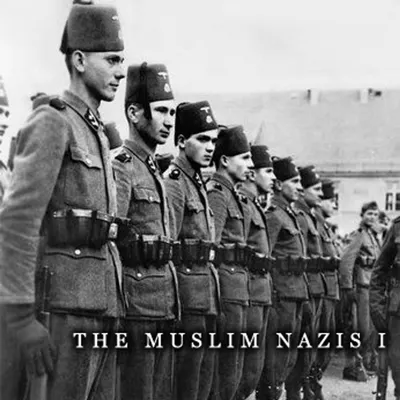
After nearly five years, we have finally arrived at the point where we began this series about the so-called “Muslim Nazis.” We still have a little ways to go before we can call this story complete, but the image that inspired this half-decade deep dive into one of the darkest and strangest corners of the Second World War can finally be fully developed.It took a journey across two continents and multiple countries, and context that spans two of the most—if not the most—controversial historical developments of the twentieth century, that is, the nascent Israeli-Palestinian conflict and the birth, death, and civil war of the old Yugoslavian kingdom. Only such a bizarre creation as the 13th Waffen Mountain Division of the Third Reich’s SS could result from such a complex web of geopolitics, nefarious figures, and chaotic and unbelievably violent forces and events. And yet, there was always a human side to this story.The human side came not from the great figures of the story—the Grand Mufti’s or the Heinrich Himmler’s—but rather the men themselves and their own accounts of just what happened to bring them, the sons of Bosnia, into the arms of the Nazis, to say nothing of the ghastly crimes many of them committed. Their human qualities do not diminish the horror to which they contributed by a long shot, but they do help us understand the position they and so many like them were in. This is, in that sense, their story.But it is the story of so much more. There are never-before suggested revelations about the Handschar that can be pieced together from the information we cover here, including the likely final ambition the Grand Mufti of Jerusalem, Hajj Amin al-Husseini had for the Division. This and more are covered in the greatest depth in this penultimate installment of History Impossible’s “Muslim Nazis” series....History Impossible has been made possible by the following generous supporters on Patreon, Substack, and PayPal. Please consider donating today if you want to show some love for what I do and make and what to help keep the show and all my written content going:David AdamcikDavid AlsbachGregg Andersonapproso1999Rajan AthulRobert BabeonMichael BeachBenjaminGreg BosaiJohannes BreitsameterCarol ABCCharles CChomo the ClownCurtis ChristiansenJason ColemanClayton ConnellCliffydeuceCRB.CyrdaddygorgonDannyLynda DavisPaul DeCosterRegina Dick-EndrizziNeil DickensNathan DiehlBob DowningDramicasJ DubMartin E.EastoneGavin EdwardsHowie FeltersnatchPierre GhazarianJosh GoedertSam GrahamJayson GriesmeyerNathan GroteBenjamin HamiltonPeter HauckJack Hennema
History is often forged upon the frontiers—both literally and figuratively. That includes the field of history, whose frontiers have become wildly expanded with the advent of podcasting and other forms of content creation. This has certainly created tension, but it has also created opportunities for narratives and voices that would never have otherwise been heard. One of those voices is that of the incredible Jack Henneman of The History of the Americans podcast, one of the best historical podcasts on the market.Jack approaches American history with a granular fixation and that has placed him in a very different position than my own grand narrative style that I have been aping from Dan Carlin for nearly seven years now, and this has given him unique insight into the history of the United States, which is why I wanted to discuss the momentous but also underrated event known as King Philip’s War. This war’s significance to colonial American development cannot be overstated and helped characterize America’s ongoing relationship with the frontier, as well as set the tone for future calamities, including my area of the interest: the Salem witchcraft crisis.Thanks to this significance, Jack and I were able to discuss the way such events are approached in history, as well as the state of the field itself; without spoiling too much, I will just say that both Jack and I believe that there is a bit too much concern over the frontiers of the field, which I believe has become something of a walled garden. That said, the importance of epistemic humility and transparency are paramount when forging these frontiers, and these and more are other topics we cover.So please enjoy this conversation with Jack Henneman of the History of the Americans podcast....History Impossible has been made possible by the following generous supporters on Patreon, Substack, and PayPal. Please consider donating today if you want to show some love for what I do and make and what to help keep the show and all my written content going:David AdamcikDavid AlsbachGregg AndersonRajan AthulRobert BabeonMichael BeachBenjaminGreg BosaiJohannes BreitsameterCarol ABCCharles CChomo the ClownCurtis ChristiansenJason ColemanClayton ConnellCliffydeuceCRB.CyrdaddygorgonDannyLynda DavisPaul DeCosterRegina Dick-EndrizziNeil DickensNathan DiehlBob DowningDramicasJ DubMartin E.EastoneGavin EdwardsHowie FeltersnatchPierre GhazarianJosh GoedertSam GrahamJayson GriesmeyerNathan GroteBenjam
It’s unlikely that I’ve undersold the significance of the Salem witchcraft crisis to the development of American history, particularly in the religious and institutional context. But what I always felt somewhat sad about leaving out was the true horror of the event itself, and really the confusing knot that it has created throughout the nearly 340 years that have passed since its conclusion. Why did such a thing happen? What bewitched the people of Salem? Was it mass hysteria? Was it social contagion? Was it ergot poisoning? Was it real witchcraft? These questions, remarkably, are still asked to this very day.That is why I enlisted the help of my friend and now second-time guest on History Impossible, Sebastian Major of Our Fake History to help me unravel this mystery for all of you fine people. Sebastian did a fantastic three-part series covering the witchcraft crisis—my favorite podcast to do so, in fact—a couple of years ago, so I figured there was no one better to get into the broad overview of this twisted and persistent legend of American history. We also looked at the psychological element of the Salem witchcraft crisis and how it carries a universal quality to this very day, with everything from the Satanic panic of the 1980s to the rapid devolution of metoo, to even the Epstein conspiracy theory industry, serving as interesting road markers to understanding the underlying mechanisms. And thanks to Sebastian’s Canadian status—don’t worry, I don’t hold it against him—we also had a little fun discussing bits of Canadian history and politics (something I am woefully uneducated in).So please enjoy this conversation looking at what possessed Salem in 1692-1693, and perhaps what created the blueprint for strained social relations in American history forever....History Impossible has been made possible by the following generous supporters on Patreon, Substack, and PayPal. Please consider donating today if you want to show some love for what I do and make and what to help keep the show and all my written content going:David AdamcikDavid AlsbachGregg AndersonRajan AthulRobert BabeonMichael BeachBenjaminGreg BosaiJohannes BreitsameterCarol ABCCharles CChomo the ClownCurtis ChristiansenJason ColemanClayton ConnellCliffydeuceCRB.CyrdaddygorgonDannyLynda DavisPaul DeCosterRegina Dick-EndrizziNeil DickensNathan DiehlBob DowningDramicasJ DubMartin E.EastoneGavin EdwardsHowie FeltersnatchPierre GhazarianJosh GoedertSam GrahamJayson GriesmeyerNatha
It might seem a bit gauche to discuss the Salem witchcraft crisis for Halloween, but here it is: the story of the real damage done by the infamous Salem witch trials beyond the deaths of about two dozen people that did not need to occur. The causes of the witchcraft hysteria are not discussed here, since those would require an entire episode of their own. In this case, we will be looking at how the witch trials harmed, perhaps irreparably, the integrity and authority of Salem’s, and perhaps even New England’s, religious and legal institutions for years to come.This story is part of a much larger one I’ve discussed in other work published on History Impossible—namely the scholarly research I’ve been conducting for graduate school—and one day I hope to bring it all together for all of you fine people. But in the meantime, I think it’s a good way to get into the spirit of Halloween and take a closer look at the harm against institutional credibility caused by the Salem witch trials of 1692-1693. If anything, this event helped create a standard for how Americans handle social contagion, as well as how we react to the failures—perceived or real—of our own institutions to this very day....History Impossible has been made possible by the following generous supporters on Patreon, Substack, and PayPal. Please consider donating today if you want to show some love for what I do and make and what to help keep the show and all my written content going:David AdamcikDavid AlsbachGregg AndersonRajan AthulRobert BabeonMichael BeachBenjaminGreg BosaiJohannes BreitsameterCarol ABCCharles CChomo the ClownCurtis ChristiansenJason ColemanClayton ConnellCliffydeuceCRB.CyrdaddygorgonDannyLynda DavisPaul DeCosterRegina Dick-EndrizziNeil DickensNathan DiehlBob DowningDramicasJ DubMartin E.EastoneGavin EdwardsHowie FeltersnatchPierre GhazarianJosh GoedertSam GrahamJayson GriesmeyerNathan GroteBenjamin HamiltonPeter HauckJack HennemanEric HodgesMike JarulicJoe6245Lionel JosephThomas JustesenMike KalninsBryn KaufmanLeah KodnerBenjamin LeeConstance LoucksMaddyMounty of MadnessJose MartinezMike MaylebenJudy McCoidKyle MohneyKostas MorosRyan MortensonCameron NeedhamShiranSkip PachecoDavid PageMolly PanSr. PowellBrian PritzlAnaR737PJ RaderGleb RadutskyAleksandr RakitinReptilycusMatthew M. RicePhillip RiceTerry RosenDan SJon Andre SaetherJake ScaliaEmily SchmidtJulian SchmidtAn
In the chaotic month that was September 2025, much has been said about the role of rhetoric and violence in the United States; namely how the former causes the latter, or at least how the former and the latter cannot be separated. This came up on the previous episode of History Impossible, in which I discussed this concept with my friends Daniele Bolelli and Kristaps Andrejsons as we tried to clarify the real horror of what political violence entails. In the time since that episode aired, more acts of political violence have unfolded, including the assault on an ICE facility in Texas and the attack on the Mormon church in Michigan. Whether these represent part of the broader trend that those of us like myself, Daniele, and Kristaps have been worried about, or are simply being spotlighted by the media because of how political violence has now become a topic du jour remains to be seen.But also in the time since that conversation, I thought it would be appropriate—probably now more than ever—to revisit an essay I wrote for the History Impossible Substack and Patreon subscribers that delved deep into the question of whether or not rhetoric causes violence, both from a deeper psychological level and from a broader, more legal level, and finally, addressing whether or not this question even matters all that much. It was a difficult thing to write, and a difficult argument to make, but I think I mostly have my ducks in a row with this one and, if anything, it might prompt a helpful conversation to be had. Perhaps I will be seen as naïve or reckless or simply flat out wrong for the stance I took with this one, but I do believe psychological research and legal history are on my side here.But nevertheless, in this world of ratcheting tension regarding political violence, let’s take a closer look at whether this is something we properly understand or something over which we have a long history of needlessly panicking....History Impossible has been made possible by the following generous supporters on Patreon, Substack, and PayPal. Please consider donating today if you want to show some love for what I do and make and what to help keep the show and all my written content going:David AdamcikDavid AlsbachGregg AndersonRajan AthulRobert BabeonMichael BeachZazu BenbenBenjaminGreg BosaiJohannes BreitsameterCarol ABCCharles CCurtis ChristiansenJason ColemanClayton ConnellCliffydeuceCRB.CyrdaddygorgonDannyLynda DavisPaul DeCosterRegina Dick-EndrizziNeil DickensNathan DiehlBob DowningDramicasJ DubMartin E.EastoneGavin EdwardsHowie FeltersnatchPierre GhazarianJosh GoedertSam GrahamJayson GriesmeyerNa
In light of the recent killing of conservative pundit Charlie Kirk and the realization among many that the United States is facing a stark rise in the possibility of greater political violence than any other time in its recent history, it became clear that a deeper conversation on the nature and, more importantly, the reality of political violence was necessary. This became even clearer as the flippancy with which people were treating violence—both the violence that had befallen Kirk and the violence that was being encouraged by the most enraged elements of the American right, including the state—increased in the week that followed.Thanks to this disconnect from reality, it seemed apparent that some outside and unique perspectives were needed, so I gathered together two of my favorite fellow historical/sociopolitical podcasters whose backgrounds as non-American and immigrant American give them such perspectives: the excellent Kristaps Andrejsons of The Eastern Border podcast and the excellent Daniele Bolelli of the History on Fire and Drunken Taoist podcasts. In this special conversation, we discussed the overall nature of political violence (“existential rhetoric” became the key term of this conversation) and where it appears to come from, where this crop seemed to start, as well as what Americans don't necessarily appreciate about the reality of such violent and destructive norms being created and reinforced.And most importantly, Daniele was able to get me to question my own stance on how to characterize threatening speech, live on the show. So please, enjoy (as much as one can with such topics).Support Kristaps’ Car for Ukraine fundraiser, which provides much-needed trucks for Ukrainian troops on the front lines.…History Impossible has been made possible by the following generous supporters on Patreon, Substack, and PayPal. Please consider donating today if you want to show some love for what I do and make and what to help keep the show and all my written content going:David AdamcikDavid AlsbachGregg AndersonRajan AthulRobert BabeonMichael BeachZazu BenbenBenjaminGreg BosaiJohannes BreitsameterCarol ABCCharles CCurtis ChristiansenJason ColemanClayton ConnellCliffydeuceCRB.CyrdaddygorgonDannyLynda DavisPaul DeCosterRegina Dick-EndrizziNeil DickensNathan
Hey all, it’s great to be back with all of you. Especially for this special conversation that has been well overdue, especially on the History Impossible feed. I was thrilled to be able to host my friend and mentor Daniele Bolelli of the History on Fire and Drunken Taoist podcasts (not to mention teacher, author of many great books, and martial artist), to first catch up on how things have been going on his end, and then discuss an old story close to our hearts—the Taiping Rebellion, and its leader, Jesus Christ’s alleged younger Chinese brother Hong Xiuquan. From there, we springboard into a broader discussion that encompassed my current research interests in grad school, particularly the global impact and nature of Protestantism.The Taiping Rebellion was probably one of the best events to use as this springboard because, it could be said, it was the most significant Protestant revolt in human history, if only for the sheer destruction it caused (topped only by the Second World War in terms of body count) and, more to the point, the trajectory it placed upon Qing Dynasty China (ultimately giving us Mao and the communists). It also helps us understand that nature of Protestantism that seeks to overthrow the allegedly corrupt old order, and how that impulse can have incredible consequences many years later—sometimes good, sometimes bad.It was a much looser affair than most interviews done on this show, but that’s what happens when you let two history podcasters cut loose in front of a mic. Please enjoy!…History Impossible has been made possible by the following generous supporters on Patreon, Substack, and PayPal. Please consider donating today if you want to show some love for what I do and make and what to help keep the show and all my written content going:David AdamcikDavid AlsbachGregg AndersonRajan AthulRobert BabeonMichael BeachZazu BenbenBenjaminGreg BosaiJohannes BreitsameterCarol ABCCharles CCurtis ChristiansenJason ColemanClayton ConnellCliffydeuceCRB.CyrdaddygorgonDannyLynda DavisPaul DeCosterRegina Dick-EndrizziNeil DickensNathan DiehlBob DowningDramicasJ DubMartin E.EastoneGavin EdwardsHowie FeltersnatchPierre GhazarianJosh GoedertSam GrahamJayson GriesmeyerNathan GroteBenjamin HamiltonPeter HauckJack HennemanEric HodgesMike JarulicJoe6245Lionel JosephThomas JustesenMike KalninsBryn KaufmanLeah KodnerBenjamin LeeConstance LoucksMaddyMounty of MadnessJose MartinezMike MaylebenJudy McCoidKyle MohneyKostas MorosRyan MortensonCameron Needham
After a slight delay, History Impossible is back with the newest installment of audio adaptations of previous writing and historical scholarship that I’ve done in the past several years or so. In this case, we are looking at a massively overhauled and updated audio version of an essay I wrote that was originally published by Areo Magazine in January of 2021, in which I made the case that the United States was undergoing something of a religious revival, which became particularly evident the previous year.This is a theme I’ve visited and revisited multiple times in the years since this essay was originally published and it has even become central to my scholarly pursuits in graduate school. This fact, along with the always-changing landscape of American culture and life required several updates, most of which on the fly, to be made to the core content of this essay, resulting in a new episode of the podcast in which about half of the material never existed before.In short, we will be looking at the phenomenon of religious revivals in the United States throughout its entire history and then some—from the aftermath of the Salem witchcraft crisis and lead-up to the First Great Awakening that occurred throughout New England in the mid-18th century, all the way to what I believe is the ongoing and forming Fifth Great Awakening that began in earnest in 2020 during the COVID-19 pandemic and the aftermath of George Floyd’s death. Perhaps foolishly, we even try to predict the future and where this all goes.Fraught, likely controversial stuff. But also deeply personal for me, as someone who thinks a lot about spirituality despite not being particularly spiritual or religious himself. Please enjoy.…History Impossible has been made possible by the following generous supporters on Patreon, Substack, and PayPal. Please consider donating today if you want to show some love for what I do and make and what to help keep the show and all my written content going:David AdamcikDavid AlsbachGregg AndersonRajan AthulRobert BabeonMichael BeachZazu BenbenBenjaminGreg BosaiJohannes BreitsameterCarol ABCCharles CCurtis ChristiansenJason ColemanClayton ConnellCliffydeuceCRB.CyrdaddygorgonDannyLynda DavisPaul DeCosterRegina Dick-EndrizziNeil DickensNathan DiehlBob DowningDramicasMartin E.EastoneGavin EdwardsHowie FeltersnatchPierre GhazarianJosh GoedertJayson GriesmeyerNathan GroteBenjamin HamiltonPeter HauckJack HennemanEric HodgesMike Jarulic<
Hello everybody. We have another amazing conversation for you fine people to enjoy, this time a little spicier as far as controversial subjects go. To further expand upon my thoughts on the imperialistic character of Islamism as well as discuss the development of the new (neo?) antisemitism we are currently seeing develop in the West, I realized there was likely no one better suited in my orbit than the great UK-based polemicist and writer Brendan O’Neill.Brendan has been featured, well, all over—the British television, the Oxford debates, and many more, all while writing for multiple publications including spiked! (where he is chief political writer), The Spectator, and the Daily Mail, as well as hosting his excellent interview show, The Brendan O’Neill Show. I’ve followed his work for a very long time, and have always admired him for his sharp commentary that, while certainly very much his own, calls to mind the kind of sharp commentary we saw from the great Christopher Hitchens (and not just because of the accent). With Brendan’s work, as soon as you think you’re hearing a typical broadside against the Western left, you realize that there is a deeper, more socially liberal critique informing all of that, sharpened all the more when he turns his guns on the radical right. This came up a lot during our conversation.However, his most recent accomplishment, his excellent 2024 polemic After the Pogrom: 7 October, Israel, and the Crisis of Civilization, is what made this conversation more of an imperative. It was not just the power of this book—the rage behind it, which I often shared—that made me want to speak to Brendan about it, but also—selfishly, I admit—my own words were quoted within it, specifically from the piece I wrote jointly for Queer Majority and Quillette in late 2023 about the origins of Hamas’ homophobia. Brendan and I connected via social media and eventually were able to make this conversation happen, and it was a truly excellent one that covers
In this newest conversation on History Impossible, I was super-happy to be joined by fellow historical podcaster Zack Twamley, host of the excellent and long-running podcast, When Diplomacy Fails. Zack and I have mostly crossed paths via our mutual podcasting pal Kristaps Andrejsons of the Eastern Border podcast, on which we have both been guests. Most recently, as many will recall, Zack and I were part of a larger panel discussion (that also included other podcasting great Jack Johansson of the Secret Police podcast) that Kristaps hosted to discuss the state of the new Trump administration vis-à-vis the ongoing war in Ukraine and the apparent attempt by the U.S. government to disentangle itself from European affairs while also bringing the war to a speedy conclusion (which, as we all know, did not happen). After that conversation, Zack and I decided we should deepen the part of the conversation that stuck with us and dive deep into the geopolitical school of thought that is typical of Ukraine’s loudest critics: so-called Realism.As it turns out, there was a lot to say and for me to learn, which did not surprise me seeing as Zack is the closest thing to an expert on the field of international relations that I know, thanks to the focus of When Diplomacy Fails. This episode got deep into the weeds of Realism, its drawbacks, its benefits, its variations over time, and even its dangers. There was a lot of contemporary politics interwoven into the historical discussion as well, so Ukraine is certainly covered, but so is the historical application of realpolitik, and, fitting in with History Impossible’s recent episodes, its relationship with imperialism of both the soft and hard variety. It was a wide-ranging and thought-provoking conversation for us, and we thought that you all would like it too, so please enjoy this discussion of Realism between myself and Zack Twamley.…History Impossible has been made possible by the following generous supporters on Patreon, Substack, and PayPal. Please consider donating today if you want to show some love for what I do and make and what to help keep the show and all my written content going:David AdamcikDavid AlsbachGregg AndersonRajan AthulRobert BabeonMichael BeachBenjaminGreg BosaiJohannes BreitsameterCarol ABCCharles CCurtis ChristiansenJason ColemanClayton ConnellCliffydeuceCRB.CyrdaddygorgonDannyLynda DavisPaul DeCosterRegina Dick-EndrizziNeil DickensNathan
Hello again everyone. We have a new, special episode of History Impossible for all of you in which we examine a less-known moment of American imperialism, as well as the downstream effects it seemed to have during the world’s authoritarian moment of the 1930s. This is adapted from an academic paper I wrote in graduate school that I previously put out for all of you to read, similar to my earlier piece, “A Revulsion of Feeling,” which focused on the Arab Revolt of 1936-1939.We don’t often think of the positive downstream effects of imperialism, but that does not mean they do not exist. This is not some fringe position either; as I have come to understand while in graduate school, there is a growing set of ideas that demonstrate empire’s stabilizing effects and not necessarily coercive relationships that it establishes. Great examples of this include the Austro-Hungarian Empire, which promoted ethnic and even national pluralism, both before and after its decline, as well as the Ottoman Empire, during its less coercive moments (though it certainly had many, vis-à-vis religion). The United States, young as it is, has caused a lot of turmoil overseas in its own imperial adventures, but the imperial boomerang has come back around in protective ways as well, sometimes even preventing disaster from befalling it.The story of Major General Smedley Butler and his role in those imperial adventures is one of those stories....History Impossible has been made possible by the following generous supporters on Patreon, Substack, and PayPal. Please consider donating today if you want to show some love for what I do and make and what to help keep the show and all my written content going:David AdamcikDavid AlsbachRajan AthulRobert BabeonMichael BeachBenjaminGreg BosaiJohannes BreitsameterCarol ABCCharles CCurtis ChristiansenJason ColemanClayton ConnellCliffydeuceCRB.CyrdaddygorgonDannyLynda DavisPaul DeCosterRegina Dick-EndrizziNeil DickensNathan DiehlBob DowningDramicasMartin E.EastoneGavin EdwardsHowie FeltersnatchPierre GhazarianJosh GoedertJayson GriesmeyerNathan GroteBenjamin HamiltonPeter HauckJack HennemanHenryEric HodgesCarey HurstMike JarulicJoe6245Lionel JosephThomas JustesenMike KalninsBryn KaufmanLeah KodnerBenjamin LeeConstance LoucksMaddyMounty of MadnessJose MartinezMike MaylebenJudy McCoidKyle MohneyKostas MorosRyan MortensonCameron NeedhamShiranSkip PachecoMel PaddenDavid PageMolly PanSr. PowellBrian PritzlAnaR737PJ Rader<b
Please note: This episode was made before I learned about the influence of Qatar in various parts of the United States (including, apparently, the Oval Office for the mere price of a plane), but honestly, it all just serves to help confirm my overall thesis all the more. World events have a funny way of rendering old analyses irrelevant, but I am sorry to say that imperialism in its many forms is likely eternal.The last time we discussed imperialism on History Impossible, we looked at the form it appears to be taking under the second Trump administration, which, despite remaining based on trade deals and possibly empty threats of annexation, is a much “harder” form of imperialism than what the United States has employed in recent history (apart, of course, from our “state building” adventures in places like Iraq). This time, we will turn to the softer form of imperialism favored by places like the United States during the opening decade of the Cold War, as well as the French Empire in the mid-19th century and, as we will see from this episode, the attempts at spreading and more importantly, normalizing Islamism within the borders of Western, democratic, and decidedly non-theocratic or Islamic countries.By examining the fringes, we can often reveal the realities of the center, and in this case, a deeper understanding imperialism can be gleaned by looking at what is largely a lost cause on paper and realizing that lost causes are often fueled by reinterpreted victories, which can be as simple as sociopolitical subversion. Will the West become Islamist? Almost certainly not. Will Islamists attempt to take advantage and make use of the cultural and political ruptures, as well as the social status symbols, that exist within the West, thus making their goals all the more likely to succeed? Almost certainly yes. We know this because this is what soft imperial power—whether wielded by United States Cold Warriors in the CIA in the 1950s or French aristocrats and business owners in the 1850s—has always attempted to do.Imperialism is not always about coercive control of a smaller state. In fact, it often is not. The core goal of imperialism has always been one thing: influence. That is what we will explore today.…History Impossible has been made possible by the following generous supporters on Patreon, Substack, and PayPal. Please consider donating today if you want to show some love for what I do and make and what to help keep the show and all my written content going:David AdamcikDavid AlsbachRajan AthulRobert BabeonMichael BeachBenjaminGreg BosaiJohannes BreitsameterCarol ABCCharles CCurtis ChristiansenClayton Connell<b
The question of who President Donald Trump resembled in history is one that has become almost a cliche, mostly thanks to its ideological Rorschach quality, especially during his first term and in the years leading up to his second. This has become far less of a debate, thanks largely to the man himself actually citing his influences.This was what I decided to tackle in an essay I wrote for my friend David Josef Volodsko in his publication, The Radicalist. A couple of weeks later, I am happy to bring to all of you the audio adaptation of that essay, with a couple of important expansions you won’t receive anywhere else.This is the first installment of a small cluster of episodes I plan to put out for all of you that deal with the theme of imperialism, which will also hopefully include an interview or two about the subject as well.Thank you again for reading, listening, and for having incredible patience as I work on the next installment of “The Muslim Nazis” series.…History Impossible has been made possible by the following generous supporters on Patreon, Substack, and PayPal. Please consider donating today to help keep me free and this show alive:David AdamcikDavid AlsbachRajan AthulRobert BabeonMichael BeachBenjaminGreg BosaiJohannes BreitsameterCarol ABCCharles CCurtis ChristiansenClayton ConnellCliffydeuceCRB.CyrdaddygorgonDannyLynda DavisPaul DeCosterRegina Dick-EndrizziNeil DickensNathan DiehlBob DowningDramicasMartin E.Gavin EdwardsHowie FeltersnatchPierre GhazarianJayson GriesmeyerNathan GroteBenjamin HamiltonPeter HauckHenryEric HodgesCarey HurstMike JarulicJoe6245Lionel JosephThomas JustesenMike KalninsBryn KaufmanLeah KodnerBenjamin LeeConstance LoucksMaddyMounty of MadnessJose MartinezMike MaylebenJudy McCoidKyle MohneyKostas MorosRyan MortensonCameron NeedhamStrxmxnSkip PachecoMel PaddenDavid PageMolly PanSr. PowellBrian PritzlAnaR737PJ RaderGleb RadutskyAleksandr RakitinReptilycusMatthew M. RicePhillip RiceTerry RosenChris RoweDan SJon Andre SaetherJake ScaliaEmily SchmidtJulian SchmidtAndrew SeeberJoshua SimpsonCameron SmithJerry Spanglertimetosuccedd1995Thomas Squeo<br
I was recently invited to join in a panel discussion with three podcasting greats and people I consider friends—that is, The Eastern Border’s Kristaps Andrejsons, the Secret Police podcast’s Jack Johannson, and When Diplomacy Fails podcast’s Zack Twamley. It originally went up on the Eastern Border feed, split into two parts, but Kristaps was kind enough to let all of us get our grubby paws on the masters to put on our own feeds, something that I felt would allow me to give all of you fine people another nice bonus while you wait for the next installments of History Impossible.The conversation went on for nearly three hours and was incredibly enlightening and fun, and yours truly was able to actually sound relatively informed for most of the run time. Some plans are in the works for some more dedicated one-on-one conversations with these guys, but in the meantime, we all weighed in on the post-Oval Office diplomatic reality TV/Twitter IRL brouhaha that involved Presidents Zelenskyy and Trump and, especially to my ire as many of you will hear, Vice President J.D. Vance.The conversation also widened as our ranks narrowed (Zack and Jack both had previous engagements they needed to attend to), and Kristaps being who he is, was able to get me to spiral out some “worst case scenarios” for the changing global order as we know it. So please enjoy this panel discussion where a quartet of podcasters attempt to crack the nut of geopolitical strategy in 2025.…History Impossible has been made possible by the following generous supporters on Patreon, Substack, and PayPal. Please consider donating today to help keep me free and this show alive:David AdamcikDavid AlsbachRajan AthulRobert BabeonMichael BeachBenjaminGreg BosaiJohannes BreitsameterCarol ABCCharles CCurtis ChristiansenClayton ConnellCliffydeuceCRB.CyrdaddygorgonDannyLynda DavisPaul DeCosterRegina Dick-EndrizziNeil DickensNathan DiehlBob DowningDramicasMartin E.Gavin EdwardsHowie FeltersnatchPierre GhazarianJayson GriesmeyerNathan GroteBenjamin HamiltonPeter HauckHenryEric HodgesCarey HurstMike JarulicJoe6245Russell JohnsonLionel JosephThomas JustesenMike KalninsBryn KaufmanLeah KodnerBenjamin LeeConstance LoucksMaddyMounty of MadnessJose MartinezMike MaylebenJudy McCoidKyle MohneyKos
Slavery is often known as the United States’ original sin, and for good reason. Much of our perceptions of it are informed both by the Civil War’s cause and outcome, and the contradictions—and even moral hypocrisy—that it created with our Founding Fathers’ professed beliefs. Contradiction is the theme not just of the United States’ values and history, but it also a major theme of this episode of the podcast.In this newest installment of History Impossible, we’re looking at the extraordinary life of James Armistead Lafayette, the slave who would become the Colonies’ most vital spy during the Revolutionary War. I had never heard of this man before, but after reading fellow Keinrath Publishing writer Isaac Willour’s stirring and powerful portrait of the man—which everyone should check out here—I felt that it would be fitting for me and Isaac to chat about it. This conversation was the result of that, in which we discuss the circumstances of Armistead Lafayette’s life defined by action as well as the seemingly baffling contradiction that he shared with the Founding Fathers themselves: his owning of slaves after his own manumission.Isaac’s writing has appeared not just in Keinrath, but also publications including National Review, The Daily Wire, and the American Institute for Economic Research. He has also appeared in the New York Times and the Wall Street Journal. Amid all of that, though, he has managed to carve out time to be fascinated in history and that led us to chatting about this story. It is a fascinating tale, and I hope you all enjoy.…History Impossible has been made possible by the following generous supporters on Patreon, Substack, and PayPal. Please consider donating today to help keep me free and this show alive:David AdamcikDavid AlsbachRajan AthulRobert BabeonMichael BeachBenjaminGreg BosaiJohannes BreitsameterCarol ABCCharles C
The American West (or the “Wild West” as it’s still sometimes known) is arguably one of the defining features of the United States’ history and culture, if not the most defining feature. After all, much of the world has the image of the American cowboy (or less often, the American settler) planted firmly in their heads when they think of “Americans.” And while certainly not consciously, many Americans think of themselves in this way. There is a lot to be critical of the reality of the “American West,” not least of which being the brutality that it unleashed at various times and in various places. But there is also something—many things really—that we are at risk of losing if we completely demonize the time period and setting. This can even be seen in much of the media that has been created around the American West lately, with few exceptions (the Red Dead Redemption series of video games being one of those few exceptions). In losing the aspirational aspects of the American West even in much of the media, something more seems to be lost, up to an including the kind of models many young American men can aspire to.It may or may not surprise many of you that this is not exactly my wheelhouse, but it is not. I don’t know a lot about the American West beyond the more brutal stories I mentioned earlier and an awareness of it in the context of cinematic history. So that’s why with this special episode of History Impossible, I was joined by the prolific and talented writer David McGarry, who has had his work appear in esteemed publications including Reason and National Review, as well as his his own Substack, The Thoughtful Spot. David and I actually connected through a new writing venture that both of us have taken part in, a start-up known as Keinrath Publishing. I recently told you all about Keinrath when I put out the piece linking you guys to my essay for them covering the 1876 election, and like me, David put out a piece there covering, you guessed it, the spirit of the American West. I recommend not just David’s essay, but everyone’s essays there (including long-time friend and collaborator Daniele Bolelli!) because Keinrath is doing something really cool: offering thoughtful analyses of history and current events in long form, in which just a dollar will let you read each. It’s a great way to support writers like us, but honestly, Kei
Hey everyone, happy to present to all of you fine people with a brief bonus, this time adapting my recent historiographical essay that I had written my first semester in graduate school on the study of infectious disease’s effects throughout history and how it was written about from around the 1970s until the 2010s. This should serve as a nice pairing with the recent “Mother’s Wrath, Mankind’s Cope” and demonstrate the sort of academic origins of my thinking on this particular subject. Please enjoy and stay tuned!…History Impossible has been made possible by the following generous supporters on Patreon, Substack, and PayPal. Please consider donating today to help keep me free and this show alive:David AdamcikDavid AlsbachRajan AthulRobert BabeonMichael BeachBenjaminGreg BosaiJohannes BreitsameterCarol ABCCharles CCurtis ChristiansenClayton ConnellCliffydeuceCRB.CyrdaddygorgonDannyLynda DavisPaul DeCosterRegina Dick-EndrizziNeil DickensNathan DiehlBob DowningDramicasMartin E.Gavin EdwardsHowie FeltersnatchPierre GhazarianJayson GriesmeyerNathan GroteBenjamin HamiltonPeter HauckHenryEric HodgesCarey HurstMike JarulicJoe6245Russell JohnsonLionel JosephThomas JustesenMike KalninsBryn KaufmanLeah KodnerBenjamin LeeConstance LoucksMaddyMounty of MadnessJose MartinezMike MaylebenJudy McCoidKyle MohneyKostas MorosRyan MortensonCameron NeedhamSkip PachecoMel PaddenDavid PageMolly PanJeff ParrentSr. PowellBrian PritzlAnaR737PJ RaderGleb RadutskyAleksandr RakitinReptilycusMatthew M. RicePhillip RiceTerry RosenChris RoweDan SJon Andre SaetherJake ScaliaEmily SchmidtJulian SchmidtAndrew SeeberNeil SheehanJoshua SimpsonCameron SmithJerry Spanglertimetosuccedd1995Thomas SqueoAthal Krishna SundarrajanJared Cole TempleWard Van RoyPierre VorupuniRobert VSJonny WilkieMichael WroblewskiF. YouGreg ZinkBecome a supporter of this podcast: https://www.spreaker.com/podcast/history-impossible--5634566/support.
In this episode of History Impossible inaugurating 2025 and the sixth anniversary of the show, we will be looking at the Los Angeles Fires of 2025 but from an extended, historical, and probably overly philosophical lens. Because as it turns out, natural disasters are a constant of the human experience and create some of the greatest extremes, and reflecting on what afflicts us now alongside what has afflicted us in the past can provide at least some clarity (or, in my case, closure).The destruction faced by Los Angelenos in 2025 is not too dissimilar from many examples of destruction in relatively recent history. From the Krakatoa explosion in 1883, to the Galvestone hurriance in 1900, to the San Francisco Earthquake in 1906, there are plenty of examples. We examine these and their after effects in detail in this episode of History Impossible. It was an emotional experience to go through all of this and I hope you all can appreciate why. I wrote the original essay upon which this episode was based over a month ago, but it still has some validity and weight that I didn't expect.So please enjoy as much as one can enjoy such a heavy subject, in this newest episode of History Impossible ...History Impossible has been made possible by the following generous supporters on Patreon, Substack, and PayPal. Please consider donating today to help keep me free and this show alive:David AdamcikDavid AlsbachRajan AthulRobert BabeonMichael BeachBenjaminGreg BosaiJohannes BreitsameterDaniel CamajCarol ABCCharles CCurtis ChristiansenClayton ConnellCliffydeuceCRB.CyrdaddygorgonDannyLynda DavisPaul DeCosterRegina Dick-EndrizziNeil DickensNathan DiehlBob DowningDramicasMartin E.Gavin EdwardsHowie FeltersnatchPierre GhazarianJayson GriesmeyerNathan GroteBenjamin HamiltonPeter HauckHenryEric HodgesCarey HurstMike JarulicJoe6245Russell JohnsonLionel JosephThomas JustesenMike KalninsBryn KaufmanLeah KodnerBenjamin LeeConstance LoucksMaddyMounty of MadnessJose MartinezMike MaylebenJudy McCoidKyle MohneyKostas MorosRyan MortensonCameron NeedhamSkip PachecoMel PaddenDavid PageMolly PanJeff ParrentSr. PowellBrian PritzlAnaR737PJ RaderGleb RadutskyAleksandr RakitinReptilycusMatthew M. RicePhillip RiceTerry RosenChris RoweDan SJon Andre SaetherJake ScaliaEmily SchmidtJulian SchmidtAndrew SeeberNeil SheehanJoshua SimpsonCameron SmithJerry Spangler<br /
This is the first installment of something that doesn’t really have a name; the Grad School Files? That sounds a little like a bad Netflix show. I’ll take suggestions, but in the meantime, we can simply define this as it is: the first adaptation of one of my academic papers from graduate school into an honest-to-goodness episode of History Impossible. The first thing I want to say is that it was more difficult than I expected to adapt an academic paper into a podcast than I expected. The material is all there, but speaking in formal academic language manages to put me to sleep, so I did my best to spruce things up with this episode.The second thing I want to say is that a lot of the material in this one will be familiar territory, just more focused on a single event (or grouping of events) in Israel-Palestine history: that is, the Arab Revolt of 1936-1939. This was something I hadn’t planned to do until inspiration smacked me upside the head in my second semester, largely propelled by the lack of awareness I was seeing some of my cohort-mates possessed about the conflict in general, to say nothing of the minutiae of its long, long history. As has been covered at length by me and many others, this has very clearly become a political issue with no tether to history, when that history matters more than the politics.In any event, what resulted was this, but in paper form (that has also been published in written form on Substack and Patreon, as some of you may remember): an investigation into the formation of group identity—that is, of the declining British Empire, the Zionist movement, and the Arab nationalist movement—via the conflict that came to be known as the Arab Revolt of the 1930s. Apart from a few folks—like the awesome Oren Kessler, much of whose work I incorporated into this episode—very few scholars have focused their attention on this event, sandwiched as it is between the punctuated chaos of the 1920s and the Second World War. I hope looking at the event this way—as a crucible, to use a word Kessler has used—adds to the conversation. …History Impossible has been made possible by the following generous supporters on Patreon, Substack, and PayPal. Please consider donating today to help keep me free and this show alive:David AdamcikDavid AlsbachRajan AthulRobert BabeonMichael BeachBenjaminGreg BosaiJohannes BreitsameterCarol ABCCharles CClayton ConnellCliffydeuceCRB.CyrdaddygorgonDannyLynda DavisPaul DeCosterRegina Dick-EndrizziNeil DickensNathan DiehlBob DowningDramicasMartin E.Gavin EdwardsHowie FeltersnatchPierre GhazarianJayson GriesmeyerNathan GroteBenjamin HamiltonPeter HauckHenryEric Hodge
This episode of History Impossible is an adaptation of the historical polemic I wrote on the one-year anniversary of October 7th, 2023, examining the interpretation of genocide, as applied to the current war between Hamas and Israel, and to the devastation wrought against the Bosnian Muslims by their Serb counterparts in the early 1990s. This episode touches on some extremely upsetting and dark material, including descriptions of child death, mass killing, and rape, so please consider yourself warned if that sort of thing is something you might want to avoid.This episode will serve as a polemical counterpart to the first installment of the graduate school trilogy I have in the works. The other adaptations will have their own thematic counterparts, and I hope to release those in the coming weeks and months, which will hopefully sate everyone’s interest until the next and penultimate episode of “The Muslim Nazis” is released.…History Impossible has been made possible by the following generous supporters on Patreon, Substack, and PayPal. Please consider donating today to help keep me free and this show alive:David AdamcikDavid AlsbachRajan AthulRobert BabeonMichael BeachBenjaminGreg BosaiJohannes BreitsameterCarol ABCCharles CClayton ConnellCliffydeuceCRB.CyrdaddygorgonDannyLynda DavisPaul DeCosterRegina Dick-EndrizziNeil DickensNathan DiehlBob DowningDramicasGavin EdwardsHowie FeltersnatchPierre GhazarianJayson GriesmeyerNathan GroteBenjamin HamiltonPeter HauckHenryEric HodgesCarey HurstMike JarulicJoe6245Russell JohnsonLionel JosephThomas JustesenMike KalninsBryn KaufmanLeah KodnerBenjamin LeeConstance LoucksMaddyMounty of MadnessJose MartinezMike MaylebenJudy McCoidKyle MohneyKostas MorosRyan MortensonCameron NeedhamSkip PachecoMel PaddenDavid PageMolly PanJeff ParrentSharon PeplinskiSr. PowellBrian PritzlAnaR737PJ RaderGleb RadutskyAleksandr RakitinReptilycusMatthew M. RicePhillip RiceTerry RosenChris RoweDan SJon Andre SaetherJake ScaliaEmily SchmidtJulian SchmidtDavid SchwedingerAndrew SeeberJoshua SimpsonCameron SmithJerry SpanglerThomas SqueoPier-Luc St-PierreAthal Krishna SundarrajanJared Cole TempleWard Van RoyRobert VSJonny WilkieMichael WroblewskiF. YouGreg
Hello all, hope you are doing well.For a long time, I was skeptical of doing “re-runs” of History Impossible’s earlier episodes. I didn’t think that I had the “right” to do so, or something along those lines. Obviously, that’s a silly way of looking at things and, to be honest, it’s counterproductive. Many of you reading or hearing this have been with me since Day One (or near Day One) and many of you have likely gone through the entire show archive, and I love you all to pieces for it. But then I look at the calendar and I remember that it’s been nearly SIX YEARS since I started this little show. Six years is wild to think about. I was just breaking into the time period known as “real adulthood” in my early 30s. It’s certainly wild to think about where the time has gone and all the crazy things that have happened since then, both in my life and in the world around me.That includes a historic presidential election this year, in which for only the second time in American history, a man has been elected for a non-consecutive term. It’s also historic because of his convicted criminal status (putting aside how one might feel about the validity of those convictions or the trials that produced them; this is historically significant no matter how you slice it or how much your mileage may vary). I have had several people ask me for my take on everything that has happened, and I have given it in small doses, but I’ve also had people ask me how I feel about the man—that is, Donald Trump—himself. I don’t have an answer that has pleased many people, but only a fair few likely know it has not changed since 2019, when I started History Impossible.When I started this show, I came very close to beginning it with the “Muslim Nazis” series. But thanks to the advice of my good friend and guru Daniele Bolelli, I came to realize that I would be essentially imposing myself on the historical podcasting audience by asking them to commit to a series that, at the time, I assumed would take a few years (and boy was I right on that estimate, more than I knew). So I went with one-off’s for a while, occasionally foraying into thematic trilogies and two-parters. Some of these were my favorite stories to delve into, even until this very day. But my very first episode was one where I tried to unpack my feelings on Donald Trump from a historically comparative perspective, and looking back on that first episode, I think most of my feelings have remained consistent.I have never liked the “fascism” comparison, much less the “Nazi” comparisons (I think that should just be obvious by now). But historian Niall Ferguson, many years ago now, helped break down just what kind of historical figure Donald Trump is. It inspired me, and, after a couple months of frantic research into the period of time Ferguson discussed in his above-linked talk, I
I have, for many years, recommended Darryl Cooper’s hit podcast Martyr Made to the relative handful of people kind enough to listen to my own show and read my thoughts on various publications, including my own Substack. And not to fully bury the lede, I still do, though admittedly with a little more reservation than I might otherwise have only a month earlier.This comes from the piece I wrote for the good folks at Merion West which takes a close look at the claims made last month by my podcasting comrade Darryl Cooper while he was being interviewed on Tucker Carlson’s X show. This is the podcast version, with some tweaks and expansions, but I highly recommend you go read the polished piece over on Merion West.Thank you all for reading and listening.Become a supporter of this podcast: https://www.spreaker.com/podcast/history-impossible--5634566/support.
In this newest special episode of History Impossible, I sat down to discuss a super-light topic, one not fraught with intense controversy and tragedy, with my long time friend and podcasting comrade, CJ Killmer, of the Dangerous History Podcast: that is, the topic of eugenics! More accurately, we discussed a particular man in that noteworthy field who CJ discussed on his second-most recent episode (as of this writing; the 12th and newest epic installment of the Woodrow Wilson series he’s been working hard on just released), Dr. Edwin Katzen-Ellenbogen.This man’s storied career included being a pioneer in promoting the pseudo-scientific field that gripped the hearts and minds of American and European elites in the early 20th century, as well as having the worst luck in escaping the Nazis as their reach expanded across Europe while placing Jews like him in the crosshairs. This ultimately worked out for him, in a sick sense, because shortly after being captured and tossed into a camp, he began working with them on some of their notorious human experiments. It has been alleged that he personally murdered at least 1,000 human test subjects by lethal injection. Unlike many of the other Nazis’ collaborators, he was purely in it for himself, and, based on his activities before the war, likely agreed with many of their conclusions.CJ and I spoke not just about this man, and not just about eugenics, but how they—especially eugenics—fit into the broader schema that is the philosophy of progress, that is, Progressivism. It’s at once obvious and shocking. And to help hammer the point home, we close by discussing an underrated piece of 1990s cinema that not only remains great nearly 30 years later, but eerily prescient. So please sit back and enjoy this conversation with CJ Killmer.…History Impossible has been made possible by the following generous supporters on Patreon, Substack, and PayPal. Please consider donating today to help keep me free and this show alive:David AdamcikRajan AthulRobert BabeonMichael BeachBenjaminJohannes BreitsameterCarol ABCCharles CClayton ConnellCliffydeuceCRdaddygorgonDannyLynda DavisPaul DeCosterNeil DickensNathan DiehlBob DowningDramicasRob DuvalGavin EdwardsHowie FeltersnatchPierre GhazarianJayson GriesmeyerNathan GroteBenjamin HamiltonPeter HauckEric HodgesCarey HurstMike JarulicJoe6245Russell JohnsonLionel JosephThomas JustesenMike KalninsBryn KaufmanLeah KodnerBenjamin LeeConstanc
To say historians can be pedantic is like saying water is wet. To say gamers and gaming commentators can be pedantic is yet somehow even more of an obvious understatement. So what happens when these two communities clash and/or blend? You get what we could charitably call the Yasuke Conspiracy.As many gamers likely know by now, the insanely popular and long-running Assassin’s Creed series of games has explored multitudes of time periods, aesthetics, and characters from across history, ranging from Renaissance Italy, to Revolutionary America, to Victorian London, to Roman Empire-era Egypt, to, most recently, Viking England. The newest, upcoming game in the series, Assassins Creed Shadows, promises more of this trend, this time taking us to medieval Japan during the Sengoku Jidai, or Warring States period. Sounds all well and good, right? There was one problem, at least in the eyes of many gamers: that one of the two playable characters was not, in fact, Japanese, but African. And not only was he African, he was a purportedly real person from history (a first for the series, whose protagonists have always been fictional). This person was the so-called “African samurai,” Yasuke. And what followed was a firestorm of controversy, bad corporate crisis management, and a historian’s credibility being thrown in the direction of a woodchipper.Being a gamer, and one who enjoys the Assassin’s Creed series, I was aware of the Yasuke controversy, and I was also aware of Yasuke, having come very close several years ago to covering him, but opting instead to cover the far less vague and mythological-seeming story of William Adams, the supposed British samurai. Part of the reason for this choice was due to the fact that there was indeed only one secondary source on Yasuke, and it didn’t seem completely reliable. And sure enough, it was that source that, four years later, became the source of the controversy at hand. To help me make sense of this story, I needed to reach out to someone far more familiar with the material and, more importantly, someone who understood the power of historical myth. I could not find anyone better than my comrade-in-historical-podcasting-arms, Sebastian Major, the host of the phenomenal Our Fake History podcast. Sebastian had indeed covered Yasuke before, so I picked his brain and we discussed the true story of Yasuke and the controversy itself as well as the writer at its center, the now-unfortunately-controversial Thomas Lockley. So please enjoy, as we are joined by Sebastian Major, and attempt to plumb the depths of our fake (impossible) history.…<b
The following is the audio version of the recent essay addendum to the most recent episode of History Impossible, “The German Voice of Islam.” Thank you to everyone who has taken the time to read and listen and, when at all possible, support my work. Please consider becoming a patron or paid subscriber to History Impossible at whatever level you feel comfortable.History Impossible has been made possible by the following generous supporters on Patreon, Substack, and PayPal. Please consider donating today to help keep me free and this show alive:David AdamcikRajan AthulRobert BabeonMichael BeachBenjaminJohannes BreitsameterCharles CCliffydeuceCRdaddygorgonDannyPaul DeCosterNeil DickensNathan DiehlBob DowningDramicasRob DuvalGavin EdwardsHowie FeltersnatchPierre GhazarianJayson GriesmeyerNathan GroteBenjamin HamiltonPeter HauckEric HodgesCarey HurstMike JarulicJoe6245Thomas JustesenMike KalninsBryn KaufmanLeah KodnerBenjamin LeeConstance LoucksMaddyMounty of MadnessJose MartinezMike MaylebenJudy McCoidJim MillerKyle MohneyKostas MorosRyan MortensonCameron NeedhamSkip PachecoDavid PageMolly PanJeff ParrentJean PetersSr. PowellBrian PritzlAnaR737PJ RaderGleb RadutskyAleksandr RakitinReptilycusPhillip RiceChris RoweDan SJon Andre SaetherAlison SaloJake ScaliaEmily SchmidtJulian SchmidtAndrew SeeberJoshua SimpsonCameron SmithJerry SpanglerThomas SqueoBrian SteggemanPier-Luc St-PierreAthal Krishna SundarrajanJared Cole TempleChrisTXWard Van RoyRobert VSJonny WilkieRicky WortheyMichael WroblewskiF. YouGreg ZinkBecome a supporter of this podcast: https://www.spreaker.com/podcast/history-impossible--5634566/support.
The Third Reich’s so-called war on the Jews was not one that they fought alone.In fact, their war had been being fought for decades before Hitler even took power, perhaps even a full generation. The fight began in the late 19th century in Jerusalem, within the office of the mufti of that city. He was an elderly, serious man who, unlike everyone around him, believed he could read the tea leaves and explain where these land sales to an ever-increasing number of Jews was supposedly heading (despite the fact that he himself was also taking part in these land sales). By the early 1900s, a young boy—the elderly, serious man’s son—was sitting in this office with his father, taking all of this in. No one at the time could have possibly known that this man would come to represent one of the most controversial parts of the Third Reich’s war three quarters of a century after its conclusion, thanks almost entirely to the words he spoke and wrote.This episode of History Impossible returns to the first long-form series, “The Muslim Nazis”, that started it all, three years ago. In this episode, we’ll be looking at what happened when the Nazis began to craft a nearly unprecedented propaganda campaign directed primarily at the world’s Arabs, but also the world’s Muslims as a whole. The propaganda itself—filled with unparalleled invective, racism, and conspiracy-mongering—was not invented whole-cloth by the Nazis. Indeed, it was fine-tuned by the Nazis’ growing cast of Islamic allies, most of whom from embattled nations struggling under the weight of empire and civil war. This cast included that young boy all grown up: the Grand Mufti of Jerusalem, Hajj Amin al-Husseini.Not only is the Grand Mufti’s role in the propaganda campaign examined in this episode, but so are the most consequential claims ever made about the man—namely, his alleged role in the Shoah, which does not cease to cause massive, angry debates around the world. With claims ranging from those made by Israeli Prime Minister Benjamin Netanyahu in 2015 when he alleged that Hajj Amin is who inspired Hitler to commit the Holocaust, all the way to the Grand Mufti’s dwindling handful of apologists, who either ignore his time spent with the Axis or even outright minimize its importance; this part of our story endeavors to get to the bottom of it all.History Impossible has been made possible by the following generous supporters on Patreon, Substack, and PayPal. Please consider donating today to help keep me free and this show alive:David AdamcikRajan AthulRobert BabeonMichael BeachBenjaminJohannes BreitsameterCharles CCliffydeuceCRdaddygorgonDannyPaul DeCosterNeil DickensNathan DiehlBob DowningDramicasRob DuvalGavin EdwardsHowie Feltersnatch<br /
Considering what happened…some thoughts needed to be shared. I’m already working on something for the Substack, and believe it or not, the next episode of the “Muslim Nazis” will actually be up and available for paid supporters of the show within the next day or so.However, given what indeed has happened, involving the former president almost getting his head taken off, a lot of conversation has appeared. My dear friend Kristaps Andrejsons and I decided to sit down to add our voices to this choir (after overcoming some tech-related SNAFU’s that finally resolved themselves). This conversation is also on the Eastern Border feed, but please make sure to subscribe to his podcast because it is among the best out there.Much of what has been said here is likely to change over time, but those in the history and politics space have nothing else to talk about. Please enjoy (as much as one can) this discussion, and consider becoming a paid sub or Patron in order to access an ad-free version of this and the newest proper History Impossible episode.Thank you all for listening.Become a supporter of this podcast: https://www.spreaker.com/podcast/history-impossible--5634566/support.
For this next special installment of History Impossible, we’re joined by the journalist, writer, and fellow podcaster David Josef Volodsko, one of the most well-traveled individuals I’ve ever had the pleasure of speaking to (both in and out of the United States). He is the man behind The Radicalist Substack (which I encourage all of you to subscribe to), but he has also contributed to the Wall Street Journal, New York Magazine, Foreign Policy Magazine, The Nation, Bari Weiss’ The Free Press, and most famously (thanks to his abrupt 2023 ouster, which he explained here), the Seattle Times, where he served on the Editorial Board. His sole article under his own byline—“Dear Fremont: We need to talk about Lenin and your statue of the genocidal tyrant”—ignited a firestorm of a historical debate on, where else, Twitter/X, where Washington tankies decided to make it their mission to cost David his job, and for which they ultimately succeeded. He has thankfully bounced back, founding The Radicalist, and appearing on other, far more prestigious podcasts than my own, and spending his time doing deeper dives on political extremism throughout history, as well as provocative examinations of present events, particularly lately Israel’s war in Gaza.David and I spent a little time discussing his ouster, but we spent the majority of the three hours we spoke discussing the deeper themes of some of his essays—namely, his essay discussing how anti-Zionism has, in practice, become anti-Semitism, and his even more provocative but well-considered essay, why colonizing (or occupying) Gaza is likely the only solution moving forward. Much more came up naturally during the conversation, including where the consistently anti-Zionist Christopher Hitchens might have landed in this political moment of ours, the casual and performative cruelty of Briahna Joy Gray and leftists like her, the anti-Israel leftist tradition and the different varieties of protester, and, of course, the legacy of the Grand Mufti of Jerusalem Hajj Amin al-Husseini.This was a thoroughly enlightening, at times depressing and upse
“When a cycle of civilization is reaching its end, it is difficult to achieve anything by resisting it and by directly opposing the forces in motion. The current is too strong; one would be overwhelmed. The essential thing is to not let oneself be impressed by the omnipotence and apparent triumph of the forces of the epoch. These forces, devoid of connection with any higher principle, are in fact, on a short chain. One should not become fixated on the present, and on things at hand, but keep in view the conditions that may come about in the future. Thus the principle to follow could be that of letting the forces and processes of this epoch take their own course, while keeping oneself firm and ready to intervene when ‘the tiger, which cannot leap of the person riding it, is tired of running.’”—Julius Evola“We are only against people who are harmful. And we don’t hate them. There’s no need of hating them. We don’t hate bugs. We fight them. We don’t hate lice. We fight them. They’re harmful. They bite us... they infect us with disease. Mosquitoes: the same thing... You have to do something to make them go away, at least to get rid of them. It’s the same thing with races that do harm to ours. We defend ourselves, and that’s all... But in this Yuga, this Dark Age nearing its end, you get more and more power in the hands of those people. That’s natural. And there will be a racial struggle somewhere. I can see it coming. I can see it coming in the USA. I wouldn’t be at all astonished if one day, not tomorrow, perhaps not in fifty years, but perhaps later on, the USA had a National Socialist government, made of Americans, after a terrific fight with the other races... I think America will precede Europe in that way, not for any other reason but because in America the pressure of the dark races is much more powerful.”—Savitri Devi“What we are against will unite us, while what we are for divides us. Therefore, we should emphasize what we oppose. The common enemy unites us, while the positive values each of us are defending actually divides us. Therefore, we must create strategic alliances to overthrow the present order of things, of which the core could be described as human rights, anti-hierarchy, and political correctness – everything that is the face of the Beast, the anti-Christ or, in other terms, Kali-Yuga.”—Aleksandr DuginThese quotes are key to understanding a very particular strain of thought that has been discussed a few times on History Impossible; first, on the episode we did on Savitri Devi, “The Hitler Avatar and His Masochistic Priestess”, and then again on the <a href="https://podcasts.apple.com/us/podcast/ukraine-and-the-latvian-podfather-an-impossible/id1450885141?i=1000566464861" target="_blank" rel="noreferrer noope
In this special conversational episode of History Impossible, we’re joined again by friend of the show and friend of mine, Kristaps Andrejsons of The Eastern Border podcast (which will also host this conversation on its feed!), who was kind enough to grace the shores of the United States for a visit, specifically Texas. Specifically, we turned to his recent special wedding episode where he discussed the eponymous “man who saved the world,” Stanislav Petrov, who, according to erroneous headlines from publications like the Atlantic a number of years ago, saved the world by “doing absolutely nothing.” Kristaps is here to disabuse us all of such a ridiculous notion.In 1983, the Cold War was at its most tense since the early 1960s, particularly during the Cuban Missile Crisis. It was during this time that the monitoring station where Stanislav Petrov was station picked up signals indicating that a handful of nuclear missiles launched from the United States had been launched in the direction of the Soviet Union. While he could have responded without thinking, leading to missiles being launched back at the United States, Petrov opted to wait for visual confirmation of the incoming missiles, putting both he and potentially hundreds of thousands of Soviet citizens in jeopardy. His rationality paid off and it turned out that there had indeed been an error in the detection equipment. No missiles had been fired.Why was this so extraordinary? This is what Kristaps is here to tell us about for us to discuss, along with scatterings of news from Ukraine as well as the eternal debate over American involvement overseas, as well as the proliferation of nuclear weaponry. It’s actually a fairly light episode, considering the subject matter, so enjoy!History Impossible has been made possible by the following generous supporters on Patreon, Substack, and PayPal. Please consider donating today to help keep me free and this show alive:David AdamcikRajan AthulBabeonbobbyMichael BeachBenjaminElias BorotaJohannes BreitsameterCharles CCliffydeuceCRdaddygorgonPaul DeCosterNeil DickensNathan DiehlBob DowningDramicasRob DuvalGavin EdwardsHowie FeltersnatchPierre GhazarianJayson GriesmeyerNathan GroteBenjamin HamiltonPeter HauckCarey HurstJoe6245Thomas JustesenMike KalninsBryn KaufmanLeah KodnerBenjamin LeeConstance LoucksMaddyMounty of Madne
Hey all, I hope you’re doing well.I have for all of you the audio adaptation of the essay I wrote last year in response to my seeing the magisterial Oppenheimer, and given its newly Oscar-anointed status, I figured now would be the best time to get this out as a bonus as you all patiently await the return of the Muslim Nazis series (it’s still coming, worry not!). In this, we cover, mostly from my own memory (but supported by sources), the various reasons the United States might have dropped the atomic bombs on Hiroshima and Nagasaki. To say this is a complicated question is an understatement. To say there is a consensus, even almost 80 years later, is impossible. So we’re going to get into the weeds with this question while also showing the love Christopher Nolan’s magnum opus deserves.And as always, History Impossible has been made possible by the following generous supporters on Patreon, Substack, and PayPal. Please consider donating today to help keep me free and this show alive:David AdamcikRajan AthulBabeonbobbyDave BaxterMichael BeachBenjaminElias BorotaJohannes BreitsameterCharles CCliffydeuceCRdaddygorgonPaul DeCosterNeil DickensNathan DiehlBob DowningDramicasRob DuvalGavin EdwardsPierre GhazarianJayson GriesmeyerNathan GroteBenjamin HamiltonPeter HauckCarey HurstJoe6245Thomas JustesenMike KalninsBryn KaufmanLeah KodnerBenjamin LeeConstance LoucksMaddyMounty of MadnessJose MartinezMike MaylebenJudy McCoidJim MillerKyle MohneyKostas MorosRyan MortensonCameron NeedhamSkip PachecoDavid PageMolly PanJeff ParrentJean PetersJohn PisanoSr. PowellBrian PritzlAnaR737PJ RaderGleb RadutskyAleksandr RakitinReptilycusPhillip RiceChris RoweJon Andre SaetherAlison SaloJake ScaliaEmily SchmidtJulian SchmidtAndrew SeeberJoshua SimpsonCameron SmithThomas SqueoBrian SteggemanPier-Luc St-PierreAthal Krishna SundarrajanJared Cole TempleChrisTXRobert VSJonny WilkieRicky WortheyMichael WroblewskiF. YouBecome a supporter of this podcast: https://www.spreaker.com/podcast/history-impossible--5634566/support.
Hey everyone. The following is an ad-free bonus audio essay that follows up on the recent conversation I had with the History Underground's J.D. Huitt, where I make some corrections and then provide some deeper context to my thinking about how we might fix the Holocaust Knowledge Gap via education. I will let the episode speak for itself, but I want to thank all of you for your constant support of the show and your patience as I work on the longer episodes.History Impossible has been made possible by the following generous supporters on Patreon, Substack, and PayPal. Please consider donating today to help keep me free and this show alive:David AdamcikRajan AthulBabeonbobbyMichael BeachBenjaminElias BorotaJohannes BreitsameterCharles CCliffydeuceCRdaddygorgonPaul DeCosterNeil DickensNathan DiehlBob DowningDramicasRob DuvalGavin EdwardsPierre GhazarianJayson GriesmeyerNathan GroteBenjamin HamiltonPeter HauckCarey HurstJoe6245Thomas JustesenMike KalninsBryn KaufmanLeah KodnerBenjamin LeeConstance LoucksMaddyMounty of MadnessJose MartinezMike MaylebenJudy McCoidJim MillerKyle MohneyKostas MorosRyan MortensonSkip PachecoDavid PageMolly PanJeff ParrentJean PetersSr. PowellBrian PritzlAnaR737PJ RaderGleb RadutskyAleksandr RakitinReptilycusPhillip RiceChris RoweJon Andre SaetherAlison SaloJake ScaliaEmily SchmidtJulian SchmidtAndrew SeeberJoshua SimpsonCameron SmithThomas SqueoBrian SteggemanPier-Luc St-PierreAthal Krishna SundarrajanJared Cole TempleChrisTXRobert VSJonny WilkieRicky WortheyMichael WroblewskiF. YouGreg ZinkBecome a supporter of this podcast: https://www.spreaker.com/podcast/history-impossible--5634566/support.
In this newest special installment of History Impossible, we’re joined by long-time friend of the podcast and friend of mine, J.D. Huitt, the man behind the incredible History Underground channel over on YouTube, probably one of the best historical travel and educational content creators in the game (who has more than earned his 600,000 subscribers). Both J.D. and I were DMing on Twitter/X recently, sharing our discomfort with the seeming spike we’ve been seeing of not just ignorance about the Holocaust—what we thought was one of the best known event of the 20th century—but also the skepticism and even downright denial of it as it’s been traditionally known. This coincided with the Economist-reported YouGov poll released in late 2023 that showed a shocking 20 percent of young Americans believing the Holocaust was a myth, with more vastly underestimating the numbers. As it happens, this is a subject J.D. and I had discussed before in one of our conversations a number of years ago, and J.D. warned the audience that this was the natural consequence of poor education on this subject. Much as it’s crude to say, we felt it was necessary to take a rueful victory lap on our concerns being confirmed.We discuss why this phenomenon has occurred in a bit more depth, while also offering some broader solutions to how one teaches such a horrifying event in a way that might stick with people, without it simply going in one ear and out the other. It’s hard to say whether we succeed, so we’ll let you be the judge of that.History Impossible has been made possible by the following generous supporters on Patreon, Substack, and PayPal. Please consider donating today to help keep me free and this show alive:David AdamcikRajan AthulBabeonbobbyMichael BeachBenjaminElias BorotaJohannes BreitsameterCharles CCliffydeuceCRdaddygorgonPaul DeCosterNeil DickensNathan DiehlBob DowningDramicasRob DuvalGavin EdwardsPierre GhazarianJayson GriesmeyerNathan GroteBenjamin HamiltonPeter HauckCarey HurstJoe6245Thomas JustesenMike KalninsBryn KaufmanLeah KodnerBenjamin LeeConstance LoucksMaddyMounty of MadnessJose MartinezMike MaylebenJudy McCoidJim MillerKyle MohneyKostas MorosRyan MortensonSkip PachecoDavid PageMolly PanJeff ParrentJean PetersSr. PowellBrian PritzlAnaR737PJ RaderGleb Raduts
“I scarcely ever passed a week under such depression of spirits. […] It is terrible to see the extent to which all classes go in their determination to win. Conscience offers no restraint; nothing is so common as the resort to perjury unless it is violence. In short, I do not know who to believe: if we win, our methods are subject to impeachment for possible fraud; if the enemy wins, it is the same thing exactly. Doubt, suspicion, irritation go with the consequence, whatever it may be.”—Lew Wallace, retired Civil War general, 1876Many people will call out elections in our lifetimes as being particularly divisive, whether it’s the 2000 election or the 2020 election. Those were indeed divisive, but very few elections have approached the divisiveness and the chaos unleashed in the United States Presidential Election of 1876, fought between the Democrat Samuel Tilden and the Republican Rutherford B. Hayes, in which the ultimate decision on who would be president was decided by one electoral vote.In this special five year anniversary episode of History Impossible in which we revisit this event only briefly touched upon in the inaugural episode of this entire show, we’re joined by Richard Lim of the This American President podcast, who helps shed some light into the details of this contentious election and this absolutely wild period of American history. With the election of 2024 looming large and with everyone’s imaginations running wild with how things will turn out, Richard and I thought it might be prudent to not just provide a historical reality check on just how wild things can get, but how Americans were able to extract themselves from such insanity while living through it.Happy five years and here’s to five more with History Impossible.For more detailed look at the Election of 1876, check out Richard’s episode on that election here.History Impossible has been made possible by the following generous supporters on Patreon, Substack, and PayPal. Please consider donating today to help keep me free and this show alive:David AdamcikMichael BeachBenjaminElias BorotaJohannes BreitsameterCharles CCliffydeuceCRdaddygorgonPaul DeCosterNathan DiehlBob DowningRob DuvalGavin EdwardsPierre GhazarianJayson GriesmeyerNathan GroteBenjamin HamiltonPeter HauckCarey HurstThomas JustesenMike KalninsBryn KaufmanLeah KodnerBenjamin LeeMaddyMounty of MadnessJose MartinezMike M
Sometimes, the best way to understand everything a people have gone through is to understand a dream.This is how many nations frame themselves and their own origins. No matter the context, there is always truth in the idea that before there was a nation, there was a dream. And that dream, however morally sullied by the ugliness of reality, consequences, and choices, can never and should never be discounted, even with the nations who have had their dreams frustrated for so long. In fact, the truth of that dream can be seen in those realities, consequences, and choices that we may not understand or accept on a moral level many years later. This can be seen in plenty of nations, both old and young, and that everyone recognizes, from the United States to Israel. But there are few nations whose history better represents this dynamic than the young nation (but very old culture) of Bosnia.In this conclusion to the Balkan Inferno trilogy that will lead us by the hand back into the good graces of the so-called “Muslim Nazis,” we look at that long history of that central, symbolic part of the old Yugoslavian Region we today call Bosnia-Herzegovina (or Bosnia, for short). We’ll look at many of the strange and mysterious aspects of this place’s history, including its own schismatic Bosnian Church, and the various attempts at self-determination peppering the timeline. This timeline is often dominated by collapsed empires—Roman, Ottoman, Austro-Hungarian, German—and failed kingdoms—Serbian and Croatian—but always present is the story of Bosnia.This nation and its people has always had others trying to define them for their own ends, but there has always been a force within that has wanted to define itself. This has indeed led to some truly disturbing decisions—namely alliances—but these decisions could always be tracked back to the dream that forges all nations. That is what we explore here today.History Impossible has been made possible by the following generous supporters on Patreon, Substack, and PayPal. Please consider donating today to help keep me free and this show alive:David AdamcikMichael BeachBenjaminElias BorotaJohannes BreitsameterCharles CMind ChatteringsCliffydeuceCRdaddygorgonPaul DeCosterNathan DiehlBob DowningRob DuvalGavin EdwardsPierre GhazarianJayson GriesmeyerNathan GroteBenjamin HamiltonPeter HauckCarey HurstThomas JustesenMike KalninsBryn KaufmanLeah KodnerBenjamin LeeMaddyMounty of MadnessJose MartinezMike MaylebenJudy McCoidJim MillerKyle MohneyMonicaKostas MorosRyan MortensonBen MullenAllen PaceSkip PachecoDavid PageMolly PanJeff Parrent
Hey everybody. Now that I’ve finished up the notes and script for the conclusion of the “Balkan Inferno” trilogy (which will lead us right back into the thick of the “Muslim Nazis” series), I’m hard at work putting all of that together. In the meantime, please enjoy (as much as one can enjoy such a subject—I really do say that a lot, don’t I?) this bonus episode that slightly tweaks and expands my recent Substack post, “Pogroms and Students.” This episode covers relatively current events regarding the escalation of anti-Semitic incidents—especially in the United States, where in New York they have risen by 200 percent—on the heels of Hamas’ declaration of war on Israel and the ongoing war being waged against them by the IDF, but it also gets into the history of the role students played in some of the most infamous pogroms in Jewish history, particularly in Russia around the time of the First Russian Revolution. It also revisits the discussion of mass violence we did in the last part of “Balkan Inferno," which unfortunately, feels even more relevant than ever (so please consider giving that 5 hour 18 minute beast a listen if you haven’t already and have a strong constitution).History Impossible has been made possible by the following generous supporters on Patreon, Substack, and PayPal. Please consider donating today to help keep me free and this show alive:David Adamcik Michael Beach Benjamin Elias Borota Johannes Breitsameter Charles C Mind ChatteringsCJ Cliffydeuce CRdaddygorgon Paul DeCoster Nathan Diehl Bob Downing Rob Duval Gavin Edwards Pierre Ghazarian Jayson Griesmeyer Nathan Grote Benjamin Hamilton Peter Hauck Carey Hurst Thomas Justesen Mike Kalnins Bryn Kaufman Leah KodnerBenjamin Lee Maddy Mounty of Madness Jose Martinez Mike Mayleben Judy McCoid Jim MillerKyle Mohney Monica Kostas Moros Ryan Mortenson Ben Mullen Allen Pace Skip Pacheco David Page Molly PanJeff Parrent Jean Peters Brian Pritzl AnaR737PJ Rader Gleb R
The recent Substack post and episode of History Impossible about the significant three root historical causes of the Israeli-Palestinian Conflict has largely been well-received. What I didn’t expect is that one of the main sources I used for that episode would be willing to speak with me in greater depth about the massively underrated Arab Revolt of 1936-1939. In this episode, we’re joined by the scholar, political analyst, and writer Oren Kessler, whose 2023 book Palestine 1936: The Great Revolt and the Roots of the Middle East Conflict should be included as required reading for anyone interested or invested in what has been topping the news since October 7th, 2023.Oren, like myself, is a believer in the notion that the Littlefinger of Palestine, the Grand Mufti of Jerusalem Hajj Amin al-Husseini, is a figure of massively underrated importance. In this episode, we discuss the Arab Revolt through the eyes of the Mufti and examine just why he and his decisions and his legacy matter in the 21st century, despite him becoming largely forgotten except for his infamous photo op with the Fuhrer of Nazi Germany himself, Adolf Hitler. Oren makes the case that this is giving al-Husseini the short shrift with regards to his impact and we discuss why this should be both self-evident and required for understanding why things have gotten so bad between Israel and Gaza.Thank you and enjoy!History Impossible has been made possible by the following generous supporters on Patreon, Substack, and PayPal. Please consider donating today to help keep me free and this show alive:David Adamcik Michael Beach Benjamin Elias Borota Johannes Breitsameter Charles C Mind ChatteringsCJ Cliffydeuce CRdaddygorgon Paul DeCoster Nathan Diehl Bob Downing Rob Duval Gavin Edwards Pierre Ghazarian Jayson Griesmeyer Nathan Grote Benjamin Hamilton Peter Hauck Carey Hurst Joseph Hurst Thomas Justesen Mike Kalnins Bryn Kaufman Leah KodnerBenjamin Lee Maddy Mounty of Madness Jose Martinez Mike Mayleben Judy McCoid Kyle Mohney Monica Kostas Moros Ryan Mortenson Ben Mullen Allen Pace Skip Pacheco David Page Molly PanJeff Parrent Jean Peters Brian Pritzl <b
When you talk about history for a living, the contemporary world often has opportunities to make your knowledge more relevant. What knowledge actually possessed here about Israel and Palestine is likely more limited than some, I'd like to think that there is still some I can share to help clarify the conversation a little, at least when it comes to the notion of truly root causes to this ongoing conflict whose 2023 flare-up is the worst it's been in a long time, if not ever.In this special dispatch of History Impossible--which is being treated as a proper episode--we're going to revisit some old stomping grounds of this show, namely the Israeli-Palestinian region of the world during the 1890s-1930s. There are some familiar events and faces, and some information has been adapted from previous episodes, but this is largely all new ground to cover with new sources added into the mix. This will not solve the Israeli-Palestinian conflict by a long shot, and it will not please everyone, but it will hopefully add some historical clarity into the mix for folks who find themselves increasingly invested in the ongoing events in the Middle East. Love to you all who support this show: David Adamcik Michael Beach Benjamin Elias Borota Johannes Breitsameter Charles C CJ Cliffydeuce CRdaddygorgon Paul DeCoster Nathan Diehl Bob Downing Rob Duval Gavin Edwards Pierre Ghazarian Jayson Griesmeyer Nathan Grote Benjamin Hamilton Peter Hauck Carey Hurst Joseph Hurst Thomas Justesen Mike Kalnins Bryn Kaufman Benjamin Lee Maddy Mounty of Madness Jose Martinez Mike Mayleben Judy McCoid Kyle Mohney Monica Kostas Moros Ryan Mortenson Ben Mullen Allen Pace Skip Pacheco David Page Molly PanJeff Parrent Jean Peters Brian Pritzl PJ Rader Gleb Radutsky Aleksandr Rakitin Phillip Rice Chris Rowe Jon Andre Saether Alison Salo Jake Scalia Emily Schmidt Julian Schmidt Andrew Seeber Cameron Smith Thomas Squeo Brian Steggeman Pier-Luc St-PierreAthal Krishna Sundarrajan Jared Cole Temple ChrisTX Robert VSJonny Wilkie Ricky Worthey F. YouPlease consider supporting History Impossible over on Patreon or Substack if you like what I do here and want to support my work.Become a supporter of this podcast: https://www.spreaker.com/podc
This is a bonus episode (a bit bigger than one might expect) that adapts and, more importantly expands, an essay I wrote for my friend and editor Jamie on his American Dreaming Substack. I seriously need to thank him for letting me write something so…I dunno, controversial? Combative? Anyway, whatever, so THAT under his publication’s name).This does use a very contemporary and contentious issue as its launchpad, and while some might see this as impolitic or even inappropriate, my history-addled brain only allowed me to see, hear, and read what I see, hear, and read and interpret it thusly. Pretentious way of saying, yes, I know I’m being edgy, and I know I’m being provocative, but I do implore all of my listeners to hear me out. This is not only history, but it’s, in my mind, an important aspect of history both in the United States and the “West” more broadly. So yes, we’re talking about the biggest problems with the mere idea of affirmative action and what I—and by extension Hannah Arendt—believes is the real issue at heart when aristocrats and monarchs (literal and figurative) grant privilege as a means to improve their own lots, while, of course, always under the guise of improving everyone’s lot. Is History Impossible too cynical? It’s been suggested. But there’s a polemic in here that needed to be made, otherwise I’d go a little crazy without making my self-important analysis known.Love to you all who support this show:David AdamcikMichael BeachBenjaminElias BorotaJohannes BreitsameterCharles CCJCliffydeuceCRdaddygorgonPaul DeCosterNathan DiehlBob DowningRob DuvalGavin EdwardsPierre GhazarianJayson GriesmeyerNathan GroteBenjamin HamiltonPeter HauckCarey HurstJoseph HurstThomas JustesenMike KalninsBryn KaufmanBenjamin LeeMaddyMounty of MadnessJose MartinezMike MaylebenJudy McCoidKyle MohneyMonicaKostas MorosRyan MortensonBen MullenSkip PachecoDavid PageMolly PanJeff ParrentJean PetersBrian PritzlPJ RaderGleb RadutskyAleksandr RakitinChris RoweJon Andre SaetherAlison SaloJake ScaliaEmily SchmidtJulian SchmidtAndrew SeeberCameron SmithThomas SqueoBrian SteggemanPier-Luc St-PierreAthal KrishnaSundarrajanJared Cole TempleChrisTXRobert VSJonny WilkieRicky WortheyF. YouBecome a supporter of this podcast: https://www.spreaker.com/podcast/history-impossible--5634566/su
Hey all. This is an adaptation/audio version of an essay I recently wrote for my friend and editor Jamie Paul’s American Dreaming Substack, in which I examine the uniqueness of the Holocaust as both a genocide and historical event. If you like what you hear and want to hear me delve more into this subject, I’ll try to delve further into it in a future special episode like this one. But in the meantime, please enjoy. And thank you very much for all of your patience as I try and juggle all the projects I have on tap at once.History Impossible has been made possible by the following generous supporters on Patreon, Substack, and PayPal. Please consider donating today to help keep me free and this show alive:David AdamcikMichael BeachBenjaminElias BorotaJohannes BreitsameterCharles CCJCliffydeuceCRdaddygorgonPaul DeCosterNathan DiehlBob DowningRob DuvalGavin EdwardsPierre GhazarianJayson GriesmeyerNathan GroteBenjamin HamiltonPeter HauckCarey HurstJoseph HurstThomas JustesenMike KalninsBryn KaufmanBenjamin LeeMaddyMounty of MadnessJose MartinezMike MaylebenJudy McCoidKyle MohneyMonicaKostas MorosRyan MortensonBen MullenSkip PachecoDavid PageMolly PanJeff ParrentJean PetersBrian PritzlPJ RaderGleb RadutskyAleksandr RakitinChris RoweJon Andre SaetherAlison SaloJake ScaliaEmily SchmidtJulian SchmidtAndrew SeeberCameron SmithThomas SqueoBrian SteggemanPier-Luc St-PierreAthal KrishnaSundarrajanJared Cole TempleChrisTXRobert VSJonny WilkieRicky WortheyF. YouBecome a supporter of this podcast: https://www.spreaker.com/podcast/history-impossible--5634566/support.
CONTENT WARNING: This episode contains persistent graphic genocide violence and cruelty, especially in its first 75 minutes. Listener discretion is advised.In this part of the ongoing Balkan prelude to our return to the "Muslim Nazis" series, we are about to descend into the depths of hell. This was by design by the murderous Ustashe regime that took power after the invasion and dismemberment of the Kingdom of Yugoslavia by the Fuhrer of the Third Reich, Adolf Hitler. What happened next was a nightmare beyond the the imagining of most modern, comfortable nations in the 21st century. But it all happened.Serbs, Jews, Roma, and others were singled out not just for extermination, but extermination in the most brutal methods imaginable, thanks both to the savage hatreds festering under the surface of the former Kingdom's political culture, but also because the perpetrators actually saw their cruelty as the point; as their mission. It was less about politics, or religion, or anything really, than it was about simplistic notions of identity-based vengeance that never really made much sense to begin with.In the wake of this slaughter, however, more chaos was to follow. Almost immediately after the Nazi-fascist invasion, resistance began to crop up, both from Serb nationalist royalists and the multi-ethnic, multi-religious communist Partisans, as well as from other, less-armed but no-less-motivated groups we will be examining in later episodes. The three-to-five-sided civil war that exploded across the region not only swallowed up thousands of lives and muddied the waters of loyalty and nationhood and identity, but it placed the Nazis in the greatest quagmire the world had yet seen, where even members of their own military apparatus--no strangers to the deliberate mass destruction of civilians--were horrified by what they saw their supposed allies do to their hated countrymen. If anyone thought self-reflection was in order, however, they were naïve.The story of the Yugoslavian territory during World War II--one of pain and unresolved trauma--is one that will likely not be matched in European history in terms of sheer brutality and hatred, at least not for a very long time. But it's a story that must be examined, even if only as part of a much larger one.Also: Make sure to check out my friend and comrade Saša Paprić's awesome work here and here.History Impossible has been made possible by the following generous supporters on Patreon, Substack, and PayPal. Please consider donating today to help keep me free and this show alive:David AdamcikMichael
“[B]y strange contrast, which in fact isn't so strange, and could perhaps be easily explained by careful analysis, it can also be said that there are a few countries with such firm belief, elevated strength of character, so much tenderness and loving passion, such depth of feeling, of loyalty and unshakable devotion, or with such a thirst for justice. But in secret depths underneath all this hide burning hatreds, entire hurricanes of tethered and compressed hatreds maturing and awaiting their hour.”—Ivo Andrić“I had come to Yugoslavia because I knew that the past has made the present, and I wanted to see how the process works. Let me start now. It is plain that it means an amount of human pain, arranged in an unbroken continuity appalling to any person cradled in the security of the English or American past. Were I to go down into the marketplace, armed with the powers of witchcraft, and take a peasant by the shoulders and whisper to him, 'In your lifetime, have you known peace?' wait for his answer, shake his shoulders and transform him into his father, and ask him the same question, and transform him in his turn to his father, I would never hear the word 'Yes,' if I carried my questioning of the dead back for a thousand years, I would always hear, 'No. There was fear, there were our enemies without, our rulers within, there was prison, there was torture, there was violent death.'”—Rebecca West, Black Lamb and Grey FalconLong before there was a Third Reich, long before there was an Adolf Hitler or Benito Mussolini, long before there were any world wars, long before there was a Hajj Amin al-Husseini or Palestinian nationalist movement, long before a state of Israel was a twinkle in Theodor Herzl’s eye—there were the South Slavs of the Balkan peninsula, languishing under the weight of teetering empires entering their period of decline. Sensing weakness and frustrated with not being able to determine their own destiny, a nationalist spirit awakened in the hearts of thousands, and, in some cases, a sort of freedom was carved out for the region’s many peoples, something through violent revolution, others through diplomacy and politics. And then, one day, the empires were gone. And a new kingdom had to rise from the ashes. This is when the real problems began.In this prelude to the return of History Impossible's long-running Muslim Nazis series, we’re going to look at the conception, the birth, and rapid death of the Kingdom of Yugoslavia. There are peasant rebellions, countless wars and assassinations, democratic malaise and poorly addressed ethnic tensions, extreme violence breaking out within the halls of state, seizures of power, radical terrorism, and the invasion and dismemberment by a far more powerful foreign adversary—and we’re not even talking about the United States in the near future!This story, as stated in <a href="https://podcasts.apple.com/us/podcast/the-muslim-nazis-i-early-adventures-wi
Hello ladies and gentlemen, brothers and sisters, comrades and friends! I'm here with another miniature episode for your listening pleasure, adapted from a recent essay I wrote over on the History Impossible Substack, which you can go check out if you're interested. I'm in the home stretch of recording the next big History Impossible episode, so I figured I'd give all of you a nice thanks for supporting the show this long.In the case of this one, we're looking at some potential predictions for how the future of AI could shake out, assuming that it ends up having the level of influence as its possible historical analogue and the one I've chosen--the mass translations of the Bible in the 15th and 16th centuries. This is more of a fun tidbit--an addendum for Pandemic: A Plague Coda--for all of you patiently waiting for the next episode proper of History Impossible, which will serve as the grand return not just to WWII, not just to broad and dark historical topics that you won't believe, but to the series that started this entire crazy journey known as History Impossible.Thank you to all of you fine listeners, and especially to you fine supporters over on Patreon and Substack.Become a supporter of this podcast: https://www.spreaker.com/podcast/history-impossible--5634566/support.
Dogs have been man’s best friend for millennia, so it stands to reason that man’s best friend will follow man into the depths of hell, that is, war. This wasn’t simply to rip and tear the throats of man’s enemies (though that certainly would play a part) or to serve as cannon fodder. Oftentimes, the dogs utilized in war—war dogs—would outshine their human counterparts in acts of heroism. This has been going on for thousands of years, but it became apparent just how valuable dogs were during the Great War of 1914-1918.Among the most famous of all war dogs serving in the First World War was the Paris street orphan dog Rags, who was discovered by Private Jimmy Donovan during leave. After he brought Rags into the fold, the little mutt became the mascot of the First Division, soon learning how to retrieve messages, spot broken signal wires, literally save lives, and even saluting his fellow (human) soldiers. Rags became the most photographed dog in the world and lived until 1936, longer than most dogs even of his size. He was frequently honored by his former human comrades and even met figures like General Jack Pershing. He also was responsible for dog shows creating a new category of “Hero Dog” to allow for mutts to be entered. The only downside was he needed to be given his first and only bath.In this installment of the Infinitesimal Impossibilities series of History Impossible, we’ll be looking at the life of Rags and where he fit into the grander events of the First World War. His epic adventures took him all over Europe and the United States where he met hundreds among the adoring public. For all who own dogs (and even those who don’t), his story will make you laugh, cry, and appreciate just how much we should value our furry friends. In the end, Rags was a war hero, an adventurer, a mangy mutt, a lovable nuisance, and in his own way a smart ass. But above all else he was a good boy.History Impossible has been made possible by the following generous supporters on Patreon, Substack, and PayPal. Please consider donating today to help keep me free and this show alive:David AdamcikBenjaminElias BorotaJohannes BreitsameterCharles CCJCliffydeuceCRdaddygorgonRichard DaveyPaul DeCosterNathan DiehlBob DowningRob DuvalGavin Edwardseli123kyFeegoaPierre GhazarianJayson GriesmeyerNathan GroteAl HallBenjamin HamiltonPeter HauckCarey HurstJoseph HurstThomas JustesenMike KalninsBryn KaufmanBenjamin LeeMaddyMounty of MadnessJose MartinezDouglas MartocciaMike MaylebenJudy McCoidMonicaKostas MorosRyan MortensonBen MullenSkip PachecoMolly PanJeff ParrentJean PetersBrian PritzlPJ RaderGleb RadutskyAleksandr RakitinJon Andre S
In this newest episode of History Impossible, I was joined by my friend, comrade, and frequent collaborator CJ Killmer, host of the Dangerous History Podcast, primarily to dive deep into the question of one of America's most underrated villains, President Woodrow Wilson, particularly on his track record and beliefs regarding one of the dooziest of topics: race. And to put it bluntly, Wilson, as outlined by CJ in his recent 5+ hour episode concerning this subject that's part of his larger Woodrow Wilson series, did not have a good track record when it came to race in America, particularly when it truly needed a rational and decent leader (which Wilson most certainly was not; on many things, but on this issue in particular).We focus on a number of focal points from CJ's original episode (which I highly recommend you all listen to), particularly on Wilson's brand of progressive racism (while of course comparing and contrasting with modern day's own version of it), but we also pay our respects to a lesser-known figure of African American history, William Monroe Trotter, whose standing up to Wilson and not allowing himself to be gaslit is one of the most impressive and heroic political stories I've ever heard.We also close out by diving deep into our own personal reservations about progressivism as a philosophy, largely (though of course not entirely) eschewing the left-right divide to really get at the core of what makes progressivism so puerile, at least in the context of American identity. This helped make this conversation, in my opinion, the most fun and interesting one CJ and I have had thus far (and that's no small feat), and listeners will finally hear me essentially admit my own political orientation, such as it is (and hopefully it'll give you a good chuckle).History Impossible has been made possible by the following generous supporters on Patreon, Substack, and PayPal. Please consider donating today to help keep me free and this show alive:David AdamcikAlireza AtarianBenjaminElias BorotaJohannes BreitsameterCharles CCJCliffydeuceCRdaddygorgonRichard DaveyPaul DeCosterNathan DiehlBob DowningRob DuvalGavin Edwardseli123kyFeegoaPierre GhazarianKevin GonyJayson GriesmeyerNathan GroteAl HallBenjamin HamiltonPeter HauckCarey HurstJoseph HurstThomas JustesenMike KalninsBryn KaufmanBenjamin LeeMaddyMounty of MadnessJose MartinezDouglas MartocciaMike MaylebenJudy McCoidMonicaKostas MorosRyan MortensonBen MullenSkip PachecoMolly PanJeff ParrentJean PetersBrian PritzlPJ RaderGleb RadutskyAleksandr RakitinJon Andre SaetherAlison SaloJake ScaliaEmily SchmidtJulian SchmidtAndrew Seeber<br
Reviews
No reviews yet.
If you like this...

Dan Carlin's Hardcore History
Same topic · Same format · Same audience

History on Fire
Same topic · Same vibe · Same audience

The Martyrmade Podcast
Same topic · Same format · Same tone

Our Fake History
Same topic · Same audience · Same vibe

When Diplomacy Fails Podcast
Same topic · Same audience · Same format

The Dangerous History Podcast
Same topic · Same vibe · Same audience

The Rest Is History
Same topic · Same audience

Storied: San Francisco
Same format · Same audience

UFOS & PARANORMAL WITH PRESTON DENNETT
Same audience · Same vibe
Explore more like this
Listening context
Discussion (0)
No comments yet. Be the first to start the discussion!