Full Story
The Guardian·Hosted by Reged Ahmad, Nour Haydar and Jonathan Yerushalmy·299 episodes
Guardian Australia's daily news podcast. Every weekday, join Guardian journalists for a deeper understanding of the news in Australia and beyond. You can support The Guardian at theguardian.com/fullstorysupport
Why listen
Full Story gives you Guardian Australia reporting in a compact daily format, usually through a host speaking with the journalist closest to the story. It is strongest when Australian politics, social issues, media, climate, courts, and international events need more context than a headline can carry. Listeners who want a serious but accessible news explainer for the commute will feel at home.
Series(4)
Episodes
Co-hosts Reged Ahmad and Jonathan Yerushalmy look at why Donald Trump chose to make a prime-time address about the US electoral system: was he trying to destabilise and undermine confidence before the midterms, and will it work? Also: why is the US defense secretary, Pete Hegseth, ordering annual testosterone deficiency screening for soldiers in the military aged 30 and older?
There has been no end to the negative headlines generated in response to comments made by Pauline Hanson on her trip overseas – and it has forced members of One Nation, including Barnaby Joyce, to defend and explain her actions back home. Guardian Australia political reporter, Josh Butler, speaks to Reged Ahmad about how the trip’s many controversies could play with One Nation supporters in Australia
Senior political correspondent Peter Walker and former No 10 press secretary Paul Harrison analyse Andy Burnham’s first day as PM
We know that the online world is awash with angry commentary, but why are we so compelled to keep scrolling, despite our best intentions? And how is it shaping our politics? Ed Coper is political adviser and communications consultant who works to harness that social media outrage machine, which he calls ‘angertainment’. And while there is no doubt it is shaping political strategy now, especially on the right side of politics, Coper says there is an antidote to all that outrage – one that could bring us back to the days of constructive conversation. He speaks to Reged Ahmad about his new book, Angertainment: How Social Media Outrage Ruined Everything
Christopher Nolan’s The Odyssey has opened in Australia to much hype and intense interest. The first film ever to be shot entirely on Imax film has prompted fans to go on their own epic journey – crossing oceans to see it at one of just 41 cinemas around the world equipped to screen it in its original 70mm format. But as Homer’s Odyssey plays out onscreen, a struggle is happening offscreen too, with some saying this film could help the prospects of an ailing cinema industry trying to stay alive in an age of streaming. Reged Ahmad speaks to the deputy culture editor, Sian Cain, on whether The Odyssey has the capacity to entice people away from their devices and back to the big screen.
Guardian Australia political editor Tom McIlroy talks to Paul Kelly about his new book on the turbulent era of the Liberal party under prime ministers Tony Abbott, Malcolm Turnbull and Scott Morrison. In The Twilight of Exceptionalism, Kelly writes about how the Liberal leadership changed hands from a conservative to a progressive and then a transactional centrist. The Australian newpaper’s editor-at-large argues that this period demonstrated the party was fractured over its values and confused about its identity in a changing world
This week Barrie Cassidy and Tony Barry examine the One Nation leader’s podcast interview with far-right British activist Tommy Robinson and ask: will this interview cause fractures within the party and weaken her leadership? They also look at the rightwing party’s position on international affairs and new polling in the lead-up to the Victorian election
After a record-breaking 102 matches, the 2026 World Cup is drawing to a close. As Spain prepares to face Argentina in the final on Monday morning AEST, we unpack the tournament’s defining moments, from presidential interference to controversial video assistant referee (VAR) interventions. Nour Haydar speaks to football writer Sam Lewis about her final predictions and how this World Cup has changed the tournament for ever
When senator Lindsey Graham unexpectedly died this week, he left behind a new uncertainty in US politics. Known as a critical deal-maker in Congress, Republicans have lost a key bridge between the Democrats – and Donald Trump. Graham was also one of the few remaining Reagan-style Republicans and his death leaves questions around the future of US foreign policy, particularly on Ukraine and Israel. Reged Ahmad speaks to the Guardian’s Washington bureau chief, David Smith, back from being on the ground in South Carolina, about whether Graham’s death marks a new moment in the future of the Republican party
Australia’s aged care regulator is investigating dozens of complaints that aged care providers are charging fees for services that older Australians can’t use or even understand. Meanwhile, a class action against one of Australia’s largest for-profit providers has also alleged it charged residents additional fees for basic services it is legally obliged to provide. Nour Haydar speaks to Guardian Australia medical editor, Melissa Davey, on the alleged illegal fees being charged to vulnerable Australians
The AI revolution is here, and with it a fear that soon it will replace many of us in the workplace. The Australian government is grappling with how to deal with the multi-layered disruption but so far reform has been slow as it weighs up regulation against the claims of investment opportunities an AI boom presents. Could that change on Wednesday when the prime minister delivers a landmark speech addressing the government’s approach to the technology? The chief political correspondent, Dan Jervis-Bardy, speaks to Reged Ahmad about the tightrope the PM needs to walk between embracing new technology and protecting workers
In the year since the federal election, Pauline Hanson with her brand of rightwing populism has successfully tapped into discontent, surging in the polls at the expense of the Coalition and Labor. Meanwhile, support for the other antiestablishment party – the Greens – has flatlined, if recent polling is anything to go by. So why is the progressive party failing to cut through to voters? And what strategies can the Greens employ to improve their chances at the next election? Nour Haydar speaks to political reporter Sarah Basford-Canales about why voters tired of the major parties are moving to the right rather than the left
Darcy Byrne is the Labor mayor of Sydney’s Inner West council and he’s helping lead a grassroots movement on curbing gambling harm in the community – including pushing for a reduction in the number of poker machines in licensed clubs in New South Wales. This momentum comes while the federal Labor party continues to face criticism about the scale of its commitment to online gambling reform. The rising Labor star speaks to Guardian Australia political editor Tom McIlroy about why he compares the poker machine lobby to the US National Rifle Association, and his successful motion at this month’s NSW Labor conference on gambling policy at the next state election
Barrie Cassidy and Tony Barry examine a long list of stumbles and missteps made by politicians this week. They also discuss the prime minister’s Pacific push as China tested a long-range missile – and Nigel Farage’s resignation from politics only to stand at an upcoming byelection
Anthony Albanese offered an unequivocal apology this week after making an off-colour comment about Kylie Minogue while playing a ‘shag, marry, date’ game on a podcast. Josephine Tovey speaks with Patrick Keneally, Gabrielle Jackson and Josh Butler about what the prime minister’s latest podcast appearance says about an increasingly fractured media landscape
Today, Telstra’s chief financial officer Michael Ackland fronted up to the nation’s media to apologise – and answer questions about a massive outage that plunged the country into chaos. It stopped trains, turned off traffic lights and forced shops to close after Eftpos systems failed. And some calls to triple zero didn’t go through. Technology reporter Josh Taylor speaks to Reged Ahmad about what happened, who will take the blame and what can be done to make sure crucial connectivity is not lost again
Since Donald Trump threatened to ‘take’ Cuba, the Caribbean island has been on edge. Escalating US sanctions and an oil blockade has crippled essential services, plunged the country into blackouts and ground life for its 10 million people to a near halt.Nour Haydar speaks with Ruaridh Nicoll about what life is like on the ground in Havana – and if US military intervention could be next
Co-hosts Reged Ahmad and Jonathan Yerushalmy look at the reported details emerging about Trump’s Fifa World Cup intervention and whether it will change the ‘beautiful game’. They also discuss the growing calls for Democratic Maine Senate candidate Graham Platner to drop out of the race
This week social media giants have faced questioning at the royal commission on antisemitism and social cohesion as it asks: what more needs to be done to combat online hate? Reged Ahmad speaks to senior reporter Tory Shepherd on what the platforms have to say about accusations they have fuelled antisemitic content online
In a busy week for the prime minister, Anthony Albanese will meet with the leaders of Fiji, Papua New Guinea, Tonga and India. On Monday he signed a new defence alliance with Fiji, advancing the government’s strategy to limit China’s influence in the Pacific. Later this week Albanese will also host the leaders of PNG and Tonga at the State of Origin in Brisbane. Meanwhile, back home, Albanese’s team are dealing with criticism of the PM for comments he made about Kylie Minogue on a popular podcast. Nour Haydar speaks to the political editor, Tom McIlroy, about the PM’s strategy to bolster Australia’s ties in the region, what he hopes to achieve with rugby diplomacy and whether comments made on a podcast could overshadow international relations
More than a year ago, democratic socialist Zohran Mamdani won the Democratic nomination and went on to become the mayor of New York City. Now, his influence is spreading. Progressive and democratic socialist candidates endorsed by Mamdani have toppled established Democrats in New York and Colorado. But will this new way of doing politics connect with voters across the country?Nour Haydar speaks with the Washington DC bureau chief, David Smith, about whether the Democrats are still fit to take on Trump
The 2026 political year has already been surprising. Labor passed changes to negative gearing and the capital gains tax discount, which they had previously ruled out. The Liberals changed leaders again, and One Nation has seen a surge of support in multiple polls. Political editor Tom McIlroy speaks to press gallery colleagues Michelle Grattan, the chief political correspondent at the Conversation, and Melissa Clarke, political correspondent with ABC Radio National. They discuss their report card on the year so far, and the political contests to watch in the second half of the year
Barrie Cassidy and Tony Barry discuss what led to the first drop in One Nation’s poll numbers in more than a year, and why the voters turning away from Pauline Hanson are not turning back towards the Liberal party. They also examine the politics of falling house prices and why it may end up being a challenge for Labor
An Australian man, Simon Peter Carman, 45, was charged over the weekend with the alleged murder of Thunchanok Donhomla. Her body was found in a suitcase near railway tracks in Pattaya, on Thailand’s eastern Gulf coast, in the early hours of Saturday. Carman has denied the charges. Guardian reporter Natasha May speaks to Matilda Boseley from Pattaya about the arrest and the questions it raises about Thailand’s sex tourism industry
How much do our genes determine about our lives, and could they influence traits like risk-taking, antisocial behaviour or even violence? Ian Sample talks to Kathryn Paige Harden, a behavioural geneticist and professor of psychology at the University of Texas at Austin who studies how genetic factors shape human behaviour. In her book Original Sin she explores how nature and nurture combine to influence our likelihood of committing crimes, and asks whether the ‘cause’ of our actions matters for how we think about culpability
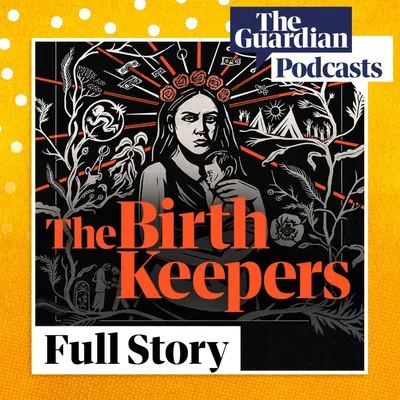
In September 2025, Melbourne wellness influencer Stacey Warnecke decided to give birth at home, free of all medical help. No one else was present when she went into labour except her husband and a woman named Emily Lal. Warnecke later died in hospital. Lal, who describes herself as a ‘birth keeper’, had no formal medical training and had taken an online course offered by the Free Birth Society – a multimillion-dollar business that trains unregulated birth support workers. Warnecke is one of a growing number of women choosing medically unassisted births, known as ‘freebirths’, and non-medically trained supporters for their pregnancies. Unpacking why is a key question being considered by a coroner, Therese McCarthy. Reged Ahmad speaks to the medical editor, Melissa Davey, and investigations correspondent Sirin Kale on the inquest so far and what we know about the Free Birth Society
Jenny Kleeman investigates ‘Biotech Barbie’ Cathy Tie, the controversial entrepreneur hoping to revolutionise human reproduction by letting parents edit their embryos
Tony Barry and Barrie Cassidy examine a big week in politics. Will Zali Steggall and Allegra Spender prove successful with their new centrist political party? Is Angus Taylor in trouble after a week of stumbles responding to One Nation policies? And what lessons should Anthony Albanese learn from Keir Starmer’s downfall?
This week, Anthony Albanese’s UK counterpart, Keir Starmer, succumbed to mounting pressure and resigned as prime minister. A number of comparisons have been made between the pair, including resounding election wins followed by a decline in the polls while insurgent rightwing parties gained ground. Josephine Tovey speaks with Mike Ticher, Gabrielle Jackson and Guardian Australia’s international editor, Virginia Harrison, about how Albanese can avoid Starmer’s fate
Earlier this year, Karl Stefanovic launched his own independent podcast, which has hosted a range of guests from the Anthony Albanese to Pauline Hanson. In one of his latest episodes, Stefanovic was in the UK to interview the far-right activist Tommy Robinson, a man with numerous criminal convictions who promotes Islamophobic conspiracy theories and is accused of inciting violent race riots. The episode was online for several hours before being taken down. Nour Haydar speaks to media correspondent Amanda Meade and senior correspondent Ben Doherty about why Stefanovic is embracing the far right and whether his future at Nine is in doubt
Reged Ahmad and Jonathan Yerushalmy are back after a short break and in this episode they examine the on-again, off-again talks to end the Iran war and why Donald Trump says it’s now all up to his deputy to deliver an outcome. Jonathan looks at the latest Kennedy to run for public office and asks: are Americans tired of political dynasties? And will Trump get his reflection pool finished in time for 4 July celebrations?
Having wiped out millions of birds worldwide and devastated wildlife populations around the globe, Australia has watched as the H5N1 strain of bird flu crept ever closer. And now it’s here, on the last continent to be hit. Birds have been discovered on beaches in Western Australia and tested positive for the virus. Reged Ahmad speaks to Graham Readfearn about how governments and wildlife experts alike are anxiously waiting to see if this is just the beginning
Keir Starmer has announced he will stand down as prime minister less than two years after his election victory, kickstarting the race for who will be the next Labour leader. And with MPs nervous about the growing threat from Nigel Farage’s Reform, many are speculating that the ‘King of the North’, Andy Burnham, could be next in the top job after a thumping victory in a local byelection last weekend. Reged Ahmad speaks to the North of England editor, Josh Halliday, about the man expected to become the next British prime minister and why he says this next week could define UK politics for years to come
Last week, the Reserve Bank kept interest rates on hold but the decision was followed by a warning that a future rate rise was on the table because prices are still rising too fast. It came as the US and Iran signed an initial agreement to end more than three months of war, which had sent global supply chains into chaos. Meanwhile, Australians are feeling the pinch and deepening economic disaffection has coincided with rising support for Pauline Hanson’s rightwing One Nation party. Nour Haydar speaks with Greg Jericho about why so many Australians are feeling pessimistic about the economy
Socceroo Nestory Irankunda is part of a new generation of players who have renewed hopes for Australia’s chances in the Fifa World Cup. Multimedia journalist Bertin Huynh says as One Nation surges in the polls, those who represent us deserve celebration
Barrie Cassidy and Tony Barry dissect Pauline Hanson’s National Press Club appearance this week and ask: is the leader of One Nation treated differently to other political leaders by the media? They also give their take on Hanson’s attacks on minorities, her pledge to dismantle public broadcasting and they meditate on whether appealing to people’s prejudices will backfire. And also: will the government’s backdown on tax be enough to silence Anthony Albanese’s critics?
Pauline Hanson’s ascendancy in Australian politics was underscored this week by her first address to the National Press Club. In a lengthy speech, the leader of the rightwing party railed against multiculturalism and Islam in particular, pledged to slash public broadcasting and asserted the so-called ‘hoax’ of global warming was the driving factor behind poverty in Australia. Josephine Tovey speaks with Mike Ticher and political editor Tom Mcllroy about Hanson’s ‘ugly’ vision for Australia
Mason Jet Lee died at 22 months old after his stepfather punched him so hard his bowel ruptured. An exclusive Guardian Australia investigation has found that repeated warnings about his killer were ignored. Could an unpublished submission to the inquest of his death hold evidence of police failings? Nour Haydar and Queensland correspondent Ben Smee discuss what the violent death of Mason Jet Lee reveals about a broken system
Russian affairs reporter Pjotr Sauer on Vladimir Putin’s increasing isolation – and seeming paranoia – as ordinary Russians become more restive over the toll of the war in Ukraine and a struggling economy at home
More than four months since the launch of Operation Epic Fury, Donald Trump and Iranian officials have announced an end to the war. News of the deal came as the president celebrated his 80th birthday by hosting a UFC match. Nour Haydar speaks to Washington DC bureau chief David Smith about whether the agreement can hold, when the strait of Hormuz is expected to reopen and how the the oldest elected US president went from announcing a geopolitical deal to hosting a cage-fighting match on the White House lawn
The Australian music industry is in crisis, but it wasn’t always that way. In the 1990s and early 2000s, a healthy number of Aussie artists were making it to the charts. Now, local musicians are struggling to get air time and to earn a living making music. Nour Haydar speaks to culture editor Steph Harmon and data journalist Josh Nicholas about why Australian music is disappearing from the charts and what needs to be done to revive the industry
A truck-mounted billboard featuring AI-generated images of Victoria’s premier, Jacinta Allan, which has been travelling around Melbourne for several weeks now, has attracted a lot of scrutiny. It shows Allan wearing a black pointed hat alongside the phrase ‘ditch the witch’. Victorian upper house MP for the Animal Justice party Georgie Purcell, who faces sexist abuse every day as a female MP, argues misogyny isn’t a legitimate expression of political dissatisfaction
Tony Barry and Barrie Cassidy discuss One Nation’s successful fundraising drive which raised nearly $3m this week. They look at how the major parties are handling the rise of the rightwing party and where they agree the prime minister made a missstep. Also in this episode: the return of the ‘Ditch the Witch’ slogan in politics and the likelihood of a Liberal win in the upcoming Victorian election
Guardian reporter Hannah Al-Othman on the anti-immigrant rioting in Northern Ireland and the residents afraid for their lives
One Nation’s predicted primary vote is ahead of both the Labor government and Coalition opposition for the first time, marking a new level of popularity for a party that has sat at the fringe of Australian politics for decades and sparking a flurry of questions about whether Pauline Hanson could actually become prime minister. Josephine Tovey speaks with Mike Ticher, Patrick Keneally and Dan Jervis-Bardy about whether One Nation’s policies will stand up to further scrutiny
Kick-off is just hours away in what is already shaping up to be one of the most controversial and complex Fifa World Cups as geopolitical disputes and allegations of corporate greed cast a shadow over the tournament. Football journalist Samantha Lewis speaks to Nour Haydar about why she is more nervous than ever on the eve of the cup about the impact the many problems could have on the world’s most-watched sporting event
Australia is set to experience its first El Niño weather event since spring 2023, according to the Bureau of Meteorology and other agencies. The phenomenon historically signals the arrival of hotter, drier conditions for the east coast and can have devastating impacts on the environment as well as the farming of crops and livestock. Nour Haydar speaks to climate and environment correspondent Graham Readfearn about how our weather is about to change and what it means for Australians
Allegations of rape and sexual assault on the UK’s Married at First Sight have brought a fresh focus on the Australian version. Former Mafs contestants and political figures, such as Tanya Plibersek, have spoken out calling for a broader reckoning around the show. Reged Ahmad speaks with reporter Caitlin Cassidy about safety concerns on set and whether the show still has a place on our screens
Australia is facing the largest outbreak of diphtheria, dubbed a ‘disease of poverty’, in living memory. For decades, the highly contagious and life-threatening bacterial disease was almost eradicated, but now it is spreading in remote Indigenous communities around the country. Nour Haydar speaks with Indigenous affairs correspondent Sarah Collard and Indigenous affairs reporter Douglas Smith on what is being done to stop the spread of the disease
When news broke that Australia will buy only secondhand nuclear submarines from the US, it signalled a major shift in the Aukus deal. It’s made Emma Shortis, the director of international and security affairs at the Australia Institute, ask: what’s a few secondhand subs between friends?
Reviews
No reviews yet.
If you like this...

Today in Focus
Same format · Same audience · Same tone

ABC News Daily
Same topic · Same format · Same audience

7am
Same topic · Same format · Same audience

The Daily Signal
Same format · Same audience · Same tone

Follow The Money
Same topic · Same tone · Same audience

Global News Podcast
Same topic · Same audience

Gript Media Podcasts
Same topic · Same format

St. Louis All Local
Same topic · Same format

Gold Goats 'n Guns Podcast
Same topic

Pat Gray Unleashed
Same topic
Explore more like this
Listening context
Discussion (0)
No comments yet. Be the first to start the discussion!