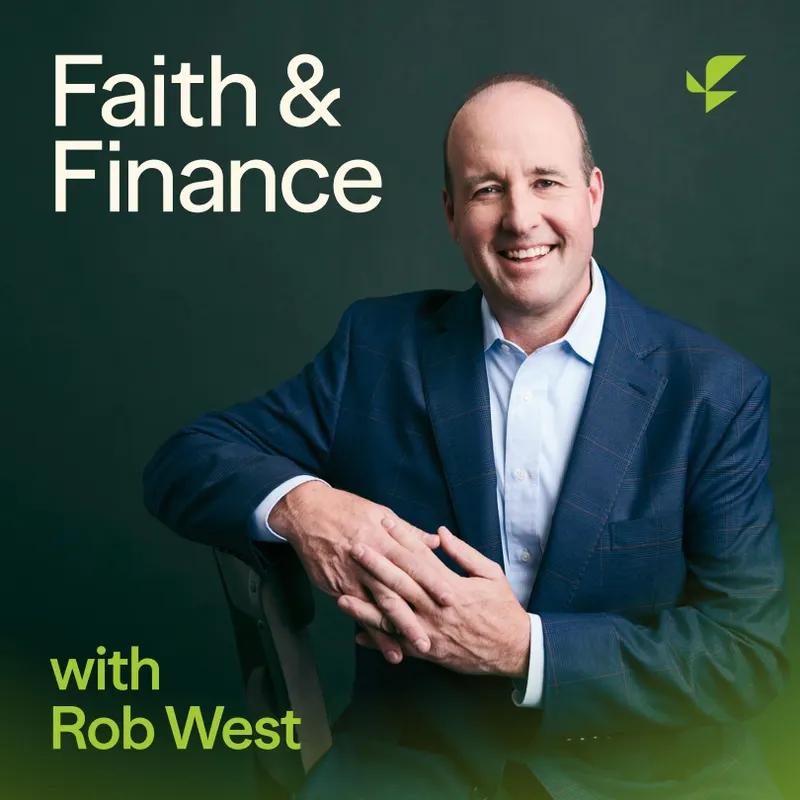
Faith & Finance
FaithFi·600 episodes
Faith & Finance is a daily radio ministry of FaithFi, hosted by Rob West, CEO of Kingdom Advisors. At FaithFi, we help you integrate your faith and financial decisions for the glory of God. Our vision is that every Christian would see God as their ultimate treasure. Join Rob and expert guests as they give biblical wisdom for your financial journey and provide practical answers to your pressing financial questions. From budgeting and debt management to investing and stewardship, Faith & Finance equips listeners with insights to handle money wisely and live generously for God's Kingdom. Listen now or ask your question...
Episodes
Few things reveal the strength of a couple’s unity quite like money. Financial decisions touch nearly every part of married life—from daily spending and long-term planning to generosity, security, and the future. But money does not have to remain a source of tension. When couples approach their finances with transparency, shared purpose, and a biblical understanding of stewardship, money can become a tool that strengthens their marriage and supports what God has called them to do together. Dr. Art Rainer, founder of Christian Money Solutions and the Institute for Christian Financial Health, as well as the author of The Rich Couple: 30 Days of Following God’s Design for a Financially Healthy Marriage, joins the show today to share that a “rich couple” has little to do with the size of a bank account. Instead, it means becoming rich in contentment, purpose, unity, and generosity. Redefining What It Means to Be Rich Our culture often defines a rich couple as one with a high income, an impressive home, or a large investment portfolio. But financial wealth can disappear, and continually chasing more often produces comparison rather than contentment. A truly rich couple recognizes that everything they have belongs to God. They understand that they are stewards—not owners—of the resources He has entrusted to them. That conviction changes the purpose of money. Instead of asking only, “How can we accumulate more?” couples can begin asking: How can we faithfully manage what God has provided? How can our finances reflect our shared values? How can we use what we have to serve others? What does contentment look like in this season? When contentment is rooted in Christ and financial decisions are guided by God’s purposes, couples can experience a kind of richness that circumstances cannot easily take away. Moving From “Mine” and “Yours” to “Ours” Genesis 2:24 describes marriage as two people becoming one flesh. That oneness includes more than physical or emotional intimacy. It also shapes how couples view their possessions, income, debt, goals, and generosity. Marriage is a covenant, not merely a contract. Rather than guarding separate financial territories, a husband and wife can learn to approach money as teammates. Practically, this requires complete financial transparency. Both spouses should understand what the household earns, owes, owns, spends, saves, and gives. For many couples, this may involve shared accounts and passwords. For others, the account structure may differ, but openness and mutual accountability should remain nonnegotiable. Even language can reinforce unity. Saying “our income,” “our debt,” and “our generosity” reminds both spouses that they are working toward a shared future. A brief monthly financial meeting can also help. Couples can review their progress, discuss upcoming expenses, and make important decisions together. Establishing a spending threshold—an amount neither spouse spends without first consulting the other—can reduce surprises and build trust. Unity rarely happens accidentally. It grows through intentional habits. Remember That Marriage Is a Team Sport Your spouse should be your closest financial teammate. That does not mean you will always agree. Different personalities, experiences, and priorities will inevitably create tension. The goal is not to eliminate every disagreement but to remain committed to reaching decisions together. Couples should be able to discuss differences honestly in private while presenting a united front to outside voices. Advice from parents, friends, or children may be well-intentioned, but those voices should not undermine the marriage. A healthy response to an outside suggestion might simply be, “Thank you. We’ll discuss it together and let you know.” That protects the couple’s unity and reassures each spouse that decisions will not be reversed or weakened by someone else’s opinion. Share Your Money Stories Many financial disagreements are not really about the transaction in front of you. They are rooted in earlier experiences. Perhaps one spouse grew up in a home where money was scarce and now feels anxious without a substantial emergency fund. The other may have grown up in a financially comfortable home and feel little concern about spending. One may naturally save, while the other prefers to spend, invest, or avoid financial decisions altogether. Sharing these stories can replace frustration with empathy. Instead of asking, “Why are you like this?” a spouse may begin to say, “Now I understand why this decision feels so important to you.” Consider asking each other: What is your earliest memory involving money? Discuss how that experience may still influence your attitudes toward spending, debt, saving, generosity, or risk. Listen without interrupting or trying to correct one another. Understanding your spouse’s story does not mean every financial habit should remain unchanged. It does, however, create a more compassionate starting point for change. Address the Four Financial Dividers Four common problems can weaken financial unity in marriage: poor communication, selfishness, distrust, and unrealistic expectations. Poor communication can be addressed through regular conversations. Even a weekly 10-minute check-in can prevent small concerns from becoming major conflicts. Selfishness begins to fade when couples stop thinking primarily in terms of “my money” and start celebrating each other’s progress. Distrust must be confronted with honesty. Hidden purchases, secret accounts, concealed debt, or missing information will erode intimacy. Financial transparency brings those issues into the light. Unrealistic expectations can be replaced with a shared plan. A realistic budget will not allow every desire to happen immediately, but it can help couples prioritize what matters most. Talk early, tell the truth, and pray often. Start With Your Hearts, Not the Budget When a marriage feels financially divided, opening a spreadsheet may not be the best first step. Begin with prayer. Ask God to help you become one, grow in contentment, understand each other, and steward His resources faithfully. Then spend a few minutes sharing your experiences and concerns without interrupting or judging one another. Finally, choose one small act of unity. You might schedule your first weekly money conversation, disclose an overlooked expense, agree on a giving goal, or deposit a small amount into a joint savings fund. One step will not resolve every financial disagreement. But small acts of faithfulness can create lasting momentum. A rich marriage is not defined by how much a couple possesses. It is marked by two people learning to trust God, care for one another, and manage His resources with unity and purpose. On Today’s Program, Rob Answers Listener Questions: I’m retired and have a small IRA and some savings at Schwab. I also expect to inherit assets from an older family member. Since I won’t need my IRA for living expenses, is there any advantage to keeping it? I’m struggling with $8,900 in credit card debt at a 23.49% APR and can’t afford to pay it off right now. I’ve contacted my credit card company about hardship options and have looked into consolidation and personal loans, but I’m unsure what’s best. Given my situation, what’s the wisest way to tackle this debt? Resources Mentioned: Faithful Steward: FaithFi’s Quarterly Magazine (Become a FaithFi Partner) The Rich Couple: 30 Days of Following God's Design for a Financially Healthy Marriage by Dr. Art Rainer The Money Challenge: 30 Days of Discovering God's Design For You and Your Money by Dr. Art Rainer Christian Money Solutions Institute for Christian Financial Health Christian Credit Counselors Our Ultimate Treasure: A 21-Day Journey to Faithful Stewardship by Rob West Wisdom Over Wealth: 12 Lessons from Ecclesiastes on Money Look At The Sparrows: A 21-Day Devotional on Financial Fear and Anxiety Rich Toward God: A Study on the Parable of the Rich Fool Find a Certified Kingdom Advisor® (CKA) FaithFi App Remember, you can call in to ask your questions every weekday at (800) 525-7000. Faith Finance is also available on Moody Radio Network and American Family Radio. You can also visit FaithFi.com to connect with our online community and partner with us as we help more people live as faithful stewards of God’s resources. Hosted by Simplecast, an AdsWizz company. See pcm.adswizz.com for information about our collection and use of personal data for advertising.
When many people hear the word justice, they think of courtrooms, laws, or political debates. Those ideas are part of justice, but Scripture offers a much broader vision. Justin Lonas, Senior Director of Foundational Products and Regional Partnerships at the Chalmers Center, helps churches and ministries think biblically about poverty, generosity, restoration, and justice. He joins the show today as part of our financial virtues series to explain that biblical justice is not merely a political slogan or legal principle. It is a way of life shaped by righteousness, mercy, and love of neighbor. Because money affects nearly every part of our lives together, justice has profound implications for how we earn, spend, save, give, invest, hire, and lend. Justice as God Intended It In Scripture, justice includes holding wrongdoers accountable, protecting the innocent, and maintaining public order. But it also includes restoration—putting things right when people or relationships have been harmed. The Bible’s vision of justice is rooted in shalom: the wholeness and flourishing that exist when people live in right relationship with God, one another, themselves, and creation. The Hebrew word often translated as “justice” is mishpat. A closely related word, tzedakah, is usually translated as “righteousness.” Scripture frequently places the two ideas side by side, like in Psalm 89:14: “Righteousness and justice are the foundation of your throne; steadfast love and faithfulness go before you.” Modern culture often separates these concepts. Justice is treated as a public or legal matter, while righteousness is viewed as a matter of private morality. Scripture does not divide them so neatly. Both flow from the character of God, and both should characterize His people. Justice is not merely about demanding our rights. It also calls us to recognize our responsibilities toward others. Why Justice Is a Financial Issue Every financial decision affects someone. The way we earn money affects employees, customers, vendors, and communities. The way we spend it supports particular businesses and practices. The way we invest provides capital to certain companies and industries. Even the way we save, lend, hire, or purchase services can influence others' well-being. That means biblical stewardship cannot be reduced to personal wealth accumulation or individual financial responsibility. Those matters are important, but God’s concern is broader than our personal balance sheets. Scripture teaches that God owns everything. The land, our abilities, the opportunities before us, and the resources produced through our work all ultimately belong to Him. Wealth is not something we create entirely by ourselves; it is received within a world God made and sustains. Because God owns it all, we can
What if the greatest shift you could make in your financial life didn’t begin with a new budget, a better investment strategy, or a higher income—but with surrender? We don’t often think of surrender as a financial word, but it lies at the heart of biblical stewardship. When we embrace the life-changing truth that God owns everything, it transforms how we live, give, plan, and manage the resources He has entrusted to us. The First Question Scripture Asks When we think about money, we tend to ask familiar questions: How much do I have? How much will I need? Am I making progress? Am I doing better or worse than others? Those questions may be important, but they are not where Scripture begins. From the opening pages of the Bible, God is revealed as the Creator and owner of everything. Before humanity ever cultivated a garden or named a creature, God formed, filled, and ruled creation. Psalm 24:1 declares: “The earth is the Lord’s and the fullness thereof, the world and those who dwell therein.” Simply put, God is the owner, and we are His stewards. For many Christians, that is a familiar idea. But familiarity does not always lead to surrender. We may affirm that God owns the universe while living as though we built our lives entirely through our own effort. We say, “I worked for this,” or, “I earned this.” And while diligent work matters, Scripture reminds us that even our ability to produce wealth comes from God. Deuteronomy 8:18 says: “You shall remember the Lord your God, for it is he who gives you power to get wealth.” Our talents, opportunities, health, time, and ability to work are all gifts from the Lord. Owners or Stewards? Jesus develops this idea in the parable of the talents in Matthew 25. A master entrusts resources to three servants before leaving on a journey. Two servants put what they received to work, while the third buries his portion out of fear. When the master returns, he commends the first two servants—not merely because they produced impressive results, but because they were faithful. That distinction matters. The world often defines success by outcomes: how much we earn, accumulate, grow, or achieve. God calls us to something deeper—faithfulness with whatever He has placed in our hands. If God owns everything, then we are not owners in the ultimate sense. We are managers. The New Testament word commonly translated as “steward” is oikonomos, meaning “household manager.” A steward manages resources he did not create, for purposes he did not determine, under the authority of the master he serves. At first, that may sound limiting. In reality, it is profoundly freeing. As financial teacher Ron Blue has often said, “If God owns it all, you can’t lose anything.” Ownership carries an enormous burden. The owner must ultimately provi
When God entrusts us with more than we need, the question is not simply “How can we preserve it?” or “How can we grow it?” The deeper question is, “What is this surplus for?” That question moves stewardship beyond spreadsheets, tax strategies, and investment performance. It takes us into matters of the heart, family, calling, and purpose. And for many families, that is where stewardship becomes both more challenging and more meaningful. Rachel McDonough, a Certified Kingdom Advisor® (CKA®), Certified Financial Planner (CFP®), and author of The River and the Garden: A Story of Faithfully Stewarding Surplus, joined the show today to explore how Christians can think more deeply about stewarding wealth, especially when they have been entrusted with more than they need for provision. Why Tell a Stewardship Story? Rachel has spent more than 20 years crafting financial plans. So when her publisher first suggested she write fiction about stewardship, she was surprised. After all, much of the financial world is built around practical tools, frameworks, and step-by-step guidance. But Rachel came to see that a story can reach places a spreadsheet cannot. That matters because real families do not fit neatly into formulas. They bring different perspectives, fears, desires, wounds, and hopes to the table. And when money is involved, especially significant money, those relational dynamics often come to the surface. That is part of what makes The River and the Garden unique. It is not a technical manual. It is a parable about wealth, family, faith, and the purposes of God. The River, the Garden, and the Craig Family The novel follows three generations of the Craig family. Maddie, the grandmother and matriarch, has come into a surplus after the sale of a family business. Her son Roger is analytical, driven, and accustomed to solving problems through strategy and optimization. Willow, Maddie’s granddaughter, is a young artist who wants little to do with money, numbers, or spreadsheets. Together, they begin a journey that takes them through overlooked neighborhoods in Dallas and even to Rwanda as they explore investment and giving opportunities. Along the way, they wrestle with a central question: What does it look like to steward a surplus faithfully? The imagery of the book is simple but powerful. The river represents capital. The garden represents what we choose to water, cultivate, and grow. That image reframes the way we think about money. Capital is not neutral. It does not merely sit still in an account. It flows somewhere. It waters something. And the faithful steward must
Amos 3:3 asks, “Do two walk together, unless they have agreed to meet?” In context, the prophet is speaking of Israel’s relationship with God. But the principle also reminds us of something important for marriage: a husband and wife cannot walk together well unless they are headed in the same direction. That is especially true when it comes to money. For many couples, finances become a source of tension, secrecy, resentment, or fear. But God designed marriage for unity. And when handled with wisdom, humility, and shared purpose, money can become one of the tools God uses to strengthen a couple’s oneness rather than divide it. Matt Bell, Managing Editor at Sound Mind Investing and author of Starting Strong: Discovering the Good That Money Can Do in Your Marriage, joined the show today to remind us that couples can begin to see money differently when they stop thinking in terms of “yours” and “mine” and begin embracing a unified “ours.” Why Money Can Divide a Marriage Couples do not enter marriage as blank slates. Each person brings a financial story with them. That story may include how their parents handled money, whether money felt scarce or secure growing up, how debt was viewed, what saving meant, and whether spending brought joy, stress, or conflict. One spouse may naturally lean toward saving, while the other is more comfortable spending. One may want to stretch for a larger home, while the other prefers a more conservative approach. Those differences do not have to become destructive. But they do need to be acknowledged. Money disagreements are often not just about numbers. They are about fears, hopes, expectations, habits, and deeply formed assumptions. That is why patience and honest conversation are so important. Unity does not usually happen by accident. It grows through prayer, listening, humility, and a shared commitment to honor God together. Start With a Shared Vision Before couples make decisions about accounts, budgets, debt, or spending, they need to begin with a bigger question: What are we trying to do with what God has entrusted
What if self-control isn’t mainly about saying no, but about keeping Christ at the center of what we desire? Money has a way of revealing what our hearts are chasing. Our spending, saving, giving, and borrowing decisions often tell a deeper story about what we love, what we fear, and what we believe will satisfy us. That’s why biblical temperance is about far more than discipline or willpower. In our continuing series on the cardinal virtues and how Christian character shapes the way we handle money, author and theologian Pierce Taylor Hibbs joined the show to help us consider temperance, or self-control. He is a Senior Writer at Westminster Theological Seminary and the author of The Book of Giving: How the God Who Gives Can Make Us Givers. Today, he reminds us that self-control is not merely a human achievement. It is a gift of the Spirit that helps us enjoy God’s gifts without letting them take God’s place. Self-Control Is a Heart Issue When many people hear the word “self-control,” they think of willpower. They imagine discipline, restraint, or simply saying no to whatever they want in the moment. But Scripture gives us a deeper picture. Self-control is not merely a personality trait some people have and others lack. It is not gained by sheer determination. Instead, self-control is closely connected to the heart. A lack of self-control often reveals disordered desires—places where our hearts are chasing something other than God. The presence of self-control reveals a heart that is increasingly content in God and His promises. That means temperance is not about rejecting every enjoyable thing in the world. It is about rightly ordering our loves. God must be first, and everything else must take its proper place beneath Him. In other words, self-control is about keeping first things first. A Gift of the Spirit That truth should encourage us. If self-control were only a matter of willpower, many of us would have little hope. We have all experienced the frustration of trying harder, setting new goals, making new rules, and still falling back into the same habits. But Galatians 5 tells us that self-control is a fruit of the Spirit. It is something God produces in His people as we walk with Him. T
The birds don’t gather into barns. The lilies don’t spin their own clothing. Yet Jesus says both have something to teach us about trust. Financial fear often begins when we realize how much we cannot control. We can plan wisely, save diligently, and prepare carefully—but tomorrow still belongs to God. That’s why Jesus’ words in Matthew 6 offer such deep comfort for anxious hearts. When Worry Feels Heavy In Matthew 6, Jesus says, “Do not be anxious about your life, what you will eat or what you will drink, nor about your body, what you will put on.” Later, He adds, “Do not be anxious about tomorrow, for tomorrow will be anxious for itself.” For anyone who has struggled with financial fear, those words can feel heavy. You may think, I know I shouldn’t worry—but I do. You worry about the bills. You worry about your job. You worry about the market, retirement, your children, or what happens if the car breaks down, the medical bill comes in, or the paycheck doesn’t stretch far enough. And then, on top of the worry, you may feel guilty for worrying. But Jesus is not standing over anxious people simply saying, “Stop it.” Instead, He draws near and says, “Look.” Look at the Birds. Consider the Lilies. Jesus invites us to look at the birds of the air and the lilies of the field. He points us to a world that does not revolve around our control, our striving, our spreadsheets, or our ability to predict every outcome. “The birds of the air” do not sow or reap or gather into barns, and yet our heavenly Father feeds them. The lilies do not toil or spin, and yet not even Solomon in all his glory was clothed like one of them. Jesus is not saying planning is wrong. Scripture encourages wise preparation and faithful stewardship. But He is exposing the illusion that we are in control. Anxiety often grows in the gap between what we can manage and what we cannot guarantee. We can make a budget, but we cannot control tomorrow. We can save wisely, but we cannot control the economy. We can work faithfully, but we cannot control every outcome. And when we begin to believe everything depends on us, stewardship becomes a crushing burden. Planning turns into panic. Saving turns into hoarding. Responsibility turns into fear. Your Father Knows That’s why Jesus tells us to look beyond ourselves. The birds are a sermon in the sky. The flowers are a testimony in the field. Creation itself is preaching the care of God. And Jesus’ point is not merely “Don’t worry.” His deeper point is this: Your Father knows. Your Father knows what you need. Your Father sees what burdens you. Your Father understands the bills, the uncertainty, the decisions, the pressure, and the fear that wakes you up at night. And if He feeds the birds—creatures that do not bear His image—how much more will He care for you, His beloved ch
The world constantly tells us we need just a little bit more. A better home. A newer car. A bigger savings account. A longer vacation. But what if real contentment isn’t found in having more but in learning to need less? That’s the heart of today’s conversation with Jeff Manion, Teaching Pastor of Ada Bible Church in Grand Rapids, Michigan, and author of the article “Discovering the Power of Contentment” in the latest issue of Faithful Steward magazine. Jeff reminds us that contentment is not something we stumble into once life finally settles down. It is something we learn—often through both scarcity and sufficiency. Why Wealth Can Be Confusing Jeff begins with an honest admission: “Wealth confuses me.” That may sound surprising coming from someone who has spent decades in ministry, but his point is deeply relatable. Early in his ministry, Jeff and his wife, Chris, lived simply out of necessity. They served a small church of about 25 people, and for years, resources were limited. They learned to depend on God in a season when there was barely enough. But decades later, after faithfully avoiding debt, building an emergency fund, and practicing wise stewardship, Jeff realized the struggle for contentment had not disappeared. It had simply changed. That is an important lesson for all of us. We may assume contentment will come once the bills are paid, the debt is gone, the savings account is stronger, or the house is finally updated. But contentment is not automatic in seasons of sufficiency. In fact, prosperity can bring its own spiritual dangers. The Desert Classroom Jeff points to Deuteronomy 8, where Moses speaks to Israel before they enter the Promised Land. For 40 years, God had provided manna in the wilderness. Day by day, He kept His people alive in a barren place. But as they prepared to enter a land “flowing with milk and honey,” Moses gave them a warning: do not forget the Lord. That warning matters because abundance can create spiritual amnesia. Once the Israelites moved from manna in the desert to houses, vineyards, flocks, and herds, they would be tempted to say, “My power and the might of my hand have gotten me this wealth” (Deuteronomy 8:17). The danger was not that prosperity itself was evil. The danger was forgetting the Source. That same temptation faces us today. When finances stabilize, debts are paid off, and retirement savings begin to grow, we can quietly begin to believe that our wisdom, effort, and discipline produced everything we have. But Scripture reminds us that even our ability to produce wealth is a gift from God. Contentment begins with rem
It’s hard to believe, but the back-to-school season is almost here. For many families, that means new schedules, new supplies, new clothes, and plenty of new expenses. But the start of a school year doesn’t have to bring financial stress or household chaos. With a little planning, wise budgeting, and prayerful preparation, families can begin the year with greater peace and purpose. Crystal Paine, Creator of MoneySavingMom.com and the author of The Time-Saving Mom: How to Juggle a Lot, Enjoy Your Life, and Accomplish What Matters Most. As families prepare for another school year, she offers practical advice for saving money, involving your children, creating better routines, and staying spiritually grounded amid the busyness. Start With the Essentials Back-to-school shopping can get expensive quickly. Between clothes, shoes, backpacks, lunch boxes, crayons, uniforms, and technology, it’s easy to feel like everything needs to be purchased at once. There will always be more you could buy, but the better question is, “What do we actually need?” Before heading to the store or filling an online cart, take inventory of what you already have. Then compare that with the school supply list and your family’s budget. For families with older children, this can also become a valuable teaching opportunity. Crystal recommends involving teens in the process by giving them a specific back-to-school budget for clothing or supplies. Then they are responsible for deciding what they need, what they want, and how to stay within that amount. Sometimes, they may decide to use some of their own money to buy an extra item. That can be a good thing. It helps them learn that money is limited, that choices have trade-offs, and that budgeting requires wisdom. Look for Package Deals and School Supply Discounts Another way to save time and money is to find out whether your school offers a pre-packaged supply option. Some schools or parent organizations offer supply kits that include everything your child needs for the year. While it may not always be the least expensive option, it’s worth comparing. In some cases, buying the package can save money and certainly save time. Instead of driving from store to store searching for specific folders, notebooks, and pencils, you can purchase one package and be do
Corrie ten Boom once said, “If you look at the world, you’ll be distressed. If you look within, you’ll be depressed. But if you look at Christ, you’ll be at rest.” That truth speaks directly to the way many people feel about money. When money becomes the place we look for peace, security, or identity, financial unrest is never far behind. And while it may seem like more money would solve that unrest, Scripture points us to something deeper. Elizabeth Brickman, a Certified Kingdom Advisor® (CKA®), longtime financial advisor, and author of Wealth Blessed and Wealth Confident, has spent more than 25 years helping people think biblically about money. Through her own financial challenges and her work with clients, she has seen that true peace does not begin with a larger bank account. It begins when we stop asking money to carry what only God can. Why Financial Life Feels So Restless Many people feel financially restless because life itself rarely slows down. News, markets, social media, and cultural pressure are constantly telling us that more is better, faster is necessary, and comparison is unavoidable. That message is very different from the wisdom of Scripture. The world encourages us to chase more. God calls us to trust Him. The world tells us to measure our worth by what we own. God reminds us that our identity is found in Christ. The world keeps us anxious about what might happen next. God invites us to seek first His Kingdom. That doesn’t mean financial concerns are imaginary. Bills, debt, rising costs, and future needs are real. But unrest grows when those concerns become bigger in our hearts than the Lord’s faithfulness. Elizabeth notes that this struggle is not limited to one income level. Financial unrest can affect both believers and unbelievers, the poor and the rich. That is because unrest is not ultimately about how much money we have. It is about the mindset and heart posture we bring to money. When You Feel Overwhelmed One common source of financial unrest is feeling overwhelmed. When bills pile up, debt grows, or expenses feel unclear, it can be tempting to avoid the numbers altogether. Some people stop opening the mail. Others avoid checking their accounts. But avoidance usually increases anxiety rather than relieving it.</p
Inflation has cooled from its recent highs, but for many households, the financial strain has not disappeared. Over the last several years, families have faced rising costs for groceries, insurance, housing, utilities, and other everyday needs. And for many, credit cards became the tool they used to make ends meet. Neile Simon, a Certified Credit Counselor and Director of Strategic Partnerships at Christian Credit Counselors, joins the show today to share how many families are now carrying the balances they built up during those difficult years. And with credit card interest rates often running between 22% and 30% APR, making real progress can feel almost impossible. That is where credit counseling can help. Why So Many Families Feel Stuck Many households are not dealing with credit card debt because of careless spending. In many cases, families were simply trying to stay afloat. When wages do not keep pace with rising expenses, even a well-intentioned budget can become difficult to maintain. Then, once balances accumulate, high interest makes repayment feel overwhelming. A family may make payments faithfully each month, only to see most of that money go toward interest rather than reducing the principal. For some, the pressure has increased further as student loan payments have resumed, placing added strain on budgets already stretched thin. The result is a cycle that can feel discouraging: payments continue, but the balance barely moves. The Good News: More People Are Seeking Help One encouraging trend is that financial literacy is growing. More people are becoming proactive in understanding their options, learning how debt works, and seeking responsible ways to repay what they owe. Online tools and educational resources can be helpful, especially when they explain the difference between debt management and riskier debt settlement programs. But every financial situation is unique. That is why it is wise to talk with a trained counselor who can review your specific circumstances and help you create a plan. Early action can make a significant difference. The sooner someone seeks guidance, the more options they may have. How Credit Counseling Can Help Credit counseling is designed to help people break the cycle of high-interest payments and begin making real progress. A reputable credit counseling agency can review your income, expenses, debts, and goals, then help you determine the best path forward. For many people, that may include a structured debt management plan. Through Christian Credit Counselors, for example, clients may be able to reduce credit card interest rates to between 1% and 12% APR, with rates fixed for the length of the program. That can make a major difference. Lower interest means more of ea
“The one who gets wisdom loves life; the one who cherishes understanding will soon prosper.” — Proverbs 19:8 Wisdom doesn’t just shape what we believe. It shapes how we live—including how we handle money. That’s why prudence has long been considered one of the cardinal virtues. It’s not a word we use every day, but it speaks directly to the way Christians make decisions, set priorities, manage resources, and seek to honor God with what He has entrusted to us. In this new series on the financial virtues, Dr. Greg Forster, Affiliate Professor of Biblical and Systematic Theology at Trinity Evangelical Divinity School (TEDS) and Executive Director of the Christian Investing Council (CIC), joined the show today to discuss prudence and why faithful stewardship requires more than financial knowledge. What Is Virtue? Before we can understand prudence, we first need to understand virtue. Dr. Forster defines virtue as becoming a Christlike person. It is not merely doing the right thing outwardly. It is developing Christlike qualities in our character so that we obey God from the heart. Jesus often exposed the danger of outward obedience without inward transformation. He spoke of “whitewashed tombs” that looked clean on the outside but were full of death within. He also warned against cleaning the outside of the cup while leaving the inside filthy. Those images remind us that God cares not only about what we do, but also how and why we do it. That is especially important when it comes to money. Faithful stewardship is not a checklist. It is not simply giving a certain amount, following a set of financial rules, or making decisions that appear responsible on the surface. Stewardship is relational. It is part of our worship. It is one way we bring our whole selves before the Lord and say, “This belongs to You. How can I use it for Your purposes?” The Cardinal Virtues and the Christian Life The cardinal virtues—prudence, temperance, fortitude, and justice—come from a long tradition in Christian moral reflection. The word “cardinal” comes from the Latin word for the hinge of a door. These virtues are “hinge” virtues because they help guide and shape the others. Christian ethics has often distinguished between theological virtues, which are known through God’s revelation in Scripture, and moral virtues, which are more broadly recognized because God has made His moral order known through creation and conscience. That matters for two reasons. First, it reminds us that all people are accountable to God. Even those who have never read the Bible still live in God’s world and bear His image. Second, it gives us a foundation for shared life with neighbors who may not share our faith. There are moral truths people
Psalm 92:14 says of the righteous, “They still bear fruit in old age; they are ever full of sap and green.” That’s a beautiful picture of faithfulness across every season of life. And it gives us an important reminder: when it comes to retirement, Scripture invites us to think beyond escape. For many people, retirement is pictured as the finish line. Work hard, save diligently, invest wisely, and one day you’ll finally arrive at a season of leisure—no alarm clocks, no deadlines, no demands. And after decades of work, rest is a good gift. There’s nothing wrong with enjoying a slower pace, spending more time with family, traveling, or having more flexibility in your schedule. But Scripture gives us a deeper vision for our later years. Retirement may change the rhythm of our lives, but it does not end our calling as stewards. When Retirement Feels Disorienting Many people reach retirement and find themselves asking, “Now what?” Without the familiar structure of work, the transition can feel surprisingly difficult. For years, your calendar, responsibilities, relationships, and even your sense of purpose may have been shaped by your vocation. When that changes, it can feel like something has been lost. But in God’s kingdom, no season is wasted. Retirement may bring changes in schedule, income, health, energy, and responsibility. But it also brings new opportunities to serve, invest in others, and bear fruit in ways that may not have been possible during busier working years. That’s why the question is not simply “What am I retiring from?” The better question is, “What am I now free to do for the glory of God?” Moving From Labor to Legacy We see a helpful picture of this in Numbers 8. The Levites were instructed to begin their service in the tabernacle at age 25 and then transition at age 50. But they didn’t stop serving altogether. They stepped back from certain forms of labor, but they continued to assist and minister to their brothers. In other words, they didn’t retire from purpose. They moved from labor into legacy. That’s a helpful way to think about our later years. As we age, certain types of work may no longer be possible. Energy changes. Capacity changes. Responsibilities change. But our purpose in God’s kingdom does not expire. The same hands that once built, typed, managed, served, or led can now mentor, teach, encourage, pray, and support. The same heart that once poured itself into a career can now pour itself into people. Maybe that means volunteering with a ministry that reflects your passions. Maybe it means mentoring young professionals or young parents. Maybe it means serving more faithfully in your church, caring for aging parents, helping with grandchildren, or simply being more available to encourage others. Whatever the expression, the heart of stewardship remains the same: offering your time, wisdom, expe
As our nation celebrates Independence Day and marks the 250th anniversary of our founding, it’s worth pausing to thank God for the freedoms we enjoy. We have the freedom to worship, work, give, speak, serve, and live with opportunities many people around the world do not have. Those are gifts worth receiving with gratitude. But Scripture points us to a freedom even deeper than national liberty. For the Christian, freedom is not simply the ability to do whatever we want. It is not the removal of all restraint, and it is certainly not permission to live for ourselves. Biblical freedom is the freedom Christ gives us from the power of sin so that we can love God and serve others. Jesus says in John 8:36, “So if the Son sets you free, you will be free indeed.” That is the deepest freedom any person can know: freedom from condemnation, freedom from slavery to sin, and freedom from the false masters that promise life but cannot give it. Freedom Is Something We Steward The apostle Paul writes in Galatians 5:1, “For freedom Christ has set us free; stand firm therefore, and do not submit again to a yoke of slavery.” But later in that same chapter, Paul helps us understand what Christian freedom is for. Galatians 5:13 says, “For you were called to freedom, brothers. Only do not use your freedom as an opportunity for the flesh, but through love serve one another.” That is important. Freedom is not merely something we possess. It is something we steward. Peter says it this way in 1 Peter 2:16: “Live as people who are free, not using your freedom as a cover-up for evil, but living as servants of God.” Christian freedom is not the freedom to be ruled by worldly desires. It is the freedom to no longer be ruled by them. It is the freedom to say no to sin, no to selfishness, no to the world’s definition of the good life, and yes to God. And that has everything to do with the way we handle money. True Financial Freedom True financial freedom is not measured by what we have, but by what no longer has a hold on us. We may say we are free, but fear can still control our decisions. Comparison can still shape our spending. Comfort can still become our highest goal. Accumulation can still feel like our source of security. The desire for control can still keep our hands closed, even as God invites us to trust Him. That is why Jesus says in Matthew 6:24, “No one can serve two masters… You cannot serve God and money.” Money is a good tool, but a terrible master. It can be received with gratitude, managed with wisdom, and used for love of neighbor. But when it becomes our master, it distorts everything and leaves us empty. As evangelist Billy Sunday once said, “The fellow that has no money is poor. The fellow who has nothing but money is poorer still.” Free from the Love of Money Hebrews 13:5 gives us a beautiful picture of financial f
In The Screwtape Letters, C.S. Lewis wrote, “Prosperity knits a man to the world. He feels that he is finding his place in it, while really it is finding its place in him.” That is a sobering warning. Prosperity can be a blessing from God, but it becomes dangerous when it begins to shape our identity. Wealth itself is not the problem. The danger comes when our possessions begin to speak for us—when they become a way of saying, Look how successful I am. Look how secure I am. Look how important I’ve become. That temptation is not new. We see it clearly in the life of King Hezekiah. Hezekiah’s Moment of Testing Hezekiah was one of Judah’s better kings. Scripture tells us he trusted in the Lord, removed idols, and led the people back toward faithful worship. When Jerusalem was threatened by Assyria, Hezekiah prayed, and God miraculously delivered the city. Around that same time, Hezekiah became gravely ill. Once again, God showed him mercy and extended his life by fifteen years. So Hezekiah had much to testify about. He had seen God’s deliverance. He had received God’s mercy. He had literally been spared from death. But then came a test. 2 Kings 20 tells us that envoys arrived from Babylon after hearing about Hezekiah’s illness. They brought letters and a gift, and Hezekiah welcomed them. Verse 13 says, “And Hezekiah welcomed them, and he showed them all his treasure house, the silver, the gold, the spices, the precious oil, his armory, all that was found in his storehouses. There was nothing in his house or in all his realm that Hezekiah did not show them.” There was nothing he did not show them. Hezekiah had a golden opportunity to point these visitors to the God who had healed and delivered him. Instead, he opened his vault. When Wealth Becomes Our Testimony Hezekiah’s failure was not that he had treasure. His failure was that he magnified what he owned rather than the God who gave it. His wealth became his testimony. Later, the prophet Isaiah came to Hezekiah and asked a piercing question: “What have they seen in your house?” Hezekiah answered, “They have seen all that is in my house; there is nothing in my storehouses that I did not show them.” Isaiah’s response was sobering. The very wealth Hezekiah had displayed would one day be carried off to Babylon. It is a powerful warning for us. Hezekiah treated God’s provision as a monument to his own success. He forgot that everything in his storehouses had first been entrusted to him by the Lord. Wealth becomes spiritually dangerous the moment we look at what we have and say, “Look what I built,” instead of, “Look what God has done.” The Better Boast Jeremiah 9:23 says, “Let not the wise man boast in his wisdom, let not the mighty man boast in his might, let not the rich man boast in his riches.” That verse names three things people have alw
Debt always costs more than the interest rate. It can affect your budget, your marriage, your margin, and even your ability to respond freely when God leads. That doesn’t mean borrowing is always wrong. But it does mean Christians should approach debt carefully, prayerfully, and with wisdom. Ron Blue, a pioneer in biblically wise financial planning and co-founder of Kingdom Advisors, joined the show today to discuss principles from his article, “Five Rules for Borrowing,” featured in the latest issue of our Faithful Steward magazine. Here are several key questions to ask before taking on debt. Will This Debt Produce More Value Than It Costs? Ron’s first rule is that borrowing always mortgages the future. When you borrow money today, you commit future income to yesterday’s decision. That’s why it’s important to consider whether the economic return is greater than the economic cost. In some cases, borrowing may help you purchase something that can grow in value or produce long-term benefits, such as a home or a business. But that is very different from borrowing for things that immediately decline in value. Credit cards and auto loans are common examples. While using a credit card for convenience and paying it off every month can be reasonable, carrying credit card debt to fund consumption is a dangerous pattern. As Ron put it, borrowing to build wealth is one thing. Borrowing for something that steadily loses value is another. That road can quickly lead to bondage. Am I Presuming Upon the Future? The second rule is simple but often overlooked: never presume upon the future. When you borrow, you are making an assumption about tomorrow. You assume your income will continue. You assume your health will remain stable. You assume your circumstances will allow you to repay what you owe. But life does not always unfold the way we expect. Jobs change. Markets shift. Health challenges come. Unexpected expenses arise. That’s why every borrowing decision needs a clear repayment plan. Before taking on debt, ask, “How will I pay this back?” If the answer depends on overly optimistic assumptions, it may be wise to pause. Borrowing without a sure path to repayment can create unnecessary pressure and reduce financial flexibility. Are We in Full Agreement as Husband and Wife? Debt not only affects a balance sheet. It affects the whole household. That is why Ron’s third rule is that spouses should be in full agreement before any borrowing takes place. Husbands and wives often think differently about money. They may have different experiences, fears, preferences, and priorities. One spouse may be more comfortable with risk, while t
1 Corinthians 4:2 says, “Moreover, it is required of stewards that they be found faithful.” Faithful stewardship does not happen by accident. The choices we make with money can either create unnecessary pressure or help us manage God’s resources with wisdom, margin, and faithfulness. Here are six financial choices that can help us steward well what God has entrusted to us. 1. Spend With a Plan Proverbs 27:23 says, “Know well the condition of your flocks, and give attention to your herds.” For us, that means knowing what is coming in, what is going out, and whether our spending reflects our values. Without a plan, money tends to drift. A budget helps us practice faithfulness with what God has provided. A spending plan is not about restriction for its own sake. It is about clarity. It helps us make decisions with purpose instead of simply reacting to whatever feels urgent in the moment. 2. Choose the Right Car for Your Budget Most of us need reliable transportation. We need to get from point A to point B safely. But it is easy to confuse reliable transportation with a vehicle that strains the budget. According to Kelley Blue Book, the average new vehicle transaction price was more than $49,000. Experian reports that the average monthly payment for a new vehicle reached $770. And that is before insurance, fuel, maintenance, repairs, and depreciation. At FaithFi, we generally prefer being free and clear of car debt when possible. That may mean buying used, driving a car longer, or choosing function over status. The point is not to impress others with what we drive. The goal is to get where we need to go safely and wisely. 3. Count the Cost Before Taking on Debt Proverbs 22:7 says, “The borrower is the slave of the lender.” That does not mean all borrowing is sinful. But borrowing should never be treated casually. If we go into debt, we should make sure the economic benefit outweighs the cost. The question is not simply, “Can I afford the payment?” A better question is, “Will this strengthen my financial position, or will it create more pressure later?” Debt often makes today feel easier while making tomorrow more difficult. Wise stewardship requires us to look beyond the monthly payment and consider the long-term cost. 4. Prepare for the Unexpected Cars break down. Medical bills come. Jobs change. Homes need repairs. Proverbs 21:20 says, “Precious treasure and oil are in a wise man’s dwelling, but a foolish man devours it.” Saving is not hoarding when it is
Credit card rewards can look like easy money, especially when you hear stories of people earning flights, hotel stays, and cash bonuses simply by opening new cards. But one increasingly popular strategy—known as credit card churning—may carry more risk than reward. As Christians, we’re called to think about financial tools with wisdom, not just ask whether something is technically allowed or potentially profitable. The better question is this: Does this help me become a more faithful steward of what God has entrusted to me? What Is Credit Card Churning? Credit card churning is the practice of opening new credit cards primarily to earn sign-up bonuses. A person opens a card, spends enough to qualify for the bonus, collects the reward, and then moves on to the next offer. On the surface, it may sound clever. After all, if a card offers hundreds of dollars in rewards, why not take advantage of it? But for most people, the strategy is far more complicated than it appears. Opening multiple credit cards can trigger hard inquiries on your credit report. It can reduce the average age of your accounts. It can create more payment due dates to manage. And many card issuers have become more restrictive with these offers than they were in years past. Some companies limit how often you can receive a bonus. Others may claw back rewards if they believe the system has been abused. And even when everything goes according to plan, one missed payment, one overlooked annual fee, or one spending requirement that encourages unnecessary purchases can quickly erase the benefit. For most people, it is simply more effort than it is worth. A simpler setup—a reliable rewards card, a debit card, and perhaps a business card if needed—will meet most needs without adding unnecessary risk. Not All Rewards Are Unwise That does not mean all credit card rewards are unwise. If someone pays the balance in full every month, tracks spending carefully, and already lives within a healthy budget, rewards can provide real value. A cash-back card may reduce everyday expenses. A travel card may help with a planned trip. And credit cards often provide stronger fraud protections than debit cards. But here is the key: rewards should enhance good financial habits, not compensate for weak ones. A rewards card is not a solution for overspending. It is not a substitute for a budget. And it should never become an excuse to buy more than you planned simply to earn points. If you carry a balance, the interest will almost always outweigh the rewards. When Does It Make Sense to Open a Credit Card? It may make sense to open a credit card when someone has already demonstrated financial consistency. That means they pay bills on time. They track their spending. They are not carrying consumer debt. They have a stable plan for their money. In that context, a credit card
Do you know whether your retirement plan is on track, or are you simply hoping it is? Whether retirement is years away or just around the corner, it’s wise to pause and take a closer look at your plan today. A retirement checkup can help you know where you stand, identify potential gaps, and make adjustments before small issues become major problems. Many people know they should be saving, but they’re less certain whether they’re saving enough. That’s where a thoughtful review can bring clarity—not just about the numbers, but about faithful stewardship in the season ahead. Know Your Retirement Savings Target No single rule of thumb fits everyone. Your retirement goal depends on many factors, including when you retire, how long you live, your lifestyle, your health, your generosity goals, and whether you’ll have income from Social Security, a pension, rental property, or part-time work. Still, benchmarks can be helpful. As a starting point, one common guideline is to aim for about 10-12 times your income by age 67. The point isn’t to become discouraged if you’re behind. The point is to know where you stand. Once you have a clearer picture, you can make wise adjustments. Know Your Retirement Spending Number Your spending number may be even more important than your savings balance. A million dollars can be plenty for one household and not nearly enough for another because spending determines how much income your portfolio must produce. Start with your current budget, then consider what may change in retirement. Will your mortgage be paid off? Will travel increase? Will transportation costs go down? Will you support adult children or aging parents? Will you downsize, relocate, or stay where you are? Those questions help you see not only what retirement may cost, but also what kind of stewardship this next season may require. Have a Withdrawal Plan It’s also important to think carefully about how much you’ll withdraw from your savings each year. A common guideline has been the 4% rule, first developed by financial planner William Bengen. He has since updated his research, suggesting the number may be closer to 4.7% with a more diversified portfolio. Fidelity describes it more broadly as a
It’s easy to assume generosity will grow over time. We tell ourselves we’ll give more after we earn more, save more, pay off debt, or reach a certain level of financial security. But what if waiting causes us to miss something God wants to do today? That’s the question Cody Hobelmann invites us to consider. Cody is a Certified Financial Planner, a Certified Kingdom Advisor® (CKA®), and co-founder of the Finish Line Pledge with his brother, Keelan. He also contributed to FaithFi’s new field guide, How Much Money Is Enough?—a resource designed to help believers think biblically about setting financial finish lines. For Cody, this isn’t merely a financial planning concept. It’s personal. Early in his stewardship journey, he believed the best way to serve the Kingdom was to accumulate substantial wealth and give generously later. But over time, God began to reshape that perspective. “I started to wonder,” Cody shared, “what am I missing by not giving more today?” That question gets to the heart of biblical generosity. Giving is not only about transferring money to a worthy cause. It is also about joy, spiritual formation, trust, and eternal impact. The Joy of Giving Now Acts 20:35 says, “It is more blessed to give than to receive.” For some believers, generosity begins with the heart. They discover that giving produces a joy that spending and saving cannot replicate. When we give, we step into something larger than ourselves. We participate in the needs, stories, and mission of others. That joy can become contagious. As Cody explained, generosity often draws us into relationships with people and organizations doing meaningful work. We begin to see the impact of our gifts. We share in the purpose of the ministry. We become part of a story God is writing through His people. And the more we experience that joy, the harder it becomes to put generosity off until later. Giving now also allows us to encourage others. Stories of generosity can awaken generosity in someone else. Cody noted that hearing the stories of radically generous givers helped challenge his own assumptions. In the same way, our generosity can become an invitation for others to ask, “What are they experiencing that I’m missing?” Generosity doesn’t just meet needs. It multiplies. Generosity as Spiritual Formation Other givers are motivated by what Cody describes as the “soul” dimension of giving. For them, generosity is part of spiritual formation. Giving requires trust. It asks us to surrender something we may feel we have earned, controlled, or secured for ourselves. That first step can be the hardest, because it often exposes what we really believe
“If you need wisdom, ask our generous God, and He will give it to you.” That promise from James 1:5 is a powerful reminder that wisdom is not something we have to manufacture on our own. It is a gift from God, and He invites us to ask for it. When we think about financial decisions, we often turn first to budgets, spreadsheets, calculators, or professional advice. Those tools can be helpful, and wise counsel has an important place in biblical stewardship. But for followers of Christ, wisdom begins with prayer. Sharon Epps, President of Kingdom Advisors, FaithFi’s parent organization, joined the show today to talk about inviting God into our financial lives and seeking His guidance with trust and humility. Prayer Reminds Us Whose Money It Is When people think about managing money, prayer may not be the first thing that comes to mind. But Sharon says it should be central to the way believers make financial decisions because we are not ultimately managing our own resources. We are managing God’s. She offered a simple illustration: imagine being asked to care for someone else’s home while they were away on an extended trip. Would you let them leave without asking for specific instructions about how they wanted things handled? Of course not. In the same way, because everything we have belongs to God, we should want His instruction for how to steward it. Prayer reminds us that we do not have to carry financial decisions alone or rely only on our own understanding. It helps us approach money with dependence, trust, and humility. Prayer also shifts our posture. Instead of trying to control every outcome, we begin to ask what faithfulness looks like with what God has entrusted to us. The Most Powerful Question We Can Ask So what does this look like in everyday life? Sharon says it starts by bringing financial decisions to the Lord before we act. Whether we are deciding how to spend, save, give, invest, or pursue work, prayer gives us the opportunity to seek God’s wisdom first. Our friend and mentor Ron Blue has often said that one of the most powerful questions we can ask is: God, what would You have me do with Your money? That question changes everything. It reminds us that money is not merely a tool for personal comfort or security. It is a resource entrusted to us by God for His purposes. Sharon shared a personal example from when she and her husband were praying about their oldest daughter’s college tuition. They had not saved enough to pay for her education in full, and they were committed to avoiding debt. As they prayed, God brought something to mind: He had already provided what they needed, but they had mentally set those funds aside for another purpose. Once Sharon and her husband sat down and talked it through, they realized God had shown
When God’s people respond with generosity, real lives are changed—and doors open for hope that lasts. That has been the story behind FaithFi’s partnership with Heart for Lebanon, a ministry serving families displaced by the ongoing crisis in Lebanon. On today’s show, we welcomed May-Lee Melki, U.S. Managing Director of Heart for Lebanon, to share what God has already made possible through the generosity of FaithFi listeners—and why the need remains urgent. Over the past few months, May-Lee and her father, Camille, have helped listeners understand the tremendous challenges facing families in Lebanon. The war has displaced thousands, placed communities under severe strain, and left many families carrying emotional, physical, and spiritual burdens. While there have been temporary pauses in the fighting, May-Lee explained that a ceasefire has not meant true peace for many families. “Families are beginning to experience different effects of the ongoing war, instability, and repeated disruption,” she said. “There’s a lot of fear, and there’s a lot of uncertainty.” Many are still facing food insecurity, damaged infrastructure, interrupted livelihoods, and the constant fear that conditions could worsen without warning. Generosity That Has Already Made a Difference FaithFi listeners originally set out to help 275 displaced families in Lebanon. By God’s grace, that goal has now been met. Those 275 families represent more than 1,000 individuals receiving life-sustaining support through Heart for Lebanon. That support includes food, mattresses, blankets, hygiene kits, diapers for adults and children, and care for newborns entering a world marked by war and uncertainty. But the impact goes beyond supplies. May-Lee shared the story of Ibrahim, a six-year-old boy whose family had to flee in the middle of the night as violence intensified. His parents carried their children and ran into the unknown, unsure where help would come from. Through the generosity of Faith and Finance listeners and the ministry of Heart for Lebanon, Ibrahim’s family received practical care and ongoing support. His mother later told the team, “Please don’t stop your children’s activities, even throughout the war.” Ibrahim’s favorite Bible story is Jesus feeding the 5,000. For him, that story has become deeply personal. He told the team, “Jesus loves us, and I know He will not let us go hungry.” That is more than humanitarian aid. It is a picture of God’s provision working through His people. Meeting Physical Needs and Building Trust</h
Minimalism isn’t about removing the things you love. It’s about removing the things that distract you from the things you love. That insight from Joshua Becker gets to the heart of a much deeper issue than messy closets or crowded garages. Clutter competes for more than our space. It competes for our attention, affection, time, energy, and generosity. Joshua Becker, New York Times and Wall Street Journal bestselling author and founder of Becoming Minimalist, joined the show today to talk about his book, Uncluttered Faith: Own Less, Love More, and Make an Impact in Your World. His message is not that every Christian needs bare walls, a tiny home, or a life stripped of beauty and enjoyment. Rather, it’s an invitation to ask a better question: Are the things we own helping us live faithfully, or are they quietly distracting us from what matters most? Minimalism Is Not One-Size-Fits-All For many people, the word “minimalism” brings to mind stark white rooms, empty shelves, or getting rid of nearly everything they own. But Becker is quick to point out that minimalism will look different from one person to another. Some may enjoy a simpler aesthetic. Others may not. Some may feel called to live with very little. Others may simply need to become more intentional about what they own and why. Becker defines minimalism as “the intentional promotion of the things we most value by removing anything that distracts us from it.” That definition moves the conversation from rules to purpose. The goal is not to own less for its own sake. The goal is to make room for what God has called us to value most. When Possessions Begin to Possess Us Becker’s journey began on an ordinary Saturday morning. He set out to clean his garage while his young son wanted him to play. Hours later, still surrounded by stuff, he realized he had spent his day maintaining possessions instead of investing in his son. That moment became a turning point. He and his wife began removing unnecessary possessions from their home, eventually giving away or discarding 60 to 70 percent of what they owned. With each step, Becker noticed practical benefits. Their home became easier to maintain. Their lifestyle costs less. They had more time and energy. They also found new opportunities for generos
“For you know how, like a father with his children, we exhorted each one of you, and encouraged you, and charged you to walk in a manner worthy of God.” - 1 Thessalonians 2:11–12 With Father’s Day approaching, it’s worth asking a deeper question: What kind of legacy are we leaving as men, as dads, and as stewards of what God has entrusted to us? Jonathan Lewis, President of Eastport Financial Group and Founder of Fathers for Fathers, joined the show today to discuss fatherhood, faith, and the financial discipleship that can shape generations. Fathers for Fathers is a faith-based organization that restores hope, healing, and purpose in the lives of men, especially fathers. A Story God Redeemed Jonathan’s passion for fathers is deeply personal. At 15 years old, he experienced the traumatic loss of his father in Nova Scotia. In the years that followed, he carried guilt, grief, and brokenness. He couch-surfed, slept in his car, and eventually joined the Canadian Armed Forces, where discipline helped steady his life. Looking back, Jonathan sees how God used even the painful parts of his story. The wounds and scars that once felt like liabilities have become part of the way he ministers to hurting men today. He points to Revelation 12:11, which speaks of overcoming “by the blood of the Lamb and by the word of their testimony.” God did not waste Jonathan’s story. Instead, He redeemed it and now uses it to help other men find hope and healing. Your Story Is Not Over Many fathers carry silent shame or regret. Some feel they have failed their children. Others feel absent, discouraged, or unsure how to begin again. Jonathan’s message to them is simple: Your story is not over if you are still breathing. Too often, men rehearse their failures and live in what Jonathan calls the “depreciation room,” constantly reminding themselves of what they have done wrong. But the gospel invites men to step out of shame and into repentance, responsibility, and renewed purpose. That does not mean minimizing sin or pretending failure has not happened. It means acknowledging what is true, bringing it into the light, and receiving the grace of Christ. As Jonathan explained, change requires contrition. It requires owning mistakes. And ultimately, it requires the substitute who has already stepped in for us: Jesus Christ. The First Step Toward Faithful Fatherhood For fathers who feel distant from their children, the first step may be small, but it should be faithful. Jonathan especially encourages absent fathers not to hide behind excuses. Many men who are not actively involved in their children’s lives genuinely want to be, but they
During our working years, giving often feels straightforward. A paycheck comes in, and many believers give a set portion from that income. But retirement can make the question more complicated. That’s why Anthony Saffer, CEO of One Degree Advisors, a Certified Financial Planner, Certified Kingdom Advisor® (CKA®), and host of the Retire Confidently YouTube channel, joined the show today to help retirees think wisely and biblically about giving in this season of life. Instead of a single paycheck, income may come from Social Security, pensions, investments, rental income, or savings. Some of that money may represent new earnings or investment growth. Some of it may be money already earned—and perhaps already tithed on—during the working years. So how should Christians think about tithing in retirement? The goal is not to create a perfect formula, but to pursue faithful, joyful generosity before the Lord. Giving Begins with the Heart Before considering the practical details, it’s important to begin with the biblical foundation. 2 Corinthians 9:7 says, “Each one must give as he has decided in his heart, not reluctantly or under compulsion, for God loves a cheerful giver.” While Christians may differ on how the Old Testament tithe applies today, Scripture consistently calls God’s people to generosity. Giving is not meant to be driven by guilt, fear, or pressure. It is a response to God’s grace. That remains true in every season of life—including retirement. For many believers, the tithe continues to serve as a helpful starting point. Randy Alcorn has called it the “training wheels of giving” because it provides structure, consistency, and a simple framework for generosity. But the tithe is not the finish line. It is a starting point for a life of open-handed stewardship. Why Retirement Makes Giving More Complicated In retirement, the question often becomes less about whether to give and more about how to apply giving wisely. That’s because retirement income can come from several sources. Social Security may reflect years of payroll taxes. Pension income may include contributions from both the employee and employer. Investment withdrawals may include both principal and growth. Brokerage accounts, IRAs, and rental income can blur the lines even further. This is where the distinction between “increase” and “return of principal” becomes helpful. Increase refers to new earnings or growth. A paycheck is typically easy to identify as an increase. Investment gains, interest, dividends, or employer-funded benefits may also fall into that category. Return of principal refers to money already earned or cont
Sometimes, a simple phone call becomes more than a request for help. It becomes a picture of the body of Christ at work. A few months ago, a listener named Renee from North Carolina called the show during a difficult season. As a widow raising her special-needs grandchildren on a fixed income, she was carrying a heavy burden. Medical bills were mounting, daily expenses were rising, and her grandchildren's needs were increasing. Renee later described that season as a time when she felt she was “running out of options.” There was only so much money available, and the girls were beginning to need more care and intervention than she could provide on her own. “It was disconcerting,” she said. “Things were falling apart.” But that phone call did not end with her struggle. It became the beginning of something deeply encouraging. A Listener Responds After Renee shared her story on the program, another listener, Dwayne, heard her need and felt led to help. Renee had never met him. She did not know his name at the time. But within a couple of days, she received word that someone wanted to step in and assist. Her first response was disbelief. “I’m still trying to process it,” she said. “There certainly had to be more people deserving than me.” But as the situation unfolded, Renee began to see the Lord’s hand in it. “This had to have come from God,” she said. “You don’t turn God down.” Help Given With Care FaithFi works with Helping Hands in situations like this to ensure needs are carefully reviewed and assistance is handled wisely. Helping Hands walks through a process that includes reviewing documents and bills, conducting interviews, and confirming the specific needs. In Renee’s case, the ministry met with her several times, verified the situation, and then paid the bills directly. That support helped provide relief in several areas. Renee received assistance with her mortgage, groceries, and gas. She had recently started going to a food bank, but her grandchildren’s doctor appointments often prevented her from getting there. As food and gas prices continued to rise, even practical help with daily expenses made a significant difference. “It was just mind-boggling,” Renee said. The Gift of Prayer While the financial assistance was meaningful, Renee also wanted listeners to know that their prayers were felt. “To the listeners, first, you can feel the prayers that go out,” she said. “It’s palpable.” She described a series of events that followed, moments where she knew people were actively praying for her and her grandchildren. That spiritual support helped lift the burden she had been carrying. “I’m able to sm
Many investors are wondering whether the market is getting ahead of itself, especially when it comes to artificial intelligence and technology stocks. But perhaps the better question is not, “Are we in a bubble?” The better question may be, “How should we respond if we are?” That was the focus of today’s conversation with Mark Biller, Executive Editor and Senior Portfolio Manager at Sound Mind Investing. With AI continuing to drive market enthusiasm, many investors are feeling both excitement and concern. The challenge is learning how to respond with wisdom rather than fear. Why Investors Are Concerned About AI and Tech The AI story has been driving markets for several years. One clear example is the tech-heavy Nasdaq, which has risen sharply since the end of the 2022 bear market. More recently, many companies have reported rapid profit growth and have credited AI as a key factor. That has encouraged investors because it shows AI is not merely hype. Companies across many industries are beginning to see real benefits from AI tools, including improved efficiency and increased profitability. At the same time, the demand for AI computing power has caused certain sectors—especially semiconductor stocks—to soar. When any part of the market begins rising almost straight up, investors naturally become nervous. It brings to mind previous market manias that ended in painful declines. Is This Really a Bubble? Calling a bubble in real time is extremely difficult. Even when someone identifies one correctly, acting on that information too early can be costly. Mark pointed to the late 1990s internet bubble as an example. Many investors suspected that Internet stocks were overheated long before the bubble actually burst. Federal Reserve Chairman Alan Greenspan famously warned about “irrational exuberance,” but that warning came more than three years before the market peak. Investors who sold immediately missed significant gains before the downturn finally arrived. That illustrates an important point: even if a bubble is forming, that does not tell investors exactly what to do or when to do it. Markets are forward-looking. Investors are pricing companies not only on current earnings but also on what they believe those companies may earn in the future. If expectations rise dramatically, stock prices often rise with them. So it is possible that some parts of the market, such as semiconductor stocks, may be showing bubble-like characteristics while the broader market does not look as overheated. But the practical question remains: how should investors respond? Avo
In Genesis 11, the people of Babel said, “Let us make a name for ourselves.” That ancient temptation is still alive today. It can surface in seasons of success, when achievement becomes less about serving God and others and more about building a monument to ourselves. Success is not inherently wrong. Scripture commends diligence, wisdom, excellence, and faithful stewardship. But prosperity also brings spiritual danger. It can reveal what is already happening in the heart. That was the focus of today’s conversation with Jim Wise, Senior Partner, Senior Private Wealth Advisor, and Director of Ministry Services for Blue Trust in Orlando. Jim is also a Certified Kingdom Advisor® (CKA®), bringing both financial expertise and a deep commitment to biblical stewardship. Jim recently gave a presentation to Kingdom Advisors titled, “My Practice: A Ministry to My Clients or a Monument to Myself?” While the message was directed to financial advisors, the question applies to all of us. Are we using what God has entrusted to us for His glory, or are we quietly building a name for ourselves? The Warning of Saul Jim’s message grew out of his study of King Saul. Early in Saul’s life, we see humility and dependence on God. He did not begin as a man obsessed with power or reputation. But as he experienced success as king, something changed. What began as humility slowly gave way to pride, arrogance, and self-protection. Eventually, Scripture tells us that Saul went to Carmel and “set up a monument for himself” (1 Samuel 15:12). That image stayed with Jim. Saul’s story is not merely an ancient warning about a fallen king. It is a mirror for anyone who has experienced influence, achievement, wealth, or vocational success. Success often does not create pride as much as it exposes it. Jeremiah 17:9 reminds us, “The heart is deceitful above all things, and desperately sick; who can understand it?” Prosperity has a way of bringing hidden desires to the surface. When Pride Replaces Humility Many people begin their careers with a deep sense of dependence on the Lord. They pray for guidance, wisdom, provision, and open doors. But over time, success can distort our vision. We may come to believe that the results are mainly due to our talent, intelligence, discipline, or strategy. Jim described this as “believing our own press clippings.” In a culture that celebrates wealth, platform, and achievement, even a small measure of success can bring attention and praise. That attention is spiritually dangerous if it leads us to forget the Source of all we have. Deuteronomy 8:18 says, “You shall remember the Lord your God, for it is he who gives you
Falling behind on taxes can feel overwhelming. Maybe you missed one year, then another. Maybe a job change, a divorce, an illness, a death in the family, or a season of financial hardship made it hard to keep up. Or perhaps you started gig work, received a 1099 for the first time, and were surprised to discover that you owed more than expected. Whatever the reason, failing to file your taxes for several years is serious—but it is not the end of the road. The IRS would rather see you come back into compliance than continue avoiding the issue. The most important step is to begin. Kevin Cross has helped many people walk through this very situation, and his counsel is simple: don’t panic, don’t ignore it, and don’t assume it’s too late to get help. Start With the Current Year If you have not filed taxes in several years, your first instinct may be to go back to the earliest missed return and start there. But Kevin often recommends a different first step: filing the most recent tax year. The goal is to show the IRS that you are trying to come back into compliance. Filing the current year helps convey that this was not willful neglect but a season when something went wrong, and that you are now taking responsibility. The further behind you are, the harder it can feel to catch up. But beginning with the most recent return can give you a clear starting point and stop the pattern from continuing. Why People Fall Behind There are many reasons someone may stop filing taxes. Some are self-employed or gig workers who receive a 1099 and discover they owe thousands of dollars because taxes were not withheld throughout the year. Others fall behind after a divorce, death, disability, job loss, or another major life disruption. Since the COVID years, many people have also struggled to keep up with their tax responsibilities. Once one year is missed, it can be easy to feel overwhelmed and avoid the next one, too. But avoidance only makes the problem heavier. The path forward begins with gathering information and getting the right help. Not Filing Is Different From Not Paying It is important to understand the difference between not filing and not paying. If you owe taxes, the April deadline matters. You can file an extension to extend the time to file your return, but that extension does not extend the time to pay any tax you owe. However, if you are due a refund, there is generally no penalty for filing late. But there is a time limit. If you wait too long—typically more than three years—you may lose the ability to claim that refund. Some people may not be required to file at all. For example, if Social Security is your only source of income, you generally do not need to file a federal tax return. But the challenge is that many people do not know whether they owe or not until their infor
More Christians are asking whether their financial lives reflect their deepest convictions. That question often shapes how we give, spend, save, and invest. But increasingly, believers are also asking another important question: Where should I bank? For followers of Christ, stewardship is not limited to major financial decisions. It includes the ordinary, everyday choices we make with what God has entrusted to us. Banking may seem like a purely practical matter, but it can also become one more way to align our financial lives with our faith. Aaron Caid of AdelFi Christian Banking joined the show today to discuss how everyday banking can reflect biblical values and even support Kingdom work. Why Banking Matters Many believers are becoming more intentional about how their values shape their financial decisions. They want their spending, investing, and giving to honor God. So it makes sense that they would also begin asking thoughtful questions about where they bank and how their bank uses their money. Banking is not just about convenience, rates, or account features. It is also about trust, mission, and stewardship. For Christians, the question is not simply, “Where can I keep my money?” but also, “Can this decision reflect my faith and support work that matters for God’s Kingdom?” A Banking Partner with a Christian Mission AdelFi Christian Banking was formed through the merger of Christian Community Credit Union (CCCU) and AdelFi, bringing together a shared commitment to serving believers, churches, ministries, and Christian businesses. That mission shapes the way AdelFi serves its members. Rather than viewing banking as disconnected from faith, AdelFi approaches financial services through the lens of biblical stewardship, long-term relationships, and Kingdom impact. Aaron explained that Christians can honor God not only in how they spend their money, but also in where they keep it. Through AdelFi, member deposits are used to support churches and ministries. Over the years, AdelFi has helped fund more than $1 billion in loans to churches and Christian ministries. Everyday Banking with Kingdom Impact One of the most encouraging reminders from the conversation is that ordinary financial activity can have an impact beyond our own accounts. Member deposits help provide affordable financing for churches, ministries, and Christian organizati
“Teach us to number our days, that we may gain a heart of wisdom.” — Psalm 90:12 Psalm 90 reminds us that time is a gift from God. Every day we receive is an opportunity to live wisely, love intentionally, and steward the moments entrusted to us. For families with children or grandchildren, summer can be a unique opportunity to do just that. The school year brings its own rhythm and routine, but summer often loosens those structures. That can be a wonderful gift—but it can also bring unexpected challenges. Brian Holtz, CEO of Compass Financial Ministry, knows this firsthand. Brian and his wife, Erica, have four children in school, ranging in age from 8 to 16. Like many families, they welcome the blessing of more time together during the summer months. But they also know that when routines disappear, the days can easily slip away. As Brian puts it, the season that is supposed to feel restful can sometimes become even busier than the school year. That is why his family tries to approach summer with intentionality. Their simple framework is built around three important buckets: work, play, and rest. Work Builds Character Work may not sound like the first thing kids want to think about during summer break, but it is an important part of God’s design. Work existed before the fall, and when kept in proper balance, it helps us grow in responsibility, service, and faithfulness. For children, summer provides extra time at home—and often, extra messes around the house. That creates a natural opportunity to teach responsibility through simple household duties. Brian’s family calls these “daily duties.” Each child has an age-appropriate task to complete each day. It may be loading or unloading the dishwasher, sweeping the floor, taking out the trash, or helping with another household responsibility. Most of the time, the children can choose when they complete the task, but the expectation is clear: it needs to get done. These small responsibilities may not take much time, but they can help build accountability and a work ethic. They also remind children that being part of a family means contributing to the household's well-being. Each family can decide whether certain chores should be paid or simply expected as part of living together. Either way, the goal is not merely to complete tasks. The deeper goal is to help children understand that work is a meaningful part of life and stewardship. Play Creates Memories Summer is not only a time for work. It is also a time to enjoy the gift of family. Fun matters—not just for children, but for parents and grandparents as well. Many families spend the fall, winter, and spring looking forward to summer, hoping for more time together. But meaningful memories rarely happen by accident. They usually require some planning. Brian’
“Whom have I in heaven but you? And there is nothing on earth that I desire besides you.” — Psalm 73:25 We spend a lot of time chasing what we think will satisfy. More money. More security. More success. More possessions. But Jesus offers a radically different vision of abundance—one that cannot be measured by what we own. In Luke 12, someone in the crowd approaches Jesus with what sounds like a practical financial request: “Teacher, tell my brother to divide the inheritance with me.” On the surface, it seems reasonable. Inheritance disputes were common, and rabbis were often asked to weigh in on such matters. But Jesus doesn’t step into the legal details. Instead, He goes straight to the heart: “Take care, and be on your guard against all covetousness, for one’s life does not consist in the abundance of his possessions” (Luke 12:15). That statement would have been startling then, and it’s still startling now. The Lie of Possessions Most of us would never say that our lives consist of what we own. But if we’re honest, we often live as if it does. We may assume that more money will bring peace, more savings will remove fear, more success will secure our identity, or more stuff will satisfy the longing in our hearts. But Jesus says abundance isn’t found there. And notice His warning: “Be on your guard against all covetousness.” This is not only a temptation for the wealthy. Coveting can show up in any income bracket. It can surface when we envy someone else’s lifestyle, resent what we don’t have, obsess over what we want next, or place our hope in what money can do. That’s why money issues are rarely just dollars-and-cents issues. They are heart issues. Where True Abundance Is Found If abundance is not found in possessions, where is it found? Jesus answers that clearly in John 10:10: “I came that they may have life and have it abundantly.” The abundant life is not something Jesus merely points to. It is something He brings. True abundance is found in an abiding relationship with Him. That means abundance is deeper than circumstances. It is possible to have much and still be spiritually empty. It is also possible to have little and still be full of joy, peace, and security in God. The Apostle Paul wrote, “I have learned in whatever situation I am to be content” (Philippians 4:11). His contentment was not rooted in favorable conditions. It was rooted in the sufficiency of Christ. Psalm 23 paints the same picture: “The Lord is my shepherd; I shall not want.” In other words, when the Lord is your shepherd, your deepest needs are met in Him. Possessions Are Gifts, Not Saviors None of this means possessions are bad. The Bible never teaches that money or material things are evil in themselves. They can be gifts from God—tools for provision, generosity, hospitality, an
“Whoever is generous to the poor lends to the Lord, and he will repay him for his deed.” — Proverbs 19:17 As Christians, we’re called to care for the poor. But what should we do when someone asks us for money on the street? Should we give cash? Offer food? Keep walking? And how do we show compassion without causing harm? Dr. David W. Jones joins us to help answer those questions. He’s a senior professor of Christian ethics at Southeastern Baptist Theological Seminary, where he has written extensively on moral, theological, and financial issues. He also completed his PhD with a focus on Christian financial ethics. According to Dr. Jones, the Bible is clear: God’s people should never be indifferent to poverty. Jesus says, “Give to the one who begs from you” (Matthew 5:42), and 1 John 3:17 warns against closing our hearts to a brother in need. But the harder question is not whether we should care. It is how we should care wisely. Start With the Heart When we see someone asking for help, our first instinct may be suspicion. We may assume the person is lazy, addicted, unwilling to work, or responsible for their situation. But before deciding what to give, we should examine our own hearts. Dr. Jones describes this as the danger of being “middle class in spirit”—quietly believing we have what we have because we worked hard, while the person in need must have failed. But Jesus calls us to be “poor in spirit” (Matthew 5:3). The gospel reminds us that God did not wait for us to deserve His mercy. “While we were still sinners, Christ died for us” (Romans 5:8). That does not mean every request should be met with cash. But it does mean every person should be met with dignity. Compassion Requires Wisdom Giving cash directly to someone on the street is not necessarily wrong, but it may not always be the best way to help. If the money is used to support addiction or another destructive habit, our gift could unintentionally cause harm. Christian love seeks the good of the other person. That means generosity should be guided by wisdom, not guilt or impulse. One practical option is to offer non-cash help. You might keep granola bars, bottled water, or other simple items in your car. When possible, you could offer to buy a meal. These small acts can meet a real need while reducing the risk of enabling harm. The goal is not to create a rigid rule, but to ask: What is the most loving and responsible way to help in this situation? Do What You Can With What You Know In a brief encounter, you probably will not know someone’s full story. You may not know whether their poverty is connected to job loss, addiction, illness, abuse, poor choices, or circumstances beyond their control. God does not require us to know everything. He calls us to be faithful. That means preparing ahead of time, responding with compassion
What if generosity isn’t something God wants from you, but something He wants for you? Many people approach generosity with hesitation. They hear the word giving and assume a financial ask is coming. They may wonder if generosity will lead to pressure, obligation, or guilt. But biblical generosity is not meant to be a burden. It is an invitation into joy, freedom, and deeper fellowship with God’s heart. Todd Harper, co-founder of Generous Giving, has spent more than two decades helping people discover the joy and freedom of biblical generosity. Through Generous Giving’s Journey of Generosity experience, he has seen countless people move from viewing giving as an obligation to seeing it as an opportunity. What Is a Journey of Generosity? A Journey of Generosity, often called a JOG, is a one- or two-day conversational experience designed to help people explore what Scripture teaches about generosity. As Todd likes to clarify, “There’s no jogging at a JOG.” Instead, participants gather in a pressure-free environment to consider the biblical truth that “it is more blessed to give than to receive” (Acts 20:35). The experience includes teaching, stories, discussion, and reflection. Rather than focusing on fundraising, it creates space for people to think deeply and honestly about generosity. That pressure-free approach is central to the experience. Generous Giving does not ask participants for money during a Journey of Generosity. The goal is not to raise funds for an organization, but to help people encounter the beauty of biblical generosity. Removing the Pressure Around Giving For many people, conversations about generosity can feel uncomfortable because they assume there is an agenda. They expect that any teaching on giving will eventually lead to an ask. Todd understands that hesitation. In fact, he says Generous Giving has to repeat often that there really is no catch. After 25 years of hosting these experiences, the ministry has built a reputation for creating “no strings attached” conversations about generosity. That matters because when people do not feel pressured, they are more likely to engage honestly. Walls come down. People can focus on God’s Word, listen to stories of real-life generosity, and reflect on what God may be inviting them into. Instead of asking, “How much do I have to give?” they begin asking, “What joy might God have for me in a more generous life?
Many retirees spend decades building equity in their homes. But could that equity become a wise tool for stewardship in the next season of life? For many people, the words reverse mortgage raise immediate concerns. Some of those concerns come from outdated information, past abuses, or even a sense of guilt about taking on debt later in life. But is it possible that some retirees have dismissed this option too quickly? Harlan Accola, who leads the reverse mortgage team at Movement Mortgage, joined the show today to help separate myth from reality and explain how today’s reverse mortgages may fit into a broader financial plan for some homeowners. Why Reverse Mortgages Have a Stigma Reverse mortgages have carried a strong stigma for years, and according to Accola, some of that reputation was deserved. In the past, there were bad products, bad actors, weak regulation, and not enough consumer protections. Those stories have been passed down through families, churches, and communities, shaping the way many people think about reverse mortgages today. But Accola says today’s reverse mortgages are very different, especially when handled by qualified professionals and governed by stronger safeguards. Much of the fear surrounding reverse mortgages is based on outdated information. Many people assume that taking out a reverse mortgage means losing ownership of their home. But that is not how the product works. A reverse mortgage is simply a lien on the property. The homeowner does not lose ownership of the home, and monthly payments are not required. Instead, the loan is repaid later, usually when the borrower sells the home, moves out, or passes away. That distinction matters because many retirees may be making decisions based on fear rather than accurate information. Is All Debt Bad Debt? Another common concern is that reverse mortgages are simply “bad debt.” But Accola points out that not all debt functions the same way. Most people would not have been able to build wealth through homeownership if they had waited until they could pay for their first house in cash. A traditional mortgage often allows families to purchase a home, build equity, and create long-term stability. Of course, some debt can be dangerous. Credit card debt, high-interest loans, and unnecessary consumer debt can quickly become burdensome. Proverbs 22:7 reminds us, “The rich rules over the poor, and the borrower is the slave of the lender.” That warning should lead us to approach debt with humility and caution. But a reverse mortgage is different from many other forms of debt because it does not require mandatory monthly payments. That feature may provide flexibility for retirees who are trying to manage cash flow, reduce pressure on investment accounts, or remain in their homes without selling.
What if giving is not losing at all, but investing in what lasts forever? Jesus tells us in Matthew 6:20 to “store up for yourselves treasures in heaven.” That one command reshapes the way we think about money, possessions, and generosity. Wealth can be dangerous when it owns us, but when it is surrendered to God, it can become a powerful tool for eternal good. Randy Alcorn, bestselling author and founder of Eternal Perspective Ministries (EPM), has spent decades helping Christians think biblically about money, possessions, generosity, and eternity. His message is both sobering and hopeful: wealth is a test, but it can also become a tool for God’s Kingdom. Money Reveals the Heart Money has a powerful influence on our spiritual lives because it reveals what we truly value. Jesus said in Matthew 6:21, “For where your treasure is, there your heart will be also.” The way we handle money is not separate from our discipleship. It shows what we trust, what we prioritize, and where our affections are directed. As Alcorn explains, money is not spiritually insignificant. It has power. Either it will serve God, or we will find ourselves serving it. That is why Scripture speaks so directly about the danger of loving money. In 1 Timothy 6:9–10, Paul warns that “those who desire to be rich fall into temptation, into a snare,” and that “the love of money is a root of all kinds of evils.” He goes on to say that some have wandered from the faith and pierced themselves with many griefs. Those are sobering words. Money is a good gift from God. It can provide for needs, bless families, support ministry, and help those who are suffering. But when it becomes the object of our trust or the center of our affections, it competes with God for our hearts. Wealth Is Both a Tool and a Test The danger of wealth is real, but it is not the whole story. Money surrendered to God can be used in deeply meaningful ways. It can help advance the gospel. It can meet practical needs. It can support Bible translation, provide clean water, help rescue those trapped in exploitation, care for the vulnerable, and strengthen the work of the local church. Money is not the source of transformation—God is. But God often uses the resources of His people to accomplish His purposes in the world. That is why faithful stewardship begins with surrender. We come before the Lord and say, “This all belongs to You. What do You want me to do with it?” When wealth is surrendered to God, it loses its grip on our hearts and becomes an opportunity to participate in His redemptive work. Giving Is Investing in Eternity Jesus’ command to store up treasures in heaven reframes generosity. Giving is not merely parting with money. It is investing in what lasts. Alcorn compares this to investing in a company. When you
Work is not merely a way to make a living. It is also one of the primary ways we love our neighbors. Whether you lead a company, teach a class, manage a home, serve in your church, care for children, volunteer in your community, or invest resources for the future, God has entrusted you with influence. That influence is not accidental. It is part of your stewardship. We often think of stewardship in financial terms—and rightly so. But God has given us more than money to steward. He has also entrusted us with skills, relationships, opportunities, knowledge, experience, and influence. Dr. Amy Sherman has spent years helping Christians see their daily work as a means of seeking the common good and participating in God’s redemptive mission in the world. She calls this vocational stewardship—the faithful use of our work and influence to reflect God’s character, serve others, and contribute to the flourishing of the world around us. What Is Vocational Stewardship? Vocational stewardship begins with the recognition that our work is a gift from God. He has given each of us certain abilities, opportunities, networks, and positions of influence. Some of those gifts are expressed through paid employment. Others are expressed through volunteering, homemaking, caregiving, mentoring, leadership, or service. In every case, the question is the same: How can I use what God has entrusted to me for His purposes? Our work is not simply a platform for earning income. It is a platform for reflecting the kingdom of God. It is one of the places where discipleship becomes visible. That means vocational stewardship is not limited to pastors, missionaries, or people in explicitly ministry-related roles. It applies to business owners, teachers, nurses, engineers, artists, parents, retirees, tradespeople, administrators, and everyone else seeking to serve God faithfully where He has placed them. Wherever we are, God invites us to ask: How can my work help others experience something of His goodness, justice, beauty, compassion, and care? More Than Integrity at Work Faithful work certainly includes character. Christians should be honest, dependable, compassionate, and hardworking. We should do our work with integrity, humility, and excellence. But vocational stewardship presses us to go a step further. It asks us not only to consider how we do our work, but also what our work contributes. What does my work make possible for others? How does it affect employees, customers, clients, families, communities, or creation? Does it contribute to healing, order, beauty, justice, provision, or human flourishing? Does it help people experience a small glimpse of what God intends for His world? These questions help us see work as part of God’s larger redemptive purposes. A Foretaste of God’s Kingdom
Some of the costliest financial mistakes are made in isolation. When big decisions come our way, pride and pressure can convince us that we need to figure everything out ourselves. But God designed us to walk in community, and His wisdom often comes through trusted voices. Seeking wise counsel is not a sign of weakness—it is a key part of faithful stewardship. Have you ever faced a financial decision that felt heavier than your confidence could carry? Maybe it was whether to buy a home. Perhaps it was changing careers, helping aging parents, navigating a difficult season in marriage, or deciding how to prepare for retirement. In those moments, the questions come quickly: What if I get this wrong? What if I overlook something important? What if I regret this later? And often, beneath all of those questions is the assumption that you should be able to figure it out by yourself. But God never intended for you to walk through life’s biggest decisions alone. Wisdom Often Comes Through Community One of the clearest themes in Scripture is that wisdom often comes through community. Proverbs 11:14 says, “Where there is no guidance, a people falls, but in an abundance of counselors there is safety.” That is not only a proverb about leadership. It is a principle for everyday life—including our finances. Sometimes we think wisdom is found only in personal research, spreadsheets, calculators, or online content. Those tools can certainly be helpful. But biblical wisdom is more than information. It includes discernment, humility, perspective, and the willingness to receive insight from others. That is why Proverbs 12:15 says, “The way of a fool is right in his own eyes, but a wise man listens to advice.” Notice the contrast: foolishness is not always recklessness. Sometimes it is simply refusing to listen. Wisdom begins when we acknowledge that we may not see the whole picture. And that takes humility. Humility Opens the Door to Wisdom Proverbs 9:10 tells us, “The fear of the Lord is the beginning of wisdom.” To fear the Lord means recognizing that God is God and we are not. We submit our plans, our preferences, and even our financial assumptions to Him. We stop asking only, “What do I want to do?” and begin asking, “Lord, what would You have me do?” That kind of humility also opens us to receive the people God may use in our lives. Sometimes that person is a mentor who has walked through a season you are now entering. Sometimes it is a trusted friend who knows you well enough to ask hard questions. Sometimes it is an older believer whose experience can spare you from avoidable mistakes. And sometimes it is a professional advisor who brings technical expertise shaped by biblical values, such as a Certified
Pastor Rick Warren once said, “The way you store up treasure in heaven is by investing in getting people there.” That’s a powerful statement—and it raises an important question: What does it really mean to store up treasure in heaven? Jesus speaks directly to this in Matthew 6:20, where He says, “Lay up for yourselves treasures in heaven, where neither moth nor rust destroys and where thieves do not break in and steal.” That word “treasure” is striking. In Greek, the word is thēsauros—the same root from which we get the word “treasury.” It describes something stored safely for the future. But Jesus isn’t describing a spiritual savings account filled with gold and silver. He’s pointing to the lasting fruit of a life lived in alignment with God’s Kingdom. Notice that Jesus doesn’t say, “Don’t have treasure.” He says, “Store your treasure in heaven.” In other words, what we invest in God’s purposes today carries eternal significance. What Are Eternal Rewards? In 1 Timothy 6:18–19, Paul writes that believers are “to do good, to be rich in good works, to be generous and ready to share, thus storing up treasure for themselves as a good foundation for the future, so that they may take hold of that which is truly life.” That final phrase matters: “that which is truly life.” The reward is not merely something we receive later. It is the fullness of life that comes from walking in step with Christ—now and forever. The early church understood this well. Augustine wrote in The City of God, “God Himself, who is the author of virtue, shall there be its reward, for as there is nothing greater or better, He has promised Himself.” In other words, the greatest reward of eternity is not something we possess, but Someone we know. That is the heart of eternal rewards: deeper fellowship with God, fuller participation in His Kingdom, and the joy of seeing His work unfold through our lives. Money Reveals What We Treasure This is where our finances come in. Jesus often connected money to an eternal perspective because it reveals what we value. When we give generously, serve faithfully, and steward wisely, we are investing in something that lasts beyond the temporary. We are declaring that our hope is not in wealth, comfort, or control, but in God Himself. In Luke 16:11, Jesus says, “If then you have not been faithful in the unrighteous wealth, who will entrust to you the true riches?” In other words, how we manage earthly resources reflects whether our hearts are ready for something far greater. Every act of generosity, every decision to trust God rather than money, every sacrifice made for His Kingdom becomes part of a story that continues into eternity. God’s Rewards Are Gifts of Grace Here’s the beautiful truth: God’s rewards are never wages. They are gifts.</strong
Imagine if a quarter of our country suddenly had to flee their homes—unsure where they would sleep, how they would eat, or what tomorrow might bring. That is the kind of crisis many families in Lebanon are facing today. Innocent men, women, and children are caught in the middle of another humanitarian disaster, and the needs are urgent. But even in the pain and uncertainty, God is opening doors for His people to bring practical help and the hope of Christ. This quarter, FaithFi is partnering with Heart for Lebanon, a trusted ministry serving families on the ground with food, shelter, trauma care, and gospel-centered support. Camille Melki, co-founder and CEO of Heart for Lebanon, joined us today to share what families are experiencing—and how believers can respond. A Ministry Born in Crisis Camille knows the pain of war personally. He was just nine years old when Lebanon’s brutal 15-year civil war began in 1975. His wife, Hoda, was eight. Decades later, in 2006, another conflict led them to launch Heart for Lebanon. The mission was clear from the beginning: to move people from despair to hope in Christ. Today, Lebanon’s situation remains complicated and heartbreaking. Families from different religious and ethnic backgrounds are being displaced and forced into unfamiliar communities. Many have lost homes, loved ones, and any sense of security. Yet Camille sees something else as well: a bold opportunity to share the gospel with people who may never have had access to it before. As he put it, while innocent civilians continue to pay the highest price, “the mission of the church is still the same.” Families Facing Fear, Loss, and Trauma Many families in Lebanon have been displaced more than once. They are living with broken infrastructure, overwhelmed systems, and the emotional weight of war. Children, especially, are carrying deep trauma from what they have seen and heard. Camille shared the story of Gaia, a woman from Syria who had fled war with her husband and daughter and settled in southern Lebanon. She and her family came to faith through Heart for Lebanon’s Hope Evangelical Church. Then the violence reached their neighborhood. Gaia had just spoken with her neighbors before lunch. Minutes later, those neighbors were killed in attacks. Her home was badly damaged, and she and her husband—who is terminally ill with cancer—were injured. When Heart for Lebanon’s team finally reconnected with Gaia, and she was able to return to church, she said that hearing the Word of God made the heavy burden on her heart feel lighter. The fear had not disappeared completely, but she no longer felt alone. Through Heart for Lebanon, she experienced the tangible love of Christ.
“Abundance isn’t God’s provision for me to live in luxury; it’s His provision for me to help others live.” That line from Randy Alcorn captures the heart behind a financial finish line. When God entrusts us with more, the question is not simply, “How much can I keep?” but “How much can I use for His purposes?” Cody Hobelman, Certified Financial Planner and Certified Kingdom Advisor, joined the show today to share how that question became deeply personal in his own life. Along with his brother Keelan, Cody contributed to FaithFi’s new Field Guide, How Much Money Is Enough? But before he taught others how to set a financial finish line, he had to wrestle with it in his own context. The Early Pull of Accumulation Early in his career, Cody’s view of money was much like that of many people. He wanted a large income, growing wealth, and the kinds of opportunities that seemed to promise happiness and success—perhaps vacation homes, financial freedom, and a comfortable lifestyle. Those goals were not unusual. Many people begin their careers with an eye toward building, earning, and accumulating. But over time, Cody began to sense that something was missing. After college, he returned to church and began reading Scripture for himself. What stood out to him was how often Jesus spoke about money. Those passages began to reshape the way he viewed his role in managing what God had entrusted to him. When Obedience Begins to Reshape the Heart At the end of 2016, Cody’s church went through a series on managing money biblically. At the conclusion, the congregation was invited to commit to tithing in the coming year. After prayer and conversation with his wife, Steph, Cody decided to begin giving 10% of his income to the church in 2017. That step mattered. It was his first move into intentional giving. He began to see that not every dollar he earned had to serve his own lifestyle. God gives resources with purpose, and giving helped Cody begin to discover that purpose. But as he later reflected, his generosity at that stage still felt like “checking the box.” He was giving, but accumulation remained the deeper goal. Tithing became a generous layer atop a life still largely centered on earning, comparing, and building more. He realized he was trying to serve both God and money. The Question That Changed Everything In 2020, Cody’s brother Keelan invited him to consider a simple but life-altering question: “How much is enough?” In other words, if God provided more income over the course of his career—or even in a single year—how would Cody know how much was enough to spend on his own lifestyle? And how could he create margin so that additional resources could be used for God’s purposes? At first, Cody resisted the conversation. But he could not escape the realiza
If you’re drowning in debt and someone offers a lifeline, make sure it’s not really an anchor. When debt feels overwhelming, it’s natural to look for a way out. And there are several options that sound helpful at first: debt consolidation, debt settlement, and debt management. But while those terms are sometimes used interchangeably, they are not the same—and they can lead to very different outcomes. Neile Simon, a Certified Credit Counselor with Christian Credit Counselors (CCC), joined the show today to explain the differences and help listeners understand which approach best reflects both financial wisdom and biblical responsibility. Debt Consolidation: A Quick Fix With Real Risks Debt consolidation is often appealing because it rolls multiple debts into one new loan. Instead of making several payments to different creditors, you make one payment on the consolidation loan. That may sound simpler and, in some cases, reduce confusion. But Neile explains that these loans often come with interest rates between 15% and 22%, depending on your credit score. And while consolidation may feel like a fresh start, it does not necessarily solve the deeper problem. The biggest risk is that consolidation allows you to keep your credit card accounts open. If spending habits don’t change, many people end up running up new credit card balances while still owing on the consolidation loan. In other words, consolidation can turn one debt problem into two. Proverbs 13:11 says, “Wealth gained hastily will dwindle, but whoever gathers little by little will increase it.” Debt freedom usually doesn’t come through a quick fix. It comes through steady, faithful steps over time. Debt Settlement: A Dangerous Path Another option people often hear about is debt settlement. These companies typically promise to negotiate with creditors so you can pay less than the full amount owed. But Neile warns that debt settlement can be misleading and financially damaging. In many cases, debt settlement companies require you to stop paying your creditors. That means your credit may be severely damaged, and the impact can be almost as serious as bankruptcy. There are other consequences as well. Any forgiven debt may be treated as taxable income, and you may receive a 1099-C at the end of the tax year. In addition, after a period of nonpayment, creditors may pursue legal action, which could result in liens on property or wage garnishment, depending on your state. For Christians, there’s also a biblical concern. Psalm 37:21 says, “The wicked borrows but does not pay back.” Whil
Corrie ten Boom once said, “If the devil can’t make you sin, he’ll make you busy.” That’s a sobering thought, especially in a world where many of us feel like life is moving faster than we can keep up. Deadlines, family responsibilities, bills, errands, emails, appointments, and unexpected needs can make every day feel like a sprint. And when life moves that fast, it’s easy to make financial decisions on the fly. We don’t always neglect stewardship out of carelessness. Sometimes, we neglect it because we’re tired. We stop paying attention. We spend reactively instead of prayerfully. We put off conversations we need to have. We ignore creeping lifestyle inflation. We delay generosity until things “settle down.” Before long, the pace of life begins shaping our financial decisions more than the wisdom of God does. The Spiritual Danger of Distraction Busyness can be more spiritually dangerous than it first appears because it doesn’t always oppose faithfulness with rebellion. Sometimes it opposes faithfulness with distraction. Jesus warned about this in Luke 8, when He described the seed that fell among the thorns. He said it was choked by “the cares and riches and pleasures of life” (Luke 8:14). In other words, ordinary life can become so crowded that it chokes out what truly matters. We can spend hours worrying, scrolling, comparing, impulse buying, chasing the next opportunity, or reacting to every headline while neglecting the simple habits that build faithful stewardship: planning, giving, saving, communicating, and trusting God. Jesus highlights a similar tension in Luke 10. Martha is working hard, serving diligently, and doing good things. But Mary is sitting at Jesus’ feet, listening. Jesus gently says, “Martha, Martha, you are anxious and troubled about many things, but one thing is necessary” (Luke 10:41–42). Martha wasn’t doing something sinful. She was doing something useful. But even useful things can become disordered things when they crowd out what matters most. That applies to stewardship, too. It’s possible to work hard, earn income, pay bills, and stay active, yet slowly lose sight of the heart of stewardship: trusting God, aligning our resources with His priorities, and handling money with wisdom and intentionality. Stewardship Is Worship Stewardship is never just about transactions. It’s about worship. Every dollar we earn, spend, save, or give becomes an opportunity to express what we believe about God. Do we trust Him? Do we believe He is our provider? Do we see money as ours to control—or His to manage? That’s why financial faithfulness requires more than good intentions. It requires margin—not just margin in your bank account, but margin in your soul. Dallas Willard once said, “Hurry is the great enemy of spiritual life in our day.” That certainly has implications for our finances as well.
Summertime is here. And while kids may be counting down the days until school is out, parents and grandparents may be counting something else—the cost. Keeping kids entertained during the summer does not have to break the bank. In fact, some of the best memories do not come from expensive outings. They come from creativity, time together, and a little planning. It is tempting to spend our way into a good time. A movie with popcorn and drinks can easily become a costly outing for a family. A trip to a major league ballpark can cost even more. But meaningful family fun does not have to come with a high price tag. Here are ten fun, meaningful, and free things your family can do this summer. 1. Visit the Library Today’s libraries are more than shelves of books. Many host summer reading challenges, puppet shows, craft days, Lego clubs, and other free activities for kids. A trip to the library builds lifelong learning habits, encourages imagination, and gives children a healthy break from screen time. It is a simple summer win for the whole family. 2. Have a Themed Movie Marathon Movie nights are always fun, but you can make them even more memorable with a theme. Dress up like your favorite characters, make homemade popcorn, and watch movies you already own or can stream for free through your library. It is a cozy, low-cost way to enjoy time together without leaving home. 3. Check Your Community Calendar Many towns and cities host free summer concerts, outdoor movie nights, festivals, parades, and family events. These gatherings are not only enjoyable; they also help families connect with their neighbors and experience the gift of community. Scripture often reminds us that we were not made to live in isolation, and summer can be a wonderful time to build those local connections. 4. Plan a Backyard Campout You do not need a mountain getaway to go camping. Pitch a tent in the backyard, roast marshmallows, tell stories, and spend time under the stars. You can also take a few moments to marvel at the night sky together. Psalm 8:3–4 says, “When I look at your heavens, the work of your fingers, the moon and the stars… what is man that you are mindful of him?” A backyard campout can become a simple opportunity to worship the God who made the heavens and cares for us. 5. Host a Yard Sale A yard sale can be more than a way to clean out the garage. Let your kids gather items, price them, and help run their own mini shop. This can teach stewardship, contentment, and generosity—especially if they choose to give a portion of the proceeds to someone in need. 6. Try Geocaching If your family enjoys a good treasure hunt, geocaching can be a fun adventure. All you need is a smartphone and a free app to begin searching for small caches hidden throughout your community. It is a great way to explore new pl
Over the past decade, U.S. stocks have been the center of the investing universe. And for good reason—the U.S. market remains one of the strongest and most influential in the world. But wise investing is not simply about looking at where the market has been. It also means asking where opportunities may be emerging next. That raises an important question: Should investors consider looking beyond U.S. markets? On today’s show, Mark Biller, Executive Editor and Senior Portfolio Manager at Sound Mind Investing, says the answer is worth careful consideration. While U.S. stocks remain important, global markets, currencies, and economic leadership are always changing. For investors seeking wise diversification, international investing may deserve a closer look. Why Consider International Investing? Historically, one of the main reasons to own international stocks has been diversification. Decades ago, foreign markets often moved more independently from U.S. markets. When U.S. stocks struggle, international stocks might perform better, helping smooth out a portfolio's ups and downs. That benefit has diminished somewhat as globalization has grown. Today, U.S. and foreign markets often move in the same general direction. But diversification is still not the only reason to consider investing abroad. Another reason is opportunity. Many strong companies are based outside the United States. Investors who focus only on domestic markets may miss out on growth taking place in other parts of the world. There is also a broader market-cycle consideration. U.S. and international stocks tend to trade leadership over long periods. One may outperform for a decade or more, and then the pattern can shift. After roughly 15 years of strong U.S. market leadership, foreign stocks may be positioned to become more competitive again. The U.S. Market Is Strong—But Not Permanent The U.S. economy remains the largest and strongest in the world. America benefits from deep capital markets, natural resources, innovation, and relative political stability. Still, Mark points out that U.S. financial assets have been “punching above their weight” for some time. U.S. stocks currently represent a much larger share of global stock markets than the U.S. represents of global economic output. That does not mean U.S. stocks are destined to decline. But it does suggest that today’s level of dominance should not be assumed to last forever. The global economy is shifting toward a more multipolar world, where economic leadership may be spread more broadly across regions. If foreign investors begin directing more
What are the biggest financial questions people keep asking—and are we answering them the right way? The questions we wrestle with about money often reveal something deeper. They expose our fears, our hopes, and what we truly believe about God’s provision. That’s why financial wisdom must go beyond spreadsheets and strategies. It must address the heart. Sharon Epps, president of Kingdom Advisors, joins us to unpack what financial advisors across the country are hearing from their clients. While the seasons of life may vary, many of the same questions keep surfacing—and those questions often reveal concerns that go deeper than dollars and cents. The Questions People Keep Asking As Kingdom Advisors stays connected with financial professionals across the country, certain questions continue to surface. According to Sharon, three of the most common are: How much is enough? How do I prepare the next steward? How do I give intentionally? Each question involves real financial decisions, but each one also reveals something about the heart. They are not merely questions about money. They are questions about security, legacy, generosity, and trust. How Much Is Enough? At first glance, “How much is enough?” sounds like a numbers question. People want to know how much they should save, how much they need for retirement, or how much margin they need to feel secure. But beneath the question is often a deeper concern: Will I be okay? Will my family be okay? That’s why a purely financial answer can fall short. A typical financial plan may focus mainly on accumulation—building as much as possible to create a sense of safety. Saving wisely is important, but from a biblical perspective, accumulation alone cannot provide lasting peace. A stewardship approach asks a different question. It still considers the numbers, but it also recognizes that God is our provider. Enough is not merely a financial target. It is also a posture of the heart shaped by contentment, trust, and faithfulness. Preparing the Next Steward Another question many people ask is, “How do I prepare the next steward?” This often becomes urgent as people approach retirement or begin thinking about estate planning. But Sharon points out that preparing the next steward should not be delayed until later in life. It is something we should consider throughout our lifetime. That’s because stewardship is not only about passing on wealth. It is about passing on wisdom, values, and a vision for faithfulness. Proverbs 13:22 says, “A good man leaves an inheritance to his children’s children.” While that certainly can include financial inheritance, it should not be limited to money. A truly meaningful inheritance includ
Retirement is often described as the finish line—the long-awaited season when work finally ends, and leisure begins. But what if that picture is incomplete? For believers, retirement does not mean purpose expires. It may simply mean that purpose takes on a new expression. We were created by God not merely to earn a paycheck, but to serve, contribute, create, encourage, and reflect His character in the world. That calling does not end when a career does. Mitch Anthony, bestselling author of The New Retirementality: Planning Your Life and Living Your Dreams…at Any Age You Want, has spent decades helping people rethink retirement. He joins the show today to share a simple but deeply important message: retirement should not be the end of meaningful work. It should be a new season of purposeful living. Work as Worship One of the most powerful ways to rethink retirement begins with a biblical understanding of work itself. In Hebrew, the word avodah conveys both work and worship. That connection reminds us that work was never meant to be separate from our calling before God. Work, at its best, is not merely labor. It is an opportunity to bring value to others and meaning to our own lives. That may happen through a career, but also through volunteering, mentoring, serving in the church, caring for family, teaching, consulting, creating, or encouraging others. Mitch defines work as “an engagement that brings value to others and meaning to you.” That broader definition helps us see that meaningful work is not limited to employment. It includes any faithful contribution that blesses others and reflects the gifts God has given us. Retirement Is Not a “Use By” Date Our culture often treats retirement as though people reach a certain age and are no longer needed. But that idea does not reflect biblical wisdom. Human beings are not products with expiration dates. We are image-bearers of God, created with gifts, experience, wisdom, and calling. While the pace or form of our work may change with age, our purpose does not disappear. That does not mean everyone should work a traditional job until the end of life. Rest matters. Enjoyment matters. Slowing down may be wise and necessary. But the question is not simply, “When can I stop working?” A better question is, “How can I continue bringing value to others in this season of life?” T
An emergency fund can be the difference between a financial setback and a financial crisis—but only if it’s built the right way. Most people know they should have money set aside for emergencies. But many aren’t sure how much to save, what actually counts as an emergency, or where to keep that money. Those are important questions, because an emergency fund is not just another savings goal. It is a key part of wise financial stewardship. What Is an Emergency Fund? An emergency fund is money set aside for unexpected, significant financial disruptions. Those two words matter: unexpected and significant. This is not money for routine expenses, planned purchases, or occasional wants. It is reserved for the kinds of situations that can suddenly shake your financial life—job loss, a major medical need, a significant car repair, an urgent home repair, or another event that interrupts your income or requires a large amount of cash. In that sense, an emergency fund acts like a financial shock absorber. When something unexpected happens, it helps keep a difficult situation from turning into debt, panic, or financial chaos. Without an emergency fund, many people are forced to rely on credit cards or loans during hard times. But with one in place, you create stability and breathing room when uncertainty comes. How Much Should You Save? A helpful rule of thumb is to keep three to six months of living expenses in your emergency fund. That means enough to cover essential expenses such as housing, food, utilities, insurance, transportation, and other necessary costs. For example, if your household needs $5,000 per month to cover basic expenses, a fully funded emergency fund would typically range from $15,000 to $30,000. Where you land in that range depends on your situation. If your income is stable and predictable, three months may be enough. But if your income fluctuates, if you’re self-employed, or if you simply want additional peace of mind, six months—or even a little more—may be appropriate. The goal is not perfection. The goal is preparedness. Is Saving for Emergencies a Lack of Faith? Some Christians may wonder whether saving for emergencies reflects a lack of trust in God. But Scripture encourages wise preparation. Proverbs 6:6–8 says, “Go to the ant, O sluggard; consider her ways, and be wise. Without having any chief, officer, or ruler, she prepares her bread in summer and gathers her food in harvest.” The ant is not anxiously trying to control the future. It is wisely preparing for what may come. That is the posture we want to take with our finances. An emergency fund is not about pretending we can control tomorrow. It is about stewarding today’s resources wisely so that when tomorrow brings challenges, we are not forced into panic or unnecessary debt. Planning and
Summer is not that far off, and for many families, the kids are already dreaming about vacation. But parents may be asking a different question: How can we make great family memories without breaking the budget? A family vacation can be a wonderful gift, but it doesn’t have to create financial pressure that follows you home. With a little planning, creativity, and communication, you can enjoy meaningful time together while staying within your means. Crystal Paine, creator of MoneySavingMom.com, joined us on today’s show to share practical ways families can plan a memorable, budget-friendly vacation. Start Planning Early The first step is to plan ahead. The earlier you begin, the more options you’ll have for lodging, travel, and activities. Crystal recommends considering destinations that are a little off the beaten path. These places often have fewer crowds and lower prices while still offering plenty of opportunities for rest and fun. If you’re flying, she suggests using Google Flights to search flexible destinations. You can enter your travel dates and explore lower-cost flight options across the country. Just as important, set a clear budget for the entire trip before you go. Decide what matters most to your family. Maybe staying near the beach is a priority, but eating out every meal is not. Knowing those priorities ahead of time helps you spend intentionally rather than react in the moment. Take Advantage of Free Activities Some of the best vacation memories don’t cost anything. Crystal encourages families to search for free things to do in their destination. Try looking up phrases like “best free things to do” along with the name of the city or area you’ll be visiting. You may find hiking trails, local parks, self-guided walking tours, free museums, art exhibits, festivals, or concerts. These activities are often overlooked, but they can become the hidden gems of a trip. And they remind us that meaningful experiences don’t always require a high price tag. Get the Whole Family Involved A vacation is more enjoyable when everyone feels included. Ask your children what they would enjoy doing. You may not be able to do everything, but letting each person choose one activity can help the trip reflect the whole family’s interests. Crystal also suggests giving each family member a set budget and allowing them to plan a few hours of the vacation within that amount. This can be a fun way to teach kids practical money skills. They learn how much things cost, how to make tradeoffs, and how to enjoy the responsibility of planning. Be Strategic About Meals Food can quickly become one of the most expensive parts of a trip, especially if you eat out for every meal. One way to save is to stay somewhere that offers free breakfast. Then, bring snacks or simple meal i
What do you do when the cost of staying healthy begins to strain the family budget? For many households, health care has become one of the biggest financial pressures they face. Groceries, utilities, and everyday expenses are already stretching families thin. But medical costs often feel like they are in a category of their own. Even when traditional coverage feels out of reach, families are not without options. That’s why Lauren Gajdek, Senior Director of External Affairs at Christian Healthcare Ministries (CHM), joined the show today to discuss medical cost sharing, how it works, and why more families are taking a closer look. The Pressure Families Are Feeling Many families are still dealing with the effects of higher prices across the board. While inflation may have cooled in some areas, that does not mean prices have returned to their previous levels. Groceries, utilities, housing, and other essentials still cost more than they did before, leaving many households with less room in their monthly budgets. Health care adds another layer of pressure. Employer-sponsored family health insurance can now cost thousands of dollars each year when accounting for both employer and employee contributions. Marketplace plans can also be expensive, especially for those who do not qualify for subsidies. Behind those rising premiums are the increasing costs of hospitals, medications, and other medical services. For families trying to manage their resources wisely, those numbers can feel overwhelming. What Options Are Available? When traditional health insurance becomes too expensive, families may begin looking for alternatives. One option is COBRA, which allows someone who has lost employer-sponsored coverage to keep the same plan for a time. But COBRA is often very expensive because the individual is typically responsible for the full cost of the plan without employer assistance. Another option is the health insurance marketplace at Healthcare.gov. For those who qualify for subsidies, this may provide some relief. But without subsidies, marketplace plans may still be difficult to afford. A third option is medical cost-sharing through an organization such as Christian Healthcare Ministries. CHM is not insurance. Instead, it is a community of believers who voluntarily come together to help share one another’s eligible medical expenses. How Medical Cost-Sharing Works Most people are familiar with the traditional insurance model: premiums, deductibles, provider networks, and claims. Medical cost sharing operates differently. With <a href="https://info.chministries.org/faithfi?utm_campaign=9717081-pame_faithfi&utm_source=faithfi&utm_me
Reviews
No reviews yet.
If you like this...

Discussion (0)
No comments yet. Be the first to start the discussion!