
Click Here
Recorded Future News·Hosted by Dina Temple-Raston·359 episodes
The podcast that tells true stories about the people making and breaking our digital world. We take listeners into the world of cyber and intelligence without all the techie jargon. Every Tuesday and Friday, former NPR investigations correspondent Dina Temple-Raston and the team draw back the curtain on ransomware attacks, mysterious hackers, and the people who are trying to stop them.
Why listen
Click Here turns cyber, intelligence, AI, surveillance, and online conflict into accessible reported stories, without requiring listeners to speak fluent security jargon. Dina Temple-Raston and the Recorded Future News team mix narrative reporting, expert interviews, and human stakes, so an episode about ransomware, propaganda, satellites, or data pricing feels like a story about power rather than a tech briefing. It is a strong fit for listeners who like public radio journalism, geopolitics, and technology’s consequences in the real world.
Series(1)
Episodes
For most of cinema’s history, movies have assumed their audience can see. Now, a group of artists is asking what happens when you stop making that assumption. Learn about your ad choices: dovetail.prx.org/ad-choices
Andrew Leland has spent years thinking about blindness, technology, and adaptation. And he’s noticed something: again and again, people with disabilities don’t just adapt to technology. They show the rest of us what it can do. Learn about your ad choices: dovetail.prx.org/ad-choices
As a blind kid growing up in the 1950s, Joe Engressia spent hours listening to the telephone. Then one day, he whistled into the receiver… and the telephone did something strange. Learn about your ad choices: dovetail.prx.org/ad-choices
Artificial intelligence is making weather forecasts faster and more precise. But the technology depends on something decidedly less futuristic: a vast government system for collecting data. We return to our story with veteran meteorologist John Morales, and he takes us inside the green screens and satellite feeds to show what happens when an old system starts to fray. Learn about your ad choices: dovetail.prx.org/ad-choices
Olaf Hichwa spent his teenage years doing something that did not seem especially important: racing drones through cornfields. He got very good at it. Then Russia invaded Ukraine, and suddenly people cared very much about what Olaf knew how to do. This week, a story of the internet kids who are changing the way wars are fought. Learn about your ad choices: dovetail.prx.org/ad-choices
Emil Kastehelmi has spent years studying Ukraine’s battlefield from hundreds of miles away, using satellite imagery and public data to track a war in constant motion. What he’s seeing isn’t just the story of Ukraine. It’s a glimpse of how warfare itself is changing. Learn about your ad choices: dovetail.prx.org/ad-choices
When Russia launched its full-scale invasion of Ukraine, Eugene Lesin was a poet. Today, he commands a unit that intercepts Russian drones. At first, this sounds like the story of one man whose life was transformed by battle. But it turns into something else: a story about how conflict itself is changing. And about who notices those changes first. Learn about your ad choices: dovetail.prx.org/ad-choices
This week, we’re revisiting one of the stories that changed how we think about ransomware. It starts with an attack on a group of small towns in Texas and ends with the realization that cybercrime had become organized, scalable, and startlingly corporate. Learn about your ad choices: dovetail.prx.org/ad-choices
Most ransomware gangs are known only by what they leave behind. Conti was different. Thanks to one extraordinary leak, we can see the conversations that usually stay hidden: arguments, anxieties, plans, and mistakes. This week, we return to a story we did about a cybercriminal empire—and what happened when someone turned on the lights. Learn about your ad choices: dovetail.prx.org/ad-choices
For decades, we've treated the open internet as a fact of life. But what if it was just a phase? As governments, platforms, and algorithms carve the web into smaller and smaller realities, we ask internet activist Ethan Zuckerman whether the internet can still be saved—or whether we're already living through its replacement. Learn about your ad choices: dovetail.prx.org/ad-choices
What if the most interesting thing about China’s internet isn’t what it keeps out... but what grew within it? This week, how a parallel online world took shape—and how AI may be changing it. Learn about your ad choices: dovetail.prx.org/ad-choices
The people most vulnerable to a scam aren’t always the least informed. Sometimes they’re the most confident. We revisit a conversation with cybersecurity researcher Dan Guido about Zoom, social engineering, and the dangerous assumption that cyberattacks only happen to other people. Learn about your ad choices: dovetail.prx.org/ad-choices
When people get hacked, security researcher Nick Bax says, it’s a lot like watching a magic trick. Your attention goes one way while something important happens somewhere else. In this CyberMonday crossover with WAMU and NPR’s 1A, we talk about the latest online scams and meet Jake Gallen. He didn’t click a suspicious link. He didn’t download malware. He just agreed to an interview. And then he watched some of his most valuable crypto assets just… disappear. Learn about your ad choices: dovetail.prx.org/ad-choices
For years, Hansa was one of Europe’s biggest dark web drug markets. Then Dutch investigators pulled off an audacious undercover operation—and instead of shutting it down, they ran it. This week, we revisit the story of one of the most successful cybercrime stings ever. Learn about your ad choices: dovetail.prx.org/ad-choices
The ad seemed straightforward. The recruiter seemed legitimate. The opportunity seemed real. A story about what happens when all three turn out to be something else. Learn about your ad choices: dovetail.prx.org/ad-choices
A missing daughter. An unidentified body. A single photograph uploaded into a machine. Facial recognition is helping authorities solve cases that once seemed impossible. But the technology doesn’t stop working after the missing are found. And that’s where the story gets complicated. Learn about your ad choices: dovetail.prx.org/ad-choices
Police reports often become the first official account of what happened during an encounter. Now AI is helping write them. In this CyberMonday crossover with WAMU and NPR’s 1A news magazine, we look at what changes when that account starts with a machine. Learn about your ad choices: dovetail.prx.org/ad-choices
Somewhere right now, a camera is scanning a face. A license plate reader is logging a car. And most of us barely notice anymore. We sit down with NYU law professor Barry Friedman to talk about how surveillance became the background noise of modern life — and what it’s doing to democracy. Learn about your ad choices: dovetail.prx.org/ad-choices
In Edmonton, police tested facial-recognition-equipped body cameras in the first pilot program of its kind in Canada. The experiment raised a deeper question: what happens when anonymity disappears from public life? Zach Hirsch reports on the uneasy future of always being seen. Learn about your ad choices: dovetail.prx.org/ad-choices
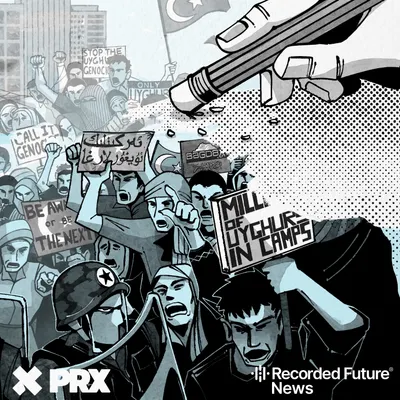
China's propaganda machine doesn't argue with the story. It buries it. From flooding Xinjiang hashtags to bot networks testing their reach during a U.S. Senate race, Beijing has turned information warfare into a numbers game. Now it's exporting that playbook — with teams working nine-to-five shifts to drown out anything China doesn't want you to see. Learn about your ad choices: dovetail.prx.org/ad-choices
America became a scientific superpower by attracting talent from around the world. But sometimes fear gets in the way. Qian Xuesen — a Chinese rocket scientist forced out during the Cold War — went on to help build China’s missile program. In partnership with 1A, Click Here looks at whether America is repeating its mistakes. Learn about your ad choices: dovetail.prx.org/ad-choices
Ahead of Hungary’s recent parliamentary elections, fake social media accounts began warning of political violence. But what caught researcher Antibot4Navalny’s attention was this: the Kremlin-linked campaign wasn’t reacting to events. It was trying to create them. We look at how these operations work, and why the goal may not be to make you believe a lie... but to doubt the possibility of truth itself. Learn about your ad choices: dovetail.prx.org/ad-choices
Propaganda works best when it disappears—into morning assemblies, lesson plans, even the alphabet on the wall. That’s what Pavel “Pasha” Talankin saw inside his classroom in Russia. So he started filming it all and what he captured became not just an Oscar-winning movie — but a record of how control settles in, one school day at a time. Learn about your ad choices: dovetail.prx.org/ad-choices
You buy a phone. A car. A tractor. But what do you actually own? We talk to legal scholar Aaron Perzanowski about how software and contracts are reshaping ownership — and why the right-to-repair movement is gaining traction. Learn about your ad choices: dovetail.prx.org/ad-choices
You buy something. A phone. A car. A tractor. It feels like it’s yours. But, it turns out, the software inside sets the terms—controlling how it works, how it’s fixed, even whether it runs at all. This week: how code is redefining ownership. Learn about your ad choices: dovetail.prx.org/ad-choices
AI learns by scraping our work — often without asking. Now people are fighting back. Not just in court, but raging against the machine itself — quietly corrupting the data it depends on. Which raises a question: If AI learns from us, what happens if we start teaching it the wrong lessons? Learn about your ad choices: dovetail.prx.org/ad-choices
In this CyberMonday crossover with WAMU’s 1A, we hear from listeners and return to an episode on how companies are using our data to customize how online goods are priced from consumer to consumer. What happens when technology reshapes the rules of the marketplace? Learn about your ad choices: dovetail.prx.org/ad-choices
Last week, Artemis II returned from the Moon. For a moment, it all felt clean. Simple. But space isn’t empty anymore. It’s crowded. It’s noisy. It’s filling up with the things we’ve left behind. And sometimes… those things come back. We return to a story we did on an Australian farmer who had an unexpected visitor from space—a charred piece of metal, dropped from low Earth orbit into his field. Learn about your ad choices: dovetail.prx.org/ad-choices
The Artemis II mission that made its trip around the Moon didn’t happen in a vacuum. It was built in part on a mission that happened a couple of years ago. We return to a story about a scrappy lunar lander that nearly didn’t make it. Learn about your ad choices: dovetail.prx.org/ad-choices
With digital copies of the human mind, scientists at MIT now have a new kind of testing ground --- a brain they can probe, no surgery required. It's to study how we remember, how we learn, and even how language begins. But if this mind is built—not born— are we studying the brain or engineering a version we can finally control? Learn about your ad choices: dovetail.prx.org/ad-choices
We lie with our faces. With our voices. Even with our pauses. Now AI says it can see through all of it. But is it actually detecting the truth…or just telling a very convincing story about how we feel? Learn about your ad choices: dovetail.prx.org/ad-choices
To live in the modern world, you have to be online. But in many places, that connection still doesn’t exist. So people aren’t waiting. They’re building their own internet—creating and running their own providers from the ground up. And in the process, redefining who gets to connect… and who gets to decide. Learn about your ad choices: dovetail.prx.org/ad-choices
What does it take to get everyone online? More than wires and satellites. We return to a story about a Mississippi farmer searching for a reliable connection—and end up uncovering a problem that stretches back nearly a century. What’s at stake isn’t just internet access, but who gets to be part of what comes next. Learn about your ad choices: dovetail.prx.org/ad-choices
We usually think of getting online as something that requires cables—strung under oceans or buried beneath our feet. Mahesh Krishnaswamy of Taara thinks the future may lie in beams of light pointed at the sky. Learn about your ad choices: dovetail.prx.org/ad-choices
In this CyberMonday crossover with WAMU’s 1A, we hear from listener and return to an episode on how satellites, electronic warfare, and a team of American techies MacGyver-ed a way to keep the power flowing in Ukraine. Learn about your ad choices: dovetail.prx.org/ad-choices
A cyberattack on a U.S. medical device company didn’t ask for money—it tried to wipe systems clean. It may be the start of a wave of Iran-linked hacks as tensions rise in the Middle East. So this week, we revisit a story about how Iranian hackers wage war from the shadows. Learn about your ad choices: dovetail.prx.org/ad-choices
Sky Lakes Medical Center in south-central Oregon never imagined it could become the target of a cyberattack. Then, one day, its computer systems went dark. Learn about your ad choices: dovetail.prx.org/ad-choices
Noura Al-Jizawi thought she’d left the repression of the Assad regime behind when she left Syria with her sister. Instead she became the target of an online subversion campaign. Learn about your ad choices: dovetail.prx.org/ad-choices
After Tehran throttled the internet during nationwide protests in 2022, Iranians started preparing a workaround: Starlink. Smugglers brought thousands of satellite terminals into the country. So when war began, and the regime tried to cut its people off from the rest of the world, they still found a signal. Learn about your ad choices: dovetail.prx.org/ad-choices
When a new tool starts appearing in places where humans once wrestled with right and wrong, it’s worth asking not just what the technology can do — but what it may be doing to us. Shannon Vallor, a philosopher at the University of Edinburgh, examines the hidden costs of offloading our moral judgment to machines. Learn about your ad choices: dovetail.prx.org/ad-choices
Churches are turning to AI to write sermons and reach new congregants. But when faith is filtered through an algorithm, does it change what – or who – we’re actually listening to? Learn about your ad choices: dovetail.prx.org/ad-choices
Four years into Russia’s full-scale invasion of Ukraine, an air-defense officer named Zhan describes a battlefield dominated by drones and connectivity — and we return to a story about the tech detectives who trace the component parts that keep those weapons flying. Learn about your ad choices: dovetail.prx.org/ad-choices
You’ve likely received a scam call or text at some point. Some of these messages come from elaborate compounds found mostly in Southeast Asia. These compounds look like call centers but operate more like prisons. In this CyberMonday crossover with WAMU’s 1A, we return to an episode and hear from listeners — on how these centers cropped up and what’s being done to stop them. Learn about your ad choices: dovetail.prx.org/ad-choices
The early Internet was ushered in with this widespread hope about its utopian possibilities. But the founder of The Citizen Lab, Ron Deibert, suspected there was a dark underbelly of government surveillance and censorship lying beneath and he was determined to unmask it. Learn about your ad choices: dovetail.prx.org/ad-choices
As reports grow that Kim Jong-un’s teenage daughter could soon be formally designated as his successor — extending the family’s rule to a fourth generation — we’re revisiting a story about the outsiders who watch North Korea when almost no one else can. In a country closed to inspectors and journalists, open-source “tech detectives” comb through satellite images, videos, and propaganda for tiny clues, trying to piece together what the regime is actually doing — and what it wants the world to believe — as it prepares for what could be a historic handoff of power. Learn about your ad choices: dovetail.prx.org/ad-choices
We return to a special Valentine’s Day episode, and look at the evolution of romance scams. They aren’t just about bilking lonely people out of their life savings anymore – scammers have diversified, and they’re making victims accomplices in a roster of cyber crimes from email scams and check fraud to money laundering. Learn about your ad choices: dovetail.prx.org/ad-choices
Former astronaut Ed Lu once worried about asteroids. Now he’s turning his attention to space debris —and a new question it raises: could adversaries turn it into a weapon? Some officials are beginning to worry the answer may be yes. Learn about your ad choices: dovetail.prx.org/ad-choices
A Cold War story about musicians, dissidents, and the quiet ways people push back when a system decides who gets to exist — and who doesn’t. Learn about your ad choices: dovetail.prx.org/ad-choices
When Big Tech brought plans for a giant data center to St. Charles, Missouri, one college student decided to fight back. And it raises a question that small towns all over the US are asking: What happens when the cloud touches ground? Learn about your ad choices: dovetail.prx.org/ad-choices
Car theft has gone digital. We talk to a white-hat hacker about how cars became computers on wheels—and why, in the race for smarter tech, safety is still trying to catch up. Learn about your ad choices: dovetail.prx.org/ad-choices
Reviews
No reviews yet.
If you like this...

Darknet Diaries
Same topic · Same format · Same audience

Risky Business
Same topic · Same audience

Understood: Artificial Intimacy
Same topic · Same format · Same audience

Search Engine
Same vibe · Same format · Same audience

Research Saturday
Same topic · Same audience · Same tone

9to5Mac Daily
Same topic · Same audience

Switched on Pop
Same vibe · Same format
Explore more like this
Listening context
Discussion (0)
No comments yet. Be the first to start the discussion!