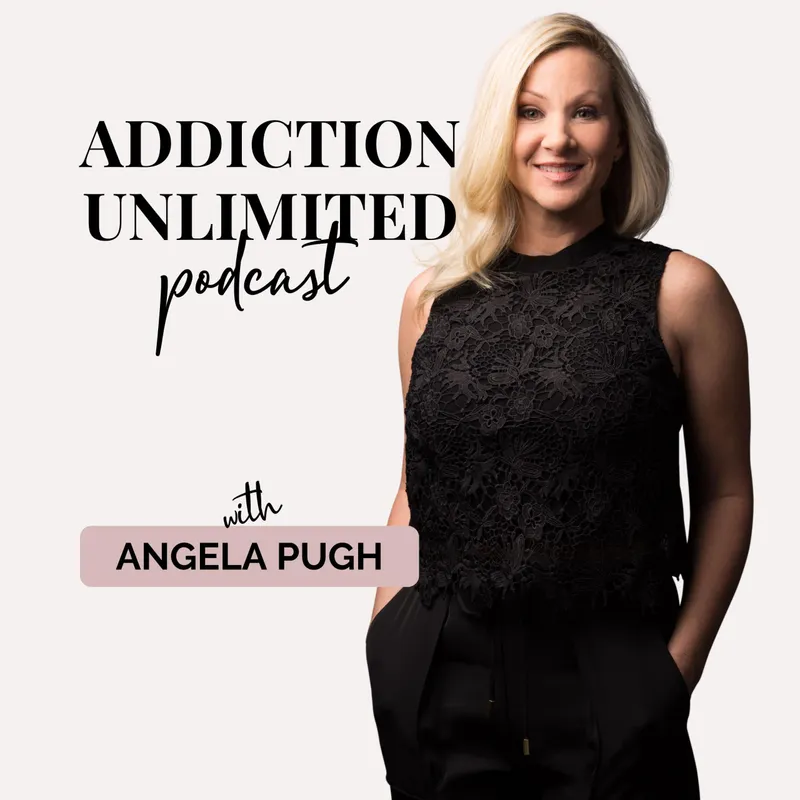
Addiction Unlimited Podcast
Angela Pugh·200 episodes
Are you ready to ditch daily drinking, reclaim your confidence, and create a life of freedom? Each week, Angela combines no-nonsense advice, personal stories, and science-backed strategies to tackle the challenges of sobriety. Angela Pugh is a globally-ranked Life Coach and podcast host, a professional Interventionist, and entrepreneur with more than 18 years of personal sobriety, helping people rebuild their lives since 2008. From navigating relationships to managing triggers, you’ll discover practical tools, empowering insights, and real-world solutions to thrive in sobriety. It’s time to stop feeling stuck and start feeling unlimited. Listen now for the inspiration, tools, and support you...
Episodes
You've done Dry July. You've done Sober October. You've had a hundred Day Ones. So why does nothing ever actually stick? Taking a break from alcohol isn't the same as deciding to quit. Learn why temporary breaks often lead back to drinking—and what creates lasting sobriety.
If you’ve ever wondered whether alcohol permanently damaged your body—or you’ve quit drinking and found yourself asking, Why am I so anxious? Why can’t I sleep? Why do I still have brain fog?—this episode is for you. Today I’m walking you through what actually happens inside your body after you stop drinking. Not the social media myths. Not the gimmicks. The real biology. You’ll learn how alcohol changes your brain chemistry, why early sobriety can feel so intense, and what your body is doing behind the scenes to restore balance. We talk about the science behind sleep disruption, why your liver is one of the most remarkable organs in your body, how alcohol affects your gut, heart, immune system, and hormones, and why so many people begin feeling physically better long before they feel emotionally healed. One of the biggest messages I want you to take away is this: feeling worse after you quit drinking doesn’t mean alcohol was helping you. It means your body is recalibrating after years of adapting to alcohol. But we also have an important conversation about what sobriety doesn’t magically fix. Trauma, stress, anxiety, menopause, low testosterone, nervous system dysregulation, and emotional healing don’t disappear simply because you stopped drinking. Recovery is bigger than removing alcohol—it’s learning how to build a life you don’t want to escape from. In this episode, you’ll learn: 01:25 Your brain: GABA, glutamate & early sobriety 05:56 Alcohol and sleep: why you wake up at 3 AM 13:38 Your liver’s incredible ability to heal 19:07 Gut health, nutrient absorption & inflammation 24:22 Your heart, immune system & hormones after al
Dry July isn't about proving you can quit. It's about gathering the evidence that leads to acceptance—the moment real recovery begins.
Think sobriety is about willpower? Think again. Learn why coping skills—not motivation—are the key to managing triggers, regulating emotions, and staying sober long term.
What does sober life actually look like? If you're thinking about quitting drinking, one of the biggest fears is the unknown. What will you do for fun? Will you still be yourself? Will your relationships change? Will life ever feel normal again? In this episode, Angela sits down with Casey Davidson from the Hello Someday Podcast for a candid conversation about what happens after alcohol is no longer part of your life. They talk about the fears they had before quitting, what surprised them most about sobriety, why moderation kept them stuck, how friendships changed, and why life often becomes much bigger than you imagined once alcohol is no longer running the show. If you're struggling to picture your future without alcohol, this conversation will help you stop focusing on forever and start focusing on what's possible.
Getting sober doesn’t just change your relationship with alcohol — it changes your relationships with people. In this episode, I’m talking about what really happens when you quit drinking and the people around you are still operating from the old version of you. We’ll talk about partners who still drink, friends who are still in the party lifestyle, and relationships that feel weird, awkward, or strained because you’re changing. You’ll learn why protecting your peace in early sobriety is not selfish, why some friendships can adjust while others fade, and how to communicate what you need without trying to control everyone around you. If your relationships feel confusing right now, this episode will help you breathe, slow down, and understand what’s actually happening. Book a call with me: addictionunlimited.com/call
I’ll walk you through five simple questions to ask before you go into any social situation. One of the most common questions people ask in early sobriety is, “Should I go?” Should I go to the birthday party? The barbecue? The wedding? The vacation? The girls’ weekend? The dinner where everyone else will be drinking? And I get it. The world doesn’t stop drinking just because you did. People still invite you places. Life keeps moving. And you don’t want sobriety to feel like a punishment where you hide in your house forever and say no to everything. But here’s the truth: in early sobriety, your job is not to prove how strong you are. Your job is to stay sober. In this episode, I’m helping you stop asking, “Am I allowed to go?” and start asking the question that actually matters: “Can I trust myself to follow my plan when the pressure hits?” Because you can make the most beautiful little sober plan in the world. You can drive yourself, hold your mocktail, stay for 45 minutes, rehearse your exit line, and know exactly what you’ll say if someone offers you a drink. But none of that matters if you abandon yourself in the moment it counts. That moment when someone puts a shot in your face. That moment when your friend says, “Come on, just one.” That moment when everyone else is laughing and loose and you suddenly feel awkward, exposed, and outside the circle. That is whe
You survived the first 5 or 7 days of sobriety and you’re finally starting to feel better. The anxiety is calming down. You’re sleeping again. Your face looks better. The shame isn’t screaming quite as loud anymore. And this is exactly where things start getting dangerous. Because once the crisis fades, your brain starts doing what it was trained to do: convincing you that maybe things weren’t really that bad. Maybe you overreacted. Maybe you can handle it differently this time. In this episode, I’m breaking down one of the biggest relapse traps in early sobriety: the moment when fear and consequences stop doing the heavy lifting and recovery becomes a conscious daily decision. I call this phase the plateau. This is the phase where many people start feeling confused because they thought quitting drinking was supposed to fix the problem. They finally feel a little better physically, but now they don’t know what they’re actually supposed to do next. The crisis is over. The urgency fades. And without a real plan for recovery, the thoughts and second-guessing start getting louder. Because most people don’t actually have tools for handling stress, anxiety, boredom, overwhelm, triggers, or emotional discomfort without alcohol yet. So when life starts feeling hard again, they slowly drift back toward the one solution that always felt certain and familiar: drinking. Not because they consciously decided to give up on recov
Making rules, breaking rules, starting over — if drinking takes up too much space in your brain, you’ll recognize yourself in this conversation. Not a dramatic rock bottom. Not losing everything. Not waking up one day suddenly certain she had to quit forever. Just years of exhausting negotiation. She tracked sober days on a calendar she bought at Target, crossing off each X with a pen and a ruler. She made rules — only on weekends, only when she went out, never at home — and watched every single one of them quietly expand until drinking had taken over the whole week. She quit for 60 days in the summer of 2019 specifically to prove to herself she didn’t have a problem…then went to a Zach Brown concert and hopped right back on. Sound familiar? The hardest part often isn’t the drinking itself. It’s the obsession. The constant mental debate. The planning, the bargaining, the monitoring, the shame. The promises you make to yourself that somehow never stick. In this episode, we talk about: The mental exhaustion of trying to control something that can’t be controlled Why high-functioning people stay stuck for years — and why “I still went to work” isn’t the whole story What white-knuckling sobriety actually feels like, and why willpower eventually runs out How connection and community changed everything for Denise What finally helped her stop going it alone What life actually looks and feels like five years in
This is a real conversation about what doing the work in recovery actually looks like beyond just “not drinking.”
You quit drinking—and now you’re staring at your life like… now what? No one really talks about this part. The part where alcohol is gone, but everything else is still the same—and suddenly, nothing fits. It feels hollow. Disconnected. Like you’re just trying to survive your own evenings. So you start questioning it: “Maybe I’m doing this wrong.” “Maybe sobriety isn’t for me.” That’s not the problem. The problem is you’re trying to build a new life using old materials. In this episode, we’re breaking down why that gap feels so uncomfortable—and what actually needs to happen for sobriety to start feeling like your life, not just something you’re trying to manage. Because nothing changes if nothing changes. And I’m sharing the exact shift that made the difference for me: a simple decision filter that completely rewired how I lived in early sobriety. “Is this what the old me would do?” If the answer was yes—I did the opposite. Not because it felt good. Not because it was easy. But because that’s how you build a new identity—one decision at a time. You don’t need to have it all figured out. You just need to stop letting the old version of you make the decisions. Because you don’t get a new life by cleaning up the old one. You get it by building something completely different. If you’re sober but stuck… this is the episode that shows you what comes next. Book A Call:</stron
You’re doing everything right — so why does sobriety feel like it’s making everything worse? One of my clients came to me about a month into our work together and she was defeated. Not the white-knuckling kind of defeated — the kind that comes from trying really hard and feeling like it’s not working. She was crying more than when she was drinking. Fighting more with her partner. She couldn’t answer the question “what do you like to do for fun?” without going completely blank. She looked at me and said, “I think I’m doing this wrong.” She wasn’t. And if you’re in that same place right now — somewhere in that 30 to 90 day window wondering if sobriety is actually making things worse — this episode is for you. I walk you through the 4 things that happen in early recovery that look like failure but are actually signs you’re doing it exactly right. In this episode: Why nothing feels fun anymore — and what’s happening in your brain Why you’re more emotional in sobriety, not less Why your relationships feel harder right now The difference between needing rest and disappearing Why the 30–90 day window is quietly one of the most dangerous in early recovery The discomfort isn’t a detour on the way to healing. The discomfort is the healing. Links mentioned in this episode: Book A Call With Angela: addictionunlimited.com/call Related Episode: <a href="https
Have you told yourself you were done — really done — more times than you can count? Not cutting back, not taking a break. Done. And then a few days go by, maybe a few weeks, and suddenly the conversation starts again. Maybe just tonight. Maybe I’ve got it under control now. If that pattern sounds familiar, here’s what’s actually going on: you haven’t decided yet. In this episode, we’re breaking down the difference between visiting sobriety and actually leaving — and why keeping the door open even just a little bit is exactly what keeps the cycle going. This isn’t about willpower or wanting it badly enough. It’s about a decision you haven’t fully made. You’ll hear why taking a break from drinking can actually keep you stuck longer than the drinking itself, what your brain is really doing when it keeps bringing alcohol back up for review, and why the fear of “forever” isn’t a sign you’re not ready — it’s
Every single time you said you were done, you meant it. So why does it keep not sticking? Most people blame willpower. Or discipline. Or not wanting it badly enough. But this episode goes somewhere different — somewhere most recovery content never goes. Because the real reason “I’m done” doesn’t hold has nothing to do with how serious you are. It has everything to do with what’s been happening underneath the surface, quietly, every single day you were drinking. Every hidden bottle. Every “just two” that turned into six. Every lie you told yourself and your family. Your brain was keeping score. And over time, it built a verdict about you — one you never consciously chose, but one you feel every time you make a promise to yourself. So now, when you decide to quit… there’s a part of you that doesn’t fully believe you. Yeah… we’ll see. That erosion of self-trust is the layer nobody’s talking about. And until you understand it, you’ll keep wondering why intention alone isn’t enough. In this episode, we cover: The hidden sacrifices drinking demands — beyond the health costs and the money Why every broken promise to yourself compounds into something that changes how you see yourself What’s really happening internally the moment you say “I’m done” — and why part of you doesn’t believe it How the self-trust damage bleeds out of the drinking lane and into your whole life The only way to actually re
You’re not stuck because you can’t quit—you’re stuck because you’re still trying to control it. If you’ve ever told yourself “this time will be different”… only to end up right back at day one, this episode is going to hit. Because the problem isn’t that you don’t want to stop. It’s that part of you still wants alcohol to work. So instead of walking away… you keep negotiating. You make new rules. You try new strategies. You convince yourself you’ve got it handled. And for a little while, it feels like progress. But it’s not. It’s the same cycle—just dressed up differently. In this episode, I’m breaking down exactly why moderating your drinking keeps you stuck, why it feels like effort but leads nowhere, and the truth you have to face if you actually want to get out of the loop. This is the shift most people avoid… and the one that changes everything. In this episode, you’ll hear: Why trying to “control” your drinking is what keeps you stuck in the cycle The real reason moderation feels like progress (but isn’t) What’s actually happening when you keep resetting and starting over Why this isn’t a discipline or willpower problem The hidden attachment that keeps pulling you back in How this patte
If you’ve ever thought, “Why can’t I just quit drinking and move on?” — this episode is going to hit. Because the truth is, most people don’t struggle with sobriety because they’re incapable… they struggle because they’re trying to make it easy. You want to quit drinking without disrupting your life. Without changing your routines. Without feeling uncomfortable. You want to put the bottle down and just move on like nothing happened. And that’s exactly why it’s not sticking. In this episode, I’m breaking down the real reason you keep starting over—and it has nothing to do with willpower, discipline, or how badly you want it. It comes down to this: easy doesn’t change anything. We’re talking about what “easy sobriety” actually looks like in real life (and why it fails), what you’re really avoiding when you say you want this to feel easier, and the identity shift that has to happen if you want this to last. Because sobriety isn’t just about not drinking. It’s about becoming someone who lives differently. And that requires change. Real change. The kind that feels uncomfortable at first—but actually works. If you’ve been stuck in the cycle of starting over, making new rules, taking breaks, and trying to “figure it out” on your own… this episode will show you exactly where things are breaking down—and what needs to happen next. In this episode, I cover: Why wanting sobriety to be easy is ke
You’re not crazy… but I know it feels like you are. You say you’re done.And you mean it. You wake up with that clarity… that this time is different energy. And for a little while, it is. A few days. Maybe a couple weeks. You feel better. Clearer. Back in control. And then something hits. Stress.Boredom.A bad day.A feeling you don’t know what to do with. And just like that… you’re right back where you started. Again. So what’s going on? Because this is the part that makes no sense: You’re smart.You’re capable.You handle everything else in your life. So why does this one thing keep taking you out? Why do you keep doing something you know isn’t working? Here’s
You keep thinking about the fun times. The laughs, the connection, the way it helped you relax. And the more you think about it, the harder recovery feels. Sound familiar? In this episode, we’re talking about why romanticizing your drinking keeps you stuck — and how to redirect that same energy toward the life you actually want to build. Because your future deserves a highlight reel too. Your brain isn’t lying — those moments were real. The relief, the connection, the way it felt after a hard week — it happened. But your brain is curating. It’s playing a movie trailer of your drinking life — all the best scenes, none of the wreckage. None of the 2am version. None of the shame you carried like a second skin. And when the fantasy feels better than the reality of building something new, people get frozen between two lives — the one they’re trying to leave, and the one they haven’t started building yet. That’s the trap. What if you gave yourself permission to daydream about the future with the same energy you’ve been giving the past? The vacation you’ll actually remember. The money that stays in your account. The version of you who makes a plan and follows through. The parent who’s actually present. The life where you’re not maintaining a double life anymore — where what people see is actually who you are. In this episode, I’ll walk you through four tools to make that shift stick — including how to play the full tape when nostalgia hits, how to build a sober vision specific enough to compete with the past, and how to start building the identity you actually want to step into. What You’ll Hear in This Episode: Why your brain plays a highlight reel of your drinking — and why it’s lying to you by omission The identity void that happens when you stop drink
What if life is boring without alcohol? That’s one of the biggest fears people have when they think about quitting drinking. Not just, “What will I do on Friday night?”But deeper questions like: Will I still be fun? Will people still like me? Will my relationship still work? What do I do with stress, anxiety, awkwardness, or family events without a drink? In this episode, I’m breaking down why that fear is so common, what’s really happening underneath it, and why “boredom” usually isn’t the real issue at all. We’re talking about the way alcohol becomes the signal to relax, connect, celebrate, and cope — and why removing it can feel like pulling a load-bearing wall out of your life. I also share a personal story about one of my biggest fears
Early sobriety can feel like your emotions are turned up to 100 — and if you don’t understand what’s happening in your nervous system, it can feel overwhelming fast. One of the biggest mistakes people make in recovery is assuming every uncomfortable feeling is the same thing. We call it anxiety, we try to breathe through it, journal through it, or just push through it… and when that doesn’t work, we feel like we’re failing. But the truth is, not all emotional activation is the same — and different states require different tools. In this episode, I’m breaking down four common types of emotional dysregulation that show up in sobriety and the practical tools that actually help regulate each one. Because staying sober isn’t just about willpower. It’s about learning how to regulate your nervous system without alcohol. You’ll hear about: Why early sobriety emotions can feel so intense • The difference between rumination, attachment activation, shame spirals, and under-stimulation • Why trying to “think your way out” of dysregulation rarely works • The reason alcohol felt like it solved everything — and what to replace it with • Practical tools you can use when your nervous system is activated If you’ve ever felt like your brain is spinning, your emotions are overwhelming, or you’re reacting to things in ways you don’t fully understand — this episode will help you make sense of what’s happening and give you tools that actually work. Because the goal of recovery isn’t just quitting drinking. It’s learning how to live in your own nervous system without needing alcohol to regulate it. <p data-start="327" data-
You know recovery is supposed to be more than just not drinking, but the day still feels like you’re mostly just getting through it. You might just be missing the foundation that makes recovery actually feel like something. Here’s what I know to be true: sobriety removes the alcohol. Recovery heals the patterns underneath it. And those are two very different things. But understanding the difference is one thing — living it on an ordinary Tuesday is another. In this episode, I’m walking you through a full recovery-focused day — hour by hour — and showing you exactly what living in recovery looks like in practice. We’re grounding it all in the three things addiction needs to thrive, and what you can do every single day to take them away from it. Not a perfect day. An intentional one. If you’ve ever wondered what recovery is actually supposed to look like — or you’ve been sober for a while and still feel like something’s missing — this one’s for you, my friend. IN THIS EPISODE: The real difference between sobriety and recovery — and why it changes everything about how you approach your day <li class="whitespace-normal bre
If you keep asking yourself “What am I doing wrong?” — this episode is for you. Most people relapse dozens of times before they actually get it right. And if that’s you, I know how exhausting that cycle is. But here’s the truth: There’s nothing wrong with you. It’s not that you don’t want it badly enough. It’s that the answer you need isn’t about actions and distractions. It’s about the mindset shifts that create real, lasting change. Today, I’m giving you the 6 non-negotiables that separate people who actually change from people who keep starting over. This isn’t a checklist. This isn’t about doing more things. This is about shifting how you think, how you show up, and who you become. These 6 principles apply to recovery — but they also apply to life. Career. Relationships. Health. Any major transformation. This is your personal code of conduct for real change. In this episode, you’ll learn: – 2:43: Why discomfort doesn’t mean bad — it just means you’re working a new muscle – 5:07: The real sacrifices recovery requires (and the ones you conveniently forget you already made) – 7:11: How to stop controlling what other people think and start prioritizing what you know – 9:17: Why brutal honesty is the only way forward — and how ego keeps you stuck – 10:53: What willingness actually looks like (hint: your feelings can’t run the show) – 13:15: Why you have to grow the fuck up — whether you feel like it or not – 14:00: The bear analogy that will change how you think about your alcoholism Listen in and decide: Are you ready to stop doing busy work and start doing the real work? Because that’s where actual change happens. LINKS MENTIONED: – Recovery Starter Kit<
The 4-Stage Recovery Roadmap and What to Work on at Each Stage If you’re feeling stuck or confused about where you are in your sobriety and what you should actually be working on, this episode is for you. I see it all the time: people trying to fix everything at once, or trying to skip ahead to the deep emotional work when they haven’t even built a stable foundation yet. And then they relapse. Or they burn out. Or they just stay stuck in the same patterns. Today, I’m breaking down the four stages of recovery—what you should be focusing on at each stage, and why you can’t skip ahead. Here’s the thing: the timelines I’m giving you are general guidelines. They’re not rules. For me, I spent way more time in Stage 2. I needed that time. But Stage 3 went faster for me because I loved that part of my process —it was hands down my favorite part of the steps. So don’t get hung up on the timeline. What matters is that you’re doing the work required in each stage before you move on to the next one. You get out of this exactly what you put into it. In this episode, you’ll learn: –> 3:17: What Stage 1 actually looks like—and why the only goal is “don’t drink today” –> 6:03: How to navigate Stage 2 when you’re asking “Who am I without alcohol?” –> 11:05: Why Stage 3 is about rebuilding what matters and letting go of what doesn’t –> 14:11: What it means to shift from surviving to thriving in Stage 4 –> 16:50: Why you absolutely cannot skip stages—and what happens wh
You know what’s keeping you from getting sober? All the advice telling you how to get sober. Everyone’s got a different rulebook. The old-timers say meetings every day, get a sponsor immediately, work the steps to a tee. People like me say do it your way—you don’t have to follow the doctrine perfectly. And newer recovery voices are teaching completely different avenues to recovery. And you’re stuck in the middle, just trying to figure out how to get through today without a drink, paralyzed by all these options, wondering which path is “right.” Here’s the truth nobody’s telling you: There is no wrong way. I’m giving you the three universal foundations that every strong sobriety is built on, and showing you how to stop waiting for permission and just start. You’ll learn: Why success rates prove the program doesn’t decide—YOU do (and what recent research actually shows) The three universal foundations every strong sobrie
You quit drinking. So why do you still have all the same problems? You quit drinking. That’s huge. But if you’re sitting there wondering why you still have all the same problems you had when you were drinking – I can tell you exactly why. Drinking was never the actual problem. It was a symptom. In this episode, I’m breaking down the difference between sobriety (removing alcohol) and recovery (healing the patterns underneath the behavior). Because putting down the drink is just the starting line, not the finish line. We talk about why you’re still making the same shitty choices (just without alcohol), the patterns keeping you stuck that have nothing to do with drinking, how to identify what you’re actually feeling when emotions are totally foreign, and the one thing that separates people who heal from people who stay stuck. Here’s the truth: most people think quitting drinking is the finish line. It’s not. <p class="font-claude-response-body break-words whitespace-normal leading-[1.7]
Everything you need to know about why sobriety alone isn’t enough – and what real recovery actually looks like. Listen, I see this pattern ALL the time with the people I work with. They quit drinking, they think they’ve done the hard part, and then a few weeks or months in… they’re confused. They’re disappointed. They’re thinking, “Is THIS what the rest of my life is going to be like?” And the answer is: only if you stop here. Sobriety is quitting. Recovery is healing. And the only way to stay sober – the only way to actually build a life you love – is to do the healing work Most people quit drinking hoping sobriety won’t be too inconvenient. They want the same life.The same relationships.The same routines.Just… without alcohol. And at first, it works. You feel better. Clearer. Less foggy. But then — weeks or months in — the feelings come back. <p data-start
Reading about sobriety isn’t the same as doing the work to get sober. If you feel like you’re doing everything for your sobriety—but nothing is actually changing—this episode is for you. And trust me, there’s a huge difference! Here’s the thing: when I got sober, the landscape looked completely different. There were no podcasts, no endless library of quit lit books, no free challenges. But today? You can fill every spare moment with sobriety content. And while that’s amazing in so many ways, it’s also created something I see over and over: people who mistake presence for participation. They’re reading books, listening to podcasts, signing up for challenges, even showing up to meetings – but they’re not actually engaging. They’re just… there. And that’s how people stay stuck for years—busy, informed, and still drinking. So in this episode, I’m breaking down exactly what it means to shift from passive presence to active participation. Because that shift? That’s where real transformation happens. I dive into: 3:48 – Why passive sobriety feels like progress but quietly keeps you stuck8:30</s
If you’re getting sober in 2026, make it your only focus—everything else can wait. Here we are, in that weird part of early January where everyone’s trying to overhaul their entire life at once. New year, new you, right? Quit drinking AND hit the gym AND change your diet AND meditate AND deal with your trauma… all at the same time. But… when you try to transform everything simultaneously, you’re not being ambitious—you’re sabotaging the one thing that actually matters. Today is my 20th sobriety birthday, and I’m sharing something that helped me get from one day to the next in early recovery: making sobriety my ONE thing. This simple approach allowed me to start accumulating time, finding relief, and building belief in myself—one day at a time. Because sobriety isn’t 10% of your energy. It’s 100%. In this episode, we dive into: >> The hard truth about alcohol: it worked as your relief system, and you have to replace that relief >> Why early sobriety is a full-time job disguised as “just not drinking” <p class="font-claude-response-body break-words
Why January 1 Isn’t the Answer — and What Actually Moves You Forward It’s New Year’s Eve, and if you’re feeling that familiar pressure—that maybe-this-year-will-be-different energy—I want you to take a deep breath and listen up. Whether you’re planning to drink tonight (even though you don’t really want to), or you’re already sober but looking at 2026 like it’s some kind of test you have to pass… I see you. And here’s what I need you to know: You’re not broken. You’re not behind. You’re just in a stage. In today’s episode, I’m walking you through the Stages of Change—a professional framework used in psychology and addiction recovery that’s going to help you figure out exactly where you are in your journey. Because once you know your stage, you’ll know exactly what to do next. No more spinning your wheels. No more beating yourself up. Just clarity, action, and a path forward. What You’ll Learn in This Episode: The 5 stages are: Pre-Contemplation Contemplation Preparation Action Maintenance (Spoiler: If you’re listening to this podcast, you’re already past stage 1. But where are you really?) Why people get stuck in contemplation (and the one thing that moves you forward—hint: it’s not more research) The difference between prepa
Healing, growth, and personal transformation — with or without a label. This episode is the final conversation in The Unlimited Life™ Starter Series —The 10 most powerful episodes from the Addiction Unlimited archives to help you rebuild your rhythm, structure, and emotional peace. And I saved this one for last for a reason. Because what Ian Morgan Cron and I talk about here goes beyond sobriety…Beyond addiction…Beyond labels. This is about transformation. The truth is, everyone has patterns.Whether it’s alcohol, perfectionism, food, control, or people-pleasing — we all have behaviors we use to cope.And the 12 steps offer a framework to heal the emotional root — not just the habit on the surface. You don’t have to be an alcoholic to feel overwhelmed.You don’t have to be a drug addict to crave peace.And you don’t need a la
Exhausted from overthinking everything before you even start? You’re not alone. Well, my friend, I’m going to be really honest with you today – after 400+ episodes, I had absolutely no idea what to talk about for this one. And you know what? That’s actually the most honest thing I could share with you on Christmas Eve. Here’s the truth: Even after 20 years sober, I’m still an alcoholic. I still overthink everything. I still doubt myself. My brain still goes to worst-case scenarios sometimes. The only real difference between me and someone newer to recovery? I’ve had more practice—and I know that everything will be okay. So if you’re exhausted from trying to have it all figured out before you start, if you’re burnt out on constant self-improvement, or if you’re just… tired—this episode is for you. No five-step plan. No worksheets. Just real talk about what it actually looks like to show up when you don’t have all the answers. In this episode, you’ll hear all about: 00:13: Why I had no idea what to talk about today (and why that’s the most honest thing I could share) 02:30: What showing up actually looks like when you’re tired, confused, and a
Practical tools to manage stress, set boundaries, and stay sober during the most overwhelming time of year. In this episode, we’re talking about why the holiday season is such a perfect storm for stress, exhaustion, and relapse risk — and what actually helps you stay grounded, calm, and sober when everything feels like too much. This isn’t about “just don’t drink” or powering through with willpower. It’s about planning ahead, setting real boundaries, managing your energy, and protecting your sobriety like it actually matters — because it does. These tools are timeless and incredibly relevant right now — especially as we head into the final stretch of the year. HERE ARE THE 3 KEY TAKEAWAYS FROM THIS EPISODE: 1️⃣ Holiday Stress Isn’t the Problem — Lack of Planning Is The holidays don’t sneak up on us. They come at the same time every year. When you plan ahead — for your schedule, your energy, and your triggers — you dramatically reduce overwhelm and vulnerability. 2️⃣ Boundaries Are a Sobriety Tool, Not a Personality Flaw Boundaries around time, conversations, commitments, an
If you’re a high-functioning drinker waiting for rock bottom to give you permission to quit, this episode will change everything. Most people think rock bottom is an external event—a DUI, job loss, or divorce. But that’s not what rock bottom actually is, and this misunderstanding is keeping you stuck in a cycle that never ends. In this episode, I break down the real meaning of rock bottom and why waiting for external proof is preventing you from taking action on what you already know. You’ll learn why comparing your life to other people’s disasters keeps you drinking longer, what to listen for in recovery meetings (hint: it’s not the external details), and why the question “Do I really need to quit?” is actually your answer. What You’ll Learn: Why high-functioning drinkers misunderstand rock bottom and how it keeps them stuck The “I’m not that bad” fallacy and why comparing external circumstances is the wrong measuring stick What rock bottom actually is (internal, not external) and why it changes everything How to recognize rock bottom moments before they become major disasters Why people who don’t have a drinking problem never wonder if they need to quit The re
Here’s something nobody tells you about long-term sobriety: your brain doesn’t forget its relationship with alcohol just because you stop drinking. After 19+ years sober, I can still walk into a restaurant and automatically glance at the bar. I can spend 10 minutes with my best friend analyzing five drinks in a hotel cooler. I notice who’s drinking at parties when my non-alcoholic mom never does. And that’s exactly how I know – even after almost two decades – that I still can’t drink. In this episode, I’m breaking down the ONE thing that tells you with 100% certainty whether you can drink again after sobriety. Spoiler: it’s not about time. It’s not about willpower. It’s about how much mental real estate alcohol still occupies in your brain. What You’ll Discover: The “mind space test” – how aware are you of alcohol even when you’re not drinking? Why “normal” drinkers never think about alcohol (and why you can’t stop) <p class="font-claude-response-body break-words whitespace-normal lead
Why 5pm Feels Impossible (And What To Do About It) Let’s talk about the hardest part of early sobriety: that predictable window of time when the craving hits like a wave and you’re not sure you can ride it out. Maybe it’s 5pm on a Tuesday. Maybe it’s Friday night when everyone’s posting their wine glasses on Instagram. Maybe it’s standing in the parking lot at your kid’s soccer game watching all the other moms with their Stanley cups. In this episode, I’m breaking down what I call the witching hour—that specific time when staying sober feels almost impossible. But here’s the truth: it’s not about the drink. It never was. The drink was the solution you were using for something else—exhaustion, overwhelm, loneliness, anxiety, boredom. I’ll walk you through the four different types of witching hours, what you’re really craving during each one, and most importantly—what to actually DO about it. Because willpower alone won’t get you through this. You need a plan. An
You Put Down the Drink, But Now You Can’t Stop Thinking About Food. Here’s Why. If you’ve traded your nightly wine for nightly ice cream binges, you’re not alone. And no, it’s not just about willpower or “getting your act together.” In this episode, I sit down with Ali Shapiro, creator of the Truce with Food methodology, to unpack the real reasons we turn to food and sugar in recovery—and it goes way deeper than you think. Ali shares her personal journey from childhood cancer and pesticide exposure to developing a complicated relationship with food that mirrored so many of the patterns we see in addiction. We dive into the difference between food addiction and disordered eating, why belonging (not hunger) drives most of our food choices, and the four emotional triggers that send us straight to the pantry. This conversation will change how you think about food forever. We talk about the TAIL framework (Tiredness, Anxiety, Inadequacy, Loneliness), why protein is your secret weapon against sugar cravings, and how self-trust—not perfection—is the real foundation of recovery from any substance. If you’ve ever felt crazy around food, ashamed
How to Stay Sober When You Can’t Control Your Family The holidays don’t threaten your sobriety. Your addiction to control does. In this episode, we’re tossing out the traditional holiday survival guides — no more tips about mocktails or leaving early. Instead, we’re talking about the real threat to your peace: the compulsive need to manage everything and everyone around you. Because if you’re honest, it’s not just Uncle Bob at the punch bowl stressing you out — it’s your internal pressure to make everything go just right. This isn’t about avoiding triggers. It’s about mastering yourself.You’ll learn 8 things you need to STOP trying to control this season — and the ONE thing you can control that changes everything. If you’re ready to protect your peace and stop aband
Avoid these traps so your recovery doesn’t become a revolving door. Sobriety is just the beginning… and these 6 traps are the exact reason why so many people relapse even when they’re trying to stay sober. In this episode, Angela Pugh breaks down the most common early recovery mistakes that sabotage your progress, wreck your structure, and chip away at your confidence. You’ll learn how to shift from barely hanging on to leading yourself with clarity, consistency, and personal power. Whether you’re 2 weeks in or 2 years sober — this is a must-listen if you want long-term peace without chaos. 🔑 HERE ARE THE 3 KEY TAKEAWAYS: 1️⃣ Recovery Is Biological — Not Just EmotionalPAWS (Post-Acute Withdrawal Symptoms) can hijack your energy, mood, and motivation for months. Learn how to support your brain and body so you stop spiraling and start stabilizing. 2️⃣ Bartering = Relapse in DisguiseThat inner voice that says “just one won’t hurt”? That’s not logic — that’s addiction bartering. You’ll learn exactly how to shut it down with truth and structure. <p data-start="1838" data
Waiting to Feel Ready? Why Confidence Follows Action — Not the Other Way Around Still waiting to feel ready before you take that next step?Spoiler alert: that moment may never come — and that’s exactly why this episode is here to shake you out of hesitation and into momentum. Inside this powerful episode of Addiction Unlimited, we’ll break down: Why readiness is a myth (and how to stop waiting for it), How confidence is built through action, not preparation, And the daily discipline of doing what needs to be done — even when you do
Sobriety gets you stable — emotional intelligence gets you unstoppable. If you’ve ever felt like you got sober… then life got louder, messier, and more emotionally demanding — this episode is your roadmap. I’m joined by my friend and emotional intelligence powerhouse, Noble Gibbens, to break down why EQ isn’t a nice-to-have in recovery — it’s the foundation of building a life you’re actually proud to live. Noble’s story is wild: military, high performer, “business cult,” decades of people-pleasing… and then a full-blown wake-up call that forced him to confront emotional immaturity head-on. What he learned rebuilt his marriage, rewired his relationships, reshaped his career, and transformed his entire identity. And listen — if you’re sober, even for a day, you know exactly why this matters.Alcohol numbed everything. Sobriety brings all of it back.EQ is how you handle it. This episode is loaded with tools, book recommendations, emotional vocabulary tips, and straight-up truth bombs to help you grow stronger, calmer
The Hard Truth About Being “The Helper” (And Why It’s Keeping You Stuck) In this episode, I’m pulling back the curtain on one of the most misunderstood patterns in relationships: codependency. If you’ve ever felt exhausted from being “the strong one,” guilty when you prioritize yourself, or frustrated when someone doesn’t take your advice, this conversation is for you. I break down how codependency masquerades as love but is actually a hidden form of control—and how the need to be needed keeps both you and the people you care about stuck. You’ll learn to recognize the subtle daily patterns that signal codependency, from checking your phone for someone else’s emotional weather to canceling your own plans when someone seems “off.” Then, I walk you through the practice of detachment with love—caring deeply while releasing your grip on outcomes. <p class="fon
The Same Tool Used by Olympic Athletes & Top Performers to Change Your Life If you’ve ever wondered how elite athletes, top entrepreneurs, and high-performers create insane results… this is it. And no — it’s not woo, it’s not wishful thinking, and it’s not pretending life is perfect. It’s science. And when you learn to use it to rewire your subconscious, override old limiting beliefs, and shift the way you feel about your life… everything changes. Here’s the wild part: Science says 95% of your brain activity is unconscious. That means almost everything you do — your habits, reactions, decisions, fears, beliefs — is driven by the part of your mind you don’t even realize is in control. It’s running old programs.Old stories.Old beliefs you didn’t choose. So the question becomes: <p data-start="998" data-
You Might Be a Perfectionist (And It’s Stealing Your Peace) If you’re constantly overthinking, procrastinating, or beating yourself up for not doing “enough” — this episode is going to hit home. Because perfectionism isn’t about having high standards.It’s about control, fear, and anxiety — and it’s quietly running your life behind the scenes. In this episode, we’re exposing how perfectionism shows up in real life (even if you don’t think you’re a perfectionist), where it really comes from, and how to start breaking the cycle. If you’ve ever said: <ul data-start="878" data-end="96
You already know better.So why do you keep saying yes to what you’ll regret tomorrow? In this episode, Angela gets brutally honest about why you keep making decisions that don’t align with who you want to be — and how instant gratification is keeping you stuck in the cycle. This isn’t just about drinking.It’s about how you handle discomfort.Fear, frustration, boredom, anxiety — you’ve trained your brain to escape instead of lead. And that habit?It’s wrecking your confidence, your progress, and your peace. Inside this episode: How instant gratification fuels bad decisions (eve
If you’re thinking about drinking again — that’s the clearest sign you still can’t. Maybe you’ve been sober for a while… and you’re starting to wonder if you could handle drinking again.If that thought has crossed your mind — I want you to pause right here and hit play on this episode. We’re talking about the subtle signs that tell you everything you need to know about your relationship with alcohol — even now. In this episode, I’m sharing the addict traits that still show up in my life after almost 20 years sober — and how they confirm, without a doubt, that I’m not someone who can ever drink normally. We’ll talk about: The “more” mentality — when enough is never enough Overthinking and rumination (AKA emotional avoidance) Feeling “less than” no matter how much you accomplish Being e
A step-by-step plan to structure your day after quitting drinking. You didn’t just remove alcohol — you removed the thing that used to shape your day, distract your mind, and give you a false sense of control. So what now? If you’re stuck in the cycle of starting over…Or if you’ve been sober for a while but feel like you’re drifting through your days… This episode is for you. I’m walking you through my exact Daily Plan — the structure I use to stay sober, focused, and grounded in my sober power. You’ll learn:✨ What to do when you wake up✨ How to avoid the afternoon crash✨ Why structure creates peace✨ And the #1 mistake that keeps people in relapse loops This isn’t about willpower — it’s about ownership. <p data-start="959" data-end="
Why character work never ends — and how to dismantle the ego patterns and excuses keeping you stuck. You don’t do character work once and ride off into a peaceful sober sunset. You don’t quit drinking and magically become the healthiest version of yourself. This work never ends. And if that sentence annoyed you a little — you’re exactly who this episode is for. This episode is a wake-up call if you’ve been sober for weeks, months, or years—and life feels flat, repetitive, emotionally dull, like you’re just going through the motions. No joy. No spark. No goals. That’s a sign your emotional growth has stalled. You’re not fired up about life. You’re avoiding discomfort instead of growing. And your excuses sound real
If you’re tired of starting back at day one, this episode will show you how to rebuild habits that last — with structure, not willpower. You don’t need more motivation. You need a better system. This is one of the most downloaded episodes I’ve ever released — and for good reason. Because when life gets hard, we fall into old routines. We wait for motivation to magically reappear. And we keep starting over — again and again. In this episode, I’m walking you through the exact structure I use (and teach my clients) to create habits that actually stick. No fluff. No trendy hacks. Just real, brain-based strategies that work. You’ll learn: How habits form in your brain — and why they’re so hard to break What the habit loop actually is (cue → routine → reward) How to identify your weak spots and reinforce them Why reframing your goals makes all the difference Simple ways to change your environment to support your new life And if you want more on the motivation piece — go listen to the last episode: “How to Take Action When You Don’t Feel Motivated.” That link is in the show notes, too. 🔗 Links Mentioned in This Episode <ul data-start
How To Take Action When You Don’t Feel Motivated: 3 Structure Hacks That Actually Work Waiting to feel motivated before taking action? That’s the myth keeping you stuck. I used to think successful people had endless motivation — some secret energy source I didn’t have access to. I’d wait to feel ready before starting anything: the workout, the journaling, the business tasks. But here’s what I learned the hard way: motivation doesn’t create action. Action creates motivation. The truth? Motivation is just a mood. Movement is a decision. And if you want to build consistent habits and reach your goals, you need to stop using your feelings as your strategy. In this episode, I’m sharing why waiting for motivation keeps you stuck, the psychology behind emotional reasoning vs. executive function, and the three proven structure hacks I use to take action even when I don’t feel like it. In this episode, you’ll learn: Why motivation is a terrible strategy for consistent action and productivity How to stop emotional reasoning from sabo
If you’ve quit drinking but still find yourself frustrated, low-energy, or stuck in “what’s next?” limbo… this episode is exactly what you need. Because… you don’t need another lecture on willpower.You need to understand the real ways you’re still sabotaging yourself — even if you’re doing everything “right.” In this powerful episode from the Addiction Unlimited archives, I’ll break down 3 sneaky patterns that silently kill your momentum in sobriety. These are the mindset traps and emotional blind spots that no one talks about — and they’re probably the reason you still feel like something’s missing. Whether it’s unrealistic expectations, lack of direction, or mistaking emotional overwhelm for alcohol cravings — this episode pulls back the curtain and helps you take your power back. This is the kick-off of the Unlimited Life™ Series — bonus episodes released every Friday through the end of the year — where we bring back the most-loved ep
Reviews
No reviews yet.
If you like this...

Discussion (0)
No comments yet. Be the first to start the discussion!