December 7, 2022
Episode 587: Walking the Talk: Unpacking the Slow Flowers Manifesto and putting our six values into practice for your floral enterprise
Slow Flowers PodcastAbout this episode
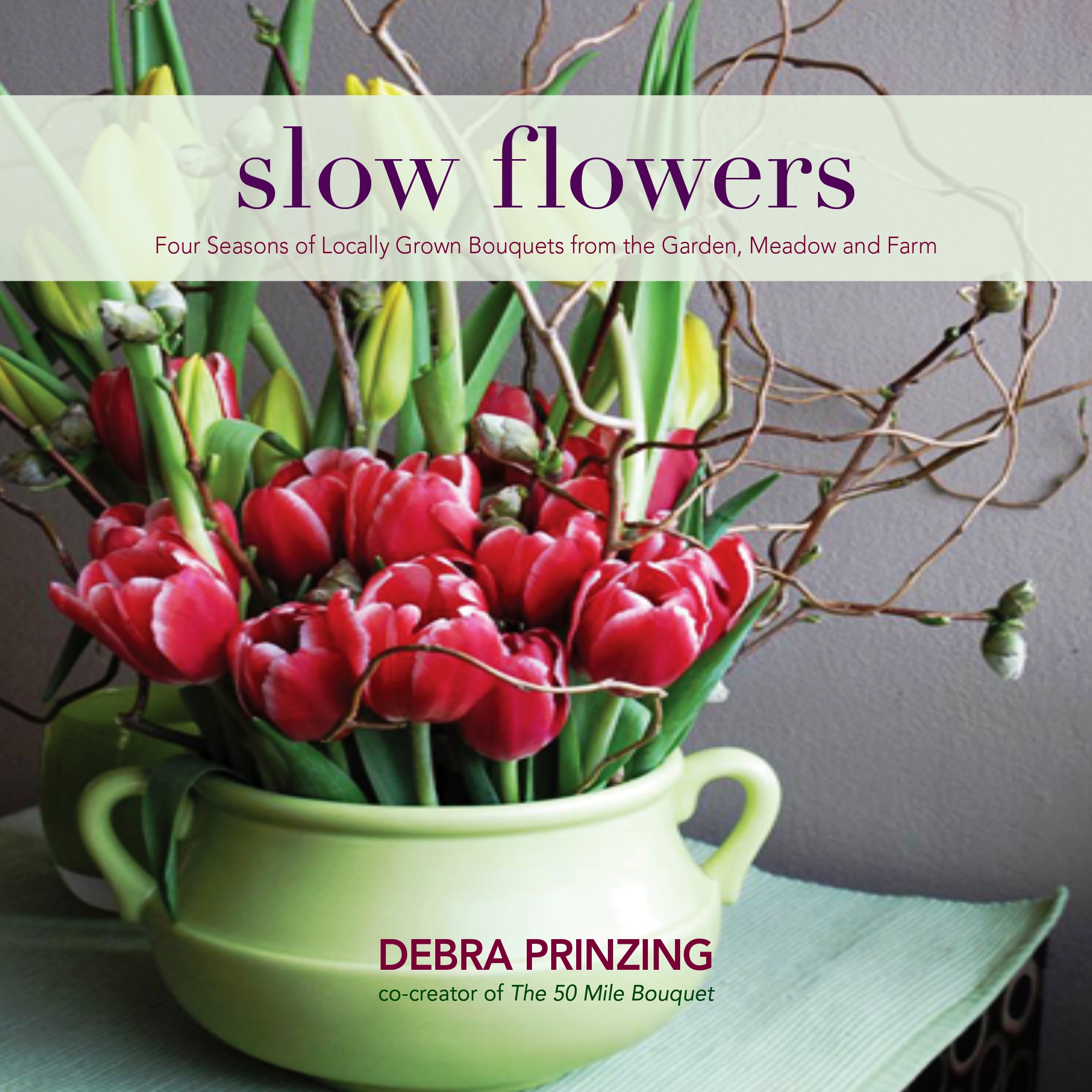
https://youtu.be/yYVe034KhRM Today, I want to share a bonus episode with you -- an updated lecture originally created for the FREESIA Summit, held in September 2022. FREESIA is an acronym for Florists Recognizing Environmental & Eco-Sustainable Ideas & Applications and the online conference was produced by Hitomi Gilliam and Colin Gilliam. The presentation is called "Walking the talk" and it examines our Slow Flowers' values and concepts and discusses how our members are putting them into practice. In this episode, I'll introduce you to several Slow Flowers Society members and highlight their stories. You can have all the theory you want, but implementing these values is what will help you build a sustainable brand for your business. This SLOW FLOWERS image was designed by Nancy Cameron of Destiny Hill Flower Farm I first started writing about the concept of Slow Flowers more than 10 years ago, coining the phrase "Slow Flowers" as a way to describe the values of slow, seasonal and domestic flowers. We defined the term Slow Flowers and what it reflects as a cultural shift: "A movement that encourages consumers to purchase locally-grown flowers and connects them with the source, from the flower farmer to the floral designer." During one of the open chat sessions during the FREESIA Summit, an audience member commented: "We have to find a network of like-minded professionals to gather together and support our work," and I had to pause and say: "That's what Slow Flowers is!" That's our laser-focused mission. Specifically, the Slow Flowers Movement has two audiences. We have the floral industry and we have consumers, and really, our message is constantly talking about the benefits of local, seasonal, and domestic flowers. And we want to influence floral buying practices of both groups. Some people say, "Is it mainstream yet?" According to Keyhole, a social media tracker, in a recent 365-day period, the hashtag #slowflowers, created 67 million social media impressions. the term is now being used worldwide to really communicate and convey sustainability. Our members use the Slow Flowers affiliation to elevate and amplify their branding and marketing. They use it to telegraph to their customers and clients what they're all about. An important model for the Slow Flowers Movement is the Slow Food Movement. Many of you know about Slow Food, that phenomenal organization founded in 1986 by Carlo Petrini in Italy, as an organization that promotes local food and traditional cooking and really. Slow Food was an anti-fast food response to what was happening in the culinary world. We took similar inspiration to shine a light on what has happened over the past 3 decades in the floral marketplace. Yes, I blatantly borrowed the adjective "slow" and added the word "flowers" to it. Slow Food has a manifesto and so I thought it be only fitting if Slow Flowers had one, too. I wrote our Slow Flowers Manifesto in 2017, as a call to action and to help our members define the spirit of their work and their own mission. Let's talk about the six values that are featured in the Slow Flowers Manifesto, and I'll break them down by theme and what our members are doing to really reflect those values. The Slow Flowers Challenge (c) Debra Prinzing Our first value is "To recognize and respect the seasons by celebrating and designing with flowers when they naturally bloom." As a guiding principle, we are influenced by what we see in the Slow Food movement, where people are saying, "To really celebrate flavor and the best food available is to eat it in season." The strawberry's lack of flavor in January is a frequent example given, but if you get it right off the vine or right off the plant in the middle of summer, there's nothing more pure as the essence of season. Similarly, we see this in the flower world. I think the idea of seasonality is universal and relatable to gardeners, and it certainly makes sense to me, since I come out from horticulture as a garden writer. During the pandemic, we saw something like 23 million new people who entered gardening during the shut-down. Having conversations about seasonality is important, because people are understanding they need to connect to nature more than ever. The phrase "Slow Flowers" first appears in my books. I wrote The 50 Mile Bouquet in 2012 and used the phrase Slow Flowers throughout that book, kind of as a shorthand to explain to people what the topic was about. The following year in 2013, I wrote a follow-up book called Slow Flowers, in which I set out to create a bouquet each week from my cutting garden in Seattle, using what grew there in season. It was a experiment to say, "You know what? There's a dormant season in winter; it's quieter, my design palette includes twigs and conifers. I asked: Can I create an arrangement as aesthetically pleasing as an expression of the current season, with as much excitement as I might during the peak of summer when everything's exploding?" The Slow Flowers book stimulated wonderful responses. There was a Slow Flowers Challenge in 2014 that started when one of my readers began using the hashtag #theslowflowerschallenge and sharing it on social media, asking other gardeners to join her. Inspired by her effort, we took it upon ourselves to create an opportunity for everybody to post and share images of their seasonal, garden-inspired arrangements. Flower lovers, gardeners, and florists joined in to create an arrangement every week, posting and sharing -- it really exploded. While I was out presenting lectures and presentations at flower shows, garden clubs, and other venues, I heard from audiences who said to me, "Okay, Debra, I've drunk the Kool-Aid; I believe in what you're talking about, but how do I find farmers and florists who are sourcing locally?" I was asked the same question by my peers in the media who were interested in the renaissance that was taking place in our floral marketplace. In response, I launched Slowflowers.com in 2014, and began to use the platform to highlight our members as sources for local flowers. Flower farmers and florists joined Slowflowers.com very early on to be part of the Movement. For example, farmer-florist Beth Syphers of Salem, Oregon-based Crowley House Flower Farm, joined as a member. She uses her association to promote the unique garden roses and other amazing crops her farm grows for the floral trade. I was really fortunate, at the very beginning of this journey, to partner with local flower farmers in the Pacific Northwest, including those who formed the Seattle Wholesale Growers Market in 2011, including Crowley House Flower Farm. I like to say I was their embedded journalist. The farmers of the Seattle Wholesale Growers Market are focused on bringing premium couture flowers to the florists of their region. They have differentiated local flowers from imported flowers and commercially-grown flowers. I attribute the secret of their success to specializing in flowers that can't be shipped or only bloom for a short period of time, like the beautiful lilacs which are grown by Jello Mold Farm in Washington's Skagit Valley. Jello Mold is pictured on the cover of The 50 Mile Bouquet and you heard owners Diane Szukovathy and Dennis Westphall on this podcast recently. As a storyteller, by partnering with the Growers Market and its farmers, I focused more people's attention on locality of flowers. The natural evolution of interviewing flower farmers led to connections with their customers, who are the florists, like Melissa Feveyear of Terra Bella Flowers, based in Seattle. She highlights seasonal flowers in her shop and educates her customers about her farm sources as part of her branding, such as her Instagram post: "Support Local Growers." In fact, Melissa was a founding member of the Seattle Wholesale Growers Market, the only florist to join with the growers in launching the co-op. These actions inspired other florists. Tammy Myers, of First & Bloom, also in the Seattle area, specializes in locally grown and American grown everyday flowers. She is rebranding for 2023 with the "eco-florist" tagline. After 9 years in business, her mission hasn't changed. Melissa and Tammy are among 850 florists and flower farmers, farmer-florists, retailers, wholesalers, and designers who are Slow Flowers Society practitioners. Above: Adam O'Neal of PepperHarrow Farm in Winterset, Iowa (c) PepperHarrow Farm Clearly, we all can see the benefits of supporting local flowers --our first mandate. These concepts inform value number two, which is really all about the transportation footprint. In the past decade especially, as our community of flower farmers and floral designers, consumers and floral enthusiasts is gaining momentum, we are seeing people who view their floral purchases in the same way they spend their food dollars, with the goal of sourcing our flowers as close to home as possible. In North America, that's obviously a challenge, because many areas have winter weather conditions, and so that's where we really rely on flowers from warmer states like Hawaii, California, Florida, or even Oregon and Washington, but local is clearly the value that segues into this issue of the flower transportation conversation. We wanted to know consumer attitudes about the correlation between where their flowers are grown and how they are purchased. There hasn't been a baseline understanding of consumer attitudes and behaviors for a long time, in terms of understanding their concern about local. In 2021, we partnered with the National Gardening Association and their annual National Garden Survey, which conducts a scientifically accurate survey of 2,500 households across the US, mainly asking them about lawn and garden trends and purchases and behaviors. For two years, we have asked,