Thriving Kids: A Parenting Podcast From the Child Mind Institute
The Child Mind Institute
The Child Mind Institute
Thriving Kids is a podcast for parents and caregivers who want clear, honest answers about child and adolescent mental health. Hosted by Dr. Dave Anderson, clinical psychologist at the Child Mind Institute, each episode tackles a common parenting challenge — from anxiety to tantrums to school struggles — with practical strategies backed by science. You’ll hear real talk, expert advice, and compassionate guidance from clinicians who work with kids every day. New episodes every week, with companion newsletters for easy reference.
5d ago
Dr. Dave Anderson sits down with science journalist and author Melinda Wenner Moyer to talk about what kids actually need to cope, connect, and grow up healthy today. They cover: Why letting kids have big feelings builds resilience How listening (not lecturing) strengthens connection What parents get wrong about screens and tech Why avoiding hard topics doesn’t protect kids How everyday conversations shape empathy and judgment This episode is about practical, research-backed parenting — not perfection. How Can We Help Kids With Self-Regulation? - Child Mind Institute Helping Kids Handle Big Emotions at Different Ages - Child Mind Institute How to Raise Kids Who Aren’t Assholes - Melinda Wenner Moyer Hello, Cruel World - Melinda Wenner Moyer
Dec 11
Thriving Kids Podcast Q&A: Handling Big Feelings, Screen Time Battles, and More Join Dr. Dave Anderson in this special Q&A edition of the Thriving Kids Podcast, where he addresses a range of parenting questions. From managing a 6-year-old's meltdowns over small issues to navigating screen time battles and teaching empathy between siblings, this episode covers it all. Dr. Anderson provides insightful advice on emotion regulation, developing coping skills, and setting effective boundaries. Learn how to talk to kids about inequality, media literacy, and tackle the common issues of homework difficulties and friendship dramas. Tune in for practical strategies to support your children's emotional and behavioral development.
Dec 4
Dr. Dave Anderson and special guest Dr. Marc Brackett, the founding director of the Yale Center for Emotional Intelligence, discuss the importance of understanding and managing emotions, especially in today's world. Dr. Brackett shares insights from his books, 'Permission to Feel' and 'Dealing with Feeling', and highlights practical strategies for emotional regulation. Whether you're a parent, educator, or caregiver, this conversation offers valuable guidance on raising emotionally healthy children and the vital role of emotion regulation in achieving well-being and success. Further Reading from the Child Mind Institute How Can We Help Kids With Self-Regulation? How to Help Children Calm Down And more from Dr. Marc Brackett Dealing with Feeling
Nov 27
In this Q&A follow-up to last week’s Thanksgiving special, Dr. Dave Anderson answers listener questions about emotional self-regulation, holiday expectations, and the stress that comes with getting everyone together under one roof. You’ll hear quick, practical guidance on: Managing holiday expectations so you don’t end up disappointed How much to plan during winter break Loosening screen limits without losing control What to do about kids who refuse holiday meals Teens who disappear the moment break starts Handling gift-giving reactions and gratitude Protecting your own energy and avoiding resentment Resetting when the day goes off the rails If you’re celebrating Thanksgiving, we hope your day feels manageable. If you’re outside the U.S., these questions apply to any big family gathering — December holidays, birthdays, and every festival that brings people together.
Nov 20
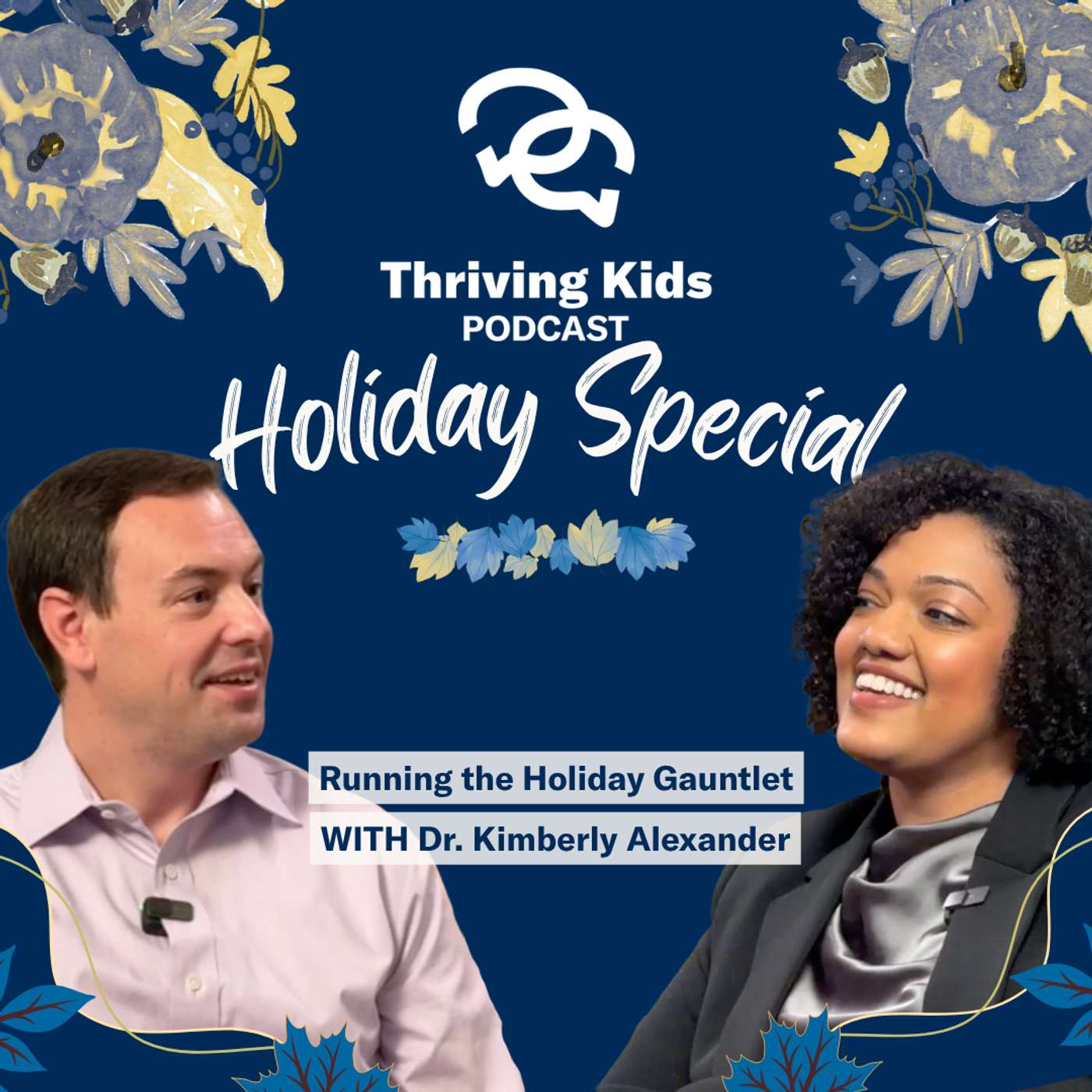
The holidays can feel like a marathon for parents — full of expectations, logistics, and emotions. In this episode, Dr. Dave Anderson talks with clinical psychologist (and new parent) Dr. Kimberly Alexander about what she calls “running the gauntlet” of the holiday season. They unpack how to manage your own expectations, keep kids regulated, and handle tricky family moments — without losing your sense of humor or sanity. You’ll learn: Why “ know thy child ” might be the best holiday mantra How to balance structure and flexibility when school’s out What to do when your child’s behavior doesn’t match your “perfect family” vision How to set boundaries with relatives who take it personally Tips for teaching gratitude and handling gift-giving meltdowns Dr. Alexander also shares what she calls “the Kim package” — her practical approach to balancing family needs, setting limits with grace, and remembering that every year looks different. Chapters (adjust as needed): 00:00 – Welcome to Thriving Kids 01:00 – Why the holidays can feel so intense for parents 05:00 – The “perfect family” myth and social media pressure 07:00 – “Know thy child”: tailoring expectations 10:00 – Setting structure and boundaries that work 13:00 – Handling relatives who push back 17:00 – Teen dynamics and validation 20:00 – Teaching gratitude (and managing disappointment) 29:00 – Giving yourself grace Related resources: childmind.org/article/helping-kids-cope-with-holiday-stress/ childmind.org/article/managing-family-stress-during-the-holidays/ childmind.org/article/helping-kids-cope-with-changes-in-routine/
Nov 13
Parents sent in smart, honest questions about how to keep conversations about sex, consent, and safety going at home. In this Q&A episode of Thriving Kids , Dr. Dave Anderson from the Child Mind Institute answers questions about when to start, what’s age-appropriate, and how to talk about everything from consent to porn — without losing your kid’s trust. You’ll learn how to: • Start early with body boundaries and accurate language • Talk about consent in everyday life • Handle porn exposure and online curiosity • Balance privacy, safety, and your family’s values • Keep the door open even when teens roll their eyes Key topics • What age to start talking about sex and consent • How to explain the biology of reproduction without euphemisms • Setting boundaries and modeling consent in daily life • Talking about porn and online exposure without shame • Balancing privacy and safety with teens in relationships • How to share family values without sounding preachy • What to do if your teen is already sexually active • Keeping awkward conversations open and honest Resources mentioned Books • What Makes a Baby , Sex Is a Funny Word , You Know, Sex – Cory Silverberg • Being You and Yes! No! – Megan Madison Organizations & platforms • Peer Health Exchange • Selfsea – digital platform by Peer Health Exchange with stories and tools created with and for young people • Planned Parenthood – resources and education for sexual and reproductive health Further reading • How to Talk to Kids About Sex and Boundaries – Child Mind Institute • How to Talk to Your Kids About Porn – TIME , by Dr. Dave Anderson • Talk to Your Kids About Sex and Healthy Relationships – health.gov • The Best Sex Education Books for Kids of All Ages (And Their Parents!) – Parents / AAP
Nov 6
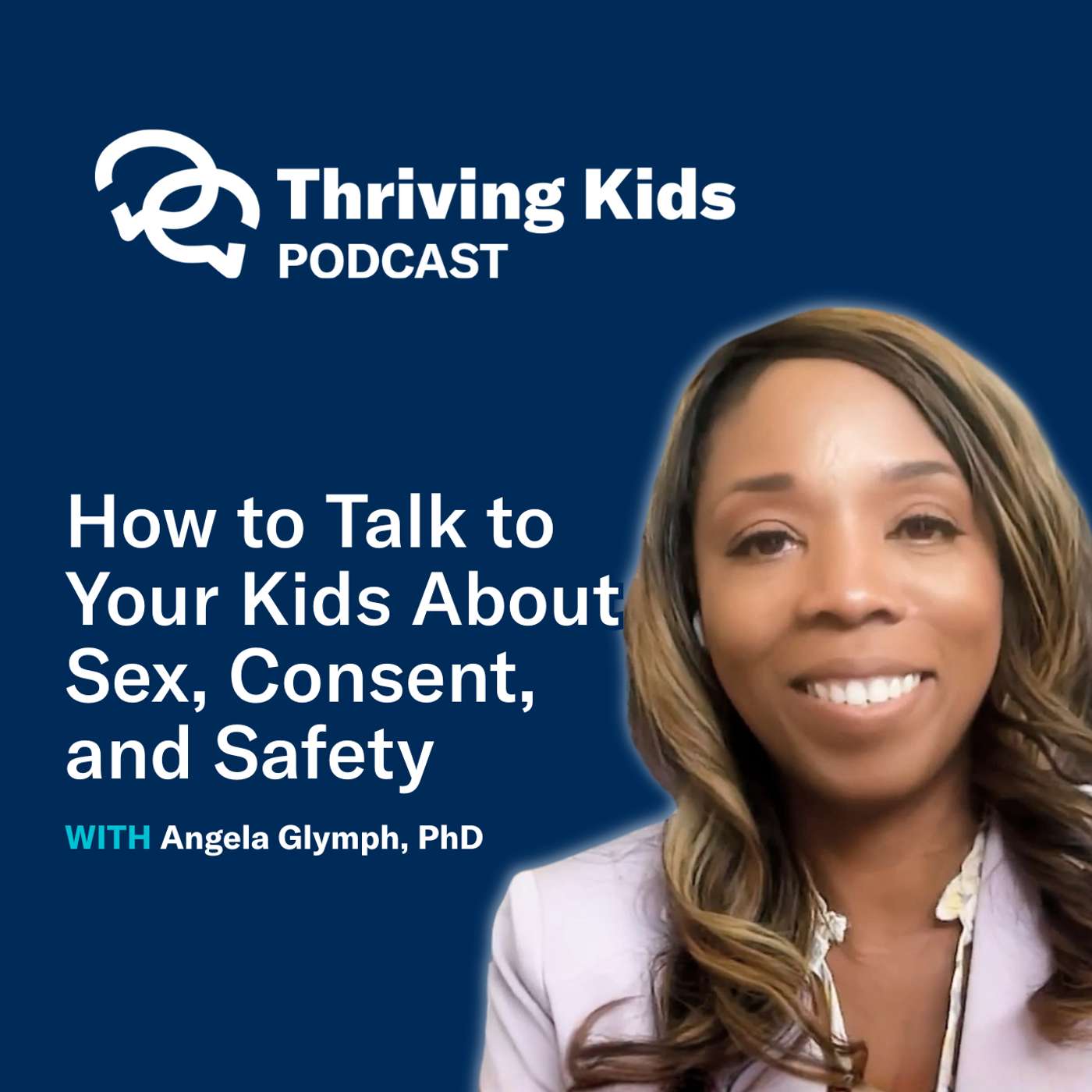
Talking to kids about sex, consent, and safety can feel intimidating — or like something you’d rather put off. But kids are already getting information from somewhere, and it’s not always accurate or safe. In this episode of Thriving Kids , clinical psychologist and host Dr. Dave Anderson talks with Dr. Angela Glymph , CEO of Peer Health Exchange , about how to have honest, age-appropriate conversations that protect kids, affirm who they are, and strengthen your relationship with them. They break down what “comprehensive sex education” really means, how to start early with body autonomy and consent, and how to keep the conversation going through elementary school, middle school, and the teen years — without needing to be a “perfect” expert. Guest Dr. Angela Glymph is the CEO of Peer Health Exchange , a national youth nonprofit dedicated to helping young people stay safe, healthy, and affirmed — no matter who they are or where they live. Her work centers adolescent health equity, social-emotional learning, and youth-led, inclusive health education. She’s also a parent, navigating these conversations at home herself. In this episode, we discuss: What comprehensive sex education actually includes (it’s more than just “the talk”) Why medically accurate, truthful information keeps kids safer How kids really learn about sex, consent, and relationships (school, peers, online, social media) The benefits of giving kids good information vs. leaving them to “figure it out” How to teach body autonomy and consent starting in early childhood Why using correct terms (like vulva, penis, sperm, egg) matters How to build on the conversation in elementary school, middle school, and beyond When and how to talk about contraception, STIs, and safety Why abstinence can be part of the conversation — but not the whole thing How to respond if your teen is already sexually active What to do if you feel too awkward or underqualified to have these talks The myth that teens don’t want to talk to parents about sex (and why it’s wrong) Age-by-age: Laying the groundwork Ages 3–5 (early childhood) Simple yes/no and body boundaries Naming body parts accurately (including genitals) Basic explanation of where babies come from using truthful, simple language (e.g., sperm and egg) Ages 6–8 (early elementary) Building on earlier explanations with more biology Talking about different family structures and ways babies come into families Normalizing questions and curiosity Ages 9–11 (upper elementary) Puberty: what’s happening in their changing bodies Factual explanation of sexual intercourse and pregnancy in developmentally appropriate terms Introducing contraception and safety basics Reinforcing body autonomy and boundaries Ages 12+ (middle & high school) Relationships, identity, and decision-making More detailed conversations about contraception, STIs, and safer sex Consent in the context of romantic and sexual experiences How to think about risks, pressure, and personal values Key takeaways for parents If kids don’t get information from you or other trusted adults, they will seek it elsewhere — online, from peers, or pornography. Comprehensive sex education is lifesaving : it helps prevent unintended pregnancy, STIs, and sexual violence, and it builds communication skills kids use far beyond this topic. Using medically accurate terms normalizes the conversation and gives kids language to advocate for themselves and report if something is wrong. Abstinence is a valid choice and part of comprehensive education — but it shouldn’t be the entire message. You don’t have to do this alone: your pediatrician, your child’s school, faith community, and trusted adults (like an aunt/uncle or family friend) can all help. Teens may act like they don’t want to talk to you, but many do want open, nonjudgmental conversations — they’re also trying to figure out how to approach you . Resources mentioned in the episode Books for kids & families Cory Silverberg – books about bodies, reproduction, and growing up (including What Makes a Baby and later titles for older kids and teens) Megan Madison – Being You and Yes! No! (early childhood books covering gender, consent, and body autonomy) Organizations & platforms Peer Health Exchange – comprehensive, inclusive, peer-led health education Selfsea (selfsea.org) – Peer Health Exchange’s digital platform created with and for young people, including stories and resources on sex, consent, and talking to parents Planned Parenthood – education and resources for teens and parents on sexual and reproductive health Further reading Talk to Your Kids About Sex and Healthy Relationships – health.gov https://odphp.health.gov/myhealthfinder/healthy-living/sexual-health/talk-your-kids-about-sex-and-healthy-relationships The Best Sex Education Books for Kids of All Ages (And Their Parents!) – Healthy Children / AAP https://www.parents.com/kids/health/best-sex-education-books-for-kids-by-age/ How to Talk to Kids About Sex and Boundaries – Child Mind Institute https://childmind.org/article/how-talk-kids-sex-consent-boundaries/ How to Talk to Your Kids About Porn – TIME https://time.com/4277188/how-to-talk-to-your-kids-about-porn/ About Thriving Kids Thriving Kids is a podcast from the Child Mind Institute that helps you raise emotionally healthy children with practical, expert-backed advice.
Oct 30
In this Q&A edition of the Thriving Kids Podcast, Dr. Dave Anderson takes on parents’ top questions about raising teenagers. Building on last week’s conversation with Dr. Lisa Damour, he shares research-backed guidance for navigating everything from therapy resistance and social media boundaries to privacy battles, motivation slumps, and shifting moods — all while keeping connection and communication strong at home. Have a question for Dr. Dave? Email podcast@childmind.org What you’ll learn • How to approach therapy when your teen refuses to go • The best way to address vaping or substance use without pushing your teen away • What to do when school motivation swings from “I love it” to “I don’t care” • How to set limits around social media that actually stick • Ways to balance trust, privacy, and safety at home • How to support anxious teens without reinforcing avoidance • Signs that moodiness is typical vs. when it’s time to seek help • Why staying connected — even through protest — protects teen mental health Find related resources at childmind.org.