4d ago
Did the Trump Memecoin Kill the Crypto Boom?
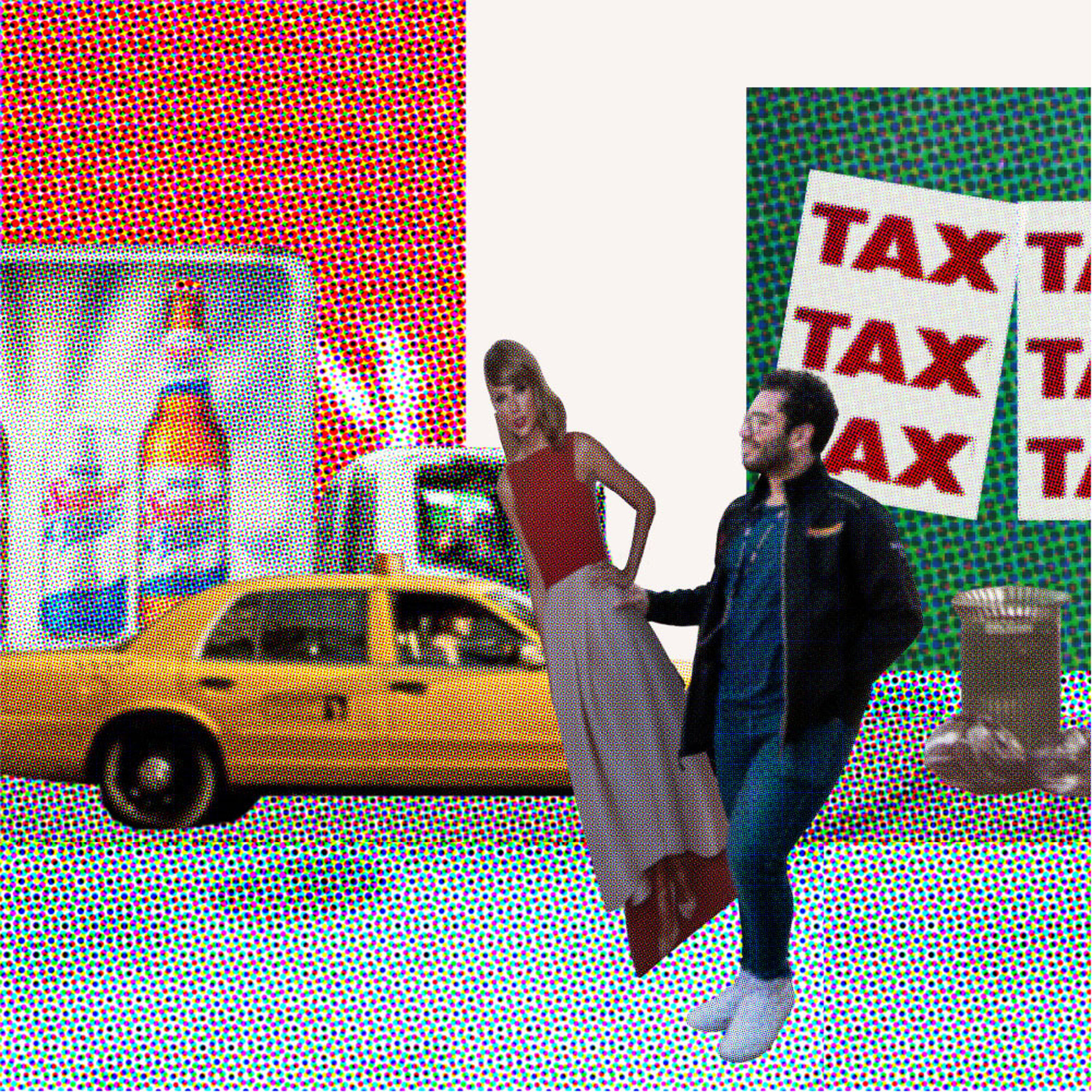
This week, we talk about two of the biggest economic stories of 2025: Buy Now Pay Later and $Trump. First, Amanda Mull stops by to discuss BNPL : why its on the rise, how people use it, potential pitfalls and how it's different than just paying with a credit card. Then, Zeke Faux goes through the implausible story of $Trump - the Donald Trump meme coin launched just a few days before the 2025 inauguration. Faux tells Max and Stacey how the Trump team made an estimated $350 million on the coin, while many investors lost money. Also: tepid jobs numbers and new opportunities in sports for the older parts of the population. See omnystudio.com/listener for privacy information.
Dec 12
Trump's AI Hail Mary
This week we take a look at Trump's latest AI gambit: letting Nvidia sell their AI chips to China. Will this move help feed AI's growth or is it just another step towards making the bubble all the more explosive when it pops? The Verge's Nilay Patel joins Max and Stacey to get to the bottom of this. Also on this show, Lucas Shaw goes through the ins-and-outs of the complicated fight over Warner Bros. Will Netflix succeed in their bid for the storied media giant, or will it be Paramount with its attempt at a hostile takeover? See omnystudio.com/listener for privacy information.

Dec 10
Big Take Bonus: Why We Can’t Quit Microsoft Excel
We here at Everybody’s Business are big fans of our colleagues and friends over at Big Take, Bloomberg’s daily news podcast . So when they released an episode with our very own Max Chafkin, we can’t resist to share it. Please enjoy, and hop on over to subscribe to their feed if you like what you hear! —— Excel. If you work in corporate America, that word either inspires laser-focused productivity or pure dread. Over the last 40 years, the spreadsheet software has become synonymous with the best — and worst — of late-stage capitalism. It’s seeped into popular culture and, along the way, made Microsoft one of the world’s most valuable companies.But in a world of AI and new competition where Excel=Sum(39+1), can it stay on top? On today’s Big Take podcast, Bloomberg’s Dina Bass and Businessweek’s Max Chafkin join host Sarah Holder to track the rise and challenges ahead for one of the most ubiquitous programs around. See omnystudio.com/listener for privacy information.
Dec 5
Will Chatbots Break Our Brains—And Our Hearts?
Live from the stage at our Dec. 4 event at Bloomberg’s headquarters in New York, Ellen Huet joins Max and Stacey to talk about her recent story on chatbot delusion. As people’s lives get increasingly entangled with AI, cases of intense human-bot connections breaking up families, businesses, and even pushing people to question their own sanity is raising with an alarming rate. They also discuss Huet's recent book Empire of Orgasm: Sex, Power, and the Downfall of a Wellness Cult . Also, back in the studio, Max and Stacey take a look at puzzlingly positive Black Friday sales. See omnystudio.com/listener for privacy information.
Nov 28
The Business Behind the 'Turkey 5'
To celebrate Black Friday, this week’s Everybody’s Business is all about two staples of this unofficial US holiday: commerce and football. First, New York Times’ Ken Belson sits down with Max and Stacey to discuss his new book Every Day Is Sunday: How Jerry Jones, Robert Kraft, and Roger Goodell Turned the NFL into a Cultural & Economic Juggernaut. Belson explains how the National Football League has managed to grow into the most valuable sports league in the world and why the game is so perfectly suited for television. Also paying a visit to the studio is Wirecutter’s Annemarie Conte. She breaks down how the popular site manages to dig out and organize such a barrage of deals, and previews what jaded consumers can expect this Black Friday, amid tariffs and trade wars. See omnystudio.com/listener for privacy information.

Nov 21
Examining Epstein, Inc
Reporter Max Abelson gives Stacey and Max a primer on the business dealings of disgraced financier and convicted sex offender Jeffery Epstein. Abelson has sifted through thousands of emails to and from Epstein and explains to Max and Stacey what Epstein's business dealings, both legal and unlawful, really was. He also describes why - 20 years into a career of reporting on money and power - he is taken aback of the cruelty involved. Plus, as America gears up for Thanksgiving, there’s a lot of anxiety about rising food prices. But are the worries warranted? A recent report shows that the average Thanksgiving meal might actually be cheaper in 2025 than previous years. What gives? Deena Shanker joins Max and Stacey to set the record straight. For more information about the first Everybody's Business live event - happening December 4 in New York City - click here! See omnystudio.com/listener for privacy information.

Nov 14
Can Makeup Help Prop up the Economy?
As the government reopens, the Trump administration introduces a new solution to the American housing crisis—the 50 year mortgage. The idea is getting hammered from the right and the left alike but gets support from at least one person: economist and Bloomberg Opinion contributor Allison Schrager. Can this new concept take some pressure off of struggling first-time homebuyers or will it be yet another white whale in an increasingly impossible financial game? Max and Stacey pick Allison’s brain to find out. Also, Amanda Mull joins in the studio to talk about her new Businessweek cover story on Ulta, which she dubs the " Home Depot of the beauty industry.” While other retailers are struggling, Ulta is thriving as the largest beauty store in America. Does all this success ultimately come down to the so-called “lipstick effect?” Amanda explains. See omnystudio.com/listener for privacy information.
Nov 7
Why Matt Yglesias thinks Mamdani Won't Change New York
Matt Yglesias, author of the Slow Boring newsletter, sits down with Max and Stacey to discuss the recent string of Democratic victories in US elections. The most remarkable happened in New York City, where Democratic socialist Mayor-Elect Zohran Mamdani will soon be in charge of one of the global capitals of capitalism. Will Mamdani be able to go through with his ambitious agenda or will he soon realize - like many before him - that being a mayor is more about garbage collection than transforming the transit system and launching city-run grocery stores? The duo also talk to The Atlantic’s Ellen Cushing about her recent story on food delivery apps and how they are impacting US food culture and social life. Also, for this week’s underrated story, Max presents a surprising attempt for a government bailout. See omnystudio.com/listener for privacy information.

Oct 31
Will Horror Gruel Save Hollywood?
Max and Stacey are joined by Leo Feler, an economist with a unique perspective on the Trump administration’s immigration and deportation policies. During a recent renovation project, Feler’s property was raided by federal agents looking to detain workers they believed were in the country illegally. Feler recounts the dramatic incident and explains how raids like these could have a chilling effect on the US economy. Also on the show, Sean Fennessey, chief content officer of The Ringer, and co-host of The Big Picture podcast joins to debate just how bad of a year this has been for Hollywood. See omnystudio.com/listener for privacy information.
Oct 24
Kyla Scanlon Sees Trouble Brewing in the US Economy
Kyla Scanlon visits the studio armed with her three most pressing indicators of the state of the economy. What do we make of all those auto loan defaults? Is Jamie Dimon’s new $3 billion “fortress” a harbinger of fundamental changes in the labor market? And why does an economically anxious population keep on spending? Lots to discuss. Max and Stacey also sit down with David Papadopoulos to talk about the forthcoming, high stakes election in Argentina and try to make sense of the Trump administration’s attempt to help the country out: a currency swap. Is it a bailout or does the US really need $20 billion worth of pesos? See omnystudio.com/listener for privacy information.
Oct 22
Introducing: The Mishal Husain Show
Make sense of the world with one essential conversation, every week. Mishal Husain, one of Britain's best interviewers, brings her signature blend of curiosity and tenacity to weekly conversations with world leaders, business titans, and cultural icons, revealing who they really are and how they see the world changing around them. Follow the podcast wherever you listen, so you don't miss an episode. https://link.podtrac.com/iu94w2n4 See omnystudio.com/listener for privacy information.

Oct 17
Meet Polymarket’s $400 Million Man
This week we hear from Domer - a longtime prediction markets junky who has placed more than $400 million worth of bets using Polymarket. At any point he might have 1,000 or more bets on prediction market sites, ranging from wagers of a few thousand dollars to as much as $1 million, roughly the sum he put on Taylor Swift’s new album sales. Plus, Bloomberg Businessweek columnist Amanda Mull explains the premium credit card wars , and we discuss OpenAI's forthcoming foray into pornography . See omnystudio.com/listener for privacy information.

Oct 10
Are The Markets Just Gambling Now?
Polymarket is a strange place. You can bet on the price of Ethereum , whether Russia and Ukraine will agree to a ceasefire this year or who the next French prime minister will be. As silly as this might sound, Polymarket is worth $8 billion, according to an investment by the owner of the New York Stock Exchange. This deal comes on the heels of the new partnership between the Chicago Mercantile Exchange and sports betting site FanDuel . Now, in addition to betting on wheat futures, you can bet your life savings on the Lions making it to the Super Bowl. (Side note: Please do not put your life savings on the Lions going to the Super Bowl). For decades, Wall Street has fought the accusation that investing was “just gambling.” Banks, financial institutions, regulators and the US government have spent decades establishing credibility, legitimacy, oversight and institutions to distinguish Wall Street as much as possible from the nickel slots. Now it seems that Wall Street is embracing its inner casino. Does this shift mean investment banks, hedge funds and bond traders are really all about gambling now? Is there a difference between shorting Tesla and picking which Taylor Swift song will be the least streamed this week ? (At least $500,000 is riding on Honey —check out our recent podcast on this very subject . This week , Bloomberg Odd Lots podcast co-host Joe Weisenthal joins Max and Stacey to talk betting markets, investing and what these new partnerships mean for the economy. Also this week, Casey Newton, host of the Hard Fork podcast, joins to talk about the future of artificial intelligence. Worries about AI companies and technologies being over-valued have been making the rounds. If AI is indeed a bubble, the economic implications could be dire. At the same time, companies, think tanks and workers are desperately trying to game out what kind of impact AI will have on jobs and industries. Everyone, it seems, is placing their bets—and the stakes are high. See omnystudio.com/listener for privacy information.
Oct 3
Will the Shutdown Lead to DOGE 2.0?
The federal government shut down on Wednesday , which in the near-term probably sounds worse than it is. Yes, 750,000 workers are expected to be furloughed and yes, certain functions including visitor centers at national monuments and the release of economic data will pause. But functions deemed “essential” are continuing: mail is still being delivered, courts are still open, airport security continues and animals at the National Zoo are being fed. In other words, you might be forgiven for ignoring the latest dispute, which stems from a White House insistence that Democrats vote for a new spending bill and Democratic leaders insist the Republicans restore some of the massive cuts to health care they pushed through earlier this year before millions lose coverage. But this shutdown may play out differently, as Justin Wolfers, the University of Michigan economist and author, explains on this week’s episode of Everybody’s Business . The White House, led by budget director and Project 2025 author Russell Vought, has indicated it wants to go beyond merely furloughing staff –and instead use the threat of a crisis to make the kinds of drastic job cuts Donald Trump attempted in the early months of his second term. Like many of those cuts, these too are arguably illegal and already being challenged in court . The first round, under the auspices of Elon Musk’s so-called Department of Government Efficiency, was both wildly unpopular and disruptive, leading to a backlash that ultimately may have cost Republicans a special election in Wisconsin and forced Musk to leave the White House. The government shutdown gives Trump—through Vought this time—a second bite at the apple . Later on the episode, Bloomberg reporter Zeke Faux joins to talk about his latest story on Justin Sun, the crypto entrepreneur whose colorful life has included a diplomatic post in Grenada, spaceflights with Blue Origin, a prime minister post in a libertarian micronation and the purchase of one of the most talked-about works of art in recent memory. Most recently though, the headlines have centered around his dealings with Trump and how in just a few short months Sun managed to go from being sued by the Securities and Exchange Commission to seeing the case dropped and having dinner alongside the Republican president. Finally, we discuss the Bustle story about a supposed vibecession in sex work . Apparently, “sugar daddies” are cutting back on payments to their romantic partners, who have derisively begun calling them “Splenda daddies.” Stacey explains why, vibecession or no, the entire phenomenon is depressing. See omnystudio.com/listener for privacy information.

Sep 26
Wait, What Happened to Argentina’s Economy?
This year came with a promising start for Argentina. Inflation seemed under control, investment was coming back, double-digit poverty was ( according to the government ) beginning to fall and President Javier Milei—the chainsaw wielding, leather jacket-wearing, self-described libertarian—was being hailed by supporters as a tough-love leader bringing the country’s economy back from crisis. Milei also became a favorite of fellow political travelers to the north, namely Donald Trump and Elon Musk. But the year hasn’t been kind to Argentina or its populist leader. Once again, the country finds itself in crisis—crushing debt, panicked investors and the threat of political instability. But this time the US is pledging to help. The Trump administration has offered its support, both in terms of money and encouraging investment in Argentine businesses. This week, Max and Stacey talk to David Papadopoulos, executive editor of markets, about what happened and whether Milei can turn the economy around. Also this week, Lucas Shaw joins the show to talk about two of the modern kings of digital: David Ellison, son of Oracle founder Larry Ellison, who quickly became one of the most important players in Hollywood when his company Skydance snapped up Paramount last month; and MrBeast, the YouTube breakout star who has built an empire on video stunts (and more recently chocolate bars) and whose company, Best Industries, after years of astonishing growth, is experiencing growing pains. The show also explores the latest fad in workplace culture: Quiet cracking. The combination of low hiring rates, increasing workplace unhappiness and an uncertain economy is squeezing workers to the limit. See omnystudio.com/listener for privacy information.

Sep 19
Is the Fed Really That Independent?
On this week’s episode of Everybody’s Business we're joined by Rohit Chopra, former director of the now largely kneecapped Consumer Financial Protection Bureau. He argues that Trump’s efforts to apply political pressure to the Fed present an opportunity to scrutinize the central bank’s decision-making. Chopra points out that the Fed’s governors, who tend to either come from academia or Wall Street, originally came from a more eclectic array of backgrounds—with perhaps more sensitivity to the needs of small business owners and consumers. “I really think a good central bank is really good for democracy,” Chopra says. “But I think it has to also change with the times so that it is responsive and that it is not seen as a group of priests and priestesses who make determinations about our lives without really understanding how the economy is working on the ground.” Also this week, we bring in Bloomberg News reporter Randall Williams to unpack the story that is currently roiling the world of professional basketball: allegations that Los Angeles Clippers-owner Steve Ballmer improperly funneled payments to one of the team’s stars via a dubious (and now bankrupt) fintech company, Aspiration. Ballmer has denied the allegations, which first surfaced in an episode of the podcast Pablo Torre Finds Out . Aspiration’s co-founder has denied being party to any scheme to evade the salary cap. Williams explains why the story has garnered so much interest among NBA owners and how it illustrates the importance of salary caps in order to maintain competitive balance. Finally, we unpack a strange case of fake branding, involving the logo of Elon Musk’s aerospace company. See omnystudio.com/listener for privacy information.

Sep 12
Where Did the 1,000,000 Jobs Go?
Not that long ago the US economy was wrestling with an interesting problem: jobs data looked very strong with historically low unemployment and historically low firings, but people didn’t feel good about the economy. The dissonance became known as the “vibecession” and was the topic of many economic and policy debates. The question was: Why do people feel bad about the economy when the economy is actually doing great? With help of revised data, we now know that the vibes were right. This week, the US Bureau of Labor Statistics—part of the Trump administration’s Department of Labor—released its latest data, which included a massive revision. The US economy created roughly 900,000 fewer jobs between March 2024 and March 2025 than previously thought, the BLS says. That means only about half the jobs we thought had been created actually materialized, according to the agency. How did this happen and what does this mean? This week, economist Kathryn Anne Edwards, host of the Optimist Economy podcast, joins us to talk about how a giant revision like this can happen, as well as how it reflects on the market and the economy. Also this week, Max Chafkin talks about his book The Contrarian , which looks at the world of Silicon Valley billionaire Peter Thiel. We discuss his influence and what it reveals about the intersection of technology, money and ideology. Also why he is suddenly so interested in the “antichrist.” See omnystudio.com/listener for privacy information.
Sep 5
The Business of KPop Demon Hunters
This week we are joined by journalist and cultural commentator Sam Sanders, of the Sam Sanders Show , to unpack the lessons Hollywood is learning from its latest unexpected success: mega-viral sensation Kpop Demon Hunter. We discuss how Sony lost out on much of the movie's profits when it signed over the rights to Netflix–though arguably helped preserve its business during the Covid downturn by doing so–and how the success of KPop Demon Hunters at least partly vindicates Netflix CEO Ted Sarandos’ controversial claim that the experience of going to a movie theater is “outdated.” Sanders mostly agrees, suggesting that the theatrical experience will essentially go the way of opera–once a wildly popular medium that eventually settled into a narrow and extremely rarified niche. The songs are good too. We’re also joined by Odd Lots co-host Joe Weisenthal to fact check President Trump’s claim that the “stock market needs tariffs and ask college students about their AI habits as they head back to school. And, finally, we explain why, love them or hate them, tariffs are making your Pumpkin Spice Latte (not to mention any pumpkin spice cat litter you happen to buy this fall) more expensive. See omnystudio.com/listener for privacy information.

Aug 29
Fed Wars, Logo Wars and Love (Taylor’s Version)
This week on Everybody’s Business from Bloomberg Businessweek , Editor Brad Stone and Stacey Vanek Smith talk Fed independence, Cracker Barrel, as well as the upcoming wedding that’s already moving markets. See omnystudio.com/listener for privacy information.

Aug 22
Will AI Crash the Economy?
What does it say about the prospects for an artificial intelligence “golden age” that some of those who most enthusiastically predicted it are now tamping down expectations? Earlier this week, in what looked like damage control over the release of a new version of ChatGPT, OpenAI Chief Executive Officer Sam Altman said investors have been inflating a speculative bubble in AI. He predicted “someone’s going to get burned.” Altman and other AI insiders seem more or less fine with that, arguing that asset bubbles often coincide with technology breakthroughs. The thinking goes like this: the dot-com bust was bad, but at the end of it we had a new information infrastructure that led to lasting economic growth. Maybe that happens this time around, but there’s reason to think an AI bust would be economically devastating—and not just for businesses that bet heavily on the software and data centers needed to run it. On this week’s episode of Everybody’s Business , we explore the potential economic fallout of an AI implosion with Ed Zitron, a skeptic who makes a compelling case for panic in a recent essay and on his podcast, Better Offline . In other words, rather than continuing to embrace the new technology, maybe it’s time to hate it. The argument boils down to a problem of misalignment: For years, big tech companies have dumped hundreds of billions of dollars into developing ever-more advanced large language models (LLM) (like OpenAI’s GPT, Google’s Gemini and Anthropic’s Claude). Much of that money has gone to chipmakers, especially Nvidia, which sells the graphical processing units needed to train new models. All of this spending has sent asset prices soaring, creating a dynamic in which index funds are heavily weighted to a single industry —which you guessed it—threatens to crash the entire stock market if it falters. A similar dynamic may be playing out in the world of private credit, which tech companies are increasingly tapping to build data centers, creating another economic risk . At the same time, there are signs those wildly expensive LLMs are failing to generate commensurate financial returns. These include the blowback to the release GPT-5, which OpenAI had promoted as potentially god-like but which many users say is actually worse than the last version . There’s also a recently published study from the Massachusetts Institute of Technology that showed the vast majority of pilot programs involving so-called generative AI failed to lead to revenue growth. Also on this week’s episode: We discuss the struggles of fast food companies with Bloomberg Businessweek’s Deena Shanker. Normally, they thrive in times of economic uncertainty, but McDonald’s has been struggling , partly she says because the company’s food is no longer seen as cheap. One exception to this trend? Taco Bell, which has thrived because it’s managed to keep prices low while being just unique enough to go viral on TikTok. Finally, for our underrated story, we preview Fed Chair Jerome Powell’s big speech in Jackson Hole, Wyoming, on Friday. Get ready for some extremely low-key fireworks. See omnystudio.com/listener for privacy information.
Aug 15
Trump's Hands On Economy, Is Sports Betting Ruining Sports?
Donald Trump has been back at the White House for little more than 6 months, but his mark on the US economy has been profound. If Adam Smith’s “invisible hand” was a symbol of the unfettered free market, the Republican president’s approach should perhaps be described as very hands on. This week on Everybody’s Business from Bloomberg Businessweek , Max Chafkin and Stacey Vanek Smith explore some of the industries being, well, handled by Trump. Trump’s latest right-hand man, Treasury Secretary Scott Bessent, sat down with the magazine to talk about his views on everything from government data to interest rates and how he, just like his 79-year-old boss, desires greater government involvement in the US economy. Bloomberg Businessweek Editor Brad Stone joins us to break down the story. The most impactful economic policy Trump has put in place so far is his “ most beautiful word .” Most of Trump’s tariffs are still in flux and subject to ongoing litigation, but legal or not, the effect of 34% tariffs on goods from China and other major trading partners has started showing up in US pricing data, including wholesale prices this week from the embattled Bureau of Labor Statistics , which rose the most they have in years . But all imports and exports are not created equal. Trump’s recent talks with US chipmakers Nvidia and Intel portend increased government involvement in the industry , including the introduction of export taxes on chips sold to China, which Bessent said could be a potential model for other industries as well. Also on this episode: A look at this week’s BLS inflation report. According to the government data, tariffs seem to be showing up on store shelves, especially in the coffee aisle, where prices are up more than 14% over last year . New York coffee lovers weigh in. Bloomberg Businessweek’s Stone joins to talk Bessent, government data and government involvement in the chip industry. Is sports betting ruining sports? Bloomberg News reporter Randall Williams joins to talk about the booming business of prop bets and why critics say it’s ruining games. And finally the underrated story of the week: Artificial Intelligence gets personal. Many medical procedures and cancer screenings are now being assisted by AI. As is turns out, smarter technology could be making doctors dumber. About the show: every week, hosts Stacey Vanek Smith and Max Chafkin take a look at the week’s business news and break down what you need to know with the help of Bloomberg journalists, experts and the people and businesses trying to navigate the economy every day. See omnystudio.com/listener for privacy information.

Aug 8
Trump’s War on Data and Rise of the Pricing Bots
Donald Trump’s decision to fire the commissioner of the Bureau of Labor Statistics, Erika McEntarfer, apparently in retribution for a report that showed slower job growth, was without precedent in recent US history. This week on Everybody’s Business we explore why presidents—at least since Richard Nixon —have left the BLS alone, and we hear from former BLS commissioner Erica Groshen on how exactly that data is collected. According to Groshen, the recent downward revisions in the rate of job growth (which Trump alleged without any evidence was a political hatchet job) were business as usual. She explains that such revisions happen because it takes months for the more than 100,000 businesses the government surveys every month to respond. Some fill in their data electronically; some send it by email or even fax. While the BLS waits, it puts out an estimate; those estimates are often revised later on. For the past few decades, this approach has been widely seen as a huge success. BLS data, which includes employment and inflation statistics, is relied on by researchers, economists and government policy planners—as well as by businesses. They use the data to help write budgets, plan hiring and set prices. Although Groshen optimistically contends that McEntarfer’s firing won’t immediately dent that perception, it comes amid budget cuts that have already limited the ability of BLS researchers to collect granular data and could lead to questions about reliability. Also this week, we discuss the controversy around artificial intelligence pricing , which has recently centered around the airline industry, widely seen as the undisputed leader in customer frustration. But the strategy is in fact coming for you on pretty much every type of good and service. We also debate the significance of the American Eagle “good jeans” controversy and ask how much consumers really think about culture wars when they buy dungarees. Finally: A counterintuitive approach to warding off one of America’s most feared predators. See omnystudio.com/listener for privacy information.

Jul 31
Trump's 4D Chess, Your North Korean Coworker, and Hard Celsius
It was a packed week for the US economy: jobs numbers, an interest rate announcement from Federal Reserve Chair Jerome Powell, consumer confidence data and a tariff deadline. Topping the list was gross domestic product, the sum total of goods and services the economy produces—generally considered the measure of growth. After months of tariffs (and Donald Trump’s constantly shifting positions on them), many economists were predicting the US economy would be showing signs of strain. It turns out, that wasn’t necessarily the case when it comes to GDP (though jobs numbers unveiled Friday may give some pause ). After falling a bit during the first few months of the year, this quarter, economic growth clocked in at a 3% annualized rate. But there’s more to this number than meets the eye—or perhaps less. This week on Everybody’s Business , we talk GDP with Ken Rogoff, Harvard economist and author of Our Dollar, Your Problem . His take: the numbers may have been distorted by some of the panicked importing that US businesses were doing earlier in the year in anticipation of Trump’s latest ( and now extended again ) deadlines. However, he also leans into some chess metaphors (he is, after all, a grandmaster) to address those Trump fans who contend the president is playing four dimensional chess. His verdict? Trump is a “coffee house player.” That’s someone who’s better than you think—but not as good as he himself thinks. Later in the show, we talk with Evan Ratliff about his feature in Bloomberg Businessweek , detailing how workers in North Korea are taking US tech jobs while posing as remote-working Americans. They’ve allegedly managed to infiltrate some of the biggest and wealthiest companies in the country—and their paychecks go to fund North Korea’s nuclear program. Finally, the underrated story of the week is a canned spirit drink was mislabeled as an energy drink. See omnystudio.com/listener for privacy information.

Jul 25
Dude! They Killed Colbert!
After 10 years, CBS announced it was cancelling Stephen Colbert’s Late Show . This coincidentally came on the heels of his humorous excoriation of parent company Paramount’s $16 million deal with President Donald Trump over what the Republican claimed was bias in the editing of an interview with then-Vice President Kamala Harris. CBS journalists denied the allegation and legal experts said Trump’s claim was dead on arrival in court. Colbert meanwhile referred to the payment as a “big fat bribe,” going on to imply that Paramount—led by Chair Shari Redstone—was paying off Trump in the hope he would green-light an $8 billion merger with SkyDance. (On Thursday evening, also the same day this episode was recorded, the FCC approved the deal ). Given that Colbert had the best-rated show in its time slot, the move to cancel him was widely seen as a quid pro quo, driving yet another nail into the coffin of free expression. Add to that a GOP-controlled Congress taking back previously approved funding for public media (at Trump’s direction), and some see the end of a free press in America. Or, less pessimistically, could it just be the end of outdated business models? This week on Everybody’s Business from Bloomberg Businessweek , Felix Gillette joins Max Chafkin and me to break down the Colbert firing. Gillette contends that, despite its ratings, Colbert’s show has been losing money since the pandemic and that it may have been cancelled in the near future anyway. He also points to the most recent episode of South Park , which tackles the issue of Colbert’s cancellation while taking aim at Trump. The creators of South Park just signed a $1.5 billion deal with Paramount (which owns Comedy Central). So maybe free expression is still alive and well, only it’s not so free anymore? Then we take a look at the federal government. Max and Stacey talk with a former employee of the Consumer Financial Protection Bureau about his experience getting fired by the “Department of Government Efficiency,” what he’s seen happen to the department since and some of the CFPB’s work that isn’t being done (and, in some cases, being undone). Also on this episode: Max and Stacey discuss the return of meme stocks: Kohls, GoPro, and Krispy Kreme are feeling the boost. Stacey gets reactions from Krispy Kreme customers. The underrated story of the week: Starbucks’ big plan for turning business around? Serving more coffee. Max takes issue. See omnystudio.com/listener for privacy information.

Jul 18
Trump's Fed fight, Staycations, and Etsy Witches
On the morning of July 16, a White House official told Bloomberg News that President Donald Trump was preparing to fire Federal Reserve Chairman Jerome Powell. Such a firing would potentially be illegal ( as the Supreme Court recently noted ) and undermine decades of goodwill that Fed policymakers have built up with investors. Trump quickly took the threat back , while making it clear he might still try to dismiss Powell, ostensibly based on alleged overspending on a renovation of the central bank’s headquarters. On this week’s episode of Everybody’s Business , hosts Stacey Vanek Smith and Max Chafkin are joined by Martha Gimbel, director of the Budget Lab at Yale, to explore what’s at stake. Though Gimbel says there’s a case to be made that the Fed has been too slow to lower interest rates, she explains that the idea of either firing or bullying Powell into an extreme rate cut would backfire by destabilizing the economy. She says banks would probably raise mortgage rates in the short run rather than lower them if Powell were ousted, due to the uncertainty caused by such an unprecedented move. The other problem is that interest rates aren’t set by Powell, but by a committee—and the committee might react to Powell’s firing by resisting Trump’s directives. Also on the episode, Bloomberg Businessweek columnist Amanda Mull discusses why travel still hasn’t rebounded from the Covid-19 pandemic. Part of what’s happening has to do with politics: Canadian tourists in particular seem to be staying home in protest of Trump’s provocations. Plus, the pandemic may have permanently changed travel habits, discouraging vacationers from flying and pushing some business travelers to opt for Zoom when they might have previously hopped on a plane. An underappreciated factor however is that airline travel has simply gotten less comfortable. This also comes back to the pandemic, which pushed carriers to adopt pricing schemes that allowed leisure travelers to pay for perks while adding new charges for services once provided for free. That’s made the experience for those of us at the back of the plane all the more miserable. On the bright side, the New Yorkers we spoke to—which included New York Mayor Eric Adams, who is having a very bad week —are nevertheless feeling optimistic. Finally, we explore the growth of “metaphysical services” by Etsy witches who cast spells for strangers at a reasonable price. Results certainly aren’t guaranteed—and centuries of folklore would suggest that messing with spells is a dangerous game—but that isn’t slowing down this market. See omnystudio.com/listener for privacy information.
Jul 10
Pricey Copper, Bummed Consumers and a Bee Mystery Solved
On Tuesday, seemingly off the cuff, US President Donald Trump suddenly threatened a 50% tariff on copper . The reaction from markets was predictably strong , leaving metal distributors scrambling to get deliveries across the border . In this week’s episode of Everybody’s Business , Bloomberg economics reporter Joe Deaux joins hosts Max Chafkin and Stacey Vanek Smith to discuss Trump’s latest musings, how complicated a rewiring of the copper supply chain might be and the stark challenges of bringing manufacturing back to the US. (As in, it takes about 10-20 years to get a mine up and running at commercial scale.) Also on this episode, wealth reporter Ben Steverman enters the studio to discuss consumer sentiment as an economic indicator. For many academics (and consumers), the economy is largely made up of numbers to be calculated. But how do you measure how someone feels? Steverman discusses his recent profile of Joanne Hsu , the director of the University of Michigan’s Surveys of Consumers, an institution that’s been measuring vibes for decades. Over the years, the survey has found that people’s perception of the economy can be a powerful indicator of where things are heading. And as you likely know, recent surveys show that Americans are very pessimistic about their finances. Prices are still considered too high and Trump’s trade war is on everyone’s mind. Lastly, Smith presents to Chafkin an underrated story of the week: scientists believe they have cracked the mystery of the big honey bee die-off. The likely culprits? Pesticide-resistant mites. This is welcome news to Chafkin, who shares his own story of a recent run-in with a beehive. See omnystudio.com/listener for privacy information.

Jul 4
The Big Beautiful Bill & The U.S. Enters Its Middle Aged Man Era
Happy 4th of July! The U.S. turns 249 this year and there are plenty of economic fireworks to ring in the birthday. After a long and winding road through Capitol Hill, the “Big Beautiful Bill” is poised to be signed by President Trump. The bill is largely an extension of Trump’s 2017 tax cuts, and it will have big — and not entirely beautiful — implications for U.S. businesses. In this week’s episode of Everybody’s Business from Bloomberg Businessweek , hosts Stacey Vanek Smith and Businessweek Editor Brad Stone (filling in for Max Chafkin) break down the bill, which will add an estimated $3.4 trillion to US deficits over the next decade. It’s a mixed bag for businesses: It will save them billions in taxes, but it is also likely to make borrowing money and expanding a lot tougher. Cuts to entitlements included in the bill could also mean US companies have to step in and provide more services for their workers. After 249 years, the economy is due for a check-up. Dr. Allison Schrager, an economist with the Manhattan Institute and Bloomberg Opinion columnist, joins the podcast to discuss the new and very positive unemployment numbers. In June, the US added 147,000 jobs and the unemployment rate fell to 4.1% — a very clean bill of health. Schrager says the US economy is in its middle-aged man era: generally healthy and strong, but perhaps in need of some lifestyle tweaks (get that ballooning deficit under control). Finally, it’s time for the underrated story of the week: Media is looking a little less independent this Independence Day. Paramount has settled a lawsuit with President Trump, who accused CBS (which is owned by Paramount) of bias and deceptively editing the 2024 presidential debate. In spite of the fact the suit was almost universally deemed frivolous, Paramount paid out $16 million to make it go away. See omnystudio.com/listener for privacy information.
Jun 26
Does a Mamdani Blowout + Bezos Blowback = Billionaires Beware?
With Stacey Vanek Smith off at the World Economic Forum in China, Max Chafkin is joined by Brad Stone, the editor of Bloomberg Businessweek , and Bloomberg reporter Laura Nahmias. Together, they discuss how significant democratic socialist Zoran Mamdani’s surprising New York City’s Democratic mayoral primary victory could be for Wall Street and the city of New York. A parallel to Mamdani’s triumph in an increasingly unaffordable city is taking place this week in Venice, where multibillionaire Amazon co-founder Jeff Bezos and former broadcast journalist Lauren Sánchez are to be married. With fierce opposition raging in the Italian city, already made crushingly expensive by over-tourism, does this mean disdain for billionaires is at a boiling point? Chafkin and Stone talk it over. Also, the crew sent out a producer to the streets of New York to ask people the question on everyone’s mind: what wedding gift can you possibly get for the man behind the everything store? Chafkin and Stone then turn their gaze to the movie industry. Technology has been haunting Hollywood for a while now. The internet, file sharing, streaming—the big studios have been playing defense against Silicon Valley since the turn of the century. But now they’re facing a potentially bigger threat: artificial intelligence. Entertainment reporter Lucas Shaw walks us through how the industry is fighting with, and adapting to, this seemingly unstoppable new force. And to end things, Chafkin brings what he considers the most underrated story of the week: the accidental support of a planned coup in South Sudan by a co-funder of Jane Street. See omnystudio.com/listener for privacy information.

Jun 19
Ripple Effects of War, Private Equity Gets Personal, and... President Cuban?
As of this writing, Israel’s war with Iran has been underway for close to a week, triggered by a surprise attack ordered by Prime Minister Benjamin Netanyahu on Iranian military and civilian targets. Israel’s waves of strikes have killed hundreds of Iranians while dozens of Israelis have died in Iranian retaliatory volleys. Donald Trump has demanded Iran’s “ unconditional surrender ” and indicated that America might join Israel’s bombing campaign. Iran’s Ayatollah Ali Khamenei has rejected the Republican president’s demand. While acknowledging that this is a bit further afield from the show’s usual fare, Max Chafkin and Stacey Vanek Smith talk through the Mideast conflict and what it means for the global economy—and for everyone. They’re joined by Bloomberg Opinion columnist John Authers, who’s been covering the war and its implications in his newsletter, Point of Return . Later in the show, Bloomberg Businessweek contributor Megan Greenwell joins Max and Stacey to talk about the economic destruction private equity has wreaked on the US. Greenwell covers this subject in her critically acclaimed book, Bad Company. PE’s effects on working-class communities are on Max and Stacey’s minds as the industry angles for access to Americans’ 401(k)s. Finally, Stacey digs into Max’s new feature on Mark Cuban, the Shark Tank billionaire who’s been not not-flirting with a run for president in 2028. They discuss Cuban’s healthcare plans, the challenges of fighting “Trumpiness” with “Trumpiness” and pitch a shark tank-like arrangement for congressional bills. See omnystudio.com/listener for privacy information.

Jun 12
ICE Raids, Expensive Cheap Food and a Venomous Black Market
Some of the most important forces at work in the US economy can’t be captured by the data, at least not entirely. Take the contribution of undocumented workers—an estimated 5% of the US workforce is undocumented, many toiling in sectors of vital importance to the economy, such as construction, agriculture and food services. With Donald Trump’s immigration crackdowns on the rise, reports are coming in that immigrants (both documented and undocumented) are staying away from their jobs. If the trend continues, the economic consequences could bring this part of the economy to the fore in a big way. The less-visible economy is the theme of this week’s episode of Everybody’s Business from Bloomberg Businessweek. Hosts Max Chafkin and Stacey Vanek Smith look at the economic impact of immigrants with economist Kathryn Anne Edwards. Edwards says more workers (documented or not) are almost always a net gain for an economy, causing it to grow, expand and become wealthier. Then what is going on underneath the inflation numbers? The government’s Consumer Price Index for May came out this week and the numbers look good. Prices are rising at a rate of 2.4% , quite close to the central bank’s “ideal” inflation rate of 2%. Of course, to many of us, it doesn’t feel that way. Some prices, especially unavoidable prices, like food, have risen enormously since before the pandemic and continue to sting. Max and Stacey talk to Bloomberg Businessweek columnist Deena Shanker about how pizza is a perfect economic indicator for this moment, and a window into the profound changes happening in the food industry. Finally, the hidden economy inside carry-ons surfaces in a recent seizure by border security in India, which caught a man trying to smuggle dozens of deadly pit vipers . Stacey and Max discuss the underground economy for exotic animals: Whether it’s spiders, parrots or poisonous snakes, the market is worth billions of dollars a year. See omnystudio.com/listener for privacy information.

Jun 5
Bad Blood: Elon vs. Trump & Taylor Swift gets her Grooves Back
Hell hath no fury like Elon Musk scorned. Messy breakups grabbed headlines this week, with the strange and storied bromance of Musk and President Donald Trump rather predictably ending in tears (and a series of incendiary social media posts). Musk fired sharp criticisms at the White House-backed tax bill for being fiscally irresponsible. “Bankrupting America is NOT ok! KILL the BILL,” wrote the richest man in the world. Indeed, love and loss dominate this week’s episode of Everybody’s Business from Bloomberg Businessweek. Hosts Stacey Vanek Smith and Max Chafkin dive into the so-called big beautiful bill to look at the economic impact Musk is supposedly so worried about, and why America’s love affair with debt could prove the republic’s downfall. The proposed 2017 tax cut extension would add an estimated $2.4 trillion to the country’s almost $37 trillion in debt over the next 10 years. Musk isn’t the only titan of industry having a big week. Taylor Swift recently announced she had taken full control of her music library, marking the end of a years-long battle. “I’ve been bursting into tears of joy at random intervals ever since I found out that this is really happening,” she wrote. Bloomberg’s Lucas Shaw joins to hash out the long, tortured breakup between Swift and her record label, and how the fight over her rights helped make Swift the superstar she’s become. Finally, it’s time to pour one out for the open tab. Bars are reportedly complaining that young customers aren’t leaving them open like they used to. A number of culprits of this curious behavior are explored, including Gen Z’s alleged struggles with commitment. (If you can’t even commit to handing your credit card to a bartender, how will you ever lock it down with a future partner?). See omnystudio.com/listener for privacy information.
May 29
Small Businesses vs Tariffs, Trump + Crypto, and Tinder's Big Swipe
Small businesses struck back this week–A handful of companies plus a dozen states sued to block the Trump administration’s Liberation Day tariffs. The Court of International Trade ruled that the tariffs marked a presidential overreach. The Trump administration swiftly appealed the decision and the appeals court allowed the tariffs to stay . For now. In the third episode of Everybody’s Business from Bloomberg Businessweek , hosts Stacey Vanek Smith and Max Chafkin dive into the impact tariffs are having on small businesses, Trump’s crypto strategy, and Tinder’s new plan to arrange double dates . The initial court ruling on tariffs this week marks a notable pushback from states and small businesses, which have been hammered by Trump’s litany of tariffs, and typically have far less flexibility than large corporations, which can stockpile supplies, shift costs, and, in some cases, fly to Mar-a-Lago to negotiate deals in person. Also, this week a big Bitcoin conference is going on in Las Vegas. Vice President JD Vance gave a speech to the cheering crowd, assuring them that they had a friend in the White House . Bloomberg’s stacy-marie ishmael joins the show to talk about President Trump’s crypto strategy as well as what the President’s enthusiasm and support could mean for the industry. Then, Max and Stacey bid farewell to the penny. The Treasury announced it will stop minting pennies–helping save the government millions. But the penny’s departure could cause prices to rise, as businesses begin rounding up to the nearest nickel. Finally, the underrated story of the week is Tinder’s new CEO, whose plan to save the struggling online dating company involves an increase in the use of AI and introducing a “double-date” feature, where four people all chat to arrange a date. Personally, I would swipe left on that idea. See omnystudio.com/listener for privacy information.
May 23
Wrestling with Taxes, Robots and Gold
All the economy is a stage this week, as the “big beautiful” tax bill passed the House in the wee hours of Thursday morning, and millions of college graduates got their diplomas and set off into the the job market, competing with an ever growing army of robot workers . In the second episode of Everybody’s Business from Bloomberg Businessweek , hosts Stacey Vanek Smith and Max Chafkin dive into the tax bill, the AI job threat, and the turning of (actual) lead into (actual) gold. The tax cut extension still has to pass the Senate, but the House version would add roughly $4 trillion to the deficit over the next decade, and would be, by far, the most expensive policy the Trump administration has enacted. In spite of this, the tax bill has not gotten nearly the attention of other policies, including the Department of Government Efficiency (its cuts have not amounted to even 1% of the federal budget). But all the sound and fury signifying a rounding error is by design according to author and economic journalist Kyla Scanlon. Scanlon says you can learn a lot about the Trump Administration’s economic policies by watching Wrestlemania . Then Bloomberg reporter Sarah Frier joins to talk about AI and jobs. Fears are growing in the US workforce that jobs are being lost to artificial intelligence, and a new study estimates up to ⅓ of jobs in developed countries will be “transformed” by AI. Frier looks at what jobs might be under threat and how real the worries are. Finally, Stacey and Max talk about a major development in commodities markets. Scientists were able to turn lead into gold ! Stacey thinks this could be a turning point for the gold market and all mankind. Max has doubts…after all, all that glitters is not gold. See omnystudio.com/listener for privacy information.
May 16
Trump Ruins Christmas, Private Equity Ruins Sports, and Heels for Men
Where’s the inflation? With this week’s Consumer Price Index coming in softer than predicted (inflation at its lowest level since 2021, according to government data), a lot of people are wondering why tariffs haven’t pushed prices up. In the debut episode of Everybody’s Business from Bloomberg Businessweek , hosts Stacey Vanek Smith and Max Chafkin tackle President Donald Trump’s trade war, inflation and when the rubber will (if ever) hit the road. Consumer spending columnist Amanda Mull takes Stacey on a tariff tour through Target, explaining why import taxes have yet to show up in inflation data and how you’re likely to see them in the future. It turns out flatscreen TVs, pineapples and mascara will all manifest tariffs in different ways. Mull concludes tariffs could very well ruin Christmas . Then sports reporter Randall WIlliams joins to talk about why private equity has started buying up sports teams. It turns out teams are becoming more valuable as games dominate live television, attracting bigger audiences (and commanding higher ad rates). That’s got private equity sneaking into the game, pumping up prices and injecting billions of dollars into teams. Randall concludes that private equity won’t ruin sports (but Max and Stacey are skeptical). Finally, for the underrated story for the week, we look at the rising trend of rising sneaker soles . Shoe brands are creating ever puffier soles even as racing authorities try to put restrictions in place. Ultramarathoner Max realizes his beloved sport is in the crosshairs of controversy. See omnystudio.com/listener for privacy information.
May 8
Introducing: Everybody's Business
A smart and fizzy chat show about all things business tailored for a new generation of finance pros and the financially curious. Hosted by award-winning business and economics journalists Max Chafkin (author of The Contrarian: Peter Thiel and Silicon Valley’s Pursuit of Power) and Stacey Vanek Smith (former co-host of NPR’s Planet Money and reporter for Marketplace), Everybody's Business is powered by the unparalleled sources and reporters who bring you Businessweek magazine’s headlines and the stories behind them. The show gives listeners a window into the discussions happening in boardrooms, Zooms and text threads in power centers around the world. From interpreting Fed meetings to the business of wolf cloning, each week Max, Stacey and their friends at Bloomberg Businessweek guide listeners through what really went on during the last week from Wall Street and Main Street. Because what’s happening with money and markets is everybody’s business. See omnystudio.com/listener for privacy information.