1d ago
124 AuDHD Leadership Matters
AuDHD leadership touches on last week's interview with Dr Megan Anna Neff . And it goes beyond the visible leadership of creating content, or being in the public eye. AuDHD leadership can include being your authentic self visibly meeting your sensory needs sharing what helps you (whether or not it's advice) Mentioned in episode: - Do Less program for 2026 (starts Jan 15, reach out by Jan 7) Email mattia@mattiamauree.com with application answers , and/or any questions - Blog post with business episodes AuDHD Flourishing resources: Transcript Doc (often a few weeks behind, but we do catch up!) Mattia's Newsletter Like Your Brain community space (Patreon/Discord) Hosted on Acast. See acast.com/privacy for more information.
Dec 13
123 Creating AuDHD Content with Dr Megan Anna Neff
Dr Megan Anna Neff is a neurodivergent therapist and thought leader, who became popular in 2022 with their "Misdiagnosis Monday" series. Their thoughtful content has helped many thousands of AuDHDers and other neurodivergent folks feel seen and understood. Today we talk about having a small business as a neurodivergent person (including PDA at the end) the questions and concerns we have about creating helpful content, and not causing harm how weird it is to be perceived Connect with Megan Anna & Neurodivergent Insights: Free Help Me Stay Plan (for SI) Website: neurodivergentinsights.com Divergent Conversations Podcast: www.divergentpod.com Instagram: www.instagram.com/neurodivergent_insights/ YouTube: https://www.youtube.com/@NeurodivergentInsightsTV Do Less program for 2026 (starts Jan 15) AuDHD Flourishing resources: Transcript Doc (often a few weeks behind, but we do catch up!) Mattia's Newsletter Like Your Brain community space (Patreon/Discord) Hosted on Acast. See acast.com/privacy for more information.
Dec 6
122 Do Less (of what you don't want, to make room for what you do)
Doing less of what's harming you opens up time and energy. You can enjoy that as rest, and if desired, eventually fill it in with what you do want. AuDHDers often need to move at a slower pace, in many ways. Sometimes we then have creative bursts that move fast... but the space comes FIRST! Mentioned in episode: Do Less program for 2026 (starts Jan 15) book, Anti-Diet by Christy Harrison (affiliate link) AuDHD Flourishing resources: Transcript Doc (often a few weeks behind, but we do catch up!) Mattia's Newsletter Like Your Brain community space (Patreon/Discord) Hosted on Acast. See acast.com/privacy for more information.
Nov 26
121 AuDHD Belonging with Pasha Marlowe
Pasha joins again to talk about what they've learned in the past two years since last being on the show! We talk about belonging, triggers in relationships, and much more. She also shares the ableism behind the scenes of an autism training from a large (unnamed) org. Mentioned in episode: Pasha's website & LinkedIn Instagram @neuroqueercoach TikTok @neuroqueercoach Pasha's YouTube AuDHD Flourishing resources: Transcript Doc (often a few weeks behind, but we do catch up!) Mattia's Newsletter Like Your Brain community space (Patreon/Discord) Hosted on Acast. See acast.com/privacy for more information.
Nov 15
120 Decluttering & Perfectionism
Decluttering, organizing, and cleaning my home in a more routine way is having some interesting effects on my perfectionist tendencies! (Plus, perfectionism comes up in the decision-making process; more on that in my interview on A Slob Comes Clean, which I'll link here when it's out.) Specifically, a cleaner space = less decision fatigue = lower cognitive load = more executive function resources for ME! If you want support with that: Decluttering Days free 5-day event (Nov 17-21 2025) Mentioned in episode (Dana K White resources): Free 5-Step Decluttering Process (note it's /five, not /5 at aslobcomesclean.com ) A Slob Comes Clean podcast & YouTube channel Organizing for the Rest of Us Decluttering at the Speed of Life How to Manage Your Home Without Losing Your Mind (book links are affiliate links) AuDHD Flourishing resources: Transcript Doc (often a few weeks behind, but we do catch up!) Mattia's Newsletter Like Your Brain community space (Patreon/Discord) Hosted on Acast. See acast.com/privacy for more information.
Nov 9
119 Get Unstuck At Home with Dana K White
Dana K White, like me, couldn't find advice that worked for her. So she made it up! And it turns out, it was helpful for many other people too. After writing an anonymous blog about cleaning her overwhelmingly cluttered home, Dana "came out" and started helping others too. Also, many of those people let her know she seems to have ADHD ;) Her explanations have already helped me a lot, and given me hope about a clean home for the first time in ages. We talk about many of the overarching themes/tips in her books (which are linked below) Decluttering Days free 5-day event (Nov 17-21 2025) Connect/Learn more from Dana: Free 5-Step Decluttering Process (note it's /five, not /5 at aslobcomesclean.com ) A Slob Comes Clean podcast & YouTube channel Organizing for the Rest of Us Decluttering at the Speed of Life How to Manage Your Home Without Losing Your Mind (book links are affiliate links) AuDHD Flourishing resources: Transcript Doc (often a few weeks behind, but we do catch up!) Mattia's Newsletter Like Your Brain community space (Patreon/Discord) Hosted on Acast. See acast.com/privacy for more information.
Nov 1
118 Transitions Support AuDHD Productivity
Transitions are one of THE things that support the way that productivity shows up for AuDHDers! Transitions don't have to be all about work: play and rest can be transitions too. And sometimes we need transition time into and out of work, play, AND rest! Today I talk in more detail about how long transitions can take for me (routinely 30-60 minutes). If that's true for you, a 20-minute chunk of work (or getting interrupted) isn't going to feel that good compared to the transition time required. (That said, anything goes in burnout recovery!) Anecdotally: AuDHD folks may need more transition time than ADHD or Autistic folks (even though it's often talked about as an autism trait or need). If that's true, it's possible that it's monotropism that leads to higher transition time needs. Note: I misspoke when I said "dares and challenges." They're actually dares and commitments :) Decluttering Days free 5-day event (Nov 17-21 2025) AuDHD Flourishing resources: Transcript Doc (often a few weeks behind, but we do catch up!) Mattia's Newsletter Like Your Brain community space (Patreon/Discord) Hosted on Acast. See acast.com/privacy for more information.
Oct 25
117 PDA + AuDHD
PDA is the Persistent Drive for Autonomy (community term), or pathological demand avoidance (clinical & pathologizing term). What happens when PDA, ADHD, and autism all overlap? Well... stress and relationship challenges! Thankfully, everything that helped me feel more safe has also made my PDA more manageable. There are many approaches to build that safety. This episode is a follow-up to the interview on PDA last week Mentioned in episode: Book Low-Demand Parenting by Amanda Diekman (affiliate link) Last week's interview on PDA , and the podcast PDA: Resistance and Resilience Mattia's bday (or whenever) wish list AuDHD Flourishing resources: Transcript Doc (often a few weeks behind, but we do catch up!) Mattia's Newsletter Like Your Brain community space (Patreon/Discord) Hosted on Acast. See acast.com/privacy for more information.
Oct 18
Creative Resistance: Mattia on PDA: Resistance and Resilience
It's been a running joke (that wasn't initially a joke) that I'm totally going to do a PDA episode very soon ... since the very first episode of AuDHD Flourishing. Now we have one, thanks to Chris Wells and Marni Kammersell for interviewing me on PDA: Resistance and Resilience , and letting me cross-post the episode here! Mentioned in episode: Full show notes AuDHD Flourishing Episode 87: Giftedness & the Sparkly Mind with Sheldon Gay AuDHD Flourishing Episode 88 : Gifted Development & Positive Disintegration with Chris Wells AuDHD Flourishing Episode 108 : Using Intuition Practically Robert Chapman’s book Empire of Normality Connect with Chris, Marni, PDA pod: Wandering Brightly with Marni Kammersell Positive Disintegration and cosmic cheer squad with Chris Wells PDA: Resistance and Resilience on Substack Follow us on Instagram AuDHD Flourishing resources: Transcript Doc Mattia's Newsletter Like Your Brain community space (Patreon/Discord) Hosted on Acast. See acast.com/privacy for more information.
Oct 11
116 Stimulants: a 2-year review
About two years ago, I started ADHD stimulant medication as a regular (most days) thing. I've mentioned it here and there on the podcast. This is my most concentrated "review" of the main things I've noticed over the past two years. To be clear, when I mention a factor that might make stimulant meds more of a burnout risk, I'm not saying those folks shouldn't try it! Just to be very careful not to push through the body's capacity. Mentioned in episode: Mattia interviewed on Chris Wells' & Marni Kammersell's new podcast, PDA: Resistance and Resilience. Ep 7: Creative Resistance (I'll be posting this episode in the feed next week) AuDHD Flourishing resources: Transcript Doc Mattia's Newsletter Like Your Brain community space (Patreon/Discord) Hosted on Acast. See acast.com/privacy for more information.
Oct 4
115 That Advice is Backwards
One reason most advice doesn't work for us is that it's backwards. It's telling us to do/have the end result, rather than showing us how to get there. In the case of safety or shame, it's pretty clear that we can't just leap to the end of the process (if there even is one with a traumatized body). Mentioned in episode: Toxic Shame: What it is and How to Heal From it (YouTube, Heidi Priebe. Her take is overall better/more accessible than the book she's referencing, which is shockingly triggering all over the place) AuDHD Flourishing resources: Transcript Doc Mattia's Newsletter Like Your Brain community space (Patreon/Discord) Hosted on Acast. See acast.com/privacy for more information.
Sep 27
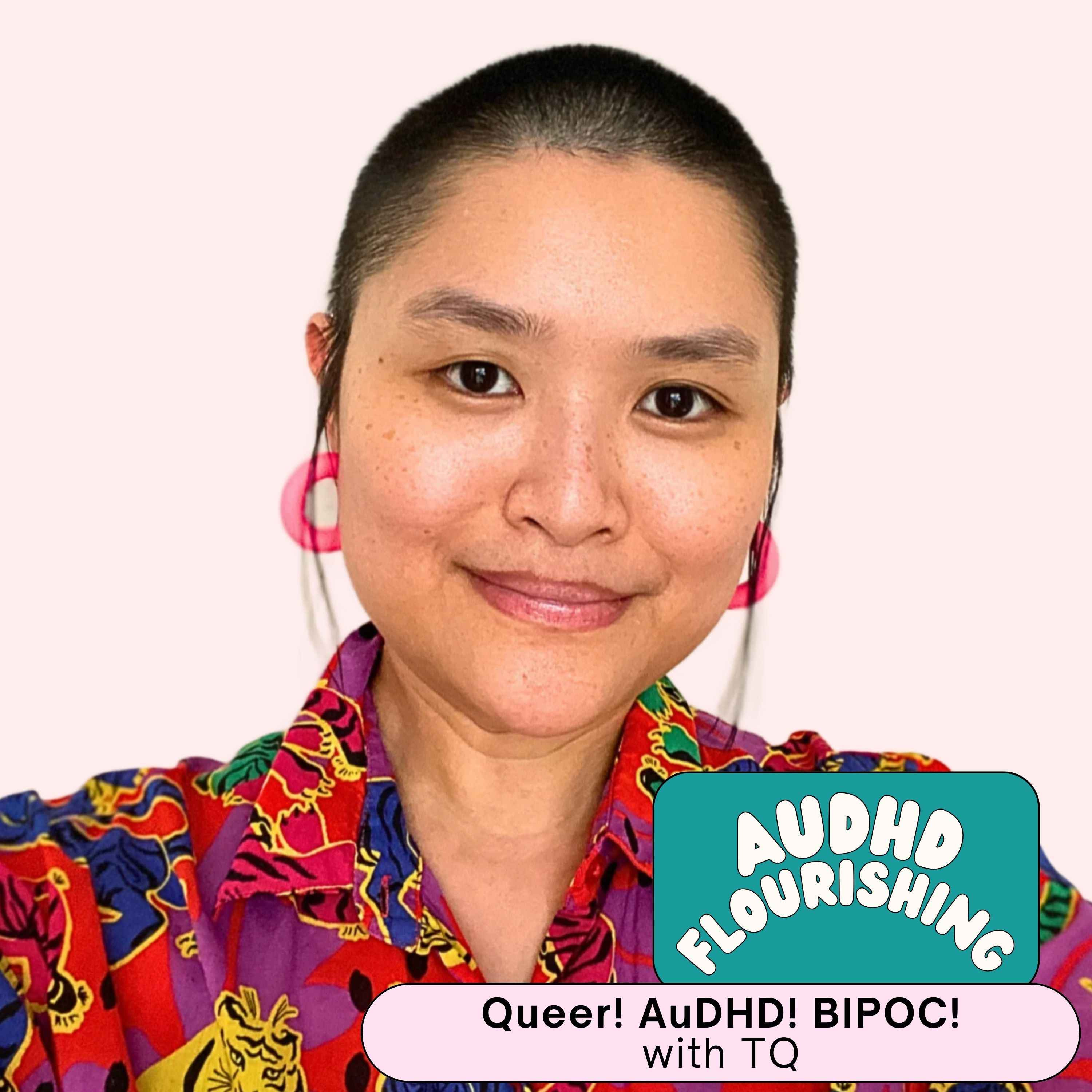
114 Queer! AuDHD! BIPOC! with TQ
TQ (they/them) is a queer, trans, physically disabled, AuDHD Chinese-Singaporean artist, author/host of the upcoming book/podcast Queer! AuDHD! BIPOC! , and community facilitator for other queer neurodivergent BIPOC. In true ND fashion, we range over many topics, including the importance of community and hearing your own stories as a person with multiple intersecting identities. You can pre-order a copy of their upcoming book for behind-the-scenes/early access to the interviews and writing! TQ's links & mentioned in episode: Support the Queer! AuDHD! BIPOC! book and podcast All the incredible neurodivergent, Autistic, and AuDHD creators of color TQ learns from Lovette Jallow on the history/use of the term "intersectionality" The Autastic Community AuDHD Flourishing resources: Transcript Doc Mattia's Newsletter Like Your Brain community space (Patreon/Discord) Hosted on Acast. See acast.com/privacy for more information.
Sep 20
113 The Urge for Minimalism & Visual Cues
Also on YouTube for some visuals My urge for minimalism is partly to provide myself with the visual cues I desperately need, without overwhelming myself with visual clutter. And, there has been a specifically classist push for minimalism that sometimes causes me to get rid of too much. Here's an excellent thread about minimalism , class, and why you're probably not a hoarder I especially loved the idea that you may just need better organization, because I really love lining things up. Now I'm focusing on organizing based on my interests, rather than what I think is the most practical or obvious! Mentioned in episode: Mastodon thread about minimalism The exact iPad cover I showed that looks like a Composition notebook (still going strong almost four years in), affiliate link AuDHD Flourishing resources: Transcript Doc Mattia's Newsletter Like Your Brain community space (Patreon/Discord) Hosted on Acast. See acast.com/privacy for more information.
Sep 13
112 ADHD in Women and Girls
Thanks to Hyperfocus with Rae Jacobson for letting me cross-post this important discussion about one of the first longitudinal studies of ADHD in women and girls! Full show notes, timestamps, and Transcript available on Hyperfocus' site (Ep 5, The “devastating” findings of a decades-long ADHD study, Dec 5, 2024 has the full version; it was reposted Aug 28 2025 with more brief notes) Show notes: Dr. Stephen Hinshaw is one of the leading voices when it comes to ADHD in women and girls. That’s in large part due to his work on The Berkeley Girls Study. (Its full name is The Berkeley Girls with ADHD Longitudinal Study, but most people know it by that shorthand or acronym: The BGALs Study.) Under Steve’s leadership, researchers began studying 140 girls with ADHD and a control group of nearly 90 girls without it. They’ve been following these girls into their adulthood, producing a reams of information that has helped shape current understanding of ADHD in women and girls. That said, Rae Jacobson had plenty of questions for Steve: Why did you want to study ADHD in girls at a time when it was typically seen as a boys’ disorder? Why is it that one type of ADHD seems to lead to such negative outcomes? What do we do about the stigma that still surrounds the disorder? note: This episode includes discussion of suicide and self-harm. Please take care when listening and skip this one if you need to. Listen to more episodes of Hyperfocus here Hosted on Acast. See acast.com/privacy for more information.
Sep 6
111 Shame Wrecks Identity
Chronic shame makes us feel all kinds of terrible things that often are the triggers that send people to therapy. It's caused in part by relational rupture without repair, especially as an infant and child. While there's no quick fix, recognizing the signs and beginning to gently work with it does help over time. This is episode 10 of a series of 10 that started with 102 AuDHD Therapy That Works with Joe Sosta I'm working on some more materials to pull all these episodes together in a useful way and will add that here when they're done! Crisis Resources: USA-based anonymous crisis chat International crisis lines Various types of crisis resources in about 10 countries My Medium article, "Please Stay, We Need You" Mentioned in episode: Book Understanding and Treating Chronic Shame: Healing Right Brain Relational Trauma (I recommend this 2nd edition, affiliate link) Whack-a-Mole Workshop slides/notes and recordings (latter is free & requires free login; a downloadable PDF is also available there on Patreon) AuDHD Flourishing resources: Transcript Doc Mattia's Newsletter Like Your Brain community space (Patreon/Discord) Hosted on Acast. See acast.com/privacy for more information.
Aug 30
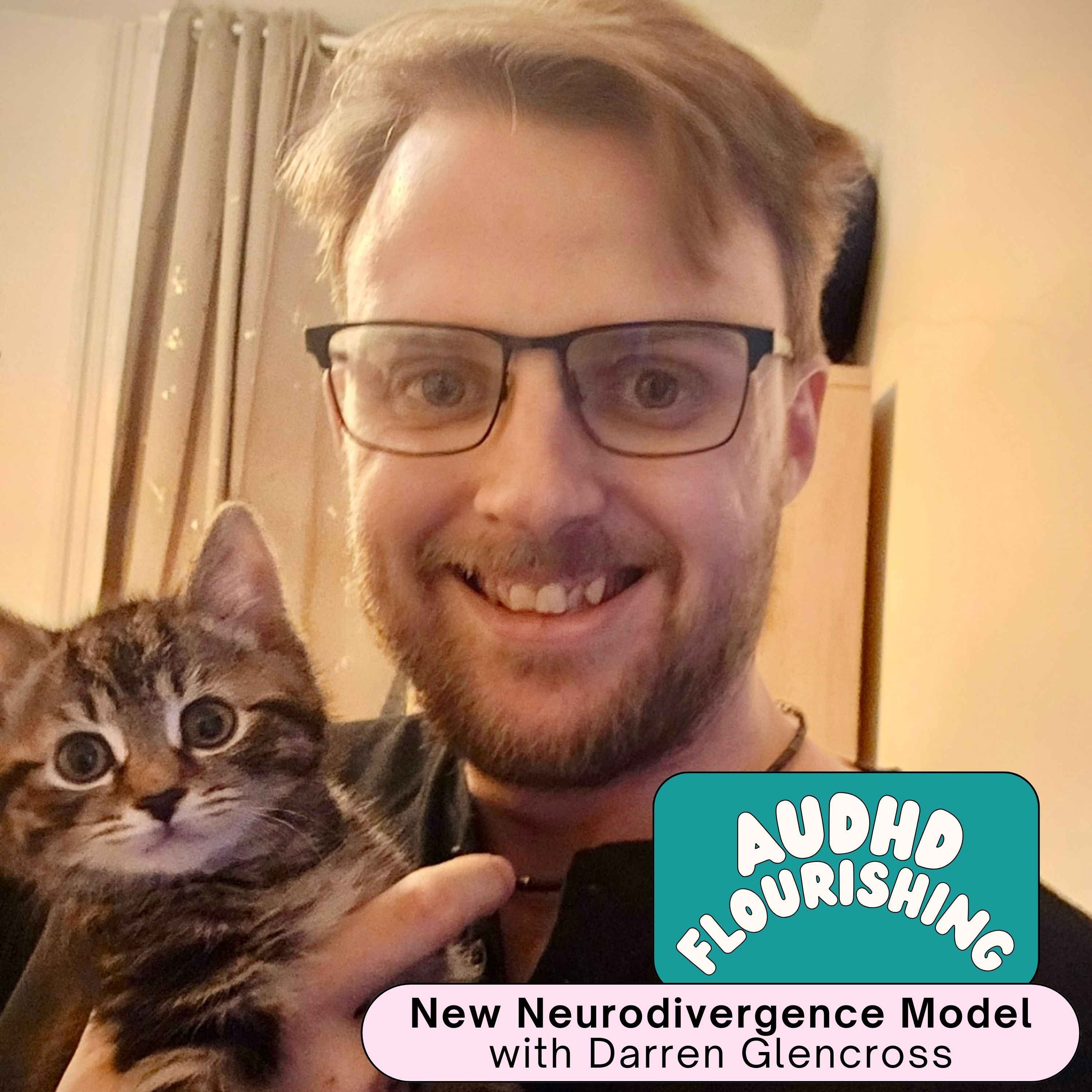
110 New Neurodivergence Model with Darren Glencross
Darren Glencross was diagnosed near the beginning of 2025, and since then has written multiple books and come up with a new framework for people to explore outside of the medical model. It includes: Pattern Language, Inner Orbit with 12 satellites (and Their Orbit), and the Carry Kit It's exciting to explore community-led models! Connect with Darren: Message on Instagram @beaconwithin Darren Glencross on LinkedIn Mentioned in episode: Love Your Brain course (& Sep-Oct live round details ) Free workshops already concluded, and will be available most likely in the Patreon soon (I'll update this when they're somewhere!) You may also email questions about Love Your Brain to mattia@mattiamauree.com Resources: Transcript Doc Mattia's Newsletter Like Your Brain community space (Patreon/Discord) Hosted on Acast. See acast.com/privacy for more information.
Aug 29
How to Make Projects Happen - Repost
AuDHD brains face many challenges when it comes to projects. It's something I've put a great deal of time and learning into, both personally and professionally. This episode covers many ideas and approaches that tend to work for us. Key Takeaways: We usually learn to use what I call the Adrenaline-Anxiety Approach. While effective short-term, it can lead to burnout and other issues. A monotropic approach is more sustainable and individualized... and it can feel slow at first. Experimentation as a core tool Creating just enough structure and safety to get going, without getting bogged down (loose planning) Working with the brain states you have Managing interruptions, inputs, and daily life Finding the balance that works for you The episode also walks through the Love Your Brain course, designed to help AuDHDers understand their mind-body system, work with brain states, and navigate project challenges. The course emphasizes self-compassion, experimentation, and building processes tailored to individual needs. Repost - originally posted July 12th 2024 Note: not strictly in the current 10-episode series, but still relevant! Links mentioned: Devon Price's Laziness Does Not Exist article, and a PDF if you're not on Medium The transcript may be especially useful for this episode! (It'll take a few seconds for the link to fully load to this episode) Love Your Brain course (and the Sep/Oct 2025 live round info ) Hosted on Acast. See acast.com/privacy for more information.
Aug 23
109 Use More Lube
This ep also available on YouTube "use more lube:" do what you need to do to make life easier, more comfortable, and more pleasurable for you in the moment. This goes beyond sensory needs, though that's often where we start. You may not be sure what you want on the grand scale (or it feels impossible to get there). But being kind to yourself, and meeting your needs moment-to-moment, helps create a communication feedback loop with the body. Better communication and care for the body makes everything easier. ep. 8 in an interconnected 10-episode series Mentioned in episode: Free Workshops registration link Love Your Brain course (& Sep-Oct live round details ) Resources: Transcript Doc Mattia's Newsletter Like Your Brain community space (Patreon/Discord) Hosted on Acast. See acast.com/privacy for more information.
Aug 16
108 Using Intuition Practically
Intuition has been a way to interface with my body, even when the relationship with my body was contentious. While I won't share the trauma stories that led to the subtitle (Intuition Saved My Life), I have a variety of examples of how unconscious information can surface in a useful way. ep. 7 in an interconnected 10-episode series Mentioned in episode: Free Workshops registration link Love Your Brain course (& Sep-Oct live round details ) Resources: Transcript Doc Mattia's Newsletter Like Your Brain community space (Patreon/Discord) Hosted on Acast. See acast.com/privacy for more information.
Aug 9
107 Whack-a-Mole is Killing Us
It often feels easiest to do what's right in front of us. And that's lovely, a lot of the time, and uses our strengths! And... it starts to feel bad if we're in whack-a-mole mode almost all of the time, and don't have spacious time to comprehend the whole of our experience. This ties into our sensory needs and leans more into the psychological side of these needs. Mentioned in episode: Free Workshops registration link Love Your Brain course (& Sep-Oct live round details ) Resources: Transcript Doc Mattia's Newsletter Like Your Brain community space (Patreon/Discord) Hosted on Acast. See acast.com/privacy for more information.
Aug 2
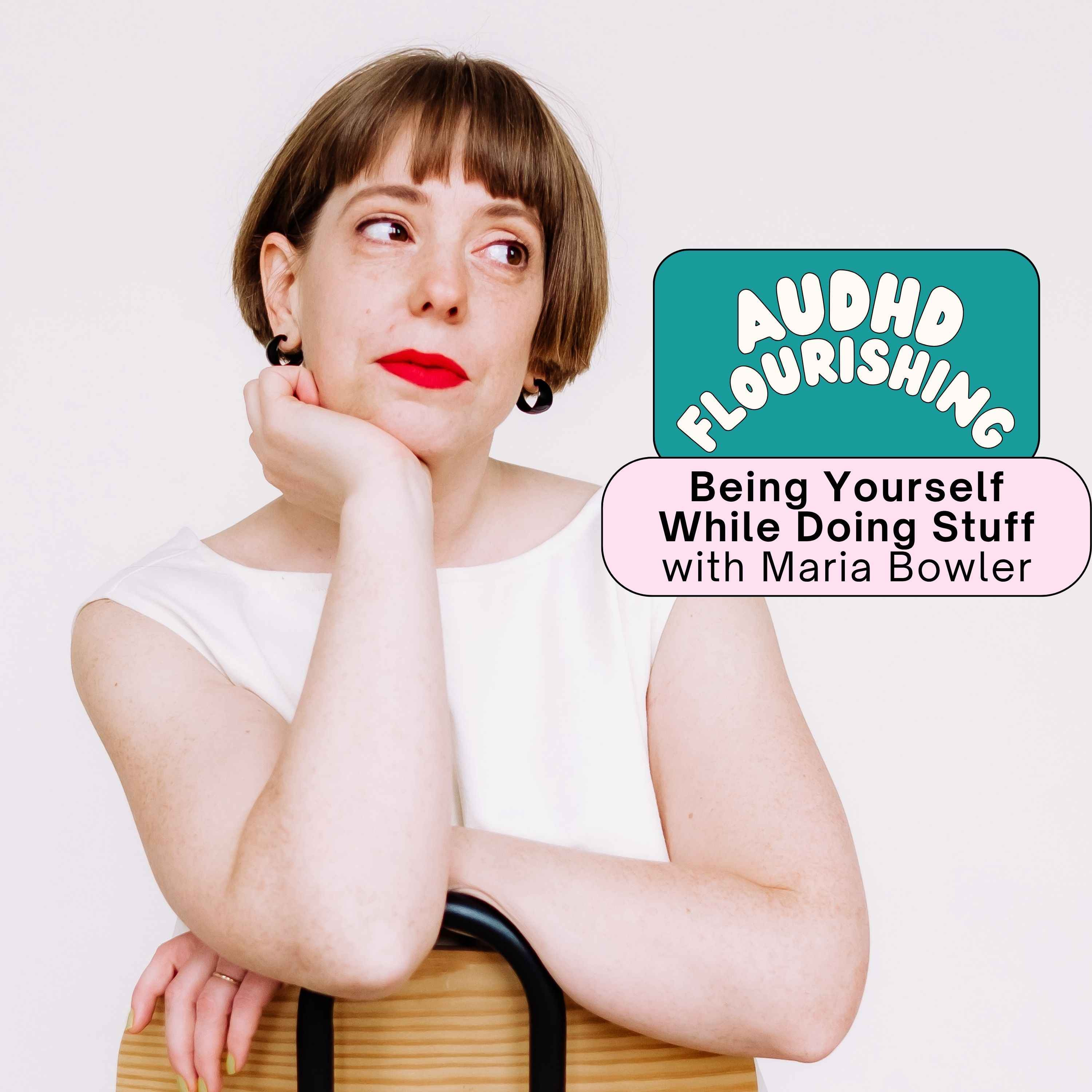
106 Being Yourself While Doing Stuff with Maria Bowler
Maria Bowler recently published the book Making Time : A New Vision for Crafting a Life beyond Productivity. It's a relaxing take on doing what you want to do, and feeling okay while doing it. One of the main themes is being present, and being true to yourself even if you're doing boring stuff you don't want to do. Finding those moments of resonance that turn the entire activity into building self-trust. If you already read the book and found it resonant even though it doesn't mention AuDHD... that's because Maria is AuDHD and snuck all that good neurodivergent content in! Connect with Maria: Maria's website, MariaBowler.com Maria's Substack the book Making Time (affiliate link) Resources: Transcript Doc Mattia's Newsletter Like Your Brain community space (Patreon/Discord) Hosted on Acast. See acast.com/privacy for more information.
Jul 26
105 Emotions Are Hard For a Reason
The Autistic community has taken many approaches to reframing what the diagnostic criteria calls "Persistent deficits in social communication and social interaction across multiple contexts." There's the double-empathy problem, for example, in which Autistic people have an easier time understanding each other where allistics struggle and vice versa. Childhood Emotional Neglect, while a relatively new idea from 2012, aligns remarkably with autistic social "deficits." While I'm by no means trying to draw a single causal line, I also wonder in this episode if maybe some of our social difficulties are actually signs of CEN. Even if our parents were quite well-meaning, we were more likely to experience CEN via a lack of appropriate mirroring of our internal responses, especially if our internal world was especially intense or complex. This episode covers the effects of CEN primarily. To learn more about examples of how it can develop, or how to address it, you can read the books below, or search for articles about them. Books mentioned: Running On Empty Running On Empty No More Both are affiliate links Resources: Transcript Doc Email Newsletter : Nothing Wrong With Us Like Your Brain community space (Patreon/Discord) Hosted on Acast. See acast.com/privacy for more information.
Jul 19
104 Why Your Day Sucks
This episode is also on YouTube If our sensory needs are not met, even an otherwise okay day will still feel... off somehow. And then that gap between how we feel and how we think we "should" feel can make it even worse (that one's not a topic in this episode, just a thing that happens). If our sensory needs ARE met, sometimes even tough circumstances can feel not that bad. To be clear, this is not about avoiding bad days, which are bound to happen sometimes! But meeting both our comfort and mental sensory needs makes everything easier. It's a big part of feeling better first. Resources: Transcript Doc Email Newsletter : Nothing Wrong With Us Like Your Brain community space (Patreon/Discord) How Can I Help (request coaching support) Hosted on Acast. See acast.com/privacy for more information.
Jul 12
103 How I'd Therapy Now (20 years in)
Lessons learned from ~17 years of therapy over the last 20 years. How I'd approach therapy now based on that. What to look for in therapists, goal-setting in therapy, and reasons to quit your current therapist. Also connects back to last week's interview with Joe about AuDHD therapy . Links mentioned: Book Decolonizing Therapy (also mentioned last week, affiliate link) Blog post on finding a neurodivergent-affirming therapist (with links) More resources suggested by a community member: Dueling Minds , AuDHD Support Autistic Girls Network in-person support groups for adults ADHD Support Groups in Canada (CADDAC) ADDA Virtual Support for ADHD Resources: Transcript Doc Email Newsletter : Nothing Wrong With Us Like Your Brain community space (Patreon/Discord) Hosted on Acast. See acast.com/privacy for more information.
Jul 5
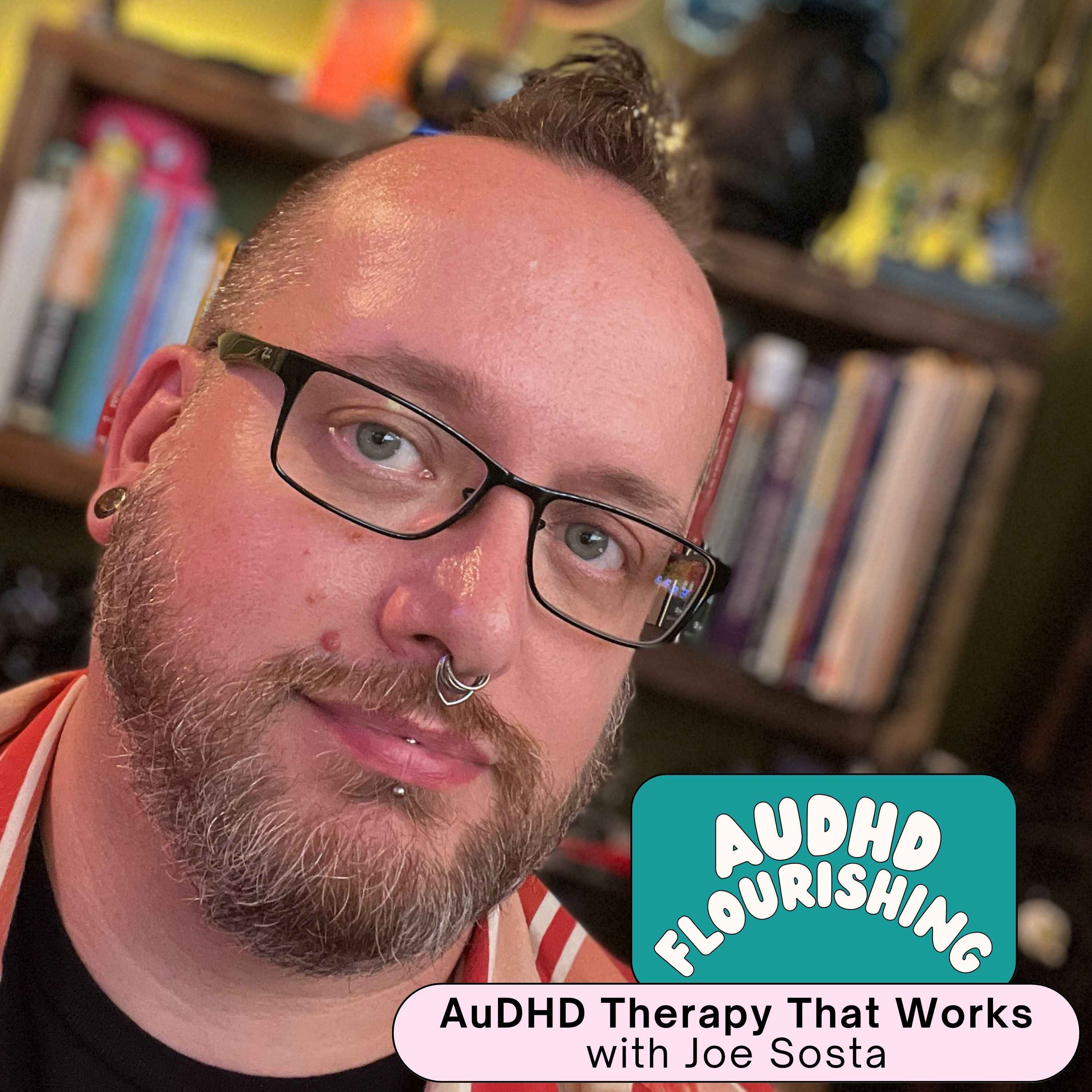
102 AuDHD Therapy That Works with Joe Sosta
Joe Sosta is a Licensed Marriage and Family Therapist and late-realized AuDHDer. He shares some of our questions about therapy as an AuDHD adult, and we talk about the ups and downs of therapy and modalities. Note: "The Discord" mentioned is part of the Like Your Brain (Patreon) community space This is the first of 7 interconnected episodes Connect with Joe: https://www.therapywithjoe.com https://barnliferecovery.com Resources: Transcript Doc Email Newsletter : Nothing Wrong With Us Like Your Brain community space (Patreon/Discord) Hosted on Acast. See acast.com/privacy for more information.
Jun 28
Healing Relational Trauma with Pasha Marlowe - Repost
Reposting popular episodes June 2025. Back atcha in July with some spicy takes! Original show notes: Pasha Marlowe speaks brilliantly about how to navigate trauma, triggers, and sensory needs in relationships as an AuDHD person. Making it concrete, we both talk about a recent meltdown with our respective partners, and how we navigated those during and after. This is a deeply un-shaming episode—we still struggle with relational trauma despite all the "work" we've done. It's okay to have a lot of needs in relationships. And we talk about how hard it can be to figure out what those are and communicate them effectively. If your neurodivergent relationship needs extra support, Pasha is one of the rare practitioners who's ND, trained in family therapy, and works with couples! Resources mentioned: Pasha's website Neuroqueering podcast and Mattia's guest episode @neuroqueercoach on TikTok @neuroqueercoach on Instagram Neuroqueer Heresies book Full Transcript here AuDHD Flourishing Newsletter signup Hosted on Acast. See acast.com/privacy for more information.
Jun 21
Autistic Meltdowns & Shutdowns - Repost
In June I'm re-posting the most popular episodes from the show while I take a step back to look at the big picture. Update: the re-thinking has happened and retooling is in process :D Original show notes: Meltdowns and shutdowns appear to be a natural release valve for an overwhelmed autistic brain. They feel out of control and can be quite distressing. While there are ways to push them off, I experience a "point of no return" after which I need some big release or I'm going to feel terrible for days. Learning your triggers, as well as planning ahead for a safer experience if you do have a meltdown or shutdown can lessen our overall stress and shame. (One thing I forgot to record in the episode is that for me, shutdowns are almost always low-verbal or I can't speak at all.) Links: 1. Meltdowns & Shutdowns* https://embrace-autism.com/meltdowns-and-shutdowns/ 2. How it feels to have an autistic meltdown and how you can help* https://www.bbc.co.uk/programmes/articles/38f5MsC2mB5fnmCr5v77zDn/how-it-feels-to-have-an-autistic-meltdown-and-how-you-can-help 3. All About ‘Autism Meltdowns’: Why They Happen and How to Cope https://psychcentral.com/autism/autism-meltdowns 4. Autism Shutdown Vs Meltdown: What's the Difference? https://www.andnextcomesl.com/2022/06/autism-shutdown-vs-meltdown.html Resources: Email list Episode Transcript *autistic writer Hosted on Acast. See acast.com/privacy for more information.
Jun 14
What AuDHDers Need - Repost
In June I'm re-posting the most popular episodes from the show while I take a step back to look at the big picture (because my monotropic brain has trouble doing that while also pumping out new content). Original show notes: What do AuDHDers need (beyond the obvious needs all humans have)? And why do those needs matter? This episode covers some important ones: Being able to engage with our interests (in a particular way) Executive Function support, without trying to make the hardest things easy or enjoyable Autonomy True rest The narrow path of just enough stimulation Processing time To be witnessed in just the right way Recognition that our needs vary quite a bit day to day Coming to terms with disability Space and time throughout our self-discovery journey Safe enough spaces to explore what it means to be ourself Links mentioned: Executive function test post if you want to ask Qs or share your experience Executive Skills Questionnaire Revised (ESQ-R) Unmasking Autism book (affiliate link) Experimenting Your Way to an Extraordinary Life (course) Crisis Resources: USA-based anonymous crisis chat International crisis lines Various types of crisis resources in about 10 countries Resources: Like Your Brain community space Transcript Doc Email Newsletter Hosted on Acast. See acast.com/privacy for more information.
Jun 7
What is AuDHD (and do you have it?) - Repost
In June I'm reposting the most popular episodes from the show while I take a step back to look at the big picture (because my monotropic brain has trouble doing that while also pumping out new content). Mentioned in outro: Experimenting Your Way to an Extraordinary Life Original show notes: AuDHD = autism + ADHD... and also I experience it as its own neurotype, and not simply two "disorders." Here are the sets of questions I asked in the episode, if you'd like to take time with them on your own: Do you feel like advice almost never works for you? Not only NT advice, but even advice from autistic OR ADHD people? That your brain either instantly knows advice won't work for you, or tries it and feels really disappointed because you did have a lot of things in common with the person who gave it to you but somehow still it felt like your body or brain were just not clicking with it? Are the internal parts of you always fighting? Do you feel like the things your body and brain want are often in complete opposition and that it's literally impossible to get your needs met, because different parts of you want such different things to feel safe, regulated, and cared for? Have you managed to build some modicum of success in an area through anxiety and adrenaline? This could be school, work, a creative pursuit, relationships. Have you received external validation for doing this thing well, all the while being absolutely terrified that it's all going to fall apart and you have no idea how to handle how your life feels and it all feels extremely precarious and painful at the day-to-day level? Do you feel the need to hide how much you're struggling, and/or if you've disclosed your struggles have they not been taken seriously? Is your energy quite cyclical, where when you feel like your brain is working you'll push yourself really really hard, and then be totally exhausted and need time to recover? And without adequate recovery time, Is burnout, or burnout-like depression (they can be similar) a frequent experience for you? Or do you live in fear of it? Thanks to Hanu Dixit for permission to use the song A Sitar Story. Full Transcript here Hosted on Acast. See acast.com/privacy for more information.
May 31
101 Time Cannot Be Wasted
Time the body needs to transition, meet needs, rest and recover is NOT wasted time! I don't know that it's even possible to "waste time" outside of ableist capitalist structures. If you still have ableist thoughts, that's okay. We all do! It's worth resting anyway. Resources mentioned: Neuraluxe's post about parentification Car fundraiser for DV survivor (my sibling) When your abuser threatens suicide article Note about that paid Substack link: "If you are in an abusive relationship or other crisis and truly cannot afford to pay for a paid membership—not just would prefer to get content for free, but actually cannot pay—I offer no-questions-asked paid access to anyone who emails me. Please email zawn@zawn.net, and put “Substack scholarship” in the subject line. If you use any other subject line, I may not see your email. You do not need to tell me anything specific—just that you cannot afford to pay! Please note that subscription applications can take several weeks to process." Resources: Transcript Doc Email Newsletter : Nothing Wrong With Us Like Your Brain community space (Patreon) Hosted on Acast. See acast.com/privacy for more information.
May 24
100 Creative Time Limitations
If you have multiple interests, realistically you probably don't have enough time to develop all of them to the degree that you'd like. And even with more targeted pursuits, many of us are busy because of real life and capitalism. What this means is that we have to make tough choices. I talk about some of the ways I've worked through this, where I'm at with it currently, and some questions to ask yourself to guide your own process. Also, it's the 100th episode! I'm committed to not running ads on this podcast (for a lot of reasons). If you'd like to support the podcast, the best ways to do so... Support the podcast & creation of free resources: One-time donation on Venmo (email mattia@mattiamauree.com for other methods) Wish list items Patreon podcast support tier Resources: Transcript Doc Email Newsletter : Nothing Wrong With Us Like Your Brain community space (Patreon) Hosted on Acast. See acast.com/privacy for more information.
May 17
99 a little more or less
To change something, I've been playing with telling myself I'll do "a little more or less." It is less exciting than a huge plan... but also easier on my nervous system! Love Your Brain course info & live round update Resources: Transcript Doc Email Newsletter : Nothing Wrong With Us Like Your Brain community space (Patreon) Hosted on Acast. See acast.com/privacy for more information.
May 10
98 Meeting Intensity Needs
This year I've been trying to meet my intensity needs in more "healthy" ways, while also recognizing that sometimes that doesn't feel possible. And that's okay! Love Your Brain course info & live round update Resources: Transcript Doc Email Newsletter : Nothing Wrong With Us Like Your Brain community space (Patreon) Hosted on Acast. See acast.com/privacy for more information.
May 3
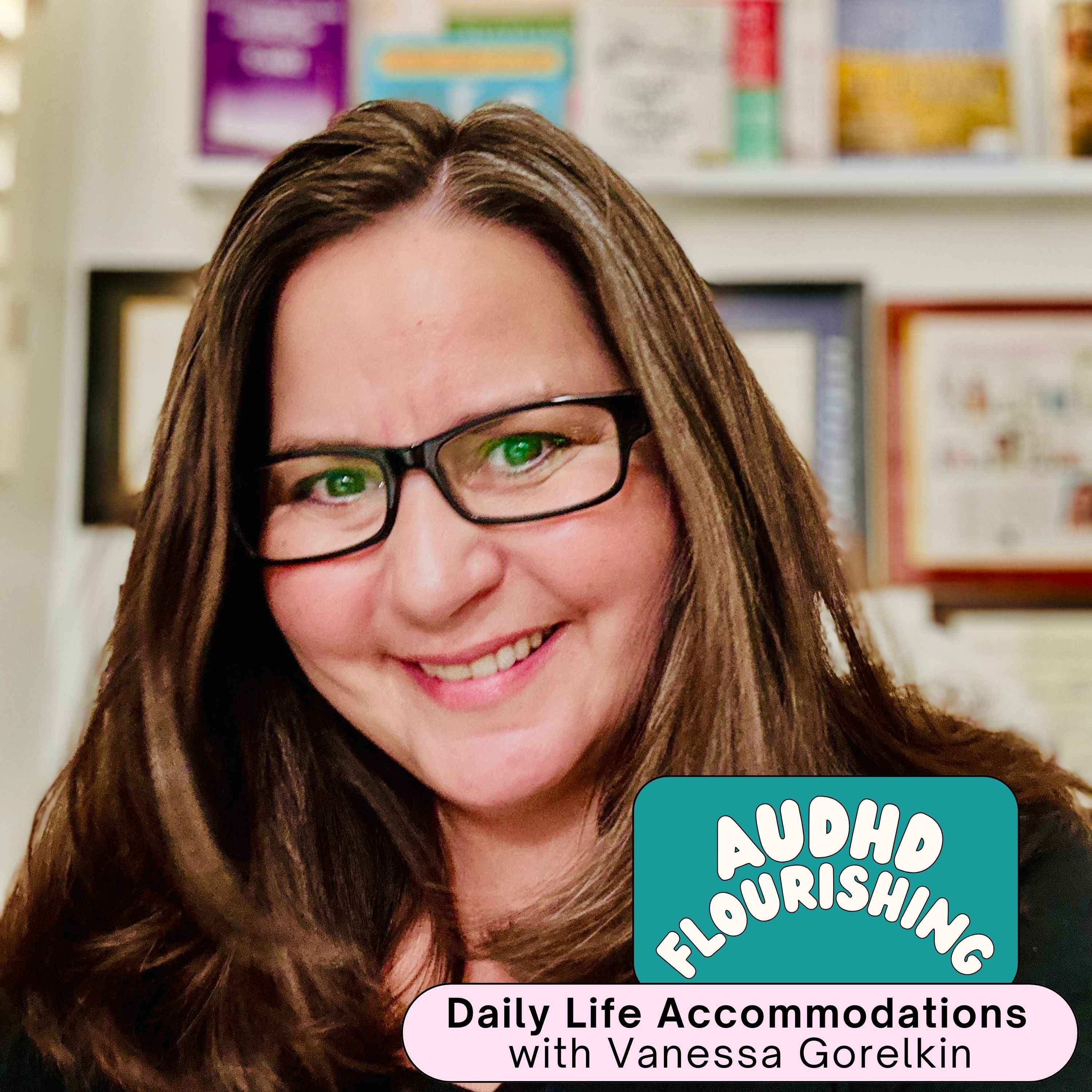
97 Handling Daily Life with Vanessa Gorelkin, OT
Vanessa Gorelkin is an Occupational Therapist who often works with ND folks. She shares about compassionate approaches to daily life tasks. The main tool she shared is creating a crisis kit to use when experiencing distress in public, at work, or anywhere that you can't be fully unmasked. List of suggested items below. Crisis kit items suggested in episode: alcohol swabs (to smell for state change) instant ice packs extreme sour candies lemon juice packet hot sauce packet (mustard is Mattia's) distress card requesting using the bathroom (or whatever's helpful for you) Connect with Vanessa: Her website, vanessagorelkin.com @otwhisperer on TikTok Love Your Brain course info & live round update Resources: Transcript Doc Email Newsletter : Nothing Wrong With Us Like Your Brain community space (Patreon) Hosted on Acast. See acast.com/privacy for more information.
Apr 25
96 Building Our Own Systems
Reflecting on the interview with Anna, who shared about accommodations for her students and herself. Learning how to build our own systems/structures is often more useful than being handed a system. Because no matter how much dopamine we get initially from a new tool or system, it inevitably becomes stale. Instead of throwing the whole thing out the window every time, I've learned how to pull forward elements that are still working. This continuous process of experimenting and tweaking (with rest/recovery interspersed, of course!) has made my life so much easier. Last 10m of the episode is about why I'm doing the work I'm doing, and the live round of LYB: Love Your Brain course info & live round update Resources: Transcript Doc Email Newsletter : Nothing Wrong With Us Like Your Brain community space (Patreon) Hosted on Acast. See acast.com/privacy for more information.
Apr 19
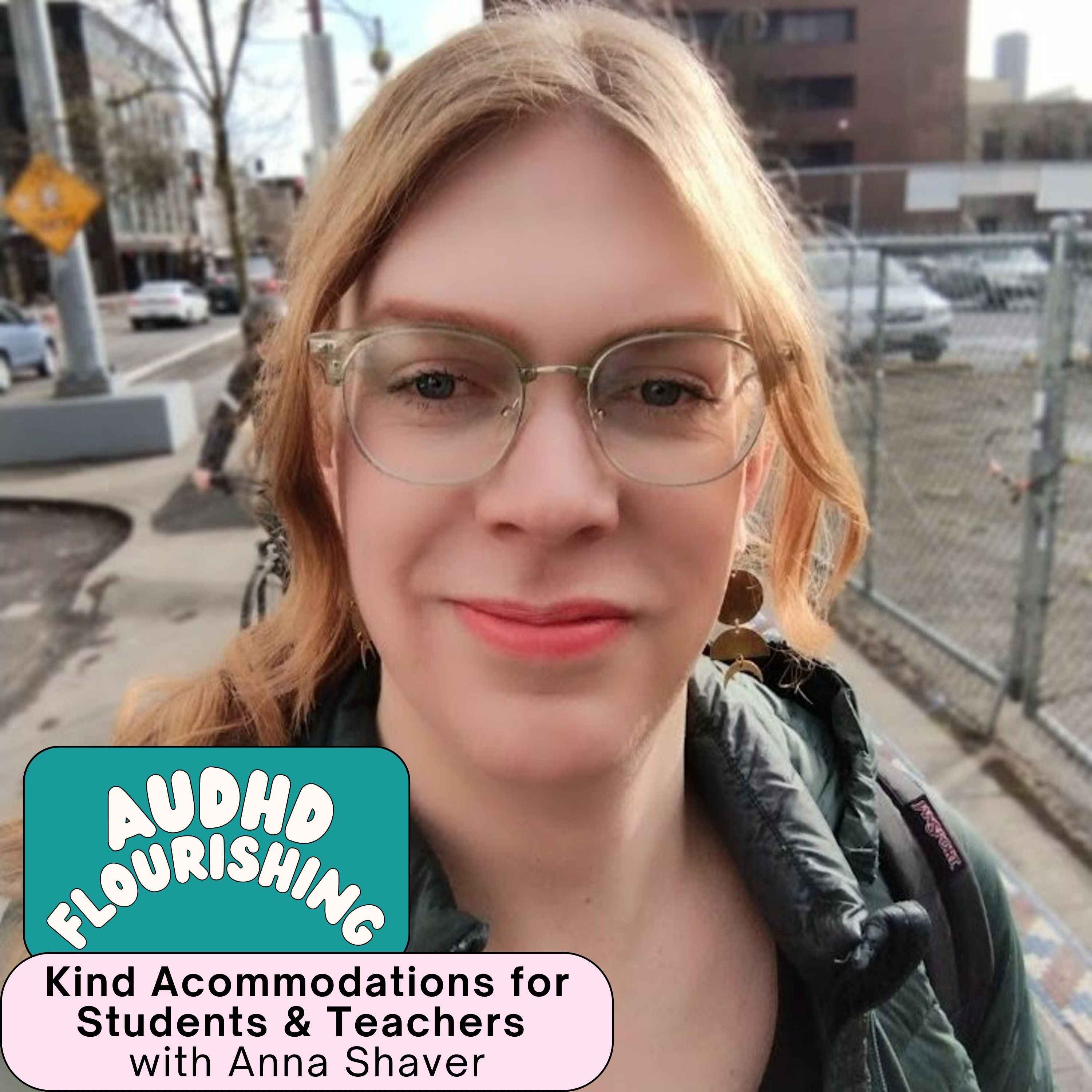
95 Kind Accommodations for Students & Teachers with Anna Shaver
Anna is an educator who has developed an incredible approach with accommodations at the core (for the student AND herself!). It makes sense pedagogically, and it's working! With a core of psychological safety, students are able to explore writing and language with their own goals in mind. We've also known each other since I was 15... so we talk a bit about the mysterious backstory of living in a Christian sorority ;) Resources Anna mentioned: Her English 101 Online Textbook Workshopping: Liz Lerman's Critical Response Process All My Relations podcast Love Your Brain course info & live round update Resources: Transcript Doc Email Newsletter : Nothing Wrong With Us Like Your Brain community space (Patreon) Hosted on Acast. See acast.com/privacy for more information.
Apr 12
94 Coping Mechanisms
Coping mechanisms can be a pathologizing term. What's the difference between coping mechanisms and intensity or interests? This episode also touches back to the interview on sobriety with Amy in ep. 92. As well as this note on a positive AA experience from a listener . Resources: Transcript Doc Email Newsletter : Nothing Wrong With Us Like Your Brain community space (Patreon) Hosted on Acast. See acast.com/privacy for more information.
Apr 5
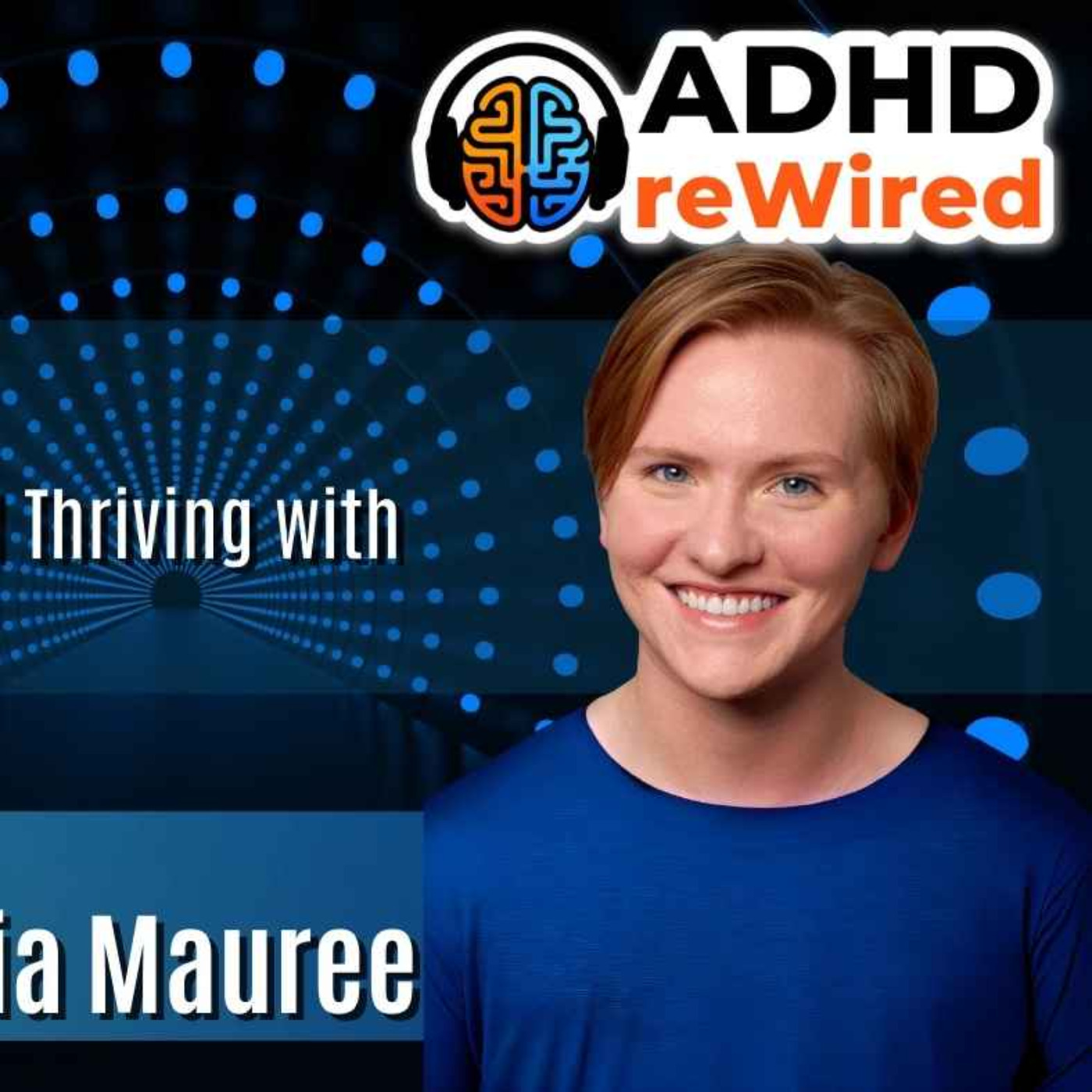
93 Tunnel of Focus: Monotropism, Trauma, and Thriving
Thanks Eric Tivers for interviewing me & allowing me to share the full episode here as well. His show notes : In this episode of ADHD reWired, Eric Tivers is joined by Mattia Maurée, an award-winning composer, poet, and host of the AuDHD Flourishing Podcast . Mattia shares their insights into the unique challenges faced by neurodivergent (ND) individuals, particularly those with ADHD and autism, as they navigate trauma, self-expression, and what they describe as “attention tunnels.” Mattia opens up about their personal journey, discussing the impact of complex PTSD, disordered eating, and their late diagnoses of ADHD and autism. They explain how monotropism—having a narrower field of focus—shapes their experience as a ND person. Through the lens of monotropism, Mattia explores how being stuck in an attention tunnel can make transitioning to different tasks or social situations feel overwhelming and distressing. Eric and Mattia dive deep into the intersections of trauma and neurodivergence, examining how ND brains may be more easily traumatized, especially in environments that fail to meet their unique needs. They discuss the profound impact of ND parents raising ND children and the challenges of navigating systems that don’t support their differences. This conversation also highlights the importance of self-expression in healing and flourishing. Mattia explains how self-expression, rather than achievement, has become central to their definition of success, emphasizing the importance of creating work that resonates emotionally, even if it doesn’t fit the traditional metrics of success. Other topics discussed include: The connection between hyperfocus and monotropism in ADHD and autism How Mattia balances creativity, self-care, and flourishing as a ND individual The complexity of navigating trauma in ND families The importance of community and support systems for ND creatives and entrepreneurs This episode is a must-listen for anyone interested in understanding the complex interplay of trauma, neurodivergence, and flourishing. Whether you identify as ND or are simply curious about these experiences, this conversation offers valuable insights into the importance of creating space for self-expression, healing, and growth. Resources: Transcript Doc Email Newsletter : Nothing Wrong With Us Like Your Brain community space (Patreon) Hosted on Acast. See acast.com/privacy for more information.
Mar 29
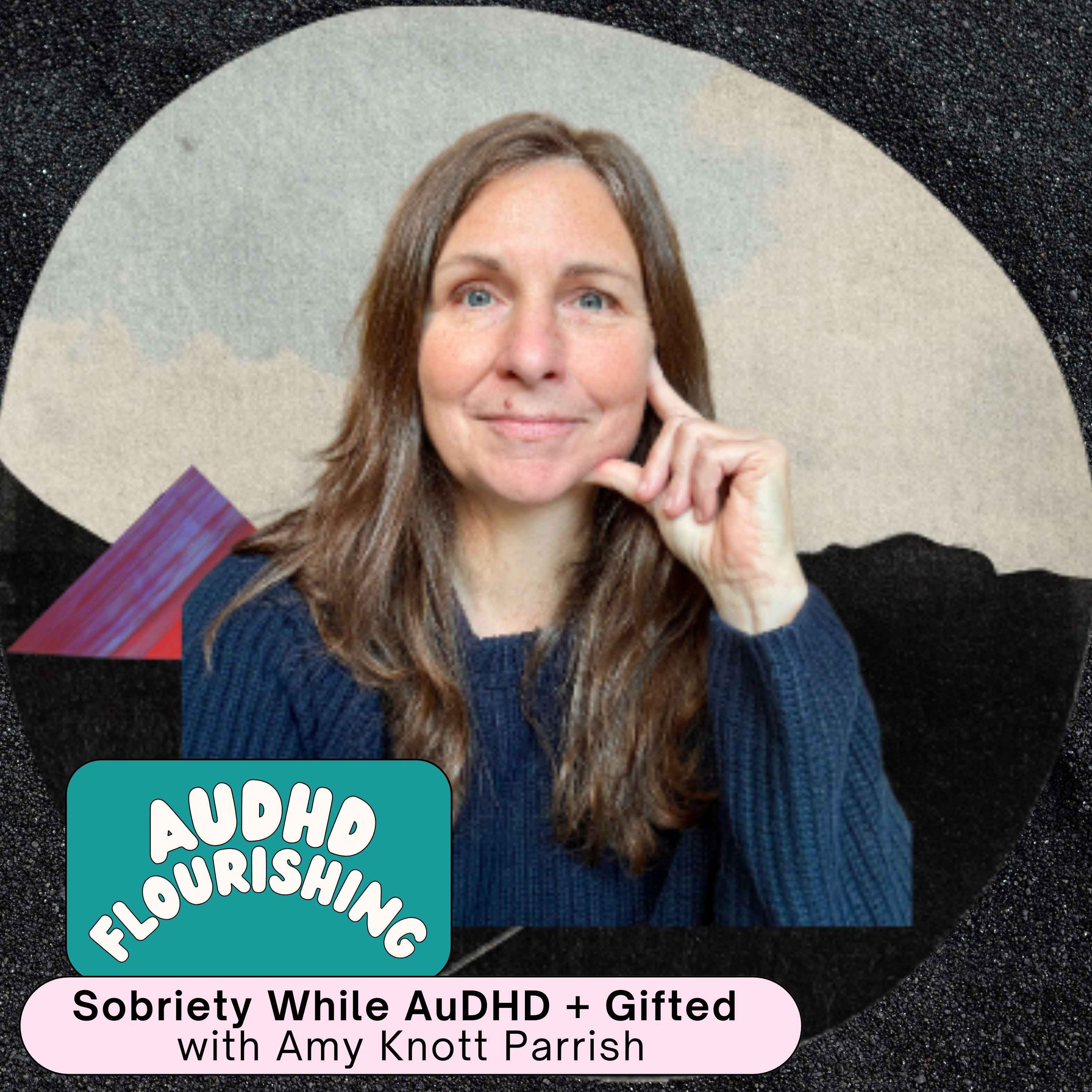
92 Sobriety While AuDHD + Gifted with Amy Knott Parrish
Thank you to guest Amy Knott Parrish for sharing about her unusual journey with sobriety. When she realized what her future was going to look like, she... stopped drinking. Because it wasn't about the drinking, it was about the problem that the drinking was self-medicating. After nine years of continuous sobriety, her therapist insisted that she try AA, but it wasn't the right fit. As with many institutions, it wasn't built for her! The giftedness/intensity piece adds another layer—we talk about how we sometimes just need the psychoeducation on certain topics, not necessarily the emotional excavation approach. (I could talk about that for hours.) Find Amy: https://www.rebelling.me/ Sobriety blog A pro-AA AuDHD story (anonymously shared by a listener) Resources: Transcript Doc Email Newsletter : Nothing Wrong With Us Like Your Brain community space (Patreon) Hosted on Acast. See acast.com/privacy for more information.
Mar 22
91 Gifted + AuDHD: Surviving (part 2)
(Part 2 of 2. Part 1 here ) Being AuDHD + gifted is being an outlier of outliers. I'd guess most of us feel like aliens. And even when we start to understand the shape of our experiences, it can feel overwhelming to even begin to order our understanding in a satisfying way. (Autoethnography, anyone?) Our depth and intensity needs can be quite challenging to meet, especially if we have lower physiological capacity due to trauma/CPTSD, and other intersectional identities that are often marginalized/mistreated. Mentioned in episode: 1. Some giftedness models: Rainforest mind Ruf's 5 levels InterGifted & HEPG " Dabrowski’s Theory and Existential Depression in Gifted Children and Adults " 2. Living With Intensity book* 3. Neurocomplexity & PDA as existential intelligence 4. Autism/ADHD/Gifted Venn Diagram 5. Overexcitabilities & being "too much" 6. Ember Green's quick IQ doesn't exist overview + Aspie Supremacy deep dive (p.s. this video is 2 hrs long and made me cry a LOT bc of historical horrors... still worth it if/when you have the spoons) Resources: Transcript Doc Email Newsletter : Nothing Wrong With Us Like Your Brain community space (Patreon) *affiliate link Hosted on Acast. See acast.com/privacy for more information.
Mar 15
90 Gifted + AuDHD: Why It Matters (part 1)
Being AuDHD + gifted is being an outlier of outliers. I'd guess most of us feel like aliens. And even when we start to understand the shape of our experiences, it can feel overwhelming to even begin to order our understanding in a satisfying way. (Autoethnography, anyone?) Our depth and intensity needs can be quite challenging to meet, especially if we have lower physiological capacity due to trauma/CPTSD, and other intersectional identities that are often marginalized/mistreated. This became part one of two! Mentioned in episode: 1. Some giftedness models: Rainforest mind Ruf's 5 levels InterGifted & HEPG 2. Neurocomplexity & PDA as existential intelligence 3. Autism/ADHD/Gifted Venn Diagram 4. Overexcitabilities & being "too much" 5. Ember Green's quick IQ doesn't exist overview + Aspie Supremacy deep dive (p.s. this video is 2 hrs long and made me cry a LOT bc of historical horrors... still worth it if/when you have the spoons) Resources: Transcript Doc Email Newsletter : Nothing Wrong With Us Like Your Brain community space (Patreon) Hosted on Acast. See acast.com/privacy for more information.
Mar 8
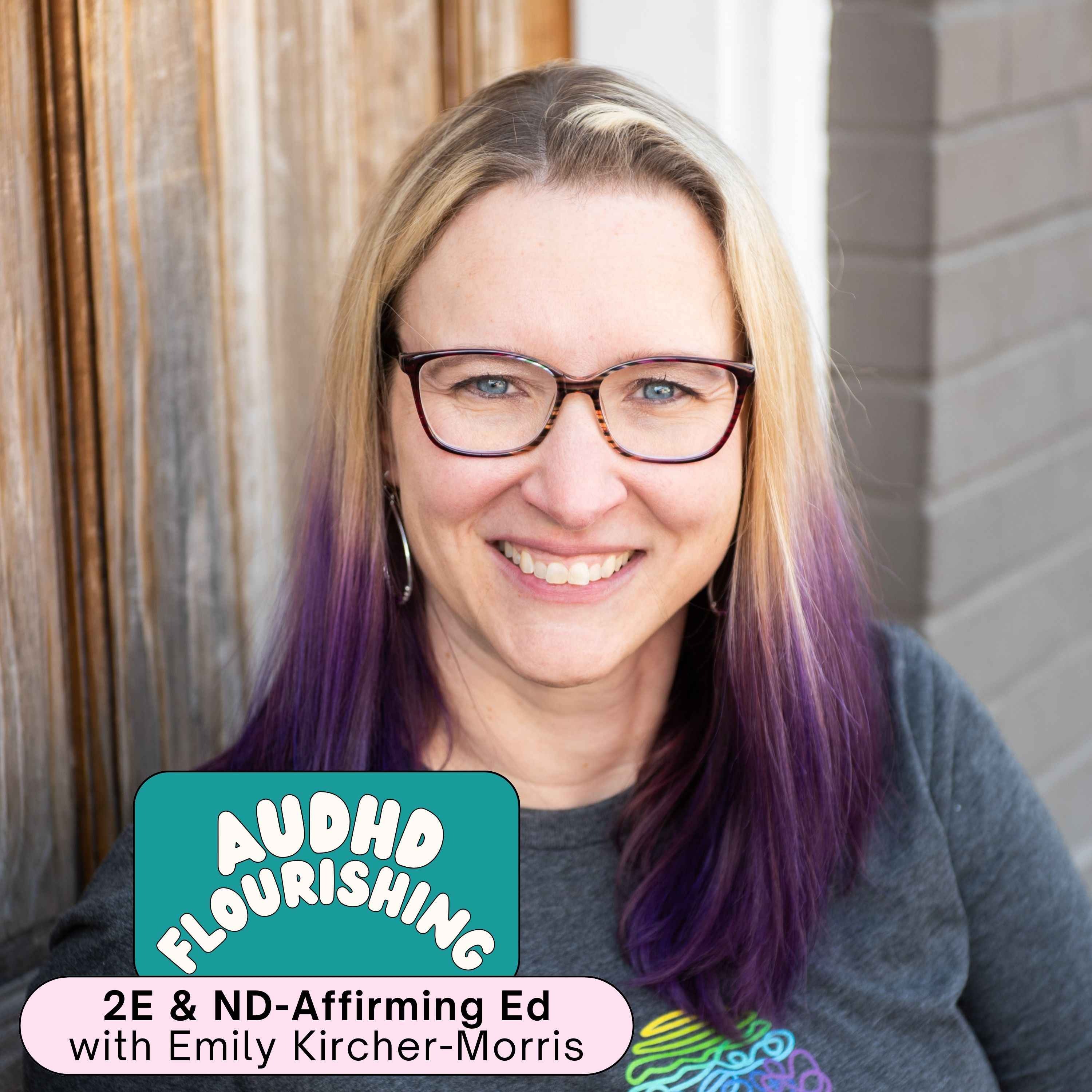
89 2E & ND-Affirming Education with Emily Kircher-Morris
Emily Kircher-Morris is the host of the long-running and popular podcast, The Neurodiversity Podcast. (And she interviewed me last year .) She's a compassionate, incisive, and important voice in 2e and neurodivergent-affirming education. Also a delight to talk to! Building on what we talked about, she shared some additional resource links below. Connect with Emily & mentioned in episode: Emily Kircher-Morris, LPC The Neurodiversity Podcast Connect with Emily on Facebook or LinkedIn Neurodiversity University Neurodiversity-Affirming Schools (new book) Neurodiversity-Affirming Schools: Transforming Practices So All Students Feel Accepted and Supported Teaching Twice-Exceptional Learners in Today’s Classroom Raising Twice-Exceptional Children: A Handbook for Parents of Neurodivergent Gifted Kids Resources: Transcript Doc Email Newsletter Like Your Brain community space (Patreon) Hosted on Acast. See acast.com/privacy for more information.
Mar 1
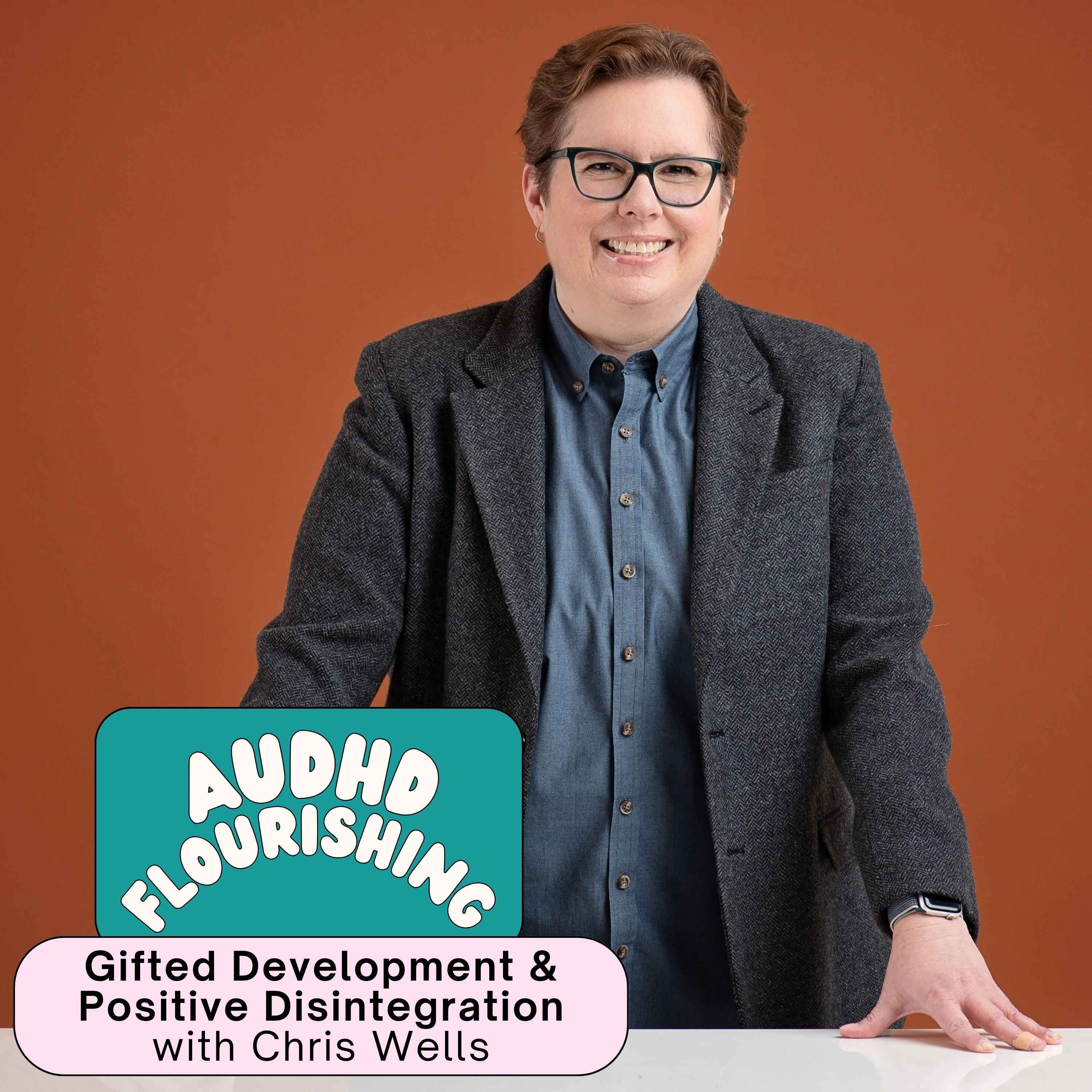
88 Gifted Development & Positive Disintegration with Chris Wells
Dr Chris Wells speaks & teaches about positive disintegration, Dabrowski's theory that (among other things) provides an alternate explanation for some mental illness. While the theory is not entirely about giftedness, it helps many gifted people make sense of their experiences. Dr Wells also talks about their journey, which included being on disability for many years. It's a reminder that while labels can change, they can also hold an enormous amount of power! Learn more about Chris & positive disintegration: Dr Chris Wells Instagram Positive Disintegration.org The Dabrowski Center & their Instagram Positive Disintegration Podcast Instagram Living With Intensity book (affiliate link) Resources: Transcript Doc Email Newsletter Like Your Brain community space (Patreon) Hosted on Acast. See acast.com/privacy for more information.
Feb 22
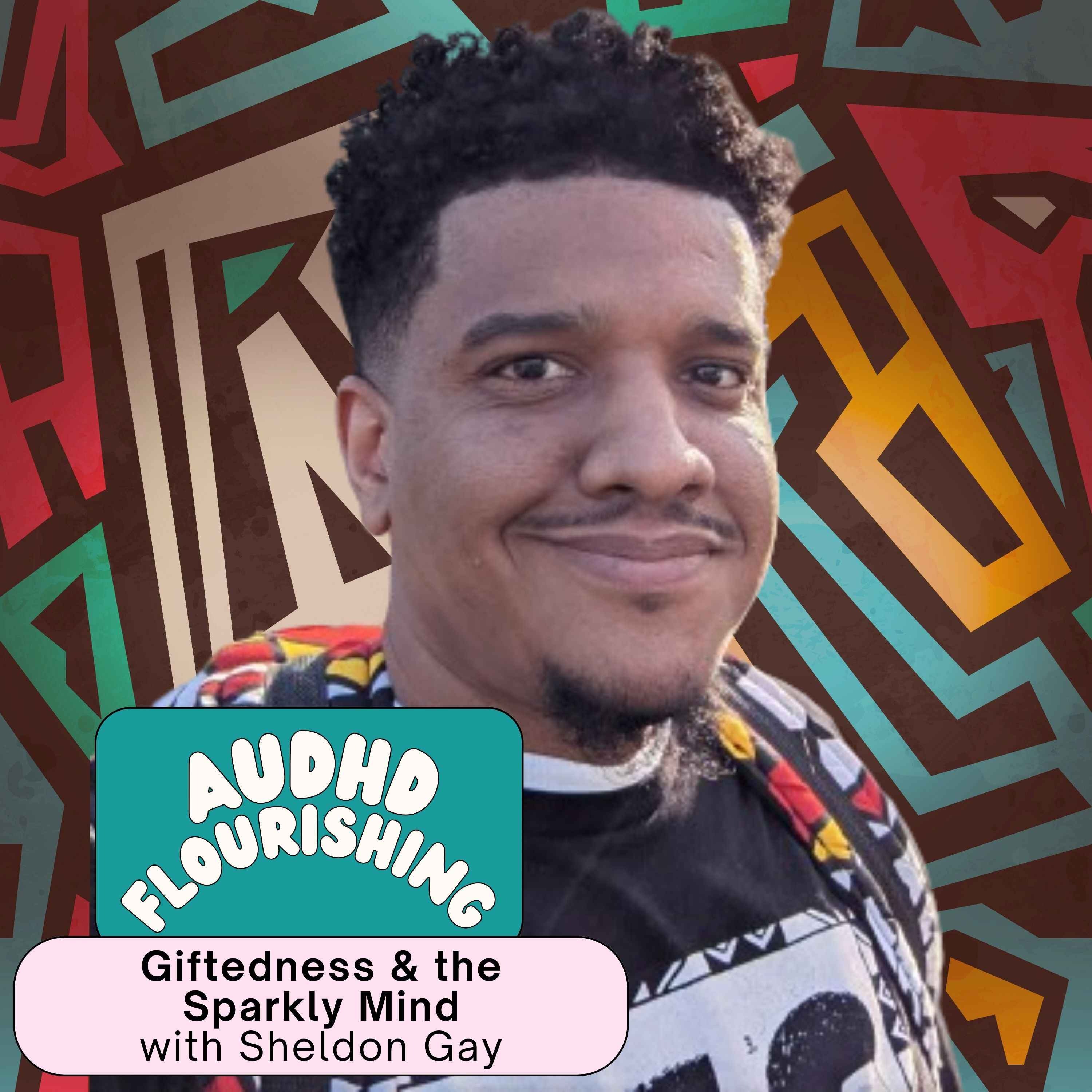
87 Giftedness & the Sparkly Mind with Sheldon Gay
Sheldon Gay shares about giftedness, in particular the intersections of being late-identified as a Black man. He hosts the I Must Be BUG'N podcast (Black, Underrepresented/Unidentified, Gifted and otherwise Neurodivergent). I absolutely love his term of having a sparkly mind! We weave through many topics, including education and melanated & marginalized kids not having their needs met. This is the first of 5-6 upcoming episodes on gifted neurodivergent experiences. p.s. that "or, but anyway" that I didn't finish was that people experience my intensity as seeming like mental illness. Mentioned in episode & connect with Sheldon: Sheldon's website I Must Be BUG'N podcast Our Wild Minds (community for Black gifted adults) Dr. Joy Lawson Davis is a friend & mentor whom Sheldon would like to mention & point toward her website for her work with Black/BIPOC gifted advocacy: https://drjoylawsondavis.com/ Living With Intensity book (affiliate link) Resources: Transcript Doc Email Newsletter Like Your Brain community space (Patreon) Hosted on Acast. See acast.com/privacy for more information.
Feb 15
86 Apocalypse Survival Guide
24:23 to skip specific American politics In this episode: Mutual aid Local connections Surveillance & privacy considerations for devices Resistance is working General strike & Mar 15 shutdown (#Shutdown315) Emotional survival: monotropic reset, alpha brain waves Being careful whom you listen to (accompanying Emily Science Journalism ep 82) Links mentioned: Surveillance guide for devices How to change Meta settings to limit tracking (note there is no way to make Messenger app safe) Ad-blocking guide (note that I haven't vetted all their recommendations, though I do use one of them already) General Strike USA March 15 2025 general shutdown in US #Shutdown315 The Open-Focus Brain by Les Fehmi is the book I don't automatically recommend bc of offensive disability language, plus I personally didn't find the exercises as helpful as when another ND person led me. That said, the book may still be helpful to you. There are hundreds of open focus exercises on YouTube, and I may try to find one that I like and link it here at some point. Article, " My problems with the Constructed Theory of Emotions ," (the critique of How Emotions Are Made) Andrew Huberman is a liar article Not in episode, but I adore this takedown of Matthew Walker's book Why We Sleep De-Googling Other links shared on the Discord recently: Article: sabotaging DOGE Simple Sabotage Field Manual from above article Helping trans people leave the US MI, MN, NY, VE, WA EDL (drivers license for land & sea entry ) Actions for protecting disability rights Small actions to take now Resources: Transcript Doc Email Newsletter Like Your Brain community space (Patreon) Hosted on Acast. See acast.com/privacy for more information.
Feb 9
Intrusive Thoughts & AuDHD
Mini episode on my experience with intrusive thoughts and how/when they stopped being distressing. Monotropic brains tend toward thought loops and thus can make intrusive thoughts pretty easily. In my case, I think my brain was in part trying to generate interest when my needs were not being met. Dopamine is also a learning chemical that tells the brain to pay attention right now. This is just my experience... Please seek professional help if you're having distressing intrusive thoughts! Crisis Resources: USA-based anonymous crisis chat International crisis lines Various types of crisis resources in about 10 countries Hosted on Acast. See acast.com/privacy for more information.
Feb 8
85 Rising AuDHD Rates (PBS interview)
Last week I was interviewed on WHYY, Philly's PBS/NPR radio station, about the rising diagnosis rates of Autism & ADHD. Here are a few additional thoughts and my favorite moments, and you can find the full interview below Mentioned in episode: YouTube PBS interview (& Patreon post about it ) WHYY.org page with the audio only version Public Patreon post w YouTube link if you'd prefer to comment there (link coming soon) Readwise / Reader tool (affiliate link gives you 60 days free) Resources: Transcript Doc Email Newsletter Like Your Brain community space (Patreon) Hosted on Acast. See acast.com/privacy for more information.
Feb 1
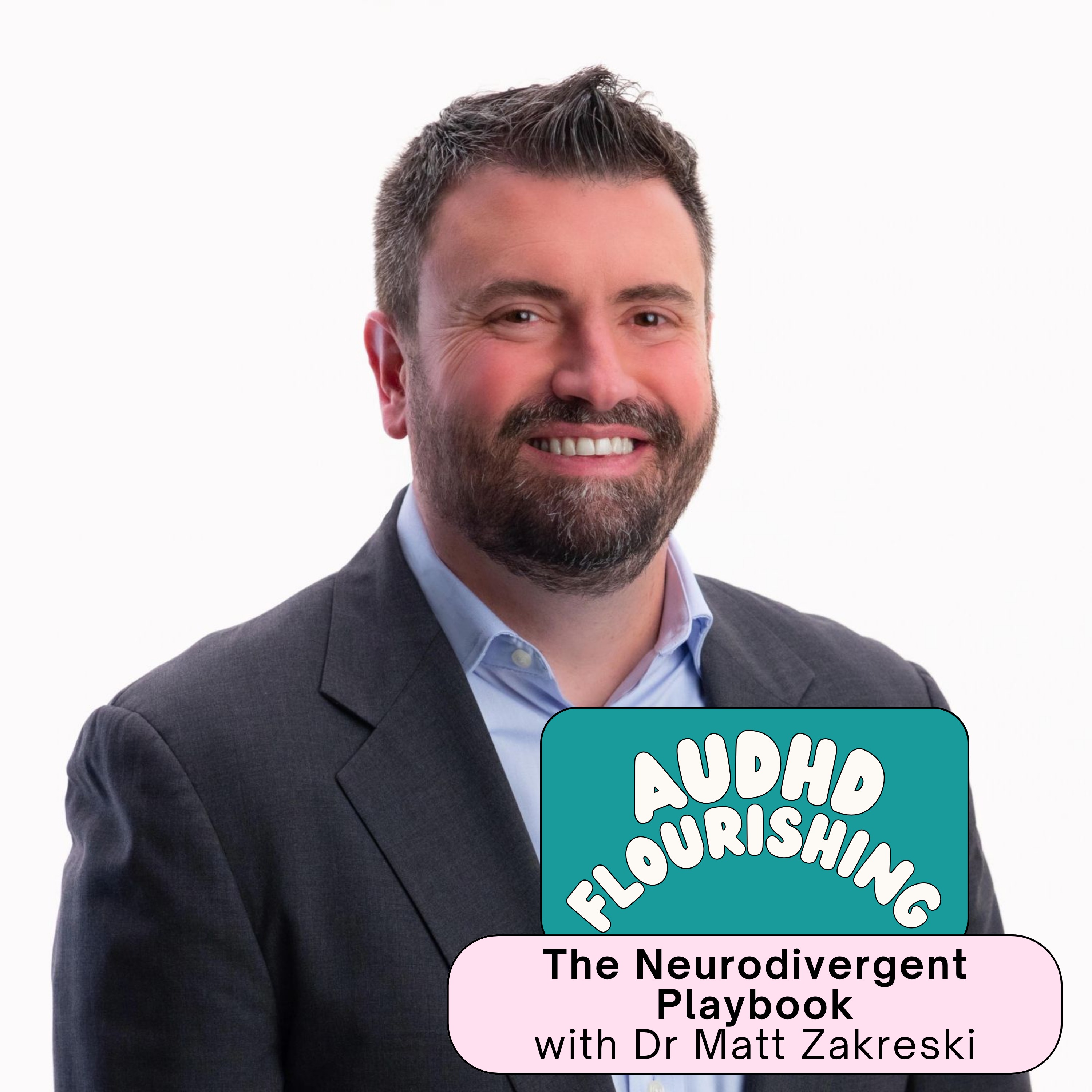
84 The Neurodivergent Playbook with Dr Matt Zakreski
Dr Matt Zakreski is 2e (ADHD & gifted) and also a clinical psychologist supporting neurodivergent folks. His recent book, The Neurodivergent Playbook, aims to meet that social gap in which we often feel we missed the "instruction manual" for how to approach people. Connect with Dr Matt: The Neurodiversity Collective for therapy & assessments Dr Matt's website for speaking engagements Facebook Instagram @drmattzakreski Resources: Like Your Brain community space Transcript Doc Email Newsletter Hosted on Acast. See acast.com/privacy for more information.
Jan 25
Bonus: Overview of my approach by Notebook LM
As I describe at the beginning, this goes along with episode 83 about AI & tech tools. The latter 15m of this episode was an AI "podcast conversation" based on AuDHD Flourishing principles and my overall work and approach. I was impressed by how it was pulled together, as well as pronouncing my name & getting pronouns right! Note: if you have misophonia, you may find the AI vocal artifacts irritating... heads up! If you're curious: The web pages used by Notebook LM: AuDHD Flourishing home page How it Works About/bio FAQs Products & Services (note that I'm going to be updating this soon, so if you're looking at this after Jan 2025 it will be different than what was pulled into the episode) Testimonials Love Your Brain (course) Resources: Transcript Doc Email Newsletter Like Your Brain community space Hosted on Acast. See acast.com/privacy for more information.
Jan 25
83 Tech and AI Tools for AuDHD Accommodations
It's okay to have strong feelings about AI! Yes, we touch on ethics in this episode. It's also okay to use accommodations and tools that work for you, especially in the short term to feel better first. This episode covers a number of AI and tech tools suggested by other AuDHDers. When there's a blog post to go through all of them (plus any others added in the meantime) I'll add that link below as well. AI & Tech mentioned in episode: Notebook LM Autektik AI LLMs ChatGPT and Claude Poised Shortcut List of AI Tools for Designers & Marketers Free course: Using Fandoms + AI to Developing Coping Skills for Neurodivergent Kids Readwise / Reader (affiliate link gives you 60 days free) Goblin Tools & my blog post about it Perplexity Pro (link is to free version) The convo on Patreon, free with login Resources: Transcript Doc Email Newsletter Like Your Brain community space (Patreon) Hosted on Acast. See acast.com/privacy for more information.
Jan 18
82 Science Journalism & Misinformation: Best Practices Being ND Online with Emily Earlenbaugh
Emily is a science writer, AuDHDer, and ND-affirming coach. They share online about neurodivergence topics and accuracy in science journalism as The Neurodivergent Well. In this episode, we talk about best practices as a consumer of science info online, especially via social media. If you don't have time or capacity to read journal articles, what CAN you do? Emily shares multiple approaches to being a better online citizen when we take in and share information. There's also a lovely bit about the complexity of identity, and whether the labels we use are accurate and useful. p.s. Emily has a doctorate in the Philosophy of Science, and over 10 years professional experience in writing and editing Find Emily online: The Neurodivergent Well website Medium writing Instagram @the.neurodivergent.well TikTok @the.neurodivergent.well (posting this Jan 18th so we'll see...) Mentioned in the episode: The small Case Western study that found a 42% increase in resting info rate in autistic brains (with 19 children) An article about the DSM disorders disappearing in statistical clustering of psych symptoms Experimenting Your Way to an Extraordinary Life (course) Resources: Transcript Doc Email Newsletter Like Your Brain community space Hosted on Acast. See acast.com/privacy for more information.
Jan 11
81 When the Body Simply Cannot
This week I pushed my body way too far, even though I was having trouble parsing that in the moment. The story is also a great analogy for how other ND internal needs feel (including PDA). Even with all the info, self-kindness, and support, I still struggle to find that exact line of capacity. It's okay that it's hard to figure out! This is the perfect and slightly ironic follow-up from last week's episode about giving up on NT/ableist expectations ;) Mentioned in episode: wish list Experimenting Your Way to an Extraordinary Life Comparative Grammar of Spanish, Portuguese, Italian and French (affiliate link) Mackareth's Neurocomplexity model (& affiliate link if you want to sign up) Resources: Transcript Doc Email Newsletter Like Your Brain community space Hosted on Acast. See acast.com/privacy for more information.
Jan 4
80 Is This the Year to Give Up?
Is this the year to give up on neurotypical and ableist nonsense that is causing you harm?? I hope so, for all of us. There are so many layers to unraveling internalized ableism. Here's your permission to do that a little more :) p.s. of course you know I never mean to give up on life ;) If you're in crisis, there are crisis links below <3 Links mentioned in episode: Psychology Today article on Relational Trauma: Beyond Adverse Caregiver Experiences NeuroLaunch article on Relational Therapy: A Comprehensive Approach to Healing Through Connection 7 Signs of Internalized Capitalism by Lindsey Mackereth at Method Creative Referral link to Lindsey Mackareth's Neurocomplexity Substack Crisis Resources: USA-based anonymous crisis chat International crisis lines Various types of crisis resources in about 10 countries My Medium article, "Please Stay, We Need You" Resources: Transcript Doc Email Newsletter Like Your Brain community space Hosted on Acast. See acast.com/privacy for more information.
Dec 28, 2024
79 Seasonal Energy & Sleep
It's okay if your sleep and energy vary wildly during the seasons! Or at least... it's okay with me ;) Obviously there can be real world effects to having a chronotype outside of the 9-5. But if your body is going to make you rest anyway... may as well enjoy it and get the most out of it, in my opinion! Resources: Transcript Doc Email Newsletter Like Your Brain community space Hosted on Acast. See acast.com/privacy for more information.
Dec 21, 2024
78 Healing Relational Trauma
This is the follow-up episode to deepen ideas in the interview with Danielle Aubin last week on Autistic Therapy. Especially focused on this idea of relational trauma, and relational healing that addresses it. In my experience, relational healing ends up being woven throughout all other healing. Or, sometimes it's the "boss battle" to put what I've integrated into practice. Because emotional regulation during conflict with someone you care about is a whole new level! While I didn't use the words "community model of healing" or "relational healing" when I was starting the Like Your Brain community over a year ago, they were certainly on my mind. More on that in the episode as well. There are so many layers to relational healing. Wherever you're at with it is totally fine! And there are many ways to approach it. Animals are also a lovely way to experience relational healing. My first cat cured like 60% of my relational trauma <3 Resources: Transcript Doc Email Newsletter Like Your Brain community space Hosted on Acast. See acast.com/privacy for more information.
Dec 14, 2024
77 Autistic Therapy with Danielle Aubin
Danielle Aubin is an autistic therapist who works with autistic clients. And also shares about Obsessive Compulsive Personality Disorder (OCPD) and how it's strangely compatible with capitalism because of its orientation toward achievement. Other big topic is community building, and how it can be healing even when it's uncomfortable (in the right way). Relational healing is necessary for relational trauma, whether in the therapeutic relationship, or in a group setting! Connect with Danielle: Website: myautistictherapist.com TikTok @myautistictherapist Community: Late-Discovered Autistic Support & Learning Group Resources: Course: Experimenting Your Way to an Extraordinary Life Transcript Doc Email Newsletter Like Your Brain community space Hosted on Acast. See acast.com/privacy for more information.
Dec 7, 2024
76 Gift & Holiday Accommodations
A few ideas for accommodating your brain & needs around gift-giving and the holidays. Fun fact: Many of us have gone through a big minimalism stage! Please take care of yourself this season, whether that looks like unmasking or grey rocking ;) p.s. I have a public wish list and absolutely love practical gifts! It's a fun way to support the podcast :) Resources: Transcript Doc Email Newsletter Like Your Brain community space Hosted on Acast. See acast.com/privacy for more information.
Nov 30, 2024
75 Surviving Out of Spite
You deserve to survive this. Please stay. And if staying out of spite helps you, it has gotten me through some tough times. My Medium article, "Please Stay, We Need You" Crisis Resources: USA-based anonymous crisis chat International crisis lines Various types of crisis resources in about 10 countries Resources: Transcript Doc Email Newsletter Like Your Brain community space Hosted on Acast. See acast.com/privacy for more information.
Nov 26, 2024
Goldilocks Sensory Needs
Have you absorbed the cultural idea that you "should" be able to be "present" without sensory aids? Fuuuuuuck that shiiiiit! Also been playing with sensory seeking (& its opposite) during moments of transition, and it's helping a LOT! Been considering the earplugs I mention, Loops ? They're my fave currently. (Note: if you don't like anything in your ears, you won't like these, either.) They have some deals right now, and you can support the podcast by using my affiliate link here . Hosted on Acast. See acast.com/privacy for more information.
Nov 23, 2024
74 Gratitude in Uncertainty
Thinking seasonally about gratitude in the context of..... everything happening right now. It's easy for my brain to want to solve every problem in the world. But I don't want to do the opposite of becoming entirely insular and only focusing on myself. I've found gratitude to be a way I can be more deeply interconnected (and in my case, add more reasons to want to live). Mentioned in episode: Ep 25 The Power of Honest Gratitude Ep 72 Feeling Safe in Uncertainty & Chaos Unmasking Autism book by Devon Price (affiliate link) Resources: Transcript Doc Email Newsletter Like Your Brain community space Hosted on Acast. See acast.com/privacy for more information.
Nov 15, 2024
73 Starting an AuDHD-Friendly Business
AuDHDers often end up partly or fully self-employed. It can be due to desire, or out of necessity. Either way, this episode covers some tips to think about before starting. It may also be helpful if you've started businesses before and fallen for some bad advice (which I have). Mentioned in Episode: The interviews with Zann and Sam about their businesses The book Profit First ( ebook & audiobook ) - affiliate links Course: Experimenting Your Way to an Extraordinary Life Resources: Transcript Doc Email Newsletter Like Your Brain community space Hosted on Acast. See acast.com/privacy for more information.
Nov 9, 2024
72 Feeling Safe in Uncertainty & Chaos
Feeling worried about the future? Uncertainty can be especially difficult for Autistic nervous systems. Today I go into more detail about WHY & HOW safety in the body can be a foundational practice for healing and wellness. At the end, I share the audio of a practice that is also on YouTube here if you'd like to follow along with visuals. The questions answered in this episode: What is safety in the body? Why is it so important, and what does it do? What does it feel like? How does it relate to stress? What's my experience of safety been? What are the long-term effects of consistently reinforcing embodied safety? Mentioned in episode: YouTube video showing me doing the embodied practice & explanation video + visuals (audio also from this episode) Gymba balance board & travel Bosu ball (affiliate links) Resources: Like Your Brain community space Transcript Doc Email Newsletter Hosted on Acast. See acast.com/privacy for more information.
Nov 2, 2024
71 Maybe You're Not the Problem with Sam Cooper
Sam Cooper is an AuDHD coach and generally awesome human. When we met in person, we bonded over having worn the wrong size shoes for years, which led to the title of this episode. Sam shares about building a small business, and the upsides and downsides of a coaching business in particular. Sensory needs and discovering support tools. They also have an incredibly compassionate approach to their own journey. Connect with Sam: Sam's website Sam's Instagram @unconventionalmindsadhd Resources: Like Your Brain community space Transcript Doc Email Newsletter New course: Experimenting Your Way to an Extraordinary Life Hosted on Acast. See acast.com/privacy for more information.
Oct 26, 2024
70 An Easy Artist Business (after 10 years of failure soup) with Zann Hemphill
Zann's artist business is one of the easiest things she's ever done. And it's not even her main passion! Her deeply relatable history includes ten years of feeling like failure soup. It didn't feel like progress or learning, just failure. But it ultimately led her to figure out what does NOT work. She shares amazing ideas and practical advice.... this will be a great one to listen to more than once! Connect with Zann: Paws by Zann website Zann's blog YouTube art tutorials & BTS Resources: Like Your Brain community space Transcript Doc Email Newsletter New course: Experimenting Your Way to an Extraordinary Life Hosted on Acast. See acast.com/privacy for more information.
Oct 23, 2024
Deciding on Bigger Goals
If you struggle to figure out what to focus on with bigger goals, you're not alone! Here's one approach I've come up with for my own annual goals in particular. And some thoughts on decision making, since that's part of it. Wish List for bday (or whenever) Hosted on Acast. See acast.com/privacy for more information.
Oct 19, 2024
69 Bureaucratic Bullshit is the Bane of my Bexistence
I failed my first driving test! On a technicality! Ah, the frustrations of begging to exist in structures not built for us. Three quick stories about bureaucratic bullshit in a single week, and how it fits into my own big ball of yarn. It's okay that the stuff that's hard for us is probably never going to be fun or easy. We need support and RESOURCES that work for us! More on finding good resources in the episode... librarians are often a great place to start. Resources: Like Your Brain community space Transcript Doc Email Newsletter New course: Experimenting Your Way to an Extraordinary Life Hosted on Acast. See acast.com/privacy for more information.
Oct 12, 2024
68 Stop Hammering Screws
The autistic / AuDHD self-discovery journey can feel like finding out that you've been hammering screws this whole time. You never learned how to use the right tools. You may not have been given the right tools at all! A few thoughts on the grief inherent in the process, and how to equip your personal toolbox now that you know what's up. Resources: Like Your Brain community space Transcript Doc Email Newsletter New course: Experimenting Your Way to an Extraordinary Life Hosted on Acast. See acast.com/privacy for more information.
Oct 5, 2024
67 Downsides of Weekly Scheduling
Weeks and months are staples of scheduling systems. But they tend not to work well for me as units of time. My personal ideal is two days on, two days off, though that's impractical. Instead, I talk about the various workarounds I've found, including intentionally scheduling rest (and how if I don't have time for that, I need to decrease demands). If weeks don't work well for you, how can you find what does? Resources: Like Your Brain community space Transcript Doc Email Newsletter New course: Experimenting Your Way to an Extraordinary Life Hosted on Acast. See acast.com/privacy for more information.
Sep 28, 2024
66 Fixing Your Whole Damn Life
This episode is about both why it's so hard to get help as an AuDHDer, and some of the broad steps I see working for us. It can help to have a view of your "big ball of yarn" i.e. complex and interrelated problems or life areas. It can also help to start addressing your sensory needs, core needs, and just live your life while you take a break from big processing. Please take care and be gentle to yourself! Links mentioned: New course: Experimenting Your Way to an Extraordinary Life Your Core Self Care Need episode The 4 steps I talked about Crisis Resources: USA-based anonymous crisis chat International crisis lines Various types of crisis resources in about 10 countries Resources: Like Your Brain community space Transcript Doc Email Newsletter Hosted on Acast. See acast.com/privacy for more information.
Sep 21, 2024
65 What NOT To Do
What NOT to do in your AuDHD discovery process is just as important as knowing what to do! This episode interweaves nicely with last week's episode about what AuDHDers need. This is hardly an exhaustive list, but it covers many of the patterns I've seen and heard in the community. Links mentioned: InterGifted: What is Giftedness? Autistic Culture Podcast Free Office Hours call (p.s. being a free Patreon member is the best way to get updates/reminders about these calls) Crisis Resources: USA-based anonymous crisis chat International crisis lines Various types of crisis resources in about 10 countries Resources: Like Your Brain community space Transcript Doc Email Newsletter Hosted on Acast. See acast.com/privacy for more information.
Sep 14, 2024
64 What AuDHDers Need
What do AuDHDers need (beyond the obvious needs all humans have)? And why do those needs matter? This episode covers some important ones: Being able to engage with our interests (in a particular way) Executive Function support, without trying to make the hardest things easy or enjoyable Autonomy True rest The narrow path of just enough stimulation Processing time To be witnessed in just the right way Recognition that our needs vary quite a bit day to day Coming to terms with disability Space and time throughout our self-discovery journey Safe enough spaces to explore what it means to be ourself Links mentioned: Executive function test post if you want to ask Qs or share your experience Executive Skills Questionnaire Revised (ESQ-R) Unmasking Autism book (affiliate link) Crisis Resources: USA-based anonymous crisis chat International crisis lines Various types of crisis resources in about 10 countries Resources: Like Your Brain community space Transcript Doc Email Newsletter Love Your Brain course Hosted on Acast. See acast.com/privacy for more information.
Sep 7, 2024
63 All About AuDHD Diagnosis
Almost all of us consider formal diagnosis in our AuDHD discovery journey. Whether it's ADHD-focused for medication, or Autism-focused for validation or accommodations. Knowing why you want the diagnosis goes a long way in figuring out what to pursue. The main options as I currently see them are: full formal neuropsych testing provisional diagnosis with a shorter screening test a formal letter requesting accommodations from your provider self-diagnosis community diagnosis This episode talks about The upsides and downsides of diagnosis in general My personal diagnosis experience (two full rounds of neuropsych testing) Options to approach decision-making for yourself How to get started if you do want diagnosis Questions from the longer decision-making process in the episode are in the Transcript Doc Crisis Resources: USA-based anonymous crisis chat International crisis lines Various types of crisis resources in about 10 countries Monotropism resources: Monotropism Questionnaire and more info about it Monotropism explained Fergus Murray's 6 Starting Points for Understanding Autism 034 Monotropism Might Explain Everything with Fergus Murray 035 How Much Time Does Creating Take? 039 Autism "Levels" and Monotropism Other Links mentioned: Devon Price's post about Autism diagnosis pros n cons Throw Away the Masters Tools: Liberating Ourselves From the Pathology Paradigm by Nick Walker AuDHD Flourishing Resources: Like Your Brain community space Transcript Doc Email Newsletter Hosted on Acast. See acast.com/privacy for more information.
Sep 2, 2024
ND + the Inner Conversation
Bonus drop from The Curiosity Cure podcast: Today's conversation with Mattia takes us through their journey with chronic pain, feeling better, and the ways they navigate their inner mindbody conversation as someone with AuDHD + PDA. We touch upon themes of neurodivergence, gender transition, resourcing inner + external safety. We chat about using hypnotic techniques to decrease a sense of threat/unsafety that may accompany disorders like ehlers-danlos syndrome and POTS. Thanks to Deb for sharing this episode: full show notes here The show notes link above has many resources about successful healing from related conditions The Curiosity Cure podcast site Hosted on Acast. See acast.com/privacy for more information.
Aug 21, 2024
see you in September!
I'm taking the last two weeks of August off, and will be back in September with a "back to the basics" series about things like diagnosis, what to do when you first discover your AuDHD identity, etc! In the meantime, you can check out... Like Your Brain community space Transcript Doc YouTube: The Longer Road , Mattia guesting on other pods Hosted on Acast. See acast.com/privacy for more information.
Aug 17, 2024
62 Loneliness and Not Feeling Understood
There are many reasons we experience loneliness. There's a particular existential loneliness I experience when I feel like it's not possible for anyone to understand me. And much of that emerged from a lifetime of ableism. Being in AuDHD community has been incredibly healing. Thank you for being here! Also... as of today we're over 200,000 downloads... thanks for listening!! Resources: Like Your Brain community space Transcript Doc Email Newsletter Hosted on Acast. See acast.com/privacy for more information.
Aug 10, 2024
61 Working Memory Hack
Working memory may be a main reason we feel so exhausted... we're doing so many things manually that are habits for non-AuDHD brains. Using a working memory file as we go can help a lot and massively reduce overwhelm and cognitive fatigue. Cal Newport uses a digital file for this during computer work. I've been using post-it notes so I can carry them around with me. There are many benefits I talk about in the episode, and the main one for me is being able to track decisions as I go so I don't keep trying to make them over and over! Resources: Like Your Brain community space Transcript Doc Email Newsletter Love Your Brain course Hosted on Acast. See acast.com/privacy for more information.
Aug 8, 2024
Autistic Joy is Mindfulness
Today I had several moments of autistic joy (sometimes called "glimmers") that were also great examples of mindfulness. But mindfulness in a way that works for my sensory experience! Reminder that our brains are also quite capable of delight in little things. Resources: Like Your Brain community space Transcript Doc Email Newsletter Hosted on Acast. See acast.com/privacy for more information.
Aug 3, 2024
60 When Quitting Works
Quitting can feel amazing, especially when it's a clear self-protection move. And when we haven't waited until it becomes so terrible we have to get out. But the decision-making process can feel slow! This episode covers three ways I've decided to quit things: Big emotions / the thing got really bad Math-y pros and cons approach (slow but effective) Getting somatic info from my body #3 is great... but at the same time, I've done years of building safety around receiving and integrating information from my body! It's not just about the technique itself. Resources: Mentioned the DEAR MAN skill from DBT Like Your Brain community space Transcript Doc Email Newsletter Love Your Brain course Hosted on Acast. See acast.com/privacy for more information.
Jul 27, 2024
59 Lazy On Purpose
I recently took the laziest vacation I ever have, and it was a revelation. Also, there are usually so many external factors we're not considering while laying on the couch feeling too "lazy" to do something! There are layers. Resources: Like Your Brain community space Transcript Doc Email Newsletter Love Your Brain course Hosted on Acast. See acast.com/privacy for more information.
Jul 20, 2024
58 Men Are Not the Enemy
Men are not the enemy... Some thoughts on identity, community, and responsibility. Big shout-out to Devon Price's new book, Unlearning Shame: How We Can Reject Self-Blame Culture and Reclaim Our Power Resources: Like Your Brain community space Transcript Doc Email Newsletter Love Your Brain course Hosted on Acast. See acast.com/privacy for more information.
Jul 20, 2024
I Fucked Up
"felt vulnerable, may delete later" Quick story/update and to validate that communication is so hard... and so are transitions! Full audio direct link for Patreon folks Transcript doc Hosted on Acast. See acast.com/privacy for more information.
Jul 13, 2024
57 How To Make Projects Happen
AuDHD brains face many challenges when it comes to projects. It's something I've put a great deal of time and learning into, both personally and professionally. This episode covers many ideas and approaches that tend to work for us. Key Takeaways: We usually learn to use what I call the Adrenaline-Anxiety Approach. While effective short-term, it can lead to burnout and other issues. A monotropic approach is more sustainable and individualized... and it can feel slow at first. Experimentation as a core tool Creating just enough structure and safety to get going, without getting bogged down (loose planning) Working with the brain states you have Managing interruptions, inputs, and daily life Finding the balance that works for you The episode also walks through the Love Your Brain course, designed to help AuDHDers understand their mind-body system, work with brain states, and navigate project challenges. The course emphasizes self-compassion, experimentation, and building processes tailored to individual needs. Links: Devon Price's Laziness Does Not Exist article, and a PDF if you're not on Medium The transcript may be especially useful for this episode! (It'll take a few seconds for the link to fully load to this episode) Love Your Brain course Learn more about Love Your Brain Hosted on Acast. See acast.com/privacy for more information.
Jul 6, 2024
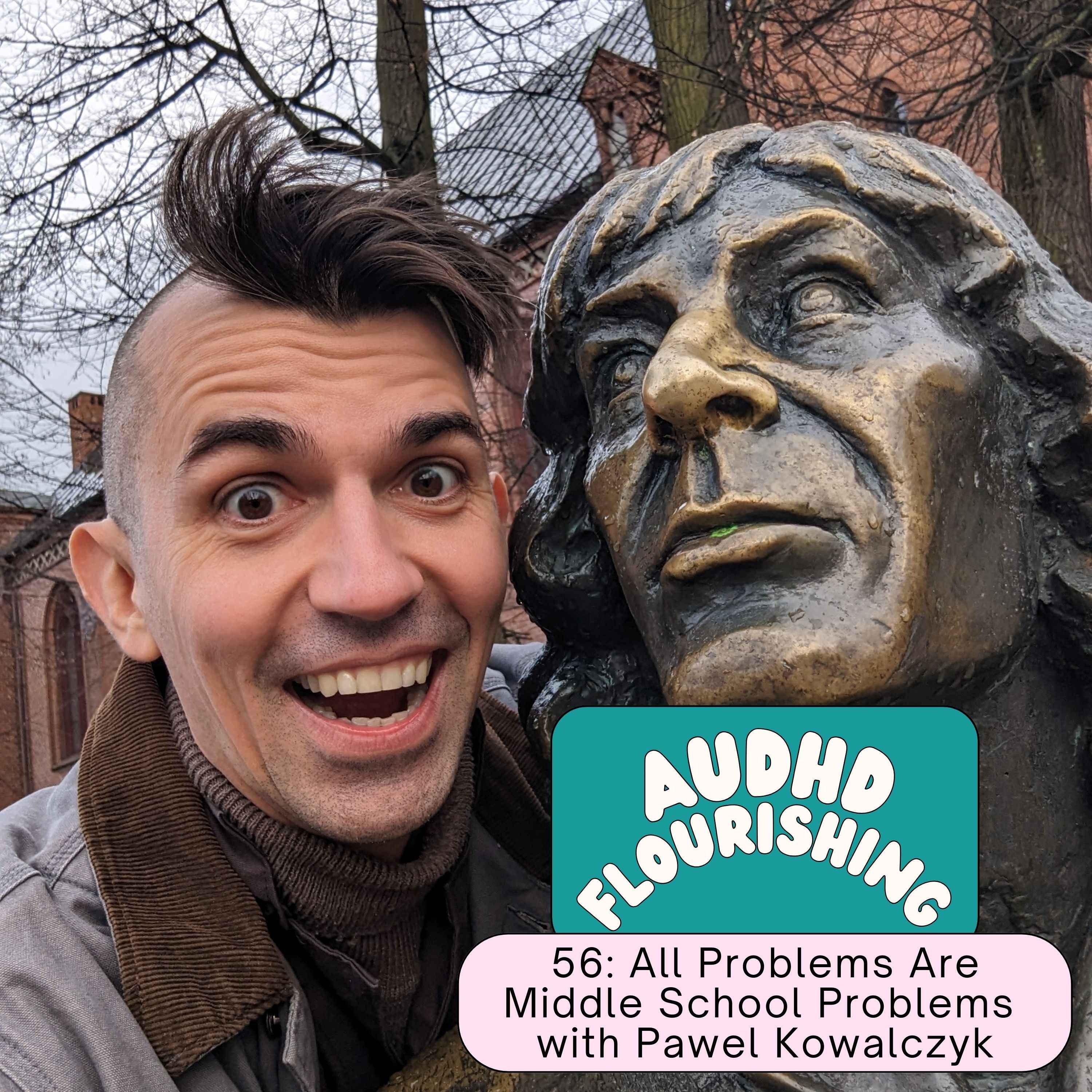
56 All Problems Are Middle School Problems with Pawel Kowalczyk
Pawel, a former middle school teacher in an alternative school, lays out how most of our adult problems were ones we first encountered in middle school. From social groups to complex problem solving, they show up again and again in life. He also talks about how being a high-masking AuDHDer showed up in life. Books mentioned: The Anxious Generation * by Jonathan Haidt Right Kind of Wrong: The Science of Failing Well by Amy Edmondson *And if you're skeptical of Haidt because of his terrible 2018 book, here's a podcast episode that fact checks and brings nuance to claims in The Anxious Generation: If Books Could Kill episode Resources: Like Your Brain community space (Pawel's not sharing social media links but is over here with us) Transcript Doc Email Newsletter Love Your Brain now has three elements you can choose from for more accessibility: Love Your Brain course content Group coaching and co-working calls Direct support from Mattia Hosted on Acast. See acast.com/privacy for more information.
Jun 29, 2024
55 Achievement Doesn't Define Us
Achievements often feel tied into personal identity. AuDHD folks in particular struggle with achievement pressures, even with just regular neurodivergent demand avoidance. A few core topics: The joy of supporting others' work and stepping back from being the primary creator Achievements often don't provide the emotions we expect, so it's meaningful to focus on making the process feel better instead Creativity requires boredom and rest And the very surprising thought I had that led to this episode... Episodes mentioned: Andrew Simonet on creating supportive feedback convos as a creative When Dreams Feel Impossible (last week's episode) Autistic Stereotypes with Thomas Henley Resources: Like Your Brain community space Transcript Doc Email Newsletter Love Your Brain now has three elements you can choose from for more accessibility: Love Your Brain course content Group coaching and co-working calls Direct support from Mattia Hosted on Acast. See acast.com/privacy for more information.
Jun 22, 2024
54 When Dreams Feel Impossible
Every creative and interesting person has experienced the feeling that at least some of their big dreams are impossible. And when the current big dream is just surviving, that can be especially challenging. I share about the emotional side of the ten years when my composition career had an almost 100% rejection rate. And why I'm giving this unusual advice... It can be healthy to temporarily let go of dreams that are stressing you out! Crisis Text Line , text HOME to 741741 to reach a volunteer Crisis Counselor on a wide variety of topics Originally episode 61 on The Longer Road podcast (with minor edits) Resources: Like Your Brain community space Transcript Doc Email Newsletter Hosted on Acast. See acast.com/privacy for more information.
Jun 15, 2024
53 Autistic Stereotypes with Thomas Henley
Thomas Henley educates, normalizes, and actively pushes back against autistic stereotypes and stigma. Check out his highly rated podcast, Thoughty Auti - The Autism Podcast (on which I talked about AuDHD ). Thomas has made multiple decisions in his life to combat stereotypes, including months of backpacking, and becoming a world-class martial artist, both of which he talks about today. We also touch on what some of the lingering stereotypes are, and what helps! More from Thomas: Thoughty Auti - The Autism Podcast @thomashenleyUK on Instagram & TikTok Website: thomashenley.co.uk This is a slightly edited podcast that was recorded about a year ago for The Longer Road. Resources: Like Your Brain community space Transcript Doc Email Newsletter Hosted on Acast. See acast.com/privacy for more information.
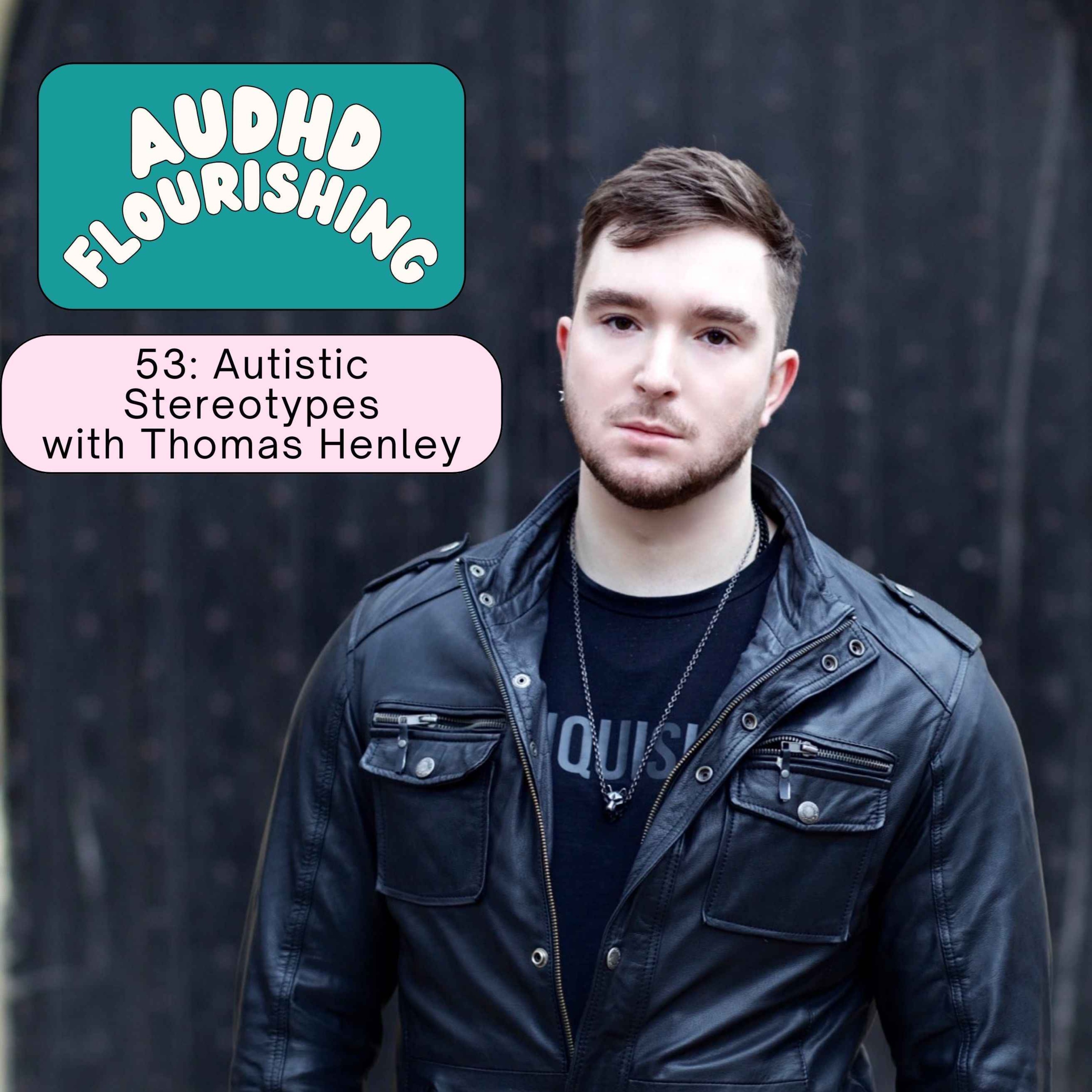
Jun 8, 2024
52 You Were Not a Bad Child
You may have internalized the message as a child that there was something wrong or bad about you. Even if it was not explicit, you probably didn't receive some of the attention and delight that would have sent the strong message that your way of being in the world is valid. Today's message is simple: You were not a bad child. You deserved love and support in a way that made sense to you. Thank you to the therapist who walked me through this concept! Thank you to Linda Thai for providing such amazing emotional support through the courses and group coaching I've taken with her. I credit both of them with helping me learn how to reparent myself in a more deep way. Resources: Like Your Brain community space (where the picture is that I mentioned in the episode... it's visible to all members including free members) Transcript Doc Email Newsletter Hosted on Acast. See acast.com/privacy for more information.
Jun 1, 2024
Don't Make Up For Rest
Rest is not something to be made up for later with productivity. Whether it was forced by the body or not. We deserve to have energy to do what we love! Love Your Brain now has three elements you can choose from for more accessibility: Love Your Brain course content Group coaching and co-working calls Direct support from Mattia Hosted on Acast. See acast.com/privacy for more information.

May 25, 2024
51 Constant Discovery of What Works with Eric Tivers
Eric Tivers has shared 10 years of helpful content on his podcast, ADHD reWired . He's also built multiple careers helping neurodivergent folks: from therapy, to teaching high support need kids, to the current ADHD group programs. It's a never-ending journey of discovering what works for his current needs and capacity. And the relatively recent discovery of... oh... maybe there's something to this autism thing. Find Eric and his work at adhdrewired.com Resources: Like Your Brain community space Transcript Doc Email Newsletter Hosted on Acast. See acast.com/privacy for more information.
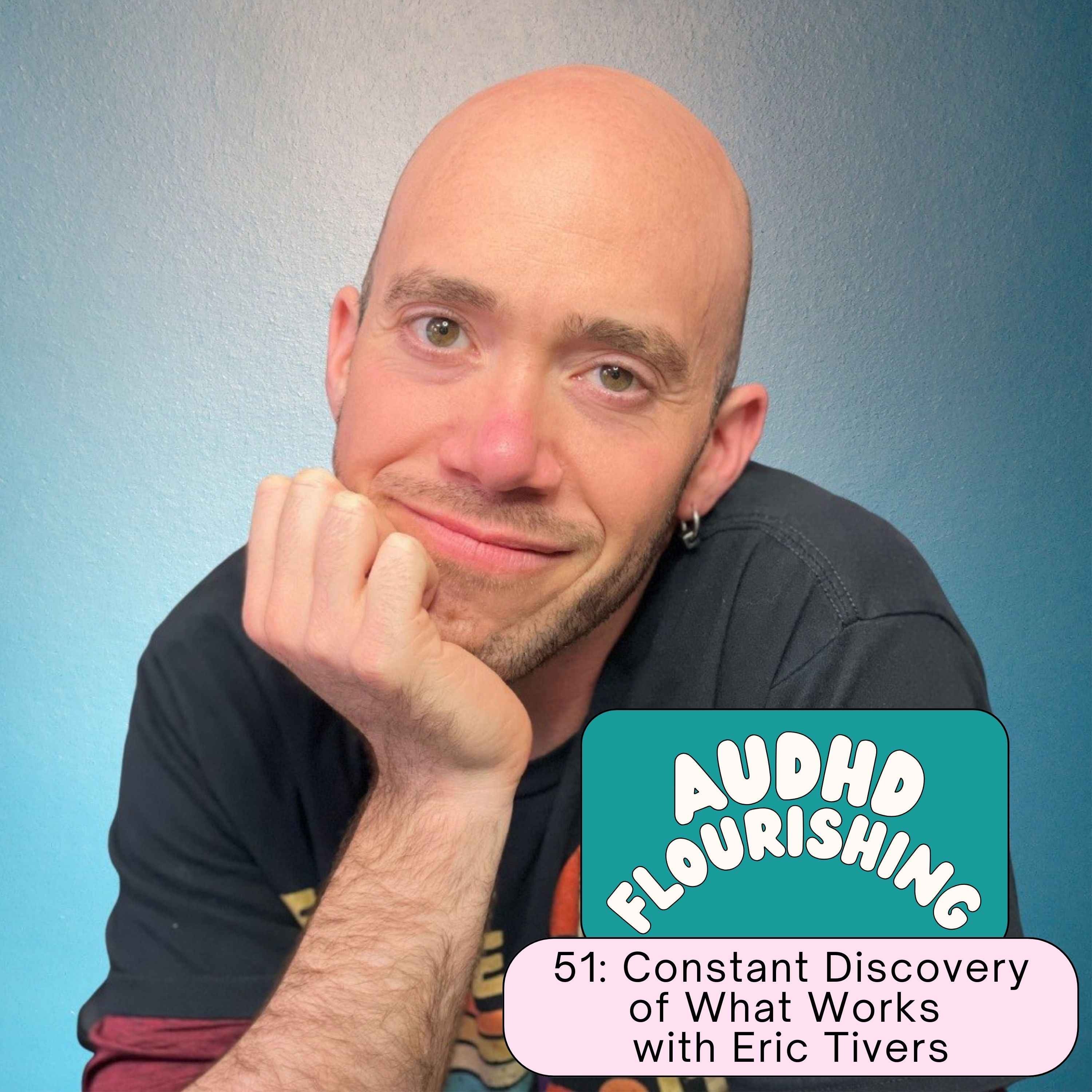
May 18, 2024
50 You're Doing Better Than You Realize
Multiple times in the past week or two, clients have felt like they're failing miserably. But it turns out they're in complex, difficult, multifaceted situations that don't have an easy answer. Plus, it's easy to feel like we're never doing enough, or the right thing. If we're solving personal problems, world events loom large. If we're addressing world events, it feels like a drop in the bucket. Capitalism tells us that there's a straightforward, purchasable solution for every problem. That's a lie. You're probably doing really well relative to all the complicated issues you face, and the overall lack of support and resources most of us encounter. And if you really believe that's not true... this episode is especially for you! Link: Sign up for General Strike in US! Resources: Like Your Brain community space Transcript Doc Email Newsletter Hosted on Acast. See acast.com/privacy for more information.
May 11, 2024
49 Managing Big Feelings
Big feelings may be harder for monotropic people to handle. And if you have significant sensory sensitivity, the physical sensations can be overwhelming as well. This episode covers some of the ways I've been approaching grief and helplessness about Gaza. Links mentioned in show: Episode 15, How Feelings Work Lisa Feldman Barrett's book How Emotions Are Made Al Jazeera article, ‘It’s not human’: What a French doctor saw in Gaza as Israel invaded Rafah Macklemore song Hind's Hall Sign up for General Strike in US! Resources: Like Your Brain community space Transcript Doc Email Newsletter Hosted on Acast. See acast.com/privacy for more information.
May 4, 2024
48 Hack for Demand Avoidance
You'll rarely catch me using the term "hack." But this concept around demand avoidance is working great for me, so far... TLDR: Shortcutting the PDA brain's ability to use pattern recognition to avoid tasks early in a sequence. Here's the Instagram video by Kristy Forbes that inspired this episode. While she suggests introducing new sensory details, I'm going the route of sincerely telling myself that we don't need to do the final thing. We're just gonna do this step. Note: even if this or Kristy's suggestion works for you, there's a good chance you'll get used to it in some form eventually! And that's okay. Sometimes we just have to keep finding new ways to work with our pattern-seeking brains. Resources: Like Your Brain community space Transcript Doc Email Newsletter Hosted on Acast. See acast.com/privacy for more information.
Apr 29, 2024
Mini Safe Being Visible
Wow, over 100K listens! People talk a lot about feeling safe being visible—being seen and heard either literally or through putting your work into the world. While I've done a lot of personal work being comfortable while visible, the Guardian article was a huge bump in visibility. To be fair, the "bad day" I reference was also the kidney infection kicking into full gear (see "Don't Die" a couple episodes ago). It's also a lot easier to be "brave" being visible when you get almost entirely positive feedback! That usually changes with more visibility. Enjoying this particular phase and trying not to worry about the next one. The Guardian article, "The sudden rise of AuDHD" Hosted on Acast. See acast.com/privacy for more information.
Apr 27, 2024
47 Meltdowns in Public
Answering a listener question about how to handle meltdowns and shutdowns at work, and around people you don't trust. This episode covers a few ways to both plan for, push away, and handle meltdowns once they're happening in a public place. Previous episodes about meltdowns: 13 Autistic Meltdowns & Shutdowns 23 You Are Not a Burden (Mattia talking about a specific meltdown they had) 6 Healing Relational Trauma (guest Pasha and Mattia talk about recent meltdowns around our partners) Resources: Like Your Brain community space Transcript Doc Email Newsletter Hosted on Acast. See acast.com/privacy for more information.
Apr 20, 2024
46 Don't Die
I almost died two weeks ago. It's easy to miss symptoms when one has low interoception and a high pain tolerance. Episode is around the difficulties seeking care... and why it's very worth it sometimes! p.s. episodes are coming out on Saturdays now Resources: Like Your Brain community space Transcript Doc Email Newsletter UK study questioning the oft-quoted statistic about autistic people living 16 years less long than allistic people. TLDR: Autistic people do seem to live less long on average, but as many people are undiagnosed, it's hard to get an accurate number. Hosted on Acast. See acast.com/privacy for more information.
Apr 12, 2024
45 Exempt From Human Suffering
Yes, still on about money. In this case, how we're sold the idea that it will exempt us from human suffering... but it will not! What would you do with your time if money truly were not an issue? Do you have any access to that now? Even if it looks different than you think it's supposed to? What's enjoyable, outside of the paradigm of earning or mastery? Hosted on Acast. See acast.com/privacy for more information.
Apr 5, 2024
44 Hypnosis Healing with Genevieve Joy
Genevieve Joy and I have a lot in common, including excruciating childhoods that led to chronic pain. Both of us also healed that chronic pain through hypnosis and are now enthusiastic about the possibilities of working with the unconscious. Content note: There are no graphic depictions of trauma in this episode! However, the way we talk about our own healing journey could be triggering to someone who's in extreme pain at the moment. This is in part because we don't go into the nitty gritty details... it could sound dismissive because we're focusing on the "after." Please trust your body and stop listening if it's not for you at the moment. Connect with Genevieve: Her website, iamgenevievejoy.com Her podcast, Become Your Own Savior Resources: Like Your Brain community space Transcript Doc Email Newsletter Huberman Lab podcast about Placebo Effect on Biology & Physiology Try Hypnosis / Learn Self-Hypnosis Hosted on Acast. See acast.com/privacy for more information.
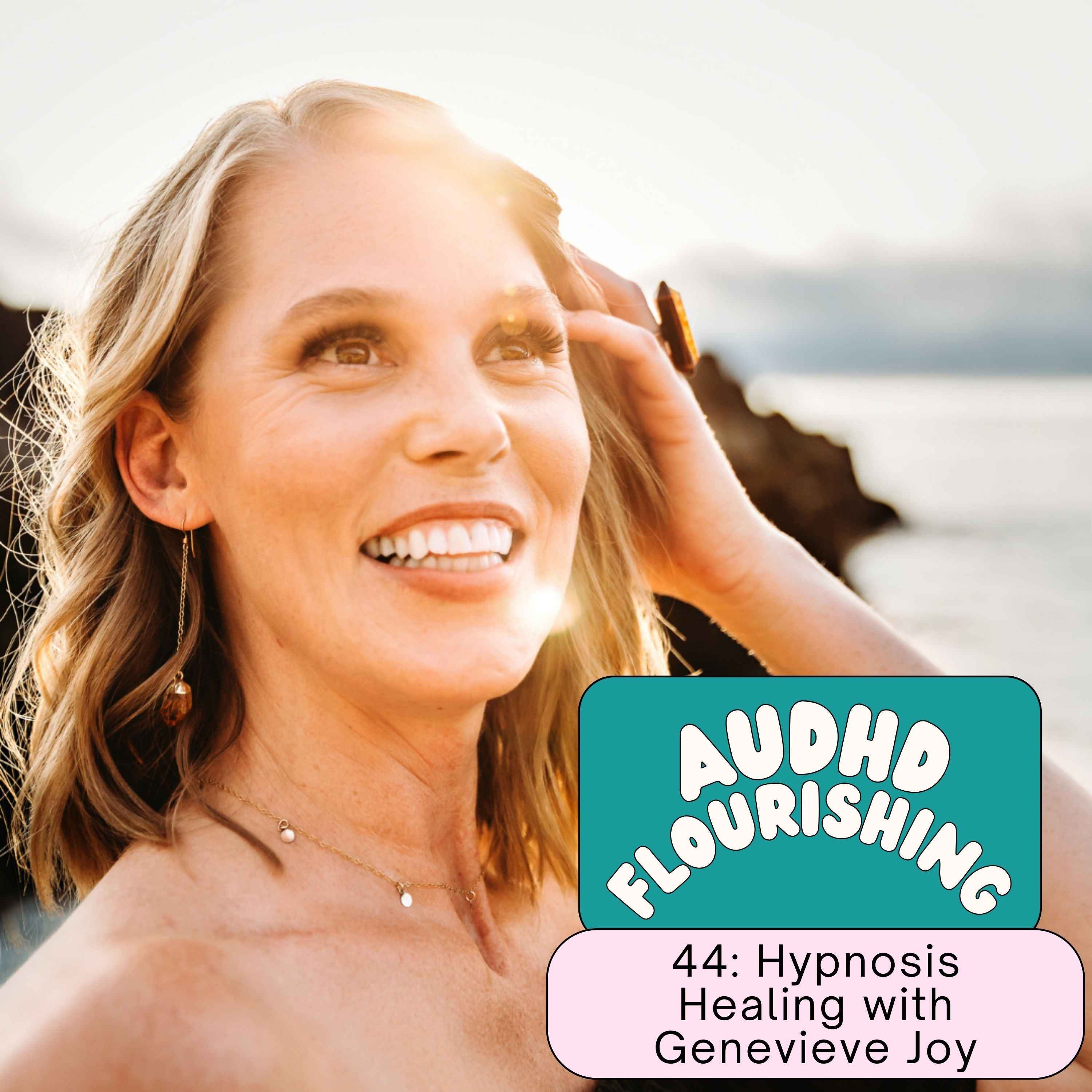
Mar 29, 2024
43 Staying Unhealed
Fixing can be a trauma response. You don't need to heal everything! Especially in our very fixing-oriented culture that will sell you a solution to problems you didn't even realize you had. Body-based modalities and working with the unconscious (including hypnosis) are just tools. Just because the tool exists doesn't mean you have to use it. Because someone else healed from something doesn't mean you have to. This episode touches on some issues around working with the unconscious, including: You can work with your unconscious on your own Self-trust can be complicated if you have sensory issues or trauma Expectations matter a lot, including the vibe with the practitioner Demand avoidance and "tricking" the unconscious ND traits are not blocks to be fixed! Try Hypnosis / Learn Self-Hypnosis Resources: Like Your Brain community space Transcript Doc Email Newsletter Hosted on Acast. See acast.com/privacy for more information.
Mar 22, 2024
42 Connection & Safety with Natalie Ross
Natalie loves connection at a nervous system level. How do we have agency with that even when it's beyond our control? We talk about challenges around connection, in-person vs. online, the power of being around a regulated nervous system, and the power of community. Connect with Natalie: Her website, natalie.net Her podcast, Noticing With Natalie Former podcast, Earth Speak Resources: Like Your Brain community space Transcript Doc Email Newsletter Hosted on Acast. See acast.com/privacy for more information.

Mar 17, 2024
Bonus: Mattia on Hacking Your ADHD with William Curb
Navigating the Dual Diagnosis of AuDHD. Thanks to William Curb for hosting on the Hacking Your ADHD podcast, and providing the audio to share directly. You can read the full show notes and transcript here . Hosted on Acast. See acast.com/privacy for more information.
Mar 15, 2024
41 The Disappointment of Success
Success is a complicated topic for AuDHD folks. We're often not praised for what feels the most difficult. Then sometimes told we did an amazing job for something that didn't feel like a big deal. AuDHD folks often also struggle to achieve traditional success in the workplace and relationships, in large part due to stigma and being disabled by societal factors. Then, once we actually achieve some kind of success, it can feel way less good than we expected. It's totally okay to have dreams (big or small)! And it's also useful to ask better questions about why and what we're hoping for once we get there. Mentioned in episode: Andrew's first email/post: "the No" Followup: "after the No" Andrew Simonet interview (episode 31) ep 9 Asking the Right Questions Resources: Like Your Brain community space Transcript Doc Email Newsletter Hosted on Acast. See acast.com/privacy for more information.
Mar 8, 2024
40 Art and Depression with Kal Anderson
How does one continue to make art while depressed? Artist Kal Anderson (he/they) has created a large body of work through the ups and downs. Topics include: Questioning the value of art The process of creating many things you don't like Asking for help Perspective on your work and practice Whether depression is artistically "useful" (spoiler alert: mostly, no) Connect with Kal: kalanderson.com for fine art, leather, creative coaching Instagram @kalandersonart Resources: Like Your Brain community space Transcript Doc Email Newsletter Hosted on Acast. See acast.com/privacy for more information.
Mar 4, 2024
Energy Leading to Overwhelm
Energy doesn't always feel good. Sometimes it leads directly into overwhelm! 4m mini episode Hosted on Acast. See acast.com/privacy for more information.
Mar 1, 2024
39 Autism "Levels" and Monotropism
Autism "Levels" (1, 2, or 3 in current diagnostic terminology) are not necessarily an accurate reflection of our lived experience. Reflecting on last week's guest and what "subclinical" autism even means. How monotropism may, yet again, explain what's going on. What actually works for us and what supports we need. Mentioned in episode: Monotropism.org Explanations Monotropism Questionnaire Fergus Murray's 6 Starting Points for Understanding Autism Resources: Like Your Brain community space Resources Blog & Contact Form Transcript Doc Email Newsletter Hosted on Acast. See acast.com/privacy for more information.
Feb 23, 2024
Mini: Pushing Yourself
A question I hear a lot: Should I just push through? It's not all or nothing. Feeling unable to do something right now doesn't mean that all is lost and the day is a complete wash. It's safe to switch to something else. It's safe to change your mind. It's safe to need rest and recovery time. There is nothing wrong with us. But damn do we need more rest. Hosted on Acast. See acast.com/privacy for more information.
Feb 23, 2024
38 What's "Subclinical" Autism? with William Curb
William Curb hosts the Hacking Your ADHD podcast . We dive into what it means to have a "subclinical" autism diagnosis, and what that implies in the context of having a completely different brain. Other topics include: The medical model vs. lived experience Handling children's vs. parents' sensory needs Neurodivergent children/household Formal diagnosis process How we view ourselves through this lens Which ND is driving the bus right now? Complicated diagnosis with multiple potential options Mentioned in the podcast: The Hacking Your ADHD website (also contains the podcast linked above) Will's Twitter @HackingYourADHD Resources: Like Your Brain community space Resources Blog & Contact Form Transcript Doc Email Newsletter Hosted on Acast. See acast.com/privacy for more information.
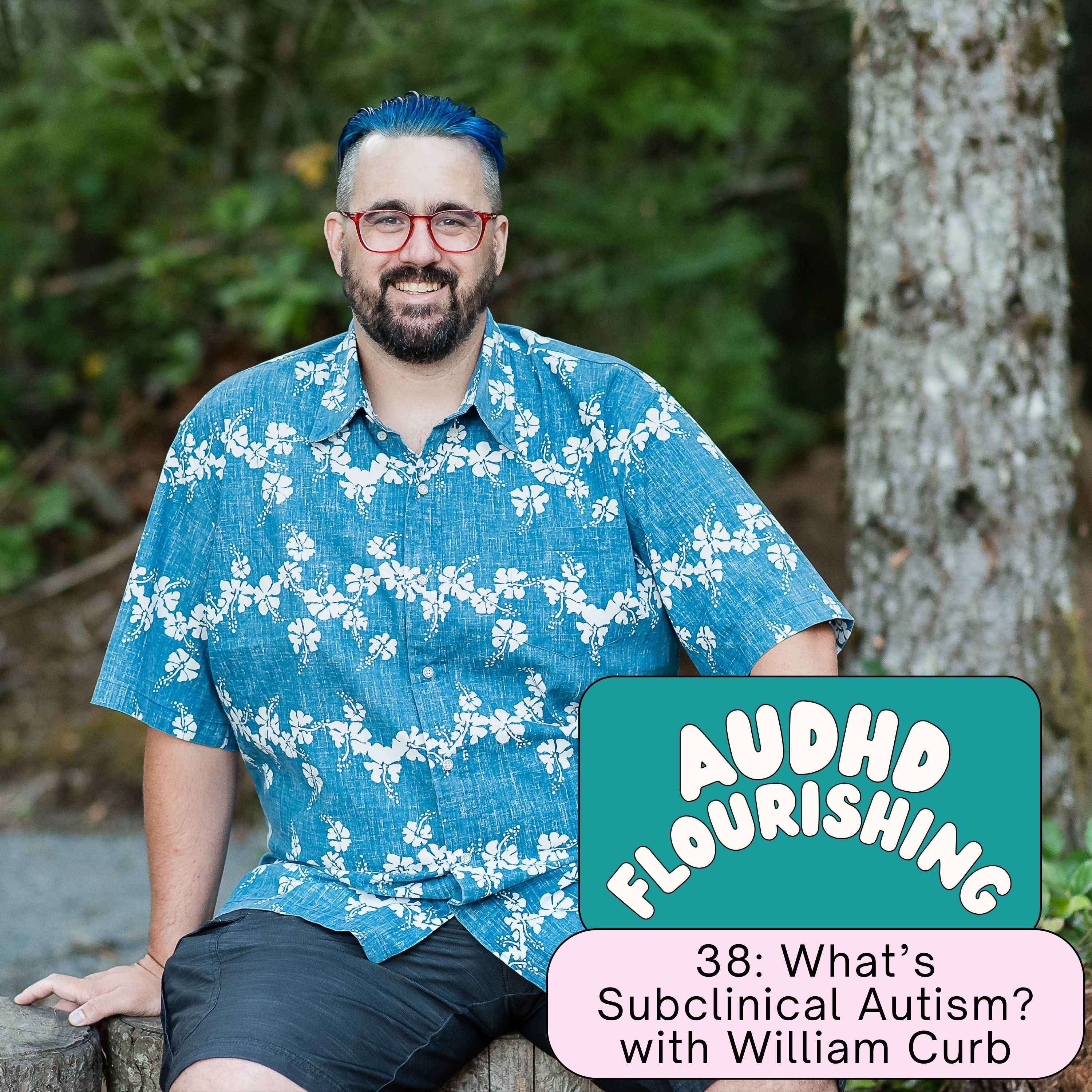
Feb 16, 2024
37 Don't Become a Coach for the Money!
Today we delve into ethical considerations around marketing coaching, including MLM-like tactics, pricing, and the pressure to charge high fees to recoup investments in programs teaching coaches how to market. One particular thing I learned recently about this history of the coaching world is changing how I think about my own business. Even if you're not a coach, this will be an interesting episode! Topics include: Following up about last week's conversation with Samantha Pollack about ethics in marketing Why some of the MLM accusations feel true (marketing coaches teaching coaches how to market to other coaches, etc) Courses focused on marketing and selling over coaching skills Why the industry doubled its prices some years ago due to JV/affiliate models Accessibility not just in terms of money but also how AuDHD folks consume content and integrate Links mentioned in episode: Survey about having bought courses/coaching Contact form The four video podcasts by Rachael Kay Albers: Thomas Edison to Tony Robbins: The Online Business Family Tree , Six Figure Masterminds, Marie Forleo, and The Syndicate , ClickFunnels, Fake it 'til you make it, & Moneyball , Fix From Within or Burn It All Down? What Next? Resources: Like Your Brain community space Resources Blog & Contact Form Transcript Doc Email Newsletter Hosted on Acast. See acast.com/privacy for more information.
Feb 9, 2024
36 Ethical Marketing with Samantha Pollack
Marketing ends up relevant to many AuDHD people at some point, in part because many of us end up freelancing at some point out of desire or necessity. Many of us end up resisting it because of our strong ethics. I'd already blogged Samantha's amazing Substack article, "Conventional Marketing Ain't Workin' Anymore." And was ecstatic when she said yes to a deep dive on why making friends with marketing is important for any small business owner or service provider. We talk about: How making friends can be a (chill) marketing activity Drawing in the people you like working with Why a lot of B2B marketing is dishonest at heart Evaluating whether social media is working for you A super simple approach to marketing that feels ethical How as a consumer, a lot of marketing is just noise This episode is interesting from the consumer side, even if you don't ever create marketing! Connect with Sam: Substack: The Cult of Personality Soapbox Instagram @cultofpersonality Sales Page Framework (50% discount for podcast listeners is reflected when you click to buy) Email list signup (scroll down) Resources: Like Your Brain community space Resources Blog & Contact Form Transcript Doc Email Newsletter Hosted on Acast. See acast.com/privacy for more information.
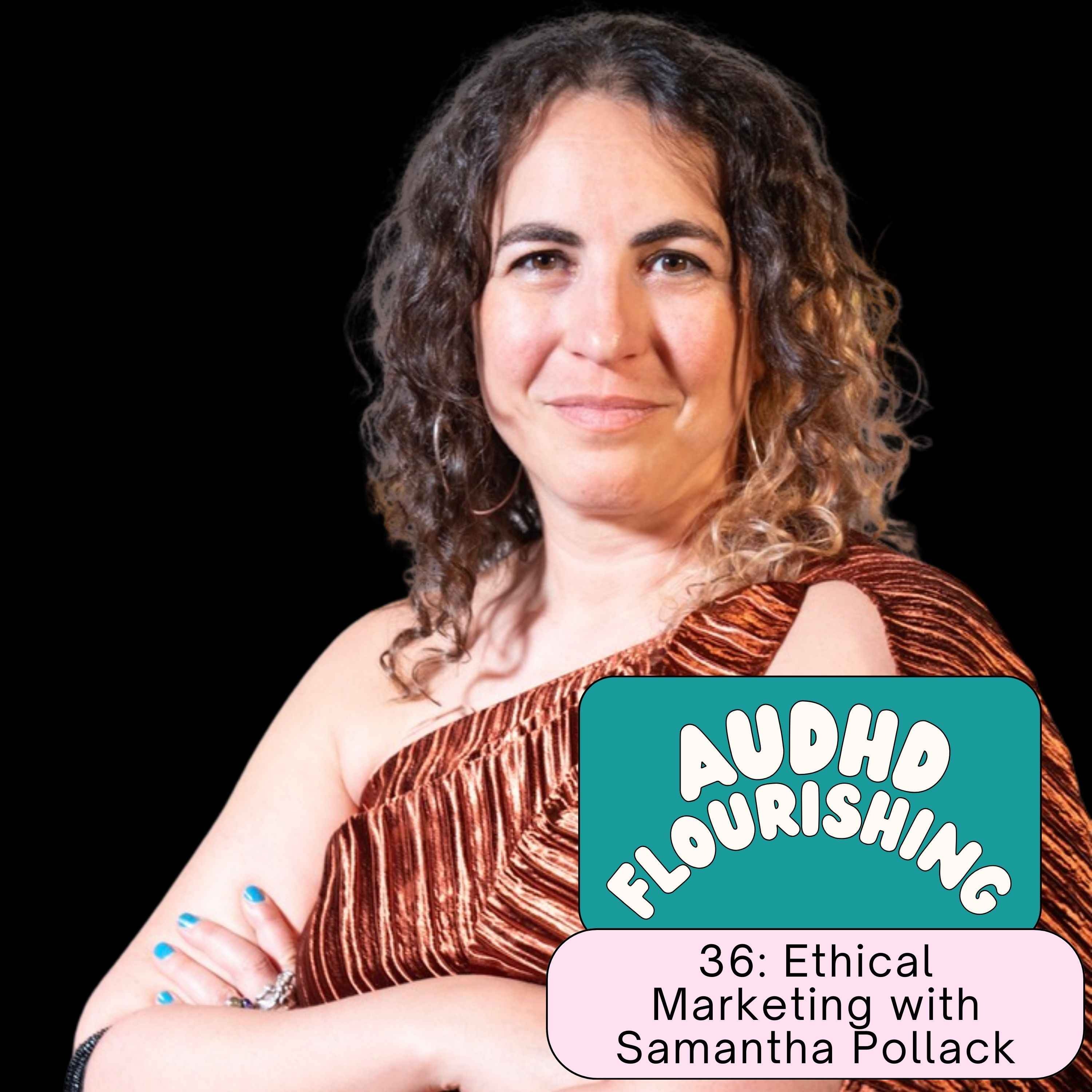
Feb 2, 2024
35 How Much Time Does Creating Take?
This is the first of at least two follow-up episodes about monotropism responding to the work of Fergus Murray, interview guest in episode 034 Monotropism Might Explain Everything . If you base your ideas about how long it should take to create on societal messages, you might be trying to "squeeze it in" around all your other obligations. But monotropic brains (which AuDHD brains typically are) might need more transition time to get into the right frame of mind . Not only to get things done, but for the process to be more enjoyable, which is a major goal for me creatively. You can learn more about the Monotropism Questionnaire here , and take the quiz here (checkbox near top of page lets you save your results and come back later). If you're in Like Your Brain, come tell us your score! We've been talking about it :) p.s. I'm very proud of myself for practicing what I preach. While working on this episode, I'd told my partner I was recording. Then as I was 75% done with editing, they tried to interrupt me to come do a house task with no warning. I said no! That felt like a big deal because letting myself follow this task to completion felt really good, and I would have been battling dysregulation if I'd gone to do something completely unrelated. Some links Fergus recommended for further reading on monotropism: ADHD and Monotropism Monotropism in Practice Loops of Concern (self-help for autistic rumination) Autism Tips for Teachers Resources: Like Your Brain community space Resources Blog & Contact Form Transcript Doc (as of posting this episode in early Feb 2024, I'm a few episodes behind & hoping to catch up soon!) Email Newsletter Hosted on Acast. See acast.com/privacy for more information.
Jan 26, 2024
34 Monotropism Might Explain Everything with Fergus Murray
Monotropism is a powerful description of a narrowed field of attention and interests that, for many, explains much of the autistic experience. Fergus Murray (they/them) shares about this topic both from personal experience, and as the child of Dinah Murray, one of the people who developed the term and theory. Healing from neurodivergent burnout requires understanding your monotropic brain and avoiding monotropic split as much as possible . And fun fact, as Fergus points out: in the original validation study, AuDHD people were the most monotropic! The title reflects both monotropism as an excellent theory about potentially multiple neurodivergences, as well as the tendency of monotropic people to end up seeing connections between diverse fields. Mentioned in episode: Fergus's website: oolong.co.uk Monotropism Questionnaire Autism and Mental Health free course (free for first 90 days) Connect with Fergus & learn more about monotropism: Fergus's LinkTree: https://linktr.ee/0olong Monotropism: https://monotropism.org ADHD and Monotropism Resources: Like Your Brain community space Resources Blog Transcript Doc Email Newsletter Hosted on Acast. See acast.com/privacy for more information.
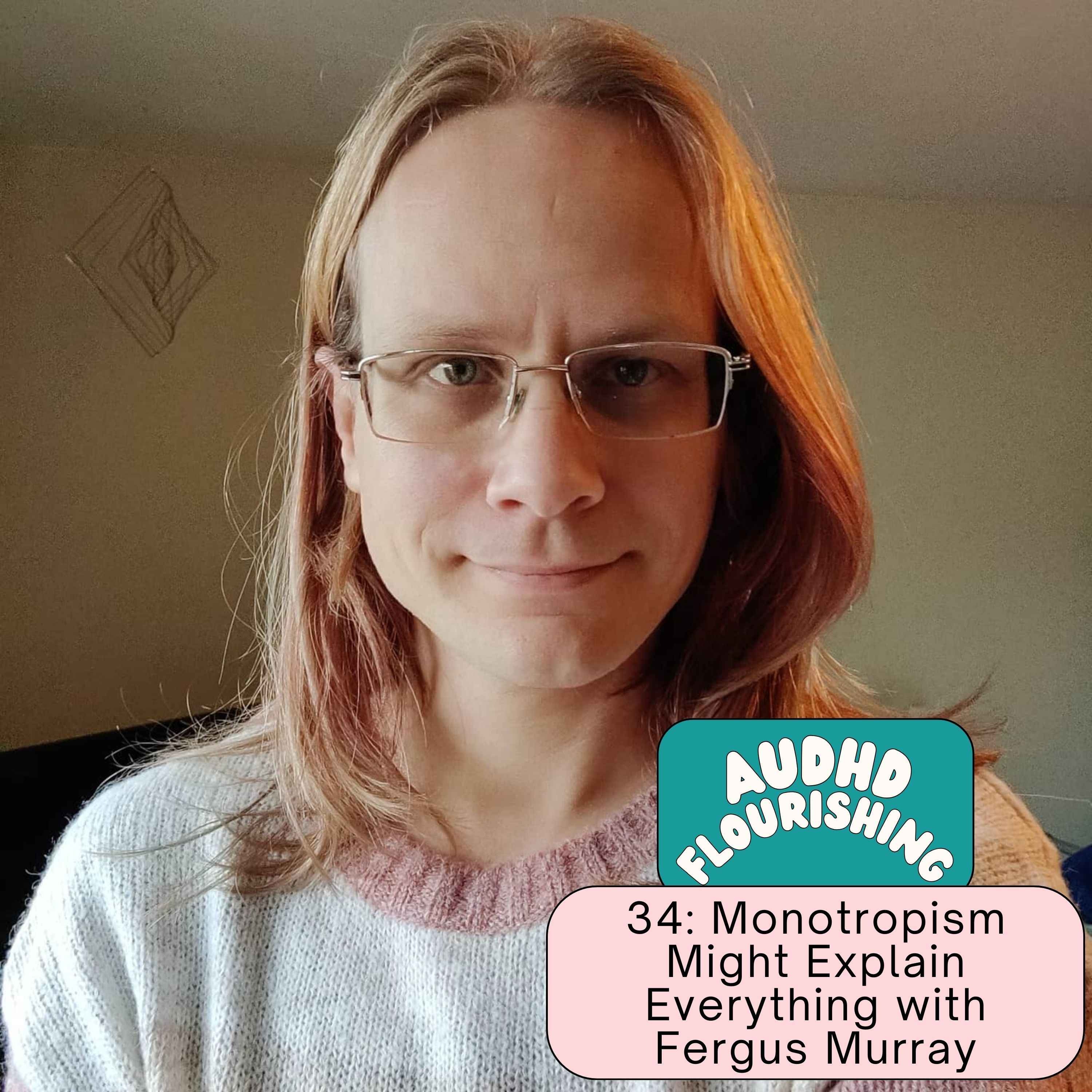
Jan 19, 2024
33 3 Common AuDHD Concerns
There are three interrelated concerns that I hear over and over from AuDHD folks: They don't see a clear pathway from what they love or are good at to making enough money. Strong ethics and values make it difficult to imagine a sustainable life, i.e. making enough money to let things be easier. Undervaluing the things that are easy for them (while feeling a lot of guilt or shame about struggling with the things that are hard for them: didn't talk about this half much) They are not necessarily AuDHD-specific concerns, but we have some unique needs around resolving them. This episode shares personal examples (including talking about my 2023 earnings) to build out a holistic picture of what it looks like to be in the process with all of these concerns. Here are some conversation prompts if you want to talk to someone about #3: Let the person know that you're trying to sort out what skills and talents you have that you might be overlooking or undervaluing. I recommend both recording the conversation and asking the other person to take notes so you can get their perspective. Talk through (or write out if this is via email, though I recommend a live conversation if possible) your history with work and/or creative practice, and ways you've helped people. This can include free things such as volunteering. Make sure you also talk about what you've loved and what has felt easy and fun! Start turning this into a list of skills. Ask the other person for feedback on what stands out, and how they might describe or add to your list of skills. Have them ask you questions to draw out more information! Go back and forth adding to that list of skills, getting as specific as both of you can. Then get that person's opinion on what stands out as anything you might be undervaluing. Mentioned book The Art of Impossible by Steven Kotler From Burnout to Flourishing training for organizations, email mattia@mattiamauree.com for more info Episode 10: Money & Surviving Capitalism New Year: Map Your Intention session Resources: Like Your Brain community space Resources Blog & Contact Form Transcript Doc Email Newsletter Hosted on Acast. See acast.com/privacy for more information.
Jan 13, 2024
Mini: Fire Your Business Coach
If you're not paying your business coach from ample profit in your business, it's likely not worth it. Especially when the book Profit First + a free accountability buddy can get you there instead. My biggest regret in my business was not implementing the profit first system when I first read the book in 2021, the first year I made good money in two businesses. I subsequently wasted a bunch of that money on expensive courses and coaching that weren't a good fit, because I was trying to find "the answer." If you'd like support either implementing in your business or creative practice over the next few weeks, I'm going to be scheduling coworking hours (and probably a chat space) over the next few weeks. This is free, by the way...not sure if I said that in the episode! If you'd like that, please send me your email & what you'd like to work on here . If at least five people sign up I'll get that going officially and email y'all. And if you'd like to share your experiences buying courses and/or coaching, I made an anonymous survey here . The first section is general and should take less than 5 minutes to fill out. The second section could take longer if you really want to dig into details and share more. But anything is interesting and useful, and I'll share those results on a future episode (again, anonymously). Mentioned in episode: Contact form for coworking starting mid-Jan Survey about having bought courses/coaching Hosted on Acast. See acast.com/privacy for more information.
Jan 12, 2024
32 Whales and Our World with grace allerdice
grace allerdice shares about her passions for whales. Their place in myth, their role as bridge creatures, and how they are composers who sing a grid around the world every year. We dive into whale song, how terrifying and mesmerizing whales can be, and how deeply we both connect with the ocean and these huge mammals. First of hopefully many special interest episodes, when a guest talks about their passion and we go with the flow! If you'd like to share about a special interest or recommend a topic, please reach out. Mentioned in podcast: grace's main website and home—body podcast website Rick Rubin's book The Creative ACT grace's podcast episode that talks about whales (episode is mostly about astrology) grace also recommends Something Large & Wild , episode on This is Love about an encounter with a baby whale Resources: Like Your Brain community space AuDHDFlourishing.com Transcript Doc Email Newsletter Hosted on Acast. See acast.com/privacy for more information.
Jan 5, 2024
31 Designing a Liberated Life with Andrew Simonet
Andrew Simonet is a Philadelphia-based dancer/choreographer and now novelist who has been massively influential in my own life. His Artist's U and book/workbook Making Your Life As An Artist helped me build the foundations of the business side of my music career. We talk about the design problems in our lives how many things are blamed on character flaws that are actually design issues the liberatory nature of not only the artist's life, but a well-designed life how designing your life to meet your own needs liberates you After we spoke, Andrew wanted to add: "However you have worked out your ability to create, to make things, to get things done, to get through your day, know that there are a lot of other artists and creatives out there who might benefit from hearing your solutions. Not only are your tools and rhythms and strategies valid, they’re hugely valuable. All of us are figuring out how to nourish our spirits and bodies and minds in this strange techno-capitalist world, and we could learn a lot from hearing how you do it." And in the extended full interview (we talked for another 20 minutes) here , Andrew asked about how my partner and I navigate our relationship since they do so much for me. He also asked about spaces for AuDHD teens, and personally I don't know of any that are BOTH youth-led/accepting AND have very accurate info. (TikTok for example has the former but a good amount of misinformation.) If you have recommendations for AuDHD teen spaces, let me know at mattia@mattiamauree.com! Andrew's links: Artist's U: Making Your Life As An Artist Andrew's amazing email list (one of my faves) Andrew's novels: Wilder , and A Night Twice as Long (the one we talked about in the episode) AndrewSimonet.com Resources: Like Your Brain community space AuDHDFlourishing.com Transcript Doc Email Newsletter Hosted on Acast. See acast.com/privacy for more information.
Jan 4, 2024
Mini: No, the World Doesn't Need More "Good Rich People"
No, more "good rich people" are not going to save the world. Not the least because the amount of money required to create systemic change (i.e. being a billionaire) seems to make one uninterested in systemic change... I wonder why? p.s. the real answer is community organizing: power and strength in numbers! The main problem with this idea is that if you try to massively redistribute wealth, at least in the USA the government will come down hard on you. For example, I once read that the Black Panthers were much more heavily targeted by the US government after they started providing large numbers of free meals to Black children. (p.s. the link there is to a generally good source, but I can't remember the book I read the actual idea in, unfortunately) This is also NOT an admonition not to become financially stable! I want more financial stability for all of us... but that doesn't require buying into shitty ideas. If you like the Mini episode format or have a topic idea, please say so here ! Mentioned in Episode: Episode 10: Money & Surviving Capitalism Episode 20: Poverty is Not Your Fault! Sam Pollack's Substack post " Conventional Marketing Ain't Workin' Anymore ," and my take on it My Book recommendation for Get Good With Money by Tiffany Aliche, and the direct link to the book How Trauma & CPTSD Cause Underearning Resources: Like Your Brain community space AuDHDFlourishing.com Transcript Doc Email Newsletter Hosted on Acast. See acast.com/privacy for more information.
Jan 1, 2024
Mini: Your Presence Matters
Thank you for listening. Knowing you get me is very meaningful, and I'm sure it is for the other neurodivergent folks in your life. Thanks for being you! Keep it up, you're doing great, and see you in the new year :) Hosted on Acast. See acast.com/privacy for more information.
Dec 28, 2023
30 Doing Your Best
AuDHD folks have a complicated relationship with the idea of doing our best, because of our spiky profiles and cyclical energy. Also, we often seem to be trying harder than the people around us...whether or not that results in getting anywhere. There are many reasons that the brain might "hit a wall" and be unable to continue. Defining our best as "a bit better than average" is one approach (though I haven't convinced my own brain of that one yet). Some potential questions for reflection: What does doing your best mean to you? How do you know when you’re doing your best? How would it feel to know that you’re doing your best most or all of the time? Did this awaken a critical voice in your mind? Does that feel like your voice or someone else’s? Is this voice actually helping you, and either way, is this the main voice you want to live by? When have you felt compassion for someone else who is obviously trying their best? This could be a child, or someone in the process of learning something. Why do you feel driven to do your best, if that’s something you often feel? New Year: Map Your Intention session Bonus: for folks who check out by Dec 31st, I'll also be providing a bonus follow-up email with suggested resources that I'll research for you after our call. If you have questions about whether your specific project or situation fits, you can email mattia@mattiamauree.com . Resources: Like Your Brain community space AuDHDFlourishing.com Transcript Doc Email Newsletter Hosted on Acast. See acast.com/privacy for more information.
Dec 22, 2023
29 Becoming Your Next Self
Becoming the next version of ourself isn't about forcing. It's about that natural process of embodiment when suddenly, this is who we are now. Usually by the time we've fully embodied something, it kind of feels like we've always been this way. It's a difficult process to describe from inside it... but understanding the process you're in can be a relief! (And first 3.5 minutes are talking about the ADHD meds shortage and letting my brain do things that are easier for it) New Year: Map Your Intention session Bonus: for folks who check out by Dec 31st, I'll also be providing a bonus follow-up email with suggested resources that I'll research for you after our call. Resources: Like Your Brain community space AuDHDFlourishing.com Transcript Doc Email Newsletter Hosted on Acast. See acast.com/privacy for more information.
Dec 15, 2023
28 Punk Artist vs. Day Job Life with my world iz blue
Alternate title: AuDHD Unmasking & Activism Artist, skateboarder, special ed teacher, and AuDHD activist my world iz blue talks about his recent Autism and ADHD diagnoses... and the burnout that led to them. He originally learned how to live unmasked by being labeled as an artist, i.e. someone who will be themselves regardless. However, that way of life directly clashes with what's required in the professional world. We talk about how neurodivergent kids (and adults) are treated in school, what elements of a better world would look like, movement and mental health, and how collective action is our main option if we want to make the world better for all of us. Connect & find his art on Instagram @myworldizblue New Year: Map Your Intention session Bonus: for folks who check out by Dec 31st, I'll also be providing a bonus follow-up email with suggested resources that I'll research for you after our call. Resources: Like Your Brain community space Transcript Doc AuDHDFlourishing.com Email Newsletter Hosted on Acast. See acast.com/privacy for more information.
Dec 14, 2023
Bonus: Planning Workshop
Bonus workshop from Like Your Brain (with client speaking cut out for privacy) on setting a personal intention or three for the new year that feels motivating and interesting to you. Of course you can use this method for any area of your life such as career. Traditional goal-setting starts with where you want to "arrive." We start with how you want to FEEL, and what helps you feel that way. The reason I'm focusing on feelings and personal aims is that we often put our best energy into professional life, relationships, other people, and generally things we think we're supposed to do. If there's something that makes you feel REALLY REALLY GOOD, I want that to be elevated to the status of Annual Goal ;) (if you want that... we'll talk about ways to approach this without the goal word also) The questions if you want to write about them: What makes you happy, feel good, etc (or however else you want to feel)? Or what kinds of experiences do you enjoy (what brings you pleasure or is interesting to you)? When you think about times you feel good, or like the way you're feeling, how might you describe that? What activities, situations, people etc support you in experiencing or feeling that way? Are there any patterns you notice when you think about the times that you've felt this way? What are some potential goals that might move you toward that? Is there one that stands out that you'd like to work with? What might this look like for next year? What's feeling like something you could feasibly start moving toward soonish? What do you need to support this? What do you already have at your disposal that might support it? What would you need to add to your life in terms of people, resources, learning, time, actual physical objects, etc to support this potential intention or desire? New Year: Map Your Intention session Bonus: for folks who check out by Dec 25th, I'll also be providing a bonus follow-up email with suggested resources that I'll research for you after our call. Full call including everyone's comments over on the Like Your Brain community Hosted on Acast. See acast.com/privacy for more information.
Dec 13, 2023
Mini: If You're Struggling
If you're struggling, whether that's just a bad day, a longer stretch, or that very relatable feeling that all of life has been irredeemably difficult and that no one understands or can help... I just wanted to take a moment to validate and make space for those feelings. You're not alone... and at the same time we can end up feeling very alone. If you need to numb out from these feelings, it can help to acknowledge that it feels unbearable and that you're choosing temporary escape. We all do it and it can be a healthy coping mechanism! Binaural music is the tool I suggested searching free versions of online. What are some free and easy ways that you can feel a bit better, to get out of your head a little bit, to help the body get what it needs? What are some accessible resources already at your disposal that have made you feel better in the past? Hosted on Acast. See acast.com/privacy for more information.
Dec 8, 2023
27 Rituals to Replace Habits
Neurodivergent folks may not experience habits in the way they're traditionally talked about. Specifically, they may never become truly "background," and instead we remain in the active decision-making mode. To that end, I've personally found it much more helpful to create rituals rather than habits. It explicitly acknowledges that this is an active process as opposed to a background habit, which is more honest about how our brains work. It also triggers my PDA (demand avoidance) far less! This episode suggests some starting points, including: Choosing a task or time of day to build ritual around Finding your "why" and brainstorming possibilities Pare down to an initial ritual of a few steps Gather materials Other podcasts/episodes mentioned: AuDHD: The Science of Autism & ADHD on Sci Guys Divergent Conversations podcast Resources: Like Your Brain community space Transcript Doc Email Newsletter AuDHDFlourishing.com Hosted on Acast. See acast.com/privacy for more information.
Dec 1, 2023
26 Professional AuDHD Challenges & Strengths with Matt
Matt made a career as a lawyer that worked for his brain... then found out he's AuDHD. He shares some of the challenges and strengths that have shaped his career. This is helpful for any AuDHDer with professional struggles, and especially if you're in or are considering a client-facing career. Note that we're not using his last name in the show notes or description for SEO reasons at his request, but he's happy to connect with young or aspiring AuDHD lawyers who are looking for mentorship or advice! You can also connect with Matt on Twitter at matt_cam Like Your Brain community space Transcript Doc Email Newsletter Hosted on Acast. See acast.com/privacy for more information.
Nov 23, 2023
25 The Power of Honest Gratitude
A simple practice blending honesty with your current feelings plus any gratitude that may arise. Including how to use this to smooth over social or family concerns... good luck with any holidays you celebrate! p.s. there's a new website up at audhdflourishing.com ! It's still under construction so please pardon any broken links... should be spruced up within the next week :) Like Your Brain community space Transcript Doc Email Newsletter Hosted on Acast. See acast.com/privacy for more information.
Nov 17, 2023
24 Redefining Creative Success with Chris Hale
Thanks to Chris Hale for this cross-posted episode from his podcast, You Need a Coach B*tch! We talk about: Building businesses that work for our AuDHD brains What we don't see when looking at the external success of others Why so many people who achieve creative success young have wealthy backgrounds Questioning WHY you want your big goals so you can aim towards the ones that will really fulfill your desires Why it can be extra tough to start a small business and/or creative business right now How our brains get stuck and... The state changes in the body that can help us get unstuck You can find Chris Hale On Instagram @theonlychrishale All the links on LinkTree Website theonlychrishale.com Other resources: Like Your Brain community space Transcript Doc Email Newsletter Hosted on Acast. See acast.com/privacy for more information.
Nov 8, 2023
23 You Are Not a Burden
The story of a meltdown. For me these days, that includes some intrusive thoughts around being a burden. You are not a burden. And even if we are sometimes, that's okay. I want to be a part of communities that can carry each other sometimes. Like Your Brain community space Transcript Doc Email Newsletter Hosted on Acast. See acast.com/privacy for more information.
Nov 3, 2023
22 The Trouble With Because
Diagnoses and labels can be really helpful to explain our experiences. We finally have a "because" to explain why we do the things we do! And also... that same "because" sometimes starts to feel like it's holding us back. It's possible to acknowledge limitations while also leaving space for growth and inevitable change. Like Your Brain community space Transcript Doc Email Newsletter Hosted on Acast. See acast.com/privacy for more information.
Oct 27, 2023
21 Feeling Safe in a Neurodivergent Body with Linda Thai
Linda Thai is a therapist, educator, and storyteller. She has been one of the most important people in my own healing journey, especially her focus on somatic embodied integration. Feeling safe enough to work with what the body holds was a turning point for both of us. Linda shares about her own healing journey and how key the body was for her own process. She drops countless pieces of wisdom in her gentle yet direct style. You'll also hear me laugh a lot more than usual, in part because of how comfortable I feel in her presence! Resources mentioned: The January 2024 round of the Somatic Embodiment & Regulation Strategies : Not only one of the best courses I've ever taken, but by FAR the best value for the cost (plus, scholarships available). I took this course twice and recommend it most highly!! Linda's website: https://www.linda-thai.com/ If you scroll down on Linda's website you can sign up for her newsletter, which she usually sends monthly and is always informative. That's where you can find out about her new content for next year, including something called Trauma & The Voice that I'm very excited about! Originally published on The Longer Road as a two-part series Transcript Doc Email Newsletter Hosted on Acast. See acast.com/privacy for more information.
Oct 20, 2023
20 Poverty is Not Your Fault!
Poverty is not your fault. Debt is not your fault. And you don't have to find solutions alone! This episode talks about the systemic side, the AuDHD-specific elements such as impulsive shopping, and how screwed up debt is historically and currently. Note: This episode is quite USA-centric. While there are mentions of ways this might affect people in other countries, growing up here is my main context on this topic. Resources mentioned: Simone Seol's episode Debunking the idea of a "Scarcity Mindset" Article The Cognitive Burden of Poverty the above episode was based on David Graeber's book Debt: The First 5000 Years Like Your Brain community space Transcript Doc Email Newsletter Hosted on Acast. See acast.com/privacy for more information.
Oct 13, 2023
19 Safe Therapy for Neurodivergent People with Danielle Aubin
An AuDHD therapist! Danielle Aubin (she/they), LCSW, works with neurodivergent clients and has expertise in trauma. We talk about why trauma is such a big deal for ND clients. And the title of the episode comes from their amazing take on why having safe therapy is especially important for ND people, and what that looks like. If you're in therapy or considering it, this episode is for you! (Also if you've experienced trauma from therapy, because this conversation totally validates that also.) Episode originally posted on The Longer Road podcast, June 2023 Danielle's website Danielle's TikTok @myautistictherapist Danielle's Instagram @myautistictherapist Resources Danielle recommends for finding a therapist: ndtherapists.com autistictherapist.com inclusivetherapists.com ------------------- Transcript Doc Email Newsletter Hosted on Acast. See acast.com/privacy for more information.
Oct 6, 2023
18 Please Stop Optimizing
Optimizing (and the related bio-hacking) are really popular... but why? Who are we doing this for, and who really benefits? This episode spans the last several years of my life starting with my first coaching certification that was literally called Optimize at the time. There were some positive benefits such as better sleep, which on the whole improved my mood. But in the long run, there's a potential negative side to the advice to optimize. And at the same time, many AuDHD people will enjoy optimizing at some point, because it's fun! This episode talks about that balance. The questions near the end of the episode if you'd like to reflect on them: Are you multitasking in ways that don't actually feel good, just for the sake of "efficiency?" Are you expending a lot of mental or other kinds of energy to make something perfect, when it could be really damn good at 95% or pretty good at 80% or passable at 65%? Does your current system seem functional? Is it possible to do less and still have it function okay? What are you currently doing more to avoid failure than to move toward what you actually want? Transcript Doc Email Newsletter Hosted on Acast. See acast.com/privacy for more information.
Sep 29, 2023
Bonus: Creative Work Practices for AuDHD Artists & Entrepreneurs
Thanks to Amelia Hruby at the Off the Grid podcast for this lovely interview! Here are her show notes: Today I’m joined by coach & composer Mattia Maurée to talk about running a business & navigating social media in a way that supports your unique brain & lived experience. Tune in to our conversation to hear about— Common ADHD, Autistic & AuDHD struggles with work How to quit overworking as a coping strategy Embracing a cyclical relationship to social media The importance of play for our brains How podcasting serves Mattia’s business Mattia’s method for connecting with the online communities you’re craving “ The more I've learned about the brain, the more I've been able to actually accept that I am never, ever going to be able to behave in a neuronormative way or run my business in a neuronormative way. So I have to have space for things to be different." — Mattia Maurée Learn more about Like Your Brain here , and sign up here ! Transcript Doc Hosted on Acast. See acast.com/privacy for more information.
Sep 27, 2023
17 Task Bracelets for Executive Function
Task bracelets can be a task per tag or written really small like I did below... then they stay on your wrist to walk you through the task. Thanks to Caitlin Fisher for the idea! The first half of the episode covers how to make them and how I'm using them. Then it's about the launch of Like Your Brain , an ongoing community space for integration and gentle support. Do less, feel better! The welcome calls are Fri Sep 29 2023 2p EST, and Mon Oct 2 5p EST... hop in if you want to help shape what the space becomes ! Task bracelet pic below, linked on Facebook here , also in the Transcript : [image description: Mattia’s hand holding a blue coil bracelet with a green tag attached. Written on the paper inside the tag is the following instructions for doing laundry: 1. Fill basket 2. Take downstairs 3. Pockets/fill 4. Add soap 5. Settings/turn on 6. Timer 7. Pull out line dry 8. To dryer 9. Dryer on 10. Hang line dry] Transcript Doc Email Newsletter Hosted on Acast. See acast.com/privacy for more information.
Sep 22, 2023
16 Collective Systems for Neurodivergent Empowerment with Cassandra Idris
This is a mind-expanding episode! Cassandra Idris recently founded an organization built around neurodivergent brains at every level, and mutual aid for some of the most marginalized populations in Philadelphia. She speaks eloquently about mental health, being a trans woman and the inherent social betrayals in that experience, and how the system isn't going to pay us to bring it down. Because she's seen the systems from many perspectives (including from the inside as an HR professional), she has a detailed understanding of what it takes to create true change. One of those changes is to create more organizations by us and for us! If you'd like to learn more about the Philadelphia Mutual Aid collective, or donate, you can do that here . And if you're generally curious about how Open Collective works, that's here . You can connect with Cassandra on Instagram here Cassandra's SoundCloud (techno mixes) Transcript Doc Email Newsletter Hosted on Acast. See acast.com/privacy for more information.
Sep 15, 2023
15 How Feelings Work
Feelings, emotions, sensations in the body... We've all received confusing messages around what they mean and what they are. And many autistic folks have trouble connecting to their emotions and related body sensations. They're also important and potentially useful messages from our body as it attempts to stay safe. This episode covers one compelling theory of what feelings (sensations and emotions) are, as well as a variety of tools to get through the day no matter where you are in your journey. Also, just a reminder that whatever you're doing to get through the day right now is okay. You don't owe anyone—including yourself—a specific amount of healing or performing wellness. Book mentioned is How Emotions are Made by Lisa Feldman Barrett . I also mention Linda Thai and Resmaa Menakem . Episode originally published as 009 Feelings: Why?? on The Longer Road podcast Links: Transcript Doc Email Newsletter Hosted on Acast. See acast.com/privacy for more information.
Sep 8, 2023
14 Formula for Feeling Better with Michael Ruffin
Michael is an AuDHD content creator (with a huge audience) and coach who runs a free AuDHD peer support group. He shares his formula for feeling better, which includes removing negative stimuli to reach neutral, rather than trying to leap straight to happiness. And shares beautifully about how he finds peace in the neutral, since even happiness is a fleeting feeling. You can connect with Michael at the links below: Peer Support Group All of Michael's links Instagram @ADHDruids Transcript Doc Email Newsletter Hosted on Acast. See acast.com/privacy for more information.
Sep 2, 2023
13 Autistic Meltdowns & Shutdowns
Meltdowns and shutdowns appear to be a natural release valve for an overwhelmed autistic brain. They feel out of control and can be quite distressing. While there are ways to push them off, I experience a "point of no return" after which I need some big release or I'm going to feel terrible for days. Learning your triggers, as well as planning ahead for a safer experience if you do have a meltdown or shutdown can lessen our overall stress and shame. (One thing I forgot to record in the episode is that for me, shutdowns are almost always low-verbal or I can't speak at all.) Links: 1. Meltdowns & Shutdowns* https://embrace-autism.com/meltdowns-and-shutdowns/ 2. How it feels to have an autistic meltdown and how you can help* https://www.bbc.co.uk/programmes/articles/38f5MsC2mB5fnmCr5v77zDn/how-it-feels-to-have-an-autistic-meltdown-and-how-you-can-help 3. All About ‘Autism Meltdowns’: Why They Happen and How to Cope https://psychcentral.com/autism/autism-meltdowns 4. Autism Shutdown Vs Meltdown: What's the Difference? https://www.andnextcomesl.com/2022/06/autism-shutdown-vs-meltdown.html Email list: https://mattia.ck.page/a6b7c9bf09 Episode Transcript *autistic writer Hosted on Acast. See acast.com/privacy for more information.
Aug 25, 2023
12 Mental Health For AuDHDers with Jes Diverges
Jes Diverges (she/they) helps fellow autistic ADHDers and has a fascinating background. We dive into how they ended up coaching rather than finishing their therapy degree... and in the process touch on how messed up some of our culture's attitudes are toward mental health! While we certainly don't solve the issue of AuDHD mental health, we talk about when to take a break from trauma healing how entrepreneurship has been a surprising part of our trauma healing why insistence on one modality such as CBT doesn't serve us how to balance individual and community healing From Jes' website : As an auDHD coach, I empower fellow autistic ADHDers to understand the unique interplay of the auDHD “combo meal” within their minds, and to let go of perfectionism, people pleasing, and unrealistic neurotypical expectations. By embracing radical self-love in place of shame, I guide individuals on their journey to confidently navigate the chaotic intricacies of auDHD life and become the audaciously authentic auDHDers they were meant to be. Resources mentioned: Jes' Instagram & TikTok @jesdiverges jesdiverges.com Email Jes at jes@jesdiverges.com Jes' Linktree with all the things Episode Transcript AuDHD Flourishing Newsletter Hosted on Acast. See acast.com/privacy for more information.
Aug 18, 2023
11 Your Core Self-Care Need
Most people have one or two core self-care needs that, if they're met, everything else feels easier. This episode is about how to figure out yours... and what to look out for when you hear people preaching about their own! There's also acknowledgment that your neurodivergent body and brain may process things in different ways, so the following questions may not be that useful for you. Figuring out your core self-care need or needs (just a jumping-off point!): Thinking back to times in your life when things felt the easiest, what was your life like? Which of your needs were being met fairly well? When life has been a bit easier or better, did you notice any particular ups and downs based on particular needs being met? For example, if you were overall feeling pretty good compared to your baseline, was there anything that particularly threw you off? Or something that could bring you back to that feeling better pretty quickly? Tuning into your body right now, is there anything your body is asking for? This won't necessarily be a core need, it's more a check-in to see what messages your body is already good at giving you. Thinking about the past few days, weeks, or months, are there any messages your body has been consistently giving you? For example, when you've felt tired, does it feel more like you need sleep, or more like you need food, or more like you need to be around another person to recharge? Again, this isn't a perfect metric, just noticing how your body talks to you. Is there any form of self-care that feels like it REALLY fixes a bad day? Resources mentioned: Takedown of Why We Sleep: https://guzey.com/books/why-we-sleep/ Commentary on the above post: https://statmodeling.stat.columbia.edu/2019/11/18/is-matthew-walkers-why-we-sleep-riddled-with-scientific-and-factual-errors/ Transcript Doc And one more link someone sent taking down the book Why We Sleep (I haven’t listened to this episode but the links alone look great): https://open.spotify.com/episode/4r0Vawq8xAfnsnKbYVUNhc?si=n7t-koeuS2GXQ2QnA8j4dQ Hosted on Acast. See acast.com/privacy for more information.
Aug 11, 2023
10 Money & Surviving Capitalism
How do we survive capitalism while navigating the ethical dilemmas of making money within this broken system? There's no one right answer, but this episode breaks down my thoughts about it over the past few months. The problem isn't simply the exchange of goods or services for money, it's how late-stage capitalism seeks short-term profits above all else, extracting all the excess labor of the "lower classes" for profit. Ultimately I want more of us to be able to survive capitalism so we can build something better. Resources mentioned: The Moneyless Society podcast & book The AuDHD Entrepreneurs & Creatives free facebook group (I no longer am in the group bc I deleted Facebook, and a friend is running it) Podcast transcript doc Hosted on Acast. See acast.com/privacy for more information.
Aug 4, 2023
09 Asking the Right Questions
It's easy for AuDHD brains to latch onto one concept of a solution, and believe it has to happen that way. But sometimes there's a deeper question or problem underneath that. As one example, many neurodivergent folks want a morning routine... but the real question under that could be "How do I feel good in the morning," or "How do I get my day started?" How do we ask the right questions to make sure we're not wasting our energy? One way to know that part of you believes you're asking the wrong question is if you're experiencing "self-sabotage" when trying to achieve the solution you have in mind. A few potential ways to reframe your question/problem: Take time with it & take a step back Externally process with someone else Come up with at least 3 different ways this could go down, or different scenarios, that might solve the question/problem (to get your brain thinking creatively, and get another perspective) Hosted on Acast. See acast.com/privacy for more information.
Jul 28, 2023
08 My Approach to AuDHD Science
This is a meta-episode about how I think about and approach the science around autism and ADHD (as well as other neurodivergences). While I do my best to do additional research, there are so many things that no one knows about AuDHD brains! One tool to improve this podcast is the Transcript doc linked below, which is publicly available for comments. If you have any questions or comments, you can leave them on the file and I'll try to answer them there and/or in the podcast! Full Transcript here AuDHD Flourishing Newsletter signup & this week's* newsletter if you wanna check one out * No, I don't send newsletters weekly... yay doing what works for our own brain instead of arbitrary rules/schedules :) Hosted on Acast. See acast.com/privacy for more information.
Jul 21, 2023
07 When to Stop the Self-Help
I'm a naturally growth-oriented person... however, I often find myself changing or "fixing" things that others think are a problem. What happens when I reorient to what's actually important to me? The self-help industry will happily sell us solutions, whether or not the problem was actually bothering us before we heard about it. Many of us feel like we're struggling alone. But not only are most people silently struggling, many neurodivergent folks feel that they're uniquely broken. It's such a common experience! It's totally fine to choose to change something about your life. However, it can be helpful to check in with yourself to make sure it's really what you want. The questions I offered around choosing to change something (and especially purchasing a self-help product): Is this actually causing me any harm? Is it harming anyone at all? If yes, is that harm actually meaningful, or am I mostly being harmed by the shame around it? If I changed this about myself, what might "better" look like? Is that definition or desire coming from me, or suggestions outside of myself? Is paying attention to this popular "problem" keeping my attention away from anything deeply important to me? If I didn't put time, attention, or money into this, what might I want to do instead? If I never changed again, would I (still) love and accept myself? Here are the messages I need to hear: It's okay to take breaks from personal growth. It's okay to give up on changing things about yourself just because they might make other people more comfortable. It's okay to focus on what your body and mind actually want and need, whether or not those line up with messaging from people around you. I bet you're actually doing a great job with the circumstances you've been given. Even if you never change or fix another thing, I love and accept you. Full Transcript here AuDHD Flourishing Newsletter signup Hosted on Acast. See acast.com/privacy for more information.
Jul 14, 2023
06 Healing Relational Trauma with Pasha Marlowe
Pasha Marlowe speaks brilliantly about how to navigate trauma, triggers, and sensory needs in relationships as an AuDHD person. Making it concrete, we both talk about a recent meltdown with our respective partners, and how we navigated those during and after. This is a deeply un-shaming episode—we still struggle with relational trauma despite all the "work" we've done. It's okay to have a lot of needs in relationships. And we talk about how hard it can be to figure out what those are and communicate them effectively. If your neurodivergent relationship needs extra support, Pasha is one of the rare practitioners who's ND, trained in family therapy, and works with couples! Resources mentioned: Pasha's website Neuroqueering podcast and Mattia's guest episode @neuroqueercoach on TikTok @neuroqueercoach on Instagram Neuroqueer Heresies book Full Transcript here AuDHD Flourishing Newsletter signup Hosted on Acast. See acast.com/privacy for more information.
Jul 7, 2023
05 Autism Without the Disorder with Nat Smith
Nat Smith is a vulnerability coach, playwright, and connection witch. They're also my sibling, so you'll hear stories about our childhood. Nat has known they're ADHD for years, and only recently has been exploring the label autistic. One reason it's been a slow realization: they don't experience it as a disorder and don't need a lot of external support day-to-day. Because of that experience, we also touch on the "levels" of autism currently being given in diagnosis. Many Level 1 folks are never diagnosed. And while I would probably be labeled Level 1, I'm actually more Level 2... I've just managed to have family and partners meet my daily needs. Nat's perspective is incredibly helpful for anyone who wonders what autism looks like when it's NOT an obviously disabling condition. This is where the word "Neurotype" is so useful! Disclaimer: And I would hope it goes without saying... every autistic person is different and has their own experience! Many if not most autistic people (and especially those who receive an official diagnosis) do experience autism as a disability for many reasons. Nat's experience does not at all detract from that! AND I feel it's important for more autistic people to be "out," even if they have a less common presentation. Resources: Nat mentioned Devon Price's book Laziness Does Not Exist and the article of the same name . Nat's Substack newsletter/articles Nat's Facebook AuDHD Flourishing newsletter Full Transcript here Hosted on Acast. See acast.com/privacy for more information.
Jun 29, 2023
04 Why I Hate "Potential"
The idea of "potential" has been weaponized against neurodivergent and disabled kids. Today I dig into why I hate the concept of potential as it's currently used, what I propose we talk about instead, and many personal details of my own journey toward feeling like I'm enough. Feeling a deep sense of enough-ness has totally changed my life. And while we all reach that in different ways, neurodivergent community has absolutely been a part of my healing journey. Love Your Brain July-Nov 2023 cohort (official last day to apply is Thurs June 29th ... but also I understand the ADHD brain and we have a few days of leeway as the first group call is the week of July 7th) Cross-posted from The Longer Road podcast Full Transcript here AuDHD Flourishing Newsletter signup Hosted on Acast. See acast.com/privacy for more information.
Jun 19, 2023
03 Autistic Pride Day
Happy Autistic Pride Day, June 18th! What are you proud of? It doesn't negate any of our challenges, but it was fun to focus on what I love about my brain for a whole episode. If you'd like to learn more about Love Your Brain, here 'tis ! Full Transcript here AuDHD Flourishing Newsletter signup Hosted on Acast. See acast.com/privacy for more information.
Jun 16, 2023
02 Not Just a Compliant Patient with Kristen King
AuDHD women are often misdiagnosed, but Kristen's list is ridiculous and includes the word "histrionic" (which I didn't know you could even get in this century)! Her goal was always to build an awesome life instead of just being a compliant patient. And thank goodness, because now she's out here teaching people how to give fewer fucks, raising a family, and making awesome content all over the internet. Links mentioned: Find Kristen at https://kristenking.com/ "Fuck this shit I'm out" song Some links from Kristen around that 97% statistic Love Your Brain is enrolling for July (and is 20% full as of posting this episode) Full Transcript here Hosted on Acast. See acast.com/privacy for more information.
Jun 7, 2023
Full Theme Song
Thanks so much to composer Hanu Dixit for permission to use his song "A Sitar Story" in the podcast intro/outro! If you like the song, here's the whole thing with no talking so you can listen to it. This song really tickled my brain, so I'm happy to share it! Hosted on Acast. See acast.com/privacy for more information.
Jun 7, 2023
01 What is AuDHD (& do you have it)?
AuDHD = autism + ADHD... and also I experience it as its own neurotype, and not simply two "disorders." Here are the sets of questions I asked in the episode, if you'd like to take time with them on your own: Do you feel like advice almost never works for you? Not only NT advice, but even advice from autistic OR ADHD people? That your brain either instantly knows advice won't work for you, or tries it and feels really disappointed because you did have a lot of things in common with the person who gave it to you but somehow still it felt like your body or brain were just not clicking with it? Are the internal parts of you always fighting? Do you feel like the things your body and brain want are often in complete opposition and that it's literally impossible to get your needs met, because different parts of you want such different things to feel safe, regulated, and cared for? Have you managed to build some modicum of success in an area through anxiety and adrenaline? This could be school, work, a creative pursuit, relationships. Have you received external validation for doing this thing well, all the while being absolutely terrified that it's all going to fall apart and you have no idea how to handle how your life feels and it all feels extremely precarious and painful at the day-to-day level? Do you feel the need to hide how much you're struggling, and/or if you've disclosed your struggles have they not been taken seriously? Is your energy quite cyclical, where when you feel like your brain is working you'll push yourself really really hard, and then be totally exhausted and need time to recover? And without adequate recovery time, Is burnout, or burnout-like depression (they can be similar) a frequent experience for you? Or do you live in fear of it? Thanks to Hanu Dixit for permission to use the song A Sitar Story. Full Transcript here AuDHD Flourishing Newsletter signup Hosted on Acast. See acast.com/privacy for more information.
Apr 24, 2023
AuDHD Flourishing Trailer
Being autistic and ADHD sometimes feels like having two brains that are fighting each other! This podcast is for any AuDHD person who struggles with the minutiae of life... and for those who want to move beyond that to talk about what our neurotype makes possible. We'll hear from other AuDHD people about what works for them. We'll hear about the latest science and research. And we'll hear many practical tips... because we're all different, and we need to hear all the options to figure out what may work best for us! If you'd like to stay updated, you can find Mattia on the AuDHD Flourishing newsletter (no longer on instagram at all) Hosted on Acast. See acast.com/privacy for more information.