Awakening Process 101
Pernilla Burke
Pernilla Burke
In this podcast, we discuss spirituality, emotional health, healing, and the true meaning of awakening in the context of our modern lives. Our goal is to spark insight and plant seeds on your path by sharing our own experiences—what worked and what didn’t—and encourage you to think outside the box, shift your perspective, and view life and its lessons as moments of learning and awakening. Pernilla Burke | Founder Awakening-101.com pernilla@awakening-101.com @_awakening_101_
Nov 11
In this episode, we explore what it really means to resist nothing . Together we look at how easily we fight what’s here — trying to fix, change, or control life — and how real surrender begins when we allow things to unfold just as they are. We talk about the difference between giving up and letting go, and how awareness itself dissolves resistance. Drawing from Eckhart Tolle, David Hawkins, and Sally Kempton, we reflect on how even pain and fear are part of consciousness expressing itself. When we stop pushing against life, we discover a quiet trust that carries us through every moment. (0:00) Introduction – what “resist nothing” really means and how this simple phrase can shift how we move through life. (2:45) How resistance shows up – the subtle ways we fight what is, often without noticing it. (5:20) Allowing vs. giving up – learning how surrender is not weakness, but deep trust in the present moment. (8:10) The need for control – exploring how control keeps us anxious and disconnected from flow. (11:35) Louise’s story – how surrender appeared through yoga and the moment she stopped performing and simply allowed presence to guide her. (15:05) When self-improvement becomes resistance – how even spiritual work can turn into another way of avoiding what’s real. (18:40) Bringing Eckhart Tolle into daily life – noticing when we’re pushing against reality and returning to presence. (21:25) David R. Hawkins on letting go – seeing resistance and awareness as two sides of the same consciousness. (24:50) Sally Kempton’s wisdom – using breath and meditation to soften into life instead of fighting it. (28:10) Meeting pain and fear – understanding that even discomfort is part of the same awareness that holds everything. (31:45) The freedom of non-resistance – discovering peace that comes from no longer interfering with what is. (35:30) Simple practices – pausing before reacting, breathing into tension, and learning to allow. (38:20) Closing reflections – trusting the unfolding of our lives and remembering that resistance, too, belongs.
Nov 5
This excerpt is a guided meditation from the podcast episode Radical Forgiveness from Awakening Process 101 with Pernilla Burke and Louise Juel.🎧 Full episode: https://open.spotify.com/episode/0MvVVM8couCHDdKzkEFWLV?si=4d2d1e6e3b164ffbIn this gentle practice, we’re invited to explore forgiveness not as a mental exercise, but as an embodied shift. Through grounding, breath, and visualization, we create space to witness the pain, reflect on our own part, and soften around the memory—allowing a sense of freedom to emerge.This meditation is not about forcing forgiveness. It’s about bringing awareness to what still hurts, and letting the light of presence soften it—just enough to see what it came to teach us.#RadicalForgiveness #Awakening101 #GuidedMeditation
Sep 16
In this episode of The Awakening Process 101 Podcast , Louise Juel and I open up the conversation around radical forgiveness—what it really means in our daily lives, why it matters, and how it can shift the way we relate to ourselves and others. Together we share stories from our own lives—marriage, family, recovery, and spiritual practice—and explore forgiveness not as a one-time event but as an ongoing process of softening, releasing, and allowing. We look honestly at the patterns of pride, fear, and codependency that keep us stuck, and how forgiveness becomes a way of life rather than something we check off a list. This episode also includes a short meditation, offering space to pause, breathe, and experience what it feels like to let go and return to freedom. (0:00) Introduction to radical forgiveness (2:15) What forgiveness really means in daily life (6:40) Stories of forgiveness in relationships and family (12:05) Pride, fear, and the roots of resentment (17:20) Codependency and the challenge of letting go (23:00) Forgiveness as a spiritual practice (28:15) How AA and the 12 steps shaped our view of forgiveness (33:40) Moving from blame to compassion (39:10) Forgiveness as a way of life (44:00) Guided meditation on softening and release (51:20) Closing reflections and takeaways
Aug 9
In this episode of Awakening Process 101 , Louise Juel and I , Pernilla Burke, explore the real-life practice of parenting teens with awareness, trust, and presence. We share our own experiences—navigating the pull to react from old patterns, pausing to reflect before responding, and finding the right timing for meaningful conversations. Together, we look at boundaries, discipline, and the delicate art of letting our kids find their own way while staying connected. At the heart of it all is the reminder that the deeper our own inner work, the more grounded and wise our parenting can be. (00:00) Introduction – Parenting teens with awareness and trust, and why our own presence shapes the relationship more than any “how-to” advice (02:15) Recognizing our own patterns before reacting, noticing when old fears or experiences are coloring how we see our children (07:40) The power of pausing and timing conversations, allowing space for emotions to settle so dialogue can land in a more open way (12:58) Boundaries and discipline without disconnection, creating structure that feels respectful while still holding clear expectations (18:22) Letting teens walk their own path, resisting the urge to control their choices while offering steady support in the background (24:05) Modeling the behavior we want to see in our kids, showing them through our actions what emotional regulation and respect look like (29:48) Inner work as the foundation for wise parenting, understanding that our self-awareness directly shapes the environment our teens grow up in (34:17) Closing reflections and takeaways, remembering that our relationship with our kids is a long-term, evolving connection that thrives on trust and presence
Jun 1
Awakening Through the Present Moment: Reflections on Eckhart Tolle, Jon Kabat-Zinn, and Sally Kempton In this episode we reflect on three foundational spiritual books— The Power of Now by Eckhart Tolle, Meditation for the Love of It by Sally Kempton, and Full Catastrophe Living by Jon Kabat-Zinn. These works have played a significant role in shaping contemporary approaches to mindfulness, meditation, and spiritual awakening. We explore how each book met us at different points on the path and how their teachings continue to inform a life of presence and inner clarity. With a focus on daily practice, self-inquiry, and emotional resilience, this conversation offers insight into how spiritual texts can become living guides over time. Intended as a resource for those seeking practical tools for personal growth and spiritual evolution, this episode invites listeners to return to the present moment—not as an idea, but as an ongoing experience.
Apr 15
In this episode, Louise Juel and I reflect on the subtle yet powerful shift that happens when we begin to recognise the ego—not as something to get rid of, but as something we can see through. We talk about how triggers show up in everyday life, especially in relationships, and what it takes to pause and feel what’s actually happening underneath the stories we tell ourselves. From the sensations in the body to the thoughts racing through the mind, we explore how awareness and presence allow us to soften our grip, take a breath, and begin again. This isn’t about bypassing anything—it’s about staying close to what’s real, even when it’s uncomfortable. (00:00) Beginning with the question: what does it mean to go beyond the ego? (03:32) How the ego responds when we’re triggered—and how to catch it in real time (07:45) Louise shares a personal moment of reactivity and how awareness shifted the dynamic (12:20) We explore the difference between bypassing and allowing what’s underneath the emotion (16:58) The body as a gateway to presence and the breath as a tool for softening (21:35) Why witnessing our reactivity is the first step toward true connection (25:50) The power of naming what’s happening without judgment (30:14) Meditation, somatic awareness, and the spaciousness behind thought (34:42) Reclaiming the pause: how presence helps us choose differently (39:06) Closing thoughts on compassion, discomfort, and remembering who we are
Feb 27
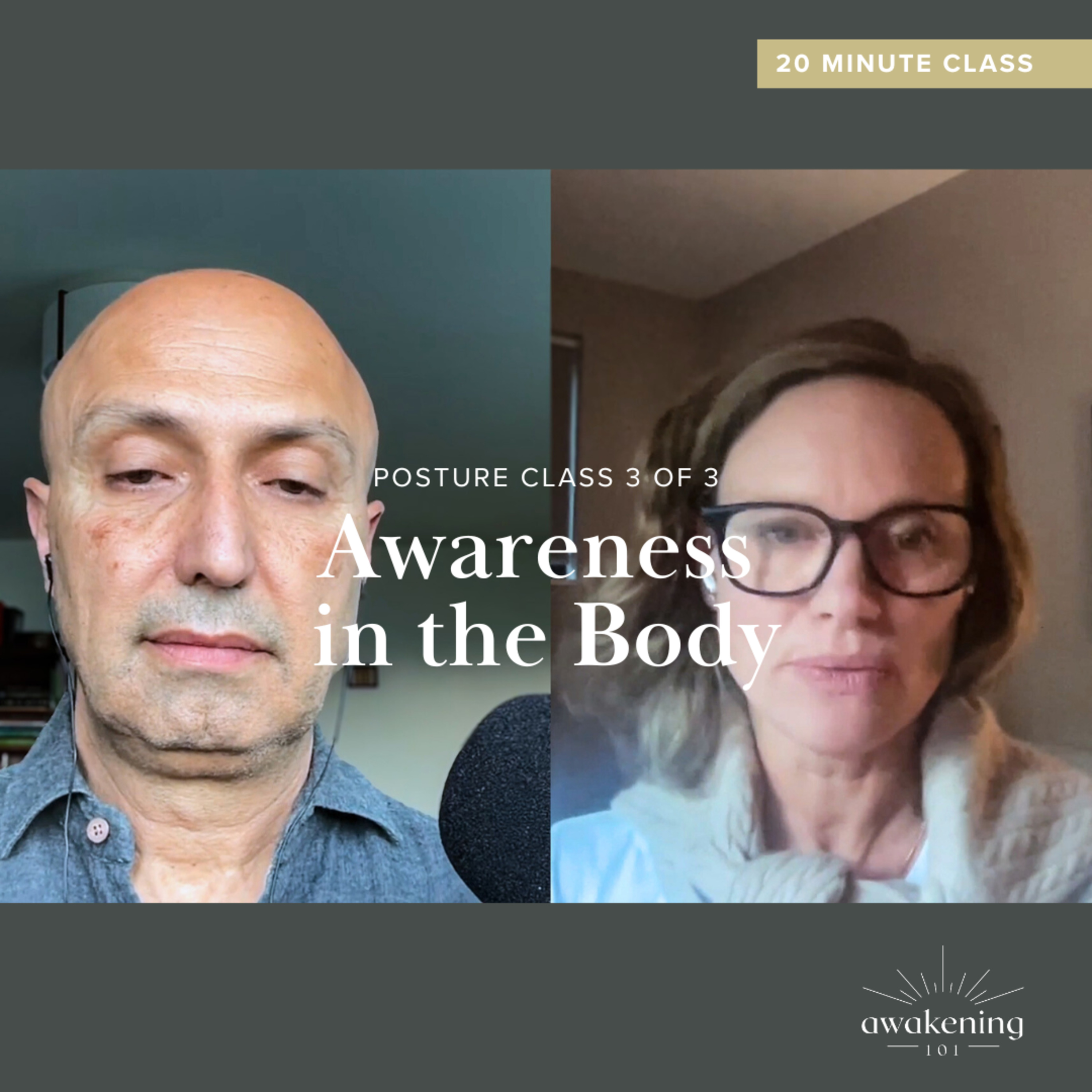
"Awareness in the Body - Awareness in Life" is the third episode in the Posture series of Tools of Awakening , Abdi Assadi and I, Pernilla Burke, explore the simple yet powerful practice of body awareness and posture as a way to cultivate presence. We look at what happens when we shift our awareness from the mind into the body—specifically, grounding into the feet—and how this shift can change the way we respond to life. Abdi shares insights from Chinese medicine and martial arts on how posture directly affects energy flow, while we reflect on how this practice has reshaped our own daily experiences. We also touch on the fascinating way our own presence influences those around us, from the energy in a room to the way our loved ones respond to us. The episode wraps with a guided practice to help integrate these principles into everyday life—one breath, one step at a time. (01:30) The importance of bringing awareness into the body—how shifting attention from the mind to the body changes our experience of life. (03:20) How posture affects presence and energy flow—exploring the connection between physical alignment and spiritual awareness, with insights from Chinese medicine and martial arts. (05:50) The impact of body awareness on those around us—how being grounded can influence the energy of a room and the people in it. (07:30) Real-life examples of staying grounded in daily situations—Pernilla shares how maintaining presence affects interactions with family, including her children. (09:45) The connection between posture, relaxation, and emotional balance—how proper alignment naturally reduces stress and allows for better decision-making. (10:30) Guided posture awareness practice—step-by-step instructions on aligning the spine, relaxing the shoulders, and feeling connected to the ground. (11:45) Breath awareness exercise for deeper presence—focusing on the breath at the tip of the nose and expanding awareness through the body. (15:10) How awareness naturally leads to relaxation—why presence itself is the key to feeling at ease, rather than forcing relaxation. (17:40) Why “trying to relax” doesn’t work—Abdi explains how shifting attention to specific areas of the body brings effortless calm. (18:30) Closing thoughts and upcoming episodes—what’s next in the Tools of Awakening series, plus a reminder that the guided practice will be available separately for easy access.
Feb 9
In this episode, we explore Chitta Vritti Nirodhaha , the second sutra of Patanjali’s Yoga Sutras , and what it means to quiet the fluctuations of the mind. We explore how thoughts aren’t who we are but rather the byproduct of unresolved emotions—and how awareness is the doorway to freedom. Through personal stories, reflection, and a guided meditation, we look at the ways we can step outside the constant mental chatter and into something deeper: presence. This isn’t about controlling the mind or forcing stillness but about recognizing the space that already exists between thoughts. Whether you’re new to yoga philosophy or simply looking for ways to bring more awareness into daily life, this episode offers practical tools to cultivate more clarity, peace, and connection. (00:00) Introduction and topic overview – Welcoming listeners, introducing the focus on Chitta Vritti Nirodhaha , and why this sutra is central to understanding the mind. (00:48) What Chitta Vritti Nirodhaha really means – Breaking down the direct translation, exploring why it’s more about observing thoughts rather than controlling them. (03:04) The role of awareness in quieting the mind – How awareness allows us to notice mental fluctuations, the connection between self-talk and presence. (06:33) Why we struggle with being present – How daily distractions and automatic habits keep us from noticing our thoughts, and the importance of mindfulness in modern life. (10:03) A personal story about discovering the Yoga Sutras – Pernilla shares the moment she first read Chitta Vritti Nirodhaha and how it shifted her understanding of the mind. (12:26) The connection between thoughts and unresolved emotions – How unprocessed emotions fuel mental chatter, and why recognizing this can be a game changer. (15:02) A simple awareness exercise – A quick practice for shifting attention from the mind to the body, starting with the feet. (16:37) Guided body scan meditation – Moving through the body from head to toe, bringing awareness into different areas to cultivate presence. (25:37) How thoughts trigger our nervous system – Discussing how a single thought can change our emotional state and what we can do to shift that pattern. (32:03) The balance between ego and awareness – Exploring why we need the ego to function in daily life while also cultivating spaciousness beyond thought. (35:05) Bringing spirituality into daily life – How to integrate awareness practices while navigating relationships, responsibilities, and everyday stressors. (38:48) How to create distance from mental chatter – Learning to see thoughts as passing clouds rather than identifying with them, inspired by teachings from Letting Go by David Hawkins. (41:08) Practical tools for cultivating awareness – Meditation, mindful walking, self-reflection, and breathwork as ways to become more present. (42:14) Becoming the observer of your thoughts – The importance of witnessing thoughts without judgment and recognizing the space between them. (43:34) Closing thoughts and listener questions – Reflecting on the discussion, encouraging listeners to share their experiences, and inviting them to reach out with topic requests.