Dec 8
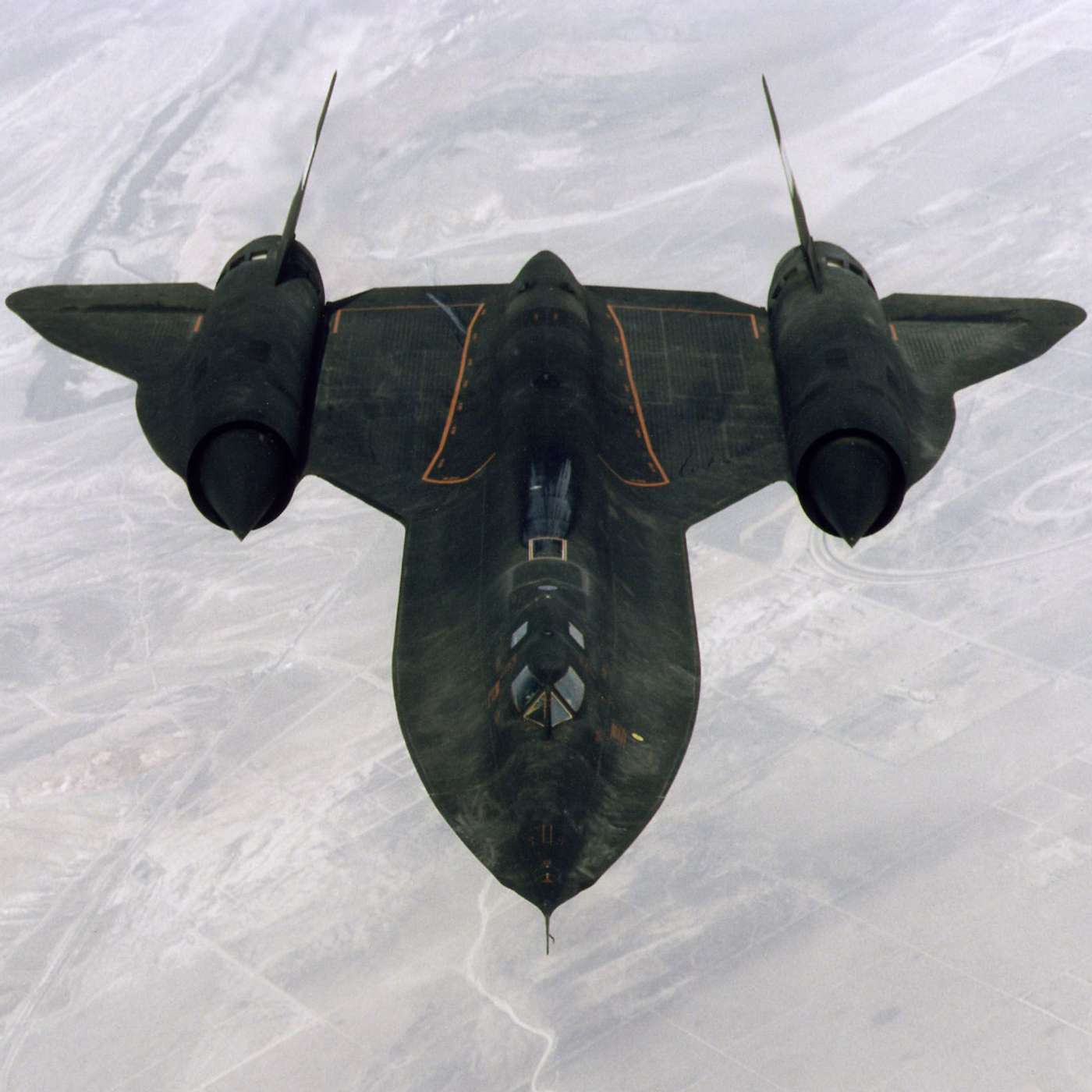
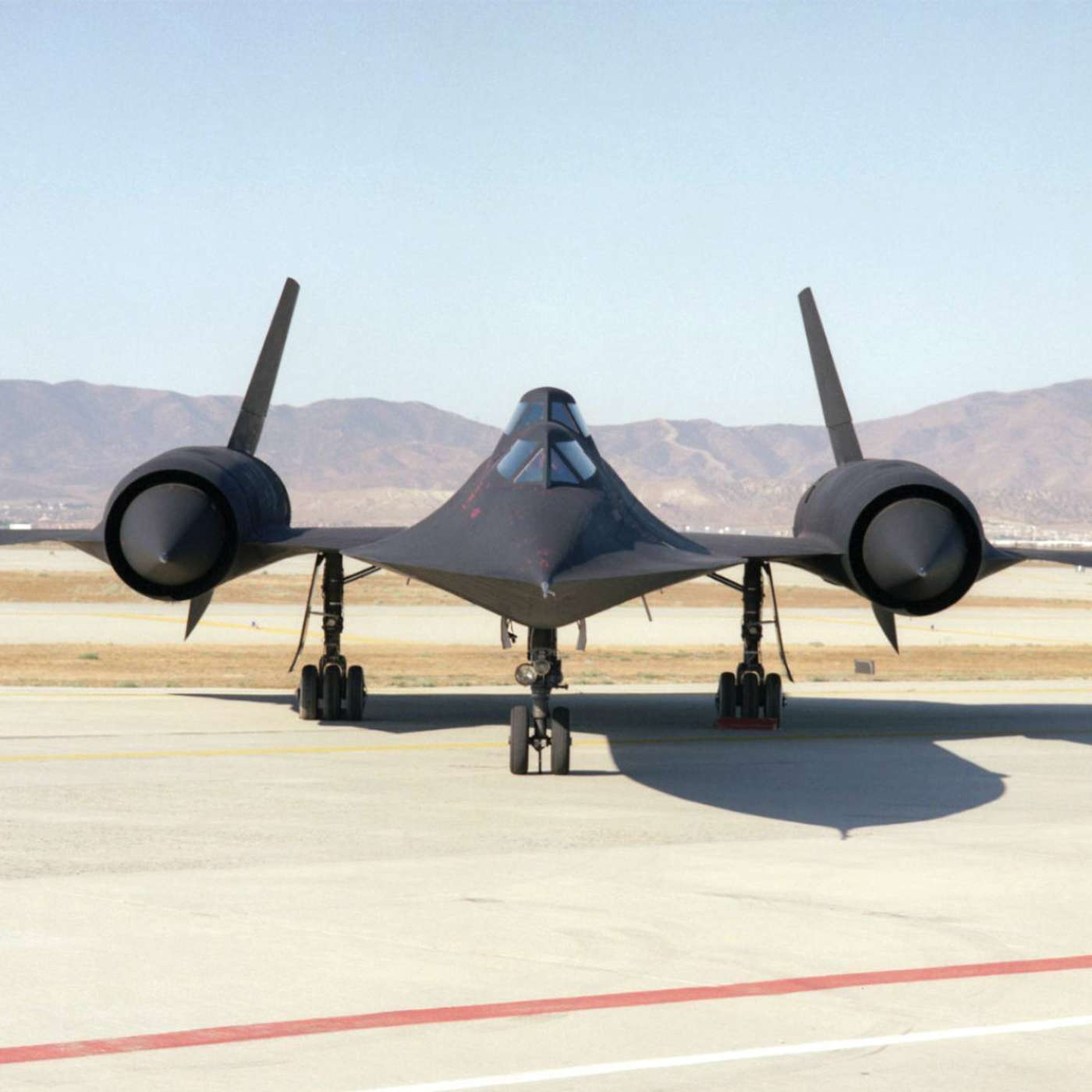
Test Flying the SR-71 Blackbird - Episode 65
Retired Test Pilot Rogers E. Smith recalls flying the final SR-71 Blackbird flight and how a fuel leak grounded the aircraft forever. In this episode, we discuss his Canadian and American military careers, flying experimental aircraft for NASA, and piloting a MiG-25 at 80,000 feet in Russia. From first to fourth-generation fighters, Rogers has flown nearly every U.S. jet and then some, all without ever attending a formal test pilot school. This one is going to be cool! Resources: Rogers' Website Rogers Smith's Bio (Canada's Aviation Hall of Fame) Rogers' SR-71 Career Synopsis (NASA) SR-71 Fact Sheet (National Museum of the US Air Force) Bell X-22 (Wikipedia) X-29 Advanced Technology Demonstrator Aircraft (NASA) Chapters: (00:00) - Intro (01:20) - Aviation Beginnings (02:47) - Flying the F-86 (04:32) - From First to Fourth Generation Fighters (05:06) - How Jet Capabilities Evolved (08:58) - Becoming a Test Pilot (09:56) - Favorite Airplane (11:04) - The Bell X-22 (12:34) - The Grumman X-29 (15:16) - Joining NASA (18:37) - Flying at 85,000 Feet (22:16) - The Cockpit View (23:40) - SR-71 Research and Testing (27:44) - The Last Blackbird Flight (29:40) - The Russian‑American Flight Exchange (36:52) - Flying the MiG-25 (37:34) - Rogers' Advice (40:32) - Outro
Nov 24
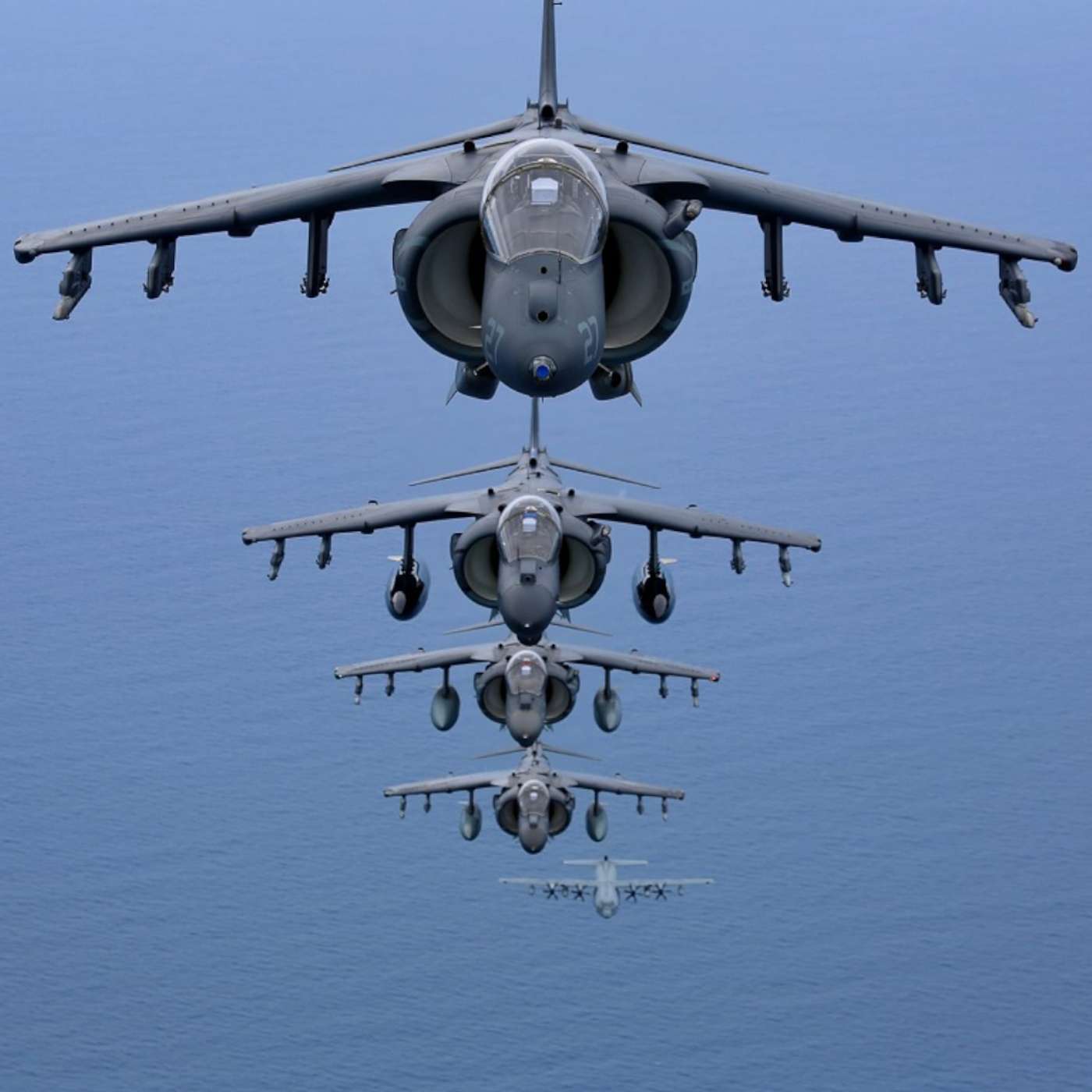
Flying the First U.S. Harrier Combat Mission - Episode 64
Retired AV-8B Pilots Capt. Frank “Pugs” Smith and Lt. Col. Luke “Warren” Jacobs take us behind the iconic Jump Jet and its 40-year legacy. We are back with our regularly scheduled podcast! In this episode, they discuss carrier operations, vertical takeoff and landing, the challenges of maintaining the aircraft, and how the fighter performed its missions. The Harrier remains one of aviation’s boldest experiments, paving the way for newer V/STOL platforms like the F-35B. This one is going to be cool! Resources: The Harrier Jump Jet (Key Aero) Operation Desert Storm (Air Force Historical Support Division) The AV-8B Harrier II (Wikipedia) Retiring Wings Over the Rockies' Harrier (YouTube) Chapters: (00:00) - Intro (01:36) - Harrier Overview (02:35) - Aviation Beginnings (04:27) - The Jump Jet's 40-Year Journey (05:28) - Like Flying a Dragon (06:25) - The TAV-8 Trainer (07:01) - Flying the Harrier (08:18) - The A-4 Vs. The AV-8B (09:19) - Carrier Operations (10:36) - The V/STOL (14:47) - Vertical Take Off Challenges (17:10) - Dogfight Maneuvers (18:15) - How Loud Was the Jump Jet? (20:04) - Life Below Deck (21:05) - Operation Desert Storm (23:25) - Afghanistan Combat Missions (25:53) - How Harrier Capabilities Evolved (26:54) - Flying in Mixed Packages (28:09) - The AV-8B's Legacy (30:00) - Frank and Luke's Advice (32:35) - Outro
Nov 13
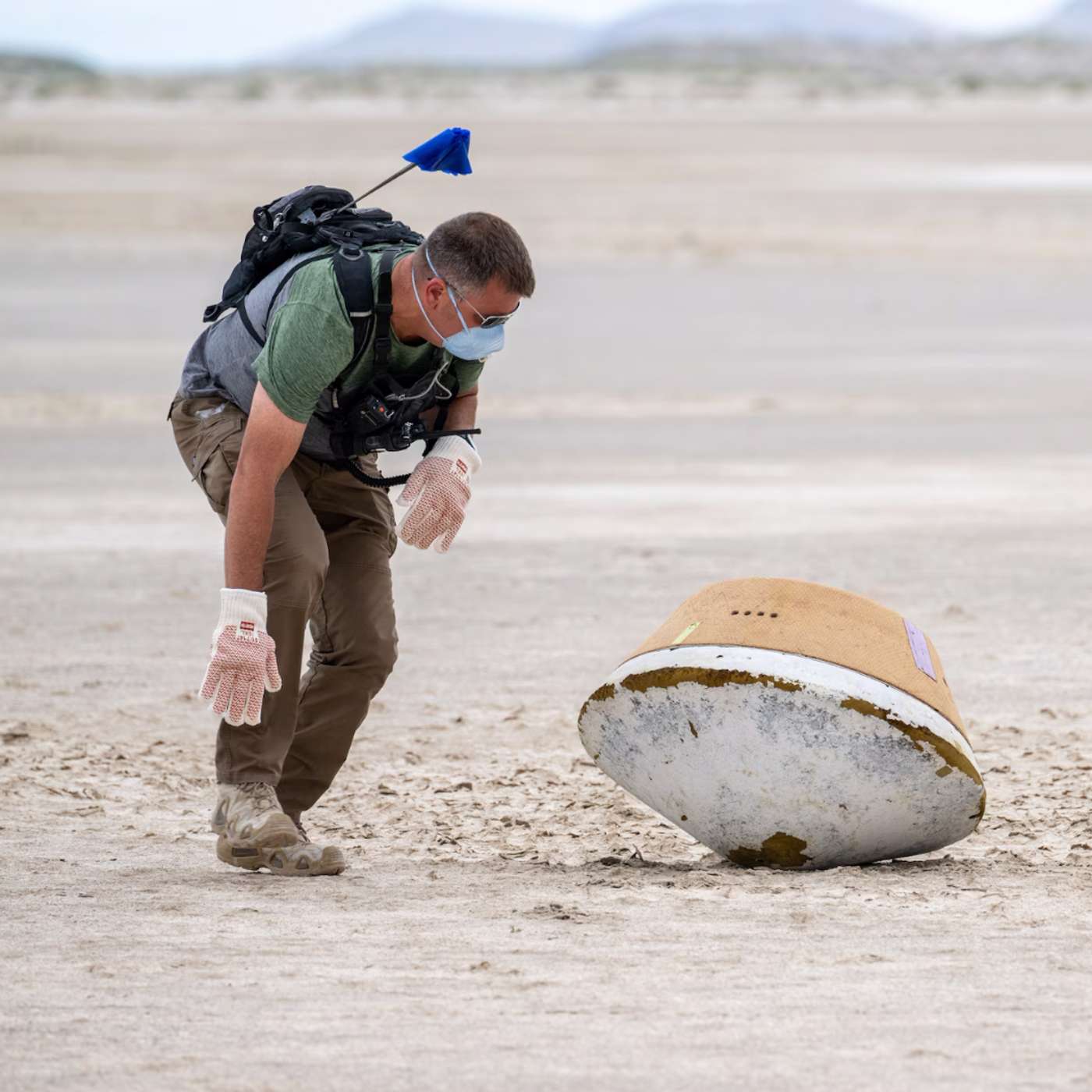
Unlocking Asteroid Secrets - PBS S7 Miniseries Episode 4
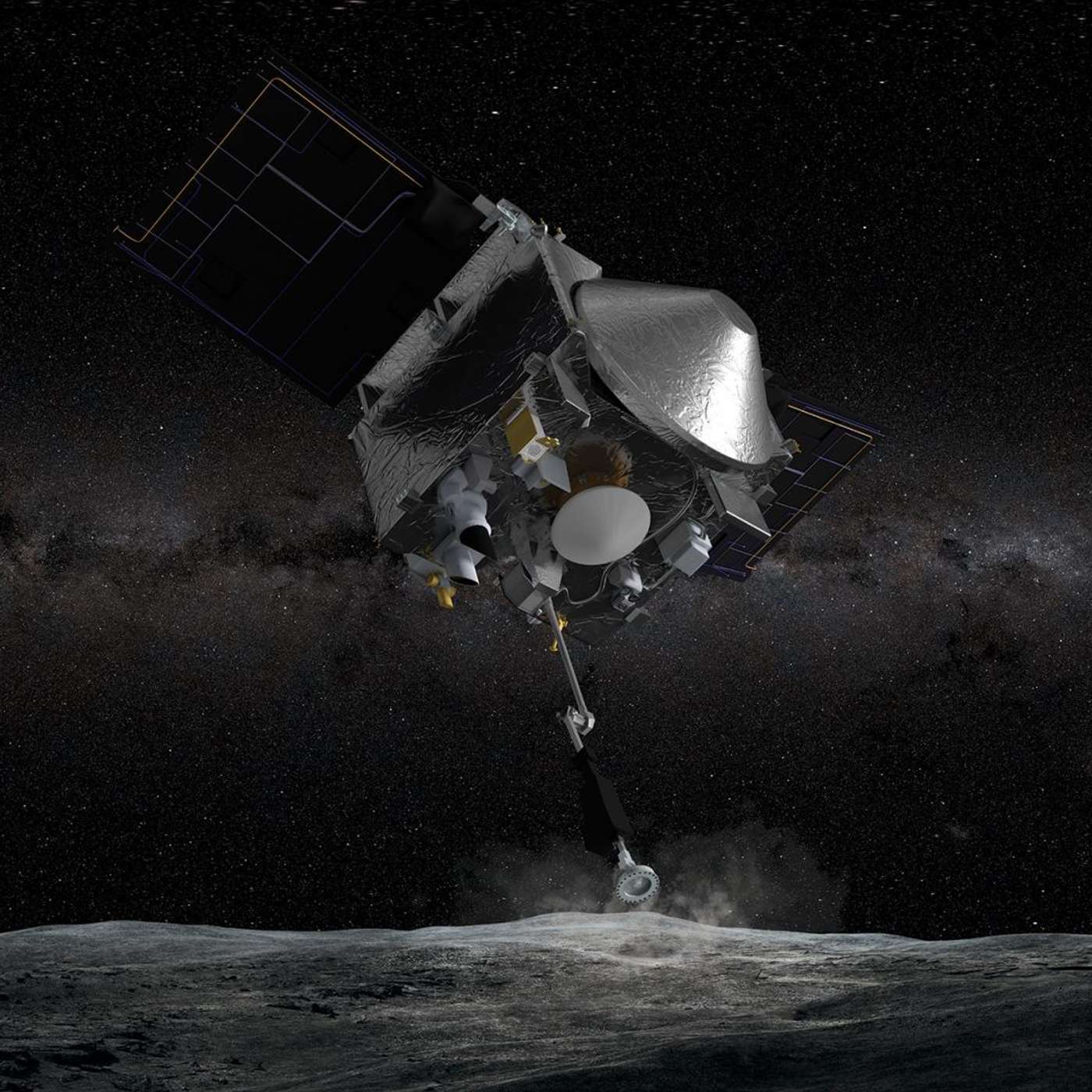
How OSIRIS-REx's journey to Asteroid Bennu could reveal clues to the origins of life on Earth. Welcome to the finale of our 4-part bonus podcast miniseries on the making of Behind the Wings PBS Season 7! In this episode, Director Cray Novick and Host Tracy LaTourrette share stories from filming around the U.S. to learn more about OSIRIS-REx's journey to Asteroid Bennu. Join us as we discuss how meteorites helped launch the O-REx idea, designing the spacecraft, touring the asteroid testing wall, and solving problems millions of miles from Earth. This one is going to be cool! Check out the full-length video on PBS or our YouTube channel on November 27. We can't wait to show you what we've been working on! As we conclude our miniseries, our regular podcast returns on November 24 with a conversation about the Harrier aircraft. Tune in to hear inside stories on flying the Jump Jet and its hovering ability! Full Season Premiere Schedule: PBS: Episode 1 – The Hurricane Hunters: November 6, 2025, 7:00 p.m. MT Episode 2 – Building the International Space Station: November 6, 2025, 7:30 p.m. MT Episode 3 – 50 Years of the F-16: November 13, 2025, 7:00 p.m. MT Episode 4 – Unlocking Asteroid Secrets: November 13, 2025, 7:30 p.m. MT Wings’ YouTube Channel: Episode 1 – The Hurricane Hunters: November 6, 2025, 7:00 p.m. MT Episode 2 – Building the International Space Station: November 13, 2025, 7:00 p.m. MT Episode 3 – 50 Years of the F-16: November 20, 2025, 7:30 p.m. MT Episode 4 – Unlocking Asteroid Secrets: November 27, 2025, 7:30 p.m. MT Chapters: (00:00) - Intro (00:27) - OSIRIS-REx Overview (01:28) - A 20-Year Mission (03:23) - The Antarctic Asteroid Team (04:53) - Why Bennu? (05:52) - The TAG System (07:50) - The Backup Plan (09:20) - Landing Site (09:53) - Collecting the First Samples (10:50) - Bringing Material Back to Earth (13:14) - Bennu Tea (13:52) - The Next Generation's Research (14:12) - OSIRIS-REx's Future (14:55) - Outro
Nov 6
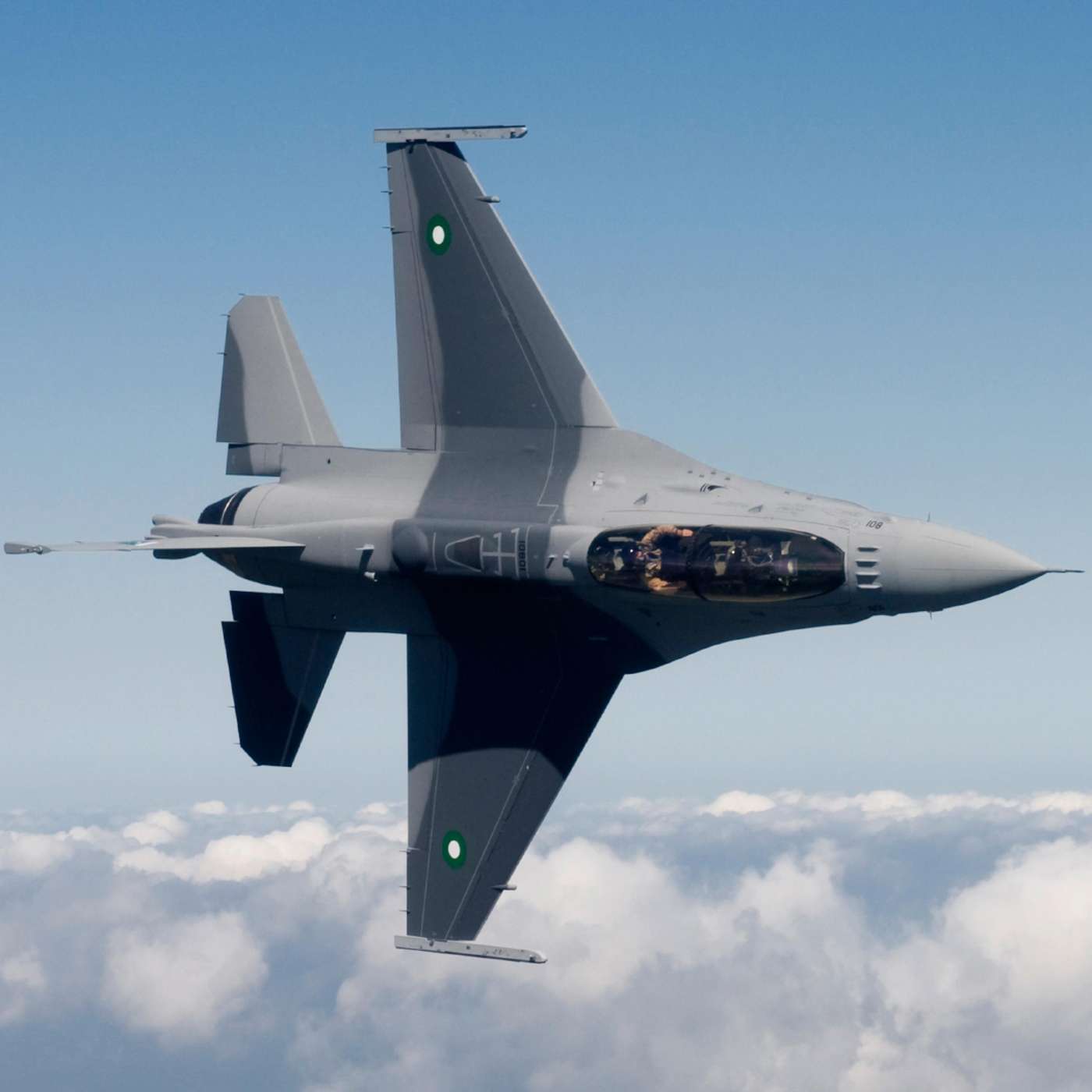
50 Years of the F-16 - PBS S7 Miniseries Episode 3
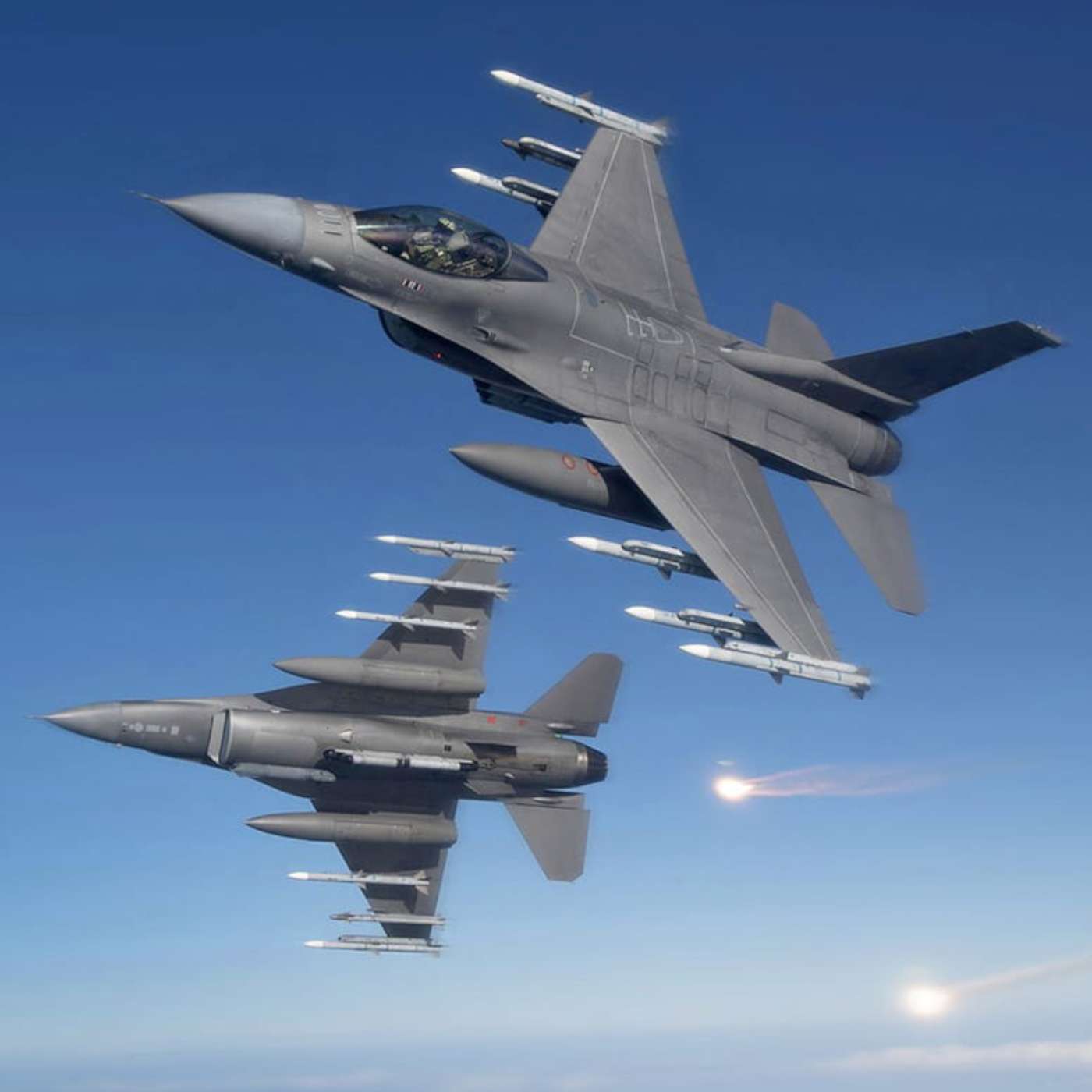
How the F-16 became a combat legend around the world, and what it takes to build them. Welcome to Part 3 of our 4-part bonus podcast miniseries on the making of Behind the Wings PBS Season 7! In this episode, Director Cray Novick and Host Tracy LaTourrette share stories from filming around the U.S. to learn more about the history behind the Fighting Falcon. Join us as we discuss the dangerous first flight, touring the only manufacturing plant, technical upgrades, and test-flying the Viper fresh off the production line. This one is going to be cool! Check out the full-length video on PBS or our YouTube channel. We can't wait to show you what we've been working on! Full Season Premiere Schedule: PBS: Episode 1 – The Hurricane Hunters: November 6, 2025, 7:00 p.m. MT Episode 2 – Building the International Space Station: November 6, 2025, 7:30 p.m. MT Episode 3 – 50 Years of the F-16: November 13, 2025, 7:00 p.m. MT Episode 4 – Unlocking Asteroid Secrets: November 13, 2025, 7:30 p.m. MT Wings’ YouTube Channel: Episode 1 – The Hurricane Hunters: November 6, 2025, 7:00 p.m. MT Episode 2 – Building the International Space Station: November 13, 2025, 7:00 p.m. MT Episode 3 – 50 Years of the F-16: November 20, 2025, 7:30 p.m. MT Episode 4 – Unlocking Asteroid Secrets: November 27, 2025, 7:30 p.m. MT Chapters: (00:00) - Intro (00:35) - Tracy's F-16 Background (02:28) - Why We Chose the Viper (03:37) - Aircraft Maintenance and Improvements (04:47) - The Last Manufacturing Plant (06:48) - Touring the Production Line (08:51) - Test Flying Fighting Falcons (09:47) - The Aircraft Design (13:22) - The Dangerous First Flight (14:17) - F-16 Legacy (16:32) - Outro
Oct 30
Building the International Space Station - PBS S7 Miniseries Episode 2
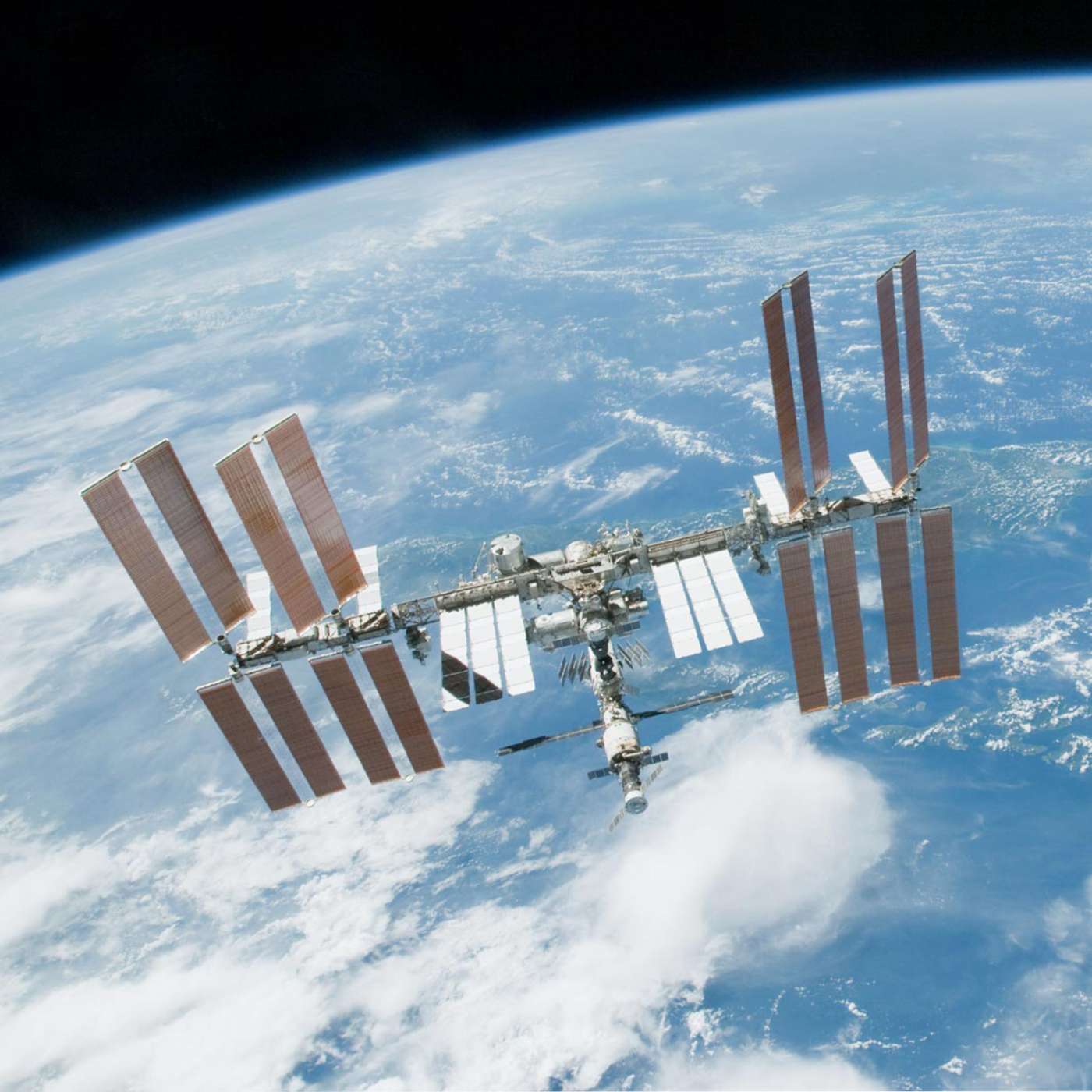
How the world's largest spacecraft taught us to live and work in space. Welcome to Part 2 of our 4-part bonus podcast miniseries on the making of Behind the Wings PBS Season 7! In this episode, Director Cray Novick and Host Tracy LaTourrette share stories from filming around the U.S. to learn more about building the International Space Station. Join us as we discuss astronaut training in the enormous Neutral Buoyancy Lab pool, assembling the ISS in orbit, life on board, and how mission control helps solve disasters in real time. This one is going to be cool! Check out the full-length video on PBS or our YouTube channel. We can't wait to show you what we've been working on! Full Season Premiere Schedule: PBS: Episode 1 – The Hurricane Hunters: November 6, 2025, 7:00 p.m. MT Episode 2 – Building the International Space Station: November 6, 2025, 7:30 p.m. MT Episode 3 – 50 Years of the F-16: November 13, 2025, 7:00 p.m. MT Episode 4 – Unlocking Asteroid Secrets: November 13, 2025, 7:30 p.m. MT Wings’ YouTube Channel: Episode 1 – The Hurricane Hunters: November 6, 2025, 7:00 p.m. MT Episode 2 – Building the International Space Station: November 13, 2025, 7:00 p.m. MT Episode 3 – 50 Years of the F-16: November 20, 2025, 7:30 p.m. MT Episode 4 – Unlocking Asteroid Secrets: November 27, 2025, 7:30 p.m. MT Chapters: (00:00) - Intro (00:32) - The Idea Behind Space Stations (01:11) - Forming International Partnerships (01:45) - Assembling the ISS (04:51) - Living Onboard the Station (05:59) - Mission Control (07:15) - The Neutral Buoyancy Lab (10:36) - The Vehicle Mockup Assembly Building (12:00) - Looking Towards the Future (12:44) - Retiring the ISS (13:57) - Outro
Oct 23
The Hurricane Hunters - PBS S7 Miniseries Episode 1
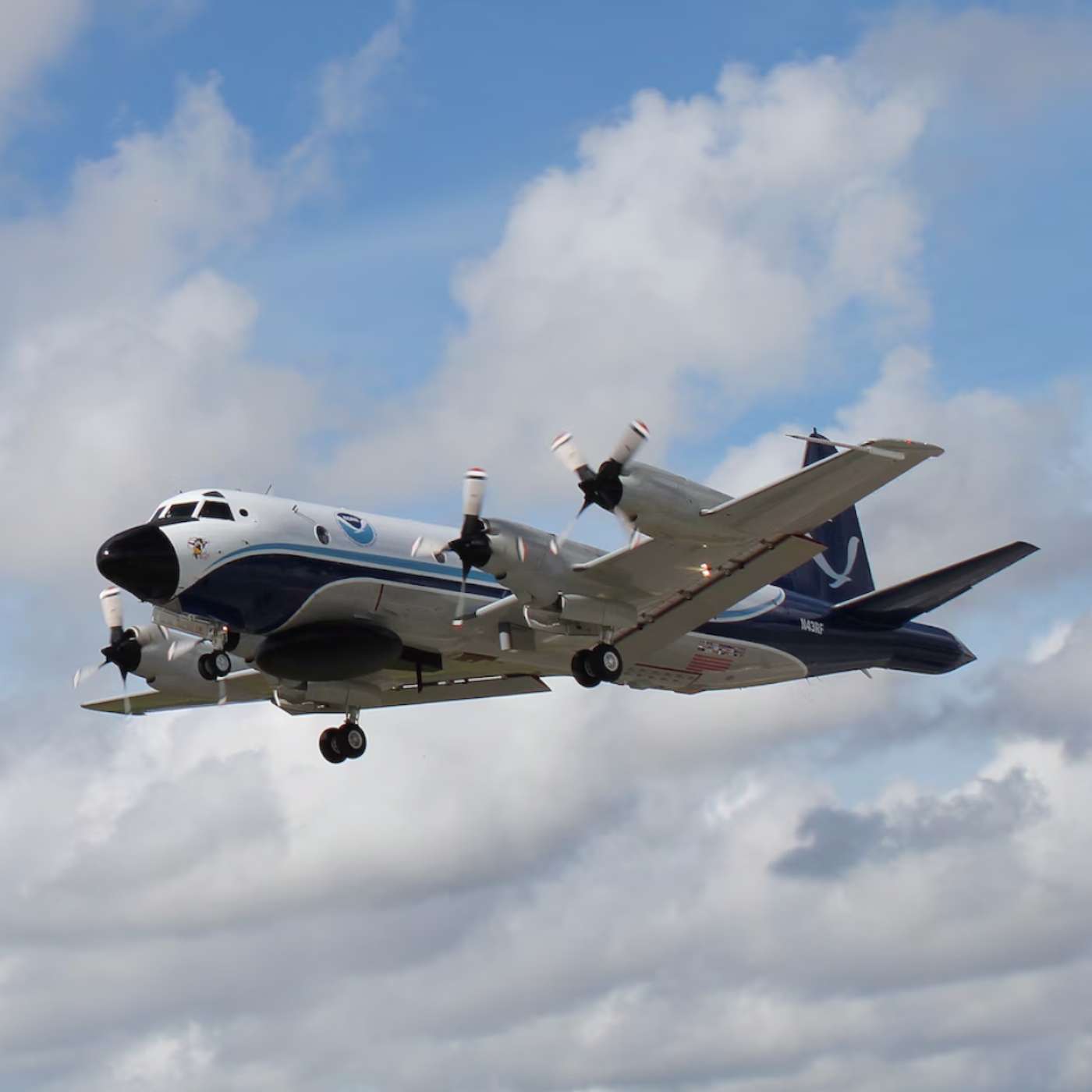
What does it take to fly into a hurricane, and why is it important? Welcome to Part 1 of our bonus podcast miniseries on The Making of Behind the Wings PBS Season 7. In this episode, Director Cray Novick and Host Tracy LaTourrette discuss stories they heard while filming The Hurricane Hunters. Join us as we explore the dare that started it all, the modified aircraft and its technology, and how the team saves millions of lives every year. This one is going to be cool! Check out the full-length episode on PBS or our YouTube channel on November 6. We can't wait to show you what we've been working on! Full Season Premiere Schedule: PBS: Episode 1 – The Hurricane Hunters: November 6, 2025, 7:00 p.m. MT Episode 2 – Building the International Space Station: November 6, 2025, 7:30 p.m. MT Episode 3 – 50 Years of the F-16: November 13, 2025, 7:00 p.m. MT Episode 4 – Unlocking Asteroid Secrets: November 13, 2025, 7:30 p.m. MT Wings’ YouTube Channel: Episode 1 – The Hurricane Hunters: November 6, 2025, 7:00 p.m. MT Episode 2 – Building the International Space Station: November 13, 2025, 7:00 p.m. MT Episode 3 – 50 Years of the F-16: November 20, 2025, 7:30 p.m. MT Episode 4 – Unlocking Asteroid Secrets: November 27, 2025, 7:30 p.m. MT Chapters: (00:00) - Intro (00:56) - Why Pick This Topic? (02:01) - The Hurricane Hunters' Origin Story (03:11) - A Personal Story (04:20) - The Flight Crew (06:27) - Why Fly Into a Hurricane? (07:57) - How the Information Is Used (08:53) - The Aircraft (09:54) - The Pilot's Perspective (10:25) - The Equipment (11:14) - The Flight Brief (12:25) - Why Propellers Are Better than Engines (13:20) - The Missions (14:16) - The Future (15:10) - Advice (16:16) - Outro
Oct 20
Collecting Space Dust from Asteroid Bennu - Episode 63
University of Arizona Professor and OSIRIS-REx Principal Investigator Dr. Dante Lauretta explains how asteroids could reveal the origins of life on Earth. In this episode, we celebrate the fifth anniversary of the asteroid sample collection on October 20 and explore the spacecraft’s design, the daring Touch-And-Go maneuver, challenges the team overcame, and what we’ve learned so far from the materials returned from Asteroid Bennu. Our knowledge of space is rapidly evolving, and we still have so much more to learn. This special release features the full-length conversation with Dante from our upcoming Season 7 of Behind the Wings on PBS. To dive deeper into the OSIRIS-REx mission, watch the video premiere on November 27 on our YouTube page. This one is going to be cool! The regular podcast will take a short mid-season break and return on November 24. In the meantime, check out our upcoming weekly mini-series: The Making of Behind the Wings PBS Season 7! Resources: Dante's Bio (University of Arizona) Asteroid Bennu (NASA) Asteroid Apophis (NASA) OSIRIS-REx Mission (NASA) OSIRIS-APEX (NASA) Chapters: (00:00) - Intro (02:43) - Aerospace Beginnings (06:07) - Antarctic Collection Mission (09:36) - Why Go to an Asteroid? (11:57) - Designing OSIRIS-REx (14:16) - Earning NASA Funding (17:33) - Michael Drake's Passing (21:53) - The Challenge of Microgravity (24:35) - Testing the Spacecraft (26:51) - Launch Day (30:26) - Why was Asteroid Bennu Chosen? (31:47) - First Images (33:33) - Unexpected Obstacles when Landing (36:35) - The Touch-And-Go System (45:51) - Returning O-REx to Earth (52:06) - Removing the Samples (53:46) - Space Rock Testing (55:17) - What Have We Learned so Far? (57:48) - Are We Alone in the Universe? (59:51) - Future Missions (01:01:48) - Dante's Advice (01:03:06) - Outro
Oct 16
The Making of Behind the Wings PBS S7 Miniseries Trailer
We're excited to announce our special four-part podcast miniseries featuring stories from the making of our newest Behind the Wings PBS season! Director Cray Novick and Host Tracy "Jackie'O" LaTourrette discuss our upcoming episodes: "The Hurricane Hunters," "Building the International Space Station," "50 Years of the F-16," and "Unlocking Asteroid Secrets." Join us to hear inside tales you won't find anywhere else. This is going to be cool! Miniseries episodes come out every Thursday starting October 23. Also, check out the new season on PBS or at our YouTube channel beginning November 6. We can't wait to show you what we've been working on! Our regular podcast episodes will take a mid-season break after Episode 63 and return on November 24. Full Season Premiere Schedule: PBS: Episode 1 – The Hurricane Hunters: November 6, 2025, 7:00 p.m. MT Episode 2 – Building the International Space Station: November 6, 2025, 7:30 p.m. MT Episode 3 – 50 Years of the F-16: November 13, 2025, 7:00 p.m. MT Episode 4 – Unlocking Asteroid Secrets: November 13, 2025, 7:30 p.m. MT Wings’ YouTube Channel: Episode 1 – The Hurricane Hunters: November 6, 2025, 7:00 p.m. MT Episode 2 – Building the International Space Station: November 13, 2025, 7:00 p.m. MT Episode 3 – 50 Years of the F-16: November 20, 2025, 7:30 p.m. MT Episode 4 – Unlocking Asteroid Secrets: November 27, 2025, 7:30 p.m. MT
Oct 6
How Black Holes Could Unlock the Mysteries of the Universe - Episode 62
Theoretical Physicist Andrew Strominger explains what exactly black holes are and how they could tell us about the beginning of the cosmos. In this episode, Andrew discusses the questions behind black holes, the strange physics at their event horizon, what they reveal about the nature of space and time, and how he, Stephen Hawking, and Malcolm Perry helped develop the theory that "soft hairs" may store information on black holes' surface. From leading minds like Einstein, Hawking, and Strominger, our understanding of these celestial bodies is constantly evolving, and we still have so much to learn. This one is going to be cool! Resources: Andrew's Bio (Harvard) The Event Horizon Telescope Hawking team updates soft hair theory to help solve black hole information paradox (Phys.org) What are black holes? (NASA) Einstein’s Theory of General Relativity (Space.com) Chapters: (00:00) - Intro (01:59) - Andrew's Favorite Theories (04:11) - Aerospace Beginnings (05:53) - From Commune to Harvard (08:24) - What Is a Black Hole? (12:29) - The Different Types (14:17) - How They Form (15:52) - How Far Are They from Earth? (16:06) - Why Should We Study Black Holes? (17:38) - Why Doubt Is a Valuable Tool (19:37) - The Information Paradox (22:22) - Working Alongside Stephen Hawking (24:12) - Soft Hairs (26:29) - The Holographic Principle (30:31) - Can Black Holes Be Used for Travel? (31:19) - "Interstellar" Time Dilation (34:14) - Why Isn't a Black Hole Considered a Vacuum? (35:02) - The Future of Physics (36:15) - Andrew's Advice (37:04) - Outro

Sep 22
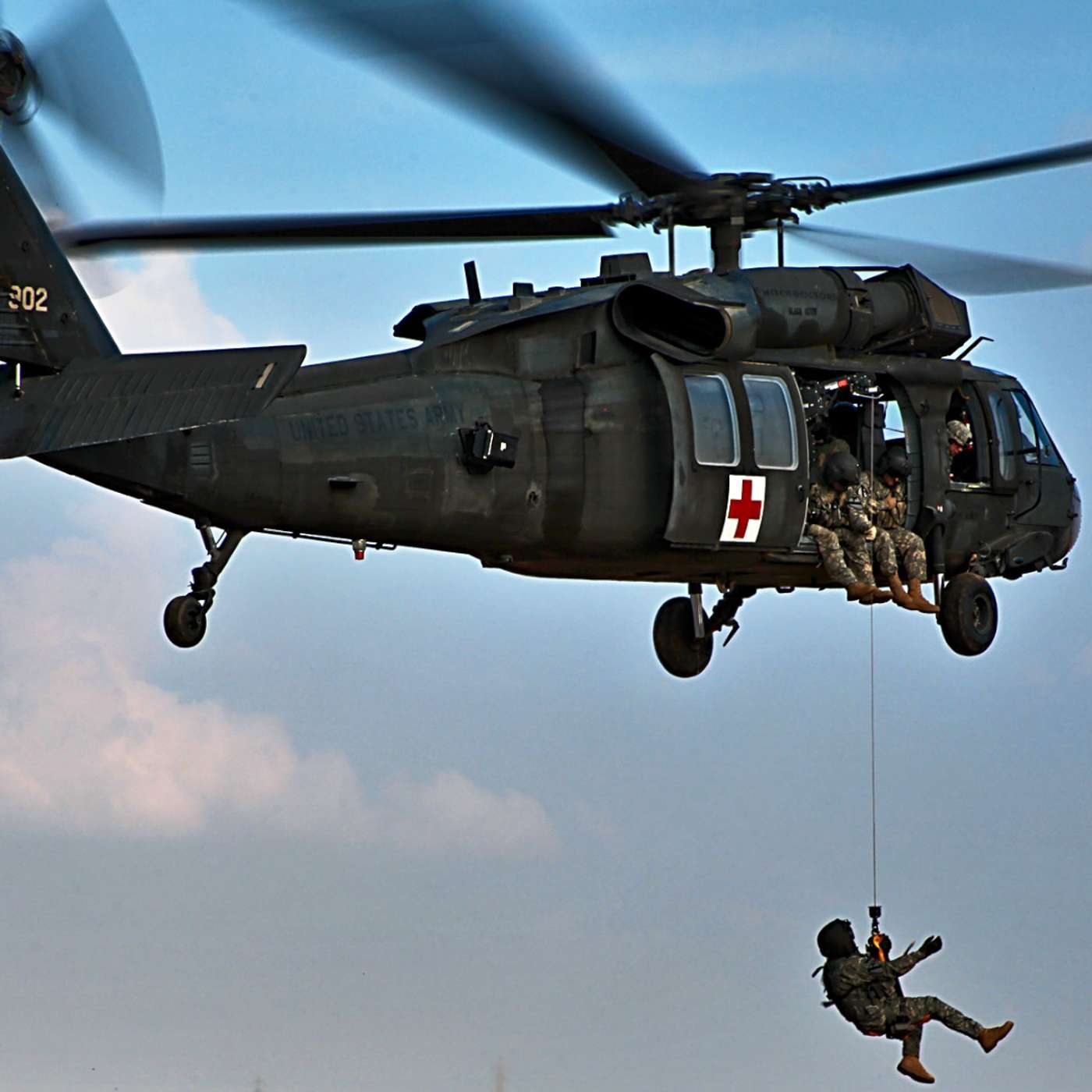
Landing a Helicopter on a Bank Robber's Car - Episode 61
Pilot Mike Silva recalls a high-speed chase that ended when his news helicopter stopped a fleeing criminal’s stolen car, allowing police to save a hostage's life. Welcome to Season 7 of the Behind the Wings podcast! In this episode, Mike discusses Huey missions in Vietnam, piloting Copter4 at Denver CBS, returning to combat as the oldest Black Hawk aviator in Iraq, and saving lives during intense missions. From the Fire Base Mary Ann battle to flying alongside dangerous tornadoes, he has done it all in a career spanning more than 50 years. This one is going to be cool! Resources: Wings Museum's Huey The UH-1 Huey (Wikipedia) The UH-60 Black Hawk (Lockheed Martin) The Battle of Fire Base Mary Ann (Wikipedia) 1988 Denver Police Chase (YouTube) Chapters: (00:00) - Intro (01:36) - Which Aircraft Taught You the Most About Flying? (02:19) - Mike's Favorite Aircraft (03:17) - Aviation Beginnings (04:05) - Joining the Army (05:37) - Flight Training (07:24) - Going to Vietnam (08:03) - Lessons Learned From Vietnam (08:50) - Flying the UH-1 (09:43) - Huey Roles (10:26) - Fire Base Mary Ann Battle (14:39) - Returning Home (15:28) - Working for CBS (17:02) - Landing on a Bank Robber's Car (23:14) - Journey to Iraq (25:18) - Encountering Snipers (26:10) - Vietnam vs. Iraq (27:05) - Awards and Honors (27:54) - Mike's Advice (29:15) - Outro
Sep 15
Behind the Wings Season 7 Trailer
The Behind the Wings podcast is back with Season 7 and 10 new episodes! From the mysteries of black holes to the hovering capabilities of the Harrier Jump Jet, and the final flight of the SR-71 Blackbird, we've got some incredible stories and guests lined up! New episodes come out every other Monday, starting next week with Pilot Mike Silva, famously known for landing his news helicopter on a fleeing bank robber's car. Subscribe wherever you listen, because this season is going to be cool. See you next week for Season 7 of Behind the Wings. In the meantime, check out our past episodes!
Aug 11
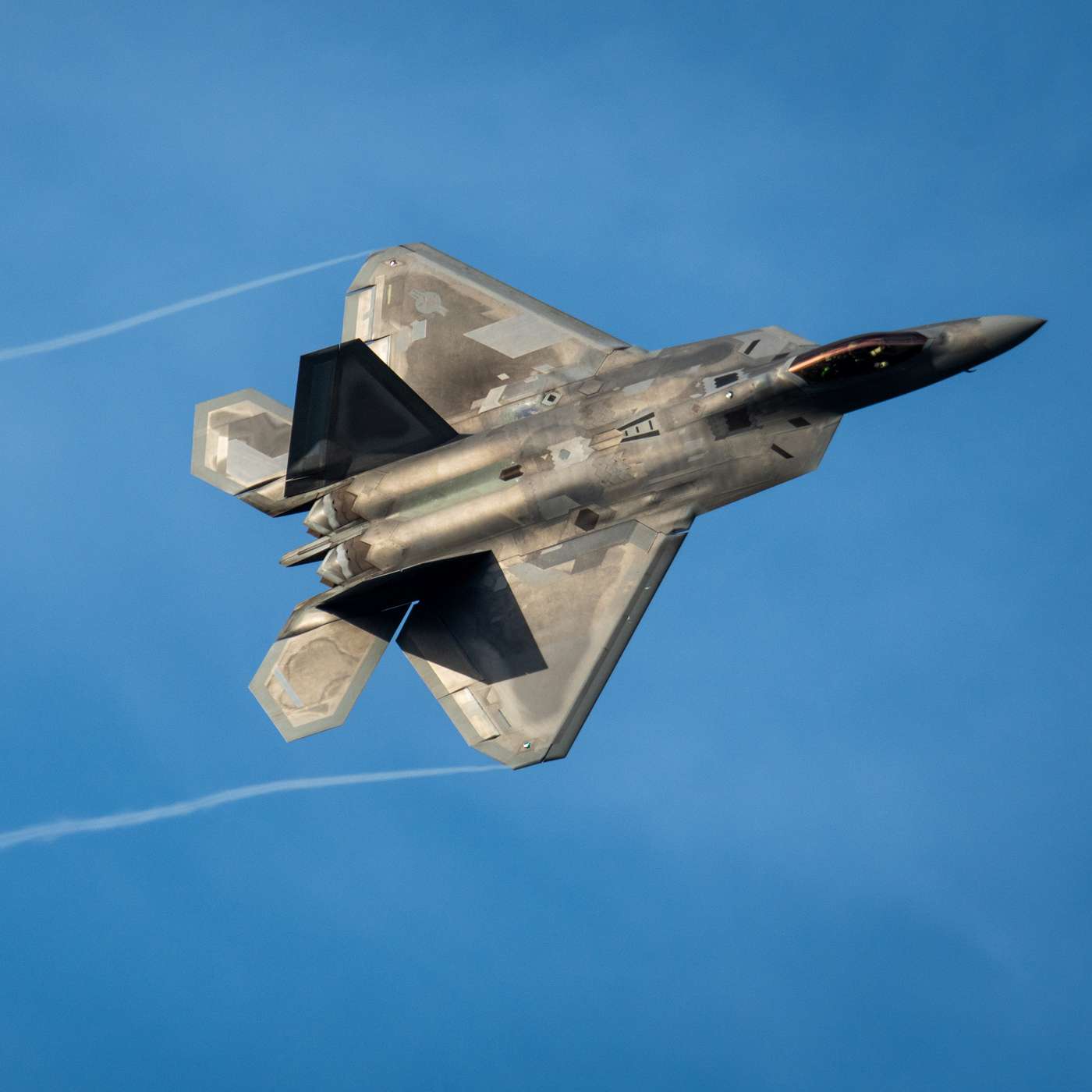
Why the F-22 Transformed Stealth - Episode 60
Retired Fighter Pilot Randy "Laz" Gordon explains how the F-22 changed the air battlefield and why it was built to win the first fight. In this episode, Randy discusses the 70-plus aircraft he has flown, his combat career, test-flying fighter jets, and how artificial intelligence is shaping the future of aviation. We’ll also explore some of the Raptor's surprising similarities to civilian Cessna aircraft, and why, in some ways, the Skyhawk is a harder airplane to manage. From flying a zeppelin to iconic planes like the F-15, "Laz" has done it all. This one is going to be cool! Episode 60 marks the end of Season 6. We will be taking a short break, but are excited to bring you more stories in Season 7, coming this fall. Resources: Special Lecture: F-22 Flight Controls (YouTube) Randy's Bio The F-22 Raptor (Lockheed Martin) Chapters: (00:00) - Intro (01:35) - Flying 70+ Aircraft (02:47) - Aviation Beginnings (06:10) - The USAFA (09:03) - What Makes a Good Pilot? (11:29) - Flight Training (13:18) - The F-15 vs. F-16 (15:59) - Flying the A-10 (17:44) - Combat in Iraq (21:08) - Flying the F-22 (26:08) - Cessna vs. F-22 (28:11) - Raptor Mindset (31:11) - Radar-absorbing Material (32:39) - Stealth Airframe (35:55) - Supercruise (39:41) - The Human and the Jet (42:18) - Test Flying Aircraft (44:43) - Why the F-15 was Hard to Master (45:24) - A Dangerous Moment (48:05) - How AI Will Impact Aviation (53:34) - F-22 Legacy (55:13) - Randy's Advice (57:40) - Outro
Jul 28
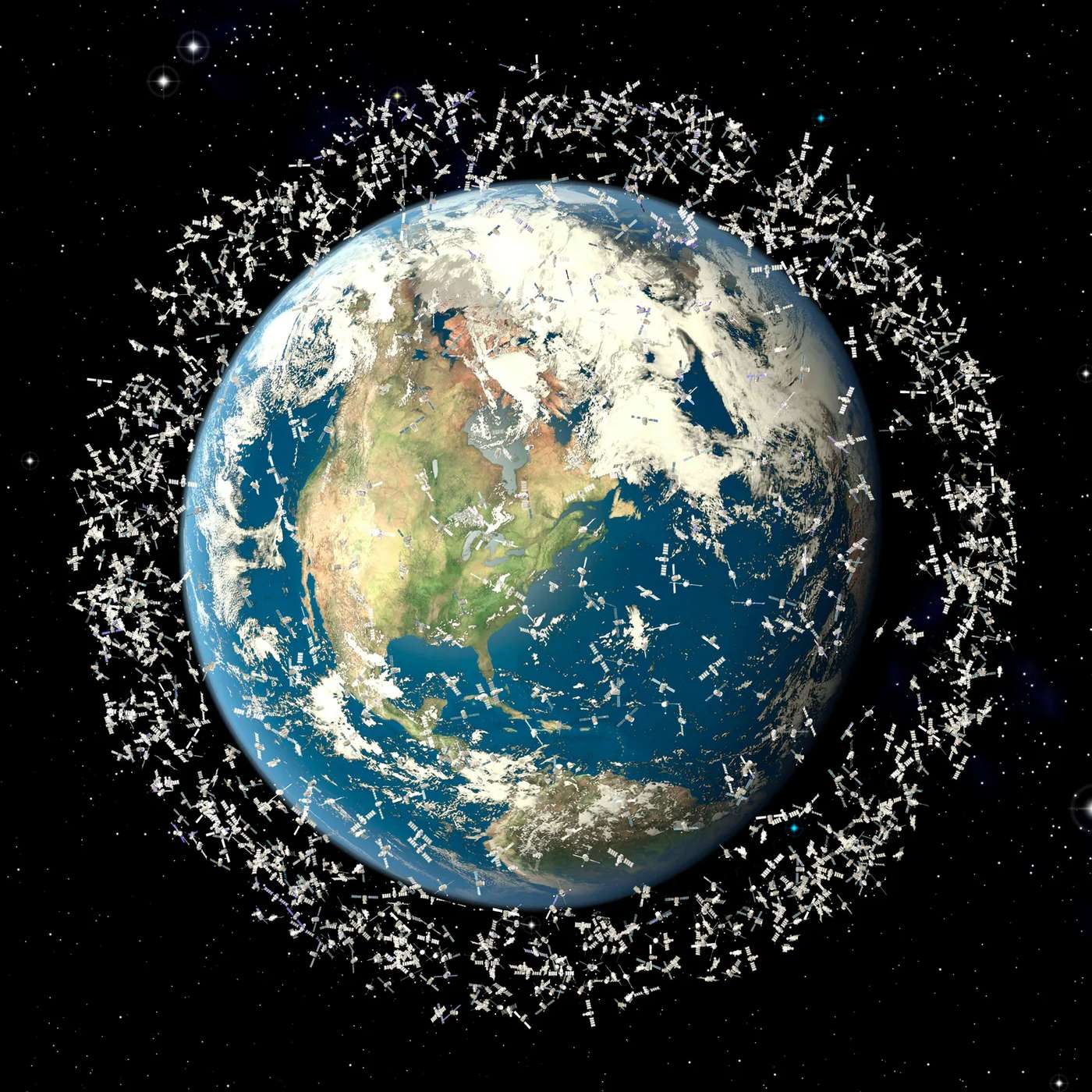
How Orbital Debris Could End Space Exploration - Episode 59
Astrophysicist Dr. Jonathan McDowell explains how the ever-growing problem of space junk is threatening satellites, science missions, and even spaceflight as we know it. In this episode, Jonathan discusses orbital debris, anti-satellite missiles, clean-up efforts, and how one incident could cause a communication blackout for decades. In the lawless realm of low Earth orbit, we could see a future where space exploration comes to a halt altogether. However, some companies are testing solutions that aim to alleviate the problem before it's too late. There is a lot to learn! Resources: Jonathan's Bio Jonathan's Space Report Space Debris (NASA) Wild Wild Space Trailer (HBO Max) Chapters: (00:00) - Intro (01:32) - Space Junk Overview (05:11) - Small Debris Damage (07:54) - Aerospace Beginnings (09:37) - Tracking Launches (11:39) - Dodging Debris (15:21) - Anti-Satellite Missiles (20:36) - Space Air Traffic Control (23:27) - Safer Altitudes (24:47) - The End of the ISS (29:17) - How Space Junk is Blocking Research (31:52) - Billboards in Space (33:47) - Satellite Designs (35:05) - Cleaning Up (36:07) - Jonathan's Advice (38:14) - Outro
Jul 14
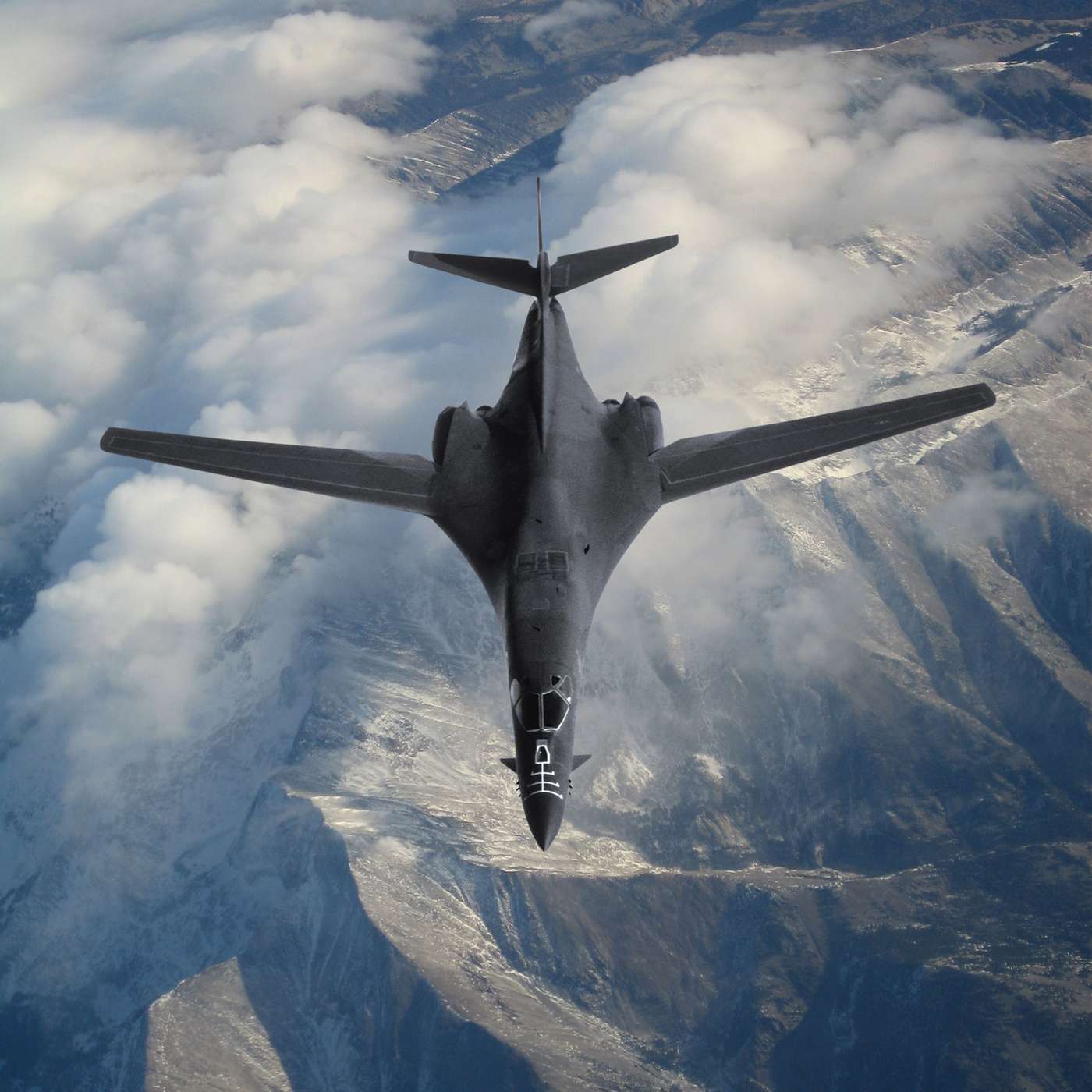
Ejecting from the B-1 Lancer - Episode 58
Retired Pilot Maj. Gen. Garrett “Sack” Harencak and Weapons Systems Officer Lt. Col. Tony “Voodoo” Eret share what it was like to fly together in the Rockwell B-1 Lancer. In this episode, they take us inside the “Bone”, a supersonic, variable-sweep wing bomber originally designed for low-level nuclear strikes and later transformed into a precision conventional strike aircraft. They discuss nuclear alert procedures, low-level mountain missions using terrain-following radar, and a first-hand account of ejecting from the four-person flight deck. This one is going to be cool! Resources: Wings Museum's B-1A Lancer The B-1 Lancer (Behind the Wings Video) Chapters: (00:00) - Intro (01:35) - B-1 Overview (04:28) - Lancer Development (05:21) - The Bomb Bays (07:56) - Terrain-Following Radar (10:08) - The Structural Mode Control System (12:19) - Variable-Sweep Wings (13:36) - The Central Integrated Test System (16:19) - Crew Roles (19:22) - Nuclear Alert Training (21:30) - Ejecting from the B-1 (29:39) - Lancer Modifications (31:00) - The Engines (32:57) - Flying at High Altitude (34:17) - Maintenance (37:08) - The B-1 Legacy (37:31) - Guest Advice (39:23) - Outro
Jun 30
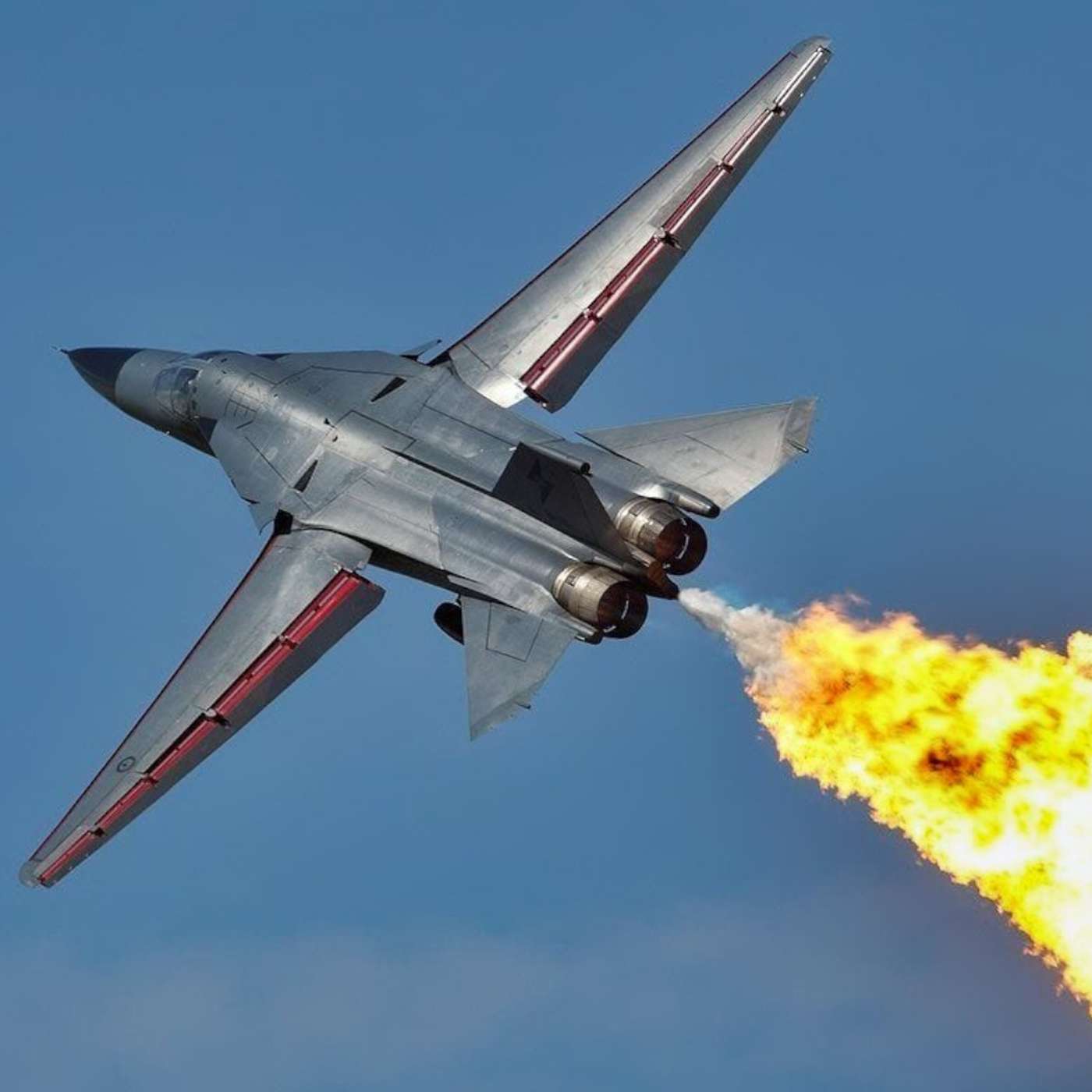
How the F-111 Revolutionized Aircraft Capabilities - Episode 57
Retired F-111 Pilot Lt. Col. Kevin “Too Kool” Kuhlmann explains how the General Dynamics F-111 could perform almost any role in the air battlefield, as a fighter, bomber, and even low-level attack aircraft. In this episode, Kevin discusses maintaining weapon systems on the F-106 and F-4, flying the Aardvark, and the thrill of lighting the afterburner during fuel dumps. With groundbreaking technology for its time, like terrain-following radar, variable-sweep wings, and an ejection capsule, this supersonic jet was not only advanced but a whole lot of fun to fly. This one is going to be cool! Resources: Wings Museum's FB-111A Kevin's MSU Bio The F-111 Aardvark (Behind the Wings) Chapters: (00:00) - Intro (01:34) - The F-111 Overview (04:32) - Flying at Mach 1.5 (04:55) - Aviation Beginnings (06:06) - Joining the Air National Guard (07:01) - F-106 Maintenance (08:39) - Working on the F-4 (09:24) - Joining the Air Force (11:32) - Naming the Aardvark (12:01) - Flying the T-37 (12:29) - F-111 Training (15:57) - Transitioning from F to A Models (16:48) - The Variable-Sweep Wings (19:27) - Terrain-Following Radar (20:25) - The Weapons System Officer (22:41) - The Ejection Capsule (24:41) - Fuel Dumping with Afterburner (26:25) - Becoming an F-111 Instructor Pilot (29:57) - Aardvark Retirement (30:32) - The F-111 Influence on Aircraft Design (31:59) - Teaching at MSU (33:16) - Kevin's Advice (34:48) - Outro
Jun 16
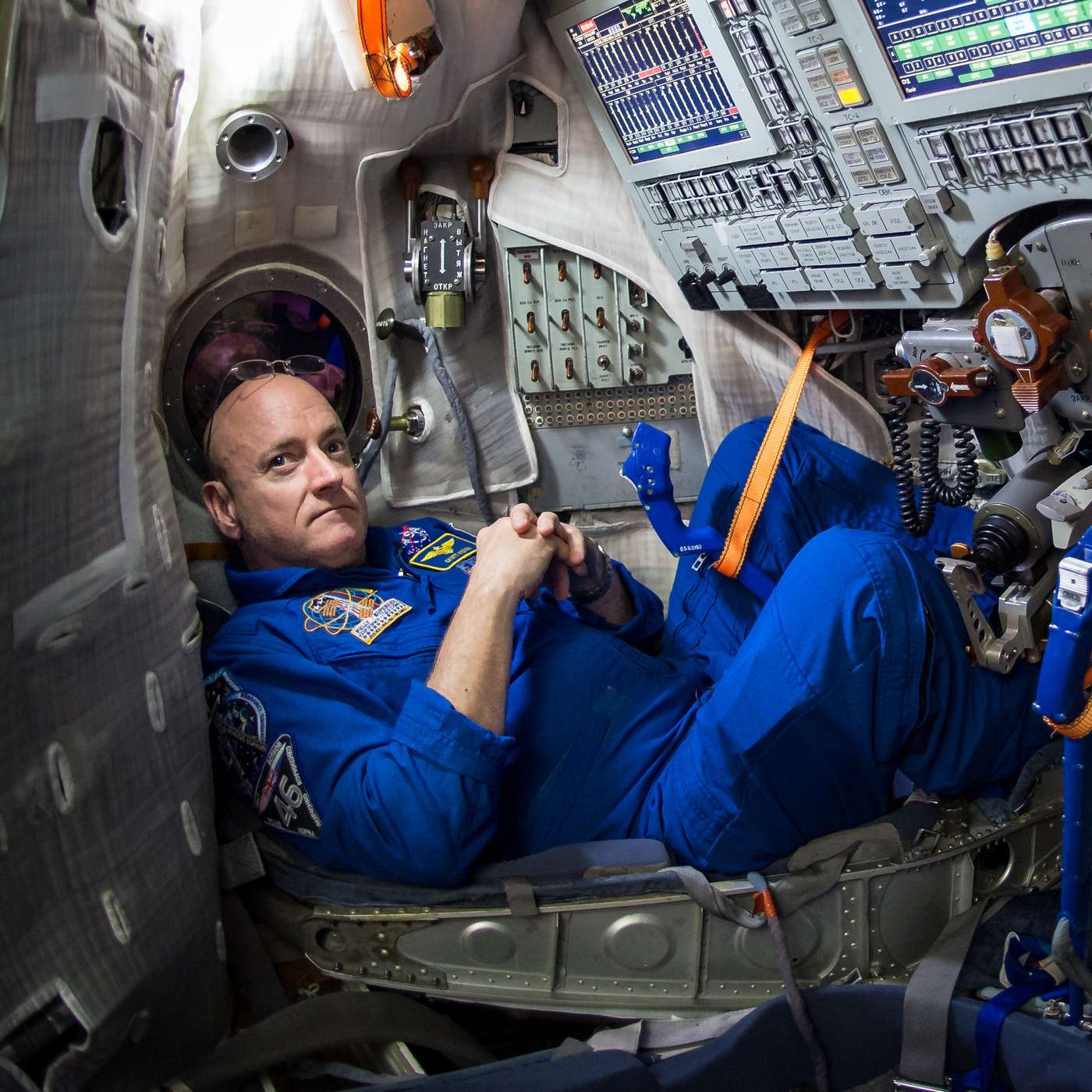
Surviving Extreme Isolation in Space - Episode 56
Social Scientist Alires Almon explains why the human element is critical to mission success during long-duration spaceflights. In this episode, Alires discusses the impacts of sending people to the Moon and beyond, how to maintain their mental health, and the ethics of extended space missions. With challenges like extreme isolation, communication delays, and living within the confines of the spacecraft, taking care of an astronaut’s overall wellness will be no easy task. There is a lot to learn! Resources: Deep Space Predictive's Website Project Lodestar Chapters: (00:00) - Intro (01:54) - Long Term Space Travel Overview (05:02) - New Capabilities (07:37) - Aerospace Beginnings (12:03) - Science Fiction (14:01) - The Human Factor in Space Planning (16:44) - Space Mental Health (19:31) - Stranded Astronauts (20:30) - Communication Challenges (23:28) - To Tell or Not to Tell (27:44) - AI Relationships (30:27) - Medical Skills (32:21) - In Case of Emergency (34:42) - Culture Shock (37:09) - Should We Go to Mars? (39:35) - Space Ethics (45:08) - Would You Go to Mars? (47:07) - Alires' Advice (48:44) - Outro
Jun 2
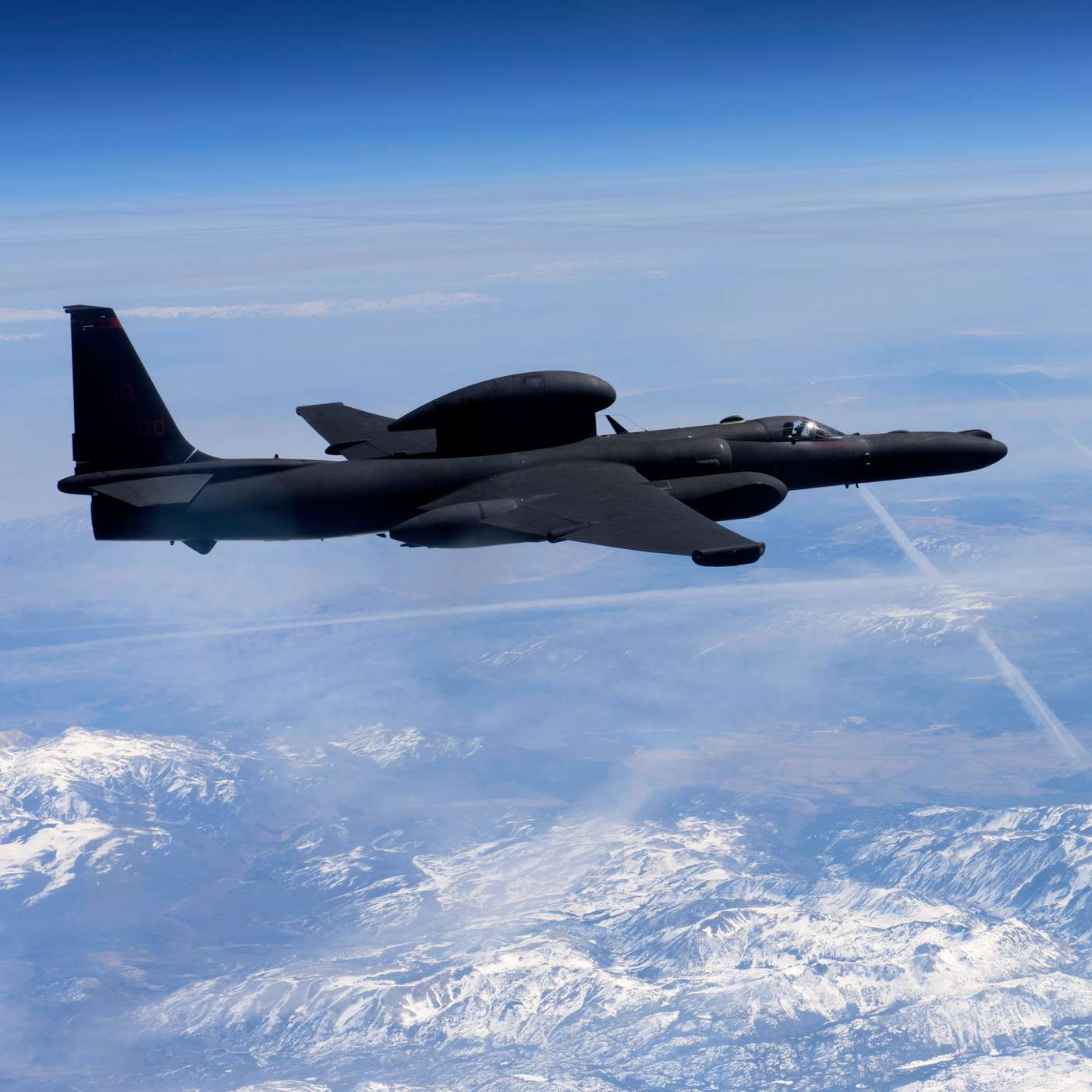
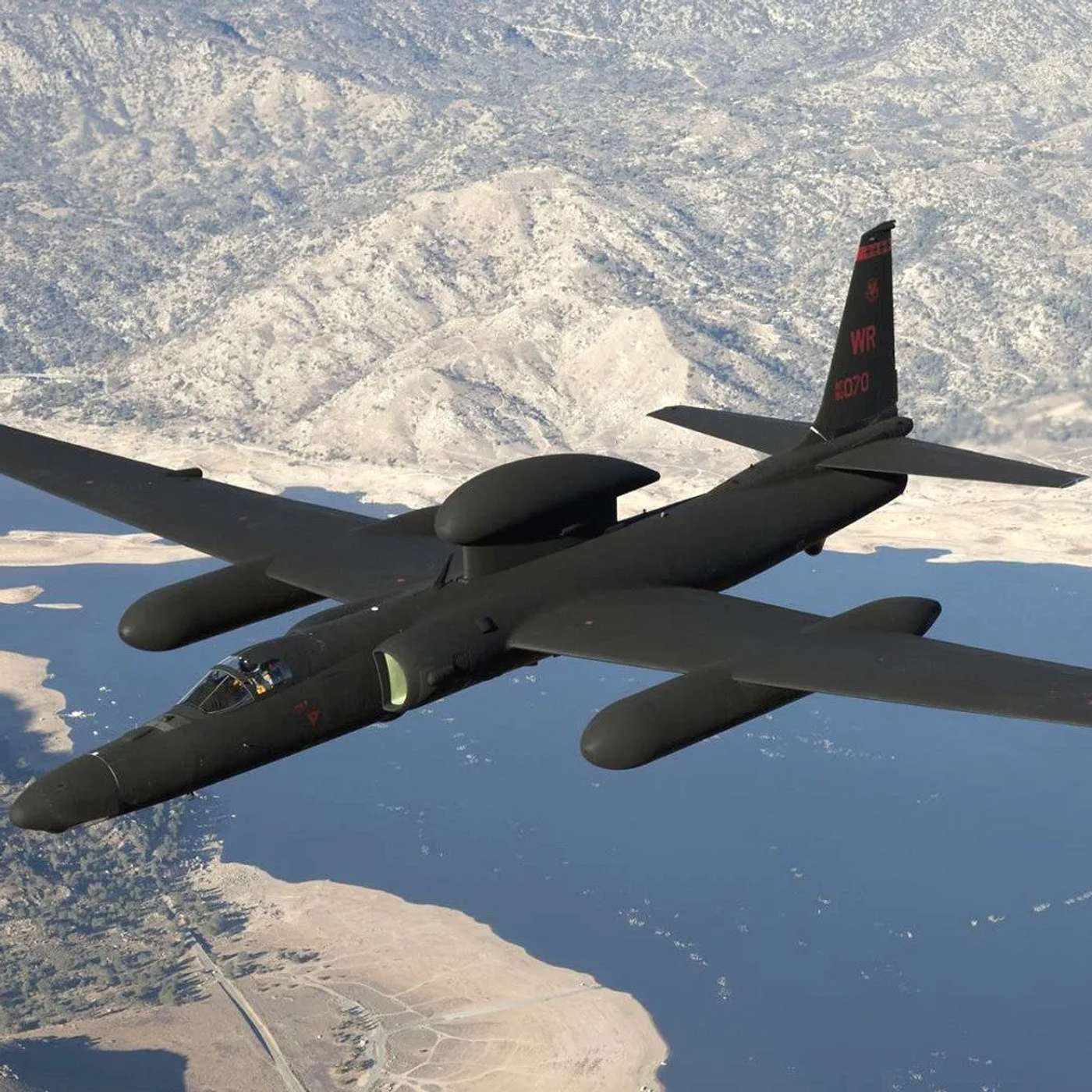
Spying From 70,000 Feet - Episode 55
Retired Pilot Lt. Col. Josh Cadice shares his story of going to the edge of space in one of the most iconic spy planes ever built. In this episode, Josh discusses flying the KC-135, wearing the pressure suit, piloting the mysterious U-2 at 70,000 feet, and its aerial reconnaissance capabilities. From Cold War origins to modern missions, this aircraft’s legacy is as fascinating as it is classified. This one is going to be cool! Resources: U-2 Air Force Fact Sheet KC-135 Air Force Fact Sheet Chapters: (00:00) - Intro (01:14) - Flying the U-2 Overview (03:10) - Aviation Beginnings and the USAFA (04:18) - The Civil Air Patrol (04:39) - U-2 History (06:00) - Flying the KC-135 (07:19) - Stratotanker Upgrades (08:05) - Aerial Refueling (10:16) - Becoming a U-2 Pilot (11:42) - Dragon Lady Training (13:24) - First Solo (14:30) - Mission Training (15:00) - The Pressure Suit (19:18) - U-2 Takeoffs and Landings (20:35) - The Chase Car (22:03) - Landing Close Call (23:01) - Flying Missions at 70,000 Feet (26:07) - Operational Differences (27:49) - Aerial Reconnaissance (29:49) - What It Takes to be a U-2 Pilot (30:48) - Landing the Dragon Lady (33:24) - The Future of Spy Planes (34:51) - Flying for United (35:41) - Josh's Advice (36:56) - Outro
May 19
3,113 Days as a Vietnam POW - Episode 54
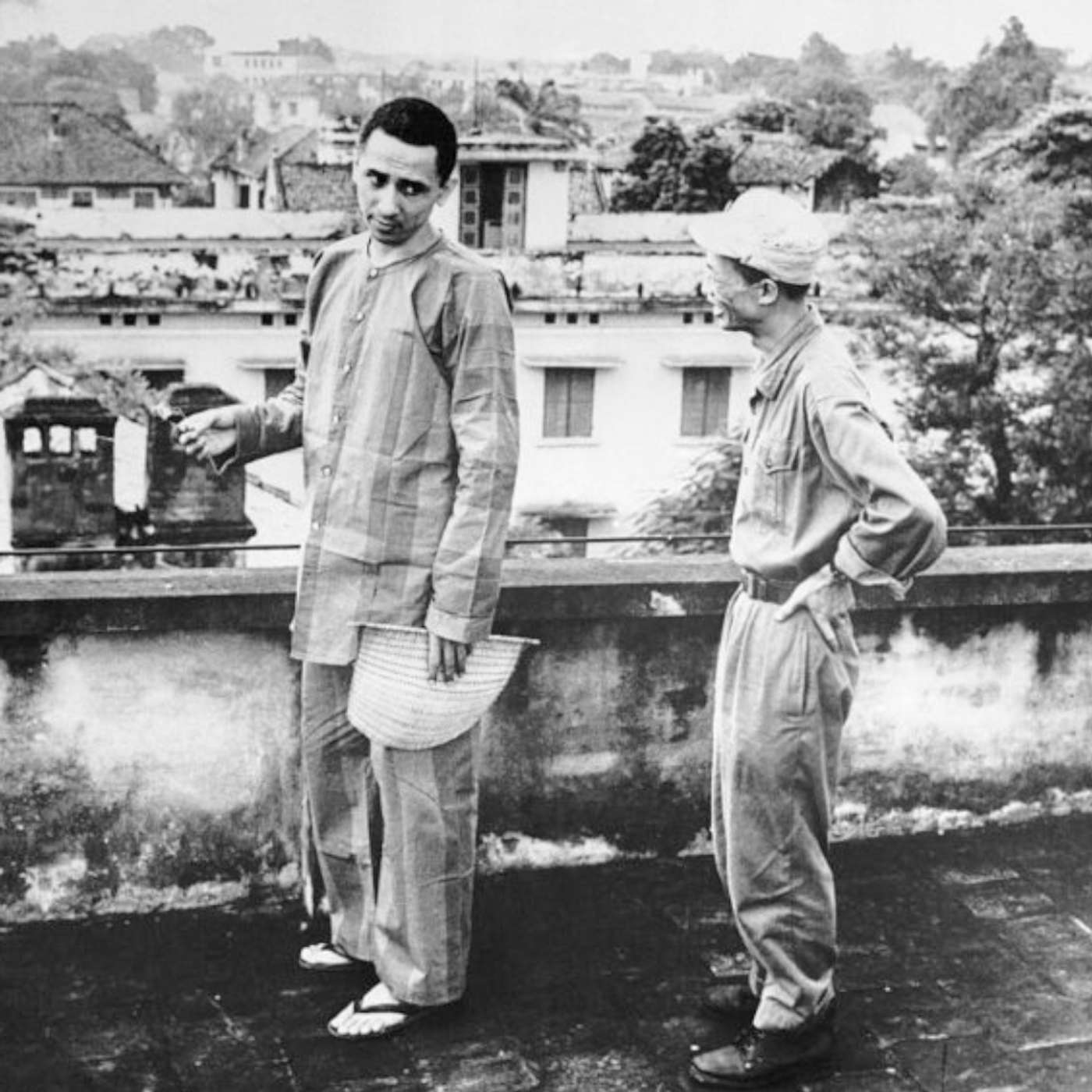
Retired Navy Commander Everett Alvarez Jr. shares his story of surviving the Hỏa Lò Prison as one of the longest-held prisoners of war in U.S. history. In this episode, Everett discusses flying the A-4 Skyhawk, being shot down in Vietnam, enduring harsh conditions and torture, and reacclimating to life back home after Operation Homecoming. Throughout his journey, Everett and fellow captives held onto the will to live when all else was stripped away. There is a lot to learn! Resources: "Code of Conduct" by Everett Alvarez Jr. "Chained Eagle" by Everett Alvarez Jr. The Hanoi Hilton Exhibit (American Heritage Museum) The Hanoi March and the Consolidation of POWs (PBS) Douglas A-4 Skyhawk (Wikipedia) Operation Pierce Arrow (Wikipedia) Chapters: (00:00) - Intro (01:02) - POW Overview (04:45) - Flying the A-4 Skyhawk (06:07) - Operation Pierce Arrow (09:04) - Ejecting from the A-4 (10:38) - The "Hanoi Hilton" (14:05) - The Tap Code (18:41) - Living in Harsh Conditions (19:32) - The Hanoi March (20:41) - Ignoring Geneva Conventions (21:13) - The Will to Live (25:03) - Operation Homecoming (30:17) - From Prisoner to Parades (33:11) - The Congressional Gold Medal Award (34:22) - Everett's Advice (35:29) - Outro
May 5
Cleared for Chaos - Episode 53
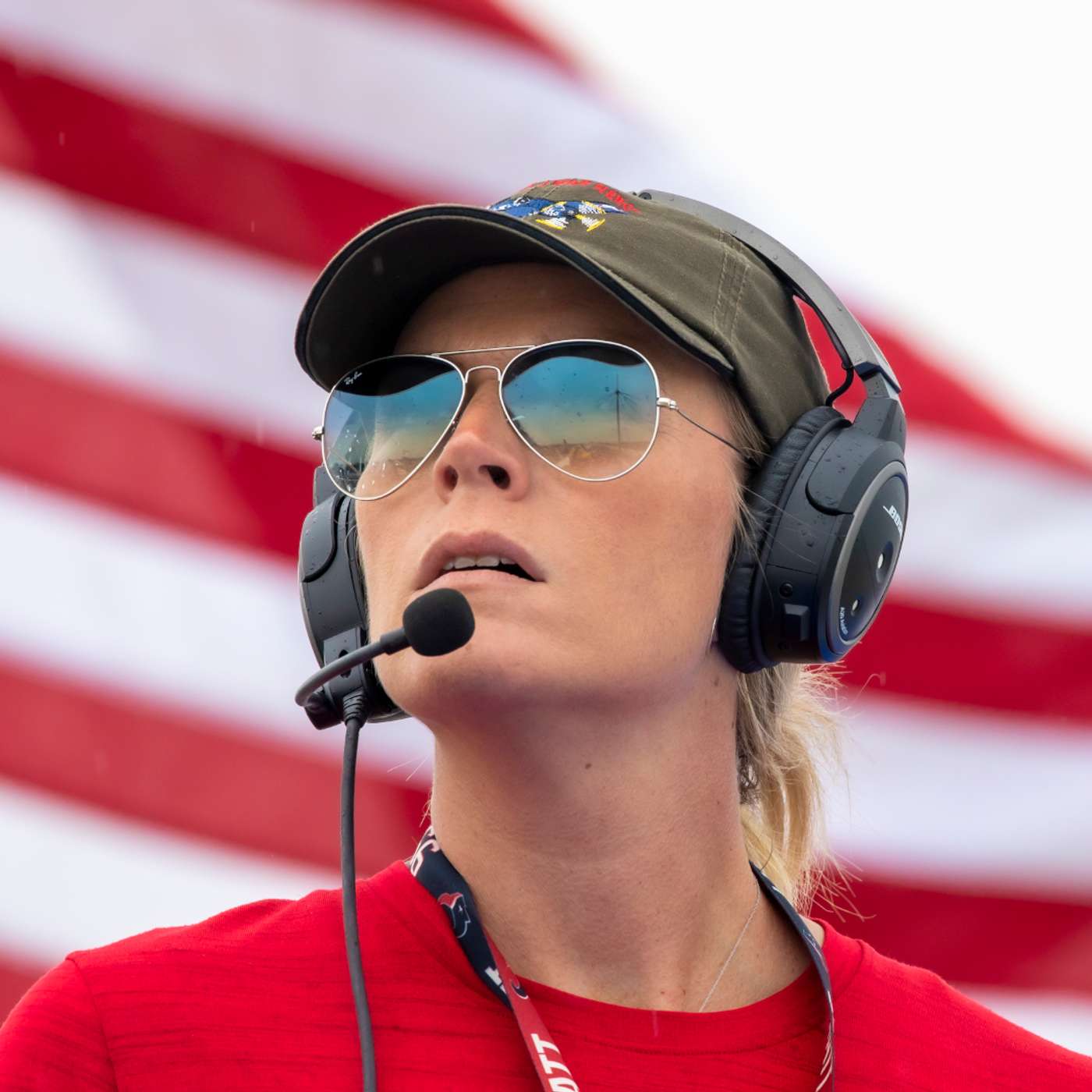
Air Boss Kellie Hudson tells us how she balances spectacle and safety while controlling intense air show skies. In this episode, Kellie discusses her path from air traffic controller to air boss, managing the airspace over AirVenture Oshkosh, and ramp bossing the Super Bowl. From coordinating warbirds and jet teams to managing emergencies on the flight line, she shares what it takes to keep the skies and ground running smoothly. This one is going to be cool! Resources: Kellie Hudson's Website EAA AirVenture Oshkosh Chapters: (00:00) - Intro (01:03) - What is an Air Boss? (02:14) - Balancing Safety and Spectacle (02:35) - Aviation Beginnings (03:51) - Controlling From the Tower (05:18) - ATC Misconceptions (05:56) - Military vs. Civilian ATC (07:00) - Controlling the Nellis Air Force Base Tower (08:46) - Red Flag Exercises (10:12) - Air Boss Origins (11:49) - Managing the Airspace (12:42) - Working at Air Shows (15:22) - Air Show Risks (17:08) - Air Bossing Oshkosh (19:58) - Ramp Bossing the Super Bowl (21:58) - Air Force One (22:18) - Ramp vs. Air Boss Roles (22:56) - Air Show Emergencies (25:16) - Training (26:26) - The Future of ATC and Air Boss Roles (27:06) - Staffing Shortages and Aviation Incidents (30:18) - Kellie's Advice (31:43) - Outro
Apr 21
The Pilot Changing Hollywood Filmmaking - Episode 52
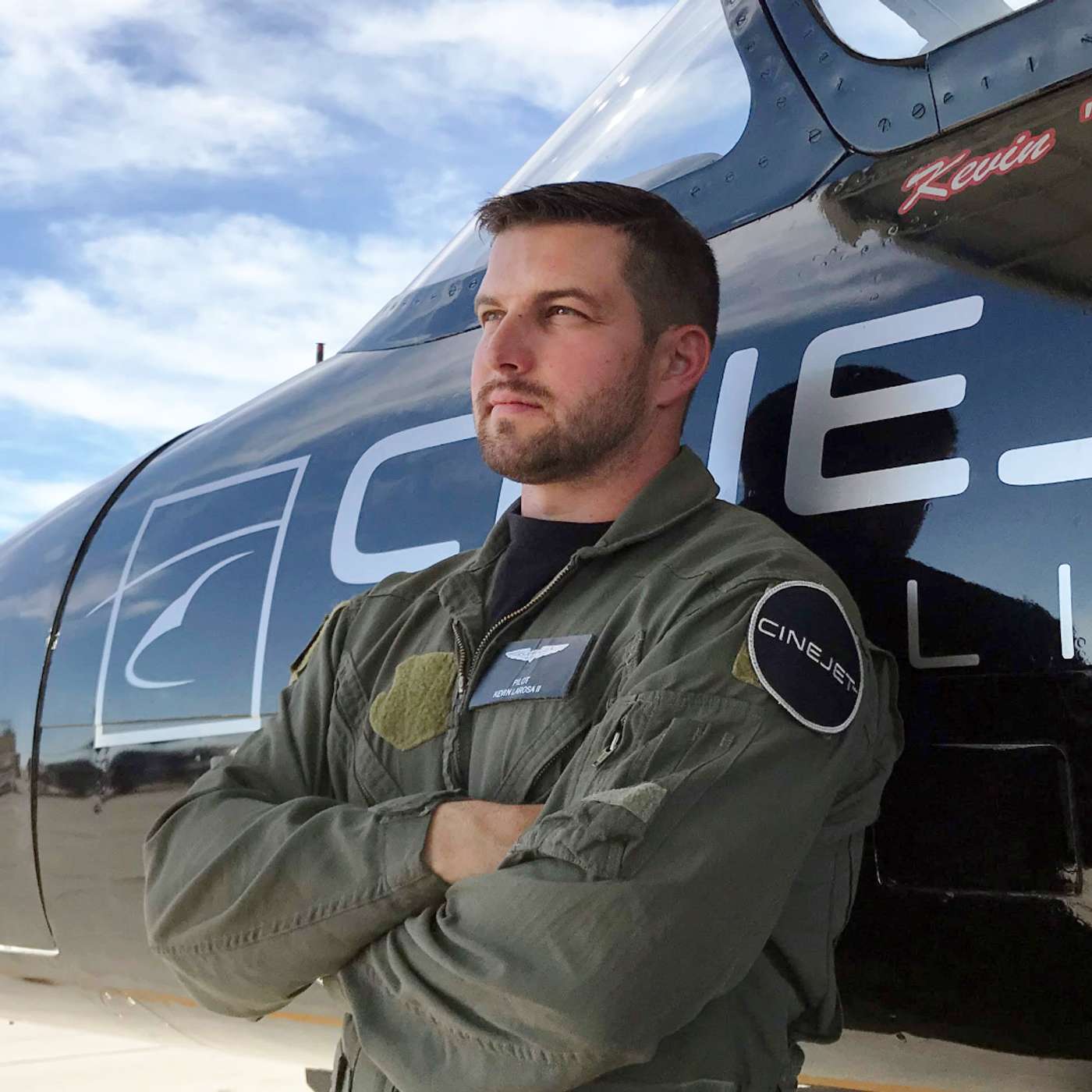
Aerial Coordinator and Stunt Pilot Kevin “K2” LaRosa shares how he brought some of the most complex aviation movie scenes to life. In this episode, Kevin discusses designing and flying the modified L-39 CineJet, filming iconic movies like "Top Gun: Maverick" and "Devotion", and training A-list Hollywood actors. If you’ve seen aerial cinematography on the big screen lately, it’s likely Kevin had a hand in it. Be sure to tune in because there's an exclusive announcement this episode! This one is going to be cool! Want to hear more "Top Gun" stories? Check out Episode 40 with "Maverick" Stunt Pilot Scott "Intake" Kartvedt! Resources: Kevin LaRosa's Website Interview: Kevin LaRosa II, aerial coordinator and lead camera pilot for ‘Devotion,’ on those high-flying sequences (Awards Watch) The Aero L-39 Albatros (Wikipedia) Chapters: (00:00) - Intro (01:19) - The Unknowns of Aerial Cinematography (02:41) - Early Interest in Aviation (04:21) - Designing the L-39 CineJet (06:10) - A Special Announcement (07:13) - Filming with the CineJet (08:48) - Picking the Right Cinema Aircraft (10:13) - Filming with the UH-60 MovieHawk (12:03) - A Typical Day on Set (15:29) - Biggest Filmmaking Challenges (17:29) - Aerial Training and Rehearsals (19:35) - Aborting a Shot (20:16) - Filming "Top Gun: Maverick" (22:32) - Working With Tom Cruise (24:06) - Flying Alongside Fighter Pilots (26:38) - Mentally Preparing for High-Speed Stunts (28:12) - Training Hollywood Actors (29:27) - CGI vs. the Real Deal (30:55) - Kevin's Heroes (32:56) - Dream Movie to Work On (33:12) - The Future of Aerial Cinematography (34:07) - Kevin's Advice (35:24) - Lacking an Off Button (36:06) - Outro
Apr 7
The First Woman Thunderbirds Pilot - Episode 51
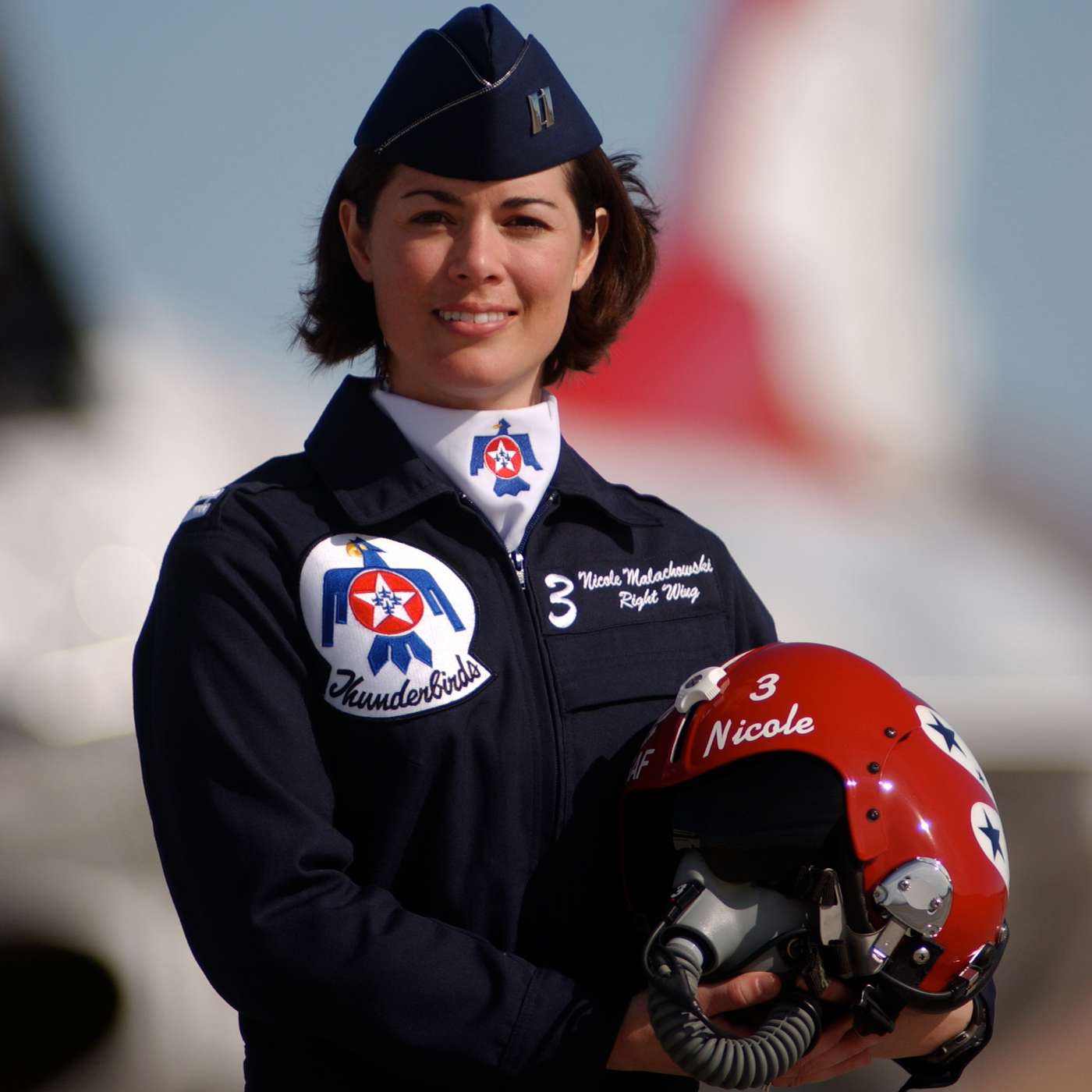
Retired F-15 and F-16 fighter pilot Nicole Malachowski tells us about flying 18 inches off the wings of high-speed jets as a U.S. Air Force Thunderbird. Welcome to Season 6 of the Behind the Wings podcast! In this episode, Nicole takes us through her groundbreaking journey as the first woman to become a Thunderbird pilot. She discusses her combat missions, flying in airshows, her WASP connection, and how a tick-borne illness changed her life forever. There is a lot to learn! Resources: Nicole Malachowski's Website Nicole Malachowski's Bio (Wikipedia) The Thunderbirds' Website The Women Airforce Service Pilots (WASP) (Air Force History Fact Sheet) Chapters: (00:00) - Intro (01:23) - F-15 vs. F-16 (02:22) - Early Interest in Aviation (03:26) - USAFA (04:42) - The Ban on Women In Combat Jets (06:38) - Flying the F-15 and F-16 (09:06) - Combat Missions (13:50) - Thunderbirds Admission (17:58) - Thunderbirds Training (21:33) - Combat vs. Thunderbirds (24:02) - Audience Interaction (27:34) - Tick-Borne Illness (32:57) - The Wounded Warrior Program (34:12) - WASP Connection (36:55) - The Future of Veteran Medicine (39:21) - Nicole's Legacy (40:42) - Nicole's Advice (41:45) - Outro
Mar 31
Behind the Wings Season 6 Trailer
The Behind the Wings podcast is back with Season 6 and 10 new episodes! Hear stories from one of the longest interned Vietnam POWs, Everett Alvarez Jr., controlling the chaotic skies above air shows with Air Boss Kellie Hudson, and the making of Top Gun: Maverick and Devotion with Aerial Cinematographer and Stunt Pilot Kevin "K2" LaRosa. We've got some incredible stories and guests coming up! New episodes come out every other Monday, starting next week with the first woman Thunderbird pilot, Nicole "FiFi" Malachowski. Subscribe wherever you listen, because this season is going to be cool! We will see you next week for Season 6 of Behind the Wings. In the meantime, check out our past episodes!
Feb 10
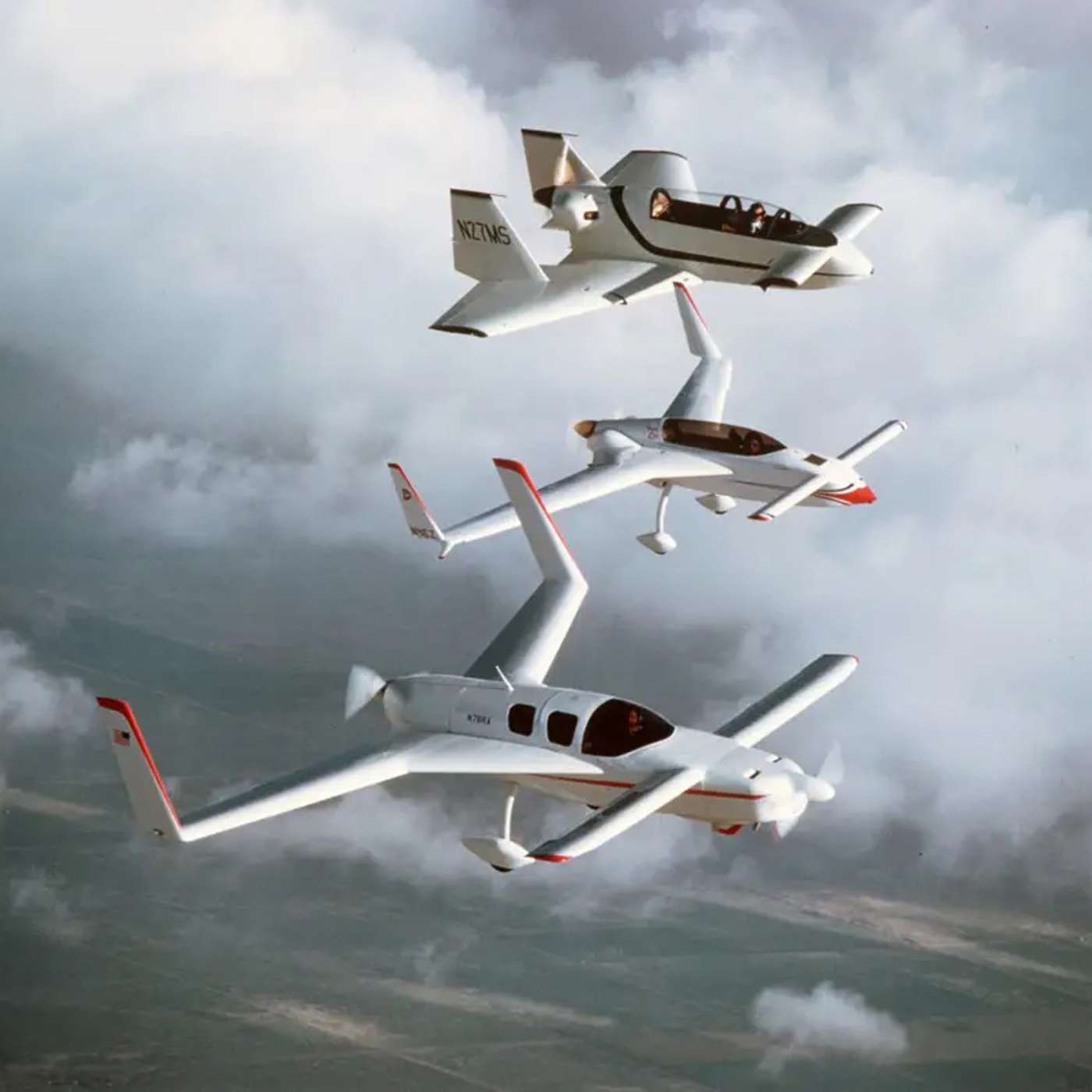
Designing 400 Air and Spacecraft - Episode 50
Legendary aerospace engineer Burt Rutan shares untold stories behind some of the most unique air and spacecraft ever built. In this episode, Burt reflects on a lifetime of aerospace innovation — from working as a U.S. Air Force flight test engineer to breaking records with his homebuilt aircraft. He also discusses stall testing the F-4, Bede Aircraft, the world’s largest airplane, and the Voyager and GlobalFlyer around-the-world flights. This one is going to be cool! Episode 50 marks the end of Season 5 of the Behind the Wings podcast. We'll be taking a short break and will be back later this year with Season 6! Key Takeaways: Burt's love of aviation began when two B-36 bombers flew over his house. He was building airplanes out of balsa wood at the time. After college, Burt started his aerospace career at Edwards Air Force base as a civilian Flight Test Engineer. He worked on the F-4 to test and help with its stalling problems. Jim Bede of Bede Aircraft wanted Burt to help him test and perfect his BD-5. Burt would work with him for two years overseeing test pilots and designs. Burt's passion was to solve departure problems in aircraft. His home builds often had a canard design to help alleviate most spin issues. As of today, he has built 49 aircraft and created over 400 others. Stratolaunch Roc, the world's largest aircraft, was designed by Burt. This twin-fuselage plane is used to test hypersonic flight by launching a vehicle, the Talon-A, from the aircraft's center. Burt's aircraft have several world records including the round the world flights conducted by Dick Rutan in the Rutan Voyager and Steve Fosset in the Virgin Atlantic GlobalFlyer. Steve Fosset flew around the world three times in the GlobalFlyer. Burt thinks the future of aviation is one without pilots. With the advancements of AI and autonomous vehicles, he thinks that future airplanes should be designed without aviator controls. Resources: Burt's Website The BD-5 Stratolaunch's Website Hypersonic Flight Testing (Behind the Wings on PBS) Chapters: (00:00) - Intro (01:11) - Early Interest in Aviation (03:03) - Spin Testing the F-4 (05:10) - Testing the XC-142A (06:54) - Working at Bede Aircraft (10:07) - Building the VariViggen (11:57) - The Long-EZ (13:07) - The World's Largest Airplane (15:07) - 400 Designs (16:01) - Flying Around the World in Voyager (18:59) - The GlobalFlyer's Record (25:16) - The Future of Aircraft (27:10) - Life Advice (28:15) - Outro
Jan 27
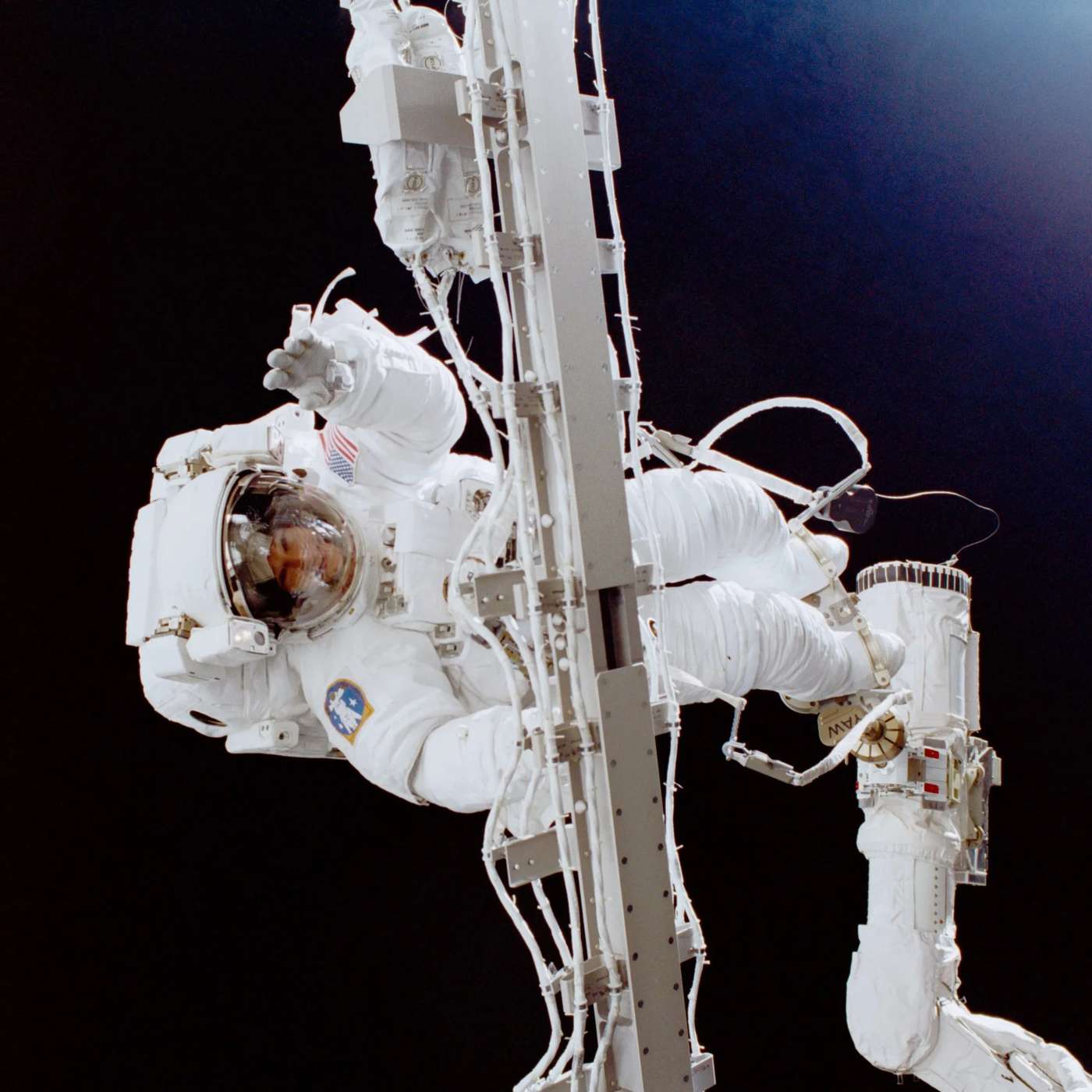
Spacewalking for 8 Hours - Episode 49
Retired NASA Astronaut Lieutenant General Susan Helms reflects on her 211 days in space and life onboard a young International Space Station. In this episode, Susan takes us through her groundbreaking journey as the first active-duty woman officer to become a NASA astronaut. She discusses attending the United States Air Force Academy, flight testing fighter jets, her five space missions, and a record-breaking spacewalk. This one is going to be cool! Key Takeaways: Susan's childhood dream was to attend the United States Air Force Academy. At the time, women were not permitted to learn at the USAFA, but in 1975 during her senior year of high school, President Ford signed a law allowing women to enroll. She applied and was accepted to the Academy, joining 157 other women in the first class of 1976. After graduating from the USAFA in 1980, Susan was assigned to Eglin Air Force Base as an F-16 Weapons Separation Engineer and then became the Lead Engineer for F-15 weapons separation. She then transferred to Edwards Air Force Base to be a Flight Test Engineer. While flight testing CF-18s in Canada, Susan was selected to become a NASA astronaut. She flew on STS-54, 64, 78, 101, and Expedition 2. Susan and crewmate Jim Voss trained and studied languages in Moscow with fellow Cosmonaut Yuri Usachov before their Expedition 2 flight. On a few of her missions, Susan operated the Remote Manipulator System on the Space Shuttle and the International Space Station. This robot arm is used to deploy satellites, capture objects, and assist astronauts during spacewalks. In 2001, Susan Helms and Jim Voss set a world record after spacewalking for 8 hours and 56 minutes. This record was held for 23 years before Chinese astronauts Cai Xuzhe and Song Lingdong broke it in 2024 by 10 minutes. Susan encourages listeners to do what they love and not to follow careers that others are pushing them towards. Resources: Susan Helms' Website Susan Helms' NASA Bio Susan Helms' Air Force Bio One of first female Air Force Academy graduates, Susan Helms, becomes first female military astronaut in space (Denver 7) Expedition 2 (NASA) Chapters: (00:00) - Intro (01:00) - The First Space Tourist & Astronaut Roles (02:55) - Early Interest in Aviation (03:34) - USAFA Application (04:52) - The USAFA's First Class of Women (05:54) - Attending the USAFA (08:01) - F-15 & F-16 Weapons Testing (09:52) - The Flight Test Engineer Role (11:14) - Flight Testing in Canada (13:00) - Astronaut Selection & First Mission (14:45) - Flying at Mach 25 (15:32) - The Remote Manipulator System (RMS) (18:19) - Astronaut Training in Moscow (21:04) - A Record-Breaking Spacewalk (24:54) - Eating & Drinking During Spacewalks (26:17) - Living in Space (28:35) - Post Astronaut Career (30:22) - Space Exploration's Future (32:02) - Life Advice (32:45) - Outro
Jan 13
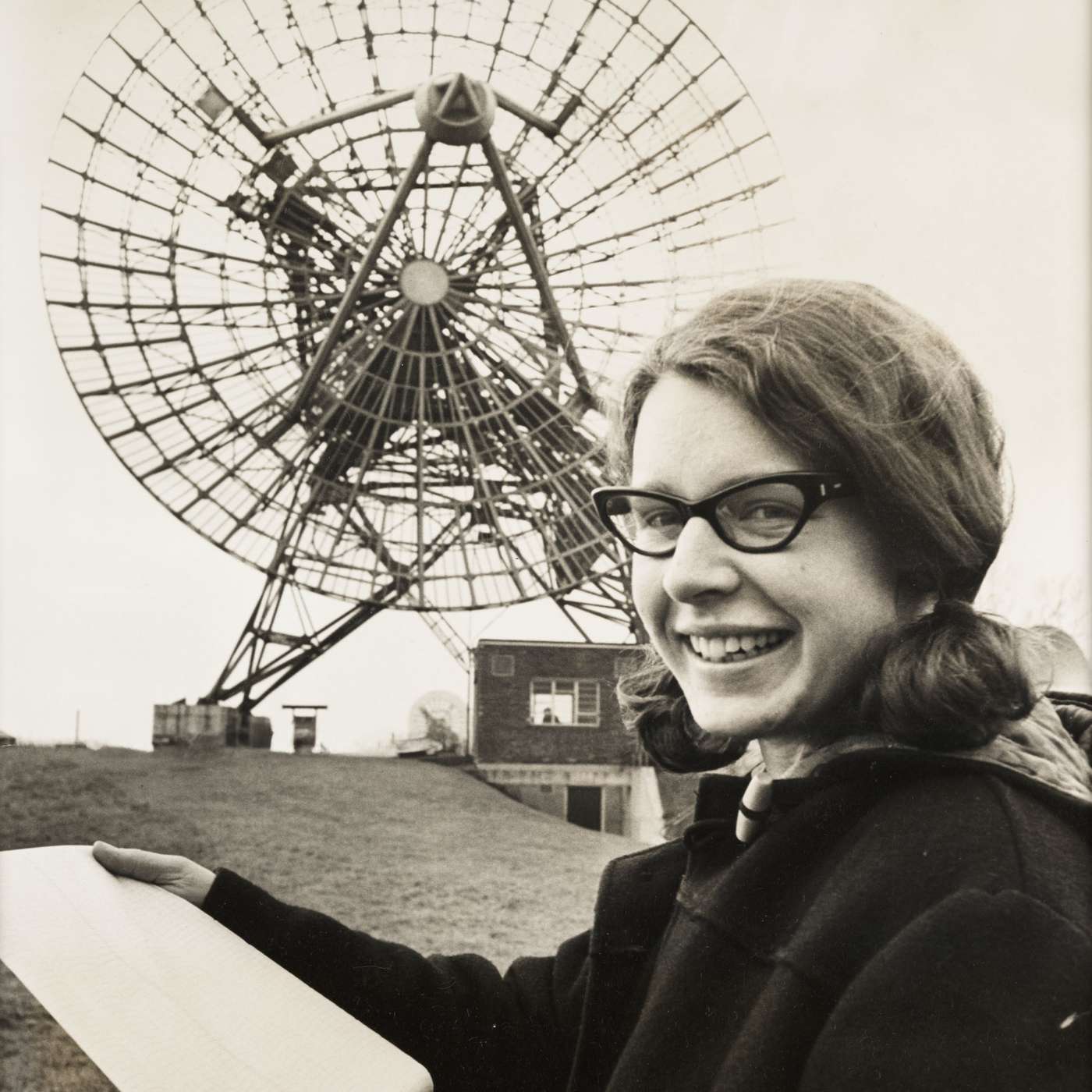
Discovering the First Pulsar - Episode 48
Astrophysicist and professor, Dame Jocelyn Bell Burnell reflects on how she helped change astronomy forever. In this episode, learn more about how a peculiar signal from space led Jocelyn to a groundbreaking discovery. She discusses her aerospace journey, building a radio telescope, discovering pulsars, and the 1974 Nobel Prize controversy. This one is going to be cool! Key Takeaways: At the time, women were not often permitted to study science fields in school. Her parents protested this rule and Jocelyn became top of her class in Physics. While attending Cambridge, Jocelyn helped build their radio telescope alongside Astronomers Martin Ryle and Antony Hewish. Originally the telescope was built to study Quasars, which are distant galaxies whose incredibly bright cores are powered by supermassive black holes. While observing and researching the telescope, Jocelyn found a strange "pulse" that occurred at regular intervals. Labeled LGM-1 or Little Green Men 1, it was the first recording of a pulsar. Since pulsars were discovered, over 3,000 have been found today. In 1974, Martin Ryle and Antony Hewish were awarded the Nobel Prize for the discovery of pulsars. Because Martin and Antony were the telescopes' leaders, Jocelyn, a student at the time, was left out. She has since been awarded several prestigious accolades. Jocelyn encourages audiences to double-check anomalies as they never know which scientific discoveries could be found. Resources: Jocelyn's Bio (Wikipedia) What are pulsars? (Space.com) Journeys of Discovery (University of Cambridge)
Dec 30, 2024
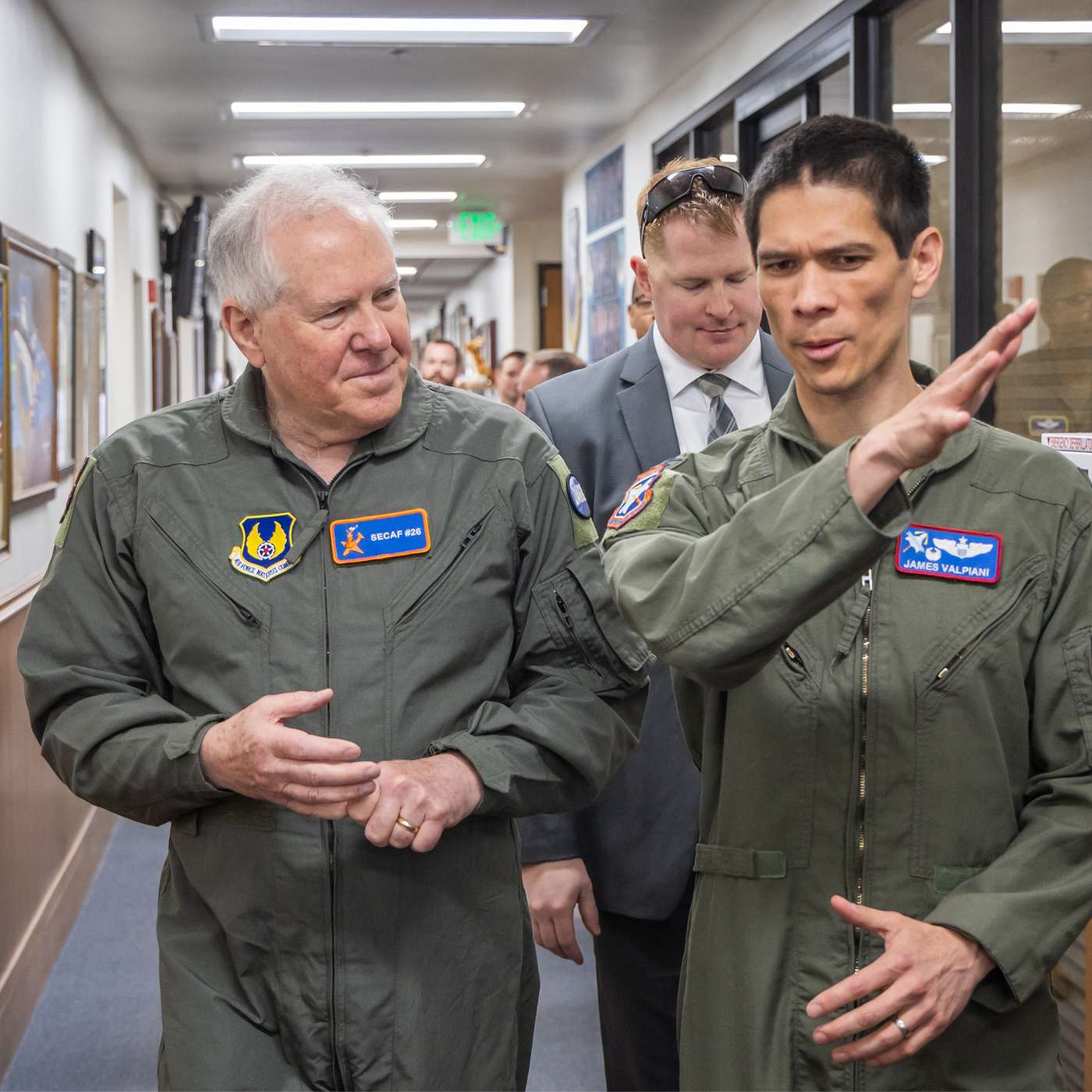
AI's Military Future with the USAF Secretary - Episode 47
Secretary of the United States Air Force Frank Kendall discusses AI's impact on modern air warfare. In this episode, we're switching things up and going to the Pentagon to bring you a special in-depth conversation on artificial intelligence in military aviation. Secretary Kendall discusses AI’s evolving role in U.S. air power, collaborative combat aircraft, technology breakthroughs, and ethical concerns. This one is going to be cool! Key Takeaways: Secretary Kendall discusses the history of AI in the U.S. military and how it has helped transform Air Force operations. Collaborative Combat Aircraft (CCA) are uncrewed aircraft flown by artificial intelligence. They are currently being tested alongside fighter jets to become loyal wingmen. The ethics of artificial intelligence in warfare remains at the forefront of AI integration. Secretary Kendall wants to ensure that the U.S. complies with the laws of war and maintains human accountability for lethal decision-making. CCA's can be both budget-friendly and help save time when testing new technologies. AI advancement aims to help the U.S. maintain technological superiority over its global adversaries. By integrating CCAs in the frontlines of combat, they could help save fighter pilot lives by taking on more risky missions or diverting enemy fire. Secretary Kendall stresses the importance of enhancing AI operations quickly while ensuring that ethics are not left behind. Resources: Secretary Frank Kendall's Bio (Air Force) Departing Air Force Secretary Will Leave Space Weaponry as a Legacy (New York Times) AI in Military Aviation (Behind the Wings PBS S6) Collaborative Combat Aircraft (Behind the Wings PBS S6)
Dec 16, 2024
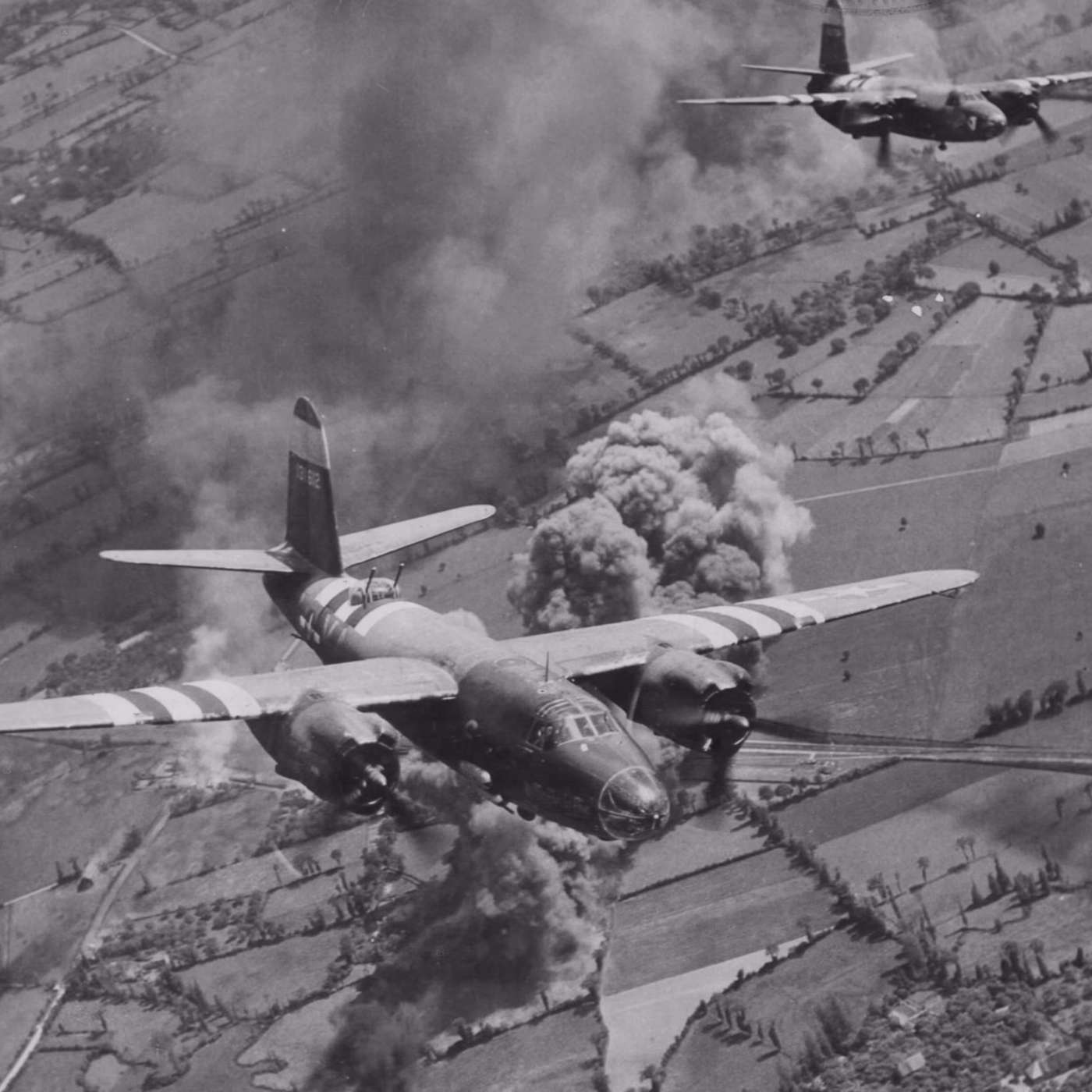
The D-Day Air Campaign - Episode 46
National Museum of WWII Aviation Curator Gene Pfeffer discusses why winning the air war was pivotal to D-Day's success. In this episode, we’ll dive into the planning and execution of air operations, the aircraft that supported the massive assault, the continued aerial support for troops after Operation Overlord, and its lasting legacy and impact on aviation. June 6, 2024, marked the 80th anniversary of D-Day and gave us the opportunity to learn more about one of the most important battles of WWII. This one is going to be cool! Key Takeaways: Gene takes us through the evolution of aircraft spurred by World War II, from biplanes to jets. Although America hadn't yet entered the war, planning for D-Day began in 1940, outlining what exactly would be required for the invasion. In 1943, it was decided that the Allies could not win the invasion without air superiority. Leading up to D-Day, the Allies focused heavily on eliminating the German Air Force as a factor, and on June 6, the German Air Force had 300 sorties while the Allies had 13,000. The day before Operation Overlord, the Allies painted invasion stripes on their airplanes under the cover of darkness. Due to the massive amount of aircraft, the paint scheme helped mitigate friendly fire. Multiple kinds of aircraft participated in the invasion and each had specific roles. To name a few, the C-47s towed gliders or dropped paratroopers, B-17s, 24s, and 26s dropped bombs, P-47s acted as flying artillery, and P-38s flew cover over the ships. After D-Day, the Allies used their air power to aid troops with strategic bombings like Operation Cobra, targeting German oil and V-2 centers, and providing medical aid. Gene encourages anyone interested in aerospace to visit your local museum and get involved. Resources: The National Museum of WWII Aviation Website Operation Overlord: D-Day (National Museum of the U.S. Air Force) Operation Overlord (Wikipedia) Air War During Operation Overlord (Wikipedia)
Dec 2, 2024
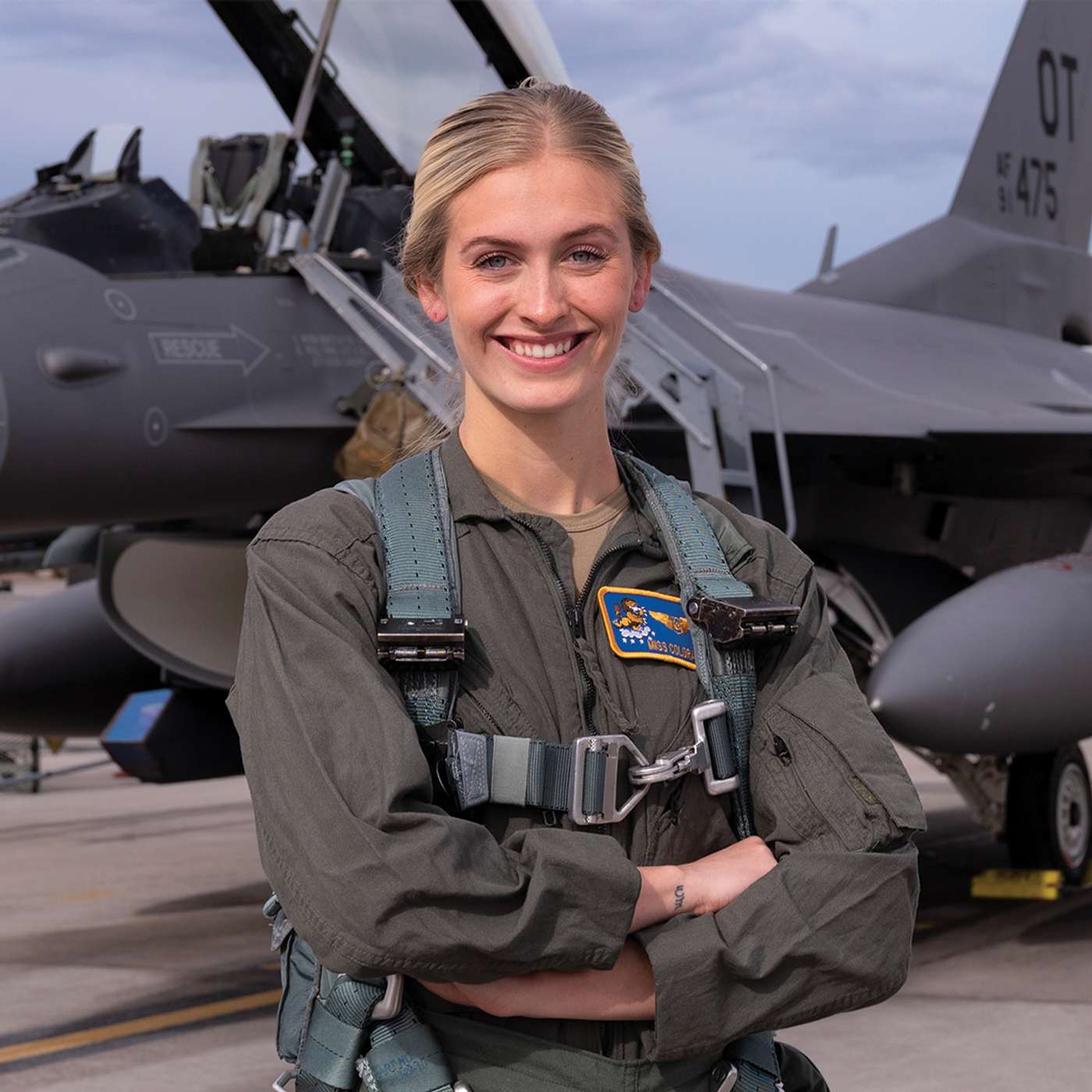
From the Air Force to Miss America - Episode 45
Miss America 2024, Madison Marsh, discusses the crossroads of pageantry and the military. In this episode, Madi takes us through her groundbreaking journey as the first active-duty officer to earn the Miss America title. She shares insights into her pilot training, attending the United States Air Force Academy, cancer research, starting a non-profit, and how a military background has influenced her career. This one is going to be cool! Key Takeaways: Madi has always been fascinated by science and found her love of aerospace while attending space camp at 13 years old. Madi earned her pilot's license at 17, the youngest possible age. While attending the United States Air Force Academy, Madi studied astrophysics and interned at NASA and Harvard. At the Academy, Madi started her pageantry journey, winning Miss Academy and Miss Colorado. In January of 2024, Madi competed in and won Miss America, becoming the first active military officer to earn the title. Madi started the Whitney Marsh Foundation after losing her Mom to pancreatic cancer. This organization helps provide education and funding for pancreatic cancer research. Madi encourages listeners to learn from their failures and to use those lessons to succeed further. Resources: Miss America Website One Lieutenant’s Journey from USAFA to Miss Colorado to Harvard (United States Air Force) Madison Marsh: Beauty Queen, Hard-Core Air Force Officer (Forbes) Whitney Marsh Foundation
Nov 21, 2024
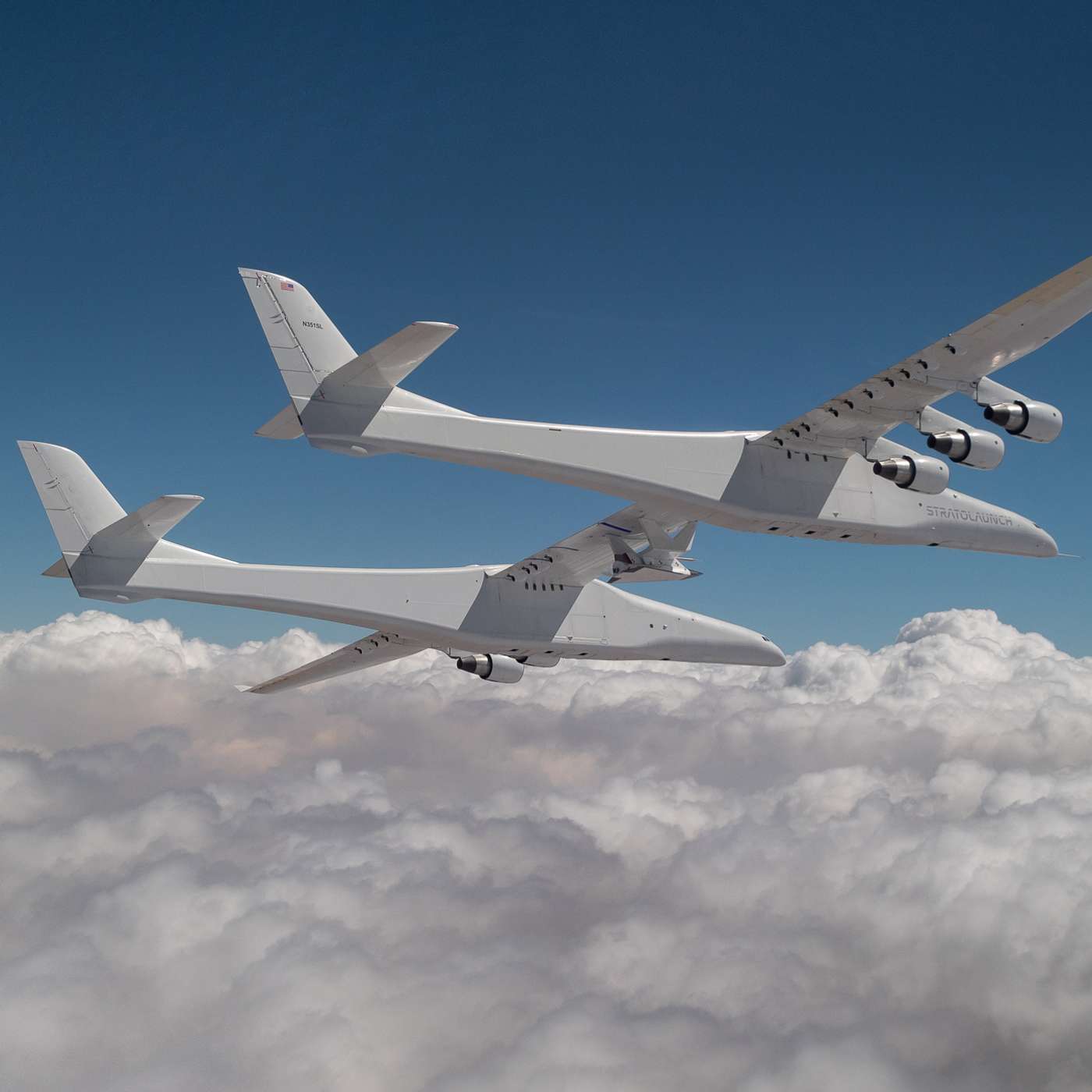
The Making of Hypersonic Flight Testing - Miniseries Episode 4
How the world's largest aircraft, Stratolaunch Roc, is paving the way for repeatable hypersonic testing. Welcome to the final part of our bonus podcast miniseries on the making of Behind the Wings PBS Season 6! In this episode, Director Cray Novick and Host Tracy LaTourrette discuss behind-the-scenes stories while filming with Stratolaunch at the Mojave Air and Space Port. Join us as we talk about the history of hypersonics, building the Stratolaunch Roc, the Talon-A test vehicle, the Hadley rocket engine, and flying this twin-fuselage aircraft. This one is going to be cool! Check out the new season on PBS or our YouTube channel. We can't wait to show you what we've been working on! Our regularly scheduled podcast series will return on 12/2/24 with guest Madison Marsh, the first active-duty Air Force Officer to be crowned Ms. America. Thanks for joining us! Full Season Premiere Schedule: PBS Episode 1 - AI in Military Aviation: November 7, 2024, 7:30 p.m. MT Episode 2 - Collaborative Combat Aircraft: November 7, 2024, 8:00 p.m. MT Episode 3 - The Super Guppy: November 14, 2024, 7:30 p.m. MT Episode 4 - Hypersonic Flight Testing: November 14, 2024, 8:00 p.m. MT Wings' YouTube Channel Episode 1 - AI in Military Aviation: November 7, 2024, 7:30 p.m. MT Episode 2 - Collaborative Combat Aircraft: November 14, 2024, 7:30 p.m. MT Episode 3 - The Super Guppy: November 21, 2024, 7:30 p.m. MT Episode 4 - Hypersonic Flight Testing: November 28, 2024, 7:30 p.m. MT
Nov 14, 2024
The Making of The Super Guppy - Miniseries Episode 3
How a seemingly impossible idea helped America win the space race. Welcome to part 3 of our 4-part bonus podcast miniseries on the making of Behind the Wings PBS Season 6! In this episode, Director Cray Novick and Host Tracy LaTourrette discuss behind-the-scenes stories while filming the legendary Super Guppy in El Paso, Texas. Join us as we talk about the space race, building the Super Guppy, the similarities this aircraft has with Frankenstein, and watching the odd airplane fly. This one is going to be cool! Check out the new season on PBS or our YouTube channel. We can't wait to show you what we've been working on! Full Season Premiere Schedule: PBS Episode 1 - AI in Military Aviation: November 7, 2024, 7:30 p.m. MT Episode 2 - Collaborative Combat Aircraft: November 7, 2024, 8:00 p.m. MT Episode 3 - The Super Guppy: November 14, 2024, 7:30 p.m. MT Episode 4 - Hypersonic Flight Testing: November 14, 2024, 8:00 p.m. MT Wings' YouTube Channel Episode 1 - AI in Military Aviation: November 7, 2024, 7:30 p.m. MT Episode 2 - Collaborative Combat Aircraft: November 14, 2024, 7:30 p.m. MT Episode 3 - The Super Guppy: November 21, 2024, 7:30 p.m. MT Episode 4 - Hypersonic Flight Testing: November 28, 2024, 7:30 p.m. MT

Nov 7, 2024
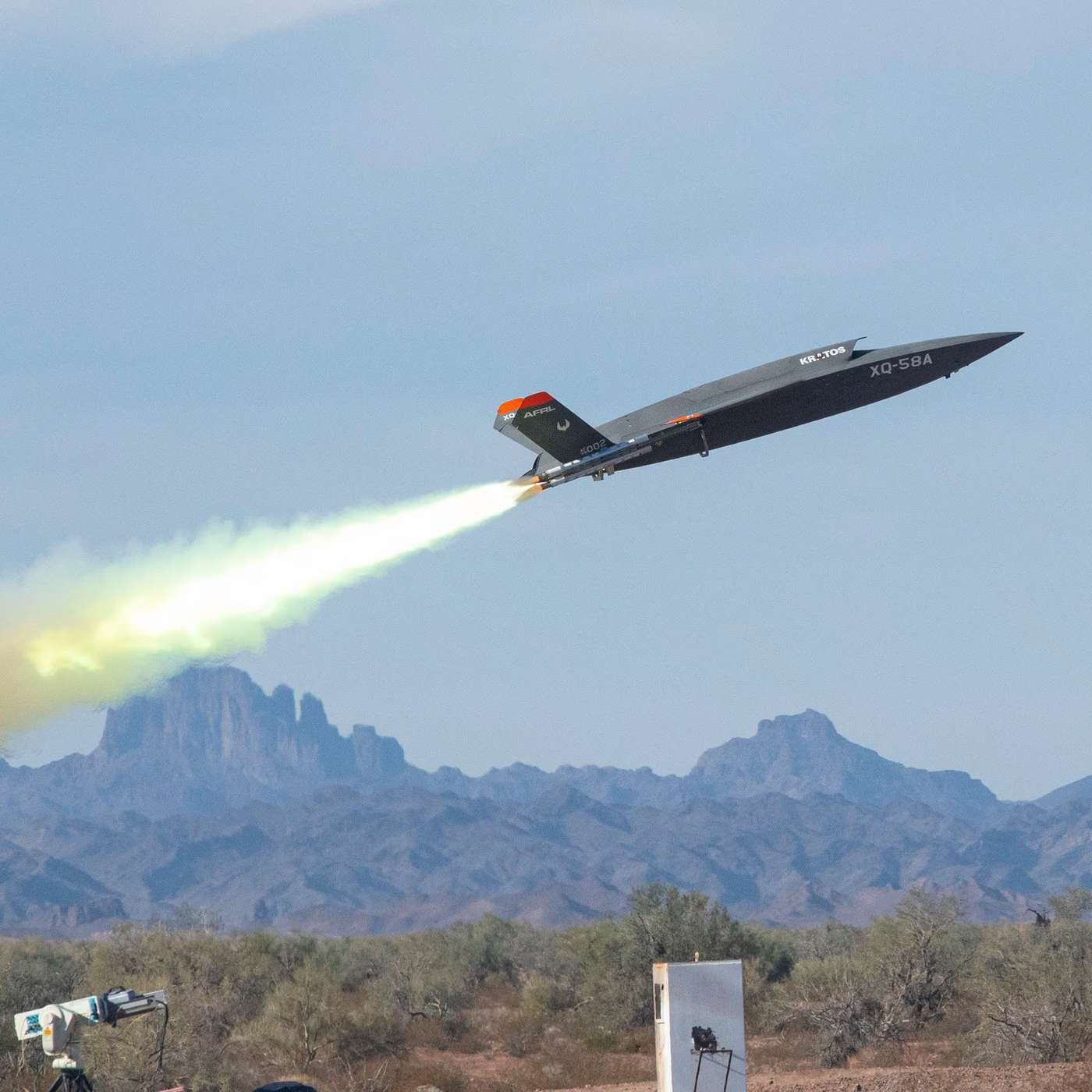
The Making of Collaborative Combat Aircraft - Miniseries Episode 2
The ethics of deploying AI in Collaborative Combat Aircraft (CCA), are weighed against the risks of falling behind technologically. Welcome to part 2 of our 4-part bonus podcast miniseries on the making of Behind the Wings PBS Season 6! In this episode, Director Cray Novick and Host Tracy LaTourrette continue their conversation about AI in the military, with a specific focus on AI-piloted aircraft. Join us as we talk about building CCAs, how they could change the air battlefield, the ethics of AI in warfare, and flying alongside "the most loyal wingman". This one is going to be cool! Check out the new season on PBS or our YouTube channel beginning November 7. We can't wait to show you what we've been working on! Full Season Premiere Schedule: PBS Episode 1 - AI in Military Aviation: November 7, 2024, 7:30 p.m. MT Episode 2 - Collaborative Combat Aircraft: November 7, 2024, 8:00 p.m. MT Episode 3 - The Super Guppy: November 14, 2024, 7:30 p.m. MT Episode 4 - Hypersonic Flight Testing: November 14, 2024, 8:00 p.m. MT Wings' YouTube Channel Episode 1 - AI in Military Aviation: November 7, 2024, 7:30 p.m. MT Episode 2 - Collaborative Combat Aircraft: November 14, 2024, 7:30 p.m. MT Episode 3 - The Super Guppy: November 21, 2024, 7:30 p.m. MT Episode 4 - Hypersonic Flight Testing: November 28, 2024, 7:30 p.m. MT
Oct 31, 2024
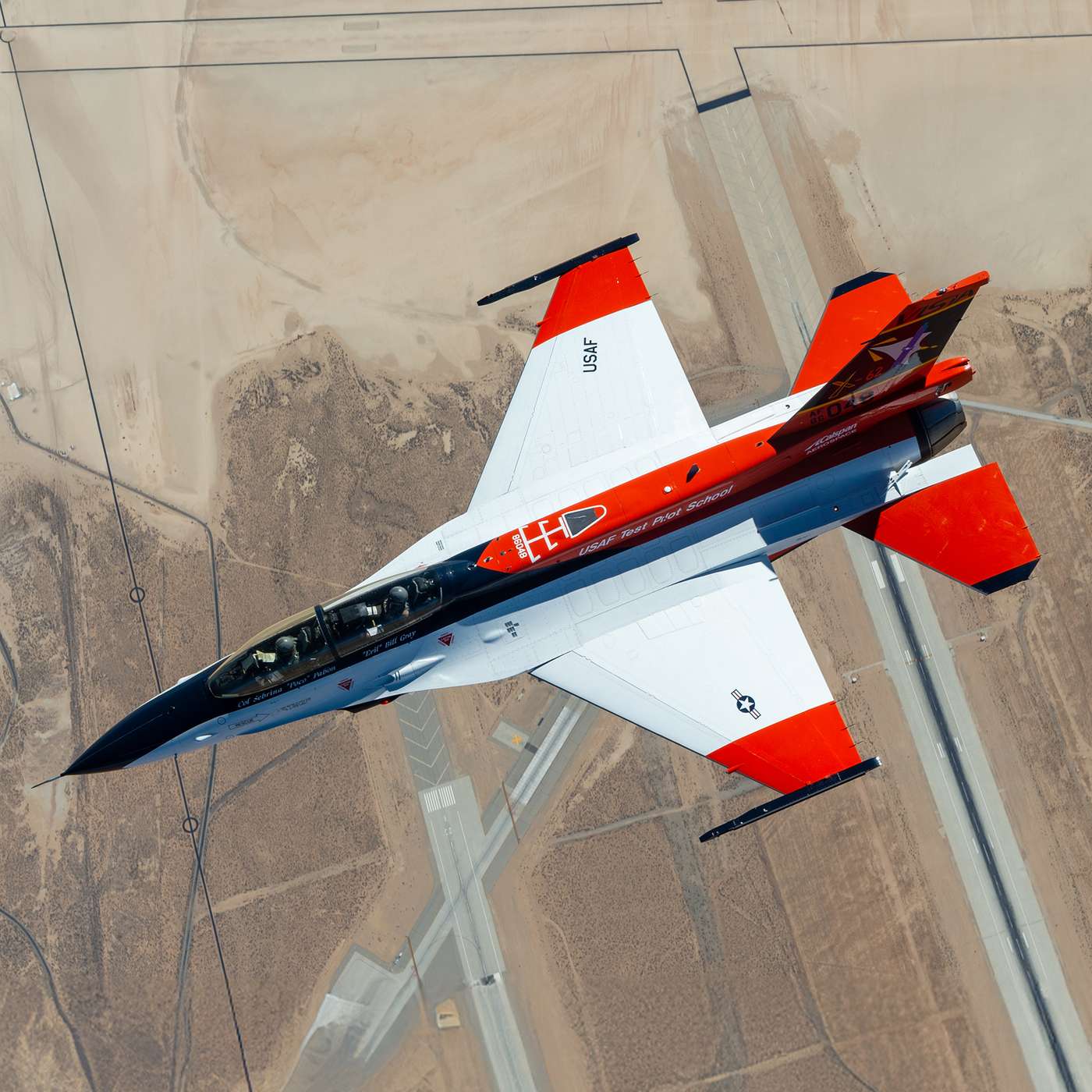
The Making of AI in Military Aviation - Miniseries Episode 1
How testing and simulations advance AI pilot agents from the lab to the field. Welcome to part 1 of our 4-part bonus podcast miniseries on the making of Behind the Wings PBS Season 6! In this episode, Director Cray Novick and Host Tracy LaTourrette discuss behind-the-scenes stories while filming around the U.S. to learn more about AI in military aviation. Join us as we discuss the history of AI, the AI arms race, flying simulators, and being at the crossroads of ethics and speed. This one is going to be cool! Check out the new season on PBS or our YouTube channel beginning November 7. We can't wait to show you what we've been working on! Full Season Premiere Schedule: PBS Episode 1 - AI in Military Aviation: November 7, 2024, 7:30 p.m. MT Episode 2 - Collaborative Combat Aircraft: November 7, 2024, 8:00 p.m. MT Episode 3 - The Super Guppy: November 14, 2024, 7:30 p.m. MT Episode 4 - Hypersonic Flight Testing: November 14, 2024, 8:00 p.m. MT Wings' YouTube Channel Episode 1 - AI in Military Aviation: November 7, 2024, 7:30 p.m. MT Episode 2 - Collaborative Combat Aircraft: November 14, 2024, 7:30 p.m. MT Episode 3 - The Super Guppy: November 21, 2024, 7:30 p.m. MT Episode 4 - Hypersonic Flight Testing: November 28, 2024, 7:30 p.m. MT
Oct 24, 2024
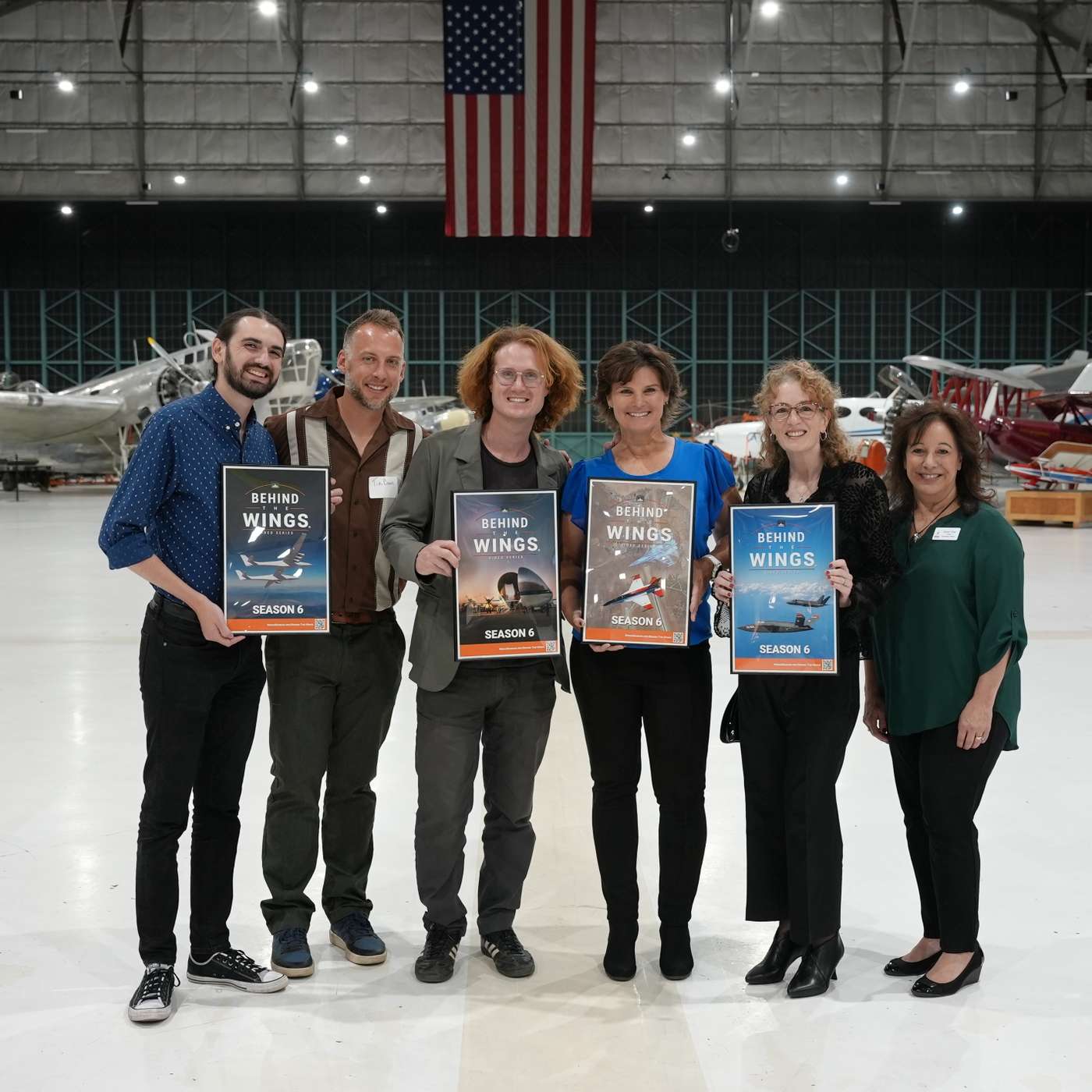
The Making of Behind the Wings PBS S6 Miniseries Trailer
We are excited to announce our special four-part miniseries featuring stories from the making of our newest Behind the Wings PBS season! Director Cray Novick and Host Tracy LaTourrette discuss AI in Military Aviation, Collaborative Combat Aircraft, The Super Guppy, and Hypersonic Flight Testing. Join us to hear inside tales you won't find anywhere else. This is going to be cool! New episodes come out every Thursday, starting October 31. Also, check out the new season on PBS or at our YouTube channel beginning November 7. We can't wait to show you what we've been working on! Our regular podcast episodes will take a mid-season break while these air and return on November 25.
Oct 21, 2024
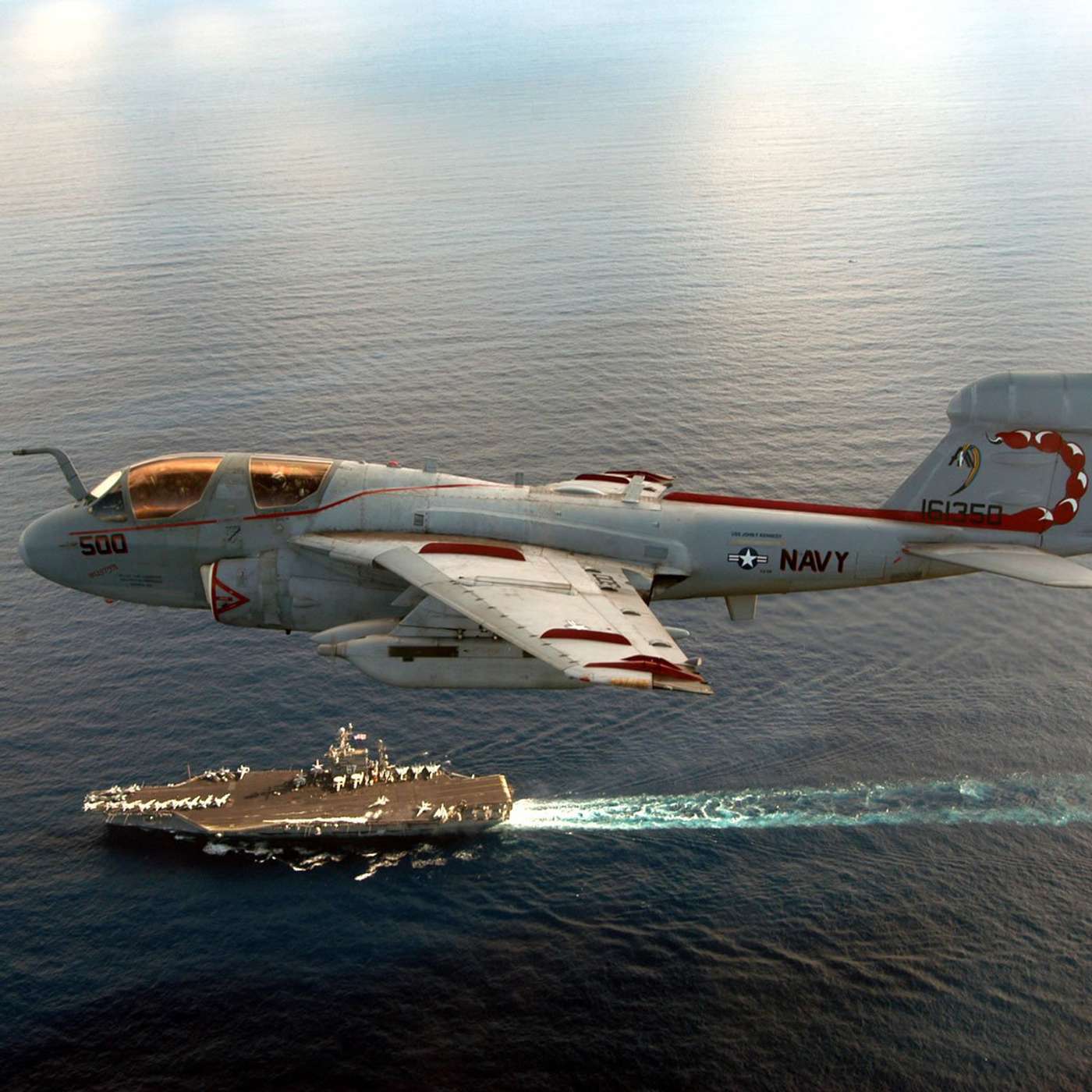
Electronic Warfare in the EA-6B - Episode 44
EA-6B Pilot Matthew Maher and Electronic Countermeasures Officer Ethan Williams dive deep into the world of electronic warfare with a spotlight on the legendary EA-6B Prowler. In this episode, our guests take us back into the cockpit, explore the complex jamming systems that helped protect air and ground crews, landing on a pitching aircraft carrier, and multi-aircraft missions. We also answer several audience questions about the Prowler. After all, we do this all for you! This one is going to be cool! Key Takeaways: Our guests were inspired to join the Navy at a young age. Matthew grew up watching airshows and Space Shuttle launches and Ethan came from an Air Force family but decided to attend the Naval Academy. Landing on an aircraft carrier is tough, especially in the Prowler. Matthew discusses the challenges of both day and night traps. The Prowler was one of the loudest airplanes on the deck, requiring dual ear protection. Maintainers worked day and night on the Prowlers, even replacing entire engines so the EA-6B could fly missions the next day. Ethan discusses the process it took to detonate IEDs in the Middle East remotely and how the Prowler's role changed over time. Matthew and Ethan tell us about the differences between the Prowler and the Growler and why the Growler is ultimately a better aircraft. Matthew has flown more than 22 aircraft during his career, and even flew the exact Prowler displayed in our museum! Resources: Behind the Wings EA-6B Video with Ethan Williams National Naval Aviation Museum Prowler Wiki Growler Wiki
Oct 7, 2024
Will JWST Find Life in Space? - Episode 43
STScI Education and Outreach Scientist Dr. Chris Britt discusses time traveling to the origins of the universe with The James Webb Space Telescope. In this episode, Chris tells us about processing JWST's data into breathtaking images, groundbreaking discoveries, how stars are formed, black holes, and the telescope's future. This one is going to be cool! This episode will follow up on our previous conversation about building the JWST, so if you missed that, check out episode 14 ! Key Takeaways: Chris was first inspired to go into aerospace after seeing photos from the Hubble Space Telescope. Now, years later, he is a part of the team operating the Hubble! The Space Telescope Science Institute helps operate the Hubble, James Webb, and eventually the Nancy Grace Roman Space Telescope. STScI uses colors and filters in order to identify specific parts of JWST's photos like elements, matter, heat, and more. JWST will be able to see back 13.5 billion years, possibly unlocking the secrets of the universe's origins. Webb is researching our galaxy and planets as well as black holes, exoplanets, stars, etc. JWST will not be able to confirm if there is life on other planets, but it will tell us if a planet has the materials to support life. Webb will continue to work with the Hubble and someday the Roman Space Telescope, photographing the universe for years to come. Resources: Space Telescope Science Institute Website James Webb Space Telescope Website Webb Telescope Latest News (NASA)

Sep 23, 2024
How The Space Gal Makes Science Fun - Episode 42
Science communicator and influencer The Space Gal, a.k.a. Emily Calandrelli, discusses using art as a tool to encourage STEAM literacy. In this episode, Emily tells us about her aerospace journey, exploding foam and making science fun as a host of educational programs, the opportunity to go to space, and how she uses children’s books and social media to inspire and educate future aerospace generations . This one is going to be cool! Key Takeaways: Emily's space journey began when she attended college to become an engineer. She pursued engineering out of necessity but quickly learned she actually loved it. After college, Emily got the opportunity to host Fox's Xploration Outer Space . This job jumpstarted her science communication career. Emily has appeared on many science TV shows, including Bill Nye Saves the World. She also had her own Netflix show, Emily's Wonder Lab . During the pandemic, Emily took to social media to continue her mission of promoting STEAM literacy and inspiring future aerospace generations. In 2010, Emily got the opportunity to fly onboard the "Vomit Comet." This parabolic flight flies along the line of a parabola up to a maximum of 31 times in a row. This creates weightlessness on board for up to 22 seconds each time, as if in space. Emily is excited to be a future Blue Origin passenger to space. She will be one of the first 100 women to reach sub-orbit. Emily has written several books, with the most popular one appearing on the New York Times Best Sellers list. Stay Curious and Keep Exploring: Next Level has 50 science experiments for little scientists of all ages. Resources: The Space Gal Website Emily Calandrelli Wiki Emily's Ted Talk

Sep 9, 2024
What Does Space Smell Like? - Episode 41
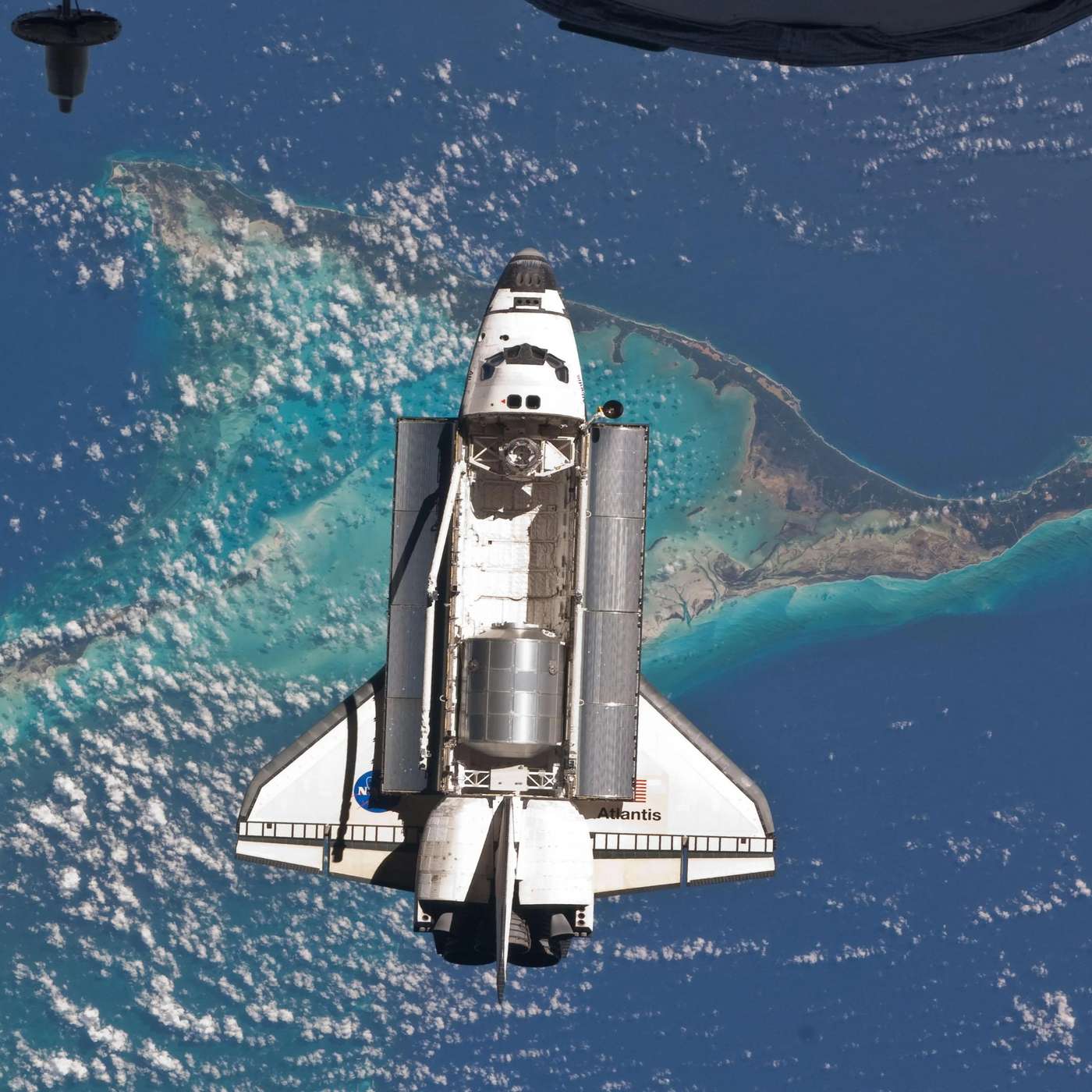
Former NASA astronaut Tom Jones discusses installing the first laboratory module on the International Space Station. Welcome to Season 5 of the Behind the Wings podcast! In this episode, hear stories about flying the B-52, working as a NASA mission specialist on four Space Shuttle missions, life in space, and what it's like to go on a spacewalk. This one is going to be cool! Key Takeaways: Tom's love of aerospace started when he took a field trip to see two Titan space rockets. Since that moment, he knew he wanted to be an astronaut. Tom enrolled in the Air Force Academy and attended pilot training. There he was assigned as a pilot and commander for the B-52 Stratofortress. After earning his PhD and applying for the NASA astronaut program three times, he was finally accepted in 1990. As a mission specialist, Tom flew on four Space Shuttle missions, STS-59, 68, 80, and 98. He helped with several experiments and controlled the robotic arm. On STS-98, Tom embarked on three EVAs, or spacewalks, to install the Destiny module onto the ISS. This was the first ISS laboratory, enabling the USA to conduct in-depth experiments. Tom's newest book, Space Shuttle Stories , catalogs every Space Shuttle mission with stories from astronauts who flew on said missions. Tom tells listeners that life doesn't always make it easy to achieve your goals, but there are several paths to making it possible. Resources: Tom Jones' Wiki Page Tom Jones' NASA Bio Destiny Module Tom Jones' Website
Sep 2, 2024
Behind the Wings Season 5 Trailer
Season 5 of the Behind the Wings Podcast is back this September with 10 new episodes! Hear from astronaut Tom Jones, adventures from flying and operating the EA-6B Prowler, and from TV host and author Emily Calandrelli a.k.a. The Space Gal. We've got some incredible stories and guests coming up! New episodes come out every other Monday, starting September 9. Subscribe wherever you listen, because we've got a lot to explore! Trust us, you don't want to miss it. In the meantime, check out our past episodes! Learn more at WingsMuseum.org/podcast
Jun 24, 2024
Stunt Flying for Top Gun: Maverick - Episode 40
Former F-18 and Blue Angels pilot, Scott Kartvedt, takes us behind the scenes of flying in Top Gun: Maverick. In this episode hear behind-the-scenes stories of how some of the most realistic flying scenes are made. Scott tells us about his time in the Navy, flying as a Blue Angel and on the Patriots Jet team, and "dogfighting" with a helicopter while filming. This one is going to be cool! Episode 40 marks the end of Season 4 of the Behind the Wings Podcast. We'll be taking a short break and will be back later this year for Season 5. Key Takeaways: Scott's love of aviation started when he saw Blue Angels flying over his family's campsite. The original Top Gun also fueled his ambition to join the Navy. Scott started school as an accountant but later followed his dream of becoming a fighter pilot. In the Navy, Scott flew the F-18 as a fighter pilot and for the Blue Angels. All flying scenes in Maverick were performed and filmed in real time. Scott and his wingman Randy Howell flew as stunt pilots in L-39 jets for the final scene in Maverick. They were later edited over to match the fighters in the movie. While filming, Scott would often fly straight at the helicopter and pull away at the last second. Scott leaves us with encouraging advice to ask the question. If you don't ask, the answer is always no. Resources: Scott Kartvedt's Website
Jun 10, 2024
Flying the Space Shuttle - Episode 39
In 1996, astronaut Tom Henricks became the first Space Shuttle pilot/commander to log 1,000 hours in space. Tom tells us about his time as an F-4 pilot and F-16 test pilot, astronaut training, flying four Space Shuttle missions including two as a commander, and the challenges of flying at Mach 25. This one is going to be cool! Key Takeaways: Tom's love of aviation started when he bought an airplane ride near his family's farm. Tom graduated number one in his weapons and test pilot school. After applying four times, Tom was selected to be a NASA astronaut in 1985. Tom flew to space four times on missions STS-44, 55, 70, and 78. They ran experiments, deployed satellites, and did some early testing that later would help build the International Space Station. The Space Shuttle reenters the atmosphere at Mach 25, making it very complicated to land successfully. Tom landed the Shuttle on his last two missions. At the time, STS-78 was the longest space mission to date at 405 hours. Later that same year, STS-80 broke its record by 19 hours. Tom is excited about the future of Artemis and hopes someday he may even step on the Moon. Resources: Tom Henricks NASA Bio Tom Henricks Wiki Page
May 27, 2024
Lessons From Vietnam Aerial Warfare - Episode 38
From aggressor training to the F-15, the United States military addressed several shortcomings after the Vietnam War. Today, we are excited to speak with a retired F-4 and F-15 fighter pilot, Colonel Dick Anderegg. In this episode, Dick tells us about his time in Vietnam, the mistakes the US air military made during the war, the lessons learned along the way, and the changes that sprung from them. There is a lot to learn in this episode! Key Takeaways: Dick joined the Air Force to train to be a commercial airline pilot. He quickly caught the fighter bug and chose to fly the F-4 Phantom instead. Dick's book Sierra Hotel: Flying Air Force Fighters in the Decade After Vietnam talks about the major changes the United States military made after the Vietnam War. During the Vietnam War, the United States changed the F-4 training program in an effort to acquire more pilots. Dick tells about his first interaction with laser-guided bombs and how it changed air warfare. The Vietnam era is often attributed with inadequate pilot training. Trainings would leave out several exercises due to aircraft loss concerns. Veterans from the Vietnam War later changed some of the training shortfalls by creating exercises like the Red Flag program. The F-15 was a vast improvement from the F-4. Dick wrote in his book that "As soon as an F-4 pilot sat in the cockpit, he noticed its efficient design." Regardless of artificial intelligence and autonomous vehicles, Dick thinks there is a future for human fighter pilots. Resources: Dick Anderegg Air Force Bio Sierra Hotel: Flying Air Force Fighters in the Decade After Vietnam
May 13, 2024
The Pilot Mental Health Paradox - Episode 37
For Mental Health Awareness Month, we explore the critical challenges pilots face while suffering from mental health issues and discuss possible individual and organizational solutions. Our guests are United Airlines Pilot, Troy Merritt, and Neurologist and Aircrew Brain Health Researcher, Dr. William "Billy" Hoffman. Troy discusses his personal experience of grounding himself due to mental health issues and explains the pilot mental health paradox. Dr. Hoffman draws on his research and medical experience with mental health in aviation to help us understand the efforts being made by researchers and the broader aviation community to bridge the gap for pilots and the industry as a whole. There is a lot to learn in this episode! Key Takeaways: Pilots have two options; disclose their mental health issues to the FAA and become grounded or keep them secret and continue flying while untreated. Many pilots will face this paradox at some point in their flying career. Troy suffered from anxiety and depression and chose to ground himself in 2022. He found a doctor who prescribed SSRIs (Selective Serotonin Reuptake Inhibitors) and is already on the application pathway to fly again. Special Issuances are given to pilots who are approved to fly, despite their current health problems. Troy encourages all who are suffering from mental illness to seek treatment. Even talking to a therapist as a "life coach" is a great first step that doesn't alert the FAA. Billy continues to research with pilots and participate in conversations on how to better approach mental health problems in aviation. This paradox isn't limited to mental health. Many pilots also keep physical ailments to themselves or seek treatment without alerting the FAA. The FAA has set up a mental health rules committee to research and possibly change some regulations. Resources: Pilots say they're afraid to seek mental health care. The FAA says it's listening - NPR The Pilot’s Pandemic Podcast Pilots hide mental health issues so they don’t ‘lose their wings’ - Washington Post
Apr 29, 2024
In Case of Emergency - Episode 36
Explore the evolution of cabin safety and learn how it could save your life. Today, we are excited to talk with retired Cabin Safety Specialist, and Wings Over the Rockies Volunteer, Denisekaren "DK" Deaderick. DK has been in this field for over 40 years and was the first Black woman to hold the position of FAA Cabin Safety Inspector. In this episode, we learn what exactly cabin safety is, how it has changed alongside advancements in technology, and how new regulations and rules are shaping the industry today. This one is going to be cool! Key Takeaways: DK got her start in aviation as a flight attendant for North Central Airlines. Throughout her career, she has written a flight attendant manual, had multiple programs approved by the FAA, and even has her own rule enforced by the FAA that allows passengers to bring portable oxygen concentrators onboard. Cabin safety personnel support the operation of the aircraft by monitoring cabin hazards and risks. DK encourages all passengers to read every safety card as each airplane model has different emergency procedures. Despite the technical errors that Boeing aircraft have been facing, DK believes that they are working hard to fix the problems. In general, commercial airplanes are still the safest form of travel. Commercial space travel is right around the corner, and with it, a whole new set of cabin safety rules and regulations. DK hopes there is a future for flight attendants onboard space flights. Cabin safety jobs will always be relevant and necessary, and DK encourages listeners to pursue a career in this field. Resources: DK’s Website FAA Cabin Safety Website IATA Cabin Safety Website
Apr 15, 2024
14 SAMs in 15 Minutes - Episode 35
Today, in celebration of National Volunteer Month, we are excited to speak with Wings Over the Rockies volunteer, Phil Mentesana. Phil shares personal stories about his time as an Electronic Warfare Officer on the B-52, flying the F-4 in Vietnam, and his time as a captain for United Airlines. He has many firsts in his career including being a part of the first B-52 missions to engage in combat during Operation Arc Light in Vietnam, leading Operation Linebacker I in the F-4, and so much more. This one is going to be cool! Key Takeaways: Phil wanted to be a pilot but elected to go to Navigation training first, earning a spot as an Electronic Warfare Officer onboard the B-52 Stratofortress. While stationed on the B-52, he was a part of the first B-52 combat missions in Vietnam, flying in Operation Arc Light. On the first mission, two B-52s collided in the middle of a storm when trying to refuel. Phil finally got his chance to fly when he was reaching the age limit for pilot training. After training, his fighter pick was the F-4 Phantom. Phil went back to combat in Vietnam, this time flying the F-4. While there, he led the F-4 squadrons in Operation Linebacker I and had 14 SAMs shot at him in less than 15 minutes. After he retired from the Air Force, he went on to pilot for United Airlines. He flew every plane model they had at the time. Phil came to volunteer at Wings Over the Rockies to give back to the aviation career that treated him so well. Resources: Operation Linebacker Operation Arc Light
Apr 1, 2024
The First VR Spacewalk - Episode 34
A first-of-its-kind virtual reality spacewalk experience. Space Explorers: THE INFINITE is a captivating immersive journey inspired by NASA missions aboard the International Space Station. Join us as we hear from creator Félix Lajeunesse who tells us how THE INFINITE project got started, how they filmed and created this experience, working with astronauts, and the unique challenges they faced making virtual reality content on the International Space Station. This one is going to be cool! Key Takeaways: THE INFINITE experience gives audiences breathtaking 360-degree views of Earth, displays scenes from life aboard the ISS, and allows guests to perform their very own spacewalk, all through virtual reality technology. This project is the first virtual reality experience filmed in space onboard the ISS. THE INFINITE faced many challenges while filming, needing to consider camera temperatures, radiation, and so much more. In this experience, you can interact with astronauts who helped film such as spacewalking, experimenting, and even having dinner. The Overview Effect is a common experience among astronauts when traveling to space. The term, first coined by author Frank White, describes a cognitive shift commonly experienced when someone sees the Earth from space for the first time. People often describe feeling a sense of one-ness, that the Earth is precious, and sheer awe in the Earth’s beauty, all of which can be experienced in THE INFINITE. Félix Lajeunesse aims to continue filming with NASA to document and create more experiences on the Moon and beyond. You can visit Space Explorers: THE INFINITE in Denver until May 5th, 2024! Resources: Félix Lajeunesse: What it’s like to film VR on the ISS ‘The Infinite’ Virtual Reality Exhibit Offers a Taste of Life in Outer Space THE INFINITE Experience Denver
Mar 18, 2024
The Women Airforce Service Pilots (WASP) of WWII - Episode 33
In celebration of Women's History Month, dive into the story of the first female Air Force pilots and their roles during World War II. Today's episode tells us about the lives and history of The Women Airforce Service Pilots, or WASP. The WASP helped the United States domestic war effort by ferrying aircraft, towing targets for live anti-aircraft gun practice, simulating strafing missions, transporting cargo, and so much more. Plus, hear a special story about the first two women to fly the B-29 Superfortress. This one is going to be cool! Key Takeaways: Pilot Jacqueline "Jackie" Cochran and test-pilot Nancy Harkness Love wanted to help the war effort in the United States and worked with the military to start the Women's Flying Training Detachment (WFTD) and the Women's Auxiliary Ferrying Squadron (WAFS). Eventually, both programs were merged to form the WASP. Even with strict requirements to enter the WASP, more than 25,000 women applied, 1,830 were accepted, and 1,074 graduated. The WASP trained in Sweetwater, TX at Avenger Field where they stayed on base in the barracks and trained most days. Two WASP, Dorthea Johnson and Dora Dougherty, were chosen by General Hap Arnold to fly the newly arrived B-29 Superfortress in a demonstration for future male pilots. The male pilots didn't want to fly this airplane due to engine concerns, and the WASP was meant to show that "if a woman can do it, so can a man." They flew the B-29 successfully several times. In 1944, the WASP were shut down to make room for men returning from war who needed the jobs. Years later, in the 1970s, the Women Airforce Service Pilots were finally given military and veteran status, officially cementing their history. Resources: Women Fly the B-29: PBS Women Airforce Service Pilots Wiki Deanie Parish WASP Speech The WASP of World War 2: Radio Diaries V. Scott Gough Collection: Library of Congress Margaret Ray Ringenberg Collection: Library of Congress Nell S. Bright Collection: Library of Congress
Mar 4, 2024
Defying Death and Breaking Records - Episode 32
Fly to all fifty states in this in-depth conversation about a record-breaking flight and airplane. Today, we are excited to speak with world-record-holding pilot, Michael Combs. Michael tells us about his death-defying moment, his record-breaking flight to all fifty states, and why you should never give up on your dreams. We will also hear about his light sport aircraft, Hope One, which is living out retirement in Wings Museum. This one is going to be cool! Key Takeaways: In 2003, Michael had a life-threatening health problem that caused him to temporarily die and lose most of his memory. Michael knew he wanted to be a pilot since he was a kid, and while healing in the hospital, that goal kept him going. The Flight for the Human Spirit was a project meant to inspire people by showing that the impossible is possible and that you are never too old to start chasing your dreams. Michael's goal was to fly his Remos GX light sport aircraft, Hope One, to all fifty states, something that had never been done before. He completed his goal in Hawaii when he got to fly in an air show with the Blue Angels, the Red Bull stunt plane, and Jacquie B Airshows. After his flight, Michael was still making headlines by breaking even more records with Hope One. Hope One is now retired and living in Wings Over the Rockies' hangar. The cockpit is left in the same condition as when Michael flew it for the last time. Resources: The Story Behind the Flight for the Human Spirit Hope One Arrives In Denver
Feb 19, 2024
The First Black Astronaut Candidate - Episode 31
The first Black astronaut candidate talks about his experiences with the astronaut program in this in-depth conversation about his pioneering space journey. Welcome to Season 4 of Behind the Wings, which means 10 new episodes coming your way! It’s February, and in celebration of Black History Month, we are excited to speak with the first Black astronaut candidate, Ed Dwight Jr. In 1961, just 3 years after NASA started, our guest was making waves as a test pilot in aviation and training to be one of the first astronauts. Ed talks about his incredible journey, his time in the Air Force and the space program, and how, in an instant, the dream of space flight was taken away. Ed’s resume reads: Air Force Test Pilot, America’s First Black Astronaut Candidate, IBM Computer Systems Engineer, Aviation Consultant, Restaurateur, Real Estate Developer, Construction Entrepreneur, and Sculpture Artist. There's a lot to learn in this episode! Key Takeaways: Ed first got into flying as a kid when pilots at the nearby airport in Kansas paid him to help clean their aircraft. Dwight signed up for the Air Force after seeing a newspaper featuring a Black fighter pilot on the cover. To earn Black voter's trust, Kennedy promised to get a Black candidate into the astronaut program. After quickly rising through the ranks in the Air Force, Dwight was the only Black pilot to meet the strict requirements to become an astronaut. Ed trained with 16 others in the astronaut program headed by Chuck Yeager. After Kennedy's assassination, it was clear that Ed was being ousted from his astronaut training. He resigned from the Air Force shortly after. His time in the Air Force didn't discourage him. He went on to become a very successful sculpture artist, creating memorials and art representing the accomplishments and history of Black people in America. Resources: Ed Dwight’s Website Ed Dwight’s Wiki The Almost Moon Man – New York Times I Was Poised to be the First Black Astronaut. I Never Made it to Space. | 'Almost Famous' by Op-Docs – New York Times Ed Dwight Jr. Was Set to Become America’s First Black Astronaut - YouTube
Feb 12, 2024
Behind the Wings Season 4 Trailer
The Behind the Wings Podcast is back this February with Season 4 and 10 new episodes! Hear from Ed Dwight Jr, the first Black astronaut candidate, world record holder Michael Combs, and dive into topics like The Mental Health Pilot Parodox and the history of The Women Airfare Service Pilots (WASP). New episodes come out every other Monday, starting February 19th. Subscribe wherever you listen, because we've got a lot to explore! You can find the Behind the Wings podcast wherever you listen. For past episodes and show notes visit: WingsMuseum.org/podcast .
Nov 20, 2023
America's Secret MiG-23s - Episode 30
An American MiG-23 pilot reveals long-held secrets in this in-depth conversation about a declassified program, Constant Peg. On today's show, we’ll meet John Mann who flew in the first-of-its-kind adversary training program, Constant Peg, and take a deep dive into some of the most popular questions we got from you, our listeners. Established in 1977, this top-secret program aimed to train American pilots against the very same MiGs they may one day see in combat. Mann was an instructor who flew the MiG-21 and 23, and co-host John Barry flew in the program as a trainee. This one is going to be cool! If you missed Part One, check that out on Wings Over the Rockies YouTube channel: America's Secret MiG-23s | Behind the Wings - YouTube . Episode 30 marks the end of Season 3 of the Behind the Wings Podcast. We'll be taking a short break and will be back in the new year for Season 4. Key Takeaways: John Mann served 24 years in the US Air Force where he had the opportunity to fly many aircraft, including the F-4, F-15, MiG-21, and MiG-23. Mann first flew as a trainee at Constant Peg and later flew the MiGs as a trainer. The MiG-23 was a very fast, beefy airplane, but it didn't turn well. Pilots would attend to overcome "Buck Fever", learn how the MiGs flew, and practice dog fighting. The maintainers at Constant Peg were the backbone of the program, facing specific challenges sourcing parts, with no maintenance book, and often receiving aircraft that were in a compromised condition. John Mann's advice: There are lots of opportunities in aviation. Go pursue your dreams! Resources: Red Eagles: America’s Secret MiGs by Steve Davies CONSTANT PEG: Secret MiGs in the Desert > National Museum of the United States Air Force™ > Display (af.mil) Red Eagle Brief Mikoyan-Gurevich MiG-23 MLD "Flogger" | Wings Over the Rockies Air & Space Museum (wingsmuseum.org) Dark Eagles: a history of top secret U.S. aircraft programs AF Declassifies Elite Aggressor Program (archive.org)
Nov 6, 2023
The World's First Astronomers - Episode 29
This episode will dive into the history of some of the world’s first astronomers, exploring how their knowledge has been passed down for more than 60,000 years. We are going to the southern hemisphere to learn about Australia’s Indigenous astronomy and the impact it has on our world today. Our guest today is Peter Swanton! Peter is a Gamilaraay man from Mackay, Queensland, an astrophysics graduate, and cultural astronomer. He is actively involved in Indigenous astronomy, outreach, and research, and has a passion for the challenging yet critical subject of dark sky preservation. Peter will highlight the scientific importance of Indigenous star knowledge and the challenges and opportunities in preserving that history. Join us as we hear the stories of Australia’s Indigenous Peoples, why constellations and star clusters are so impactful, and how issues like light pollution threaten the very field of astronomy itself. There is a lot to learn in this episode! Key Takeaways: The Indigenous Peoples of Australia didn’t have a written language, they were only able to pass along information via spoken word, song, dance, and stories. There are an estimated 273 different language groups across Australia. While not all stars can be viewed from both hemispheres, all the zodiac constellations are viewable from either. Although, they will be upside down depending on which hemisphere you are familiar with. The Emu in the Sky is a popular example of how astronomy was used practically by the Indigenous Peoples. Depending on what direction the Emu was facing, it helped give insight towards Emu life patterns. Creation stories are stories that are passed down that talk about the physical existence as well as store important information. A popular story about Australia’s constellation the Southern Cross tells the story of the first person to die on Earth. A songline is one of many paths across the land (or sometimes the sky). Embedded within traditional song cycles, dance rituals, stories, and artistic expressions, these pathways enable individuals to traverse vast distances while reciting the songs that describe landmarks, water sources, natural features, and sometimes stars and constellations. These routes serve as crucial connections between Native group ancestral lands, carrying intricate geographical, mythological, and cultural information giving directions on how to travel across Australia to visit other Indigenous groups. Light pollution is quickly starting to impact our dark skies. Due to light from cities and satellites, it is harder than ever before to see the stars and galaxies with the naked eye. Light pollution is not only affecting dark sky preservation, but is also adversely affecting our vision, bird migration patterns, and newborn sea turtles. Peter's message to younger generations is to pursue what makes you happy. Resources: Aboriginal Astronomy Songlines: Tracking the Seven Sisters | National Museum of Australia (nma.gov.au) Songlines: The art of navigating the Indigenous world - Australian National Maritime Museum (sea.museum) Australia's First Astronomers
Oct 24, 2023
Red Tails and Blue Skies: Tuskegee Today - Episode 28
The Tuskegee Airmen were an experiment by the US Army Air Corps to determine whether Black pilots could handle military flying. It turns out they could! But the Tuskegee Airmen fought a second battle – one against racial discrimination. With an impressive combat record and war accomplishments, the success of the Tuskegee Airmen helped influence then-President Harry Truman's decision to desegregate the armed forces in 1948. Our Guests today are Bill Shepard and Col. James Harvey. Bill is the former Vice President of Education for the Commemorative Air Force (CAF), and former CAF Red Tail Squadron Leader. On today’s show, he explores with us the path that led him to proudly fly the P-51C Mustang for the CAF Red Tail Squadron. We will also hear from Col. James Harvey who was a Tuskegee Airman, and his personal journey as one of the first Black Aviators in the US military. From Bill's journey with aviation to the history of the Tuskegee Airmen, there’s a lot to explore in this one! Key Takeaways: Bill earned his US private pilot’s license at age 16 while still in high school The 6 Tuskegee principles are: Aim High, Believe in Yourself, Use Your Brain, Be Ready to Go, Never Quit and Expect to Win The Tuskegee Airmen helped influence President Harry Truman to sign Executive Order 9981 on July 26, 1948, mandating the desegregation of the U.S. military. Lt. Col. James H. Harvey III was a pilot with the 332nd Fighter Group, known as the Tuskegee Airmen. He later piloted on the team that won the military’s first ‘Top Gun’ contest in 1949. The Women Airforce Service Pilots (WASP) was a U.S. Army Air Forces program that tasked some 1,100 civilian women with noncombat military flight duties during World War II. Bill's advice: Dream big, work hard, and never give up! Resources: Home | CAF RISE ABOVE Blacks in the Army Air Forces During WWII: The Problems of Race Relations (defense.gov) The Air Force Integrates 1945-1964 (defense.gov) The Tuskegee Flight Surgeons (defense.gov)
Oct 9, 2023
AI in Aviation - Episode 27
This episode will dive into the cutting-edge realm of AI in aviation, with a particular focus on its military applications. From autonomous wingmen drones to predictive maintenance, we will explore the opportunities and risks of AI as it transforms the landscape of aerial warfare. Our guest today is Col Tucker Hamilton, callsign “Cinco”. As the Chief of AI test and operations for the USAF, Col Hamilton is at the cutting edge of researching, testing, and implementing artificial intelligence in the realm of military aviation. Col. Hamilton began his career as an operational F-15C pilot, supporting Red Flag exercises, and real-world Operation Noble Eagle missions, at times escorting Air Force One and the U.S. President. He served as a Chief Instructor, Test Pilot, and has more than 2,000 flying hours in the F-35, F-15, F-18, F-16, A-10, and more than 20 additional aircraft. Is there anything he hasn’t done? We’re about to find out! Join us as we unravel the intricate web of AI technologies shaping the future of aviation while gaining unique perspectives from a seasoned military leader at the forefront of this transformative field. There’s a lot to explore! Key Takeaways: The Hollywood Bias makes AI seem scarier than it actually is. AI is just software and math that has to follow very narrow rules that humans establish. Its computer code trained with guardrails set in place by the programmers. AI cannot learn the way that we learn. Cinco is most excited about the future of humans and AI working together in all industries. For example, AI could aid radiologists in finding cancer, or assist pilots by managing more tedious tasks. With AI starting to become more widely available, the ethics surrounding it becomes a huge topic. As we move forward with this new technology, ethics will continue to be a part of the conversation. AI will likely never be fully autonomous because the programming would be biased. Since humans are inherently biased in one way or another, so would AI technology, meaning humans will always need to be present when AI is involved. The five parts of the DOD AI Ethics code are Being Responsible, Equitable, Traceable, Reliable, and Governable. DARPA ran a competition between AI-trained software and actual pilots. They went head to head in a simulator and the AI won by a landslide. This advancement is exciting because it means that we can create AI tutors to help train pilots at every level. Resources: A.I. Brings the Robot Wingman to Aerial Combat - The New York Times (nytimes.com) AFRL AI agents successfully pilot XQ-58A Valkyrie uncrewed jet aircraft > Air Force > Article Display Air Force Wants $5.8 Billion to Build AI-Powered Unmanned Aircraft (businessinsider.com)
Sep 25, 2023
Manufacturing the New Artemis Lunar Drill - Episode 26
On today’s show we’re getting an inside look at the design, testing and manufacturing processes at Honeybee Robotics, as they build a key component for the Orion Spacecraft, and a new lunar drill. Don your bunny suits, because we are excited to bring you inside a clean-room and experience first-hand how space hardware is made from prototype through manufacturing! Tune in to hear from Andrew Maurer and Isabel King of Honeybee, as we get a behind the scenes tour at their production facility in Longmont, CO. THIS is going to be cool! We’ve explored the Artemis program on the show before, if you missed those episodes go back and give a listen to episode 10 to hear from an Orion spacecraft engineer, and episode 21 as we compare Apollo and Artemis with former NASA Astronaut Harrison Schmitt, and historian Dr. Teasel Harmony-Muir. Key Takeaways: The Artemis Project aims to land near the southern pole of the Moon so that we can investigate and bring back samples of lunar ice. We can then test it and see how it got there and if it’s drinkable! Orion is the name of the spacecraft that will take astronauts to space, and Artemis is the name of the overall mission. Honeybee’s products are rigorously tested before being sent to NASA. Vibration, thermal, and human testing are just a few that help ensure safety and efficiency. They even have astronauts test and give their input! The lunar drill that Honeybee is creating will enable astronauts to drill about 3 meters into the Lunar Surface and collect several rock and ice samples. Resources: Design and Test of the Orion Crew Module Side Hatch NASA Selects 12 New Lunar Science, Technology Investigations | NASA Apollo to Artemis: Drilling on the Moon | NASA Honeybee Robotics
Sep 11, 2023
Hypersonic Flight & Heat Management - Episode 25
This episode will dive into the world of hypersonic flight, and how new methods of heat management could help usher in a new era for high-speed flight. Join us as we look through the lens of a heat management company, Reaction Engines who is pushing the limits of technology in engines, to enable the next generation of hypersonic flight. Hypersonic flight refers to speeds of more than five times the speed of sound, or Mach 5. Once you start talking about hypersonic speeds, there are lots of challenges that come into play from propulsion limitations to materials that can withstand high temperatures, economic feasibility, communications, physics, and more. Adam Dissel, President of Reaction Engines, helps us dive into many of these topics today, to get a better sense of the state of hypersonic flight, and where the cutting-edge of aerospace is headed. Be sure to strap in, because there is a lot to learn in this high-speed episode! Key Takeaways: Hypersonic flight refers to speeds of more than five times the speed of sound, or Mach 5, which is about 1 mile per second. With hypersonic flight there are lots of challenges from propulsion limitations to heat, economic feasibility, communications, physics, and more. The Silbervogel was the first hypersonic weapon, developed by German scientists in the 1930s. During the first manned orbital flight in April 1961, Russian Major Yuri Gagarin became the first human to reach hypersonic speeds. Also in 1961, Air Force Major Robert White reached speeds exceeding Mach 6 as he piloted the X-15 research aircraft. A scramjet is a variant of a ramjet airbreathing jet engine in which combustion takes place in supersonic airflow. Extracting and repurposing heat from jet engines could increase efficiency and speed. Microtubes with coolant inside help to maximize surface area and cooling capability. Reaction Engines test their cooling technology at Colorado Air and Space Port using the General Electric J-79 turbo jet engine. There are many potential spinoff applications for this cooling technology including in Formula 1 cars, and manufacturing. Resources: Reaction Engines - Making Beyond Possible Hypersonics: Past, Present, and Potential Future (jhuapl.edu)
Aug 28, 2023
A Chief’s Take on Aviation in the Vietnam War - Episode 24
Explore the pivotal role of aviation in the Vietnam War alongside former USAF Chief of Staff General Ron R. Fogleman (Ret). Join us as we talk with Ron Fogleman, who takes us along his personal journey to becoming Chief of Staff and helps us uncover the strategic importance of aircraft during the Vietnam War. Ron has over 8,500 hours of flight time, including 315 combat missions where he logged 806 hours. During one of those missions, he was shot down while flying the F-100 Super Sabre and was rescued by clinging to the side of an AH-1 Cobra. Ron retired as Chief of Staff in 1997, after 34 years in the Air Force. He shares with us his pathway to becoming Chief of Staff, lessons he’s learned from the cockpit, and insight about aviation during the Vietnam War. THIS is going to be cool! Key Takeaways: General Ron Fogleman served for 34 years before retirement, holding positions such as Fighter Pilot, Commander of the Air Mobility Command, Deputy Commander in Chief, Chief of Staff, and more. Ron graduated from the Air Force Academy in 1963, and later became the first graduate to advance to Air Force Chief of Staff. Ron flew the F-100 Super Sabre in Vietnam as a Misty Forward Air Controller (FAC). Forward Air Controllers during the war acted as close air support for troops on the ground, helping with aerial defense, rescues, patrols, and more. Vietnam was the first war where helicopters played a pivotal role. The AH-1 Cobra was invented during this time, and was one of the first gunships to be used in Vietnam. Other helicopters acted as troop transport, medical evacuation, and more. Ron was shot down while flying a mission in his F-100. He was rescued by an AH-1 Cobra by clinging to the side of the helicopter. At the time, the Cobra was prohibited from landing anywhere in enemy territory. Luckily, the pilots did not face any disciplinary action for their heroism. As Chief of Staff in 1995, Ron created the Air Force Core Values, “Integrity First, Service Before Self, and Excellence In All We Do.” These values are still in use today. From 1974-1975, Ron was stationed at Lowry Air Force base. The same hangar our museum uses today! Resources: Ron Fogleman | National Air and Space Museum Ron Fogleman Air Force Bio Ron Fogleman Wiki Forward Air Controllers (FAC)
Aug 14, 2023
Gas Stations in Space! - Episode 23
This episode will dive into the world of orbital infrastructure – both the challenges and opportunities - through the lens of an on-orbit spacecraft refueling company, Orbit Fab, who aims to create gas stations in space. Join us as we talk with Adam Harris, the Chief Commercial Officer at Orbit Fab, who gives us insight on the state of LEO (low earth orbit), orbital infrastructure, and explains how on-orbit refueling could be a key part of enabling this new era in space activity more sustainably and efficiently. Orbital refueling is not a new idea, but as space technology, and the cost of launch has come down, the possibility for this type of service at scale is closer to reality than ever before. This is going to be cool! Key Takeaways: Adam Harris is an Air Force Academy graduate, who spent several years in the military as an Intelligence Staff Member, Senior Advisor, and more. He then moved to the private sector, joining SpaceX and eventually, his current role on the Orbit Fab team. Orbit Fab is creating some of the first commercially available orbital refueling, including refueling depots and shuttles that will bring the fuel straight to the satellites! Orbit Fab is working alongside other space companies, and space agencies to help create industry standards, so that someday all spacecraft, satellites or space stations could potentially be refueled. Like how gas stations on Earth can refuel any car! The refueling depots and shuttles will be launched into the same orbit as the satellites to keep traveling between the two to a minimum. Orbit Fab has already successfully launched one refueling depot into Earth’s atmosphere. By 2025, Orbit Fab hopes to start launching more refueling depots and shuttles into Earth’s orbit. Resources: Orbit Fab Website Risk Analysis of On-Orbit Refueling (nasa.gov)
Jul 31, 2023
Landing the A-10 Warthog Manually - Episode 22
This episode will dive into the story of Kim “KC” Campbell, one of the few pilots ever to land the Fairchild Republic A-10 Thunderbolt II “Warthog” manually. Kim is a graduate from the United States Air Force Academy. She has flown 1,800 hours in the A-10 Warthog and more than 100 combat missions including in Iraq and Afghanistan. In 2003, Kim received the Distinguished Flying Cross for Heroism, as she skillfully recovered her battle-damaged aircraft following an intense close air support mission in Baghdad. Campbell has since retired from the Air Force and now is a guest professor, speaker, and bestselling author. She shares with us her pathway to becoming an A-10 pilot, and lessons she’s learned from the cockpit. This is going to be cool! Key Takeaways: Kim served for 24 years before retirement, holding positions such as a fighter pilot, Deputy Chief and then Chief of the A-10 Operational Training Development Team, Commander of the 355th Operations Support Squadron, Military Assistant to the Under Secretary of Defense for Policy, and more. Kim and her father both graduated from the Air Force Academy at the highest rank of Cadet Wing Commander, making them the first father daugther duo to hold that accolade. At the time, only a handful of pilots had ever tried to land the A-10 Warthog manually. Kim later was awarded the Distinguished Flying Cross for her bravery and airmanship while flying the A-10. Campbell is now retired and has started her new career of speaker, coach, and author, telling stories about her lessons from the cockpit and how they can be used in every day life. Kim's book, Flying in the Face of Fear, tells several stories about the missions she was on and how they can be used as learning tools for businesses and employees. Resources: Kim "KC" Campbell Flying in the Face of Fear: A Fighter Pilot's Lessons on Leading with Courage: Amazon Books
Jul 17, 2023
Apollo Astronaut & Museum Curator Discuss Apollo's Legacy - Episode 21
The Behind the Wings Podcast is back for Season 3! This episode delves into the legacy of the iconic Apollo program and its profound influence on NASA's ambitious Artemis Program. In celebration of the 54th anniversary of Apollo 11 and the Apollo Program, we’ve got an exciting two-part conversation for today’s episode. Our esteemed guests, Dr. Teasel Muir Harmony, curator of the Apollo Collection at the Smithsonian National Air and Space Museum, and NASA Astronaut Harrison Schmitt, who walked on the moon during Apollo 17 help us unravel the significance of Apollo's groundbreaking achievements, the scientific discoveries made, its political significance, and the lasting impact on human space exploration. Discover how the Apollo program paved the way for Artemis, fueling our dreams of returning to the moon and exploring even further into the cosmos. There is a lot to learn in this episode! Pack your bags, or at least your spacesuits, as we are taking one giant leap back to the moon. This one is going to be cool! Key Takeaways: Dr. Teasel Muir Harmony, curator of the Apollo Collection at the Smithsonian National Air and Space Museum, uses artifacts including Kennedy's 1960 debate chair to bring the history of Apollo alive. President Kennedy was skeptical about the space program at first, but quickly changed his mind when he saw how Yuri Gagarin's historic flight helped unify the Soviet Union. Dr. Harrison Schmitt is the first and only scientist to fly with the Apollo program and land on the Moon without a military background. The Moon rocks that were collected and returned to Earth during Apollo 17, totaling about 842 pounds, are still being studied today! The Artemis mission can learn a lot from Apollo, including being sure to pack extra duct tape. Someday we may have a permanent base or settlement on the Moon, allowing for tourism not just to the Moon, but for Moon inhabitants to visit Earth. Resources: Teasel Muir-Harmony | National Air and Space Museum (si.edu) Amazon.com: Teasel E. Muir-Harmony: books, biography, latest update The Honorable Harrison H. Schmitt | NASA Return to the Moon: Exploration, Enterprise, and Energy in the Human Settlement of Space: Schmitt, Harrison: 9780387242859: Amazon.com: Books
Jul 10, 2023
Behind the Wings Season 3 Trailer
Calling all aviation lovers, space nerds, history buffs, and futurists – The Behind the Wings® Podcast is back for Season 3! Ready or not, strap in, because we have 10 great episodes coming up. It’s time to go... Behind the Wings! We’ve got a lot to explore – stories about how history shapes aviation today, trailblazers in space, and up-close looks at iconic aircraft of the past, present, and future. New episodes are published every other Monday, starting on July 17th, 2023. You can find the Behind the Wings podcast wherever you listen. For past episodes and show notes visit: WingsMuseum.org/podcast We’ll see you next time on Behind the Wings!
Apr 10, 2023
Pioneers, Pacesetters, Possibilities - Episode 20
What is it about Colorado? Coloradans have had a major impact across every aspect of aviation and space exploration. Our state produced the first American flying ace, the first civilian helicopter ambulance service, and the first female airline pilot. We’ve grown astronauts and executives, entrepreneurs and visionaries, and the aerospace industry has brought hundreds of thousands of jobs and hundreds of billions of dollars into our state’s economy. In fact, Colorado has the nation’s second largest aerospace economy, and aviation is the fastest-growing industry segment in the Denver area. Aerospace research and technology developed in Colorado’s schools and labs is out there exploring other planets—and a lot of it finds its way into products you use every day. Key Takeaways: Colorado has the largest number of aerospace jobs in the nation per capita, and aerospace being a major economic driver in Colorado, and CO continues to establish itself as a leader in aerospace - the Aerospace Frontier. Emily Howell Warner, became the first female pilot for a scheduled US airline in 1973, and the first female airline captain in 1976. “Jepp” Jeppesen's handwritten notes in a ten-cent notebook grew into the aeronautical charting industry. Scott Carpenter was the first person ever to eat solid food in space and the second American to orbit the Earth. Jessica Watkins is a Colorado astronaut and is the first Black woman to work on the International Space Station. Dr. Serena Aunon-Chancellor, daughter of a Cuban immigrant, became an engineer, a medical doctor, and an astronaut who spent more than six months in space. The exhibit focuses on people and their stories, but visitors will see some really cool artifacts to illustrate those stories, including some that we’ve never put on display before, so even if you’ve been to the museum, you’ll see something new. Resources: Pioneers – Pacesetters – Possibilities | Colorado on the Aerospace Frontier - Wings Over The Rockies (wingsmuseum.org) Chuck Stout - Wings Over The Rockies (wingsmuseum.org)
Mar 27, 2023
Colorado's First Lady Fighter Pilot - Episode 19
This episode will dive into the story of Tracy "JackieO" LaTourrette, Colorado’s first lady fighter pilot. LaTourrette graduated from the United States Air Force Academy before women were even authorized to fly combat aircraft. After working in the back of an AWACS airfract, she moved to a window seat, becoming one of the first female fighter pilots in the Air Force and flew the F-16 Fighting Falcon, earning numerous accolades for her skill and leadership. LaTourrette flew direct Presidential protection missions and in a classified location for Operation Iraqi Freedom. "JackieO" is known for breaking barriers, from the sound barrier to beyond. This one’s going to be cool! Key Takeaways: Tracy LaTourrette retired after 22 years while serving as the Deputy Director of Operations at the Colorado National Guard's Joint Force Headquarters. Tracy flew F-16s. She has over 3,300 combined flying hours as a pilot and AWACS Air Weapons director. Her call sign is "JackieO". Post 9-11 “JackieO” flew direct Presidential protection missions and flew in a classified location for Operation Iraqi Freedom. Tracy is a highly sought-after international speaker and executive consultant for Fortune 100 companies, associations and more. Her interactive workshops and executive consulting are second to none. Tracy is a married mother of three and grew up in Evergreen, CO. Her husband is also an F-16 pilot. Tracy will be the host of a Behind the Wings PBS episode all about the F-35. Resources: Tracy's Website Women’s History Month: Academy grad chooses barriers ‘important enough to break’ (USAFA)
Mar 13, 2023
What is the Space Force? - Episode 18
Gain insight into the newest branch of the U.S. military- the Space Force. In this episode, we explore the creation and operations of the Space Force, the newest branch of the United States military. From its roots as a small office within the Air Force to its current status as a fully-fledged branch, we delve into the challenges and successes of the Space Force as it works to defend and protect American interests in space. Our guest, Colonel Marcus Jackson, is the Commander of Space Base Delta 2, headquartered at Buckley Space Force Base, Colorado. As commander, he leads an 857-member team providing Base Operating Support to more than 757 military, Department of Defense civilians and contractor personnel serving at 14 operating locations world-wide, executing critical United States Space Force Missile Warning and Intelligence, Surveillance and Reconnaissance missions. In addition, SBD2 hosts 6 wings (or equivalents) and 92 tenant organizations as well as supporting over 14,000 base personnel and a 98,000-retiree population. This is going to be cool! Key Takeaways: Established as a new branch of the United States Armed Forces: The US Space Force is a newly established branch of the US Armed Forces that was created in December 2019. It operates under the jurisdiction of the Department of the Air Force and is responsible for organizing, training, and equipping military personnel to conduct space operations. Focuses on space operations: The primary focus of the US Space Force is on space operations, including satellite communications, missile warning, and other activities that take place in space. The Space Force also aims to protect US space assets from potential threats, including those from other countries. Supports the civilian space industry: The US Space Force also supports the civilian space industry by providing satellite launch and other services. It also collaborates with other agencies such as NASA to advance space exploration and research. Emphasizes technology and innovation: The Space Force places a strong emphasis on technology and innovation to improve its capabilities and stay ahead of potential threats. This includes investments in areas such as artificial intelligence, cybersecurity, and space-based sensors. Relies on partnerships and collaboration: The US Space Force works closely with other branches of the US military as well as with international partners to achieve its goals. It also collaborates with the private sector and academia to develop new technologies and capabilities. Resources: www.spaceforce.mil https://crsreports.congress.gov/product/pdf/IF/IF11495 https://www.axios.com/2021/12/05/us-space-force-china-threat https://www.axios.com/2020/12/18/astronaut-mike-hopkins-space-force https://www.axios.com/2021/02/03/biden-keeps-space-force
Feb 27, 2023
Pilot Pathways: A Chick in the Cockpit - Episode 17
Explore the topic of pilot pathways – how people navigate the path to becoming a pilot. Our guests are Erika Armstrong and Val Blome. We will dive into Erika’s personal journey as outlined in her memoir “A Chick in the Cockpit”, where she shares her experiences as a woman in a male-dominated industry. The book provides a behind-the-scenes look at the aviation industry, including the challenges and joys of flying, the grueling training process, and the personal sacrifices necessary to succeed. Val Blome will also share her personal journey to becoming a pilot and provide insights into the larger trends she sees people encounter on their journey to becoming a pilot. This is going to be cool! Key Takeaways: Erika Armstrong, author of "A Chick in the Cockpit: My Life Up in the Air" shares her experiences in the cockpit, and her pursuit of a career in aviation, ultimately as a commercial pilot for a major airline. A good first step to get involved in a local, or online aviation community. You can get a job in the aviation industry as flight support to learn more about what it's like to be a pilot and make connections. Like any challenge, there will be hard days, but don't give up! Getting a pilot's license is expensive but consider it an investment. Commercial pilot salaries are relatively high. To save money you can take online ground school and do independent study. Resources: A Chick in the Cockpit - Aviation, Pilot, Aviation Consultant Valerie Blome | LinkedIn Pilot Pathway - Wings Over The Rockies (wingsmuseum.org) Free Young Eagles Flights | EAA
Feb 13, 2023
The Tuskegee Helmet that Forged a Friendship - Episode 16
Meet the unlikely cast of characters who came together to reunite Col. James Randall with a piece of his past. We will get into many topics today all connecting back to one long-lost helmet belonging to an F-105 pilot who went down during the Vietnam War. The helmet belonged to Retired Col. James Randall. Col. Randall was a proud member of the Tuskegee Airmen, who were some of the first Black aviators in the US military and helped to desegregate the US armed forces in 1948. They proved themselves as elite aviators with an impressive combat record and war accomplishments. Col. Randall served 36 years in the U.S. Air Force, both on active duty and in the Reserves. Randall joined the Army Air Corps in 1945, flew 75 combat missions in the Korean War, and 44 in the Vietnam war. Col. Randall was a recipient of the Legion of Merit and the Purple Heart. His career as a fighter pilot, and his story is nothing short of remarkable. Our guests include Essie Randall, Roberta Rollins, Gary "Paco" Gregg, and Chuck Stout. There is a lot going on this episode, so stick with us because this one is going to be cool! Key Takeaways: Col. Randall joined the Army Air Corps in 1945 and after completing basic training, Randall was assigned to Tuskegee Army Airfield in Alabama The Tuskegee Airmen were some of the first Black aviators in the US military and helped desegregate the US armed forces in 1948. The Tuskegee Airmen proved themselves as elite aviators with an impressive combat record and war accomplishments. In 1963, on September 14th, the Randalls, along with 13 other African American families assigned to Shaw, took a stand against school segregation in their district. They filed a federal suit nine years after the landmark Supreme Court case of Brown v. Board of Education. These brave families came to be known as the 'Shaw 14.' Col. Randall was commissioned as an officer in 1950, was a flight instructor, and flew 75 combat missions in the Korean War, flying F-51s, and then in Vietnam he flew an additional 44 missions, before being shot down in an F-105 over North Vietnam, where he was able to eject, and was rescued by a helicopter. Col. Randall's helmet was lost when he ejected, and he didn't see the helmet again for nearly 50 years. Dominique Eluere found Col. Randall's helmet at a flea market in Cambodia. Gary "Paco" Gregg, working with Dominique, helped reconnect the helmet to Col. Randall in 2013. After receiving the helmet at a Tuskegee Conference, Col. Randall said the most important thing to come out of this story was the friendship. Resources: Tale of Colorado Springs Vietnam war vet's lost helmet spans globe, decades | News | gazette.com Helmet returned to Air Force pilot shot down in Vietnam | FOX 2 (fox2now.com) Veteran reunited with his helmet nearly 50 years later (kktv.com) James Randall > Veterans in Blue > Veterans_Library (af.mil) Legacy of the “Shaw 14” and the civil rights movement > U.S. Army Central > News | U.S. Army Central
Jan 30, 2023
Accessibility in Space Exploration - Episode 15
There’s space for everybody.” But we know little about how differently-abled people will respond to low-gravity environments and the unique challenges that can arise in human space flight. Mission: Astro Access - a crew of disabled scientists, aerospace professionals and artists based in America - is planning its second mission to explore how different people navigate space travel. What challenges arise, and surprisingly, what advantages might different abilities have? Our guests today are Eric Ingram and Lindsay Yazzolino. Eric, a wheelchair user, and Lindsay who is blind are two of the crew members who set out to find answers to these questions on board Mission: Astro Access's parabolic flights where they experienced zero gravity, and gravity-simulating the moon and Mars. On the mission, the ambassadors will explore questions like: How would you navigate if the lights went out on your spacecraft? How would you communicate if it's too loud to hear? The experiments on Astro Access will benefit all future explorers, as the learnings are passed onto players in the space industry, making spacecraft and space stations safer, easier to navigate and adaptable to the diversity of humans who will one day visit, live and work in space. Key Takeaways: Mission Astro Access is a project dedicated to promoting disability inclusion in space exploration by paving the way for disabled astronauts in science, technology, engineering and math. In turn, they are making space accessible for everyone. Astro Access completed its second mission in November of 2022, where they launched disabled scientists, veterans, students, athletes and artists on parabolic flights. They conducted experiments in weightlessness, lunar gravity, martian gravity and zero gravity. Eric Ingram is the founder and CEO of SCOUT Inc. a smart satellite components company. He uses a wheelchair and flew on Astro Access 1 and 2. Lindsay Yazzolino is a totally blind nonvisual designer who currently works as a user experience designer at CVs Health. Linday flew on Astro Access 2. NASA is sending astronauts back to the moon and commercial space flight is growing. We are well past the age where only military fighter pilots are becoming astronauts. It is only a matter of time until space flight is a part of human civilization says Eric. Lindsey's experiment on Mission 2 involved designing and testing tactile decals for the inside of the aircraft. The main decal is a tactile V to help people orient themselves non-visually. Other decals included tactile symbols for oxygen masks and other emergency equipment. Eric describes microgravity as alien. You don't have the buoyancy of water holding you up. You don't have air rushing by your face as if you were jumping out of a plane. Lindsay recalls martian gravity as feeling as if the plane was moving around her. All Astro Access experiments lead to solutions that are applicable for and can benefit all human space flight. If lights go out on a spacecraft, you will need a way to navigate. If you get injured or grow old in space, you will need ways to adapt to that new physical reality. The conversation of accessibility in space is well underway due to Astro Access' initiatives and the support of several commercial space flight companies. Resources: Astro Access on Radio Lab! The Right Stuff (radiolab.org) NASA on Astro Access: NSF Live: AstroAccess - Advancing Disability Inclusion in Space Exploration - YouTube Astro Access on BBC: Access All: Disability news and talk: 'It was magical' - the first disabled crew to fly in zero-gravity on Apple Podcasts Astro Access Website Ambassadors2 - AstroAccess The Verge: The mission to break barriers to space travel for people with disabilities NYT on Astro Access https://www.nytimes.com/2021/10/22/science/astronauts-disabilities-astroaccess.html
Jan 16, 2023
Design, Deploy, Discover: The James Webb Space Telescope - Episode 14
In this episode of Behind the Wings, we are talking about the James Webb Space Telescope! A next generation deep-space telescope that NASA launched in December 2021. It’s the most powerful telescope ever built, with the ability to see further and clearer into space than any previous telescope. It’s advanced design, sensors, and technology will allow it to time travel to some of the first galaxies that formed, learn about exoplanets that could be capable of supporting life. We are joined by Lee Feinberg, the Optical Telescope Element Manager for the James Webb Space Telescope. Lee shares with us the fascinating story of how he became involved with the project and the challenges he and his team faced in developing the telescope. He discusses the cutting-edge technology being used in the construction of the James Webb Space Telescope and the groundbreaking science it will enable us to explore. Tune in to learn more about this exciting project and the impact it will have on our understanding of the universe. There is a LOT to explore with this one, and the scientific research is only really just getting started. This one is going to be cool! Key Takeaways: One of the main design challenges for the James Webb Space Telescope (JWST) was creating a large, lightweight mirror that could withstand the extreme temperatures of space. Another significant challenge was developing a sunshield to block out heat from the sun and allow the telescope to operate at the extremely low temperatures necessary for its infrared observations. The JWST's primary mirror is made up of 18 hexagonal mirror segments that work together to provide a large field of view. The sunshield is made of five layers of a special material called Kapton, which is able to withstand extreme temperatures and protect the telescope's instruments. The JWST's deployment used a robotic arm to unfold the sunshield and the primary mirror. The deployment went so smoothly that JWST has extra fuel that could expand its lifespan. The telescope's instruments include a camera, a spectrograph, and a coronagraph, all of which are designed to study the infrared light from distant objects. The JWST has been designed to study a wide range of astronomical phenomena, including the formation of stars and planets, the evolution of galaxies, and the nature of dark matter and dark energy. The JWST's discoveries include the first direct images of exoplanets, the study of the formation of the first galaxies, and the search for biosignatures on exoplanets. The JWST's advanced capabilities will provide new insights into the origins of life and the evolution of the universe. The JWST launched on Dec 25, 2021 and is be operated by the Space Telescope Science Institute in Baltimore, Maryland. Resources: NASA's James Webb Space Telescope website ( https://www.jwst.nasa.gov/ ) is a comprehensive resource for information on the telescope, including its mission, science goals, and current status. The European Space Agency's James Webb Space Telescope webpage ( https://www.esa.int/Science_Exploration/Space_Science/James_Webb_Space_Telescope ) provides information on the telescope's history, development, and scientific capabilities. The Space Telescope Science Institute's James Webb Space Telescope page ( https://www.stsci.edu/jwst ) contains resources for scientists interested in using the telescope, including information on proposal submission and data access. The James Webb Space Telescope's official Twitter account The James Webb Space Telescope's Wikipedia page ( https://en.wikipedia.org/wiki/James_Webb_Space_Telescope ) provides a summary of the telescope's history, development, and capabilities. It also includes links to additional resources and references.
Jan 2, 2023
Delivering Blood, Organs & Pizza with Drones - Episode 13
Today, we are going deeper with a company called MissionGo who is using drones to do a variety of things from infrastructure inspections to medical and commercial cargo. Our guests are MissionGo President Chris Corgnati and Director of Flight Operations Ryan Henderson. Last time on episode 4 we discussed drone soccer, and the regulatory challenges that this quickly growing industry faces as it takes on autonomous flight, air taxi services and more, so if you want a great introduction on drones go check that out. Infrastructure inspections are certainly important, and I know a lot of companies are out there doing that and it is where many of them are able to make money today, but I’m really excited about the medical applications. In April 2019, MissionGo did the first-ever drone delivery of an organ transplant, and since then they have delivered everything from pizza, to blood, and life-saving medication. We should probably say the pizza and organs are separate delivery packages right, but in all seriousness, this is such a cool and important use case that I think we’re going to see more and more. Key Takeaways: Dr. Joe Scalea, a MissionGo cofounder and renowned transplant surgeon, conceived the idea to use drones for organ and medical transplant resulting in the first successful organ transplant in 2019, and the founding of MissionGo. Why Drones? Drones are best for dull, dangerous, or dirty work. They also reduce carbon emissions and noise pollution when compared to larger, combustion engine aircraft. MGV-100 is MissionGo's flagship single rotor drone. The design lends itself to stability and reliability, which are critical for the sensitive medical loads that MissionGo transports. The battery architecture provides redundancy in the case if one of the motors or batteries fails in-flight. It is usually safer and more efficient to fly the drones autonomously, rather than manually. Infrastructure surveying is currently how companies, including MissionGo, are able to generate the majority of their revenue while they work on other delivery programs that have yet to reach their full-scale potential. MissionGo completed the First successful organ delivery for transplant by an uncrewed aerial vehicle or UAV in 2019. The delivery took just 10 minutes, covering about 2.6 miles from one hospital to another. Time is of the essence in these critical medical operations, making it a great use case for drone delivery. MissionGo, MediGo and The Navajo Nation completed a series of flights in January 2022 using the MGV100 drone where they were able to deliver critical cargo like life-saving prescription medication, meal kits, and emergency supplies, even livestock medication to look at how drones could improve healthcare access in rural America. When transporting biohazardous cargo like blood or organs technologies like tamperproof packaging and identity verification can help make these deliveries safe and successful. We are just at the beginning at fully realizing and executing on the diverse applications of drone technology. There is already tremendous impact and results from the industry, and the future is bright. Resources: MGV100 - MissionGO Watch first-ever drone delivery of organ for transplant | CNN Microsoft PowerPoint - 15 Drone Package Delivery-Newest Member of the Supply Chain - Adam Greco (faa.gov) The Race For Last Mile Drones | Association for Unmanned Vehicle Systems International (auvsi.org)
Dec 19, 2022
How Eileen Collins Blazed a Trail in Space - Episode 12
Strap in folks, we are going to Space with a very special guest who blazed her own trail, defying the grip of Earth’s gravity, and breaking a glass ceiling into the cosmos. Our Guest today is Retired NASA Astronaut Eileen Collins. Col. Collins has lived an amazing life, and though she has retired from the NASA astronaut program, her mission to share her story and inspire the next generation of explorers is far from over. Many of us can only dream of a career like hers - from her achievements as the first woman to command an American space mission and the first to pilot the space shuttle to her early years as one of the Air Force’s first female pilots. Eileen is one of those pioneers who forever changed the trajectory of space exploration - this one's going to be cool! Key Takeaways: Eileen Collins was born in 1956 in Elmira, New York. She received a Bachelor of Science degree in mathematics and economics from Syracuse University in 1978. Collins joined the Air Force in 1979 and became a pilot. She was selected for the astronaut program in 1990. Collins made her first trip to space in 1995 as a member of the STS-63 crew. In 1999, Collins became the first woman to command a space shuttle when she led the STS-93 mission. She commanded two more space shuttle missions: STS-114 in 2005 and STS-121 in 2006. Collins retired from NASA and the Air Force in 2006. After her retirement, she worked as a consultant and public speaker. Collins has received numerous awards and honors for her contributions to space exploration, including the Congressional Space Medal of Honor. Resources: The official NASA website has a page dedicated to Eileen Collins that provides biographical information, photos, and details about her missions: https://www.nasa.gov/astronauts/biographies/eileen-m-collins/biography The Astronaut Scholarship Foundation has an interview with Collins on their website, where she discusses her career and experiences in space: https://astronautscholarship.org/eileen-collin The National Air and Space Museum has a page about Collins on their website, which includes information about her career and achievements: https://airandspace.si.edu/stories/editorial/eileen-collin The Encyclopedia Britannica has an entry about Collins that provides an overview of her life and career: https://www.britannica.com/biography/Eileen-Collins The Women in Aviation International organization has a profile of Collins on their website, which includes information about her achievements and contributions to the field of aviation: https://www.wai.org/pioneers/eileen-collins
Dec 5, 2022
The History and Mission of The Civil Air Patrol - Episode 11
The Civil Air Patrol (CAP) is a non-profit organization that serves as the civilian auxiliary of the USAF. Its membership includes everyone from younger cadets to their more senior members, totaling more than 56,000 volunteers across the US. The CAP started just 6 days before Pearl Harbor, and they served a unique, and relatively active role, patrolling the Atlantic coast during WWII. Today their mission includes youth mentorship, and aerial assistance with missions like search and rescue, fire monitoring and more. In this episode we will dive into the unique history, and the work they are doing today. This one’s going to be cool! Key Takeaways: The Civil Air Patrol was started by congress on Dec 1, 1941, just 6 days before Pearl Harbor CAP has about 2,000 members in Colorado, and about 60,000 members nationally Its early missions during WWII focused on surveillance, and defense off the Atlantic coast of the US where German U-boats were threatening merchant ships As an auxiliary organization to the US Air Force, CAP is tasked with Air Force-assigned missions from the Air Force Rescue Coordination Center Primary roles today include search and rescue, aerospace education, and its cadet youth mentorship program The CAP supports a variety of medical missions including COVID-19 response, collecting blood donations, and delivering critical medical supplies Cadets, aged 12-21, learn both leadership and aerospace skills CAP completes more than 100 search and rescue saves each year in collaboration with agencies including the US Forest Service CAP has identified cyber security as a topic important to the future Support Behind the Wings by making a financial contribution to Wings Over the Rockies Air & Space Museum’s Annual Fund! (wingsmuseum.org) Resources: About CAP | Civil Air Patrol History of the Civil Air Patrol - Wikipedia Civil Air Patrol-U.S. Air Force > Air Force > Fact Sheet Display (af.mil)
Dec 1, 2022
Behind the Wings Season 2 Trailer
Ready or not, strap in, because we have got 10 great episodes coming up for Season 2. It’s time to go... Behind the Wings! We’ve got a lot to explore – stories about how history shapes aviation today, trailblazers in space, and up-close looks at iconic aircraft of the past, present and future. There’s a lot of cool stories coming up in Season 2, so stick around. You can find the Behind the Wings podcast wherever you listen. Episodes come out every two weeks – starting Monday Dec 5th with an awesome conversation about the fascinating history and unique mission today of the Civil Air Patrol. For past episodes and show notes visit: WingsMuseum.org/podcast We’ll see you next time on Behind the Wings.
Oct 17, 2022
NASA is Going Back to the Moon! - Episode 10
In today’s show, we’re going to go Behind the Wings of a cutting-edge space vehicle – The Orion Spacecraft, and the Artemis Missions - with Lockheed Martin systems engineer and Integration senior manager Kerry Timmons. Kerry leads a team of engineers at Lockheed Martin, working on Orion’s vehicle requirements - from the advanced electrical systems to human integration for the Artemis I and II missions. With the Artemis program we’ll be able to explore uncharted parts of the moon, and learn more about what it takes to not only explore the moon but deep Space. What an exciting time for human space flight. I remember as a kid the wonder of Apollo – In today's conversation, that excitement is back! Key Takeaways: Kerry Timmons is a second-generation Lockheed Martin employee. She has been working on the Orion spacecraft since 2008. Orion is the US and NASA's crewed deep space exploration vehicle, consisting of the crew vehicle, the service module, and the launch abort system. Orion uses the same blunt-body capsule as the Apollo spacecraft, but there are differences in the crew capacity (3 on Apollo, 4 on Orion), and mission length (Apollo 14 days, Orion 21 days). The Orion capsule is reusable, enabling more frequent missions. The Apollo missions were named after the Greek god Apollo, the god of the sun. The Artemis missions are named after Apollo's twin sister Artemis, the goddess of the moon. Artemis I is an uncrewed mission around the moon planned for launch in 2022. The spacecraft will go deeper than any crewed vehicle has before, based on the trajectory and orbit, to ensure the safety of the vehicle for Artemis II Artemis II will take the crew out for the first time in the Orion Spacecraft to orbit the moon. It is planned for 2024 Artemis III will take the first woman and person of color to land on the moon. It is planned for 2025. Artemis IV will be another mission to the moon, possibly incorporating the upcoming Lunar Gateway. It is planned for 2026. NASA wants to build a sustainable lunar environment both on the surface and as orbiting an orbiting platform to grow our knowledge and experience living and working in space Lockheed Martin partnered with Amazon on the Callisto payload to bring the Alexa voice control and Cisco WebX video communication aboard Orion. When the Orion Spacecraft returns to Earth it will bounce off the atmosphere in a maneuver called a skip re-entry. This was conceived during the Apollo program but is only now technologically possible. Kerry Timmons's hope for the future of space exploration is for more people to be part of the space industry, a thriving Earth-Lunar economy, and for more people to be able to experience the wonder of exploration in space. References: Orion (spacecraft) - Wikipedia NASA Artemis Orion | Lockheed Martin The Next Frontier in Space | Behind the Wings on PBS Callisto (lockheedmartin.com)
Oct 3, 2022
A 'Professor' of Spacewalking! - Episode 9
Today’s show is a conversation with Allissa Battocletti Noffke – a 'professor' of spacewalking! Allie works for the flight operations directorate at NASA’s Johnson Space Center – NASA’s center for human space flight based in Houston Texas - where she specializes in EVAs or Extra Vehicular Activities. Most of her work has focused on the International Space Station. Whenever astronauts need to make a repair, or check on maintenance issues, they need to exit the station and go for a space walk. In this episode we explore what space walking is like, how astronauts train for EVAs and how important it is to make those extravehicular activities as safe as possible. With these upcoming Artemis Missions to the moon, astronauts will soon be making new tracks in lunar regolith for the first time in about 50 years. We also discuss how moonwalking compares to space walking and what can we expect from the Artemis program. What a fascinating topic, and time to talk about spacewalking. Key Takeaways: Allie Battocletti Noffke first got interested in Space as a girl when her dad taught her about the Apollo missions. Today she is the operational lead for Spacewalk preparation on the ISS. Spacewalking began in the early days of the ISS during its assembly phase from about 2000-2011, with parts flying up on the Space Shuttle. Assembly was declared complete in 2011, but it continues to be upgraded and maintained. NASA had experimented with untethered Spacewalks with an MMU (Manned Maneuvering Unit); an astronaut propulsion device used on only three missions in 1984. The units were retired and were deemed too risky compared to manipulator arms or tethered EVAs. Astronaut Candidates come from all different backgrounds. EVA training starts with introductions to basic mechanical skills, operational communication, and body positioning. Mission control handles things like positioning solar arrays to free up time for astronauts on board the ISS for research projects, and spacewalking for missions that can't be done complete by mission control. Thousands of NASA Spinoff projects have come off the ISS. NASA spinoff technologies are commercial products and services which have been developed with the help of NASA, often for use on Earth. With more than 20 years of constant activity on the ISS, the legacy of the ISS is about human exploration and being a proving ground for learning how to live and work in space for long durations. With the ISS set to retire around 2030, commercial space stations and transport are filling in as the next generation for low earth orbit activity. Creativity is a key aspect of conduction repairs with the limited tools and resources that are available on the ISS, and without launch on demand Spacewalking is a free-float, micro-gravity environment, whereas moon walking is at 1/6th gravity. The Russian cosmonauts have their own spacewalk operations and their own airlock and spacesuits. NASA's partners from Japan, Canada, and Europe all train on US spacewalks. Overall it is collaborative, sharing tools to complete missions. References: Allie B Covering MDM Long - YouTube Allie B NBL Run Overview - YouTube Purduette Becomes a “Professor” of Spacewalking | Purdue 150th (takegiantleaps.com) EXTRAVEHICULAR ACTIVITY (EVA) (nasa.gov)
Sep 19, 2022
The Radical Life of Legendary Aviatrix Amelia Earhart - Episode 8
We are all familiar with the name Amelia Earhart, but do we really know what she was like or what she believed in? Today’s show is a conversation with Sammie Morris. Sammie is the Head Archivist at the Purdue University archives and special collections where they hold some of the most extensive collections on Amelia Earhart, one being donated by Amelia’s husband, George Palmer Putnam, himself. Amelia also worked with and taught at Purdue University just before her last flight. We are going to discuss the interesting and radical life of legendary aviatrix, Amelia Earhart! She was the first woman and second person to fly solo across the Atlantic in 1932. Now, that was one of her most famous records, but she set so many more! Of course, a lot of us know her for her mysterious disappearance, but in this episode, we are going to dive deeper into the woman behind the mystery, how she blazed her own path in early aviation, and the legacy she left behind. Key Takeaways: The Purdue University Archive is a great resource for researchers interested in the life and legacy of Amelia Earhart. They hold two collections on Amelia Earhart, one collection on her husband, George Palmer Putnam, and one on her navigator, Fred Noonan. Earhart's energetic, adventurous, brave personality was ahead of her time. She shared her radical beliefs about women's roles in the home and in the field of science, for example, yet she was able to not shock the public and alienate herself. The Friendship Flight in 1928 was the first trans-Atlantic flight by a woman. Amelia was a passenger, alongside co-pilots Wilmer Stultz and Louis Gordon. The journey took 20 hours and 40 minutes, which is also the title of the book she wrote about this flight. Amelia Earhart was the first woman and second person to complete a solo flight across the Atlantic in 1932. Amelia Earhart befriended First Lady Eleanor Roosevelt, who became an advocate for aviation, women in flight, and Amelia's endeavors Amelia Earhart co-founded the 99's - an organization still around today that is dedicated to inspiring women pilots since 1929 - and became their first president Multiple factors influenced Amelia Earhart's disappearance on the last stretch of her world flight, such as low fuel, weather, and lost radio connection References: Earhart, Amelia, 1897-1937 | Archives and Special Collections (purdue.edu) https://flightpaths.lib.purdue.edu/blog/2016/09/13/amelia-earhart-the-flying-feminist/ https://www.ninety-nines.org/our-history.htm https://www.purdue.edu/uns/x/2009b/091019CordovaEarhart.html https://docs.lib.purdue.edu/cgi/viewcontent.cgi?article=1895&context=purc https://airandspace.si.edu/collection-objects/lockheed-vega-5b-amelia-earhart/nasm_A19670093000 Speech by Amelia Earhart | Library of Congress (loc.gov)
Sep 5, 2022
Hap Arnold “The Father of the Air Force” - Episode 7
Today’s show is a conversation with Robert Arnold, the grandson of Hap Arnold – the Father of the air force. Arnold urged an independent air arm which he lived to see authorized in 1947 – he started flying with the Signal Crops in what could be described as a ‘wild west’ era in aviation - setting altitude records, and in WWI was the first aerial observer to report his observations using Radio. In WWII, he directed air activities for the nation's global war against Germany and Japan. Under him the air arm grew from 22,000 officers and men with 3,900 planes to nearly 2,500,000 men and 75,000 aircraft. An amazing accomplishment that shows how much was changing during this time, and Arnold’s influence on the development of air power. Key Takeaways: Hap learned to fly in the Wright Brothers ground school and became one of the first military pilots worldwide. Hap grounds himself after a near death experience in a Wright Model C flying the first ever aerial spotting of artillery during an accelerated stall. After testifying for Billy Mitchell and leaking information to the press, Hap and his family are forced to decamp for Fort Riley Kansas after Mason Patrick refuses Haps own request to court marshal himself after getting caught. He directed the expansion of the US Air Force upon entry into WWII to create the most powerful air force in the world. Hap Arnold was the only officer to hold a five-star rank in two different US military services, the United States Army Air Forces and the United States Air Force. References: HENRY. H. ARNOLD > Air Force > Biography Display (af.mil) Gen. Henry H. "Hap" Arnold > National Museum of the United States Air Force™ > Display (af.mil) Here’s why Hap Arnold, a practical visionary, became the ‘father of the Air Force’ (airforcetimes.com) Become A Member | Wings Over the Rockies Air & Space Museum (wingsmuseum.org)
Aug 22, 2022
Family Insights on Aviation Pioneer Jimmy Doolittle - Episode 6
Today’s show is a conversation with Jonna Doolittle , the granddaughter of James H. Doolittle – who shares great insights into the American military general and aviation pioneer. It was great to get the family insights from Jonna, and as always, the historical context. Doolittle won air races, was a test pilot, completing the first outside loop, something most people thought was impossible. In WWI he was active with the Signal Corps’ Aviation Section, but never saw combat. In WWII, Doolittle was chosen by Hap Arnold – the subject of our next episode, so stay tuned - to lead the planning of the first aerial raid on the Japanese mainland and retaliation for Pearl Harbor. Key Takeaways: Jimmy Doolittle was highly educated, as a mechanic, engineer, and pilot, which set up his career as an aviation pioneer Doolittle's innovation with blind flying and landing paved the way for landing in bad weather Doolittle helped organize the Air Force Association and was elected its first president Doolittle lobbied successfully to make the Air Force its own branch of the military References: GENERAL JAMES HAROLD DOOLITTLE > Air Force > Biography Display (af.mil) I Could Never Be So Lucky Again by James H. Doolittle (goodreads.com) Become A Member | Wings Over the Rockies Air & Space Museum (wingsmuseum.org)
Aug 8, 2022
An Astronaut's Vision for the Future of Space Exploration - Episode 5
Today’s show is a conversation with Steve Lindsey who is a former U.S. Air Force (USAF) pilot and NASA astronaut with more than 30 years of flight test experience. Today, he is VP of Strategy at Sierra Space where he leads design, development, testing and operational employment of the Dream Chaser® spacecraft, a modern, reusable, lifting-body space system for uncrewed and crewed transportation to low-Earth orbit. We have a Dream Chaser HL-20 mockup at Wings Museum – so it’s a great opportunity to go Behind the Wings of this cutting-edge spacecraft. During his 15+ year tenure at NASA, Lindsey completed five space flights and logged more than 1,510 hours in space. He last served as chief of the astronaut corps, overseeing spacecraft development, crew selection and training and flight test/crew operations in support of the space shuttle, International Space Station (ISS) and Constellation Programs. Steve Lindsey is also featured in our latest season 4 of Behind the Wings on PBS, live now on Rocky Mountain PBS and Wings Over the Rockies YouTube Channel – so you can see Steve and the dream chaser in action! Key Takeaways: Astronaut was the perfect job for Lindsey at the intersection of his passions for flying and engineering Lindsey learned from the Space Shuttle Columbia Disaster to never accept something when it's not supposed performing like its supposed to Collaborating with Russian cosmonauts in Space was a success in international collaboration, in contrast to geopolitical challenges on Earth Following NASA's commercial cargo and crew programs, private space exploration is enabling a new era of greater access and sustainability in space exploration The Dream Chaser spacecraft is in 24/7 production and is likely to have its maiden flight in 2023 Sierra Space is partnering 50/50 with Blue Origin to create Orbital Reef, a mixed-use commercial space station Lindsey's vision for the future of space exploration is to talk into a classroom and say, "I'm an Astronaut" and for the students to say "Big deal, half of our parents have been to space." References: Dream Chaser® | Wings Over the Rockies Air & Space Museum (wingsmuseum.org) Dream Chaser® Spaceplane | Private Space Travel for All | Sierra Space Become A Member | Wings Over the Rockies Air & Space Museum (wingsmuseum.org)
Jul 25, 2022
Drones: From E-Sports to Industry - Episode 4
This will be our first show with two guests – Kyle Sanders and Dawn Zoldi - and we’re talking drones! We’ll explore new E-Sports like drone soccer, artificial intelligence, the role of drones in combat, and the legal issues that arise with drone law. Students are getting involved with drones at the high school level and even younger. There's so much opportunity with this growing field. U.S. Drone Soccer co-founder Kyle Sander discusses how drone sports get young people involved with building, and flying drones. But drones today extend past the soccer field into so many different industries. To learn more we spoke with Dawn Zoldi. Dawn’s had a fascinating career spanning 25 years as a military attorney, an internationally recognized expert on un-crewed aircraft systems and advanced air mobility law and policy. She is founder of P3 Tech Consulting, and hosts the Dawn of Drones Podcast. From her experience as a military lawyer, to Electric Take off and Landing Vehicles, there's a lot to explore. This one's going to be cool! References: https://www.dronesoccer.us/ https://www.p3techconsulting.com/ https://pratt.duke.edu/faculty/missy-cummings
Jul 11, 2022
Sharon McDougle on Being a Modern Day Hidden Figure - Episode 3
Today’s show is a conversation with Sharon Caples McDougle, a modern-day hidden figure, crew chief, and manager of the Space Shuttle Crew Escape Equipment Processing Department. She is the first Black woman to serve in those roles. She has had an amazing career and we’re going to dive into her journey. Sharon is a former NASA spacesuit technician. She suited up Mae Jaemison, the first Black Woman to go to Space, worked on the SR-71 with pressure suits, and now tells her story in all kinds of ways – she authored a Children’s book “suit up with Shay” and we are happy to have her tell her story today on Behind the Wings! This was a really fun conversation.
Jun 27, 2022
Mike Rabens on the F-14 Tomcat - Episode 2
Today’s show is a conversation with Mike Rabens who is president of the F-14 Tomcat Association – who’s mission, they say, is to to preserve the history of the greatest fighter jet the US Navy has ever flown. Membership is open to anyone who has flown, worked on, or just plain loves the F-14 aircraft. Mike is graduate of the Navy Fighter Weapons School, Top Gun, a commander on US Naval Test Pilot School, with more than 4,700 flight hours in 58 aircraft, and more than 700 carrier landings. Today he is the Director of System Integration Test & Evaluation at Northrop Grumman— Sound familiar? It’s the same company that built his beloved Tomcat. This one's going to be cool! https://www.f-14association.com
Jun 13, 2022
Keith Seiwell on Carl Spaatz's Life and Legacy - Episode 1
General Carl A. Spaatz was the first chief of staff of the U.S. Air Force and one of the most influential people in early U.S. Air Force History. Born in Boyertown, Penn. on June 28, 1891, Spaatz had a full career, beginning with the newly formed air corps and was one of the first military aviators in the U.S. Army. In this episode, we look at Spaatz' biography, but also what his story meant for the formation of the U.S. Air Force that we know today. General Carl Spaatz National USAAF Museum (spaatzmuseum.org)
Jun 4, 2022
Behind the Wings Trailer
Calling all aviation lovers, space nerds, history buffs, and futurists – Behind the Wings® is now also a podcast! Published every other Monday.