October 2, 2025
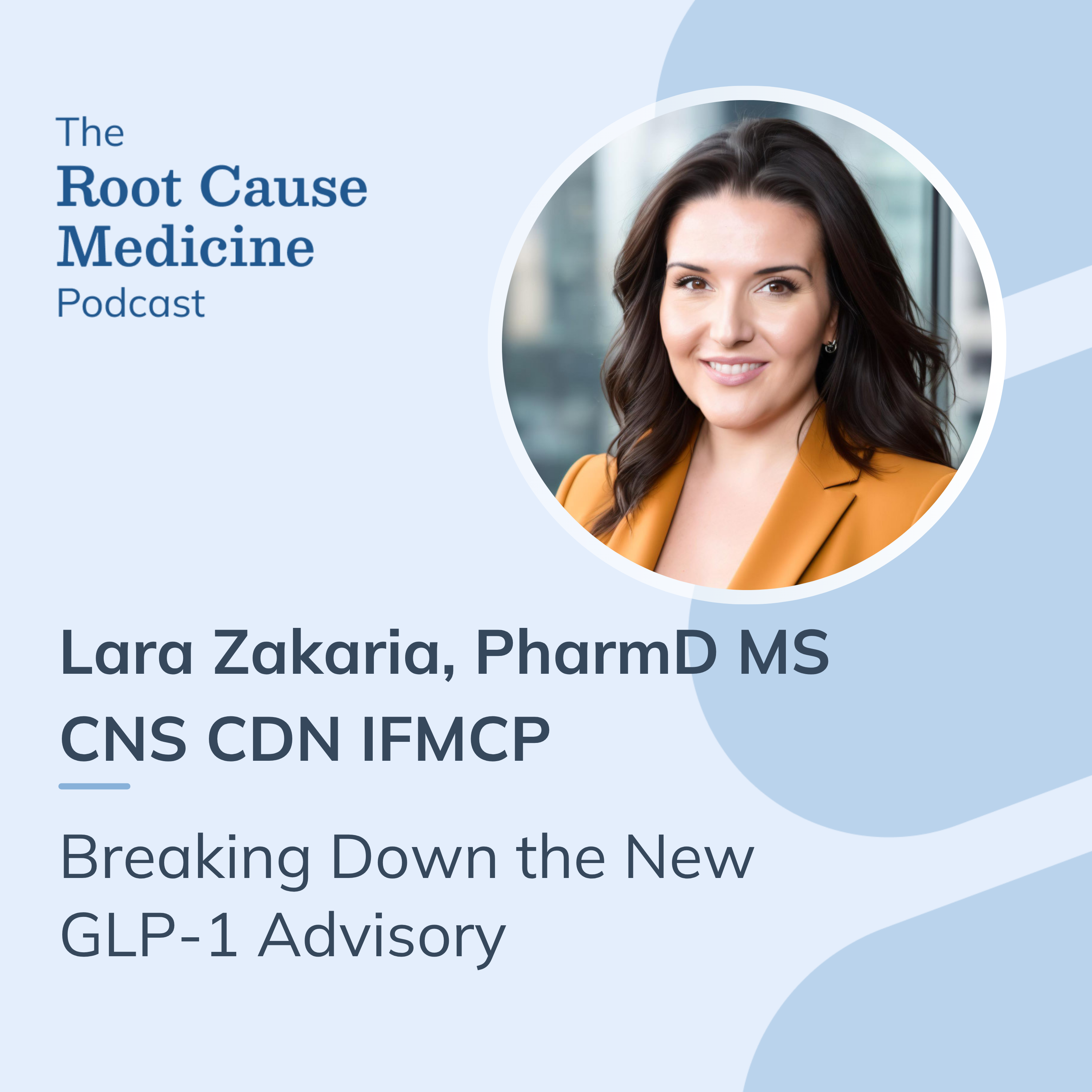
Breaking Down the New GLP-1 Advisory with Lara Zakaria, IFMCP
The Root Cause Medicine PodcastAbout this episode
In this episode, we unpack the updated 2025 GLP-1 consensus advisory with Lara Zakaria, IFMCP. Lara reframes GLP-1 medications as a window of opportunity for lifestyle transformation and emphasizes that prescribing should be paired with proactive nutrition, movement, and lab monitoring. She outlines a three-tiered approach to lab work, highlights the importance of muscle preservation for long-term metabolic health, and shares practical tips for addressing common gastrointestinal side effects. Clinical Takeaways from This Episode GLP-1 Therapy as a Catalyst for Metabolic Health: How to use GLP-1 medications as a tool to initiate lifestyle change, reset eating patterns, and improve overall body composition rather than relying on medication alone. GLP-1 Nutrition Screening & Eating Disorder Risk Assessment: Why clinicians should screen for disordered eating and evaluate baseline diet quality—including fiber, protein, and phytonutrient intake—before initiating GLP-1 therapy. Protein Intake & Muscle Preservation During GLP-1 Treatment: Evidence-informed guidance on maintaining protein intake (0.4–0.5 g/kg/day) and combining GLP-1s with resistance training to reduce muscle loss and support long-term metabolic health. Micronutrient Monitoring for GLP-1 Patients: Recommended lab tests to monitor iron, vitamin D, RBC magnesium, zinc, and fat-soluble vitamins (A, D, E, K) to help prevent nutrient insufficiency and support patient energy and recovery. Managing GLP-1-Related GI Side Effects Naturally: Stepwise strategies for reducing nausea, constipation, and bloating with smaller meals, fiber, hydration, magnesium, ginger, and digestive bitters. Tracking Body Composition in GLP-1 Weight Loss: Why measuring visceral fat, lean mass, and muscle density provides a more complete picture of progress than weight alone—and how to use body composition scales effectively. Multidisciplinary GLP-1 Care Team Approach: How dietitians, physical therapists, trainers, mental health providers, and pharmacists can collaborate to create comprehensive, patient-centered care plans. Optimizing Clinical Workflows for GLP-1 Prescribing: How to build visit templates, lab panels, and follow-up systems to integrate guideline-based nutrition, exercise, and lab monitoring into everyday practice. Guest Introduction Lara Zakaria, PharmD, MS, CNS, CDN, IFMCP, is a licensed pharmacist and functional medicine practitioner specializing in metabolic health, neuroinflammation, and chronic disease. As a faculty member for the Institute for Functional Medicine, she teaches clinicians how to integrate pharmacology with nutrition and lifestyle medicine. Lara is passionate about helping practitioners use GLP-1s as a bridge to sustainable habit change—rather than as a stand-alone solution. Learn more at larazakaria.com or follow her at @foodiepharmacist on Instagram and LinkedIn. GLP-1 Lab Monitoring for Nutrient Status CMP, CBC with iron studies RBC magnesium Vitamin D Full thyroid panel (TSH, free T4/T3, reverse T3, antibodies) Functional testing options: NutrEval, organic acids, stool test GLP-1 Nutrition & Supplement Support for Metabolic Health Targeted protein intake (0.4–0.5 g/kg/day) Multi-mineral or multi-nutrient powder, divided doses Vitamin D + K2, B-complex, and iron as clinically indicated Electrolyte support during titration GLP-1 Constipation Toolkit from Lara Zakaria Magnesium citrate or Cal-Mag combination for low magnesium constipation Buffered vitamin C (titrated to bowel tolerance) and hydration for osmotic constipation Triphala, ginger, digestive bitters as appropriate to support peristalsis Squatty potty and morning routines to activate parasympathetic tone and support optimal pelvic floor function GLP-1 Lifestyle & Movement Recommendations Strength training 2–3x per week to protect muscle mass Walking, yoga, gardening, or functional movement on non-training days Sleep and stress hygiene support to balance circadian rhythm Citations: Mozaffarian D, Agarwal M, Aggarwal M, et al. Nutritional Priorities to Support GLP-1 Therapy for Obesity: A Joint Advisory From the American College of Lifestyle Medicine, the American Society for Nutrition, the Obesity Medicine Association, and the Obesity Society. 2025. Timestamps : 00:00 – Episode introduction and overview of prescribing considerations for GLP-1s 03:28 – Historical context: GLP-1 development and off-label use for weight loss 05:54 – The recent consensus statement and its implications for practice 06:43 – Decision tree considerations: muscle loss, fat distribution, and diet quality 09:05 – The importance of nutrition counseling and the gut-brain axis 12:05 – Holistic assessment framework: screening, laboratory biomarkers, and functional testing 14:10 – The role of fiber and gut health in optimizing GLP-1 outcomes 17:50 – The significance of screening for nutrient deficiencies: iron, vitamin D, magnesium, B vitamins, zinc 22:07 – Prevention of sarcopenic obesity during weight loss interventions 25:51 – Importance of assessing micronutrient status before and after GLP-1 therapy 27:54 – Lab assessments for liver, thyroid, and metabolic health indicators 40:51 – Advanced testing considerations and personalized evaluation strategies 47:02 – Managing GI side effects proactively: counseling, lifestyle, herbal supports 50:56 – Gut motility, herbal supports, and the importance of lifestyle factors 54:43 – Titrating and off-boarding GLP-1 medications for long-term health 55:30 – Resources