October 30, 2025
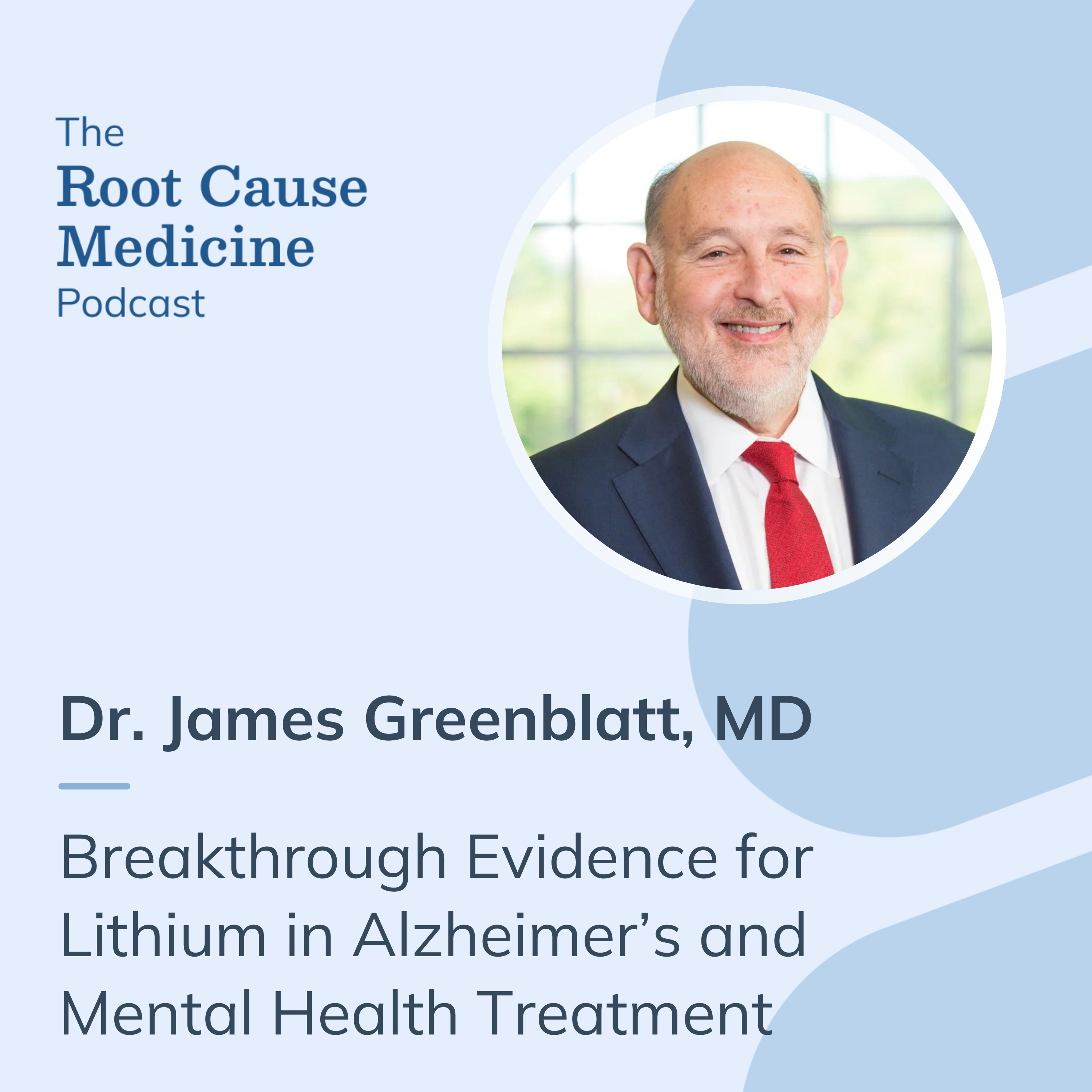
Breakthrough Evidence for Lithium in Alzheimer’s and Mental Health Treatment
The Root Cause Medicine PodcastAbout this episode
Is lithium the missing link in brain health and dementia prevention? In this episode of The Root Cause Medicine Podcast, Dr. Kate Kresge sits down with Dr. James Greenblatt, a renowned integrative psychiatrist and expert in nutritional psychiatry, to explore the latest research on lithium’s role in brain health. From the groundbreaking 2025 Harvard study to practical clinical applications, they discuss how low-dose lithium - particularly in the form of lithium orotate - may offer a safe, natural approach to preventing and reversing cognitive decline, including Alzheimer’s disease. The conversation covers the science, safety considerations, and how clinicians can thoughtfully integrate lithium into their practice to support neurological resilience and mental well-being. If you’re ready to expand your understanding of mineral neuroscience and explore innovative strategies to support cognitive health, this episode provides the science, clinical insights, and practical tools you won’t want to miss. Clinical Takeaways from This Episode The Latest Harvard Research & Its Implications: The recent study showing that lithium naturally exists in the brain and diminishes early in Alzheimer’s, with animal models demonstrating that lithium orotate can reverse memory deficits. Mechanisms of Lithium in Brain Health: Its anti-inflammatory, neuroprotective, and neuroregenerative actions, including inhibition of GSK3, enhancement of neurotrophic factors, and support of myelin integrity. Differences Between Lithium Forms: Lithium carbonate (medication) vs. nutritional lithium orotate; why the latter is safer at microdose levels and less sequestered by amyloid plaques. Safety and Monitoring: Practical considerations for dosing, laboratory testing (such as hair mineral analysis), and monitoring thyroid and kidney function over time. Environmental and Dietary Lithium: The influence of water sources, diet, and geographic variations on lithium status, and implications for mental health and neuroprotection. Impulsivity, Mood, and Behavioral Regulation: How low-dose lithium may support impulse control, reduce irritability, and improve emotional stability across various psychiatric and neurological conditions. Future Therapeutic Directions: The potential for broader use of low-dose lithium as a public health intervention to reduce rates of suicide, neurodegenerative diseases, and mental health disorders. Guest Bio: Dr. James Greenblatt, MD — An integrative psychiatrist and pioneer in nutritional psychiatry, Dr. Greenblatt has over 40 years’ experience in the field. He is the author of The Cinderella Story of Nutritional Lithium and offers extensive training programs for clinicians on natural interventions for mental health and cognitive decline. Labs Mentioned (Monitoring & Context) Hair mineral analysis (lithium marker) Thyroid function tests Kidney function tests Ingredients & Therapeutic Nutrition Mentioned Lithium orotate Magnesium supplements Dietary sources of lithium (e.g., drinking water, herbs like thyme) Resources Mention Nutritional Lithium: A Cinderella Story Lithium deficiency and the onset of Alzheimer’s disease 2025 paper Timestamps 00:00 Introduction & episode overview 02:04 Harvard’s groundbreaking research on lithium and cognition 05:36 Historical context: lithium in psychiatry and nutrition 07:43 Lithium’s neuroprotective mechanisms: inflammation, neurogenesis, GSK3 inhibition 11:54 Differences between lithium carbonate and lithium orotate—clinical implications 13:35 Lithium sequestration by amyloid plaques and the unique properties of orotate 15:28 How lithium supports neurotransmitter balance and mood stability 19:21 Safety strategies: dosing, lab monitoring, and real-world practice 23:35 Assessing lithium levels: hair analysis and environmental factors 26:54 Geographic influences on natural lithium exposure and implications for mental health 29:03 Lithium’s role in impulsivity regulation and behavioral health 35:16 Clinical case examples: children to adults, mood stabilization, addiction, and cognitive decline 37:15 Treatment timelines and patient outcomes with low-dose lithium 42:50 Long-term management considerations and lab monitoring protocols 46:12 The preventive potential of low-dose lithium for Alzheimer’s disease and dementia 49:18 Industry influence, patent issues, and future directions in natural lithium therapies 55:05 Resources for clinicians and closing remarks Disclaimer: The views expressed on this podcast are those of the hosts and guests and don’t necessarily reflect those of Fullscript or any affiliated organizations. This podcast is for informational and educational purposes only and is not intended to be medical advice. For your safety, always check with your doctor or healthcare provider before making changes to your health routine.