October 16, 2025
New Era for Osteoporosis Treatment: CTX, P1NP & Beyond
The Root Cause Medicine PodcastAbout this episode
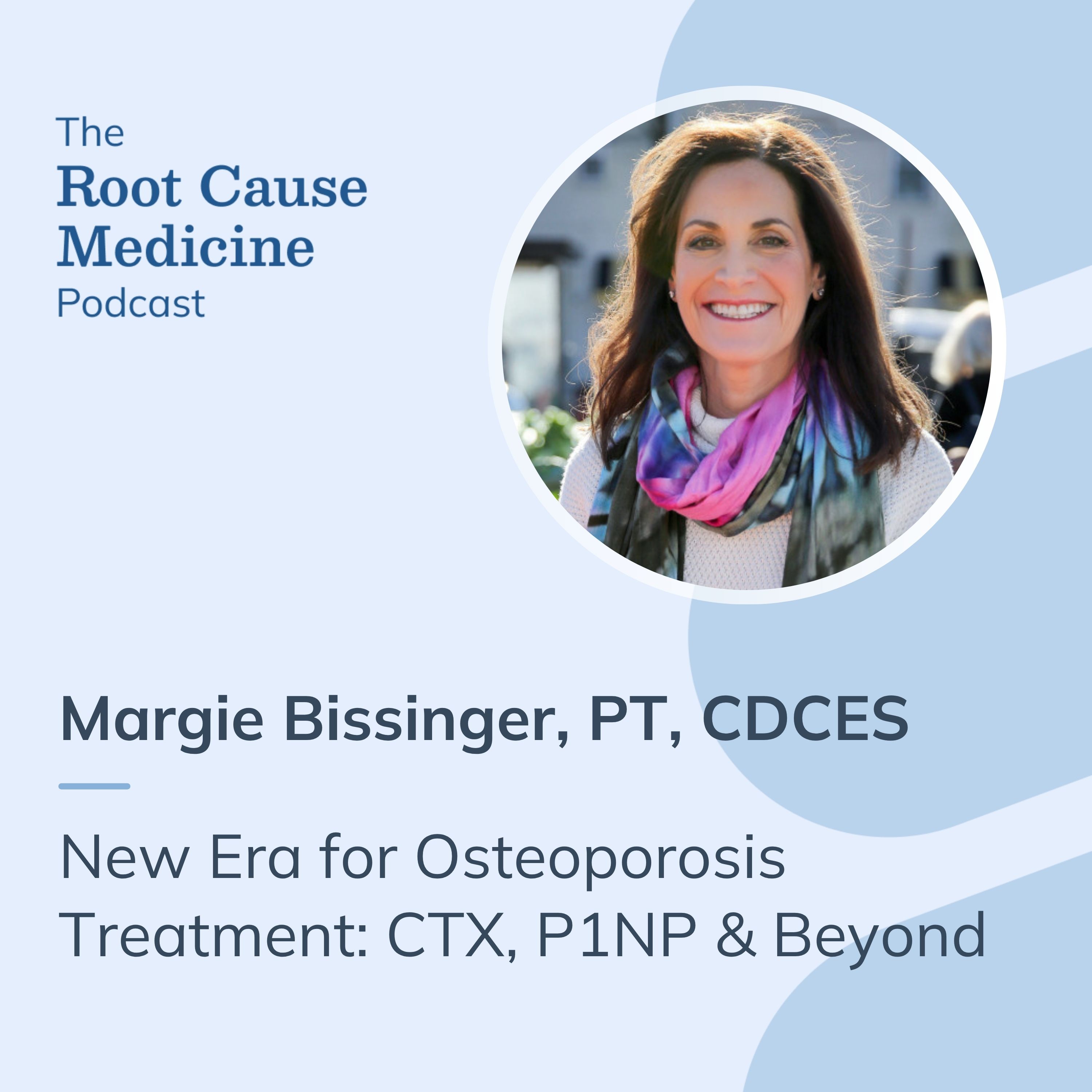
In this episode of The Root Cause Medicine Podcast , Dr. Kate Kresge sits down with Margie Bissinger, PT, MS, CHC —a leading voice in integrative bone health and founder of the Certified Integrative Bone Health Practitioner Program . Together, they explore the new science of osteoporosis care in 2025 , where bone strength is viewed as a reflection of whole-person metabolic and structural health—not just calcium and vitamin D intake. Clinicians will learn about the synergy between next-gen nutrients like collagen peptides, magnesium, vitamin K2 (MK-4 and MK-7), and gain a nuanced understanding of updated protein recommendations, power training, posture work, and low-intensity vibration in the treatment of bone density issues . Margie shares evidence-informed protocols, bone turnover marker monitoring, and strategies for gut–bone axis optimization—empowering practitioners to guide patients through safe, measurable, and sustainable bone rebuilding. Clinical Takeaways from This Episode Osteoporosis as a Systems Issue: Bone loss is often a downstream signal of broader imbalances—inflammation, gut health, nutrient absorption, and stress physiology—not just low calcium intake. Vitamin K2 Synergy (MK-4 and MK-7): Margie highlights evidence for both forms: MK-4’s fracture reduction benefits and MK-7’s cardiovascular and bone maintenance support. She recommends using both for comprehensive osteocalcin activation and calcium metabolism balance. Magnesium and the Mineral Matrix : Magnesium glycinate, citrate, and threonate are preferred for absorption and metabolic synergy. Boron and zinc round out the trace mineral support network. Protein and Collagen Peptides for Bone Formation: Research in 2025 updates protein goals to ≥1.1 g/kg/day in older adults. Collagen peptides paired with vitamin C and resistance training can enhance BMD and reduce fracture risk. Gut–Bone Axis and Microbiome Influence: Dysbiosis and gluten sensitivity may impair bone remodeling. Stool testing can guide probiotic selection and dietary strategies; Lactobacillus reuteri and strain-diverse probiotics show early promise. Hormone and Parathyroid Considerations: Margie stresses evaluating estrogen, DHEA, cortisol, and parathyroid status. Subtle hyperparathyroidism can drive hidden bone resorption—often missed in standard workups. Bone Turnover Markers CTX and P1NP: Functional use of P1NP (bone formation) and CTX (bone resorption) provides faster feedback than DXA alone. Optimal CTX and P1NP suggest balanced remodeling. Power Training, Posture & the Onero Program: Evidence from the LIFTMOR and Onero trials supports high-intensity, low-rep resistance training (5 × 5 sets, twice weekly) under supervision. Margie emphasizes core stabilization , and avoiding forward flexion to reduce fracture risk. Jumping, Impact & WBV Platforms: Even heel-drop jumps improved BMD in trials. For non-impact populations, low-intensity vibration plates may safely stimulate mesenchymal stem cells toward osteogenesis. Margie advises avoid high intensity vibration plates. Inflammation, Homocysteine, and CRP Monitoring: Elevated hs-CRP and homocysteine (>15 µmol/L) correlate with increased fracture risk. Functional ranges (<1.0 mg/L CRP; <8 µmol/L homocysteine) guide anti-inflammatory and methylation support with omega-3s and activated B vitamins. Guest Introduction: Margie Bissinger, PT, MS, CHC is a physical therapist, integrative health coach, and founder of The Bone Health Academy and Happy Bones, Happy Life Podcast . With 30+ years of clinical and teaching experience, she integrates posture-focused PT, nutrient synergy, and mindset coaching to empower patients and practitioners alike. Margie co-founded the Certified Integrative Bone Health Practitioner Program with Dr. Kim Millman and serves on the New Jersey Interagency Council on Osteoporosis. 🔗 margiebissinger.com Core Labs for Monitoring & Personalization Bone turnover: P1NP, β-CTX (baseline → 3–4 mo follow-up) Calcium Vitamin D (25-OH) Magnesium (RBC) Zinc (RBC) Homocysteine hs-CRP Parathyroid hormone (PTH) Thyroid panel 24-hour urine calcium Body composition metrics DEXA + trabecular bone score (TBS) Nutrients & Supplements Discussed Collagen peptides Vitamin C Magnesium glycinate, citrate, threonate Vitamin K2 (MK-4 & MK-7) Boron Zinc Tocotrienols to support osteoblast activity Activated B-vitamins (B6, B12, folate) to support homocysteine regulation Omega-3 fatty acids (EPA/DHA) for inflammation modulation Lifestyle & Exercise Strategies Onero/power training Postural strengthening to reduce vertebral compression Balance work (Tai Chi, Qigong, proprioceptive drills) Low-intensity WBV Jump training Stress & sleep regulation Timestamps 00:00 Episode intro; topic overview (osteoporosis & bone health in 2025) 03:00 Exercise advances and empowerment through strength training 05:50 Nutrition overview: calcium, vitamin D, absorption & gut health 08:08 Vitamin K2: MK‑4 vs MK‑7 research and dosing discussion 11:50 Importance of magnesium and preferred forms 18:33 Protein needs updated: ≥1.1 g/kg for some populations and essential amino acids 24:22 Bone turnover blood markers: CTX and P1NP — interpretation & clinical use 31:05 Common drivers of elevated CTX: inflammation, hormones, parathyroid 36:43 Exercise prescription specifics, posture, stabilization, and BoneFit / PT resources 43:16 Weighted vests: when they help and when they hurt 45:35 Vibration plates: low‑intensity vs high‑intensity, safety considerations 49:01 Hormone replacement therapy: role in bone protection and CTX improvement 55:22 How Margie began focusing on bone health and integrative care 59:25 Strontium: effects on DEXA accuracy and recommendations 01:02:56 Jumping protocols and impact dosing for bone 01:07:05 Homocysteine and bone: thresholds and correction 01:13:33 Resources and recommended reading (Dr. Keith McCormick; Bone Health & Osteoporosis Foundation; BoneFit) 01:17:20 Closing: reframing diagnosis as opportunity; where to find Margie Citations High-Intensity Resistance and Impact Training Improves Bone Mineral Density and Physical Function in Postmenopausal Women With Osteopenia and Osteoporosis: The LIFTMOR Randomized Controlled Trial - PubMed High-intensity exercise to prevent fractures — risk or gain? | Nature Reviews Endocrinology Heavy resistance training provides short-term benefits on bone formation in well-functioning older adults - ScienceDirect McCormick K. Great Bones: Taking Control of Your Osteoporosis . 2023. Disclaimer: The views expressed on this podcast are those of the hosts and guests and don’t necessarily reflect those of Fullscript or any affiliated organizations. This podcast is for informational and educational purposes only and is not intended to be medical advice. For your safety, always check with your doctor or healthcare provider before making changes to your health routine.