HISTORY This Week
The HISTORY® Channel | Back Pocket Studios
The HISTORY® Channel | Back Pocket Studios
This week, something big happened. You might have never heard of it, but this moment changed the course of history. A HISTORY Channel original podcast, HISTORY This Week gives you insight into the people—both famous and unknown—whose decisions reshaped the world we live in today. Through interviews with experts and eyewitnesses, each episode will give you a new perspective on how history is written. Stay up-to-date at historythisweekpodcast.com and to get in touch, email us at historythisweek@history.com. HISTORY This Week is a production of Back Pocket Studios in partnership with the History Channel.
4d ago
December 16, 1773. Samuel Adams sits in a crowded meeting of American colonists at Boston’s Old South Meeting House. He’s watching small groups of men slip quietly out the door. Once outside, the men don disguises and make their way toward three ships moored in the harbor – each weighted down with chests of valuable British East India tea. The men climb aboard, tear open the chests and dump the tea in the water. Cheers fill the winter night. Back at the meeting, Samuel Adams waits. There’s nothing directly tying him to this radical act of rebellion … but few doubt he’s behind it. How did a chronic underachiever help light the fuse of the American Revolution? And why has this important Founding Father largely been forgotten? Special thanks to our guest, Stacy Schiff, author of The Revolutionary: Samuel Adams . ** This episode originally aired December 12, 2022. -- Get in touch: historythisweekpodcast@history.com Follow on Instagram: @historythisweek Follow on Facebook: HISTORY This Week Podcast To stay updated: http://historythisweekpodcast.com To learn more about listener data and our privacy practices visit: https://www.audacyinc.com/privacy-policy Learn more about your ad choices. Visit https://podcastchoices.com/adchoices
Dec 8
December 18, 1970. Decades after the end of WWII, a Nazi doctor is on trial. Today is judgment day in a long, difficult legal battle, but this case isn’t about war crimes. The German pharmaceutical company Grunenthal is charged with the worst medical disaster in history: the Thalidomide scandal. The shoddily tested and hastily approved drug made its way into medicine cabinets around the world, and a decade after its release, the reality is becoming clear: Thalidomide is killing babies. Who are the heroes who brought down Thalidomide? And how did this disaster change pharmaceutical regulations forever? Special thanks to our guest, Michael Magazanik, author of Silent Shock . ** This episode originally aired December 14, 2020. -- Get in touch: historythisweekpodcast@history.com Follow on Instagram: @historythisweek Follow on Facebook: HISTORY This Week Podcast To stay updated: http://historythisweekpodcast.com To learn more about listener data and our privacy practices visit: https://www.audacyinc.com/privacy-policy Learn more about your ad choices. Visit https://podcastchoices.com/adchoices
Dec 1
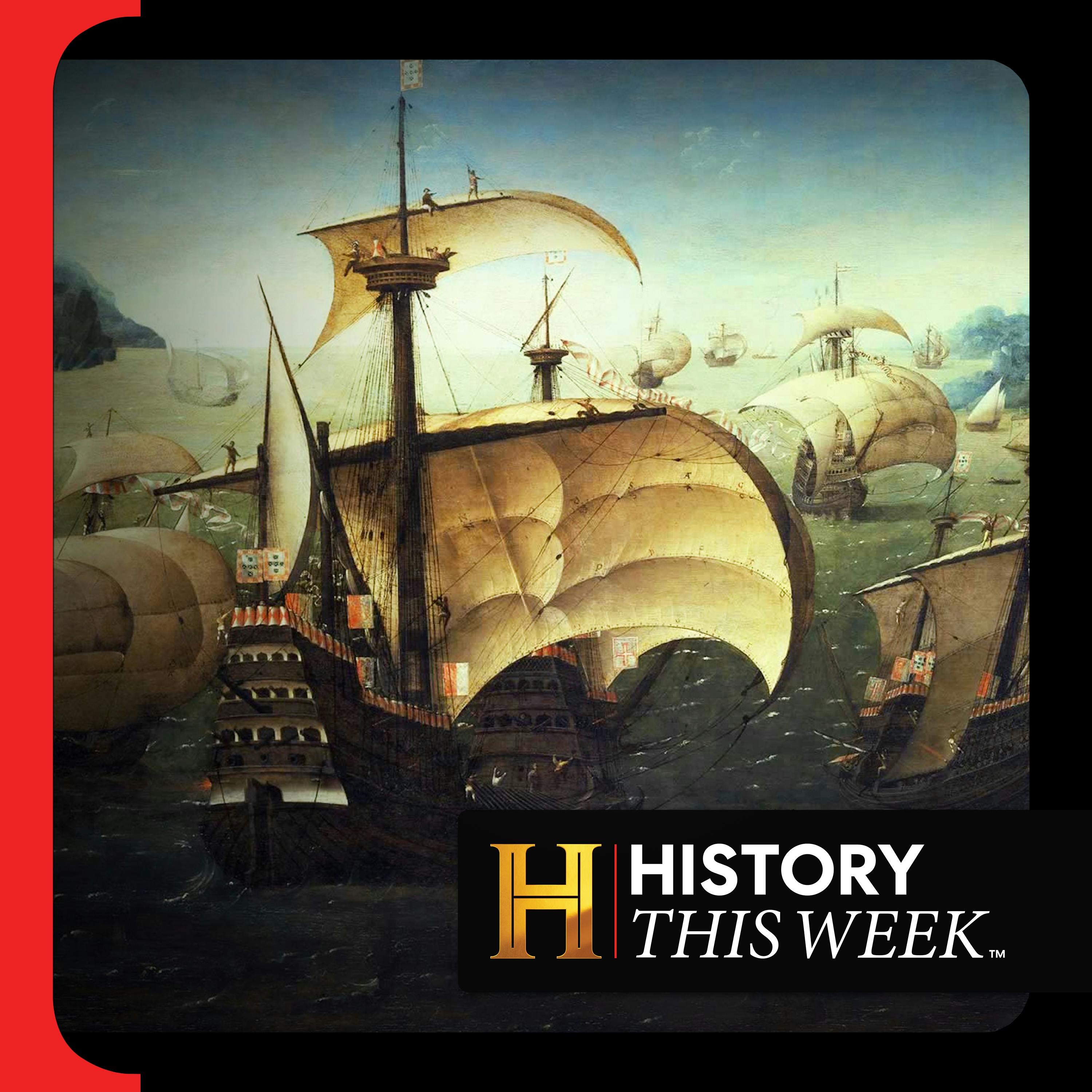
December 1, 1564. Spanish vessels left a secret port in Mexico about two weeks ago. Their goal: to sail across the Pacific and back, charting a new route for international trade, and giving Spain an edge against its chief colonial rival, Portugal. But today, when a storm hits, the smallest ship is separated from the rest of the fleet. Now, that ship, the San Lucas, is on its own. The following year, when the San Lucas makes it back to Mexico, against all odds, its pilot—a Black mariner—is accused of treason. How did the San Lucas—the smallest ship in the fleet—complete a near-impossible journey that would connect the world? And how did the trailblazing mariner Lope Martín get erased from the story? Special thanks to our guest, Andrés Reséndez, author of Conquering the Pacific: An Unknown Mariner and the Final Great Voyage of the Age of Discovery . ** This episode originally aired November 29, 2021. Get in touch: historythisweekpodcast@history.com Follow on Instagram: @historythisweek Follow on Facebook: HISTORY This Week Podcast To stay updated: http://historythisweekpodcast.com To learn more about listener data and our privacy practices visit: https://www.audacyinc.com/privacy-policy Learn more about your ad choices. Visit https://podcastchoices.com/adchoices
Nov 24
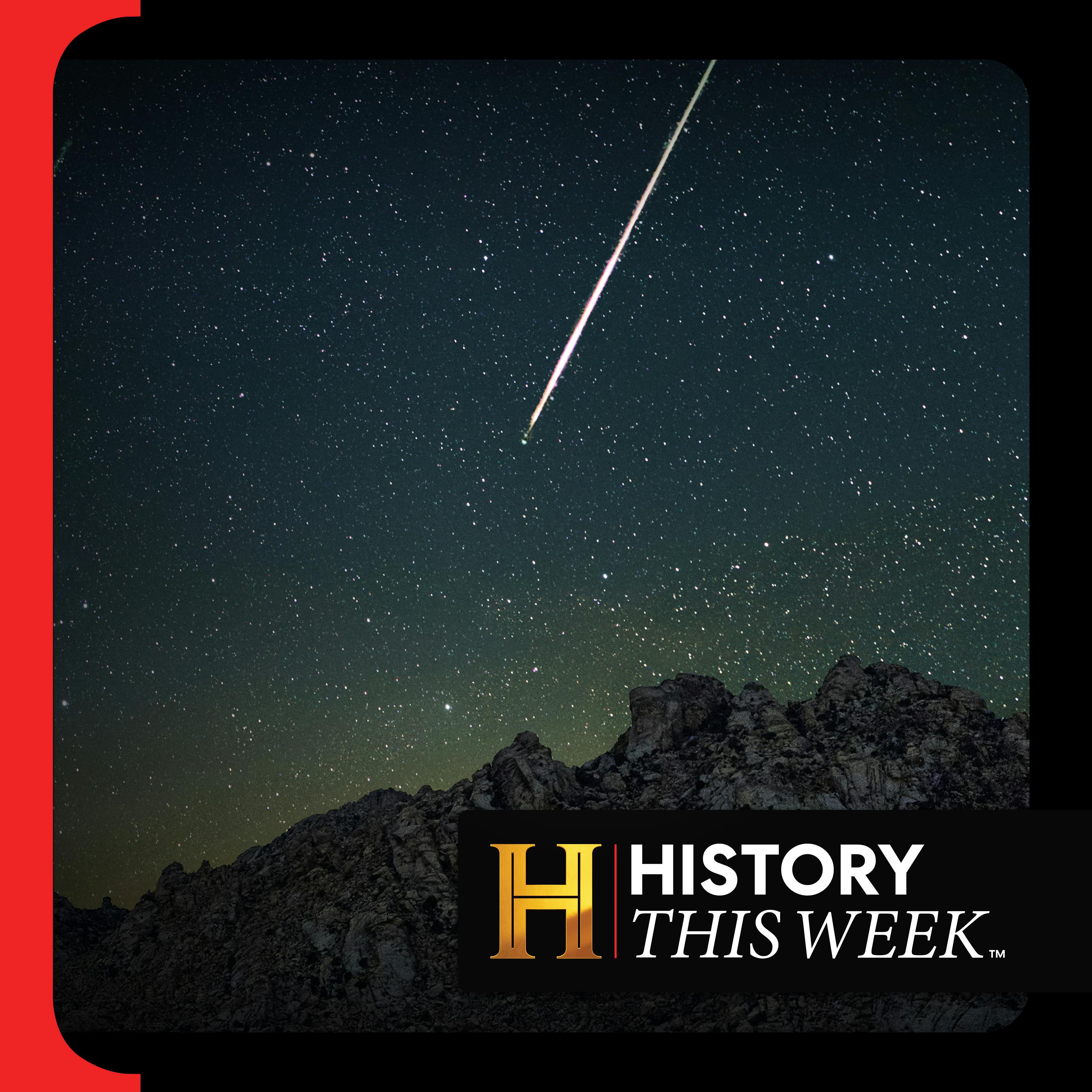
November 30, 1954. At about 12:45 in the afternoon, a space rock comes plummeting through the roof of a house in Sylacauga, Alabama. It bounces off a stand-up radio, ricochets around the living room, and collides with the thigh of Mrs. Ann Hodges, who’s been napping on the couch. Newspapers declare: “experts agreed unanimously that Mrs. Hodges was the first person known to have been struck by a meteorite.” What happened to this space rock after it crashed to Earth and thrust itself into volatile human affairs? And what happened to the human beings whose lives were upended by this rarest of rare events? Thanks to our guests: Dr. Julia Cartwright, planetary scientist at the University of Alabama; Billy Field, professor at the University of Alabama and screenwriter; and Julie Love Templeton, attorney in Tuscaloosa, Alabama. Dr. Cartwright is involved in a number of art/science collaborations to engage and educate the public about meteorites and planetary science. You can find out more on her website, https://le.ac.uk/people/julia-cartwright . Keep an eye out for Billy Field’s latest project, TheStoryAcorn.com , which launches in January 2023. The website will feature history from the Civil Rights movement, told by those who lived it. The website teaches students to gather stories from their own communities and share them with the world. Thanks also to Mary Beth Prondzinski, former collections manager at the Alabama Museum of Natural History, and to the Alabama Museum of Natural History. ** This episode originally aired November 28, 2022. -- Get in touch: historythisweekpodcast@history.com Follow on Instagram: @historythisweek Follow on Facebook: HISTORY This Week Podcast To stay updated: http://historythisweekpodcast.com To learn more about listener data and our privacy practices visit: https://www.audacyinc.com/privacy-policy Learn more about your ad choices. Visit https://podcastchoices.com/adchoices
Nov 17
November 16, 1776. George Washington rows toward Manhattan to inspect the fort that bears his name, only to meet a full-scale British assault already underway. By afternoon, Fort Washington has fallen, and General Washington is forced to abandon New York City. The Continental Army is sick, outnumbered, and demoralized. For a moment, the Revolution seems lost. Facing his worst defeat of the war, Washington himself is questioning their odds. In their new PBS documentary, The American Revolution , Ken Burns and Sarah Botstein set out to tell this version of the Founding Fathers, showing fear, chaos, and uncertainty. They also highlight oft-overlooked characters: the women and children following the army in supporting roles, the Native nations whose decisions shaped the continent, or the enslaved people listening closely to talk of liberty. This week, we talk with Ken Burns and Sarah Botstein about the revelations behind their decade-long project. How did they revisit a story that’s been told so many times, it almost feels like a myth? And how does that myth fit into the world today? The American Revolution is a six-part, 12-hour documentary now premiering on PBS. The series is directed by Ken Burns, Sarah Botstein, and David P. Schmidt. It's also narrated by a guest from one of our recent episodes, Peter Coyote. -- Get in touch: historythisweekpodcast@history.com Follow on Instagram: @historythisweek Follow on Facebook: HISTORY This Week Podcast To stay updated: http://historythisweekpodcast.com To learn more about listener data and our privacy practices visit: https://www.audacyinc.com/privacy-policy Learn more about your ad choices. Visit https://podcastchoices.com/adchoices
Nov 10
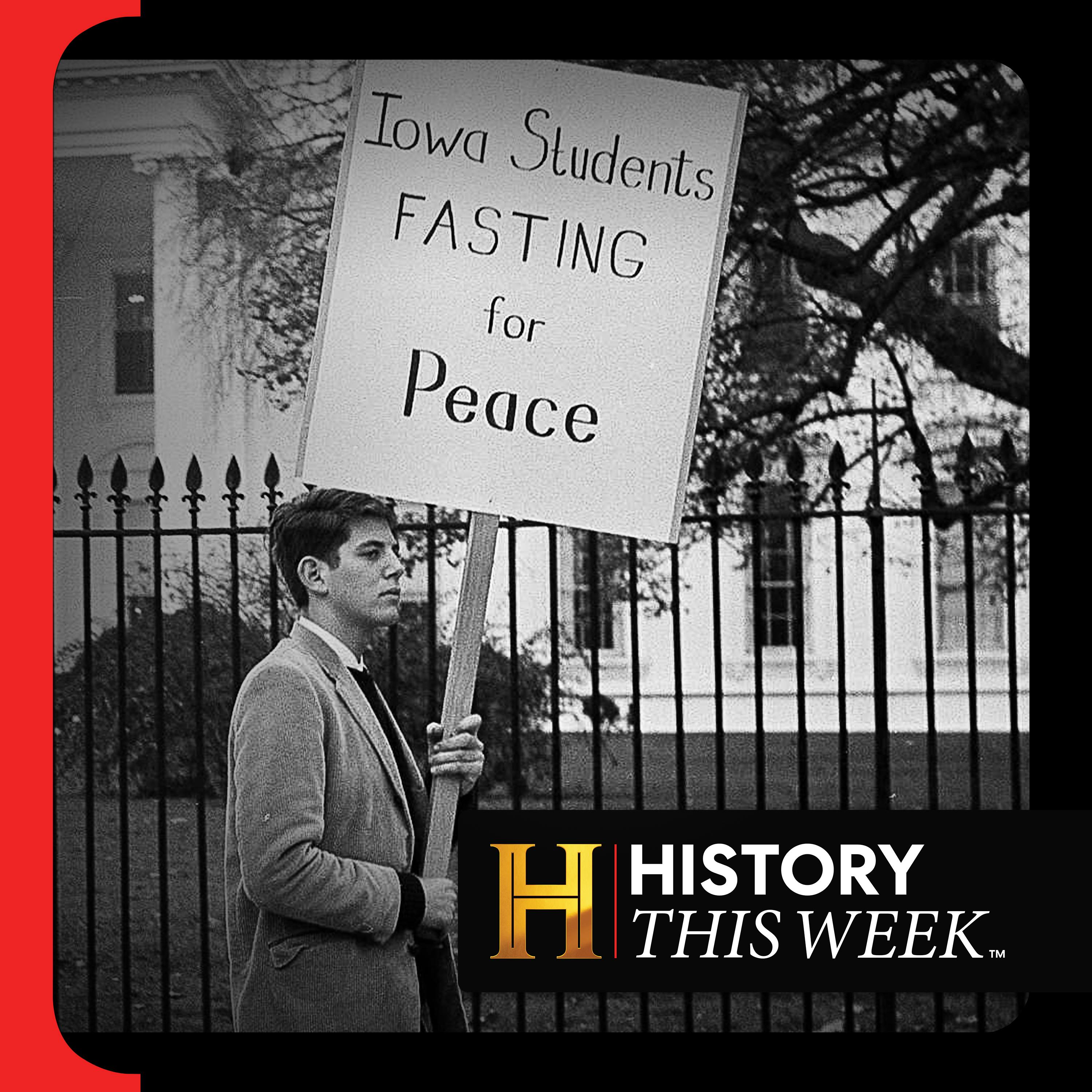
November 16, 1961. Fourteen college students from Iowa have driven nearly a thousand miles to the White House. They’re fasting, protesting, and calling for an end to nuclear bomb testing. These students, later known as the Grinnell 14, will help ignite the student peace movement of the 1960s. Actor Peter Coyote (then Peter Cohon) was one of them. He joins us to remember how it felt to grow up under the shadow of the bomb, why they believed Kennedy’s “peace race” could change the world, and what happened when they found themselves face-to-face with the White House. Special thanks to Peter Coyote. He requested we credit him as a “good person,” which we agree with. -- Cover art: Peter Cohon protesting in front of the White House on Nov. 16, 1961, AP Photo/Harvey Georges Get in touch: historythisweekpodcast@history.com Follow on Instagram: @historythisweek Follow on Facebook: HISTORY This Week Podcast To stay updated: http://historythisweekpodcast.com To learn more about listener data and our privacy practices visit: https://www.audacyinc.com/privacy-policy Learn more about your ad choices. Visit https://podcastchoices.com/adchoices
Nov 3
November 3, 1880. Congressman James Garfield wakes up on his quiet farm in Ohio to learn that he’s been elected President of the United States. He never campaigned to be on the ticket. He never wanted the presidency. But the nation, weary of corruption and hungry for reform, has chosen him to lead. But four months after taking office, Garfield will be shot by a man who believes he’s owed a government position. And the president’s short, remarkable life will end in tragedy. This week, we’re talking with writer and showrunner Mike Makowsky, creator of the new Netflix series Death by Lightning , about the extraordinary story of America’s forgotten president. How did Garfield rise from poverty to the presidency? What might he have achieved if he’d lived? And what does his assassination reveal about political violence, then and now? Death by Lightning releases on Netflix on November 6th. It’s an adaptation of Destiny of the Republic by Candace Millard, which we also consulted for this episode. -- Get in touch: historythisweekpodcast@history.com Follow on Instagram: @historythisweek Follow on Facebook: HISTORY This Week Podcast To stay updated: http://historythisweekpodcast.com To learn more about listener data and our privacy practices visit: https://www.audacyinc.com/privacy-policy Learn more about your ad choices. Visit https://podcastchoices.com/adchoices
Oct 27
October 28, 1895. It’s the first day of a murder trial in Philadelphia, and H.H. Holmes has been left to represent himself. His lawyers say they haven’t had time to prepare for his case, although they may just want to avoid defending the man some newspapers are already saying is “sure to grace a gallows.” Holmes has been accused of murdering his business associate, but rumors swirl that he may have killed dozens, even hundreds more. A century later, some still call him "America's first serial killer." But how did H.H. Holmes earn this reputation? And why is it so hard to learn the truth about this legendary fiend? Special thanks to Adam Selzer, author of H.H. Holmes: The True Story of the White City Devil , and Harold Schechter, professor emeritus of literature at Queens College and author of Depraved: The Shocking True Story of America's First Serial Killer . ** This episode originally aired October 25, 2021. Get in touch: historythisweekpodcast@history.com Follow on Instagram: @historythisweek Follow on Facebook: HISTORY This Week Podcast To stay updated: http://historythisweekpodcast.com To learn more about listener data and our privacy practices visit: https://www.audacyinc.com/privacy-policy Learn more about your ad choices. Visit https://podcastchoices.com/adchoices