Dec 8
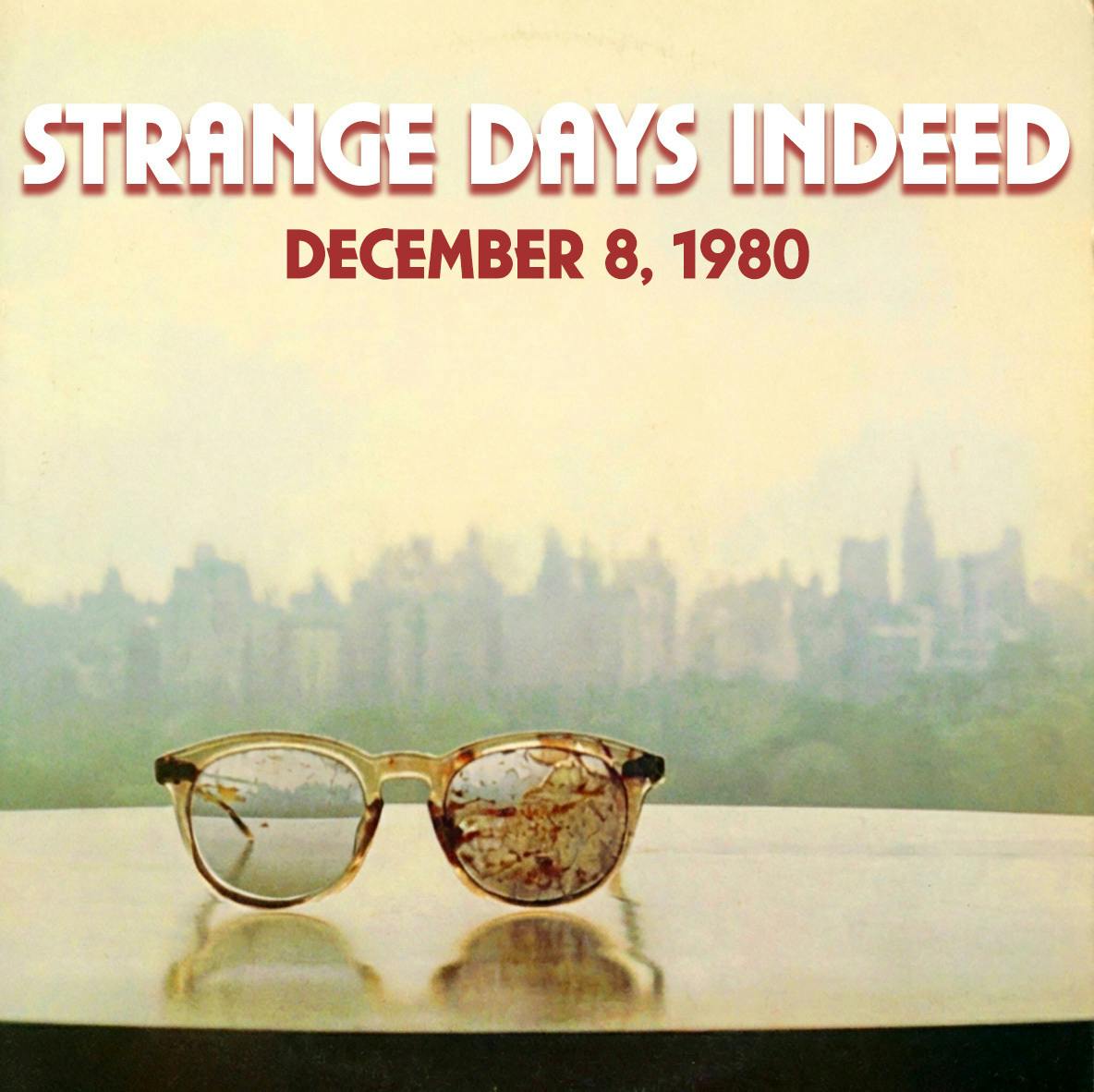
Special Edition: Strange Days Indeed
A sober, chronological narrative of the tragic final day of John Lennon on December 8, 1980. This episode tracks Lennon's last hours, his final interview, and the chilling, parallel actions of his killer, Mark Chapman, waiting outside the Dakota. We go inside the frantic rush to Roosevelt Hospital and recount the surreal, historic moment the news broke during Monday Night Football. This is the definitive, fact-based oral history of an empty, violent act that shattered a generation and a world. Learn more about your ad choices. Visit megaphone.fm/adchoices
Dec 2
(ICYMI) Episode 8: Meet The Beatles Part 2
The show opens December 27th, 1961, at the Cavern Club where Pete Best calls in sick, and the boys bring in Richard Starkey - Ringo Starr to the world - to sit in on drums, his first paid gig with the Beatles. It clicks musically; the band really swings with Ringo on drums. Learn more about your ad choices. Visit megaphone.fm/adchoices

Dec 2
(ICYMI) Episode 7: Meet The Beatles Part 1
Arrival: we begin the show on February 7th, 1964, in the first-class cabin aboard Pan American Airlines Flight 101 from London to New York City. It’s a raucous, party atmosphere, but John Lennon, for a moment anyway, feels alone in a crowd. A door opens, pandemonium ensues, and a new era arrives. Some housekeeping, and we move on to the Soho District, West London, and lay some foundation for today’s story—and for future discussions. Then we pull back a bit, and look at some of the political, economic, and cultural forces at play in 1950s England. We then move on to Liverpool, late 1950s, and meet John Lennon and Paul McCartney, before they was fab. Then we pull back once again, and talk about alchemy and catalysts—and about a shared bond of shared loss. One catalyst comes in the form of a person: Paul’s school chum George Harrison, the baddest young guitar-slinger in Liverpool. John, Paul and George settle in together in the spring of 1958, and begin a four-year apprenticeship that will take them from coffee-house skifflers to the “Toppermost of the Poppermost.” Then it’s off to Hamburg, fall of 1960. The Beatles work hard and play hard, and learn the basics of being a professional Rock N Roll band. We briefly meet a sad-eyed bloke who plays drums—and plays them well—in a competing band on the circuit. We will also meet two founding Beatles: Stu Sutcliffe and Pete Best, and tell some of Stu’s story, a story with a tragic ending. At the end of the second tour, the Beatles become a four piece, and acquire their signature instruments. At the end of the third Hamburg tour, they come back to Liverpool as conquering heroes. June of 1962, and John, Paul, and George stand on the brink. Departure: there is one final move, one last step to take. And the Beatles already have someone in mind. Learn more about your ad choices. Visit megaphone.fm/adchoices

Nov 19
Episode 29: Whatever Gets You to the Light
Synopsis Rock N Roll Archaeology excavates the divergent paths of Elton John and John Lennon in the first half of the 1970s, a period where one man sprinted toward the brightest spotlight on Earth while the other desperately sought an escape. From Elton's star-making coronation at the Troubadour to Lennon's chaotic "Lost Weekend" in Los Angeles, their journeys collide in a New York studio with a high-stakes wager over the song "Whatever Gets You Thru the Night." This is a story of two friends, two paths, and the unforeseen consequences of getting exactly what you wish for, set against the backdrop of the post-Beatles power vacuum and the dizzying heights of 70s superstardom. Producer and Host: Christian Swain Head Writer: Richard Evans Sound Designer: Jerry Danielsen Learn more about your ad choices. Visit megaphone.fm/adchoices

Nov 12
Pearl Jam's Revolution: Author Salena Fragassi on 35 Years of Live Music & Legendary Shows
In this episode of RNRA Digs Deeper, host Christian Swain sits down with veteran music journalist Selena Fragassi to excavate the history of one of modern rock's most significant acts: Pearl Jam. Delving into her beautifully crafted new book, Pearl Jam Live: 35 Years of Legendary Music and Revolutionary Shows , Salena provides a unique perspective on the band's incredible journey.The conversation explores Pearl Jam's origins, born from the ashes of Seattle's "tragedy-stricken" music scene and bands like Mother Love Bone. Fragassi discusses how the band fused the arena-rock grandeur of The Who and Led Zeppelin with the raw, DIY ethos of punk rock, creating a sound that was both monumental and deeply personal.Discover the stories behind Pearl Jam's revolutionary struggle against the corporate music machine, including their famous battle with Ticketmaster and their conscious decision to step away from music videos and mainstream promotion. Fragassi explains how this "era of no" was a survival mechanism that allowed the band to maintain its authenticity and ultimately ensured its remarkable longevity.This in-depth interview also highlights: How Eddie Vedder, an outsider from San Diego, fundamentally altered the band's DNA. [cite: 20:21] The unique, collaborative, and "beautifully incestuous" nature of the Seattle scene that fostered their growth. [cite: 13:12] The evolution of the Pearl Jam live experience, from the raw, chaotic energy of their first-ever show in 1990 to the celebrated institution it is today. [cite: 22:48-23:4, 42:44] The creation of the Ten Club and how Pearl Jam redefined the artist-fan dynamic, making them a true "band for the people." [cite: 33:21] Learn more about your ad choices. Visit megaphone.fm/adchoices

Oct 31
Shorts: RNRA Horror Podcast Short
Examining–and reconsidering–The Rocky Horror Picture Show. At the time, it was transgressive, outrageous; but now it seems a little bit tame. And…a bit problematic, when taken in a modern context. But it's still the ultimate midnight movie, and it's still…just a jump to the left! Songs: RHPS Cast: “There’s a Light,” from the soundtrack album RHPS Cast: “The Time Warp,” from the soundtrack album Tim Curry: “I Do The Rock,” from Fearless RHPS Cast: “Sweet Transvestite,” from the soundtrack album Frank Zappa and the Mothers: “Cheepnis,” from Roxy & Elsewhere RHPS Cast: “Science Fiction Double Feature,” from the soundtrack album RHPS Cast: “Hot Patootie - Bless My Soul,” from the soundtrack album RHPS Cast: “Rose Tint My World,” from the soundtrack album RHPS Cast: “Super Heroes,” from the soundtrack Online Resources: First, we want to give a warm and appreciative shoutout to the blogger Alex Mell-Taylor; we leaned heavily on their post for this chapter: Gently Ripping Apart ‘The Rocky Horror Picture Show’ | by Alex Mell -Taylor Here’s a link to more by Alex Mell - Taylor at Medium.com. The Rocky Horror Wiki How I learned to stop worrying and love the Rocky Horror Picture Show Rock's Back Pages: It's only a movie The 50 Best Sci Fi Movies of the 1970s Golden Age of Science Fiction Books: 11 of the Era's Most Influential Titles Tim Curry The Rocky Horror Picture Show: A Cult Classic that Challenged Sexual Mores | The Artifice Rocky Horror Picture Show – a How-To Guide for Audience Participation We Live in the World ‘Rocky Horror’ Created Written by Richard Evans and Christian Swain Produced and hosted by Christian Swain Sound Design by Jerry Danielsen Partners: Rock's Backpages Voice Actors: Drew H as Alex Mell-Taylor Learn more about your ad choices. Visit megaphone.fm/adchoices

Oct 27
(ICYMI) Episode 1: The Precursors--Redux
Welcome to Rock N Roll Archaeology! This is a reboot of Episode One: The Precursors, originally released October 15, 2015. We updated and improved it some, and re-released it on November 4, 2020. Show Notes and Playlist Here We begin in Times Square, late summer of 1945. The war is over. First up, the Baby Boom and a newly-discovered demographic, the white American teenager. This new cohort is huge, with unprecedented economic clout. Young, restless and affluent, and they want to get beyond the timid, conformist popular culture of 1950s America. “Race Records” (an outdated term for rhythm and blues records by African American musicians) become hugely popular with white teenagers. Drawn from the well of sorrow that is the Black American experience, this music has the edge and urgency--the authenticity--these kids are seeking. We meet our first hero - the musical genius Ray Charles - and our first anti-hero, the frenetic, fatally flawed DJ Alan Freed. We shine a light on two grassroots cultural movements that became important later: the Skiffle Craze in the United Kingdom and the Beat Poets of Urban America. 1954 is an inflection point. On the musical front, Bill Haley released the first million-selling Rock N Roll record: “Rock Around The Clock.” That same year, big changes in the political landscape. The Brown v Board of Education decision; and Senator Joseph McCarthy was publically humiliated and discredited. Freedom of Association and Freedom of Expression take a step forward. Paranoid politics and systemic racism are still very much with us in America, but in 1954 it got a little easier, became a little less risky, to be yourself and express yourself. We head to the delivery room: Memphis Recording Service, where we meet the first Rock N Roll superstar, Elvis Presley, and tease Chapter Two. Hosted and Produced by Christian Swain Written By Richard Evans and Christian Swain Sound Design by Jerry Danielsen https://www.patreon.com/cw/RNRAP Learn more about your ad choices. Visit megaphone.fm/adchoices

Oct 15
Episode 27: Southbound
Rock N Roll Archaeology (RNRA) presents "Southbound," an exploration of 1970s Southern Rock. Through detailed storytelling, RNRA chronicles The Allman Brothers Band, Duane Allman's impact, and their resilience with Eat a Peach and Brothers And Sisters. The episode offers commentary on Lynyrd Skynyrd's rise, along with a feud and a flag. RNRA examines the artists, musical roots, studio successes, and tragic losses, with a look at this significant rock era and how it still resonates today. Learn more about your ad choices. Visit megaphone.fm/adchoices

Oct 14
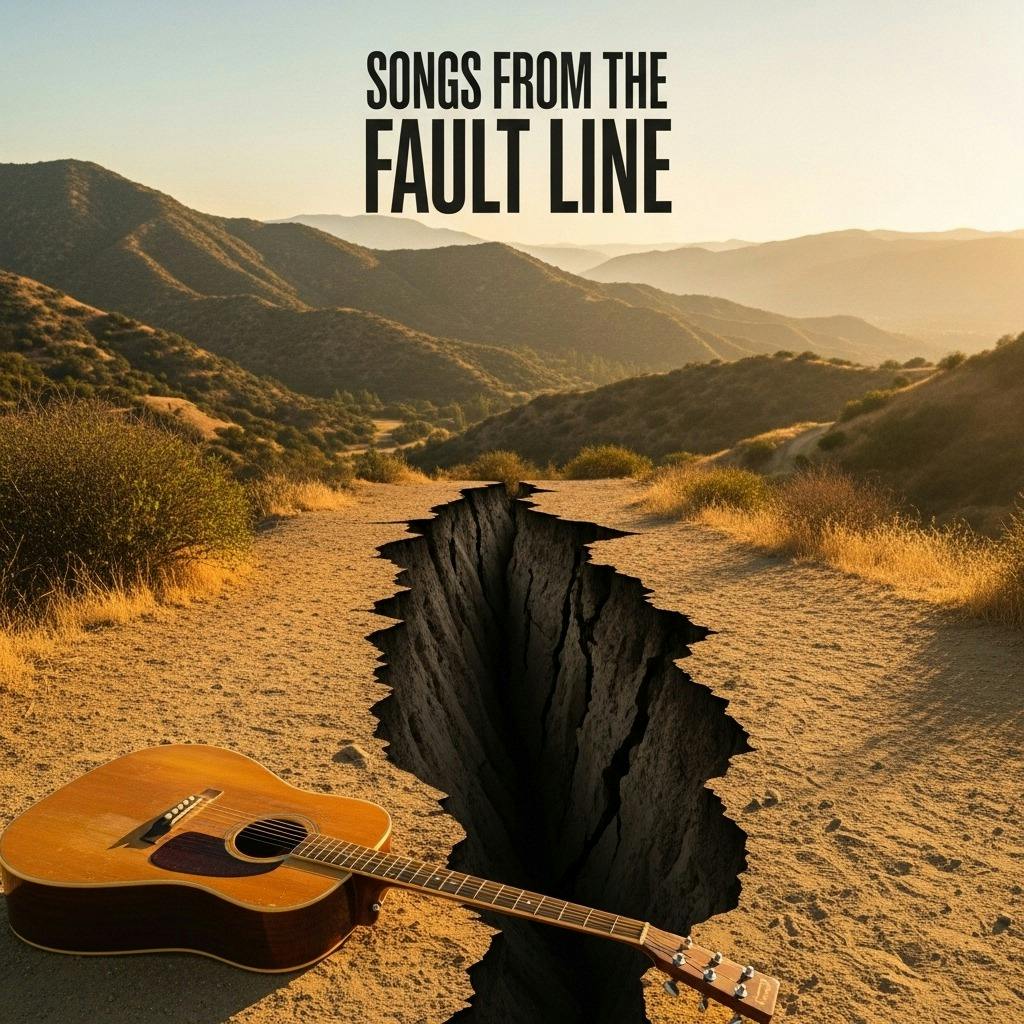
Episode 28: Songs From the Fault Line
Rock N Roll Archaeology explores the 1970s LA Sound, a world of sun-drenched harmonies and seismic ambition. From a bizarre funeral pact for Gram Parsons at the Troubadour to the rise of the Eagles from Linda Ronstadt's backing band, this is the story of how a community of folk idealists, including Jackson Browne, gave birth to a billion-dollar industry. We chart the collision course between artistic collaboration and corporate rock, right on the fault line. Producer and Host: Christian Swain Head Writer: Richard Evans Sound Designer: Jerry Danielsen Learn more about your ad choices. Visit megaphone.fm/adchoices
Oct 14
RNRA Digs Deeper: The USA vs John Lennon
Dig into the archives for a conversation about John Lennon's five-year legal battle against the U.S. government's attempt to deport him. This episode explores the politically charged atmosphere of the early 1970s, where the Nixon administration, wary of Lennon’s anti-war stance and influence over a new generation of voters, sought to silence him.We revisit a powerful interview with the late Leon Wildes, the brilliant immigration attorney who represented John and Yoko, along with his son Michael Wildes. They reveal the strategies, pressures, and ultimate triumphs of a historic legal saga that tested the foundations of American justice and established a lasting legal precedent. Guest Leon Wildes was the renowned immigration attorney who successfully represented John Lennon and Yoko Ono against the U.S. government's deportation efforts. An adjunct professor of law and a leading expert in the field, he authored the book John Lennon vs. The U.S.A. , detailing the landmark case. His son, Michael Wildes, is the managing partner of Wildes & Weinberg P.C. and continues his father's influential work in immigration law. Learn more about your ad choices. Visit megaphone.fm/adchoices

Oct 7
Episode 25: I Know What I Like: The Rise and Fall of Prog
Progressive Rock reached its zenith during the early 1970s, a period often celebrated as the genre's golden age. This era of Prog Rock has inspired intense opinions—both positive and negative—that rival those of any other rock movement or genre throughout music history. Fans of Progressive Rock are known for their passionate dedication. On the flip side, critics, including renowned voices like Lester Bangs, Robert Christgau, and Robert Hilburn, were notoriously dismissive of Progressive Rock. Despite their often harsh criticisms, we believe that time has proven them wrong. Our perspective has evolved, and we now view the best of 70s Progressive Rock as a genre with substantial depth and intellectual substance. The music from this era isn't just enjoyable; it’s some of the most significant work of the 20th century. Not all Prog Rock from this period hit the mark—there were certainly moments of excessive self-indulgence. However, the Prog bands and songs that have stood the test of time are truly exceptional and worth celebrating. Producer and Host: Christian Swain Head Writer: Richard Evans Sound Designer: Jerry Danielsen RockNRollArchaeology.com RNRA on Patreon RNRA on TeePublic Learn more about your ad choices. Visit megaphone.fm/adchoices

Sep 30
(ICYMI) Episode 18: 1969 Part 1
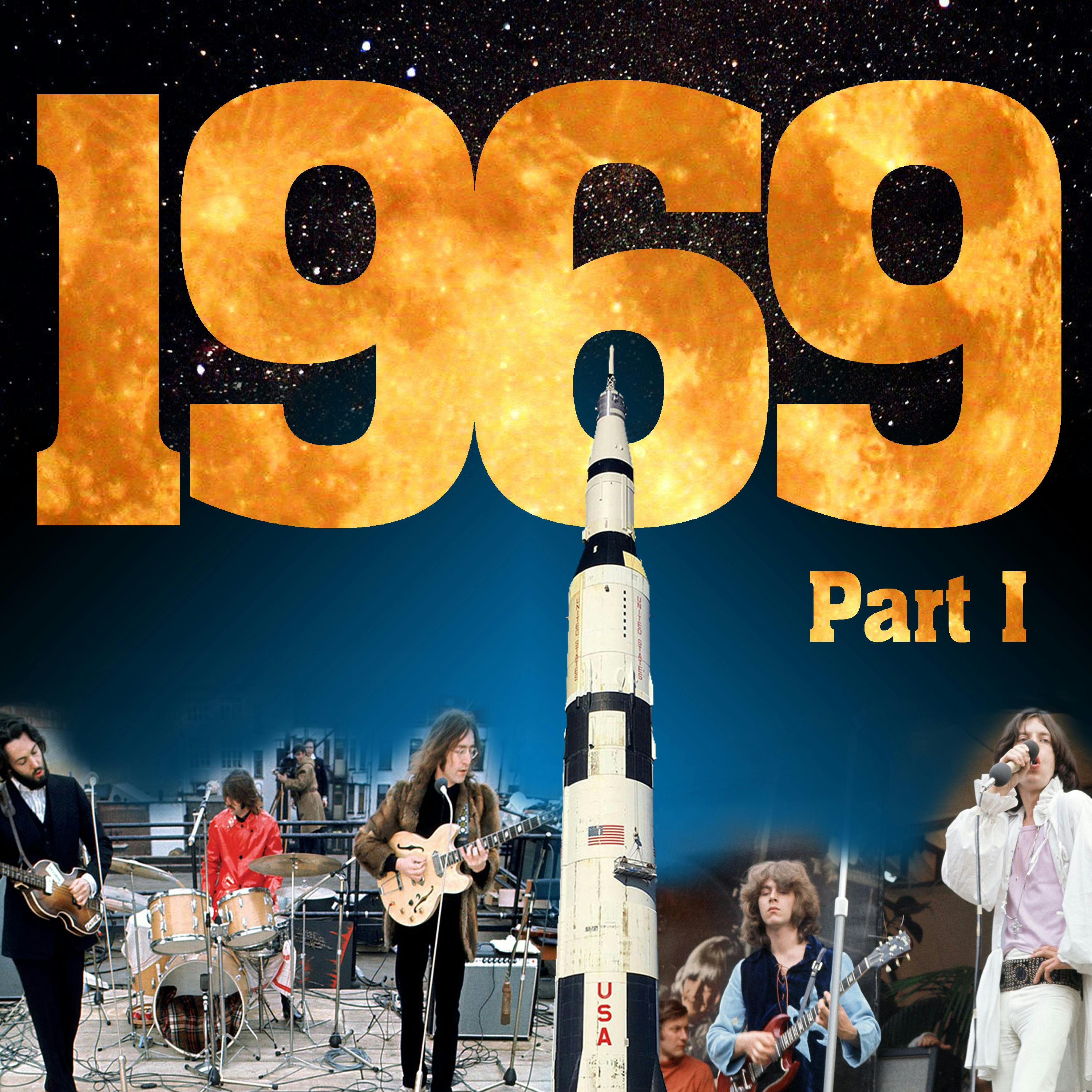
We’re putting down a marker with this episode, and the follow-up: the highest highs and the lowest lows of the entire Rock Era occurred in 1969. It’s a year so big, we had to cut it in two, in order to serve it up properly. We start in January, with The Beatles on The Roof, a 42-minute outdoor concert that definitely warmed up the neighborhood of Mayfair, London, England. Then we catch up with their friends and rivals, The Rolling Stones. The Stones broke out HUGE in 68 and 69, the beginning of an incredible five-year run: from Beggars Banquet on through to Exile On Main Street. Peak Stones, the sweet spot for the World’s Greatest Rock N Roll Band. Brian Jones is out, Mick Taylor is in. We talk about how that happened, and how it impacted the Stones’ sound and attitude. Another influence starts seeping in: American Country Music, thanks to Keith’s new best buddy, Gram Parsons. Brian’s tragic--and still unexplained--demise changes the Hyde Park Concert from a coming-out party into a memorial service. Emotion and conviction carry the day, and Hyde Park sets a very high and hopeful bar; it’s an early example of How To Successfully Pull Off A Really Big Concert. During that “Moon-Crazy Summer” of 1969, NASA pulls off something really big. It’s the single greatest feat--so far--of human exploration: The Apollo 11 mission to the moon and back. We look at the moon landing through the Rock N Roll lens; we’ll talk about space travel, science fiction, and fantasy...in books, film, television, and most of all, in Rock Music. Then David Bowie, with his lifelong knack for being ahead of his time, said take your protein pills and put your helmet on. And we did. And in just a short time we got used to it, became a little jaded about it. That comes later. Here and now in the summer of 1969; stardust, golden, billion year old carbon...got to get ourselves back to the garden. We’ll open Part Two at Yasgur’s Farm in upstate New York, and we’ll light a candle in the rain. Head over to https://www.patreon.com/cw/RNRAP for full show notes. Learn more about your ad choices. Visit megaphone.fm/adchoices

Sep 30
(ICYMI) Episode 19: 1969 Part 2
Welcome back to the second half of our big chapter telling the big story of a big year in Rock. If you haven’t done so already, we highly recommend you listen to Episode 18 before you delve into this one! We tell the story of 1969 by telling the story of four concerts: The Beatles on the Roof, The Rolling Stones in Hyde Park was the first part. Part Two will take us to the peak, to the apotheosis of Woodstock...and to the abyss at Altamont. And we’ll go to some other places in between too. 1969 is the year Rock N Roll goes global, and we’ll get into that a little, and set up later discussions of great topics like Rock behind the Iron Curtain and the growing influence of Reggae and World Beat. Then we’ll take you to Woodstock, and call off the roster, with lots of great music and commentary. The first mythical Rock tour--the Rolling Stones ‘69 tour of America, is up next. That will take us to the final show of the tour, on a dark December night in California, where everything that can go wrong, will go wrong, and the consequences will be tragic. We close out with some thoughts on the year and on the decade we’ve just completed, and on what comes next. www.rocknrollarchaeology.com Learn more about your ad choices. Visit megaphone.fm/adchoices

Sep 17
Shorts: The Three Body Problem
In 1985, a group of powerful "Washington Wives" led by Tipper Gore formed the PMRC to clean up rock and roll, sparking a culture war that culminated in a dramatic Senate hearing. This episode of Rock N Roll Archaeology , "The Three-Body Problem," performs a forensic autopsy on that manufactured moral panic. We explore how the unlikely, chaotic alliance of John Denver, Dee Snider, and Frank Zappa dismantled the PMRC's case piece by piece. Learn more about your ad choices. Visit megaphone.fm/adchoices
Jul 16
RNRA Digs Deeper: Dennis McNally
Episode Title: The Last Great Dream: Dennis McNally on the 1960s Counterculture, the Grateful Dead, and Its Lasting Legacy Episode Summary: What if everything you thought you knew about the 1960s hippie movement and the Summer of Love was just scratching the surface? In this deep-dive conversation, acclaimed author and Grateful Dead historian Dennis McNally joins the show to discuss his monumental book, The Last Great Dream . We go beyond the clichés of flowers and tie-dye to uncover the intellectual, political, and artistic currents that fueled the San Francisco counterculture. McNally reveals how the dream of the 60s continues to shape our modern world in surprising ways—from the food we eat to the computers we use—and offers a profound look at its triumphs, its failures, and its unfulfilled promises. Learn more about your ad choices. Visit megaphone.fm/adchoices
Jun 17
Shorts: Southern Rock Opera: Ghosts, Myths, and Monsters
Explore the power of myth with Drive-By Truckers' landmark album, Southern Rock Opera. This RNRA Short dissects how Patterson Hood and Mike Cooley used the legend of Lynyrd Skynyrd to confront "The Duality of the Southern Thing." Uncover the stories behind this ambitious double album, its challenging creation, and its lasting impact on Southern rock and the band's "golden era" with Jason Isbell. Host and Producer: Christian Swain Head Writer: Richard Evans Sound Designer: Jerry Danielsen Learn more about your ad choices. Visit megaphone.fm/adchoices
Jun 11
(ICYMI) Episode 21: Guitarmageddon
Synopsis The fuse was lit in 1966. Jeff Beck, Jimmy Page, John Paul Jones, and Keith Moon came together to record a proto-metal classic. After the session an offhand quip from Keith Moon sticks with Jimmy Page. Then we meet The G; the imposing Peter Grant. Led Zeppelin’s fearsome tough-guy manager was a key reason why Zep dominated the rock landscape in the early 70s. Well away from Swinging London, in the grimy industrial town of Birmingham, Black Sabbath comes together. We’ll also take a look at one of the greatest Jam Bands ever, Deep Purple. Then on to probably the single saddest story in all of Rock History, the final days of Jimi Hendrix. Jimi towers over all of it, the late, lamented godfather of Heavy Rock--Rock that centers around the guitar and celebrates blazing virtuosity on that instrument. Complete show notes: file:///C:/ Users/59tel/Downloads/Episode%2021%20Show%20Notes%20(1).pdf Learn more about your ad choices. Visit megaphone.fm/adchoices
May 30
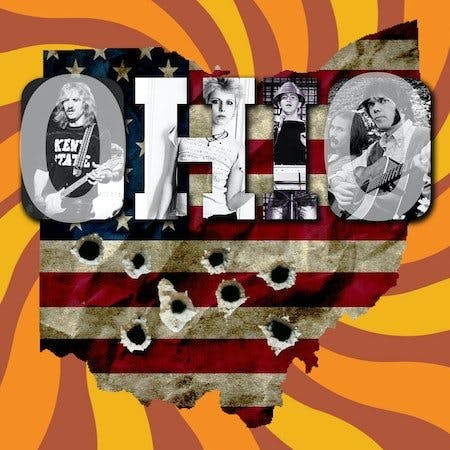
(ICYMI) Episode 20: Ohio
Rock N Roll as the First Draft Of History. We begin in the midwest college town of Kent, Ohio, in the late spring of 1970. We’ll meet three future rockers--students at Kent State University, barely out of their teens--who will be changed forever by what they witness. We’ll check in on Motown, where the fluffy pop “Sound of Young America” is still alive, but there's a big change coming, a movement towards a tougher, more topical sound. We’ll foreshadow that just a little--lots more to come in a later chapter. Rock N Roll is now Rock, and it is mainstreamed now, big and getting bigger. It set out to subvert the dominant paradigm, now it is the dominant paradigm. It can be downright paradoxical at times; defined by its own contradictions. We come back to the campus for the shattering events of May 4th. They inspire a unique musical response, something we really haven’t seen since then. Written by Richard Evans and Christian Swain Hosted and Produced by Christian Swain Sound Design by Jerry Danielsen Learn more about your ad choices. Visit megaphone.fm/adchoices
Apr 16
Deeper Digs: Interview with Robert Hilburn
Host Christian Swain relaunches the interview show "Deeper Digs in Rock" on the Rock N Roll Archaeology feed! Initially focused on academics and journalists, the show plans to evolve into a LIVE, interactive panel discussion format using the Gigaverse app. This episode revives a highlight from 2018: an insightful interview with renowned former LA Times music critic Robert Hilburn. This archival conversation delves into Hilburn's Paul Simon biography and offers much more from his storied career covering pop and rock music. Learn more about your ad choices. Visit megaphone.fm/adchoices

Mar 18
Shorts: A Few Words in Praise of Randy Newman
For nearly 30 years, Randy Newman has been the musical voice behind Pixar’s most beloved films—Toy Story, Monsters Inc., Cars, and more—earning multiple awards and generations of fans. But beyond these nostalgic soundtracks lies a body of work that’s often overlooked. Newman’s solo career is a masterclass in sharp, literate satire, tackling America’s deepest flaws with a deceptively laid-back style. From Sail Away to I Love L.A., his songs blend humor with biting social commentary. In this Rock N Roll Archaeology Short, we explore Newman’s 1970s-era music and the new biography A Few Words in Defense of Our Country by legendary rock critic Robert Hilburn. Join us for a deep dive into the genius of Randy Newman! Learn more about your ad choices. Visit megaphone.fm/adchoices

Feb 18
Episode 26: Turn and Face the Strange
Glam rock was more than just a sound—it was a shift in how music, fashion, and identity intertwined. We explore the rise of Glam in the early ‘70s, with David Bowie as its central figure. Through alter egos like Ziggy Stardust and the Thin White Duke, Bowie use theatricality, androgyny, and science fiction themes to push the boundaries of rock music and stardom. But Glam wasn’t just Bowie. UK Artists like T. Rex and Slade, and Americans like Lou Reed and Alice Cooper each brought their own take, blending rock with elaborate visuals and a playful disregard for traditional norms. Glam faded after a few short years, but its influence is lasting. Glam style and attitude reappear, over and over, in Rock Music. Producer and Host: Christian Swain Head Writer: Richard Evans Sound Designer: Jerry Danielsen Learn more about your ad choices. Visit megaphone.fm/adchoices

Jan 15
Shorts: "A Complete Unknown" Gets Bob Dylan's Story Right - Even When It's Wrong
In this special RNRA Short, we set our sights on Bob Dylan’s journey from scrappy young folksinger to the electric wonder who rocked the 1965 Newport Folk Festival. We’re talking about “A Complete Unknown,” James Mangold’s new biopic starring Timothée Chalamet, and how it blends faithful biography with a dash of good old mythmaking. We’ll uncover the inspiration Bob drew from Woody Guthrie, spotlight the unwavering support (and frustrations) of Joan Baez, and check in on cameo moments from that Nashville cat Johnny Cash. Along the way, we’ll talk “poetic truth,” break down some of the film’s creative liberties, and dig deep into Dylan’s own transformation—how he blew open the boundaries between folk and rock for generations to come. If you love the idea of cinematic storytelling that captures both the magic and the mess of a music legend, then you’re in the right place. Let’s get to it, friends! https://www.rocknrollarchaeology.com/ Learn more about your ad choices. Visit megaphone.fm/adchoices

Nov 18, 2024
Shorts: Springsteen On Screen
A deep dive into three iconic films that showcase Bruce Springsteen across fifty years in Rock N Roll. Wings for Wheels: The Making of Born to Run offers an intimate look at the painstaking creation of his career-defining album. The 1979 Legendary No Nukes Concert captures Springsteen’s electrifying live performance at a critical moment in rock and activism history. Finally, Road Diary provides backstage access to the E Street Band on their current world tour, revealing the heart and hustle behind the music. Host and Producer: Christian Swain Head Writer: Richard Evans Sound Designer: Jerry Danielsen Learn more about your ad choices. Visit megaphone.fm/adchoices

Sep 30, 2024
Shorts: Politics of Dancing
Hey there, rock fans! In this Rock and Roll Archaeology Shorts we’re calling "The Politics of Dancing," I’m diving deep into how music and presidential campaigns have intersected through the years. From Bill Clinton’s unforgettable use of Fleetwood Mac’s “Don’t Stop” in ’92 to DJ Cassidy spinning records at the 2024 DNC, we’re looking at how rock, pop, and politics come together to tell a bigger story. We’ll hit all the major moments—like Al Gore’s cheeky Macarena—and dig into how these tunes help craft the political narrative. So, crank it up and let’s get into it! Learn more about your ad choices. Visit megaphone.fm/adchoices

Mar 26, 2024
Shorts: Celebrating Country Soul
A little about Country, a little about Soul, and more about how they are really just the same thing. And why it’s not at all surprising that a big Pop-Soul star like Beyoncé is releasing a Country album. For this RNRA Short, we tapped the expertise of Professor Charles Hughes of Rhodes College in Memphis, author of “Country Soul: Making Music and Making Race in the American South.” We’ll look at the origins of the Alt Country Revolt, and name-check some great artists working very loudly and deliberately outside the Nashville Pop Country machine. Y’all keep up the rockin’ now, hear? Producer and Host: Christian Swain Head Writer: Richard Evans Sound Designer: Jerry Danielsen Learn more about your ad choices. Visit megaphone.fm/adchoices

Feb 7, 2024
Shorts: Swifties - Beyond Beatlemania?
To mark the 60th anniversary of The Beatles' inaugural performance on U.S. soil, we decided to do a quick compare-and-contrast. We’ll revisit that watershed moment in music and culture, and talk about something recent that actually comes close to matching that moment: the ongoing Eras Tour from Taylor Swift. Not “Bigger THAN The Beatles,” but in our not-so-humble opinion, “Biggest SINCE The Beatles.” Listen in and let us know what you think! www.rocknrollarchaeology.com/listen Producer and Host: Christian Swain Head Writer: Richard Evans Sound Designer: Jerry Danielsen Learn more about your ad choices. Visit megaphone.fm/adchoices

Dec 25, 2023
Episode 24: The Wonder Years
The Soul of the 1970s. First, Marvin Gaye kicked the door open with “What’s Going On,” and then Stevie Wonder barged in. The Wonder Years spanned 1971 to 1976; when the transcendent, diverse talent of Stevie Wonder was in its fullest flower. That five-album span is one of the most successful and impactful creative runs in the history of recorded music. Our podcast offers immersive storytelling, insightful commentary, and a stellar musical playlist. Join us as we delve deep into the lives and musical genius of these iconic Soul-Music luminaries. https://open.spotify.com/playlist/7s4Vyw1FLb4XpJnANduFPs?si=14746e9dd53049b1 Learn more about your ad choices. Visit megaphone.fm/adchoices
Aug 21, 2023
Shorts: Celluloid Heroes
Welcome back to Rock N Roll Archaeology! Got another RNRA Short Podcast for you. This one is named after the Kinks song “Celluloid Heroes.” Rock N Roll goes to the movies (and television) in this one. We’ll take a look at three shows that feature fictional Rock bands: the movies “Almost Famous” and “This Is Spinal Tap,” and the television miniseries “Daisy Jones & The Six.” Visit our website for more about this and all our other podcast episodes, and for links to our Patreon and Social Media. Keep up the Rockin’! Dramatis Personae Kellen Reiche played Danny Failson Lynly Ehrlich played Liz Limer Jerry Danielsen played Joe Conrad Courtney M. Anderson played Heller Joseph Learn more about your ad choices. Visit megaphone.fm/adchoices
Jun 7, 2023
Shorts: Disco Demolition!
RNRA Shorts: Disco Demolition! Take us back to the Distant Days of Disco, Summer of 1979. Steve Dahl, a brash young DJ at WLUP- FM (“Chicago’s Best Rock!”), has declared war on Disco. On July 12, 1979, he took the fight to Comiskey Park, in between games of a doubleheader between the home-team Chicago White Sox and the Detroit Tigers. Things…got out of hand. Since then, the “Disco Demolition” at Comiskey has achieved no small amount of notoriety, and at least according to Steve Dahl, it was a turning point, the beginning of the end for Disco. Was it really? Well, yes and no. In our view, the Disco trend was already on the decline; it had pretty much run its course. But there was a powerful backlash to Disco, that’s undeniable. What motivated that backlash? And what was the fallout from the actual event? Let’s discuss! For sources and show notes, visit rocknrollarchaeology.com ! Learn more about your ad choices. Visit megaphone.fm/adchoices
May 3, 2023
Episode 23: Radio, Radio
We want the airwaves, baby! Chapter 23 of Rock N Roll Archaeology tunes into radio and radio culture in America and elsewhere. There was a brief moment in the 70s and early 80s where FM Rock Radio was something pretty special.So what was that like, and where have all the good times gone? Some storytelling in this one, but it’s a little heavier on the commentary…and of course we’re featuring some killer songs, because that’s how we roll. “Begin the day with a friendly voice, a companion unobtrusive, Plays that song that’s so elusive” For full show notes and to support Rock and Roll Archaeology visit www.rocknrollarchaeology.com . Learn more about your ad choices. Visit megaphone.fm/adchoices
Jan 17, 2023
Shorts: Diamond Dust (A Tribute to Jeff Beck)
Remembering the late great Jeff Beck, the guitarist’s guitarist. An innovator and an iconoclast with a bold experimental spirit, Jeff left his unique stamp on hundreds of great songs. Songs Jeff Beck: “Diamond Dust,” from Blow By Blow Jeff Beck: “Blue Wind,” from Wired The Yardbirds: “Stroll On,” from the soundtrack to Blow Up Jeff Beck with Bones UK: “The Revolution Will Be Televised” from Loud Hailer Jeff Beck: “Freeway Jam,” from Blow by Blow Bill Haley and The Comets: “Rock Around the Clock,” single released 1955 Commander Cody and the Lost Planet Airmen: “Hot Rod Lincoln” from Lost in the Ozone Stevie Wonder: “Looking for Another Pure Love,” from Talking Book Jeff Beck, “Thelonius,” from Blow by Blow Jeff Beck, “Cause We’ve Ended as Lovers,” from Blow by Blow Credits Author Dennis Hartley voiced by Doug Herzog In Memoriam Chip Isaac tribute charity: Bay Area Border Relief. https://www.bayareaborderrelief.org/ Podcasts Rock N Roll Archaeology, Chapter 21: Guitarmageddon Rock N Roll Archaeology, Chapter 8: Meet the Beatles, Part 2 Deeper Digs in Rock: Bones UK Books Martin Power, Hot Wired Guitar:The Life of Jeff Beck, 2014 Online Sources The Alchemist: RIP Jeff Beck – Digby's Hullabaloo Jeff Beck's favourite guitar solos How Jeff Beck made Stevie Wonder go No. 1 with 'Superstition' Learn more about your ad choices. Visit megaphone.fm/adchoices
Sep 23, 2022
Shorts: Secrets From A Saucer
Bands in the van, and a band at the crossroads. In this episode of RNRA Shorts, we’ll get into the early days of Pink Floyd, and the latest from a Pink Floyd member: Nick Mason’s 2022 Saucerful of Secrets tour. Written by Richard Evans and Christian Swain, Sound Design by Jerry Danielsen. Sponsors and Partners Nick Mason's Saucerful Of Secrets Rock’s Backpages Songs Pink Floyd, “Echoes,” from Meddle Pink Floyd, “See Emily Play,” from Piper at the Gates of Dawn Pink Floyd, “Set the Controls for the Heart of the Sun” from A Saucerful of Secrets Pink Floyd, “Interstellar Overdrive,” from Piper at the Gates of Dawn Pink Floyd, “Bike,” from Piper at the Gates of Dawn Pink Floyd, “Fearless,” from Meddle Pink Floyd, “One of These Days,” from Meddle Pink Floyd, “Jugband Blues,” from A Saucerful of Secrets Nick Mason’s Saucerful of Secrets: “Arnold Layne,” from Live at the Roundhouse Books Mason, Nick. Inside Out: A Personal History of Pink Floyd Chronicle Books LLC. Kindle Edition. Cutler, Sam. You Can't Always Get What You Want: My Life with the Rolling Stones, the Grateful Dead and Other Wonderful Reprobates . ECW Press. Kindle Edition. Films, Documentaries, and TV Shows “ What Drives Us ,” Directed by Dave Grohl, 2021 "Omnibus" Syd Barrett: Crazy Diamond (TV Episode 2001) - IMDb Pink Floyd: Dark Side of the Moon (Short 1973) - IMDb Nick Mason's Saucerful of Secrets: Live at the Roundhouse (2020) - IMDb Online Sources Pink Floyd | Rock & Roll Hall of Fame Why Pink Floyd’s Nick Mason Finally Went Solo at 75 – Rolling Stone How Pink Floyd Carried on With 'A Saucerful of Secrets' Nick Mason’s Saucerful of Secrets Concert Setlist at Zagrebački velesajam - Paviljon 9, Zagreb on May 31, 2022 Learn more about your ad choices. Visit megaphone.fm/adchoices
Aug 11, 2022
Shorts: The Art of the Steal
Content warning: Here at RNRA, we don’t hide our views. At all. But when it comes to politics, we try not to be in-your-face about it either. Our little slogan is “Just tell the story, and the point will get made.”This time though, we’re a little more overt, we’re letting it rip just a little bit. This particular burr has been under our saddle for a while now.Now: on with the show. Summer Time is Shorts Time! RNRA Shorts, that is! So…here’s a thing. Sometimes we visit Right Wing World online, that’s usually how it starts.On these expeditions we’ll sometimes run into some whinging about “Woke Progressives” cancelling right wing culture and entertainment, or just griping in general about perceived left/liberal bias in popular culture.They’re not totally wrong about that. They’re right, just for the wrong reasons, and we’ll explain why.It’s not just complaining they do. We also see a lot of co-opting and outright stealing. And when they take Rock music and culture and dishonestly try to repurpose it, try to make it serve the conservative agenda, well…unintentional hilarity ensues.So we’ll do some roasting, but we’ll also do some thinking out loud, talk a little about the how and why, and even delve into the deeper history of…the Art of the Steal. Enjoy! Sponsors and Partners BetterHelp Rock’s Backpages Boldfoot Songs Parliament Funkadelic: “One Nation Under A Groove” Thomas Dolby: “Pulp Culture” Ted Nugent: “Stranglehold” Ted Nugent: “Hey Baby” They Might Be Giants: “Your Racist Friend” Neil Young: “Rockin’ in the Free World” Woody Guthrie: “This Land is Your Land” Trey Parker and Matt Stone: “America, Fuck Yeah” Toby Keith: “Courtesy of the Red White and Blue” Living Colour: “Cult of Personality” Stevie Wonder: “He’s Misstra Know It All” Green Day: “American Idiot” Sources Apocalypse Now: “Mangoes and Tigers” Scene (Retrieved from YouTube) Roy Edroso Breaks it Down Substack (Paywalled. Roy writes a lot about this issue, and we think he’s really astute–and hilarious.) The Five Most Repellent Things Ted Nugent Has Ever Done | Rocks Off Music News: Why can't musicians get politicians to stop playing their songs? The President’s Shock at the Rows of Empty Seats in Tulsa - The New York Times American Cringe: Why can’t the contemporary right make art? Episode 5: The Ballad of Bob and J.R. — Pantheon Podcasts A Defence of Poetry Voice Talent Darryl Alber as blogger Cameron Summers Learn more about your ad choices. Visit megaphone.fm/adchoices
Jul 5, 2022
Episode 22: The Second Wave - On the Morning After the Sixties
We start with a tragedy, then a cautionary tale of the world not ready for a band. We then find more positive inspiration from an artist who delivers a huge seller. We end with a legend. Janis Joplin dies just before releasing her magnum opus, “Pearl.” A band called Fanny is ready to rock, but a culture poisoned by the patriarchy isn’t yet ready to accept them. Carole King makes Tapestry, a sincere, modest, and deeply personal album that hits huge and becomes a milestone for women. We complete the story with a profile of one of the giants of 20th Century Music, Joni Mitchell. We discuss her artistic and commercial peak in the early 70s with “Blue,” “For the Roses,” and “Court and Spark.” We admire all of these women for kicking down the door, and we celebrate the progress we’ve made since them, but there is still a long way to go. Now for some general remarks about the research and writing. To the best of our ability, we tried to center women in this chapter. We’ll leave it to the listener to decide how we did with that. There’s a diversity of opinion about this, but we think it’s fair to say the second wave of feminism hits the crest during the period we are covering, and it is not at all a coincidence that women really start to make big and important contributions to Rock Music right around this time too. Roe vs Wade was decided right around here, about fifty years ago. We are painfully aware of the US Supreme Court’s recent decision to overturn Roe, stripping many millions of American women of their fundamental human rights to bodily autonomy and medical privacy. As we move forward with our chapters, we will document that half century of regressive backlash and how it got us here; it’s part of the story. Like we often say, Rock N Roll reflects back on, interacts with, and affects the larger society. And vice versa. In the late Sixties and early Seventies, it seemed like the progress would be permanent, and that more progress was on the way. Some of us were naive enough to believe that. We would do well now to remember the words of the anti slavery activist Frederick Douglass, way back in 1857: This struggle may be a moral one, or it may be a physical one, and it may be both moral and physical, but it must be a struggle. Power concedes nothing without a demand. It never did and it never will. Voice Talent Richard Evans as L.A. County Coroner Stephanie Pena as Alice Echols Stephanie Meyers as the voice of Creem Magazine Amanda Morck as Meredith Ochs Christy Alexander Hallberg as the voice of the IMA mission statement Carole King as Herself Erin Alden as Tanya Pearson Lynley Ehrlich as Carol Hanisch Thessaly Lerner as Judy Kutulas Holly Cantos as the voice of the New York Times Online Resources Rock’s Back Pages Coroner's Report, archived at janisjoplin.net ABC Nightly News Report, from October 4th, 1970 Deeper Digs in Rock: 'Rock N Roll Woman: The Fifty Fiercest Female Rockers' with Meredith Ochs The Institute for the Musical Arts 1416 N. La Brea Ave, Hollywood 50 years ago, the Sylmar earthquake shook L.A., and nothing’s been the same since Women of Rock Oral History Project "That's the Way I've Always Heard It Should Be": Baby Boomers, 1970s Singer-Songwriters, and Romantic Relationships Carol Hanisch The Personal is Political New York Times “Albums as Mileposts in a Musical Century” Deeper Digs in Rock: Reckless Daughter - A Portrait of Joni Mitchell Jonimitchell.com Joni Mitchell, Woman of Heart and Mind Books Joan Didion, “Slouching Towards Bethlehem” Alice Echols: “Scars of Sweet Paradise” Carole King: “Natural Woman” Meredith Ochs: “Rock And Roll Woman: The Fifty Fiercest Women Rockers” Sheila Weller: “Girls Like Us” Jerry Wexler: “Rhythm and the Blues” David Yaffe: “Reckless Daughter” Documentaries and Films Fanny: The Right to Rock Learn more about your ad choices. Visit megaphone.fm/adchoices

Mar 15, 2022
Shorts: The Juggalos are Alright
Welcome back to RNRA Shorts! This time, it’s Filth Through The Ages, and let’s meet some unlikely Free Speech Warriors. Yes, we said it, and we will die on this hill: The Juggalos Are Alright. Psst, hey! Got a topic suggestion? Let us know! Songs Frank Zappa: “Stinkfoot,” from Apostrophe’, 1974 Insane Clown Posse: “My Axe,” from Bizzar, 2000 Insane Clown Posse: “Hokus Pokus,” from The Great Milenko, 1997 Insane Clown Posse: “To Catch A Predator,” from Bang! Pow! Boom! Nuclear, 2010 Insane Clown Posse: “Boogie Woogie Wu,” from The Great Milenko, 1997 Insane Clown Posse: “What Is A Juggalo,” from The Great Milenko, 1997 AC/DC: “Dirty Deeds Done Dirt Cheap,” from Dirty Deeds Done Dirt Cheap, 1976 Insane Clown Posse with Perpetual Hype Engine: “Let’s Go All The Way,” from Bizzar, 2000 Books Nathan Rabin: You Don’t Know Me But You Don’t Like Me, 2013 Documentaries and Videos American Juggalo (Recommended!) Trailer for “The United States of Insanity” (Just released on 12/10/2021, also recommended!) ICP Press Conference Video from 9/16/2017 (Behind Time Magazine’s paywall, but the first three views are free.) Online Resources Insane Clown Posse’s Official Website Catullus The First Amendment Right to be a Juggalo The FBI Memorandum on Juggalos in pdf format (This one is a real piece of work!) Learn more about your ad choices. Visit megaphone.fm/adchoices

Feb 22, 2022
Shorts: Joni & the Prince
A quick look at an intriguing relationship: Joni Mitchell and Prince. Enjoy! Oh, hey! Got a topic idea for RNRA Shorts? Shoot us an email: rocknrollarchaeologyproject@gmail.com Learn more about your ad choices. Visit megaphone.fm/adchoices

Jul 28, 2021
Episode 21: Guitarmageddon
The fuse was lit in 1966. Jeff Beck, Jimmy Page, John Paul Jones, and Keith Moon came together to record a proto-metal classic. After the session an offhand quip from Keith Moon sticks with Jimmy Page. Then we meet The G; the imposing Peter Grant. Led Zeppelin’s fearsome tough-guy manager was a key reason why Zep dominated the rock landscape in the early 70s. Well away from Swinging London, in the grimy industrial town of Birmingham, Black Sabbath comes together. We’ll also take a look at one of the greatest Jam Bands ever, Deep Purple. Then on to probably the single saddest story in all of Rock History, the final days of Jimi Hendrix. Jimi towers over all of it, the late, lamented godfather of Heavy Rock--Rock that centers around the guitar and celebrates blazing virtuosity on that instrument. Gone but not forgotten: the Guitarmageddon explosion has reverberated way beyond the Seventies--all the way up to the present day. Far more than any other movement or genre within Rock music...Metal, Heavy Rock, Jam Rock, pick your label...it’s got legs. It changes and grows, continues to reinvent itself, and it sticks around. Still with us, still going strong, still powered by fans. Voice Actors Jemma Sconce as Sophia DeBoick Bryan Reesman as Gauntlet.com Tony MIchaelides as Martin Power Jerry Danielsen as Oxford Dictionary Courtney Anderson as Gregg Tate Peter Ferioli as Stephen Hyden Mistress Carrie as Consequence of Sound Charles Cross as Charles Cross Rich Price as David Fricke Dave Sloan as Jon Landau Full show notes at http://pantheonpodcasts.com/rock-n-roll-archaeology Learn more about your ad choices. Visit megaphone.fm/adchoices

Jan 15, 2021
Episode 20: Ohio
Rock N Roll as the First Draft Of History We begin in the midwest college town of Kent, Ohio, in the late spring of 1970. We’ll meet three future rockers--students at Kent State University, barely out of their teens--who will be changed forever by what they witness. We’ll check in on Motown, where the fluffy pop “Sound of Young America” is still alive, but there's a big change coming, a movement towards a tougher, more topical sound. We’ll foreshadow that just a little--lots more to come in a later chapter. Rock N Roll is now Rock, and it is mainstreamed now, big and getting bigger. It set out to subvert the dominant paradigm, now it is the dominant paradigm. It can be downright paradoxical at times; defined by its own contradictions. We come back to the campus for the shattering events of May 4th. They inspire a unique musical response, something we really haven’t seen since then. Written by Richard Evans and Christian Swain Hosted and Produced by Christian Swain Sound Design by Jerry Danielsen Voice Actors Holly Cantos as the voice of the Kent State Official History Dr. Stephen Arnoff as the voice of Prof. Charles Reich James O’Laughlin as the voice of Jimmy McDonaugh Eric Nash as the voice of Kevin C. Smith David Browne as the voice of David Browne Songs Randy Newman: “Burn On” from Sail Away, 1972 James Gang: “Funk 48” from Yer’ Album, 1969 The Stooges: “1970” from Fun House, 1970 Rare Earth: “Hey Big Brother” single released in 1970 Graham Nash: “Chicago” from Songs for Beginners, 1971 Edwin Starr: “War” from War & Peace, 1970 Eric Burdon and War: “Spill The Wine” from Eric Burdon Declares War, 1970 Frank Zappa and The Mothers: “Nanook Rubs It” from Apostrophe, 1974 John Lennon and the Plastic Ono: “Working Class Hero” from Plastic Ono Band, 1970 Jackson 5: “I Want You Back” Single released in 1969 Marvin Gaye: “Inner City Blues” from What’s Goin’ On, 1971 War: “Slippin’ Into Darkness” from All Day Music, 1971 CSN&Y: “Carry On” from Deja Vu, 1970 Neil Young & Crazy Horse: “Come On Baby Let’s Go Downtown” from Tonight’s the Night, 1974 Neil Young: ”The Needle And The Damage Done” from Harvest, 1972 Elton John: “Burn Down The Mission” from Tumbleweed Connection, 1970 Ten Years After: “I’d Love To Change The World” from A Space In Time, 1970 CSN&Y: “Find The Cost Of Freedom” single released in 1970 CSN&Y: “Suite: Judy Blue Eyes” from Four Way Street, 1971 CSN&Y: “Ohio” single released in 1970 Led Zeppelin: “What Is And What Should Never Be” from Led Zeppelin II, 1969 Books David Browne: Crosby, Stills, Nash & Young Bob Burroughs: Days of Rage Robert Giles: When Truth Mattered Todd Gitlin: The Sixties: Years of Hope, Days of Rage Chrissie Hynde: Reckless: My Life as a Pretender Jimmy McDonough: Shakey: Neil Young’s Biography Rick Perlstein: Nixonland Charles Reich: The Greening of America Neil Sheehan: A Bright Shining Lie Kevin C. Smith: Recombo DNA Hunter S. Thompson: Fear and Loathing in Las Vegas Online Sources The Cuyahoga Rive r James Gang on Tour Port Huron Statement Jerry Casale at Kent State Kent State University Official History More Resources on the The Kent State Massacre Assassination of Fred Hampton Assassination of Fred Hampton--Gov’t Docs Podcasts WTF With Marc Maron: Episode 942, interview with Joe Walsh Deeper Digs in Rock With Christian Swain: Interview with David Browne Films and Documentaries The Murder of Fred Hampton, Directed by Howard Alk, 1971 This show is part of Pantheon Podcasts. @PantheonPods Listen in HD only at www.rocknrollarchaeology.com Learn more about your ad choices. Visit megaphone.fm/adchoices

Jul 8, 2020
Episode 19: 1969 Part II
This episode is dedicated with love to the memory of our dear friend Dennis Gordon. Dennis was the big booming voice on our show “bumpers” that would begin and end each chapter of Rock N Roll Archaeology. Thank you Dennis, we miss you. May the Four Winds blow you safely home. Welcome back to the second half of our big chapter telling the big story of a big year in Rock. If you haven’t done so already, we highly recommend you listen to Episode 18 before you delve into this one! We tell the story of 1969 by telling the story of four concerts: The Beatles on the Roof, The Rolling Stones in Hyde Park was the first part. Part Two will take us to the peak, to the apotheosis of Woodstock...and to the abyss at Altamont. And we’ll go to some other places in between too. 1969 is the year Rock N Roll goes global, and we’ll get into that a little, and set up later discussions of great topics like Rock behind the Iron Curtain and the growing influence of Reggae and World Beat. Then we’ll take you to Woodstock, and call off the roster, with lots of great music and commentary. The first mythical Rock tour--the Rolling Stones ‘69 tour of America, is up next. That will take us to the final show of the tour, on a dark December night in California, where everything that can go wrong, will go wrong, and the consequences will be tragic. We close out with some thoughts on the year and on the decade we’ve just completed, and on what comes next. This show is part of Pantheon Podcasts. @PantheonPods Listen in HD only at www.rocknrollarchaeology.com Learn more about your ad choices. Visit megaphone.fm/adchoices

Nov 18, 2019
Episode 18: 1969 Part I
We’re putting down a marker with this episode, and the follow-up: the highest highs and the lowest lows of the entire Rock Era occurred in 1969. It’s a year so big, we had to cut it in two, in order to serve it up properly. We start in January, with The Beatles on The Roof, a 42-minute outdoor concert that definitely warmed up the neighborhood of Mayfair, London, England. Then we catch up with their friends and rivals, The Rolling Stones. The Stones broke out HUGE in 68 and 69, the beginning of an incredible five-year run: from Beggars Banquet on through to Exile On Main Street. Peak Stones, the sweet spot for the World’s Greatest Rock N Roll Band. Brian Jones is out, Mick Taylor is in. We talk about how that happened, and how it impacted the Stones’ sound and attitude. Another influence starts seeping in: American Country Music, thanks to Keith’s new best buddy, Gram Parsons. Brian’s tragic--and still unexplained--demise changes the Hyde Park Concert from a coming-out party into a memorial service. Emotion and conviction carry the day, and Hyde Park sets a very high and hopeful bar; it’s an early example of How To Successfully Pull Off A Really Big Concert. During that “Moon-Crazy Summer” of 1969, NASA pulls off something really big. It’s the single greatest feat--so far--of human exploration: The Apollo 11 mission to the moon and back. We look at the moon landing through the Rock N Roll lens; we’ll talk about space travel, science fiction, and fantasy...in books, film, television, and most of all, in Rock Music. Then David Bowie, with his lifelong knack for being ahead of his time, said take your protein pills and put your helmet on. And we did. And in just a short time we got used to it, became a little jaded about it. That comes later. Here and now in the summer of 1969; stardust, golden, billion year old carbon...got to get ourselves back to the garden. We’ll open Part Two at Yasgur’s Farm in upstate New York, and we’ll light a candle in the rain. Head over to Pantheon Podcasts for full show notes. Learn more about your ad choices. Visit megaphone.fm/adchoices
Apr 15, 2019
Episode 17: Bookends
Chapter 17 of Rock N Roll Archaeology is bookended by a couple of Simon & Garfunkel albums: “Bookends” from the spring of 1968; and “Bridge Over Troubled Water” from January of 1970. Our story takes place mostly in New York City: a city big enough to spawn two very different, very talented--and very influential--artists: Paul Simon and Lou Reed. We skip work on a cold January afternoon to catch a movie: Mike Nichols’ “The Graduate.” It’s a generation milestone of a film, and Simon & Garfunkel’s music is a big part of that; what’s more, we argue, it’s a different kind of soundtrack, something new in film and popular culture. We meet Tom Wilson, the first African-American staff producer at Columbia Records. Tom oversaw the first two Simon & Garfunkel albums. We follow him for a little while and he leads us to...Lou Reed and the Velvet Underground. We get to know Lou and the Velvets, and the scene from which they sprang: Andy Warhol’s Factory. We meet a Factory hang-around, an angry young woman with good reasons to be angry, but she takes it way too far, with tragic consequences. And we’ll meet the first Punk Rock band: The MC5, and the revolutionary political milieu they occupied. Wayne Kramer of the MC5 has some things to say about that, and about a fateful MC5 gig at the Fillmore East. Finally, we’ll meet one of our favorite artists ever, who came from the same scene as the MC5: Iggy Pop. We say “Amen” to Iggy Pop. We wrap it back around to Simon & Garfunkel, and their take on the anger and disappointment, on the turmoil of the late 1960s. An offer of comfort and healing is the first big Pop hit of the 1970s. Listen to episodes 1-16 of Rock N Roll Archaeology and all our other podcasts at www.pantheonpodcasts.com Learn more about your ad choices. Visit megaphone.fm/adchoices

Oct 25, 2018
Episode 16: East of Eden
We start our tale of Paradise Lost in Buena Vista Park, San Francisco , in the fall of 1967. Hippie, the Devoted Son of Mass Media, is dead, and the San Francisco Diggers are conducting the funeral. From the funky streets of the Haight we head east a couple miles to the Fillmore West, and meet a complicated man, concert promoter Bill Graham. It was during these early years in San Francisco that Bill created the rock concert experience. Then a brief trip to Texas, where Janis Joplin cleans up and then heads back; to San Francisco to find her family. We get to know Janis a little better, and talk about her early work with Big Brother and the Holding Company--and what happened when Janis left Big Brother. We’ll spend a little more time on the Big Picture. Politically, culturally, in pretty much every way, 1968 was a pivotal year, in America and around the world. Then across the Bay, to the lands that lie East of Eden. We’ll meet two very different acts, that interestingly enough, have similar stories: Sly and the Family Stone, and Creedence Clearwater Revival. We close it out with a short meditation on the aftermath of the Summer of Love. We still dream it and dance to it. Learn more about your ad choices. Visit megaphone.fm/adchoices

Mar 6, 2018
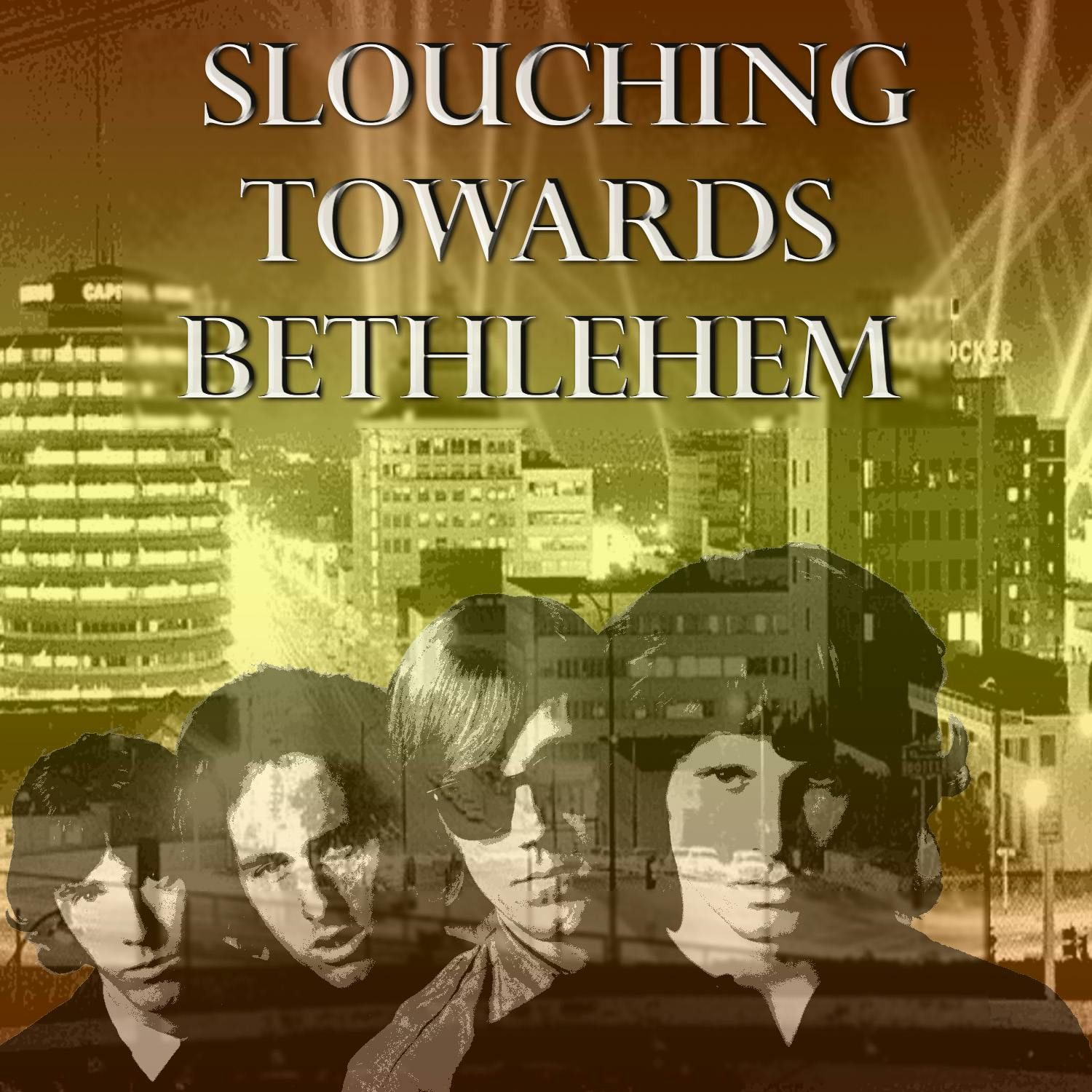
Episode 15: Slouching Towards Bethlehem
An impressionistic look at the interplay of Rock N Roll and Culture in Los Angeles during the latter half of the 1960s. There are familiar elements: storytelling, critical discussion and commentary, and lots of Rock N Roll attitude. But this one is different from most of our previous RNRAP offerings. Learn more about your ad choices. Visit megaphone.fm/adchoices
Jul 7, 2017
Episode 14: I'd Love to Turn You On
We open in Manila, in the Republic of the Philippines, July 3rd, 1966. The second stop of the Far East leg of the Beatles’ 1966 tour starts out weird and ominous, and gets worse from there. By the time the tour sputters to a halt—late August in San Francisco—the boys are almighty sick of it. Learn more about your ad choices. Visit megaphone.fm/adchoices

Apr 25, 2017
Episode 13: Hard to Handle
We open at Waldo Point Marina in Sausalito, California, just north of San Francisco . Otis Redding takes a break from the road on Bill Graham’s houseboat, and comes up with a signature song. Learn more about your ad choices. Visit megaphone.fm/adchoices

Jan 7, 2017
Episode 12: Machine Gun
Jimi Hendrix's astonishing, supernatural talent was forged in poverty and neglect as he grew up in Seattle. We talk about that, and about the night Elvis came to town. After a short stint in the Army comes to a humiliating end, Jimi takes it on the road and spends the next four years paying his dues as a sideman. Learn more about your ad choices. Visit megaphone.fm/adchoices

Oct 11, 2016
Episode 11: I Can't Explain
We start by taking a clear-eyed look at the infamous seaside “Riots” in the resort town of Clacton, United Kingdom and several other towns in the summer of 1964. The British press were WAY over the top in their depiction of these events, but they did document the first schism, the first big division in Rock music and culture: the traditionalist Rockers versus the Modernists, or “Mods.” Oh yeah, a couple bands like The Who and Kinks make an appearance... Learn more about your ad choices. Visit megaphone.fm/adchoices

Aug 12, 2016
Episode 10: Roll Away The Stones
Episode Ten opens up with Christian narrating at the site of the Bricklayer’s Arms Public House, in Soho, West London, where Brian Jones met with two younger men, school chums, Mick Jagger and Keith Richards, in the fall of 1963. You might know them as The Rolling Stones. Learn more about your ad choices. Visit megaphone.fm/adchoices

May 5, 2016
Episode 9: The Medium, The Message, The Music
Welcome back Diggers to Episode Nine: The Medium, The Message, The Music. This show will contain familiar elements — storytelling, commentary, and musicology — but it is also a bit of a departure. It takes place mostly in the mid-sixties, but we’re not following a timeline or building a story: it’s more of a mosaic, a think-piece. We think the influence of psychedelic drugs — especially LSD — on rock music is critically important and very much overlooked. It’s a vital part of the overall story. We hope to make that case with this show. We will meet some rockers and there will be lots of musical examples, because that’s how we roll. But we will also meet scholars, inventors, researchers and writers: Marshall McLuhan, Albert Hofmann, Timothy Leary, Ken Kesey …and more. We will spend some time on the advances in music technology — better instruments and amps, multi-tracking and effects — and show these advances in the musical media arrive at the same time as advances in the psychedelic media. And the results of that arrival are, well, mind-blowing. We’re going “Further” with this episode, so turn on, tune in, and enjoy! Learn more about your ad choices. Visit megaphone.fm/adchoices

Mar 8, 2016
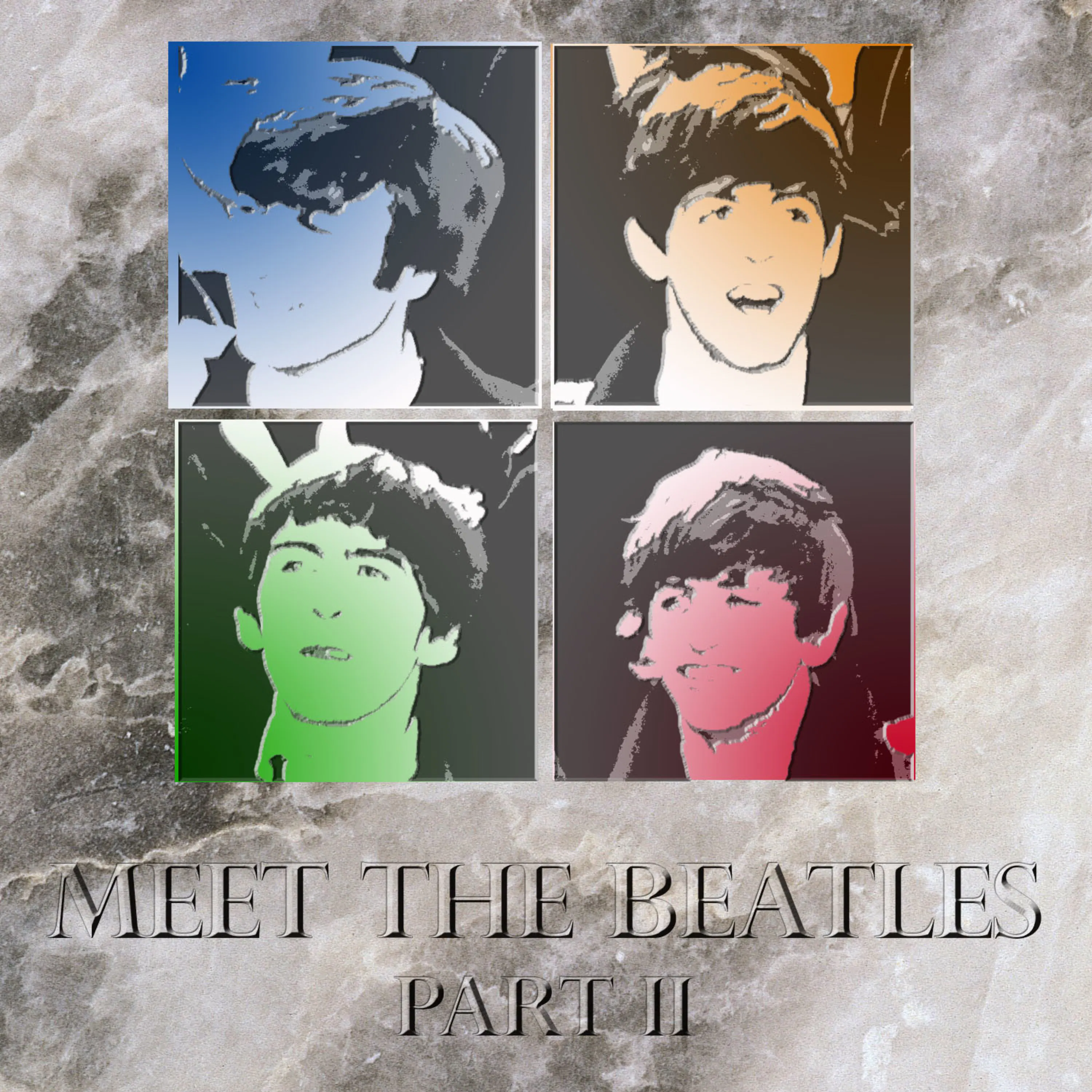
Episode 8: Meet The Beatles Part 2
The show opens December 27th, 1961, at the Cavern Club where Pete Best calls in sick, and the boys bring in Richard Starkey - Ringo Starr to the world - to sit in on drums, his first paid gig with the Beatles. It clicks musically; the band really swings with Ringo on drums. Learn more about your ad choices. Visit megaphone.fm/adchoices
Feb 23, 2016
Episode 7: Meet The Beatles Part 1
Arrival: we begin the show on February 7th, 1964, in the first-class cabin aboard Pan American Airlines Flight 101 from London to New York City. It’s a raucous, party atmosphere, but John Lennon, for a moment anyway, feels alone in a crowd. A door opens, pandemonium ensues, and a new era arrives. Some housekeeping, and we move on to the Soho District, West London, and lay some foundation for today’s story—and for future discussions. Then we pull back a bit, and look at some of the political, economic, and cultural forces at play in 1950s England. We then move on to Liverpool, late 1950s, and meet John Lennon and Paul McCartney, before they was fab. Then we pull back once again, and talk about alchemy and catalysts—and about a shared bond of shared loss. One catalyst comes in the form of a person: Paul’s school chum George Harrison, the baddest young guitar-slinger in Liverpool. John, Paul and George settle in together in the spring of 1958, and begin a four-year apprenticeship that will take them from coffee-house skifflers to the “Toppermost of the Poppermost.” Then it’s off to Hamburg, fall of 1960. The Beatles work hard and play hard, and learn the basics of being a professional Rock N Roll band. We briefly meet a sad-eyed bloke who plays drums—and plays them well—in a competing band on the circuit. We will also meet two founding Beatles: Stu Sutcliffe and Pete Best, and tell some of Stu’s story, a story with a tragic ending. At the end of the second tour, the Beatles become a four piece, and acquire their signature instruments. At the end of the third Hamburg tour, they come back to Liverpool as conquering heroes. June of 1962, and John, Paul, and George stand on the brink. Departure: there is one final move, one last step to take. And the Beatles already have someone in mind. Learn more about your ad choices. Visit megaphone.fm/adchoices

Jan 27, 2016
Episode 6: Soul Sisters
We open in Manhattan, in the main room, the big studio at Columbia Records. It’s Fall of 1963. A big-time, high-stakes recording session for Aretha Franklin is about to get underway. Aretha is an astonishing, one-in-a-billion talent, but it’s just not clicking for her at Columbia. We spend a little time exploring why it isn’t clicking, and then we talk a little about the feminist perspective, and why we think it is called for. And we move on from Manhattan, to South Grand Avenue in Detroit; to Hitsville, USA—Motown Records. Early summer, 1964, and Berry Gordy and Smokey Robinson are worried. Motown has taken a tough hit, losing their top-selling artist, Mary Wells. These guys have no way of knowing it, but not to worry: Motown is just about to BLOW UP. And it’s the first female pop superstar, Diana Ross, who will touch off that explosion. We talk a bit about Berry, about the Motown Fun Factory, and about Diana. And we have to stop and wonder: why does a driven, ambitious man like Berry Gordy get called a visionary and a leader, but a driven and ambitious woman like Diana…well she gets called something else entirely. What’s the deal there? Then we head south, Deep South, to Muscle Shoals, Alabama, and meet the Swampers. We hear from the effusive, fast-talking Atlantic Records Exec, Jerry Wexler. When Aretha comes over to Atlantic, it’s Wex who puts her together with the Swampers. It’s a magical moment, but it does not last. While there may have been cooperation and racial harmony in the studio, outside it’s still Alabama. That state is convulsed by the civil rights movement and the angry, hateful backlash it inspires. And it’s not just the state of Alabama; it is a tense and angry nation that awaits The Fire Next Time. We close out the show with a detailed look at the anguish and the glory of Aretha Franklin and her music. A holy blend; a terrible beauty: captured and preserved forever. Learn more about your ad choices. Visit megaphone.fm/adchoices

Dec 30, 2015
Episode 5: The Ballad of Bob and J.R.
A quick prologue: we stop by the Country Music Hall of Fame in Nashville, where they opened up a very cool exhibit in March of 2015. Then we move on to Newport, Rhode Island, where Pete Seeger is about to introduce Johnny Cash, an established country star playing for the first time to a folk festival audience. After a rough beginning, the show goes very well. Afterwards, Johnny Cash and Bob Dylan—mutual fans—meet for the first time and begin a lifelong friendship. We then spend some time getting to know the Man in Black; we learn about the family tragedy that moved J.R. Cash to write and make music. We find out the real origins of “Folsom Prison Blues.” We leave Johnny Cash in Memphis for the meantime, and head north to Hibbing, Minnesota and check in on young Robert Allen Zimmerman. As a teen, Bobby is a leather-jacketed Rock N Roll rebel; but he takes on a new name and identity when he discovers folk music as a freshman at the University of Minnesota. He hears Woody Guthrie, decides he has to meet him, and makes his way to New York City to do just that. We use the lives and music of these two legends to tell about the events of the early Sixties in America. Bob Dylan plays before a tiny crowd in Mississippi and a huge one in Washington DC. Johnny Cash heads to the Far East on a USO tour and hears ominous rumors of new war brewing. And more. We also talk about that whole Bob Dylan: Voice of a Generation thing. We end up back where we started. It’s one year later, at Newport, summer of 1965. Bob Dylan plugs in, and Rock N Roll will never be the same. Another side of Bob Dylan? We think it’s the TRUE side of Bob Dylan. But you can draw your own conclusions. Learn more about your ad choices. Visit megaphone.fm/adchoices

Dec 9, 2015
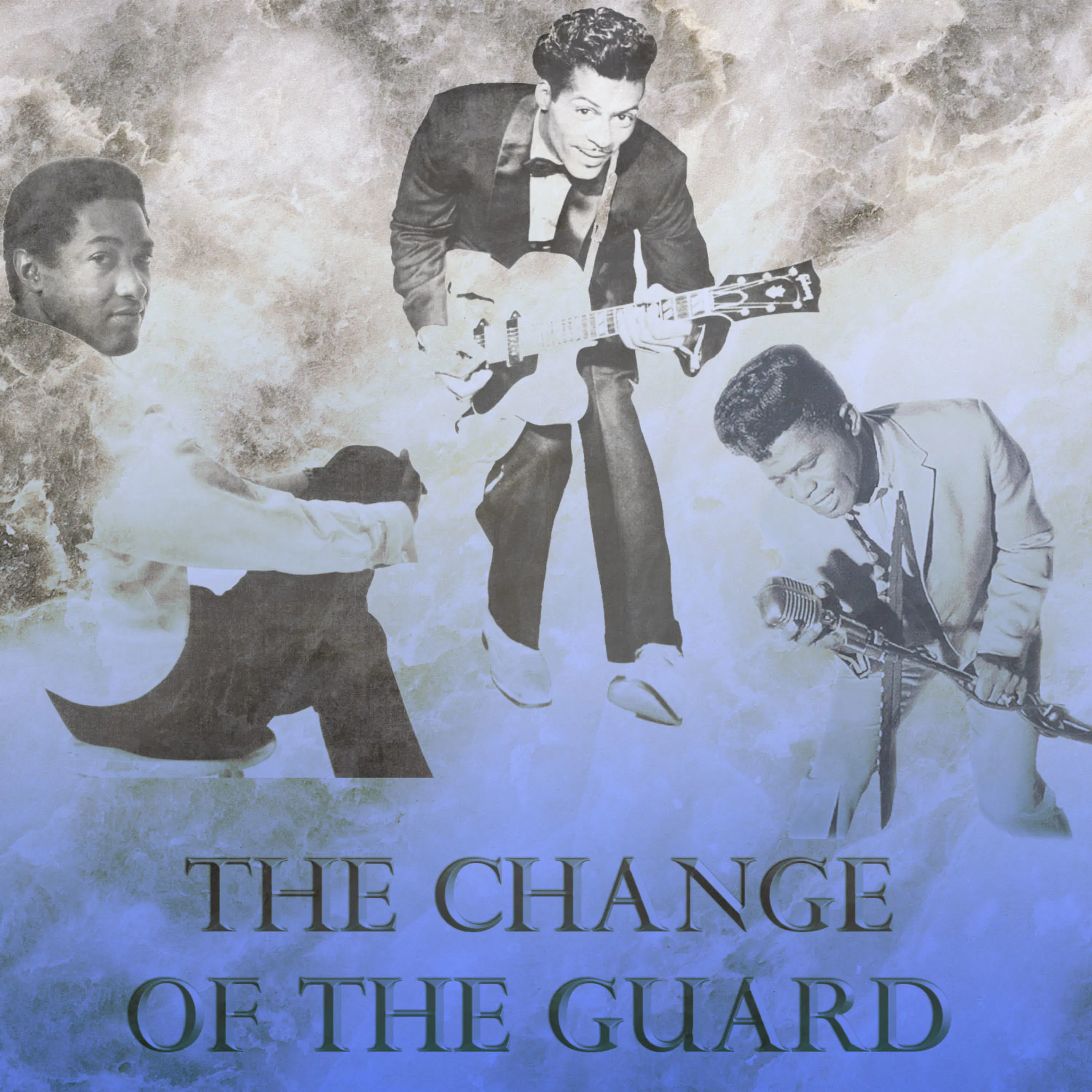
Episode 04: The Change of the Guard
The Sixties are about to begin and we’re feeling the change of the guard. We briefly recap the first Golden Age of Rock N Roll: 1956 to 1959. A lot happened, and fast. Too fast to last. We skid perilously into a new decade. As we open the sixties, all the big players are offstage, and a lot of folks are saying Rock N Roll is dead. We open in a police station in St. Louis, and Chuck Berry is in big trouble with the law. We detail Chuck’s legal fight to its conclusion in early ’63. We also catch up with the disc jockey Alan Freed, who is going through some legal problems of his own—legal problems that are part of a larger story. We take a look at the state of mainstream popular music in 1960. It’s grim. But the R&B charts are looking good, lots of great songs and artists. Black America is reasserting itself musically. We will get to that…but first, Rock N Roll is about to become BIG Business. So we unpack that a little bit, and devote a big part of the show to an examination of the record industry. They were slow to catch on, but the corporate labels—The Big Six—are now in the business of Rock N Roll. We use humor to make our point, but we also have some caustic, tough things to say about the industry. Ever seen these acronyms: ASCAP and BMI? And what wondered what the heck they mean? We answer that question, and explain why it’s important. We tell a tale of two Disc Jockeys: Alan Freed and Dick Clark. That tale is a metaphor for what happens in the music business from 1960 on. For the last act, we go back to discussing great music and great musicians and we meet the Godfather of Soul: James Brown. It’s a true rags-to-riches story. Finally, we grab a cab in front of the Apollo Theater, and head down to Greenwich Village. There we will briefly meet an up-and-coming folksinger, and set the stage for Episode Five. This show is part of Pantheon Podcasts . Learn more about your ad choices. Visit megaphone.fm/adchoices
Nov 18, 2015
Episode 3: The Day the Music Died
We describe Rock N Roll as an “enfant terrible,” then an unruly toddler, then a hyperactive kid. When Buddy Holly breaks out in late 1957, we see Rock N Roll has stepped out into the world as a confident young adult. Our story begins on a snowy two-lane highway in rural Iowa, on February 2nd, 1959: the fateful last day of the Winter Dance Party tour. The shows are going well, but the tour is a real grind. Cold, tired, and fed up, Buddy Holly decides to charter a small plane after the show that night in Clear Lake, Iowa. We meet the Big Bopper, Ritchie Valens, and Dion DiMucci. We discuss how Ritchie Valens was the first Latino crossover artist, and his 1957 release “La Bamba” is the first Spanish-language pop hit. We then devote a good chunk of the show to Buddy Holly’s life and musical career. We emphasize his giant influence on future Rock N Roll legends, and talk about The Crickets’ groundbreaking tour of the United Kingdom in early 1958. We meet “The Killer,” Jerry Lee Lewis. Great musician and performer, but not at all a nice guy, to put it mildly. We come back to Buddy’s story: the relentless grind of touring with The Crickets, business disputes with his manager Norman Petty, his courtship of and marriage to Maria Elena Santiago. Out on the road Buddy meets Phil and Don Everly, and they become fast friends. We profile the Everly Brothers, and we ask you to hold a picture in your mind. The last chapter: a terse and tense account of the incident outside Mason City, Iowa, in the early-morning hours of February 3rd, 1959. We close with a few words about loss and friendship. This show is part of Pantheon Podcasts. Learn more about your ad choices. Visit megaphone.fm/adchoices

Nov 10, 2015
Episode 2: Elvis and the Rise of Television
Archaeology is the study of human activity in the past, looking at lots of different things from lots of different angles. We take that approach with Rock N Roll. We recap episode one, and open in Memphis, 1954. Sun Records owner Sam Phillips has found his elusive crossover sound—and the artist who can deliver it. Elvis breaks out; in just a few months he’s on the cusp of national stardom. We get to know Sam Phillips better; we find he shares affinity and common ground with his young star. Sam will be showing up again as we go through our story. Elvis gets his first big break on the Louisiana Hayride radio show. Young Roy Orbison and Buddy Holly see him on his first big tour, opening for the country singer Hank Snow. Elvis and Col. Tom Parker meet for the first time. We move to a detailed discussion of the rise of American television in the 1950s: technical advances, the economic and social impacts, and how it affected and was affected by the rise of Rock N Roll. We bring it back around to Bill Haley’s appearance on the Ed Sullivan Show in August of 1955. In early 1956, Elvis gets a big-time deal with RCA Records. Col. Parker buys out Sam Phillips’ management contract and the Presley/Parker business relationship is formalized—for better and for worse. The self-titled debut album is released that spring. It’s a smash; the first modern rock album and it has stood the test of time. Our storylines merge on Sept 9th 1956: Elvis makes his historic debut on the Ed Sullivan Show. We dig into some of the back story and do a little mythbusting. Then we assert something a bit controversial, which might make some Elvis fans angry. Finally, we profile two artists who are challenging Elvis, taking Rock N Roll in new directions: Chuck Berry and Little Richard. We learn the succinct definition of Rock N Roll, and spend a hungover Sunday morning in church. We close the show with a brief introduction to Buddy Holly, to set up Episode Three. Learn more about your ad choices. Visit megaphone.fm/adchoices

Oct 26, 2015
Episode 1: The Precursors--Redux
Welcome to Rock N Roll Archaeology! This is a reboot of Episode One: The Precursors, originally released October 15, 2015. We updated and improved it some, and re-released it on November 4, 2020. Show Notes and Playlist Here We begin in Times Square, late summer of 1945. The war is over. First up, the Baby Boom and a newly-discovered demographic, the white American teenager. This new cohort is huge, with unprecedented economic clout. Young, restless and affluent, and they want to get beyond the timid, conformist popular culture of 1950s America. “Race Records” (an outdated term for rhythm and blues records by African American musicians) become hugely popular with white teenagers. Drawn from the well of sorrow that is the Black American experience, this music has the edge and urgency--the authenticity--these kids are seeking. We meet our first hero - the musical genius Ray Charles - and our first anti-hero, the frenetic, fatally flawed DJ Alan Freed. We shine a light on two grassroots cultural movements that became important later: the Skiffle Craze in the United Kingdom and the Beat Poets of Urban America. 1954 is an inflection point. On the musical front, Bill Haley released the first million-selling Rock N Roll record: “Rock Around The Clock.” That same year, big changes in the political landscape. The Brown v Board of Education decision; and Senator Joseph McCarthy was publically humiliated and discredited. Freedom of Association and Freedom of Expression take a step forward. Paranoid politics and systemic racism are still very much with us in America, but in 1954 it got a little easier, became a little less risky, to be yourself and express yourself. We head to the delivery room: Memphis Recording Service, where we meet the first Rock N Roll superstar, Elvis Presley, and tease Chapter Two. Hosted and Produced by Christian Swain Written By Richard Evans and Christian Swain Sound Design by Jerry Danielsen https://www.patreon.com/cw/RNRAP Learn more about your ad choices. Visit megaphone.fm/adchoices
