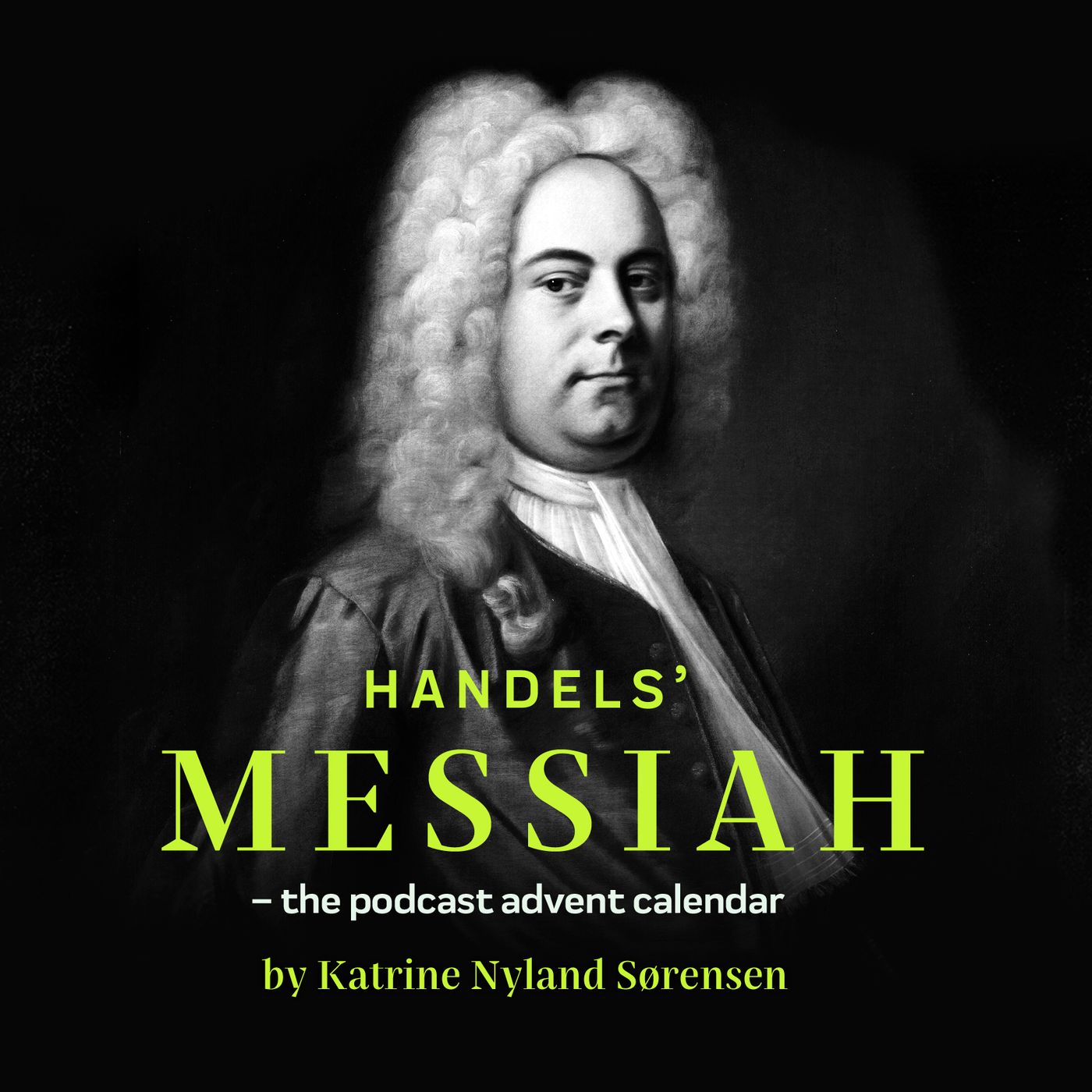
Handel's Messiah the advent calendar
Katrine Nyland Sørensen
Katrine Nyland Sørensen
A podcast series about the people, the places, the music, the drama and the gossip that is connected to the maiden performance of Handel's Messiah in Dublin in 1742. @handelsmessiah https://katrinenylandsorensen.substack.com
Dec 2, 2018
In the first episode we are going down Fishamble Street, one of the oldest streets in Dublin. It was in the exclusive Musick Hall in this street that Handel’s Messiah was first performed on 13 April 1742. Once upon a time Fishamble Street was one of Dublin’s most unsanitary streets. It later became one of the most fashionable streets in Dublin. Today it is rather dull. However, it is a good starting point for the many stories about Handel’s time in Dublin.
Dec 2, 2018
In the second episode we will hear about Handel nearly being ruined by pretentious opera divas and opera productions that were overly expensive. We will also hear how the opera audience at the time would both drink, talk and play cards during the performances - and how a furious audience once nearly took Covent Garden apart because they wanted the audience to pay full price for their tickets. In other words Handel had several reasons for going to Dublin.
Dec 5, 2018
No Messiah without Charles Jennens! Because creating this holy oratorio was his idea. It was he who wrote the libretto based on the Bible. However, Charles Jennens had no interest in getting his name mentioned. He never asked to be paid for his work either. Because Charles Jennens had much more important things on his mind! Music: Dunedin Consort ‘Handel’s Original Dublin Version 1742’
Dec 5, 2018
Handel composed the music for Messiah in 24 days, and the librettist, Charles Jennens, was furious that Handel had not spent more time on the music seeing as it was such an important piece of work meant to inspire people to live a god-fearing life. In a letter to a friend some years later, when Jennens and Handel had once again become friends, Jennens described his relationship with Handel thus: ‘I must take him as I find him and make the best use I can of him”. Music: Dunedin Consort ‘Handel’s Original Dublin Version 1742’
Dec 5, 2018
When Handel met Matthew Dubourg, who would later become Master of the Music at the court in Dublin, he was a little boy playing the violin standing on a stool. When the audience clapped afterwards, little Matthew Dubourg became so startled that he fell off the stool. Dubourg would later save Handel’s career. In this episode we will be joined by musician and conductor Peter Whelan, who will tell us about his latest discoveries about the relationship between Handel and Dubourg. Music: Dunedin Consort ‘Handel’s Original Dublin Version 1742’
Dec 6, 2018
Due to bad weather conditions Handel’s trip from Parkgate to Dublin by boat is delayed for several days. He spends his time gathering a choir to practise Messiah. The choir consists of the best choir singers from the cathedral in Chester - AND the local printer, Janson, who has a beautiful bass voice. However, Handel is not overly impressed by Janson’s skills to say the least ...
Dec 7, 2018
Handel arrives in Ireland on 18 November and is welcomed with open arms. Where life seemed light, cheerful, elegant and fashionable when the aristocracy were enjoying themselves in the new music hall in Fishamble Street, then life was looking considerably different to the majority of the inhabitants in Dublin. There was a particular reason that hospitals for poor people and musical charities for imprisoned debtors were in such dire need of raising as much money as possible. Because in 1741 there was a famine in Ireland, and throngs of famished people from the countryside would go to Dublin in the search of food.
Dec 8, 2018
Whereas it is a well-known part of musical history that Messiah premiered in Dublin’s new leading music hall in Fishamble Street as a benefit concert arranged by a.o. the Charitable Musical Society for the Release of Imprisoned Debtors, the gravity of the situation in Ireland in 1741 is a less well-known part of history. A musical society whose purpose is to pay for the release of imprisoned debtors may at first sound sweet and cheerful. However, that was far from the case. Today’s episode is not so much about Handel, but more about the money being raised through the performance of Messiah and the people this money was intended for.