Dec 10
Tariffs, Big Audits, Roil Transfer Pricing Heading Into New Year
A slew of big tax disputes and the worldwide upheaval brought on by the Trump administration's aggressive trade policy made for an exceptionally interesting year for transfer pricing professionals, and left them with lingering questions heading into 2026. President Donald Trump's April tariff announcements sent shock waves through the global economy and forced corporate tax heads—and C suites—to start figuring out what it all meant for their tax and transfer pricing positions, and whether they needed to make changes to fend off potential audits. At the same time, companies are seeing a growing number of audits and transfer pricing disputes—often with big dollar figures—as tax authorities around the world beef up their auditing and enforcement capabilities with staff, AI, and stronger reporting requirements. Auditing multinationals can bring them big tax rewards. That might be less true at the IRS, where the Trump administration has drastically reduced resources and staffing. On this episode of Talking Tax, Bloomberg Tax transfer pricing reporter Caleb Harshberger discusses what's been going on in the world of transfer pricing—which governs transactions within corporate groups—and what he's keeping an eye out for next year. Do you have feedback on this episode of Talking Tax? Give us a call and leave a voicemail at 703-341-3690.

Dec 3
Taxpayers 'Gamble' by Committing Fraud, Even With Diminished IRS
Anyone thinking about pushing the boundaries of tax law should remember that there's no federal statute of limitations on prosecuting fraud, even with weakened IRS enforcement, said Carolyn Schenck, who spent 20 years at the agency primarily combating tax evasion. "If people think that a current administration or a past administration might go soft on tax fraud, that's still an awfully big gamble," said Schenck, who's now at Caplin & Drysdale. "And I know that that's not one I personally would want to take." The IRS is coming off a tumultuous year with deep staffing cuts from the Trump administration's efforts to downsize the federal government and a parade of new commissioners. But increasing IRS staff and resources would be one of the best ways the government could combat fraud and collect more of the money it's owed, Schenck said. On this episode of Talking Tax, Schenck sat down with Bloomberg Tax reporter Erin Schilling to discuss what Trump administration workforce cuts mean for IRS enforcement and how the agency could improve its efforts to go after illegal tax shelters, even with a diminished staff. Do you have feedback on this episode of Talking Tax? Give us a call and leave a voicemail at 703-341-3690.
Nov 26
Cross-Border Tax Fraud an Old Story, Roman Scroll Shows (Rerun)
For the holidays, we serve up an encore presentation of a Talking Tax podcast that shows cross-border tax fraud has been around a long time. When researchers studied a previously mislabeled scroll, they discovered detailed attorney notes for a case against taxpayers accused of using forged documents and sham transactions between the Roman provinces of Judaea and Arabia to escape taxes on their assets. The assets in question were enslaved people. The potential punishments included distinctly unmodern measures. Anna Dolganov of the Austrian Academy of Sciences talked with reporter Caleb Harshberger about how scholars made the discovery, details of the scheme, and what they’re hoping to uncover next as they continue their research. Do you have feedback on this episode of Talking Tax? Give us a call and leave a voicemail at 703-341-3690.
Nov 19
What Comes Next for the IRS and Tax After the Long Shutdown
Congress is back after ending the longest shutdown in US history. But the bipartisan accord left funding for the IRS and Treasury Department ending in less than three months and the fate of the enhanced premium tax credits at the center of the crisis still unresolved. On this episode of Talking Tax, Bloomberg Tax Congress reporter Zach C. Cohen and Bloomberg Government health policy reporter Erin Durkin discuss next steps for appropriating funds for the IRS and Treasury after current funding runs dry Jan. 30, and potential legislative solutions to rising health-care premiums. Do you have feedback on this episode of Talking Tax? Give us a call and leave a voicemail at 703-341-3690.
Nov 13
Mamdani's NYC Tax Agenda Prompts Advisers to Caution Patience
New York City Mayor-elect Zohran Mamdani ran on an expansive affordability agenda that would be paid for by higher taxes on corporations and wealthy individuals. The democratic socialist's vision will be tough to realize, though, because any tax hikes would have to be approved by the New York State legislature and tax hike-averse Gov. Kathy Hochul (D). Local tax practitioners are emphasizing this political reality to worried clients who called and emailed in a hurry after Mandani won the Nov. 4 mayoral contest. “There’s been kind of some demystifying as to how can or how will the mayor be able to make these ideas or proposals law," Jeremy Gove, a state and local tax counsel at Eversheds Sutherland, tells Bloomberg Tax editor Benjamin Freed on this week's episode of the Talking Tax podcast. "Explaining this to taxpayers is what we’ve been tackling over the past week or so.” Gove says that while higher taxes could compel some New York companies and wealthy individuals to decamp for lower-tax states, there's also a "wait and see" sentiment prevailing. Taxpayers might even welcome some proposals from Mamdani, such as hiring more auditors to clear out the Department of Finance's hefty case backlog, he says. Do you have feedback on this episode of Talking Tax? Give us a call and leave a voicemail at 703-341-3690.
Nov 5
Grant Thornton Leader Leveraged PE Deal to Raise Audit Bar
Grant Thornton’s top audit leader is bullish on the practice’s future after a 2024 deal that sold a significant stake in the accounting and advisory firm to private equity investors led by New Mountain Capital. The audit practice has benefited from a boost in dedicated resources and also bolstered its safeguards against conflicts of interest. Those improvements stem from an operating contract between Grant Thornton’s legacy audit practice and its PE-backed business, said Ron Messenger, CEO of Grant Thornton’s audit business. The firm’s private equity deal ushered in a new two-part legal structure that created a corporate entity to provide its tax and advisory work while audit partners run the firm’s legacy assurance business. Nearly half of the largest 30 firms have cut PE deals and they all rely on what the industry calls the “alternative practice structure.” Underpinning that new operating structure is a services agreement spelling out the relationship between the two entities from governance to resources. Those agreements can’t be an afterthought, Messenger said. He spoke with Bloomberg Tax reporter Amanda Iacone about how Grant Thornton's services agreement came together, how regulators informed that document, and how it will influence the quality of the firm’s auditing. Do you have feedback on this episode of Talking Tax? Give us a call and leave a voicemail at 703-341-3690.
Oct 29
Plan to Drop 10-Qs Threatens to Trip Up Analysts' AI Models
A Trump administration push to reduce the frequency of corporate earnings reports risks hurting the accuracy of artificial intelligence-fueled models used by analysts, an accounting adviser said. Chief financial officers and other C-suite leaders would in turn need to address greater reputational risk if a plan to give public companies the option to file financial reports semiannually instead of quarterly advances, according to Steve Soter, vice president and industry principal at financial compliance platform Workiva. Companies prepare and submit quarterly reports, called Form 10-Qs, to the Securities and Exchange Commission's filing system in XBRL format, which makes the information more easily accessible and computer-readable, Soter said. Analysts' models consume this data to provide analysis and observations. Depriving investors and analysts' AI models of this information increases the risk of erroneous analysis and ensuing reputational damage, Soter said. On this episode of Talking Tax, Bloomberg Tax financial accounting reporter Jorja Siemons spoke with Soter about what steps C-suite leaders can take to mitigate data risks if the SEC reporting schedule shifts. Do you have feedback on this episode of Talking Tax? Give us a call and leave a voicemail at 703-341-3690.
Oct 22
Treasury Is Working to Implement GOP Tax Law Amid Shutdown
Despite the ongoing US government shutdown, many at the Treasury Department remain on the job working on guidance related to the July GOP tax law. Those at Treasury handling the international provisions used to be coworkers of Beth Bell, who became a principal at PwC’s National Tax Service in Washington less than a month ago. On this week's episode of Talking Tax, Bell sat down with Bloomberg Tax senior reporter Chris Cioffi to discuss US efforts to secure agreements to allow the US tax system to coexist with the Pillar Two project, and what might prompt Republicans in Congress to reintroduce what came to be known as the "revenge tax" when the law was debated. Bell has deep experience with multilateral tax negotiations and worked as a staffer in both the House and Senate, playing a role in major tax legislation that passed in both the Biden and Trump administrations. Do you have feedback on this episode of Talking Tax? Give us a call and leave a voicemail at 703-341-3690.
Oct 16
Ireland Mulls Tax Options to Stay Competitive in Global Economy
Ireland has presented a frugal budget for 2026 in the face of uncertainties caused by President Donald Trump's tariff and tax policies. The 15% global minimum tax on corporations and Trump's threats to impose large tariffs on pharmaceutical companies—most of which are US companies headquartered in Ireland—have increased pressure on the country to find ways to remain competitive. With foreign-owned multinationals in Ireland paying the majority of the country's corporation tax, the government is mulling incentives to encourage them to stay. In this episode of Talking Tax, Bloomberg Tax reporter Ryan Hogg discusses some options the government is considering, including an increase in the R&D tax credit. Do you have feedback on this episode of Talking Tax? Give us a call and leave a voicemail at 703-341-3690.
Oct 8
What an IRS CEO Means for Tax Administration, Agency Functions
Taxpayer advocates are keeping close watch on this week's decision to name Social Security Administration Commissioner Frank Bisignano as CEO of the IRS, and have many questions about what it could mean for the agency. Treasury Secretary Scott Bessent said Monday he was creating a new IRS CEO position, and Republicans in Congress seem to be generally supportive, though some said the White House should still name an IRS commissioner nominee. The Treasury Department assured staff in GOP Iowa Sen. Chuck Grassley's office that a commissioner nominee would still be sent to the Senate. At the same time, the Senate Finance Committee voted Wednesday to advance Derek Theurer's nomination to be undersecretary for legislative affairs and Donald Korb's nomination to be IRS chief counsel. That's good news for Pete Sepp —president of the National Taxpayers Union, a taxpayer advocacy group—who is concerned that many of the top IRS positions remained unfilled. Sepp, who sat down with Bloomberg Tax Senior Reporter Chris Cioffi for this episode of Talking Tax, said Congress is right to seek answers about how the CEO job interacts with the commissioner. He said he hoped the CEO position, in the future, would be selected by an IRS oversight board that has been dormant for more than a decade. Do you have feedback on this episode of Talking Tax? Give us a call and leave a voicemail at 703-341-3690.
Oct 1
How Transfer Pricing Can Help Fix a Student Athlete Pay Problem
Ever since student athletes gained the right to be compensated for use of their image in advertisements and merchandise sales, the money has flooded in, but so have some problems. While the athletes can now be compensated for their name, image, and likeness—or NIL—schools still can't directly pay them for playing, and the NCAA has rejected any notion of "pay-for-play." Instead, athletes can receive compensation when merchandise with their name or number is sold or for showing up in advertisements or social media posts for businesses. But the line between NIL and pay-for-play can get blurry. A business owner who wants to support the team could overpay an athlete in an NIL deal, raising a question: Is it a bona fide business deal? On this week's episode of Talking Tax, University of Kentucky professor Stephen Lusch talks with reporter Caleb Harshberger about how transfer pricing and tax law concepts can help show whether the deals are done at reasonable prices that really reflect the value the student brings. Do you have feedback on this episode of Talking Tax? Give us a call and leave a voicemail at 703-341-3690.
Sep 24
Hashing Out US-World Tensions on 'Side-by-Side' Global Tax Deal
About three months have passed since Treasury Secretary Scott Bessent announced that the US, along with its Group of Seven allies, agreed to work on a system that would exempt American companies from parts of the global minimum tax. In that time, the US proposed a technical solution to separate its tax system from the global minimum tax. But other countries have raised concerns about what the US position means for their own tax sovereignty and whether their companies will be left at a competitive disadvantage compared to their American counterparts. In this episode of Talking Tax, Bloomberg Tax reporters Saim Saeed and Lauren Vella hash out these countries' frustrations and discuss the feasibility of coming to an agreement on a "side-by-side" system by Dec. 31, the deadline suggested by the Trump administration. Do you have feedback on this episode of Talking Tax? Give us a call and leave a voicemail at 703-341-3690.
Sep 17
How IRS Attorney Departures Will Prolong Cases, Spur Settlements
Big job cuts and reductions in resources at the IRS are liable to prolong disputes over tax bills and force the agency to leave money on the table when cases are finally resolved. More than 170 attorneys have withdrawn from representing the IRS in cases in US Tax Court since Donald Trump became president in January, according to a Bloomberg Tax analysis. Many have quit the IRS altogether amid a major exodus of employees. Some Justice Department attorneys who represented the IRS in tax disputes in federal appeals courts have also left, moves that could impact some of the biggest, most prominent tax-related cases in the courts. The diminished resources suggest it’ll take longer to resolve cases, former attorneys and former IRS and DOJ officials say. The IRS may also be pushed into considering settlements in some cases where perhaps it wouldn’t otherwise. That would mean settling cases on less favorable terms for the agency, and potentially give taxpayers a leg up in dealing with the IRS. In this episode of Talking Tax, Bloomberg Tax senior reporter Michael Rapoport discusses the attorney departures and their implications, as well as attorneys’ frustrations about their jobs and fears about the future that prompted some to leave the IRS. Do you have feedback on this episode of Talking Tax? Give us a call and leave a voicemail at 703-341-3690.
Sep 12
Companies Face Tariff-Induced Transfer Pricing Audit Risks
President Donald Trump's widespread tariffs are boosting tax dispute risks for companies that are scrambling to understand how to factor the new trade duties into their transfer pricing and tax planning without attracting an audit. Tariffs raise the prices of imported goods, meaning companies importing products from their own affiliates may have to—or want to—adjust the pricing of those transactions to meet transfer pricing rules that require them to treat the deals as though they were done at arm's length, with unrelated parties. The added cost of the tariff will likely knock the pricing for many goods out of that arm's-length range, so companies may have to adjust these prices to stay compliant. Additionally, companies may be able to make adjustments to mitigate the tariff impacts by reducing the price the US entity pays for the good. These adjustments can attract scrutiny, however, from both tax and customs agencies. And growing geopolitical tensions may make it hard for companies to rely on tax dispute resolution mechanisms like mutual agreement procedures. In this episode of the Talking Tax Podcast, Crowe LLP transfer pricing practice leader Sowmya Varadharajan talked with reporter Caleb Harshberger about the choices, and risks, companies are facing. Do you have feedback on this episode of Talking Tax? Give us a call and leave a voicemail at 703-341-3690.
Sep 10
Enrolled Agents Anticipate IRS Chaos for Next Tax Filing Season
Tax preparers consider themselves foot soldiers on the front lines of Americans' income tax preparations. They provide advice and file the returns, helping the government collect its revenue and make sure people are paying their fair share. They are also some of the first to warn taxpayers about scams. This group of preparers includes enrolled agents, who are the only federally licensed tax practitioners. Enrolled agents now are assessing what the recent exodus of thousands of IRS workers and agency leadership means for filing season. They're also watching for guidance for how to implement new policies from the massive 2025 GOP tax law. Bloomberg Tax’s Erin Slowey spoke with Jennifer MacMillan, president of the National Association of Enrolled Agents, about rules related to overtime and tips from that new tax law, the regulation of tax preparers, and what happens next at the IRS as its workforce has been slashed. Do you have feedback on this episode of Talking Tax? Give us a call and leave a voicemail at 703-341-3690.
Sep 3
Congressional Deadline on Shutdown Deal Adds to IRS Challenges
Congress is back in session with just a few weeks to reach an agreement before government funding runs out Sept. 30. For IRS watchers, the lack of agreement on how to fund the tax collection agency or whether to extend expiring tax breaks rank among the key issues lawmakers will grapple with over the coming months. In this week’s episode of Talking Tax, Bloomberg Tax reporter Zach C. Cohen and Bloomberg Government reporter Maeve Sheehey preview the government funding fight and potential movement on budget reconciliation bills, and the impact on tax policy and administration. Do you have feedback on this episode of Talking Tax? Give us a call and leave a voicemail at 703-341-3690.
Aug 29
IP Poses Risks, Opportunities for Companies' Tariff Planning
As President Donald Trump's tariffs make waves in the world economy, multinational companies are mulling what it could mean for their intangible assets like intellectual property and brand recognition. The vast majority of corporate value comes from intangibles. In 2020, such assets made up 90% of the value of the S&P 500, according to an often-cited study by IP consultant Ocean Tomo—up from up from just 17% in 1975. Tariffs don’t directly levy fees on intangibles, but their value is often embedded into imported products, raising the tariffed price. These intangible assets can also come with a smorgasbord of options for companies to locate IP in countries to best blunt the impacts of tariffs or reduce taxes on their business. On this episode of Talking Tax, Grant Thornton principal Glen Marku talked with reporter Caleb Harshberger about what companies' intangible assets could mean for their tariffs exposure and whether they need to rethink their tax planning. Do you have feedback on this episode of Talking Tax? Give us a call and leave a voicemail at 703-341-3690.
Aug 27
KPMG Juggles AI Efficiency Gains With Long-Term Talent Strategy
Big Four accounting firms are racing to integrate next-generation AI technology across their service lines and develop a talent strategy to match the industry's new era. KPMG is focused on making sure it's balancing efficiency gains because of artificial intelligence with long-term workforce development, according to Sandy Torchia, vice chair of talent and culture at KPMG US. The firm has created new learning opportunities for workers to teach them how to use AI to enhance career growth, she said. Like its competitors, KPMG has rolled out new autonomous AI that can accomplish tasks with minimal human intervention. The industry's next generation is taking note. The vast majority of KPMG's US interns expect at least 20% of their work to be automated by AI by the time they start full-time positions, according to the firm's recent survey. Torchia, who is also head of people for KPMG's Americas region, recently stepped into a new role as global co-head of people for KPMG International. She spoke with Bloomberg Tax reporter Jorja Siemons about how KPMG is helping employees adapt to an AI-led future, as well as the state of hybrid work and the CPA pipeline. Do you have feedback on this episode of Talking Tax? Give us a call and leave a voicemail at 703-341-3690.
Aug 20
Cross-Border Tax Evasion Is an Old Story, Roman Scroll Reveals
Proof from an ancient Roman scroll: As long as there have been taxes, there has been tax evasion. When researchers studied a previously mislabeled scroll, they discovered detailed attorney notes for a case against taxpayers accused of using forged documents and sham transactions between the Roman provinces of Judaea and Arabia to escape taxes on their assets. The assets in question were enslaved people. The potential punishments included distinctly unmodern measures. Anna Dolganov of the Austrian Academy of Sciencescq talked with reporter Caleb Harshberger about how scholars made the discovery, details of the scheme, and what they're hoping to uncover next as they continue their research. Do you have feedback on this episode of Talking Tax? Give us a call and leave a voicemail at 703-341-3690.
Aug 15
Pharmaceutical Companies Navigate Transfer Pricing as Tariffs Loom
Pharmaceutical companies are scrambling to respond to the Trump administration's tariff threats, seeking to mitigate duties on their products while keeping the impact on their tax bills to a minimum. The industry has long leveraged complex transfer pricing arrangements to cut down on its tax bills, but now the looming tariffs could spark a major rethink for where companies make their drugs and the location of their crown jewel: the intellectual property. Pharmaceuticals were exempt from the initial wave of tariffs announced earlier this year, but subsequent months have seen threats of heavy fines and taxes from the administration and a looming national security investigation, which could result in heavy duties on the industry. In this week's Talking Tax podcast, Cronus Consulting founder Nick Shipley talked with reporter Caleb Harshberger about how pharmaceutical companies are navigating the chaos, and what it could mean for their tax planning and operations. Shipley is a consultant for the pharmaceutical industry. Do you have feedback on this episode of Talking Tax? Give us a call and leave a voicemail at 703-341-3690.
Aug 13
Help Wanted: Top Job at IRS Open After Confirmed Chief Splits
One of the most unwanted jobs in Washington is now up for grabs—again. President Donald Trump's IRS commissioner, Billy Long, exited as the head role last week and is expected to be nominated as the ambassador to Iceland. Treasury Secretary Scott Bessent will fill the job in the interim. The vacancy at the top of the IRS continues the turbulence the agency has experienced since the start of the Trump administration. Now, the question of who will be nominated next—if at all—remains. In this episode of Talking Tax, Bloomberg Tax reporter Erin Slowey discusses how the IRS got to this point and what it means for the future of the agency. Do you have feedback on this episode of Talking Tax? Give us a call and leave a voicemail at 703-341-3690.
Aug 1
Tariffs Draw All Hands—Tax and Others—to the Executive Suite
It’s been four months since the Trump administration announced its “Liberation Day” tariffs, and companies are still scrambling to make sense of what it means for their operations and tax planning. Rates keep changing, sometimes day to day, as countries struggle to make lasting trade deals with the US, while corporate tax and customs departments put their heads together to minimize the costs to their companies—without attracting a big audit. In this special Talking Tax podcast—the first of four on transfer pricing and tariffs—PwC principal Chris Desmond talks with Bloomberg Tax reporter Caleb Harshberger about the ways companies have been trying to adjust to the new reality. These include emergency meetings with top executives and heads of tax, trade, and other functions across the company, and deep dives into customs rules that many company executives hadn't felt the need to know well—until now. Do you have feedback on this episode of Talking Tax? Give us a call and leave a voicemail at 703-341-3690.
Jul 30
Small Business, Trusts Brace for Phaseout of Paper Tax Refunds
Millions of taxpayers used to getting paper checks from the Treasury Department will soon have to find another way to get their money as the agency phases out paper refunds. The Treasury will send its final tax refund on a paper check by October, if it stays the course set by President Donald Trump’s March 25 order to transition fully to electronic payments. Tax observers fear that the change could leave low-income or unbanked taxpayers confused or without refunds. The abrupt switch to direct deposit for all tax refunds also could catch less-obvious taxpayers by surprise. Real estate trusts can't submit banking information on current tax forms unless they are expecting a refund of over $1 million, meaning smaller trusts can't tell the IRS where to send a direct deposit. Banks also hesitate to service high-risk small businesses—like those in the marijuana industry—leaving them without a means to receive a direct deposit. In this episode of Talking Tax, Cheri Freeh, chair of the committee responsible for policy advocacy for the American Institute of Certified Public Accountants, breaks down these changes and tells taxpayers how to get ahead of them. Do you have feedback on this episode of Talking Tax? Give us a call and leave a voicemail at 703-341-3690.
Jul 23
Trump Administration Signals Changing Standards for Tax-Exempts
Tax-exempt organizations are closely watching the Trump administration to see if it makes good on its intention to alter standards around claiming tax-free status. The IRS gave a green light to churches speaking about political campaigns and candidates without losing their tax-exempt status, while President Donald Trump publicly threatened Harvard University's tax status because of allegations of antisemitism on campus. Treasury also is considering a change to IRS policies to allow the revocation of tax-exempt status for colleges that consider race in student admissions. Nonprofits already are changing their internal policies to adhere to the administration's moves. Some universities earlier this year slashed progressive policies and scrubbed references to diversity, equity, and inclusion from their websites to avoid a clash with Trump. Churches likely will push the bounds of what type of political speech is allowed, setting up a fight about whether places of worship can endorse or raise money for political candidates, tax professionals said. Phil Hackney, a University of Pittsburgh School of Law professor and former IRS lawyer, breaks down what these changes mean for nonprofits in this week's episode of Talking Tax. Do you have feedback on this episode of Talking Tax? Give us a call and leave a voicemail at 703-341-3690.
Jul 16
The Tax Bill's Obscure Breaks and the Road Ahead for Congress
Tax breaks for whale captains in Alaska and spaceport builders were among the lower-profile perks included in the GOP's $3.4 trillion tax-and-spending law enacted this month. The policies were necessary to gain votes of Republican holdouts, enabling the measure to pass in both the Senate and House in time for GOP lawmakers' self-imposed July 4 deadline. The law moved through Congress faster than many predicted, and some lawmakers are seeking changes to provisions in the law already generating criticism, such as a change to the deduction amount for wagering losses. The Republican majority's use of the reconciliation process, which allowed the measure to pass without any Democratic support, does not portend well for bipartisanship ahead. In this week's episode of Talking Tax, Bloomberg Tax reporter Chris Cioffi breaks down what Congress could tackle next on the tax front, including what could be in more reconciliation bills in the months and year ahead. Do you have feedback on this episode of Talking Tax? Give us a call and leave a voicemail at 703-341-3690.
Jul 9
What Latin America Can Teach About Tariffs, Transfer Pricing
Multinational corporations have been hustling to make sense of the flurry of US tariff policy changes this year, and figure out how to factor that into their transfer pricing. One place that's been in this situation before: Latin America. For decades, companies there have been navigating tariffs and the impacts on their tax planning—including transfer pricing, or how companies value transactions between their related entities. This week on the Talking Tax podcast, Webridge Technology Global Tax Adviser Hernan Katz talks about the lessons companies can take away from the experience of Latin American countries. These include making sure staff across departments are working together to tackle issues of trade and transfer pricing, how tax authorities try to crack down on companies they suspect aren't following the rules, and explaining how intercompany dealings are motivated by business reasons—not tax or trade. Do you have feedback on this episode of Talking Tax? Give us a call and leave a voicemail at 703-341-3690.
Jul 2
What the G7 Did to the Global Tax Pact, and What Comes Next
The fate of the OECD-led global tax deal was rocked this week after the US and its Group of Seven allies came to an understanding that would exempt American companies from two key parts of the global minimum tax framework. G7 countries agreed to the exemption over the weekend in exchange for Congress removing Section 899 from its tax-and-spending bill—a provision referred to as the "revenge tax" that would have hiked taxes on foreign-owned companies if their home countries imposed "unfair" taxes on US businesses. In this week's episode of Talking Tax, reporter Lauren Vella talks about how the agreement was reached, and why the G7's statement is only the first small step toward the US achieving what it calls "side-by-side" treatment of its tax system and the global minimum tax framework. She also discusses Canada's decision to revoke its digital services tax to bring President Donald Trump back to the trade negotiating table, and what impact it could have on other countries that have similar levies in place. Do you have feedback on this episode of Talking Tax? Give us a call and leave a voicemail at 703-341-3690.
Jun 25
US Audit Board’s Role Still Sparks Debate Two Decades Post-Enron
Congress is reconsidering the accounting guardrails it put in place more than two decades ago to ensure investors can trust the revenues and asset values listed companies publish. Republican budget proposals would abolish the US audit regulator and reassign its work to the Securities and Exchange Commission. While lawmakers negotiate over what will end up in a final version of their tax and spending bill, the proposals have prompted debate over how best to regulate auditors and the role of the Public Company Accounting Oversight Board. A member of the board and two former executives turned whistleblowers of once-corporate titans Enron Corp. and WorldCom Inc. spoke with Bloomberg Tax reporter Amanda Iacone about whether the audit regulator should remain independent or whether it would benefit from being folded into the federal government. On this episode of Talking Tax, Sherron Watkins, a former Enron finance executive, and Cynthia Cooper, a former WorldCom chief audit executive, argue that Congress shouldn’t scrap an agency that oversees auditors that act as investors’ last line of defense. To Christina Ho, a current PCAOB member who has objected to the board’s approach, moving auditor oversight to the SEC would counter what she sees as regulatory overreach and provide new opportunities to improve audit quality. Do you have feedback on this episode of Talking Tax? Give us a call and leave a voicemail at 703-341-3690.
Jun 18
Here's the Status of the GOP Tax Bill Moving Through Congress
The Republican-led Senate Finance Committee unveiled its portion of the mammoth tax-and-spending legislation that's quickly moving through Congress, and there's a lot to unpack. The Senate bill has dozens of differences from the House version. It makes several business breaks permanent, softens the excise tax on university endowments, and phases out more slowly cuts to clean energy credits, while smoothing edges on the so-called "revenge tax." But there are many similarities in the approaches the two bills take—both have tax breaks on income such as tips and overtime sought by President Donald Trump, and seek to extend much of the 2017 GOP tax law. Things are moving quickly as the Senate aims to pass its version out of its chamber before the July 4 break. In this week's episode of Talking Tax, Bloomberg Tax reporter Chris Cioffi speaks with host David Schultz on what's in the bill, what's left out, and where Congress goes from here. Do you have feedback on this episode of Talking Tax? Give us a call and leave a voicemail at 703-341-3690.
Jun 11
Big Four Layoffs Hit Amid Uncertain Time for Accounting Pipeline
Recent layoff announcements at Big Four accounting, tax, and consulting firms come as the industry faces economic uncertainty and a shrinking talent pool. The accounting profession is at a crossroads as a new class of students graduate. While recent data shows heightened interest in both undergraduate and master's degree programs, the industry faces possible disruptions like workforce reductions and emerging artificial intelligence tools. Deloitte LLP announced in April it would lay off government consulting employees as the Trump administration slashed federal contracts. The firm said in a statement the personnel actions were based on its public-sector clients' "evolving needs," among other factors. PwC LLP plans to cut roughly 1,500 jobs, many in its tax and assurance practices, the firm said last month, after two years of historically low levels of turnover. The firm plans to slow down its campus recruiting and will offer fewer internships for next year. But PwC announced this week it plans to reorganize its US advisory business, doubling the number of divisions from four to eight. The move "is being approached from a position of strength," according to a statement from PwC US advisory leader Tyson Cornell. Peter Demerjian is the director of the school of accountancy at Georgia State University. Namaan Mian is the chief operating officer at Management Consulted, a professional training and coaching organization. Demerjian and Mian spoke with Bloomberg Tax reporter Jorja Siemons about the recent layoffs, the industry's embrace of AI, and potential impacts on the industry's next generation. Do you have feedback on this episode of Talking Tax? Give us a call and leave a voicemail at 703-341-3690.
Jun 4
Why Markets Fear Impact of House GOP's Proposed Retaliatory Tax
The “revenge” tax provision that’s in the giant tax bill working its way through Congress has a lot of people worried. Known as Section 899, the provision would impose stiff, retaliatory tax rates on companies and people from countries that the US deems to be imposing "unfair" and "discriminatory" taxes against US companies. It was included in the version of the bill House Republicans narrowly passed last month, and now gets Senate attention. The aim of Section 899 is to push those countries into changing their policies, but many observers fear the move would lead to lower foreign investment in the US, costing American jobs and cutting into economic growth. That’s not the only reason for concern. Financial markets are worried about the retaliatory tax’s potential impact on the value of US assets. Some observers think Section 899 would damage the US’s longstanding reputation as a stable, reliable place for global companies to do business and for global investors to put their money, On this episode of Talking Tax, Bloomberg Tax senior reporter Michael Rapoport explains the retaliatory-tax proposal and discusses its prospects for becoming law. Do you have feedback on this episode of Talking Tax? Give us a call and leave a voicemail at 703-341-3690.
May 28
International Provisions in GOP Tax Bill Face Senate Changes
Companies scored wins after the House passed a multi-trillion-dollar tax bill that largely preserved the current tax rates on foreign-earned income. Republicans' 2017 Tax Cuts and Jobs Act created a new international tax regime including a minimum tax on global intangible low-taxed income, or GILTI, a reduced tax rate on foreign-derived intangible income, or FDII, and a base erosion and anti-abuse tax, or BEAT. Each of these tax rates will go up in 2026 without congressional action, but House lawmakers made slight changes that will result in minimal tax increases. But the debate isn't over. The bill now heads to the Senate, where tax practitioners and companies expect impactful changes to the mammoth legislation, including the international provisions. On this week's episode of Talking Tax, reporter Lauren Vella talks about the House provisions, what companies want to see in the Senate version of the tax bill, and how the legislation might impact US relations with other countries. Do you have feedback on this episode of Talking Tax? Give us a call and leave a voicemail at 703-341-3690.
May 21
A Budget Watchdog Veteran Warns GOP Tax Bill to Hike Deficit
House Republicans are moving quickly to get a massive tax-and-spending package across the finish line before week's end even as they negotiate with party factions over outstanding concerns. Some Republicans are demanding deeper cuts to social programs like Medicaid to curb deficits as part of the deal and to reduce the package's cost to extend the 2017 tax overhaul. And yet the bill increases the debt limit by $4 trillion and adds billions in spending. Cut out of the process, Democrats oppose the proposal, and even some Republicans have objected to its size and scope. Regardless of where lawmakers fall on the political spectrum, they all seem to agree on one data source: What the Committee for a Responsible Federal Budget has to say about the package and what it will do to the national deficit, which now stands at over $36 trillion. On this episode of Talking Tax, Bloomberg Tax reporter Chris Cioffi talks with Maya MacGuineas, longtime president of the nonprofit public policy group, and digs into why the growing debt can be problematic for future economic growth. Do you have feedback on this episode of Talking Tax? Give us a call and leave a voicemail at 703-341-3690.
May 14
IRS Staff Downsizing Offers New Look at Private Sector Tax Work
With the massive wave of federal government layoffs, tens of thousands of workers from the IRS and other agencies are likely looking for new jobs, potentially in the private sector for the first time. Caroline Ciraolo, a partner at Kostelanetz and founder of the firm's office in Washington, D.C., has started an initiative that connects former federal tax professionals with law firms and other private employers. She knows what it's like to make the transition: Ciraolo was the No. 2 official in the Department of Justice Tax Division from 2015 to 2017 before returning to the private sector. In this episode of Talking Tax, Bloomberg Tax Editor at Large Rebecca Baker sat down with Ciraolo to discuss shifting out of government work, and how the "love of the practice area" is a key transferable skill. "That passion for unpacking complicated transactions and complicated facts and circumstances, identifying the issues—those skills are equal on both sides," she said. Do you have feedback on this episode of Talking Tax? Give us a call and leave a voicemail at 703-341-3690.
May 7
IRS Workforce Cuts, Leadership Departures Ripple Across Agency
The IRS right now isn't the same agency it was at the start of this year. That's because about 20% of IRS workers have signaled they want to leave or have been fired. The ripple effects of this exodus could go far, not just for the IRS itself, but for businesses and individual taxpayers trying to file their returns. Roughly half of the 30 people at the top of the IRS organizational chart have left, many because of Trump administration decisions that stretch boundaries of the law. Those departures in particular erode an important layer of defense to the IRS's most important missions: taxpayer data security and a fair tax system, former and current agency officials said. Most recently, two executives brought on to help the IRS build up its enforcement and reporting of digital assets left and were replaced by longtime IRS official Trish Turner. The leadership departures, combined with the broader cuts across different levels of the agency, make it harder for the IRS to collect revenue for the government and provide help to taxpayers. The IRS plans to lean more heavily on technology to make up for the lost workers. In this episode of Talking Tax, Bloomberg Tax reporters Erin Slowey and Erin Schilling discuss who's replacing executives who have left, the impacts of the high turnover, and what happens when workers who want to leave can't. Do you have feedback on this episode of Talking Tax? Give us a call and leave a voicemail at 703-341-3690.
Apr 30
Why GOP Lawmakers Are Targeting the US Audit Board
House Republicans are pushing a plan to dismantle the US audit board and send its watchdog duties to the Securities and Exchange Commission as part of a federal budget-cutting process. It's not the first GOP attempt to rein in the Public Company Accounting Oversight Board, but this time it comes against the backdrop of the Trump administration's sweeping drive to cut regulations and downsize government. Congress set up the board in the early 2000s to restore investor trust following high-profile corporate accounting scandals at Enron Corp. and WorldCom Inc. The move to eliminate PCAOB threatens to derail independent oversight of auditors charged with vetting the financial reports of public companies worth trillions in stock value, according to Bloomberg Tax senior reporter Amanda Iacone. On this episode of Talking Tax, Iacone speaks with Benjamin Freed, Bloomberg Tax team lead for state tax and financial accounting, about why the PCAOB is being targeted now, previous attempts to curb its influence, and what a potential disbanding could mean for audit firms. Do you have feedback on this episode of Talking Tax? Give us a call and leave a voicemail at 703-341-3690.
Apr 23
Congress Returns With Ambitious Plans to Move on Tax Extensions
Before leaving for a two-week break, House Republican lawmakers adopted a Senate budget outline to expedite legislation to push through trillions of dollars in tax cuts, raise the debt ceiling, and slash billions in spending. Now comes the hard part where policy committees need to fill in the fine details. The Senate framework called for $1.5 trillion in new tax cuts, to enact policies like some proposed by President Donald Trump on the campaign trail. The Senate's use of a so-called current policy baseline wipes away, on paper, trillions of dollars expected to add to the deficit from extending the expiring parts of the GOP's 2017 tax law. The House is seen as taking the lead, with Speaker Mike Johnson (R-La.) publicly aiming for a Memorial Day deadline to get a bill on Trump's desk. In this episode of Talking Tax, Bloomberg Tax federal editor Kim Dixon talks to congressional reporters Chris Cioffi and Zach Cohen about what to expect in the next work period. Do you have feedback on this episode of Talking Tax? Give us a call and leave a voicemail at 703-341-3690.
Apr 16
IRS Workforce Cuts to Impede Progress on AI, Modernization
Deep cuts to the IRS workforce mean the agency might have to rely more heavily on technology to keep up taxpayer services and enforcement. The IRS is set to lose 20,000 workers after the Trump administration's second deferred resignation offer. That's in addition to thousands who have already left or are on administrative leave. Barry Johnson, former IRS chief data and analytics officer, oversaw the rollout of artificial intelligence at the agency before his retirement in January. When he left, he said the IRS was piloting an AI tool to help employees search the Internal Revenue Code. The agency also used AI to improve taxpayer services, such as with chatbots, and to make enforcement more efficient. But the workforce cuts could hinder that progress, Johnson said. "I'm especially concerned with proposed cuts in what we call the field staff, the folks who process tax returns and conduct audits," he said. "Because to the extent that we lose that subject matter expertise, our ability to train and validate AI applications will be diminished." In this episode of Talking Tax, Johnson talks to Bloomberg Tax reporter Erin Schilling about the challenges of relying on technology with a shrunken staff, how the research division uses taxpayer data while upholding confidentiality, and what it means for the agency when top executives leave. Do you have feedback on this episode of Talking Tax? Give us a call and leave a voicemail at 703-341-3690.
Apr 9
Tariffs, Trump's Global Tax Snub Hit OECD Negotiations
The Trump administration's massive new tariff pronouncements, on top of its pullback from the OECD’s global tax deal, have cast doubt on the future of global tax policy efforts. The two-pillar OECD-led agreement seeks to create a 15% global minimum tax for large multinational corporations and change the way the companies allocate their profits among countries. While the US is still taking part in some negotiations, it has rejected key elements of the deal that it says infringe on US tax sovereignty. The administration has especially taken issue with the deal’s undertaxed profits rule, which countries can use to tax companies from other jurisdictions if they aren't paying the minimum tax there. And it has raised objections to countries' imposition of digital services taxes. On Wednesday, President Trump announced a 90-day pause on higher reciprocal tariffs that hit many US trade partners earlier in the day, and raised duties on China to 125%. The conflict could spark a reaction away from global tax policy negotiations and toward more bilateral, one-on-one dealings between countries as nations look to retaliate or cut a deal with the US. On this episode of Talking Tax, reporter Caleb Harshberger talks with PwC global tax policy leader Will Morris and Michael Plowgian, a partner at KPMG and former deputy assistant secretary for international affairs at the Treasury Department. They discuss the current state of negotiations, the complexity of numerous moving parts, and prospects for the US's ongoing role vis à vis the European Union and other nations. Do you have feedback on this episode of Talking Tax? Give us a call and leave a voicemail at 703-341-3690.
Apr 2
What the Changing IRS Workforce Means for Taxpayers
The hard-charging effort led by billionaire Elon Musk to reshape the federal workforce at the IRS and other agencies might lead to lasting changes. But what it means for taxpayers still isn't fully realized. Some efforts to buy out or fire employees have been postponed until after the filing season ends in April, and are facing legal action. Ending taxpayer assistance center leases and reducing the number of taxpayer assistance staff who can answer phones will mean backsliding in improved service levels, former National Taxpayer Advocate Nina Olson warns. On this episode of Talking Tax, Olson talks to Bloomberg Tax reporter Chris Cioffi about the potential for brain drain at the agency amid a wave of resignations and whether major upheaval might lead to an erosion in taxpayer trust. They also tackle the danger of taxpayer data privacy violations as Musk's Treasury Department team gains access to the department's payment systems. Do you have feedback on this episode of Talking Tax? Give us a call and leave a voicemail at 703-341-3690.
Mar 26
Corporate Transparency Act Rules Rollback Shakes Suits
Millions of US companies are off the hook when it comes to disclosing their beneficial owners' identities to the federal government, after the Trump administration announced it wouldn't enforce penalties for domestic entities under the Corporate Transparency Act. The Treasury Department's previous regulations had required about 30 million businesses operating in the US to disclose who directly or indirectly controlled them in reports to the Financial Crimes Enforcement Network. But in a pivot from the previous administration, the Treasury now says all US entities are exempt from reporting requirements. The move was the latest twist in a wave of litigation against the law, which some companies argue oversteps Congress's authority to regulate interstate commerce. Following a nationwide injunction blocking the CTA's enforcement in December 2024, businesses across the country faced whiplash as the law and the previous version of its implementing regulations were successively enjoined past the original January 2025 compliance deadline. But now, facing a narrower scope of which companies are obliged to comply under new rules, appeals courts must now grapple with whether newly exempt domestic companies retain their standing to sue. On this episode of Talking Tax, Bloomberg Tax audio producer David Schultz talks with Bloomberg Law reporter John Woolley about the year-long legal drama around the Corporate Transparency Act, how the Trump administration disrupted that litigation, and how the Treasury's policy changes could impact the fight against international financial crime. Do you have feedback on this episode of Talking Tax? Give us a call and leave a voicemail at 703-341-3690.
Mar 19
Tax Cuts, Credits Hang in Balance for NY Budget Talks
New York officials are in the final stage of the state’s budget process, following March 13 passage of the Assembly and Senate individual spending and revenue proposals for fiscal 2026. It's now up to a three-way negotiation between the Legislature's two chambers and Gov. Kathy Hochul (D), who has her own plans for a budget that’s likely to top $252 billion—including a host of tax changes that don’t completely align with what the Democratic-led lawmakers want. As in recent years, lawmakers have proposed raising taxes on the highest-income earners and corporations, which Hochul has rejected in the past. There are divergent approaches to how much to expand the state’s child tax credit. And the Senate wants to tailor the governor's idea of sending New Yorkers sales tax rebates—a salve to inflation—to just seniors rather than all taxpayers. Other issues include an expansion of New York's film tax credit program to benefit more independent movies and whether the Metropolitan Transportation Authority's funding needs will disrupt the various tax proposals. On this episode of Talking Tax, Bloomberg Tax state editor Benjamin Freed talks with New York correspondent Danielle Muoio Dunn and Bloomberg Government Albany correspondent Zach Williams about the budget process, the political stakes for Hochul ahead of her 2026 re-election campaign, and the odds that lawmakers wrap up the budget by their April 1 deadline—or at least the first night of Passover. Do you have feedback on this episode of Talking Tax? Give us a call and leave a voicemail at 703-341-3690.
Mar 12
Tariffs Shake Up Companies' Transfer Pricing Planning
Tax departments at multinational companies are scrambling to keep up with the Trump administration's tariff announcements as the updates pile in day to day and sudden shifts complicate transfer pricing calculations. Tariffs raise companies' costs, and those can't always be passed on to consumers—meaning businesses have to choose where to allocate the costs in their supply chains. While the importing entity pays the tariffs, the company can adjust the transfer price to pass that cost to other, related entities. That can present opportunities to reduce the impact of tariffs—but also may lead to risks of audits from tax and customs agencies. And with so much unknown, it's become hard for companies to find tax certainty, said Summer Austin, partner at Baker McKenzie. Austin and Baker McKenzie partner Jennifer Revis talked to Bloomberg Tax reporter Caleb Harshberger about what the tariffs mean for transfer pricing and how companies should respond. Do you have feedback on this episode of Talking Tax? Give us a call and leave a voicemail at 703-341-3690
Mar 5
Treasury Equity Hub Caught in Trump's DEI Crosshairs
President Donald Trump's early executive order to end federal diversity, equity, and inclusion programs upended at least one team in the Treasury Department. The Treasury Equity Hub, formed in 2021, evaluated how effective the department's policies and programs were at reaching all types of Americans. Removing this team could hurt further research into racial disparities in IRS enforcement, Treasury Equity Hub Director Diane Lim said. A 2023 high-profile study showed that Black taxpayers were disproportionately audited, a finding that led the IRS on a campaign to fix the problem, though the future of that work is unclear. Trump has launched a war on diversity, equity, and inclusion efforts both in the federal government and the private sector, with mixed success. A federal judge blocked portions of his orders to end DEI programs because they could threaten free speech. Still, the corporate world has started rolling back diversity efforts in response to the administration's efforts. Lim and her team have been on administrative leave since the start of the new administration. She said she expects the team will receive layoff notices in the next wave of federal workforce reductions. In this episode of Talking Tax, Lim tells Bloomberg Tax reporter Erin Schilling that ending DEI programs in the IRS and Treasury might have cascading impacts on the US tax system. For this tax filing season, it might mean the IRS has more trouble conducting outreach to underserved communities. But over the long term, if people feel the tax system is unfair, there could be more instances of people choosing to not file or to cheat on their taxes. Do you have feedback on this episode of Talking Tax? Give us a call and leave a voicemail at 703-341-3690
Feb 26
US Audit Board's Future Depends on Trump, GOP Moves
The US audit board has already been forced to revise its priorities as the Trump administration begins to reshape the federal government. The Public Company Accounting Oversight Board pulled an auditor disclosure rule that was set for SEC approval earlier this month. The audit board opted to delay finalizing another project that would expand how auditors consider the financial impact of their clients’ law violations days after Donald Trump's November election win. But deeper changes might be coming to the Enron-era regulator, which Congress designed to be an auditor watchdog. Republicans previously targeted the PCAOB through legislation and budget proposals that would have eliminated the independent regulator. Project 2025, considered a playbook for the second Trump administration, similarly called for the SEC to take over the board’s work. Any major changes in board leadership could usher in the third swing in priorities at the regulator since 2017. Ally Zimmerman is an associate professor of business administration at Florida State University and a former fellow at both the PCAOB and Securities and Exchange Commission, which oversees the board’s work. In this episode of Talking Tax, Zimmerman spoke with Bloomberg Tax reporter Amanda Iacone about the PCAOB's future and what auditors and the investors who depend on their work can expect in the coming months. Do you have feedback on this episode of Talking Tax? Give us a call and leave a voicemail at 703-341-3690.
Feb 19
How Budget Reconciliation Works for Tax Cut Extensions
Republicans in Congress have been working to find consensus to cement tax code changes made in President Donald Trump’s first presidency and jump-start his new administration using the budget reconciliation process. The maneuver allows Republicans with full control of Washington to avoid the Senate’s filibuster, so they can effectively move legislation without Democrats’ support. But the process is complicated and comes with many potential pitfalls. The process will be made all the more difficult for congressional GOP leadership, which must deal with the pressures of Trump's demands for tax cuts while guiding its fractious conference. House GOP lawmakers in particular will need near-uniform consensus because of its thin majority. Sarah Binder is a senior fellow in governance studies at Brookings and a professor of political science at George Washington University. She specializes in Congress and legislative politics as well as Congress’s relationship with the Federal Reserve. On today’s Talking Tax, Binder walks Bloomberg Tax reporter Chris Cioffi through the history of reconciliation since it was created in the 1970s and what lawmakers can and can't enact through the process. Do you have feedback on this episode of Talking Tax? Give us a call and leave a voicemail at 703-341-3690
Feb 12
Companies Mull Gaps in Brazil's Transfer Pricing Rules
Brazilian taxpayers and practitioners continue to clamor for more guidance on the country's new transfer pricing regime implemented last year. The country switched from a mathematical model to an arm's-length principle for transfer pricing last year, bringing it in line with global standards. That pivot left a lot of questions for the Receita Federal, the country’s revenue authority, to answer through guidance, and it's been working to issue rules ever since. Most recently, Brazil issued instructions requiring extensive reporting and documentation of transactions involving commodities and how companies calculate their transfer pricing positions. Transfer pricing involves valuation of transactions between entities within a corporate group. Intragroup transactions must be conducted at arm’s length—priced similarly to transactions between unrelated companies. The country’s auditors are gearing up to enforce Brazil's new rules, sparking some concerns among practitioners that many new auditors will be learning on the job and that these early examinations won’t go smoothly. RSM US senior tax manager Nina Baumbach spoke with reporter Caleb Harshberger about the changes and what they mean for companies. She said companies need more guidance and clarity from the government on intangibles and other topics. Do you have feedback on this episode of Talking Tax? Give us a call and leave a voicemail at 703-341-3690.
Feb 5
IRS Crypto Reporting Rules Face Industry, GOP Ire
Treasury Department and IRS finalized rules requiring crypto exchanges to provide information on taxpayers’ buying and selling activities are meeting industry and Republican pushback. Centralized brokers must issue form 1099-DA, starting in 2026 for tax year 2025, and decentralized brokers are to start doing so in 2028 for tax year 2027. The form includes such things as personal data, gross proceeds on sales, and transaction dates. Crypto tax advisers bring up two themes about the new rules: First, it's challenging for some brokers to implement the infrastructure needed to comply with the reporting requirements because tracking transactions is a huge undertaking when trades happen so quickly. Second, some Congressional Republicans don't like the rule and have introduced a joint resolution to nullify parts of the regulations. In this episode of Talking Tax, Bloomberg Tax reporter Rebecca Chen chats with Jessalyn Dean, vice president of tax information reporting at digital asset tax and accounting platform Ledgible, on the requirements and enforcement efforts, and how they might change under the second Trump administration. —Produced by Mo Barrow. Do you have feedback on this episode of Talking Tax? Give us a call and leave a voicemail at 703-341-3690.
Jan 29
Ex-OECD Delegate Talks Global Tax Deal, Trump Memo
President Donald Trump threw a major wrench into the fate of the OECD global tax deal on his first day in office, sparking concerns among the international tax community about the deal being fundamentally reshaped. Trump issued a presidential memo Jan. 20 stating the global tax deal has no "force or effect" in the US and instructed the Treasury Department to come up with a list of protective measures to impose on any country that enacts discriminatory or extraterritorial taxes against American taxpayers. This week, Bloomberg Tax reporter Lauren Vella sits down with Scott Levine, Treasury's former deputy assistant secretary for international affairs and top US OECD tax delegate, to chat about the status of the global deal and the impact of the new US administration's position on negotiations. Levine maps out two scenarios he sees playing out in Paris under the new Trump administration and gives some insight into how countries at the OECD might be feeling about the transition of power in the US. Do you have feedback on this episode of Talking Tax? Give us a call and leave a voicemail at 703-341-3690.
Jan 22
Close Look at Pass-Through Tax Break Business Loves
Few of the provisions of the tax code this year have garnered as much attention from industry as the about-to-sunset pass-through deduction. In their 2017 tax overhaul, Republicans allowed owners of pass-through businesses such as partnerships, S-corporations, and LLCs to deduct 20% of certain business income from their taxes. Businesses and their lobbyists say it gives those firms small and large parity with traditional corporations. Critics say its benefits largely flow to the wealthy. That deduction—along with the rest of the individual provisions of that 2017 law known as the Tax Cuts and Jobs Act—expires at the end of 2025 absent congressional action and President Donald Trump's signature. On this episode of Talking Tax, Bloomberg Tax reporter Zach Cohen spoke with two guests about what the deduction does and prospects for renewal by Congress this year. Jeff Brabant is a vice president of federal government relations at the National Federation of Independent Businesss, and Elena Spatoulas Patel is a nonresident senior fellow at the Urban-Brookings Tax Policy Center and the Sorenson Assistant Professor in the Division of Quantitative Analysis of Markets and Organizations at the University of Utah’s David Eccles School of Business. Do you have feedback on this episode of Talking Tax? Give us a call and leave a voicemail at 703-341-3690.
Jan 15
Government Accounting Chair Eyes AI, Tech Integration
The leader of a top US standard-setter wants his board to take the next step in using emerging technology to craft accounting rules for local and state governments. Joel Black, chair of the Governmental Accounting Standards Board, said a key priority for the board this year is shifting gears from monitoring emerging tools such as artificial intelligence to preparing for its future integration. In his final two years as leader, Black said he intends to craft an enduring focus on how technology can make financial reporting more efficient. GASB establishes standards for state and local governments that follow generally accepted accounting principles, or GAAP. Cities and states' staffing shortages and resource constraints have motivated the board to be especially selective about the projects it takes on, Black said. The board is currently working to update how governments should value infrastructure assets such as bridges and tunnels, as well as develop digital classifications for financial reporting. Black, who previously worked at Mauldin & Jenkins LLC and KPMG LLP, has led the board since 2020. Bloomberg Tax reporter Jorja Siemons spoke with Black about his 2025 priorities. Do you have feedback on this episode of Talking Tax? Give us a call and leave a voicemail at 703-341-3690.
Jan 8
IRS Employees Prep for Trump Federal Workforce Revamp
President-elect Donald Trump's plans to deconstruct the federal workforce would take a bite out of IRS efforts to answer taxpayer phone calls and enforce compliance for tax cheats. After getting billions in funding from the 2022 tax-and-climate law, the IRS started a long-needed rebuild, including bringing on more workers. Between Oct. 1, 2021 and Sept. 30, 2023, the IRS processed nearly 53,000 new hires, the Treasury Inspector General for Tax Administration said in a September report. But Trump's promises to end remote work for federal workers and reinstate a policy that would make it easier to fire certain employees are seen as ways to end the IRS's competitiveness in the job market and ability to keep employees who are flight risks. Bloomberg Tax reporter Erin Slowey spoke with Kelly Reyes, executive director of the Professional Managers Association that represents the interests of IRS managers, about what a presidential transition means for IRS employees and how agency managers are preparing for next tax filing season. Do you have feedback on this episode of Talking Tax? Give us a call and leave a voicemail at 703-341-3690.
Dec 30, 2024
What It Means for Taxes as the New Congress Gets Busy
Jan. 3 marks the beginning of the next Congress, where Republicans will lead both chambers and control the White House. Democrats being out of power has big implications for tax policy, as GOP lawmakers heading into the new year debate what to renew from the 2017 GOP tax law, known as the Tax Cuts and Jobs Act. The TCJA was passed with no votes from Democrats and benefits skewed toward the wealthy and corporations. Incoming GOP leaders have proposed breaking their top priorities into two bills and moving them through Congress using the reconciliation process. The first would jump-start President-elect Donald Trump's priorities on immigration and gas drilling, and the second would include tax and other legislative priorities. Republicans say moving tax legislation to later in the year would give them more time to decide what to do about many of the law’s individual provisions that expire at the end of 2025. They also will have to decide what Trump campaign promises to include. On this episode of Talking Tax, Bloomberg Tax reporters Chris Cioffi, Zach Cohen, and Lauren Vella discuss what to expect in the 2025 tax fight, and the policy issues that likely will define the debate. Do you have feedback on this episode of Talking Tax? Give us a call and leave a voicemail at 703-341-3690.
Dec 23, 2024
How Amazon Storage Impacts Sellers' Tax Compliance
Online retailers that rely solely on third-party logistics providers like Amazon for tax compliance may still face tax liability for direct sales through their own websites. Many states enacted marketplace facilitator laws in the years since the Supreme Court's 2018 ruling in South Dakota v. Wayfair, shifting tax collection responsibilities to platforms like Amazon or Walmart. But individual vendors can still face additional tax obligations because of direct sales, how their inventory is controlled, or state-specific sales thresholds. As of October, most of the 24 states in the Streamlined Sales and Use Tax Agreement, which aims to simplify sales tax codes, said inventory in a third-party warehouse creates a physical nexus—a connection that triggers tax responsibilities. Rules vary even more outside the Streamlined pact. In New York, for instance, storage alone is sufficient for nexus, while in Arizona, inventory beyond a seller’s control likely doesn't. Bloomberg Tax reporter Angélica Serrano-Román and Diane L. Yetter, founder of the Sales Tax Institute, discussed how businesses using third-party logistics services navigate tax compliance, the inconsistency in court decisions on who is liable for tax collection and remittance, and the contentious issue of retroactivity where states might seek uncollected taxes from before the Wayfair decision. Do you have feedback on this episode of Talking Tax? Give us a call and leave a voicemail at 703-341-3690
Dec 18, 2024
Ex-IRS Head Rettig Warns of Agency Funding Cut Effects
A new White House administration and Republican-led Congress are slated to disrupt how the IRS operates. Republicans' taste for cuts to the agency's annual appropriations and the tens of billions of added funding from the 2022 tax-and-climate law is putting the IRS and the Treasury Department on offense, as they make a case for why a well-funded IRS is good for everyone. The Treasury Department has warned that further clawbacks would mean customer service—a bipartisan concern—as well as enforcement efforts, would take a hit. Bloomberg Tax's Erin Slowey spoke with Charles Rettig, a shareholder at Chamberlain Hrdlicka, on why the IRS needs its funding and how a new commissioner could shake up the agency. Rettig, who served as commissioner during the first Trump administration, also addressed what he is telling his clients amid the uncertainty. Do you have feedback on this episode of Talking Tax? Give us a call and leave a voicemail at 703-341-3690.
Dec 11, 2024
Fuel Producers Prep for Tax Credit Without IRS Rules
Fuel producers are trying to prepare for a tax credit regime change, even though the Treasury Department has failed to issue rules around those credits. The clean fuel production tax credit under Section 45Z takes effect next year, replacing a longstanding blenders credit. The new credit gives tax breaks to fuel according to its carbon intensity score. But the yet-to-be-released Treasury and IRS rules will explain how to calculate that score. Debbie Gordon, leader of RSM US LLP's excise and energy tax practice, told reporter Erin Schilling on this week's episode of Talking Tax podcast that fuel producers are still trying to prepare for the new credit, even amid that uncertainty. It's unclear when the clean fuel production tax credit rules will come out, though a Treasury spokesperson said the Biden administration expects to put out some guidance before the administration change in January. Many also are trying to push to start construction on clean fuel projects before the end of this year to qualify for the current credits. Gordon gives insight on what fuel producers are doing to safeguard their projects, how they're preparing for the new credit, and what the new administration means for the future of the credit. Do you have feedback on this episode of Talking Tax? Give us a call and leave a voicemail at 703-341-3690
Dec 4, 2024
US Companies Ready International Tax Asks in 2025 Bill
US companies are ramping up their efforts to lobby Congress on the international tax provisions they'd like to see in a comprehensive 2025 tax bill. Among their priorities is retaining the current rates on foreign income, which were included in Republicans' 2017 tax law and are poised to increase in 2026. But there are open questions about how lawmakers can pay for these extensions and make good on President-elect Donald Trump's domestic corporate tax proposals. On this week's episode of "Talking Tax," reporter Lauren Vella sits down with Rohit Kumar, co-leader of PwC's National Tax Office, to discuss which international tax provisions could be addressed in a 2025 bill. He also offers insight into how companies are thinking about the 15% global minimum tax with Republicans taking full control of the White House and Congress. Do you have feedback on this episode of Talking Tax? Give us a call and leave a voicemail at 703-341-3690
Nov 20, 2024
What GOP Election Wins Could Mean for Trump Tax Cuts
The re-election of Donald Trump and Republican sweep in Congress makes an extension of the 2017 GOP tax cuts more likely, but there will be hurdles. Republicans want to use a fast-track process to move legislation—but that maneuvering comes with various rules and procedures. Meanwhile, senators in the party elected John Thune (R-S.D.), a long-time member of the Finance Committee, to become majority leader in January, succeeding Sen. Mitch McConnell (R-Ky.) Thune's experience on the Finance panel when the law known as the Tax Cuts and Jobs Act was crafted could help smooth the process. On this episode of Talking Tax, Bloomberg Tax Deputy Team Leader Kim Dixon and reporter Zach C. Cohen discuss the new GOP Senate leader and how the fast-track process known as reconciliation could play out when Republicans take power in Washington next year. Do you have feedback on this episode of Talking Tax? Give us a call and leave a voicemail at 703-341-3690
Nov 13, 2024
IRS Audits of Intercompany Transactions Build Steam
The IRS is winning more cases in the US Tax Court over companies' valuation of intangible assets, such as patents and trademarks, through transfer pricing. The wins have caught the attention of companies and practitioners as they mull the growing risks of transfer pricing, which governs transactions between related companies that are part of the same multinational group. Disputes between the IRS and companies such as Coca-Cola and 3M have showcased the agency's newfound ability to audit their positions and win in Tax Court when challenged. Both cases are being appealed. In addition, a new IRS policy to assess more penalties when documentation is lacking could make companies' transfer pricing positions much riskier than in the past, practitioners say, and taxpayers may have to start factoring that in. In this week’s Talking Tax podcast, Bloomberg Tax reporter Caleb Harshberger spoke with Grant Thornton LLP Transfer Pricing Technical Leader Steve Wrappe and Greenberg Traurig LLP shareholder Sharon Katz-Pearlman about how the IRS has changed its approach and what additional funding from the 2022 Inflation Reduction Act means for taxpayers moving forward. Do you have feedback on this episode of Talking Tax? Give us a call and leave a voicemail at 703-341-3690.
Nov 6, 2024
What Trump Victory Holds for IRS, Upcoming Tax Talks
The nation is unpacking what comes next with Donald Trump's second presidency and with a Senate that flipped from Democratic to Republican. One of the biggest questions that remains unanswered is how this impacts upcoming talks over myriad provisions in the GOP's signature 2017 tax law that expire at the end of 2025. Idaho Republican Sen. Mike Crapo—no stranger to tax policy and negotiations—becomes chair of the Senate Finance Committee and will have a major hand in what happens with those expiring provisions that were part of the legislation known as the Tax Cuts and Jobs Act. Crapo is seen as a behind-the-scenes operator but his new role puts him at the center of talks to decide what to keep and what to jettison from a tax package that could have a price tag in the trillions of dollars. A second Trump presidency also has implications for the IRS. Republicans have threatened to claw back supplemental IRS modernization funding, and have criticized the agency's focus on the Direct File program, offering free filing to certain taxpayers who qualify. In this week's Talking Tax podcast, Bloomberg Tax reporters Erin Slowey and Chris Cioffi discuss what changes at the Senate Finance Committee, Trump's presidency, and new players in the landscape could mean for tax policy this year and into the next Congress. They spoke with Bloomberg Tax Deputy Team Lead for Federal Tax Kim Dixon. Do you have feedback on this episode of Talking Tax? Give us a call and leave a voicemail at 703-341-3690.
Oct 29, 2024
California Explores Relaxing CPA Education Rules
California regulators are prepared to walk away from strict licensing rules that require accountants to earn the equivalent of five years of college to qualify. The California Board of Accountancy has proposed reforms that would grant the certified public accountant license to candidates with a traditional bachelor’s degree plus two years of work experience in addition to passing the CPA exam. The proposal would unwind current rules that call for 150 hours of college credits to qualify—a requirement that is seen as a barrier to entering the profession. Instead, the board's draft legislation would strip the specific number of college credits from its rulebook to focus on the degree earned or the candidate’s coursework. State lawmakers would have to approve any changes. Bloomberg Tax senior reporter Amanda Iacone spoke with Dominic Franzella, the executive officer of the state accountancy board, about how California's proposal matches up against related reforms the American Institute of CPAs introduced in September and whether the state’s plans could help address the shrinking pipeline of future accountants. Do you have feedback on this episode of Talking Tax? Give us a call and leave a voicemail at 703-341-3690.
Oct 23, 2024
Corporate Tax Leaders Weigh AI's Risk-Reward Calculus
Artificial intelligence is becoming a bigger part of tax practice and policy every day. The Big Four are spending billions of dollars on AI models, and even mid-tier accounting firms seem willing to at least tread into generative AI transformation, albeit slowly. These investments raise questions about how corporate in-house tax departments are evaluating AI integration. In this special edition of Talking Tax, Bloomberg Tax Insights editor-at-large Rebecca Baker chatted with three different in-house tax leaders to hear their views on the emergence of AI in the profession, and in their lives. While they all agree AI must be part of the conversation now, they have different takes on how it should be used—or if it should even be used at all. Kurt Lamp, vice president of global tax at Amazon, is the most bullish on pulling AI tools into the corporate tax function, noting the ability to extract data and automate tasks. Jessica Reif-Caplan, legal principal in tax and business development at Edward Jones, takes a longer view on understanding functionality before moving to simplify. Then Sandhya Edupuganty, vice president of tax at Sabre Corporation, grapples with what can be gained from using AI and also what can be lost. Do you have feedback on this episode of Talking Tax? Give us a call and leave a voicemail at 703-341-3690.
Oct 16, 2024
Corporations Face Tax Uncertainty Ahead of 2025 Cliff
The fate of the 2017 GOP tax overhaul is top of mind for corporations in the weeks leading up to the election. Many of the law's provisions are expiring in 2025, setting Congress up to negotiate another major tax law. Corporations are closely watching what happens to bonus depreciation, interest expense deductions, and research and development expensing, S&P Global Rating Managing Director Shripad Joshi said. Plus, both presidential candidates have campaigned on changing the corporate tax, which the 2017 law permanently lowered to 21%. Without knowing who will control the White House and Congress next year, it's difficult for corporations to plan ahead. Right now, they're reviewing tax proposals that may be considered and modeling how different scenarios could impact them. That means figuring out where their tax weaknesses lie and parsing out which changes could hurt or help cash flow the most. On this episode of Talking Tax, Bloomberg Tax reporter Erin Schilling talks with Joshi about how corporations are dealing with this uncertainty and which tax policy changes will affect them the most. Do you have feedback on this episode of Talking Tax? Give us a call and leave a voicemail at 703-341-3690.
Oct 9, 2024
Tax Pros Grapple With Complex Corporate Book Tax Rules
After more than two years, the Treasury Department has proposed rules to implement the new minimum tax on companies’ book income. Now comes the hard part. The regulations, which Treasury issued last month, would govern how the corporate alternative minimum tax is applied and calculated. CAMT, enacted in 2022, requires big companies to pay at least 15% in taxes on the income they report on their financial statements—a crackdown on companies that have been able to pay little or nothing in the past by taking advantage of tax breaks and tax-planning strategies. The proposed regulations run to more than 600 pages, and set up a highly complex regime for companies that fall under CAMT. Tax professionals and companies continue to pore over the rules, to see what kind of effects they’ll have. Bloomberg Tax senior reporter Michael Rapoport spoke with Monisha Santamaria, a principal in KPMG LLP’s Washington National Tax practice about the complexity of the CAMT regulations; some notable aspects of the rules; how CAMT will affect more than just the 100 or so companies that Treasury says will have to pay it; and the chance for companies to persuade Treasury to revise its plans.
Oct 2, 2024
Reading Signals From Apple's $14 Billion EU Tax Ruling
The European Court of Justice's ruling against Apple Inc. over a $14.4 billion Irish tax bill stunned members of the international tax community, who said it throws the high court's precedent on tax state aid cases into disarray. The EU high court ruled last month that the company's tax positions in Ireland, which were agreed to by Irish authorities in 1991 and 2007, amounted to illegal state aid. EU law stipulates that member states shouldn't give companies preferential treatment—state aid—over other businesses. Unlawful state aid could come in the form of preferential tax benefits. The decision was particularly perplexing to tax observers because it didn't rely on rulings in similar, previous high-profile cases involving Fiat Chrysler or Amazon, where the ECJ sided with the companies rather than the European Commission. This week, Bloomberg Tax reporter Lauren Vella chats with University of Virginia professor Ruth Mason and Stephen Daly, reader in tax law at King’s College in London, who say that there is a possibility companies with structures similar to Apple aren't safe from EU probes into their tax positions. They also discuss what effect the decision could have on the court's reputation and the European Commission's power to investigate tax matters. Do you have feedback on this episode of Talking Tax? Give us a call and leave a voicemail at 703-341-3690.
Sep 25, 2024
Multistate Tax Group's Counsel Talks State Consistency
The Multistate Tax Commission dates to the 1960s, yet the intergovernmental tax agency and its mission on behalf of state revenue departments are often not well understood. The map of tax laws and regulations across the 50 states would be much more complicated and inconsistent without the efforts of committed attorneys, auditors, and administrators working on behalf of the commission. On this episode of Talking Tax, Bloomberg Tax senior reporter Michael J. Bologna discusses the MTC's goals and achievements with former general counsel Nancy Prosser, who retired Sept. 24. Prosser talks about the agency’s essential mission to promote uniform and consistent tax policies across the states, and assist taxpayers in achieving full compliance. She also stresses the MTC’s efforts to advocate for state and local sovereignty in the development of tax policy. Prosser retired after four years as general counsel and a 16-year career in tax administration with the Texas Comptroller for Public Accounts, including two years as the Texas tax agency’s general counsel. In the interview, Prosser also talks about her career in state tax administration and her hopes for improved state tax uniformity going forward. Do you have feedback on this episode of Talking Tax? Give us a call and leave a voicemail at 703-341-3690.
Sep 18, 2024
Reliving Lessons From Tax Overhaul Ahead of 2025 Cliff
The GOP's 2017 tax law—the biggest change in the US tax code in three decades—left a mammoth task for the IRS and Treasury Department. It resulted in the Treasury and a severely underfunded IRS creating the blueprint for taxpayers and tax practitioners trying to follow the law, releasing over 200 pieces of formal guidance and more than 300 pieces of informal guidance. Many of these provisions are set to expire next year and face an uncertain fate as the November election approaches with control of the House and Senate in play. Dave Kautter, a partner at RSM US LLP, spoke with Bloomberg Tax reporter Erin Slowey on his time as the Department of Treasury's assistant secretary for tax policy and acting IRS commissioner during that major tax code overhaul. He also spoke about the agencies' role in policy making and how they can prepare for changes in 2025—if at all. Do you have feedback on this episode of Talking Tax? Give us a call and leave a voicemail at 703-341-3690.
Sep 11, 2024
How House Democrats Are Readying for 2025 Tax Talks
Rep. Brad Schneider (D-Ill.) likes to be prepared. Schneider and fellow House Democrats are getting behind-the-scenes briefings that started this summer to bone up on their tax policy knowledge ahead of what's likely to become a big battle in 2025. The Illinois Democrat is a member of the tax-writing Ways and Means Committee and he's running to lead the influential New Democrat Coalition. The hope, he said, is to find agreement on tax policy that will be permanent so lawmakers don't once again find themselves addressing provisions such as pieces of the 2017 GOP-led tax law that expire next year. Schneider, a critic of the state and local tax deduction cap, said he's optimistic that lawmakers can come together on policy areas ranging from global tax to the child tax credit. On this edition of Talking Tax podcast, Bloomberg Tax reporter Chris Cioffi talks with Schneider about the upcoming talks over expiring provisions in that 2017 tax overhaul and other priorities. Do you have feedback on this episode of Talking Tax? Give us a call and leave a voicemail at 703-341-3690.
Sep 4, 2024
Tax Bill, Appropriations Loom as Lawmakers Come Back
Lawmakers return to Washington next week for the final sprint of legislating before the November elections, on the heels of a failed tax bill vote, and with an appropriations deadline fast approaching. Congress will be under pressure in the next few weeks to reach a deal on government funding to avoid a shutdown on Sept. 30. The Democratic-controlled Senate is set to clash with the GOP House over whether to slash IRS funds or keep them steady, though with so little time left in session lawmakers will likely use a short-term continuing resolution to punt the fight. Also up in the air is whether tax writers will come back to the negotiation table on the $78 billion bipartisan tax package that failed to clear a procedural vote in the Senate just before the August recess. Some lawmakers already are attempting to peel off parts of that tax package—including disaster tax relief and an expansion to the low-income housing tax credit—and it's unclear if those efforts will heat up in September or the lame-duck session. On this episode of Talking Tax, Bloomberg Tax congressional reporters Chris Cioffi and Samantha Handler discuss the weeks ahead in Congress, and how lawmakers are preparing for the 2025 tax cliff. Do you have feedback on this episode of Talking Tax? Give us a call and leave a voicemail at 703-341-3690.
Aug 28, 2024
Energy Tax Credit Market Booms as Regulations Come Out
The market for clean energy tax credits has been booming, with demand and supply skyrocketing since the 2022 tax-and-climate law established new credits and launched a way for energy developers to easily sell those credits to investors. A midyear report by the energy tax marketplace Crux forecasts that energy tax credit transfer deals could total between $20 billion and $25 billion this year, while financial services firm Evercore ISI estimates that more than $100 billion in transferable credits will be generated annually by 2030. Still, risks remain around certain energy tax credits that have yet to see final rules from the Treasury Department, and 2025 will bring additional changes, including the launch of so-called "tech-neutral" credits that aren't tied to any one piece of technology. On this episode of Talking Tax, Bloomberg Tax reporter Caleb Harshberger talks to Crux CEO Alfred Johnson and Hannah Hawkins, principal at KPMG, about how the new market for these credits is developing and what uncertainty remains. Do you have feedback on this episode of Talking Tax? Give us a call and leave a voicemail at 703-341-3690.
Aug 21, 2024
Undoing Microsoft's California Tax Ruling Isn't Simple
When Microsoft Corp. won a $94 million income tax refund from the California Office of Tax Appeals in February, it was considered one of the biggest victories for corporate taxpayers ever in California. Now it’s unclear if Microsoft will get that refund, or if other multinationals with similar claims will either. A law passed in June reversed the ruling upholding Microsoft’s refund, and the first two lawsuits challenging the reversal landed last week. The intent of the new law (S.B. 167) is to avoid $1.3 billion in refunds to companies with similar claims pending for past tax years and $200 million a year in refunds going forward. The law does this by declaring that the California Franchise Tax Board’s position in Microsoft’s case pertaining to the tax treatment of income repatriated from abroad has been law since it issued a legal notice on the subject in 2006. The newly filed lawsuits from the California Taxpayers Association and National Taxpayers Union make it unclear when the dust will settle. On this episode of Talking Tax, Bloomberg Tax senior correspondent Laura Mahoney talks to Gina Rodriquez and Josh Booth, principals in the Sacramento office of global tax services firm Ryan LLC, about what the tax changes mean for other multinationals and for California. Do you have feedback on this episode of Talking Tax? Give us a call and leave a voicemail at 703-341-3690.
Aug 14, 2024
Inside EY's Generative AI Rollout and Tax Challenges
Ernst & Young LLP is developing a generative AI tool for tax professionals that's meant to automate repetitive data work and make tax planning more efficient. The Big Four company is investing $1.4 billion into gen AI globally. Other Big Four firms have made similar pledges. The investments are in part a bet that the technology can fill in some gaps from the longstanding accounting shortage. But implementing the technology in tax departments is difficult, in part because of how often policies change and the vast amount of data. Daren Campbell, leader of EY Americas Tax Technology and Transformation team, gave Bloomberg Tax an inside look at how his team seeks to overcome these challenges, where the technology is today, and what's next. Do you have feedback on this episode of Talking Tax? Give us a call and leave a voicemail at 703-341-3690.
Aug 7, 2024
More States Welcome Cannabis Business Tax Deductions
Nearly 75% of cannabis businesses operate at a loss, and many in the industry point to a feature of the Internal Revenue Code as the reason why. Cannabis companies are prohibited from deducting ordinary business expenses—like rent or payroll—from their federal taxes as long as marijuana remains under the most restrictive portion of the Controlled Substances Act. That could change if marijuana is moved from Schedule I to Schedule III of the act, as the Biden administration has proposed. But in the meantime, 22 states plus Washington, D.C., have allowed medical or recreational cannabis businesses to take some deductions on their state returns, by decoupling their tax codes from Section 280E of the Internal Revenue Code, which imposes the federal ban. Pennsylvania was the most recent to make that change with a state budget adopted last month. In this episode of Talking Tax, Bloomberg Tax reporters Angélica Serrano-Román and Owen Racer talk about their recent look into how states are increasingly decoupling their tax from 280E at the state level. Do you have feedback on this episode of Talking Tax? Give us a call and leave a voicemail at 703-341-3690.
Jul 31, 2024
New EU Tax Panel Chair Takes Aim at Avoidance Schemes
Italian economist Pasquale Tridico, newly elected chair of the European Parliament's Subcommittee on Tax Matters, has some fresh ideas to curb tax avoidance, which he says will be one of his top priorities. His committee can't propose legislation or substantially alter it in any way. But the panel has gained influence and exposure over time. Set up soon after the Panama Papers leaks, the committee has become a forum for politicians, companies, researchers, and activists to share opinions and research. And increasingly, policymakers are tuning in. That's the momentum Tridico wants to maintain. He proposes a European registry of assets to limit tax avoidance and to help improve the effectiveness of the global minimum corporate tax rules. Tridico says such a ledger could help ensure the minimum tax rules have more bite. Bloomberg reporter Saim Saeed spoke with Tridico about these plans for the subcommittee, and how they can impact European tax policy. Do you have feedback on this episode of Talking Tax? Give us a call and leave a voicemail at 703-341-3690.
Jul 24, 2024
GOP Tax Team Lead Talks Corporate Tax Rate, Priorities
The corporate tax rate is coming up in nearly "every conversation" House Ways and Means Committee Rep. Carol Miller (R-W.Va.) has been at recently. Miller is leading one of the ten House Ways and Means GOP tax teams, created to collect information and prepare for tax discussions in 2025, when much of the 2017 tax law expires. Miller's "Supply Chains" team is focusing on energy tax credits and the corporate tax rate, among other issues. This week members met with former Ways and Means Chair Kevin Brady (R-Texas) to discuss the 2017 tax law. Brady and lawmakers reviewed why certain decisions were made in drafting the law, and what provisions may be worth looking into, Miller told Bloomberg Tax. While the 21% corporate tax rate set by Republicans in 2017 does not sunset at the end of 2025, it's set to be a sticking point in negotiations no matter which party wins out in November. Some Republicans have floated raising the rate, and former President Donald Trump has proposed lowering it even further. Bloomberg Tax reporter Samantha Handler spoke with Miller about discussions surrounding the corporate rate and other priorities of her tax team heading into 2025. Do you have feedback on this episode of Talking Tax? Give us a call and leave a voicemail at 703-341-3690.
Jul 17, 2024
Is There a Faster, Cheaper Way to Collect Back Taxes?
The state tax gap—the difference between the true tax liabilities owed to a state and the amount voluntarily submitted to revenue agencies—is possibly the most stubborn and perplexing problem facing tax administrators. For decades, revenue commissioners have tried to close the gap through audits and enforcement sweeps, but the process is slow, costly, and uncertain. Janette Lohman, a former director of the Missouri Department of Revenue, believes there is a way to collect more delinquent taxes faster, cheaper, and with less hostility: a strategy she describes as “prospective voluntary disclosure.” The states generally allow delinquent businesses to voluntarily come forward and pay their back taxes plus interest for a specified look-back period, but Lohman has proposed a process that allows delinquent taxpayers to submit their taxes on a going-forward basis without paying any back taxes or penalties. On this episode of Talking Tax, Bloomberg Tax senior reporter Michael J. Bologna caught up with Lohman to discuss her efforts in Missouri to boost compliance using prospective voluntary disclosure. Lohman, a tax partner in the St. Louis office of Thompson Coburn LLP, recently presented her strategy during the annual meeting of the Federation of Tax Administrators. Do you have feedback on this episode of Talking Tax? Give us a call and leave a voicemail at 703-341-3690.
Jul 10, 2024
Accounting Leader Calls for CPA Training to Evolve
Training for CPAs must evolve to focus on the skills and experiences necessary to meet future market demands, the leader of the largest US accounting industry group said. Barry Melancon, president and CEO of the American Institute of CPAs, also defended a required fifth year of college for CPA candidates, saying current rules have achieved their purpose of elevating the role of accountants and turning out better-educated professionals. Melancon, who is preparing to retire in December, spoke to Bloomberg Tax reporter Amanda Iacone about ongoing efforts to restore what is now a shrinking pipeline of future accountants. Proposed reforms could soften the bite of the mandatory 150 college credit hours for CPAs to earn their license by offering alternatives such as employer-provided training or work-study programs. He also discussed the role artificial intelligence could play in closing the talent gap and the impact of private equity investors as CPA firms look to keep pace with technology advancements. —Produced by Matthew S. Schwartz. Do you have feedback on this episode of Talking Tax? Give us a call and leave a voicemail at 703-341-3690.
Jul 2, 2024
New IRS Criminal Division Chief Carves Out Priorities
The new chief of the IRS criminal division wants America to know he’s hiring special agents, and they’re fulfilling their mission to investigate tax and financial crimes. Guy Ficco started his new gig in April following an almost three-decade career at the agency. He comes into the position at the same time the IRS is flush with tens of billions in funding from the Democrats’ 2022 tax-and-climate law. In fiscal year 2023, CI initiated more than 2,676 criminal investigations and identified over $37.1 billion from tax and financial crimes. The division has an 88.4% conviction rate on cases accepted for prosecution. Bloomberg Tax reporter Erin Slowey spoke with Ficco about how CI is handling its pandemic-era tax credit cases, what retention at the division looks like, and how the volume of investigation referrals has changed in the past couple of years. Produced by Matthew S. Schwartz.
Jun 27, 2024
High Court's Moore Ruling Sharpens Wealth-Tax Debate
The US Supreme Court brought a muted end last week to its biggest tax case in years, but the arguments that propelled the case are far from over, especially about what the court’s ruling could mean for future attempts to enact a wealth tax. The court voted 7-2 to uphold the mandatory repatriation tax, a one-time tax on past foreign corporate profits. Washington state residents Charles and Kathleen Moore had challenged the constitutionality of the tax, arguing that it had forced them to pay $14,729 in taxes on the profits of an Indian company in which they’d invested even though the company’s profits were never distributed to them. But the case’s significance went far beyond the Moores. Many had feared that striking down the tax not only would lead to billions of dollars in refunds to giant multinational companies that were the tax’s primary targets, but also would call into question a host of other taxes based on similar legal principles. The Supreme Court said the tax was constitutional, and stressed that its ruling was narrow, with any outside issues left for another time. But that left unanswered questions about what the ruling could mean for any future wealth tax. Many such proposals would tax wealthy people’s “unrealized” gains on investments—profits that haven’t actually been distributed or monetized—which was the same issue over which the Moores questioned the repatriation tax. And while the court’s ruling was narrow and set aside the realization issue, at least four of the nine justices supported the idea that income should have to be realized before it could be taxed, a signal that any future wealth tax could have a hard time passing legal muster before the court. This edition of Talking Tax has two interviews with two very different perspectives on the Moore ruling. Bloomberg Tax senior reporter Michael Rapoport spoke first with Chye-Ching Huang, executive director of the Tax Law Center at New York University’s law school, who wanted to see the tax upheld, and then with Andrew Grossman and Jeff Paravano, attorneys for BakerHostetler who represented the Moores and wanted to see the tax struck down. Producer: Matthew S. Schwartz. Do you have feedback on this episode of Talking Tax? Give us a call and leave a voicemail at 703-341-3690.
Jun 18, 2024
How the Wealthy Are Prepping for an Estate Tax Clip
Wealthy taxpayers are rushing to prepare in case a more generous exemption from the estate tax expires at the end of 2025 along with many of the individual tax cuts from the Republicans' 2017 tax overhaul. In 2024, taxpayers are exempt from the 40% estate tax on the first $13.6 million of assets passed on to heirs. But the exemption is set to fall by about half, practitioners estimate, if Congress doesn’t act to extend it. People are moving money into different types of trusts now to take advantage of that higher exemption amount. Deloitte Managing Director Laura Hinson spoke to Bloomberg Tax reporter Erin Schilling about the most popular trust strategies and how to avoid “donor remorse.” Hinson also explains how the Supreme Court's recent decision Connelly v. United States will affect estate planning. Produced by Matthew S. Schwartz. Do you have feedback on this episode of Talking Tax? Give us a call and leave a voicemail at 703-341-3690.
Jun 12, 2024
Colombia Official Talks Global Tax Deal, Mineral Trade
Countries are under pressure to finalize and sign the text of the OECD's multilateral tax treaty, one part of the international tax deal known as Pillar One, by the end of June. Several OECD officials, including Manal Corwin, director of the organization's Center for Tax Policy and Administration, have reported significant progress on finalizing the document. But negotiations have hit a snag. The problem area is treatment of another part of Pillar One, known as Amount B, that's meant to simplify the way businesses value intercompany marketing and distribution transactions. The US and India, in particular, have butted heads over whether the measure should be mandatory. In this week's episode of Talking Tax , Bloomberg Tax reporter Lauren Vella sits down with Dr. Santiago Gomez Cifuentes, head of congressional affairs at the Colombian Embassy in Washington, to talk about progress made on the Organization for Economic Cooperation and Development-led deal and what's holding back the completion of Pillar One. Gomez Cifuentes is in close contact with the Colombian delegation to the OECD, and serves as a go-between representing Colombian interests in conversations with US lawmakers. He spoke with Bloomberg Tax on his own behalf and doesn't represent the official position of the Colombian government. They also talk about Colombia's interest in the US Inflation Reduction Act and tax incentives that could boost mineral exports from Latin American countries. Produced by Matthew S. Schwartz.
Jun 5, 2024
Companies, Countries Respond to the Global Minimum Tax
Six months into implementation of the new global corporate minimum tax, countries are racing to craft incentives to attract and maintain outside investment. Companies, too, are pouring resources into complying with the tax. The tax took effect in January in dozens of countries across the globe, with a goal of "raising the floor" tax rate to 15% in every country that a multinational company operates in, to reduce profit shifting to low-tax countries. In this podcast episode, Bloomberg Tax reporter Lauren Vella talks through all the ways companies and countries are responding to the new global tax regime, and what new guidance companies can expect in the future. Do you have feedback on this episode of Talking Tax? Give us a call and leave a voicemail at 703-341-3690.
May 3, 2024
Programming Note & UnCommon Law Episode: AI Trained on Famous Authors’ Copyrighted Work. They Want Revenge – Part 1
Talking Tax is on hiatus for a bit while we create some great new episodes for you. Until then, we're pleased to offer a special presentation of our ABA Silver Gavel award-winning series, UnCommon Law. Generative AI tools are already promising to change the world. Systems like OpenAI's ChatGPT can answer complex questions, write poems and code, and even mimic famous authors with uncanny accuracy. But in using copyrighted materials to train these powerful AI products, are AI companies infringing the rights of untold creators? This season on UnCommon Law, we'll explore the intersection between artificial intelligence and the law. Episode one examines how large language models actually ingest and learn from billions of online data points, including copyrighted works. And we explore the lawsuits filed by creators who claim their copyrights were exploited without permission to feed the data-hungry algorithms powering tools like ChatGPT. If you like this episode and want to hear part 2, visit news.bloomberglaw.com/podcasts, or search for UnCommon Law in your podcast app. Guests: Matthew Butterick, founder at Butterick Law, and co-counsel with the Joseph Saveri Law Firm on class-action lawsuits against OpenAI and others Isaiah Poritz, technology reporter for Bloomberg Law James Grimmelmann, professor of digital and information law at Cornell Tech and Cornell Law School

Apr 24, 2024
How EY Is Tackling Global Minimum Tax Compliance
The new 15% global minimum tax that took effect this year is turning out to be compliance beast. The tax, which is part of an international tax deal agreed to by more than 140 countries in 2021, contains a slew of new technical terms, complex rules, and hundreds of pages of administrative guidance. Now, some of the largest accounting firms in the world have been tasked with interpreting these rules, educating their clients, and building complex data systems to help multinational companies calculate their global minimum tax bills. In this week's episode of "Talking Tax," reporter Lauren Vella sits down with Danyle Ordway, principal of tax technology and data analytics at Ernst & Young LLP, to talk about how the firm is helping clients adapt to the new levy. Do you have feedback on this episode of Talking Tax? Give us a call and leave a voicemail at 703-341-3690.
Apr 17, 2024
Breaking Down High Court Chevron Case and Tax Rules
A looming decision from the US Supreme Court on federal agency rulemaking power is fueling chatter on just how much it could upend the regulatory process at these agencies. Justices in January heard two cases, Relentless v. Dept. of Commerce and Loper Bright Enterprises v. Raimondo, which challenge the decades-old landmark administrative principle known as the Chevron doctrine saying that federal courts should defer to agency interpretation when a law is vague. Bloomberg Tax reporter Erin Slowey spoke with Kristin Hickman, a University of Minnesota law professor who specializes in tax and administrative issues, on the background of Chevron in the tax context and how the Treasury Department and the IRS are expected to be largely insulated from the ruling, no matter the outcome. Do you have feedback on this episode of Talking Tax? Give us a call and leave a voicemail at 703-341-3690.
Apr 10, 2024
Revival of Property Tax Suit Puts NYC in Hot Seat
A seven-year-old lawsuit aimed at forcing overhaul of New York City's complicated property tax system has gotten a new life, after the state's high court ruled last month it could move forward. Tax Equity Now New York, a broad housing coalition, sued the city and the state in 2017, arguing that the city's method for collecting property taxes favors wealthy, white homeowners at the expense of owners and tenants in lower-income neighborhoods. But the suit was dealt a blow in 2020, when a mid-level state appeals court dismissed it. But in March, the Court of Appeals, the state's top court, revived two causes of action against the city under the state property tax law and the federal Fair Housing Act, sending the lawsuit back to Manhattan trial court for further proceedings. It held that claims against the state and constitutional claims against the city were properly dismissed. On this episode of Talking Tax, reporter Danielle Muoio Dunn spoke with Martha Stark, the policy director of TENNY and a former New York City finance commissioner, about the court's findings and how the current tax structure impacts homeowners and renters in different parts of the city. Stark said the ruling not only allows the case to proceed, but shows that "the city can act on its own" to create a fairer property tax system without a rewrite of the state's property tax law. Nicholas Paolucci, a spokesperson for the New York City Law Department, said the department is "carefully reviewing the court ruling and evaluating next steps." Do you have feedback on this episode of Talking Tax? Give us a call and leave a voicemail at 703-341-3690.
Apr 3, 2024
Tax Bill Holdup Offers Lessons, Some Optimism for 2025
While senators quibble over the $78 billion bipartisan tax package, the House is turning to next year, when a swath of tax cuts from the Republicans' 2017 law expire. Congress returns next week, and it's unclear if the full Senate will vote on the tax bill, which is stalled over GOP objections despite getting an overwhelmingly bipartisan House vote in January. The fate of the package of tax breaks for families and businesses likely has ramifications for 2025 tax talks, as Senate Finance Committee Chair Ron Wyden (D-Ore.) has said retroactivity for the business breaks would be too challenging to do next year. But Senate Republicans—such as Finance Committee Ranking Member Mike Crapo (R-Idaho) and John Cornyn (R-Texas), who's running to replace Minority Leader Mitch McConnell (R-Ky.)—say the GOP may be able to get a better deal in 2025, if they gain control of the White House or the Senate. Bloomberg Tax reporter Samantha Handler talks with former House Ways and Means Committee Chair Dave Camp (R-Mich.) and Todd Metcalf, former Democratic chief tax counsel for the Senate Finance Committee, about what's next for the deal, how what happens with the legislation now may affect 2025 negotiations, and what the tax committees are already doing to prepare for next year. Camp and Metcalf are both now at PwC's Washington National Tax practice. Do you have feedback on this episode of Talking Tax? Give us a call and leave a voicemail at 703-341-3690.
Mar 27, 2024
Inside Government Crackdown on Corporate Jet Tax Abuse
The corporate jet industry is the latest to be targeted by the government's efforts to make the rich pay the taxes they owe. The IRS began an audit campaign in February to clamp down on executives abusing corporate jet tax breaks for personal use. President Joe Biden's proposed budget would tighten depreciation rules and increase the tax rate on private jet fuel, and Senate Democrats sent a letter urging the Treasury Department and Internal Revenue Service to change how corporate jet owners deduct certain costs. Bloomberg Tax reporter Erin Schilling spoke with Michael Kaercher, a senior attorney adviser at the Tax Law Center at New York University, about a regulatory change the IRS could pair with its enforcement efforts and why the industry has landed in the spotlight for tax reform. Do you have feedback on this episode of Talking Tax? Give us a call and leave a voicemail at 703-341-3690.
Mar 20, 2024
Investors Await Companies Dishing Out More Tax Details
Coming soon to corporate financial statements: a lot more tax transparency. After seven years and three rounds of proposals, the Financial Accounting Standards Board in December published new rules requiring companies to shed light on the income taxes they pay to federal, international, and state governments. The disclosure rules, which kick in as early as 2025, are a response to years of complaints that current financial reporting rules offer too few details about tax obligations. Soon, companies will have to separately list any jurisdiction that accounts for more than 5% of their total tax obligations. Publicly traded companies will have to further break down how they calculated their effective tax rate, so investors and other financial statement readers can contrast it with their statutory rate. Bloomberg Tax reporter Nicola M. White spoke with David Gonzales, a vice president at Moody's Investors Service, about what kind of details companies will have to provide and how investors and analysts could use them. Do you have feedback on this episode of Talking Tax? Give us a call and leave a voicemail at 703-341-3690.
Mar 13, 2024
New IRS Tool for Free Tax Return E-Filing Is Live
Many taxpayers with relatively simple returns can now electronically file their returns directly with the IRS for free for the first time. The IRS, after months of preparing its government-run free e-filing pilot tool, launched the program to the wider public Tuesday. The Treasury Department expects about 100,000 of the millions eligible to use it. Democrats’ Inflation Reduction Act set aside $15 million for the IRS to issue a report on the feasibility of creating a direct e-filing tax return system. The pilot comes after years of controversy and pushback from Republicans and tax-prep software companies saying the IRS shouldn't be a preparer, collector, and enforcer. Bloomberg Tax reporter Erin Slowey spoke with Bridget Roberts, chief of Direct File at the IRS, about how the rollout is going, who is eligible, and the fate of a permanent agency-run option. Do you have feedback on this episode of Talking Tax? Give us a call and leave a voicemail at 703-341-3690.
Mar 6, 2024
Tough Australian Tax Weapon Gets Court's Go-Ahead
Australian authorities continue to crack down on multinational companies it believes are trying to avoid Australian taxes—and a recent court ruling against PepsiCo Inc. gives them a tough weapon. A judge ruled in November that sales of beverage concentrate from a Singapore Pepsi affiliate to an Australian Pepsi bottler also effectively included royalties for the use of Pepsi trademarks and intellectual property that the company should have been taxed on. But for the first time, the judge also blessed the use of Australia’s “diverted profits tax,” or DPT, which slams companies with a 40% tax rate if they’re orchestrating their transactions to obtain tax benefits. PepsiCo, which is appealing the ruling, didn’t have to pay the DPT itself, since the judge ruled that royalty withholding taxes apply to it instead. But the harsh tax could be used against other big multinationals that rely on trademarks, patents, and other intellectual property as a key part of their business, like pharmaceutical and technology companies. Bloomberg Tax senior reporter Michael Rapoport spoke with Angela Wood, a partner at Clayton Utz in Melbourne, about the PepsiCo ruling, its potential effects, and what companies should do to cope with it. Do you have feedback on this episode of Talking Tax? Give us a call and leave a voicemail at 703-341-3690.
Feb 28, 2024
IRS Eyes Sports Team Owners Reaping Big Tax Benefits
Sports team owners for decades have seen enormous tax benefits from their team purchases, dispatching squads of accountants to find write-offs on things from equipment and player salaries to TV rights and more. Now the IRS is looking to make sure all of those savings were above board. The IRS's Large Business and International Division announced the audit campaign last month, making sure the income and deductions taken by sports-related partnerships with large losses are reported in compliance with the tax code. The campaign comes as sports deals continue to reach new heights and the volume of deals remains hot, Robert Raiola, director of the Sports and Entertainment Group at PKF O’Connor Davies, told Bloomberg Tax, adding that rising values are attracting wealthy buyers and investment firms are getting in on the action. On this episode of Talking Tax, Bloomberg Tax reporter Caleb Harshberger spoke with Raiola about how owners have made the most of tax benefits for team ownership and what the new audits could mean for the world of sports. Do you have feedback on this episode of Talking Tax? Give us a call and leave a voicemail at 703-341-3690.
Feb 21, 2024
Taxing Digital Is Hard, Former State Tax Chief Says
For more than a decade, states have had to grapple with the challenge of taxing the digital economy. Peering into cyberspace, tax administrators were often left with more questions than answers. What online products and services should be taxed? How does a state source a virtual creation to a specific jurisdiction? Can states even tax digital products and services in the face of federal limits on discriminatory taxes on electronic commerce? State tax authorities now have to answer these questions without Gil Brewer, who retired at the end of January from his position as assistant director of tax policy at the Washington State Department of Revenue and stepped down as chairman of the Multistate Tax Commission’s digital products work group. Brewer assisted with Washington’s pioneering efforts to equitably and efficiently tax digital goods and services dating back to 2009. He lobbied the tax commission in 2021 to launch an ambitious project aimed at uniform digital economy tax policies across the states. On this episode of Talking Tax, Bloomberg Tax senior reporter Michael J. Bologna caught up with Brewer to discuss his career in tax, his views on state taxation of digital products, and the risks the states and taxpayers face if they fail to develop thoughtful and legally defensible policies taxing digital products and services. Do you have feedback on this episode of Talking Tax? Give us a call and leave a voicemail at 703-341-3690.
Feb 14, 2024
Multinationals Shoot Ads With State Film Tax Credits
State film tax credit programs are increasingly financing advertisements for some of the world’s largest consumer product companies, some of which subsequently sell the credits to other companies looking to reduce their state tax liabilities. Twenty-eight states and Puerto Rico allow such incentives for production of commercials. Major companies, including McDonald’s Corp., Kellanova, and AbbVie Inc., receive these to promote products such as burgers, cereal, and prescription drugs. Tax credits are sometimes obtained by ad agencies or production companies, while in other cases the brands obtain them directly. And productions aren't always required to be filmed entirely within the jurisdiction offering the credit. Some states allow recipients with minimal or no tax obligations to sell the credits for cash, enabling major corporations like Walmart Inc., Apple Inc., and Bank of America Corp. to buy them up and lower their state tax bills, despite having no involvement in the productions. In this episode of Talking Tax, host David Schultz spoke with Bloomberg Tax reporter Angélica Serrano-Román about her recent deep dive into state film tax incentive programs, the companies receiving these benefits, and the buying and selling of credits. Data obtained from Georgia, Illinois, New Jersey, and Puerto Rico, which provided insight for the Feb. 5 story, is now available on GitHub. Do you have feedback on this episode of Talking Tax? Give us a call and leave a voicemail at 703-341-3690.
Feb 7, 2024
Here's What to Know as Tax Filing Season Kicks Off
More than 146 million individual tax returns are expected to be filed before the end of the 2024 tax filing season. The IRS, with the help of the tens of billions of dollars in supplemental cash from the Democrats' 2022 tax-and-climate law, built up its call centers, expanded its online options, and is now offering more hours at its taxpayer assistance centers to help make a smoother tax filing season for taxpayers and tax professionals. It also launched a controversial free agency-run filing tool for low- and moderate-income taxpayers filing simple returns, though access to the tool won't be more widely available to the general public until mid-March. Bloomberg Tax reporter Erin Slowey spoke with Tom O'Saben, director of tax content and government relations at the National Association of Tax Professionals, about what's different this tax filing season, what's happening in Congress, and why taxpayers shouldn't rush to file once the season opens. Do you have feedback on this episode of Talking Tax? Give us a call and leave a voicemail at 703-341-3690.
Jan 31, 2024
States Eye Worldwide Reporting to Curb Income Shifting
For decades, states’ authorities to tax the earnings of multinational corporations have ended abruptly at the “water’s edge.” Frustration with this limitation, however, has grown in recent years as large, sophisticated businesses employ accounting techniques and asset transactions to shift their domestic earnings offshore. Mandatory worldwide combined reporting—an apportionment method requiring the calculation of taxes based on global income attributable to a particular jurisdiction—is one possible solution gaining attention in state capitals. Lawmakers in Minnesota came close to enacting a worldwide system last year and the New Hampshire House debated, but failed to approve, the calculation method earlier this month. Legislators in other states have also discussed this tax calculation method. On this episode of Talking Tax, Bloomberg Tax senior reporter Michael J. Bologna discusses worldwide combined reporting with two Democratic state lawmakers committed to reforms that would limit income shifting by multinationals. Minnesota Rep. Aisha Gomez is chair of the state's House Taxes Committee and Rep. Emilie Kornheiser is chair of the Vermont House Ways and Means Committee. Do you have feedback on this episode of Talking Tax? Give us a call and leave a voicemail at 703-341-3690.
Jan 24, 2024
Ex-Treasury Official Plowgian Talks OECD Deal's Future
Michael Plowgian, who in December left his role as deputy assistant secretary for international affairs at the Treasury Department, had an eventful stint at the department. The former top OECD negotiator for the US started at Treasury in October 2021 as a counselor right around the time over 140 countries agreed to the global tax deal. Since then, Plowgian has been a part of large steps in the deal's progression—from tranches of Pillar Two rules to the release of a draft multilateral treaty text that would reallocate large multinational companies' residual profits to market jurisdictions. The international tax pact consists of two parts: a reallocation of large multinational companies' residual profits, known as Pillar One, and a 15% global minimum tax, known as Pillar Two. The work at the Organization for Economic Cooperation and Development, and therefore the Treasury, isn't done. Plowgian talked to Bloomberg Tax reporter Lauren Vella about what's next for the deal, how the multilateral treaty might fare in Congress, and what red lines the US won't cross in further negotiations with other countries. Do you have feedback on this episode of Talking Tax? Give us a call and leave a voicemail at 703-341-3690.
Jan 17, 2024
Fate of Latest Tax Proposal Is Far From Certain
Leaders of the House and Senate tax-writing committees unveiled a bipartisan framework this week that pairs business breaks with an expansion of the child tax credit, but a path toward passage remains rocky. Despite having the blessing of Senate Finance Chair Ron Wyden (D-Ore.) and Ways and Means Chair Jason Smith (R-Mo.), the panels' ranking members aren't yet sold. And while the framework has support from Senate Majority Leader Charles Schumer (D-N.Y.), it's not certain whether Speaker Mike Johnson (R-La.) will back the deal, too. The agreement—paid for by ending the troubled employee retention tax credit program after a public notice—evenly splits roughly $80 billion between the business tax benefits and an enhanced child credit. It also includes the extension of a tax deduction for disaster victims and expansion of a low-income housing tax break for developers. Reporter Chris Cioffi talks through what's in the deal and the political dynamics with Anna Taylor, deputy managing principal of Deloitte LLP's Tax Policy Group in Washington. Taylor spent nearly two decades working on the Hill, leaving her post as Schumer's tax and economic policy principal adviser to join the firm in 2023. Do you have feedback on this episode of Talking Tax? Give us a call and leave a voicemail at 703-341-3690.
Jan 10, 2024
A Look at the US-Taiwan Tax Pact and What Happens Next
In a Congress where lawmakers are divided on an overwhelming set of issues, helping to alleviate double taxation for businesses operating in both the US and Taiwan is one with rare bipartisan unity. House Ways and Means Committee members voted in unison to send a bill to the House floor aimed at providing treaty-like benefits to the island democracy. Leaders of both the House and Senate tax-writing committees gave the bill their bipartisan blessing and say they're pushing for speedy passage. A way to provide tax benefits to Taipei without angering China is seen as integral to the US goal of boosting semiconductor manufacturing and research in the US. "This is about expanding and accelerating inbound investment into the United States in critical areas, particularly the semiconductor space in the context of the Chips and Science Act and what the Trump and Biden administrations have been doing since 2017 on the semiconductor front," said Rupert Hammond-Chambers, president of the US Taiwan Business Council. Hammond-Chambers talks with Bloomberg Tax's Chris Cioffi about where the two countries go from here. Do you have feedback on this episode of Talking Tax? Give us a call and leave a voicemail at 703-341-3690.
Jan 3, 2024
Business Leader Talks OECD Tax Deal and Its Impact
Over the past six months, the OECD has released multiple documents with more details on parts of the international tax deal agreed to by over 140 countries in 2021. But even with the additional clarity from the Organization for Economic Cooperation and Development, there are still fundamental questions about key parts of the deal—such as a simplified transfer pricing method, known as Amount B—that remain. The tax agreement comprises two parts: a reallocation of large multinationals' residual profits, known as Pillar One, and a 15% global minimum tax, known as Pillar Two. Alan McLean, chair of Business at OECD's tax committee, talked to Bloomberg Tax's Lauren Vella about how the deal's developments impact some of the world's largest multinational corporations, and what's most concerning to companies as the world moves forward with parts of the tax pact in 2024. Do you have feedback on this episode of Talking Tax? Give us a call and leave a voicemail at 703-341-3690.
Dec 20, 2023
Union Head Talks IRS Hiring Push, Possible Shutdown
The union that represents about 65,000 IRS employees is teaming up with the agency to help attract new talent amid a hiring spree. The Democrats' tax-and-climate law gave the IRS tens of billions to dollars to modernize and go after taxpayers who haven't been paying what they owe. To do that, the IRS needs to build up its workforce, but it is competing with the more-lucrative private sector. That's where the National Treasury Employees Union is stepping in. Bloomberg Tax reporter Erin Slowey spoke with NTEU National President Doreen Greenwald about what the union is doing to negotiate benefits and flexibilities that make it more attractive to come work at the IRS, and why it's important to have a fully funded agency. She also warned about what a possible shutdown in early 2024 would do to the current and prospective workforce. Do you have feedback on this episode of Talking Tax? Give us a call and leave a voicemail at 703-341-3690.
Dec 13, 2023
US Chip Industry Win Hinges on Lucrative Tax Credit
More of the supply chain that helps create semiconductor chips wants in on a lucrative new tax credit aimed at boosting US competitiveness against China. As of now under IRS proposed rules, companies that manufacture materials or chemicals supplied to the manufacturing of semiconductors or equipment don't qualify for the 25% tax credit from the 2022 CHIPS Act. Bloomberg Tax’s Erin Slowey speaks with Tymon Daniels, vice president of tax for Corning Inc., a US materials science company that is the parent company of Hemlock Semiconductor, about the congressional intent of who should be able to qualify and the importance of have the direct pay option— where the industry can get cash in lieu of the tax credit. Do you have feedback on this episode of Talking Tax? Give us a call and leave a voicemail at 703-341-3690.
Dec 6, 2023
African Official Talks Global Tax Deal Challenges
African countries face several challenges in negotiating the global tax deal involving more than 140 countries at the Organization for Economic Cooperation and Development. The agreement includes reallocation of the residual profits of large multinational companies to market jurisdictions, known as Pillar One, and a 15% global minimum tax, known as Pillar Two. On this week’s episode of Talking Tax, Bloomberg Tax senior reporter Danish Mehboob speaks with Logan Wort, executive secretary at the African Tax Administration Forum, about why developing countries feel they don't have a seat at the table for these negotiations and why some would prefer to have the project play out at the United Nations rather than the OECD. Do you have feedback on this episode of Talking Tax? Give us a call and leave a voicemail at 703-341-3690.
Nov 29, 2023
New Jersey's New Tax Lead Shares Vision for Year Ahead
Marita Sciarrotta, the new acting director of New Jersey's Division of Taxation, will have a busy year ahead as she settles into the role. Sciarrotta, who spent 40 years in the tax division before taking over as acting director in September, said in an interview that she wants to modernize the state's property tax relief programs—an endeavor that likely will require legislation to make needed changes. She also plans to increase hiring as state revenue agencies across the nation grapple with a growing number of vacancies that can impede their abilities to provide financial oversight. On this episode of Talking Tax, reporter Danielle Muoio Dunn spoke with Sciarrotta about her plans as the division takes on lawmakers’ overhaul of New Jersey’s corporate tax system and the creation of StayNJ, a property tax relief program for seniors. Sciarrotta also discussed her long tenure in the division and the sexism she's faced over the years. "There are some people that kind of tend to be siloed off and one of the things I found to be most advantageous in my career is that I get like a morbid curiosity and I will ask about anything to anyone and stick my nose in a lot of different places," Sciarrotta said. Do you have feedback on this episode of Talking Tax? Give us a call and leave a voicemail at 703-341-3690.
Nov 24, 2023
RERUN: Warner Bros, FTI Tax Leaders on Navigating Uncertainty
(Note: This episode originally aired June 1, 2023) What does it mean to be a good tax leader, as an in-house tax professional or as a tax adviser who wants to make the tax functions of your clients better? How do you build a great team? Bloomberg Tax Insights editor Rebecca Baker sat down with Jared Dunkin, the vice president of tax and senior tax counsel at FTI Consulting, and Dunkin’s mentor and former boss, Todd Davis, the executive vice president and senior tax counsel for Warner Bros. Discovery, to find some answers to these questions. Dunkin and Davis discuss how to handle the ambiguity of tax when corporate executives—their bosses—demand certainty, how to wage the war for talent, and how to set priorities for their tax teams, particularly when it comes to cross-border tax work. Do you have feedback on this episode of Talking Tax? Give us a call and leave a voicemail at 703-341-3690.
Nov 15, 2023
Inside Malta Pension Promoters' Effort to Outsmart IRS
For more than a year, a group of wealth management advisers met regularly to devise strategies to defend their wealthy clients' keeping their riches in individual retirement arrangements based in Malta. The pension plans—which emerged out of a loophole in a 2011 tax treaty between the US and the Mediterranean island nation widely seen as a tax haven—involved a cottage industry of advisers, accountants, and attorneys to facilitate transactions that allowed cash, business interests, and several types of income to go untaxed. The plans were added to IRS's "Dirty Dozen" list of dubious tax schemes in July 2021. But participants in the participants' monthly Zoom meetings felt "the IRS was too simple, too lazy, or too stupid to figure out what we were doing," according to one wealth adviser who attended them. That changed in June, when the IRS served hundreds of criminal summonses on taxpayers and Malta pension plan promoters. While no charges have been filed yet, IRS Commissioner Danny Werfel has been vocal about cracking down on abusive tax schemes, especially now that his agency is infused with billions in new funding from last year's tax-and-climate law. In this week's episode of Talking Tax, host David Schultz talks to Bloomberg Tax reporter Michael J. Bologna about his story digging into the wealth advisers' meetings, how these Malta plans were marketed to high-net-worth individuals, and what's next for the IRS investigation. Do you have feedback on this episode of Talking Tax? Give us a call and leave a voicemail at 703-341-3690.
Nov 8, 2023
NY Governor Must Soon Act on Bill to Expose LLC Owners
The clock is ticking on Gov. Kathy Hochul (D) to take action on legislation that would make New York the first state to publicly list the owners behind limited liability companies. The bill, A3484A, would require LLCs to disclose their beneficial owners and other identifying information, such as their business street address. Those who fail to comply for more than two years would be shown as “delinquent” on state records and subject to a $250 penalty. Entities with “significant privacy interests” could apply for a waiver to not appear in the state registry. On this episode of Talking Tax, Bloomberg Tax spoke with state Sen. Brad Hoylman-Sigal, the Manhattan Democrat who sponsored the bill, and Chelsea Lemon, director of government affairs for the Business Council of New York, which opposes the legislation. "The LLC Transparency Act doesn't minimize or alter the legal structure or protections of LLCs, but it provides necessary transparency for the public's benefit, as well as our law enforcement," Hoylman-Sigal said. Other proponents, including state Attorney General Letitia James and Comptroller Thomas DiNapoli, have said the opaque structure of LLCs allow corrupt actors to hide their financial dealings and contribute to issues like tax evasion and money laundering. Opponents, such as real estate groups, have raised privacy concerns with it and said it will hurt the state's economic competitiveness. A spokesperson for Hochul said she's "reviewing the legislation." She has until Dec. 31 to act on the bill. Do you have feedback on this episode of Talking Tax? Give us a call and leave a voicemail at 703-341-3690.
Nov 1, 2023
The Moore Supreme Court Case and Its Potential Impact
It isn't every day that a dispute over a $14,729 tax bill gets every corner of the tax world paying attention—but the potential ramifications of the dispute now before the Supreme Court go far beyond that. The court will hear oral arguments next month in Moore v. United States, in which Charles and Kathleen Moore, a retired couple from Washington state, are arguing that the “mandatory repatriation tax” should be declared unconstitutional. That tax, enacted as part of the 2017 tax-overhaul law, imposed a one-time levy on accumulated foreign corporate profits when the US changed its tax system so as to tax foreign profits going forward. It also led to the Moores’ $14,729 tax bill, which they had to pay on earnings of an Indian machine-tool company in which they’d invested, even though the earnings weren’t distributed to them. If the high court rules in the Moores’ favor, it could lead to hundreds of billions of dollars in refunds to giant multinational companies that paid the mandatory repatriation tax. Some observers think it could also play havoc with other taxes on foreign income, partnership taxes, and other forms of tax that are similarly based on undistributed income. The Moores and their supporters distinguish the mandatory repatriation tax from other provisions, and contend it can be struck down without disrupting the rest of the tax code. The US Chamber of Commerce said in a brief supporting the Moores that such concerns were "badly overblown." Bloomberg Tax senior reporter Michael Rapoport spoke about the Moore case with Reuven Avi-Yonah, a law professor at the University of Michigan, who specializes in corporate and international taxation. Avi-Yonah filed a friend-of-the-court brief with two other law professors last month urging the Supreme Court to reject the Moores’ challenge. Do you have feedback on this episode of Talking Tax? Give us a call and leave a voicemail at 703-341-3690.
Oct 25, 2023
Accountants Take Center Stage in Trump, FTX Trials
A pair of high-profile fraud trials are competing for headlines out of New York courtrooms, with accountants serving as marquee witnesses. Accounting has been a common theme across both the criminal trial of Sam Bankman-Fried, who faces federal fraud charges for allegedly siphoning customer funds from the now-bankrupt FTX cryptocurrency exchange, and the civil trial of former President Donald Trump, who is accused by the New York attorney general of inflating the value of real estate on years of his financial statements. As financial frauds have become more complex, accountants increasingly play a role in court—as witnesses, experts, or even the accused. On this episode of Talking Tax, Amanda Iacone, Bloomberg Tax senior reporter, spoke with Bruce Dubinsky, a forensic accountant whose work has spanned frauds involving Enron, Parmalat, and Bernie Madoff. They talked about how the role of accountants in the courtroom has evolved and how their testimony has unfolded in these two trials. Do you have feedback on this episode of Talking Tax? Give us a call and leave a voicemail at 703-341-3690.
Oct 18, 2023
Crypto Backers Wary of Possible Tax Loophole Closure
Legislation and proposed regulations on cryptocurrency have the potential to answer some open questions about the taxation of digital assets, though not all of the possible changes may be welcomed by industry. A bill from Sens. Cynthia Lummis (R-Wyo.) and Kirsten Gillibrand (D-N.Y.) touches on a variety of crypto tax issues. It would provide a narrow definition of broker for tax reporting, require the marking of crypto assets to market for year-end accounting purposes, and closea tax loophole that may upset some in the industry. The Senate Finance Committee also asked for more information on those crypto taxation issues earlier this fall. On this episode of Talking Tax, Lisa Zarlenga, the head of Steptoe & Johnson LLPs tax policy practice and a former tax legislative counsel at the Treasury Department, spoke to Bloomberg Tax about that legislation and new proposed regulations on tax reporting rules for crypto brokers. Closing a tax loophole that allows investors to claim losses by quickly selling and repurchasing their digital assets, for example, may be difficult to implement as some investors would trigger the rule unintentionally, she said. Do you have feedback on this episode of Talking Tax? Give us a call and leave a voicemail at 703-341-3690.
Oct 11, 2023
New IRS Unit Targeting Partnerships Will Test Tax Laws
The IRS's new unit to tackle pass-through entity tax-law enforcement could take years to stand up fully and for businesses to feel its impact in the form of tougher audits. The push comes after years of concern among IRS officials that the agency lacked the expertise and resources to enforce laws around pass-through entities such as large partnerships, sparking fears some companies were manipulating the rules to pay less than they owed. But setting up and staffing up the new unit won't be easy. On this episode of Talking Tax, Mary McNulty, a partner at Holland and Knight LLP, spoke to Bloomberg Tax about the purpose of the new unit and what it has to do to be successful. "The wild card here is funding," she said. "So if Congress continues to cut the $80 billion of additional funding to the IRS and reduces the resources again to low levels then the IRS will lack the resources to carry out this strategic initiative, so time will tell.” Do you have feedback on this episode of Talking Tax? Give us a call and leave a voicemail at 703-341-3690.
Oct 4, 2023
Is Anyone Paying State Taxes on Bitcoin and NFTs?
State taxpayers have been sitting on a mountain of cryptocurrency assets for nearly a decade. According to one estimate, by the tax software and compliance firm Revenue Solutions Inc., 4.7 million California residents have stockpiled crypto assets valued at $56.2 billion, while 2.3 million New Yorkers are hoarding $27.7 billion in crypto. Are any of them paying capital gains taxes on the accumulated wealth tied up in Bitcoin, Ethereum, Tether and other digital tokens? And what about those investments in digital art, like Bored Ape Yacht Club non-fungible tokens? Tax compliance analysts believe barely a trickle of tax revenue linked to digital assets is flowing in the direction of state revenue departments. The reasons are varied. Revenue agencies and auditors just don’t understand the crypto landscape. States and taxpayers alike lack full guidance from the federal government. Tracking digital asset transactions is difficult, and connecting them to specific taxpayers is even harder. Fran D’Antonio, solutions sales director at Revenue Solutions, and Miles Fuller, a 15-year veteran of the IRS Office of Chief Counsel who's now director of government solutions at digital tax compliance firm TaxBit, spoke with Bloomberg Tax senior reporter Michael J. Bologna about what they've seen in watching the crypto market closely for several years. Do you have feedback on this episode of Talking Tax? Give us a call and leave a voicemail at 703-341-3690.
Sep 27, 2023
IRS Shifts Auditing for 'Life-Changing' Tax Credits
Overhauling how the IRS audits low-income taxpayers is a critical step toward more fair audits, many in the industry acknowledged following the agency's announcement earlier this month. The IRS promised that it would "substantially" reduce audits on refundable tax credits that benefit low-income taxpayers, such as the earned income tax credit. That change follows a study released in January that found Black taxpayers claiming the EITC were audited at higher rates than non-Black taxpayers claiming the credit. Former National Taxpayer Advocate Nina Olson, now executive director of the Center for Taxpayer Rights, spoke with Bloomberg Tax's Erin Slowey about the impact the audit shift will have on low-income taxpayers and the landscape for claiming the EITC leading up to this announcement. "It is the difference between being able to have medical care or being able to pay rent or even if you're homeless, putting a deposit down and first month's rent on an apartment," Olson said. "It's life-changing funds." Do you have feedback on this episode of Talking Tax? Give us a call and leave a voicemail at 703-341-3690.
Sep 20, 2023
Deloitte Tax CEO Talks Global Reforms, Tech Future
The new CEO of Deloitte's tax practice is grappling with many of the same challenges as the Big Four firm's clients: rapid shifts in how tax practitioners work thanks to artificial intelligence, a shortage of skilled staff, and reforms that will impose a new global minimum tax. Companies are starting to get their arms around the new rules that will impose a 15% global minimum tax and whether they should tackle implementation in-house or seek outside help, said Carin Giuliante, chair and CEO of Deloitte Tax LLP. Giuliante, the first woman to lead the firm’s US tax practice, took the helm in June and pledged to provide a “digital experience” to clients and to invest in training and career development for the firm’s professionals. She spoke to Bloomberg Tax & Accounting senior reporter Amanda Iacone about new Internal Revenue Service regulations for cryptocurrency assets, how artificial intelligence is reshaping the tax practice, and the firm’s ongoing commitment to diversify and support its workforce. Do you have feedback on this episode of Talking Tax? Give us a call and leave a voicemail at 703-341-3690.
Sep 13, 2023
NFL Kickoff Could Boost Tax Revenue in Betting States
Sports betting is in more states than ever, with new gamblers every day wagering in person and over the internet. And the new NFL season is expected to drive up tax revenue even more in the 30 states—plus Puerto Rico and Washington, D.C.—that have legalized sports betting since a 2018 US Supreme Court ruling overturning a federal ban. States collected an estimated $3.62 billion in direct gaming taxes generated in the second quarter, a 9.6% increase over the second quarter of 2022, according to a recent report from the American Gaming Association. While most states impose taxes ranging from 10% to 15%, some, like New York, take as much as 51% from sportsbooks. SportsHandle senior analyst Chris Altruda spoke with Bloomberg Tax reporter Angélica Serrano-Román about the approaches states have taken to taxing sports betting and those allowing operators to deduct so-called "free bets," which some states are starting to limit. Do you have feedback on this episode of Talking Tax? Give us a call and leave a voicemail at 703-341-3690.
Sep 6, 2023
Congress Returns to a Busy Fall With Tax in the Mix
Congress' tax writers return to Capitol Hill with several priorities that remain unaddressed, as September shapes up to be a busy month with tax policy firmly in the mix. On the second part of a two-part podcast series looking at Congress as it returns from its August recess, we discuss the status of House Republicans' tax package and what would have to happen to get a bipartisan pact extending business tax breaks and enhancing the child tax credit. We also talk about GOP lawmakers' trip to Europe to meet with financial officials from the OECD and Germany, and the progress being made on a bipartisan Taiwan tax bill in September. Host David Schultz breaks down all this and more with Bloomberg Tax Congress reporters Chris Cioffi and Samantha Handler, running through the tax items on lawmakers' agenda. Do you have feedback on this episode of Talking Tax? Give us a call and leave a voicemail at 703-341-3690.
Aug 30, 2023
IRS' Windfall Getting Swept Away on Capitol Hill
A year ago, the tax world was pleasantly surprised when Congress granted the chronically underfunded IRS an $80 billion windfall in the Inflation Reduction Act. Now that surprise is turning into dismay among some as Congress starts to claw back that money bit by bit. President Joe Biden agreed to reallocate about a quarter of that funding as a part of this spring's debt ceiling deal. And now Republican appropriators on Capitol Hill are proposing to take away even more of the money. On the first part of a two-part podcast series looking at Congress as it returns from its August recess, we sort out what this means with Janet Holtzblatt, a senior fellow at the Urban-Brookings Tax Policy Center and former unit chief for tax policy studies at the Congressional Budget Office. She spoke with Bloomberg Tax reporter Chris Cioffi about just how much the IRS could lose through this year's appropriations process and about what that would mean for the agency's grand modernization plans. Do you have feedback on this episode of Talking Tax? Give us a call and leave a voicemail at 703-341-3690.
Aug 23, 2023
AI Is Becoming a 'Co-Pilot' for Tax Professionals
Artificial intelligence has been helping companies with their taxes for a while—and now it’s on to the next stage. Companies have been using AI to automate and speed up the grunt work involved in their tax filings and tax compliance for some time. With the recent advance into “generative” AI—the type that can generate new content after being "trained" on mountains of data—the technology is being democratized, and put into the hands of tax professionals more broadly. It’s becoming almost like a “co-pilot” that’s helping practitioners do their jobs better, said Rema Serafi, national managing principal for tax at KPMG LLP. On this week’s episode of Talking Tax, Bloomberg Tax senior reporter Michael Rapoport speaks with Serafi on the future of AI and tax, including how AI will let companies tell their tax stories better, help with their tax planning, and navigate the ever-more-complex world of global tax rules. Do you have feedback on this episode of Talking Tax? Give us a call and leave a voicemail at 703-341-3690.
Aug 16, 2023
OECD's Manal Corwin Talks Next Steps in Global Tax Deal
July was a big month for the OECD, marking its release of a tranche of documents detailing progress on the global tax deal agreed to by more than 130 countries in 2021. The agreement includes reallocation of the residual profits of large multinational companies to market jurisdictions, known as Pillar One, and a 15% global minimum tax, known as Pillar Two. On this week’s episode of Talking Tax, Bloomberg Tax reporter Lauren Vella speaks with Manal Corwin, director of the OECD's Center for Tax Policy and Administration, about nuances of the latest guidance and next steps to move the deal forward. Do you have feedback on this episode of Talking Tax? Give us a call and leave a voicemail at 703-341-3690.
Aug 9, 2023
Tax Firms Expand as Clean Energy Credit Demand Grows
Demand from clean energy and corporate clients looking to secure their share of credits from the tax-and-climate law is helping boost tax and law firms' footprints. The Biden administration’s 2022 Inflation Reduction Act offers tax incentives to accelerate the US's transition into renewable energy. The tax credits from the law give companies and investors stability for at least the next 10 years. "It really put a stamp of approval on these transaction structures and the interest of the administration in exploring and facilitating the growth of renewable energy project development," Alexander Leff, partner at international law firm Clifford Chance, said in an interview. Those looking to benefit from those tax credits are leaning on these firms as the IRS and Treasury Department continue to release guidance on the law's provisions. On this week's episode of Talking Tax, Bloomberg Tax reporters Pavithra Rajesh and Erin Slowey talk with Leff about the wider implications of these clean energy provisions. He also discusses Clifford Chance's recent expansion into Houston—a move the company had planned before the Inflation Reduction Act, but one he called "a natural extension" for the firm's energy portfolio. Do you have feedback on this episode of Talking Tax? Give us a call and leave a voicemail at 703-341-3690.
Aug 2, 2023
IRS Cracks Down on NIL Collectives' Tax-Exempt Status
The IRS rocked the name, image, and likeness industry after it released a memo saying that many organizations that fund college athletes won't be tax-exempt. The NCAA allows for college athletes and recruits to be compensated for the use of their name, image, and likeness—also known as NIL. NIL collectives were formed, often separate from the university, as a way to help fund and facilitate deals for athletes. Many of these collectives found creative ways, including vying for tax-exempt status, to attract donors. Ayden Syal, CEO and co-founder of MOGL, joins Bloomberg Tax's Erin Slowey on this week's episode of Talking Tax to break down the impact of the recent IRS decision and what it means for his company—a marketplace and software provider for student-athletes, universities, brands, and NIL collectives. Syal also talks about how his company helps college athletes during filing season and how he sees the NIL industry transforming over the next couple of years. Do you have feedback on this episode of Talking Tax? Give us a call and leave a voicemail at 703-341-3690.
Jul 26, 2023
The Politics of the Global Tax Deal, and What's Next
Governments landed agreement on some of the global tax deal's biggest open issues earlier this month. But major political questions remain. The issues will play out over the coming years in the US and around the world, said Bob Stack, who was the Treasury Department's OECD tax negotiator under the Obama administration and is now a managing director at Deloitte. In a conversation with Bloomberg Tax's Isabel Gottlieb, Stack talked about the recent agreement by the negotiating governments that will shield US companies' US income from foreign minimum tax for an extra year, and what that means for future global tax legislation in the US Congress. Stack also talked about prospects for the agreed, conditional freeze on new digital services taxes during remaining negotiations over implementation of Amount A, the global deal's profit reallocation plan. Do you have feedback on this episode of Talking Tax? Give us a call and leave a voicemail at 703-341-3690.
Jul 19, 2023
Business Roundtable Official Talks Chile Tax Treaty
The US Senate passed a long-stalled tax treaty with Chile last month, overcoming a dispute between Republicans and the Treasury Department over treatment of foreign tax credits. Business groups had been pushing for the measure to strengthen economic ties with the South American country and to allow companies to avoid double taxation. Chile is one of the biggest producers of lithium, a key element in batteries and other technology. On this week’s episode of Talking Tax, Bloomberg Tax reporter Chris Cioffi talks with Business Roundtable Vice President for Tax and Fiscal Policy Catherine Schultz about a range of topics, including the Chile tax treaty and the fate of other treaties pending in the Senate. They also discuss Republican concerns that emerged in this Congress over double taxation and how lawmakers resolved the issue, at least temporarily, in the treaty. Do you have feedback on this episode of Talking Tax? Give us a call and leave a voicemail at 703-341-3690.
Jul 12, 2023
Treasury Union Retiring Chief Talks IRS Worker Safety
Unverified claims that the IRS plans to hire a horde of weapon-carrying agents are putting agency employees at risk, said Tony Reardon, longtime leader of the National Treasury Employees Union. "It places them squarely in danger," Reardon said, referring to charges from Republican politicians that thousands of armed agents would soon be probing Americans’ finances as a result of tax-and-climate law funds. Reardon, who's worked at NTEU for more than three decades and was first elected national union president in 2015, is set to retire in August. NTEU represents about 65,000 IRS employees as well as workers at dozens of other departments and agencies. On this week's episode of Talking Tax, he talks with Bloomberg Tax reporter Naomi Jagoda about a range of topics, including how things have changed for IRS employees over the years and how the IRS can improve recruitment and retention. Do you have feedback on this episode of Talking Tax? Give us a call and leave a voicemail at 703-341-3690.
Jul 5, 2023
Employee Retention Credit a Due Diligence Snag for M&A
The IRS has sounded the alarm multiple times over the past year about widespread scams associated with the employee retention credit—a pandemic-era tax incentive meant to encourage businesses to retain their employees during the worst of the Covid-19 crisis. Still, advertisements by third-party bad actors promoting the credit persisted, and faulty employee retention credit claims became so prevalent that in March, the IRS put the employee retention credit on its "Dirty Dozen" list of scams. The issue of false or incorrectly claimed credits has begun to bleed into the world of mergers and acquisitions, prolonging deals and creating more hours of due diligence work. On this week's episode of Talking Tax, Bloomberg Tax reporter Lauren Vella sits down with Jenn McCabe, a partner at Armanino LLP, to hear about the fallout from what was meant as a pandemic rescue plan. Do you have feedback on this episode of Talking Tax? Give us a call and leave a voicemail at 703-341-3690.
Jun 28, 2023
Family Vineyards Grapple With French Inheritance Taxes
Small family vineyards throughout France face an uncertain future as the cost to transfer estates within a family climb under a complicated system of inheritance taxation and rising property values from sales to foreign or institutional investors. The costs can be so great that some can’t pay the inheritance tax without running up long-term debt or selling off a portion of their estate. French lawmakers are considering ways to help reduce the tax burden for family vineyards, which number just 7,000 today. On this week’s episode of our podcast, Talking Tax, Bloomberg Tax correspondent Shaun Courtney talks about her reporting into the inheritance tax challenges facing France's small family-owned vineyards. She traveled to Champagne to visit a vineyard owned by Sophie Moussié, the fifth generation in her family to run the estate. Do you have feedback on this episode of Talking Tax? Give us a call and leave a voicemail at 703-341-3690.
Jun 22, 2023
KPMG's Bank Audit Troubles Give Accounting a Black Eye
Most of the banks that failed or came close to it this spring had one thing in common: They had recently received a clean bill of health from their auditor, KPMG. This development has caused major problems for the Big Four auditing firm and has shareholders, regulators, and even lawmakers asking KPMG tough questions. On this week's episode of our podcast, Talking Tax, Bloomberg Tax reporter Amanda Iacone talks about her reporting into KPMG's troubles and why this newest accounting scandal, just one of many over the past two decades, has stirred up concern for many in the profession. Do you have feedback on this episode of Talking Tax? Give us a call and leave a voicemail at 703-341-3690.
Jun 14, 2023
Developing Countries Want Voices Heard on Global Tax
The OECD's global tax deal is approaching a milestone: The organization expects to see the release this summer of major remaining pieces of the agreement that have been under negotiation. But throughout the process, many developing countries have felt their concerns weren't sufficiently addressed, said Marlene Nembhard-Parker, a senior tax official in Jamaica who is also co-chair of the Inclusive Framework of 143 countries working on the global tax agreement. Meanwhile, the United Nations also has a new international tax effort in the works. That project isn't intended to duplicate or undermine the OECD's work, she said, but to "address the issues of legitimacy as to who is responsible for setting global tax rules." On this week's Talking Tax, Nembhard-Parker speaks about developing countries' perspective on the agenda and outcomes of the OECD and UN work, and why the commitment from governments to reach agreement on Pillar One creates a sense of "cautious optimism." Nembhard-Parker's remarks are part of a pre-recorded interview aired during the Bloomberg Tax Leadership Forum, held virtually Tuesday. Do you have feedback on this episode of Talking Tax? Give us a call and leave a voicemail at 703-341-3690.
Jun 7, 2023
Key Minnesota Lawmaker on Tackling Corporate Taxes
Minnesota lawmakers just finished a historic legislative session that achieved something rarely seen in the state tax arena—a budget featuring both the biggest tax cut and the biggest tax hike in state history. The resulting tax overhaul measure includes $3 billion in tax relief from one-time refunds, tax credits, and a tax waiver on most Social Security income. But it also raises $1 billion through a tax on the earnings of foreign subsidiaries of multinational corporations and a new levy on individuals with investment income over $1 million. The state's lawmakers also made headlines for first passing and then rescinding a plan to calculate corporations' state income taxes on the basis of their worldwide income. The controversial plan would have made Minnesota the only state to abandon “water’s edge” rules, which permit businesses to exclude foreign affiliates’ income when they file their state income tax returns. On this episode of Talking Tax, Bloomberg Tax senior reporter Michael J. Bologna discusses this consequential legislative session with Rep. Aisha Gomez (D), chair of the House Taxes Committee. Gomez, a progressive in her third term, discusses the practical, political, and personal challenges she had to overcome in delivering the tax package. Do you have feedback on this episode of Talking Tax? Give us a call and leave a voicemail at 703-341-3690.
May 31, 2023
Warner Bros, FTI Tax Leaders on Navigating Uncertainty
What does it mean to be a good tax leader, as an in-house tax professional or as a tax adviser who wants to make the tax functions of your clients better? How do you build a great team? Bloomberg Tax Insights editor Rebecca Baker sat down with Jared Dunkin, the vice president of tax and senior tax counsel at FTI Consulting, and Dunkin's mentor and former boss, Todd Davis, the executive vice president and senior tax counsel for Warner Bros. Discovery, to find some answers to these questions. Dunkin and Davis discuss how to handle the ambiguity of tax when corporate executives—their bosses—demand certainty, how to wage the war for talent, and how to set priorities for their tax teams, particularly when it comes to cross-border tax work. Do you have feedback on this episode of Talking Tax? Give us a call and leave a voicemail at 703-341-3690.
May 17, 2023
Tax Automation Promises to Ease Tech Frustrations (Re-Run)
Note: This episode originally aired May 19, 2022. Automation tools increasingly used by seasoned tax professionals are helping to take some of the pain and manual labor out of routine compliance work. That futuristic tech goes beyond robotics process automation and can link together the many programs and platforms that accountants rely on everyday. Those building blocks can automate every step in the tax process from onboarding clients to tax return delivery, according to John McGowan, the CEO of Hubsync and former chief information officer for two Big Four tax practices. On this episode of Talking Tax, McGowan talks to Bloomberg Tax about the challenges that firms face in adopting new ways of working and how it can not only help get work done faster but could make CPA firms more attractive to job candidates and clients alike. Do you have feedback on this episode of Talking Tax? Give us a call and leave a voicemail at 703-341-3690.
May 10, 2023
Puerto Rico's Tax Reform Faces Hurdles Amid Criticism
Puerto Rico lawmakers say a tax plan backed by Gov. Pedro Pierluisi still falls short of being the long-sought tax overhaul the island desperately needs. After years of modifications, Puerto Rico still has one of the most complex tax systems in the US, with over 400 tax breaks, deductions, credits, and exemptions. The Democratic governor presented a proposal earlier this year that would lower income taxes for both individuals and corporations and simplify the US territory's tax code. The Senate says it’s working on a counter-proposal but has provided few details. Bloomberg Tax’s Angélica Serrano-Román and Bloomberg News’ Jim Wyss sat down with Kenneth Rivera Robles, a tax partner at Galíndez LLC and treasurer of the board for Puerto Rico's Manufacturers Association, Sen. Juan Zaragoza Gómez, president of the Puerto Rico Senate’s finance committee, and Ella Woger-Nieves, the CEO of Invest Puerto Rico. Do you have feedback on this episode of Talking Tax? Give us a call and leave a voicemail at 703-341-3690.
May 3, 2023
IRS Chief Talks Goals, Work with Congress, and More
New IRS Commissioner Danny Werfel has a lot on his plate. He is tasked with effectively spending the IRS's new $80 billion in Inflation Reduction Act funds and ensuring the agency has smooth tax-filing seasons, while also needing to respond to questions and concerns from Congress. On this episode of Talking Tax, Werfel talks to Bloomberg Tax's Naomi Jagoda in his first podcast interview since his confirmation in March. Werfel talks about his goals for his first six months on the job, how he plans to keep Congress informed about the agency's work, how he plans to improve trust in the agency, and more. Do you have feedback on this episode of Talking Tax? Give us a call and leave a voicemail at 703-341-3690.
Apr 26, 2023
Treasury's Adeyemo Talks Energy Credits Implementation
The Treasury Department and IRS were given big opportunities—and big responsibilities—with the enactment of last year's Inflation Reduction Act. The tasks ahead include issuing guidance on various clean-energy provisions in the tax-and-climate law. The Biden administration and congressional Democrats say the provisions will help to reduce greenhouse gas emissions and create more domestic jobs, but Republicans have raised concerns that the provisions are expensive and mostly benefiting large businesses. On this episode of Talking Tax, Bloomberg Tax reporter Naomi Jagoda talks to Deputy Treasury Secretary Wally Adeyemo, a key player in implementing the law, about the status of guidance on the energy provisions and Republicans' criticism of the tax breaks. Do you have feedback on this episode of Talking Tax? Give us a call and leave a voicemail at 703-341-3690.
Apr 19, 2023
Black Tax Pro Highlights Benefits of Small Business
After working in Big Four accounting firms, Carmela Walrond decided to work for herself, motivated by a desire to help small business taxpayers. "There's no better feeling than helping someone save lots of money in taxes," says Walrond. Walrond is a partner at JLD Tax Resolution Group and an entrepreneur based in New Jersey. After working in accounting and immigration law, Walrond established her own tax practice in 2019 helping individuals resolve back tax issues. She then merged with JLD Tax to launch a combined practice in 2020. The small business helps clients settle cases with the IRS, including assisting on preparation for audits, entity formation, and other tax services. Walrond reached out to Talking Tax after listening to an episode from February . For this episode, Walrond chats with legal reporter Jeff Leon to share her experiences as a woman of color advising small businesses and what's on her radar for 2023. Do you have feedback on this episode of Talking Tax? Give us a call and leave a voicemail at 703-341-3690.
Apr 12, 2023
GOP Taxwriter Prioritizes Oversight This Congress
The focus of the House Ways and Means tax subcommittee will be oversight, according to the panel’s new head Rep. Mike Kelly (R-Pa.) Kelly took over the subcommittee that oversees tax policy after Republicans gained control of the House this year. Kelly has introduced legislation that would impose new reporting requirements on the IRS’s use of the $80 billion in funding it received from the Inflation Reduction Act, as well as other bills that similarly target the IRS. On this episode of Talking Tax, Kelly speaks with Bloomberg Tax reporter Samantha Handler about his subcommittee’s agenda, including how he’ll work in lockstep with Rep. David Schweikert (R-Ariz.), the head of the oversight subcommittee, and what tax policy he’d like to see move this Congress. Do you have feedback on this episode of Talking Tax? Give us a call and leave a voicemail at 703-341-3690.
Apr 5, 2023
SEC Top Accountant Talks Banking Crisis, Audit Worries
The SEC’s Paul Munter set a blistering pace for accounting guidance during his two years as acting chief accountant—issuing blockbuster guidance on digital assets, SPACs, and more. Now the job of chief accountant is his, as of January, and he joined Bloomberg Tax reporter Amanda Iacone to discuss his goal to ensure investors get reliable and actionable financial reports from corporate America. He expects, for example, companies to disclose risks that could threaten their ability to operate and auditors to fully vet threats facing their clients, like rapidly rising interest rates. Munter also weighed in on the question of whether bank accounting for long-term investments should change, the potential break-up of Ernst & Young, and his concerns about private equity investing in accounting firms. Do you have feedback on this episode of Talking Tax? Give us a call and leave a voicemail at 703-341-3690.
Mar 29, 2023
Outgoing OECD Tax Chief on What's Next for Global Deal
For the OECD's tax policy chief, years of negotiations on the global corporate tax deal has been a "roller coaster ride" of different approaches by the nations involved. The organization is hoping to see efforts come together with major parts of it resolved this summer, says Grace Perez-Navarro, who is retiring Friday. Countries are pushing to meet a midyear deadline on the remaining key pieces of the deal, including what is known as Amount A—the reallocation of some multinational profits—and Amount B, a plan to streamline some transfer pricing. Perez-Navarro sat down with Bloomberg Tax reporter Isabel Gottlieb this week ahead of her last day as director of the Organization for Economic Cooperation and Development's Center for Tax Policy and Administration. She stepped into the director role last year after serving as deputy director since 2007. She talked about the status of remaining work on the agreement and what issues countries are still negotiating, as well as remote work taxation, and how the OECD is helping governments discuss carbon taxes. Do you have feedback on this episode of Talking Tax? Give us a call and leave a voicemail at 703-341-3690.
Mar 22, 2023
Grading Progress of Racial Equity in the US Tax Code
The US tax code doesn't take race into consideration, but should it? In this episode of Talking Tax, Georgetown Law professor Dorothy Brown argues the case for why the Treasury Department and the Internal Revenue Service should make race a factor in tax policy. Brown, author of the 2021 book, "Whiteness of Wealth: How the Tax System Impoverishes Black Americans—and How We Can Fix it," sits down with Bloomberg Tax editor Yuri Nagano. Brown discusses how her book inspired a recent Stanford University study showing Black taxpayers are audited at higher rates, a topic at a Senate Finance Committee hearing on the nomination of now-confirmed IRS Commissioner Danny Werfel. She also touches on how Treasury's Greenbook of 2024 revenue proposals doesn't reflect data from the department's January report on tax impact by race and ethnicity, and grades efforts by the Biden administration, Treasury and IRS on their progress. Brown is a member of the recently formed Treasury Advisory Committee on Racial Equity. Do you have feedback on this episode of Talking Tax? Give us a call and leave a voicemail at 703-341-3690.
Mar 15, 2023
Connecticut Considers All Options for Family Tax Relief
To help reduce poverty, many states have modeled their own versions of tax relief for lower and middle-income workers on an enhanced federal earned income tax credit that expired last year. Rising inflation, pandemic hardships, and increasing economic disparities have intensified calls to create or expand these credits along with child tax credits in both Democratic and Republican-led states. To date, 11 states have enacted their own child tax credits and more than 30 now have an earned income tax credit, according to a report by the nonpartisan Center on Budget and Policy Priorities. On this episode of Talking Tax, Bloomberg Tax reporter Donna Borak speaks with Connecticut's new state comptroller Sean Scanlon, who says there's no one "silver bullet solution" to tax policy. The former state legislator discusses his involvement in creating the state's first child tax credit and the Biden administration's latest attempt to reinstate a federal enhanced child tax credit. Scanlon also speaks on why he thinks historic surpluses make it possible for Connecticut lawmakers to create both a permanent child tax credit (SB 771) and pursue Gov. Ned Lamont's (D) plans to cut income taxes and raise the earned income tax credit. Do you have feedback on this episode of Talking Tax? Give us a call and leave a voicemail at 703-341-3690.
Mar 8, 2023
Kentucky's Bourbon Barrel Tax Ages to the Edge of Repeal
Looking forward to a mint julep on Kentucky Derby Day? You might be interested to know that a bit of each bourbon-soaked cocktail funds school districts, police departments, and other local services in the Bluegrass State. The money flows through Kentucky’s one-of-a-kind bourbon barrel tax, a levy on spirits aging in barrels. It’s a big deal for distillers, who must pay the tax, and municipalities, which derive significant revenue from the roughly 11 million barrels of bourbon inventoried across Kentucky. That could change soon. After a Bourbon Barrel Taxation Task Force studied the matter last year, senior lawmakers recently introduced legislation to gradually phase out the tax until it's eliminated in 2039 with the aim of giving local jurisdictions time to adjust to lost revenues. On this episode of Talking Tax, Bloomberg Tax senior reporter Michael J. Bologna digs into the unusual history of the tax and the current efforts to repeal it with Mark F. Sommer, tax practice group leader with Frost Brown Todd LLP in Louisville. BONUS: Sommer shares his mint julep recipe! (Derby Day is May 6, in case you haven't put it on your calendar yet. ) Do you have feedback on this episode of Talking Tax? Give us a call and leave a voicemail at 703-341-3690.
Mar 1, 2023
California Online Sales Tax Deals: Who Really Gains?
California cities have made deals with retailers—Best Buy Co. Inc., Apple Inc., QVC, Walmart Inc., and others—to be the point of sale for statewide e-commerce purchases in exchange for a cut of the sales tax proceeds. But who really benefits? On this episode of Talking Tax, senior reporter Laura Mahoney sits down with Bloomberg Law editor Bernie Kohn to talk about her closer look at Dinuba, a small city in California's Central Valley, and its tax-sharing deal with Best Buy. Dinuba gives half of its influx of sales tax money to Best Buy and 10% to the lawyer who brokered the deal. Tens of millions of dollars are involved in an agreement that will last 40 years. They discuss what Dinuba's deal with Best Buy means for its fiscal health and quality of life compared with its neighbors, and how the tension between the haves and have-nots is part of a statewide debate about sales tax rules in California. Do you have feedback on this episode of Talking Tax? Give us a call and leave a voicemail at 703-341-3690.
Feb 22, 2023
Black Tax Leader on Driving Diversity in the Field
Tax practitioner Tifphani White-King is strongly invested in increasing diversity and equity in the world of tax. "I don't lose sight of the fact that I don't see many people that look like me in this field," she said. White-King, principal at Mazars USA, has over two decades of experience in tax, and as a Black woman, has extensive experience navigating a historically white male-dominated profession to become a leader in tax. She chatted with Bloomberg Tax reporter Jeff Leon to share more about her experiences in the profession, lessons learned, and being a woman of color in tax. White-King shares insights on how tax organizations can meaningfully level the playing field and embrace the strength of a diverse workforce, and where she sees the tax profession going. Do you have feedback on this episode of Talking Tax? Give us a call and leave a voicemail at 703-341-3690.
Feb 15, 2023
Hope--or Not--for More State Sales Tax Harmonization
State sales taxes are now a fact of life for online buyers and sellers, since the US Supreme Court's 2018 Wayfair decision created a framework for remote-sales tax collection. It might look simple to customers, but for remote sellers and sales platforms—especially small businesses—the massive patchwork of state and local sales tax regimes can be daunting. How much of an "undue burden" on interstate commerce is the patchwork, and should Congress intervene to reduce the inconsistencies across sales tax regimes without stepping on state sovereignty? Some, including the US Government Accountability Office, have suggested it. This episode of Talking Tax explores the complicated requirements businesses have to deal with and the steps roughly half the states have taken to simplify their sales tax codes and streamline their processes. Bloomberg Tax senior reporter Michael J. Bologna speaks with Craig Johnson, executive director of the Streamlined Sales Tax Governing Board, which administers a 24-state compact that strives for state sales tax harmony, and Diane Yetter, a self-described "sales tax nerd" and founder of the Sales Tax Institute, which educates and advises businesses. They were among witnesses at a Senate Finance Committee hearing last year on Wayfair impacts. Do you have feedback on this episode of Talking Tax? Give us a call and leave a voicemail at 703-341-3690.
Feb 8, 2023
What New EU Tax Disclosure Rules Mean for Companies
Tax transparency is on the rise, and companies are figuring out how to adapt. Large multinationals will soon have to publicly report their tax information in the EU. The pressure for more information isn't just coming from governments. Investors, too, are pushing for greater disclosure of companies' tax arrangements. Companies have long worried that reporting their tax information could set them up for a reputational hit. But now, with public reporting requirements on the horizon, some are choosing to put the information out themselves ahead of the mandate. KPMG's Anu Varadharajan sat down with Bloomberg Tax's Isabel Gottlieb to talk about why the tax transparency measures worry companies, and what they're doing to prepare for the requirements. Do you have feedback on this episode of Talking Tax? Give us a call and leave a voicemail at 703-341-3690.
Feb 1, 2023
State Remote Worker Taxes Needs High Court Resolution
Though never popular with neighboring state officials, New York's tax on the income of out-of-state residents working for Empire state companies is being scrutinized more closely. A post-pandemic shift to remote work — as a choice by either the employee or employer — has meant that many former commuters rarely if ever set foot in a New York workplace. There are winners and losers in the current situation and billions of dollars at stake. Officials in both New Jersey and Connecticut have recently revived efforts to keep their resident's income taxes within their own borders regardless of where the person works. New York isn't expected to relinquish these revenues without a fight. The state got roughly 17% of its income tax revenue from non-residents in fiscal 2020. On this episode of Talking Tax, our weekly podcast, podcast producer David Schultz talks with Andrew Silverman, a tax policy analyst for Bloomberg Intelligence, about the particular dynamics of the tri-state region. Silverman also examines why the US Supreme Court opted not to weigh in on a similar challenge by New Hampshire to end a Massachusetts commuter tax in 2016, how remote work impacts what's called the "convenience-of-the-employer" rule, and why this disagreement between a number of states will be up to the high court resolve. Do you have feedback on this episode of Talking Tax? Give us a call and leave a voicemail at 703-341-3690.
Jan 25, 2023
A Fully Digital IRS, as Envisioned by Taxpayer Advocate
The $80 billion in new funding the IRS will get over the next decade offers a chance "to bring US tax administration into the 21st century," according to National Taxpayer Advocate Erin Collins. Collins leads the Taxpayer Advocate Service, an independent office within the agency that provides taxpayer assistance. She's written multiple blog posts about modernization efforts and sent a report to Congress discussing her vision for a revamped, paperless tax enforcement agency. On this episode of Talking Tax, Collins speaks with Bloomberg Tax reporter Aysha Bagchi about key recommendations for how the agency can improve taxpayer services using the additional funding authorized by the Biden administration's sweeping tax-and-climate bill. Do you have feedback on this episode of Talking Tax? Give us a call and leave a voicemail at 703-341-3690.
Jan 18, 2023
Crypto Brokers Still In the Dark on Reporting Rules
The IRS and Treasury pushed back the effective date for brokers forced to report client transactions to the IRS, giving the cryptocurrency industry some relief as they wait for more guidance. There are still a lot of unknowns about how to report and what exactly is required—answers the industry anticipates in new guidance. On this episode of our Talking Tax podcast, Bloomberg Tax reporter Erin Slowey speaks with Deloitte's Jonathan Cutler, a senior manager, and Rob Massey, global and US tax blockchain and digital assets leader, about the crypto reporting landscape here in the US. Do you have feedback on this episode of Talking Tax? Give us a call and leave a voicemail at 703-341-3690.
Jan 11, 2023
High Hopes for IRS Funding Boost
All eyes are on the IRS in 2023, as the cash-strapped agency is finally getting an $80 billion infusion, with potential big implications for the tax world. Bolstered by the additional multiyear funding in the Inflation Reduction Act, the agency plans to upgrade its outdated systems, staff up, and take bolder steps toward enforcement, aiming largely at big companies and high-wealth taxpayers. Bloomberg Tax reporter Jeff Leon talks about the prospects with Niles Elber, a tax professional at Caplin & Drysdale who has been following the developments closely. The IRS has a tall order, Elber says. He talks about how the agency might deploy the funds, and the biggest areas of need, from hiring to enforcement. Do you have feedback on this episode of Talking Tax? Give us a call and leave a voicemail at 703-341-3690.
Jan 4, 2023
Going Through the IRS's Long To-Do List for 2023
Congress was busy on tax policy in 2022, and that means the IRS will have work to do this year. The agency has issued some guidance clarifying the Inflation Reduction Act's tax provisions, but it has lots more that needs to get out in the coming weeks and months. On this episode of our weekly podcast, Talking Tax, we hear about the big-ticket items the IRS needs to get out the door from three Bloomberg Tax reporters: Erin Slowey, Lauren Vella, and Naomi Jagoda. We also discuss the IRS's plans to spend the nearly $80 billion in federal funding Congress granted—funds that could make this year's filing season go more smoothly. Do you have feedback on this episode of Talking Tax? Give us a call and leave a voicemail at 703-341-3690.
Dec 28, 2022
Top Tax Newsmakers Reflect on the Challenges of 2022
For this episode of our weekly podcast, Talking Tax, we're revisiting interviews with some of the biggest tax policy makers in the news this year. The OECD's two-pillar plan to reshape the global tax framework, the Inflation Reduction Act, and getting the court system back to a sense of normalcy amid the pandemic were among the biggest tax stories this year. Kathleen Kerrigan, the new chief judge of the US Tax Court, talks about pushing for more electronic filing of petitions and other challenges. Richard Jones, chairman of the Financial Accounting Standards Board, talks about the new work on his plate as a result of the Inflation Reduction Act. And Pascal Saint-Amans, chief of the OECD's Centre for Tax Policy and Administration until late this year, talks about his decade-plus work revamping global tax rules and some of the organization's under-the-radar initiatives. Saint-Amans is now a partner at Brunswick Group and a professor at Lausanne University. Do you have feedback on this episode of Talking Tax? Give us a call and leave a voicemail at 703-341-3690.
Dec 21, 2022
State Tax Litigation From Both Sides of the Bar
Most state tax stories are about legislation, regulation, and litigation. Too often lost in the headlines are the people who develop and manage state tax policies, and their motivations for pursuing careers in tax advocacy and tax administration. On this episode of Talking Tax, we talk with Alan Lindquist, a special assistant attorney general with the Illinois Department of Revenue. Lindquist has had an unusual career, representing taxpayers as a partner at Chicago-based Winston & Strawn LLP for 30 years. He surprised many of his peers in 2018, when he retired from the legal giant and began using his extensive background in complex tax litigation as an advocate for the revenue department. He spoke with Bloomberg Tax’s Michael Bologna about his career choices, the balance of power in tax litigation, the hot topics in state taxes, and the challenges revenue agencies face. Lindquist also offered some advice to recent law school graduates—and near-retirees, too—by encouraging them to consider public service work. Do you have feedback on this episode of Talking Tax? Give us a call and leave a voicemail at 703-341-3690.
Dec 14, 2022
How 40 Years of Tax Cuts Have Exacerbated Inequality
Starting with Ronald Reagan in 1981, every Republican president at some point has made tax cuts a centerpiece of his economic agenda, often with scant evidence that these policies have produced economic benefits that touch all Americans. Delving into some of the more notable moments in this history offers a roadmap to this inequality. How did a tax designed to discourage multigenerational inherited wealth come to be known as the "death tax?" Why are qualified dividends—which most taxpayers see as a single line on their 1040s—an outsized benefit for high income individuals? How did generous incentives help to reshore income held abroad? On this episode of Talking Tax, James B. Steele, a two-time Pulitzer Prize journalist who has covered economic inequality for decades, sat down with Bloomberg Law editor Bernie Kohn to talk about his story co-written for the Center for Public Integrity and Bloomberg Tax showing how US tax policies have consistently fueled inequality. This podcast is a partnership between the Center for Public Integrity, a newsroom that investigates inequality, and Bloomberg Tax. Do you have feedback on this episode of Talking Tax? Give us a call and leave a voicemail at 703-341-3690.
Dec 7, 2022
'Data Nerd’ Regulator Preps for Digital Auditing Future
Technologies such as blockchain and artificial intelligence are quickly reinventing how auditors test corporate accounts, but these innovations also may require a reimagining of auditing standards. Christina Ho, a member of the Public Company Accounting Oversight Board, has called technology the “audit quality challenge of the 21st century." She's leading a working group of technologists, data scientists, and more traditional finance leaders to help the regulator plan for the future of digital auditing—setting the stage for guidelines that could boost audit quality—and facilitate an even playing field for large and small firms. On this episode of Talking Tax, Ho, who has called herself a “data nerd," sat down with Bloomberg Tax reporter Amanda Iacone to talk about her career and tech background and share how those experiences shape her efforts at the US audit regulator. Do you have feedback on this episode of Talking Tax? Give us a call and leave a voicemail at 703-341-3690.
Nov 30, 2022
Energy Companies Weigh New Rules for Tax Credit Boosts
Clean energy developers and investors trying to make the most of the credits in President Joe Biden's tax-and-climate law are evaluating how new requirements to get the boost are impacting projects. The tax-and-climate law devotes $374 billion to support climate and energy measures, including adding more and expanding on existing tax credits for the clean energy industry. One of the energy credit adders in the law, also known as the Inflation Reduction Act, is the domestic content requirement. It allows energy companies to get a 10% increase in the credit amount if all of the steel and iron from a facility is produced in the US and 40% of the manufactured products is produced in the US. However, one hurdle is that the US supplies to meet the manufacturing threshold is limited. On this episode of Talking Tax, our weekly podcast, Bloomberg Tax reporter Erin Slowey speaks with Amish Shah, a partner at Holland & Knight, about the value of the credits to companies and who's interested in the getting the domestic content adder. Do you have feedback on this episode of Talking Tax? Give us a call and leave a voicemail at 703-341-3690.
Nov 22, 2022
Two Discussions on State of International Tax Landscape
On this week's episode of Talking Tax, we bring you two discussions that focus on some of the biggest developments facing multinationals' tax departments. First, OECD tax head Grace Perez-Navarro shares with Bloomberg Tax reporter Isabel Gottlieb a glimpse into what's coming next from the global tax deal: the transfer pricing simplification plan known as Amount B, details on which unilateral measures will be revoked, and more guidance on the global minimum tax. Next, the acting commissioner of the IRS's Large Business and International Division, Holly Paz, talks to Bloomberg Tax reporter Michael Rapoport about where her team is focusing, including on transfer pricing audits and partnerships' disclosure of foreign income. These discussions took place at Bloomberg Tax's Nov. 17 Leadership Forum. Do you have feedback on this episode of Talking Tax? Give us a call and leave a voicemail at 703-341-3690.
Nov 16, 2022
Global Crypto Tax Standards Near With G20 Support
Calls for regulation and global standards for the cryptocurrency industry have taken on fresh urgency recently, with the stunning collapse of Sam Bankman-Fried’s FTX exchange and its sister trading house Alameda Research. One important regulatory proposal already in progress is the Organization for Economic Cooperation and Development’s Crypto Asset Reporting Framework—CARF—which would standardize how global tax authorities regulate and share information on cryptocurrency assets and still give nations significant leeway to set their own rules. The G20 endorsed the OECD’s crypto plan at its October finance minsters meeting. On this episode of our weekly podcast, Talking Tax, Bloomberg Tax correspondent Shaun Courtney speaks with the OECD Center for Tax Policy and Administration’s Paul Hondius and Artur Olszewskicq about the crypto framework. Hondius and Olszewski talk about what the new framework does and doesn’t do, how it meets the needs of tax administrations, and expectations for implementation of the standards among G20 nations—which of course include the U.S. They also offer an update on the organization's timeline for creating legal and IT solutions to help countries with implementation and global information sharing. Do you have feedback on this episode of Talking Tax? Give us a call and leave a voicemail at 703-341-3690.
Nov 9, 2022
The Future of Tax: What to Watch for In Next Congress
The polls have closed on the midterm elections, but with many races left undecided, it's still unclear which party will lead the next Congress. Though there was no "Red Wave" as some prognosticators predicted, Republicans appear to be closing in on a narrow majority in the House. In the Senate, the balance of power remains up in the air as the Nevada and Arizona races remain uncalled, and the Georgia contest between Democratic incumbent Raphael Warnock and Republican Herschel Walker heads toward a December runoff. On this episode of our weekly podcast, Talking Tax, Bloomberg Tax reporters Chris Cioffi, Naomi Jagoda, and Samantha Handler preview what kind of oversight a House Republican majority may conduct and who's poised to take over for retiring ranking member Kevin Brady (R-Texas). The group also talks about how a potentially GOP-controlled Senate could slow down the process of confirming a new IRS commissioner to replace the outgoing agency head, Charles Rettig. Do you have feedback on this episode of Talking Tax? Give us a call and leave a voicemail at 703-341-3690.
Nov 2, 2022
Fitch's State Ratings Chief on Inflation, Recession
State policy makers and budget officials are facing a period of greater economic uncertainty as forecasts increasingly point to the likelihood of at least a mild U.S. recession in 2023. Over the past year many states have sought to stay ahead of any downturn by managing their budgets more prudently. Roughly 30 states took some type of permanent tax policy action in 2022 through their legislatures—rate cuts for income, corporate, or both, plus some sales tax holidays—to offer relief to taxpayers. Many also put more guardrails in place to help offset future economic volatility by funding reserves, instituting revenue triggers, or slowly phasing in rate cuts. On this episode of Talking Tax, Bloomberg Tax reporter Donna Borak speaks with Eric Kim, head of state ratings and senior director at Fitch Ratings, about his outlook on the U.S. economy and how states are preparing for what's expected to be challenging economic times ahead. Do you have feedback on this episode of Talking Tax? Give us a call and leave a voicemail at 703-341-3690.
Oct 26, 2022
Deloitte Tax CEO Talks New Laws, Plans Before Guidance
Tax professionals are racing to advise companies on two laws passed this year—the tax-and-climate law and the CHIPS Act—both providing tax credits that can be claimed as soon as Jan. 1. Guidance from IRS and Treasury can't come soon enough as companies try to decipher how they would be affected. On this episode of our weekly podcast, Talking Tax, we discuss one Big Four accounting firm's strategy for working with companies as they eagerly await guidance. Bloomberg Tax's Erin Slowey speaks with Steve Kimble, chairman and CEO of Deloitte Tax LLP. Kimble talks about some of the biggest questions he'd like to get answered from the agencies and how companies shouldn't wait for guidance before planning. We also get an update on how the firm is consulting with companies ahead of the midterm elections. Do you have feedback on this episode of Talking Tax? Give us a call and leave a voicemail at 703-341-3690.
Oct 19, 2022
Texas Ponders What's Next for Big-Money Tax Breaks
Companies have rushed to apply for an expiring Texas program that offers hefty school district property tax abatements for new manufacturing and renewable energy projects. The Chapter 313 incentive has drawn big investment through its 20-year history, but has been criticized as too expensive and harmful to some schools and populations. It wasn't renewed, and policy makers are determining whether and how to redesign it. In the meantime, applications for it leaped to more than 400 this year as companies including Tesla Inc., Samsung Electronics Co. Ltd., and Micron Technology Inc. try to get their awards while the program still exists. There were 74 applications in 2021 and 49 in 2020. Bloomberg Tax’s Angélica Serrano-Román sat down with representatives of key players—school groups, researchers, and transparency organizations—to talk about the tax incentive, its impact on state revenues and budgets, and the possibility that lawmakers will take up the issue next year. Do you have feedback on this episode of Talking Tax? Give us a call and leave a voicemail at 703-341-3690.
Oct 12, 2022
Departing OECD Tax Head Saint-Amans Shares Next Steps
Over the past decade, some of the biggest changes to the international tax framework have come out of the Paris-based OECD—from the worldwide crackdown on base erosion and profit shifting to the two-pillar plan to overhaul global tax rules. Pascal Saint-Amans, the man at the helm of the organization's tax division through those years, recently announced he would be stepping down from his role at the end of October. Bloomberg Tax's Isabel Gottlieb sat down with Saint-Amans to talk about what he's doing next, what it will take to get the tax deal's Pillar One over the finish line, and the future of international cooperation on environmental taxation. Do you have feedback on this episode of Talking Tax? Give us a call and leave a voicemail at 703-341-3690.
Oct 5, 2022
EY Tax Vice Chair Optimistic On Global Tax Agreement
The global tax pact that’s been agreed to by nearly 140 countries has run into some obstacles, but the new global vice chair of tax for EY thinks chances are good that the big changes the agreement calls for will ultimately be implemented. EY’s Marna Ricker acknowledges that there’s a lot of work still to be done on both of the key parts of the agreement—Pillar One, which would reallocate a chunk of the taxing rights on big companies’ profits to other countries, and Pillar Two, which would impose a 15% global minimum tax. “I think this is going to be a really interesting window of time,” Ricker said. On this episode of Talking Tax, senior reporter Michael Rapoport discusses the OECD agreement and the new Inflation Reduction Act taxes with Ricker, who assumed her new post on Oct. 1. She’s been with EY for 28 years, and had previously been vice chair of tax for EY Americas. Do you have feedback on this episode of Talking Tax? Give us a call and leave a voicemail at 703-341-3690.
Sep 28, 2022
Student Loan Forgiveness? It's Taxable in Some States
An estimated 43 million Americans qualifying for the Biden administration’s student loan debt forgiveness program won’t have to account for the $10,000 benefit on their federal 1040 tax returns next year, but they could face a very different reality when they file their state returns. The federal government and most states are waiving taxes on the cancellation of debt program. According to one analysis, roughly seven states—Arkansas, California, Indiana, Minnesota, Mississippi, North Carolina, and Wisconsin—plan to make debtors pay income taxes ranging from a few hundred dollars to as much as $900, depending on the state. On this episode of Talking Tax, Bloomberg Tax senior correspondent Michael J. Bologna caught up with Jared Walczak, vice president of state projects at the Tax Foundation, to help sort through some of these potentially complicated state tax issues. He explained which states plan to tax student loan debt cancellation and how taxpayers should account for the benefit.
Sep 21, 2022
Accounting Standards Chief Tackles Crypto, Tax Law
Richard Jones took the helm of the board charged with writing US accounting rules the same year the coronavirus pandemic upended the economy. Jones and the six other members of the Financial Accounting Standards Board had to act quickly to tackle questions on how to use accounting standards during such an uncertain time. Two years later, FASB is plotting its next big moves, including writing rules for buzzy topics like cryptocurrency and figuring out how the new tax-and-climate law will impact its work. On this episode of Talking Tax, Jones speaks with Bloomberg Tax's Nicola M. White about FASB's agenda and how the standard-setter works with a Securities and Exchange Commission that's increasingly active in accounting issues. Do you have feedback on this episode of Talking Tax? Give us a call and leave a voicemail at 703-341-3690.
Sep 14, 2022
EY Faces Headwinds as Firm Leaders Push for Split
Ernst & Young faces numerous challenges as it tries to gain ground in the competitive advisory market while maintaining its place in the audit industry as its leaders push ahead with a planned breakup of the $40 billion revenue firm. The consequential deal could hinder EY's ability to retain and hire the skilled professionals it needs to deliver in-demand audit and reporting services as a stand-alone audit firm, said Jim Peterson, former in-house attorney for Arthur Andersen, the former top audit firm which collapsed in 2002. On this episode of Talking Tax, Peterson discusses with Bloomberg Tax's Amanda Iacone about what EY’s breakup means to the accounting industry and the risks that firm leaders face as they try to decouple the global business. Do you have feedback on this episode of Talking Tax? Give us a call and leave a voicemail at 703-341-3690.
Sep 8, 2022
Companies Still Lag in Use of Data for Tax Planning
Tax data and technology can be helpful for companies when making projections for tax planning purposes, but companies have to weigh when the best time is to implement them. Data can give more certainty for companies in scenario planning, such as for the Inflation Reduction Act and everyday business decisions, said Greg Engel, vice chair of tax at KPMG LLP. Still, 52% of companies aren’t using tax data for this work, according to a recent KPMG report. On this episode of Talking Tax, Engel speaks about the importance of companies incorporating tax data into tax planning, how companies are trying to hire to fill this need, and why now is the best time to integrate it. Do you have feedback on this episode of Talking Tax? Give us a call and leave a voicemail at 703-341-3690.
Sep 1, 2022
IRS Aims to Stop Abusive Schemes from Gaining Traction
The IRS is seeking to prevent new, potentially abusive transactions from gaining traction with taxpayers. Early this year, the agency launched a group, called the Joint Strategic Emerging Issues Team, so that representatives from a wide range of IRS offices can collaborate to quickly identify areas where there's a high risk of noncompliance and determine how best to address these issues. On this episode of Talking Tax, we speak with two IRS officials involved in the team: Benjamin Swartz, senior adviser to the commissioner of the Small Business/Self-Employed Division, and Holly Porter, associate chief counsel for passthroughs and special industries. Swartz and Porter discuss the goals of JSEIT, the makeup of the team, and the types of issues the group is focusing on. Do you have feedback on this episode of Talking Tax? Give us a call and leave a voicemail at 703-341-3690.
Aug 25, 2022
Companies Urged to Start Preparing for Global Tax Deal
Tax directors around the world are grappling with a two-pillar global tax agreement that will require multinational companies to change where and how much tax they pay. As details of how these complex new rules will work in practice come to light, some companies have begun modeling their effect on their tax bills. Rio Tinto PLC, which is part of the OECD's business advisory group, has had a front row seat during the development of the rules and has already put together a team to analyze their impact. On this episode of Talking Tax, we speak with Mark Munsel, general manager of the OECD digital project at Rio Tinto. He heads up the multi-disciplinary team at the company that has been tasked with figuring out how the rules work. Munsel advises companies to start early and begin collecting and organizing the data required to comply with the rules, or risk not being ready when countries start implementing them. Do you have feedback on this episode of Talking Tax? Give us a call and leave a voicemail at 703-341-3690.
Aug 11, 2022
Navigating Accounting Firm Mergers and Shakeups
The accounting world has been shaken up with several high-profile mergers and acquisitions among firms in recent years, reflecting the growing needs of clients. Abe Schlisselfeld of Marks Paneth LLP had a front-row seat to this trend, serving as the firm's managing director during its acquisition by accounting firm CBIZ Inc. in 2021. Schlisselfeld was at the helm to help shepherd the top-50 accounting firm's transition. On this episode of Talking Tax, Schlisselfeld, senior managing director of CBIZ Marks Paneth, speaks about his experience of overseeing an accounting firm merger, focusing on the challenges faced and lessons learned, as well as sharing advice about how to retain talent and manage major changes. Do you have feedback on this episode of Talking Tax? Give us a call and leave a voicemail at 703-341-3690.
Aug 4, 2022
Becoming Tax Court Chief Judge in the Time of Covid
Kathleen Kerrigan is stepping into her new role as the US Tax Court's chief judge with an overarching goal to help the court in living with the Covid-19 pandemic. Kerrigan says her work will include moving to more in-person trials while still maintaining flexibility. In addition, she hopes to increase electronic filing now that DAWSON—the case management system launched by the court in late 2020—makes that possible. On this week's Talking Tax, Kerrigan also spoke about access to Tax Court records, avenues to advance or resolve cases pre-trial, and work by the court to promote diversity and equity. Do you have feedback on this episode of Talking Tax? Give us a call and leave a voicemail at 703-341-3690.
Jul 28, 2022
States Eye Reforms Aimed at Shell Corporation Secrecy
The United States ranks first globally for financial secrecy, according to the latest report by the Tax Justice Network and US authorities are trying to do something about it. The Pandora Papers show secretive business structures are thriving in states including Delaware, Nevada, South Dakota, and Wyoming. A few states are taking the problem seriously including New York, which debated but failed to enact the LLC Transparency Act (A9415/S8439) earlier this year. Among other things, the proposed law would require full disclosure of the beneficial owners of limited liability companies and the creation of a publicly searchable database of this information. On this episode of Talking Tax, we hear two perspectives on New York’s proposal. Ryan Gurule, policy director of the Financial Accountability and Corporate Transparency Coalition, contends the states have an important role to play to halt illicit financial flows that facilitate tax evasion and money laundering. Elizabeth “Beth” Garvey, a shareholder in the government policy practice of Greenberg Traurig LLP, cautions that New York’s proposal would create a “backdoor tax” and interfere with the state’s business development objectives. Gurule and Garvey spoke with Bloomberg Tax senior correspondent Michael Bologna. Do you have feedback on this episode of Talking Tax? Give us a call and leave a voicemail at 703-341-3690.
Jul 21, 2022
The Implications of Ending the US-Hungary Tax Treaty
The July 8 news that the US was canceling a bilateral tax treaty with Hungary that has been in place since 1979 took a lot of people by surprise. While Treasury pointed to conditions in the treaty it said were unfavorable to the US, the announcement also came amid Hungary's continued opposition at the European Union to the 15% minimum tax the Biden administration has championed. On this week's Talking Tax, Sean Foley, the global head of KPMG's transfer pricing dispute resolution network, talks about the implications of the treaty termination, including on dispute resolution and withholding taxes. Do you have feedback on this episode of Talking Tax? Give us a call and leave a voicemail at 703-341-3690.
Jul 14, 2022
Land Conservation Tax Break Under Increasing Scrutiny
Tax-advantaged land deals known as syndicated conservation easements are under increasingly heavy scrutiny from the IRS and Congress. The transactions involve a tax break under tax code Section 170(h) that is designed to encourage property owners to give away the development rights for land or buildings for conservation purposes. Syndicated deals—which involve multiple parties who buy into a property, often based on promises of super-sized deductions worth several times more than their investment—are designated as tax schemes on the IRS's infamous Dirty Dozen list. The IRS has been fighting some of these deals in court, while legislation targeting the practice has progressed on Capitol Hill, albeit slowly. On the latest episode of Talking Tax, Tabetha Peavey, an attorney adviser for the Tax Law Center at New York University Law, and Rep. Mike Thompson (D-Calif.), who has introduced legislation targeting the deals, discuss syndicated easements. Peavey explains how the transactions work and what the IRS has done to stop what it considers to be abusive behavior. Then Thompson offers his thoughts on whether this is the year that a long-simmering proposal to restrict the deals makes it through Congress. Do you have feedback on this episode of Talking Tax? Give us a call and leave a voicemail at 703-341-3690.
Jul 7, 2022
Biden's Economic Plan Races the Clock on Capitol Hill
The Biden administration and Democratic lawmakers are quickly running out of time to move a revamped tax, climate, and health care package before the midterm elections. Biden's broad "Build Back Better" agenda stalled in December when Sen. Joe Manchin (D-W.Va.), a pivotal vote in the evenly split chamber, announced he wouldn't support it. Senate Majority Leader Chuck Schumer (D-N.Y.) has been negotiating with Manchin about a narrower bill focused on clean energy incentives, health care, and tax hikes on corporations and the wealthy. There have been some recent signs of progress, with tentative agreements on prescription drugs and extending the solvency of Medicare. But there are still many issues to hash out and not much time to do it. On the latest episode of Talking Tax, Capitol Hill reporters Kaustuv Basu and Zach C. Cohen break down the state of the negotiations. They cover what's in, what's out, and what obstacles remain. Do you have feedback on this episode of Talking Tax? Give us a call and leave a voicemail at 703-341-3690.
Jun 30, 2022
Tax Credit Limit Looms Over Electric Vehicle Market
The electric vehicle market in the United States is reaching an inflection point as companies look to boost manufacturing at the same time that two more large automakers are on the verge of losing a critical consumer incentive. The $7,500 electric vehicle tax credit begins phasing out at 200,000 vehicles sold per manufacturer, a threshold General Motors Co. and Tesla Inc. hit years ago. Ford Motor Co. and Toyota Motor Corp. are quickly approaching that sales milestone, which has automakers and EV advocates looking to Congress to step in. Democrats remain interested in ways to expand the EV credit, but that effort is wrapped up in the Biden administration's stalled tax, climate, and social spending plan. Ellen Hughes-Cromwick, a senior resident fellow for climate and energy at the think tank Third Way, is the guest on the latest episode of Talking Tax. Hughes-Cromwick—who previously worked at the Commerce Department and Ford—discusses growth in the electric vehicle sector, breaks down the argument for expanding the federal tax credit, and explains what it will take to create a market for used EVs. Do you have feedback on this episode of Talking Tax? Give us a call and leave a voicemail at 703-341-3690.
Jun 23, 2022
Crypto Industry Likes Senators' Tax Plans. Should You?
A sweeping cryptocurrency bill unveiled earlier this month addresses many of the biggest open questions for the young and volatile asset class, from sanctions compliance to stablecoin oversight. When it comes to the taxation of digital assets, the proposal from Sens. Cynthia Lummis (R-Wyo.) and Kirsten Gillibrand (D-N.Y.) would give the industry much of what it has been asking for. The bill would establish that cryptocurrency rewards created through the processes known as "staking” and “mining" would be taxed when the rewards were sold, rather than when they were created. It also includes a de minimis tax exemption and a narrower definition of brokers for cryptocurrency reporting requirements established in last year's bipartisan infrastructure law. On this episode of Talking Tax, we discuss the implications of the Lummis-Gillibrand bill with Seth Wilks, director of government relations at software company TaxBit, and Omri Marian, a law professor at the University of California, Irvine, School of Law. Wilks discusses the rationale behind the de minimis exemption and other tax proposals, as well as why some things might change as the bill works its way through Congress. Marian explains why he considers the bill's tax title to be "a complete and total surrender" to industry. Do you have feedback on this episode of Talking Tax? Give us a call and leave a voicemail at 703-341-3690.
Jun 16, 2022
Oil and Gas Super Profits Hit With New Windfall Taxes
More countries are turning to temporary windfall taxes targeting the huge profits being made by oil and gas companies as prices continue to climb. The UK, Italy, and Argentina, among other countries, have taken different approaches in designing these new taxes. The UK and Italy want to impose a 25% tax on the profits of energy companies to help people facing a cost-of-living crisis, while Argentina wants to impose a 15% tax. On this episode of Talking Tax, senior reporter Hamza Ali spoke with Rhiannon Kinghall Were, a partner and head of tax policy at law firm Macfarlanes. They discuss the different approaches countries can take when applying windfall taxes, and possible long-term consequences of applying these temporary levies. Do you have feedback on this episode of Talking Tax? Give us a call and leave a voicemail at 703-341-3690.
Jun 9, 2022
Navigating the New Foreign Tax Credit Regulations
One of the hottest issues in the corporate-tax world right now is about when multinational companies can use the taxes they pay in foreign countries to defray their US tax bills. The Treasury Department has made that process tougher. Last December, it tightened US foreign tax credit rules, narrowing the range of taxes that qualify for it. But many companies have complained that Treasury went too far—rendering some taxes ineligible for the credit even though they’ve been eligible for years, and thus requiring companies to pay taxes twice on the same income. Earlier this month, the chief financial officers of 28 major companies urged Treasury Secretary Janet Yellen to modify the rules. Treasury has acknowledged the companies’ complaints and says it plans steps to address some of them. But it has defended the basic thrust of the rules. Yellen told a Senate committee this week that “these regulations are very important to protect critical interests of the United States." On this episode of Talking Tax, we discuss the dispute over the foreign tax credit rules with Rafic Barrage, a partner in the North America Tax Practice Group at Baker & McKenzie LLP in Washington. Do you have feedback on this episode of Talking Tax? Give us a call and leave a voicemail at 703-341-3690.
Jun 2, 2022
Navigating the IRS's Complex New Partnership Audits
A 2015 law promised to streamline the Internal Revenue Service's method for auditing partnerships—a type of "pass-through" business where the partners report their share of the proceeds on their personal tax returns. The Bipartisan Budget Act of 2015 included provisions intended to make it easier for the IRS to scrutinize partnerships. But the law created new concerns and unintended consequences for those navigating the audit process, according to Rochelle Hodes, principal of the Washington National Tax office at Crowe LLP. "The simple has become complex," Hodes said on the latest episode of the Talking Tax podcast. She discusses the complexities of the BBA centralized partnership audit regime, who is eligible to opt out, and what partners undergoing an audit need to consider. Do you have feedback on this episode of Talking Tax? Give us a call and leave a voicemail at 703-341-3690.
May 26, 2022
Flat Income Tax Revival Draws Sharply Mixed Reviews
With cash cushions plump with federal pandemic relief dollars and a surge in tax revenues, state legislatures across the country have cut taxes aggressively this year. But several states went further, converting their tiered income tax structures to flat-rate systems. Arizona, Georgia, Iowa, and Mississippi have committed to the flat tax in recent weeks, and Oklahoma is likely to join the group soon. The shift away from graduated income tax structures, which tax higher incomes at higher rates, is a dramatic departure from decades of state tax policy. While the motivations in state capitols vary, flat tax proponents framed their proposals as efforts to limit outmigration and improve their state’s economic horsepower. But skeptics warned of long-term social and economic consequences. On this episode of Talking Tax, we hear two perspectives on this shift. Katherine Loughead, a senior policy analyst with the Tax Foundation, contends flat taxes are more transparent and easier to administer, and boost a state’s competitiveness in a climate where labor and capital are increasingly mobile. Kamolika Das, a state tax policy analyst with the Institute on Taxation and Economic Policy, says flat systems place unfair burdens on low- and middle-income taxpayers, and damage states' capacities to raise revenue and create sensible budgets. Do you have feedback on this episode of Talking Tax? Give us a call and leave a voicemail at 703-341-3690.
May 19, 2022
Tax Automation Promises to Ease Tech Frustrations
Automation tools increasingly used by seasoned tax professionals are helping to take some of the pain and manual labor out of routine compliance work. That futuristic tech goes beyond robotics process automation and can link together the many programs and platforms that accountants rely on everyday. Those building blocks can automate every step in the tax process from onboarding clients to tax return delivery, according to John McGowan, the CEO of Hubsync and former chief information officer for two Big Four tax practices. On this episode of Talking Tax, McGowan talks to Bloomberg Tax's Amanda Iacone about the challenges that firms face in adopting new ways of working and how it can not only help get work done faster but could make CPA firms more attractive to job candidates and clients alike. Do you have feedback on this episode of Talking Tax? Give us a call and leave a voicemail at 703-341-3690.
May 12, 2022
Student Loan Interest Deduction Needs a New Look
Some or all of the interest paid on student loans can be deducted from your taxes. But despite the proliferation of these types of loans over the years, many taxpayers don't see a real benefit. That's because, unlike with home mortgage interest, the student loan interest deduction has significant limitations and has changed numerous times over the years. Bloomberg Tax columnist Kelly Phillips Erb says Congress needs to rethink how the tax code treats student loans—especially if President Biden forgives a huge swath of them, as he's discussed doing. Kelly also talks about the struggles of paying for higher education and about her family's decision whether to borrow money for her kids, even though she's still paying off her own student loans. Do you have feedback on this episode of Talking Tax? Give us a call and leave a voicemail at 703-341-3690.
May 5, 2022
Brazil Poised to Overhaul Its Transfer Pricing Rules
As part of its bid to join the OECD, Brazil is working on a major overhaul of its rules governing transfer pricing—the way a group’s related entities value transactions between themselves. Historically, Brazil’s transfer pricing rules have relied on a system of fixed margins. But officials have now committed to moving Brazil to the arm’s length standard, the basis of the Organization for Economic Cooperation and Development's guidelines, and many countries’ approaches to transfer pricing. Romero Tavares, a partner at PwC in Brazil, talks to Bloomberg Tax’s Isabel Gottlieb about what the changes mean for multinationals operating in Brazil, benefits and challenges companies will face under the new system, and what to expect as the government moves ahead with the project. Do you have feedback on this episode of Talking Tax? Give us a call and leave a voicemail at 703-341-3690.
Apr 28, 2022
The NFT Market Is Booming, but Few States Are Imposing Taxes
Have you noticed digital works of art with names like Cool Cats, CryptoPunks, and Bored Ape Yacht Club while surfing the web or posting a snarky tweet? They’re all examples of non-fungible tokens, or NFTs, unique digital assets serving as certificates of authenticity for digital products including works of art, music, and collectibles. NFTs are also a surging new industry, expected to reach global sales of $80 billion by 2025. Despite this booming market, state revenue agencies haven’t figured out how to tax or even characterize these digital assets. More than 30 states arguably have authority to collect sales tax on NFTs, but none of them have issued guidance on the subject. Bloomberg Tax took a deep dive into how states might choose to tax NFTs by speaking with two professionals steeped in digital economy tax issues. Wendy Walker, a solutions principal at the tax software company Sovos, talked about the evolution of blockchain technology and the tax treatment of products and services living on blockchains. Kirk Phillips, a member of the American Institute of CPAs’ virtual currency task force, focused on the challenges associated with imposing state sales taxes on NFTs. Wendy and Kirk spoke with Michael Bologna, a senior reporter at Bloomberg Tax covering state and local taxes. Do you have feedback on this episode of Talking Tax? Give us a call and leave a voicemail at 703-341-3690.
Apr 21, 2022
Broken IRS Vexed by Problems Money Alone Won't Solve
The IRS is struggling. As millions of Americans completed their annual tradition of filing taxes earlier this week, they again connected with a sprawling government agency besieged by issues that money alone can't solve. The IRS is still working through a backlog of unprocessed tax returns and can't keep up with a flood of phone calls from taxpayers looking for help. Bloomberg Tax took a deep dive into the IRS's longstanding structural deficiencies, from an over-reliance on paper documents and outdated technology to a less-than-stellar public perception. We asked current and former government officials, agency watchdogs, and tax professionals to offer their strategy for fixing the IRS. To round out the Fixing the IRS series, former IRS Commissioner John Koskinen and Carlos Lopez, founder of the Latino Tax Professionals Association, join the latest episode of our Talking Tax podcast. They discuss what the agency can do to get back on the right track. Do you have feedback on this episode of Talking Tax? Give us a call and leave a voicemail at 703-341-3690.
Apr 14, 2022
OECD Tax Pact Consultations Put Pressure on Advisers
The quick pace of consultations into complex new rules from the OECD is keeping tax practitioners busy. The Paris-based institution has already in 2022 launched several consultations into the “building blocks” of a new international tax system. Pillar One of the plan would reallocate a sliver of the profits of the largest and most profitable businesses to countries where they make sales. Pillar Two would establish a 15% global minimum tax. Tim Sarson Partner, U.K. head of tax policy at KPMG U.K., talks with Bloomberg Tax’s Hamza Ali about the emerging rules in the latest episode of Talking Tax. Do you have feedback on this episode of Talking Tax? Give us a call and leave a voicemail at 703-341-3690.
Apr 7, 2022
Developing Countries to Get Global Tax Deal Help
The OECD's Inclusive Framework on Base Erosion and Profit Shifting is aiming to help developing countries implement a global agreement to change how multinational companies are taxed, according to the co-chair of its steering committee. The agreement, which more than 130 countries signed up to in October, has two pillars. Pillar One reallocates a portion of the largest multinationals’ profits to market jurisdictions, while Pillar Two creates a global minimum tax rate of 15%. The two pillars come with enormous complexities, meaning some countries will need help to keep up with the pace of implementation, says Marlene Nembhard-Parker, chief tax counsel for legislation, treaties, and international tax matters at Tax Administration Jamaica and co-chair of the Inclusive Framework Steering Group. Do you have feedback on this episode of Talking Tax? Give us a call and leave a voicemail at 703-341-3690.
Mar 31, 2022
OECD Crypto Guidance Signals 'Tsunami' of Regulations
The OECD released a draft framework March 22 that would standardize how global tax authorities regulate and share tax information related to cryptocurrency assets. The draft—called the Crypto-Asset Reporting Framework, or “CARF”—includes model technical rules and a commentary written for wide adoption and data-sharing among tax administrations. Countries that adopt the Organization for Economic Cooperation and Development's standards would require individuals and entities that “provide services to exchange crypto-assets against other crypto-assets, or for fiat currencies” to identify their customers and report the aggregate values of the exchanges and transfers on an annual basis. Buchanan Ingersoll & Rooney PC international tax attorney Sahel Assar called the draft proposal a “tsunami” of regulation coming for cryptocurrency and related industries. Regulation, she says in our latest podcast, helps to legitimize the crypto industry. The OECD is gathering public comments on the draft through the end of April. It aims to update the proposal and present it at the October meeting of the Group of 20. Do you have feedback on this episode of Talking Tax? Give us a call and leave a voicemail at 703-341-3690.
Mar 24, 2022
Court Tax Regulatory Rulings Offer Early Legal Insight
Recent court rulings striking down two Internal Revenue Service reporting requirements suggest the agency may need to change its procedures so that its rules will hold up in court. The U.S. Court of Appeals for the Sixth Circuit struck down a tax reporting requirement on March 3 in Mann Construction, Inc. v. United States. That decision was cited by the U.S. District Court for the Eastern District of Tennessee when it struck down a separate reporting requirement on March 21 in CIC Services, LLC v. IRS. The decisions come as the Treasury Department, and the IRS within it, face increasing scrutiny over whether their tax rulemaking procedures have met legal requirements. On the latest episode of Talking Tax, Melissa Wiley, Member in Caplin & Drysdale's D.C. office, and Kristin Hickman, law professor at the University of Minnesota, discuss what the decisions could signal about how courts will approach federal tax rulemaking procedures. They speak with Bloomberg Tax's Aysha Bagchi and Jeff Leon. Do you have feedback on this episode of Talking Tax? Give us a call and leave a voicemail at 703-341-3690.
Mar 17, 2022
Gas Tax Holidays Are Coming, But Are They Smart?
Gasoline prices have reached record highs in recent weeks, spurring lawmakers across the country to look for ways to offer some relief. A popular target: the excise taxes the federal government and states collect to fund transportation programs. Some congressional Democrats have floated a suspension of the 18.3 cent-per-gallon federal gas tax, while many governors are pursuing state holidays that could provide some temporarily relief to drivers. Temporarily ditching the gas tax would offer some obvious political benefits for lawmakers running for re-election this year. But how much would it actually help consumers with the national average for regular gasoline up to well over $4 a gallon and gas prices nearing $6 a gallon in California? Lucy Dadayan and Howard Gleckman of the Urban-Brookings Tax Policy Center appear on the latest episode of our weekly Talking Tax podcast to talk about proposed gas tax holidays. Gleckman argues that suspending the federal excise tax could actually fuel further price increases, while Dadayan suggests states should instead look at targeted tax rebates to help low-income families struggling with inflation. Do you have feedback on this episode of Talking Tax? Give us a call and leave a voicemail at 703-341-3690.
Mar 16, 2022
A Black Accounting Entrepreneur Shares His Story
The accounting profession offers career options that go beyond working for a CPA firm or corporate finance. George Azih found that his years of working in both arenas built the perfect launch pad to start his own business, and solve some complex financial accounting problems along the way. Azih is the founder and CEO of LeaseQuery, an Atlanta-based company that provides lease accounting software to businesses. In just a decade, Azih turned his startup into a business that Deloitte ranked among the 100 fastest-growing tech companies. On today’s episode of our weekly podcast, Talking Tax, Azih talks with reporter Amanda Iacone about why he got into accounting and his experience as a Black entrepreneur. He also talks about the value of diversity in accounting and of searching for your diversity blind spots. Do you have feedback on this episode of Talking Tax? Give us a call and leave a voicemail at 703-341-3690.
Mar 3, 2022
Companies Prep for Canadian Transfer Pricing Fights
Courts in Canada have been making high-profile rulings on a key area of corporate tax law in recent years and the federal government could be making even more changes. Transfer pricing—the rules governing how entities within the same corporate group must make transactions as if they were arm’s length—represents a sizable chunk of the money the Canada Revenue Agency collects in tackling aggressive tax avoidance by companies. A court submission by the agency in 2021 said adjustments from transfer pricing over the three previous years increased government revenue by C$11.84 billion ($9.3 billion). But judges have been dismissing the agency’s arguments when companies have decided to fight those adjustments in courts. Two decisions, one dealing with the uranium miner Cameco Corp. and a second with herbicide supplier Agracity Ltd., have grabbed tax practitioners’ attention because of how the courts interpreted Canada’s transfer pricing laws. The federal government has promised a reform of the underlining legislation in light of its courtroom losses, but Ottawa’s options for rewriting the rules are anything but simple. On the latest episode of Talking Tax, David Hogan, partner at Richter LLP, talks about the impact the latest court decisions have had on transfer pricing and where the legal fight could be headed. Do you have feedback on this episode of Talking Tax? Give us a call and leave a voicemail at 703-341-3690.
Feb 24, 2022
Stalled Biden Agenda Leaves Planned Tax Hikes in Limbo
Corporations and wealthy taxpayers breathed a sigh of relief when Democrats' economic agenda stalled in the Senate late last year. The roughly $2 trillion package—which the Biden administration branded "Build Back Better"—included a variety of tax hikes, including major changes for pass-through entities. While corporations and high earners may have dodged anticipated tax increases last year, they aren't necessarily off the hook. The legislation remains stalled, but labor and environmental advocates are pushing for President Joe Biden to re-engage with holdout Sen. Joe Manchin (D-W.Va.) in an effort to find a deal. A pair of tax professionals appear on the latest episode of Talking Tax to discuss the Biden administration's stalled tax plans. Laura Zwicker, chair of the Private Client Services Group at Greenberg Glusker, covers how the proposals would effect her high-net-worth clients and what she is advising them to do while the legislation remains in limbo. Then Sarah Brodie, a partner at Morgan Lewis, highlights how partnerships dodged major changes to how they are taxed. Do you have feedback on this episode of Talking Tax? Give us a call and leave a voicemail at 703-341-3690.
Feb 17, 2022
EU's Fight to Close VAT Gap Turns to E-Invoicing Push
The European Union wants to harmonize how companies issue electronic value-added invoices across the bloc as part of a broader push to make VAT easier to pay. The EU is hoping e-invoicing will help ease complexity and close the gap between expected VAT revenue and what countries actually collected. Lost VAT revenue reached 135 billion euros ($152 billion) in 2019 alone, according to the European Commission. The Commission in January launched a public consultation to explore its role in reducing the administrative burdens of VAT compliance—including harmonizing e-invoicing rules—for businesses and in helping member countries fight VAT fraud. At least 13 EU countries already have, or plan to implement, e-invoicing systems, but variations in rules across the bloc are creating administrative headaches for companies. The deadline for comments is April 15 and the Commission plans a legislative proposal in summer or fall. On the latest episode of Talking Tax, Ellen Cortvriend, director of indirect tax technology at PwC Belgium, talks about what countries are doing on the e-invoicing front, what's ahead for the EU, and what businesses could expect this year. Cortvriend also leads PwC’s global e-invoicing and e-reporting division. Do you have feedback on this episode of Talking Tax? Give us a call and leave a voicemail at 703-341-3690.
Feb 10, 2022
State Auditors Also Bear Heavy Loads This Tax Season
The Biden administration made headlines last year with its plan to provide $80 billion to the IRS to bolster audit and enforcement activities, and tackle the so called “tax gap”—the difference between the amount taxpayers owe and how much they actually pay. It's estimated at $600 billion annually. But what about the states? State revenue departments will face some significant challenges, such as years of chronic underfunding by state legislatures, the loss of experienced auditors, practical limitations resulting from the Covid-19 pandemic, and the growing complexity of state tax codes. To learn about how states are dealing with these state audit and enforcement challenges, we hear from Greg Matson, executive director of the Multistate Tax Commission, and Nancy Prosser, the commission's general counsel. They talk with Bloomberg Tax's Michael J. Bologna about their priorities for this year and why working remotely just isn't as satisfying for tax auditors. Do you have feedback on this episode of Talking Tax? Give us a call and leave a voicemail at 703-341-3690.
Feb 3, 2022
Tax Season Is Here, But IRS Isn't Yet 'Back to Normal'
The tax filing season that just kicked off is the third that is being affected by the coronavirus pandemic. Kelly Phillips Erb, Bloomberg Tax editor and host of the Tax Girl podcast, says we haven't yet returned to the way things worked pre-pandemic. In addition to a paper return backlog and understaffed IRS, this year's returns will also be complicated by stimulus checks and advance child tax credit payments. Erb joins our weekly podcast, Talking Tax, to talk about what filers and tax pros can expect in the coming weeks and about why, this year, it may not necessarily be a good idea to file early. Do you have feedback on this episode of Talking Tax? Give us a call and leave a voicemail at 703-341-3690.
Jan 27, 2022
Companies Must Prepare for EU's Changing Tax Landscape
Companies operating in the EU are facing a changing tax landscape in the years ahead, which means they must prepare now to set up systems to report and comply with the new measures. The European Union is targeting 2023 to implement the OECD’s 15% minimum tax. Companies will have to overhaul the way they collect information internally to be able to accurately calculate their effective tax rate for each jurisdiction. In addition, a public country-by-country reporting requirement and possibly another directive targeting shell companies are looming on the horizon. Marlies de Ruiter, global international tax policy leader at EY in the Netherlands, talks about what companies need to focus on now to comply with the coming changes, what important additional information on the minimum tax to watch for from the Organization for Economic Cooperation and Development, and why some companies are already choosing to disclose their tax information before it's required. Do you have feedback on this episode of Talking Tax? Give us a call and leave a voicemail at 703-341-3690.
Jan 20, 2022
Kevin Brady Has Big Plans for Last Year in Congress
Kevin Brady, the top Republican on the powerful House Ways and Means Committee, is planning one final legislative push before he retires at the end of this Congress. During the Trump administration, the Texan was instrumental in shepherding the Republican-led 2017 tax law and working across the aisle on a retirement policy overhaul. An outspoken fan of the Houston Astros, Brady has also been a longtime cornerstone for the GOP in the annual Congressional Baseball Game. On the latest episode of our weekly Talking Tax podcast, Brady discusses his impending retirement, the legislation he hopes to advance before he leaves, and his thoughts on how to make the IRS more customer friendly. Do you have feedback on this episode of Talking Tax? Give us a call and leave a voicemail at 703-341-3690.
Jan 13, 2022
Poor IRS Phone Service Among Many Tax Season Hurdles
Tax preparers are bracing for another frustrating filing season as the IRS warns of unprecedented challenges driven by the pandemic and staffing shortages. The IRS is facing some major issues ahead of the Jan. 24 launch of tax season. The agency entered the new year with millions of unprocessed paper tax returns and has long struggled to keep up with a deluge of phone calls from people and tax pros looking for assistance. National Taxpayer Advocate Erin Collins recently described the agency's telephone service as "the worst it has ever been." The IRS only answered about 11% of the 282 million phone calls it received in fiscal 2021—and those who did get through spent more time than ever on hold. St. Louis-based tax practitioner Jan Roberg is the guest on the latest episode of our weekly Talking Tax podcast. Roberg speaks with Bloomberg Tax reporter Kaustuv Basu about the upcoming tax filing season, offers advice to taxpayers on how to best communicate with the IRS, and shares thoughts on what Congress can do to improve the agency's customer service. Have feedback on this episode of Talking Tax? Give us a call and leave a voicemail at 703-341-3690
Jan 6, 2022
'Great Resignation' Hitting Accounting Industry Hard
A severe talent shortage caused by the "Great Resignation" will be the most important issue affecting accounting work in 2022, according to three senior accountants. Labor shortages, along with a loss of institutional knowledge, will cause problems not only at the firms accountants are auditing, but within the accounting firms themselves. Given how widespread this phenomenon is across different sectors, it's a problem that can't necessarily be solved with higher salaries and bonuses. On today's Talking Tax podcast, Bloomberg Tax's Amanda Iacone speaks with three accountants about what they expect will be driving their profession in 2022. In addition to the Great Resignation, they also talk about complying with new sustainability reporting rules and the prospect of new rules coming from the Financial Accounting Standards Board. Have feedback on this episode of Talking Tax? Give us a call and leave a voicemail at 703-341-3690
Dec 30, 2021
What's In Store for IRS 2022 Enforcement Agenda
Tax pros are keeping a close eye on Capitol Hill negotiations, with the Internal Revenue Service's 2022 enforcement agenda dependent on how much money Congress gives it to do the job. The Biden administration wants to give the IRS a funding increase for fiscal 2022, plus an additional $80 billion in funding over a decade as part of its stalled tax and social spending package. The goal: give the agency extra resources so it can more aggressively crack down on tax evasion. On today's episode of weekly Talking Tax podcast, two tax enforcement professionals discuss what the new year may have in store at the IRS' enforcement arm. Michelle Levin, a shareholder at Dentons, and Alina Solodchikova, a principal at RSM US, talk about where they think the agency's enforcement targets will be—everything from microcaptive insurance and conservation easements to cryptocurrency. Have feedback on this episode of Talking Tax? Give us a call and leave a voicemail at 703-341-3690
Dec 24, 2021
Diversifying Tax Proving Much Harder Than Expected
Corporate tax departments and accounting firms haven't had much success in diversifying their workforce in recent years, a recent Bloomberg Tax survey shows. The survey data show that while corporate tax departments have seen an increase in the number of female managers over the past four years, overall the tax industry's race and gender demographics still aren't representative of the general population when it comes to high-level jobs. On today’s episode of our weekly podcast, Talking Tax, we speak with Katrina Welch, North America director of tax at Gordon Food Service, and Melinda Phelan, a partner at Baker & McKenzie LLP. Welch and Phelan speak with reporter David Hood about the survey and explain why even when senior leaders are committed to diversity and inclusion, actual change may take time and better strategies. Have feedback on this episode of Talking Tax? Give us a call and leave a voicemail at 703-341-3690.
Dec 16, 2021
Crypto Exchanges Enlisted by IRS as Ally in Tax Fight
Cryptocurrencies had a big year in 2021, with the asset class drawing in over $2.2 trillion of value. However, these gains have drawn scrutiny from tax authorities. The U.S. in particular has made efforts in recent months to develop rules that would require cryptocurrency exchanges to track the activity of traders to assess their tax compliance. On today’s episode of our weekly podcast, Talking Tax, we hear from Sulolit "Raj" Mukherjee, head of tax for Binance U.S., the largest cryptocurrency exchange in the world. He talks to Bloomberg Tax's Hamza Ali about what the new rules mean for exchanges and the traders that use them. He also discusses the global effort by the OECD to harmonize reporting requirements for crypto exchanges worldwide. Have feedback on this episode of Talking Tax? Give us a call and leave a voicemail at 703-341-3690.
Dec 9, 2021
Gun and Ammo Taxes on Shaky Constitutional Footing
Cities and counties have been using so-called "sin taxes" to disincentivize socially harmful behavior for many years. But can this principle be applied to gun violence? A few localities think it can and have passed their own excise taxes on guns and ammunition, even though the legal basis for these taxes may be unclear. One of them, Cook County, Ill., recently had its gun tax struck down by the Illinois Supreme Court as a violation of the constitution’s uniformity clause. The high court never reached a decision on whether Cook County’s tax constituted a direct violation of the right to “keep and bear arms” under the Second Amendment— an issue the plaintiff Guns Save Life still wants the court to answer. On today's episode of our weekly podcast, Talking Tax, we hear two perspectives on this: one from the gun rights attorney who sued Cook County, and another from an economist and gun control advocate. Bloomberg Tax's Michael Bologna spoke to Pete Patterson with the firm Cooper & Kirk about the status of the litigation, and also to Rosanna Smart, a RAND Corporation economist, who supports local gun control measures but questions the value of excise taxes as a strategy for addressing gun violence. Have feedback on this episode of Talking Tax? Give us a call and leave a voicemail at 703-341-3690. Everytown for Gun Safety advocates for universal background checks and other gun control measures. Bloomberg Law is operated by entities controlled by Michael Bloomberg, who serves as a member of Everytown for Gun Safety's advisory board.
Dec 2, 2021
Crypto's Wild Swings Are Accountants' Nightmares
We're now at the stage where companies, not just individuals, are investing in cryptocurrencies. But that means that accountants have to find a way to quantify crypto's famously volatile price swings on their company's financial statements. There is no specific reference to crypto in U.S. financial accounting rules. But many investors, crypto fans, and even companies themselves want accounting rulemakers to change this—and there are signs the accounting standard-setters may be listening. On this week’s podcast Talking Tax, Bloomberg Tax's Nicola M. White hears from Vivian Fang, accounting professor at the Carlson School of Management at the University of Minnesota. Fang discusses why investors care about the value of companies’ crypto assets and about what future crypto accounting rules might look like. Have feedback on this episode of Talking Tax? Give us a call and leave a voicemail at 703-341-3690.
Nov 26, 2021
Unraveling a SPAC Is Harder Than It Seems
SPACs—Special Purpose Acquisition Companies or "blank check companies"—became a hot commodity in recent years. The speculative nature and promise of large gains has turned the practice into a major boon for Wall Street—that is, until the SEC announced some rule changes earlier this year that made executing a SPAC a lot more complicated. We have now reached the point where some of the SPACs launched during the boom times now need to be unraveled, creating all kinds of unique tax considerations. On this episode of our weekly podcast, Talking Tax, Jeff Leon speaks with Victor Hollender, a partner at Skadden in New York who has been advising clients on SPAC trends. He spoke about the "de-SPAC" process and where he sees the trend moving next. Have feedback on this episode of Talking Tax? Give us a call and leave a voicemail at 703-341-3690.
Nov 18, 2021
Window Open for Tax Measures to Curb Climate Change
A landmark meeting on curbing climate change didn't do much to address the role that tax measures might play, but financial-climate consultants and academics still think they can contribute to reducing greenhouse gas emissions. The COP26 conference agreed on long-awaited rules for global emissions trading markets, one key form of carbon pricing meant to help provide financial incentives for reducing emissions. But carbon taxes—direct levies that increase the price of carbon fuels or the emissions that result from them—weren't dealt with in that agreement. And with the U.S. Congress also not taking action on carbon taxes, some advocates are concerned an opportunity to slow climate change with aggressive policies are falling out of reach. There are still ways taxes could make a difference in the climate arena, however. On this week's episode of Talking Tax, Frank Eich, an economist with U.K. consultancy CRU, spoke to Bloomberg Tax's Michael Rapoport about the COP26 developments and the future of carbon taxes. And Sanjay Patnaik, director of the Brookings Institution's Center on Regulations and Markets, spoke to Bloomberg Tax's David Hood about what's happening in the U.S. Have feedback on this episode of Talking Tax? Give us a call and leave a voicemail at 703-341-3690.
Nov 10, 2021
Tax Deal Needs Buy-In From Developing Nations
After years of negotiations led by the Organization for Economic Cooperation and Development, more than 130 jurisdictions backed a deal last month to overhaul how and where multinational companies are taxed. Now countries are gearing up to implement a deal that will reallocate the profits of some of the world's largest companies and set a 15% minimum global tax rate. For the deal to succeed, it will need the support of not just the world's biggest economies but also from developing nations. And that may require politicians in these countries to be willing to nix existing tax treaties with their neighbors that violate the new deal's tenets. That's according to Mary Baine, director of tax projects at the African Tax Administration Forum, an intergovernmental organization that coordinates tax policy across the continent. She spoke to Bloomberg Tax’s Hamza Ali for our weekly podcast Talking Tax about what developing countries countries will need to do to get ready for the new rules over the next two years. Have feedback on this episode of Talking Tax? Give us a call and leave a voicemail at 703-341-3690.
Nov 4, 2021
For Global Tax Deal, Dust Beginning to Settle: Now What?
Last month saw the resolution of years-long negotiations over a global tax deal. Nearly 140 countries signed an agreement to create a 15% global corporate minimum tax rate and reallocate a portion of the largest multinationals’ profits. But the work doesn’t stop there. Now governments are facing the challenge of implementing the new rules over the next two years—which means deciding on a number of details still left open under both parts of the plan—known as pillars. For multinationals, the implementation of the plan could bring significant change to the global landscape they’re operating in. For this week's episode of our podcast, Talking Tax, Isabel Gottlieb speaks about the international deal with Manal Corwin, the principal in charge of KPMG's Washington National Tax practice. Corwin looks ahead to what’s next for the global plan, how companies may be affected and what they’re doing now to prepare. Have feedback on this episode of Talking Tax? Give us a call and leave a voicemail at 703-341-3690.
Oct 28, 2021
Netflix in Tax Crosshairs as Cable Revenue Dries Up
The growth of so-called "cord cutters" canceling their cable TV subscriptions has had an unintended consequence for local governments: their revenue from the right-of-way fees they impose on the cable companies is drying up. The solution some municipalities have devised for this problem is to levy an equivalent tax on Netflix, Hulu, and the other streaming services that are replacing cable TV in the homes of these cord cutters. On today's episode of Talking Tax, our weekly news podcast, Bloomberg Tax reporter Michael Bologna speaks with an excise tax specialist and a communications law attorney and finds they have very different views on whether imposing local taxes on streamers is a legitimate way to increase public coffers.
Oct 21, 2021
Breaking Down Facebook's $9 Billion Tax Fight With IRS
Facebook's long-running tax dispute with the IRS finally resumed this month after a lengthy delay caused by the Covid-19 pandemic. The social media giant is fighting IRS allegations that the company undervalued intangible assets that were allocated to its Irish subsidiary. It is one of a string of high-profile cases the IRS is fighting against multinationals over transfer pricing—the value of assets transferred among related corporate entities. The U.S. Tax Court recently heard five days of in-person testimony in Washington and the case is scheduled to shift back to San Francisco early next year. Although the trial focuses only on Facebook's 2010 tax returns, the company has estimated a loss could result in an overall tax liability in the neighborhood of $9 billion, plus interest and penalties. On this episode of our weekly Talking Tax podcast, reporters Jeffery Leon and Aysha Bagchi talk with a pair of tax attorneys who are tracking the Facebook case. Loren Ponds, former majority tax counsel to the House Ways and Means Committee, is now a member with Miller & Chevalier in Washington. Irina Pisareva, a partner with Crowell & Moring LLP in New York, has a quarter-century of experience advising on transaction tax and cross-border tax issues. Our guests dig into the Facebook case, how it differs from a high-profile IRS loss against Amazon.com Inc., and what the court might decide on this long-running legal dispute. Have feedback on this episode of Talking Tax? Give us a call and leave a voicemail at 703-341-3690.
Oct 14, 2021
Global Tax Pact Gets G-20 Boost, Implementation Awaits
The Group of 20 finance ministers have formally backed a global plan to overhaul where and how multinationals are taxed and set a minimum 15% corporate tax rate. The OECD-brokered deal—backed by 136 countries— has been years in the making. It now heads into a new phase: Implementation. Officials will next have to tackle a plan to carry out the deal, including rolling back unilateral digital tax measures and drafting model treaties and legislation for countries to use to implement the new rules. On this episode of our weekly Talking Tax podcast, reporter Hamza Ali talks about the latest developments and what's ahead as countries look to implement the historic agreement. Have feedback on this episode of Talking Tax? Give us a call and leave a voicemail at 703-341-3690.
Oct 7, 2021
Pandora Papers Offer Peek Into Private World of Rich
Pandora's box got flung wide open this week, and secrets about how global billionaires and politicians stash their assets came spilling out. The Pandora Papers are a giant leak of millions of financial documents, reported by the International Consortium of Investigative Journalists. They show how many ultra-wealthy people and global leaders are using offshore trusts and other financial entities to store huge amounts of the assets they own. On this episode of our weekly Talking Tax podcast, reporter Michael Rapoport hears two very divergent views on what should be done about this. We hear from Christian Hallum, tax policy lead for the charity and advocacy group Oxfam International, who decries the practices detailed in the documents and says they perpetuate global inequality. And we also speak with Josh Rubenstein, a trusts and estates attorney and national chair of the private wealth department at Katten Muchin Rosenman LLP, who worries that a crackdown could ultimately invade the privacy of law-abiding people who use trusts to manage their wealth. Have feedback on this episode of Talking Tax? Give us a call and leave a voicemail at 703-341-3690.
Sep 30, 2021
How Accountants Can Learn to Love the Robots
In the field of accounting, the robots have most definitely arrived. Front-line accountants may already use some of type of bot, also known as robotics process automation, or RPA. Or maybe they would love to have a bot on their team. Others, of course, may be a bit fearful that automation is going to erase their jobs. To sort out how RPA works, and is evolving, we turned to Loreal Jiles, vice president for research at the Institute of Management Accountants. She previously led an RPA program overseeing both professionals and bots. Bloomberg Tax's Amanda Iacone spoke with Jiles about how RPA can help take tedious and repetitive tasks out of an accountant's day—with no programming experience required. Have feedback on this episode of Talking Tax? Give us a call and leave a voicemail at 703-341-3690.
Sep 23, 2021
What the House International Tax Plan Would Do
The House Ways and Means Committee passed a proposal last week to revamp the way U.S. multinationals pay taxes—but to a lesser extent than other Democratic plans on the table. The proposal—part of a broader tax package to help fund Democrats' planned spending of up to $3.5 trillion—would increase the minimum tax on U.S. companies' foreign income and get tougher in other ways on those that do business overseas. It is more modest in some respects than what President Joe Biden and Democrats on the Senate Finance Committee have proposed. On this episode of our weekly Talking Tax podcast, senior reporter Michael Rapoport discusses the House plan with Craig Hillier, the Americas international tax and transaction tax services leader for accounting firm EY. Hillier explains the details of the House proposal and discusses its chances in a narrowly divided Congress. He also talks about how the plan meshes with the pending global tax overhaul agreement among countries at the Organization for Economic Cooperation and Development.
Sep 16, 2021
Biden's Capital Gains Overhaul Loses Traction in House
The House Ways and Means Committee approved its portion of a multi-trillion dollar economic and social spending plan this week. But despite this latest victory, Democrats still have a lot of work to do before their aspirations become law. The House tax plan doesn't include some of President Joe Biden's notable proposals, including an overhaul of the way unrealized capital gains are treated at death. The tax plan advanced by Ways and Means also aims for more modest hikes to the corporate and capital gains rates than Biden has been seeking. On this week's episode of our weekly Talking Tax podcast, senior reporter Colin Wilhelm discusses the state of play with two Bracewell LLP lobbyists who have a depth of knowledge on the issues: Yasmin Nelson, former senior policy advisor to then-Sen. Kamala Harris,, and colleague Liam Donovan, a former Republican campaign operative who now works on tax and energy issues as well as providing multi-platform political commentary. Nelson and Donovan break down the opposition to the capital gains overhaul, how a troubled prescription drug pricing proposal impacts the overall revenue picture, and what is happening over on the Senate side of the Capitol. Have feedback on this episode of Talking Tax? Give us a call and leave a voicemail at 703-341-3690.
Sep 9, 2021
Irish Tax Schemes a Thing of the Past, Economist Says
Four years after enactment of the 2017 tax law, the ramifications of Congress' tax code overhaul can be felt thousands of miles away in Ireland, as firms are no longer using the Emerald Isle to shift profits to low-tax jurisdictions. New research by a leading Irish economist shows that many U.S. multinationals are sending outbound payments from Ireland directly to the U.S., rather than to zero- or low-tax jurisdictions. On this episode of our weekly Talking Tax podcast, Seamus Coffey, a lecturer at University College Cork in Ireland talks about how companies are being encouraged to hold intellectual property in places where they have actual economic activity. Have feedback on this episode of Talking Tax? Give us a call and leave a voicemail at 703-341-3690.
Sep 2, 2021
Tax Tips for Job Seekers in ‘The Great Resignation’
Workers across the U.S. are reconsidering their careers at this stage of the pandemic, looking for new job opportunities that offer better pay, benefits, remote work, and other flexibility. The trend, which some have dubbed "The Great Resignation," raises many questions about 401(k) and health savings accounts, jurisdictional taxes, and other tax-related issues. On this episode of our weekly Talking Tax podcast, Bloomberg Tax reporter Jeffery Leon spoke with Eric Bronnenkant, the head of tax at investment advice company Betterment. Bronnenkant talked about why the Great Resignation is happening and the retirement and investment considerations that job seekers should consider when looking at new opportunities. Have feedback on this episode of Talking Tax? Give us a call and leave a voicemail at 703-341-3690.
Aug 26, 2021
Newly Wealthy Student Athletes to Encounter Tax Issues
College football season starts this weekend and this will be the first year in which the players suiting up can earn significant income off of their name, image, and likeness. Partially in response to losing a case at the Supreme Court, the NCAA this summer lifted its longstanding ban on its student athletes generating this type of revenue for themselves. Though it may not be something most sports fans are thinking about, these newly wealthy athletes, many still in their teens, will run into a host of tax issues if they're not careful. To learn more about this, Bloomberg Tax reporter Sam McQuillan spoke with John Karaffa, the head of ProSport CPA— a firm that specializes in working with athletes—for our weekly Talking Tax podcast. Have feedback on this episode of Talking Tax? Give us a call and leave a voicemail at 703-341-3690.
Aug 19, 2021
Infrastructure Bill Reignites Superfund Tax Debate
The Senate-passed infrastructure bill aims to revive nineties-era taxes on chemical companies and importers to pay for cleaning up some of the nation's most contaminated sites. While the bill still needs to clear the House, the chemicals industry claims the Superfund tax provisions are unfair because they impact a small subset of the industrial sectors that contributed to pollution. But advocates say the return of the "polluters pay" doctrine is a step in the right direction to clean up toxic sites. On this week’s episode of our podcast, Talking Tax, corporate tax reporter David Hood talks to Steve Jawetz, a principal at the environmental law firm Beveridge and Diamond PC who argues the tax is unfairly targeted. David also talks to Danielle Melgar, an advocate with the U.S. Public Interest Research Group’s "Zero Out Toxics” program, about how this tax is a victory for environmental groups. Have feedback on this episode of Talking Tax? Give us a call and leave a voicemail at 703-341-3690.
Aug 12, 2021
Crypto Industry Braces for Tax Reporting Requirements
The Senate-passed infrastructure bill includes contentious cryptocurrency tax reporting requirements that the industry is hoping to change when the bill is considered by the House. The requirements would apply to brokers, such as U.S. exchanges, but the industry says the current language is too broad and would hit intermediaries, like software developers and miners, who don't have access to the information they would be required to report. On this week’s episode of our podcast, Talking Tax, senior reporter Allyson Versprille talks to Denise Hintzke, a leader in Deloitte's Global Information Reporting practice. They discuss the impact the reporting requirements would have on the industry and how companies are preparing for the possible changes. Have feedback on this episode of Talking Tax? Give us a call and leave a voicemail at 703-341-3690.
Aug 5, 2021
Corporate Taxes Increasingly Seen as Social Obligation
Investors interested in how companies meet environmental, social, and governance (ESG) standards are also becoming increasingly interested in where—and whether—a company is paying tax. Witold Henisz, a professor at the University of Pennsylvania's Wharton School and founder of the ESG Analytics Lab, argues that tax payments are a critical indicator of a company's broader social impact, and should be factored in to ESG conversations. On this week's episode of our podcast, Talking Tax, Henisz talks to reporter David Hood about how investors are turning to local disclosures to assemble "bespoke data" showing a company's tax burden and payments and why companies will likely face mounting pressure to disclose that type of information. Listen to the episode here. Have feedback on this episode of Talking Tax? Give us a call and leave a voicemail at 703-341-3690.
Jul 29, 2021
States Eye Plans for Accelerated Sales Tax Collection
For decades retailers have held onto the sales taxes they collect from consumers for weeks before sending those funds to state revenue agencies. States are becoming increasingly impatient with this process. Some are pushing for accelerated collection schedules and a few are even talking about real-time sales tax compliance strategies. Massachusetts Gov. Charlie Baker (R) has long highlighted accelerated compliance as a way to realize revenue faster and reduce opportunities for tax evasion. On April 1 the Bay State launched an advance payment tax program that shortens the remittance period. Longer term, Baker is recommending a requirement that third-party payment processors convey sales tax to the state on a daily basis, beginning in 2024. On this week's episode of our podcast, Talking Tax, reporter Michael Bologna talks with Liz Armbruester, senior vice president for global compliance at tax software company Avalara, and Patrick Reynolds, senior tax counsel for the Council on State Taxation. Armbruester talks about why she believes that "all signs point to a future where payments will be defined by near-real-time tax compliance," while Reynolds highlights the business community’s concerns about the costs and burdens associated with these compliance strategies. Have feedback on this episode of Talking Tax? Give us a call and leave a voicemail at 703-341-3690.
Jul 22, 2021
Deloitte Partner Defies Accounting’s Diversity Gap
Thalia Smith, a partner at Deloitte, is using her experience as a Black woman in the Big Four to help students looking to break into accounting. Smith, an audit and assurance partner, is leading Deloitte's $75 million effort to close the diversity gap in the accounting profession. Just 2% of the firm's partners, principals, and managing directors are Black. On this week's episode of Talking Tax, Smith talks with reporter Amanda Iacone about her journey to becoming a Deloitte partner and the hurdles she faced as she advanced in an overwhelmingly white profession. Smith earned scholarships that helped her pay for her education and had other support as she prepared for the CPA exam. Deloitte is trying to take out the "luck" element of the process, she said. The firm has committed $30 million to scholarships for hundreds of Black and Latino students. Have feedback on this episode of Talking Tax? Give us a call and leave a voicemail at 703-341-3690.
Jul 15, 2021
Rep. DelBene on the New Monthly Child Tax Credit
Tens of millions of families across the U.S. this week received their first monthly advance on the child tax credit from the IRS. The new monthly payments, which launched Thursday, are the result of a pandemic relief law that also temporarily boosted the credit's value. Households will receive up to $300 per month for each child under age 6, and up to $250 for each child ages 6 to 17. While the expanded credit is currently only on the books for this year, Democratic lawmakers are pushing to make sure it stays around long-term. House Ways and Means Committee member Suzan DelBene (D-Wash.) is among the lawmakers who have long championed an expanded tax credit as a way to help reduce child poverty. On this week’s episode of our podcast, Talking Tax, DelBene talks with reporter Kaustuv Basu about why Democrats pushed for the advanced payments and whether a permanent extension is possible. Have feedback on this episode of Talking Tax? Give us a call and leave a voicemail at 703-341-3690.
Jul 8, 2021
Audit Regulator Could Be in Leadership Limbo for Months
The U.S. audit regulator is slated to get fresh leadership after a turbulent few years that culminated in the removal of its chairman last month. But it could take months for a new slate of leaders to be selected and installed as members of the Public Company Accounting Oversight Board. The board faces a challenge in improving the morale of the PCAOB’s 800-person staff after a report released last month detailed leadership failures that cultivated a culture of fear and mistrust. Among other issues, the incoming board will have to address a 2020 law related to its oversight of auditors in China and international rules that lay out how firms should police their compliance with ethics and audit requirements. Lynn Turner, former SEC chief accountant, was among those who called for leadership changes at the board. Turner and Daniel Goelzer, a founding PCAOB member, spoke with Talking Tax host Amanda Iacone about what's next for the small regulator and what new board members should do to restore trust. Listen to the episode here. Have feedback on this episode of Talking Tax? Give us a call and leave a voicemail at 703-341-3690.
Jul 1, 2021
European Tax Reporting Rule Has Multinationals on Edge
Large multinational corporations have for a few years now been required to report to the EU how much they pay in taxes to each European country they operate in. But now, after an agreement last month, it looks like those reports will soon be made public. On this episode of our weekly podcast, Talking Tax, Willy de Molina, a transfer pricing partner with Deloitte, talks about the impact this new rule might have. Molina, based in Spain, told Bloomberg Tax editor Joe Stanley-Smith that the headaches this rule could cause go beyond logistics, with possible reputational risks for some companies. Have feedback on this episode of Talking Tax? Give us a call and leave a voicemail at 703-341-3690.
Jun 24, 2021
Digital Advertising Profits Entice State Tax Collectors
Pandemic-related budget fears have prompted states to search for new sources of tax revenue. Lawmakers across the country are beginning to look toward social media as a mother lode of untapped corporate tax revenue. Social media tech giants, of course, aren't a fan of that approach. Maryland’s first-in-the-nation digital advertising tax has drawn legal challenges from Comcast Cable Communications, Verizon Media Inc., and other corporate heavyweights who argue the tax is unconstitutional. On today's episode of our weekly podcast, Talking Tax, Bloomberg Tax's Michael Bologna hosts a pros-and-cons discussion on state digital advertising taxes. Peter Enrich, a law professor at Northeastern University, and Pilar Mata, executive director of the Tax Executives Institute, debate whether states should try to tax Twitter, Facebook, and other media giants.
Jun 17, 2021
G7 Tax Agreement Was Big, But Now Comes the Hard Part
After years of grueling negotiations, the world's wealthiest countries reached an agreement on how—and how much—to tax multinational corporations. Now comes what could be a heavier lift: Getting buy-in from the rest of the world. Kate Barton, EY's global vice chair for tax, joins this week's episode of Talking Tax to sort through what the recent G-7 agreement means. She also touches on how getting approval from dozens of other countries—not to mention each of their respective legislatures—could be a more difficult task. Barton tells Bloomberg Tax's Hamza Ali that the pact is indeed as big of a deal as it seems. Have feedback on this episode of Talking Tax? Give us a call and leave a voicemail at 703-341-3690.
Jun 10, 2021
Inside the Frenzied Launch of the PPP Loan Program
The first loan approved through the Small Business Administration's Paycheck Protection Program went out the door just one week after the program was created last spring. At the time, with the pandemic shutting down nearly the entire country, the economic devastation looked like it could be limitless. The PPP was designed to help small business owners survive, offering government-backed loans that could be entirely forgiven if used to cover payroll and other approved business expenses. As the head of the SBA's Office of Capital Access, Bill Briggs was in right in the eye of this hurricane. Briggs joins this week's episode of our podcast, Talking Tax, to reflect on the PPP, which stopped processing new loans about two weeks ago. Briggs, now in the private sector, speaks with Bloomberg Tax's David Hood about the launch of the program, its future, and efforts to stop pandemic relief fraud.
Jun 3, 2021
Congressman Kildee on Expanding the EV Tax Credit
A federal tax credit has played a big role in speeding adoption of electric vehicles and plug-in hybrids, offering consumers up to $7,500 off their year-end tax bill if they buy a qualifying vehicle. But Congress designed the credit to phase out as manufacturers established EVs as viable parts of their product line, setting a sales threshold that Tesla and General Motors passed a few years ago. Rep. Dan Kildee (D-Mich.) is among the lawmakers who want to expand the credit as a way to keep encouraging electric vehicle sales as part of a broader climate strategy. Kildee has been fine-tuning a proposal with Sen. Debbie Stabenow (D-Mich.) and the White House to expand the credit. In this week’s episode of our podcast, Talking Tax, reporter Kaustuv Basu speaks with Kildee about the future of the tax credit, how it fits into the Biden administration's infrastructure plan, and the move towards all-electric pickup trucks.
May 27, 2021
Pioneering Black CPA Reflects on His Long Career
A few weeks ago, a Talking Tax listener reached out about an episode from last summer that focused on why so few CPAs are Black. Lynnwood G. Campbell's stories from a more than 40-year-long career in accounting were so fascinating, we invited him on this week's show. Campbell, now retired, started out at what is now PricewaterhouseCoopers LLP, then spent decades at the Treasury Department. Campbell spoke with podcast hosts Amanda Iacone and Jeff Leon about why he went into accounting in the late 1960s, the fortuitous way he landed at PwC, and how he managed to thrive at a time when most other Black accountants weren't able to.
May 20, 2021
Red Hot SPAC Market Cools After Accounting Warning
The market for special-purpose acquisition companies, or SPACs, was all the rage over the last year, with exponential asset growth in just a few months plus the involvement of celebrities like R&B singer Ciara and former Yankees slugger Alex Rodriguez. Then, last month, the Securities and Exchange Commission threw a sudden damper on it: new accounting guidance that forced many SPACs to issue financial restatements, which continue to appear just about daily. Did the SPAC market just hit a wall? Or was it more like a speed bump? On today's episode of our podcast, Talking Tax, Bloomberg Tax's Nicola White speaks with Demetrios Frangiskatos of BDO about why the SPAC market got so hot, what the SEC's guidance really did to it, and where it might be heading in the near future.
May 13, 2021
Biden, Yellen Inject New Life Into Global Tax Talks
The Biden administration has given a boost to a years-long effort toward global agreement on digital tax rules as negotiators work to strike a deal in the coming months. Since she took office, Janet Yellen’s Treasury Department has started to reshape the conversation on both elements of the Organization for Economic Cooperation and Development’s two-part plan for a global tax overhaul. Treasury’s proposal to simplify the OECD’s “Pillar One”—which would move more tax revenue to countries where companies have users or consumers, instead of their headquarters—has helped move the talks past a stalemate. And a Biden administration proposal to hike the U.S.’s own global minimum rate to 21% has shaken up negotiations at the OECD over the minimum corporate tax rate, known as “Pillar Two.” On this week's episode of our podcast, Talking Tax, we hear from Marcus Heyland, managing director of tax at KPMG in Washington. Until March, Marcus was a tax policy adviser at the OECD, where he worked on the Pillar One and Two plans. Bloomberg Tax's Isabel Gottlieb talks to Heyland about the impact of the new U.S. administration on the global talks, and what issues negotiators are still grappling with as they try to reach an agreement this year.
May 6, 2021
New York Democrat Suozzi Takes on the SALT Cap
Rep. Tom Suozzi (D-N.Y.) is among lawmakers from high-tax states who want to repeal the $10,000 cap on deductions for state and local taxes paid. Individuals in Democratic states like New York and California have seen their tax bills go up as a result of the cap, which was part of the 2017 tax law. Suozzi is leading the fight against the cap , trying to pressure the Biden administration and leaders in Congress to include the repeal in an upcoming legislative package. In this week’s episode of Talking Tax, reporter Kaustuv Basu talks to Suozzi about the battle to get rid of the cap and what he sees happening in the next few months.
Apr 29, 2021
Wealth Advisers Grapple With Latest Biden Tax Plan
President Joe Biden this week outlined his plan to increase taxes on wealthy individuals as a way to pay for investments in childcare and education. An almost doubling of the federal capital gains tax rate and a provision curtailing a tax break on property transferred to heirs at death are among the changes in the American Families Plan. But noticeably absent are any increases to the estate tax—either by raising the top rate or by cutting the amount that wealthy families can pass on to the next generation tax-free, both of which are issues Biden campaigned on. In this week's episode of Talking Tax, reporter Allyson Versprille speaks to Brad Dillon, a senior wealth strategist at UBS Group AG in New York City. Dillon discusses the impact the Biden plan would have on wealthy individuals if enacted and whether it makes sense to plan for those changes now.
Apr 22, 2021
Supreme Court to Weigh in on State Charity Oversight
The U.S. Supreme Court will consider a case Monday involving a California law requiring nonprofits to disclose the identities of their major donors to state officials. Americans for Prosperity Foundation, a Charles Koch-backed nonprofit, and the Thomas Moore Law center argue that the law violates the First Amendment and have asked the high court to review a ruling from the U.S. Court of Appeals for the Ninth Circuit upholding the law. The case has drawn attention for its potential impact on elections: Supporters of the law say it protects the charitable sector from a flood of anonymous, politically motivated donations. On this episode of our weekly podcast, Talking Tax, Bloomberg Law’s Jeff Leon talks with University of Notre Dame professor Lloyd Hitoshi Mayer about the case, Americans for Prosperity Foundation v. Becerra .
Apr 15, 2021
Pandemic-Challenged IRS in Line for Big Funding Boost
It has been a challenging year for the IRS, which is dealing with yet another prolonged tax-filing season while also distributing pandemic relief payments to hundreds of millions of people. Those challenges come at a time when the agency has struggled for years to carry out its core duties of auditing returns, collecting taxes, and answering its phones due to underfunding and staffing shortages. President Joe Biden is seeking to reverse these trends through a substantial increase to the IRS’s budget—he asked Congress to boost the agency’s baseline funding by more than 10% to $13.2 billion. The president hopes a bigger budget will allow the IRS to audit more wealthy individuals and corporations and plans to pair the increased enforcement revenue with tax hikes on corporations to pay for his infrastructure plan. In this week’s episode of Talking Tax, reporter Allyson Versprille speaks to former IRS Commissioner John Koskinencq about how years of budget cuts have impacted the IRS and what an increase—like the one requested by the Biden administration—would mean for the agency.
Apr 8, 2021
For Cannabis Companies, Tax Law Hinders Growth
The cannabis industry is booming, but a provision in the federal tax code is holding it back, two attorneys in the industry said. The provision, Section 280E , doesn’t allow for tax deductions or credits stemming from trafficking in controlled substances, such as cannabis. The provision means some cannabis businesses owe more money to the IRS than they bring in, and is a frequent subject of litigation. The issue is increasingly coming into focus as states have moved to legalize marijuana. Last month, New York became at least the 15th state to allow adults to use cannabis. Progress at the federal level is still politically complicated. Senate Majority Leader Chuck Schumer (D-N.Y.) has said he plans to pursue comprehensive marijuana legislation, although President Joe Biden has yet to endorse full legalization. On this episode of our weekly podcast, Talking Tax, host Jeff Leon speaks with Iran Hopkins and Jonathan Robbins, two attorneys with the firm Akerman, about why the tax code provision exists and about whether the cannabis industry can flourish if it remains.
Apr 1, 2021
Dissecting Biden's Infrastructure Plan Tax Hikes
President Joe Biden this week unveiled his plan to pay for sweeping infrastructure investments by raising taxes on corporations. The proposals include raising the corporate tax rate to 28%, imposing a 21% global minimum tax on U.S. companies, and giving the IRS more resources to crack down on tax evasion. In this week’s episode of Talking Tax, reporters Allyson Versprille and Colin Wilhelm speak to Austan Goolsbee, former chairman of the Council of Economic Advisers under President Barack Obama, and DJ Gribbin, former special assistant to President Donald Trump for infrastructure. Goolsbee and Gribbin discuss the impact of Biden’s proposed tax hikes on U.S. competitiveness and challenges the administration will face getting the plan through Congress.
Mar 25, 2021
Tax Teams Still Struggling With Virtual Work a Year In
Once again, we are in the middle of a protracted tax filing season. And for yet another year, tax execs closed the books virtually. This week on our podcast Talking Tax, we hear how the season is going for corporate filers. Host Amanda Iacone speaks with Rema Serafi, national managing partner for tax at KPMG, about how tax directors are coping with having to close the books while their teams are working remotely. She also talks about some of the compliance challenges just around the corner.
Mar 18, 2021
Diving Into the Effects of a Longer Tax-Filing Season
The IRS announced this week that it would push back the deadline for some individuals to file and pay their taxes, a move that comes as the agency and taxpayers are grappling with changes in the new pandemic aid law. In this week’s episode of Talking Tax, reporter Amanda Iacone speaks with Scott Berger, a tax principal at the firm Kaufman Rossin, about how the delayed deadline may affect his clients. Berger also talks about how the IRS’ delay of this season’s deadline comes despite the agency still not having resolved all of the issues from the last filing season. The agency also extended last year’s filing season, as the Covid-19 pandemic began.
Mar 11, 2021
Americans Navigating Another Chaotic Tax Season
We are in the heart of tax filing season in the U.S. and, so far, it appears to be going much better than last year. That, however, is an extraordinarily low bar, given that last year's season ran up against the outset of a global pandemic. On this episode of our weekly podcast, Talking Tax, we launch a two-part series looking at how tax season is going and whether any of the problems from last year still linger. Next week, we will be looking at corporate and business filers. But today the focus is on individuals. Bloomberg Tax's Allyson Versprille speaks with Aisha Servaty, an attorney and director of Mid-Minnesota Legal Aid's Low Income Taxpayer Clinic. Servaty says many of the problems from last year's filing season haven't been resolved and talks about what state and federal officials could do to fix them.
Mar 4, 2021
Stimulus Checks Split Economists, Even on the Left
A $1.9 trillion stimulus package that includes a third round of direct cash payments to American households will likely wind up on President Joe Biden's desk within the next few weeks. The direct payments are politically popular, but will they become a regular tool in U.S. fiscal policy, even after the pandemic? And if so, is that a good thing? Even among liberal-leaning economists, there is no consensus here. On our weekly podcast Talking Tax, reporter Colin Wilhelm spoke with Claudia Sahm, a senior fellow at the Jain Family Institute, and Marc Goldwein, senior policy director at the Committee for a Responsible Federal Budget. One is glad to see a new round of payments, while the other thinks they are a mistake.
Feb 25, 2021
For Novice Stock Traders, Tax Season Could Be Tough
Retail investors had the opportunity to make a lot of money thanks to recent spikes for GameStop, AMC, and other stocks. New traders who cashed out big gains in 2020 could face complications this tax season. Many novice traders used the online trading app Robinhood. The company missed a Feb. 16 deadline to send those clients tax documents needed for this filing season. For this episode of our weekly podcast, Talking Tax, we speak to Andy Phillips with H&R Block about what you should do if you are short in terms of tax documentation. Phillips tells Bloomberg Tax reporter David Hood that there are ways to avoid penalties from the IRS even if your broker is running behind.
Feb 18, 2021
Sales-Hiding Software Outsmarts U.S. Tax Collectors
The U.S. has fallen behind other countries’ efforts to police the use of sales-suppression software known as tax zappers. That’s according to Richard Ainsworth, a tax law specialist and adjunct professor at New York University Law School and Boston University School of Law. When a retailer plugs a tax zapper into a register, the technology can essentially make certain transactions disappear. Businesses can then underreport their sales in the hopes of lowering their sales tax bill. On this episode of our weekly podcast, Talking Tax, we hear from Ainsworth about the widespread use of tax zappers. He tells Bloomberg Tax staff correspondent Michael Bologna about what other countries have done to crack down on zappers and the approaches some states are taking to do the same.
Feb 11, 2021
Top Trump Negotiator Talks Future of Global Tax Rules
"In retrospect, I had no idea what I was getting myself into." Lafayette "Chip" Harter joined the Treasury Department in 2017 as deputy assistant secretary for international tax affairs. He quickly became the Trump administration's point person on negotiating with the Organization for Economic Cooperation and Development, which is trying to broker an international agreement to rewrite decades of global tax rules. Having now left the government, Harter sat down with Bloomberg Tax reporter Isabel Gottlieb on the latest episode of our weekly podcast, Talking Tax. Harter discusses the current status of negotiations and previews how the Biden administration could influence the process.
Feb 4, 2021
Biden's Promised Tax Hikes Loom for Corporate America
President Joe Biden's campaign promises to raise taxes on corporations and the wealthy got a big boost when Democrats swept the Georgia runoffs, giving them control of both the House and the Senate. One of Biden's major tax proposals, pitched as part of his "Made in America" plan to boost manufacturing, is to overhaul the 2017 tax law's international provisions. New Senate Finance Chairman Ron Wyden (D-Ore.) is among those interested in reworking the tax code to make it less attractive for U.S.-based multinationals to do business overseas. Any of Biden's proposed tax code changes will run up against the same challenge: how to balance the desire to raise revenue with the need to boost the pandemic-ravaged economy. At the same time, the IRS is working to implement a slew of pandemic relief laws passed last year. The latest episode of our weekly podcast, Talking Tax, rounds up highlights from a Feb. 4 Bloomberg Tax event. First, Wyden speaks with editor Sony Kassam about his priorities now that he has the Finance Committee gavel. Next, reporter David Hood questions tax executives at IBM Corp. and PPG Industries Inc. about their pandemic concerns. Finally, reporter Allyson Versprille sits down with Sunita Lough, IRS deputy commissioner for Services and Enforcement, to discuss the agency's pandemic-related challenges.
Jan 28, 2021
The 2017 Tax Law Report Card: Grading the Big Promises
The architects of the 2017 tax code overhaul had lofty goals: They predicted the law would make filing your taxes easier, boost wages and investment, and cut tax rates without increasing the deficit. The Tax Cuts and Jobs Act of 2017 made broad changes to the tax system, lowering corporate and individual rates, boosting the standard deduction, creating new incentives, and overhauling the way multinational companies are taxed. On the latest episode of our weekly podcast, Talking Tax, Bloomberg Tax reporter Lydia O'Neal spoke with Tax Foundation economist Erica York and Institute on Taxation and Economic Policy senior fellow Matt Gardner about which of the law's stated goals came to fruition.
Jan 21, 2021
PPP Loan Restart Working Well for Small Lenders
The second round of the Paycheck Protection Program reopened with fewer bumps for struggling businesses and small lenders that work with under-served communities. The program, revived by the latest Covid-19 relief law, facilitates government-backed small business loans that can be forgiven if used to cover employee salaries and other eligible expenses. The relaunch gave a head start to small lenders, including community development financial institutions, which serve individuals and businesses that don't have access the regular banking system. On the latest episode of our weekly podcast, Talking Tax, Bloomberg Tax reporter David Hood speaks with Tommy Espinoza, president and CEO of Raza Development Fund. The Phoenix-based lender, which has more than $400 million in assets, offers loans and technical assistance to the Latino community. Espinoza discussed how his organization managed a deluge of PPP applications in the first week and offered suggestions to further improve the program.
Jan 14, 2021
States Pursue Online Ad Taxes to Help Fill Budget Gaps
The pandemic-induced economic downturn has been a huge challenge for states trying to make their budgetary ends meet. Now, some lawmakers are looking to offset a drop in sales taxes and other revenue with new levies on digital advertising. Darcy Kooiker, a partner with Armanino in Bellevue, Wash., who specializes in state and local tax issues, says several states are already trying to roll out taxes on this famously difficult-to-tax sector. With many states kicking off their legislative sessions this month, more will likely follow, she told reporter Amanda Iacone in the latest episode of our weekly podcast, Talking Tax.
Jan 7, 2021
Tax Breaks in Stimulus Fulfill Lawmakers' Wish Lists
The stimulus bill signed by President Trump was significant not just for its size but also because many lawmakers inserted tax items into the bill they'd been wanting for some time to become law. On the latest episode of our weekly podcast, Talking Tax, host Amanda Iacone talks with Capitol Hill reporter Kaustuv Basu about what was in this bill and about why it will likely be far from the last financial aid package to come out of Congress. Kaustuv also speaks about the Jan. 6 siege of the Capitol building by pro-Trump rioters and about what it was like as a Capitol Hill reporter to watch this take place.
Dec 30, 2020
Leaner Times Mean Trickier Tax Scenarios in 2021
The economic fallout from the ongoing coronavirus pandemic will shape the world of taxes at the international, federal, and state levels in the coming year. That's according to three tax attorneys we spoke to about what to expect in 2021. For this episode of our weekly podcast, Talking Tax, reporter Jeff Leon talks to these attorneys about how jurisdictions across the globe will respond to the continuing economic downturn and how a new presidential administration in the U.S. will—or will not—make things different in 2021.
Dec 24, 2020
The Strangest, Weirdest, Oddest Tax Cases of 2020
Who says taxes are boring? Today on a holiday edition of our weekly podcast, Talking Tax, we bring you a few of the more humorous tax disputes of this year. Bloomberg Tax reporter Hamza Ali joins us to talk about a man who saved on his tax bill by mathematically proving he was a terrible gambler, a juice cleanse that may or may not be medicinal, and an extraordinarily costly instance of a postal delay.
Dec 17, 2020
Gay Couples Still Not Equal When It Comes to Taxes
Despite historic and decisive victories at the Supreme Court, same-sex couples are still not fully equal with different-sex couples in the eyes of the U.S. tax code. That’s the conclusion of University of Pittsburgh law professor Anthony Infanti, who specializes in the intersection of tax policy and gender and sexuality. Infanti speaks with Bloomberg’s Yuri Nagano on our weekly podcast, Talking Tax, about all of the tax benefits that same-sex couples still can’t take advantage of and about just how gendered the language of the tax code really is.
Dec 10, 2020
The Gas Tax's Days Are Numbered, What's Next?
Teslas and other electric vehicles may be helping to solve the problem of climate change—but they’re also creating a new problem for state and federal transportation budgets. That’s because these budgets are funded largely from revenue generated by taxes on gasoline. States are trying to figure out how to fund new roads or maintain existing ones if gas-fueled cars are getting phased out. Sahas Katta, the CEO of an automobile tech startup who is working with several states on developing new ways to tax vehicle use, spoke to Bloomberg Tax correspondent Michael Bologna for the latest episode of our weekly podcast, Talking Tax.
Dec 3, 2020
IRS Could Lose on Tax Rules After SCOTUS Grilling
The Supreme Court this week heard its biggest tax case of this term and, based on how the oral argument went, the IRS could be headed for a significant loss. On this episode of our weekly podcast, Talking Tax, host Jeffrey Leon talks to Bloomberg Tax reporter Aysha Bagchi, who is covering the case, CIC Services v. IRS. She says some of the justices made comments suggesting they were inclined to rule against the IRS and thereby limit its ability to avoid judicial review of a reporting requirement before a taxpayer has violated the requirement and been given a penalty. Some argue that could make it a lot harder for the IRS to go after tax shelters, while others say it would help ensure that such requirements are legally valid.
Nov 27, 2020
Introducing: Black Lawyers Speak
Despite decades of work to educate more Black lawyers, the percentage of Black associates and partners in firms across the U.S. remain very low, and well below those of other professional careers. Big Law firms across the board are ramping up social justice efforts as the nation engages in a renewed dialogue on race and equality. But some have accused firms of using minorities as “diversity props” to impress clients and misrepresent their inclusiveness to potential employees. So what are law firms doing to fix their lack of diversity? Hosts Adam Allington and Lisa Helem, along with reporters Ayanna Alexander, Ruiqi Chen, and Meghan Tribe, interviewed lawyers across the industry, from corporate general counsels to top Am Law 200 lawyers to current law students, each sharing their experience navigating the legal space as a person of color. We try to answer what law firms are doing to recruit more diverse classes of lawyers, and how they are addressing barriers to entry for Black lawyers.
Nov 19, 2020
Biden IRS Will Face Stark Inequity in Audit Targets
Research from former IRS economist Kim Bloomquist made waves last year when he found that the agency's audits of low-wage Earned Income Tax Credit filers has been going up while audits of high-income earners have been going down. Bloomquist joins us on our weekly podcast, Talking Tax, to discuss why this has been happening and how—or even whether—the Biden administration will attempt to tackle this problem.
Nov 13, 2020
Business, Interrupted
Businesses all across the country have been shutdown for days, weeks, or even months at a time due to the coronavirus pandemic. Many assumed their insurance policies would help them defray some of their lost revenue. But those assumptions were, by and large, wrong. In this special audio documentary, “Business, Interrupted” we look at why insurers denied the claims of their shuttered policyholders. A team of reporters from Bloomberg Law and Bloomberg Tax look into the so-called “virus exclusion” clauses, that insurers quietly inserted into many of their business policies, and how those clauses are now creating strife between insurers and businesses. We hear from several small business owners across the country about the shock they felt when their pandemic claims were denied, in some cases within hours after filing. We also hear from regulators and lawmakers about whether they will force insurers to retroactively honor these claims, a possibility that insurers view as an existential threat to their entire industry. --With assistance from Lydia Beyoud, Evan Weinberger and, David Hood
Nov 12, 2020
Biden's Tax Policy Vision May Never Be Realized
President-elect Biden's plans to reshape tax policy, including the roll back of several provisions from the 2017 Tax Cuts and Jobs Act, may be partially or fully thwarted if Republicans hold onto the Senate. That's according Colin Wilhelm, a Bloomberg Tax reporter who covers Capitol Hill. Colin joins host Amanda Iacone on our weekly podcast, Talking Tax, to talk about what a Biden administration would try to do on taxes and whether it can succeed. Colin also talks about the shortlist of potential nominees to head the Treasury Department and why it's likely we'll see the U.S.'s first female Treasury Secretary next year.
Nov 5, 2020
Audit Reform Stalls as UK Limps From Crisis to Crisis
A series of auditing scandals in the U.K. made it seem like a fait accompli that we'd see major legislation forcing auditors to be more independent. But 2020's unending string of crises means Parliament has been unable to devote attention to this difficult issue. On this episode of our weekly podcast, Talking Tax, host Amanda Iacone speak with Bloomberg Tax U.K. correspondent, Michael Kapoor, about why the push to overhaul the British auditing industry is stalling and about what this means for the industry's handful of big firms.
Oct 29, 2020
Can NCAA Get in on Sports Betting and Be Tax Exempt?
The NCAA used oppose the legalization of sports betting. But, now that it's lost that fight at the Supreme Court, the collegiate athletic association has decided to cash in on the trend. On this episode of our weekly podcast, Talking Tax, host Jeff Leon talks with reporter Sam McQuillan about the NCAA's decision to allow colleges to enter into endorsement deals with sports betting companies. Sam also talks about about how the schools' tax exempt statues makes these types of deals with gambling companies tricky to hash out.
Oct 22, 2020
Stakes High as Global Digital Tax Talks Go Into 2021
The 137 countries trying to forge a global approach to taxing multinational companies are behind schedule, hobbled by the pandemic and by disagreements about dozens of issues large and small. And the U.S., home of many corporate giants, has objections.On this episode of our weekly podcast, Talking Tax, host Amanda Iacone talks with Bloomberg Tax reporter Isabel Gottlieb about why these international negotiations are flailing and what could happens as a result if they collapse altogether.
Oct 15, 2020
International Audit Chief Says New Rules a 'Major Step'
New rules for corporate auditors are on their way, but many of these auditing firms are worried that international standards for how firms assess their risk will diverge from those in the U.S., leaving them to cope with a patchwork quilt of do's and don'ts. On this episode of Talking Tax, host Amanda Iacone talks with Tom Seidenstein, chair of the International Auditing and Assurance Standards Board. Tom explains how the IAASB developed its new auditing standards and how it tried to harmonize them as much as possible with its U.S. counterpart.
Oct 8, 2020
SCOTUS to Weigh in On Treasury Authority in Fall Term
The Supreme Court is back in session, and is set to consider a tax case that could lead to more scrutiny of Treasury actions. CIC Services, LLC v. IRS is scheduled for arguments Dec. 1. The justices will consider whether a Civil War-era law prohibits courts from ruling on a reporting requirement at issue, before the plaintiff has actually been penalized. Kristin Hickman, a law professor at the University of Minnesota who specializes in tax and administrative law, says this case, along with a similar one on the court’s docket for this fall, could give the judicial branch a much more prominent role in taxation than it has ever had. (Hickman has written amicus briefs in support of CIC Services.) She speaks with host Jeff Leon for the latest episode of Talking Tax , our weekly tax podcast.
Oct 1, 2020
Trump's Tax Deductions Show His Business Is Personal
One of the main takeaways from The New York Times' bombshell report unveiling the President's tax returns is that the line between his business and personal filings is nearly nonexistent. However, Bloomberg News' Laura Davison says that's pretty common for people like Donald Trump who are in the real estate and development business and own their own closely held family business. On today's episode of Talking Tax, Laura speaks with host Amanda Iacone about Trump's taxes and about how professionals in the tax field are reacting to the newest revelation.
Sep 24, 2020
IRS Ethics Rules for Tax Pros Ripe for Cleanup
It seems no one is really happy with the IRS' rules governing the professional conduct of tax professionals: not the courts, not tax professionals, and not even the IRS itself. On today's episode of Talking Tax, host Jeff Leon speaks with two people who have special insight into the agency's efforts to rewrite its ethics rules: a tax practitioner who has been following this issue for years, and a tax advisory who fought back against an IRS ethics charge—and won.
Sep 17, 2020
The Stimulus Questions That Keep Tax Pros Up at Night
On this episode of Talking Tax, we highlight a new project that examines the anxieties and uncertainties of tax professionals around the billions of dollars in coronavirus relief funding that Congress has allocated. Host Jeff Leon speaks with Bloomberg Industry Group deputy team leaders Colleen Murphy and Jay-Anne Casuga about the questions they received from subscribers and about what trends they were able to glean from these queries. Click here to read more from our multi-part series about navigating virus aid and minimizing risk.
Sep 10, 2020
Ex-IRS Chief Says Credits Are There for The Taking
On this episode of Talking Tax, we speak with former IRS Commissioner Mark Everson about some of the many tax credits that small businesses may not be aware they can claim. For example, Everson says businesses that are operating differently or making new products due to the coronavirus pandemic may be eligible to receive a research and development tax credit. Everson also weighs in on how his former agency is struggling to respond to the mountains of correspondence it has received since the pandemic started and also tells host Amanda Iacone that the IRS' struggles here have affected him personally.
Sep 3, 2020
Taxes, Race, and Real Estate Make a Complex Triangle
On this week's episode of Talking Tax, we hear from public policy researcher Donnie Charleston with the group E Pluribus Unum about how the tax system in America provides white taxpayers with benefits people of color often don't or can't enjoy. Charleston speaks with Bloomberg Tax's Yuri Nagano about how the racial history of real estate in the U.S. is still causing great inequality today in the way property taxes are levied and collected.
Aug 27, 2020
Tax Tweaks May Hitch a Ride on Congress' Relief Bill
Numerous tax-related provisions, including changes to the Paycheck Protection Program and the expansion of anti-layoff credits, could make their way into a larger pandemic relief bill being drafted in Congress right now. However, even though lots of these provisions enjoy bipartisan support, the broader legislative package is stalling as Democrats and the White House can't come to an agreement on its bottom line price tag. On this episode of our podcast, Talking Tax, host Amanda Iacone speaks with Bloomberg Tax congressional reporters, Colin Wilhelm and Kaustuv Basu, about which of these tax provisions will wind up in the final bill—if and when the two sides can reach an agreement.
Aug 20, 2020
IRS Is Strictly Color Blind. Should It Be?
The IRS doesn’t collect data on taxpayers’ racial or ethnic backgrounds, which advocates say makes it difficult to determine whether tax policies disproportionately hurt minorities. In this week’s episode of Talking Tax , host Amanda Iacone speaks with reporter Allyson Versprille about the push to allow the IRS to collect more detailed demographic data. Ally also talks about how recent pandemic relief laws have put an enormous amount on the agency’s plate at a time when it may be least able to handle that extra work.
Aug 6, 2020
Rebroadcast: Virus Taxes Professional Lives of Tax Pros (Podcast)
The months of self-isolation and social distancing are beginning to weigh on all of us, and tax professionals are no different. On today's episode of Talking Tax, which originally aired on May 7, we hear from four different accountants about the new stresses they're facing and how they're managing to cope. Talking Tax host Amanda Iacone speaks with a nearly 40-year veteran of the industry, the owner of a husband-and-wife practice juggling her firm and her five kids, and more. We learn how work practices have been forced to change and about how the crisis has made it imperative that tax professionals shift their role from accountant to adviser. Producers: Amanda Iacone and David Schultz
Jul 31, 2020
Black CPAs Are a Rarity, and That's No Coincidence
Black people are hugely underrepresented in the accounting profession, with some estimates putting the share of CPAs who are African American at less than one percent. A long and ugly history of racist hiring practices at accounting firms has a lot to do with this, but so do current CPA license requirements, according to Theresa Hammond , professor at San Francisco State University’s College of Business. She says aspiring CPAs must take an additional two to three extra semesters of coursework after graduation, which can put people from low-income backgrounds, who may need to start earning income right away, at a disadvantage. On this episode of our podcast Talking Tax , host Amanda Iacone speaks with Hammond about her research into why the accounting field still struggles with diversity. She’s joined by Shannon Nash , chair of the National Society of Black CPAs, who talks about her efforts to reform the way CPA licenses are awarded and change the way the African American community views accounting as a profession.
Jul 23, 2020
Apple's Win in EU Is One Battle Amid Global Tax War
Apple scored a huge and definitive win last week in its lawsuit against the European Commission, effectively blocking the Commission's attempt to force the tech giant to pay tens of billions in taxes. But Bloomberg Tax's Isabel Gottlieb says this is just one battle in the broader war over how and where multinational companies should pay taxes. On this episode of Talking Tax , Isabel breaks down the lawsuit and talks about where it fits into the escalating global tax debate.
Jul 16, 2020
Tax Day Delay Little Help to Still Hurting Taxpayers
The IRS' delayed tax deadline came and went this week, but many taxpayers are far from stable as the coronavirus pandemic shows no signs of letting up. On this episode of Talking Tax , reporter Allyson Versprille talks about what practitioners are telling clients who, despite the three month delay, are still struggling to pay their taxes. And she discusses whether the IRS may take even further measures to provide these people with additional relief.
Jul 9, 2020
UK's Big Four Breakup Not Nearly as Tough as It Seems
The U.K.'s financial regulator made big waves this week when it ordered the big four accounting firms to split up their auditing and consulting businesses. But Bloomberg Tax correspondent Michael Kapoor says, despite a string of auditing scandals, this move is not nearly as aggressive as it could be. Kapoor speaks with Talking Tax host Amanda Iacone about what this will mean for the big four firms and whether Parliament will make time in its already busy schedule to enact stronger accounting laws.
Jul 2, 2020
Filming on Location? It's Lights, Camera, Tax Breaks!
By now it's no secret that many states offer film and television productions huge tax breaks. But what you may not know is that those tax breaks can be bought and sold, and they've been ending up in the hands of some very wealthy businesses and individuals—including one person who is arguably the wealthiest, most famous woman on Earth. On this week's episode of Talking Tax , reporter Sam McQuillan explains to host Siri Bulusu why Hollywood studios are selling the tax credits they get from states, who's buying these credits, and whether there's any momentum among policy makers to address this show business tax scheme.
Jun 25, 2020
Pascal Saint-Amans on Progress With Global Tax Talks
Treasury Secretary Steven Mnuchin created a stir earlier this month when he sent a letter to the OECD asking it to pause its years long effort to change the way multinational companies are taxed, which many saw as a prelude to the U.S. pulling out of these talks altogether. Not so, according to Pascal Saint-Amans . He’s the Director of the Center for Tax Policy and Administration at the Organization for Economic Cooperation and Development. He told Bloomberg Tax reporter Hamza Ali that the U.S. is still actively participating in these talks and he expects the countries will reach an initial agreement as soon as this fall. Saint-Amans spoke to Ali June 24 at the Tax Leadership Forum, a virtual event hosted by Bloomberg Tax.
Jun 18, 2020
Pandemic Crash Puts E-Commerce in State Tax Crosshairs
Two years ago, the Supreme Court gave states the authority to collect sales tax from out-of-state online retailers with its historic Wayfair opinion . Now, with the pandemic blowing gaping holes in budgets across the country, states may be more eager than ever to flex their new authorities. On this week's episode of Talking Tax , host Amanda Iacone talks with two state correspondents, Michael J. Bologna and Tripp Baltz , about how Wayfair has changed state tax policies over the past two years. They also discuss how states that were reluctant to aggressively pursue sales taxes from online retailers may quickly shed that reluctance now that they are starving for tax revenue.
Jun 11, 2020
Congress Unleashes Torrent of Cash, But Is It Working?
Congress has lowered the boom and allocated trillions of dollars to counteract the pandemic and its devastating economic fallout. It also made numerous tweaks to the tax code, all aimed at getting more money into people's wallets immediately. How's that working? Could Congress have been more effective by instead just dropping piles cash out of helicopters? That's the topic of a panel discussion on this week's episode of Talking Tax . Steven M. Rosenthal of the Urban Institute and Kyle Pomerleau of the American Enterprise Institute talk with moderator Colin Wilhelm , a Bloomberg Tax reporter, about the effectiveness of Congress' relief efforts and what it should do next.
Jun 4, 2020
Paycheck Program in Flux as Congress Tweaks Its Rules
The federal Paycheck Protection Program was rolled out in a hurry—and it showed. Its initial round of loans totaling nearly $350 billion, intended to keep businesses afloat during the pandemic crisis, was exhausted in less than two weeks. And many small business owners complained that it was as hard to spend their loan dollars in compliance with the law as it was to even get a loan in the first place. Since then, Congress has added more money to the program. And now it's changing the rules of who can get that money and how they can spend it. On this week's episode of Talking Tax , host Amanda Iacone talks with Capitol Hill reporter Kaustuv Basu about the revision of the PPP program that cleared Congress late Wednesday night. Kaustuv also explains why the next pandemic relief bill that Congress takes up may be one that makes your vacations tax deductible.
May 28, 2020
SCOTUS May Curb Treasury Civil War-Era Lawsuit Shield
Trying to get a court injunction against an IRS rule that hasn't been used yet to take your taxes? You may be out of luck. A law dating back to the mid-1800s specifically forbids taxpayer lawsuits that challenge many Treasury Department actions that haven't been enforced yet. The idea behind the law is that, if litigation were to hinder the department's ability to collect revenue, the government could grind to a halt. This law is about to get a lot more scrutiny in the coming months now that the Supreme Court accepted a case for its next term that challenges its constitutionality. On this week's episode of Talking Tax , reporter Aysha Bagchi speaks with host Siri Bulusu about why the Supreme Court is taking up this case now and about what could happen if it rules against the Treasury Department.
May 21, 2020
Accountants Must Forecast the Future, Pandemic or Not
This is not a great time to be in the future predicting business, but unfortunately that's what accountants at companies large and small are paid to do. On this week's episode of Talking Tax, host Amanda Iacone speaks with accounting consultant Esther Mills about how to create estimates at a time when predicting what conditions will be like just a few months from now seems laughable. Mills talks about what accountants can do to be honest and accurate while still providing investors with the information they need.
May 14, 2020
How Pandemic Vacations Can Turn Into Tax Nightmares
Many people are now working and living away from their usual homes or offices, either by choice or otherwise, as they wait out the spread of the coronavirus. In which jurisdiction do these people pay taxes? On this episode of Talking Tax , reporters Isabel Gottlieb and Siri Bulusu look at why this is a huge headache not just for taxpayers but also for their employers, who may have to start withholding in states they've never withheld in before. They also talk about the even more complicated issue of people who are working remotely from another country.
May 7, 2020
Virus Strains Professional, Personal Lives of Tax Pros
The months of self-isolation and social distancing are beginning to weigh on all of us, and tax professionals are no different. On today's episode of Talking Tax , we hear from four different accountants about the new stresses they're facing and how they're managing to cope. Talking Tax host Amanda Iacone speaks with a nearly 40-year veteran of the industry, the owner of a husband-and-wife practice juggling her firm and her five kids, and more. We learn how work practices have been forced to change and about how the crisis has made it imperative that tax professionals shift their role from accountant to adviser. Producers: Amanda Iacone and David Schultz
Apr 30, 2020
Huge Stimulus Now, Higher Taxes Later, EY Exec Says
Many tax chiefs at international companies are struggling to figure out the implications of the trillions of dollars of stimulus funds countries have injected into their economies in recent months. But Kate Barton, the global vice chair of tax at EY, says they should also be looking out for the ensuing hangover: an inevitable series of tax hikes that will be needed to pay for all of this. Barton spoke with Talking Tax host Siri Bulusu about what firms' tax managers should be watching as the global economic response to the coronavirus pandemic continues to unfold.
Apr 23, 2020
Latest Pandemic Relief Bill Likely Won't Be the Last
Another day, another multi-billion dollar emergency spending bill clears Congress. On this episode of our podcast, Talking Tax , congressional reporter Colin Wilhelm talks about why the legislation passing today is more of a stopgap measure, and how a larger bill that could have significant impacts on the tax code is likely just over the horizon.
Apr 16, 2020
Tech Savvy Accounting Firms May Thrive After Pandemic
Some accounting firms that delayed or deprioritized adopting new technology are now finding that their slow-and-steady strategy is no longer an option. The remote work necessitated by the coronavirus pandemic is forcing these firms to go digital—and fast. On today's episode of Talking Tax, host Amanda Iacone talks with Garrett Wagner, a CPA who also runs a consulting firm that helps accountants upgrade their tech. He says the firms that are behind in their remote work capabilities may need to partner with—or, in some cases, be outright taken over by—other firms that are stronger in this area.
Apr 9, 2020
Tax Day Delay Makes Accountants Rip Up Their Calendars
Many tax professionals plan their entire years around this upcoming Wednesday, April 15—also known as Tax Day. But things will be different this year. The IRS has delayed the filing and payment deadlines for federal taxes by three months to give tax payers and tax preparers more time to deal with the fallout from the ongoing coronavirus pandemic. And while this extra time was certainly welcomed, it does mean that this filing season will be unlike nearly any other most CPAS have experienced. On this episode of Talking Tax, we talk to Ed Karl, vice president at the American Institute of Certified Public Accountants, about what this sudden schedule change means for tax preparers. (Note: This interview with Karl was recorded on April 8, before the IRS moved back many of its filing deadlines for things like trusts and estates.)
Apr 2, 2020
How to Report Earnings After an Unprecedented Quarter
This would normally be the time when most companies would be closing their books for the first quarter and getting ready to report their earnings. But now, with the coronavirus pandemic in full force, many companies are simply struggling to survive and operating with a skeleton crew. On this week's episode of our podcast, Talking Tax, we hear from Todd Castagno, a tax and accounting analyst for institutional investors at Morgan Stanley. He tells Talking Tax host Amanda Iacone about the challenges companies are facing in communicating with investors when many are having a hard time even quantifying their own assets. Producer: David Schultz.
Mar 26, 2020
Tax Code Is Weaponized in Feds' Fight Against Virus
Congress and federal agencies are taking steps that, until recently, would have been unthinkable in an attempt to mitigate some of the economic damage wrought by the coronavirus pandemic. On this episode of Talking Tax, we hear from reporter Allyson Versprille about whether the IRS is doing enough to make life easier for taxpayers—and for its own employees. And Bloomberg Tax's Colin Wilhelm talks about how Congress' $2 trillion spending package is essentially a "bridge loan for the American public."
Mar 19, 2020
How Congress Will Step in to Solve State Tax Chaos
Small businesses are still struggling to deal with the chaos that resulted from the Supreme Court's Wayfair decision less than two years ago. Rep. Andy Kim (D-N.J.) is one of the people hoping to bring order from this chaos for small businesses. On this episode of our podcast, Talking Tax, we speak with Kim, the chairman of a House Small Business subcommittee that handles tax issues, about how the Wayfair decision is affecting businesses in his district and elsewhere, and about whether Congress is inclined to address their problems.
Mar 13, 2020
Virus for CFOs Is Recession, 9/11, and War All-in-One
These are trying times for CFOs at companies both large and small. Ash Noah , a former CFO for a global logistics company, says it reminds him of the Great Recession, the 9/11 attacks, and the Gulf War all rolled into one. On this special coronavirus episode of our Talking Tax podcast, we hear from Noah, now a managing director at the Association of International Certified Professional Accountants, about what CFOs need to be doing now to respond to the pandemic and about what the federal government should be doing to help keep companies' finance departments above water.
Mar 12, 2020
New Retirement Law Giving Benefits Managers Headaches
The ink from the President’s signature was barely dry on last year’s SECURE Act before many of its provisions went into effect, forcing companies to change the way they manage their employees’ retirement accounts. Many of these companies are turning to people like Veena Murthy, a principal at the accounting firm Crowe, LLP , who helped craft the SECURE Act in her previous job as a counsel at Congress’ Joint Committee on Taxation. Bloomberg Law’s Warren Rojas spoke with Murthy about some of the changes the SECURE Act wrought and what benefits managers should be doing about them.
Mar 5, 2020
Swiss Re Exec Says Keep Close Eye on OECD Tax Talks
Andrea Grainger, head of transfer pricing operations at insurance and reinsurance giant Swiss Re, is closely watching ongoing OECD talks aimed at rewriting global corporate tax systems. She spoke with Bloomberg Tax reporter Isabel Gottlieb about how different parts of the plan would affect her industry—and why all companies should be paying attention.
Feb 20, 2020
IRS's Blessing Discusses IP, Real-Time Auditing Issues
Peter Blessing, an associate chief counsel at the IRS, joins Bloomberg Tax senior reporter Allyson Versprille to talk about the agency's strategy for wrapping up implementation of the 2017 tax law. At Bloomberg Tax's 2020 Outlook on Tax event in Washington, Blessing discusses challenges resulting from companies wanting to bring intellectual property back to the U.S. He also addresses initial international issues arising from the IRS's real-time auditing program for some large corporations.
Feb 20, 2020
Treasury's Harter Talks International Tax Regulations
L.G. "Chip" Harter is spearheading the Treasury Department's implementation of the international provisions of the 2017 tax law. He said the department aims to finish this by October. Harter spoke with Bloomberg Tax reporter Isabel Gottlieb at Bloomberg Tax's 2020 Outlook on Tax event in Washington. Harter spoke about a Senate inquiry into Treasury's rulemaking process and he also addresses what's next for U.S. negotiations on tax treaties after the Senate finally broke a decade-long treaty logjam last year.
Feb 13, 2020
Nobelist Romer Wants to Target Tech Giants With Taxes
Google, Facebook, and other tech giants have too much market power and way too much information about all of us. That's the opinion of lots of political figures, as well as of Nobel economist Paul Romer. What makes Romer different is his preferred way of dealing with this problem: taxes. U.S. states would be the best place to start, Romer says. He speaks with Bloomberg Tax correspondent Michael Bologna on the latest episode of Talking Tax.
Feb 10, 2020
Introducing Downballot Counts
This week, we're sharing an episode of the newest weekly podcast from Bloomberg Industry Group, Downballot Counts. It's a podcast about the 2020 U.S. House and Senate elections and the fight to control Congress. The series is hosted by Bloomberg Government Senior Elections Reporter Greg Giroux and Elections Team Leader Kyle Trygstad. Subscribe to Downballot Counts wherever you get your podcasts.
Feb 6, 2020
Converting to a C Corporation: Things to Think About
Some of the biggest investment funds—Ares Management Corp., KKR & Co. Inc., and others—converted from partnerships to C corporations after Congress slashed the corporate tax rate in the 2017 tax law. But conversions aren’t for everyone, not by a long shot. Jeremy Swan, managing principal at CohnReznick in New York, talks about the pros and cons, the questions that businesses should ask themselves, and the political uncertainties right now that signal the wisdom of a “wait and see” approach to further conversions.
Jan 29, 2020
Millionaires Group Eyes Corporate Tax Fairness, Too
Patriotic Millionaires isn’t just about advocating higher taxes for the wealthy, as Chair Morris Pearl discussed in a recent Talking Tax episode . The group also thinks fairness requires multinational companies to pay tax in the countries where their sales revenue comes from, and they should disclose how much tax they pay in each country. In this episode, Pearl talks with host Amanda Iacone about these issues and why corporate political spending is a problem.
Jan 23, 2020
Patriotic Millionaires ‘Move Needle’ on Taxing Rich
Morris Pearl is somewhat encouraged by all the talk about wealth taxes these days. The Patriotic Millionaires, which he chairs as a volunteer job, has “made a lot of progress in moving the needle” toward its argument for taxing the rich more and paying people more equitably. Pearl, who made his wealth initially at BlackRock Inc., talks with Bloomberg Tax’s Amanda Iacone about the wealth tax proposals, legislation to tax investment income at the same rate as earned income, the “ridiculous” carried interest tax benefit for fund managers, and more.
Jan 16, 2020
Congress Went to Court for Trump’s Tax Returns. Why?
House committees, among others, have been trying to get President Donald Trump’s tax returns and other financial documents, and have turned to the courts to enforce the effort. Why doesn’t Congress use its own enforcement? Cornell law professor Josh Chafetz thinks the legislative branch has ceded too much power to the judicial branch. He points to the Nixon tapes effort in the 1970s as a significant turning point, when Congress went to courts for the first time in an information dispute with the executive branch. He talks with Bloomberg Tax legal reporter Aysha Bagchi about the arguments he makes in his book, Congress’s Constitution, and speculates on how the cases may play out.
Jan 9, 2020
The Tax Decade: How the 2010s Led to Where We Are Now
Talking Tax embarks on the 2020s with a lively conversation about how tax policy evolved through the 2010s. Bloomberg Tax law analyst Mary Gillmarten, a veteran of government and private-practice work, reviews the decade’s major developments—especially how the U.S. and other countries started tackling globalization and the digitalized economy. And she has thoughts about implications for our future.
Dec 19, 2019
The OECD and Taxes for the Digital Economy: a Primer
The Organization for Economic Cooperation and Development is going into 2020 with some of its most complex work ever: shepherding efforts for a global rewrite of corporate taxation systems in the digital economy. Host Siri Bulusu spoke with Bloomberg Tax reporter Isabel Gottlieb about issues the OECD is facing and implications for countries and companies.
Dec 12, 2019
Supreme Court Hears Case Over Divisive Tax Refund Rule
U.S. Supreme Court justices turned their attention this term to a long-standing federal common law rule—the Bob Richards rule—that courts have used to determine who gets a tax refund in cases involving a parent company’s bankruptcy. Bloomberg Tax legal reporter Aysha Bagchi sits down with host Siri Bulusu to describe the controversy and walk through the lively Dec. 3 oral arguments in the case, Rodriguez v. FDIC .
Nov 21, 2019
U.S. Treasury Tax Policy: A Talk With David Kautter
David Kautter, assistant Treasury secretary for tax policy, discussed international digital tax issues, regulations stemming from the 2017 tax law, and more in an exclusive interview at the Bloomberg Tax Leadership Forum Nov. 19. Background reading: The Treasury Department is planning to issue regulations restricting how hedge fund managers can claim a valuable tax break by early next year. IRS Office Carrying Out 2017 Tax Law No Longer Exists: Kautter
Nov 14, 2019
Technology Means Transformation for Audit Sector
Patricia Cummings, chief risk officer and a managing partner at accounting and consulting firm Citrin Cooperman, discusses how technology is transforming the accounting and auditing environment. Artificial intelligence, data analytics, and blockchain are changing what aspiring auditors should know—as the industry looks for “critical, strategic thinkers.”
Nov 7, 2019
Religion and the Tax Code
In the U.S., religious practices have an unclear relationship to the tax code. Sam Brunson, a professor at Loyola University Chicago School of Law, has an idea to give some structure to the way policy makers deal with that relationship. Congress historically writes religious accommodations into the tax code on a case-by-case basis: A group of people appears with a specific tax problem, and lawmakers decide whether to write a fix. But what if there were a framework that would help them consider the problems consistently and fairly? Brunson proposes such a framework in his book, “God and the IRS: Accommodating Religious Practice in United States Tax Law.” Discussing it with Bloomberg Tax legal reporter Aysha Bagchi, he says the government will surely continue to grant accommodations. The question is “will they be thoughtful, or will they continue to be ad hoc?”
Oct 31, 2019
The View From a Global Tax Chief: EY’s Kate Barton
Kate Barton has been navigating unprecedented change in tax systems around the planet since becoming EY’s global vice chair for tax and legal services in early 2018. Trade wars and Brexit are roiling markets and expectations, and countries are scrambling for their share of corporate revenue while trying to transform their tax regimes for the digital-commerce age. The OECD aims for consensus by 2020 in its project on tax system modernization, but as Barton points out, “these are in fact guidelines, and then 140 countries have to read these and then legislate their own country legislation.” Interesting, she says, especially “in a world right now where we seem to be a little more nationalistic.” Talking Tax host Amanda Iacone talked with Barton about all of that and more, including EY’s legal managed services business and diversity.
Oct 24, 2019
CECL: What You Need To Know About New Bank Accounting
A new U.S. accounting standard is about to make a huge difference in what banks’ financial statements and earnings look like—and for some of them, what their future lending practices could be. The standard is known as CECL—for current expected credit losses. It’s considered accounting rulemakers’ chief response to the 2008 financial crisis. Starting in 2020 banks have to venture into new territory, factoring future economic developments into expectations for credit losses, and put aside loan loss reserves for them. That means impacts on earnings, stock prices, and capital. Some critics say it could affect banks’ appetites for anything but the safest loans. Bloomberg Tax reporter Nicola White spoke with Talking Tax host Amanda Iacone about how the standard works, what challenges banks face, and the latest developments from the Financial Accounting Standards Board.
Oct 17, 2019
How Are States Taxing the Income Called GILTI?
The federal tax on a category of income called GILTI—global intangible low-taxed income—has state-level implications for multinational businesses. Congress created GILTI to stop companies from shifting profits abroad through intangible assets—royalties, patents, and the like. When a company’s total overseas income has been taxed abroad at less than a certain rate, the U.S. applies a tax. In the U.S., state governments often conform their own tax laws to the federal tax code. But with GILTI, states are all over the map. For most states it means a very modest increase in their corporate tax base, but for companies it can mean dealing with multiple approaches and calculations. And there’s talk of legal challenges. Talking Tax host Siri Bulusu talked about GILTI with Bruce Fort, counsel to the Multistate Tax Commission, who has an eagle’s-eye view of what the states are doing. They spoke at the American Bar Association tax section’s fall meeting in San Francisco.
Oct 10, 2019
ESG Investment Boom Spotlights Corporate Disclosure
It’s a major theme for a burgeoning number of investors: concern for sustainability and social values as drivers of financial decisions. That means boom time for ESG investing—driven by examination of businesses’ environmental, social, and governance positions. Companies are disclosing more and more about their environmental footprints, how they treat their employees, how their leadership operates, and more. The information, which is beginning to appear in mainstream financial reports like 10-Ks, can help stakeholders assess a company’s long-term resilience and value. Talking Tax host Amanda Iacone discussed the ESG disclosure landscape and the growth of ESG auditing with Kristen Sullivan, sustainability and key performance indicators services leader with Deloitte. She also chairs the Sustainability Assurance and Advisory Task Force at the American Institute of CPAs. Listen and subscribe to Talking Tax from your mobile device: Via Apple Podcasts | Via Stitcher | Via Overcast | Via Spotify
Oct 3, 2019
India Tax Dispute Plays Out at International Court
Businesses are watching India closely as the Modi government cuts taxes and takes other steps to woo investors into the enormous market. One place to watch is the Hague, where a longstanding dispute between India and Cairn Energy is playing out. Cairn Energy is fighting a big tax bill—$1.6 billion plus interest and penalties—that India delivered retroactively for a 2006 internal restructuring transaction. The company took India to binding arbitration at the International Court of Justice, under terms of the bilateral investment treaty. India's position is that the treaty doesn't govern tax issues. Whatever the outcome, India's response could signal the country's posture with respect to arbitration and, generally, to the issue of tax sovereignty. Talking Tax hosts Amanda Iacone and Siri Bulusu discuss the Cairn case, with a special insight from Mukesh Butani, managing partner at BMR Legal in New Delhi, and specialist in international tax and transfer pricing law. Listen and subscribe to Talking Tax from your mobile device: Via Apple Podcasts | Via Stitcher | Via Overcast | Via Spotify
Sep 26, 2019
What Are Micro-Captive Insurers?
Micro-captive insurance companies play a useful role for relatively small businesses that need to insure risks they can't buy coverage for elsewhere. The businesses self-insure, setting up companies that are captive to their owners. Because Congress allowed micro-captive owners a tax advantage, some companies have abused the structures in ways that induced the Internal Revenue Service to put them on its list for extra-close scrutiny. The IRS has won a few big cases against micro-captives, and hundreds more are docketed in the U.S. Tax Court. The IRS has offered to settle with some of these companies in an effort to deal with the issue in a comprehensive way. Host Amanda Iacone talked with Bloomberg Tax reporter Allyson Versprille about the nature of micro-captives and what the settlement offer might signal for the future of legitimate micro-captive structures. Listen and subscribe to Talking Tax from your mobile device: Via Apple Podcasts | Via Stitcher | Via Overcast | Via Spotify
Sep 19, 2019
Weed Shops Have a Cash Problem. Can States Make It Easier?
Wads of cash. That’s how owners of recreational marijuana businesses haul in their taxes, because big banks are reluctant to work with the industry while marijuana is still illegal under federal law. U.S. states may pull in as much as $1.6 billion in taxes from recreational marijuana sales this year—that’s not including medical marijuana—so that’s a lot of wrinkled bills from the register. A number of states and cities have stepped up with ideas to make payment safer and more efficient. Nevada is developing a pilot digital currency system for paying taxes. Ohio already allows bitcoin tax payments by businesses. Washington state tax payments can be made through state-chartered banks and credit unions. An Arizona startup is testing an approach involving armored cars and blockchain-based tokens. And there’s more. Bloomberg Tax reporter Brenna Goth looked into these and other ways states are tackling the problem. She spoke with Talking Tax host Amanda Iacone. Listen and subscribe to Talking Tax from your mobile device: Via Apple Podcasts | Via Stitcher | Via Overcast | Via Spotify
Sep 11, 2019
OECD’s Saint-Amans Talks Up Global Tax Deal Prospects
“Relax a bit,” Pascal Saint-Amans advised countries that may fear losing a lot of revenue under a new global approach being developed to tax cross-border business—especially digital business. The OECD-led project toward agreement on a plan aims not to create big revenue winners or losers, Saint-Amans said in a Sept. 11 interview at the International Fiscal Association meeting in London. He’s the OECD’s top tax official, heading work on the plan that would give more taxing rights to countries where companies’ consumers are. Saint-Amans brought Bloomberg Tax’s Siri Bulusu up to date on the latest expectations for the project, which gained even more political urgency this summer when France enacted a 3% tax on some digital business revenue of big companies, including U.S. giants like Facebook Inc. and Alphabet Inc.'s Google. Other countries are eyeing such taxes of their own. Listen and subscribe to Talking Tax from your mobile device: Via Apple Podcasts | Via Stitcher | Via Overcast | Via Spotify
Aug 29, 2019
How Apple’s Hometown Tax Deal Grew to $70 Million
Many states and cities offer tax breaks and other incentives to lure businesses and jobs—often raising questions about the actual benefit of the expensive measures. California communities have a unique version, one that Bloomberg Tax’s Laura Mahoney shed light on this year. In extensive data research and reporting, Mahoney uncovered Cupertino’s payment of nearly $70 million to Apple through the years. It started when the company was in trouble in 1997, and it continues with monthly payments to the now-giant global enterprise. Defenders say agreements like this help the economy of job-hungry cities; critics call them an unwarranted tax giveaways. Other companies have similar arrangements—Best Buy, for example, has one with the city of Dinuba. The money comes from a special California mechanism that shares sales tax revenue with communities where companies are located or that are designated as points of sale. Bloomberg Tax team leader Jeff Harrington spoke with Mahoney about the issue and her reporting. Listen and subscribe to Talking Tax from your mobile device: Via Apple Podcasts | Via Stitcher | Via Overcast | Via Spotify
Aug 22, 2019
Buffalo Wings and Opinions: Judge Holmes Talks Tax
U.S. Tax Court Judge Mark Holmes is one of those judges who can make a person glad to be reading a legal opinion. His judgments are often marked by wit, clarity, and pointed references to literature that illuminate a plaintiff’s plight or a point of law. He once explored Buffalo wings and other cuisine in a decision about a tax dispute involving “material participation.” In this episode, Holmes reveals that he will write an “interesting and very long opinion” in probably his biggest pending case: the Michael Jackson estate’s battle with the Internal Revenue Service. Bloomberg Tax’s Siri Bulusu talked with Holmes about his writing, his serendipitous landing in the tax law arena, procedural challenges the IRS is facing, and the “parade of humanity” he enjoys dealing with at the court. Listen and subscribe to Talking Tax from your mobile device: Via Apple Podcasts | Via Stitcher | Via Overcast | Via Spotify
Aug 15, 2019
Tax Extenders, Corrections on Capitol Hill’s Fall Menu
Some complicated tax issues face Congress when lawmakers return after Labor Day. Extenders—those expired or about-to-expire temporary tax breaks for specific groups—remain in play big-time in both House and Senate. The House Ways and Means Committee has passed an extenders package, and Sen. Chuck Grassley (R-Iowa) says he will make the issue a Finance Committee priority in September. Meanwhile, the outlook for passage of technical corrections to the 2017 tax law remains unclear. There’s the so-called retail glitch—an inadvertent blow to stores and restaurants that make renovations—and what’s known as the church parking tax problem. Amanda Iacone talked about the Capitol Hill tax picture with Bloomberg Tax reporters Stu Basu and Colin Wilhelm. Listen and subscribe to Talking Tax from your mobile device: Via Apple Podcasts | Via Stitcher | Via Overcast | Via Spotify
Aug 8, 2019
$100M Donation Case Opens Window on Donor-Advised Funds
The National Philanthropic Trust calls donor-advised funds the most popular method of charitable giving—nearly a half-million accounts hold $110 billion in assets. Now a court fight between a wealthy family and a fund to which they donated stock may offer a look into how these funds work. Universities and community foundations run their own charitable funds, but big-name investment managers like JP Morgan, Vanguard, and Fidelity operate them, too. They often convert complex donations—art, stock, or cryptocurrency, for example—into cash that can be given to charities over a period of years, often with tax advantages. The Fairbairns sued Fidelity Charitable, saying the fund violated contract law by promising a sophisticated liquidation and then selling their donated stock too quickly. That caused the value of the stock to plunge, lowering the value of their $100 million donation and the tax deduction they had hoped to receive along with it. Ohio State University professor Brian Mittendorf has been researching donor-advised funds. He spoke with Bloomberg Tax reporter Aysha Bagchi about the Fairbairn case and the tax and policy ramifications of these funds. Listen and subscribe to Talking Tax from your mobile device: Via Apple Podcasts | Via Stitcher | Via Overcast | Via Spotify
Aug 1, 2019
Trump Could Dust Off Tax Rule for French Retaliation
Countries around the world are talking about taxing the revenue of giant digital-business companies. In July, France became the first European country to enact a digital services tax—immediately drawing the ire of U.S. officials. The U.S., home of digital giants like Amazon.com Inc., wants France and other countries to wait for a global agreement on digital taxation, which could rewrite the rules that determine where and how multinationals in many industries are taxed. In the meantime, Washington has opened a trade investigation. President Donald Trump tweeted that taxing French wine might be a way to retaliate. But he has another option, buried in the tax code. The provision— Section 891 , which has never been used—stems from another tax dispute between the U.S. and France, more than 80 years ago. Bloomberg Tax’s Isabel Gottlieb spoke with Itai Grinberg, professor of international tax at Georgetown University. Previously an attorney in the Treasury Department’s Office of International Tax Counsel and in private practice, Grinberg also consults with multilateral institutions on international tax issues. Listen and subscribe to Talking Tax from your mobile device: Via Apple Podcasts | Via Stitcher | Via Overcast | Via Spotify
Jul 25, 2019
Trust Tax Questions Remain After High Court Ruling
The Supreme Court in June threw out North Carolina’s taxation of a family trust’s income because the trust didn’t have enough of a connection to the state. The decision, in the case of the Kimberley Rice Kaestner 1992 Family Trust, didn’t give trust and estate attorneys as much instruction as many wanted with respect to state taxation of trusts. Justice Sonia Sotomayor’s opinion was narrowly drawn. But lawyers still can draw some guidance from it as they advise wealthy clients how, and where, to structure trusts that will minimize tax burdens. Bloomberg Tax’s Aysha Bagchi spoke with attorney Bob Kleinknecht of Oakstone Law in Florida about how trusts work and what the Kaestner ruling may mean for estate planning. Kleinknecht has experience not only with Florida estate and trust practice but with New York and Massachusetts as well. Listen and subscribe to Talking Tax from your mobile device: Via Apple Podcasts | Via Stitcher | Via Overcast | Via Spotify
Jul 18, 2019
China Refuses US Audit Inspections. Why it matters
Effective auditing of companies' financial statements is important for investor confidence, but Chinese companies traded in the U.S. don't get U.S. oversight of their audits as other companies do. And that could be a risk for investors. The Public Company Accounting Oversight Board, the U.S. audit regulator created to restore confidence in financial reporting after accounting scandals of the early 2000s, isn't allowed to inspect the work of China-based accountants. That lack of access is a concern to the PCAOB, the Securities and Exchange Commission. and some members of Congress. They have introduced legislation to crack down on China if it doesn't let audit inspectors in. Bloomberg Tax's Amanda Iacone spoke with Paul Gillis, who teaches at Peking University’s school of management in Beijing, about the significance of the problem and what may lie ahead. Listen and subscribe to Talking Tax from your mobile device: Via Apple Podcasts | Via Stitcher | Via Overcast | Via Spotify
Jul 11, 2019
SALT Cap Workarounds: States Try Pass-Through Taxes
When Congress put a $10,000 cap on the amount of state and local taxes individuals can deduct from their federal income taxes, high-tax states tried to fight for their residents in a couple of different ways. One way—charitable funds that earned people state tax credits for donations—got shot down by the IRS. But states have tried another kind of workaround. Because the deduction cap applies only to individuals, not to businesses, some states have instituted new taxes on pass-through businesses, like LLCs and partnerships. These entities normally don’t pay taxes. Instead, their individual owners pay tax on the business income. Bloomberg Tax team lead Jeff Harrington explored the state workarounds with Cannon-Marie Green, the managing editor overseeing Bloomberg Tax’s editorial coverage of state corporate income tax and pass-throughs. Listen and subscribe to Talking Tax from your mobile device: Via Apple Podcasts | Via Stitcher | Via Overcast | Via Spotify
Jun 27, 2019
IRS Top Attorney Names Priorities Post-2017 Tax Law
Michael Desmond became the Internal Revenue Service’s chief counsel earlier this year as the agency was well into implementing the complex 2017 tax code overhaul. In a wide-ranging conversation with senior editor Colleen Murphy June 27 at the Bloomberg Tax Leadership Forum in New York, Desmond expressed encouragement at the hiring of “energized attorneys” to implement the law. He recommended that companies pay attention to interrelationships among various provisions, especially in the international arena. He talked about non-tax overhaul priorities, too—including strengthening partnership audits and figuring out long-term streamlining of controversies over syndicated conservation easements. Listen to their conversation—plus a bit of Q&A with the forum audience—on a special episode of Talking Tax.
Jun 20, 2019
Buying Online? ‘Wayfair’ Tax Is Straining E-Commerce
The U.S. Supreme Court’s 2018 South Dakota v. Wayfair decision upended a 26-year precedent that limited a state’s authority to tax goods being sold across state lines. A year later, states have amended their laws to target remote sellers and online sales platforms like Amazon.com Inc. Bloomberg Tax reporter Ryan Prete spoke with Diane Yetter, founder of the Sales Tax Institute and president of consulting firm Yetter Tax, to discuss the ruling’s legacy so far and possible future legal issues. She said legal challenges could begin with differing interpretations of the laws, and go as far as class-action lawsuits against sellers for not collecting the taxes appropriately. Listen and subscribe to Talking Tax from your mobile device: Via Apple Podcasts | Via Stitcher | Via Overcast | Via Spotify
Jun 13, 2019
C Corp Conversation: Companies Vet 2017 Tax Law Options
The 2017 tax law lowered the corporate tax rate to 21%. That has some companies taking a look at their corporate structure and asking: Is a C corp better? "We have the conversation a lot," said Elizabeth Stieff, a tax attorney with Venable LLC in Baltimore. Stieff said clients see this great 21% tax rate and they want to take advantage of it. But, as she explained to Bloomberg Tax's Amanda Iacone, it's only a great opportunity for specific businesses in specific circumstances. Listen and subscribe to Talking Tax from your mobile device: Via Apple Podcasts | Via Stitcher | Via Overcast | Via Spotify
Jun 6, 2019
Global Tax Revamp Focuses on Getting Consensus by 2020
The OECD released a blueprint for how to rewrite global tax rules. The group hopes to get international consensus around proposals to set a global minimum tax and reallocate more of companies’ taxable profits to countries where their consumers are located. The Organization for Economic Cooperation and Development wants to get 129 countries to agree to the plan by 2020. Martin Kreienbaum, director general of international taxation at Germany’s finance ministry, spoke with Bloomberg Tax reporter Siri Bulusu about the outlook for the OECD’s effort. Listen and subscribe to Talking Tax from your mobile device: Via Apple Podcasts | Via Stitcher | Via Overcast | Via Spotify
May 30, 2019
Growing U.S. Gig Workforce Exposes Outdated Tax System
American workers are cashing in on their side hustle, picking up small jobs through Task Rabbit, driving for Lyft, or selling jewelry on Etsy. But they owe taxes on that work. And many of these self-employed workers are under-reporting their income to the IRS. It’s contributing to an estimated $450 billion tax gap. Annette Nellen, who directs the graduate tax program at San Jose State University, spoke with Bloomberg Tax reporter Amanda Iacone about how the gig economy is changing the tax landscape and the challenges facing both workers and preparers.
May 23, 2019
Retailers Can’t Hide China Tariff Costs in Supply Chain
The retail industry is grappling with a new set of tariffs on about $200 billion of goods coming in from China. David French, senior vice president of government relations for the National Retail Federation, said the tariffs first costs businesses and then hit consumers. French spoke with Bloomberg Tax reporter Siri Bulusu about how businesses are preparing to absorb some of those costs into various points of their supply chain, and how the costs are eroding the benefits the retail sector gained following tax reform. Listen and subscribe to Talking Tax from your mobile device: Via Apple Podcasts | Via Stitcher | Via Overcast | Via Spotify
May 16, 2019
Why India’s Digital Tax Is a Sign of the Times
As countries across the globe debate whether to tax digital transactions, companies and their tax planners need to be prepared for a shifting tax landscape and a more transparent marketplace. India was among the first to adopt a digital tax and France is currently debating a similar move. Mansi Seth, a tax lawyer with Dechert LLP, calls it a new era for business taxes. Seth recently spoke with Bloomberg Tax reporter Amanda Iacone about the significance of India’s tax on online advertising and the challenges to reach a global consensus on taxing rights. Listen and subscribe to Talking Tax from your mobile device: Via Apple Podcasts | Via Stitcher | Via Overcast | Via Spotify
May 9, 2019
How a Tax Perk Can Turn a Paper Mill Into a Fish Farm
Place-based tax incentives, like the opportunity zones program or new markets tax credit, have the potential to correct economic disparity between thriving cities and communities hungry for capital investment. The Opportunity Zones tax break under tax code Section 1400Z has attracted avid interest from investors since its creation in the 2017 tax overhaul. John Lettieri, president and CEO of the Economic Innovation Group, a Washington-based think tank behind the opportunity zones program, talks with reporter Siri Bulusu about previous tax incentive programs, access to the American Dream, and some of the more interesting business proposals that would make use of the tax perk.
May 2, 2019
The Evolution of the Audit Industry, and What’s Next
It is a shared responsibility, said Cindy Fornelli, executive director of the Center for Audit Quality—the advocacy group stood up in the years after the 2002 Sarbanes-Oxley Act. The law regulated the audit profession and was intended to restore trust in financial statements after the Enron and WorldCom accounting scandals. Fornelli will retire this month after 12 years of working to build consensus among audit committees, regulators and auditors and preaching best practices. She spoke with reporter Amanda Iacone about the evolution of the profession. Listen and subscribe to Talking Tax from your mobile device: Via Apple Podcasts | Via Stitcher | Via Overcast
Apr 26, 2019
Public Coordination Key to Opportunity Zones Success
Opportunity zone investors should focus on working with state and local governments if they want to make the most of a new capital gains tax break. The break, under tax code Section 1400Z , has attracted avid interest from investors since its creation in the 2017 tax overhaul. In the latest episode of Talking Tax , Margaret Anadu, the head of Goldman Sachs’s Urban Investment Group, talks with Siri Bulusu about opportunity zones, her childhood in Lagos, Nigeria, and how Goldman Sachs’s 19-year impact investing framework lines up with the new tax break.
Apr 19, 2019
The Statute Behind Neal’s Request for Trump Tax Returns
When House Ways and Means Committee Chairman Richard Neal (D-Mass.) asked for six years of President Donald Trump’s tax returns, he relied on a provision in the tax code. Tax code Section 6103 says that the chairman of Ways and Means, the chairman of the Senate Finance Committee, and the chief of staff of the Joint Committee on Taxation can seek tax returns. Stuart Gibson, a former tax litigator with the Department of Justice and now deputy editorial director of international tax at Bloomberg Tax, discussed the law’s purpose and its evolution. Hosts: Amanda Iacone and Siri Bulusu. Producer: Nicholas Anzalotta-Kynoch.
Mar 18, 2019
Infrastructure Push in Congress Gets Mnuchin Boost
Improving the country’s infrastructure system is just one of the possible places where Treasury Secretary Steven Mnuchin could align with congressional Democrats. An infrastructure plan is a priority in Congress, though there isn’t agreement on funding a package. Mnuchin appeared before the House Ways and Means Committee and the Senate Finance Committee on March 14. Bloomberg Tax’s Kaustuv Basu and host Amanda Iacone talk about what to take away from the hearings, and what to watch for in the coming weeks, in this episode of Talking Tax. Host: Amanda Iacone. Producer: Nicholas Anzalotta-Kynoch,
Mar 11, 2019
Mnuchin Testimony Before Tax Writers Nears
Treasury Secretary Steven Mnuchin will make his first appearance before the Democratic-led House Ways and Means Committee on March 14 to talk about the administration’s fiscal year 2020 budget. Mnuchin will also appear before the Senate Finance panel the same day. A Ways and Means subcommittee will discuss temporary tax breaks at a hearing March 12. And while the tax-writing committees stay busy, chatter continues about the request for President Donald Trump's tax return. Bloomberg Tax’s Kaustuv Basu and Allyson Versprille talked to host Amanda Iacone about tax policy in Congress. Host: Amanda Iacone. Producer: Nicholas Anzalotta-Kynoch.
Jan 15, 2019
Tax Writers Begin to Chart Course in New Congress
Congressional steering committees have tapped lawmakers to join the tax-writing panels in the House and Senate, and those new additions are starting to set priorities. Bloomberg Tax’s Lydia O’Neal and Kaustuv Basu join host Amanda Iacone to discuss the news in Congress while negotiations to end the partial government shutdown have stalled. New Senate Finance Committee Chairman Chuck Grassley (R-Iowa) has announced his intent to look into what authority he has to access President Donald Trump’s tax returns, though it is unclear whether he wants to release them or counter efforts by House Ways and Means Committee Chairman Richard Neal (D-Mass.). Neal’s committee added new members, including six members of the Progressive Caucus who could shift the panel’s agenda leftward. Host: Amanda Iacone. Producer: Nicholas Anzalotta-Kynoch.

Jan 11, 2019
The Over/Under: Sports Betting in 2019
In the third and final episode of The Over/Under, Richard Auxier of the Tax Policy Center gives Bloomberg Tax’s Ryan Prete a 2019 outlook. Next, Ryan discusses a newly released federal sports betting framework. Ryan then takes a look at betting totals from 2018 and gets a 2019 sports betting prediction from Ted Leonsis, owner of the NBA’s Washington Wizards and Stanley Cup Champion Washington Capitals. Host: Ryan Prete. Producer: Nicholas Anzalotta-Kynoch.

Jan 9, 2019
Fine Tuning an Estate Plan After Death (Part 1)
Marc Bekerman joins Andrea L. Ben-Yosef in a two-part podcast about post-mortem estate planning. Marc is a solo practitioner in Long Island, New York, and an adjunct professor of law at New York Law School where he formerly served as the Associate Director of its Graduate Tax Program. Marc is also a member of the Estates Gifts and Trusts Advisory Board for Bloomberg BNA. It may be surprising to know that the death of a person does not end the ability to refine their estate plan. Marc discusses how estate planners can still take actions after a person’s death to maximize the benefit to the beneficiaries. Part 1 covers estate tax considerations, such as whether to elect alternate valuation of assets and where and when to deduct administration expenses. Part 2 will cover income tax planning opportunities.

Jan 7, 2019
IRS Readies Updated Shutdown Staffing Plan
Thousands of furloughed employees could soon be called back to join the Internal Revenue Service’s skeleton staff as the partial government shutdown enters its third week. The IRS is poised to release an updated contingency plan for the tax filing season, when more employees will be considered essential and allowed to work during a funding lapse. Bloomberg Tax’s Lydia O’Neal joins host Amanda Iacone to discuss the shutdown and the latest developments on Capitol Hill. Last week, the Senate Finance Committee added some new members, while House Democrats introduced legislation that would require presidential candidates to disclose 10 years of tax returns. In the coming days, watch out for a decision on who will fill open spots on the tax legislation-writing House Ways and Means Committee under new Chairman Richard Neal (D-Mass). Host: Amanda Iacone. Producer: Nicholas Anzalotta-Kynoch.

Jan 2, 2019
Congress Runs Out of Time on Year-End Tax Issues
The 115th Congress is coming to a close and many of the tax items lawmakers hoped to address during lame-duck are still on the table. Bloomberg Tax’s Allyson Versprille discusses the measures that may get picked up again by the new Congress beginning Jan. 3 and other priorities that could garner bipartisan support in a split Congress. Host: Amanda Iacone. Producer: Nicholas Anzalotta-Kynoch.

Dec 20, 2018
Partnership Audit Regulations: Where Do We Stand Now? (Part 2)
Kate Kraus joins Andrea L. Ben-Yosef to talk about the partnership audit regulations. Kate recently joined Allen Matkins as a tax partner in the firm’s Los Angeles office. There have been several rounds of proposed, temporary, and final regulations, with the most recent ones issued in August. Kate discusses some key issues to take into account under the new guidance, such as what happens if the partnership representative leaves, taking favorable adjustments into account, and other issues that tax practitioners are dealing with.

Dec 18, 2018
UPS’ Chief Accountant Talks Leasing, Bots, and More
Software upgrades, bug fixes, and a global search for lease data were among the challenges United Parcel Service Inc. faced in preparing to adopt new accounting rules for leases. Beginning in January, public companies will have to report leased assets and liabilities on their balance sheet regardless of the length of the lease, under rules issued by the Financial Accounting Standards Board in 2016. Susan Ward, chief accounting officer for UPS, sat down with Bloomberg Tax’s Amanda Iacone Dec. 11 at the American Institute of CPAs’ Conference on Current SEC and PCAOB Developments in Washington to discuss implementation of the lease accounting standard. She also spoke about the use of robotics process automation in the accounting department, and why a historic change in the auditor’s report represents a “natural extension” of the company’s financial disclosures. Host: Amanda Iacone. Producer: Nicholas Anzalotta-Kynoch.

Dec 14, 2018
The Over/Under: Sports Betting Reaches Capitol Hill
In the second episode of The Over/Under, Bloomberg Tax’s Ryan Prete heads into a House Judiciary Subcommittee hearing on sports betting and discusses how lawmakers felt about regulation thereafter. Ryan also sits down with Dustin Gouker, managing editor at Legal Sports Report, a sports betting-centric online news source, to talk about a sports book error that resulted in an $80,000 payoff. Later, Ryan talks with Richard Auxier of the Tax Policy Center about what states can do to slow Congressional intervention. Host: Ryan Prete. Producer: RJ Jewell and Nicholas Anzalotta-Kynoch.

Dec 12, 2018
CAQ’s Fornelli on Audit Oversight, Trends, U.K. Debate
The Center for Audit Quality is working on a quality indicator framework that could be used to compare accounting firms' performance. Setting quality metrics has long been discussed but until recently hadn't gained traction in the U.S. audit market. The center plans to issue its tool in early 2019. Cindy Fornelli, executive director of the Center for Audit Quality, spoke with Bloomberg Tax’s Amanda Iacone about why audit quality indicators are getting so much attention lately. She also discussed how camaraderie and diversity among the members of the Public Company Accounting Oversight Board could lead to better audit oversight, and the role U.S. regulators play in the ongoing audit debate in the UK.

Dec 7, 2018
Retirement Plan Provisions That Could Finally Make Their Way Through Congress
Michael Hadley and Adam McMahon of Davis & Harman join Andrea L. Ben-Yosef to talk about the key provisions in the Family Savings Act, how it was influenced by RESA, and its prospects for enactment after the mid-term elections. With the Congress racing to stop a government shutdown, does Congress have the attention span to focus on bipartisan retirement plan reforms? For more information, see their Daily Tax Report Insight: Are We on the Verge of the Next Big Pension Bill? A Review of the House-Passed Family Savings Act.

Dec 5, 2018
A Conversation With Halliburton’s Myrtle Jones
Halliburton Co. is consulting with numerous external advisers to help understand the 2017 tax overhaul, especially provisions for which the IRS hasn’t issued final rules. The law cut Halliburton’s effective tax rate by 10 percent this year and gave the company a more level playing field against its foreign-based competition. Still, it presents continuing business-planning challenges as the new tax code provisions are fleshed out. Myrtle Jones, Halliburton’s senior vice president of tax, joins Bloomberg Tax to discuss how the company is reacting to regulatory challenges and how diversity can drive company innovation. Host: Siri Bulusu. Producer: Nicholas Anzalotta-Kynoch.

Dec 3, 2018
Tax Bill Prospects Clouded by Tight Calendar
Lawmakers have just a few weeks to pass a year-end tax package, amid a calendar shortened by observances honoring the late former president, George H.W. Bush. Bloomberg Tax’s Kaustuv Basu and Allyson Versprille join host Amanda Iacone to discuss the prospects for a lame-duck tax package in the House and Senate. Host: Amanda Iacone. Producer: Nicholas Anzalotta-Kynoch

Nov 27, 2018
Partnership Audit Regulations: Where Do We Stand Now? (Part I)
Kate Kraus joins Andrea L. Ben-Yosef to talk about the partnership audit regulations. Kate recently joined Allen Matkins as a tax partner in the firm’s Los Angeles office. There have been several rounds of proposed, temporary, and final regulations, with the most recent ones issued in August. Kate discusses some key issues to take into account under the new guidance, such as what happens if the partnership representative leaves, taking favorable adjustments into account, and other issues that tax practitioners are dealing with.

Nov 20, 2018
Grassley Takes Back the Gavel at Senate Finance
Senator Chuck Grassley (R-Iowa) will retake the helm at the Senate Finance Committee next Congress, succeeding current Chairman Orrin Hatch (R-Utah), who’s retiring. Under Grassley’s leadership—he led the committee twice before in the early and mid-2000s—the committee is expected to focus on trade, tax policy, healthcare, and oversight issues. Bloomberg Tax’s Allyson Versprille discusses what’s on tap for the tax-writing panel in 2019 and potential tax items that could be addressed in the lame-duck session before Grassley takes over. Host: Amanda Iacone Producer: Nicholas Anzalotta-Kynoch

Nov 9, 2018
The Over/Under: Sports Betting in America
In the first episode of The Over/Under, Bloomberg Tax’s Ryan Prete explains the history of outlawed sports betting in America and the U.S. Supreme Court’s recent reversal of the ban. Prete sits down with Richard Auxier of the Tax Policy Center to discuss early tax revenue figures from legalized sports betting, and whether sports betting could serve as an “end all” to state fiscal woes. Prete also talks with Sara Slane of the American Gaming Association about the possibility of a federal sports betting framework. Host: Ryan Prete. Producer: RJ Jewell and Nicholas Anzalotta-Kynoch.

Nov 9, 2018
How the IRS is Using AI and Big Data
Artificial Intelligence and Big Data are terms that are in the news. Tax practitioners should be aware that the IRS is using these methods to mine for information, and that could impact whether and how their clients are audited. Carina Federico of Crowell Moring, Michelle Schwerin of Capes Sokol, and Travis Thompson of Sideman & Bancroft join Bloomberg Tax’s Andrea L. Ben-Yosef to talk about where IRS is getting its data, how the use of AI will impact enforcement, and what practitioners should be doing now. Host: Andrea Ben-Yosef

Nov 7, 2018
New Congress Will Bring Oversight, Policy Changes
Congress will look very different when it gavels in next year with a new House Democratic Majority and an expanded Republican Senate. On this special post-election episode of “Suspending the Rules”—brought to you by Talking Tax— reporters and legislative analysts break down the implications of a divided Congress for a variety of key issues. In this episode: • Bloomberg Government senior congressional reporter Nancy Ognanovich dives into the election returns and dynamics in the new Congress. • Bloomberg Government health policy reporter Shira Stein discusses what’s in store for the Affordable Care Act, “Medicare-for-All,” and drug pricing. • Bloomberg Government homeland security reporter Michaela Ross reviews potential moves on immigration. • Bloomberg Environment editor Rob Tricchinelli talks about what the election could mean for climate policy and environmental regulations. • Bloomberg Tax reporter Stu Basu discusses Democrats’ tax priorities and plans to seek President Donald Trump’s tax returns.

Oct 29, 2018
What Are the Opportunities in Opportunity Funds?
Opportunity zones and opportunity funds were created by the 2017 tax act to encourage business investment in low-income communities. They have attracted a lot of interest because of the tax incentives, including exclusion and deferral of capital gains. IRS released proposed regulations on October 19 that gave practitioners some answers. Bradley T. Borden, a professor of law at Brooklyn Law School, and Alan S. Lederman, a shareholder at the Florida law firm of Gunster, join Bloomberg Tax’s Andrea L. Ben-Yosef in describing these opportunity zones and funds, how practitioners can take comfort in going forward with many of these transactions, what the IRS still needs to address. They also examine how these proposed regulations may influence a taxpayer’s decision to use qualified opportunity funds as a way to replace real estate that is sold on a tax-deferred basis, instead of using a Section 1031 like-kind exchange. For more information, see the article in the Bloomberg Tax Real Estate Journal, Rolling Real Estate Gain into a Qualified Opportunity Fund: Comparison with §1031, by Alan S. Lederman and and Bradley T. Borden (Sept. 5, 2018). Link: https://www.bloomberglaw.com/product/tax/document/XDPG43TG000000.

Oct 26, 2018
Intel Unit's Tax Appeal: Only One Judge Really Matters
Intel subsidiary Altera Corp.'s cost-sharing structure—and that of other Silicon Valley companies—lies in the hands of one appellate court judge: Susan Graber. The judge's questioning during recent oral argument in the company’s dispute with the IRS could signal a victory for the government, but all agree Altera probably wouldn’t take that lying down. Will the company find itself at war again over whether it’s going to be forced to include stock compensation in its U.S. taxable income? And what about the controversy sparked over handling opinions by judges who die or otherwise become unavailable before the court is done with a case? In this week’s special edition of Talking Tax, Bloomberg Tax reporter Sony Kassam and legal editor Carolina Vargas get reactions to this second go-round in the Ninth Circuit and take a look at what's ahead. This episode features Patrick Smith, a partner at Ivins, Phillips & Barker; Barbara Mantegani, a tax adviser and founder of Mantegani Tax; Calvin Johnson, a professor at the University of Texas in Austin; and Susan Yorke, an attorney at the California Appellate Law Group. This episode is the final part of a three-part series examining the case. Hosts: Sony Kassam and Carolina Vargas Producer: Nicholas Anzalotta-Kynoch

Oct 22, 2018
Midterm Results Could Alter Tax Policy Landscape
Several lawmakers on tax-writing committees in both chambers of Congress are facing tough races in the November midterm elections. The outcome of those races will dictate the tax agenda through the end of the year and into 2019. Bloomberg Tax’s Allyson Versprille and Kaustuv Basu discuss the path forward for both the House and Senate, legislation that is dependent on the political party in control, and the tax policies that may move forward regardless of the election outcomes. Host: Amanda Iacone. Producer: Nicholas Anzalotta-Kynoch.

Oct 12, 2018
Altera’s Tax Saga—Is It All Just Foofaraw?
Intel subsidiary Altera Corp. and the Internal Revenue Service will meet again this month in the 9th Circuit in a case watched by Facebook, Google, and others. A loss for the computer chip-maker could be detrimental to Silicon Valley. A central question in the case turns on the complicated question of allocating costs. But is the case anything more than procedural foofaraw? And was it appropriate for the court to withdraw a previous opinion and replace a deceased judge five months after his death? In this week’s special edition of Talking Tax, Bloomberg Tax reporter Sony Kassam and legal editor Carolina Vargas get the answers to these questions and more. This episode features Susan Yorke, an attorney in the Ninth Circuit; Barbara Mantegani, a tax advisor and founder of Mantegani Tax; and Calvin Johnson, a professor at the University of Texas in Austin. This episode is part two of a three-part series examining the case. Hosts: Sony Kassam and Carolina Vargas. Producer: Nicholas Anzalotta-Kynoch.

Sep 25, 2018
House Prepares to Vote on Tax Cut 2.0 Package
The House will turn its attention to the tax cut 2.0 package this week, with a floor vote possible during the latter half of the week. The House is also eyeing a vote on a budget bill that will fund the Internal Revenue Service through Dec. 7. And a Ways and Means subcommittee hearing on Sept. 26 will focus on how the IRS uses online tools to protect taxpayers. Bloomberg Tax’s Kaustuv Basu talked to Amanda Iacone about upcoming tax action on Capitol Hill. Host: Amanda Iacone. Producer: Nicholas Anzalotta-Kynoch

Sep 18, 2018
Tax Cut 2.0 Package in the Mix for September
House Speaker Paul Ryan (R-Wis.) wants the House to vote by the end of the month on a second round of tax cuts known as Tax 2.0. The package would make some of the temporary provisions in the 2017 tax law permanent and create new retirement and innovation tax incentives. But GOP leaders could face resistance from some members in their party opposed to making the cap on state and local tax deductions permanent. During this episode of Hill Roundtable, Bloomberg Tax’s Allyson Versprille and Kaustuv Basu talk to Amanda Iacone about Tax 2.0 and more. Host: Amanda Iacone. Producer: Nicholas Anzalotta-Kynoch

Sep 13, 2018
Altera’s Tax Saga, IRS Administrative Procedure, and the Death of a Judge
Intel subsidiary Altera Corp., in a case being closely watched by tech companies, suffered a setback when an appeals court reversed a tax court ruling in its favor. Yet before the three-judge panel could issue its written opinion, one of the judges died. The appeals court withdrew its opinion, and now another judge will step in to break the tie. In this week’s special edition of Talking Tax, Bloomberg Tax reporter Sony Kassam and legal editor Carolina Vargas follow the winding trail of Altera Corp. v. Commissioner in advance of the Oct. 16 reargument. This episode is part one of a three-part series examining the case. Hosts: Sony Kassam and Carolina Vargas. Producer: Nicholas Anzalotta-Kynoch.

Aug 23, 2018
Talking Tax - Episode 77 - Do Proposed Regulations for §199A Provide Clarity for Business Owners?
Jim Kehl of Weil, Akman, Baylin & Coleman, in Timonium MD, joins Talking Tax host Andrea L. Ben-Yosef to talk about the complicated subject of §199A, a tax code provision added by the 2017 tax act, and the proposed regulations, released on August 8, implementing §199A’s 20% deduction for businesses taxpayers own directly and indirectly through interests in pass-through entities.” The proposed regulations provide more insight into the definition of a trade or business, which is crucial in determining whether the business owner can take the deduction. For more information, please see the article by Jim Kehl, §199A Gets an Update Three Months After Its Enactment (Bloomberg TM Memorandum (April 16, 2018). See also the special report Section 199A: Understanding the 20% Pass-Through Deduction, at https://www.bna.com/section-199a-understanding-m57982090077/.

Aug 10, 2018
Talking Tax - Episode 76 - How the 2017 Tax Act Affects Alimony, Prenups, and Trusts (Part 2)
In Part 2, George D. Karibjanian and Richard S. Franklin of Franklin Karibjanian & Law PLLC join Talking Tax host Andrea L. Ben-Yosef to talk about how the 2017 tax act’s repeal of §682 impacts existing trusts, including alimony trusts and lifetime QTIPs. Without §682, starting in 2019 the taxability of these trusts may remain with the spouse putting money into the trust even post-divorce. Existing trusts should be reviewed, because they will not likely be grandfathered, and practitioners should take the ramifications of the 2017 tax act into account when planning alimony trusts and lifetime QTIPs under the new regime beginning in 2019. For more information, please see the article by George D. Karibjanian, Richard S. Franklin, and Lester B. Law, Alimony, Prenuptial Agreements, and Trusts Under the 2017 Tax Act (Bloomberg Tax Estates, Gifts and Trusts Journal (May 10, 2018)). The article can be found at https://www.bna.com/alimony-prenuptial-agreements-m73014477712/.

Aug 3, 2018
Talking Tax - Episode 75 - Career Tips From 2 of Accounting’s Most Powerful Women
Taking the CPA exam, studying technology, and setting career goals that fit your personality should be top priorities for young female accountants, two winners of the Most Powerful Women in Accounting award told Bloomberg Tax. Abby Dupree, managing partner at Carroll and Company, CPAs in Tallahassee, Fla., and Kimberly Ellison-Taylor, global strategy leader for the financial services industry at Oracle America, Inc., joined Bloomberg Tax’s Courtney Rozen July 25 to talk about how the accounting profession can better appeal to women. In June, Dupree and Ellison-Taylor were named two of the most powerful women in accounting by the American Institute of Certified Public Accountants and CPA Practice Advisor.

Jul 30, 2018
Hill Roundtable - Episode 75 - IRS Funding Bill Coming Up for Senate Vote
The House of Representatives was busy last week passing a set of tax bills related to health savings accounts and a measure to repeal the medical device tax permanently. The House is on summer recess now, but the Senate is set to vote on a package of bills that include a funding boost for the IRS. Capitol Hill reporter Allyson Versprille spoke with Talking Tax host Amanda Iacone on July 30 about that legislative activity plus the addition of another IRS overhaul bill to the agenda—and the donor-disclosure debate that could be stalling Senate confirmation of Charles Rettig as IRS commissioner.

Jul 20, 2018
Talking Tax - Episode 74 - How the 2017 Tax Act Affects Alimony, Prenups, and Trusts (Part 1)
George D. Karibjanian and Richard S. Franklin of Franklin Karibjanian & Law PLLC join Talking Tax host Andrea L. Ben-Yosef to talk about how the 2017 tax act affects alimony by taking away the deduction for the spouse making the alimony payments. This is a revenue raiser and “the most sinister provision” in the 2017 tax act, they said. This new regime, beginning in 2019, will impact the negotiations for future prenuptial agreements, separation agreements, and divorce decrees. While there is a grandfather clause for existing divorce decrees and separation agreements, that is not the case for prenups, so those might not take into account this change in the law and possibly have to be modified. For more information, please see the article by George D. Karibjanian, Richard S. Franklin, and Lester B. Law, Alimony, Prenuptial Agreements, and Trusts Under the 2017 Tax Act (Bloomberg Tax Estates, Gifts and Trusts Journal (May 10, 2018)). The article can be found at https://www.bna.com/alimony-prenuptial-agreements-m73014477712/.

Jul 16, 2018
Hill Roundtable - Episode 74 - Republicans Fine-Tune Timing for Tax Law Changes
Republicans are preparing a timeline for passing a series of tax law changes, including making the tax cuts for individuals permanent and eliminating taxes that form a key part of the Affordable Care Act. Meanwhile, a bill that would increase the fiscal year 2019 budget for the Internal Revenue Service continues to advance in the House. Capitol Hill reporter Kaustuv Basu spoke with Talking Tax host Amanda Iacone on July 16 about House Ways and Means Committee Chairman Kevin Brady’s (R-Texas) plans to bring an outline of the “tax 2.0” bill to the Republican conference by the end of the month and the timing for the health care bills.

Jul 5, 2018
Talking Tax - Episode 73 - Association Health Plans
Alden Bianchi of Mintz Levin and Christopher Condeluci of CC Law & Policy join Talking Tax host Andrea L. Ben-Yosef to discuss the new rules for association health plans, which change the standards for determining which small employers are permitted to join with other small employers to form, maintain, and participate in single, large group health plans. These health care law experts discuss how association health plans work, who should consider using them, and how they will impact the health care marketplace.

Jul 3, 2018
Talking Tax - Episode 72 - Tax Court Issues Fewer Opinions in Second Quarter
Fewer opinions, frequent disputes about business expense deductions, and the importance of representation. These are takeaways from a Bloomberg Tax analysis of U.S. Tax Court opinions released during the second quarter of 2018. Legal editor Carolina Vargas and reporter Courtney Rozen reviewed every Tax Court case from early April through mid-June, tallying aspects such as judge, winner, and issue. They joined Bloomberg Tax’s Amanda Iacone on July 3 to talk about trends they spotted in their analysis of second-quarter cases.

Jul 2, 2018
Hill Roundtable - Episode 73 - Rettig, Tax Cut Package and More
Charles Rettig, President Donald Trump’s nominee for IRS commissioner, appeared before the Senate Finance Committee June 28. Committee Chairman Orrin G. Hatch (R-Utah) told Bloomberg Tax that he wants to wrap up Rettig’s confirmation process in three to four weeks. Capitol Hill reporter Kaustuv Basu spoke with Talking Tax Host Amanda Iacone July 2 about Rettig, House Ways and Means Chairman Kevin Brady’s (R-Texas) plans for a tax cut package later this year, and the Internal Revenue Service’s new draft 1040 form.

Jun 26, 2018
Hill Roundtable - Episode 72 - All Eyes on Hearing for IRS Nominee Rettig
The focus of the tax community this week will be on a June 28 Senate Finance Committee hearing on the nomination of Charles Rettig for Internal Revenue Service commissioner. In other congressional business, some lawmakers are also pondering what they can do in the aftermath of a June 21 U.S. Supreme Court decision that removed a barrier to taxation of online sales. Capitol Hill reporters Allyson Versprille and Kaustuv Basu spoke with Talking Tax host Amanda Iacone June 25 about the Rettig hearing and other Hill news.

Jun 11, 2018
Hill Roundtable - Episode 71 - Capitol Hill Gets Involved in Tax Law Implementation
This summer is shaping up to be an important one for tax lawyers as they await regulations on some of the new tax law's most complicated provisions. Top Treasury Department officials have said guidance on the law's 20 percent deduction for pass-through businesses could come in early summer and proposed regulations on a one-time tax on companies' accumulated offshore earnings may follow shortly thereafter. House Ways and Means Committee Chairman Kevin Brady (R-Texas), who played a critical role in getting the new law passed, has met with Treasury officials, including Secretary Steven Mnuchin and Assistant Secretary for Tax Policy David Kautter, to discuss a regulatory road map for the remainder of 2018. Hill reporters Kaustuv Basu and Allyson Versprille spoke with Talking Tax host Amanda Iacone June 11 to discuss that meeting, the outlook for tax guidance, and other Capitol Hill news for the coming week.

Jun 1, 2018
Talking Tax – Episode 71 – Accountants Roll Up Sleeves to Solve Blockchain Questions
The advent of blockchain’s ledger technology brings both opportunities and challenges for accountants. A set of working groups has been tasked this summer to sort through those technical challenges—as many as 200 issues have been identified so far. The groups are expected to make recommendations to the American Institute of CPAs later this year. Accountants' work is expected to change dramatically in the future because of the distributed ledger system. The initiative aims to help accountants prepare to use the technology and find market opportunities for them. Erik Asgeirsson, president and CEO of CPA.com—a technology subsidiary of AICPA—and Ron Quaranta, chair of the Wall Street Blockchain Alliance, joined Bloomberg Tax’s Amanda Iacone on May 30 to talk about the working groups, the technical questions they are set to explore, and what accountants can expect.

May 22, 2018
Hill Roundtable - Episode 70 - Lawmakers Stick To Political Talking Points on Tax Overhaul
Congress takes a look at IRS funding this week as lawmakers continue to hammer their partisan talking points on the 2017 tax act.

May 9, 2018
Talking Tax- Episode 70- ABA Tax Section Chair Previews Spring Meeting
Tax professionals will descend on Washington, D.C., May 10 for the American Bar Association tax section's spring meeting. The conference serves as an opportunity for top government officials to address recent developments and get feedback from practitioners on the year's regulatory agenda. A topic on nearly everyone's mind this year is the new tax law enacted at the end of 2017. The tax section's chair, Karen Hawkins, joined Talking Tax host Allyson Versprille to offer a look into what those attending the conference can expect. Hawkins previously served as the director of the Internal Revenue Service Office of Professional Responsibility, but has rejoined the private sector as an educator and consultant.

May 1, 2018
Hill Roundtable- Episode 69- Path Emerges for Tax Law Fixes; Ways and Means Openings
The Senate could use Federal Aviation Administration legislation recently passed by the House as a vehicle for technical corrections to the 2017 tax act. The FAA bill (H.R. 4) that advanced April 27 would reauthorize the agency to collect aviation excise taxes and fund its operations with federal money deposited into the Airport and Airway Trust Fund, among other provisions. Programs would be authorized through 2023; the current authorization expires Sept. 30. The legislation now moves to the Senate for consideration, where lawmakers could easily tack on tax law technical corrections—such as a clarification to a provision on qualified improvement property or a revision to the effective date for using net operating losses—because the bill already contains tax provisions. Reporters Laura Davison, Allyson Versprille, and Kaustuv Basu spoke with Talking Tax host Matthew Beddingfield on April 30 about this potential opportunity. They also discussed current and future openings on the House Ways and Means Committee and messaging on the tax law (Pub. L. No. 115-97) heading into the midterm elections.
Apr 20, 2018
Hill Roundtable- Episode 68- Congress Grapples With Tax Overhaul Leftovers
Congressional tax writers are aiming to shore up several tax issues—retooling the Internal Revenue Service, dealing with temporary tax provisions, and requiring online retailers to collect sales tax—left out of the 2017 tax act. The House just passed a package of bills that would establish an independent Office of Appeals at the IRS, boost cybersecurity, and update online systems. House Ways and Means Committee members also met to discuss the future of temporary tax credits and deductions, with an eye to release a plan by this summer about which should be made permanent and which should be eliminated. The U.S. Supreme Court also heard oral arguments in South Dakota v. Wayfair, Inc., a case that seeks to undo the court’s 1992 ruling in Quill Corp. v. North Dakota, prohibiting states from collecting sales tax from vendors without an in-state physical presence. The decision, which may come in June, could cause Congress to address the issue, after years of debate about state sales taxes and e-commerce. The question, as often happens, is how will the Senate react to what the House sends them. Reporters Laura Davison, Allyson Versprille, and Kaustuv Basu spoke with Talking Tax host Matthew Beddingfield on April 20 about the possibility for these tax ideas to gain traction this year.
Apr 20, 2018
Talking Tax- Episode 67- PwC's Pam Olson Provides Status Update on Tax Law Rules
The IRS faces a long list of tasks if it plans to complete all of the items on its priority guidance plan to implement the new tax law. The Internal Revenue Service has highlighted several projects, including the pass-through deduction under tax code Section 199A and new international base erosion measures, to address by June 30, the end of the agency's business year. Pam Olson, the U.S. deputy tax leader and Washington National Tax Services practice leader at PricewaterhouseCoopers LLP, joined Talking Tax host Allyson Versprille on April 20 to discuss the status of regulations for the 2017 tax act (Pub. L. No. 115-97) and what taxpayers and practitioners should expect this summer. Before joining PwC, Olson was assistant secretary for tax policy at the Treasury Department. It may be difficult for the government to meet that end-of-June target if history is any indication, according to Olson. The IRS and Treasury have made good progress so far with guidance on the repatriation tax on foreign earnings and profits and the new limitation on the deductibility of business interest expense, she said.

Apr 19, 2018
Talking Tax- Episode 66- Wayfair Tax 'Case of Millennium' to Have Far-Flung Impacts
On April 17, the U.S. Supreme Court heard oral arguments in the biggest state and local tax case in years. South Dakota v. Wayfair is a direct challenge to the high court’s 1992 ruling in Quill Corp. v. North Dakota, which prohibits states from imposing sales tax collection obligation on vendors lacking an in-state physical presence. The Justices explored a handful of topics during arguments, notably the role of Congress to regular inter-state commerce, the issue of compliance costs faced by small and medium-sized businesses, and how to define a new rule if they were to “kill Quill.” A decision is expected by June. Harley Duncan, leader of the state and local tax group of the Washington National Tax practice at KPMG LLP, sat down with Bloomberg Tax reporter Ryan Prete to analyze the oral arguments and discuss what sellers and states could face in the coming months while awaiting the decision.

Apr 19, 2018
Talking Tax- Episode 65- What FY Corporations Need To Know About Tax Code Section 15
For tax years beginning after December 31, 2017, the corporate tax rate under §11(b) was amended to remove the graduated rates in favor of a flat 21%. Additionally, for tax years beginning after December 31, 2017, §55(a) was amended, repealing the corporate alternative minimum tax. This led to questions regarding the applicable tax rates for a corporation whose tax year began before January 1, 2018 but after December 31, 2017. George Manousos and Jason Black of PricewaterhouseCoopers LLP’s Federal Tax Services out of Washington-National Tax Services joins talking tax’s host Joe Hagedorn to discuss the application of Internal Revenue Code’s §15 and how it applies to determine the applicable tax rate and alternative minimum tax rate for a fiscal year corporation. Additionally, George, Jason and Joe discuss the recently released IRS Notice 2018-38 which provides clarification on the application of §15.

Apr 13, 2018
Hill Roundtable Episode 64 -Congress Wraps Up Tax-Focused Week
House and Senate committees held several tax-focused events this week ahead of the April 17 tax filing deadline. Top Treasury Department, Internal Revenue Service, and Office of Information and Regulatory Affairs officials testified before lawmakers about the status of the 2018 IRS filing season and the process for reviewing and releasing tax regulations. OIRA and Treasury announced a deal that would allow the White House to review major tax rules before they are made public. The House Ways and Means Committee approved a package of legislation that would retool the IRS, and some of those bills are slated to get a vote on the House floor in the coming week. And, to top off a busy week, House Speaker Paul D. Ryan (R-Wis.), a key player in passing the 2017 tax act (Pub. L. No. 115-97), said he won't run for re-election. Reporters Allyson Versprille and Laura Davison spoke about all the moving pieces and what to expect next.
Apr 11, 2018
Talking Tax- Episode 63- What Cryptocurrency Investors Need to Know for Tax Season
Lisa Zarlenga of Steptoe & Johnson, LLP, joins Talking Tax with host Andrea L. Ben-Yosef to discuss what tax advisors need to know about cryptocurreny. She discusses what cryptocurrency investors need to do as they file their returns, ICOs and airdrops and how they are taxed, and the impact of tax reform on cryptocurrency issues.

Apr 6, 2018
Talking Tax- Episode 62- More Answers to Come on Interest Deduction Limitation
New guidance on a tax law change limiting interest deductibility tells taxpayers that the IRS is making progress in helping businesses deal with the change, but some of the more challenging issues have yet to be broached. Tony Nitti, a tax partner at WithumSmith+Brown PC in Aspen, Colo., joins Talking Tax host Allyson Versprille to discuss the guidance—Notice 2018-28—and what it means for businesses. The amended tax code Section 163(j) limits the business interest deduction to 30 percent of a company’s earnings before interest, taxes, depreciation, and amortization for four years starting in 2018. Beginning in 2022, the deduction will be limited to 30 percent of earnings before interest and taxes. The IRS's notice provides a handful of answers on how the limitation will work. It confirms, for example, that interest payments on debt held by members of a consolidated group—a group of corporations with a shared parent company that is treated as a single entity for tax purposes—would be allocated at the consolidated group level, rather than on a member-by-member basis. Government officials had been hinting at this clarification for the last several months. While the notice is a step in the right direction, the Internal Revenue Service and Treasury Department still have a lot of work ahead, Nitti says.

Mar 23, 2018
Talking Tax- Episode 61- Tax Cases at the Supreme Court
It's not every day the U.S. Supreme Court agrees to take on a tax case. The Supreme Court on March 21 decided a major tax case dealing with the obstruction of an IRS investigation when it ruled in Marinello v. United States that the Internal Revenue Service can only convict a taxpayer on obstruction charges when it can prove the taxpayer was aware of a pending tax-related proceeding, such as an investigation or audit, or that the taxpayer could "reasonably foresee that such a proceeding would commence." Another significant tax case, Wisconsin Central Ltd v. United States, currently being reviewed by the high court, involves the taxation of stock given to employees by a railroad company. The Supreme Court is scheduled to hear oral arguments on April 16. Bloomberg Tax's Carolina Vargas talked to practitioners to discuss the cases and their significance.

Mar 19, 2018
Hill Roundtable- Episode 60- Omnibus Bill Could Include Tax Law Technical Fixes
The House plans to vote this week on the omnibus spending bill that will likely include a tax change for agriculture cooperatives. In addition to the provision that rebalances the tax treatment of agriculture cooperatives and corporate grain buyers, some GOP lawmakers are also looking to include technical fixes to some drafting errors in the tax law. The negotiations were ongoing as of late March 16. Reporters Laura Davison, Allyson Versprille, and Kaustuv Basu spoke with Talking Tax host Matthew Beddingfield on March 19 about the upcoming bill and what Democrats can expect to get out of the legislation.
Feb 15, 2018
Talking Tax- Episode 59- Federal Tax Implications of Crowdfunding
Professor Charlene Luke, University of Florida Research Foundation Professor at the Levin College of Law, joins Talking Tax host Andrea Ben-Yosef to discuss the federal tax implications of crowdfunding. Professor Luke describes the different types of crowdfunding, reviews current IRS guidance, discusses the tax provisions--including those in the 2017 tax act—that apply to crowdfunding, and ends with suggestions as to how the IRS can help in this area. For more information, please see her article “Crowdfunding: Federal Income Tax Considerations,” which was published in the TM Memorandum (Aug. 17, 2018). The article can be found at https://www.bna.com/crowdfunding-federal-income-m73014463754/?promocode=BTAX164AA.

Feb 12, 2018
Talking Tax- Episode 58- Takeaways From the Recent ABA Tax Section Meeting
The American Bar Association Section of Taxation meeting in San Diego this month was all about how IRS and Treasury officials view the new tax law. The tax reform bill becoming law is only the first step: the Internal Revenue Service and Treasury Department will be providing guidance on the statute's provisions for years to come. During the meeting, Bloomberg Tax reporters spoke with government officials about how they plan to prioritize regulations as they implement changes to complex areas of the 2017 tax act (Pub. L. No. 115-97), such as changes to international taxation, tax accounting, and transfer pricing. Reporters Laura Davison, Allyson Versprille, Alison Bennett, and Isabel Gottlieb spoke with Talking Tax host Matthew Beddingfield on Feb. 12 about how the IRS and Treasury plan to tackle the law's changes.

Jan 29, 2018
Talking Tax - Episode 57- Differences in Pass-through, C Corporation Taxation
The new tax law lowers the corporate tax rate to 21 percent—a change that some lawmakers have suggested could prompt pass-through entities to convert to C corporations. Michael D'Addio, a principal in the New Haven, Conn., office of Marcum LLP who specializes in federal and state taxation, joins Talking Tax host Allyson Versprille to discuss the possibility of a mass conversion as a result of the different treatment of pass-throughs and C corporations. Under the new law, pass-through owners can deduct 20 percent of trade or business income. But for high-earning pass-through owners paying the top 37 percent individual tax rate, that averages out to a 29.6 percent tax rate. D'Addio explains some of the underlying issues that could factor into a pass-through's decision to convert—aside from the upfront tax rates—and why that may not be the best course of action for every taxpayer.
Jan 22, 2018
Hill Roundtable- Episode 56- Federal Tax Priorities for the Coming Year
Congress now has a host of smaller tax issues to contend with after passing legislation overhauling many aspects of the Internal Revenue Code. The Republican-led House Ways and Means and Senate Finance committees are looking at ways to make corrections to, and address issues omitted from, the new tax law (Pub. L. No. 115-97). Tax writers will consider overhauling the Internal Revenue Service, streamlining tax-favored savings accounts for education and retirement, and passing legislation to extend some expired tax breaks. These goals will face headwinds now that tax isn't the No. 1 agenda item in Congress. Politics, negotiations over funding the government, and competing policy priorities could all waylay the tax writers' plans. Reporters Kaustuv Basu, Allyson Versprille, and Laura Davison spoke with Talking Tax host Matthew Beddingfield on Jan. 22 about what’s next for lawmakers in 2018.
Jan 18, 2018
Talking Tax - Episode 55 - Bloomberg Tax Advisory Board Members Dissect New Tax Law
The new tax law made extensive changes to the U.S. tax code, setting up a massive need for stakeholders to understand the law's complexities and possibly rethink their tax plans. Bloomberg Tax reporters Sony Kassam and Laura Davison and news editor Colleen Murphy spoke with a group of tax practitioners, members of the Bloomberg Tax advisory board, about the tax act's (Pub. L. No. 115-97) effects over the next year and beyond on federal, state, and international tax issues. This episode's discussion features Lisa M. Starczewski, a shareholder at Buchanan Ingersoll & Rooney PC in Philadelphia; William Alexander, of counsel at Skadden, Arps, Slate, Meagher & Flom LLP in Washington; John L. Harrington, a partner at Dentons in Washington; Richard S. Franklin, a member at Franklin Karibjanian & Law PLLC in Washington; and Joe Huddleston, executive director of the national indirect tax group at Ernst & Young LLP. This episode was recorded the morning of Jan. 9 and has been edited for length and clarity. For a complete transcript, please click here: http://src.bna.com/vG3.
Jan 10, 2018
Talking Tax- Episode 54- The European Union and the Digital Economy
Gary D. Sprague of Baker McKenzie joins Talking Tax with host Dolores Gregory for a discussion of the EU’s efforts to tax the “digital economy.” Gary is a regular contributor to the TM International Journal. In a recent column, he raised concerns about an EU proposal to adopt special rules for taxing companies that engage in business online – one creating a ‘digital’ permanent establishment and the other imposing a special levy on specific transactions – both of which represent a retreat from the arm’s length standard. In this interview, Gary discusses the problems these proposals raise not just for e-commerce but for all companies that do business across borders.

Jan 2, 2018
Hill Roundtable- Episode 53- Getting into the Weeds of the New Tax Law
The Internal Revenue Service and Treasury Department are gearing up to implement the new tax law, a significant undertaking that will be their focus for 2018. At the same time, lawmakers will likely face the need to change some parts of the law as drafting errors and unintended consequences emerge. Republicans in Congress have already said they plan a technical corrections bill to clean up aspects of the tax changes. They may have to work with Democrats if they want to do anything more sweeping. Reporters Kaustuv Basu, Allyson Versprille, and Laura Davison spoke with Talking Tax host Matthew Beddingfield on Jan. 2 about what's next for the regulators and lawmakers in the aftermath of the bill's passage.
Dec 21, 2017
Talking Tax- Episode 52- Bitcoin: Investment and Trading Tax Issues
Jim Calvin, of Deloitte LLP, joins Talking Tax with host Andrea L. Ben-Yosef to discuss bitcoin and how to view it from a tax perspective. Calvin explains how bitcoin works; addresses the most common questions he gets from clients about issues such as classification, wash sale and short sale rules, and how to determine which bitcoin has been sold; and discusses the new futures market in bitcoin from an investor and trader tax perspective.

Dec 20, 2017
Talking Tax- Episode 51- Deloitte Talks Major Shifts in International Tax Policy
The GOP's final tax bill includes significant changes in international tax policy. Jon Traub, managing principal for tax policy at Deloitte Tax LLP, and Chris Trump, a principal at Deloitte Tax who specializes in international taxation, join Talking Tax host Allyson Versprille to discuss the changes and how they will impact multinational companies. Traub is a former House Ways and Means Committee staff director and minority chief tax counsel. Before joining Deloitte Tax, Trump—no relation to President Donald Trump—worked in the Internal Revenue Service's Office of the Associate Chief Counsel (International). The conversation covers planning opportunities as well as challenges multinationals will face in complying with the new law. This episode was recorded the evening of Dec. 19.
Dec 11, 2017
Talking Tax- Episode 50- AMT Survival and Pass-Through Provisions: EY Talks Tax Reform
Lawmakers will need to hash out final details on the individual side of the tax code if they want to meet their end-of-the-year deadline to pass tax reform legislation. Ernst & Young LLP's U.S. tax reform leader Justin Shafer co-hosts an episode of Talking Tax with Bloomberg Tax reporter Allyson Versprille. They are joined in discussing the individual aspects of the House and Senate tax bills by David Kirk and Elda Di Re, both partners in the Private Client Services practice within EY’s National Tax Department. Kirk and Di Re lay out the differences in the House and Senate bills, controversial proposals related to the state and local tax deduction and the alternative minimum tax, and the planning challenges that individual taxpayers face. This episode was recorded the morning of Dec. 8. The legislation is subject to change.
Dec 6, 2017
Talking Tax- Episode 49- A Tax Reform Discussion Featuring KPMG
Congress is getting closer to enacting major tax legislation by the end of the year, but first the House and the Senate will have to reconcile key differences in their bills—a task that could prove difficult. John Gimigliano, principal in charge of the Federal Legislative and Regulatory Services group in KPMG LLP's Washington National Tax practice, joins Talking Tax host Allyson Versprille to discuss the disparities between the two proposals and the implications for the tax reform process. The resurgence of the alternative minimum tax in the Senate bill has been particularly controversial. Republicans swore they would do away with the tax, but the corporate and individual AMT resurfaced at the last minute as senators needed revenue Dec. 1 to convince GOP holdouts to vote for the bill. The podcast also features discussion of the approach taken in both bills on pass-throughs, effective dates, and the individual income brackets and tax rates. Not only are differences in these areas important in the context of passing tax legislation in the next few weeks, but they also make it difficult for businesses to plan, Gimigliano said. "I don't know if there's ever been a harder time to be a head of tax at a large company trying to plan for the future." This episode was recorded the morning of Dec. 5. The legislation is subject to change.
Dec 4, 2017
Hill Roundtable- Episode 48- Negotiations Begin After Senate Clears Bill
House and Senate lawmakers will begin to reconcile their tax plans this week with the hope of getting a bill to President Donald Trump before the end of the year. The House and Senate bills are now more closely aligned in how they approach deemed repatriation rates and deductions for state and local property taxes. But there are still some significant differences, including pass-through taxation and a Senate amendment that would retain the alternative minimum tax for corporations and individuals. Reporters Allyson Versprille and Laura Davison spoke with Talking Tax host Matthew Beddingfield on Dec. 4 about the process of conferencing the legislation and what hurdles lawmakers face as they look for a final agreement.
Nov 22, 2017
Talking Tax- Episode 47- The Interplay of Multiple Agency Guidance on Wellness Programs
Employers often offer wellness programs to promote employee health and reduce medical costs. Alan Tawshunsky of the Tawshunsky Law Firm PLLC in Washington sits down with Talking Tax host Andrea Ben-Yosef, an acquisitions manager with Bloomberg Tax's Tax Management journals, to discuss how to navigate the complex interaction of rules from the IRS and EEOC on provisions of the Affordable Care Act, Americans With Disabilities Act, and the Genetic Information Nondiscrimination Act to make sure their programs pass muster with the agencies and the courts.

Nov 21, 2017
Hill Roundtable- Episode 46- Tax Reform Still Possible by End of Year
Republicans in Congress will have to navigate through tricky procedural, political, and policy hurdles to push through tax reform by year's end. Reporter Laura Davison spoke with Talking Tax host Matthew Beddingfield on Nov. 21 about the GOP's chances for successfully passing the tax plan and what difficulties lie ahead.

Nov 15, 2017
Talking Tax- Episode 45- A Tax Reform Discussion Featuring Dave Camp
Dave Camp, former chairman of the House Ways and Means Committee and now a senior policy adviser for PricewaterhouseCoopers, joins Talking Tax host Allyson Versprille to discuss how he sees the legislative process playing out for the GOP's tax plan. This episode of Talking Tax was recorded the morning of Nov. 15. Matters involving the Senate and House tax proposals are subject to change.
Nov 14, 2017
Talking Tax- Episode 44- A Tax Reform Discussion Featuring EY, Part 2
The Senate tax plan released Nov. 9 and amendments to the House bill (H.R. 1) bring new considerations for tax professionals as Republicans press forward with tax reform efforts. Bloomberg Tax reporter Allyson Versprille hosts this week’s Talking Tax alongside Justin Shafer, a partner and U.S. tax reform leader at Ernst & Young LLP, to discuss what practitioners should look for in the proposal, including revenue considerations, how the plan differs from the House bill, and what could come next in the legislative process. EY tax policy experts Michael Mundaca and Cathy Koch offer their take on what’s ahead.
Nov 7, 2017
Talking Tax- Episode 43- Navigating the New Partnership Audit Rules
Lisa Starczewski, of Buchanan Ingersoll & Rooney PC, joins Talking Tax with host Andrea Ben-Yosef to give an overview of the new partnership audit rules and proposed regulations. Starczewski highlights some of the more important aspects of the new partnership audit rules and proposed regulations, points out where the regulations have added new concepts to the rules, alerts practitioners to issues they may have missed, and advises on what practitioners need to do now, especially regarding amending/drafting agreements and educating clients.

Nov 3, 2017
Talking Tax- Episode 42- A Tax Reform Discussion Featuring EY
The Tax Cuts and Jobs Act (H.R. 1) is here, and with it come several considerations for practitioners if the GOP tax reform effort is successful. Bloomberg Tax's Matthew Beddingfield hosts this week's Talking Tax alongside EY's U.S. Tax Reform Leader Justin Shafer, to discuss what practitioners should look out for in the new bill, including revenue considerations, international impact, and what's to come in the legislative process. EY tax policy experts Michael Mundaca, Jose Murillo, and Cathy Koch offer their take on what's to come.
Oct 27, 2017
Hill Roundtable- Episode 41- Path to Tax Reform Continues, GOP Bill Coming Next Week
Congressional Republicans expect to release a tax bill Nov. 1, and House leaders say they want to hold a vote by Thanksgiving. Reporters Colleen Murphy, Kaustuv Basu, and Laura Davison spoke with Talking Tax host Matthew Beddingfield on Oct. 27 about the process once the GOP bill is released, and what the proposed legislation might include.

Oct 20, 2017
Hill Roundtable- Episode 40- Budget Passage Paves Way for GOP Tax Reform Bill
The Senate has passed a budget that opens the door for Republicans to move forward with their tax plan, possibly in the coming week. Reporters Colleen Murphy, Kaustuv Basu, and Laura Davison spoke with Talking Tax host Matthew Beddingfield on Oct. 20 about GOP tax reform efforts, including what aspects of a tax bill have yet to be agreed on.
Oct 13, 2017
Hill Roundtable- Episode 39- Budget Is Must-Do Before GOP Tax Plan Moves Forward
The Senate still needs to pass a budget that includes reconciliation instructions before Republicans can move forward with their tax plan in the next few weeks. Reporters Colleen Murphy and Laura Davison spoke with Talking Tax host Matthew Beddingfield about GOP tax reform efforts, including how to raise revenue and finalize policy details that include state and local deductions.
Sep 29, 2017
Hill Roundtable- Episode 38- : Tax Framework Moves GOP Reform Efforts Forward
The GOP tax reform framework was released Sept. 27, but questions remain about how the plan will be paid for. Reporters Colleen Murphy and Laura Davison spoke with Talking Tax host Matthew Beddingfield about the plan, and the time crunch the party faces to pass a federal budget and tax bill.
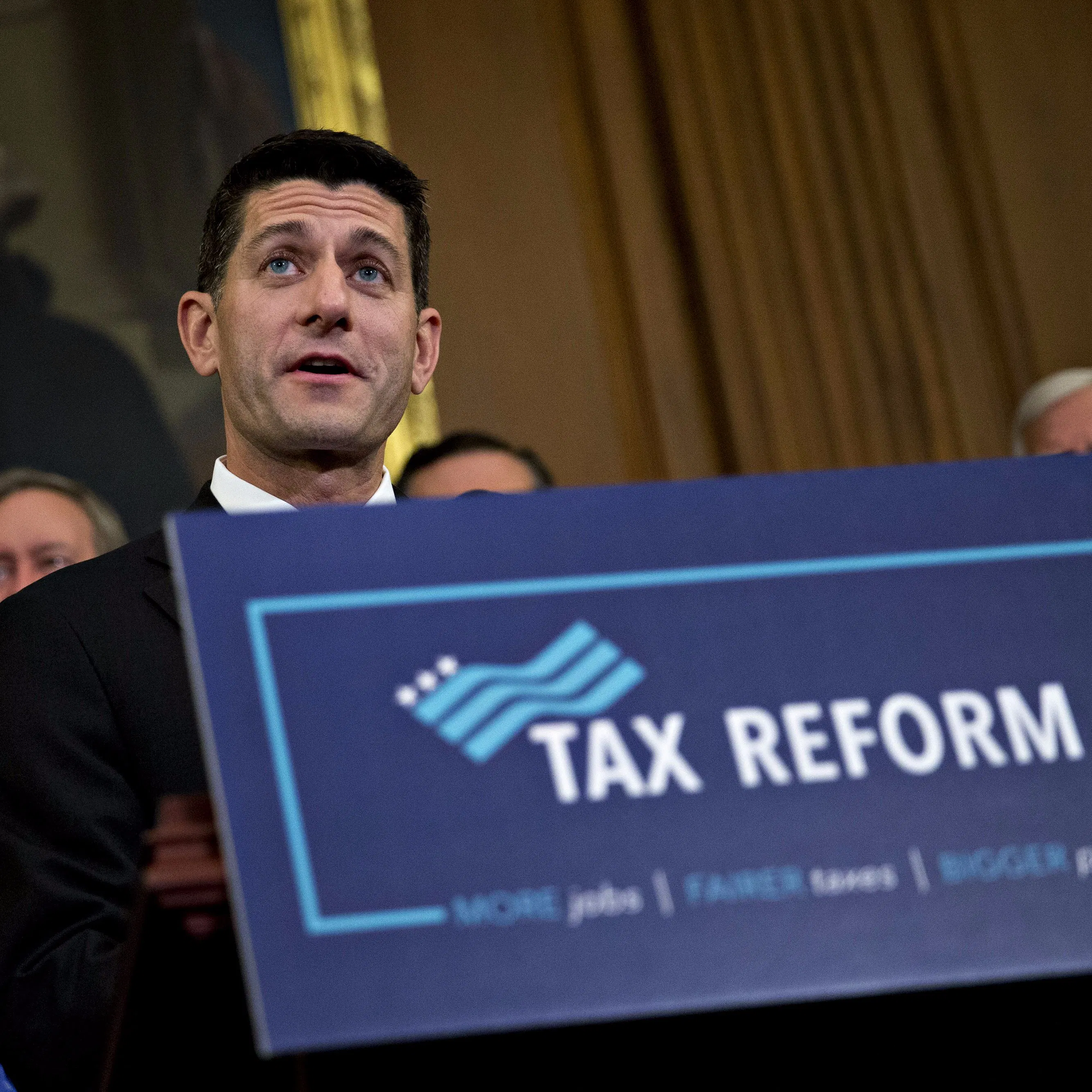
Sep 18, 2017
Hill Roundtable- Episode 37- GOP Hopeful Tax Plan Details Will Drive Reform Efforts
House Ways and Means Committee Chairman Kevin Brady (R-Texas) said details of the GOP's new tax reform plan will be revealed the week of Sept. 25. Reporters Colleen Murphy and Laura Davison spoke with Talking Tax host Matthew Beddingfield about the Republicans' efforts to come together on a unified tax plan while also working to pass a federal budget.
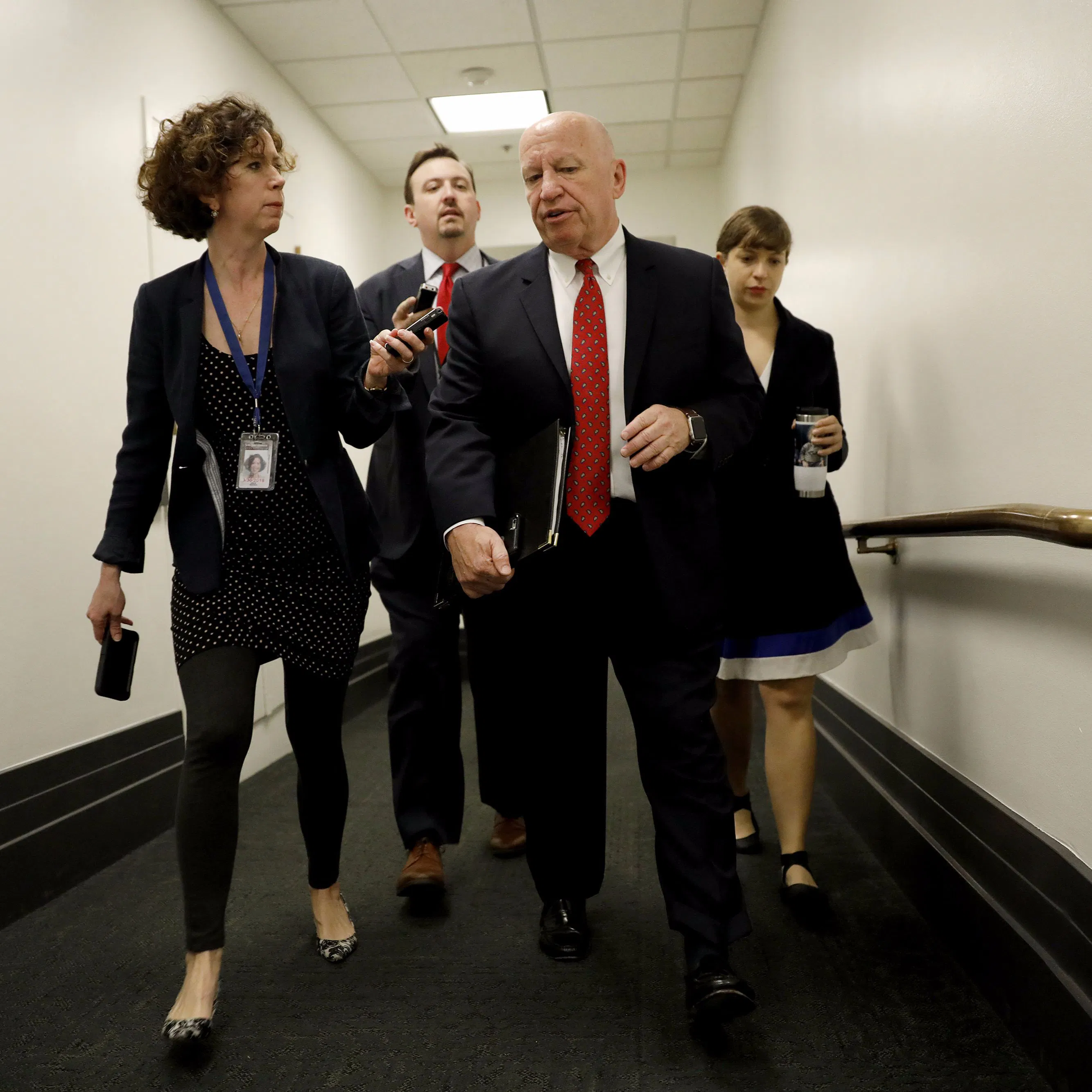
Sep 11, 2017
Hill Roundtable- Episode 36- Midterm Election Deadline Looms Over Tax Reform Efforts
House Ways and Means Committee Chairman Kevin Brady (R-Texas) and House Speaker Paul D. Ryan (R-Wis.)are confident that tax reform will be passed this year. Reporters Colleen Murphy and Laura Davison spoke with Talking Tax host Matthew Beddingfield about the GOP's time crunch for implementing its new tax plan and what needs to be accomplished before midterm elections.
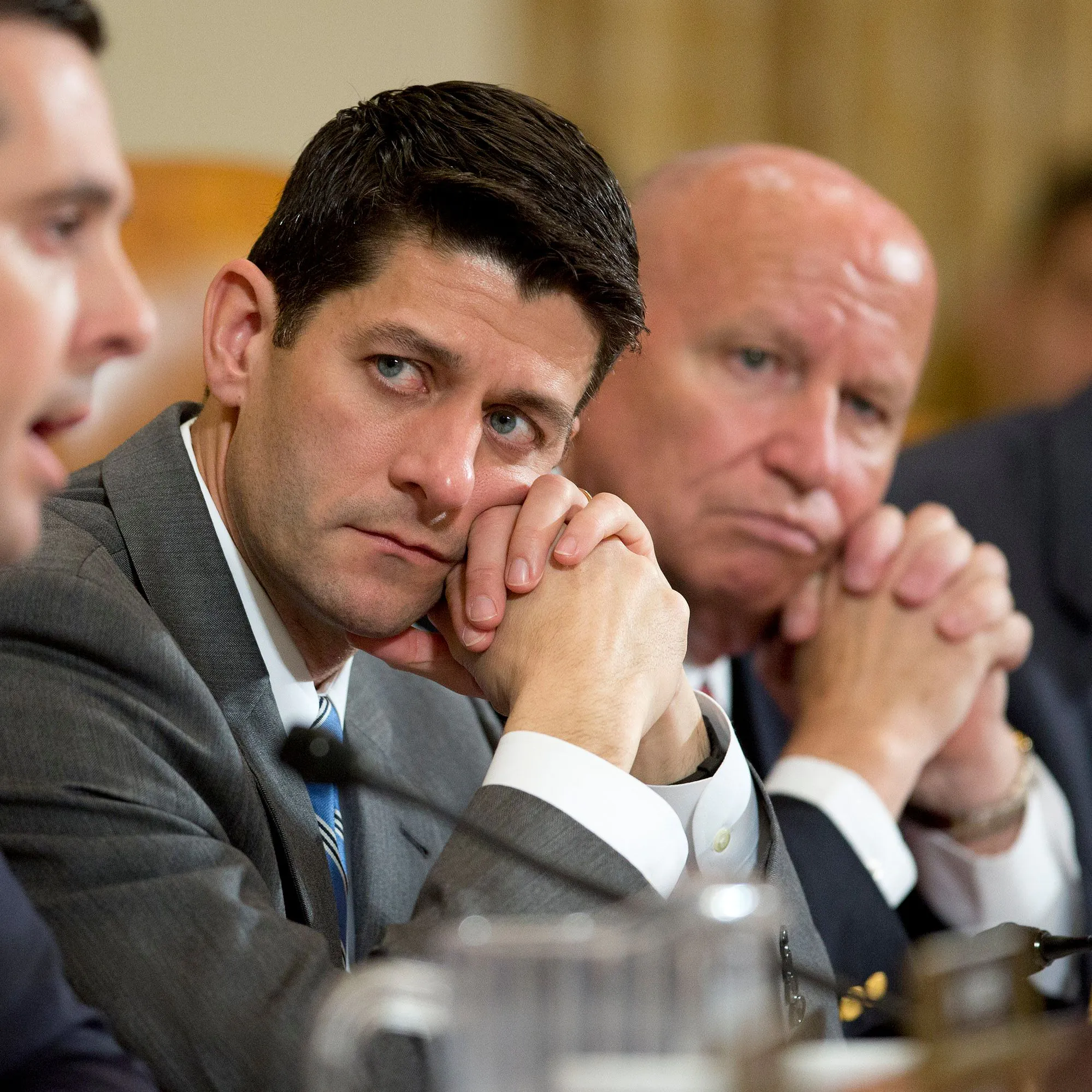
Aug 25, 2017
Hill Roundtable- Episode 35- GOP Takes Tax Reform Campaign on the Road
House Speaker Paul D. Ryan (R-Wis.) and House Ways and Means Committee Chairman Kevin Brady (R-Texas) are taking their pitch for tax reform across the country. Reporter Kaustuv Basu spoke with Talking Tax host Matthew Beddingfield about the GOP campaign to promote the lawmakers' tax ideas, and what President Donald Trump will be doing to lend a hand.

Aug 17, 2017
Portfolio Podcast- The Minefields of Estate Planning and Carried Interest
Navigating the complexities of estate planning with carried interest can quickly become a daunting task. N. Todd Angkatavanich, David A. Stein, and Andrew Haave of Withers Bergman LLP authored a Bloomberg BNA portfolio on the topic that walks readers through this complex area of wealth planning. Reporter Allyson Versprille spoke with Angkatavanich and Stein about what practitioners need to know when it comes to navigating carried interest planning under tax code Section 2701, avoiding pitfalls, and understanding the impact of potential tax reform changes.

Aug 7, 2017
Hill Roundtable- Episode 33- Looking Ahead to Post-Recess Tax Reform Action
Senate Finance Committee Chairman Orrin G. Hatch (R-Utah) says Republicans will "hit the rich" in tax reform. Reporters Kaustuv Basu and Colleen Murphy spoke with Talking Tax host Matthew Beddingfield about the GOP's tax reform efforts as Congress is out for summer recess.

Jul 31, 2017
Tax & Accounting Podcast- Episode 32- GOP Plans Next Move After Health Care Bill Collapse
Senate Republicans failed to repeal the Affordable Care Act last week, but efforts to pass health care legislation may not be over yet. Reporters Laura Davison, Kaustuv Basu, and Colleen Murphy spoke with Talking Tax host Matthew Beddingfield about the recent health care vote and what the GOP is doing to move forward on both health care and tax reform.

Jul 21, 2017
Tax & Accounting Podcast- Episode 31- House Budget Faces Challenges Out of the Gate
The House fiscal year 2018 budget resolution, which is the key to the GOP's full tax reform package, is facing difficulties as moderate and conservative Republicans have already attacked the measure. Reporters Laura Davison and Colleen Murphy spoke with Talking Tax host Matthew Beddingfield about the challenges Republicans face in passing the budget as they prepare for August.

Jun 23, 2017
Tax & Accounting Podcast- Episode 26- Draft Health Care Bill Faces Compromises Before Vote
The Senate is likely to vote the week of June 26 on a draft health care bill that would repeal the Affordable Care Act's taxes. Senate Republicans are working to compromise on various aspects of the legislation. Reporters Laura Davison and Colleen Murphy, along with reporting intern Jason Mast, sit down with Talking Tax host Matthew Beddingfield to discuss the GOP's ongoing health care efforts, as well as a mobile workforce bill (H.R. 1393) that would restrict states’ ability to tax nonresidents.