The VSL Aviation Podcast
Seth Lake
Seth Lake
A podcast on all things General Aviation from the team at VSL Aviation.
Nov 15
In this episode of the VSL Aviation Podcast, Seth sits down with aviation attorney and pilot Edward A. Hadley of AeroLegal Advocates to talk about the legal traps commercial pilots face—especially around illegal charter, operational control, and holding out. Edward walks through what actually happens when the FAA starts looking at you or your operation: from that dreaded "call the tower" instruction or ramp check, through the investigation phase, to 709 rides, legal enforcement, ALJ hearings, and NTSB appeals. He explains why you should get an aviation lawyer involved early and why on-the-record statements can come back to haunt you. For commercial pilots flying Part 91 "pilot services," Seth and Edward dig into: What operational control really means and why it often overlaps—but isn't identical to—PIC authority Dry vs. wet leases, 91.501, and how the NBAA small aircraft exemption fits into all of this How an owner or manager can unknowingly create an illegal transportation package (plane + pilot) even when "everyone at the airport does it this way" Why "goodwill" and time-building can still count as compensation, even if no money changes hands How holding out actually works, and why a business card or "I'm a commercial pilot" post is not the problem—the transportation package is They also cover risk management from the pilot's side: Using the AOPA Legal Services Plan as "legal insurance" How PRIA and your employment history interact with being a whistleblower Red flags with Part 135 operators (falsified records, paper crews, pressure flights) and when it's time to walk away Practical advice on documenting concerns, using internal reporting channels, and knowing which hills are worth dying on If you're a commercial pilot, aspiring commercial pilot, or flying Part 91 for a business owner, this episode will help you ask better questions, spot bad structures, and protect your certificate and livelihood. Chapters: 00:00 Introduction to Aviation Law and Pilot Regulations 02:48 Understanding FAA Investigations and Pilot Violations 05:22 Legal Resources for Pilots 08:24 Operational Control in Aviation 11:02 The Importance of Operational Control for Commercial Pilots 13:58 Navigating Dry and Wet Leases 16:44 Understanding Holding Out in Aviation 19:38 Compensation and Goodwill in Aviation Operations 22:07 NTSB Cases and Legal Precedents 24:48 Business Aircraft and Goodwill 39:03 Navigating the NBAA Exemption 40:59 Understanding Entry-Level Aircraft and Pilot Experience 43:52 Compliance and the Role of the FSDO 46:22 Whistleblower Protections in Aviation 49:10 The Importance of Legal Consultation for Pilots 51:39 The PREA and Reporting Obligations for Pilots 54:41 Credibility and Ethical Considerations in Aviation 57:30 Resources for Pilots: AOPA and NBAA AOPA Legal Services Plan https://pilot-protection-services.aopa.org/ NBAA and the small aircraft exemption https://nbaa.org/flight-department-administration/aircraft-operating-ownership-options/nbaas-small-aircraft-exemption/ AC 91-37B https://www.faa.gov/documentLibrary/media/Advisory_Circular/AC_91-37B.pdf AC 61-142 https://www.faa.gov/documentLibrary/media/Advisory_Circular/AC_61-142.pdf AC 120-116 https://www.faa.gov/documentlibrary/media/advisory_circular/ac_120-116.pdf NTSB Blakely V Murray https://www.ntsb.gov/legal/alj/OnODocuments/Aviation/5061.pdf NTSB Babbitt V Wallace https://www.ntsb.gov/legal/alj/OnODocuments/Aviation/5461.PDF AeroLegal Advocates / contact info for Edward Hadley https://www.aerolegaladvocates.com/
Nov 10
In this episode of The VSL Aviation Podcast, Seth lays the groundwork for understanding one of the most confusing topics in aviation: pilot compensation and illegal charter operations. He breaks down key definitions like operator vs. pilot in command, commercial activity vs. commercial operation, and the meaning of holding out. Seth explains how compensation, contracts, and operational control intersect, clarifying what's legal under Parts 61, 91, 119, and 135. This is the first part of a multi-episode series that every commercial pilot, CFI, and aircraft owner should hear. Chapters: 00:00 Introduction to Pilot Compensation and Illegal Charter 04:09 Understanding Operational Control and Pilot Responsibilities 10:10 Commercial Activity vs. Commercial Operation 13:47 The Role of Contracts in Aviation 18:37 Private Carriage vs. Common Carriage 24:59 Clarifying Holding Out in Aviation 32:40 Aircraft Size and Legal Operations 37:28 Conclusion and Future Discussions Links: https://www.reddit.com/r/flying/comments/1kesimg/what_pilots_get_wrong_about_private_carriage_and/ https://sethlakedpe.substack.com/p/operational-control-where-legal-flights?r=j12c3 https://sethlakedpe.substack.com/p/the-history-and-importance-of-holding?r=j12c3
Sep 12
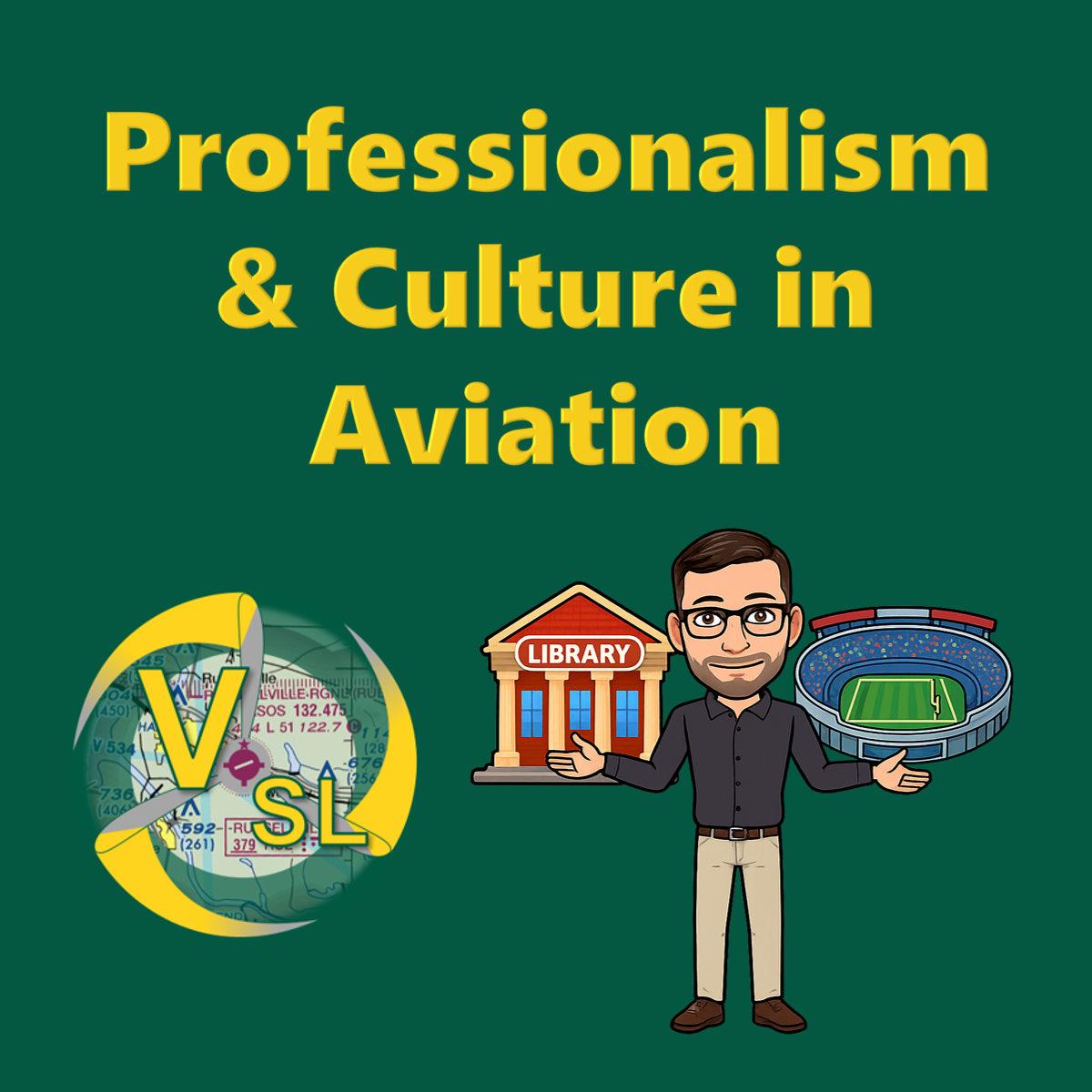
In this episode of the VSL Aviation Podcast, Seth dives into two closely connected themes: professionalism and culture in aviation. Using relatable analogies like libraries and football stadiums, Seth explores how environment shapes behavior and why developing a professional safety culture matters for every pilot—from student to ATP. Joined by John, a CFI/CFII/MEI and FAASTeam Rep, the discussion covers how instructors and flight schools can intentionally build culture, how friendships and professionalism can coexist in training, and lessons from both the military and airlines on creating a cockpit environment where safety comes first. The episode also features live Q&A from Discord and YouTube listeners, covering topics such as instructor-student relationships, right-seat solo policies, instrument approaches, transitioning to ATP training, and even the value of single-engine ATP certification. 00:00 Introduction to Professionalism and Culture in Aviation 02:32 Understanding Safety Culture in Aviation 07:24 The Library and Football Stadium Analogy 12:42 Building a Professional Safety Culture 18:36 Instructor-Student Relationships and Professionalism 23:43 Setting Expectations and First Impressions 33:25 Sole Practitioner Culture of Safety and Professionalism 46:13 Creating a Comfortable Checkride Environment 48:00 Professionalism and Safety Culture in Aviation 50:02 Teaching Instrument Approaches Effectively 52:54 First Impressions for DPEs 58:01 Military Experience and Civilian Transition 01:01:55 Communication with ATC for Training 01:06:11 Resources for Transitioning to ATP Training 01:12:41 Addressing ATC Challenges in Training 01:21:03 Single Engine ATP: Worth It? 01:23:11 Balancing Checkride Preparation and Pilot Competence
Aug 23
In this episode of the VSL Aviation Podcast, host Seth Lake shares a live seminar from the North Little Rock Airport on the realities of bird and wildlife strikes. Drawing from Arkansas accident cases, military and airline experience, and FAA safety resources, Seth explores the history of bird strikes, why Arkansas sees higher numbers than average, and what pilots can do to prepare. Topics include risk tools like BAM and AHAS, mental rehearsal for worst-case scenarios, practical recovery steps after a strike, and the importance of reporting. Whether you fly GA or professionally, this episode gives you insights and strategies to handle one of aviation's most unpredictable hazards. Chapters 00:00 Introduction to Bird Strikes 01:24 Understanding Bird Strike Statistics 03:44 Case Studies of Bird Strikes 05:51 Analyzing a Fatal Helicopter Accident 10:25 Bird Avoidance Models and Tools 12:23 Avian Hazard Advisory System Explained 18:09 Reporting Bird Strikes and Their Impact 23:21 The Importance of Studying Bird Strikes 23:50 Mental Preparedness for Emergencies 26:41 Understanding Bird Strikes and Their Implications 29:58 Engine Failures and Bird Strikes 33:59 Controllability Checks After Bird Strikes 37:37 Wildlife Hazards Beyond Birds 41:54 Reporting and Mitigating Bird Strikes
Aug 6
In this detailed safety seminar, DPE and CFI Seth Lake walks pilots through an enhanced preflight inspection process—going beyond the surface-level checks most pilots perform. Using real NTSB accidents from Arkansas, Seth highlights how minor oversights—like frayed throttle cables, loose spark plugs, or degraded exhaust components—can result in catastrophic failures. You'll learn practical, actionable techniques to integrate deeper inspections into your routine, including: How to test your autopilot and detect early signs of control cable issues Why checking static RPM on takeoff matters A simple method for detecting exhaust leaks using soapy water What to look for under the cowl—fire sleeves, linkages, baffling, and more Fuel system checks, selector testing, and collapsed bladder detection Critical brake, nose gear, and wiring issues pilots often miss When and how to do a proper mag check and fuel selector shutoff test 🔧 Designed for renters, owners, and CFIs alike, this seminar will help you build a smarter monthly inspection routine that can catch hidden risks early. 📎 BONUS: Includes discussion of checklist accuracy, placard requirements, and how STCs affect airworthiness. 🛠️ Don't just walk around—dig deeper. Risk is always present, but better habits can minimize it. #PreflightInspection #AviationSafety #SethLakeDPE #PilotTraining #GeneralAviation #FlightSafety #NTSB #CheckridePrep #OwnerOperator #AircraftMaintenance #EnhancedPreflight #CFITips Chapters: 00:00 Introduction to Enhanced Pre-Flight Inspection 02:47 Analyzing Past Accidents for Learning 06:08 The Importance of Thorough Pre-Flight Checks 09:01 Autopilot and Control Cable Inspections 11:57 Engine Checks: RPM and Exhaust Leak Tests 15:13 Critical Components: Carburetor and Linkages 18:05 Fire Safety and Engine Baffling 20:56 Final Thoughts on Pre-Flight Inspections 25:18 The Importance of Enhanced Pre-Flight Inspections 29:12 Fuel System Checks and Common Issues 32:33 Overlooked Areas in Aircraft Maintenance 36:49 Panel Blind Spots and Electrical Safety 40:41 Final Thoughts on Safety and Maintenance Practices
Aug 2
In this live Q&A session of the VSL Aviation Podcast, Seth Lake tackles a wide range of pilot questions from Discord, Instagram, and YouTube. Topics include: CFI Gold Seal renewals and FISDO processing Understanding static pressure and pitot systems Preparing for Multi-Engine Instructor (MEI) training Teaching depth for CFIs and avoiding information overload Building student pilot confidence with maneuvers CFII certification without a CFI Instrument checkride common weak spots Wet lease vs dry lease explained Aircraft ownership considerations for personal missions Home simulators for IFR training FAA Wings program and proficiency tips Whether you're a student pilot, instructor, or experienced aviator, this episode provides practical insights to help you improve your skills and understanding of FAA rules. 👉 Join the conversation: vsl.aero → Discord Community 🎧 Listen on Apple Podcasts / Spotify 👍 Like, subscribe, and leave a 5-star review to support the show! Chapters: 00:00 Introduction and Q&A Format 01:21 Gold Seal Flight Instructor Status 02:18 Understanding Airspeed Indicators 03:43 Tips for MEI Training 05:11 Endorsements and Legal Considerations for MEIs 07:08 Defensive Posture in Multi-Engine Instruction 10:55 Targeting Knowledge Depth for Students 14:13 Handling Student Challenges in Flight Training 15:39 Mock Orals and Preparation for Checkrides 18:58 Skipping CFI for CFII 21:48 Using E6B vs. Flight Computers 22:37 Common Mistakes in IFR Checkrides 25:57 Utilizing GPS and Autopilot in Flight Training 27:13 Updates on CF-II Regulations and Instruction 30:33 Understanding Wet and Dry Leases in Aviation 35:21 Navigating Part 135 Operations and Pilot Training 37:15 Preparing for Instrument Check Rides 41:02 Engaging with the WINGS Program for Pilot Proficiency 43:57 Experiencing Actual vs. Simulated IFR Training 45:22 Principles of Aircraft Ownership and Mission Planning
Jul 31
In this episode, Seth sits down with Jeremy Lashbrook, a seasoned pilot and Designated Pilot Examiner with over 26 years of U.S. Army aviation experience. Jeremy brings unique insight from his extensive background flying both rotorcraft and fixed-wing aircraft, EMS helicopter operations, and type ratings in multiple complex aircraft. Together, they discuss common applicant mistakes, tips for smoother checkrides, airworthiness pitfalls, understanding endorsements, oral and flight maneuver trends, and key lessons for CFIs to better prepare students. Jeremy also shares his experience with ATP and type rating checkrides, plus valuable advice for pilots moving into professional aviation. Chapters: 00:00 Introduction to Check Ride Insights 03:10 Administrative Preparation for Check Rides 05:58 Understanding Endorsements and Airworthiness 09:02 Navigating Type Ratings and Avionics 12:06 Oral Exam Challenges and Airworthiness Knowledge 15:03 Flight Maneuvers and Practical Test Expectations 31:37 Understanding Power Changes During Maneuvers 34:07 The Importance of Pylon Selection 36:45 Addressing Stall Maneuvers in Training 40:04 Navigating Instrument Check Rides 43:28 Common Pitfalls in Instrument Flight Planning 46:57 Understanding Special VFR and Weather Minimums 52:32 Personal Minimums and Decision Making 57:46 Final Thoughts on Readiness for Check Rides
Jul 26
In this episode of the VSL Aviation Podcast, Seth takes a deep dive into high altitude operations, breaking down FAA requirements, oxygen systems, and cabin pressurization from both a technical and checkride prep perspective. Whether you're a Commercial, CFI, or ATP applicant, you'll gain practical insight on: • The types of oxygen systems you'll encounter in GA aircraft • How to calculate oxygen requirements for your flight • FAA Part 91.211 rules and what "if installed" really means on a checkride • Physiological risks of flying without oxygen above 10,000 feet • Best practices for maintaining and using onboard oxygen systems • Real-world stories, Q&A, and prep tips for earning your high altitude endorsement Plus, Seth outlines how to use AC 61-107B as a ready-made lesson plan and shares additional resources including the FAA's O2 brochure, SkyOx system specs, and pressurization system maintenance best practices. 💬 Join the conversation in the Discord companion thread, ask questions live, and get featured on the next show. Show Links: High Altitude Operations: https://www.faa.gov/sites/faa.gov/files/other_visit/aviation_industry/airline_operators/training/Appendix_3-E_HighAltOperations.pdf Airline Upset Recovery: https://www.faa.gov/sites/faa.gov/files/other_visit/aviation_industry/airline_operators/training/AP_UpsetRecovery_Supplement.pdf AC 61-107B: https://www.faa.gov/documentLibrary/media/Advisory_Circular/AC_61-107B_CHG_1_FAA.pdf High Altitude Endorsement: https://www.ecfr.gov/current/title-14/part-61/section-61.31#p-61.31(g) FAA Oxygen Equipment Info: https://www.faa.gov/pilots/safety/pilotsafetybrochures/media/oxygen_equipment.pdf Aerox Pamphlet: https://www.aerox.com/content/2022%20Use%20and%20care%20-%20Sky-ox.pdf Reddit Question: https://www.reddit.com/r/flying/s/yQOTAo3yNd Oxygen in General Aviation Paper: https://www.faa.gov/sites/faa.gov/files/data_research/research/med_humanfacs/oamtechreports/AM66-28.pdf Discord Server Link: https://discord.gg/46zt3N8ckx Chapters: 00:00 Introduction to High Altitude Operations 02:47 Understanding Oxygen Systems 06:08 Pressurization Systems Explained 09:02 Training and Resources for High Altitude Operations 11:57 Physiological Effects of High Altitude Flight 14:47 Flight Planning for High Altitude Operations 17:53 Oxygen Delivery Systems in Aviation 20:38 Calculating Oxygen Requirements 24:02 Human Physiology at High Altitude 42:30 Understanding Altitude and Physiology 44:55 Hypoxia: Causes and Effects 52:16 Monitoring and Managing Hypoxia 01:01:48 Oxygen Systems and Maintenance 01:09:30 Emergency Procedures and Best Practices