2d ago
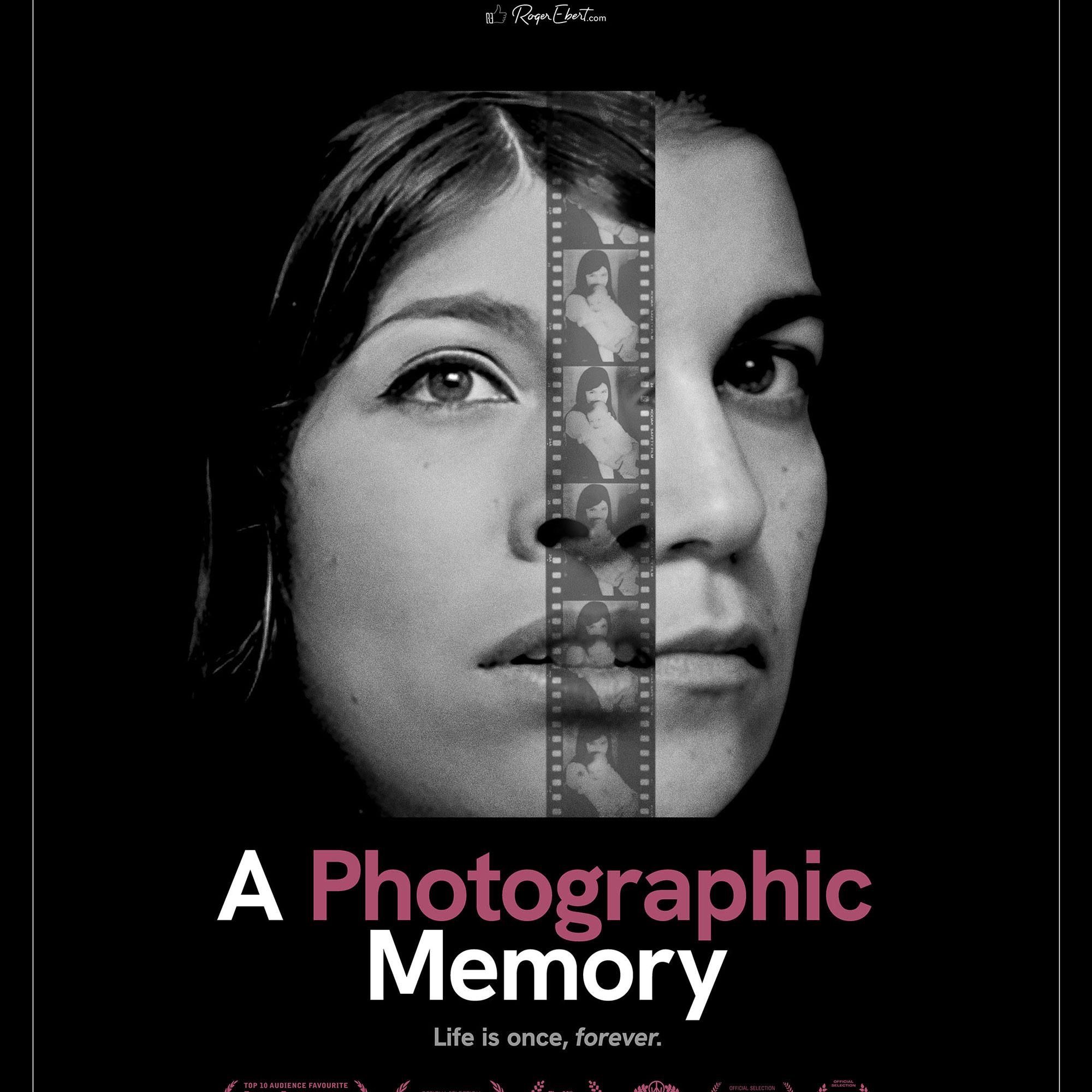
271 - Rachel Elizabeth Seed
Rachel Elizabeth Seed is a Brooklyn and Los Angeles-based nonfiction storyteller working in film, photography, and writing. In 2025, she won the Truer Than Fiction Spirit Award for her debut feature film, A Photographic Memory, which is also a New York Times Critics Pick . Rachel’s work has received support from the Sundance Institute, Chicken + Egg Films, the Jewish Film Institute, the California Film Institute, Jewish Story Partners, NYFA, Field of Vision, the Jerome Foundation, NYSCA, the Maine Media Workshops, the Roy W. Dean grant, the National Arts Club, IFP, and many others. Formerly a photo editor at New York Magazine, her photography has been exhibited worldwide, including at the International Center of Photography, and she was a cameraperson on several award-winning feature documentaries. Rachel’s writing has been published by No Film School, the Sundance Institute, and Talkhouse and she is Executive Director / Co-founder of the Brooklyn Documentary Club, a NYC-based filmmaker collective with 250+ members. In episode 271, Rachel discusses, among other things: A summary of her mum’s character nature vs. nurture Her mum’s Images of Man interviews for ICP/Scholastic What inspired her to make a film How her own story became interwined with her mum’s Discovering a family archive of super 8 footage How she recreated the interviews using actors The importance of working with good editors The challenge of funding and financing Key advice for anyone wanting to make a personal documentary The fine balance between collaboration and having the courage of your convitions as director Writing for narration as opposed to for reading Sharing her personal stories as the film evolved over a ten year period - How to balance life and art ‘Selling the film’ and what that means in practice The Brooklyn Documentary Club Moving to L.A. Projects she has in development Website | Instagram Become a A Small Voice podcast member here to access exclusive additional subscriber-only content and the full archive of 200+ previous episodes for £5 per month. Subscribe to my weekly newsletter here for everything A Small Voice related and much more besides. Follow me on Instagram here . Build Yourself a Squarespace Website video course here .
Dec 7
197 - Martin Parr (#2)
Martin Parr (born 23 May 1952), the man who the Daily Telegraph declared to be, “arguably Britain’s greatest living photographer” is known for his photographic projects that take an intimate, satirical and anthropological look at aspects of modern life, in particular documenting the social classes of England, and more broadly the wealth of the Western world. His major projects have been rural communities (1975–1982), The Last Resort (1983–1985), The Cost of Living (1987–1989), Small World (1987–1994) and Common Sense (1995–1999). Since 1994, Martin has been a member of Magnum Photos, where he scraped in by one vote and where between 2013 and 2017 he served as President. His work has been published in numerous photobooks, over 120 of his own, and he has exhibited prolifically throughout his career. In 2017 the Martin Parr Foundation was opened in Bristol. The MPF is as a gallery and archive and research resource dedicated to both preserving the Martin’s photographic legacy and to supporting emerging, established and overlooked photographers who have made and continue to make work focused on the British Isles. Since his first A Small Voice appearance on Episode 91 of the podcast in October 2018, Martin has had a major exhibition at the National Portrait Gallery which opened in March 2019. Entitled Only Human , the show included portraits from around the world, with a special focus on Britishness, explored through a series of projects that investigated British identity. Also since that episode Martin was awarded a CBE in the Queen’s birthday honours in June, 2021. Martin’s latest book, A Year in the Life of Chew Stoke Village was released in September 2022 by RRB Books . On episode 197, Martin discusses, among other things: Influence of his methodist grandfather… and peers at Manchester Early experiences in Hebdon Bridge The move to Ireland - From the Pope to a Flat White Liverpool and the controversy around The Last Resort work Bristol and Bath - The Cost of Living Being blown away by his first experience of Arles Joining Magnum amidst disapproval from the old guard Small World A Year in the Life of Chew Stoke Village Signs of the Times Common Sense The work of the Martin Parr Foundation Good work and bad work Referenced: Robert Doisneau Bill Brandt Robert Frank Garry Winogrand Alan Murgatroyd Brian Griffin Daniel Meadows Albert Street Workshop Fintan O’Toole Peter Fraser Peter Mitchell Tom Wood Anna Fox Ken Grant David Moore John Hinde Philip Jones Griffiths Henri Cartier-Bresson Boris Mikhailov Krass Clement Martin: Website | Instagram | Episode 91 | Chew Stoke book MPF: Website | Instagram “Most of the pictures I take are very bad, because to get the good pictures is almost impossible. If you went out in the morning and said ‘today I’m only gonna take good pictures’ you wouldn’t get anywhere. You wouldn’t even start. So you’ve got to have that momentum of shooting, and you’ve got to have found the right subject, the right place, the right time, and then things will start to happen.” Become a A Small Voice podcast member here to access exclusive additional subscriber-only content and the full archive of 200+ previous episodes for £5 per month. Subscribe to my weekly newsletter here for everything A Small Voice related and much more besides. Follow me on Instagram here . Build Yourself a Squarespace Website video course here .

Dec 7
091 - Martin Parr
The man who the Daily Telegraph declared to be, “arguably Britain’s greatest living photographer” had a suburban childhood in the provincial county of Surrey, England, where his budding interest in the medium of photography was encouraged by his grandfather George Parr, himself a keen amateur photographer. Martin went on to study photography at Manchester Polytechnic in the early 70s and since that time has worked on many, many photographic projects, publishing over 100 books of his own work and editing another 30. He has developed an international reputation for his innovative imagery, his oblique approach to social documentary, and his input to photographic culture within the UK and abroad. In 1994 Martin became a full member of Magnum Photos , scraping in by a single vote, in the face of strong opposition to his inclusion from some of the old guard, including Philip Jones Griffiths and Henri Cartier Bresson himself. He has since become an important and influential Magnum Member where he served as President between 2013 and 2017. Martin has also developed an interest in filmmaking, and has started to use his photography within different genres, such as fashion and advertising. In 2002 the Barbican Art Gallery and the National Media Museum initiated a large retrospective of Martin’s work and this exhibition toured Europe for the next 5 years. Martin was Professor of Photography at The University of Wales Newport campus from 2004 to 2012 and Guest Artistic Director for the Arles photo festival in 2004. In 2006 he was awarded the Erich Salomon Prize and the resulting Assorted Cocktail show opened at Photokina and in 2008 was guest curator at New York Photo Festival . Parrworld opened at Haus de Kunst, Munich, in 2008. The show exhibited Martin’s own collection of objects, postcards, photography prints by both British and International photographers, photo books and a new project from Parr entitled Luxury. The exhibition toured Europe for the following 2 years. At PhotoEspana in 2008, Martin won the Baume et Mercier Award in recognition of his professional career and contributions to contemporary photography. He is co-author with Gerry Badger of the exhuastive three volume series The Photobook: A History . In March 2016 Strange and Familiar, curated by Parr, opened at the Barbican, London. The show examines how international photographers from 1930s onwards have photographed in the UK. Martin was awarded the Sony World Photography Award for Outstanding Contribution to Photography in April 2017. In Autumn 2017 the Martin Parr Foundation - which is a gallery and archive dedicated to supporting and preserving the photographic legacy of not only Martin himself but also of photographers who made, and continue to make, important work focused on the British Isles - opened in Bristol. Martin is currently working on an exhibition for the National Portrait Gallery which opens in March 2019. In episode 091, Martin discusses, among other things: The Foundation The UK’s attitude towards photography How his suburban childhood influenced his photography Tony Ray Jones Developing his distinctive colour style The Last Resort Being described as ‘an alien’ by Heni Cartier Bresson Passing on 12,000 photobooks to Tate Modern The health and future of Magnum Photos Referenced: Roger Mayne David Hoffman Hans Bellmer Don McCullin Paul Trevor Tony Ray Jones Peter Mitchell Chris Killip Daido Moriyama Simon Roberts Niall McDiarmid Chloe Dewe Matthews Clementine Schneidermann John Myers Sergio Larrain Robert Frank Paul Graham Tom Wood John Hinde Martin: Website | Facebook | Instagram | Twitter MPF: Website | Facebook | Instagram | Twitter “I’m pretty happy with the way it’s turned out, to be honest. I have to kick myself sometimes to realise I’m still earning a living from my hobby.” Become a A Small Voice podcast member here to access exclusive additional subscriber-only content and the full archive of 200+ previous episodes for £5 per month. Subscribe to my weekly newsletter here for everything A Small Voice related and much more besides. Follow me on Instagram here . Build Yourself a Squarespace Website video course here .

Dec 3
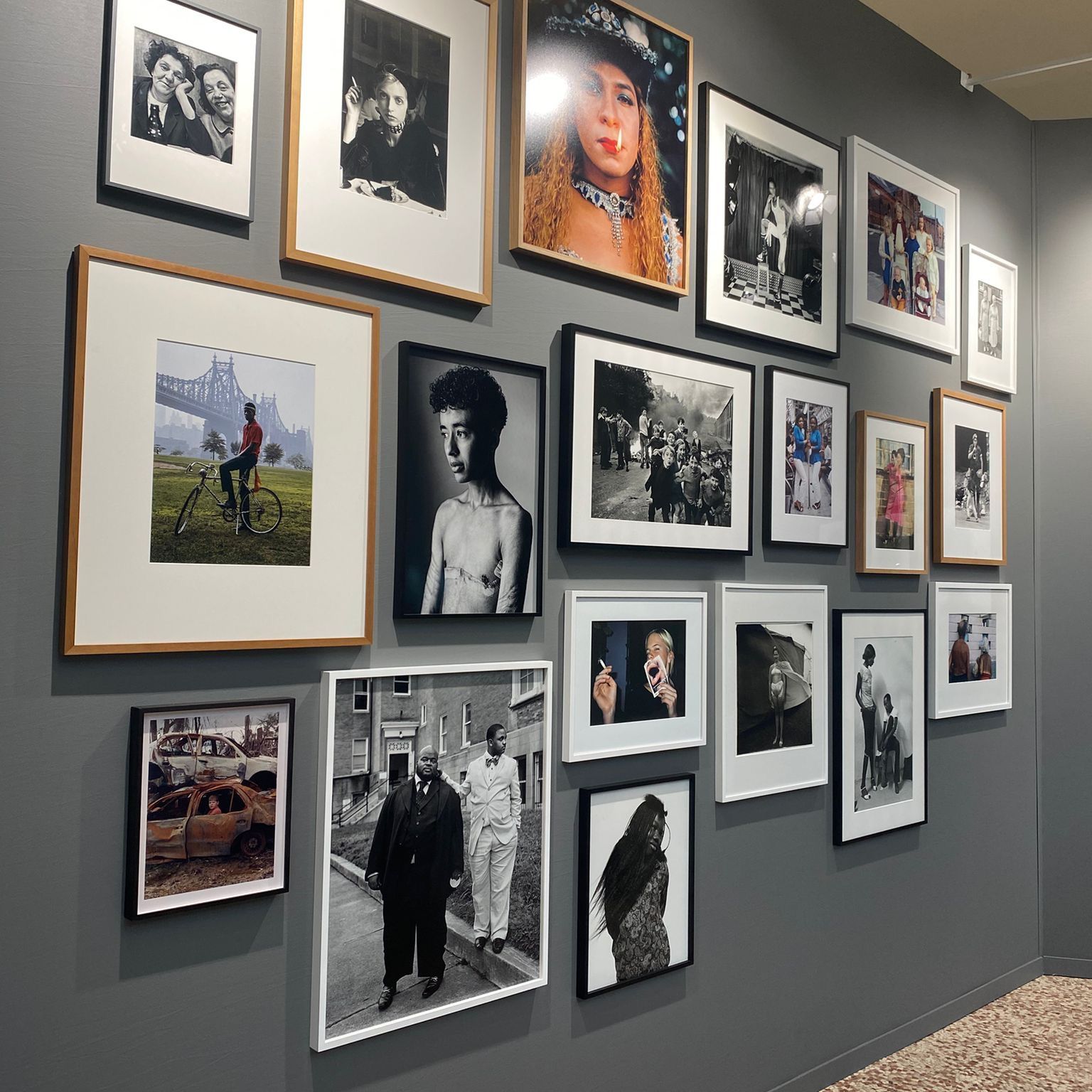
270 - Paris Photo 2025 Special
Featuring: Yasuhiro Ogawa Marshall To Lua Ribeira Gianluca Gamberini (L'artiere books) Eleonora Agostini Pia-Paulina Guilmoth Aletheia Casey Books/Projects mentioned: Lost in Kyoto , Yasuhiro Ogawa Blank Notes , Marshall To 44 Irvine Street 1970-1971 , Susan Meiselas Agony In The Garden , Lua Ribeira Calling The Bird Home , Cheryl St. Onge Another England , Phil Toledano A Study On Waitressing , Eleonora Agostini Flowers Drink The River , Pia Paulina Guilmoth Fishworm , Pia Paulina Guilmoth & Jesse B. Saffire A Lost Place , Aletheia Casey Become a A Small Voice podcast member here to access exclusive additional subscriber-only content and the full archive of 200+ previous episodes for £5 per month. Subscribe to my weekly newsletter here for everything A Small Voice related and much more besides. Follow me on Instagram here . Build Yourself a Squarespace Website video course here .
Nov 19
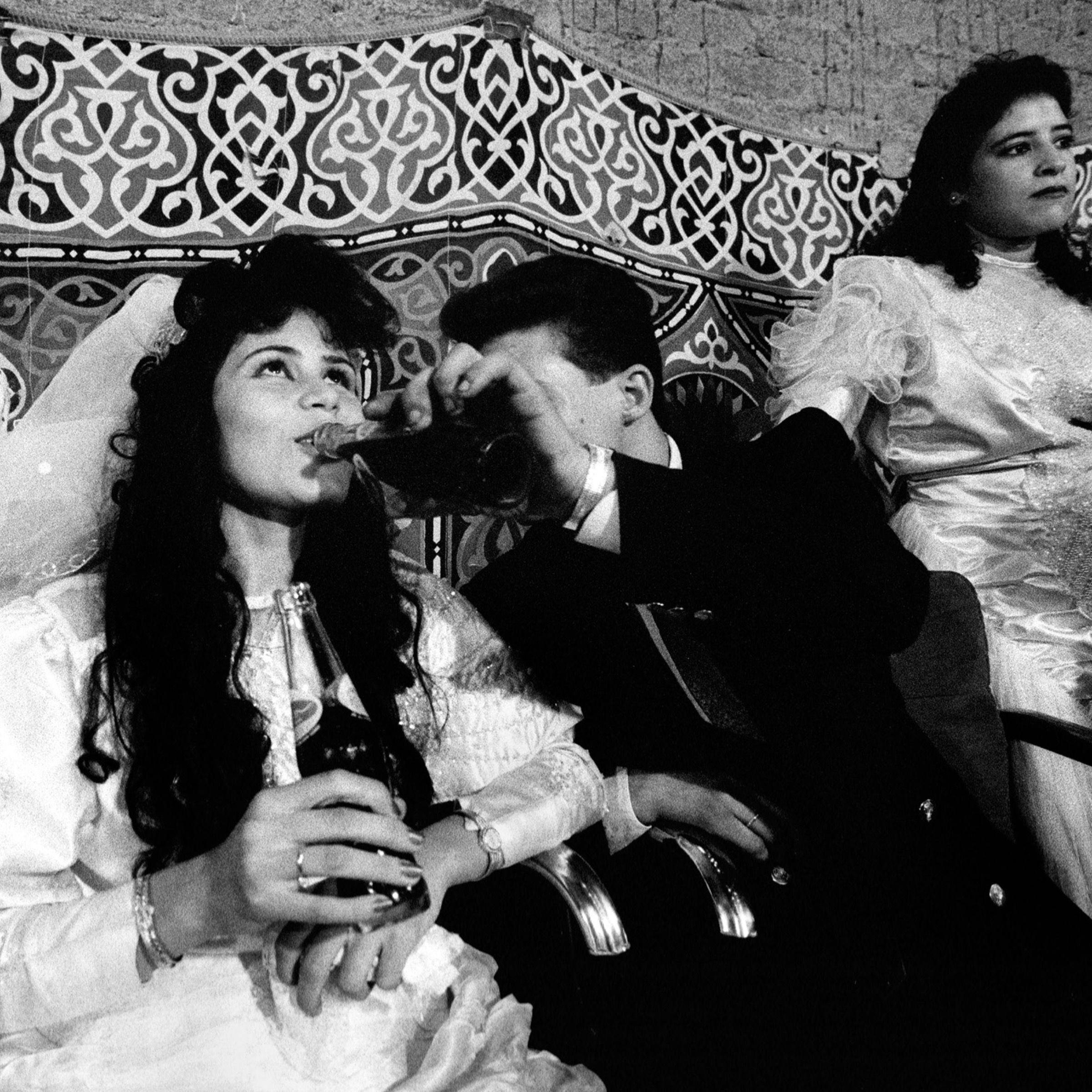
269 - Ed Kashi (#2)
Ed Kashi is a renowned photojournalist, filmmaker, speaker and educator who has been making images and telling stories for 40 years. His restless creativity has continually placed him at the forefront of new approaches to visual storytelling. Dedicated to documenting the social and political issues that define our times, a sensitive eye and an intimate and compassionate relationship to his subjects are signatures of his intense and unsparing work. As a member of VII Photo, Ed has been recognized for his complex imagery and its compelling rendering of the human condition. Ed’s innovative approach to photography and filmmaking has produced a number of influential short films and earned recognition by the POYi Awards as 2015’s Multimedia Photographer of the Year. Ed’s embrace of technology has led to creative social media projects for clients including National Geographic, The New Yorker, and MSNBC. From implementing a unique approach to photography and filmmaking in his 2006 Iraqi Kurdistan Flipbook, to paradigm shifting coverage of Hurricane Sandy for TIME in 2012, Ed continues to create compelling imagery and engage with the world in new ways. Along with numerous awards from World Press Photo, POYi, CommArts and American Photography, Ed’s images have been published and exhibited worldwide. His editorial assignments and personal projects have generated fourteen books. In 2002, Ed in partnership with his wife, writer + filmmaker Julie Winokur, founded Talking Eyes Media. The non-profit company has produced numerous award-winning short films, exhibits, books, and multimedia pieces that explore significant social issues. In 2019, The Enigma Room, an immersive installation, premiered at NYC’s Photoville festival, and has since been seen in Israel, the Netherlands, South Korea, and New Mexico, USA. HIs new book is, A Period In Time: Looking Back While Moving Forward, 1977 - 2022. In episode 269, Ed discusses, among other things: Wanting to contribute to positive change Donating his archive and why A lesson learned on being assertive His new book A Period In Time Publishing extracts from his journal entries Editing language in response to modern sensibilities Seeing the impact of identity politics in the USA His book project with his wife, Julie, American Sketches America being less divided than we are being led to believe His interest in ‘advocacy journalism’ Website | Instagram Become a A Small Voice podcast member here to access exclusive additional subscriber-only content and the full archive of 200+ previous episodes for £5 per month. Subscribe to my weekly newsletter here for everything A Small Voice related and much more besides. Follow me on Instagram here . Build Yourself a Squarespace Website video course here .
Nov 5
268 - Paul Sng
Paul Sng is a bi-racial British Chinese filmmaker based in Edinburgh, Scotland whose work focuses on people who challenge the status quo. He has directed six feature documentaries, including Poly Styrene: I Am A Cliche (winner of BIFA 2021 Best Documentary, BIFA 2021 Raindance Discovery Award), Tish (Sheffield DocFest 2023 Opening Gala film) and Reality Is Not Enough (Edinburgh International Film Festival 2025 Closing Gala film). Paul strives to make bold and creatively ambitious films that connect emotionally with audiences, working collaboratively with great teams to tell stories about outsiders and amplify rebellious voices. In 2022 he was named as a BAFTA Breakthrough Artist and directed Folding , his first short drama film, funded by Screen Scotland and BFI Network. In episode 268, Paul discusses, among other things: Growing up in London with a single mum Having outsider syndrome… and imposter syndrome, and using that to your advantage His educational history, including a couple of false starts Making a feature as his first ever film with the ‘confidence of ignorance’ The importance of finding a good Producer (and what their job involves) The important questions he asks himself in considering whether to make a film Structure and working with an editor Applying the same narrative principles to documentary as are prevalent in fiction The creative treatment of actuality Finding an audience Currently in production, Little Warrior Referenced: Trainspotting Symposium , Plato Bruce Lee Jackie Chan David Yip John Woo Wong Kar-Wai Colin McArthur Sleaford Mods Nathan Hannawin Bruce Robinson Orson Welles Rebecca Mark-Lawson Jennifer Corcoran Moonage Daydream The Atrocity Exhibition, JG Ballard The Man In The White Suit Emma Butt Website | IMDB page | Instagram Episode sponsor: Aftershoot . Your complete AI workflow: Streamline photo culling, editing, and retouching so you can create stunning images, grow your business, and save 18+ hours every month. Try it completely free for a 30 day trial and get a 15% discount at checkout once you sign up with the code SMALLVOICEPOD. Become a A Small Voice podcast member here to access exclusive additional subscriber-only content and the full archive of 200+ previous episodes for £5 per month. Subscribe to my weekly newsletter here for everything A Small Voice related and much more besides. Follow me on Instagram here . Build Yourself a Squarespace Website video course here .
Oct 22
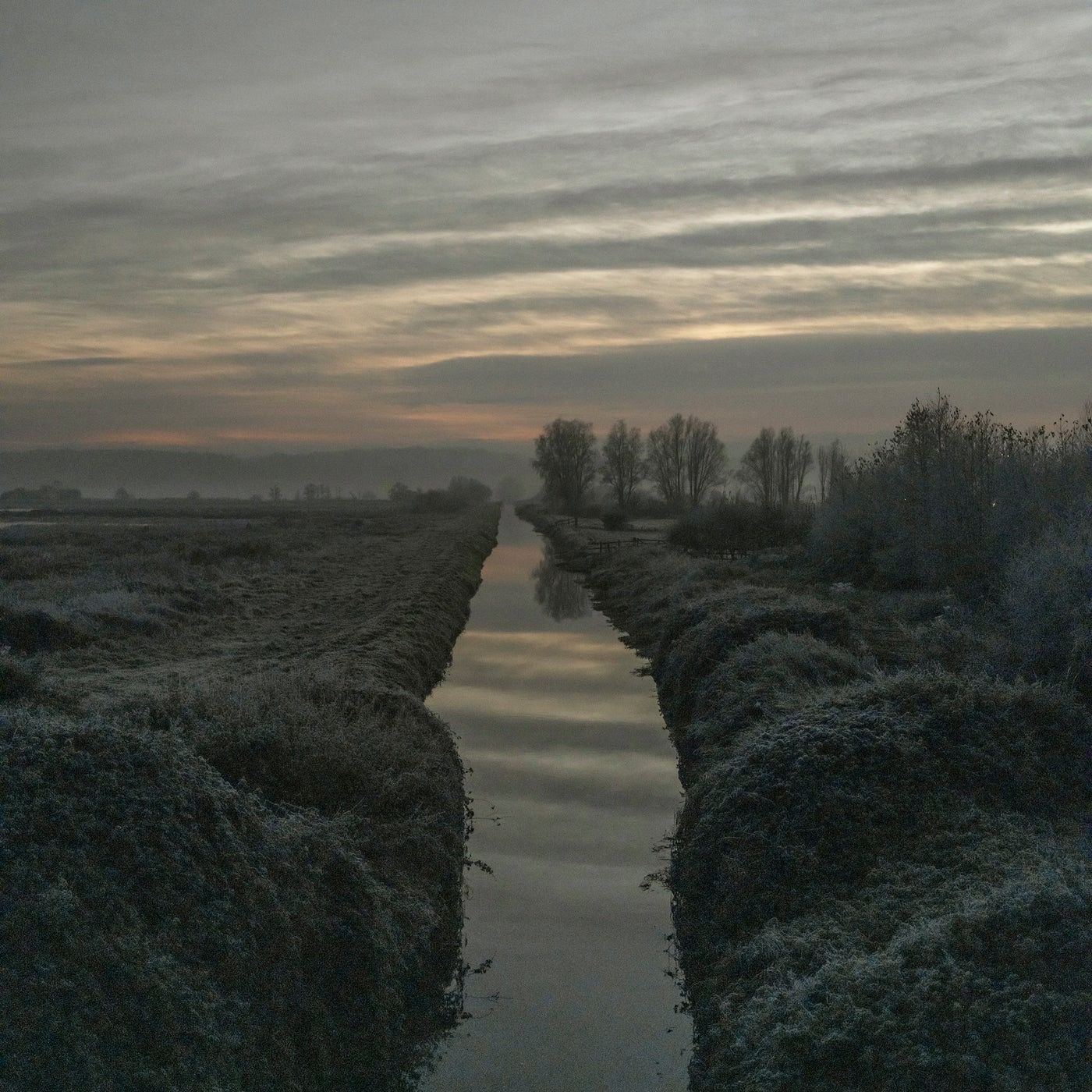
267 - BoP Festival 2025
Fearturing: Merlin Daleman David O’Mara Jem Southam Martin Parr Christoph Bangert from Photobus Ayesha Jones Mark Power Tom Shaw Become a A Small Voice podcast member here to access exclusive additional subscriber-only content and the full archive of 200+ previous episodes for £5 per month. Subscribe to my weekly newsletter here for everything A Small Voice related and much more besides. Follow me on Instagram here . Build Yourself a Squarespace Website video course here .
Oct 8
266 - Mike Brodie
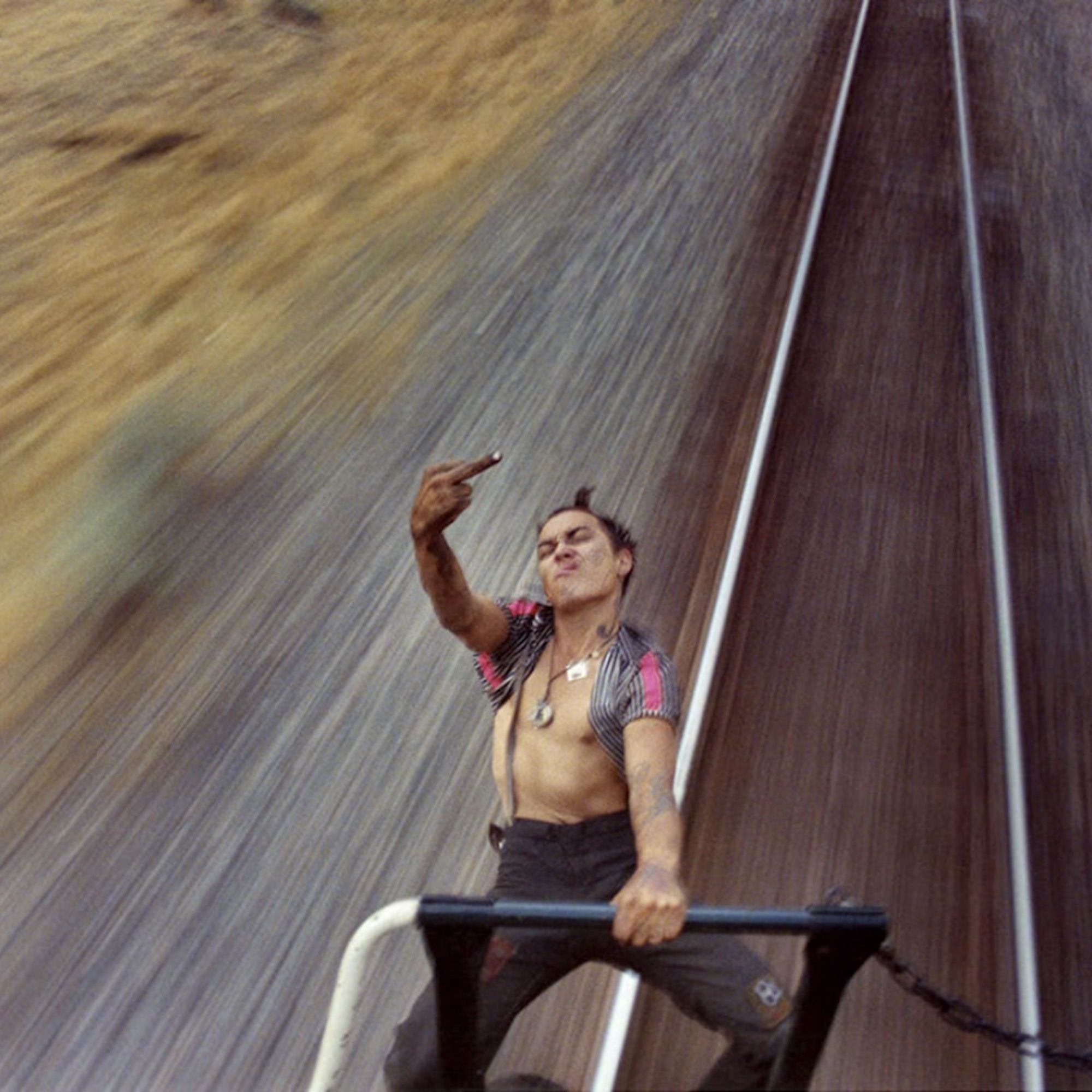
Mike Brodie’s first monograph, A Period of Juvenile Prosperity was published by Twin Palms more than a decade ago in 2013, depicting his fellow rail-riders and drifters in a rebellious and wildfire pursuit of adventure and freedom. “Brodie leapt into the life of picture-making as if he was the first to do it,” Danny Lyon wrote about the book in Aperture. Next came Tones of Dirt and Bone , a collection of earlier SX-70 pictures Brodie made when photography first led him to hopping freights, when he was known as “The Polaroid Kidd.” And then Brodie seemed to disappear from the art world as suddenly and mysteriously as he’d first appeared. Maybe his vanishing was another myth. Maybe it was just a necessary retreat. “I was divorcing myself from all that,” he says. “I was growing up. I was pursuing this other life.” In Nashville he became a diesel mechanic. Fell in love. Moved across the country again. Got married. Bought land on the long dusty Winnemucca road Johnny Cash sang about. Started his own business. Built a house. Put down roots. And when that life exploded, the open road called again. Throughout almost all of it, his cameras were with him, and at last those pictures are coming to light. If Michael Brodie’s first monograph was a cinematic dream, his latest, Failing , again published by Twin Palms in 2024, is the awakening and the reckoning, a raw, wounded, and searingly honest photographic diary of a decade marked by love and heartbreak, loss and grief — biblical in its scope, and in its search for truth and meaning. Here is the flip side of the American dream, seen from within; here is bearing close witness to the brutal chaos of addiction and death; here are front-seat encounters with hitchhikers and kindred wanderers on society’s edges, sustained by the ragtag community of the road. Failing often exists in darkness but is tuned to grace. Brodie’s eye stays forever open to the strange and fleeting beauty that exists in forgotten places — the open country and the lost horizons that sweep past dust-spattered windows in a spectral blur. Mike worked on and features in a recently released hour long documentary eponymously entitled Slack , the nickname of his one time girlfriend, Mia Justice Smith , who sadly died of a drug overdose, and to whom the film is dedicated. The film, which is directed by Mike’s friend and collaborator Cyrill Lachauer ., revisits the freighthopping years and delves into Mike's creative collaboration with Mia. In episode 266, Mike discusses, among other things: The documentary he helped to make about his freighthopping years - Slack How train hopping and photography went hand in hand Romanticism vs. misery Train hopping as a performance Losing his girlfriend, Mia Justice Smith , to a drug overdose His attempt at a ‘normal’ life and how that impacts his creativity The success of A Period of Juvenile Prosperity and its downside How the title came about The darkness of the pictures in latest book, Failing Tussling with the question of exploitation and ethical responsibility Ambitions to make a feature film one day The ongoing push/pull of art v. home life The desire to photograph machines and ways of life and ways of working that are passing away Next steps in the USA - projects vs. photographing life Website | Instagram Become a A Small Voice podcast member here to access exclusive additional subscriber-only content and the full archive of 200+ previous episodes for £5 per month. Subscribe to my weekly newsletter here for everything A Small Voice related and much more besides. Follow me on Instagram here . Build Yourself a Squarespace Website video course here .
Sep 24
265 - Merlin Daleman
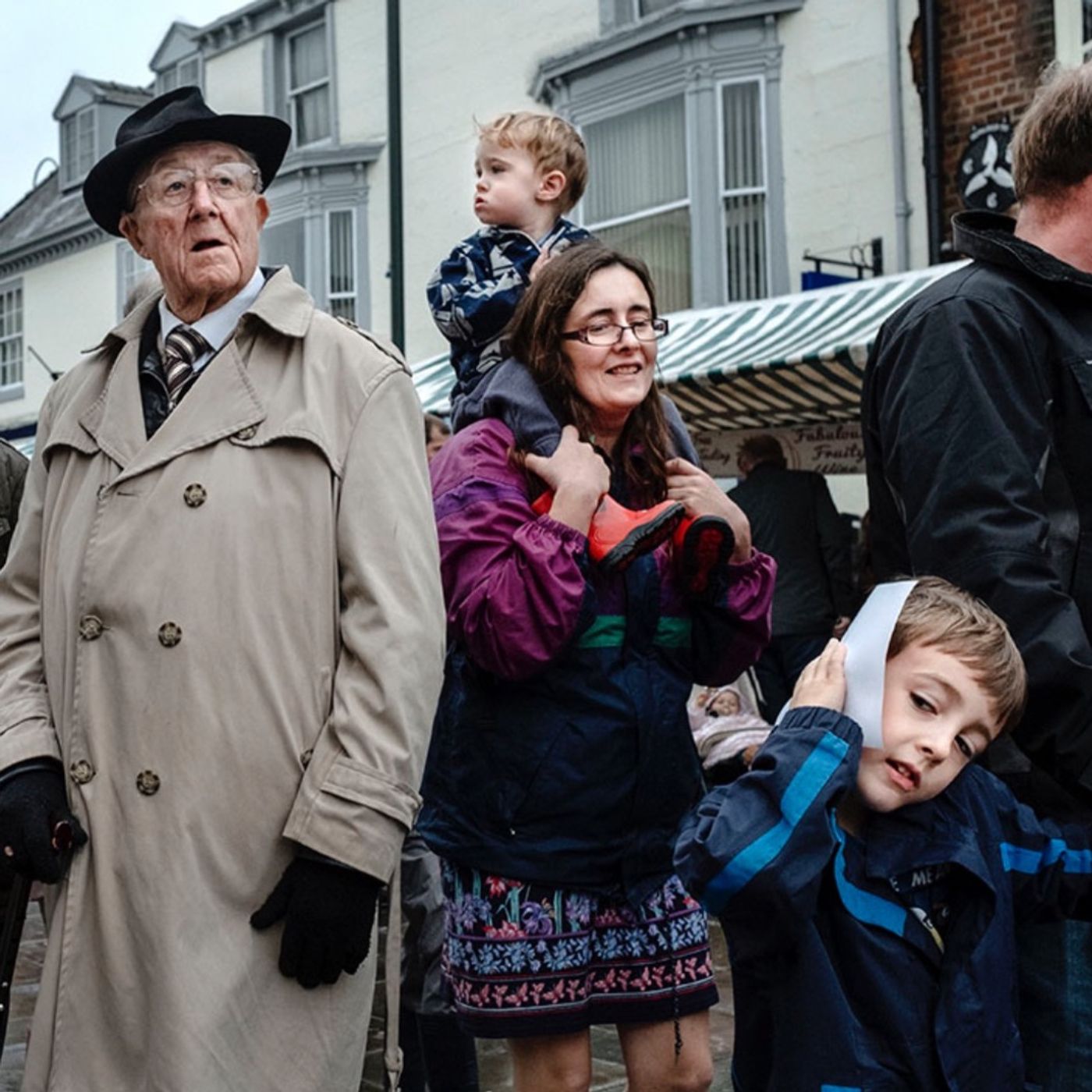
Merlin Daleman (b.1977) is a British photographer who has spent most of his adult life living in the Netherlands. He attended South Devon College, Torquay, the University of Central England (now Birmingham City University) in the UK, and graduated from The Royal College of Art in The Hague, the Netherlands. He works as a freelance documentary photographer for leading Dutch publications, including NRC Handelsblad, Dagblad Trouw, Financieel Dagblad, and De Groene Amsterdammer. He is the recipient of awards including the Silver Camera awards for Documentary Photography in the Netherlands in 2008 and 2010 and had received grants from the EU Journalism Foundation Grant and the Robert Bosch Foundation Fellowship. His debut photobook, Mutiny, published by GOST Books in August 2025, builds on his long-term projects, such as the new black lung epidemic in Kentucky, USA and exploring the lives of families separated by labour migration in Ukraine. In episode 265 Merlin discusses, among other things: How the Mutiny project came about How he funded it and set about shooting it Some of the stories behind images in the book Black lung story in Appalachia How a major motorycle accident helped his photography Website | Instagram Become a A Small Voice podcast member here to access exclusive additional subscriber-only content and the full archive of 200+ previous episodes for £5 per month. Subscribe to my weekly newsletter here for everything A Small Voice related and much more besides. Follow me on Instagram here . Build Yourself a Squarespace Website video course here .
Sep 10
264 - Eli Reed
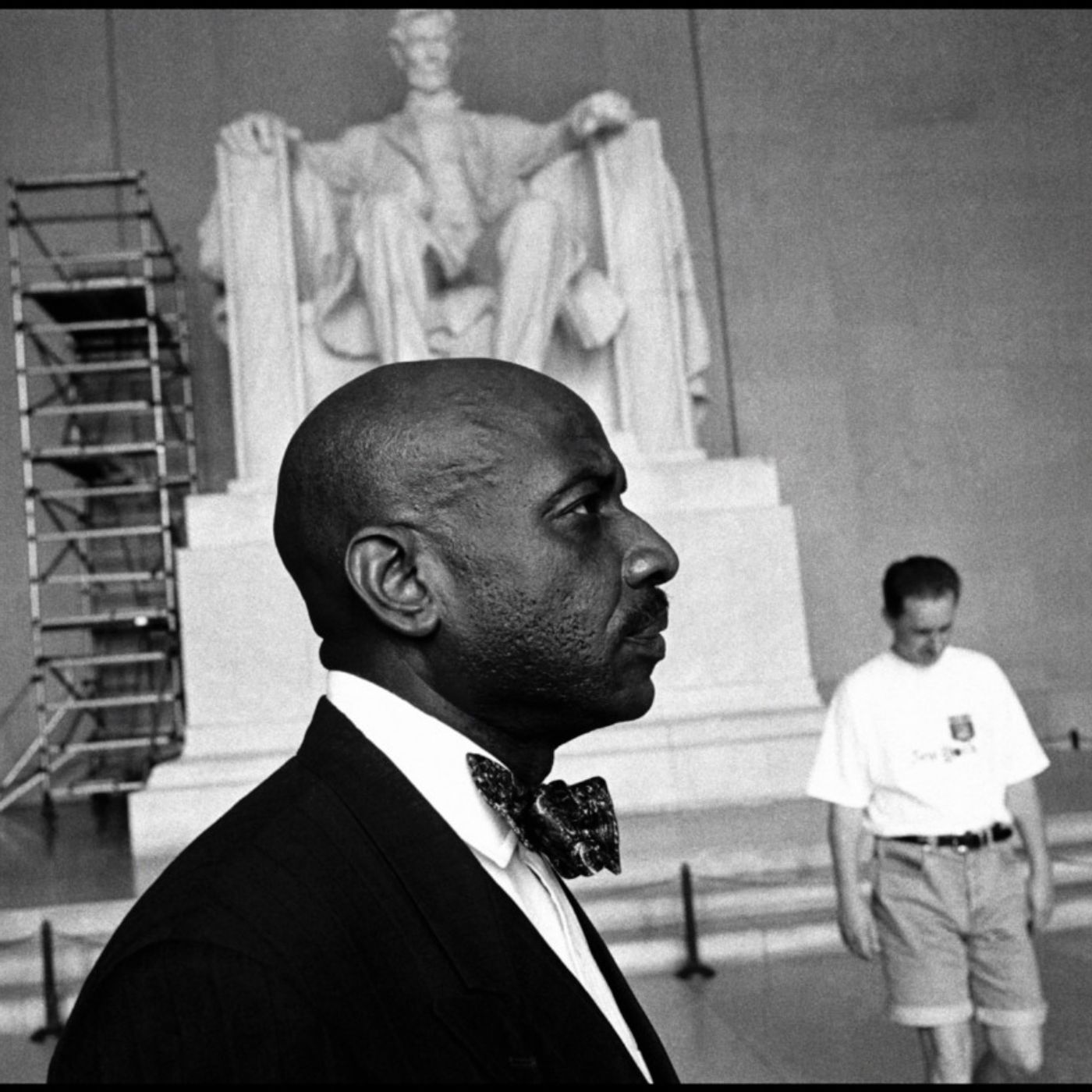
Eli Reed was born in the US in 1946 and studied pictorial illustration at the Newark School of Fine and Industrial Arts, graduating in 1969. In 1982, he was a Nieman Fellow at Harvard University. At Harvard’s Kennedy School of Government, he studied political science, urban affairs, and the prospects for peace in Central America. Eli began photographing as a freelancer in 1970. His work from El Salvador, Guatemala and other Central American countries attracted the attention of Magnum, he was the first African American photographer, and indeed the first person of colour, to join the agency, becoming a full member in 1988. In the same year, Eli photographed the effects of poverty on America’s children for a film documentary called Poorest in the Land of Plenty , narrated by Maya Angelou. He went on to work as a stills photographer for major motion pictures. His video documentary Getting Out was shown at the New York Film Festival in 1993 and honored by the 1996 Black Filmmakers Hall of Fame International Film and Video Competition in the documentary category. Eli’s special reports include a long-term study which became his first, highly acclaimed book, Beirut, City of Regrets ; the ousting of Baby Doc Duvalier in Haiti (1986); US military action in Panama (1989); the Walled City in Hong Kong; and, perhaps most notably, his documentation of African American experience over more than 20 years. Spanning the 1970s through the end of the 1990s, his book Black in America includes images from the Crown Heights riots and the Million Man March. In 2015, he published his first career retrospective, A Long Walk Home . Eli has lectured and taught at the International Center of Photography, Columbia University, New York University, University of Texas and Harvard University and is a member of Kamoinge , the collective of black photographers founded in 1963 and the longest continuously running non-profit group in the history of photography. On episode 264, Eli discusses, among other things: His ongoing mentoring of former students How working in a hospital was good prep for the kind of work he does Growing up in the Delaney Homes housing project in Perth Amboy, NJ How a visiting art critic gave him early encouragement at school Losing his mum at 12 years old The importance of certain teachers and mentors, especially Donal Greenhouse How his project Black In America came about Working for the San Francisco Examiner Joining Eugene Smith’s workshop after a long wait How Philip Jones Griffiths invited him to join Magnum Whether he is still an optimist? Photographing Trump Kamoinge A teaser about the book he is writing Being the first person of colour to join Magnum Photos Referenced: Jaqueline Kennedy Roy De Carava W Gene Smith Bruce Davidson Eugene Richards Susan Meiselas Son of Sam Gordon Parks Gilles Peress Become a A Small Voice podcast member here to access exclusive additional subscriber-only content and the full archive of 200+ previous episodes for £5 per month. Subscribe to my weekly newsletter here for everything A Small Voice related and much more besides. Follow me on Instagram here . Build Yourself a Squarespace Website video course here .
Aug 27
263 - Tony Dočekal
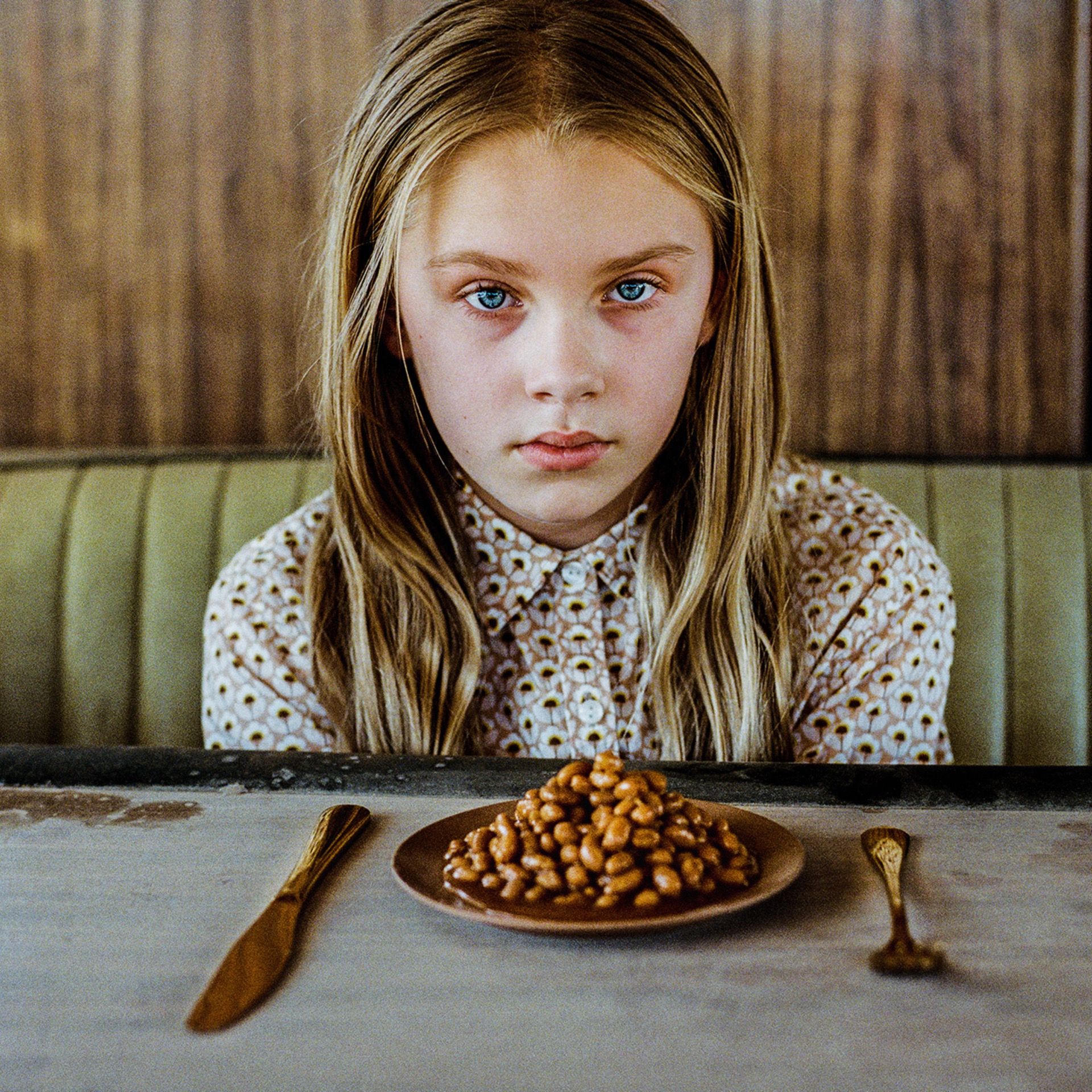
Tony Dočekal (Amsterdam, 1992) is a photographer and visual artist. Her work explores identity, belonging, and the friction between autonomy and societal expectations. Working intuitively, she combines personal encounters with quiet observations. Her images balance intimacy and distance, often showing how personal stories and landscapes reflect larger systems. Tony’s first book, The Color of Money and Trees , was published by VOID in 2024 and launched at Paris Photo. The work was also exhibited at Biennale Images Vevey alongside her debut short film, Pearls on Credit . She holds a BA in Fine Arts from ArtEZ University of the Arts. In episode 263 Tony discusses, among other things: Her Czech dad and Dutch mum’s history Dealing with the ‘weight’ of the photographic history of the American road trip genre The advantage of being an outsider Getting a dream gig early on - a photobook book about alternative schools Going to Lesbos to cover the refugee crisis Working with the unhoused for Dutch non-profit the Sheltersuit Foundation The story behind her picture of a man in a pink frilly dress… … And the one of 9-year-old Lyric in front of a plate of beans The short film she made The amazing 70’s-built house she has bought with her partner Referenced: Josef Koudelka Website | Instagram Become a A Small Voice podcast member here to access exclusive additional subscriber-only content and the full archive of 200+ previous episodes for £5 per month. Subscribe to my weekly newsletter here for everything A Small Voice related and much more besides. Follow me on Instagram here . Build Yourself a Squarespace Website video course here .
Aug 13
262 - Rankin
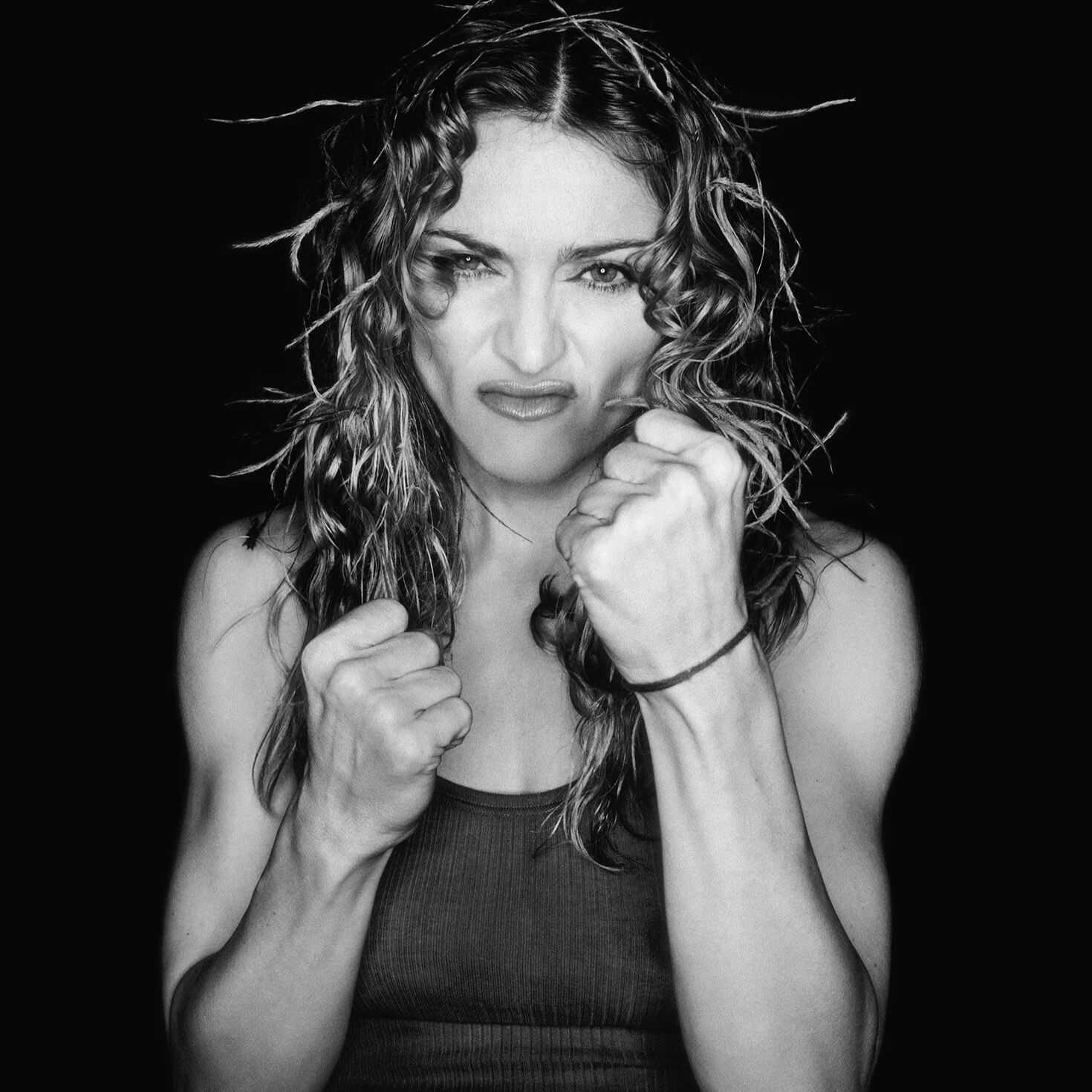
John Rankin Waddell, or just Rankin, as he is more commonly known, is a British photographer, publisher, and film director. Best known for work that is on the cultural cusp and leading future trends, he has produced rule-breaking campaigns for brands such as Rolls Royce, Unilever, L’Oréal, Lego, and Samsonite; created wide-reaching projects for charities including Women’s Aid and Macmillan; and shot music videos for the likes of Miley Cyrus, Rita Ora, and Kelis. As a photographer, Rankin’s portfolio ranges from portraiture to documentary. He has shot The Rolling Stones, David Bowie, Kate Moss, Kendall Jenner, Zendaya and Queen Elizabeth II, to name only a few. In 2023, Rankin photographed King Charles III to mark the monarch’s 75th birthday for The Big Issue magazine. As a publisher, Rankin co-founded the seminal magazine Dazed & Confused with Jefferson Hack in 1990, and has since published the likes of AnOther and AnOther Man, alongside over 40 books and the fashion and culture publication Hunger. His photography has been published everywhere from his own publications to Elle, Vogue, Esquire, GQ, Rolling Stone, and Wonderland, and exhibited in galleries globally, including MoMA, New York, and the Victoria & Albert Museum, London. Rankin lives in London with his wife Tuuli and their dogs. In episode 262 Rankin discusses, among other things: The magazine and show Faik , a first foray into AI His love/hate relationship with AI imagery and why he uses it anyway The way in which AI will also transform the music industry The importance of critical thinking The early days - starting Dazed & Confused Using the magazine as a ‘Trojan Horse’ Being confrontational Being a ‘dick’ and taking cocaine Being saved by photography and fatherhood Imposter syndrome and the benefit of losing it Making a conscious decision not to be an ‘artist’ Teaching himself photography Collaboration Rankin Live - photographing 'normal' people Being prolific Personal Projects Website | Instagram EPISODE SPONSORS: CHARCOAL WORKSHOPS . THE ‘SUMMER SERIES’ TAKING PLACE IN PORTLAND, MAINE, SEPTEMBER 15-19, 2025. FEATURING: ANTOINE D’AGATA, TODD HIDO AND CHRISTIAN PATERSON. SIGN UP AT THE LINK! Become a A Small Voice podcast member here to access exclusive additional subscriber-only content and the full archive of 200+ previous episodes for £5 per month. Subscribe to my weekly newsletter here for everything A Small Voice related and much more besides. Follow me on Instagram here . Build Yourself a Squarespace Website video course here .
Jul 30
261 - Marjolein Martinot
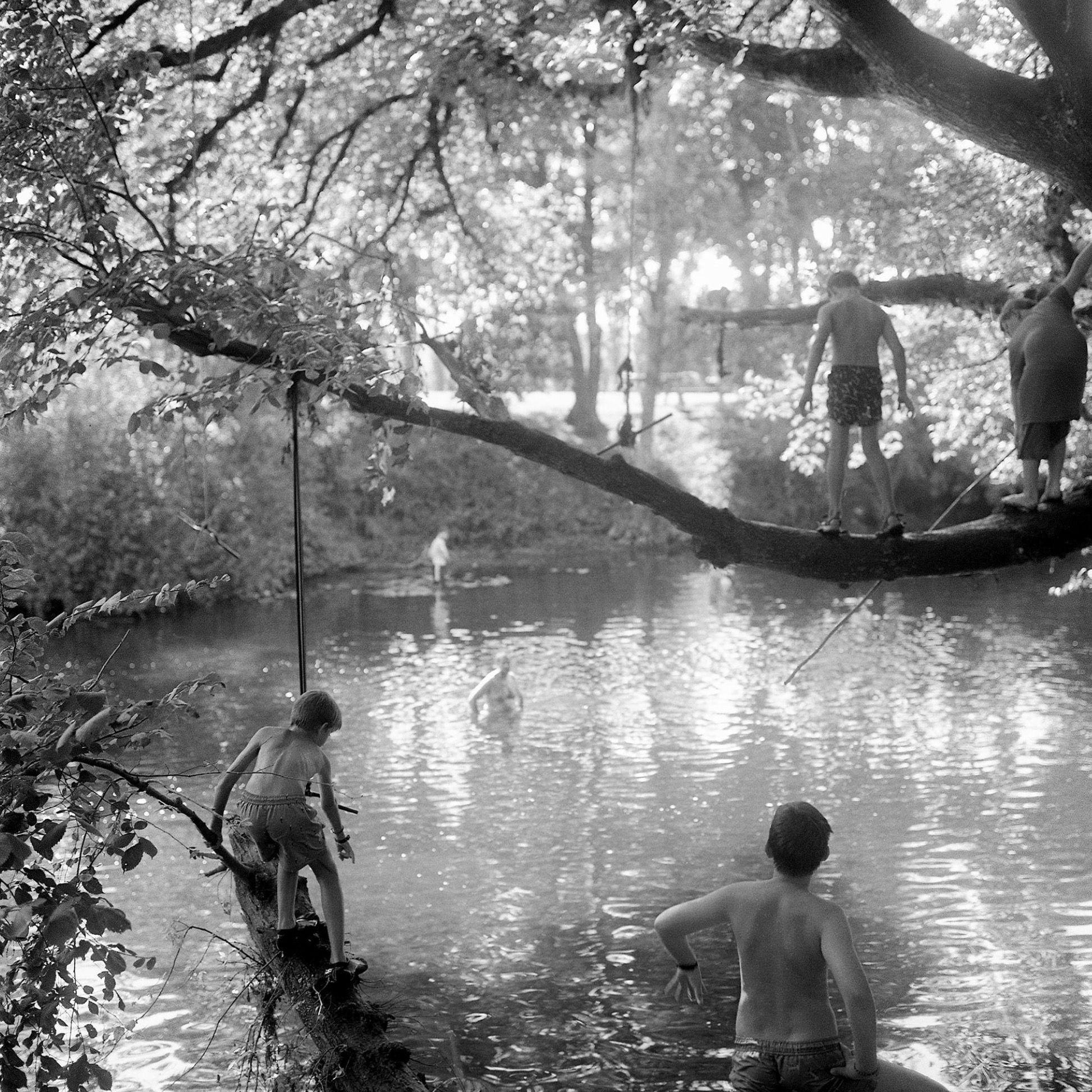
Marjolein Martinot is a Dutch photographer, based in France. She was always been drawn to photography from an early age, and has continued using and exploring the medium throughout her life, while raising a family of six children. Her photography touches on the poetic, while striving to remain authentic and true at the same time. She aims to evoke sentiments by using and mixing different photographic approaches and analogue cameras. The prime focus of Marjolein’s work is on everyday life: family, friends, and the places and things that touch her. She currently works on personal projects and commissions. Her debut photobook, Riverland , was very recently published by Stanley Barker. On whose website the blurb states: “During times of darkness and moments of deep turmoil in her personal life, Dutch photographer and mother of six, Marjolein Martinot, found herself lost, searching for a renewed sense of self. Each evening, she sought solace in nature, walking to a nearby river in the South of France with her camera in hand. There, she captured the quiet beauty of the natural world in the golden light of dusk, forming connections with the animals and families she encountered at the river’s edges—jumping, splashing, climbing, and swinging from the trees. What began as a ritual of aimless wandering and photographing soon became a form of visual journaling—a quiet meditation on healing and transformation. The water, ever-flowing and unpredictable, mirrored her own emotional state, while the families she met, however briefly, embodied the warmth and belonging she longed for. Through these intimate, unguarded moments—children mid-leap, ripples catching the last light of day, trees bending towards the water, and horses galloping in the fading glow—Martinot began to piece together a new sense of self. Her photographs, though deeply personal, transcend autobiography, offering a universal reflection on resilience, connection, and the subtle magical beauty of the everyday.” In episode 261, Marjolein discusses, among other things: The beginnings of her book project, Riverland . How her mum ran a circus when she was a kid What makes a good portrait Seeking comfort in nature during difficult times The project having a fairy tale element Photographing her six children The end of her relationship What she took away from the workshops she’s attended Feedback she’s received about the book Referenced: Vanessa Winship George Georgiou Israel Ariño JH Engstrom Sally Mann Emmet Gowan Website | Instagram EPISODE SPONSORS: CHARCOAL WORKSHOPS . THE ‘SUMMER SERIES’ TAKING PLACE IN PORTLAND, MAINE, SEPTEMBER 15-19, 2025. FEATURING: ANTOINE D’AGATA, TODD HIDO AND CHRISTIAN PATERSON. SIGN UP AT THE LINK! PICDROP THE EASIEST WAY TO SHARE PHOTO AND VIDEO SHOOTS. CREATE HIGHLY PROFESSIONAL PHOTO GALLERIES IN SECONDS AND LET YOUR CLIENTS DOWNLOAD, SELECT AND COMMENT ON THEIR FAVOURITE SHOTS. SIGN UP WITH THE CODE “ASMALLVOICE” FOR A TWO-MONTH FREE TRIAL! Become a A Small Voice podcast member here to access exclusive additional subscriber-only content and the full archive of 200+ previous episodes for £5 per month. Subscribe to my weekly newsletter here for everything A Small Voice related and much more besides. Follow me on Instagram here . Build Yourself a Squarespace Website video course here .
Jul 16
260 - Anna Arendt
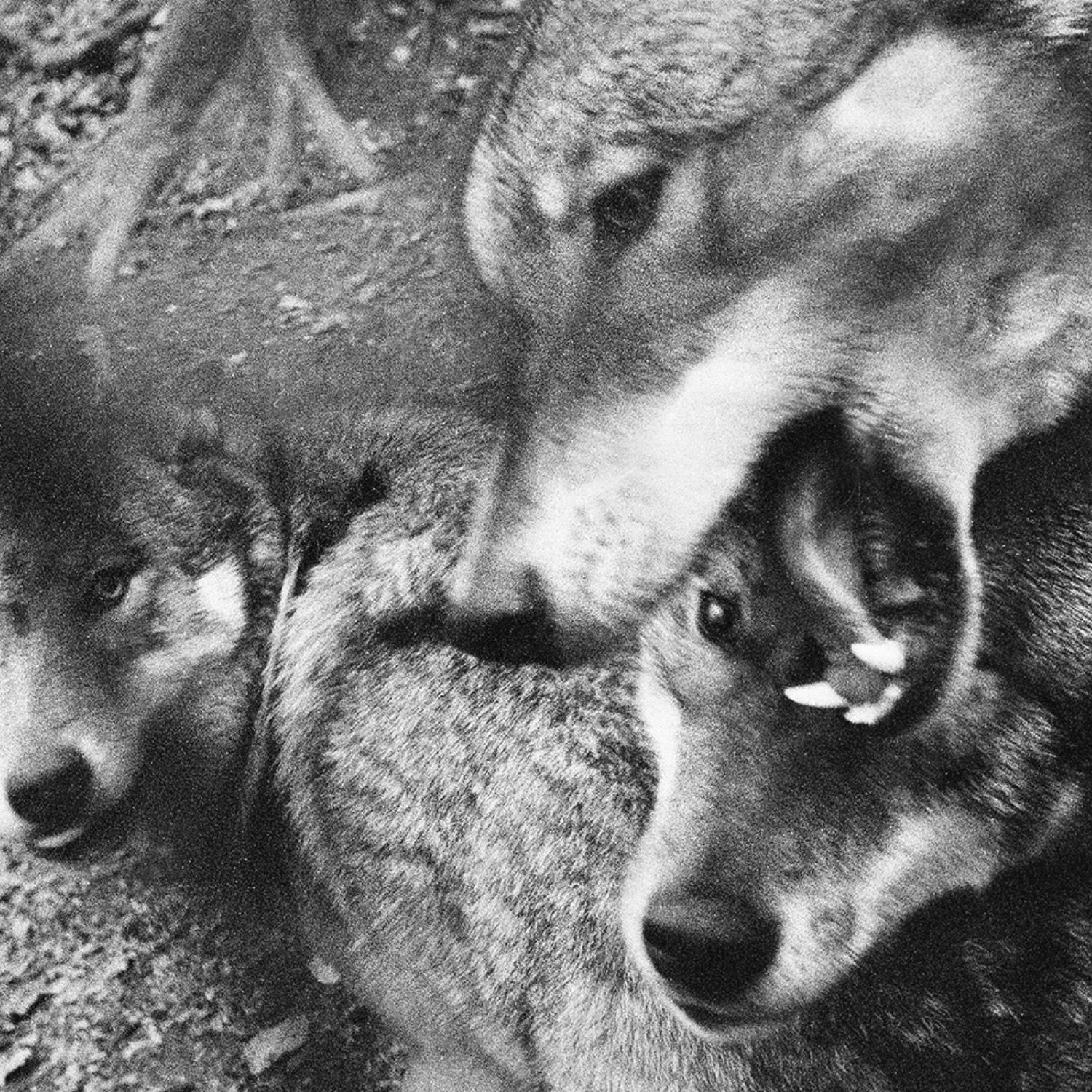
Anna Arendt is a photographer and visual artist living and working in Berlin whose images explore memory, silence, loss, and the invisible links between personal history and larger events. Her work often moves between personal, historical, and symbolic worlds, shot in black-and-white to capture places where the past and present meet. Anna was born in the German Democratic Republic and was 24 when The Wall fell, at which time her daughter was two. Her parents were born 1940 in Germany, children of war. Both of her grandfathers had been soldiers, who had been in Poland between 1940 and 1942. One came back 2 years after the war was over, the other one never returned. As a child Anna found a secret shelf that contained photo albums of her family. "It is where I discovered the power of a picture. A picture taken in summer 1940. A young family, my grandmother, her baby and my grandfather in a German uniform. A picture full of contradictions, carrying ambivalent feelings even today." Anna graduated with a degree in Fine Arts and Set Design and then received a one-year grant from the DAAD to study photography at the School of Visual Arts in New York. For 15 years, she worked as a set and costume designer for opera, drama, and puppet theater, collaborating with directors at theaters across Germany and Switzerland. Anna recently published her first book, Vanishing , with Charcoal Press. Photographed mostly between Germany and Poland over 15 years, the work slides back and forth through time like a blood memory. Walking naked through the dark forest, wolves circling, howling. A daughter becoming a mother becoming a grandmother becoming a child. Haunted villages, and souls in jeopardy. The harsh reality of the past merges seamlessly with moments of rapture that feel plucked from a Grimm fairy tale. Photography has now become the center of Anna’s creative life. She continues to develop long-term projects that reflect her search for meaning in places marked by beauty, pain, and the mysteries of time. Alongside her artistic work, she also works with disabled people in an art workshop, sharing the joy of creative expression. In episode 260, Anna discusses, among other things: The origins of her photography Growing up in East Germany Beginning to understand her family history The fall of the Berlin wall in 1989 Being ‘connected to pictures’ The importance of visiting Poland and its significance for her family The cast of characters in the book, including wolves… ….And her friend, who sadly died Allowing the photograph to tell her what it wants to be (and where) How Charcoal Press came to publish the book Her collaboration with publisher Jesse Lenz Having a day job and a change of identity What she’s currently up to in the darkroom EPISODE SPONSORS: CHARCOAL WORKSHOPS . THE ‘SUMMER SERIES’ TAKING PLACE IN PORTLAND, MAINE, SEPTEMBER 15-19, 2025. FEATURING: ANTOINE D’AGATA, TODD HIDO AND CHRISTIAN PATERSON. SIGN UP AT THE LINK! PICDROP THE EASIEST WAY TO SHARE PHOTO AND VIDEO SHOOTS. CREATE HIGHLY PROFESSIONAL PHOTO GALLERIES IN SECONDS AND LET YOUR CLIENTS DOWNLOAD, SELECT AND COMMENT ON THEIR FAVOURITE SHOTS. SIGN UP WITH THE CODE “ASMALLVOICE” FOR A TWO-MONTH FREE TRIAL! Become a A Small Voice podcast member here to access exclusive additional subscriber-only content and the full archive of 200+ previous episodes for £5 per month. Subscribe to my weekly newsletter here for everything A Small Voice related and much more besides. Follow me on Instagram here . Build Yourself a Squarespace Website video course here .
Jul 2
259 - Mohamed Bourouissa
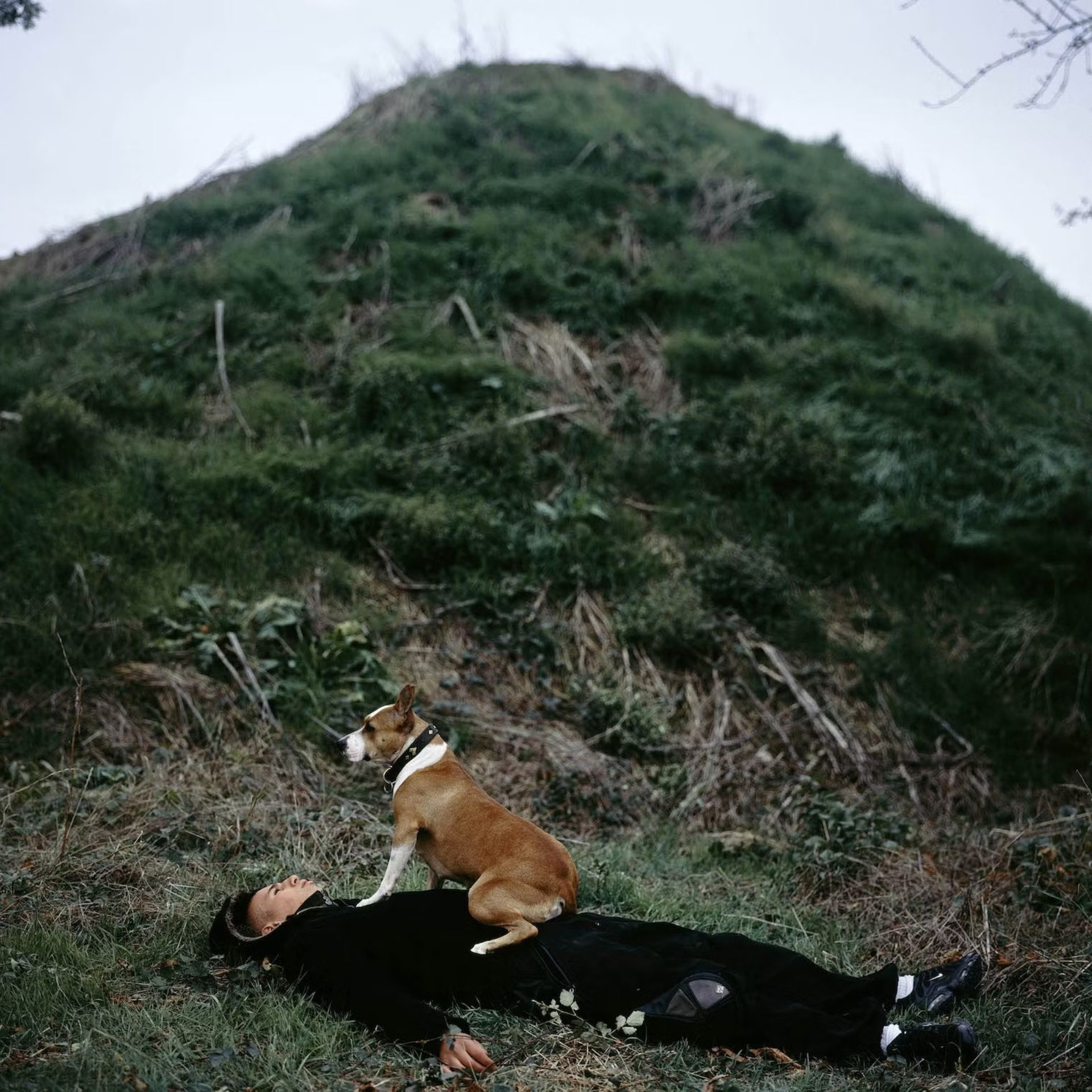
Mohamed Bourouissa is an Algerian-born French artist (b. 1978) who lives and works in Paris. Mohamed's practice moves between photography, video, sculpture, and installation, often blurring the lines between these mediums. His work explores social issues, power dynamics, and the representation of marginalized communities. He often engages with or embeds himself into specific communities for extended periods, spending significant time with individuals and groups to understand their experiences and perspectives before then creating collaborative works that challenge societal structures and explore the complexities of identity. Mohamed's work frequently addresses the tensions between different social contexts, particularly those related to race, class, and immigration, often questioning how different social groups are represented in media and art, challenging stereotypes and seeking to offer alternative narratives. His work has been exhibited in major museums and biennials worldwide, and in 2020 he received the Deutsche Börse Photography Foundation Prize for his retrospective exhibition featured in the Arles Festival the previous year. Mohamed currently has a major solo show at Fondazione MAST in Bologna Italy, curated by Francesco Zanot. The exhibition is entitled Communautés and features four notable works produced over a twenty year span between 2005 and this year - Péripherique , Horse Day , Shoplifters and Hands . In episode 259, Mohamed discusses, among other things: The sense of community growing up in the Parisian suburbs His early experiences as a graffiti artist His first project, Nous Somme Halles The 2005 riots that preceded Péripherique Why he decided to stage images… and why he sketches the images out first The theme of masculinity and his own experience of growing up without a father present The challenges of being a dad Knowing that he wanted to be an artist How artists must value their own work and learn to say no His project Horse Day and how it came about Art as a playground His new project, Hands How he arrives at the choice of medium and the factors that inflence that choice Why he is, in his own words, an ‘extremely bad photographer’ Referenced: Anoushkashoot Jamel Shabazz Emma-Charlotte Gobry Fletcher Street by Martha Camarillo Website | Instagram EPISODE SPONSORS: CHARCOAL WORKSHOPS . THE ‘SUMMER SERIES’ TAKING PLACE IN PORTLAND, MAINE, SEPTEMBER 15-19, 2025. FEATURING: ANTOINE D’AGATA, TODD HIDO AND CHRISTIAN PATERSON. SIGN UP AT THE LINK! PICDROP THE EASIEST WAY TO SHARE PHOTO AND VIDEO SHOOTS. CREATE HIGHLY PROFESSIONAL PHOTO GALLERIES IN SECONDS AND LET YOUR CLIENTS DOWNLOAD, SELECT AND COMMENT ON THEIR FAVOURITE SHOTS. SIGN UP WITH THE CODE “ASMALLVOICE” FOR A TWO-MONTH FREE TRIAL! Become a A Small Voice podcast member here to access exclusive additional subscriber-only content and the full archive of 200+ previous episodes for £5 per month. Subscribe to my weekly newsletter here for everything A Small Voice related and much more besides. Follow me on Instagram here . Build Yourself a Squarespace Website video course here .
Jun 18
258 - Paul Seawright
Paul Seawright is Professor of Photography and Deputy Vice Chancellor at Ulster University in Northern Ireland. His photographic work is held in many museum collections including The Irish Museum of Modern Art, Tate, San Francisco Museum of Modern Art, International Centre of Photography New York, Arts Councils of Ireland, England and N.Ireland, UK Government Collection and the Museum of Contemporary Art Rome. In 2002 he was commissioned by the Imperial War Museum London to undertake a war art commission in Afghanistan and his photographs of battle-sites and minefields have subsequently been exhibited in North America, Canada, Ireland, Spain, France, Germany, Korea, Japan and China. In 2003 he represented Wales at the Venice Biennale of Art and in 1997 won the Irish Museum of Modern Art/Glen Dimplex Prize. He is represented by the Kerlin Gallery Dublin. Paul was appointed Officer of the Order of the British Empire (OBE) in the 2020 Birthday Honours for services to higher education and the arts. In episode 258, Paul discusses, among other things: The influence of studying at Farnham.. and Martin Parr… …And being at Newport Not taking a position ‘Allusive documentary’ The danger of losing the meaning The ethical considerations of working on foreign soil The essential business of research How do you find your next project? His USA projects Volunteer and Things Left Unsaid The importance of titles His work from Rwanda, Beasts of Burden Referenced: Thomas Joshua Cooper Anna Fox (Ep. 166) Ken Grant (Ep. 128) Chris Shaw Martin Parr (Eps. 91 & 197) Peter Fraser (Ep. 172) Paul Graham (Ep. 149) Jem Southam (Ep. 174) Chris Killip (Ep. 94) Victor Burgin Anne Williams Newport Daniel Meadows (Ep. 116) Clive Landen Ivor Prickett (Ep.204) Anastasia Taylor Lind (Ep.68) Rich Gilligan James Mollison Paul Virillo Parr and Badger Robert Adams, The New West Ian Walker, Desert Stories, or Faith In Facts Baudrillard Calvino, Invisible Cities Gilles Peress The Silence Alfredo Jaar Fergal Keane Brian Keenan Website | Instagram EPISODE SPONSOR: CHARCOAL WORKSHOPS . THE ‘SUMMER SERIES’ TAKING PLACE IN PORTLAND, MAINE, SEPTEMBER 15-19, 2025. FEATURING: ANTOINE D’AGATA, TODD HIDO AND CHRISTIAN PATERSON. SIGN UP AT THE LINK! “‘Allusive documentary’ is probably a good way to think about it. For me, it’s really about - and this is the bit that goes back to my experience of photography in Northern Ireland, which was all about dramacentric imagery - how you can make photographs that have a documentary subject (that might be the closest I come to being a documentarian, that I work with the subject of documentary photography) but with the methodology of an artist. That’s kind of the way I like to frame it, and I think that follows through to the work which is nearly always conceived for the gallery wall.” Become a A Small Voice podcast member here to access exclusive additional subscriber-only content and the full archive of 200+ previous episodes for £5 per month. Subscribe to my weekly newsletter here for everything A Small Voice related and much more besides. Follow me on Instagram here . Build Yourself a Squarespace Website video course here .

Jun 4
257 - Photo London 2025 Special
Featuring: Francis Hodgeson Maria Sukkar Sophie Parker Ami Bouhassane Tom Hunter Silvana Trevale (but not Gabriel Pinto ). Zed Nelson Featured in the Positions exhibition: Adam Rouhana ( @adam.rouhana ), Aikaterini Gegisian ( @aikaterini_gegisian ), Babak Kazemi ( @babakkazemi1 ), Bibi Manavi ( @bibimanavi ), Ippolita Paolucci ( @ippolitapaolucci ), Kalpesh Lathigra ( @kalpeshlathigra ), Karim El Hayawan ( @karimelhayawan ), Mieke Douglas ( @miekedouglas ) and Roberto Conde ( @robconde33 ) Photo London Website | Instagram Peckham24/A Bigger Book Fair Website | Instagram Become a A Small Voice podcast member here to access exclusive additional subscriber-only content and the full archive of 200+ previous episodes for £5 per month. Subscribe to my weekly newsletter here for everything A Small Voice related and much more besides. Follow me on Instagram here . Build Yourself a Squarespace Website video course here .

May 21
256 - Marc Wilson
London-born British photographer Marc Wilson ’s images document the memories, histories and stories that are set in the landscapes that surround us. His long term documentary projects include The Last Stand (2010-2014), A Wounded Landscape - bearing witness to the Holocaust (2015-2021) and The Land is Yellow, the Sky is Blue (2021-2023). Marc’s aim is to tell stories through his photography, focusing at times on the landscape itself, and the objects found on and within it, and sometimes combining landscape, documentary, portrait and still life, along with audio recordings of interviews and sounds, to portray the mass sprawling web of the histories and stories he is hoping to tell. Marc has published 6 photo books - Travelogue 2 (2024), The Land is Yellow, the Sky is Blue (2023), Remnants (2022), A Wounded Landscape - bearing witness to the Holocaust (2021), Travelogue 1 (2018), and The Last Stand (2014). Solo exhibitions include those at Impressions Gallery, Bradford, Side Gallery, Newcastle, The Royal Armouries Museum and Focal point Gallery in the UK and Spazio Klien in Italy. Marc’s work has been published in journals and magazines ranging from National Geographic, FT Weekend, Leica LFI, Source, Raw Magazine, Wired, Dezeen and others, he also works as a visiting lecturer at various universities in the UK and has given talks about his work both in the UK and abroad. In episode 256, Marc discusses, among other things: What he’s working on Getting arrested in Moldova His work in Ukraine New book Travelogue 2 - A Thousand Days of Longing Travelling 25,000 miles for his project The Last Stand His initial failed attempt at shooting his holocaust project A Wounded Landscape His adventures in self-publishing and tips for those considering it His route into photography Loneliness and ‘wandering lost’ His project Remnants Website | Instagram Become a A Small Voice podcast member here to access exclusive additional subscriber-only content and the full archive of 200+ previous episodes for £5 per month. Subscribe to my weekly newsletter here for everything A Small Voice related and much more besides. Follow me on Instagram here . Build Yourself a Squarespace Website video course here .

Apr 23
255 - Mackenzie Calle
Mackenzie Calle is a freelance documentary photographer and National Geographic Explorer based in Brooklyn. In 2024, she was awarded first prize in the World Press Photo Open Format category award (North & Central America) for her project the Gay Space Agency , and was a finalist for the Sony World Photography Awards. She was selected as a Magnum Foundation Counter Histories Fellow in 2022. That same year, she was named one of the Lenscratch 25 to Watch and was shortlisted for the PhMuseum Women Photographers Grant. In 2023, she was named as a Lens Culture Emerging Talent Award winner and received the Dear Dave Fellowship. Mackenzie is a graduate of NYU’s Tisch School of the Arts with a degree in Cinema Studies and was awarded the Director’s Fellowship to attend ICP’s Documentary Practice and Visual Journalism Program. She was selected to Eddie Adams Workshop class XXXV. She is an Adjunct Lecturer at CUNY’s College of Staten Island. Prior to her freelance career, she was a photo producer at NBC Universal. Her work has been exhibited at Fotografiska Stockholm, Photoville, Pride Photo Festival, and Noorderlicht International Photo Festival. Clients include National Geographic, The Washington Post, GAYLETTER, Discovery, MSNBC, and The Wall Street Journal. In episode 255, Mackenzie discusses, among other things: Winning the WPP open category Tangible and intagible benefits of winning Her journey to photography How the idea for the Gay Space Agency came about How she set about making images to tell the story The goal to disseminate the story as widely as possible Her experience of doing the Eddie Adams Workshop Letting the story tell her what it wants Experimentation being the fun part Her love of sport... ...and TV Referenced: Sally Ride Francis French Billie Jean King Christina De Middel Erika Larson Website | Instagram “For me, it’s letting the story tell me what it needs. So it’s not so much going in with a preconceived notion. You obviously go into most stories with some idea of what you’re going to do, but every idea I have, that work in itself almost reveals or tells me kind of what it should be. So sometimes that means fiction, sometimes that does mean straight photojournalism, sometimes that means entirely imagined and staged projects…” Become a A Small Voice podcast member here to access exclusive additional subscriber-only content and the full archive of 200+ previous episodes for £5 per month. Subscribe to my weekly newsletter here for everything A Small Voice related and much more besides. Follow me on Instagram here . Build Yourself a Squarespace Website video course here .

Apr 9
254 - Tomasz Tomaszewski
Tomasz Tomaszewsk i has a Ph.D from the Academy of Fine Arts in Warsaw, and is a member of the Union of Polish Art Photographers , the Visum Archiv Agency of Hamburg, Germany, the National Geographic Creative Agency of Washington D.C., and the American Society of Media Photographers . He specializes in journalistic photography and has had his photos published in major newspapers and magazines worldwide including National Geographic Magazine , Stern , Paris Match , GEO , New York Times , Time , Fortune , Elle , Vogue . He has also authored a number of books, including Remnants: The Last Jews of Poland , Gypsies: The Last Ones; In Search of America , In the Centre , Astonishing Spain, A Stone’s Throw , Overwhelmed by the Atmosphere of Kindness, Things that last, and has co-illustrated over a dozen collective works. He has held numerous individual exhibitions in the USA, Canada, Israel, Japan, Brazil, Madagascar, the Netherlands, Germany, France, Italy, Indonesia and Poland. Tomasz is the recipient of many Polish and international awards for photography. For over thirty years he has been a regular contributor to National Geographic Magazine USA in which eighteen of his photo essays have been published. Tomasz has taught photography in Poland, the USA, Germany and Italy. Tomasz’s most recent book, The World Is Where You Stop was published in 2023 by Blow Up Press . In episode 254, Tomasz discusses, among other things: His insecurity about his English Truth The wisdom of age His father’s advice ‘don’t forget about art’ Progress His discovery of photography Spending five years working on his first book, smuggled to the states and published in NY. Spending time in the USA His new book The World Is Where You Stop Metaphor Photography not being dialectical The appeal of a good single malt His teaching academy Bravery as the mother of all qualities His dream to play the piano and how music is pure mathematics Referenced: Raymond Chandler Aristotle Uffizi Museum Susan Sontag Nasim Taleb James Nachtwey Garry Winnogrand Cartier Bresson Keith Jarrett Website | Instagram | Interview in ‘Hot Mirror’ “Most of the time when I was working for Geographic, I wanted my photographs to serve a purpose, to tell a story, or explain a person to another human being. But this time I only wanted to capture surprise, maybe, wonder, occassionally joy, amusement, but also discomfort. In short, anything but a desire to tell a story.” Become a A Small Voice podcast member here to access exclusive additional subscriber-only content and the full archive of 200+ previous episodes for £5 per month. Subscribe to my weekly newsletter here for everything A Small Voice related and much more besides. Follow me on Instagram here . Build Yourself a Squarespace Website video course here .

Mar 26
253 - Katrin Koenning
Katrin Koenning is a visual artist from Germany whose work travels across still and moving images and text, at times including found materials, painting and collage. Pursuing intimacy and interconnection her work centres around practice as relational encounter. Most stories evolve through years and use returning as a way of drawing closer. Different series often intersect, merging in and out of each other. In her extended image-dialogues, Katrin uses fragments and slippages to suggest narrative spaces, communities and lived experiences that are allied, fluid and multiplicit. Many of her series render non-human human entanglement and intimate kin, positing imaginaries with a greater-than-human world. Katrin has been the recipient of multiple awards, such as the Bowness Photography Prize. Her work is regularly exhibited in Australian and international solo and group exhibitions including presentations at Ishara Art Foundation Dubai, Chobi Mela, Paris Photo, Hamburg Triennial of Photography, Museum of Australian Photography, Centre for Contemporary Photography, Australian Centre for Photography and the National Gallery of Victoria (2023). Koenning’s images have been published in The New Yorker, Vogue.com, Zeit Magazine, The Guardian, New York Times, Esquire Italy, Der Spiegel, Yucca Magazine, California Sunday and many other places. Her work is held in numerous institutional and private collections both in Australia and abroad; most recently her large-scale installation While the Mountains had Feet [2020 — 2022] was acquired in whole by the National Gallery of Victoria. Katrin regularly teaches workshops in photographic practice and thinking, working closely with many institutions and festivals locally and across the Asia-Pacific region such as Angkor Photo Festival (Siem Reap Cambodia), Photo Kathmandu (Kathmandu, Nepal), The Lighthouse (Calcutta, West Bengal), Myanmar Deitta (Yangon, Myanmar), Australian Centre for Photography, Perth Centre for Photography, Centre for Contemporary Photography, Museum of Australian Photography, Palmtree Workshops (Santorini Greece, forthcoming), and others. Katrin lives and works in Naarm (Melbourne) on unceded Boon Wurrung Woi Wurrung Country. In episode 253, Katrin discusses, among other things: Ankor Photo Festival in Cambodia Working on her practice daily Coming out of “the most difficult year of her life” Why she chose to shoot Polaroids during that time Responding to the suicide of her cousin’s husband How the sudden death of her best friend put her on the path of photography How she took pictures with the camera she inherited from him which were all blank Having a ‘web’ of ‘projects’ Her practice as a relational encounter Her new book Between The Skin and Sea Her engagement with environmental issues Younger photographers being more inward looking Her current engagement with the indigenous community of Riverdale Referenced: Photo Katmandu Chobi Mela RMIT National Gallery of Victoria Website | Instagram “This is always the way that I work, I look at what the thing is that is at stake, and what am I trying to talk about? And actually also very much like I’m listening to the thing that I’m trying to talk to. So what does it want from me? You know, what does the story want from me and what does the situation around it ask of me? And therefore how do I need to approach it?” Become a A Small Voice podcast member here to access exclusive additional subscriber-only content and the full archive of 200+ previous episodes for £5 per month. Subscribe to my weekly newsletter here for everything A Small Voice related and much more besides. Follow me on Instagram here . Build Yourself a Squarespace Website video course here .

Mar 12
252 - Ian Macdonald
Ian Macdonald (b. 1946) is an internationally acclaimed photographer born and raised in Middlesbrough, Yorkshire, UK. He studied Graphic Design and Printmaking at Teesside College of Art in 1968 and went on to study Painting and Photography at Sheffield School of Art, Photography and Graphic Design at Birmingham Polytechnic and Education at Lancaster University. He pursued photography alongside drawing – his first love - painting and printmaking. Since 1968, Ian has consistently photographed the people and places of Teesside, one of Europe’s most heavily industrialised areas in the north east of England. His love of the region, the beauty of the landscape – great expanses of wildness nestling among industrial settings - and his solid admiration for the people working and living amongst this environment has resulted in a completely honest and passionate depiction of a place and its community. “The most successful of my photographs seem to be a product of an exploration into my environment and the people I live and work amongst and an excitement generated in me by what I confront. Sometimes by-product would seem a more appropriate term, because only rarely do images really come near to saying anything about the strength, humour, vitality, atmosphere, pathos and despair which seems to make up what goes on around us all. Always, I am spurred on by a tingling sensation at the possibility, this time, perhaps, the image may really say something” . Ian’s work has been included in various publications, such as England Gone , Smith’s Dock Shipbuilders , Images of the Tees , Eton and The Blast Furnace . His work has been exhibited internationally and is included in many private and public photography collections around the world. In 2024 Ian had a major retrospective entitled Fixing Time , covering the first twenty years of his work, displayed across two venues in the north east of England - Sunderland Museum & Winter Gardens and Northern Gallery for Contemporary Art. Ian is currently working on a series of forthcoming books with GOST Books. In episode 252, Ian discusses, among other things: His recent dual exhibitions, Fixing Time , in the North East of England How his fascination for drawing took him to art college His discomfort with his work being put in the documentary pigeonhole Finding it hard to approach your subjects A brief description of the area he grew up and photographed in His transition from drawing to photography Greatham Creek and the portrait (above) that made him excited His early memories of his grandfather and father and wanting to celebrate and document their history His year spent as artist in residence at Eton College His reasons for choosing to teach in a school and not at art college Referenced: Len Tabner Cesare Pavese Bruce Davidson Bill Brandt Vic Allen, Dean Clough Gallery Graham Smith Martin Parr Chris Killip Tom Wood Max Beckman Goya Titian Delacroix Website | Short film about Ian by Jamie Macdonald “When I first went to Greatham Creek, there was no history anywhere about it. I couldn’t find anything written down. So I wrote a lot down. I talked to people. I went into pretty deep research into archives in the local library and stuff like that. And I guess this was part of the drive for [photographing] both the shipyard and the furnace. Because maybe I did have an inkling, because there was nothing about the creek - where’s the stuff about the furnace?… about the men who worked there, like my dad and granddad? Where is their history? And I wanted to celebrate their history. I wanted to celebrate what they were. I wanted a record, a document, a memory of them. And that’s what drove me to do it.” Become a A Small Voice podcast member here to access exclusive additional subscriber-only content and the full archive of 200+ previous episodes for £5 per month. Subscribe to my weekly newsletter here for everything A Small Voice related and much more besides. Follow me on Instagram here . Build Yourself a Squarespace Website video course here .

Feb 26
251 - Mike Abrahams
British photographer Mike Abrahams has worked as a freelance photographer for over 40 years having become renowned for his sensitive eye in documenting the lives of ordinary people often in extraordinary situations. In 1981 he was a cofounder of Network Photographers the Internationally renowned picture agency and his work has taken him around the world. His photographs have been published in all the major international news media. In 2024, Mike’s much anticipated book This Was Then , was published by Bluecoat Press and has been described as a lyrical portrait of humanity in adverse circumstances. It features photographs taken from 1973 to 2001 in cities from Liverpool to Glasgow. Blackburn to Bradford, Northern Ireland to the coalfields of Kent and London. Mike’s work on Faith - A Journey with Those Who Believe , published in 2000, was the culmination of five years work, documenting the extremes and passion of Christian devotion throughout fourteen countries. Awards for this work included the World Press Photo Award in 2000, and the book Faith designed by Browns, was a finalist in the Design Week - Editorial Design: Books. It has been widely exhibited throughout the UK and Europe. Colin Jacobson, picture editor of The Independent Magazine, described Mike’s body of work from the conflict in Northern Ireland and published in the book Still War , in 1989 as "Documentary photography at its best - imaginative, comprehensive, confident and concerned". His coverage of the troubles in Northern Ireland was the subjects of a Television documentary Moving Stills . Other important assignments have included coverage of the division of Cyprus, Migrant labour in Southern Africa, the Intifada in the Occupied Territories, the Berlin Wall, the collapse of Communism in Eastern Europe, the rise in the influence of the religious in Israeli politics, the Cult of Assad in Syria, Northern Ireland and documenting Another Britain. In episode 251, Mike discusses, among other things: Discovering the darkroom at 12 Growing up in post-war Liverpool The infamous Toxteth Riots of the early 80s Network Photographers agency The story of the IRA bombing His interest in religious ceremony Going back to his archive of British work for the new book, This Was Then The impetus behind it The sustainability of of a long-term career Personal work that he is still doing Referenced: Eugene Smith David Douglas Duncan Larry Burrows Tim Page Network Photographers John Sturrock Mike Goldwater Judah Passow Chris Davies Laurie Sparham Steve Benbow Martin Slavin Barry Lewis Red Saunders Sid Shelton Roger Hutchins Chris Killip Daniel Meadows Peter Marlow Peter Van Agtmael Website | Instagram “You can go here, there and everywhere, and I have travelled a lot and it’s been interesting and fascinating, but you’re always the outsider coming in. You don’t really know the story. It’s glamorous, it’s exotic, it’s fascinating, but I think it’s much harder to photograph your home turf. You come to it with quite an honest perspective. It’s the land you’re living in, you’re conscious of the differences in the country between the north, south, east and west, the regions… it’s kind of embedded in you, the differences.” Become a A Small Voice podcast member here to access exclusive additional subscriber-only content and the full archive of 200+ previous episodes for £5 per month. Subscribe to my weekly newsletter here for everything A Small Voice related and much more besides. Follow me on Instagram here . Build Yourself a Squarespace Website video course here .

Feb 12
250 - Joseph Michael Lopez
Joseph Michael Lopez - JML, (b. 1973) is an independent photographer born in New York City to a Puerto Rican father and a mother who escaped the Cuban Revolution in 1967. He earned his MFA in 2011 at Columbia University. Lopez began his career as an analog cinematographer on the critically acclaimed Bruce Weber film, Chop Suey (2001). Currently, Joseph divides his time between long-form projects, teaching, and commercial work. His photographs have appeared on the covers of M , The Magazine for Leica M Photography, Leica Fotografie International , The Sunday Review of The New York Times , New York magazine and The New Yorker , among others. Joseph’s photographs were on exhibit in “Cuban Photography after 1980: Selections from the Museum’s Collection”, at The Museum of Fine Arts in Houston. In 2016, a commissioned series of his photographs of New York neighborhoods, “New York at Its Core: Future City Lab”, was installed at The Museum of the City of New York. Photographs from JML NYC, the series from which this commission originated, have also been published in the book Bystander: A History of Street Photography , by Colin Westerbeck and Joel Meyerowitz. JML’s first book JML NYC 02-23 was published by GOST in the fall of 2024. In episode 250, Joseph discusses, among other things: Relocating to Rome from NYC His intro to NYC via assisting Bruce Weber His early career as a professional assistant Shooting with his Leica as a ‘coping mechanism’ The challenge of creating a cohesive narrative from 20 years of single images His Dear New Yorker project Why B&W is where his heart is at How what we see is who we are His approach towards light and sun Using digital vs. film Assisting Mitch Epstein How his opinion on grad school has changed Controversy surrounding Columbia University prof. Thomas Roma His plans for working in Rome and going forward Referenced: Bruce Weber Danny Lyon, Knave of Hearts Tod Papageorge Chuck Kelton’s darkroom Mitch Epstein Thomas Roma Mohammad Rasoulof Website | Instagram “Essentially, it’s about saying something and having a voice and having a perception of the world that is, like singing a loud song you know, your pictures have to say something. And how do you separate yourself from all the noise that’s out there already? You have to have an obsessive, emphatic way to perceive things. I think to a certain extent what we see is who we are in a way.” Become a A Small Voice podcast member here to access exclusive additional subscriber-only content and the full archive of 200+ previous episodes for £5 per month. Subscribe to my weekly newsletter here for everything A Small Voice related and much more besides. Follow me on Instagram here . Build Yourself a Squarespace Website video course here .

Jan 29
249 - Dina Litovsky
Dina Litovsky is a Ukrainian-born photographer living in New York City since 1991. Dina's imagery can be described as visual sociology. Her work explores the idea of leisure, often focusing on subcultures and social gatherings. Dina is a regular contributor to National Geographic, The New York Times Magazine, TIME, New Yorker, GQ and New York Magazine. In 2020 Dina won the Nannen Prize, Germany's foremost award for documentary photography. Other awards include the PDN 30, New and Emerging Photographers to Watch; POYi; NPPA Best of Photojournalism, International Photography Awards and American Photography. Selected exhibitions include group and solo shows at the Museum of the City of New York; Noordelicht Festival, Netherlands; Annenberg Space for Photography, LA and the Anastasia Photo Gallery, NYC. In 2022 she started writing the Substack newsletter In The Flash , an ongoing dialogue about the art and craft of creating and thinking about images. In her weekly posts, she discuses the creative process, focusing on the WHY of photography — intent, meaning, and inspiration. She shares her insights into the world of a professional photographer as well as all the things that make her tick and inspire her to create, from photography to art to music. Dina holds a bachelor in psychology from NYU and an MFA in photography from the School of Visual Arts, NY. In episode 248, Dina discusses, among other things: Moving to the U.S. from Ukraine at 12 years old The immigrant dream of her parents for her to study medicine The formative experience of earning her first $40 for shooting a portrait Why she couldn’t hold down a job in her early life Coming out of wedding photography retirement to write a piece about it How working on personal work was the key to getting good editorial clients Untag This Photo and Bacherolette being the projects that got her attention How her background in psychology plays into the way she approaches shooting her projects Her experience of being questioned in a classroom setting - why she does the newsletter Her post about why photographers should stop calling themselves artists Her approach to Instagram and how she set out to build a huge audience How her Substack newsletter began with an invitation from Meta Her strategy around building community rather than earning income Why working for exposure is photography’s bigges Ponzi scheme The importance of pursuing personal work Her projects Fashion Week and Meatpacking Website | Instagram “I’m an introvert with a social phobia. So I would never draw attention to myself. But with a camera I could actually go where I wanted to go and photograph and confront people, with a shield. And so I think I was using it more as my own self therapy, like I wanted to be in the middle of the party, and I wanted to be on this dancefloor with the young women, but I couldn’t. And so with a camera I was there just photographing it.” Become a A Small Voice podcast member here to access exclusive additional subscriber-only content and the full archive of 200+ previous episodes for £5 per month. Subscribe to my weekly newsletter here for everything A Small Voice related and much more besides. Follow me on Instagram here . Build Yourself a Squarespace Website video course here .

Jan 15
248 - Ian Howorth
Ian Howorth is a documentary photographer based in Brighton, UK. His work deals with themes of identity and culture. Through Setanta Books, Ian sold out his first book, Arcadia , in 2019 and published his second, A Country Kind of Silence , in 2023. Ian’s work has been featured in publications including The Guardian , The New York Times , It’s Nice That and Huck . In episode 248, Ian discusses, among other things: Striving to spend as much time as possible not compromising The benefits of having a full-time job His Instagram strategy His previous life as a videographer An early fascination for film stock Influence of cinema The contrast between his trips to Peru and Cuba His first book Arcadia His origin story in which he lived in 9 homes across 3 countries His adventurous dad’s influence on him (and his brothers) Having to adapt to a move from Peru to Miami at 12 His relationship with England and the things he is drawn to photograph there Combining documentary with fiction and not wanting to feel constricted His second book A A Country Kind of Silence Referenced: Zed Nelson Phil Toledano Robbie Lawrence Max Miechoswski Stephen Shore William Eggleston John Divola Gregory Crewdson Sean Tucker Willam Verbeeck National Film & Television School Paris Texas Tania Franco Klein Bill Callaghan Website | Instagram “Wim Wenders and Robby Müller [In Paris Texas] happened to hit on something that made sense artistically but also looks beautiful aesthetically, and that for me is the perfect marriage. Not everyone can achieve it, but that to me became very important. I wasn’t doing that. I wasn’t smart enough to do that. But at the same time I knew the power of colour - I knew what it did, I understood my emotional response to it. And that was enough for me to pursue it at the time, and I would figure it out later.” Become a A Small Voice podcast member here to access exclusive additional subscriber-only content and the full archive of 200+ previous episodes for £5 per month. Subscribe to my weekly newsletter here for everything A Small Voice related and much more besides. Follow me on Instagram here . Build Yourself a Squarespace Website video course here .

Jan 1
247 - Ed Sykes
Ed Sykes is a photographer and visual artist based in London. Ed’s practice focuses on landscape and changes to the environment as a result of natural processes and human activity. This approach is in conjunction with a re-working of photographic materials and a disruption of traditional photographic production. The processes and effects of climate change are often replicated during the image making process itself. The series 1000 Degrees used a blow torch to melt photographic negatives at a heat similar to the furnaces that propelled the Industrial Revolution. The work Hanging By A Thread pushed this same notion to the picture frames which were sourced secondhand and then the wooden surrounds were charred in a similar way to the subject matter of wildfires. Other approaches have involved sanding and abrasion echoing the effects of coastal erosion and also the use of soluble paper, the dissolution of an image in water, mimicking flood damage. Ed was the recipient of an Arts Council grant for the project Eco Matters and Sustainable Processes . This saw Ed travel along Britain’s east coast and to some of Europe’s fastest eroding coastlines, embedding a new creative approach to climate change, environment and the anthropocene. In 2021 he was nominated for Prix Pictet Award with 1000 Degrees, a response to the historical, industrial exploitation of natural resources in UK. In episode 247, Ed discusses, among other things: Early days on The Independent Going to Somalia for ‘Operation Restore Hope’ and being disillusioned by it Moving towards portraiture for magazines… …and fashion Having to take a day job and the feelings that brings up Resetting, getting a 4x5 and doing it ‘without compromise’. Environmental themes and concerns Darkroom practice His Arts Council grant to pursue the project Eco Matters and Sustainable Processes Using plant-based developer and Agfa Record Rapid paper for the project Rock Accepting and embracing mistakes as part of the creative process Referenced: Brian Harris Kalpesh Lathigra James Nachtwhey Paul Lowe Chris Steele Perkins Delilah Sykes Rodrigo Arantia Website | Instagram “As a photographer, you want something that drives you on. You need to find something that is close to your heart. And if you have that, you’re gonna go the distance. You’re gonna persevere, you’re gonna get up at four in the morning with the slim chance of getting one picture, because it’s important to you.” Become a A Small Voice podcast member here to access exclusive additional subscriber-only content and the full archive of 200+ previous episodes for £5 per month. Subscribe to my weekly newsletter here for everything A Small Voice related and much more besides. Follow me on Instagram here . Build Yourself a Squarespace Website video course here .

Dec 18, 2024
246 - The Year In Review 2024
Featuring: Richard Kalvar Natalie Keyssar Lorenzo Castore Edward Burtynsky Mitch Epstein Nicole Tung Linda Troeller Valerie Belin Michael Ackerman Julia Kochetova Chloé Jafé Debi Cornwall Louis Quail Abdul Kircher Diana Matar Kiana Hayeri Robbie Lawrence Agnieszka Sosnowska Polly Braden Stephan Vanfleteren Become a A Small Voice podcast member here to access exclusive additional subscriber-only content and the full archive of 200+ previous episodes for £5 per month. Subscribe to my weekly newsletter here for everything A Small Voice related and much more besides. Follow me on Instagram here . Build Yourself a Squarespace Website video course here .

Dec 4, 2024
245 - Paris Photo Fair 2024 Special
Featuring: Bieke Depoorter Jesse Lenz Lucas Foglia Sergio Purtell Richard Sharum Mark McLennan Alex Webb Rebecca-Norris Webb Michal Iwanowski Dragana Jurisic Lisa Barlow Toma Gerzha Gregory Halpern Mark Steinmetz Maxime Riché Website | Instagram Become a A Small Voice podcast member here to access exclusive additional subscriber-only content and the full archive of 200+ previous episodes for £5 per month. Subscribe to my weekly newsletter here for everything A Small Voice related and much more besides. Follow me on Instagram here . Build Yourself a Squarespace Website video course here .

Nov 20, 2024
244 - Stephan Vanfleteren
Stephan Vanfleteren 's career began as a staff photographer for the Belgian newspaper De Morgen. He continued to contribute to its weekend magazine as a freelancer until 2009. His radical black and white social documentary work covers the disappearing phenomena of everyday life in his homeland, Belgium. Over the years, Stephan has worked in conflict zones such as Kosovo, Rwanda and Afghanistan and he is a six time winner of the prestigious World Press Photo awards among a number of other international prizes. Stephan's intense portrait photography captures the essence of humanity in subjects ranging from the ordinary man to top politicians, sports idols and celebrities. He has exhibited in Brussels, Amsterdam, Berlin, Paris, London, Liverpool and Verona and his books include: Elvis & Presley (Kruse Verlag, 2001) a road trip across America dressed as Elvis Presley with photographer Robert Huber; Flandrien (Mertz, 2005) on the Flemish obsession with cycling; Belgicum (Lannoo 2007) an enigmatic portrayal of Belgium and Portret 1989-2009 (Lannoo 2009). His most recent books are Atelier published by Hannibal Books, an ode to the ability to observe, represent, elevate, and ultimately, connect, and Present , a journey through his oeuvre, with expansive personal reflections and stories from three decades of encounters and photography, from street photography in world cities like New York to the genocide of Rwanda, from storefront façades to the mystical landscapes of the Atlantic wall, from still lifes to intense portraits, and Charleroi – Il est clair que le gris est noir. In episode 244, Stephan discusses, among other things: Memory Photographing (older) men Skin… and light Cutting his teeth in the newspaper world Flandrien book Rwanda Being scared of success Still getting nervous Atlantic Wall The intensity of collaboration with a subject Being perceived as a ‘traitor’ for shooting colour His project with Robert Huber, Elvis and Presley Dead animals Photographing his dad post mortem Moving to digital from film Charloi residency and his book Charleroi – Il est clair que le gris est noir Referenced: SebastiãoSalgado James Nachtwey Gilles Peress Robert Huber Website | Instagram “I was very scared of success. That was maybe my luck. Success was something I had difficulty dealing with. People are complimenting you on your work at the beginning and I’m just accepting that but it was difficult. And it helped me because I never arrived. I was on my way and the doubts were still there. If you think you know how to do it, it’s time to leave. Sometimes if I think ‘ok, I can do that pretty well, Of course other people can do it better, but it’s time to change, to have another approach…’ So I had that in the early beginning, that feeling that I have to change. I love to begin something new.” Become a A Small Voice podcast member here to access exclusive additional subscriber-only content and the full archive of 200+ previous episodes for £5 per month. Subscribe to my weekly newsletter here for everything A Small Voice related and much more besides. Follow me on Instagram here . Build Yourself a Squarespace Website video course here .

Nov 6, 2024
243 - Unseen Festival 2024 Special
Featuring: Javier Hirschfeld Moreno Francesco Zizola Melissa Schriek Chilli Power Self Publishers United Bryan Schutmaat Tiffany Jones Atong Atem Website | Instagram Become a A Small Voice podcast member here to access exclusive additional subscriber-only content and the full archive of 200+ previous episodes for £5 per month. Subscribe to my weekly newsletter here for everything A Small Voice related and much more besides. Follow me on Instagram here . Build Yourself a Squarespace Website video course here .

Oct 23, 2024
242 - Polly Braden
Polly Braden is a documentary photographer whose work features an ongoing conversation between the people she photographs and the environment in which they find themselves. Highlighting the small, often unconscious gestures of her subjects, Polly particularly enjoys long-term, in depth collaborations that in turn lends her photographs a unique, quiet intimacy. She works on long-term, self-initiated projects, as well as commissions for international publications. Polly has produced a large body of work that includes not only solo exhibitions and magazine features, but a number of books published by Dewi Lewis, including Holding The Baby (2022), Out of the Shadows: The Untold Story of People with Autism or Learning Disabilities (2018), and China Between (2010), and two published by Hoxton Mini Press: London’s Square Mile: A Secret City (2019) and Adventures in the Lea Valley ), (2016). Polly teaches regularly at The University of Westminster and London College of Communication (LCC), she is a winner of the Jerwood Photography Prize , The Guardian Young Photographer of the Year, 2002, and the Joanna Drew Bursary 2013. Polly is nominated by Hundred Heroines 2020 and she has exhibited at numerous venues internationally. Her most recent solo exhibition, of her project Leaving Ukraine , just ended at the Foundling Museum in London, where it was on show from March 15th to October 20th 2024. In episode 242, Polly discusses, among other things: Exhitibition at the Foundling Museum, Leaving Ukraine and how it came about Some of the people she focussed on Holding The Baby , her project on single parents Jena’s story Why she has started working with film projects Her introduction to photography Her first trip to China: “an exercise in isolation” Her project on Chinese factories and their workers Great Interactions book on people with learning disabilities Her current project she’s working on Securing funding, building partnerships and being an entrepreneur Referenced: Patrick Sutherland Cheryl Newman Katz Pictures Becky Sexton Website | Instagram “I’m not someone who wanted to just jump in, point a camera at someone and walk away. I think I’ve always been someone who wanted it to feel very collaborative. Whether you’re on the street and you’ve made eye contact and you feel like someone’s ok with it, at the very basic level, to now as I get older, when I’d be as interested in someone doing all the work and me just being a vehicle through which someone can tell their story.” Become a A Small Voice podcast member here to access exclusive additional subscriber-only content and the full archive of 200+ previous episodes for £5 per month. Subscribe to my weekly newsletter here for everything A Small Voice related and much more besides. Follow me on Instagram here . Build Yourself a Squarespace Website video course here .

Oct 9, 2024
241 - Agnieszka Sosnowska
Agnieszka Sosnowska was born in Warsaw, Poland and was raised in Boston, Massachusetts. She earned a BFA from Massachusetts College of Art and a MFA from Boston University. She is currently an elementary school teacher. She lives on farm in East Iceland. She is recognised for her self portraits that span 30 years. Currently she is working on series that embodies her life as an immigrant in Iceland. She uses the camera to take inspiration from a land that is otherworldly. “ I grew up in Boston and traveled to Iceland 25 years ago on a whim”, says Agnieszka. “I fell in love and remained. With my Icelandic husband I chose to live in nature, not visit it. This decision has not been without tests. Together we have made a life that I feel we are only beginning. Everyday, I search for corners of quiet. When there, I stop and listen for a long time. These places exist around our farm, with friends, and the students I teach. These places are my everyday. They are my everything.” Agnieszka has been the recipient of a number of grants, including a Fulbright Scholars Fellowship to Poland and an American Scandinavian Fellowship to Iceland. She was awarded the Hjálmar R. Bárðarson Photography Grant by the National Museum of Iceland. Her series was awarded the Director’s Choice by the Center awards in 2017 and she has been in the Top 50 of Critical Mass on three occasions. Her work has been exhibited in the National Museum of Iceland and the Reykjavik Museum of Photography. She is represented exclusively by Vision Neil Folberg Gallery in Jerusalem. Earlier this year, Agnieszka released her debut photobook, För, published by Trespasser Books and already sold out. Her collaboration with Icelandic poet Ingunn Snædal, entitled RASK , is currently being exhibited at the Reykjavik Museum of Photography until Decembet 2024. In episode 241, Agnieszka discusses, among other things: Early years travelling to Communist Poland Wanting to assimilate into the USA as an immigrant Early education in photography at Mass. Art Her early interest in self-portraiture Not having a plan… but being a hard worker The trip to Iceland that changed her life… …and her decision to move there A description of where she lives The hardest thing to adapt to being the Winters The first things she started to photograph there Self-portaiture and the suckiness of documenting ageing The freedom of realising that you don’t have to work on distinct ‘projects’ ‘Myth of a Woman’ - her attempt at exploring the experience of womanhood Collaborating with her students on portrait sessions The last picture in the book Her collaboration with Icelandic poet Ingunn Snædal, RASK , currently an exhibition at the Reykjavik Museum of Photography Referenced: Cindy Sherman Margaret Johnson Laura McPhee Ingunn Snædal Barbara Bosworth Website | Instagram “I wanted to grow. I just didn’t know how. And I think the only way you grow is not by thinking about it but by doing it and making the mistakes. And I made a lot of mistakes. And thank God I did because in doing the mistakes I started to get more to having the self-portraits be more real. And that’s really hard to do. Especially I think as me having done it for so long, and also getting older in front of a camera, as a woman, it’s hard.” Become a A Small Voice podcast member here to access exclusive additional subscriber-only content and the full archive of 200+ previous episodes for £5 per month. Subscribe to my weekly newsletter here for everything A Small Voice related and much more besides. Follow me on Instagram here . Build Yourself a Squarespace Website video course here .

Sep 25, 2024
240 - Robbie Lawrence
Robbie Lawrence is a London based Scottish photographer and director represented by Webber Represents . Robbie is acutely attentive to the way images tell a story. Working with a painterly softness and sensitivity to his subjects, he deals in detail and nuance. From portraiture, travel and documentary to editorial work, he places the human experience front and centre to create thoughtful, abstract images, with an emphasis on narrative. Recent books include Blackwater River and A Voice Above The Linn published by Stanley/Barker . Stills gallery in Edinburgh hosted the first UK institutional solo exhibition by Robbie in 2022, bringing together a snapshot of life post-Brexit across Scotland’s cities, rural locations and coastal towns. Robbie’s new book, Long Walk Home , was just released (September 2024) by Stanley/Barker . Clients Include: UN, Apple, Nike, Hermes, Gucci, The New Yorker, Du Monde, The New York Times Magazine, The Atlantic, I-D and many others. In episode 240, Robbie discusses, among other things: His recent assignment at The Olympics His internship in Paris and his time in New York His relationship to painting and writing Building a career to encompass commercial and personal work How working commercially can be a ‘relief’. His ‘macrojournalistic approach’ His first book project, Blackwater River His second book, A Voice Above The Linn Collaboration with poet John Burnside His new book about the Highland Games, Long Walk Home . Why he threw away three years worth of work and began again Working digitally with ‘manual’ lenses The difference between myth and history A reading from John Burnside’s essay in the book Referenced: The Tokyo Olympiad , Kon Ichikawa The French , William Klein John Burnside Renton’s rant on why it’s ‘shite being Scottish’ from the movie Trainspotting Website | Instagram “I like the variety […] I like being on set. You become more like a director. As a photographer you’re almost the emotional heartbeat of a set. It’s interesting because at school and university I really found exams hellish from an expectation point of view. Like, I would put myself under a lot of pressure. And I would describe some of those more pressurised commercial jobs almost like a school exam where you expected to produce something of quality under a very tight time constraint. As a physical experience it can feel similar, and I suppose maybe it’s just experience that I can now recall moments where I’ve overcome those kind of stresses. So I like the shift.” Become a A Small Voice podcast member here to access exclusive additional subscriber-only content and the full archive of 200+ previous episodes for £5 per month. Subscribe to my weekly newsletter here for everything A Small Voice related and much more besides. Follow me on Instagram here . Build Yourself a Squarespace Website video course here .

Sep 11, 2024
239 - Kiana Hayeri
Visual storyteller Kiana Hayeri grew up in Tehran and moved to Toronto while she was still a teenager. Faced with the challenges of adapting to a new environment, she took up photography as a way of bridging the gap in language and culture. In 2014, a short month before NATO forces pulled out, Kiana moved to Kabul and stayed on for 8 years. Her work often explores complex topics such as migration, adolescence, identity and sexuality in conflict-ridden societies. In 2014, Kiana was named as one of the emerging photographers by PDN 30 Under 30. In 2016, she was selected as the recipient of Chris Hondros Award as an emerging photographer. In 2017, she received a grant from European Journalism Center to do a series of reporting on gender equality out of Afghanistan and received Stern Grant in 2018 to continue her work on the state of mental health among afghan women. In 2020, Kiana received Tim Hetherington Visionary award for her proposed project to reveal the dangers of dilettante “hit & run” journalism. Later that year, she was named as the 6th recipient of the James Foley Award for Conflict Reporting. In 2021, Kiana received the prestigious Robert Capa Gold Medal for her photographic series Where Prison is Kind of a Freedom , documenting the lives of Afghan women in Herat Prison. In 2022, Kiana was part of The New York Times reporting team that won The Hal Boyle Award for The Collapse of Afghanistan and was shortlisted under International Reporting for the Pulitzer Prize. In the same year, she was also named as the winner of Leica Oskar Barnack Award for her portfolio, Promises Written On the Ice, Left In the Sun , an intimate look into the lives of Afghan from all walks of life. Kiana, along with her colloaborator, the researcher Mélissa Cornet, is recipient of the 2024 Carmignac Photojournalism Award for the reportage No Woman’s Land , an investigation into the plight of women in Afghanistan under the Taliban and the work will be showcased in a double exhibition this Autumn - from October 25th to November 18th - at the Réfectoire des Cordeliers in Paris as part of the Photo Saint Germain festival. Kiana is a Senior TED fellow, a National Geographic Explorer grantee and a regular contributor to The New York Times and National Geographic. She is currently based in Sarajevo, telling stories from Afghanistan, The Balkans and beyond. In episode 239, Kiana discusses, among other things: Her story for the NYT about FGM in Gambia Gender apartheid Her take on winning awards as a photojournalist Having to Google what the Robert Cap Gold Medal was - having won it Her book When Cages Fly Moving to Canada from Iran as a teenager How photography helped her bridge the ‘culture and language gap’. Being at a ‘gifted’ school Her first trip to Afghanistan Comparisons with Iran in terms of relative ‘liberalism’. Her first commission from National Geographic Her story on women in Herat prison The moment Afghanistan fell to the Taliban and her guilt over leaving friends behind Gender apartheid in Afghanistan specifically The dangers of ‘dilettante hit and run journalism’ Referenced: Eddie Adams workshops Dominic Nahr Kitra Cahana Ed Ou Guy Martin Stephen Mayes Mélissa Cornet Sarah Leen Website | Instagram “I tell people having a camera is like living a thousand different lives, but you have that camera as an excuse to immerse yourself into something, live it for a while and then walk away when you’re ready.” Become a A Small Voice podcast member here to access exclusive additional subscriber-only content and the full archive of 200+ previous episodes for £5 per month. Subscribe to my weekly newsletter here for everything A Small Voice related and much more besides. Follow me on Instagram here . Build Yourself a Squarespace Website video course here .

Aug 28, 2024
238 - Diana Matar
Using photography, testimony and archive, Diana Matar 's in-depth bodies of work investigate themes of history, memory and state sponsored violence. Grounded in heavy research and often spending years on a project, Diana attempts to capture the invisible traces of human history and produces installations and books that query what role aesthetics might playin the depiction of power. A graduate of the Royal College of Art, Diana has received the Deutsche Bank Pyramid Award for Fine Art; the International Fund for Documentary Photography ; a Ford Foundation Grant for artists making work on history and memory; and twice been awarded an Arts Council of England Individual Artist Grant. Her work is held in public and private collections and has been exhibited in numerous institutions including Tate Modern, London; The National Museum of Singapore; Museum Folkswang, Essen, Germany; The Institut du Monde Arabe, Paris; The Museum of Contemporary Photography, Chicago; and Musee de la Photographie a Charleroi. Her monograph Evidence was published in 2014 by Schilt Publishing Amsterdam to critical acclaim and chosen by New York Times Photography critic Teju Cole as one of two best photography books of the year. In 2019 Matar was appointed Distinguished Artist at Barnard College Columbia University, New York. In April 2024 Diana’s most recent book, My America , was published by GOST Books. In episode 238, Diana discusses, among other things: Early experiences in Panama and Latin America. How an errand to buy a lightbulb changed everything. A brush with Manuel Noriega. How she met her Libyan husband, the writer Hisham Matar . Why she found doing her M.A. ‘really, really challenging’. Her first book project, Evidence . The inclusion of her own writing in the book. Her latest book, My America . Some of the key factors around the issue of police shootings. The complexities of the subject. How she has “intermalised a European sense of America.” Why she shot the project on her iPhone and the rules she imposed on herself. Whether photographs can ‘bear the burden of history.’ What she is currently working on. Her reaction to the bonus questions. Website | Instagram “I think I internalised a European sense of America in several different ways. When I was out on the road a lot of things seemed exotic to me, things that I’d grown up with and were just part of being: the long distances; these buildings that just pop up in the middle of nowhere; the emptiness; the scale… the kind of watching of movies of what is the American west. The internalisation I think has something to do with scale. I live in London - the small streets, you’re around people all the time, and then being in this openness, which i miss and i love, but I did find it unnerving and it effected how I made the work actually.” Become a A Small Voice podcast member here to access exclusive additional subscriber-only content and the full archive of 200+ previous episodes for £5 per month. Subscribe to my weekly newsletter here for everything A Small Voice related and much more besides. Follow me on Instagram here . Build Yourself a Squarespace Website video course here .

Aug 14, 2024
237 - Abdul Kircher
Abdulhamid Kircher is an artist from Queens, New York. He was born in 1996 in Berlin to German and Turkish parents, and immigrated with his mother to the United States at the age of eight. His work is a living archive of place and people, as it is also a dedication to the language of photography, the mechanics and aesthetic possibilities of the form. Through his devotion to classical forms of image making and the radical experimentation required for each of his subjects, his process bridges the idea between document and narrative. He received his BA in Culture and Media from The New School in 2018 and his MFA in Visual Arts from the University of California San Diego in 2022. Abdul currently lives and works between Berlin and Los Angeles. Abdul’s debut photobook, Rotting From Within , was recently published by Loose Joints in June this year (2024). In it Abdul explores identity, patriarchy, generational trauma and the possibility of reconciliation in a diaristic project between Berlin and Turkey. A solo exhibition of the work is currently on show at the Carlier Gebauer gallery in Berlin until the 31st August. The 53 minute documentary film, Noch ein Kind (Still a Kid) , 2024, by Abdul’s childhood friend Maxi Hachem , a Lebanese-German filmmaker based in Berlin, is also being screened as part of the exhibition. His documentary investigates the complex relationships and wounded history of Rotting from Within spanning the past three years between Berlin and Turkey. In episode 237, Abdul discusses, among other things: His early life “dragging bags of weed around the house” The history of paternal abuse in his family How he ended up moving from Berlin to New York How he got into photography through Tumblr How his interest in photography drove the reconnection with his father Where the books title stems from Parallels between his mum and grandmother Keeping a diary since highschool His obsessive nature and tendency for self-flagellation His partner, Zoe, who contributed text to the book How the documentary his friend Maxi Hachem shot, Noch Ein Kind (Still A Kid) How the work has been received as an exhibition How the process of making the work may or may not have helped him Website | Instagram “I love it, but it’s beyond love because it feels like something that I just need to do. That’s why I was talking about photography being such an intuitive thing in my head, it’s because I don’t really have an option. I need to take these photographs, I need to make these photographs, and it’s not really something I have power over. And I think that’s the scary bit, it’s that yes I love it for what it’s allowed me to explore and allowed me to sort of open up to the world, but in that way it’s also become a burden.” Become a A Small Voice podcast member here to access exclusive additional subscriber-only content and the full archive of 200+ previous episodes for £5 per month. Subscribe to my weekly newsletter here for everything A Small Voice related and much more besides. Follow me on Instagram here . Build Yourself a Squarespace Website video course here .

Jul 31, 2024
236 - Louis Quail
Louis Quail is a documentary photographer who increasingly devotes his time to personal, long-term projects. His most recent work ‘Big Brother’ (published with Dewi Lewis, 2018), has received significant critical acclaim. The book and the work in it has been shortlisted for the Arles Book and Text award 2018, Wellcome Trust photography prize 2019 and is winner of the Renaissance Series Prize 2017. His Arts Council funded, Solo show, ‘Before They Were Fallen’ also received significant exposure. It toured the UK and reflects an interest in aftermath that has taken him, previously to Libya, Afghanistan, Haiti and Kosovo. He has worked extensively for some of the UK’s best known magazines and has been published internationally over a period of many years. He has twice been a finalist at the National Portrait Gallery portraiture award and is held in their permanent collection. He lectures, exhibits internationally and makes short films. In episode 236, Louis discusses, among other things: How the subject of his book, his big brother Justin, is doing Childhood with his schizophrenic mum Why he believes firmly in the importance of tolerance The way that he approached telling his brother’s story Some of the structural and political issues that impact people with mental health issues The importance of not over-focussing on some of the un-pc language that some of us use in daily life (including me, in this example) How he found his way into photography His portrait series ‘Aftermath’ which began in Kosovo His career as a jobbing editorial photographer HIs latest project about air pollution Website | Instagram “I’m not judgemental, I’m quite tolerant, and I do think that’s an important quaility that’s very much overlooked, especially these days on Twitter when everyone’s reacting to stuff all the time. I don’t like that. I’m really just into giving people a bit of space an allowing people to make some mistakes.” Become a A Small Voice podcast member here to access exclusive additional subscriber-only content and the full archive of 200+ previous episodes for £5 per month. Subscribe to my weekly newsletter here for everything A Small Voice related and much more besides. Follow me on Instagram here . Build Yourself a Squarespace Website video course here .

Jul 17, 2024
235 - Debi Cornwall
Debi Cornwall is a multimedia documentary artist who returned to visual expression after a 12-year career as a civil-rights lawyer. Her work explores the performance of power, citizenship and identity through still and moving images, sound, testimony, and archival material. While completing a degree in Modern Culture and Media at Brown University, Debi studied photography at RISD. After working for photographers Mary Ellen Mark and Sylvia Plachy, as an AP stringer, and as an investigator for the federal public defender's office, she attended Harvard Law School and practiced as a wrongful conviction attorney for more than a decade, also training as a mediator. Exhaustive research and negotiation were critical to her advocacy and remain integral to her visual practice. Debi was awarded the 2023 Prix Elysée , a biennial juried contemporary photography prize created by the Photo Elysée Museum in Lausanne, Switzerland with the support of Parmigiani Fleurier. The award enabled her to complete Model Citizens , now a book in English and French editions ( Radius / Textuel ) and an exhibition at the 2024 Rencontres d'Arles festival . She is also a 2024 New York State Council on the Arts (NYSCA) Individual Artist Grantee in film, a 2019 NYSCA/NYFA Artist Fellow in photography, and inaugural Leica Women Foto Project Award winner. Debi’s work has been profiled in publications including Art in America, European Photography Magazine, British Journal of Photography, the New York Times Magazine, and Hyperallergic, and is held in public and private collections around the world. Debi has published two previous books, Welcome to Camp America: Inside Guantánamo Bay and Necessary Fictions . She is also an ICP faculty member, teaching students how to plumb deeper layers in their work, and consults independently with artists developing long-term projects. In episode 235, Debi discusses, among other things: Winning the Prix Elysée Her path into a legal career in civil rights The ightbulb moment that took her to Guantanamo Bay Working around restrictions imposed “The performance of American power” Her secoond book Necessary Fictions Her films Pineland/Hollywood and Jade Helm Her latest book Model Citizens Website | Instagram “I don’t think it’s a thread in the work so much as something that I’m really sitting with personally and creatively, but I have this advocate self who is outraged and frustrated at what is happening in our societies. And I have a trained mediator in me, which is more consistent with my creative approach, who thinks none of this changes unless we can really talk to each other across these divides; unless we can accept each other’s humanity and hear each other. Because that isn’t happening.” Become a A Small Voice podcast member here to access exclusive additional subscriber-only content and the full archive of 200+ previous episodes for £5 per month. Subscribe to my weekly newsletter here for everything A Small Voice related and much more besides. Follow me on Instagram here . Build Yourself a Squarespace Website video course here .

Jul 3, 2024
234 - Photomeet 2024 Special
Featuring: Mimi Mollica website / Instagram Keerthana Kunnath website / Instagram Mikael Buck website / Instagram Chris Dorley Brown website / Instagram Shaw & Shaw website / Instagram Mal Woolford website / Instagram Imogen Forte website / Instagram Quetzal Maucci website / Instagram Richard Eyers website / Instagram Website | Instagram Become a A Small Voice podcast member here to access exclusive additional subscriber-only content and the full archive of 200+ previous episodes for £5 per month. Subscribe to my weekly newsletter here for everything A Small Voice related and much more besides. Follow me on Instagram here . Build Yourself a Squarespace Website video course here .

Jun 19, 2024
233 - Chloé Jafé
Born in Lyon in 1984 represented by Ibasho and galerie écho 119, Chloé Jafé is an artist and a photographer trained at the École de Condé in Lyon and at the UAL Central Saint Martins School in London. She has been able to create a unique personal voice in the world of documentary photography. Those close to her say bluntly that she photographs with her gut, using the camera as a key to understanding the strange and the foreign. Her obsession and intuition has enabled her to access secret worlds. Her ability to connect to her subjects has meant her work really is exceptionally personal – the world through Chloe Jafes eyes. She worked and immersed herself in Japan and Japanese culture from 2013-2019 creating a trilogy of work. The images are raw, black and white, tender and ferocious. She reveals an unprecedented vision of hidden parts of Japanese society. Her trilogy, composed of the chapters “I give you my life", "Okinawa mon amour" and "How I met Jiro", highlights the little-known and subversive sides of a place where modesty is paramount. Critically acclaimed, her work on the women of the Yakuza was rewarded by the Bourse du Talent in 2017 and exhibited at the Bibliotèque nationale de France. Attracted by sensitive and difficult subjects, often marginal, Chloé Jafé does not hesitate in her practice to push the limits of the photographic medium by working directly on prints, in acrylic and brush. Each of her series has resulted in a limited edition book, bound and handcrafted by the artist. In episode 233, Chloé discusses, among other things: Photography as ‘a tool’ Her first trip to Japan Moving there Hostess job Meeting ‘the boss’ The women of The Yakuza The significance of tattoos Painting onto her prints Her trilogy of books: I Give You My Life , Okinawa Mon Amour and How I Met Jiro Finding abandoned negatives Adventures in publishing Referenced: Paolo Roversi Sarah Moon Yakuza Moon Jake Adelstein Reminders Project Teun van der Heijden Website | Instagram “I was sure this project was mine. I had to do this. You know, I think I was frustrated that I was the right person to do this, and it was my mission. I was sure about that.” Become a A Small Voice podcast member here to access exclusive additional subscriber-only content and the full archive of 200+ previous episodes for £5 per month. Subscribe to my weekly newsletter here for everything A Small Voice related and much more besides. Follow me on Instagram here . Build Yourself a Squarespace Website video course here .

Jun 5, 2024
232 - Photo London 2024 Special
Featuring: Lydia Goldblatt Website | Instagram Kamiar Maleki Website | Instagram Michelle Sank Website | Instagram Gered Mankowitz Website | Instagram Alys Tomlinson Website | Instagram | Mother Vera film Fariba Farshad Website | Instagram Charlotte Jansen Website | Instagram Andi Gáldi Vinkó Website | Instagram Anne-Marie Beckmann Website Renée Mussai Instagram Valérie Belin Website | Instagram Matt Stuart Website | Instagram Chloé Jafé Website | Instagram Photo London: Website | Instagram Become a A Small Voice podcast member here to access exclusive additional subscriber-only content and the full archive of 200+ previous episodes for £5 per month. Subscribe to my weekly newsletter here for everything A Small Voice related and much more besides. Follow me on Instagram here . Build Yourself a Squarespace Website video course here .

May 22, 2024
231 - Fotografia Europea 2024 Special
Featuring: Silvia Rosi Website | Instagram Arko Datto Website | Instagram Yvonne Venegas Website | Instagram Tim Clark Marta Bogdanska Website | Instagram Michele Sibiloni Website | Instagram Referenced: Walter Guadagnini Luce Lebart Bruno Latour Timothy Morton Daisy Hildyard Festival: Website | Instagram / Collezione Maramotti: Website | Instagram Become a A Small Voice podcast member here to access exclusive additional subscriber-only content and the full archive of 200+ previous episodes for £5 per month. Subscribe to my weekly newsletter here for everything A Small Voice related and much more besides. Follow me on Instagram here . Build Yourself a Squarespace Website video course here .

May 8, 2024
230 - Julia Kochetova
Julia Kochetova (b. 1993) is a Ukrainian photojournalist and documentary filmmaker based in Kyiv. Her work focuses on firsthand storytelling as a method, researching topics of the war generation, post-traumatic stress disorder, and feminism. Julia studied journalism at Taras Shevchenko National University (UA) and Mohyla School of Journalism (UA), alongside participating in IDFAcademy (NL). As a freelancer, Julia has covered the Maidan revolution (2013-2014), the annexation of Crimea (2014), and the Russia-Ukraine war (2014-now). She is a regular contributor to Der Spiegel, Vice News, Zeit, Bloomberg, The Guardian, amongst others. In 2023, Julia won the Emmy Award for Outstanding Continuing News Coverage: Long Form with VICE News Tonight and in 2024, just a few weeks ago, was the global winner of the Open Format category in the World Press Photo awards for her multi-media project War Is Personal. In episode 230, Julia discusses, among other things: Viewing the war as a long-term project. Not choosing to be a war photoghrapher. Still photographs no longer ‘working’ - importance of text. How her WPP winning project was done ‘last minute’. Her love/hate relationship with Instagram. How all her plans changed in 2014 with the Maidan Revolution. Her documentary film project See You Later. What she means by ‘it’s about the photographs I haven’t taken’. A valuable lesson learned about behaving ethically. How war has deprived her of the capacity for joy. Referenced: Oleksandr Komiakhov Daria Kolomiec Website | Instagram “I’m really grateful that our story is being told by Ukrainian photographers, but it never was about career ambition. We Ukrainian storytellers were never in the position that we chose to become war photographers. I keep saying I’m not a war photographer. I’m photographing war because this is what’s happening in my country. I have zero wish to photograph any other wars. I’m doing this because this is my war. That’s the only accurate skill I have.” Become a A Small Voice podcast member here to access exclusive additional subscriber-only content and the full archive of 200+ previous episodes for £5 per month. Subscribe to my weekly newsletter here for everything A Small Voice related and much more besides. Follow me on Instagram here . Build Yourself a Squarespace Website video course here .

Apr 24, 2024
229 - Michael Ackerman
Michael Ackerman was born in Tel Aviv, Israel, in 1967. When he was seven years old his family emigrated to New York City, where he grew up and began photographing at the age of eighteen. Michael has exhibited internationally and published five books, including End Time City , by Robert Delpire, which won the Prix Nadar in 1999. His other books are Epilogue (Void, 2019) Half Life (Delpire, 2010) Fiction (Delpire, 2001) and Smoke (l'axolotl, 2023). His work is in the permanent collection of The Museum of Fine Arts, Houston, The Museum of Modern Art, New York, The Brooklyn Museum, and The Biliothèque National, France among others, as well as in many private collections. “In Michael Ackerman’s work, documentary and autobiography conspire with fiction, and all of the above dissolve into hallucination. His photography explores time and timelessness, personal history and the history of places, immediate family and love, with all it’s complexities and contradictions. “ Jem Cohen . Michael currently lives in Berlin and is represented by Galerie Camera Obscura, Paris, Spot Home Gallery, Naples and MC2 Gallery, Milan. In episode 229, Michael discusses, among other things: A little family history Why he put that info on his website Collating family photos on becoming a father Why he loves New York How he started photography there Being ‘very, very slow’ Why he uses cheap plastic cameras What he likes about photographing animals Mood Anders Petersen Longing being the human condition Photographing ‘life’ Text and context Transcending the facts while keeping a strong hold on a deeper truth His life in Berlin with an impossible ‘to do’ list Referenced: Teru Kuwayama Sylvia Plachy Lorenzo Castore Anders Petersen Robert Frank Masao Yamamoto Boris Mikhailov Jem Cohen Website | Instagram “For me photography is always a negotiation between confrontation and avoidance. And I think my pictures show that. I think my pictures are very intimate and they do get close to something and they are an attempt at getting close, but there’s also a lot of fear in them I see, because I know it in myself, and a lot of solitude.” Become a A Small Voice podcast member here to access exclusive additional subscriber-only content and the full archive of 200+ previous episodes for £5 per month. Subscribe to my weekly newsletter here for everything A Small Voice related and much more besides. Follow me on Instagram here . Build Yourself a Squarespace Website video course here .

Apr 10, 2024
228 - Valerie Belin
A student at the École Beaux-arts de Versailles (1983–1985), and then at the École Nationale Supérieure d’Art de Bourges (1985-1988), French artist Valerie Belin obtained the French higher national diploma in visual expression in 1988 and also holds a diploma in advanced studies (DEA) in the philosophy of art from the Université de Paris Panthéon-Sorbonne (1989). Initially influenced by various minimalist and conceptual tendencies, Valérie became interested in the photographic medium in its own right; this is at once the subject of her work and her way of reflecting and creating. Light, matter and the “body” of things and beings in general, as well as their transformations and representations, constitute the terrain of her experiments and the world of her artistic ideas. Her work is articulated in photographic series, each one produced within the framework of a specific project. Valérie’s work has been exhibited around the world and is held in numerous public and private collections. Winner of the Prix Pictet in 2015 (Disorder), she was made an officer of France’s Ordre des Arts et des Lettres in 2017. This same year, a touring exhibition was co-produced by the Three Shadows Photography Art Center in Beijing, the SCôP in Shanghai and the Chengdu Museum. In 2019, Valérie unveiled a major new series at the Victoria & Albert Museum in London and this year, 2024, she has been named as Master of Photography at Photo London where she will have a major career retrospective. Valerie lives and works in Paris. In episode 228, Valerie discusses, among other things: Her father being an artist at heart The influence of a particular teacher The dual influence of American minimal art and Italian baroque art How she discovered photography and was inspired by a misogynistic teacher Not photographing people initially Presence and absence Why she chose bodybuilders as her first foray into shooting people The theme of beauty How women are ‘attacked’ by stereotypes AI being paradoxical to what she wants to show The importance of Photoshop to her practice Where the ideas come from Use of comic books Making a living Recent series’ ‘ Heroes ’ and ‘ Lady Stardust ’. Referenced: Carl Andre Robert Morris Tony Smith (sculptor) Richard Serra Website | Instagram “I think it’s still true to say I’m very close to my medium and to the hybridation, because if you think of it what is photography today when with the same camera you can make videos, you can make whatever you want? I think we are in a time when you always have a kind of superimposition in your mind, you have several channels on all the time in your mind and maybe my pictures are showing that way of thinking or way of living.” Become a A Small Voice podcast member here to access exclusive additional subscriber-only content and the full archive of 200+ previous episodes for £5 per month. Subscribe to my weekly newsletter here for everything A Small Voice related and much more besides. Follow me on Instagram here . Build Yourself a Squarespace Website video course here .

Mar 27, 2024
227 - Linda Troeller
Linda Troeller ’s art projects focus on self-portraits, women's and social issues. For 20 year she lived in the legendary Chelsea Hotel in New York City, curating an exhibition for the 125th Anniversary, “Chelsea Hotel Through the Eyes of Photographers”, and publishing a monograph of her own entitled Living in the Chelsea Hotel . Other publications include Healing Waters , The Erotic Lives of Women and her newest book of self-portraits taken over almost fifty years, Sex, Death, Transcendence , published earlier this year (2024) by TBW books . Linda was also the subject of a 2023 feature-length documentary film, also entitled Healing Waters , directed by Derek Johnson and Ali Scattergood. She has lectured at the School of Visual Arts, NYU, Parsons, Yale, Salzburg Summer Art Academy, New Orleans Photo Alliance, and Ryerson University, Toronto and was a professor of photography at Stockton College of New Jersey, Indiana University, and Bournemouth College, England. She has a MFA, School of Art, and MS, Newhouse School, Syracuse University and BS from Reed School of Journalism, West Virginia University. Linda lives in New York City and New Jersey. In episode 227, Linda discusses, among other things: Modelling on an Ansel Adams book making workshop The experience of being nude in front of strangers The spirit of the 60s in the 70s + women’s lib Healing waters Societies expectations of women and ageing Her book, The Erotic Lives of Women Living in the Chelsea Hotel for 20 years How Alexander MacQueen influenced her visual palette How she has earned a living over the years Her TB/Aids project Referenced: Lucien Clergue Eikoh Hosoe George Tice Judy Dater Imogen Cunningham Jack Welpott Robert Heinecken Lee Friedlander Melissa Shook Website | Instagram “You have to do some work to build up your self confidence, to be your most youness. ‘You’. Youness, herness, hisness, theirness, whatever it is that you wanna to be your most of you can make some strides by looking at yourself and understanding yourself. And if you want to do some more in your presentation you can. And you should.” Become a A Small Voice podcast member here to access exclusive additional subscriber-only content and the full archive of 200+ previous episodes for £5 per month. Subscribe to my weekly newsletter here for everything A Small Voice related and much more besides. Follow me on Instagram here . Build Yourself a Squarespace Website video course here .

Mar 13, 2024
226 - Nicole Tung
Nicole Tung is a freelance photojournalist. She graduated from New York University, double majoring in history and journalism, and freelances for international publications and NGOs, working primarily in the Middle East and Asia. After covering the conflicts in Libya and Syria extensively from 2011, focusing on the plight of civilians, she spent 2014 documenting the lives of Native American war veterans in the US, as well as former child soldiers in the DR Congo, the pro-democracy protests in Hong Kong, and the refugee crisis in Europe. She is also a grantee of the IWMF Grant for Women’s Stories, and a fellow of the IWMF Great Lakes Reporting Initiative (D.R. Congo, Central African Republic). She has received multiple awards for her work from the International Photo Awards, Society of Professional Journalists, PX3, and was named PDN's 30 Under 30 Emerging Photographers (2013), among others. Nicole was given the honorable mention for the IWMF 2017 Anja Niedringhaus Awards , and awarded the 2018 James Foley Award for Conflict Reporting from the Online News Association. Her work has been exhibited + screened at the Annenberg Space for Photography, Tropenmuseum Amsterdam, Visa Pour l'Image, and most recently at the Bayeux Calvados-Normandy award for war correspondents in France (2019), with Save the Children in Hong Kong (2019), and at the Foreign Correspondents' Club in Hong Kong (2020). Nicole has also given keynote speeches and contributed to panels on photojournalism and journalist safety, at events including the International Journalism Festival (Perugia, 2019), TEDx in Sweden, the Adobe Make It Conference in Sydney , and Creative Mornings at the National Geographic Auditorium in Washington D.C., among others. She served on the board of the Frontline Freelance Register (2015) and is has undergone HEFAT training with Reporters Instructed in Saving Colleagues ( RISC ) and Global Journalist Security . She is based in Istanbul, Turkey. In episode 226, Nicole discusses, among other things: Notable differences between the war in Ukraine and previous conflicts she has covered The modern use of drones in warfare Stories she has covered in Ukraine The way she works with publications Managing and thinking about risk The question of whether journalists in conflict zones are more likely to be targeted now than in the past Reactions to her from ordinary people in conflicts The question of whether photojournalism is an ‘important’ job The impacts of social media both negative and positive Approaching photojournalistic stories in a different way Potential ways to earn a living other than from commissions Referenced: Chris Hondros Tim Hetherington Marie Colvin Remi Ochlick James Foley Website | Instagram “If you don’t become trapped in this idea that what you do is so precious and be real about the impact and the degree to which images and photojournalism can go, especially if your intentions are good, you’re based in reality at least. Your grounded in a certain reality where you go “I know my images aren’t going to stop a war tomorrow but at least I can be a part of that documentation process.” And to me that is important. Why shouldn’t we be showing a reflection of our collective humanity that is both ugly and beautiful at the same time? There are so many grey areas. The world is not black and white.” Become a A Small Voice podcast member here to access exclusive additional subscriber-only content and the full archive of 200+ previous episodes for £5 per month. Subscribe to my weekly newsletter here for everything A Small Voice related and much more besides. Follow me on Instagram here . Build Yourself a Squarespace Website video course here .

Feb 28, 2024
225 - Mitch Epstein
Mitch Epstein helped pioneer fine-art color photography in the 1970s. His photographs are in numerous major museum collections, including New York's Museum of Modern Art, Metropolitan Museum of Art, and Whitney Museum of American Art; The J. Paul Getty Museum in Los Angeles; the San Francisco Museum of Modern Art; and the Tate Modern in London. In October 2024, Gallerie d’Italia in Turin, Italy will present a major multi-media exhibition of Mitch’s project, Old Growth ; and in September 2024, Old Growth will be shown in NYC at Yancey Richardson Gallery. Mitch’s Indian photographs and films ( Salaam Bombay! and India Cabaret ) were exhibited in 2022 at Les Rencontres d'Arles festival in France. Mitch has had numerous other major solo exhibitions in the USA and worldwide. Mitch’s seventeen books, all published by Steidl Verlag, include Recreation (2022) ; Property Rights (2021); In India (2021); Rocks and Clouds (2017); New York Arbor (2013); Berlin (Steidl/The American Academy in Berlin 2011); American Power (2009); and Family Business (2003), which was winner of the 2004 Kraszna-Krausz Photography Book Award. In 2020, Mitch was inducted into the National Academy of Design. In 2011, he won the Prix Pictet for American Power . Among his other awards are the Berlin Prize in Arts and Letters from the American Academy in Berlin (2008), and a Guggenheim Fellowship (2003). Mitch has worked as a director, cinematographer, and production designer on several films, including Dad , Mississippi Masala, and Salaam Bombay! . He lives with his family in New York City. In episode 225, Mitch discusses, among other things: New York John Szarkowski at MOMA Editing India Garry Winogrand and his influence Going to LA in ‘74 Working on the films of his then wife Mira Nair Trial and error Family Business American Power Old Growth Referenced: John Szarkowski Eugene Atget Diane Arbus William Eggleston Todd Papageorge Raghubir Singh Jonas Mekas Hollis Frampton Website | Instagram “Through disorientation, through not knowing, through being uncomfortable, things happen. And I think some of the most important periods for me in my life as an artist have been those periods where I have ultimately not known what I was doing or where I was going next. Now I’m a little bit better at just listening to the signals that come along, even though they may not give me the full-fledged answer they’ll just point in a direction. And I’m a little bit more patient with the process.” Become a A Small Voice podcast member here to access exclusive additional subscriber-only content and the full archive of 200+ previous episodes for £5 per month. Subscribe to my weekly newsletter here for everything A Small Voice related and much more besides. Follow me on Instagram here . Build Yourself a Squarespace Website video course here .

Feb 14, 2024
224 - Edward Burtynsky
Edward Burtynsky is regarded as one of the world's most accomplished contemporary photographers. His remarkable photographic depictions of global industrial landscapes represent over 40 years of his dedication to bearing witness to the impact of human industry on the planet. Edward's photographs are included in the collections of over 80 major museums around the world, including the National Gallery of Canada in Ottawa; the Museum of Modern Art , the Metropolitan Museum of Art , and the Guggenheim Museum in New York ; the Reina Sofia Museum in Madrid; the Tate Modern in London, and the Los Angeles County Museum of Art in California. Edward was born in 1955 of Ukrainian heritage in St. Catharines, Ontario. He received his BAA in Photography/Media Studies from Toronto Metropolitan University (formerly Ryerson University) in 1982, and has since received both an Alumni Achievement Award (2004) and an Honorary Doctorate (2007) from his alma mater. He is still actively involved in the university community, and sits on the board of directors for The Image Centre (formerly Ryerson Image Centre). In 1985, Edward founded Toronto Image Works , a darkroom rental facility, custom photo laboratory, digital imaging, and new media computer-training centre catering to all levels of Toronto's art community. Early exposure to the General Motors plant and watching ships go by in the Welland Canal in Edward’s hometown helped capture his imagination for the scale of human creation, and to formulate the development of his photographic work. His imagery explores the collective impact we as a species are having on the surface of the planet — an inspection of the human systems we've imposed onto natural landscapes. Exhibitions include: Anthropocene (2018) at the Art Gallery of Ontario and National Gallery of Canada (international touring exhibition); Water (2013) at the New Orleans Museum of Art and Contemporary Art Center in Louisiana (international touring exhibition); Oil (2009) at the Corcoran Gallery of Art in Washington D.C. (five-year international touring show), China (toured internationally from 2005 - 2008); Manufactured Landscapes at the National Gallery of Canada (toured from 2003 - 2005); and Breaking Ground produced by the Canadian Museum of Contemporary Photography (toured from 1988 - 1992). Edward's visually compelling works are currently being exhibited in solo and group exhibitions around the globe, including at London’s Saatchi Gallery where his largest solo exhibition to-date, entitled Extraction/Abstraction , is currently on show until 6th May 2024. Edward’s distinctions include the inaugural TED Prize (which he shared with Bono and Robert Fischell), the title of Officer of the Order of Canada , and the International Center of Photography ’s Infinity Award for Art . In 2018 Edward was named Photo London's Master of Photography and the Mosaic Institute 's Peace Patron . In 2019 he was the recipient of the Arts & Letters Award at the Canadian Association of New York ’s annual Maple Leaf Ball and the 2019 Lucie Award for Achievement in Documentary Photography . In 2020 he was awarded a Royal Photographic Society Honorary Fellowship and in 2022 was honoured with the Outstanding Contribution to Photography Award by the World Photography Organization . Most recently he was inducted into the I nternational Photography Hall of Fame and was named the 2022 recipient for the annual Pollution Probe Award . Edward currently holds eight honorary doctorate degrees and is represented by numerous international galleries all over the world. In episode 224, Edward discusses, among other things: His transition from film to digital Staying positive by ‘moving through grief to land on meaning’ Making compelling images and how scale creates ambiguity Defining the over-riding theme of his work early on The environmental impact of farming Whether he planned his career Why he started a lab to finance his photography And how being an entrepreneur feeds into his work as an artist Vertical Integration Examples of challenging situations he has faced The necessity for his work to be commoditised His relative hope and optimism for the future through positive technology The importance of having a hopeful component to the work How he offsets his own carbon footprint Referenced: Joel Sternfeld Eliiot Porter Stephen Shore Jennifer Baichwal Nicholas de Pencier Website | Instagram “The evocation of the sense of wonder and the sense of the surreal, or the improbable, or ‘what am I looking at?’, to me is interesting in a time where images are so consumed; that these are not for quick consumption they’re for… slow. And I think that when things reveal themselves slowly and in a more challenging way, they become more interesting as objects to leave in the world. That they don’t just reveal themselves immediately, you can’t just get it in one quick glance and you’re done, no, these things ask you to look at them and spend time with them. And I discover things in them sometimes that I never saw before. They’re loaded with information.” Become a A Small Voice podcast member here to access exclusive additional subscriber-only content and the full archive of 200+ previous episodes for £5 per month. Subscribe to my weekly newsletter here for everything A Small Voice related and much more besides. Follow me on Instagram here . Build Yourself a Squarespace Website video course here .

Jan 31, 2024
223 - Lorenzo Castore
Italian photographer Lorenzo Castore ’s work is characterised by long term projects focusing on his personal experience, memory and the relationship between individual stories, history and the present time. In 1992 at the age of 19 Lorenzo moved from Rome to New York where he began to photograph in the streets. After a formative trip to India in 1997, he had a brief foray into photojournalism, covering the conflicts in Albania and Kosovo in 1999, afte which he decided to quit photojournalism and deepen his personal research. Since then has worked extensively in Poland, Cuba and Sardinia among other places and has produced several photobooks and a short film entitled No Peace Without War. In 2019 his lifelong work Time Maze began to be published by L’artiere in progressive chronological volumes. The first entitled A Beginning, 1994-2001 and the second Lack and Locking, 2001-2007. The next two volumes are already in the works or planned. Lorenzo’s is represented by Galerie S. in Paris, Galerie Anne Clergue in Arles, Alessia Paladini Gallery in Milan, Spot Home Gallery in Naples and Guido Costa Projects in Turin. In episode 223, Lorenzo discusses, among other things: His formative years His journey into photography His time in New York… …and the photograph that changed everything The importance of finding stories and making life an adventure His project Time Maze - first book A Beginning His brief foray into photojournalism in Kosovo Why he went to shoot in Poland HIs interest in miners The forthcoming sequels to A Beginning Referenced: Michael Ackerman Anders Petersen Ramon Pez Josef Koudelka Saverio Costanzo Henri Cartier Bresson Georgio Mortari Eloi Gimeno Christain Cajoule Website | Instagram “I was postponing because of this embarrassment that I have when we say you talk about your personal life. It’s a really strange feeling, I really want to do it and at the same time I feel I have to do it very carefully.” Become a A Small Voice podcast member here to access exclusive additional subscriber-only content and the full archive of 200+ previous episodes for £5 per month. Subscribe to my weekly newsletter here for everything A Small Voice related and much more besides. Follow me on Instagram here . Build Yourself a Squarespace Website video course here .

Jan 17, 2024
222 - Natalie Keyssar
Natalie Keyssar is a documentary photographer based in Brooklyn, New York. Her work focuses on the personal effects of political turmoil and conflict, youth culture, and migration. She has a BFA in Painting and Illustration from The Pratt Institute. Natalie has contributed to publications such as The New York Times Magazine , Time , Bloomberg Business Week , National Geographic and The New Yorker , and been awarded by organizations including the Philip Jones Griffith Award, the Aaron Siskind Foundation, PDN 30, Magenta Flash Forward, and American Photography. She has taught New Media at the International Center of Photography in New York, and has instructed at various workshops across the US and Latin America with organizations such as Foundry, Women Photograph, The Pulitzer Center on Crisis Reporting, and the IWMF. Her work has been supported by The Pulitzer Center, The Magnum Foundation, The National Geographic Society, and the IWMF among many others, and she is the winner of the 2018 ICP Infinity Emerging Photographer Award, the 2019 PH Museum Women Photographer's Grant, and is a winner of the 2023 Aperture Creator Labs Photo Fund. She is a Canon Explorer of Light and Co-Founder of the NDA Workshops series with Daniella Zalcman. She speaks fluent Spanish and is available for assignments internationally, as well as teaching and speaking engagements. In episode 222, Natalie discusses, among other things: The conflict in Gaza How the internet and social media is clumsily creating a hive mind Her Jewish identity and how it shapes her perspective Her Ukrainian roots and covering the war in Ukraine Wanting her work to tell you what it feels like Her first trip to Venezuela and how it was love at first sight Referenced: Daniella Zalcman Anastasia Taylor Lind Yelena Yemchuk Ben Makuch Stephanie Sinclair Christina Piaia Scout Tufankjian Katie Orlinsky Amie Ferris-Rotman Carlos Rawlins Ana Maria Arevalo Andrea Hernandez Briceño Lexi Grace Parra IWMF Website | Instagram “There’s this psychological cocktail of rage and grief and desire to act, and since I don’t have any actual useful skills, I’m not a doctor or psychologist or aid worker or fighter, or any of the things I sometimes wish I was, I felt the need to do something. And then there is also a totally selfish need to see it for myself. It feels compulsive. And not like in ‘this is my calling and I’m gonna save the world’, but like it’s compulsive enough to make you get on a plane to go to a country that’s quite dangerous and in horrific turmoil. ” Become a A Small Voice podcast member here to access exclusive additional subscriber-only content and the full archive of 200+ previous episodes for £5 per month. Subscribe to my weekly newsletter here for everything A Small Voice related and much more besides. Follow me on Instagram here . Build Yourself a Squarespace Website video course here .

Jan 3, 2024
221 - Richard Kalvar
Ambiguity is at the forefront of Richard Kalvar ’s photography. Richard, who describes context as the “enemy”, seeks mystery and multiple meanings through surprising framing and meticulous timing. He describes his approach as “more like poetry than photojournalism – it attacks on the emotional level.” Richard has done extensive personal, assignment and commercial work in the United States, France, Italy, England, and Japan, among others, has published a number of solo books including Earthlings (Terriens) in 2007 and his most recent title, Selected Writings , published in 2023 by Damiani, and he has had important exhibitions in the US, France, Germany, Spain and Italy. His work has appeared in Geo, The Paris Review, Creative Camera, Aperture, Zoom, Newsweek, and Photo , among many others. Editorial assignments and even commercial work have given Richard an additional opportunity to do personal photography. He did many documentary stories that allowed him to disengage from documentary mode when the occasion arose. Richard joined Magnum Photos as an associate member in 1975, and became a full member two years later. He subsequently served several times as vice president, and once as president of the agency. In episode 221, Richard discusses, among other things: How he ended up settling in Paris His introduction to photography How humour is an intrinsic element of his photographs how he is playing with things he has trouble dealing with Why he called up Robert Delpire VU agency becoming Viva How he ended up in Magnum His favourite cities to shoot in The legal restrictions on shooting in public in different places Public attitudes towards taking photographs of strangers in public His new book, Selected Writings Why his interest is in single images that stand alone Referenced: Jérôme Ducrot André Kertesz HCB Robert Frank Lee Friedlander Elliott Erwitt Robert Delpire Viva Agency Guy LeQuerec Gilles Peress Mary Ellen Mark Alex Majoli Jonas Bendiksen Paolo Pellegrin Olivia Arthur Website | Instagram “I’m most interested in having pictures stand alone, and each one is something you can get into and is a story in itself and is also an imaginary story. I’m working with reality, that’s what’s really interesting to me and it’s also what’s interesting about photography in general, that you’re doing something that looks like real life but obviously isn’t. that’s the edge I like to work on. Where you have the impression that things are going on and not necessarily going on. If I have to tell a story, I feel a certain moral obligation to respect the truth or respect the feelings of the people that are in it. I think that’s a noble thing but for my kind of work it’s a break.” Become a A Small Voice podcast member here to access exclusive additional subscriber-only content and the full archive of 200+ previous episodes for £5 per month. Subscribe to my weekly newsletter here for everything A Small Voice related and much more besides. Follow me on Instagram here . Build Yourself a Squarespace Website video course here .

Dec 20, 2023
220 - Year in Review 2023
Featuring: Aaron Schumann Eugene Richards Martin Parr Gregory Crewdson Nick Brandt Emma Hardy Antoine D’Agata Igor Posner Stacy Kranitz Ivor Prickett Bertrand Meunier Curran Hatleberg Trish Morrissey Moises Saman Yelena Yemchuk Benjamin Rassmussen Ian Berry Luca Locatelli Corinne Dufka Max Pam Leonard Pongo Become a A Small Voice podcast member here to access exclusive additional subscriber-only content and the full archive of 200+ previous episodes for £5 per month. Subscribe to my weekly newsletter here for everything A Small Voice related and much more besides. Follow me on Instagram here . Build Yourself a Squarespace Website video course here .

Dec 6, 2023
219 - Leonard Pongo
Leonard Pongo is a Belgian-Congolese photographer and visual artist. His long-term project The Uncanny , shot in the Democratic Republic of Congo, has earned him several international awards and world-wide recognition and was published as a book by GOST earlier this year (2023) as a result of Leonard receiving the ICP GOST First Photo Book Award in 2020. Leonard’s work has been published worldwide and featured in numerous exhibitions including the recent IncarNations at the Bozar Center for Fine Arts and the The 3rd Beijing Photo Biennial at CAFA Art Museum. He was chosen as one of PDN’s 30 New and Emerging Photographers to Watch in 2016, is a recipient of the Visura Grant 2017, the Getty Reportage Grant 2018 and was shortlisted for the Leica Oskar Barnack award in 2022. Leonard’s latest project, Primordial Earth , was shown at the Lubumbashi Biennial and at the Rencontres de Bamako where it was awarded the “Prix de l’OIF”. It was exhibited at the Brussels Centre for Fine Arts for Leonard’s first institutional solo show in Belgium in 2021, at the Oostende Museum of Modern Art and is currently feartured as part of a group show entitled A World in Common: Contemporary African Photography at Tate Modern until January 14th 2024. Leonard divides his time between pursuing long term projects in Congo DR, teaching and assignment work and is also a member of The Photographic Collective. His work is part of institutional and private collections. In episode 219 Leornard discusses, among other things: Early creativity encouraged by his architect father His first experience with photography His early desire to go to the DRC His first trip in 2011 against the backdrop of an election Sensory overwhelm Playing with mood and ambiguity Winning the Unseen-Gost Books Publishing Award Editing down from 70,000 images His Primordial Earth project His short film The Necessary Evil Website | Instagram “I think behind all the constructions and expectations, right or wrong, that I might have had, there was behind it at the core a very intense need for experience... the only way I could create relations to the land and the environment itself - not the people because that was easy, that was natural - but to the rest, the context, was through experiencing it. It felt to me that was the only way I could ever have anything to say about it.” Become a A Small Voice podcast member here to access exclusive additional subscriber-only content and the full archive of 200+ previous episodes for £5 per month. Subscribe to my weekly newsletter here for everything A Small Voice related and much more besides. Follow me on Instagram here . Build Yourself a Squarespace Website video course here .

Nov 22, 2023
218 - Paris Photo 2023 Special
Featuring: Andrea Modica Jesse Lenz Melissa DeWitt Todd Hido Kristen Joy Emack Anastasia Samoylova Mimi Mollica Mimi Plumb Jane Evelyn Atwood Christopher Anderson Tim Carpenter Sofia Krysiak Nelson Chan Tom Booth Woodger Silvana Trevale Gianluca Gamberini Gregory Barker Dewi Lewis Become a A Small Voice podcast member here to access exclusive additional subscriber-only content and the full archive of 200+ previous episodes for £5 per month. Subscribe to my weekly newsletter here for everything A Small Voice related and much more besides. Follow me on Instagram here . Build Yourself a Squarespace Website video course here .

Nov 8, 2023
217 - Max Pam
Max Pam is an Australian photographer born in 1949 in suburban Melbourne, which as a teenager he found to be grim, oppressive and culturally isolated. He found refuge in the counter-culture of surfing and the imagery of National Geographic and Surfer Magazine and became determined to travel overseas. Max left Australia at 20, after accepting a job as a photographer assisting an astrophysicist. Together, the pair drove a VW Beetle from Calcutta to London. This adventure proved inspirational, and travel has remained a crucial and continuous link to his creative and personal development. As Gary Dufour noted in his essay in Indian Ocean Journals (Steidl, 2000): “Each photograph is shaped by incidents experienced as a traveller. His photographs extend upon the tradition of the gazetteer; each photograph a record of an experience, a personal account of an encounter somewhere in the world. Each glimpse is part of an unfolding story rather than simply a record of a place observed. While travel underscores his production Pam’s photographs are not the accidental evidence of a tourist.” Max’s work takes the viewer on compelling journeys around the globe, recording observations with an often surrealist intensity, matching the heightened sensory awareness of foreign travel. The work frequently implies an interior, psychic journey, corresponding with the physical journey of travel. His work in Asian counties is well represented in publications as are his travels in Europe, Australia, and the Indian Ocean Rim cultures including India, Pakistan, Myanmar, Yemen, The Republic of Tanzania, Mauritius, Madagascar, the Cocos and Christmas Islands. The images leave the viewer, as Tim Winton said in Going East (Marval 1992), “grateful for having been taken so mysteriously by surprise and so far and sweetly abroad.” Max’s first survey show was held at the Art Gallery of Western Australia in 1986, and was followed by a mid-career retrospective at the Art Gallery of New South Wales in 1991. He was also the subject of a major exhibition at the Comptoir de la Photographie, Paris in 1990, which covered the work of three decades. He has published several highly acclaimed photographic monographs and 'carnets de voyage', including Going East: Twenty Years of Asian Photography (1992), Max Pam (1999), Ethiopia (1999) and Indian Ocean Journals (2000). Going East won Europe’s major photo book award the Grand Prix du Livre Photographique in 1992. In the same year Max held his largest solo show to date at the Sogo Nara Museum of Art, Nara. He has published work in the leading international journals and is represented in major public and private collections in Australia, Great Britain, France and Japan. In episode 217 Max discusses, among other things: How he adopted the visual diary as his photographic approach. The influence of Diane Arbus. Why he chose such a specific period of his life to explore in his new memoir. How Arbus inspired him to shoot 6x6. How surfing in Australia introduced him travelling. How he ended up in India and why it fascinates him. The magic of film vs. digital. Working with book designers… or not. The time he failed to get into Magnum Photos. Surviving financially, teaching, and the importance of ‘marrying up’. Travel and family. Returning to Australia in a poor mental state, post typhoid. His wife’s Alzheimer’s and eventual death. Referenced : Philip Jones-Griffith Don McCullen Larry Burrows David Bailey Diane Arbus Edward Weston Tina Modotti Roger Ballen George Orwell Bernard Plossu Ramon Pez Sarah Moon One Flew Over The Cuckoos Nest Peter Beard Website | Instagram “I’m a very curious person and ultimately having the camera amplifies that curiosity in a really profound way. And it also gives you carte blanche to stick your head into areas where normally you’d think ‘ah, it’s a bit dodgy, maybe not, I could get my head cut off it I stuck it in the hole…’ But often then you think, ‘well come on man, you’ve got a camera there, isn’t this part of your self image?’ And so it’s like this ticket to ride on something that is actually quite dangerous.” Become a A Small Voice podcast member here to access exclusive additional subscriber-only content and the full archive of 200+ previous episodes for £5 per month. Subscribe to my weekly newsletter here for everything A Small Voice related and much more besides. Follow me on Instagram here . Build Yourself a Squarespace Website video course here .

Oct 25, 2023
216 - Corinne Dufka
Corinne Dufka is an American photojournalist, human rights researcher, criminal investigator, and psychiatric social worker. Following completion of her master's degree in social work, Corinne worked as a humanitarian volunteer and social worker in Latin America. She volunteered with Nicaraguan refugees during the country's revolution, and with victims of the 1985 Mexico City earthquake. She then moved to El Salvador as a social worker with the Lutheran church. While in El Salvador, Corinne became close with local photojournalists, and was asked by the director of a local human rights organization to launch a program to document human rights abuses through photography. Over the course of her subsequent twelve year career as a photojournalist she covered more than a dozen of the world’s bloodiest armed conflicts across three continents and was honored with the Robert Capa gold medal; a World Press Club Award; a Pulitzer nomination; and the Courage in Journalism Award. In 1998 Corinne went to Nairobi, Kenya to cover the bombing of the American Embassy. She arrived hours after the blast, and was deeply frustrated by 'missing the scoop.' Later, upon watching the news coverage of the attack, Corinne realized that she had lost “compassion” for the subjects of her work, and resolved to end her career as a photojournalist. After leaving photojournalism, Corinne joined Human Rights Watch, a non-governmental organization. In 2003, she was awarded a MacArthur Fellowship, alternatively known as a ‘genius grant’, for her journalistic and documentary work documenting the 'devastation' of Sierra Leone and the conflict's toll on human rights. Corinne left HRW in 2022 and is now an independent researcher and advisor, focusing on helping countries mitigate the risk of armed conflict. Corinne has a daughter and a foster son and lives in Maryland with her four dogs. Corinne’s new book This Is War: Photographs from a Decade of Conflict is out now, published by G Editions . In episode 216 Corinne discusses, among other things: Her reasons for publishing a book of her photograhs The experience of revisiting her archive Her transition from psychiatric social worker to photojournalist How she learnt the basics of photography in El Salvador How her family history and a challenges in childhood formed her independence Getting badly injured in Bosnia The relative dangers of different types of conflict Her experiences of violence in Liberia The epiphany that led her to walk away from photojournalism Her work with Human Rights Watch ‘Curiosity and compassion’ Making an impact “I just don’t do ‘hopeless’. I constantly try to find a way of having impact. And photography has so much impact. Using people’s voices through testimony has so much impact. And one has to believe that people are inherently good and they inherently care and that they can be moved when presented with these images. People in positions of influence. So that is a given in everything I’ve done. That this work will have an impact. It may have to be repeated again and again and again, multiplied by other practitioners in photography or human rights, but it will have an impact.” Become a A Small Voice podcast member here to access exclusive additional subscriber-only content and the full archive of 200+ previous episodes for £5 per month. Subscribe to my weekly newsletter here for everything A Small Voice related and much more besides. Follow me on Instagram here . Build Yourself a Squarespace Website video course here .

Mar 6, 2019
100 - Ben Smith
As a teenager I wanted to be a professional journalist and an amateur photographer. This was a perfectly good and eminently attainable goal for a bright, lower-middle class fifteen year old boy to have. So, for reasons that are too complicated to explore here, I promptly set about dismantling any prospect of achieving it in a miasma of Marlboro reds and vast quantities of Pakistani Black. After hundreds of identical misspent nights in the White Hart, a relentless pursuit of any and all self-destructive displacement activites, and a brief detour into the cul-de-sac of a media production degree, the ‘dream’ was eventually realised when I sat down in front of a portable typewriter (old sckool, y’all) and became a freelance journalist, contributing features on a diverse range of subjects to a wide array of publications from specialist magazines to national broadsheets. This arrangement was soon to change, however, when a long-standing love of photography was re-ignited by a short succession of annual pilgrimages to the World Press Photo exhibition at the Barbican in London. Instinctively feeling - or perhaps hoping - that I may have caught a glimpse into my future, I enrolled on a post-graduate diploma in photojournalism at the London College of Printing, after which I managed to combine both disciplines before ultimately electing to focus on the photography. Thus the adolescent ambition was fulfilled, but arse about backwards. Then a bunch of other stuff - aka ‘life’ - happened; I worked consistently as a freelance editorial photographer (though never really as much as I should have); had an all too brief foray into the big bucks of commercial and lifestyle commissions; made sure I torpedoed every opportunity to progress that came my way lest I might have to face the terrifying prospect of success; and more or less sleep-walked zombie-like through what should have been the best years of my life. Thankfully the Marlboro reds and Pakistani Black, and indeed the endless, Groundhog Day nights in the pub, had long since lost any allure they may have once had. As, to be brutally frank, had photography and just about everything else. Anyway, then a bunch more stuff happened, most of which (with the notable exception of my inexplicably becoming a father) was less than fascinating. In 2015 I decided to start a photography podcast. I’ve written about the reasons for this in my blog but the truth is it was what the Americans might call a ‘hail Mary pass’. A last ditch attempt at dragging myself out of the mire of self-flagellation, regret, disappointment and depression in which I found myself. I’ve come to realise that though I seem to lack the confidence and self-belief to really succeed and thrive, I can at least always muster the necessary resources to save myself from oblivion. Such was the case in September 2015 when I started this podcast. As Marc Maron once put it when asked whether he could have imagined when he started his podcast eventually interviewing the President. “I didn’t imagine anything . It was an alternative to suicide!” Thanks for listening. I really mean that. Here’s to the next 100 episodes. I’ll do them as well as I can, keeping in mind my aforementioned podcasting hero’s beautiful words of advice: try to act from your heart, no matter how broken it is. In episode 100, I discuss, among other things: Early days First breaks Regrets Voice memos The podcast My long-term project: 'Indicative Only'. Website | Facebook | Instagram | Twitter “Never believe you’ve played your last hand... Never believe you've played your last hand. There’s always more cards coming.” Become a A Small Voice podcast member here to access exclusive additional subscriber-only content and the full archive of 200+ previous episodes for £5 per month. Subscribe to my weekly newsletter here for everything A Small Voice related and much more besides. Follow me on Instagram here . Build Yourself a Squarespace Website video course here .

Sep 10, 2015
000 - Ben Smith (intro)
Photographer, Ben Smith introduces a new weekly photography podcast: 'A Small Voice: Conversations With Photographers' and answers a few 'frequently anticipated questions.' Become a A Small Voice podcast member here to access exclusive additional subscriber-only content and the full archive of 200+ previous episodes for £5 per month. Subscribe to my weekly newsletter here for everything A Small Voice related and much more besides. Follow me on Instagram here . Build Yourself a Squarespace Website video course here .
